
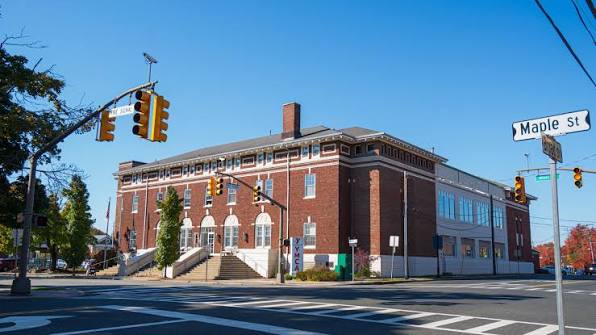

The Summit Area YMCA has been operating at its Maple Street facility since 1886, a continuous 139-year presence in one of Union County’s most established communities that has made the building as much a part of Summit’s civic identity as any structure in the city. The organization serves more than 17,000 individuals annually across a service area that spans Summit, Berkeley Heights, Gillette, Millburn, New Providence, Short Hills, Springfield, and Stirling — a geographic reach that reflects the YMCA’s role as a regional community anchor rather than a single-neighborhood institution. The building that houses that programming underwent a comprehensive renovation completed in 2023, a substantial investment in the facility’s future that brought its main spaces into alignment with what a modern community organization requires. The one element that the 2023 renovation did not fully address — the elevator infrastructure that connects the building’s floors and that determines whether the facility’s full range of programming is physically available to the full range of people who need it — is now the subject of a $40,000 grant from The Summit Foundation, the community foundation that has been investing in Summit-area organizations since its establishment in 1972.
The grant, announced as part of a broader $436,444 round of funding that The Summit Foundation distributed to Summit-area organizations, will fund an elevator modernization project whose Phase 1 is already underway and whose full completion is expected by January 2027. The YMCA has committed to maintaining building access throughout the construction process, a logistical commitment that reflects the organization’s awareness that the people who most depend on the elevator — the seniors navigating mobility limitations, the individuals with disabilities for whom the elevator is not a convenience but the difference between being able to participate in a program and being unable to reach it, the families with strollers who are managing the physical reality of young children — are precisely the people for whom a prolonged service interruption would be most consequential. The elevator modernization is not a cosmetic upgrade or an amenity enhancement. It is an infrastructure investment in the premise that a community institution serving 17,000 people annually should be physically navigable by all of them.
The framing of accessibility as the grant’s central purpose reflects a specific and important understanding of what the ADA’s legal requirements and the YMCA’s organizational mission both demand: that buildings serving the public should be accessible not merely in technical compliance but in practical, daily, dignified function. An elevator that requires a staff intervention to operate, or that is unreliable enough that users cannot depend on it, or that has aged past the point of consistent service, does not meet the operational standard that genuine accessibility requires even if it satisfies a minimum legal threshold. The Summit Foundation’s investment is designed to bring the Maple Street facility past that threshold — to ensure that the seniors who come to the building for fitness programming, the children with physical disabilities who participate in youth activities, and the caregivers pushing strollers to parent-and-child programs can navigate between floors with the same ease and independence that every other visitor takes for granted.
The Summit Foundation, which is approaching its 55th year of operation in 2027, occupies a specific and valuable structural role in Summit’s civic ecosystem. Community foundations of this kind serve as the institutional infrastructure through which locally generated philanthropic capital is deployed toward locally identified community needs — a function that differs from the directed giving of major institutional funders, whose priorities reflect their own missions, in its explicit orientation toward the specific needs of the community the foundation exists to serve. The Summit Foundation’s grant-making history includes investments in local arts organizations, educational programs, human services, and now the physical infrastructure of one of the city’s most consequential community institutions. The elevator project sits comfortably within that pattern: it is a practical, concrete investment in a specific building’s capacity to serve a specific community, with a direct and measurable impact on the physical accessibility of a facility that 17,000 people depend on annually.
The Summit Area YMCA’s 2023 building renovation represented a significant commitment to the long-term future of the Maple Street facility, and the elevator modernization represents the natural next chapter of that commitment. Historic buildings carry the weight of institutional continuity — 139 years of community service is a record that few organizations in any municipality can claim — but they also carry the weight of infrastructure that was designed for a different era’s standards and that requires sustained investment to meet the demands of contemporary use. An elevator installed or last updated decades ago was engineered for load requirements, safety standards, and accessibility expectations that have since been revised upward by both regulation and community expectation. The modernization funded by The Summit Foundation’s grant brings that infrastructure into alignment with current standards and positions it for reliable operation through the next chapter of the YMCA’s service to the surrounding communities.
For Summit residents and for the families and individuals across Berkeley Heights, Millburn, New Providence, Short Hills, Springfield, and the other communities that the YMCA serves, the elevator project represents something that civic philanthropy at its best produces: an investment in the practical conditions that make community life accessible and dignified for everyone who is part of it. The $40,000 grant will not generate a public naming opportunity or a visible monument. It will keep an elevator running reliably, which means it will keep a 139-year-old institution open in practice to the full range of people it exists to serve — including those for whom the difference between a working elevator and a broken one is the difference between participating in their community and being excluded from it.
















