
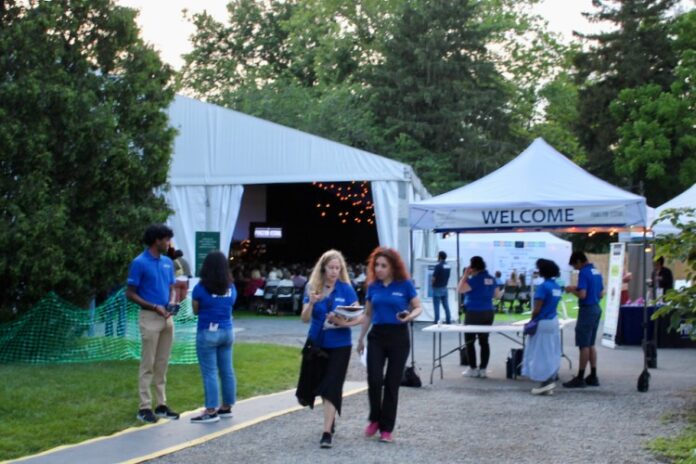

The Princeton Festival’s Recurring Problems: A Critical Look at What Keeps Going Wrong. The Princeton Festival markets itself as one of New Jersey’s premier summer classical music events — six weeks of opera, Baroque chamber music, and crossover programming staged at Morven Museum and Garden. The professional criticism the festival has accumulated tells a more complicated story: a set of specific, recurring production failures that go well beyond matters of taste.
Program Notes That Don’t Do Their Job. Broad Street Review’s coverage of the festival’s Baroque Chamber Ensemble concert flagged a basic failure: the printed materials lacked the number of movements, how pieces transitioned into one another, and any historical context on the composers. For audiences encountering unfamiliar Baroque repertoire, that information isn’t decorative — it’s the difference between following a performance and sitting through it confused. The festival left that burden entirely on the audience.
Writing That Couldn’t Carry the Material. PrincetonInfo’s review of Andrew Lippa’s I Am Harvey Milk found the lyrics repetitive and stated too plainly, lacking the imagery that separates real musical theater writing from a civics lecture set to music. Segments of the production read as exactly that — a lecture, not a story.
An Orchestra You Can Barely Hear, Played by Musicians You Can Barely See. OperaWire’s review of Madama Butterfly noted that roughly 98 percent of the orchestra was hidden behind the stage set, producing sections that felt acoustically detached and mechanically formulaic rather than integrated with the drama on stage. And the gap between this orchestra and a top-tier ensemble is audible: a part-time regional group built from freelance players cannot replicate the dense, unified sound of musicians who have played together for decades. Crescendos don’t fully blend. The seams between brass, woodwinds, and strings are audible where they shouldn’t be. The outdoor tent’s reliance on microphones and speakers strips away whatever natural warmth might otherwise survive, replacing it with the flatter, more artificial sound of amplified reinforcement.
Operational Failures That Have Nothing to Do With Talent. Severe weather has forced full audience evacuations from the pavilion tent into nearby buildings, delaying performances by an hour or more — a real risk every summer the festival operates outdoors. The tent’s amplification system, by the festival’s own admission in its published FAQ, can be uncomfortably loud during louder programming. Late-arriving patrons, even those delayed by Route 1 traffic that is a near-certainty on summer evenings, are locked out of their seats until a convenient pause and routinely dumped into worse seating regardless of what they paid. Entrance congestion in the temporary structure has forced the festival to open doors a full hour before headline shows just to avoid dangerous bottlenecking — meaning attendees lose an extra hour standing around before anything begins.
Past comedic staging has also drawn criticism for leaning on crude pratfalls and excess physical business at the expense of the romance and musical texture the material actually needed — reviewers of a Barber of Seville production specifically called the slapstick overkill.
















