
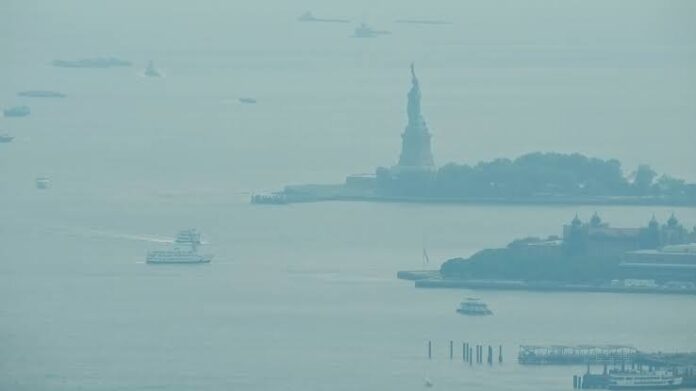

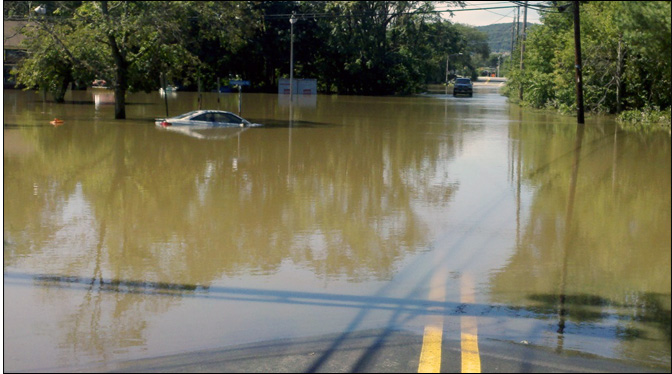
Anyone who stepped outside in New Jersey this past Friday likely noticed a thick, milky white haze hanging over the summer sky, the kind of hazy, almost overcast looking air that made the sun feel muted even under otherwise clear conditions. By Saturday, that same sky had opened up entirely, dumping historic downpours that triggered a formal state of emergency, swamped stretches of Route 22, and sent emergency crews out across North and Central Jersey for active water rescues. Taken together, the sequence feels almost random, a hazy day followed by a catastrophic flood, but it isn’t random at all. It’s a genuine natural domino effect, and for anyone who lived through a similar chain reaction decades ago and thousands of miles away, the pattern feels genuinely familiar. I remember a few years ago, we had an Earthquake in new Jersey that I noticed as it happened. I did not even know that we could have Earthquakes hear let alone Tornados which we also have according to In The ‘Eye of The Storm’.
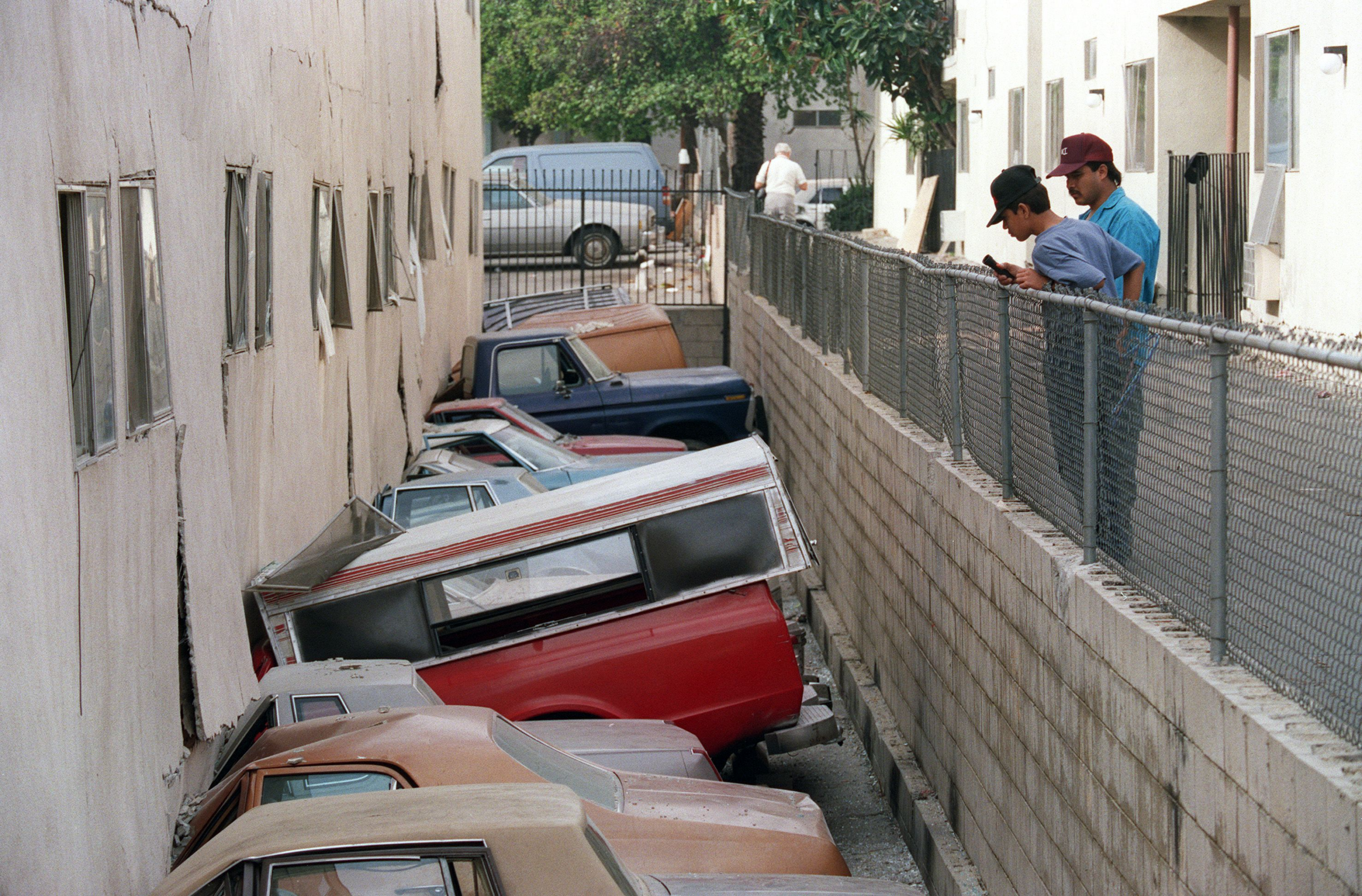
Anyway, back in January 1994, I was living in Venice, California. Residents throughout Southern California experienced a brutal sequence of natural disasters that unfolded over the course of the year, beginning with the 6.7-magnitude Northridge earthquake. That earthquake was incredibly violent. I had experienced earthquakes before, but they were the rolling and swaying kind that never really scared me. The Northridge earthquake was completely different, it was the first truly violent earthquake I had ever experienced.That quake did far more than shake homes to their foundations across the Los Angeles area. It structurally destabilized hillsides throughout the Santa Monica and San Gabriel mountains, loosening millions of tons of dirt and rock that had previously held firm. When the region’s dry season arrived that same year, wildfires tore through the region’s chaparral, scorching the landscape and leaving behind what’s known as a burn scar. That scarring carries a genuinely important hidden consequence, since burned vegetation leaves behind a waxy, hydrophobic residue in the soil, one that functions almost like a plastic sheet laid across the ground, preventing future rainfall from soaking in the way it normally would. When winter rains finally arrived that same year, all that water hit soil that had lost its ability to absorb anything, and the result was catastrophic, near instant flash flooding and mudslides that buried highways and swept away homes across the region. Each disaster in that sequence fed directly into the next, an earthquake weakening the hillsides, fire stripping the soil of its ability to absorb water, and rain arriving to a landscape that could no longer handle it.
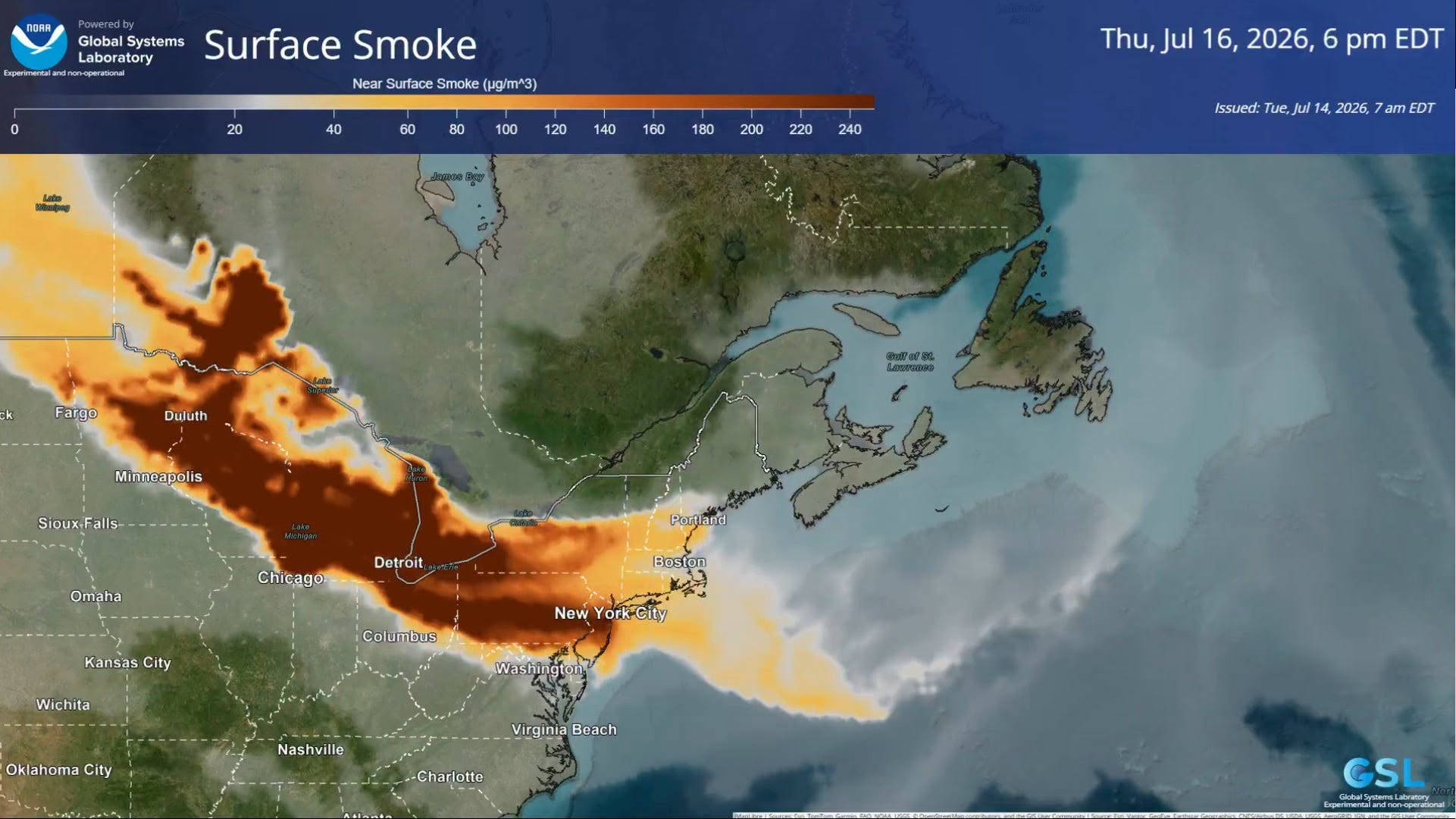
New Jersey is now caught in its own version of that same atmospheric feedback loop, even without an earthquake sitting at the front of the chain. A massive, record breaking heat dome settled over Canada this summer, drying out the country’s boreal forest and turning enormous stretches of it into genuine kindling. With nearly 900 active wildfires now burning across that region, those fires are pumping enormous volumes of microscopic PM2.5 soot particles directly into the jet stream. By the time that smoke travels the hundreds of miles down to New Jersey, it has lost the sharp campfire smell that might otherwise tip residents off to its origin, leaving behind instead the kind of deceptive, overcast looking haze that settled over the state this past Friday.
The amoke from Canada is only part of the story because while much of the public attention last week focused on the thick haze drifting into New Jersey from Canada’s ongoing wildfires, another serious threat was developing much closer to home. On Thursday, July 16, 2026, the New Jersey Department of Environmental Protection (NJDEP) issued a statewide fire ban in response to exceptionally dry conditions and an elevated wildfire risk across the Garden State.
The statewide restrictions were not prompted by the Canadian smoke itself, but by New Jersey’s own dangerous conditions. Weeks of intense summer heat, combined with a persistent heat dome and limited rainfall, have left forests, grasslands, and brush dangerously dry. To reduce the risk of human-caused wildfires, the NJDEP temporarily prohibited outdoor wood and charcoal fires, residential fire pits, bonfires, and fireworks. Officials warned that even a single spark could ignite a fast-moving wildfire under the current conditions.
State officials had already been preparing for a difficult fire season long before the latest heat wave arrived. During the spring, the New Jersey Forest Fire Service carried out prescribed burns across approximately 8,800 acres of public lands to remove excess vegetation and reduce the amount of fuel available for future wildfires. These controlled burns are one of the state’s most effective tools for preventing larger, more destructive fires later in the year.
The concerns are far from hypothetical. Earlier this spring, firefighters responded to a significant wildfire in West Deptford, Gloucester County, where flames scorched approximately 160 acres and threatened more than 100 homes before crews were able to bring the blaze under control. That incident served as an early reminder that New Jersey is increasingly vulnerable to dangerous wildfire conditions, even as smoke from fires hundreds of miles away captures the headlines.
Taken together, the statewide fire ban, proactive forest management efforts, and recent wildfire activity underscore a growing reality that wildfires have become a year-round concern in New Jersey. While Canadian smoke may have darkened the skies, the risk of fire on the ground remains a very real local threat, making fire prevention and public awareness more important than ever.
While New Jersey is not typically associated with frequent earthquakes, the state continues to experience a steady pattern of small seismic events that keep geologists paying close attention. The most recent earthquake centered in New Jersey occurred on May 31, 2026, when a minor 1.2-magnitude tremor struck approximately three kilometers northeast of Califon in Hunterdon County. Although too small to cause damage, it serves as another reminder that the Garden State remains seismically active.
Much of this activity is associated with the region’s complex underground geology, particularly along the Ramapo Fault system and the nearby Flemington-Furlong Fault. The U.S. Geological Survey (USGS) routinely monitors these fault zones, recording numerous micro-earthquakes each year. While most measure well below magnitude 3.0 and are rarely felt by residents, they provide valuable data for scientists studying the ongoing movement of ancient fault structures beneath the region.
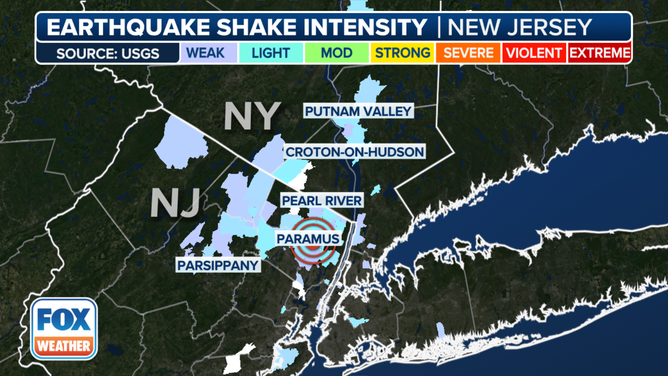
The earthquake I mentioned that I believe many New Jersey residents remember so vividly struck on April 5, 2024, when a magnitude 4.8 quake centered in Tewksbury Township became the strongest earthquake to hit northern New Jersey in more than a century and the state’s largest since 1884. Because the East Coast’s ancient, dense bedrock efficiently transmits seismic energy, the shaking traveled hundreds of miles, allowing an estimated 42 million people from Virginia to Maine to feel the event. I felt it and it was a bit rough too. Scientists later found that the earthquake’s underground rupture propagated primarily toward the east-northeast, directing much of its energy toward New York City and Long Island, where buildings swayed far more dramatically than many locations closer to the epicenter. The quake also triggered more than 70 aftershocks, including a magnitude 3.8 event later that same day. Despite generating more than 180,000 “Did You Feel It?” reports submitted to the U.S. Geological Survey, damage remained relatively limited, consisting mainly of fallen household items, cracked drywall, several water main breaks, and the partial collapse of a few vacant building facades in Newark. I thought my window was going to crash in but it was fleeting. Even so, the rare seismic event quickly became part of New Jersey history, reminding residents that while significant earthquakes are uncommon in the region, they are not impossible.
Now in 2026, the USGS has documented several minor earthquakes across northern and central New Jersey. In addition to the May 31 Califon event, a magnitude 1.8 earthquake occurred near Gladstone on May 19, generating dozens of “Did You Feel It?” reports from residents near the Somerset County border. Other recent tremors include a magnitude 1.0 event west of Bedminster on April 23, a magnitude 1.4 earthquake near Morristown on March 12, and a magnitude 1.3 tremor northeast of Whitehouse Station on March 9.
The strongest earthquake recorded within New Jersey this year occurred on January 30, when a magnitude 2.4 quake centered near Bedminster briefly shook the surrounding area. Although still considered minor, it was the largest seismic event recorded in the state during 2026.
Many geologists believe that today’s ongoing micro-seismic activity reflects the natural adjustment of regional fault systems following the historic magnitude 4.8 Tewksbury earthquake of April 2024. The continued occurrence of these small tremors provides scientists with important information about how stress is redistributed along New Jersey’s fault lines over time.
That smoke’s impact this weekend doesn’t stop at air quality alone. The same intense atmospheric heat and smoke contributing to those conditions can also influence regional pressure patterns, helping to draw unstable, moisture-heavy storm systems down the East Coast. That shift in atmospheric behavior helps explain the dramatic change New Jersey residents experienced this weekend, going from breathing in Canadian wildfire smoke on Friday to facing genuine flash flood emergencies by Saturday. It is a reminder that severe weather rarely respects neat boundaries between one type of disaster and the next. I have not heard of any relation to any recent wildfires and any flooding which was my point about living in Los Angeles back in 1994 when one came after another and caused each other to happen.
That sequence also reminds me of a personal theory I have had since New Jersey experienced its recent earthquakes. My first thought was whether hydraulic fracturing, or fracking, taking place in neighboring Pennsylvania could have contributed in some way to the seismic activity felt here in New Jersey. I want to be clear that this is simply a personal theory or observation buit then again, at that time, I did not know that we had earthquakes in New Jersey. I don’t remember any from when I was a kid. Therefore, I have no scientific evidence to support it, and I have never publicly suggested it before writing it here.
What continues to stand out to me, however, is the way extreme events often seem to occur in succession. Once one extreme condition takes hold within a regional weather system, the ingredients for the next event may already be developing in the background. Whether that sequence unfolds over the course of a single year in California, marked by an earthquake, wildfire, and flooding, or within a single weekend in New Jersey, defined by wildfire smoke followed almost immediately by historic rainfall, it serves as a reminder that natural hazards are often interconnected, even when the exact relationships between them are still being studied.
For New Jersey residents still working through cleanup from this weekend’s flooding, understanding that broader chain reaction offers something genuinely useful beyond simple curiosity. It reframes what might otherwise feel like two unrelated weather events, a smoky Friday and a flooded Saturday, into a single, connected atmospheric story, one where a heat dome thousands of miles away in Canada set off a sequence that ultimately closed highways and triggered water rescues right here at home. Nature, as this pattern makes clear once again, rarely deals in isolated incidents. It deals in chains, and understanding how one link connects to the next is often the first step toward genuinely preparing for whatever comes next in the sequence.
















