
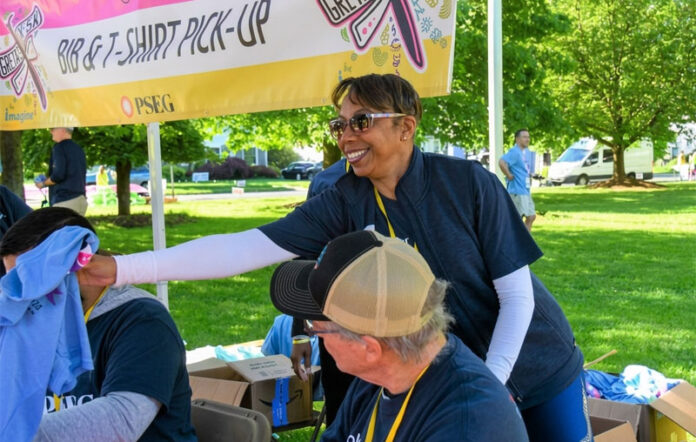

I actually wrote about the birth and history of Corporate Personhood today on Substack. When Calvin R. Ledford Jr. joined Steve Adubato for a conversation this spring about the role corporate responsibility plays in building New Jersey’s communities, the exchange illustrated something specific about how one of the state’s most consequential companies thinks about the gap between what a corporation is legally obligated to do and what it chooses to do. Ledford, who serves simultaneously as President of the PSEG Foundation and Director of Corporate Social Responsibility for PSEG, has spent more than 30 years with the utility navigating that gap — working across the company’s service territory with the communities and stakeholders that depend on reliable energy infrastructure and, increasingly, on the broader economic and social investments that PSEG and its foundation have chosen to make alongside it.
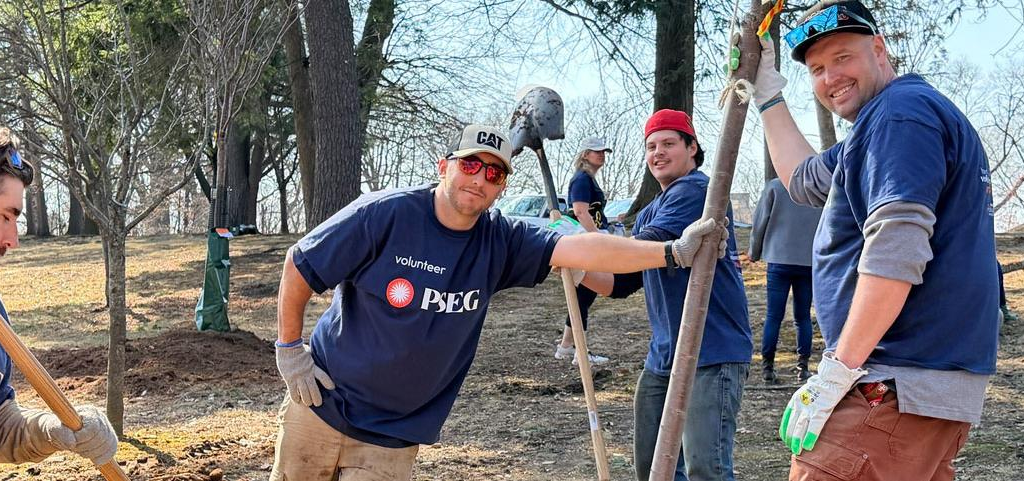
PSEG is not a small actor in New Jersey’s civic and economic landscape. The company serves approximately 2.4 million electric customers and 1.9 million natural gas customers across the state — a market penetration that means a meaningful share of every household’s daily life runs through PSEG’s infrastructure. That scale creates an obligation that extends beyond rate structures and service reliability into the question of what a company with that reach owes to the communities whose trust it operates within. The answer that Ledford has spent three decades developing, and that the PSEG Foundation represents in its most institutionalized form, is that the obligation is concrete, ongoing, and best expressed through programs that address specific community needs rather than through general statements of corporate values.
The PSEG Foundation, established as a separate 501(c)(3) entity that is supported and fully funded by PSEG, has awarded approximately $138 million to nonprofit and community organizations over its 25-year operating history. That cumulative total positions the Foundation as one of the more significant private philanthropic presences in the state — a recognition that New Jersey Monthly has formalized by repeatedly naming it among the state’s top foundations. But the number by itself understates what the Foundation’s model actually represents, because the PSEG Foundation’s approach to grant-making is organized around specific programmatic pillars rather than general charitable giving: environmental sustainability, community well-being, disaster recovery, education and economic mobility, and the equity and social justice investments that the Foundation formalized in 2020 with a $1 million commitment specifically focused on organizations addressing racial injustice and human rights in communities of color.
The program that most directly connects the Foundation’s resources to the specific communities PSEG serves at the neighborhood level is the Neighborhood Partners Program, which in its 2026 iteration is distributing $1.2 million to New Jersey and Long Island nonprofits. Since the program’s inception in 2014, the NPP has disbursed more than $9.8 million to over 825 organizations, with $8.9 million invested specifically in New Jersey. The 2026 program’s funding priorities — food assistance, workforce development, housing support, and wraparound services for families navigating economic hardship — reflect a deliberate focus on the intersection of energy utility service and household economic vulnerability. Many of the families served by the nonprofits the PSEG Foundation funds are also PSEG customers who face difficult choices between paying utility bills and meeting other basic needs, making the Foundation’s support for organizations that provide utility assistance and housing support a direct and functional extension of PSEG’s public service mission.
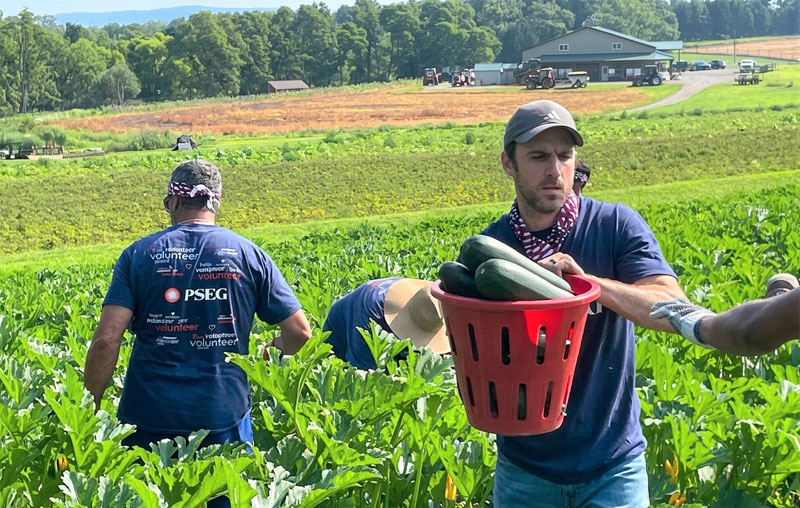
Ledford’s characterization of the program, in language that appears consistently across his public statements, emphasizes the partnership dimension rather than the donor-recipient dynamic that traditional corporate philanthropy tends to produce. Caring for communities means elevating organizations that help people access essential services and navigate everyday challenges, in his framing, not simply writing checks to established nonprofits and measuring success by dollar amounts distributed. The Neighborhood Partners Program specifically seeks organizations that the Foundation characterizes as transformative — leading change on issues affecting their communities rather than managing symptoms — and the selection criteria explicitly include demonstrated program effectiveness and the ability to advance affordability, community wellbeing, economic empowerment, and environmental sustainability in ways that are measurable rather than aspirational.
The December 2025 Community Relief Initiative — a $1.5 million deployment of PSE&G and PSEG Foundation resources to more than 25 local organizations providing critical assistance to households experiencing economic hardship — illustrated what the partnership model looks like in practice during a period of acute need. The initiative was unveiled alongside PSEG and the Foundation’s first nonprofit partner conference, which brought together more than 135 community leaders not to receive a grant presentation but to strengthen collaboration and share practical knowledge that advances local impact. The conference format reflects a philosophy that Ledford has articulated directly: true community support goes beyond providing safe and reliable energy, and the partnership model that delivers meaningful solutions to New Jersey families requires organizations that understand local needs in ways that a utility company’s own operations cannot fully replicate.
The conversation between Ledford and Adubato, which aired April 28 as part of Adubato’s ongoing examination of leadership and institutional responsibility in New Jersey, placed these programs in the broader context of what corporate responsibility actually requires from an organization the size of PSEG. Steve Adubato has spent decades on New Jersey public television probing exactly the question of what institutional power creates institutional obligation, and his conversations with corporate leaders tend to move quickly past the prepared talking points toward the underlying philosophy that explains why a specific organization makes the choices it makes. For Ledford, the answer to that question is rooted in a 30-year career that began in PSEG’s operations and has carried through to the Foundation — a trajectory that means his understanding of what New Jersey’s communities need from their utility is grounded in direct, sustained contact with those communities rather than in the abstract analysis of community needs from a remove.
That personal rootedness is reflected in Ledford’s specific civic commitments outside his PSEG role. He serves as chairman of the Newark Regional Business Partnership — the same organization that hosts the annual Real Estate Market Forum discussed elsewhere in these pages — connecting his corporate social responsibility work directly to the institutional network building that supports Newark’s economic development. He serves on the board of the Foundation of University Hospital, the Education Foundation of the League of Municipalities, and Leadership Newark, whose alumni and leadership programs he has participated in both as a graduate and as a distinguished alumnus. These commitments are not incidental to his professional role — they are the community relationship infrastructure through which PSEG’s corporate responsibility investments connect to the organizations and institutions that can direct resources toward genuine community impact.
The PSEG Foundation’s programmatic pillars have been stress-tested by the specific challenges New Jersey has faced over the past decade in ways that purely theoretical corporate philanthropy models cannot anticipate. Superstorm Sandy in 2012 established disaster recovery as a permanent priority — not a one-time emergency response but an ongoing investment in the resilience infrastructure that allows communities to prepare for, withstand, and recover from severe weather events that New Jersey’s geography and climate exposure make reliably recurring. The COVID-19 pandemic shifted the Foundation’s immediate focus toward healthcare community support and organizations serving vulnerable groups while also accelerating the equity-focused investments that became the Powering Equity and Social Justice Initiative in June 2020. The current economic environment — marked by inflationary pressure on household budgets, elevated housing costs, and uncertainty around federal safety net programs — has shaped the 2026 Neighborhood Partners Program’s specific focus on affordability and economic access.
PSEG’s broader corporate sustainability profile provides the organizational context within which the Foundation operates. The company has been named to the Dow Jones Best-in-Class North America Index for the 18th consecutive year, a benchmark recognition that evaluates environmental, social, and governance performance against global peers in the utility sector. Since the launch of its current energy efficiency program in October 2020, approximately 500,000 PSE&G customers have participated in efficiency programs that reduce energy consumption and utility costs simultaneously. The company’s post-Sandy infrastructure investment program, which Paul Toscarelli, VP of Electric Operations, has described as one of the most ambitious resilience and hardening efforts undertaken by any American utility, has materially changed how the transmission and distribution grid performs under extreme weather — reducing the frequency and duration of outages in ways that have direct economic consequences for the homes and businesses that depend on reliable service.
What connects the infrastructure investment to the Foundation’s community grants to the Neighborhood Partners Program to the equity initiatives is a coherent institutional answer to the question of what a company that serves 2.4 million New Jersey households and operates critical infrastructure across the state actually owes to the communities through which that infrastructure runs. The answer, as Ledford has articulated it consistently over more than a decade in the corporate responsibility role, is that the obligation extends well beyond the service relationship and into the full range of conditions that determine whether the communities PSEG serves can thrive — economic stability, access to food and housing, environmental sustainability, and the social equity that determines whether the economic benefits of a growing New Jersey economy reach the communities that have historically been left outside it. For New Jersey nonprofits interested in the Neighborhood Partners Program or other PSEG Foundation initiatives, current information on grant cycles, eligibility, and application requirements is available through the PSEG Foundation’s pages on the corporate.pseg.com website.
















