

The B-52s have been identified since 1976 with Athens, Georgia, where the band formed in a shared house after a mushroom dinner at a Chinese restaurant and proceeded to develop the most eccentric and immediately recognizable sound in American new wave. That origin story is true and well-documented, and Athens has spent four decades celebrating it. What is less publicly understood outside of Monmouth County is that two of the B-52s’ three vocalists — Fred Schneider, who just turned 75 on July 1, and Kate Pierson — are New Jersey natives who grew up in communities along the Shore and in the Hudson County suburbs, and who have never fully shed their affection for the state they left for Athens. The Count Basie Center for the Arts in Red Bank is correcting any remaining ambiguity on that point: on Friday, July 10 at noon, outside the historic theater on Monmouth Street, Schneider and Pierson will be formally inducted onto the Basie Center’s Walk of Fame in a public ceremony that places them in company that includes, to date, Count Basie himself, Jon Bon Jovi, Darlene Love, and The Smithereens. The following day, Saturday, July 11, they will headline the ParkStage concert at the East Freehold Park Showgrounds — a performance that will also honor Dramarama, the Wayne-born band that spent nearly five decades building a devoted following without ever entirely leaving the Garden State’s orbit, with a commemorative Walk of Fame plaque presented at the show.
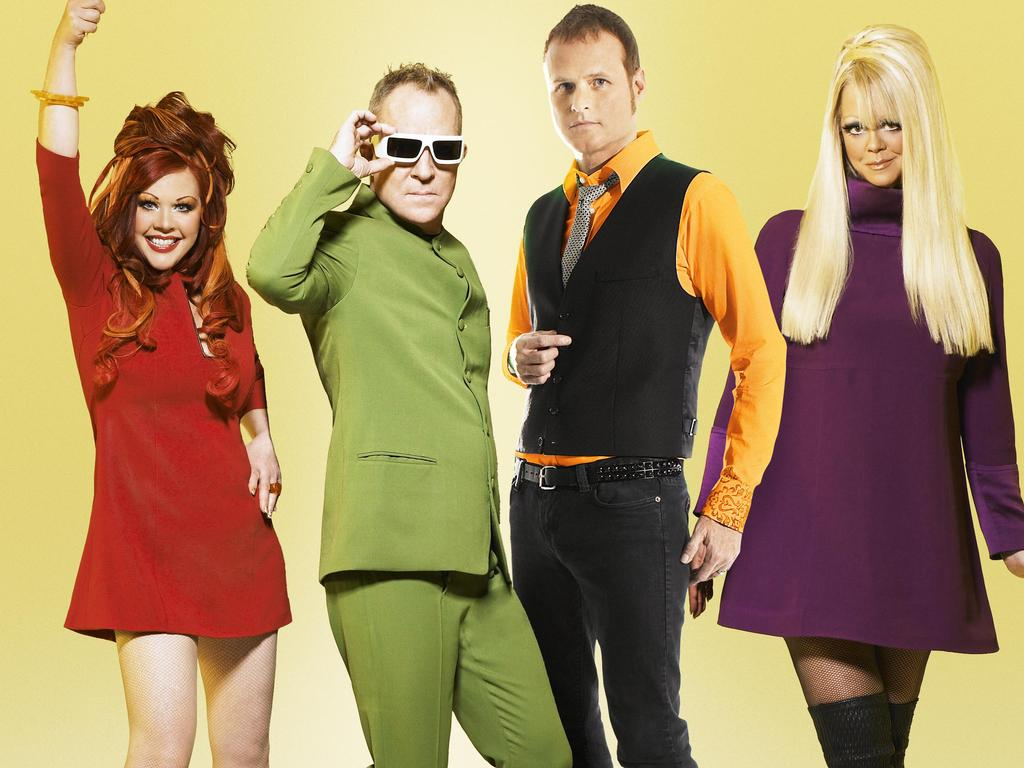
The July 10 ceremony in Red Bank will unfold outside the same historic theater where Fred Schneider’s father worked at the Red Bank Register during Fred’s childhood in Oceanport — a connection that gives the Walk of Fame induction a biographical specificity that the honoree himself has cited in his response to the announcement. Schneider’s prepared statement, characteristically direct, notes that he grew up in Oceanport, that his father’s newspaper work at the Red Bank Register brought the family into regular orbit of the theater’s block, and that he attended performances at the venue in the 1960s with his childhood best friend Adrian. The teenager who sat in those seats watching shows at the Basie’s historic theater is now 75 years old, and the theater is putting his permanent keystone on the sidewalk outside. The timing places the induction two days after Schneider’s milestone birthday, a detail the Basie Center could not have engineered but that the calendar produced anyway.
Pierson’s relationship to New Jersey is geographically broader and emotionally complicated in the specific way that people who grew up across multiple New Jersey landscapes tend to experience the state. She grew up in Weehawken and Rutherford, in the Hudson County and Bergen County communities that sit directly across the Hudson from Manhattan and that have historically produced residents with the dual identity of suburban New Jersey life and proximity to New York City that neither fully captures. She also spent summers on her aunt and uncle’s farm in Blairstown and at her grandmother’s house near Lake Erskine, adding the western New Jersey agricultural and lakeside dimensions that most non-residents would not associate with her background. The formulation she offered in response to the Walk of Fame announcement — that her New Jersey was city energy, farms, countryside, lakes, and beaches, not always what people expect — is an accurate description of a state that contains more geographic and cultural variety within its borders than its reputation for industrial corridor and suburban sprawl typically suggests. Her observation that along with Count Basie, Bruce Springsteen, Debbie Harry, Patti Smith, Sarah Vaughan, and Queen Latifah, New Jersey’s musical heritage is deep enough that maybe it should be called the Rock Garden State instead, places the Basie Center induction within the specific tradition it is designed to honor.
The Walk of Fame, launched during the Basie Center’s Centennial Celebration, was built around a specific eligibility standard: artists who have performed at the Basie Center, made an indelible impact on culture, and whose contributions reflect the enduring power of the arts as expressed through the theater’s own history. The permanent keystones along Monmouth Street are intended to create a durable record of the performers whose artistry has helped define the theater’s first century while inspiring the audiences and artists who came after them. The B-52s meet every dimension of that standard. Their self-titled 1979 debut album, released on Warner Bros. after early independent releases on the DB Recs label out of Atlanta, entered the post-punk moment as something categorically unlike what the punk movement had produced — not aggressive or minimalist but absurdist, colorful, dance-floor-oriented, shot through with campy humor and genuine musical invention in ways that its contemporaries were mostly too earnest or too angry to attempt. The album reached number 59 on the Billboard 200 and number 22 on the UK Albums Chart, landing on Rolling Stone’s 500 Greatest Albums of All Time at number 152 and on VH1’s list of the Greatest Albums of All Time at number 99. The gold-selling follow-up Wild Planet arrived the following year.
What brought the B-52s to a genuinely mass audience, though, was the 1989 album Cosmic Thing, which sold more than five million copies and spawned Love Shack and Roam — the first of which Rolling Stone placed on its 500 Greatest Songs of All Time list. Cosmic Thing arrived after a period of profound loss: Ricky Wilson, the band’s guitarist and the brother of vocalist Cindy Wilson, died of AIDS-related complications in 1985 at age 32. The band went into hiatus. Keith Strickland, originally the drummer, stepped into Ricky Wilson’s compositional and live performance role, filling the gap with a guitar approach distinctive enough that the post-Wilson B-52s sound developed its own character rather than simply replicating what it had lost. The scale of Cosmic Thing’s success — five million units, multiple Grammy nominations for the singles, the songs becoming pop culture reference points that have never fully left the rotation — established the B-52s as something beyond a beloved alternative act and into the territory of genuine American popular culture touchstones. John Lennon, Madonna, Arcade Fire, Lady Gaga, and Michael Stipe are among those who have identified the band as a direct influence. Panic! At The Disco, Blood Orange, The Offspring, Pitbull, Roger Sanchez, and DJ Shadow have sampled the catalog. The Simpsons and Family Guy have both produced covers. The band has sold more than 20 million records worldwide and continued touring through a farewell tour that began in 2022 and whose Freehold stop on July 11 is among the continuing performances the band has committed to as they close the touring chapter of their career.
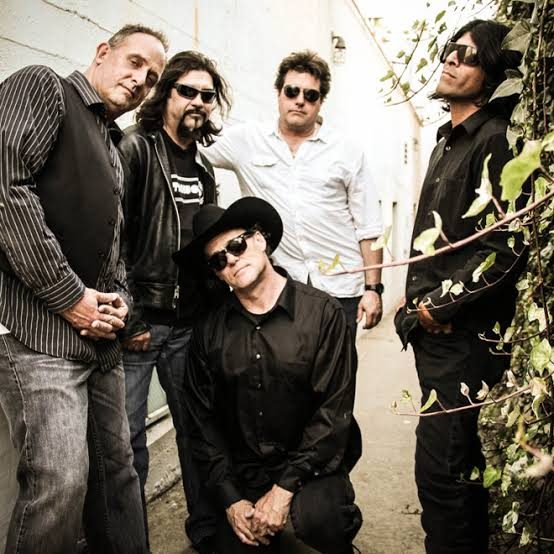
Dramarama’s Walk of Fame recognition arrives with a different kind of institutional story — one that is specifically and entirely rooted in New Jersey. The band formed in Wayne in the late 1970s, when John Easdale, Chris Carter, Mark Englert, Tony Pola, and Cynthia O’Keefe were teenagers in Passaic County with the specific ambitions and specific insecurities that small-scale Jersey beginnings produced. Dramarama’s music — built around Easdale’s melodic guitar work, emotionally direct songwriting, and the specific textures of post-punk and power pop that defined the American alternative underground of the early 1980s — earned them a devoted following that has proved more durable than the band’s brief major-label moment, when they signed to Charisma Records and released the album Cinema Vérité in 1988, would have suggested at the time. Anything, Anything — released on a small indie label in 1985 before the Charisma signing — became the song that defines Dramarama for most of their fans: a guitar-forward declaration with the kind of hook that does not require commercial infrastructure to spread, because it spreads through the simple mechanism of people who heard it wanting other people to hear it too. Nearly five decades after the band’s formation, Dramarama is still performing, still consisting of people who grew up together in New Jersey, and still generating the level of audience response that justifies a Walk of Fame induction from one of the state’s premier arts institutions.
Easdale’s statement in response to the announcement is worth quoting in its specific character because it reflects something true about what a Walk of Fame recognition from a New Jersey institution means to artists whose careers were formed in New Jersey in the years when it was possible to wonder whether Wayne was the kind of place that produced people with a place in the arts. His acknowledgment that they are stunned by the honor, his description of his bandmates as guys from the Garden State who’ve known each other since they were kids, and his specific gratitude to artists and institutions that inspire kids from anywhere, even Wayne, New Jersey, to feel like they have a place in the arts — this is not false modesty from a band with a nearly fifty-year track record. It is the authentic expression of what the specific encouragement of a specific institution can mean over a lifetime of artistic work.
The ParkStage concert on July 11 at the East Freehold Park Showgrounds marks one of the earlier concerts at the new outdoor venue, which was developed as a collaboration between the Count Basie Center for the Arts and Monmouth County Tourism and debuted in the summer of 2026. The Bill also includes The English Beat — the British ska and pop band whose 1980 debut I Just Can’t Stop It remains one of the most important records in the ska revival movement — as an additional supporting act alongside Dramarama, making the July 11 show one of the more substantive lineups of the summer in terms of the combined cultural and historical weight of its three artists. Tickets are available through the ParkStage website and Ticketmaster.
For Monmouth County and the broader New Jersey music community, the Walk of Fame inductions on July 10 represent both an act of institutional recognition and a statement of regional identity. New Jersey has produced more significant American musical artists than any other state except perhaps New York or California — a list that Pierson herself partially enumerated, and that extends well beyond the names she mentioned — and the Basie Center’s Walk of Fame is the Shore’s mechanism for formally recording that history in a permanent form that the sidewalk on Monmouth Street in Red Bank will carry forward indefinitely. That two of the people being honored this week have specific geographic and biographical roots in New Jersey communities is the Walk of Fame functioning exactly as its founders intended.
The July 10 ceremony begins at noon outside the Count Basie Center for the Arts at 99 Monmouth Street in Red Bank, New Jersey. The public is welcome. The ParkStage concert begins at 7 p.m. on July 11 at the East Freehold Park Showgrounds in Freehold.
















