Home Blog Page 8

Clang Rose Film Festival 2026 Elevates New Jersey’s Global Film Identity as International Talent Converges at New Brunswick Performing Arts Center

New Jersey’s film and television sector continues to gain measurable traction on both a national and international level, and the Clang Rose Film Festival 2026 has emerged as one of the clearest indicators of that momentum. Held on April 12, 2026, at the New Brunswick Performing Arts Center, the festival delivered a fully realized showcase of global storytelling, local innovation, and forward-looking industry development—positioning the state not only as a host for cinematic celebration, but as an active participant in shaping the future of independent film.

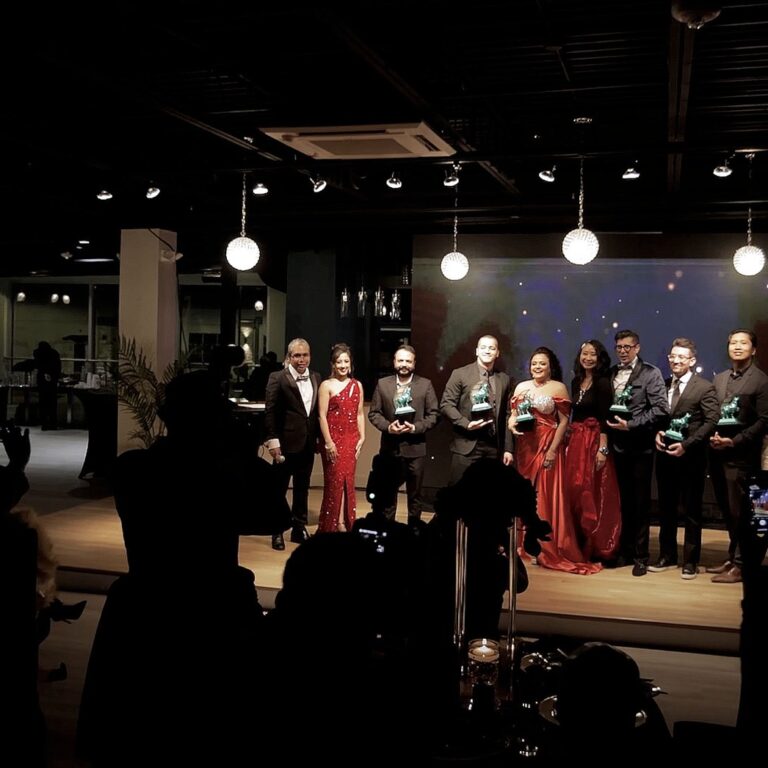
The event’s culminating awards ceremony brought together filmmakers, performers, and industry professionals from across multiple continents, reinforcing the festival’s growing reputation as an international platform with a distinctly New Jersey foundation. What unfolded over the course of the evening was more than a recognition of excellence; it was a demonstration of how the state’s film infrastructure is evolving into a hub capable of attracting, supporting, and amplifying diverse creative voices.

Among the standout honorees, The Whisper of Love, directed by Marco De Nigris of Italy, secured Best Wedding Film, reflecting the festival’s unique emphasis on cinematic storytelling within the wedding genre—an increasingly sophisticated category that blends documentary realism with narrative artistry. The Color of Exile, directed by Azlarabe Alaoui, claimed Best Narrative Film, offering a deeply layered exploration of resilience and identity that resonated across cultural boundaries. In animation, Reverse by Kaustav Mukherjee of India earned top recognition, highlighting the festival’s commitment to visual storytelling that pushes both technical and emotional limits. The Visionary Impact Award was presented to Tina Yuan for Echoes of Dream of the Red Chamber, a work that exemplifies the intersection of cultural heritage and contemporary filmmaking.

These awards were not presented in isolation, but within a broader program that emphasized accessibility and engagement. Free public screenings, red-carpet moments, and curated showcases created a multi-dimensional experience that allowed audiences to interact with the films in meaningful ways. Nominees such as The Waltz, a Canadian wedding documentary short, and Love Within the Shadows, a New Jersey-produced film capturing an intimate elopement narrative, underscored the festival’s ability to bridge global perspectives with local storytelling. Additional selections, including Rose, Mary & Time and Andhela Ravamidhi, expanded the thematic range, exploring everything from time-travel romance to social impact narratives centered on empowerment and community transformation.

A defining moment of the evening came with the premiere of Signature, a pilot project that served as both a cinematic centerpiece and a strategic milestone for New Jersey’s film development ecosystem. Produced under the umbrella of the Silver Bridge Film Club, the film represents a new model for cultivating local talent—one that integrates education, production, and professional exposure into a single, cohesive framework.

The Silver Bridge Film Club, launched in conjunction with the festival, is designed to address one of the most persistent challenges in the industry: the gap between training and employment. Operating under Green Ox Cinema, the initiative provides aspiring actors and filmmakers with direct access to real production environments, enabling them to build portfolios that include demo reels, headshots, and on-screen credits. Its three-track system—spanning amateur, professional, and writers—ensures that participants at every level have a structured pathway for growth and collaboration.

Signature itself stands as proof of concept for this approach. Filmed entirely in East Brunswick and featuring a cast that includes emerging New Jersey talent, the project was developed as a “live classroom,” where participants worked alongside experienced professionals to understand the full scope of film production. Directed by Wilfredo Sanchez and produced by Vijay Mirchandani, the film centers on a high-stakes narrative driven by a single, life-altering document, combining tension, character development, and cinematic precision in a way that reflects both ambition and discipline.

The premiere was accompanied by a live Q&A session, offering audiences insight into the creative and logistical processes behind the production. This level of transparency reinforces the educational mission of the Silver Bridge Film Club while also strengthening its connection to the broader community. The project’s success has already been recognized as a meaningful contribution to New Jersey’s local economy, demonstrating how film production can engage local businesses, utilize regional resources, and generate tangible economic impact.

The presence of local officials, including East Brunswick leadership and representatives from the Middlesex County Department of Economic Development, further underscores the institutional support behind these initiatives. Their involvement signals a growing recognition that the film industry is not only a cultural asset but also a strategic economic driver capable of generating long-term growth and opportunity.

Looking ahead, the announcement of the Clang Rose Film Festival 2027, scheduled for April 10 at the same New Brunswick venue, provides continuity and momentum. It establishes the festival as an annual anchor within New Jersey’s film calendar, creating a predictable platform for filmmakers and audiences alike to engage with new work and emerging talent.

This trajectory aligns with broader developments highlighted across Explore New Jersey’s film and television coverage, where the state’s production landscape continues to expand through a combination of infrastructure investment, tax incentives, and grassroots initiatives. From major studio projects to independent productions, New Jersey is reclaiming a legacy that dates back to the earliest days of American cinema while simultaneously building a modern, competitive industry.

The Clang Rose Film Festival 2026 encapsulates this evolution with clarity and purpose. It is a space where international filmmakers find an audience, where local talent gains visibility, and where new models for collaboration and development are actively tested and refined. It reflects a state that is no longer content to be adjacent to the film industry, but is instead asserting itself as a central player within it.

As the lights dimmed on this year’s ceremony, what remained was not just a list of winners, but a clear sense of direction. New Jersey’s film industry is growing, diversifying, and organizing itself in ways that are both strategic and sustainable. Events like Clang Rose are not simply celebrations—they are catalysts, driving the next phase of growth and ensuring that the state’s creative community continues to thrive on a global stage.

New Jersey Theatre Auditions for Summer 2026

Aspiring Performers Gain Unprecedented Access to Professional and Community Stages Across the State. New Jersey’s theatre ecosystem is entering one of its most active and opportunity-rich periods in recent memory, as a wide spectrum of professional companies, community theatres, and youth-focused organizations open their doors to performers across all age groups for the Summer 2026 season. From high-energy rock operas and contemporary musical revivals to experimental one-act festivals and youth productions, the current audition cycle reflects a statewide surge in artistic activity—one that is redefining access, elevating standards, and positioning New Jersey as a premier destination for emerging and established talent alike.

At the forefront of this movement is Aspire Performing Arts Company, which continues to build a reputation as one of the most impactful youth theatre organizations in the region. With a clearly defined mission centered on providing educational workshops and production opportunities for children, teens, and young adults, Aspire has developed a model that blends professional-level expectations with a supportive and inclusive training environment. Its upcoming audition cycle exemplifies this approach, offering performers not just roles, but a structured pathway into serious theatrical development.

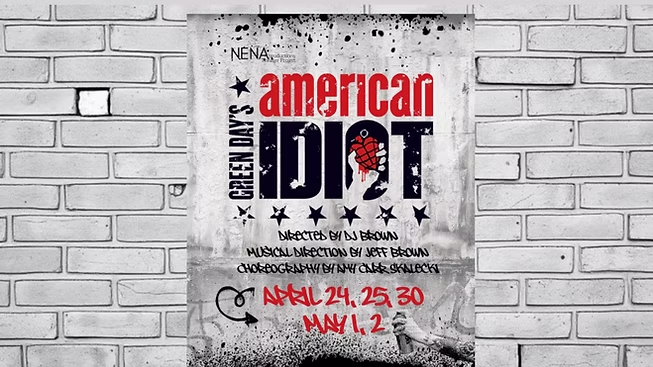
For performers aged 14 to 22, Aspire is staging Green Day’s American Idiot, a production that demands intensity, vocal strength, and a nuanced understanding of contemporary storytelling. Directed by Tori Palin, the show represents one of the most ambitious youth theatre offerings in the state this season. Auditions are scheduled for May 14 and May 18, with callbacks taking place on the latter date. Rehearsals begin shortly thereafter on May 20 at Aspire’s Wayne studio, leading into performances scheduled for July 17 through July 19 at Barn Theatre. The compressed timeline underscores the professional pace expected of participants, mirroring industry standards and reinforcing Aspire’s commitment to serious artistic preparation.

Simultaneously, younger performers aged 8 to 14 are being invited to audition for Disney’s Descendants: The Musical, directed by Joey Nasta. With auditions set for May 16 and May 17 and rehearsals beginning May 20, this production offers a parallel track for emerging talent, culminating in performances from July 24 through July 26, also at the Barn Theatre. By structuring these productions in tandem, Aspire is effectively creating a multi-tiered performance environment, allowing participants at different stages of development to engage with material that is both age-appropriate and artistically challenging.

Beyond Aspire, the broader New Jersey theatre landscape is equally active, with professional and summer stock companies launching their own audition cycles. Centenary Stage Company is hosting non-union auditions for its NEXTStage Repertory Summer 2026 season, which includes productions of The Wedding Singer and Closer Than Ever. Scheduled for April 25, these auditions emphasize preparation and versatility, requiring performers to present contemporary musical theatre selections that demonstrate both vocal and interpretive skill.

Further south, Algonquin Arts Theatre is preparing for auditions for HAIR: The American Tribal Love-Rock Musical, set for June 1. Known for its bold thematic content and ensemble-driven structure, HAIR demands performers who are not only musically capable but also comfortable engaging with material that challenges traditional narratives and performance boundaries.

On the Jersey Shore, Surflight Theatre is actively seeking non-Equity performers for its 2026 season, with a particular focus on dancers under the age of 30. This reflects a broader trend within summer stock theatre, where physicality and movement are increasingly central to production design and audience engagement.

Meanwhile, New Jersey Repertory Company continues to serve as a hub for professional-level opportunities, with periodic Equity and character-specific calls that attract performers seeking more specialized roles. While many of these auditions occur earlier in the year, ongoing updates ensure that actors remain connected to evolving opportunities within the professional circuit.

Community theatre, long recognized as the backbone of New Jersey’s performing arts culture, is also experiencing a period of heightened activity. The Barn Theatre in Montville, in addition to hosting Aspire’s productions, is conducting open auditions for its Summer Solstice One-Act Festival, a collection of seven short plays that offer performers the chance to explore a range of styles and characters within a single production cycle. This format is particularly valuable for actors looking to build versatility and stage experience in a condensed timeframe.

In South Jersey, Oakwood Summer Theatre is preparing productions of Shrek the Musical Jr. and Freaky Friday, continuing its tradition of accessible, family-oriented programming that serves as an entry point for younger performers. Similarly, Plays-in-the-Park in Edison is generating anticipation for its upcoming summer season auditions, which are expected to draw significant interest given the venue’s reputation for large-scale outdoor productions.

Nutley Little Theatre adds another dimension to the landscape with its planned auditions for Asuncion, a contemporary play by Jesse Eisenberg. This production highlights the diversity of material being staged across the state, from musical theatre staples to modern dramatic works that explore complex interpersonal themes.

Supporting this entire ecosystem are centralized resources that provide performers with access to real-time information and opportunities. Organizations such as the New Jersey Theatre Alliance continue to serve as critical hubs for professional listings, staged readings, and industry updates, while local networks and theatre companies maintain active communication channels for community-based auditions and workshops. Additional programs, including StageWorks at Studio 237 in Pompton Lakes, are expanding access further through video submissions and youth-focused initiatives, ensuring that geographic and scheduling constraints do not limit participation.

What emerges from this expansive network of auditions is a clear and compelling narrative: New Jersey is not simply participating in the performing arts—it is actively cultivating a comprehensive, multi-level system that supports talent at every stage of development. From first-time performers stepping into community theatre roles to seasoned actors pursuing professional engagements, the state offers a continuum of opportunities that is both accessible and ambitious.

For Explore New Jersey, this moment represents a critical inflection point in the state’s cultural trajectory. The volume and diversity of auditions reflect a broader commitment to artistic growth, one that is driven by collaboration, innovation, and a shared belief in the transformative power of theatre. As the Summer 2026 season approaches, the stage is set not only for a series of compelling productions, but for the continued evolution of a theatre community that is as dynamic as it is inclusive.

In this environment, auditions are more than entry points—they are gateways into a thriving artistic ecosystem. They are where potential is identified, where skills are refined, and where the next generation of performers begins to define its voice. Across New Jersey, that process is unfolding with unprecedented energy, ensuring that the state’s theatres remain vibrant, relevant, and deeply connected to the communities they serve.

Disney’s Descendants: The Musical

0

Disney’s Descendants: The Musical Arrives in New Jersey as Aspire Performing Arts Company Elevates Youth Theatre with a High-Impact, Next-Generation Production

July 24 @ 8:00 AM July 26 @ 5:00 PM

New Jersey’s theatre scene continues to evolve with a level of ambition and creative depth that reflects the state’s growing influence in the performing arts, and the arrival of Disney’s Descendants: The Musical under the direction of Joey Nasta represents a defining example of that momentum in action. Produced by Aspire Performing Arts Company, this production brings one of Disney’s most contemporary and culturally resonant stage adaptations to life while reinforcing a larger movement across New Jersey—one centered on youth-driven performance, professional-level training, and immersive theatrical storytelling.

Set within a reimagined Disney universe, Descendants: The Musical begins on the Isle of the Lost, a place of exile where the children of some of the most infamous villains in Disney history—Maleficent, the Evil Queen, Jafar, and Cruella De Vil—have grown up isolated from the rest of the world. For years, these characters have existed in the shadows of their parents’ legacies, defined more by expectation than by identity. The narrative pivots when they are given a rare opportunity to leave the island and enter a new environment, setting in motion a story that explores transformation, belonging, and the power of choice.

What distinguishes this production is not only its source material but the lens through which it is being presented. Under Joey Nasta’s direction, the show is positioned as more than a family-friendly musical—it becomes a platform for examining how identity is shaped and reshaped in environments defined by both limitation and opportunity. The characters’ journey from confinement to possibility mirrors a broader theme that resonates deeply within youth theatre: the transition from potential to self-definition.

Aspire Performing Arts Company’s involvement is central to the significance of this production. As an organization dedicated to providing educational workshops and performance opportunities for children, teens, and young adults, Aspire has established itself as a critical force within New Jersey’s performing arts ecosystem. Its mission is not simply to stage productions, but to cultivate talent through a process that mirrors professional theatre environments while maintaining an accessible and supportive atmosphere.

This dual focus—professional rigor combined with educational accessibility—has become a defining characteristic of Aspire’s approach. Participants are immersed in every aspect of production, from rehearsal discipline and character development to stage presence and collaborative execution. In a show like Descendants, which blends high-energy musical numbers with character-driven storytelling, this approach ensures that performers are not only prepared but empowered to deliver performances that resonate with authenticity and confidence.

Director Joey Nasta’s role in shaping this production cannot be overstated. Bringing a contemporary perspective to a modern Disney property, Nasta’s direction emphasizes clarity of narrative and strength of ensemble performance. The challenge in staging Descendants lies in balancing its vibrant, stylized aesthetic with the emotional grounding necessary to make its themes impactful. By focusing on character relationships and narrative cohesion, the production is positioned to deliver both spectacle and substance.

Within the broader context of New Jersey theatre, this production aligns with a growing trend highlighted across Explore New Jersey’s theatre coverage: the rise of community and youth-based organizations as major contributors to the state’s cultural output. These groups are no longer operating on the margins; they are actively shaping the conversation, producing work that meets—and often exceeds—audience expectations for quality and engagement.

Descendants: The Musical is particularly well-suited to this environment. Its themes of self-discovery, resilience, and redefining legacy resonate strongly with younger performers and audiences alike. At the same time, its connection to the broader Disney canon ensures a level of familiarity that draws in a wide demographic, creating an inclusive experience that bridges generational divides.

From a production standpoint, the show demands a high level of coordination across multiple disciplines. The musical’s choreography, vocal arrangements, and visual design must work in harmony to create a cohesive experience that captures the energy and vibrancy of its source material. For Aspire Performing Arts Company, this represents an opportunity to showcase not only individual talent but also the strength of its collaborative framework.

The impact of productions like this extends beyond the immediate performance window. They contribute to the development of a sustainable artistic ecosystem, one in which emerging performers gain the skills and experience necessary to pursue future opportunities within the arts. They also reinforce the role of theatre as a community anchor, bringing audiences together in shared experiences that are both entertaining and meaningful.

For Explore New Jersey, the significance of this production lies in its ability to illustrate a larger narrative—one in which the state’s cultural identity is being actively shaped by a new generation of artists and organizations. While major venues and touring productions continue to play an important role, it is the work being done at the community level that often drives innovation and fosters long-term growth.

In bringing Disney’s Descendants: The Musical to the stage, Aspire Performing Arts Company is not only delivering a high-quality theatrical experience but also contributing to a broader movement that is redefining what theatre can be in New Jersey. It is a production that reflects ambition, creativity, and a commitment to excellence, serving as both a showcase for emerging talent and a testament to the state’s evolving artistic landscape.

As audiences gather to experience this vibrant and dynamic performance, they are witnessing more than a musical—they are engaging with a vision of theatre that is inclusive, forward-looking, and deeply connected to the communities it serves. In that sense, Descendants becomes more than a story about legacy; it becomes part of New Jersey’s own ongoing narrative, one defined by growth, opportunity, and the enduring power of the arts.

Aspire Performing Arts Company

​201-220-4933

View Organizer Website

The Barn Theatre

32 Skyline Dr
Montville, New Jersey 07045 United States
+ Google Map
(973) 334-9320
View Venue Website

Green Day’s American Idiot

0

Green Day’s American Idiot Returns to the New Jersey Stage as Aspire Performing Arts Company Delivers a Bold, Next-Generation Production

July 17 @ 8:00 PM July 19 @ 11:30 PM

New Jersey’s theatre scene continues to assert itself as one of the most dynamic and forward-thinking in the region, and this latest staging of Green Day’s American Idiot marks a defining moment in that evolution. Under the direction of Tori Palin and produced by Aspire Performing Arts Company, the production signals not only a return of one of the most culturally impactful modern rock operas, but also a powerful statement about the future of performing arts development across the state.

At a time when audiences are demanding theatre that feels immediate, urgent, and emotionally resonant, American Idiot stands as a work uniquely positioned to meet that expectation. Built from the Grammy Award–winning, multi-platinum album by Green Day, the musical redefined what contemporary theatre could be when it first premiered, pushing beyond traditional narrative structures and embracing a form that merges concert intensity with dramatic storytelling. Its arrival in New Jersey through a youth-driven production company adds a new dimension—one that blends professional ambition with emerging talent.

The decision by Aspire Performing Arts Company to take on American Idiot is both ambitious and strategically aligned with its mission. As an organization dedicated to providing educational workshops and full-scale production opportunities for children, teens, and young adults, Aspire operates at the intersection of training and performance. Its model is designed to simulate a professional environment while maintaining an inclusive and supportive atmosphere, allowing performers to develop not only their technical skills but also their artistic identities.

In this context, American Idiot becomes more than a show; it becomes a platform. The material itself demands emotional range, physical stamina, and a deep understanding of character-driven storytelling. For young performers, engaging with a work of this complexity provides an opportunity to step into roles that challenge conventional expectations, pushing them to explore themes of identity, disillusionment, and resilience in ways that feel both personal and universal.

Director Tori Palin’s leadership is central to the realization of this vision. Bringing a contemporary sensibility to a production rooted in early 21st-century cultural commentary, Palin’s approach emphasizes authenticity and connection. Rather than treating the material as a fixed artifact, the production is positioned as a living interpretation—one that reflects the perspectives and experiences of the performers themselves. This approach aligns with broader trends across New Jersey’s theatre ecosystem, where directors are increasingly prioritizing relevance and immediacy over replication.

The significance of this production extends beyond the stage. As highlighted across Explore New Jersey’s theatre coverage, the state is experiencing a sustained surge in youth and community-based performing arts initiatives that are redefining how theatre is created and consumed. These organizations are not simply cultivating talent; they are building pipelines, creating opportunities for collaboration, and establishing new standards for what local theatre can achieve.

Aspire Performing Arts Company stands at the forefront of this movement. By combining structured education with high-level production values, the organization is effectively bridging the gap between training programs and professional theatre. Participants are not only learning technique—they are experiencing the full scope of production, from rehearsal discipline to performance execution, in an environment that mirrors industry expectations.

American Idiot serves as an ideal vehicle for this model. Its score, featuring iconic tracks such as “Boulevard of Broken Dreams,” “Holiday,” and “Wake Me Up When September Ends,” provides a musical foundation that is both recognizable and demanding. The choreography and staging require precision and cohesion, while the narrative structure challenges performers to convey complex emotional arcs with clarity and intensity. For an audience, the result is an experience that feels immediate and immersive; for the performers, it is a transformative process that extends far beyond a single production cycle.

Within the broader landscape of New Jersey theatre, this production reinforces a critical point: innovation is not confined to major metropolitan venues. It is emerging from community-based organizations, educational programs, and independent companies that are willing to take risks and invest in the next generation of artists. The presence of productions like American Idiot within this framework signals a shift toward a more decentralized, yet highly energized, cultural ecosystem.

For audiences, the opportunity to experience this production offers more than entertainment. It provides insight into the evolving nature of theatre itself—how it adapts, how it responds to cultural shifts, and how it continues to serve as a platform for expression and connection. In the hands of Aspire Performing Arts Company, American Idiot becomes a reflection of that evolution, a work that is both rooted in its original context and reimagined for a new generation.

As New Jersey continues to build on its reputation as a hub for performing arts, productions like this underscore the depth and diversity of its creative community. They demonstrate that the future of theatre is not only being shaped on the largest stages, but also in the spaces where emerging artists are given the tools, support, and opportunity to define their own voices.

In bringing Green Day’s American Idiot to life through a youth-focused, professionally driven lens, Aspire Performing Arts Company is doing more than staging a musical. It is contributing to a broader cultural movement—one that positions New Jersey as a place where talent is cultivated, innovation is encouraged, and the next chapter of theatre is already underway.

Aspire Performing Arts Company

​201-220-4933

View Organizer Website

The Barn Theatre

32 Skyline Dr
Montville, New Jersey 07045 United States
+ Google Map
(973) 334-9320
View Venue Website

Matilda the Musical

0

Matilda the Musical Comes to Fair Lawn as New Jersey’s Community Theatre Movement Delivers a Powerful, Family-Driven Stage Experience

May 1 @ 8:00 PM May 3 @ 11:30 PM

New Jersey’s theatre landscape continues to demonstrate its depth, versatility, and cultural importance, and this spring, that momentum finds a compelling expression in Fair Lawn, where Matilda the Musical takes center stage at the Fair Lawn Community Center. Scheduled for performances on May 1 through May 3, 2026, this production represents far more than a local staging—it is a clear reflection of how community theatre across the state is evolving into a sophisticated, high-impact artistic force capable of delivering performances that resonate across generations.

At the heart of Matilda the Musical is a narrative that has become timeless in its relevance. The story follows Matilda, a young girl of exceptional intelligence, wit, and quiet defiance, whose extraordinary abilities—both intellectual and supernatural—set her apart in a world that initially fails to recognize her value. Raised by dismissive parents who neither understand nor support her, Matilda finds an unexpected ally in her schoolteacher, Miss Honey, whose compassion and insight create a bond that becomes central to the story’s emotional core.

Yet the journey is far from gentle. The presence of Miss Trunchbull, the school’s authoritarian and deeply intimidating headmistress, introduces a dynamic of control and resistance that elevates the narrative beyond a simple coming-of-age tale. Through Matilda’s courage and ingenuity, the story unfolds as a broader commentary on resilience, empowerment, and the transformative power of intellect and imagination. It is precisely this combination of emotional depth and theatrical energy that has made Matilda the Musical one of the most enduring modern stage productions.

What makes this Fair Lawn staging particularly significant is how it reflects the broader trajectory of theatre across New Jersey. As consistently highlighted through Explore New Jersey’s theatre coverage, the state’s performing arts ecosystem is no longer defined solely by its proximity to major metropolitan stages. Instead, it is being shaped by a network of community-driven productions that are increasingly ambitious in both scope and execution. These productions are not simply replicating established works—they are reinterpreting them through the lens of local talent, creating experiences that feel both authentic and immediate.

The Fair Lawn Community Center provides an ideal setting for this kind of production. Its scale allows for a level of intimacy that enhances the storytelling, bringing audiences closer to the emotional and narrative beats of the performance. In a show like Matilda, where character development and connection are central, this proximity becomes a powerful asset. Audiences are not just observers; they are participants in a shared experience that unfolds in real time.

From a production standpoint, Matilda the Musical demands a high level of precision and creativity. The show’s pacing, musical complexity, and visual elements require a coordinated effort across performance, direction, choreography, and design. The balance between humor and intensity must be carefully managed, ensuring that the lighter moments amplify rather than diminish the story’s underlying themes. When executed effectively, the result is a production that feels both entertaining and meaningful, capable of engaging younger audiences while offering deeper layers of interpretation for adults.

The scheduled performances—Friday, May 1 and Saturday, May 2 at 7:00 PM, along with matinee performances on Saturday, May 2 and Sunday, May 3 at 2:00 PM—are strategically positioned to maximize accessibility, inviting families, students, and theatre enthusiasts to experience the production across multiple timeframes. This approach reflects a broader commitment within New Jersey’s theatre community to expand audience reach and foster sustained engagement.

Beyond the stage itself, productions like this play a critical role in strengthening local cultural infrastructure. They provide opportunities for emerging performers, directors, and technical artists to develop their craft within a supportive environment, while also contributing to the economic and social vitality of their communities. In Fair Lawn, the arrival of Matilda the Musical is not just an event—it is a catalyst, drawing attention to the capabilities and potential of local theatre.

For Explore New Jersey, this production aligns seamlessly with a larger narrative that continues to gain momentum: the recognition of community theatre as a cornerstone of the state’s cultural identity. While major venues and touring productions remain important, it is these localized, deeply engaged performances that often leave the most lasting impressions. They are where stories are not only told, but lived—where audiences see reflections of themselves, their communities, and their shared experiences.

Matilda the Musical embodies this dynamic with clarity and impact. Its themes of resilience, intelligence, and empowerment resonate within a contemporary context, offering a narrative that feels both timeless and urgently relevant. As audiences gather at the Fair Lawn Community Center, they are stepping into a story that challenges assumptions, celebrates individuality, and reinforces the idea that even the smallest voice can create meaningful change.

In bringing this production to life, Fair Lawn joins a growing network of New Jersey communities that are redefining what theatre can be. It is a reminder that the state’s cultural strength lies not only in its headline events, but in the collective energy of its local stages—places where creativity thrives, talent is nurtured, and stories continue to inspire.

Aspire Performing Arts Company

​201-220-4933

View Organizer Website

The Barn Theatre

32 Skyline Dr
Montville, New Jersey 07045 United States
+ Google Map
(973) 334-9320
View Venue Website

Green Day’s American Idiot

0

Green Day’s American Idiot Ignites the Jersey Shore Arts Center as Ocean Grove Becomes the Epicenter of New Jersey’s Spring Theatre Surge

May 1 @ 8:00 PM May 2 @ 11:30 PM

New Jersey’s theatre scene continues its powerful ascent this spring, and nowhere is that momentum more electrifying than along the Jersey Shore, where Green Day’s American Idiot is set to take over the stage at Jersey Shore Arts Center from April 24 through May 2, 2026. In a state already recognized for its depth of performing arts talent and its growing reputation as a destination for bold, contemporary productions, this high-impact staging represents a defining moment—one where music, narrative, and cultural reflection converge in a way that feels both immediate and enduring.

At its core, American Idiot is not simply a musical adaptation; it is a fully realized rock opera that channels the emotional volatility and searching spirit of a generation shaped by uncertainty and transformation. Built around the iconic catalog of Green Day, the production follows three lifelong friends—Johnny, Tunny, and Will—as they attempt to navigate identity, ambition, and disillusionment in a post-9/11 America. Their journeys diverge and collide in ways that reflect broader societal tensions, making the narrative as relevant today as it was at its inception.

What distinguishes this production within New Jersey’s theatre landscape is its intensity. This is a show driven by velocity—musically, emotionally, and visually. Songs like “Boulevard of Broken Dreams,” “Wake Me Up When September Ends,” “21 Guns,” “Holiday,” and “Jesus of Suburbia” are not treated as standalone performances, but as integral narrative engines that propel the story forward. The result is a seamless fusion of concert energy and theatrical storytelling, creating an experience that resonates with both traditional theatre audiences and fans of contemporary music.

The selection of the Jersey Shore Arts Center as the venue adds another layer of significance. Located in Ocean Grove, a community long associated with artistic expression and historic performance spaces, the venue provides an intimate yet dynamic setting that amplifies the emotional immediacy of the production. Unlike larger metropolitan theatres, where scale can sometimes distance the audience from the performers, this setting fosters a direct connection—one that aligns perfectly with the raw, unfiltered energy of American Idiot.

This production also reflects a broader evolution taking place across New Jersey’s performing arts sector. As highlighted throughout Explore New Jersey’s theatre coverage, venues across the state are increasingly embracing works that challenge, provoke, and engage audiences on a deeper level. The shift toward contemporary, music-driven narratives signals a recognition that theatre is not static; it is a living medium that must continuously adapt to reflect the cultural moment.

American Idiot embodies this shift with precision. Its themes—disconnection, rebellion, the search for purpose—are not confined to a specific era. They speak to ongoing conversations about identity and belonging, particularly among younger audiences who see their own experiences mirrored in the characters’ struggles. At the same time, the production offers a sense of nostalgia and recognition for those who came of age during the album’s original release, creating a multi-generational appeal that is rare within the theatrical space.

From a production standpoint, the demands of staging American Idiot are considerable. The show requires not only strong vocal performances but also the ability to sustain a high level of physical and emotional intensity throughout. The choreography, lighting, and sound design must work in tandem to create an immersive environment that captures the urgency of the music while maintaining narrative clarity. When executed effectively, the result is not just a performance, but an experience—one that leaves a lasting impression long after the final note.

The timing of this run further enhances its impact. Positioned in late April and early May, the production arrives as New Jersey’s cultural calendar begins to accelerate into the spring and summer seasons. It serves as both a centerpiece event and a catalyst, drawing audiences to the Shore and reinforcing the region’s role as a year-round destination for the arts.

For Explore New Jersey, this moment represents a convergence of storytelling and place. The state’s theatre ecosystem is not defined solely by its proximity to New York City, but by its own distinct voice—one that is increasingly confident, innovative, and willing to take creative risks. Productions like American Idiot are a testament to that evolution, demonstrating that New Jersey is not just participating in the broader theatre conversation, but actively shaping it.

As audiences gather in Ocean Grove to experience this production, they are engaging with more than a musical. They are stepping into a narrative that reflects the complexities of modern life, delivered through a medium that combines the immediacy of live performance with the emotional power of music. It is theatre at its most visceral, its most relevant, and its most compelling.

In bringing Green Day’s American Idiot to the Jersey Shore Arts Center, New Jersey once again affirms its position as a destination where culture is not only preserved, but continuously reimagined.

Jersey Shore Arts Center

732-502-0050

View Organizer Website

The Barn Theatre

32 Skyline Dr
Montville, New Jersey 07045 United States
+ Google Map
(973) 334-9320
View Venue Website

Green Day’s American Idiot

0

Green Day’s American Idiot Ignites the Jersey Shore Arts Center as Ocean Grove Becomes the Epicenter of New Jersey’s Spring Theatre Surge

April 24 @ 8:00 PM April 26 @ 11:30 PM

New Jersey’s theatre scene continues its powerful ascent this spring, and nowhere is that momentum more electrifying than along the Jersey Shore, where Green Day’s American Idiot is set to take over the stage at Jersey Shore Arts Center from April 24 through May 2, 2026. In a state already recognized for its depth of performing arts talent and its growing reputation as a destination for bold, contemporary productions, this high-impact staging represents a defining moment—one where music, narrative, and cultural reflection converge in a way that feels both immediate and enduring.

At its core, American Idiot is not simply a musical adaptation; it is a fully realized rock opera that channels the emotional volatility and searching spirit of a generation shaped by uncertainty and transformation. Built around the iconic catalog of Green Day, the production follows three lifelong friends—Johnny, Tunny, and Will—as they attempt to navigate identity, ambition, and disillusionment in a post-9/11 America. Their journeys diverge and collide in ways that reflect broader societal tensions, making the narrative as relevant today as it was at its inception.

What distinguishes this production within New Jersey’s theatre landscape is its intensity. This is a show driven by velocity—musically, emotionally, and visually. Songs like “Boulevard of Broken Dreams,” “Wake Me Up When September Ends,” “21 Guns,” “Holiday,” and “Jesus of Suburbia” are not treated as standalone performances, but as integral narrative engines that propel the story forward. The result is a seamless fusion of concert energy and theatrical storytelling, creating an experience that resonates with both traditional theatre audiences and fans of contemporary music.

The selection of the Jersey Shore Arts Center as the venue adds another layer of significance. Located in Ocean Grove, a community long associated with artistic expression and historic performance spaces, the venue provides an intimate yet dynamic setting that amplifies the emotional immediacy of the production. Unlike larger metropolitan theatres, where scale can sometimes distance the audience from the performers, this setting fosters a direct connection—one that aligns perfectly with the raw, unfiltered energy of American Idiot.

This production also reflects a broader evolution taking place across New Jersey’s performing arts sector. As highlighted throughout Explore New Jersey’s theatre coverage, venues across the state are increasingly embracing works that challenge, provoke, and engage audiences on a deeper level. The shift toward contemporary, music-driven narratives signals a recognition that theatre is not static; it is a living medium that must continuously adapt to reflect the cultural moment.

American Idiot embodies this shift with precision. Its themes—disconnection, rebellion, the search for purpose—are not confined to a specific era. They speak to ongoing conversations about identity and belonging, particularly among younger audiences who see their own experiences mirrored in the characters’ struggles. At the same time, the production offers a sense of nostalgia and recognition for those who came of age during the album’s original release, creating a multi-generational appeal that is rare within the theatrical space.

From a production standpoint, the demands of staging American Idiot are considerable. The show requires not only strong vocal performances but also the ability to sustain a high level of physical and emotional intensity throughout. The choreography, lighting, and sound design must work in tandem to create an immersive environment that captures the urgency of the music while maintaining narrative clarity. When executed effectively, the result is not just a performance, but an experience—one that leaves a lasting impression long after the final note.

The timing of this run further enhances its impact. Positioned in late April and early May, the production arrives as New Jersey’s cultural calendar begins to accelerate into the spring and summer seasons. It serves as both a centerpiece event and a catalyst, drawing audiences to the Shore and reinforcing the region’s role as a year-round destination for the arts.

For Explore New Jersey, this moment represents a convergence of storytelling and place. The state’s theatre ecosystem is not defined solely by its proximity to New York City, but by its own distinct voice—one that is increasingly confident, innovative, and willing to take creative risks. Productions like American Idiot are a testament to that evolution, demonstrating that New Jersey is not just participating in the broader theatre conversation, but actively shaping it.

As audiences gather in Ocean Grove to experience this production, they are engaging with more than a musical. They are stepping into a narrative that reflects the complexities of modern life, delivered through a medium that combines the immediacy of live performance with the emotional power of music. It is theatre at its most visceral, its most relevant, and its most compelling.

In bringing Green Day’s American Idiot to the Jersey Shore Arts Center, New Jersey once again affirms its position as a destination where culture is not only preserved, but continuously reimagined.

Jersey Shore Arts Center

732-502-0050

View Organizer Website

The Barn Theatre

32 Skyline Dr
Montville, New Jersey 07045 United States
+ Google Map
(973) 334-9320
View Venue Website

New Jersey Sports Pulse Intensifies as Mets Chase History, NFL Draft Drama Builds, and Regional Powerhouses Redefine the Competitive Landscape

The current sports cycle across New Jersey and its extended regional footprint is unfolding with a level of intensity that underscores just how deeply embedded professional and collegiate athletics are in the identity of the state. From a historic stretch of adversity in baseball to high-stakes NFL draft positioning and franchise-altering decisions, the latest developments are not isolated headlines—they are interconnected signals of a broader competitive recalibration taking place across multiple leagues.

Within Major League Baseball, the New York Mets find themselves at the center of one of the most unusual narratives in recent memory. As the club navigates a prolonged losing streak that has placed it on the edge of historical infamy, the conversation has shifted beyond immediate performance and into the realm of precedent. The Mets are now positioned in a rare statistical corridor, where the possibility of a double-digit losing streak coexists with a legitimate path to postseason qualification. This paradox has precedent, but only in the most exceptional cases, placing the current roster under a microscope that extends well beyond the standings.

For fans across New Jersey—many of whom maintain deep ties to both New York and Philadelphia franchises—the Mets’ trajectory resonates as more than a baseball anomaly. It becomes a case study in resilience, roster construction, and the unpredictable dynamics that define a 162-game season. The notion that a team can endure such a stretch and still recalibrate toward October baseball speaks to the evolving nature of parity and momentum within the modern MLB structure.

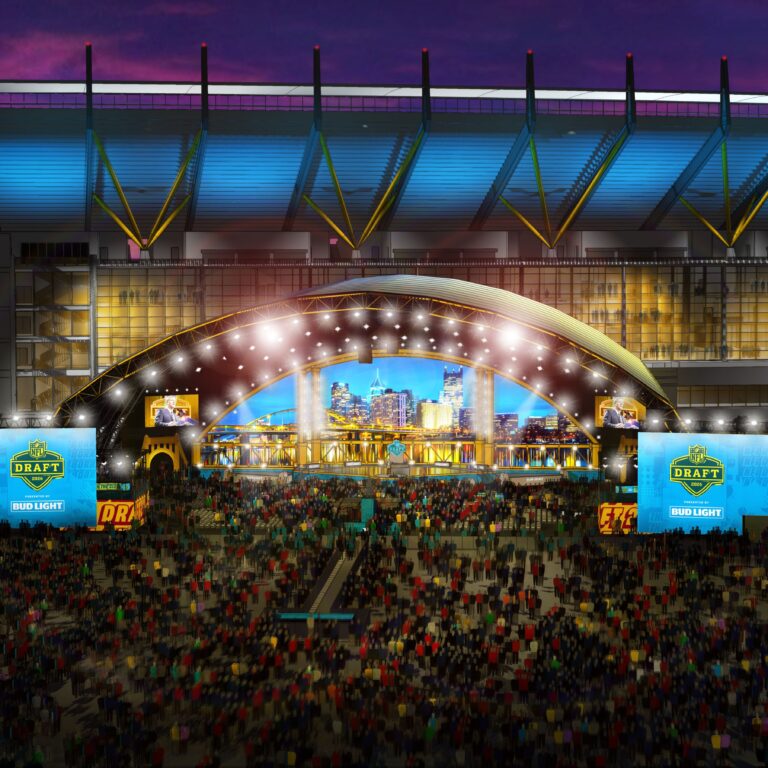
Simultaneously, the NFL landscape is being reshaped by a combination of draft strategy, roster turnover, and organizational philosophy. The Philadelphia Eagles are entering the 2026 draft cycle with a clear emphasis on offensive reinvention. Internal projections and external analysis point toward a strategy that prioritizes physicality at the line of scrimmage while adding dynamic playmakers capable of stretching defenses vertically and horizontally. This approach reflects a broader league-wide trend, where offensive versatility and adaptability are increasingly valued over traditional positional hierarchies.

The Eagles’ draft positioning and roster needs are being evaluated with precision, particularly as the franchise seeks to balance immediate competitiveness with long-term sustainability. For a team that has consistently remained within the upper tier of NFC contention, the upcoming draft represents an opportunity not merely to fill gaps, but to redefine the identity of the offense for the next competitive window.

Equally compelling is the situation surrounding the New York Giants, whose recent decision to trade star defensive tackle Dexter Lawrence has introduced both opportunity and controversy. The acquisition of a top-10 draft pick in exchange for one of the league’s most dominant interior defenders signals a willingness to embrace a transformative approach, prioritizing flexibility and future assets over established production. Yet the move has not been without criticism, as analysts and observers question the timing and long-term implications of parting with a cornerstone player.

The Giants now stand at a critical juncture, armed with premium draft capital and a range of potential directions. The fifth overall pick presents a strategic pivot point, where the organization can choose to reinforce the defensive front, invest in offensive firepower, or pursue a hybrid approach that reflects the increasingly fluid nature of roster construction in today’s NFL. Internal sentiment suggests confidence in the available talent pool, with particular attention being paid to prospects described as rare, high-impact athletes capable of altering the trajectory of a franchise.

Across all of these storylines, a unifying theme emerges: the acceleration of decision-making cycles within professional sports. Teams are no longer operating within extended rebuild timelines; instead, they are making aggressive, high-stakes moves designed to produce immediate and measurable results. This shift is evident in the Mets’ attempt to stabilize amid adversity, the Eagles’ targeted offensive strategy, and the Giants’ willingness to recalibrate their roster through bold transactions.

For New Jersey, this convergence of narratives reinforces the state’s unique position within the national sports ecosystem. While not all of these teams are physically based within its borders, their fan bases, media presence, and cultural impact are deeply rooted throughout the region. Coverage across Explore New Jersey’s sports section continues to reflect this dynamic, capturing the interplay between teams, markets, and the communities that support them.

What distinguishes this moment is not simply the volume of activity, but the level of strategic intent behind each move. Whether it is a baseball team attempting to defy historical precedent, a football franchise reengineering its offensive identity, or another leveraging draft capital to reshape its future, the underlying message is clear: adaptation is no longer optional—it is essential.

As the season progresses and the draft approaches, these narratives will continue to evolve, each carrying implications that extend beyond wins and losses. They will shape how teams are built, how games are played, and how fans engage with the sports they follow. In this environment, New Jersey remains at the crossroads of it all, a state where the pulse of professional athletics is not only observed but actively felt.

The coming weeks will determine whether the Mets can transform adversity into opportunity, whether the Eagles can execute a draft strategy that sustains their competitive edge, and whether the Giants’ bold decisions will ultimately redefine their trajectory. What is certain is that the current moment represents more than a series of headlines—it is a snapshot of a sports landscape in motion, driven by ambition, risk, and the relentless pursuit of relevance.

Rutgers Set to Transform Yurcak Field into RWJBarnabas Health Stadium as Strategic Partnerships Redefine Scarlet Knights Athletics

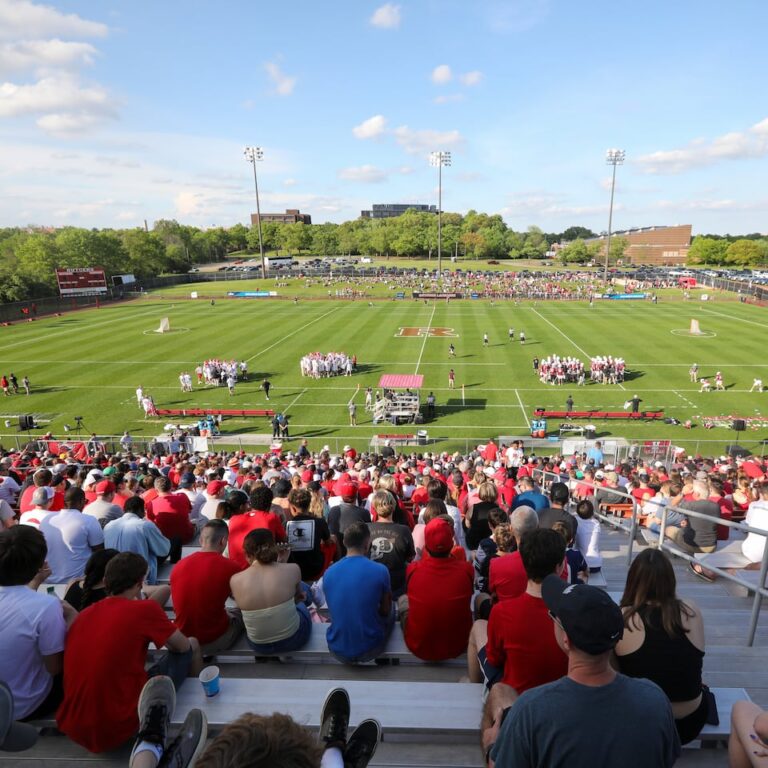
Rutgers University is preparing to take another decisive step in the evolution of its athletic infrastructure and financial model, as the Board of Governors is scheduled to vote on April 23, 2026, on a resolution that would rename Yurcak Field to RWJBarnabas Health Stadium. While on the surface the move represents a naming rights update, the implications run far deeper, signaling a continued alignment between higher education, healthcare leadership, and the business of collegiate athletics in New Jersey.

The facility at the center of this decision, Yurcak Field, has long served as a foundational venue within the Rutgers athletic ecosystem. With a capacity of approximately 5,000, it is home to the university’s men’s and women’s soccer programs as well as its lacrosse teams. Beyond its physical footprint, the venue has been an important part of Rutgers’ athletic identity for decades, hosting competition, development, and community engagement in equal measure. The proposed transition to RWJBarnabas Health Stadium represents both a modernization of that identity and a recalibration of how collegiate venues are positioned within broader institutional partnerships.

At the core of this transformation is Rutgers’ expanding relationship with RWJBarnabas Health, one of the largest and most influential healthcare systems in the state. Since 2018, the partnership has been anchored by a long-term commitment valued at $1 billion over 20 years, designed to advance medical research, healthcare innovation, and academic collaboration. The naming rights proposal for Yurcak Field is a natural extension of that relationship, reinforcing the integration between Rutgers’ academic mission and its athletic platform.

This is not the first visible manifestation of the partnership across Rutgers athletics. RWJBarnabas Health already holds naming rights to the university’s Athletic Performance Center, a critical training hub for basketball and gymnastics programs. By extending its presence to a competitive venue like Yurcak Field, the organization deepens its footprint within Rutgers’ public-facing athletic experience, connecting its brand directly with student-athletes, fans, and the broader New Jersey community.

The proposed renaming also reflects a broader strategic direction under Rutgers Athletic Director Pat Hobbs, who has aggressively pursued naming rights agreements and commercial partnerships as part of a comprehensive effort to stabilize and grow the department’s financial base. In an era where collegiate athletics are increasingly shaped by revenue generation, media exposure, and Name, Image, and Likeness dynamics, Rutgers has moved proactively to position itself within this evolving landscape.

This strategy is already visible across multiple flagship venues. SHI Stadium stands as the home of Rutgers football, carrying the naming rights of Somerset-based SHI International, while Jersey Mike’s Arena—formerly known as the RAC—serves as the centerpiece for basketball and wrestling. Each of these partnerships reflects a deliberate effort to align Rutgers athletics with major corporate stakeholders, creating a diversified revenue model that supports long-term competitiveness.

The introduction of Scarlet Knight Enterprises further reinforces this direction. Designed as a centralized entity to manage naming rights, sponsorships, and NIL opportunities, the initiative represents a structural shift toward a more sophisticated, business-oriented approach to collegiate athletics. By consolidating these functions under a unified framework, Rutgers is positioning itself to compete more effectively within the increasingly complex financial ecosystem of college sports.

At the same time, the proposed renaming raises important considerations regarding legacy and tradition. Yurcak Field was originally named in 1994 in honor of Ronald N. Yurcak, a 1965 All-American lacrosse player and a significant benefactor to the university. His contributions have been woven into the history of Rutgers athletics, and any transition involving the venue carries an inherent responsibility to preserve that legacy. University naming practices often incorporate measures to maintain recognition of original honorees within the facility, whether through dedicated spaces, commemorative installations, or continued historical acknowledgment. As Rutgers moves forward, balancing progress with respect for its past will remain a critical component of the process.

From a broader perspective, the potential transformation of Yurcak Field into RWJBarnabas Health Stadium reflects a larger trend across collegiate athletics, where institutional partnerships are becoming central to both identity and sustainability. Universities are increasingly leveraging their athletic platforms as extensions of their academic and research missions, creating ecosystems where branding, community engagement, and innovation intersect.

For Rutgers, this approach is particularly significant within the context of New Jersey’s competitive sports and academic landscape. As one of the state’s flagship public institutions, Rutgers carries the dual responsibility of representing New Jersey on the national stage while serving as a hub for local development and opportunity. Strategic partnerships like the one with RWJBarnabas Health enable the university to fulfill both roles, strengthening its infrastructure while enhancing its visibility and impact.

The timing of this proposal also aligns with a period of heightened attention on Rutgers athletics, with football, basketball, and Olympic sports programs all navigating a rapidly changing competitive environment. From high-profile scheduling decisions to ongoing investment in facilities and talent, the university is actively shaping its trajectory within the Big Ten and beyond. Coverage across Explore New Jersey’s Rutgers Scarlet Knights section continues to track these developments, highlighting the intersection of performance, strategy, and institutional growth.

As the Board of Governors prepares to cast its vote, the outcome will represent more than a naming decision. It will serve as a marker of Rutgers’ ongoing transformation—a signal of how the university is adapting to the realities of modern collegiate athletics while leveraging its partnerships to build a more resilient and forward-looking program.

In redefining Yurcak Field, Rutgers is not simply changing a name; it is reinforcing a vision. A vision where athletics, healthcare, education, and business converge to create a model that is both sustainable and ambitious. A vision that reflects the evolving identity of the Scarlet Knights and positions them firmly within the future of college sports.

American Music Honors 2026 Elevates New Jersey’s Cultural Authority as Springsteen, Dr. Dre, Patti Smith and Legends Converge at Monmouth University

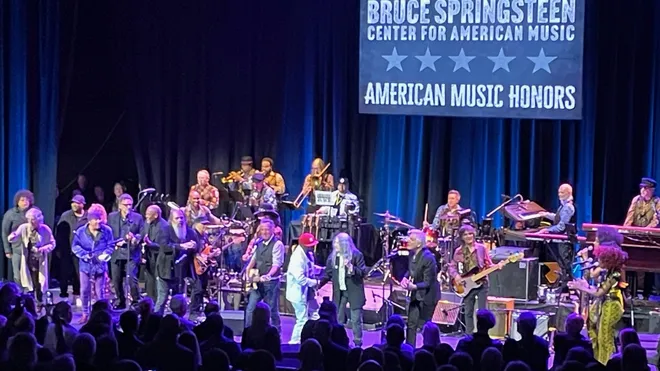
New Jersey’s position as a defining force in American music culture was reinforced in commanding fashion this past weekend as the fourth annual American Music Honors unfolded at Monmouth University’s Pollak Theatre in West Long Branch. What has rapidly become one of the most respected and intellectually grounded music recognition events in the country delivered a 2026 edition that not only celebrated legacy, but redefined the scope of influence that American music continues to hold across generations, genres, and cultural movements.

Hosted by the Bruce Springsteen Center for American Music, the American Music Honors has established itself as a distinctly New Jersey institution with national reach. Unlike traditional awards shows driven by commercial metrics, this ceremony is curated with intention, honoring artists whose contributions extend beyond charts and into the fabric of American identity itself. The result is an event that feels both intimate and monumental, grounded in scholarship yet alive with performance and presence.

The 2026 class of honorees represents one of the most expansive and genre-spanning lineups in the event’s short but impactful history. Dr. Dre’s induction marked a historic milestone as the first hip-hop artist to receive the honor, signaling a deliberate and necessary recognition of hip-hop’s foundational role in shaping modern American culture. Alongside him, Dionne Warwick’s inclusion underscored decades of vocal excellence and cultural diplomacy, while Patti Smith’s recognition reaffirmed her status as one of the most influential poetic voices in rock history. The E Street Band, synonymous with the sound of New Jersey itself, was honored for its enduring contribution to the American rock canon, while The Doors were recognized for their boundary-pushing artistry that continues to resonate across generations. A posthumous tribute to The Band added a layer of reverence, acknowledging a group whose influence remains embedded in the DNA of American roots music.

The evening was anchored by the presence of Bruce Springsteen, whose role extended beyond host and founder into that of active participant and collaborator. In one of the night’s defining moments, Springsteen joined John Densmore of The Doors for a performance of “Light My Fire,” a cross-generational collaboration that embodied the spirit of the event—artists from different eras converging in a shared celebration of music’s enduring power. The performance was not simply a highlight; it was a statement of continuity, illustrating how the threads of American music remain interconnected regardless of genre or time period.

Adding to the depth of the program, a distinguished group of presenters including Stevie Van Zandt, Jon Landau, and Jimmy Iovine brought industry perspective and historical context to the ceremony. Each introduction served as a narrative bridge, connecting the honorees’ achievements to broader cultural movements and reinforcing the intellectual framework that distinguishes the American Music Honors from conventional award platforms.

One of the most talked-about moments of the evening came with an unexpected collaboration that quickly reverberated across digital platforms. Flavor Flav joined Patti Smith on stage, creating a performance that merged punk poetry with hip-hop charisma in a way that felt both spontaneous and symbolically significant. It was a moment that encapsulated the event’s willingness to embrace the unexpected while highlighting the shared DNA that runs through seemingly disparate musical traditions.

Since its founding in 2023, the American Music Honors has built a legacy with remarkable speed. Each year’s honorees have reflected a carefully constructed narrative of American music history, from the inaugural class featuring Steve Earle, Stevie Van Zandt, Sam Moore, and Darlene Love, to subsequent ceremonies honoring icons such as John Mellencamp, Jackson Browne, Mavis Staples, Dion DiMucci, Smokey Robinson, John Fogerty, Emmylou Harris, Tom Morello, and Joe Ely. This progression has established the event as both a retrospective and a living archive, documenting the evolution of American music through the artists who have shaped it.

The Bruce Springsteen Center for American Music itself serves as the intellectual and cultural backbone of this initiative. As the official repository for Springsteen’s archives, the center extends its mission beyond preservation into active engagement, using the American Music Honors as a platform to explore the intersections of music, politics, identity, and social change. This dual function—archival and experiential—positions the center as one of the most important cultural institutions in the region.

For New Jersey, the implications are significant. The state’s music identity, long associated with iconic figures and historic venues, is now being institutionalized in a way that ensures its influence will be studied, celebrated, and expanded for generations to come. Through initiatives like the American Music Honors, New Jersey is not only reflecting on its past contributions but actively shaping the narrative of American music’s future.

This momentum aligns with the broader ecosystem highlighted across Explore New Jersey’s music coverage, where venues, festivals, and cultural programs continue to reinforce the state’s role as a live music and creative powerhouse. From intimate theaters to major arenas, and from grassroots events to globally recognized ceremonies, the infrastructure supporting New Jersey’s music scene is both deep and dynamic.

The American Music Honors stands at the center of this ecosystem as a flagship event that bridges academia, performance, and cultural discourse. It is a platform where legends are not only recognized but contextualized, where performances are not only delivered but interpreted, and where the audience is invited to engage with music as both art and history.

As the 2026 ceremony concludes, its impact extends far beyond a single evening. It reinforces New Jersey’s authority within the national music conversation, elevates the artists who have defined that conversation, and sets a new standard for how musical achievement can be honored with depth, authenticity, and purpose. In doing so, it ensures that the Garden State remains not just a birthplace of great music, but a steward of its legacy and a catalyst for its future.

New Jersey’s Wine Industry Hits a Defining Moment: Landmark Cape May Vineyard Auction, Statewide Events Surge, and a Digital Revolution Reshapes the Garden State Wine Trail

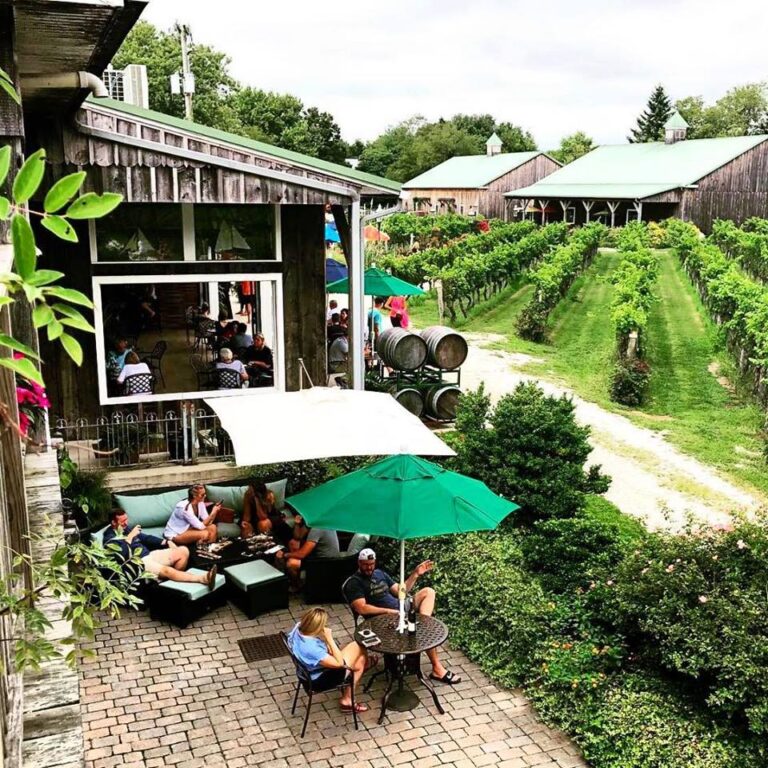
New Jersey’s wine industry is entering a decisive and highly visible new phase, marked by a rare convergence of market movement, statewide celebration, and structural innovation. At the center of today’s developments is a headline-grabbing shift along the Jersey Shore—a fully operational, 22-acre Cape May County vineyard producing 14 distinct wines has officially been placed on the auction block. Positioned as a turnkey winemaking operation, the listing signals more than a real estate transaction; it represents a pivotal inflection point for one of the fastest-evolving agricultural sectors in the state.

The Cape May region has long stood as a cornerstone of New Jersey viticulture, benefiting from coastal microclimates that support a diverse range of varietals and styles. A vineyard of this scale and maturity entering auction introduces both uncertainty and opportunity. For investors, winemakers, and industry operators, it presents a rare chance to acquire an established production ecosystem—land, vines, infrastructure, and brand equity—in one of the state’s most strategically valuable wine corridors. For the broader industry, it underscores a transition period where growth, consolidation, and reinvention are unfolding simultaneously.

This moment arrives as New Jersey’s wine identity continues to expand beyond its historical perception, driven by coordinated efforts across producers, associations, and regional tourism platforms. Coverage across the state’s evolving vineyard landscape can be explored through Explore New Jersey’s wine and wineries section, where the ongoing narrative of innovation, craftsmanship, and destination-driven experiences continues to accelerate.

In parallel with the Cape May development, the Garden State Wine Growers Association has announced one of the most ambitious statewide initiatives to date. “Sips, Stars & Stripes,” scheduled for May 30 at the historic War Memorial in Trenton, is positioned as a flagship celebration aligned with the America 250 milestone. More than a festival, the event is being framed as a declaration of the “New Jersey Wine Revolution,” a movement that recognizes both the industry’s agricultural roots and its rapidly modernizing identity. By anchoring the event in a landmark civic venue, organizers are elevating New Jersey wine from a niche attraction to a central cultural and economic asset.

This elevation is reinforced by the launch of a statewide Digital Passport Program, developed in partnership with Loyal Brew. The platform introduces a technology-driven layer to wine tourism, allowing visitors to track their journeys across more than 60 wineries directly from their mobile devices. The implications are significant. By gamifying exploration and rewarding engagement, the program transforms the traditional tasting trail into a data-informed, repeat-visit ecosystem that benefits both consumers and producers. It also positions New Jersey as a leader in integrating digital infrastructure into regional agritourism.

Recognition on the national stage continues to validate the quality emerging from New Jersey vineyards. Saddlehill Winery’s recent “Best of Class” honor for its red blend at the 2026 San Francisco Chronicle Wine Competition serves as a benchmark achievement, reinforcing that the Garden State is not only expanding in volume but also competing at the highest levels of craftsmanship. At the same time, Unionville Vineyards in Ringoes remains a defining standard-bearer, holding 90-plus point scores from multiple major critics, a distinction unmatched within the state and a powerful signal of consistency and excellence.

Beyond accolades and infrastructure, the heartbeat of New Jersey’s wine industry remains its experiential dimension, and the current calendar reflects a surge in high-quality, consumer-facing events. Terhune Orchards continues to anchor the Mercer County scene with its Winery Weekend Music Series, blending live performances with open-air tastings that capture the seasonal transition into spring. Its Mother’s Day Wine Trail Weekend offering elevates the experience further, combining curated tastings, orchard views, and live entertainment into a format designed for both celebration and immersion.

White Horse Winery adds a complementary dimension with its Sip and Shop Sundays, where local artisan markets intersect with vineyard culture, reinforcing the role of wineries as community gathering spaces. Meanwhile, the Down & Derby Wine Festival at Veterans Island in Cooper River Park introduces a themed, high-energy format, merging fashion, music, and up to 20 tastings into a single-day destination event that appeals to both seasoned enthusiasts and new audiences.

Statewide, the upcoming Mother’s Day Wine Trail Weekend, running May 8 through May 10, is expected to drive significant traffic across participating wineries, each offering specialized programming ranging from brunch pairings to live performances. These coordinated efforts reflect a broader strategic shift toward unified, large-scale activations that amplify visibility and encourage cross-regional exploration.

Value-driven access remains a key component of the industry’s growth strategy. In Hunterdon County, the ongoing “2 for $26” tasting initiative provides an entry point for consumers to experience multiple wineries within a single region, lowering barriers and increasing exposure. At the same time, specialty retailers such as The Wine Cellar in Red Bank are contributing to the narrative with curated events like Earth Day samplings focused on organic and sustainable wines, reinforcing the industry’s alignment with environmental consciousness.

Taken together, these developments illustrate an industry that is no longer emerging—it is asserting itself. The Cape May vineyard auction highlights the scale and seriousness of investment now associated with New Jersey wine. The launch of statewide events and digital infrastructure demonstrates a coordinated effort to modernize and expand reach. National awards validate quality, while an increasingly sophisticated event calendar ensures sustained consumer engagement.

For Explore New Jersey, this moment represents more than coverage; it is an opportunity to define and amplify a narrative that is rapidly gaining national attention. The Garden State’s wine industry is not simply growing—it is evolving into a fully realized ecosystem where agriculture, technology, tourism, and culture intersect with precision.

As the auction unfolds in Cape May and the calendar fills with high-impact events, one reality becomes clear: New Jersey wine is no longer a regional curiosity. It is a dynamic, competitive, and increasingly influential sector that is reshaping how the state is experienced, both from within and far beyond its borders.

Montclair State University Redefines Campus Dining with Farm Box CSA Program, Bringing Fresh New Jersey Agriculture Directly to Students’ Meal Plans

In a state where agriculture remains one of the most quietly powerful economic and cultural forces, Montclair State University has introduced a program that does more than improve student meals—it reimagines how the next generation connects with local farming, sustainability, and nutrition. The university’s Farm Box Program, now integrated directly into student meal plans, represents a forward-thinking shift in how higher education institutions can embed real-world food systems into everyday campus life.

At its core, the initiative is simple, but its implications are far-reaching. Each week, students can order a curated box of fresh, seasonal produce—typically six to eight items—grown by regional farms and delivered in a format designed specifically for the realities of college life. In an environment where convenience often dictates dietary habits, Montclair State is effectively closing the gap between accessibility and quality, making farm-fresh food as easy to obtain as any standard takeout option.

This program aligns seamlessly with the broader agricultural narrative unfolding across the state, where initiatives highlighted through Explore New Jersey’s agriculture and farming coverage continue to spotlight innovation, resilience, and local impact. New Jersey’s agricultural sector, comprising nearly 10,000 farms, plays a critical role in sustaining regional food systems, yet remains underutilized in institutional dining frameworks. Montclair State’s model changes that equation by embedding local sourcing directly into student consumption patterns.

The Farm Box Program operates under the well-established Community Supported Agriculture model, a system that emphasizes shared investment between producers and consumers. Instead of selecting individual grocery items, participants receive a rotating selection of what is being harvested at peak freshness across the Mid-Atlantic region. This approach not only guarantees quality but also introduces an element of discovery, encouraging students to engage with ingredients they may not otherwise encounter.

What sets Montclair State’s initiative apart is its deliberate focus on usability. Recognizing that students are often navigating limited time, space, and culinary experience, each box includes practical, easy-to-follow recipes tailored to the contents. This transforms the program from a simple produce delivery service into an educational platform—one that teaches cooking fundamentals, reduces food waste, and builds long-term habits around nutrition. A past inclusion of carrots paired with a carrot-top pesto recipe is emblematic of this philosophy, demonstrating how overlooked ingredients can be repurposed into flavorful, sustainable meals.

Equally important is the program’s integration into the campus financial ecosystem. Students, faculty, and staff can purchase boxes directly through Grubhub, using dining dollars or traditional payment methods, with pricing structured at approximately $22 per box and no long-term commitment required. This flexibility removes traditional barriers associated with CSA participation, which often require upfront seasonal buy-ins that are impractical for transient or budget-conscious populations.

Behind the scenes, the program is powered by a sophisticated regional supply chain anchored by Common Market Mid-Atlantic, a nonprofit food distributor that connects institutions with a network of more than 80 family farms. This partnership ensures that every box represents not just a collection of produce, but a direct investment in independent agriculture. It is a model that strengthens local economies while providing farmers with consistent, institutional-level demand—an increasingly critical factor in the sustainability of small and mid-sized operations.

From a public health standpoint, the initiative arrives at a pivotal moment. College students, often managing intense academic and social schedules, are among the most vulnerable demographics when it comes to nutritional compromise. Fast food and processed options dominate campus environments nationwide, contributing to long-term health risks that extend far beyond graduation. By embedding fresh produce into the daily rhythm of campus life, Montclair State is proactively addressing this issue at its root.

From an environmental perspective, the benefits are equally compelling. Local sourcing reduces transportation emissions, while the CSA structure minimizes packaging waste and overproduction. The program’s emphasis on whole ingredients and waste-conscious recipes further reinforces sustainable consumption practices, positioning students not just as consumers, but as informed participants in a more responsible food system.

What is emerging in Montclair is not an isolated initiative, but a scalable blueprint. As universities across the country grapple with rising demand for healthier, more sustainable dining options, the Farm Box Program offers a replicable model that aligns institutional priorities with regional agricultural strengths. It demonstrates that with the right infrastructure and partnerships, local food systems can be seamlessly integrated into even the most fast-paced environments.

For New Jersey, the significance is particularly profound. The state’s agricultural identity, often overshadowed by its proximity to major metropolitan areas, is being reasserted through programs like this—programs that connect urban and suburban populations directly with the land that sustains them. By bringing the harvest into the hands of students, Montclair State is not only enhancing campus life, but also reinforcing the value of local farming in a modern, interconnected economy.

Readers interested in exploring more about the evolving landscape of farming, sustainability, and local food initiatives across the state can visit Explore New Jersey’s agriculture and farming section, where ongoing coverage continues to highlight the people, programs, and innovations shaping the future of New Jersey agriculture.

In redefining what a campus meal plan can be, Montclair State University has positioned itself at the forefront of a movement that extends well beyond the dining hall. It is a model built on accessibility, education, and community—one that reflects the best of what New Jersey has to offer, and one that signals a smarter, more connected future for how we grow, distribute, and consume food.

New Jersey Devils 2025–26 Season Awards: Jack Hughes Leads a Defining Year of Individual Excellence Amid Team Transition

The New Jersey Devils’ 2025–26 season will ultimately be remembered as a year of recalibration, resilience, and unmistakable individual brilliance. While the team fell short of postseason qualification, finishing seventh in the Metropolitan Division, the internal story tells something far more compelling—one defined by elite performances, emerging depth, and a roster that continues to evolve into a formidable force for the future.

Award WinnerKey Highlights
Team MVPJack HughesLed the team in points (77) and assists (50) despite undergoing hand surgery during the season.
Best ForwardNico HischierLed the team with 28 goals and excelled in all situations, including 1,008 faceoff wins.
Best DefensemanJonas SiegenthalerSkated in all 82 games for the first time and served as a steady anchor on the penalty kill.
Most ImprovedCody GlassScored a career-high 19 goals and emerged as a reliable third-line center.
Biggest SurpriseArseny GritsyukEarned 31 points in 66 games in his rookie season, proving to be a bright spot in the middle six.
Best AcquisitionConnor BrownRecorded 18 goals and 43 points, becoming a top contributor on both the top line and penalty kill.

At the center of that narrative stands Jack Hughes, whose selection as Team MVP underscores both his impact and his importance to the organization’s trajectory. Despite missing time due to injury and undergoing hand surgery, Hughes still led the Devils in both total points and assists, finishing with 77 points and 50 helpers. His ability to produce at an elite level under less-than-ideal circumstances not only reinforced his status as the team’s offensive engine, but also highlighted a level of consistency and competitive drive that defines franchise-level talent.

As coverage across Explore New Jersey’s Devils section continues to follow the team’s progression, this year’s awards offer a detailed snapshot of where the roster stands—and more importantly, where it is headed. While the standings may not reflect the ultimate goal, the internal recognition of key contributors reveals a foundation that remains both stable and promising.

Nico Hischier’s recognition as Best Forward further reinforces the leadership structure that continues to define the Devils. Serving as both a primary offensive contributor and a defensive cornerstone, Hischier led the team with 28 goals while dominating in the faceoff circle, recording over 1,000 wins. His ability to perform in all situations—power play, penalty kill, and even-strength—positions him as one of the most complete centers in the league. Beyond the numbers, his presence anchors the team’s identity, providing a level of reliability that extends across every aspect of the game.

On the defensive side, Jonas Siegenthaler’s selection as Best Defenseman reflects a season defined by durability and consistency. Skating in all 82 games for the first time in his career, Siegenthaler became a stabilizing force on the blue line, particularly in penalty-kill situations. His role may not always command headlines, but his impact is foundational, providing the structural integrity that allows the team’s more offensively inclined players to operate with confidence.

One of the most encouraging developments of the season came in the form of Cody Glass, whose recognition as Most Improved signals a significant step forward in his career. Recording a career-high 19 goals, Glass emerged as a dependable presence in the middle six, offering both scoring depth and positional versatility. His progression adds another layer to the Devils’ forward group, strengthening the overall lineup and creating additional matchup flexibility.

Equally notable was the emergence of Arseny Gritsyuk, named the Biggest Surprise after a rookie campaign that delivered 31 points in 66 games. His ability to integrate quickly into the NHL environment and contribute consistently speaks to both his skill set and his adaptability. For a team looking to build sustainable success, the development of players like Gritsyuk represents a critical component of long-term growth.

The acquisition of Connor Brown proved to be one of the most impactful roster decisions of the season, earning him recognition as Best Acquisition. With 18 goals and 43 points, Brown contributed across multiple roles, including top-line minutes and penalty-kill responsibilities. His versatility and work ethic provided immediate value, reinforcing the importance of strategic additions that complement the team’s core.

Beyond the internal awards, the Devils also saw representation in league-wide recognitions that reflect both character and perseverance. Brenden Dillon’s nomination for the Bill Masterton Memorial Trophy stands as a testament to his commitment and resilience, returning to play all 82 games following artificial disc replacement surgery. His season embodies the kind of determination that resonates far beyond statistics, representing the physical and mental demands of the game at its highest level.

The organization’s nomination for the King Clancy Memorial Trophy further highlights its ongoing commitment to community engagement and leadership off the ice. These recognitions serve as a reminder that the Devils’ impact extends beyond the rink, contributing to the broader fabric of the communities they represent.

Taken together, the 2025–26 season awards provide a layered and comprehensive view of the Devils’ current position. While the absence of playoff hockey remains a clear point of focus moving forward, the individual performances recognized throughout the roster tell a different story—one of progress, development, and a team that continues to build toward sustained competitiveness.

What becomes increasingly clear is that the Devils are not defined solely by their place in the standings. They are defined by the caliber of their core, the emergence of new contributors, and the resilience shown in the face of adversity. Jack Hughes’ MVP season serves as the headline, but it is the collective effort of players across the lineup that shapes the broader narrative.

As the organization transitions into the next phase, the foundation established during this season will play a critical role. The combination of elite talent, growing depth, and a commitment to both performance and character positions the Devils as a team that remains firmly on the rise.

In a league where success is often measured in incremental gains, the 2025–26 New Jersey Devils have taken meaningful steps forward. The awards may mark the conclusion of one season, but they also signal the beginning of what comes next—a continued push toward a standard that aligns with both the expectations of the franchise and the passion of its fan base.

Step Back in Time on the Whippany River Ramble: A Device-Free Historic Train Experience Returns to New Jersey This May

New Jersey’s spring calendar continues to reveal experiences that go far beyond the expected, and on Sunday, May 17, 2026, one of the state’s most distinctive and immersive outings returns with the Whippany River Ramble Excursion Train at the Whippany Railway Museum. In an era defined by constant connectivity and digital noise, this carefully curated 45-minute journey offers something increasingly rare: a deliberate invitation to disconnect, look outward, and engage fully with both history and the natural world.

As audiences across the region search for meaningful ways to spend their time, events like this exemplify why readers consistently turn to Explore New Jersey’s activities and fun coverage to uncover experiences that combine education, recreation, and authenticity. The Whippany River Ramble is not simply a train ride—it is a reintroduction to a slower, more intentional way of experiencing the world.

Departing from the Whippany Railway Museum at 1 Railroad Plaza, the excursion operates at multiple departure times throughout the afternoon, with rides scheduled at 1:00 PM, 2:00 PM, 3:00 PM, and 4:00 PM. Each journey follows the historic Whippanong Trail, a route that carries passengers through Whippany, East Hanover, Livingston, and Roseland, offering a cross-section of landscapes that reflect both the region’s industrial past and its enduring natural beauty.

The defining element of the Whippany River Ramble is its device-free approach. Passengers are encouraged to step away from phones, cameras, and screens, creating an environment where attention shifts naturally to the surroundings. This intentional design transforms the ride into something far more immersive than a typical excursion. Without the distraction of technology, the rhythm of the rails, the movement of the landscape, and the subtle details of the environment take center stage.

The route itself is rich with both geological and historical significance. As the train moves through the remnants of prehistoric Glacial Lake Passaic, passengers are presented with a landscape shaped thousands of years ago, now home to a variety of wildlife. Deer, turtles, and hawks are commonly spotted along the way, adding an element of unpredictability and connection to the natural world. The crossing of a steel bridge high above the Passaic River serves as a visual and experiential highlight, offering a perspective that is both expansive and grounded in the region’s railroad heritage.

The Whippany Railway Museum enhances this experience through its commitment to preserving and presenting historic rail equipment. Riders have the option to choose between traditional caboose seating and premium club car accommodations, each offering a distinct perspective on the journey. The caboose provides a more rugged, hands-on experience, connecting passengers directly to the working history of the railroad. It is a choice that emphasizes authenticity, placing riders in the same environment once occupied by train crews navigating the rails.

For those seeking a more refined experience, the museum’s premium club cars offer a meticulously restored glimpse into early 20th-century rail travel. Cars such as the 1927 “Jersey Coast” recreate the atmosphere of what was once known as the “Millionaire’s Express,” featuring rich mahogany interiors, individual leather seating, built-in tables, and period-accurate ceiling fans. Stained glass accents and historically accurate exterior detailing complete the transformation, creating an environment that feels both luxurious and historically grounded.

Another standout is the Lackawanna No. 2454, a 1912 subscription car that once catered to an exclusive group of commuters. Its restoration preserves the craftsmanship and design that defined an era when rail travel was as much about the experience as it was about the destination. Unlike the more utilitarian cabooses, these premium cars are equipped with modern climate control, ensuring comfort regardless of weather conditions while maintaining their historical integrity.

Admission to the Whippany River Ramble extends beyond the train ride itself. Ticket holders are granted access to the Whippany Railway Museum’s grounds and exhibits, allowing for a deeper exploration of railroad history. The museum’s collection includes artifacts, restored equipment, and operating model trains, providing context and continuity to the experience. It transforms a single excursion into a broader engagement with the region’s transportation heritage.

Pricing for the event reflects its accessibility while accommodating different levels of experience. Caboose seating typically ranges from approximately $13 to $18, offering an entry point for families and casual visitors, while premium club car tickets range from approximately $23 to $26, providing an elevated experience for those seeking additional comfort and historical detail. Each ticket also includes a commemorative keepsake, reinforcing the event’s focus on memory and tangible connection.

The Whippany River Ramble is also part of a larger seasonal programming schedule that positions the museum as a year-round destination for experiential events. Following the May excursion, the calendar continues with themed rides such as the Father’s Day Excursion in June, Grandparent’s Day in September, Military Transport Day, and the widely anticipated Pumpkin Patch Train in October. Each event builds on the museum’s core mission while offering unique variations that appeal to different audiences and interests.

What ultimately distinguishes the Whippany River Ramble is its ability to operate at the intersection of history, nature, and intentional experience. It is not designed for spectacle or rapid consumption. Instead, it offers a measured, thoughtful alternative—a chance to engage with the environment, reflect on the region’s past, and participate in an activity that feels both grounded and meaningful.

In the context of New Jersey’s broader offerings, this event represents a growing appreciation for experiences that prioritize depth over distraction. It aligns with a statewide movement toward programming that invites participation rather than passive observation, where the value lies not just in what is seen, but in how it is experienced.

On May 17, as the train departs along the Whippanong Trail, passengers will find themselves part of something that extends beyond a single afternoon. It is a return to a way of traveling—and a way of seeing—that has become increasingly rare, yet remains as powerful and relevant as ever.

MISH 15th Anniversary Concert – Bach’s Mass in B Minor

0

Morristown Becomes the Center of the Classical Music World as Music in the Somerset Hills Celebrates 15 Years with Bach’s Monumental Mass in B Minor

April 25 @ 3:00 PM 5:00 PM

In a season already rich with world-class performances across the Garden State, one event rises above as both a cultural milestone and a defining artistic statement. On Saturday, April 25, 2026, Morristown will host a performance of Johann Sebastian Bach’s Mass in B Minor that is as ambitious as it is historic, marking the 15th anniversary of Music in the Somerset Hills (MISH) with a production that places New Jersey firmly at the center of the global classical music conversation.

Set within the resonant, cathedral-like acoustics of St. Mary’s Abbey Church at Delbarton School, this performance is not simply another concert—it is a culmination of fifteen years of artistic growth, community engagement, and uncompromising commitment to musical excellence. For Music in the Somerset Hills, this is a long-anticipated “bucket list” achievement: the first time the organization has undertaken Bach’s towering masterpiece, a work widely regarded as one of the greatest compositions in the history of Western music.

From 3:00 PM to 5:30 PM, audiences will experience the full breadth and emotional architecture of this two-hour opus, a composition that transcends its liturgical roots to become a universal expression of humanity, faith, and artistic genius. The choice to present the Mass in B Minor as the centerpiece of this anniversary celebration is both deliberate and symbolic. It reflects not only the scale of MISH’s ambitions, but also its evolution into a cultural institution capable of delivering performances of rare depth, complexity, and historical integrity.

The production itself is a masterclass in collaboration. At its core is the Somerset Hills Chorus, joined by additional vocal forces from the esteemed Harmonium Choral Society, creating a choral ensemble of remarkable power and nuance. These voices will be supported by The Sebastians, a nationally acclaimed period-instrument ensemble known for its meticulous attention to Baroque performance practice. Together, they form a musical force capable of bringing Bach’s intricate counterpoint and sweeping choral movements to life with authenticity and clarity.

Under the direction of Artistic Director Stephen Sands, the performance will embrace historically informed interpretation, a critical approach that seeks to recreate the sound world Bach himself would have known. This includes not only the use of period instruments, but also a refined understanding of Baroque phrasing, articulation, and tempo. Sands’ leadership ensures that every detail—from the delicate interplay of solo voices to the grandeur of the full chorus—will be shaped with precision and purpose, tailored specifically to the acoustics of the Abbey Church.

That setting is no small detail. St. Mary’s Abbey Church offers an environment uniquely suited to this repertoire, where sound is allowed to bloom and resonate, enveloping the audience in a sonic experience that is both immersive and transcendent. It is precisely the kind of space for which Bach’s sacred works were conceived, and its role in this performance cannot be overstated. The architecture becomes an extension of the music itself, amplifying its emotional impact and reinforcing its spiritual dimensions.

Beyond its technical and artistic achievements, the Mass in B Minor holds a deeper significance that aligns seamlessly with MISH’s mission. This is a work that speaks across centuries, cultures, and belief systems, uniting listeners through its profound exploration of human expression. Its movements range from moments of intimate reflection to overwhelming grandeur, weaving together themes of devotion, joy, sorrow, and redemption into a cohesive whole that continues to resonate with modern audiences.

For New Jersey’s cultural landscape, this performance represents something larger than a single afternoon of music. It underscores the state’s growing reputation as a destination for serious, high-caliber artistic programming. Through initiatives like those highlighted across the Explore New Jersey music scene, audiences are increasingly discovering that world-class performances are not confined to major metropolitan centers—they are thriving right here, in communities like Morristown.

Music in the Somerset Hills has been a driving force behind that evolution. Over the past fifteen years, the organization has consistently elevated the standard for classical music presentation in the region, bringing together top-tier musicians, innovative programming, and a dedication to accessibility that invites both seasoned concertgoers and new audiences into the experience. This anniversary concert stands as a testament to that legacy, showcasing not only where MISH has been, but where it is headed.

Tickets for the event are available through the official Music in the Somerset Hills website, and demand is expected to be significant. For those who understand the rarity of experiencing Bach’s Mass in B Minor performed at this level, the opportunity is not one to be missed. It is the kind of performance that defines a season, a milestone that will be remembered long after the final notes have faded.

As April 25 approaches, anticipation continues to build—not just within the classical music community, but across the broader cultural landscape of New Jersey. This is more than an anniversary celebration. It is a declaration of artistic intent, a statement that New Jersey is not merely participating in the world of great music, but actively shaping it.

For anyone seeking a definitive cultural experience this spring, Morristown is the place to be. On that Saturday afternoon, within the walls of St. Mary’s Abbey Church, Bach’s masterpiece will unfold in all its complexity and beauty, carried by voices and instruments at the height of their powers. It is an event that captures the essence of what live music can achieve—and a reminder of why it continues to matter.

Music in the Somerset Hills (MISH)

(973) 339-7719

View Organizer Website

The Barn Theatre

32 Skyline Dr
Montville, New Jersey 07045 United States
+ Google Map
(973) 334-9320
View Venue Website

Philadelphia Flyers Strike First: Game 1 Victory Over Pittsburgh Signals a New Era of Playoff Hockey – Full Game Highlights!

The Philadelphia Flyers opened their Eastern Conference quarterfinal series with a statement performance, defeating the Pittsburgh Penguins 3–2 in Game 1 and immediately shifting the tone of what promises to be one of the most tightly contested matchups of the postseason. For a franchise reestablishing its identity and pushing forward with a new generation of talent, this was more than a win—it was a declaration that the Flyers are not simply back in the playoffs, but built to compete in them.

As coverage across Explore New Jersey’s Philadelphia Flyers section continues to track the evolution of this team, Game 1 stands as a defining early chapter.

It combined physical dominance, defensive discipline, and timely scoring—three elements that have long defined successful playoff hockey, and three that Philadelphia executed with precision from the opening puck drop.

The tone was established immediately in the first period, where the Flyers delivered a relentless physical presence, recording 17 hits in the opening frame alone.

While the scoreboard remained unchanged through the first twenty minutes, the message was unmistakable. Philadelphia was dictating pace, imposing structure, and forcing Pittsburgh into a reactive posture. This was not a tentative playoff return—it was an assertive, calculated effort designed to disrupt rhythm and control the flow of the game.

That control translated into offense in the second period, when defenseman Jamie Drysdale broke through with the first goal of the series for Philadelphia. In what marked his first career playoff goal, Drysdale’s contribution was emblematic of a Flyers roster that is increasingly driven by mobility from the blue line. His ability to activate offensively while maintaining defensive responsibility reflects a broader structural shift within the team—one that prioritizes speed, transition, and layered support across all positions.

Pittsburgh answered later in the period through veteran presence, with Evgeni Malkin finding the equalizer and briefly restoring balance. However, the response from Philadelphia was not one of hesitation. Instead, it set the stage for a third period that would ultimately define the outcome.

At the ten-minute mark of the final frame, Travis Sanheim delivered one of the most critical plays of the night, splitting two defenders and converting the go-ahead goal with authority. It was a sequence that encapsulated both individual skill and situational awareness, reinforcing Sanheim’s role as a cornerstone on the Flyers’ defensive unit. Logging over 23 minutes of ice time, his performance extended beyond the score sheet, anchoring a defensive structure that consistently limited Pittsburgh’s opportunities.

The defining moment, however, came from the youngest player on the ice. Nineteen-year-old rookie Porter Martone, selected sixth overall in the 2025 NHL Draft, delivered a performance that validated both his selection and his rapid integration into the lineup. With 2:37 remaining in regulation, Martone fired a quick-release wrist shot from the right circle, extending Philadelphia’s lead and ultimately providing the game-winning goal.

Martone’s impact extended beyond that single play. Standing at 6’3”, he brought a physical presence that was evident throughout the game, engaging confidently against established veterans and contributing to the Flyers’ overall intensity. His willingness to compete in high-pressure situations, combined with his offensive instincts, positions him as a player capable of influencing the trajectory of the series. In his playoff debut, he did not simply participate—he imposed himself on the game.

Pittsburgh’s late push, culminating in a goal from Bryan Rust with just over a minute remaining, introduced a final surge of pressure, but Philadelphia’s defensive structure held firm. Goaltender Dan Vladar delivered a composed and efficient performance, limiting the Penguins to just 17 total shots and making several critical saves in the closing seconds to secure the victory. His control of rebounds and ability to track the puck under pressure were essential in preserving the lead, particularly as Pittsburgh intensified its attack.

The Flyers’ defensive framework, orchestrated with discipline and clarity, played a central role in the outcome. The pairing of Sanheim and Rasmus Ristolainen was tasked with matching against Pittsburgh’s top line, effectively neutralizing key threats while contributing offensively. Cam York and Jamie Drysdale provided mobility and puck movement from the second pairing, while Nick Seeler and Emil Andrae reinforced the third unit with physicality and shot-blocking. The cohesion across all three pairings created a layered defense that limited space, disrupted passing lanes, and forced turnovers.

Equally significant was the execution of Philadelphia’s neutral zone strategy. The 1-2-2 alignment was implemented with near precision, clogging the middle of the ice and preventing Pittsburgh from establishing clean entries. This approach not only reduced shot volume but also disrupted the Penguins’ ability to generate sustained offensive pressure. It is a system that requires discipline and synchronization, and in Game 1, the Flyers delivered both.

With the series now at 1–0 in favor of Philadelphia, attention turns to Game 2 in Pittsburgh, where adjustments are inevitable. The Penguins are expected to respond with increased aggression through the neutral zone and a greater emphasis on generating shots from high-danger areas. For the Flyers, the challenge will be to maintain their structural integrity while adapting to the anticipated counterpunch.

Game 3 and Game 4, scheduled to shift to Philadelphia, present an opportunity for the Flyers to build momentum on home ice, where energy and crowd engagement can further amplify their style of play. However, the foundation has already been established. Game 1 was not an anomaly—it was a blueprint.

What this performance ultimately revealed is a team that understands its identity. The Flyers are not relying on a single line or isolated moments of brilliance. They are operating as a cohesive unit, where physicality, structure, and opportunistic scoring converge to create a sustainable model for playoff success. The emergence of young talent like Porter Martone, combined with the stability of experienced contributors, has created a roster capable of competing at multiple levels.

As the series progresses, the significance of this opening victory will continue to resonate. It sets a standard, establishes confidence, and places Philadelphia in a position of control. In the context of a postseason defined by margins and momentum, those elements are not just advantages—they are essential.

For a franchise looking to redefine its place in the league, Game 1 was a powerful step forward. The Flyers have arrived in the postseason with clarity, purpose, and a style of play that translates when it matters most.

Nacho Ate Spiderman

0

“Nacho Ate Spiderman” Brings Sharp Comedy and Suburban Collision to New Jersey Repertory Company This October

October 29 @ 7:00 PM November 1 @ 11:30 PM

New Jersey’s theatre scene continues to push beyond expectations, delivering work that is as entertaining as it is incisive, and this fall, New Jersey Repertory Company once again positions itself at the forefront of that movement with Nacho Ate Spiderman, opening October 1 at 7:00 PM in Long Branch. Set within the company’s intimate performance space at 179 Broadway, this production arrives with a deceptively playful title and a premise that quickly evolves into something far more layered, offering audiences a comedic experience that cuts deep into the realities of modern community life.

As audiences across the state increasingly seek theatre that balances humor with substance, productions like this highlight why readers continue to rely on Explore New Jersey’s theatre coverage to discover performances that resonate beyond the surface. Nacho Ate Spiderman is not simply a comedy—it is a carefully constructed examination of how quickly civility can unravel when personal boundaries, values, and identities collide.

At its core, the story begins with what appears to be a minor neighborhood incident: the disappearance of a prized rabbit named Spiderman. Not just any pet, Spiderman is an award-winning, meticulously bred animal whose absence carries emotional and symbolic weight for its owner. Suspicion immediately falls on Nacho, a recently adopted rescue dog whose friendly demeanor and recent escape under the dividing fence between properties place him squarely at the center of the controversy. What follows is not a straightforward mystery, but a rapidly escalating conflict between neighbors whose differences extend far beyond their pets.

The setting—a sunny, progressive beach community—initially suggests harmony, openness, and shared values. However, as the narrative unfolds, that surface-level cohesion begins to fracture. The incident involving the animals becomes a catalyst for something much larger, exposing underlying tensions, assumptions, and contradictions that had previously remained unspoken. The humor emerges not from exaggeration alone, but from recognition—audiences see reflections of real-world dynamics in the characters’ reactions, decisions, and escalating disputes.

What distinguishes Nacho Ate Spiderman is its ability to operate on multiple levels simultaneously. On one level, it delivers the fast-paced, character-driven comedy that audiences expect, complete with sharp dialogue and escalating situations. On another, it functions as a commentary on contemporary social interaction, exploring how identity, ideology, and personal values intersect—and often clash—within close-knit communities. The result is a production that invites laughter while also encouraging deeper reflection.

New Jersey Repertory Company provides an ideal environment for this kind of work. Known for its commitment to developing and presenting new plays, the company has built a reputation for bringing bold, original voices to the stage. Its theatre space is designed to eliminate distance between performer and audience, creating an immediate and immersive experience where every line, gesture, and reaction carries weight. In a production like Nacho Ate Spiderman, where timing and nuance are critical, this proximity enhances both the comedic impact and the underlying tension.

The October 1 performance, priced at $65.00 including fees, represents more than a night of entertainment—it is an opportunity to engage with a work that reflects the complexities of modern life through the lens of humor. The play’s structure allows for a gradual escalation, beginning with a seemingly contained dispute and expanding into a broader examination of how individuals navigate conflict, defend their perspectives, and ultimately reveal their true selves under pressure.

From a performance standpoint, the material demands precision and versatility. The characters are not caricatures; they are fully realized individuals whose motivations, contradictions, and vulnerabilities drive the narrative forward. The actors must balance comedic timing with emotional authenticity, ensuring that the humor never undermines the stakes, and that the stakes never overshadow the humor. This balance is essential to the play’s effectiveness, and within the framework of New Jersey Repertory Company’s production approach, it is given the attention it requires.

Thematically, Nacho Ate Spiderman aligns with a broader shift within New Jersey theatre toward work that engages directly with contemporary issues while remaining accessible and engaging. It reflects an understanding that audiences are looking for stories that mirror their own experiences—not in a literal sense, but in the way those stories capture the complexities of human interaction. By grounding its narrative in a familiar setting and then pushing beyond it, the play creates a space where audiences can both recognize and reconsider the dynamics at play.

The Long Branch location further enhances the production’s relevance. As coastal communities continue to grow and diversify, the themes explored in the play resonate with a wide range of audiences, reflecting the evolving nature of neighborhood identity and interaction. The accessibility of New Jersey Repertory Company ensures that this work reaches not only dedicated theatre-goers, but also those who may be encountering this level of storytelling for the first time.

Operationally, the venue maintains a clear and audience-focused approach, with accessible ticketing, direct communication channels, and a commitment to ensuring that each performance runs smoothly. This infrastructure supports the artistic work without overshadowing it, allowing the focus to remain firmly on the experience itself.

What ultimately defines Nacho Ate Spiderman is its ability to transform a simple premise into a complex and engaging exploration of human behavior. It takes a situation that might initially seem trivial and reveals the layers beneath it, demonstrating how quickly everyday interactions can evolve into something far more significant.

As New Jersey continues to establish itself as a destination for thoughtful, high-caliber theatre, productions like this play a crucial role in shaping that identity. They demonstrate that comedy can be both entertaining and meaningful, that local stories can carry universal weight, and that the stage remains one of the most powerful platforms for exploring the nuances of contemporary life.

On October 1, audiences at New Jersey Repertory Company will encounter a production that is as sharp as it is engaging, as humorous as it is revealing. It is a performance that begins with a missing rabbit and ends with something much larger—a reflection of how we live, how we connect, and how we respond when those connections are tested.

NJRep

732-229-3166

View Organizer Website

The Barn Theatre

32 Skyline Dr
Montville, New Jersey 07045 United States
+ Google Map
(973) 334-9320
View Venue Website

Nacho Ate Spiderman

0

“Nacho Ate Spiderman” Brings Sharp Comedy and Suburban Collision to New Jersey Repertory Company This October

October 15 @ 7:00 PM October 18 @ 11:30 PM

New Jersey’s theatre scene continues to push beyond expectations, delivering work that is as entertaining as it is incisive, and this fall, New Jersey Repertory Company once again positions itself at the forefront of that movement with Nacho Ate Spiderman, opening October 1 at 7:00 PM in Long Branch. Set within the company’s intimate performance space at 179 Broadway, this production arrives with a deceptively playful title and a premise that quickly evolves into something far more layered, offering audiences a comedic experience that cuts deep into the realities of modern community life.

As audiences across the state increasingly seek theatre that balances humor with substance, productions like this highlight why readers continue to rely on Explore New Jersey’s theatre coverage to discover performances that resonate beyond the surface. Nacho Ate Spiderman is not simply a comedy—it is a carefully constructed examination of how quickly civility can unravel when personal boundaries, values, and identities collide.

At its core, the story begins with what appears to be a minor neighborhood incident: the disappearance of a prized rabbit named Spiderman. Not just any pet, Spiderman is an award-winning, meticulously bred animal whose absence carries emotional and symbolic weight for its owner. Suspicion immediately falls on Nacho, a recently adopted rescue dog whose friendly demeanor and recent escape under the dividing fence between properties place him squarely at the center of the controversy. What follows is not a straightforward mystery, but a rapidly escalating conflict between neighbors whose differences extend far beyond their pets.

The setting—a sunny, progressive beach community—initially suggests harmony, openness, and shared values. However, as the narrative unfolds, that surface-level cohesion begins to fracture. The incident involving the animals becomes a catalyst for something much larger, exposing underlying tensions, assumptions, and contradictions that had previously remained unspoken. The humor emerges not from exaggeration alone, but from recognition—audiences see reflections of real-world dynamics in the characters’ reactions, decisions, and escalating disputes.

What distinguishes Nacho Ate Spiderman is its ability to operate on multiple levels simultaneously. On one level, it delivers the fast-paced, character-driven comedy that audiences expect, complete with sharp dialogue and escalating situations. On another, it functions as a commentary on contemporary social interaction, exploring how identity, ideology, and personal values intersect—and often clash—within close-knit communities. The result is a production that invites laughter while also encouraging deeper reflection.

New Jersey Repertory Company provides an ideal environment for this kind of work. Known for its commitment to developing and presenting new plays, the company has built a reputation for bringing bold, original voices to the stage. Its theatre space is designed to eliminate distance between performer and audience, creating an immediate and immersive experience where every line, gesture, and reaction carries weight. In a production like Nacho Ate Spiderman, where timing and nuance are critical, this proximity enhances both the comedic impact and the underlying tension.

The October 1 performance, priced at $65.00 including fees, represents more than a night of entertainment—it is an opportunity to engage with a work that reflects the complexities of modern life through the lens of humor. The play’s structure allows for a gradual escalation, beginning with a seemingly contained dispute and expanding into a broader examination of how individuals navigate conflict, defend their perspectives, and ultimately reveal their true selves under pressure.

From a performance standpoint, the material demands precision and versatility. The characters are not caricatures; they are fully realized individuals whose motivations, contradictions, and vulnerabilities drive the narrative forward. The actors must balance comedic timing with emotional authenticity, ensuring that the humor never undermines the stakes, and that the stakes never overshadow the humor. This balance is essential to the play’s effectiveness, and within the framework of New Jersey Repertory Company’s production approach, it is given the attention it requires.

Thematically, Nacho Ate Spiderman aligns with a broader shift within New Jersey theatre toward work that engages directly with contemporary issues while remaining accessible and engaging. It reflects an understanding that audiences are looking for stories that mirror their own experiences—not in a literal sense, but in the way those stories capture the complexities of human interaction. By grounding its narrative in a familiar setting and then pushing beyond it, the play creates a space where audiences can both recognize and reconsider the dynamics at play.

The Long Branch location further enhances the production’s relevance. As coastal communities continue to grow and diversify, the themes explored in the play resonate with a wide range of audiences, reflecting the evolving nature of neighborhood identity and interaction. The accessibility of New Jersey Repertory Company ensures that this work reaches not only dedicated theatre-goers, but also those who may be encountering this level of storytelling for the first time.

Operationally, the venue maintains a clear and audience-focused approach, with accessible ticketing, direct communication channels, and a commitment to ensuring that each performance runs smoothly. This infrastructure supports the artistic work without overshadowing it, allowing the focus to remain firmly on the experience itself.

What ultimately defines Nacho Ate Spiderman is its ability to transform a simple premise into a complex and engaging exploration of human behavior. It takes a situation that might initially seem trivial and reveals the layers beneath it, demonstrating how quickly everyday interactions can evolve into something far more significant.

As New Jersey continues to establish itself as a destination for thoughtful, high-caliber theatre, productions like this play a crucial role in shaping that identity. They demonstrate that comedy can be both entertaining and meaningful, that local stories can carry universal weight, and that the stage remains one of the most powerful platforms for exploring the nuances of contemporary life.

On October 1, audiences at New Jersey Repertory Company will encounter a production that is as sharp as it is engaging, as humorous as it is revealing. It is a performance that begins with a missing rabbit and ends with something much larger—a reflection of how we live, how we connect, and how we respond when those connections are tested.

NJRep

732-229-3166

View Organizer Website

The Barn Theatre

32 Skyline Dr
Montville, New Jersey 07045 United States
+ Google Map
(973) 334-9320
View Venue Website

Nacho Ate Spiderman

0

“Nacho Ate Spiderman” Brings Sharp Comedy and Suburban Collision to New Jersey Repertory Company This October

October 22 @ 7:00 PM October 25 @ 11:30 PM

New Jersey’s theatre scene continues to push beyond expectations, delivering work that is as entertaining as it is incisive, and this fall, New Jersey Repertory Company once again positions itself at the forefront of that movement with Nacho Ate Spiderman, opening October 1 at 7:00 PM in Long Branch. Set within the company’s intimate performance space at 179 Broadway, this production arrives with a deceptively playful title and a premise that quickly evolves into something far more layered, offering audiences a comedic experience that cuts deep into the realities of modern community life.

As audiences across the state increasingly seek theatre that balances humor with substance, productions like this highlight why readers continue to rely on Explore New Jersey’s theatre coverage to discover performances that resonate beyond the surface. Nacho Ate Spiderman is not simply a comedy—it is a carefully constructed examination of how quickly civility can unravel when personal boundaries, values, and identities collide.

At its core, the story begins with what appears to be a minor neighborhood incident: the disappearance of a prized rabbit named Spiderman. Not just any pet, Spiderman is an award-winning, meticulously bred animal whose absence carries emotional and symbolic weight for its owner. Suspicion immediately falls on Nacho, a recently adopted rescue dog whose friendly demeanor and recent escape under the dividing fence between properties place him squarely at the center of the controversy. What follows is not a straightforward mystery, but a rapidly escalating conflict between neighbors whose differences extend far beyond their pets.

The setting—a sunny, progressive beach community—initially suggests harmony, openness, and shared values. However, as the narrative unfolds, that surface-level cohesion begins to fracture. The incident involving the animals becomes a catalyst for something much larger, exposing underlying tensions, assumptions, and contradictions that had previously remained unspoken. The humor emerges not from exaggeration alone, but from recognition—audiences see reflections of real-world dynamics in the characters’ reactions, decisions, and escalating disputes.

What distinguishes Nacho Ate Spiderman is its ability to operate on multiple levels simultaneously. On one level, it delivers the fast-paced, character-driven comedy that audiences expect, complete with sharp dialogue and escalating situations. On another, it functions as a commentary on contemporary social interaction, exploring how identity, ideology, and personal values intersect—and often clash—within close-knit communities. The result is a production that invites laughter while also encouraging deeper reflection.

New Jersey Repertory Company provides an ideal environment for this kind of work. Known for its commitment to developing and presenting new plays, the company has built a reputation for bringing bold, original voices to the stage. Its theatre space is designed to eliminate distance between performer and audience, creating an immediate and immersive experience where every line, gesture, and reaction carries weight. In a production like Nacho Ate Spiderman, where timing and nuance are critical, this proximity enhances both the comedic impact and the underlying tension.

The October 1 performance, priced at $65.00 including fees, represents more than a night of entertainment—it is an opportunity to engage with a work that reflects the complexities of modern life through the lens of humor. The play’s structure allows for a gradual escalation, beginning with a seemingly contained dispute and expanding into a broader examination of how individuals navigate conflict, defend their perspectives, and ultimately reveal their true selves under pressure.

From a performance standpoint, the material demands precision and versatility. The characters are not caricatures; they are fully realized individuals whose motivations, contradictions, and vulnerabilities drive the narrative forward. The actors must balance comedic timing with emotional authenticity, ensuring that the humor never undermines the stakes, and that the stakes never overshadow the humor. This balance is essential to the play’s effectiveness, and within the framework of New Jersey Repertory Company’s production approach, it is given the attention it requires.

Thematically, Nacho Ate Spiderman aligns with a broader shift within New Jersey theatre toward work that engages directly with contemporary issues while remaining accessible and engaging. It reflects an understanding that audiences are looking for stories that mirror their own experiences—not in a literal sense, but in the way those stories capture the complexities of human interaction. By grounding its narrative in a familiar setting and then pushing beyond it, the play creates a space where audiences can both recognize and reconsider the dynamics at play.

The Long Branch location further enhances the production’s relevance. As coastal communities continue to grow and diversify, the themes explored in the play resonate with a wide range of audiences, reflecting the evolving nature of neighborhood identity and interaction. The accessibility of New Jersey Repertory Company ensures that this work reaches not only dedicated theatre-goers, but also those who may be encountering this level of storytelling for the first time.

Operationally, the venue maintains a clear and audience-focused approach, with accessible ticketing, direct communication channels, and a commitment to ensuring that each performance runs smoothly. This infrastructure supports the artistic work without overshadowing it, allowing the focus to remain firmly on the experience itself.

What ultimately defines Nacho Ate Spiderman is its ability to transform a simple premise into a complex and engaging exploration of human behavior. It takes a situation that might initially seem trivial and reveals the layers beneath it, demonstrating how quickly everyday interactions can evolve into something far more significant.

As New Jersey continues to establish itself as a destination for thoughtful, high-caliber theatre, productions like this play a crucial role in shaping that identity. They demonstrate that comedy can be both entertaining and meaningful, that local stories can carry universal weight, and that the stage remains one of the most powerful platforms for exploring the nuances of contemporary life.

On October 1, audiences at New Jersey Repertory Company will encounter a production that is as sharp as it is engaging, as humorous as it is revealing. It is a performance that begins with a missing rabbit and ends with something much larger—a reflection of how we live, how we connect, and how we respond when those connections are tested.

NJRep

732-229-3166

View Organizer Website

The Barn Theatre

32 Skyline Dr
Montville, New Jersey 07045 United States
+ Google Map
(973) 334-9320
View Venue Website

Nacho Ate Spiderman

0

“Nacho Ate Spiderman” Brings Sharp Comedy and Suburban Collision to New Jersey Repertory Company This October

October 8 @ 7:00 PM October 11 @ 11:30 PM

New Jersey’s theatre scene continues to push beyond expectations, delivering work that is as entertaining as it is incisive, and this fall, New Jersey Repertory Company once again positions itself at the forefront of that movement with Nacho Ate Spiderman, opening October 1 at 7:00 PM in Long Branch. Set within the company’s intimate performance space at 179 Broadway, this production arrives with a deceptively playful title and a premise that quickly evolves into something far more layered, offering audiences a comedic experience that cuts deep into the realities of modern community life.

As audiences across the state increasingly seek theatre that balances humor with substance, productions like this highlight why readers continue to rely on Explore New Jersey’s theatre coverage to discover performances that resonate beyond the surface. Nacho Ate Spiderman is not simply a comedy—it is a carefully constructed examination of how quickly civility can unravel when personal boundaries, values, and identities collide.

At its core, the story begins with what appears to be a minor neighborhood incident: the disappearance of a prized rabbit named Spiderman. Not just any pet, Spiderman is an award-winning, meticulously bred animal whose absence carries emotional and symbolic weight for its owner. Suspicion immediately falls on Nacho, a recently adopted rescue dog whose friendly demeanor and recent escape under the dividing fence between properties place him squarely at the center of the controversy. What follows is not a straightforward mystery, but a rapidly escalating conflict between neighbors whose differences extend far beyond their pets.

The setting—a sunny, progressive beach community—initially suggests harmony, openness, and shared values. However, as the narrative unfolds, that surface-level cohesion begins to fracture. The incident involving the animals becomes a catalyst for something much larger, exposing underlying tensions, assumptions, and contradictions that had previously remained unspoken. The humor emerges not from exaggeration alone, but from recognition—audiences see reflections of real-world dynamics in the characters’ reactions, decisions, and escalating disputes.

What distinguishes Nacho Ate Spiderman is its ability to operate on multiple levels simultaneously. On one level, it delivers the fast-paced, character-driven comedy that audiences expect, complete with sharp dialogue and escalating situations. On another, it functions as a commentary on contemporary social interaction, exploring how identity, ideology, and personal values intersect—and often clash—within close-knit communities. The result is a production that invites laughter while also encouraging deeper reflection.

New Jersey Repertory Company provides an ideal environment for this kind of work. Known for its commitment to developing and presenting new plays, the company has built a reputation for bringing bold, original voices to the stage. Its theatre space is designed to eliminate distance between performer and audience, creating an immediate and immersive experience where every line, gesture, and reaction carries weight. In a production like Nacho Ate Spiderman, where timing and nuance are critical, this proximity enhances both the comedic impact and the underlying tension.

The October 1 performance, priced at $65.00 including fees, represents more than a night of entertainment—it is an opportunity to engage with a work that reflects the complexities of modern life through the lens of humor. The play’s structure allows for a gradual escalation, beginning with a seemingly contained dispute and expanding into a broader examination of how individuals navigate conflict, defend their perspectives, and ultimately reveal their true selves under pressure.

From a performance standpoint, the material demands precision and versatility. The characters are not caricatures; they are fully realized individuals whose motivations, contradictions, and vulnerabilities drive the narrative forward. The actors must balance comedic timing with emotional authenticity, ensuring that the humor never undermines the stakes, and that the stakes never overshadow the humor. This balance is essential to the play’s effectiveness, and within the framework of New Jersey Repertory Company’s production approach, it is given the attention it requires.

Thematically, Nacho Ate Spiderman aligns with a broader shift within New Jersey theatre toward work that engages directly with contemporary issues while remaining accessible and engaging. It reflects an understanding that audiences are looking for stories that mirror their own experiences—not in a literal sense, but in the way those stories capture the complexities of human interaction. By grounding its narrative in a familiar setting and then pushing beyond it, the play creates a space where audiences can both recognize and reconsider the dynamics at play.

The Long Branch location further enhances the production’s relevance. As coastal communities continue to grow and diversify, the themes explored in the play resonate with a wide range of audiences, reflecting the evolving nature of neighborhood identity and interaction. The accessibility of New Jersey Repertory Company ensures that this work reaches not only dedicated theatre-goers, but also those who may be encountering this level of storytelling for the first time.

Operationally, the venue maintains a clear and audience-focused approach, with accessible ticketing, direct communication channels, and a commitment to ensuring that each performance runs smoothly. This infrastructure supports the artistic work without overshadowing it, allowing the focus to remain firmly on the experience itself.

What ultimately defines Nacho Ate Spiderman is its ability to transform a simple premise into a complex and engaging exploration of human behavior. It takes a situation that might initially seem trivial and reveals the layers beneath it, demonstrating how quickly everyday interactions can evolve into something far more significant.

As New Jersey continues to establish itself as a destination for thoughtful, high-caliber theatre, productions like this play a crucial role in shaping that identity. They demonstrate that comedy can be both entertaining and meaningful, that local stories can carry universal weight, and that the stage remains one of the most powerful platforms for exploring the nuances of contemporary life.

On October 1, audiences at New Jersey Repertory Company will encounter a production that is as sharp as it is engaging, as humorous as it is revealing. It is a performance that begins with a missing rabbit and ends with something much larger—a reflection of how we live, how we connect, and how we respond when those connections are tested.

NJRep

732-229-3166

View Organizer Website

The Barn Theatre

32 Skyline Dr
Montville, New Jersey 07045 United States
+ Google Map
(973) 334-9320
View Venue Website

Nacho Ate Spiderman

0

“Nacho Ate Spiderman” Brings Sharp Comedy and Suburban Collision to New Jersey Repertory Company This October

October 1 @ 7:00 PM October 4 @ 11:30 PM

New Jersey’s theatre scene continues to push beyond expectations, delivering work that is as entertaining as it is incisive, and this fall, New Jersey Repertory Company once again positions itself at the forefront of that movement with Nacho Ate Spiderman, opening October 1 at 7:00 PM in Long Branch. Set within the company’s intimate performance space at 179 Broadway, this production arrives with a deceptively playful title and a premise that quickly evolves into something far more layered, offering audiences a comedic experience that cuts deep into the realities of modern community life.

As audiences across the state increasingly seek theatre that balances humor with substance, productions like this highlight why readers continue to rely on Explore New Jersey’s theatre coverage to discover performances that resonate beyond the surface. Nacho Ate Spiderman is not simply a comedy—it is a carefully constructed examination of how quickly civility can unravel when personal boundaries, values, and identities collide.

At its core, the story begins with what appears to be a minor neighborhood incident: the disappearance of a prized rabbit named Spiderman. Not just any pet, Spiderman is an award-winning, meticulously bred animal whose absence carries emotional and symbolic weight for its owner. Suspicion immediately falls on Nacho, a recently adopted rescue dog whose friendly demeanor and recent escape under the dividing fence between properties place him squarely at the center of the controversy. What follows is not a straightforward mystery, but a rapidly escalating conflict between neighbors whose differences extend far beyond their pets.

The setting—a sunny, progressive beach community—initially suggests harmony, openness, and shared values. However, as the narrative unfolds, that surface-level cohesion begins to fracture. The incident involving the animals becomes a catalyst for something much larger, exposing underlying tensions, assumptions, and contradictions that had previously remained unspoken. The humor emerges not from exaggeration alone, but from recognition—audiences see reflections of real-world dynamics in the characters’ reactions, decisions, and escalating disputes.

What distinguishes Nacho Ate Spiderman is its ability to operate on multiple levels simultaneously. On one level, it delivers the fast-paced, character-driven comedy that audiences expect, complete with sharp dialogue and escalating situations. On another, it functions as a commentary on contemporary social interaction, exploring how identity, ideology, and personal values intersect—and often clash—within close-knit communities. The result is a production that invites laughter while also encouraging deeper reflection.

New Jersey Repertory Company provides an ideal environment for this kind of work. Known for its commitment to developing and presenting new plays, the company has built a reputation for bringing bold, original voices to the stage. Its theatre space is designed to eliminate distance between performer and audience, creating an immediate and immersive experience where every line, gesture, and reaction carries weight. In a production like Nacho Ate Spiderman, where timing and nuance are critical, this proximity enhances both the comedic impact and the underlying tension.

The October 1 performance, priced at $65.00 including fees, represents more than a night of entertainment—it is an opportunity to engage with a work that reflects the complexities of modern life through the lens of humor. The play’s structure allows for a gradual escalation, beginning with a seemingly contained dispute and expanding into a broader examination of how individuals navigate conflict, defend their perspectives, and ultimately reveal their true selves under pressure.

From a performance standpoint, the material demands precision and versatility. The characters are not caricatures; they are fully realized individuals whose motivations, contradictions, and vulnerabilities drive the narrative forward. The actors must balance comedic timing with emotional authenticity, ensuring that the humor never undermines the stakes, and that the stakes never overshadow the humor. This balance is essential to the play’s effectiveness, and within the framework of New Jersey Repertory Company’s production approach, it is given the attention it requires.

Thematically, Nacho Ate Spiderman aligns with a broader shift within New Jersey theatre toward work that engages directly with contemporary issues while remaining accessible and engaging. It reflects an understanding that audiences are looking for stories that mirror their own experiences—not in a literal sense, but in the way those stories capture the complexities of human interaction. By grounding its narrative in a familiar setting and then pushing beyond it, the play creates a space where audiences can both recognize and reconsider the dynamics at play.

The Long Branch location further enhances the production’s relevance. As coastal communities continue to grow and diversify, the themes explored in the play resonate with a wide range of audiences, reflecting the evolving nature of neighborhood identity and interaction. The accessibility of New Jersey Repertory Company ensures that this work reaches not only dedicated theatre-goers, but also those who may be encountering this level of storytelling for the first time.

Operationally, the venue maintains a clear and audience-focused approach, with accessible ticketing, direct communication channels, and a commitment to ensuring that each performance runs smoothly. This infrastructure supports the artistic work without overshadowing it, allowing the focus to remain firmly on the experience itself.

What ultimately defines Nacho Ate Spiderman is its ability to transform a simple premise into a complex and engaging exploration of human behavior. It takes a situation that might initially seem trivial and reveals the layers beneath it, demonstrating how quickly everyday interactions can evolve into something far more significant.

As New Jersey continues to establish itself as a destination for thoughtful, high-caliber theatre, productions like this play a crucial role in shaping that identity. They demonstrate that comedy can be both entertaining and meaningful, that local stories can carry universal weight, and that the stage remains one of the most powerful platforms for exploring the nuances of contemporary life.

On October 1, audiences at New Jersey Repertory Company will encounter a production that is as sharp as it is engaging, as humorous as it is revealing. It is a performance that begins with a missing rabbit and ends with something much larger—a reflection of how we live, how we connect, and how we respond when those connections are tested.

NJRep

732-229-3166

View Organizer Website

The Barn Theatre

32 Skyline Dr
Montville, New Jersey 07045 United States
+ Google Map
(973) 334-9320
View Venue Website

Change of Position

0

“Change of Position” Arrives at New Jersey Repertory Company with a Bold, Unflinching Portrait of Survival and Identity

August 27 @ 7:00 PM August 31 @ 11:30 PM

New Jersey’s theatre scene continues to evolve as one of the most daring and artistically ambitious in the country, and on July 30 at 7:00 PM, that trajectory takes another compelling step forward with Change of Position at New Jersey Repertory Company in Long Branch. Presented at the company’s intimate performance space at 179 Broadway, this production signals a continuation of the state’s commitment to new work that challenges audiences, confronts difficult realities, and elevates the standard of contemporary storytelling on stage.

As audiences increasingly seek theatre that is not only entertaining but deeply resonant, productions like this reinforce why readers consistently turn to Explore New Jersey’s theatre coverage to stay informed about performances that matter. Change of Position is not designed for passive viewing. It is a work that invites engagement, provokes reflection, and demands attention through its unapologetic exploration of complex human circumstances.

Set against the stark backdrop of a trailer park environment, the narrative centers on a teenage girl navigating a life shaped by instability, economic hardship, and deeply complicated family dynamics. Her mother’s choices—earning a living through relationships with men tied directly to her daughter’s social world—create a volatile and emotionally charged foundation. From that starting point, the story moves into even more challenging territory when one of those relationships introduces an unexpected and unsettling proposition, pushing the narrative into a space where questions of agency, morality, and survival collide.

What distinguishes Change of Position is not simply its subject matter, but the precision with which it approaches it. This is a work that understands the weight of its themes and refuses to dilute them. Instead, it leans into the discomfort, allowing the audience to confront situations that are often overlooked or simplified in more conventional storytelling. The result is a production that feels immediate, raw, and undeniably relevant.

New Jersey Repertory Company has long established itself as a vital force in the development and presentation of new plays, and this production continues that legacy. Known for its dedication to original works and its ability to bring them to life with clarity and purpose, the company provides an environment where stories like Change of Position can be fully realized. The theatre’s intimate setting ensures that every moment lands with impact, drawing the audience into the emotional core of the performance and eliminating any distance between observer and subject.

The July 30 performance, priced at $65.00 including fees, offers more than admission to a play—it provides entry into a conversation. This is theatre that operates as both art and examination, using its platform to explore realities that are often difficult to articulate but impossible to ignore. In a cultural landscape where authenticity is increasingly valued, productions like this stand out for their willingness to engage with truth, no matter how uncomfortable that truth may be.

From a performance standpoint, the material demands a level of commitment and nuance that extends beyond standard interpretation. The characters exist in a space where vulnerability and resilience coexist, requiring actors to navigate emotional terrain that is both complex and deeply human. The success of the production hinges on this balance, and within the framework of New Jersey Repertory Company’s approach, that balance is given the attention and care it requires.

Thematically, Change of Position aligns with a broader movement within New Jersey theatre—one that prioritizes stories with depth, relevance, and a clear point of view. It reflects a growing understanding that audiences are not only willing but eager to engage with material that challenges them. This shift has positioned the state as a hub for thoughtful, contemporary theatre, where new works are not just presented but given the space to resonate.

The location in Long Branch further reinforces the accessibility and reach of this production. As coastal communities continue to develop their cultural offerings, venues like New Jersey Repertory Company play a critical role in ensuring that high-caliber theatre is available beyond traditional urban centers. This geographic expansion is part of what makes the state’s arts scene so dynamic, bringing meaningful performances to a wider and more diverse audience.

Operationally, the venue maintains a direct and audience-focused approach, with clear access to ticketing, directions, and support through its box office. This level of accessibility ensures that the focus remains on the work itself, allowing attendees to engage fully with the experience from the moment they arrive.

What ultimately defines Change of Position is its refusal to simplify. It presents a world that is complicated, often uncomfortable, and deeply reflective of realities that exist beyond the stage. In doing so, it reinforces the role of theatre as a space for exploration, empathy, and understanding.

As New Jersey continues to build its reputation as a destination for serious theatrical work, productions like this serve as both anchor and catalyst. They demonstrate what is possible when creative vision is matched with a venue committed to excellence and an audience ready to engage.

On July 30, the stage at New Jersey Repertory Company will host a story that does not look away, does not soften its edges, and does not settle for easy answers. It is precisely this kind of work that defines the strength of the state’s theatre scene and ensures that its voice continues to resonate far beyond its borders.

NJRep

732-229-3166

View Organizer Website

The Barn Theatre

32 Skyline Dr
Montville, New Jersey 07045 United States
+ Google Map
(973) 334-9320
View Venue Website

Change of Position

0

“Change of Position” Arrives at New Jersey Repertory Company with a Bold, Unflinching Portrait of Survival and Identity

August 20 @ 7:00 PM August 23 @ 11:30 PM

New Jersey’s theatre scene continues to evolve as one of the most daring and artistically ambitious in the country, and on July 30 at 7:00 PM, that trajectory takes another compelling step forward with Change of Position at New Jersey Repertory Company in Long Branch. Presented at the company’s intimate performance space at 179 Broadway, this production signals a continuation of the state’s commitment to new work that challenges audiences, confronts difficult realities, and elevates the standard of contemporary storytelling on stage.

As audiences increasingly seek theatre that is not only entertaining but deeply resonant, productions like this reinforce why readers consistently turn to Explore New Jersey’s theatre coverage to stay informed about performances that matter. Change of Position is not designed for passive viewing. It is a work that invites engagement, provokes reflection, and demands attention through its unapologetic exploration of complex human circumstances.

Set against the stark backdrop of a trailer park environment, the narrative centers on a teenage girl navigating a life shaped by instability, economic hardship, and deeply complicated family dynamics. Her mother’s choices—earning a living through relationships with men tied directly to her daughter’s social world—create a volatile and emotionally charged foundation. From that starting point, the story moves into even more challenging territory when one of those relationships introduces an unexpected and unsettling proposition, pushing the narrative into a space where questions of agency, morality, and survival collide.

What distinguishes Change of Position is not simply its subject matter, but the precision with which it approaches it. This is a work that understands the weight of its themes and refuses to dilute them. Instead, it leans into the discomfort, allowing the audience to confront situations that are often overlooked or simplified in more conventional storytelling. The result is a production that feels immediate, raw, and undeniably relevant.

New Jersey Repertory Company has long established itself as a vital force in the development and presentation of new plays, and this production continues that legacy. Known for its dedication to original works and its ability to bring them to life with clarity and purpose, the company provides an environment where stories like Change of Position can be fully realized. The theatre’s intimate setting ensures that every moment lands with impact, drawing the audience into the emotional core of the performance and eliminating any distance between observer and subject.

The July 30 performance, priced at $65.00 including fees, offers more than admission to a play—it provides entry into a conversation. This is theatre that operates as both art and examination, using its platform to explore realities that are often difficult to articulate but impossible to ignore. In a cultural landscape where authenticity is increasingly valued, productions like this stand out for their willingness to engage with truth, no matter how uncomfortable that truth may be.

From a performance standpoint, the material demands a level of commitment and nuance that extends beyond standard interpretation. The characters exist in a space where vulnerability and resilience coexist, requiring actors to navigate emotional terrain that is both complex and deeply human. The success of the production hinges on this balance, and within the framework of New Jersey Repertory Company’s approach, that balance is given the attention and care it requires.

Thematically, Change of Position aligns with a broader movement within New Jersey theatre—one that prioritizes stories with depth, relevance, and a clear point of view. It reflects a growing understanding that audiences are not only willing but eager to engage with material that challenges them. This shift has positioned the state as a hub for thoughtful, contemporary theatre, where new works are not just presented but given the space to resonate.

The location in Long Branch further reinforces the accessibility and reach of this production. As coastal communities continue to develop their cultural offerings, venues like New Jersey Repertory Company play a critical role in ensuring that high-caliber theatre is available beyond traditional urban centers. This geographic expansion is part of what makes the state’s arts scene so dynamic, bringing meaningful performances to a wider and more diverse audience.

Operationally, the venue maintains a direct and audience-focused approach, with clear access to ticketing, directions, and support through its box office. This level of accessibility ensures that the focus remains on the work itself, allowing attendees to engage fully with the experience from the moment they arrive.

What ultimately defines Change of Position is its refusal to simplify. It presents a world that is complicated, often uncomfortable, and deeply reflective of realities that exist beyond the stage. In doing so, it reinforces the role of theatre as a space for exploration, empathy, and understanding.

As New Jersey continues to build its reputation as a destination for serious theatrical work, productions like this serve as both anchor and catalyst. They demonstrate what is possible when creative vision is matched with a venue committed to excellence and an audience ready to engage.

On July 30, the stage at New Jersey Repertory Company will host a story that does not look away, does not soften its edges, and does not settle for easy answers. It is precisely this kind of work that defines the strength of the state’s theatre scene and ensures that its voice continues to resonate far beyond its borders.

NJRep

732-229-3166

View Organizer Website

The Barn Theatre

32 Skyline Dr
Montville, New Jersey 07045 United States
+ Google Map
(973) 334-9320
View Venue Website

Change of Position

0

“Change of Position” Arrives at New Jersey Repertory Company with a Bold, Unflinching Portrait of Survival and Identity

August 13 @ 7:00 PM August 16 @ 11:30 PM

New Jersey’s theatre scene continues to evolve as one of the most daring and artistically ambitious in the country, and on July 30 at 7:00 PM, that trajectory takes another compelling step forward with Change of Position at New Jersey Repertory Company in Long Branch. Presented at the company’s intimate performance space at 179 Broadway, this production signals a continuation of the state’s commitment to new work that challenges audiences, confronts difficult realities, and elevates the standard of contemporary storytelling on stage.

As audiences increasingly seek theatre that is not only entertaining but deeply resonant, productions like this reinforce why readers consistently turn to Explore New Jersey’s theatre coverage to stay informed about performances that matter. Change of Position is not designed for passive viewing. It is a work that invites engagement, provokes reflection, and demands attention through its unapologetic exploration of complex human circumstances.

Set against the stark backdrop of a trailer park environment, the narrative centers on a teenage girl navigating a life shaped by instability, economic hardship, and deeply complicated family dynamics. Her mother’s choices—earning a living through relationships with men tied directly to her daughter’s social world—create a volatile and emotionally charged foundation. From that starting point, the story moves into even more challenging territory when one of those relationships introduces an unexpected and unsettling proposition, pushing the narrative into a space where questions of agency, morality, and survival collide.

What distinguishes Change of Position is not simply its subject matter, but the precision with which it approaches it. This is a work that understands the weight of its themes and refuses to dilute them. Instead, it leans into the discomfort, allowing the audience to confront situations that are often overlooked or simplified in more conventional storytelling. The result is a production that feels immediate, raw, and undeniably relevant.

New Jersey Repertory Company has long established itself as a vital force in the development and presentation of new plays, and this production continues that legacy. Known for its dedication to original works and its ability to bring them to life with clarity and purpose, the company provides an environment where stories like Change of Position can be fully realized. The theatre’s intimate setting ensures that every moment lands with impact, drawing the audience into the emotional core of the performance and eliminating any distance between observer and subject.

The July 30 performance, priced at $65.00 including fees, offers more than admission to a play—it provides entry into a conversation. This is theatre that operates as both art and examination, using its platform to explore realities that are often difficult to articulate but impossible to ignore. In a cultural landscape where authenticity is increasingly valued, productions like this stand out for their willingness to engage with truth, no matter how uncomfortable that truth may be.

From a performance standpoint, the material demands a level of commitment and nuance that extends beyond standard interpretation. The characters exist in a space where vulnerability and resilience coexist, requiring actors to navigate emotional terrain that is both complex and deeply human. The success of the production hinges on this balance, and within the framework of New Jersey Repertory Company’s approach, that balance is given the attention and care it requires.

Thematically, Change of Position aligns with a broader movement within New Jersey theatre—one that prioritizes stories with depth, relevance, and a clear point of view. It reflects a growing understanding that audiences are not only willing but eager to engage with material that challenges them. This shift has positioned the state as a hub for thoughtful, contemporary theatre, where new works are not just presented but given the space to resonate.

The location in Long Branch further reinforces the accessibility and reach of this production. As coastal communities continue to develop their cultural offerings, venues like New Jersey Repertory Company play a critical role in ensuring that high-caliber theatre is available beyond traditional urban centers. This geographic expansion is part of what makes the state’s arts scene so dynamic, bringing meaningful performances to a wider and more diverse audience.

Operationally, the venue maintains a direct and audience-focused approach, with clear access to ticketing, directions, and support through its box office. This level of accessibility ensures that the focus remains on the work itself, allowing attendees to engage fully with the experience from the moment they arrive.

What ultimately defines Change of Position is its refusal to simplify. It presents a world that is complicated, often uncomfortable, and deeply reflective of realities that exist beyond the stage. In doing so, it reinforces the role of theatre as a space for exploration, empathy, and understanding.

As New Jersey continues to build its reputation as a destination for serious theatrical work, productions like this serve as both anchor and catalyst. They demonstrate what is possible when creative vision is matched with a venue committed to excellence and an audience ready to engage.

On July 30, the stage at New Jersey Repertory Company will host a story that does not look away, does not soften its edges, and does not settle for easy answers. It is precisely this kind of work that defines the strength of the state’s theatre scene and ensures that its voice continues to resonate far beyond its borders.

NJRep

732-229-3166

View Organizer Website

The Barn Theatre

32 Skyline Dr
Montville, New Jersey 07045 United States
+ Google Map
(973) 334-9320
View Venue Website

Change of Position

0

“Change of Position” Arrives at New Jersey Repertory Company with a Bold, Unflinching Portrait of Survival and Identity

August 6 @ 7:00 PM August 9 @ 11:30 PM

New Jersey’s theatre scene continues to evolve as one of the most daring and artistically ambitious in the country, and on July 30 at 7:00 PM, that trajectory takes another compelling step forward with Change of Position at New Jersey Repertory Company in Long Branch. Presented at the company’s intimate performance space at 179 Broadway, this production signals a continuation of the state’s commitment to new work that challenges audiences, confronts difficult realities, and elevates the standard of contemporary storytelling on stage.

As audiences increasingly seek theatre that is not only entertaining but deeply resonant, productions like this reinforce why readers consistently turn to Explore New Jersey’s theatre coverage to stay informed about performances that matter. Change of Position is not designed for passive viewing. It is a work that invites engagement, provokes reflection, and demands attention through its unapologetic exploration of complex human circumstances.

Set against the stark backdrop of a trailer park environment, the narrative centers on a teenage girl navigating a life shaped by instability, economic hardship, and deeply complicated family dynamics. Her mother’s choices—earning a living through relationships with men tied directly to her daughter’s social world—create a volatile and emotionally charged foundation. From that starting point, the story moves into even more challenging territory when one of those relationships introduces an unexpected and unsettling proposition, pushing the narrative into a space where questions of agency, morality, and survival collide.

What distinguishes Change of Position is not simply its subject matter, but the precision with which it approaches it. This is a work that understands the weight of its themes and refuses to dilute them. Instead, it leans into the discomfort, allowing the audience to confront situations that are often overlooked or simplified in more conventional storytelling. The result is a production that feels immediate, raw, and undeniably relevant.

New Jersey Repertory Company has long established itself as a vital force in the development and presentation of new plays, and this production continues that legacy. Known for its dedication to original works and its ability to bring them to life with clarity and purpose, the company provides an environment where stories like Change of Position can be fully realized. The theatre’s intimate setting ensures that every moment lands with impact, drawing the audience into the emotional core of the performance and eliminating any distance between observer and subject.

The July 30 performance, priced at $65.00 including fees, offers more than admission to a play—it provides entry into a conversation. This is theatre that operates as both art and examination, using its platform to explore realities that are often difficult to articulate but impossible to ignore. In a cultural landscape where authenticity is increasingly valued, productions like this stand out for their willingness to engage with truth, no matter how uncomfortable that truth may be.

From a performance standpoint, the material demands a level of commitment and nuance that extends beyond standard interpretation. The characters exist in a space where vulnerability and resilience coexist, requiring actors to navigate emotional terrain that is both complex and deeply human. The success of the production hinges on this balance, and within the framework of New Jersey Repertory Company’s approach, that balance is given the attention and care it requires.

Thematically, Change of Position aligns with a broader movement within New Jersey theatre—one that prioritizes stories with depth, relevance, and a clear point of view. It reflects a growing understanding that audiences are not only willing but eager to engage with material that challenges them. This shift has positioned the state as a hub for thoughtful, contemporary theatre, where new works are not just presented but given the space to resonate.

The location in Long Branch further reinforces the accessibility and reach of this production. As coastal communities continue to develop their cultural offerings, venues like New Jersey Repertory Company play a critical role in ensuring that high-caliber theatre is available beyond traditional urban centers. This geographic expansion is part of what makes the state’s arts scene so dynamic, bringing meaningful performances to a wider and more diverse audience.

Operationally, the venue maintains a direct and audience-focused approach, with clear access to ticketing, directions, and support through its box office. This level of accessibility ensures that the focus remains on the work itself, allowing attendees to engage fully with the experience from the moment they arrive.

What ultimately defines Change of Position is its refusal to simplify. It presents a world that is complicated, often uncomfortable, and deeply reflective of realities that exist beyond the stage. In doing so, it reinforces the role of theatre as a space for exploration, empathy, and understanding.

As New Jersey continues to build its reputation as a destination for serious theatrical work, productions like this serve as both anchor and catalyst. They demonstrate what is possible when creative vision is matched with a venue committed to excellence and an audience ready to engage.

On July 30, the stage at New Jersey Repertory Company will host a story that does not look away, does not soften its edges, and does not settle for easy answers. It is precisely this kind of work that defines the strength of the state’s theatre scene and ensures that its voice continues to resonate far beyond its borders.

NJRep

732-229-3166

View Organizer Website

The Barn Theatre

32 Skyline Dr
Montville, New Jersey 07045 United States
+ Google Map
(973) 334-9320
View Venue Website

Change of Position

0

“Change of Position” Arrives at New Jersey Repertory Company with a Bold, Unflinching Portrait of Survival and Identity

July 30 @ 7:00 PM August 2 @ 11:30 PM

New Jersey’s theatre scene continues to evolve as one of the most daring and artistically ambitious in the country, and on July 30 at 7:00 PM, that trajectory takes another compelling step forward with Change of Position at New Jersey Repertory Company in Long Branch. Presented at the company’s intimate performance space at 179 Broadway, this production signals a continuation of the state’s commitment to new work that challenges audiences, confronts difficult realities, and elevates the standard of contemporary storytelling on stage.

As audiences increasingly seek theatre that is not only entertaining but deeply resonant, productions like this reinforce why readers consistently turn to Explore New Jersey’s theatre coverage to stay informed about performances that matter. Change of Position is not designed for passive viewing. It is a work that invites engagement, provokes reflection, and demands attention through its unapologetic exploration of complex human circumstances.

Set against the stark backdrop of a trailer park environment, the narrative centers on a teenage girl navigating a life shaped by instability, economic hardship, and deeply complicated family dynamics. Her mother’s choices—earning a living through relationships with men tied directly to her daughter’s social world—create a volatile and emotionally charged foundation. From that starting point, the story moves into even more challenging territory when one of those relationships introduces an unexpected and unsettling proposition, pushing the narrative into a space where questions of agency, morality, and survival collide.

What distinguishes Change of Position is not simply its subject matter, but the precision with which it approaches it. This is a work that understands the weight of its themes and refuses to dilute them. Instead, it leans into the discomfort, allowing the audience to confront situations that are often overlooked or simplified in more conventional storytelling. The result is a production that feels immediate, raw, and undeniably relevant.

New Jersey Repertory Company has long established itself as a vital force in the development and presentation of new plays, and this production continues that legacy. Known for its dedication to original works and its ability to bring them to life with clarity and purpose, the company provides an environment where stories like Change of Position can be fully realized. The theatre’s intimate setting ensures that every moment lands with impact, drawing the audience into the emotional core of the performance and eliminating any distance between observer and subject.

The July 30 performance, priced at $65.00 including fees, offers more than admission to a play—it provides entry into a conversation. This is theatre that operates as both art and examination, using its platform to explore realities that are often difficult to articulate but impossible to ignore. In a cultural landscape where authenticity is increasingly valued, productions like this stand out for their willingness to engage with truth, no matter how uncomfortable that truth may be.

From a performance standpoint, the material demands a level of commitment and nuance that extends beyond standard interpretation. The characters exist in a space where vulnerability and resilience coexist, requiring actors to navigate emotional terrain that is both complex and deeply human. The success of the production hinges on this balance, and within the framework of New Jersey Repertory Company’s approach, that balance is given the attention and care it requires.

Thematically, Change of Position aligns with a broader movement within New Jersey theatre—one that prioritizes stories with depth, relevance, and a clear point of view. It reflects a growing understanding that audiences are not only willing but eager to engage with material that challenges them. This shift has positioned the state as a hub for thoughtful, contemporary theatre, where new works are not just presented but given the space to resonate.

The location in Long Branch further reinforces the accessibility and reach of this production. As coastal communities continue to develop their cultural offerings, venues like New Jersey Repertory Company play a critical role in ensuring that high-caliber theatre is available beyond traditional urban centers. This geographic expansion is part of what makes the state’s arts scene so dynamic, bringing meaningful performances to a wider and more diverse audience.

Operationally, the venue maintains a direct and audience-focused approach, with clear access to ticketing, directions, and support through its box office. This level of accessibility ensures that the focus remains on the work itself, allowing attendees to engage fully with the experience from the moment they arrive.

What ultimately defines Change of Position is its refusal to simplify. It presents a world that is complicated, often uncomfortable, and deeply reflective of realities that exist beyond the stage. In doing so, it reinforces the role of theatre as a space for exploration, empathy, and understanding.

As New Jersey continues to build its reputation as a destination for serious theatrical work, productions like this serve as both anchor and catalyst. They demonstrate what is possible when creative vision is matched with a venue committed to excellence and an audience ready to engage.

On July 30, the stage at New Jersey Repertory Company will host a story that does not look away, does not soften its edges, and does not settle for easy answers. It is precisely this kind of work that defines the strength of the state’s theatre scene and ensures that its voice continues to resonate far beyond its borders.

NJRep

732-229-3166

View Organizer Website

The Barn Theatre

32 Skyline Dr
Montville, New Jersey 07045 United States
+ Google Map
(973) 334-9320
View Venue Website

Young Performers Workshop Summer Festival of Shows

0

Centenary Stage Company’s Young Performers Workshop Returns with Summer Festival of Shows, Showcasing the Next Generation of New Jersey Theatre

August 7 August 9

New Jersey’s performing arts landscape continues to distinguish itself through a balance of established excellence and forward-looking development, and nowhere is that more evident than in the return of the Young Performers Workshop Summer Festival of Shows at Centenary Stage Company. Scheduled for August 7 through August 9 at the Little Theatre, located at 400 Jefferson Street, this annual festival stands as one of the most important youth-driven theatrical events in the region—an immersive, full-scale production experience that highlights both emerging talent and the enduring strength of New Jersey’s theatre community.

As audiences increasingly seek out meaningful cultural experiences across the state, events like this reinforce why readers continue to rely on Explore New Jersey’s theatre coverage to stay informed on productions that carry both artistic and developmental significance. The Young Performers Workshop is not simply an educational program—it is a fully realized performance initiative that operates with the same rigor, expectations, and artistic ambition as professional theatre, while simultaneously cultivating the next generation of performers.

At the center of this festival is a commitment to authenticity. Participants are not placed in simplified or scaled-down productions; instead, they are given the opportunity to engage in full-scale musical theatre works that demand discipline, collaboration, and creative investment. From rehearsals through final performances, the process mirrors the professional stage, providing young artists with a comprehensive understanding of what it means to bring a production to life.

While the specific production selections for this year’s festival remain to be announced, that element of anticipation only reinforces the strength of the program itself. The Young Performers Workshop has built its reputation not on a single title or genre, but on its ability to consistently deliver high-quality performances regardless of the material. Whether presenting classic musical theatre, contemporary works, or inventive reinterpretations, the focus remains on execution, storytelling, and the development of each participant’s artistic voice.

The Little Theatre provides an ideal setting for this kind of work. Its intimate configuration ensures that every performance is experienced up close, allowing audiences to fully engage with the energy, commitment, and individuality of each performer. This proximity enhances the impact of the productions, creating an environment where the audience is not just observing, but actively participating in the shared experience of live theatre.

What sets the Young Performers Workshop apart is the depth of its approach. Participants are immersed in every aspect of the production process, gaining exposure not only to performance, but also to the collaborative structure that defines theatre as an art form. They learn to navigate rehearsal schedules, interpret direction, build character, and contribute to an ensemble—all while developing the confidence and presence required to perform on stage.

This level of engagement produces results that are immediately visible in the performances themselves. Audiences attending the Summer Festival of Shows are not simply watching students—they are witnessing emerging artists who have been challenged to rise to a professional standard. The result is a series of productions that carry both the energy of youth and the discipline of serious theatrical work.

Within the broader context of New Jersey’s cultural identity, the significance of programs like this cannot be overstated. The state has long been recognized for its contributions to the arts, but its continued vitality depends on the cultivation of new talent. The Young Performers Workshop serves as a critical pipeline, ensuring that the next generation of performers is not only prepared, but inspired to continue pursuing the craft.

The festival’s three-day run creates a concentrated window in which audiences can experience this development firsthand. Each performance becomes part of a larger narrative—one that reflects the dedication of the participants, the guidance of experienced instructors, and the ongoing commitment of Centenary Stage Company to arts education and community engagement. It is a rare opportunity to witness the intersection of learning and performance at such a high level.

There is also an unmistakable sense of momentum surrounding the event. As New Jersey’s theatre scene continues to evolve, there is a growing recognition that the most compelling productions are not always defined by scale or budget, but by intention and execution. The Young Performers Workshop embodies this principle, delivering work that is grounded in effort, shaped by collaboration, and elevated by the enthusiasm of those involved.

For families, theatre enthusiasts, and anyone invested in the future of the performing arts, the Summer Festival of Shows represents an essential addition to the August calendar. It offers a chance to engage with theatre in a way that feels immediate and meaningful, while also supporting a program that is actively shaping the next chapter of New Jersey’s artistic landscape.

As the curtain rises on this year’s festival, what audiences will encounter is more than a series of performances—it is a reflection of what theatre can achieve when education and artistry are aligned. At the Little Theatre, from August 7 through August 9, the stage will belong to a new generation, ready to step forward and define what comes next.

Centenary Stage Company

908-979-0900

View Organizer Website

The Barn Theatre

32 Skyline Dr
Montville, New Jersey 07045 United States
+ Google Map
(973) 334-9320
View Venue Website

Closer Than Ever

0

“Closer Than Ever” Headlines Summerfest 2026 at Sitnik Theatre with a Powerful, Intimate Musical Experience in New Jersey

July 30 @ 8:00 PM August 9 @ 11:30 PM

New Jersey’s cultural calendar continues to expand with purpose and sophistication, and this summer, one of the most compelling theatrical music experiences arrives at the Sitnik Theatre as part of Summerfest 2026. From July 30 through August 9, audiences will be invited into a deeply personal and musically rich world with Closer Than Ever, the acclaimed song cycle by David Shire and Richard Maltby Jr. that has long been celebrated for its honesty, intelligence, and emotional precision.

As the Garden State continues to assert itself as a destination not just for concerts but for meaningful, artist-driven productions, events like this underscore why audiences consistently turn to Explore New Jersey’s music coverage to stay connected to performances that go beyond the expected. This is not traditional musical theatre in the conventional sense. It is something more refined, more intimate, and ultimately more impactful—a production that trades spectacle for substance and rewards audiences with a deeply resonant experience.

Set within the Sitnik Theatre at 715 Grand Avenue, a venue known for its clarity of sound and focused presentation, Closer Than Ever finds an ideal home. The theatre’s design allows for an immediate connection between performer and audience, eliminating distance and amplifying emotional nuance. This is essential for a production built not around a linear narrative, but around a sequence of songs that together form a mosaic of modern life—each piece offering a distinct perspective, voice, and emotional truth.

With music by David Shire and lyrics by Richard Maltby Jr., and originally conceived by Steven Scott Smith, Closer Than Ever stands as one of the most sophisticated song cycles ever brought to the stage. It draws from what can be described as a “private vault” of material—songs that reflect the full range of the human experience, written with a level of craftsmanship that has defined both creators’ careers. What unfolds over the course of the performance is not a single story, but a collection of moments that, when taken together, form a comprehensive exploration of life as it is actually lived.

The production moves fluidly across themes that are at once universal and deeply personal. Love, in all of its forms, is a central thread—but not the simplified, idealized version often presented in traditional theatre. Instead, Closer Than Ever examines love as it exists in reality: complicated, evolving, sometimes unfulfilled, and often intertwined with other facets of life such as ambition, aging, identity, and the passage of time. It is a work that acknowledges the quiet, often unspoken struggles that define everyday existence, and in doing so, it creates a connection that feels immediate and authentic.

What distinguishes this production is its structure. Each song introduces a new character, a new perspective, and a new emotional landscape. There is no reliance on a single protagonist or a continuous storyline. Instead, the audience is guided through a series of self-contained narratives, each one offering insight into a different aspect of the human condition. This approach allows for a level of variety and depth that is rarely achieved in more traditional formats, creating a dynamic and engaging experience that evolves moment by moment.

The tonal range of Closer Than Ever is equally noteworthy. While the material is grounded in sincerity and emotional truth, it is also infused with a sharp, often unexpected sense of humor. Moments of introspection are balanced by wit and levity, creating a rhythm that mirrors real life—where laughter and reflection coexist, often within the same breath. This balance is one of the defining characteristics of Maltby and Shire’s work, and it is brought to life in a way that feels both deliberate and effortless.

As part of Summerfest 2026, this production contributes to a broader narrative about the evolution of New Jersey’s performing arts scene. The festival has increasingly positioned itself as a platform for high-quality, thoughtfully curated programming that appeals to a wide spectrum of audiences. By including a work like Closer Than Ever, Summerfest reinforces its commitment to presenting material that is not only entertaining but also intellectually and emotionally engaging.

The extended run, spanning from late July into early August, provides ample opportunity for audiences to experience the production, while also reflecting confidence in its appeal and impact. This is not a one-night event or a limited engagement—it is a sustained presentation that invites repeat viewings and deeper appreciation. For those who value theatre that challenges, resonates, and lingers long after the performance concludes, this is a production that demands attention.

In the context of New Jersey’s broader cultural identity, Closer Than Ever represents a continued shift toward programming that prioritizes substance and artistry. It is part of a growing recognition that audiences are seeking more than passive entertainment—they are looking for experiences that reflect their own lives, their own questions, and their own complexities. Productions like this meet that demand with precision and integrity.

At the Sitnik Theatre, where every detail is designed to support the performance, Closer Than Ever will unfold as it was intended: up close, unfiltered, and deeply human. It is a reminder that some of the most powerful moments in live performance are not the loudest or the largest, but the ones that feel the most real.

As Summerfest 2026 continues to shape the season, this production stands out as a defining entry—one that captures the essence of what live theatre and music can achieve when they are allowed to speak directly, honestly, and without compromise.

Centenary Stage Company

908-979-0900

View Organizer Website

The Barn Theatre

32 Skyline Dr
Montville, New Jersey 07045 United States
+ Google Map
(973) 334-9320
View Venue Website

Four Sticks

0

Four Sticks Brings the Power of Led Zeppelin to New Jersey for Summerfest 2026 at Sitnik Theatre

July 25 @ 8:00 PM 11:30 PM

New Jersey’s summer concert calendar continues to assert its dominance as one of the most diverse and electrifying in the region, and on Saturday, July 25 at 8:00 PM, Summerfest 2026 will reach a defining moment with the arrival of Four Sticks at the Sitnik Theatre. Set within the cultural hub of 715 Grand Avenue, this performance is positioned as more than a tribute show—it is a full-scale recreation of one of rock music’s most legendary live experiences, delivered with precision, intensity, and a deep respect for the source material.

As the Garden State’s music scene continues to expand across genres, venues, and audiences, events like this reinforce why fans consistently turn to Explore New Jersey’s music coverage to stay connected to the most compelling live performances across the state. Summerfest has become a seasonal anchor for music discovery and celebration, and the inclusion of Four Sticks in this year’s lineup signals a commitment to delivering experiences that resonate across generations of listeners.

Four Sticks has built a reputation as one of the most accurate and immersive Led Zeppelin tribute acts performing today, and that distinction is not taken lightly. Their approach is rooted in a meticulous understanding of Led Zeppelin’s original sound, structure, and stage dynamic. Rather than relying on superficial imitation, the band reconstructs the essence of Led Zeppelin’s live performances—capturing not only the sonic architecture of the music, but the energy, spontaneity, and layered instrumentation that defined the band at their peak.

What separates Four Sticks from many tribute acts is their adherence to the original four-member format, mirroring the structure that made Led Zeppelin’s live shows so powerful and distinctive. Each musician takes on multiple roles, seamlessly shifting between instruments and vocal responsibilities to recreate the depth and complexity of the original recordings. This commitment to authenticity allows the performance to unfold with a level of cohesion and credibility that resonates with both casual fans and dedicated enthusiasts.

The setlist is designed to deliver a comprehensive journey through Led Zeppelin’s catalog, balancing iconic, universally recognized tracks with deeper cuts that reward those with a more intimate knowledge of the band’s work. This dual approach ensures that the performance operates on multiple levels—immediately engaging for those drawn by the hits, while offering a richer, more layered experience for longtime listeners who understand the breadth of Zeppelin’s musical legacy.

The Sitnik Theatre provides an ideal environment for this kind of performance. Known for its refined acoustics and comfortable, focused setting, the venue allows every element of the show to be experienced with clarity and impact. Unlike larger arenas where nuance can be lost, the Sitnik Theatre creates a space where the interplay between instruments, the dynamics of the arrangement, and the subtleties of performance are fully realized. It is a venue that enhances rather than overwhelms, making it perfectly suited for a production that relies on both power and precision.

Summerfest 2026 itself continues to evolve as one of New Jersey’s most anticipated seasonal programming initiatives, bringing together a curated selection of performances that reflect the state’s diverse musical appetite. From classic rock tributes to contemporary acts, the festival serves as a platform where audiences can engage with music in a way that feels both celebratory and intentional. The inclusion of Four Sticks adds a layer of historic reverence to the lineup, bridging past and present through a performance that honors one of rock’s most influential bands.

From an experiential standpoint, this event is positioned to deliver more than nostalgia. It offers a re-creation of a live music era that many consider unmatched in its intensity and creativity. Led Zeppelin’s original performances were defined by their ability to stretch beyond studio recordings, transforming songs into evolving, improvisational experiences. Four Sticks channels that same spirit, bringing a sense of immediacy and unpredictability to the stage that elevates the performance beyond simple replication.

The timing of the show, set squarely in the heart of summer, further amplifies its appeal. As audiences seek out meaningful live experiences during the peak of the season, events like this provide a compelling reason to engage with New Jersey’s cultural offerings. The combination of a respected venue, a proven tribute act, and the broader context of Summerfest creates a convergence that is difficult to overlook.

What continues to define New Jersey’s rise as a live music destination is not just the volume of events, but the quality and intentionality behind them. Performances like Four Sticks at the Sitnik Theatre demonstrate a clear understanding of what audiences are looking for—authenticity, excellence, and an experience that feels both immersive and memorable. It is this alignment between artist, venue, and audience that continues to drive the state’s music scene forward.

On July 25, that alignment will be fully realized as Four Sticks takes the stage, delivering a performance that captures the enduring power of Led Zeppelin while reinforcing New Jersey’s position as a place where great music is not only heard, but truly experienced.

Get the Led Out Live airs every Wednesday Night on Live Jam beginning at 10PM for THREE (3) straight hours of live Led Zeppelin from their most legendary concerts in the band history.

Centenary Stage Company

908-979-0900

View Organizer Website

The Barn Theatre

32 Skyline Dr
Montville, New Jersey 07045 United States
+ Google Map
(973) 334-9320
View Venue Website

Alastair Greene

0

Alastair Greene Set to Ignite Lizzie Rose Music Room on April 30, 2026 as New Jersey’s Blues-Rock Momentum Hits Another High Point

April 30 @ 7:30 PM 11:30 PM

New Jersey’s live music ecosystem continues to assert itself as one of the most compelling regional scenes in the country, and on Thursday, April 30, 2026, that momentum will be on full display as acclaimed blues-rock guitarist Alastair Greene takes the stage at the Lizzie Rose Music Room. In a state where audiences have developed a reputation for both musical literacy and high expectations, Greene’s arrival represents more than a tour stop—it is a convergence of elite musicianship and a venue that has become synonymous with authenticity, precision, and the purest form of live performance.

Within the broader context of the Garden State’s expanding cultural footprint, performances like this are exactly why readers continue to rely on Explore New Jersey’s music coverage to track the most significant live events across the region. The platform has increasingly become a central hub for identifying not just what is happening, but what actually matters in a crowded entertainment landscape. Alastair Greene’s upcoming appearance belongs firmly in that category.

Greene’s career has been defined by a deep-rooted commitment to the blues tradition, fused with a modern rock sensibility that gives his sound both weight and immediacy. Known for his commanding guitar tone, fluid phrasing, and an ability to move seamlessly between restrained, expressive passages and full-throttle intensity, he has built a reputation as a performer who delivers with both technical authority and emotional conviction. His work reflects a lineage that draws from classic blues foundations while pushing forward into a contemporary space that resonates with today’s audiences.

That dynamic is precisely what makes his performance at the Lizzie Rose Music Room so compelling. This is not a venue built for spectacle—it is a venue built for listening. Every design choice, from the acoustics to the seating configuration, reinforces a singular focus: to present music in a way that allows it to be heard exactly as it is intended. In this environment, nuance is not lost, detail is not diluted, and the connection between artist and audience becomes immediate and undeniable.

Scheduled for a 7:30 PM performance, the evening is structured with the same level of intentionality that defines the venue itself. Attendees who secure premium front-row reserved seating are expected to be in place at the start time, ensuring that the performance begins with the full engagement of the room. This is not a casual drop-in experience; it is a curated event where timing, presence, and attention all contribute to the overall impact.

Ticketing for the show is set at $35.00, positioning the performance as both accessible and high-value within the current live music market. Flexible payment options allow attendees to secure admission through installment-based purchasing, reflecting a modern approach to ticket accessibility without compromising the integrity of the experience. All transactions are processed digitally, and entry is managed through receipt-based admission, requiring either a printed or mobile confirmation at the door.

The Lizzie Rose Music Room maintains a clear and disciplined operational framework that reinforces its standing within the New Jersey music landscape. All ticket sales are final, a policy that underscores the importance of commitment at the point of purchase. There are no physical tickets issued, no will-call pickups, and no last-minute exchanges—just a streamlined, direct system designed to prioritize efficiency and clarity.

In the event of severe weather or program changes, communication is handled through the email address provided during the purchase process, ensuring that attendees receive timely and accurate updates. Should a performance be canceled or rescheduled, the venue guarantees that ticket holders are accommodated through honored admissions or future credit, maintaining a consistent level of trust and accountability.

Additional policies further reflect the venue’s attention to detail. Credit cards are not accepted at the door, reinforcing the importance of advance planning, while attendees purchasing tickets for multiple events are advised to duplicate their receipts for each show. These measures, while straightforward, contribute to a seamless entry process that allows the focus to remain entirely on the performance itself.

Accessibility is also addressed with intention. Guests requiring handicap seating are encouraged to contact the venue immediately after purchase to coordinate arrangements within the limited-capacity space. This proactive approach ensures that accommodations can be made effectively while preserving the integrity of the room’s layout and overall experience.

What ultimately elevates this event is how it fits into the larger trajectory of New Jersey’s live music evolution. The state is no longer simply a stop between major markets—it is a destination in its own right, supported by venues that understand the value of presentation, audiences that demand substance, and artists who recognize the opportunity to connect in a more meaningful way.

Alastair Greene’s April 30 performance is a clear reflection of that shift. It represents a moment where the power of blues-rock is delivered in its most direct and unfiltered form, where the environment enhances rather than competes with the music, and where the audience is positioned not just to hear the performance, but to fully experience it.

As New Jersey continues to build its identity as a serious player in the national live music conversation, nights like this serve as both proof and promise. The proof lies in the caliber of artists taking these stages and the audiences that fill the rooms. The promise is in what comes next—a continued rise driven by quality, intention, and a shared understanding that live music, when done right, remains one of the most powerful experiences available.

Lizzie Rose Music Room

609-276-6758

View Organizer Website

The Barn Theatre

32 Skyline Dr
Montville, New Jersey 07045 United States
+ Google Map
(973) 334-9320
View Venue Website