
New Jersey’s spring calendar continues to reveal experiences that go far beyond the expected, and on Sunday, May 17, 2026, one of the state’s most distinctive and immersive outings returns with the Whippany River Ramble Excursion Train at the Whippany Railway Museum. In an era defined by constant connectivity and digital noise, this carefully curated 45-minute journey offers something increasingly rare: a deliberate invitation to disconnect, look outward, and engage fully with both history and the natural world.
As audiences across the region search for meaningful ways to spend their time, events like this exemplify why readers consistently turn to Explore New Jersey’s activities and fun coverage to uncover experiences that combine education, recreation, and authenticity. The Whippany River Ramble is not simply a train ride—it is a reintroduction to a slower, more intentional way of experiencing the world.
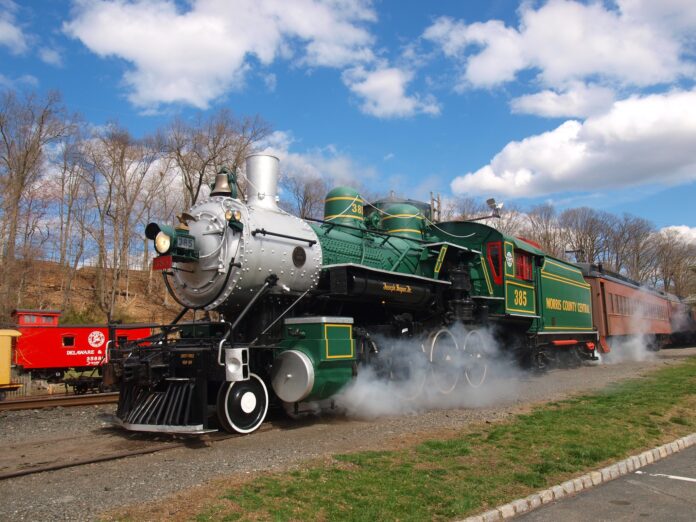
Departing from the Whippany Railway Museum at 1 Railroad Plaza, the excursion operates at multiple departure times throughout the afternoon, with rides scheduled at 1:00 PM, 2:00 PM, 3:00 PM, and 4:00 PM. Each journey follows the historic Whippanong Trail, a route that carries passengers through Whippany, East Hanover, Livingston, and Roseland, offering a cross-section of landscapes that reflect both the region’s industrial past and its enduring natural beauty.
The defining element of the Whippany River Ramble is its device-free approach. Passengers are encouraged to step away from phones, cameras, and screens, creating an environment where attention shifts naturally to the surroundings. This intentional design transforms the ride into something far more immersive than a typical excursion. Without the distraction of technology, the rhythm of the rails, the movement of the landscape, and the subtle details of the environment take center stage.
The route itself is rich with both geological and historical significance. As the train moves through the remnants of prehistoric Glacial Lake Passaic, passengers are presented with a landscape shaped thousands of years ago, now home to a variety of wildlife. Deer, turtles, and hawks are commonly spotted along the way, adding an element of unpredictability and connection to the natural world. The crossing of a steel bridge high above the Passaic River serves as a visual and experiential highlight, offering a perspective that is both expansive and grounded in the region’s railroad heritage.
The Whippany Railway Museum enhances this experience through its commitment to preserving and presenting historic rail equipment. Riders have the option to choose between traditional caboose seating and premium club car accommodations, each offering a distinct perspective on the journey. The caboose provides a more rugged, hands-on experience, connecting passengers directly to the working history of the railroad. It is a choice that emphasizes authenticity, placing riders in the same environment once occupied by train crews navigating the rails.
For those seeking a more refined experience, the museum’s premium club cars offer a meticulously restored glimpse into early 20th-century rail travel. Cars such as the 1927 “Jersey Coast” recreate the atmosphere of what was once known as the “Millionaire’s Express,” featuring rich mahogany interiors, individual leather seating, built-in tables, and period-accurate ceiling fans. Stained glass accents and historically accurate exterior detailing complete the transformation, creating an environment that feels both luxurious and historically grounded.
Another standout is the Lackawanna No. 2454, a 1912 subscription car that once catered to an exclusive group of commuters. Its restoration preserves the craftsmanship and design that defined an era when rail travel was as much about the experience as it was about the destination. Unlike the more utilitarian cabooses, these premium cars are equipped with modern climate control, ensuring comfort regardless of weather conditions while maintaining their historical integrity.
Admission to the Whippany River Ramble extends beyond the train ride itself. Ticket holders are granted access to the Whippany Railway Museum’s grounds and exhibits, allowing for a deeper exploration of railroad history. The museum’s collection includes artifacts, restored equipment, and operating model trains, providing context and continuity to the experience. It transforms a single excursion into a broader engagement with the region’s transportation heritage.
Pricing for the event reflects its accessibility while accommodating different levels of experience. Caboose seating typically ranges from approximately $13 to $18, offering an entry point for families and casual visitors, while premium club car tickets range from approximately $23 to $26, providing an elevated experience for those seeking additional comfort and historical detail. Each ticket also includes a commemorative keepsake, reinforcing the event’s focus on memory and tangible connection.
The Whippany River Ramble is also part of a larger seasonal programming schedule that positions the museum as a year-round destination for experiential events. Following the May excursion, the calendar continues with themed rides such as the Father’s Day Excursion in June, Grandparent’s Day in September, Military Transport Day, and the widely anticipated Pumpkin Patch Train in October. Each event builds on the museum’s core mission while offering unique variations that appeal to different audiences and interests.
What ultimately distinguishes the Whippany River Ramble is its ability to operate at the intersection of history, nature, and intentional experience. It is not designed for spectacle or rapid consumption. Instead, it offers a measured, thoughtful alternative—a chance to engage with the environment, reflect on the region’s past, and participate in an activity that feels both grounded and meaningful.
In the context of New Jersey’s broader offerings, this event represents a growing appreciation for experiences that prioritize depth over distraction. It aligns with a statewide movement toward programming that invites participation rather than passive observation, where the value lies not just in what is seen, but in how it is experienced.
On May 17, as the train departs along the Whippanong Trail, passengers will find themselves part of something that extends beyond a single afternoon. It is a return to a way of traveling—and a way of seeing—that has become increasingly rare, yet remains as powerful and relevant as ever.