Home Blog Page 70

Red Alert for New Jersey: Powerful Storm System Threatens Severe Winds, Flooding Rain, and Possible Tornadoes Across the State

New Jersey is entering a volatile stretch of weather as a powerful storm system moves toward the region, prompting meteorologists to issue a Red Alert for Monday, March 16, 2026. Forecasters warn that the developing system could bring severe thunderstorms, damaging winds, torrential rain, and even isolated tornadoes as it sweeps through the state late Monday afternoon and evening.

The most dangerous window for severe weather is expected between 4:00 p.m. and 11:00 p.m. Monday, although the overall storm pattern will impact the region beginning late Sunday night and continuing into early Tuesday morning. As conditions rapidly evolve, residents across New Jersey are being urged to prepare for potentially hazardous weather conditions that could disrupt travel, cause power outages, and produce damaging wind gusts.

Severe weather events like this serve as a reminder of how quickly conditions can change across the Garden State, especially as winter transitions toward spring. Across the state’s major urban centers, suburban communities, and coastal towns, local infrastructure and residential properties must remain resilient in the face of increasingly dynamic weather patterns. Coverage of housing trends, infrastructure resilience, and regional development continues across the Sunset Daily News real estate section, where issues affecting homeowners and communities throughout New Jersey are closely monitored.

The approaching system is tied to a rapidly intensifying low-pressure center forming over the western Great Lakes. Meteorologists describe the system as “bombing out,” meaning it is strengthening quickly as it tracks across the Midwest. This strengthening storm is dragging a powerful cold front across the eastern United States while pulling unusually warm and moist air northward into the Mid-Atlantic region.

This combination of ingredients creates an environment favorable for severe weather development.

Ahead of the cold front, New Jersey will find itself inside the system’s warm sector, where unstable atmospheric conditions can allow thunderstorms to intensify rapidly. In this zone, warm air rising from the surface interacts with cooler air moving through the upper atmosphere, creating the type of vertical instability that fuels strong storm systems.

When these atmospheric forces collide, thunderstorms can organize into powerful storm lines capable of producing damaging straight-line winds, heavy rainfall, and rotating updrafts that occasionally develop into tornadoes.

The highest threat for severe winds and potential tornadic activity appears to be concentrated across southwestern portions of New Jersey, though the entire state remains at risk for strong storms and heavy rain.

Forecasters say residents west of an imaginary line stretching from Cape May through Trenton and into northwestern New Jersey are most likely to experience the strongest storm activity.

Communities east of that line, including portions of northeastern New Jersey and coastal areas, may see slightly reduced severe wind potential but will still experience widespread rain, strong gusty winds, and possible thunderstorms as the system passes through.

Wind will be one of the most significant hazards associated with this storm.

Meteorologists expect sustained gusts between 40 and 50 miles per hour, with isolated bursts potentially reaching 75 miles per hour in stronger thunderstorms. Such winds can bring down tree limbs, scatter unsecured outdoor objects, and cause localized power outages.

Because of these risks, a Wind Advisory has been issued across the region beginning at 2:00 p.m. Monday and lasting until 2:00 a.m. Tuesday.

Heavy rain will also accompany the storm system.

Rather than a continuous downpour, forecasters expect waves of rain and thunderstorms moving across the state throughout the day and evening. Periods of rain may be followed by brief breaks, creating a pattern of repeated showers that could lead to localized flooding in areas with poor drainage.

The storm timeline begins late Sunday night, when warmer air begins pushing into the region ahead of the advancing system.

Rain showers are expected to begin developing around midnight Sunday night, moving gradually from south to north across the state. These early rounds of precipitation will help establish the warm, humid conditions necessary for stronger storms to develop later.

By Monday morning, temperatures will climb rapidly as the warm sector strengthens. Despite the calendar still reading March, daytime highs could reach the mid-60s to low-70s, creating unusually mild conditions for this time of year.

The warmth will play a key role in determining the severity of the storms later in the day.

Meteorologists closely watch a phenomenon known as diurnal heating, which refers to how much the sun warms the ground and destabilizes the atmosphere during daylight hours. If cloud cover limits solar heating, storm intensity may remain somewhat limited.

However, if the sun breaks through the clouds for extended periods during the afternoon, the atmosphere could become significantly more unstable.

In weather forecasting circles, this scenario is sometimes summarized with the phrase “sun’s out, guns out.” The more sunlight that reaches the surface, the more energy thunderstorms can draw from the atmosphere later in the evening.

That means the weather conditions between midday and late afternoon Monday will play an important role in determining how intense the evening storm line becomes.

Current projections suggest the most organized storm activity will arrive in southwestern New Jersey around 7:00 to 8:00 p.m. Monday evening.

From there, the storm front will move rapidly northeast across the state, pushing through central New Jersey and eventually reaching northeastern counties sometime between midnight and 2:00 a.m. Tuesday morning.

As the system moves eastward, it will gradually weaken due to several stabilizing atmospheric factors.

One of these influences comes from the Atlantic Ocean. As the storm approaches the coast, cooler marine air flowing inland may help reduce the intensity of thunderstorms, transforming severe storm cells into more traditional rain showers accompanied by gusty winds.

Another factor is the loss of daytime heating once the sun sets. Without solar energy fueling the storms, atmospheric instability begins to diminish.

By the early morning hours of Tuesday, the storm system is expected to move offshore, leaving behind cooler temperatures and clearing skies.

In some of the higher elevations of northwestern New Jersey and neighboring areas of the Poconos, the departing system could even produce a brief wintry mix or light snow as colder air rushes in behind the cold front.

The shift will be dramatic.

Temperatures that climbed into the 60s on Monday could drop sharply overnight, leading to chilly conditions Tuesday with highs near the low 40s and brisk winds lingering throughout the day.

Looking beyond the storm itself, the seven-day outlook for New Jersey suggests a pattern of fluctuating temperatures typical of late winter transitioning toward early spring.

Tuesday will be sunny but cold and windy following the storm’s departure. Midweek conditions remain cool, with highs in the low 40s before temperatures gradually moderate later in the week.

By Thursday and Friday, readings should climb back into the low to mid-50s, just in time for the arrival of the spring equinox, marking the official start of the new season.

While Monday’s storm may be brief, its intensity underscores the importance of preparation during severe weather events.

Residents across New Jersey are encouraged to secure loose outdoor items such as patio furniture, trash cans, and decorations that could become airborne during strong wind gusts. Drivers should exercise caution, particularly those operating high-profile vehicles that may be affected by crosswinds.

Power outages are also possible if strong winds bring down tree limbs or power lines, so households may want to prepare emergency supplies such as flashlights, batteries, and fully charged mobile devices.

The approaching storm system represents one of the most dynamic weather setups New Jersey has experienced so far this year.

7-Day Forecast for New Jersey 

Day ConditionsHigh / Low
Mon, Mar 16Severe Storms / Heavy Rain66°F / 33°F
Tue, Mar 17Mostly Sunny, Windy & Cold41°F / 25°F
Wed, Mar 18Partly Sunny and Chilly42°F / 28°F
Thu, Mar 19Mostly Cloudy and Milder52°F / 34°F
Fri, Mar 20Clouds and Sun (Spring Equinox)56°F / 39°F
Sat, Mar 21Mostly Cloudy, Few Showers56°F / 35°F
Sun, Mar 22Partly Sunny52°F / 32°F

From late Sunday night through early Tuesday morning, the state will move through several distinct phases of weather—from warm springlike conditions to heavy rain, strong thunderstorms, and ultimately a return to colder air.

For residents across the Garden State, it will be a reminder that March often delivers some of the most unpredictable and dramatic weather patterns of the year.

As meteorologists continue monitoring the evolving system, New Jersey communities are preparing for a powerful night of weather that could include heavy rain, damaging winds, and potentially severe storms before calmer conditions return later this week.


Home Prices Adjust in Passaic County as North Jersey Real Estate Market Enters a New Phase

The North Jersey housing market has long been one of the most competitive real estate environments in the country. For several years, buyers faced intense bidding wars, homes routinely sold above asking price, and inventory shortages pushed prices to historic levels. But recent developments in Passaic County suggest that the market may be entering a new, more balanced phase as sellers begin adjusting expectations and reducing listing prices to attract buyers.

Recent data reveals that a noticeable number of homes in Passaic County experienced price reductions during the winter months, highlighting a shift that real estate professionals say reflects a combination of seasonal factors and changing market psychology.

While the broader North Jersey housing market remains strong, Passaic County’s recent spike in price reductions has drawn attention from buyers, sellers, and industry professionals alike.

Across New Jersey, the real estate landscape continues to evolve as economic conditions, interest rates, and buyer expectations reshape the pace and strategy of home sales. Coverage of these trends continues to expand across the region, including detailed reporting and housing market analysis featured throughout the Sunset Daily News real estate section, where property trends and housing developments across the state are closely tracked.

In February, Passaic County recorded 338 active home listings, according to recent market data. Of those properties, 48 saw their asking price reduced. On the surface, the number may not appear dramatic. However, when viewed in the context of recent trends, the change becomes more significant.

Price reductions in the county increased by more than 71 percent compared with the previous month. When compared with the same period last year, the number of homes with reduced prices rose by 50 percent.

Those figures stand out when compared with other North Jersey counties.

While Essex and Hudson counties experienced modest increases in price reductions during the same period, the shifts were far less dramatic. Essex saw roughly a 15 percent increase in reduced listings, while Hudson experienced a little more than a 20 percent increase.

Meanwhile, some counties moved in the opposite direction. Morris County and Sussex County both saw declines in the number of homes with price cuts, while Bergen County experienced a decrease of nearly 13 percent month over month.

This contrast places Passaic County in a unique position within the regional real estate landscape.

So what is driving the change?

Real estate professionals point to a combination of factors, including seasonal weather conditions and lingering seller expectations formed during the extraordinary housing boom of the early 2020s.

One factor that cannot be ignored is the impact of winter weather. North Jersey experienced a particularly cold stretch this season, which traditionally slows real estate activity. When temperatures drop and snowstorms arrive, fewer buyers are willing to travel to open houses or schedule property tours.

That temporary slowdown can cause homes to sit on the market longer than sellers anticipated.

When properties remain unsold for several weeks, sellers often respond by adjusting the price in hopes of attracting renewed buyer interest.

But weather alone does not explain the full story.

Many industry professionals believe the recent wave of price reductions also reflects a gap between seller expectations and current market realities.

During the peak years of the housing boom between 2020 and 2022, the real estate environment was extraordinary. Record-low mortgage rates, limited housing inventory, and intense buyer competition created conditions where homes frequently received multiple offers within days of listing.

In many cases, buyers bid tens of thousands of dollars above the asking price just to secure a property.

That experience reshaped how many homeowners perceive the value of their property.

Even as the market began shifting toward more normalized conditions, some sellers continued pricing their homes as if the peak frenzy of those years were still in effect.

Buyers, however, have become more selective.

Higher mortgage interest rates, economic uncertainty, and increased price sensitivity have encouraged many buyers to evaluate properties more carefully before making offers. When a home appears overpriced relative to comparable listings, buyers often choose to wait rather than engage in bidding.

As a result, listings that enter the market at unrealistic price points are more likely to remain unsold until the seller adjusts expectations.

For many homeowners, the decision to reduce a listing price is not necessarily driven by urgency. Unlike previous housing downturns, many current sellers are not under financial pressure to move quickly.

A large portion of homeowners refinanced their mortgages during the period of historically low interest rates and now hold favorable loan terms. That financial stability allows them to wait for the right offer rather than rush into a sale.

However, if a homeowner is motivated to sell in the near term—whether due to relocation, family needs, or investment plans—pricing adjustments become an important strategy.

Real estate professionals emphasize that price reductions are a natural and often necessary part of the housing market cycle.

When a property enters the market with a price that exceeds buyer perception of value, adjusting the price can reintroduce the listing to potential buyers who may have overlooked it initially.

In many cases, a well-timed price reduction can generate renewed interest and lead to offers that ultimately bring the property closer to its true market value.

Passaic County’s housing market has long been shaped by its geographic diversity and accessibility to major employment centers. Communities throughout the county offer a wide range of housing options, from suburban neighborhoods and historic homes to commuter-friendly towns with direct access to New York City.

This variety continues to attract buyers seeking alternatives to the higher prices often found in neighboring counties such as Bergen and Hudson.

At the same time, buyers today are paying closer attention to pricing accuracy, home condition, and long-term value. Homes that are priced competitively and presented well continue to sell quickly.

Properties that miss the mark on pricing, however, often require adjustments before attracting serious interest.

Another dynamic influencing the market is inventory availability. While housing supply remains limited compared with historical averages, the number of listings has begun to increase gradually in certain areas.

Even a modest rise in available homes can shift negotiating power slightly toward buyers, particularly when multiple similar properties compete for attention.

In such cases, sellers who price aggressively may find themselves needing to adjust more quickly than anticipated.

For buyers, the recent trend in Passaic County offers a reminder that patience and market awareness can pay off. While competition remains strong for desirable homes, the presence of price reductions indicates that opportunities may exist for those willing to monitor listings closely.

For sellers, the lesson is equally important.

Accurate pricing remains one of the most critical factors in a successful home sale. Properties that enter the market with realistic expectations are far more likely to generate early interest, multiple showings, and potentially competitive offers.

Homes priced too aggressively risk lingering on the market, which can lead to price reductions and the perception that the property may have underlying issues.

Despite the recent adjustments seen in Passaic County, real estate professionals emphasize that North Jersey remains a fundamentally strong housing market.

Demand for housing continues to exceed supply in many communities, and the region’s proximity to major employment hubs ensures that buyer interest remains steady.

The current shift does not represent a market downturn but rather a gradual recalibration as both buyers and sellers adapt to evolving economic conditions.

For homeowners considering listing their property in the months ahead, understanding these trends will be essential.

As the spring and summer selling seasons approach, activity is expected to increase throughout the region. Warmer weather traditionally brings more buyers into the market, and many sellers choose to list their homes during this period to maximize exposure.

In Passaic County, the recent wave of price reductions may serve as a valuable signal for both sides of the market.

Buyers may find opportunities that did not exist during the height of the housing frenzy. Sellers, meanwhile, may recognize the importance of aligning pricing strategies with current buyer expectations.

What remains unchanged is the enduring appeal of North Jersey as a place to live, work, and invest in real estate.

From suburban communities and historic neighborhoods to vibrant town centers and commuter-friendly locations, the region continues to attract individuals and families seeking access to opportunity and quality of life.

As the housing market moves through its next phase, Passaic County’s recent price adjustments offer a clear example of how local markets adapt in real time to economic conditions, seasonal influences, and evolving buyer behavior.

For those watching the region’s housing trends closely, the message is clear: the market remains active, competitive, and dynamic—just with a renewed emphasis on pricing homes where buyers believe true value exists.

Rutgers Heritage Meets New Jersey Craft: Inside the Eric LeGrand Bourbon Scarlet Knight Series and the Historic Spirits Collaboration Changing the Garden State’s Food and Beverage Landscape

New Jersey’s food and beverage culture has long been defined by its ability to blend tradition, innovation, and community pride. From award-winning restaurants and craft breweries to small-batch distillers and culinary entrepreneurs, the Garden State continues to redefine what a regional food scene can become. Now, a landmark collaboration rooted in Rutgers University history and the personal legacy of one of the state’s most inspiring figures is adding a new chapter to that story. The Eric LeGrand Bourbon Scarlet Knight Series is not only a premium bourbon release—it is a cultural moment for New Jersey, a philanthropic initiative, and a groundbreaking partnership that connects the state’s flagship university with the rapidly growing spirits industry.

For Explore New Jersey readers who follow the evolution of the state’s dining, hospitality, and beverage culture through our coverage of the Garden State’s culinary scene, this collaboration represents one of the most fascinating developments in recent years. The partnership between Eric LeGrand Bourbon and Rutgers University marks the first time in the institution’s long history that the university has officially collaborated with a spirits brand. Launched on October 1, 2025, the inaugural release in the Scarlet Knight Series instantly became a collector’s item for Rutgers alumni, bourbon enthusiasts, and anyone invested in the expanding influence of New Jersey’s food and beverage landscape.

To understand why the Scarlet Knight Series matters so deeply to New Jersey, one must start with Eric LeGrand himself. A former Rutgers football star whose resilience and determination have made him a symbol of perseverance, LeGrand’s journey has transcended athletics. After sustaining a spinal cord injury during a 2010 Rutgers game that left him paralyzed, LeGrand transformed adversity into purpose. Over the years he has become a motivational speaker, entrepreneur, and advocate for spinal cord injury research. His story resonates not only with Rutgers fans but across the entire state.

In March 2023, LeGrand entered the spirits industry by co-founding Eric LeGrand Whiskey with business partner Brian Axelrod. The brand began as a way to celebrate resilience, camaraderie, and the shared traditions that often surround a good glass of bourbon. What started as a bold entrepreneurial step quickly evolved into something larger—an opportunity to build a brand rooted in philanthropy and New Jersey pride.

The Scarlet Knight Series is the most ambitious expression of that vision so far.

The bourbon itself is a Kentucky Straight Bourbon Whiskey produced at Green River Distillery in Owensboro, Kentucky, one of the country’s historic distilling operations known for its careful aging processes and balanced mash bills. While the whiskey is produced in Kentucky, the story behind it belongs unmistakably to New Jersey.

Aged for five years and bottled at 92 proof, the inaugural Scarlet Knight Series release delivers a classic yet expressive flavor profile. The mash bill consists of 70 percent corn, 21 percent rye, and 9 percent barley, creating a structure that balances sweetness, spice, and depth. On the nose and palate, drinkers will notice notes of caramel, dark cherry, and toasted oak layered with subtle rye spice. The mouthfeel is described as smooth and rounded, with bold fruit tones and warm vanilla emerging as the bourbon opens up.

But what makes the bourbon especially meaningful to Rutgers fans is its symbolism. The 92 proof level was chosen intentionally to honor LeGrand’s jersey number—46—with the alcohol percentage of 46 percent ABV serving as a subtle tribute to the Scarlet Knights fullback who became one of the university’s most beloved figures.

The bottle itself reinforces that connection. Designed as a collector’s piece, the packaging prominently features the iconic Rutgers “Block R” logo, a symbol instantly recognizable across the state and among the university’s global alumni network. For many Rutgers supporters, owning a bottle of the Scarlet Knight Series feels less like purchasing a spirit and more like preserving a piece of university history.

The road to bringing the bottle to market was not simple. Rutgers University has historically maintained strict guidelines around brand licensing and partnerships, particularly in industries tied to alcohol. Securing approval for the collaboration required a nine-month process during which the brand worked closely with the university to ensure the partnership aligned with Rutgers’ standards and legacy.

That careful approach ultimately resulted in a milestone moment. When the Scarlet Knight Series officially launched in October 2025, it represented the first time Rutgers had formally partnered with a spirits brand at the university level. For many observers of collegiate branding and licensing, the collaboration signaled a shift in how universities may engage with premium lifestyle products tied to alumni culture and fundraising initiatives.

The philanthropic dimension of the project also plays a central role in its identity. Continuing Eric LeGrand’s long-standing commitment to spinal cord injury research, the brand has pledged that $5.20 from every case sold will be donated to the Christopher & Dana Reeve Foundation. The foundation is one of the most respected organizations supporting paralysis research and quality-of-life programs for individuals living with spinal cord injuries.

For LeGrand, this element of the project is not an afterthought—it is the core purpose behind the brand’s growth. Every bottle sold contributes to advancing medical research and support services that could change lives for thousands of people living with paralysis.

The Scarlet Knight Series also fits naturally into New Jersey’s broader food and beverage ecosystem. Across the state, the hospitality and culinary industries continue to evolve rapidly, with craft beverages playing an increasingly prominent role in the region’s identity. Explore New Jersey has documented this transformation extensively through coverage of the Garden State’s restaurants, breweries, wineries, and culinary innovators featured throughout our food and beverage section.

As New Jersey’s dining scene expands, collaborations between local institutions and beverage brands are becoming more common—but few carry the emotional resonance of this project. The Scarlet Knight Series blends sports heritage, philanthropy, entrepreneurship, and premium spirits craftsmanship in a way that reflects the spirit of the Garden State itself.

The release has already sparked strong interest among collectors and bourbon enthusiasts. Priced at $54.99, the bottle is available at select New Jersey liquor stores, bars, and restaurants, as well as through the Eric LeGrand Whiskey online platform. The price point positions the bourbon as both an accessible premium spirit and a commemorative item that celebrates Rutgers pride.

Importantly, the Scarlet Knight Series is not a one-time release. It is designed as an ongoing collection, with additional “drops” planned in future years. Each release is expected to carry new elements of Rutgers symbolism while maintaining the high-quality bourbon profile that defines the inaugural edition.

For fans and collectors, that means the opportunity to build a series that captures evolving chapters of both the brand and the university’s legacy.

The Scarlet Knight Series is also only one part of the broader Eric LeGrand Whiskey portfolio, which has already produced several notable limited editions. Among them is the Eric LeGrand Single Barrel 7-Year-Old, an ultra-exclusive release limited to just 120 bottles. Bottled at a powerful 136.4 proof and featuring a mash bill of 75 percent corn, 21 percent rye, and 4 percent malted barley, the single-barrel offering represents the brand’s most intense and rare expression.

Another milestone release came during the holiday season of 2024 with the Eric LeGrand Single Barrel Bourbon Holiday Edition. That release was aged four years and bottled at 104 proof as a tribute to LeGrand’s jersey number 52 from his earlier football career. Approximately 1,920 bottles were produced, making it a coveted piece for early supporters of the brand.

The company has also explored creative collaborations outside the whiskey world. In June 2024, Eric LeGrand Whiskey partnered with Nicholas Creamery for a special Peanut Butter Bourbon Ice Cream released in celebration of National Bourbon Day. The dessert collaboration demonstrated how the brand could intersect with New Jersey’s culinary community in ways that go beyond traditional spirits.

Together, these releases reveal a brand strategy built on storytelling and community connection rather than simple product launches. Each limited edition ties back to LeGrand’s life, football career, or philanthropic mission.

That approach resonates strongly in New Jersey, where sports culture, university pride, and local food traditions often intersect. Rutgers football games, tailgates, alumni events, and local restaurant gatherings all share one thing in common: the sense of community that comes from celebrating shared experiences.

The Scarlet Knight Series captures that feeling in liquid form.

For the state’s hospitality industry, the bourbon also presents opportunities for creative integration into menus and cocktail programs. Restaurants and bars across New Jersey have already begun featuring the bourbon in specialty cocktails inspired by Rutgers traditions and autumn game-day culture.

As Explore New Jersey continues to highlight the Garden State’s vibrant culinary landscape, the Eric LeGrand Bourbon Scarlet Knight Series stands out as a compelling example of how food, beverage, sports heritage, and philanthropy can intersect to create something meaningful.

The project is not just about bourbon. It is about legacy, resilience, and the evolving identity of New Jersey’s food and beverage culture.

With future releases already planned and enthusiasm building among Rutgers fans and bourbon collectors alike, the Scarlet Knight Series appears poised to become one of the most distinctive spirits collaborations ever associated with a major university.

For Eric LeGrand, the journey from Rutgers football field to entrepreneur and advocate has been defined by perseverance. Through this collaboration, that journey now extends into the world of premium bourbon, where every bottle poured carries a story of determination, community pride, and the enduring spirit of the Scarlet Knights.

In New Jersey’s ever-expanding culinary and beverage scene, that story is just getting started.

Choir! Choir! Choir! Hallelujah”: An EPIC Anthems Sing-Along!

0

Choir! Choir! Choir! Brings “Hallelujah: An EPIC Anthems Sing-Along!” to New Jersey for an Unforgettable Interactive Music Experience

November 6 @ 8:00 PM 11:30 PM

New Jersey’s vibrant live music scene continues to evolve in exciting ways, and one of the most unique musical events arriving this fall invites audiences to become the performers themselves. On Friday, November 6, 2026 at 8:00 PM, the internationally celebrated interactive music phenomenon Choir! Choir! Choir! brings its electrifying “Hallelujah: An EPIC Anthems Sing-Along!” to Montclair for a night where the crowd becomes the choir.

Rather than sitting quietly and watching from the audience, attendees will be invited to raise their voices, learn harmonies together, and participate in a massive collaborative musical experience. The concept is simple but powerful: hundreds of strangers gather in one room, learn parts of a song together, and then perform it as a unified choir. The result is a joyful, unforgettable moment of shared music-making that transforms the traditional concert format into something far more immersive.

Events like this represent the growing diversity of New Jersey’s music culture, where performances increasingly blur the line between artist and audience. Across the Garden State, venues continue to present creative musical programming that celebrates community, collaboration, and the power of live performance. The expanding scope of this scene can be seen across the state’s many concerts, artist showcases, and cultural events highlighted throughout the Explore New Jersey music section, which tracks the pulse of the region’s evolving music landscape.

Choir! Choir! Choir! stands apart from traditional concerts by flipping the entire concept of performance on its head. Instead of musicians performing for an audience, the audience itself becomes the performer. Under the energetic guidance of directors Daveed Goldman and Nobu Adilman, participants learn vocal parts, rehearse together, and ultimately sing as one massive choir.

For attendees, the experience feels less like a concert and more like a giant musical celebration. The atmosphere resembles a joyful community gathering, a sing-along party where music lovers of all backgrounds unite through the simple act of singing together.

The upcoming event in Montclair centers around one of the most beloved songs ever written: Leonard Cohen’s “Hallelujah.” Few songs in modern music history have achieved the cultural resonance of this timeless composition. Since its original release, the song has been interpreted by countless artists and embraced by audiences around the world.

Within the Choir! Choir! Choir! experience, the song becomes something even more powerful. Instead of hearing it performed by a single vocalist, hundreds of voices come together to create a massive layered arrangement. As participants learn harmonies and vocal sections, the room gradually transforms into a living, breathing choir.

When the final performance begins, the sound of hundreds of voices singing together creates an emotional wave that resonates throughout the venue. For many participants, the moment becomes deeply moving, illustrating the profound emotional power of communal music.

But the evening does not stop with one song.

The program is designed as a journey through some of the greatest anthems ever written. Participants will sing through an eclectic selection of songs that have shaped the soundtrack of modern life. The repertoire spans generations and genres, celebrating iconic artists whose music continues to bring people together.

Expect songs associated with legendary writers like Leonard Cohen and Joni Mitchell, alongside powerful pop anthems made famous by artists such as Whitney Houston and Shania Twain. Each selection is carefully chosen for its emotional resonance and sing-along potential.

As the evening unfolds, the room fills with laughter, applause, and the unmistakable energy that comes from people sharing music together. The environment becomes part concert, part community gathering, and part spontaneous musical celebration.

The story behind Choir! Choir! Choir! began in 2011 when Daveed Goldman and Nobu Adilman launched the project as an experiment in participatory music. What started as a local sing-along concept quickly evolved into a global phenomenon.

Their idea was rooted in a simple but transformative belief: everyone can sing, and everyone deserves the opportunity to experience the joy of making music together.

By removing the barrier between stage and audience, Goldman and Adilman created a format that welcomes participants regardless of musical experience. No auditions, no rehearsals beforehand, and no pressure to perform perfectly. The only requirement is enthusiasm.

Over the years, the project has grown into a touring event that has traveled across cities throughout North America and beyond. Along the way, Choir! Choir! Choir! has collaborated with an extraordinary lineup of artists and cultural icons.

Their performances have featured appearances by musicians such as Patti Smith, David Byrne, Brandi Carlile, Rick Astley, and Rufus Wainwright. In one particularly memorable moment, even Kermit the Frog joined the choir during a performance at New York’s Lincoln Center.

Many of these events have been captured on video and shared online, generating millions of views and introducing the Choir! Choir! Choir! concept to audiences around the world.

Despite this growing global recognition, the core spirit of the project remains the same: bringing people together through music.

At a time when many forms of entertainment emphasize passive consumption, Choir! Choir! Choir! offers something refreshingly different. Participants are encouraged to engage fully, to sing loudly, to laugh freely, and to embrace the collective joy of creating sound together.

For communities like Montclair, which has long supported a vibrant arts culture, the event fits naturally into the town’s creative identity. The area has become known as a destination for performances that celebrate artistic expression across multiple disciplines, from live music and theater to visual arts and cultural festivals.

The venue hosting the event continues that tradition by presenting performances that prioritize artistic connection and audience engagement. Shows like this highlight the importance of live performance as a shared experience rather than a one-directional presentation.

When hundreds of people sing together in one room, the effect is both musical and emotional. Participants often describe the experience as uplifting, energizing, and surprisingly powerful.

The reason lies in the simple physics of sound and human connection. When voices harmonize in a large group, the vibrations resonate throughout the space, creating a sonic environment that listeners feel as much as they hear.

For many participants, the moment becomes more than entertainment. It becomes a reminder of music’s unique ability to bring people together across differences.

Choir! Choir! Choir! events often attract participants from diverse backgrounds and age groups. Some attendees are experienced musicians, while others may have never sung publicly before. Yet once the music begins, those differences fade away.

The choir becomes a community united by melody and rhythm.

For New Jersey audiences, the November 6 performance offers a chance to experience this phenomenon firsthand. Instead of simply watching artists perform, attendees will become part of the musical experience itself.

The invitation is simple: bring friends, bring family, and bring your voice.

No experience is necessary. The directors will teach the parts, guide the performance, and create a welcoming environment where everyone can participate comfortably.

As the evening builds toward its climactic sing-along moments, participants will discover something remarkable. Even a room full of strangers can become a choir when music provides the common language.

Across New Jersey’s ever-growing music landscape, concerts continue to evolve in exciting ways. Some celebrate legendary artists, others spotlight emerging voices, and some—like Choir! Choir! Choir!—invite the audience to step directly into the spotlight.

On November 6 in Montclair, the stage will belong to everyone in the room. Hundreds of voices will rise together in harmony, transforming a simple concert into a shared celebration of music, community, and the timeless power of song.

Outpost in the Burbs

973-744-6560

View Organizer Website

Outpost in the Burbs

40 South Fullerton Avenue (First Congregational Church)
Montclair, New Jersey 07042-3396 United States
+ Google Map
973-744-6560
View Venue Website

0

Joan Osborne Brings Her Celebrated Bob Dylan Tribute to Montclair with the Joan Osborne Trio

March 16 @ 8:00 AM 5:00 PM

New Jersey’s thriving live music scene continues to welcome world-class performers whose artistry bridges generations, genres, and musical traditions. One of the most anticipated events of the spring arrives on Friday, May 29, 2026 at 8:00 PM when the Joan Osborne Trio presents a powerful evening dedicated to the music of Bob Dylan. The performance promises an unforgettable night of storytelling, musical reinterpretation, and soulful vocals as Osborne brings her celebrated Dylan-inspired project to audiences in Montclair.

For music lovers throughout New Jersey and the broader Northeast, the concert represents a rare opportunity to experience one of the most distinctive voices in contemporary American music interpreting the work of one of the greatest songwriters of all time. With decades of experience as both a chart-topping recording artist and a revered interpreter of classic material, Joan Osborne continues to demonstrate why she remains one of the most compelling performers of her generation.

Across the Garden State, live music continues to play a vital role in the cultural landscape, with venues and concert series presenting artists whose work spans rock, folk, blues, Americana, and beyond. The continued growth of this vibrant ecosystem is reflected in the many performances taking place throughout the region and highlighted across platforms celebrating New Jersey’s creative energy, including features and concert coverage on the Explore New Jersey music page, which regularly spotlights artists performing across the state.

The upcoming Joan Osborne Trio performance stands out as a particularly special event because it combines two powerful musical legacies: the enduring songwriting brilliance of Bob Dylan and the remarkable interpretive ability of a vocalist known for her emotional depth and musical versatility.

Joan Osborne’s journey through the music world spans more than thirty years, during which she has earned multiple Grammy nominations and built a reputation as one of the most soulful and expressive singers in modern American music. While many listeners first encountered her through her breakthrough hit “One of Us,” Osborne’s career has evolved far beyond any single song or album.

Over the years, she has explored a wide range of musical traditions, from rock and blues to country, gospel, and Americana. Her ability to move fluidly between these styles has made her one of the most respected vocalists of her era. What remains constant across every project is the unmistakable quality of her voice—rich, expressive, and capable of conveying profound emotion through subtle phrasing and tonal nuance.

Throughout her career, Osborne has demonstrated a rare gift for interpreting the songs of other writers. Rather than simply covering well-known compositions, she reimagines them in ways that reveal new layers of meaning. This ability has made her one of the finest interpreters of classic American songwriting working today.

That talent came into full focus with the release of her album Songs of Bob Dylan in 2017. The project featured Osborne’s deeply personal interpretations of some of Dylan’s most iconic compositions. Rather than attempting to replicate Dylan’s distinctive vocal style, she approached the material with her own musical sensibilities, allowing her voice to uncover emotional textures within the songs that many listeners had never heard before.

The album quickly earned critical acclaim for its imaginative arrangements and heartfelt performances. Listeners were struck by how Osborne managed to preserve the spirit of Dylan’s songwriting while presenting the material through a completely fresh lens.

Songs that had long been associated with Dylan’s voice took on new life when delivered through Osborne’s soulful phrasing and interpretive depth. The project reminded audiences that great songwriting can transcend stylistic boundaries and resonate across different musical voices.

Eight years after that landmark release, Osborne returned to the Dylan songbook with Dylanology Live, a powerful concert recording released on April 25, 2025. Captured in front of an enthusiastic live audience, the album documents the energy and spontaneity that have made her Dylan tribute performances such a compelling experience.

The live recording features a remarkable lineup of guest musicians, including Amy Helm, Robert Randolph, and Jackie Greene, each contributing their own distinctive musical voice to the project. Together they helped create performances that celebrate Dylan’s songwriting legacy while embracing the improvisational spirit that has always defined live music.

The album’s tracklist reads like a journey through some of Dylan’s most evocative compositions. Songs such as “Spanish Harlem Incident,” “Buckets of Rain,” and “Masters of War” are delivered with a renewed emotional intensity that highlights the enduring relevance of Dylan’s lyrics.

Other selections, including “Tonight I’ll Be Staying Here With You” and “High Water (For Charley Patton),” showcase Osborne’s ability to move effortlessly between introspective ballads and rhythm-driven arrangements that draw from blues and folk traditions.

The live setting allows Osborne to fully explore the storytelling power embedded within Dylan’s songwriting. Each performance unfolds with a sense of immediacy, as if the songs are being rediscovered in real time.

For audiences attending the May 29 performance in Montclair, this dynamic approach will be brought to life through the Joan Osborne Trio format. Stripped of elaborate production elements, the trio setting places Osborne’s voice at the center of the musical experience while allowing the musicians around her to create space for improvisation and subtle interaction.

This kind of arrangement often reveals the deeper emotional core of the songs being performed. Without the distractions of large ensemble arrangements, every lyric and melodic phrase carries greater weight. For Dylan’s songs—many of which function as poetic narratives as much as musical compositions—the format offers a particularly powerful way to experience their storytelling.

Bob Dylan’s influence on modern songwriting cannot be overstated. Over the course of more than six decades, he has created a body of work that has shaped the evolution of folk, rock, and popular music. His lyrics have captured the spirit of social movements, personal introspection, and cultural change in ways that continue to inspire musicians and listeners alike.

Artists across generations have interpreted Dylan’s songs, but few have approached the material with the level of sensitivity and emotional understanding that Joan Osborne brings to her performances.

Her interpretations reveal the universality embedded within Dylan’s writing. Songs that were originally associated with specific moments in history emerge as timeless reflections on human experience when filtered through her voice.

This ability to breathe new life into familiar material is one of the reasons Osborne’s Dylan tribute performances have become so widely celebrated. Rather than presenting the songs as museum pieces, she treats them as living works of art capable of evolving through each new performance.

For the Montclair audience, the concert offers a chance to witness this transformation firsthand.

New Jersey’s live music audiences have long demonstrated a deep appreciation for artists who combine technical skill with emotional authenticity. From historic theaters to intimate listening rooms, the Garden State continues to host performances that celebrate the artistry of songwriting and the shared experience of live music.

Events like the Joan Osborne Trio concert reflect the continued vitality of that musical tradition.

In a time when digital streaming dominates the music industry, live performances remain one of the most powerful ways for artists and audiences to connect. The energy of a room filled with listeners responding to music in real time creates moments that recordings alone cannot replicate.

Joan Osborne’s concerts embody that spirit. Her performances invite audiences to listen closely, to engage with the lyrics, and to experience the emotional journey within each song.

As the evening unfolds on May 29, listeners will hear songs that have shaped the landscape of modern songwriting performed by an artist uniquely suited to interpret them.

With her soulful voice, thoughtful musical arrangements, and deep respect for Dylan’s legacy, Joan Osborne continues to demonstrate why she remains one of the most compelling performers of her generation.

When the Joan Osborne Trio takes the stage in Montclair, audiences will not simply hear familiar songs from the Dylan catalog. They will experience those songs transformed through the voice of an artist whose career has been defined by the ability to reveal new meaning within timeless music.

Outpost in the Burbs

973-744-6560

View Organizer Website

Outpost in the Burbs

40 South Fullerton Avenue (First Congregational Church)
Montclair, New Jersey 07042-3396 United States
+ Google Map
973-744-6560
View Venue Website

Shannon McNally

0

Grammy-Nominated Americana Artist Shannon McNally to Perform at Van Vleck House & Gardens in Montclair for a Special Summer Concert Event

June 7 @ 3:00 PM 11:30 PM

New Jersey’s vibrant summer concert season continues to deliver unforgettable musical experiences, and one of the most anticipated events on the calendar arrives on Sunday, June 7, 2026 at 4:00 PM when acclaimed singer-songwriter Shannon McNally performs live at the historic Van Vleck House & Gardens in Montclair. Presented by Outpost in the Burbs in collaboration with The Montclair Foundation, the afternoon concert promises a powerful blend of Americana, roots music, soul-infused storytelling, and deeply expressive musicianship.

For music lovers throughout the Garden State, this special performance offers a rare opportunity to experience a Grammy-nominated artist whose career has spanned more than two decades of touring, songwriting, and recording. Set against the beautiful backdrop of Van Vleck’s gardens and historic estate grounds, the concert will showcase the kind of intimate musical atmosphere that has made Montclair one of New Jersey’s most beloved cultural destinations.

As New Jersey’s live music ecosystem continues to grow, events like this highlight the state’s role as a welcoming stage for some of the most respected artists in contemporary Americana and roots music. Coverage of these performances and the broader regional music culture continues to expand through platforms dedicated to celebrating the Garden State’s musical landscape, including the Explore New Jersey music page, which regularly highlights concerts, venues, and artists performing throughout the region.

For Shannon McNally, the upcoming Montclair performance represents another chapter in a remarkable career defined by authenticity, emotional depth, and fearless musical exploration.

McNally’s journey as a professional musician began during the vibrant jam-band era of the 1990s, when improvisational touring circuits helped introduce audiences to a new generation of roots-influenced artists. During those early years she shared stages and collaborated with influential bands such as Derek Trucks Band and Railroad Earth, developing a reputation for performances that combined soulful vocals with electrifying guitar work.

From those beginnings, McNally steadily built a body of work that spans the full breadth of the Americana music spectrum. Her songs move fluidly across stylistic boundaries, drawing from blues, country, folk, rock, gospel, and soul traditions without ever feeling confined to a single genre.

What truly distinguishes her music is the emotional sincerity embedded within every performance. McNally possesses a voice that resonates with both vulnerability and strength. Whether delivering a stripped-down ballad or a groove-driven electric arrangement, her singing has the rare ability to connect directly with listeners on a deeply personal level.

That emotional immediacy has become a defining characteristic of her recordings and live performances alike.

Across a career that now includes fourteen full-length albums along with a growing collection of independent releases through her own label, Queen Maeve Records, McNally has consistently demonstrated a willingness to follow her creative instincts wherever they lead. Rather than conforming to the expectations of a single musical category, she has built a catalog that reflects the wide range of influences shaping contemporary American roots music.

Her songwriting often blends vivid storytelling with subtle observations about everyday life. The characters and narratives within her songs reflect the complexities of love, travel, personal growth, and human resilience. Many listeners are drawn to the honesty that defines her lyrics, which frequently feel less like crafted performances and more like intimate conversations set to music.

At the same time, McNally’s musicianship extends well beyond her voice. She is widely respected as a dynamic electric guitarist whose playing adds texture and energy to her recordings and concerts. Her guitar work complements her songwriting by introducing rhythmic momentum and expressive phrasing that enrich the emotional landscape of each song.

The result is a musical style that feels both timeless and contemporary.

Her latest album, Live at Dee’s, provides a compelling snapshot of that artistry in action. The project captures a career-spanning collection of songs recorded over four nights in September 2022 at a beloved Nashville honky-tonk venue. Rather than presenting a traditional studio album, McNally chose to document the energy of her live performances, recording with a rotating lineup of Nashville musicians who brought spontaneity and warmth to each track.

The eighteen-song collection offers listeners a retrospective journey through her catalog while highlighting the relaxed confidence that comes from years of performing on stages around the world. The album’s atmosphere feels intimate and unfiltered, capturing the natural interplay between McNally and the musicians surrounding her.

Within these performances, her storytelling instincts shine particularly bright. Between songs and within lyrics themselves, McNally reveals a sense of humor and perspective that adds depth to the listening experience. Her ability to balance emotional sincerity with moments of playful wit has long been one of the qualities that endears her to audiences.

For longtime fans who have followed her career since its early days, Live at Dee’s represents a celebration of everything that makes Shannon McNally’s music distinctive: heartfelt vocals, fearless musicianship, and a commitment to creative authenticity.

Those qualities have also fueled an extensive touring career that has taken her to venues across the United States and beyond. From historic theaters and major performing arts centers to small clubs and intimate listening rooms, McNally has demonstrated an ability to adapt her performances to any setting.

Whether performing at prestigious cultural institutions like Lincoln Center or in the lively atmosphere of Mississippi juke joints, she brings the same passion and presence to every stage.

That versatility makes her a perfect fit for the upcoming Montclair concert, where the outdoor environment of Van Vleck House & Gardens will provide a unique backdrop for her music.

The estate itself is one of Montclair’s most treasured cultural landmarks. With its historic architecture, lush gardens, and welcoming grounds, Van Vleck House & Gardens has become a gathering place for community events, artistic programs, and live performances throughout the year.

When music fills the gardens during a summer afternoon concert, the atmosphere transforms into something truly special. Audiences gather under open skies, surrounded by nature, while artists perform in a setting that encourages connection and appreciation for both music and environment.

For organizations like Outpost in the Burbs and The Montclair Foundation, events like this represent a continuation of their shared mission to bring exceptional cultural programming to the community.

Outpost in the Burbs has long been recognized as one of New Jersey’s premier concert series dedicated to singer-songwriters and roots-oriented performers. Known for presenting artists in intimate listening environments, the organization has hosted an impressive array of musicians whose work emphasizes lyrical depth and musical craftsmanship.

The collaboration with The Montclair Foundation allows these performances to expand into outdoor spaces that enhance the communal spirit of live music. Together, the organizations have helped cultivate a thriving cultural environment where audiences can experience world-class performances without leaving the Garden State.

Shannon McNally’s appearance at Van Vleck House & Gardens continues that tradition.

For fans of Americana, blues, and roots music, the concert offers a rare chance to experience one of the genre’s most respected voices in an environment perfectly suited to her style of storytelling.

Her music invites listeners to slow down and immerse themselves in the moment. In a world often defined by speed and distraction, her songs create space for reflection and emotional connection.

As the June performance approaches, anticipation continues to grow among New Jersey music fans who appreciate artists capable of blending musical skill with genuine human expression.

Shannon McNally’s career has been built on that very foundation.

For more than twenty years she has followed a creative path guided not by trends or categories, but by the simple desire to create meaningful music. The result is a body of work that resonates across generations and musical communities.

When she steps onto the stage at Van Vleck House & Gardens on June 7, audiences will experience the culmination of that journey: a songwriter whose voice carries decades of stories, whose guitar echoes the rhythms of American roots music, and whose performances continue to remind listeners why live music remains one of the most powerful forms of artistic connection.

Outpost in the Burbs

973-744-6560

View Organizer Website

Outpost in the Burbs

40 South Fullerton Avenue (First Congregational Church)
Montclair, New Jersey 07042-3396 United States
+ Google Map
973-744-6560
View Venue Website

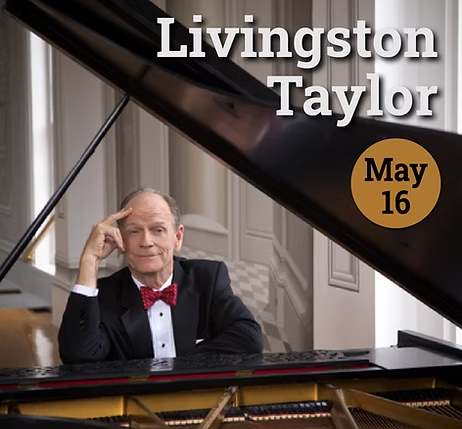
Livingston Taylor

0

Livingston Taylor Brings Five Decades of Music, Storytelling, and Masterful Songcraft to Montclair with Special Guest Pete Muller

May 16 @ 8:00 PM 11:30 PM

New Jersey’s thriving live music community continues to welcome legendary artists whose careers have shaped American songwriting and performance culture. One of the most anticipated events on the Garden State’s spring concert calendar arrives on Saturday, May 16, 2026 at 8:00 PM, when Livingston Taylor takes the stage for an evening of music, storytelling, and musical mastery. Joining him for the evening will be acclaimed singer-songwriter Pete Muller, opening the show with material from his latest album and setting the stage for a memorable night of live music.

For audiences throughout New Jersey and the broader Northeast, the upcoming performance represents far more than a concert. It is an opportunity to experience one of the most respected singer-songwriters of the past half-century in a setting designed for attentive listening and genuine musical connection.

Livingston Taylor has spent more than five decades crafting a remarkable career that blends artistry, storytelling, education, and musical exploration. Known for his warm stage presence, thoughtful lyrics, and wide-ranging musical style, Taylor has built a reputation as a performer capable of captivating audiences through both music and narrative. His concerts are often described as equal parts musical performance and engaging conversation, creating a unique live experience that draws listeners into the stories behind the songs.

For many music lovers, Taylor’s career represents a bridge between generations of American songwriting tradition. Emerging during the golden era of the singer-songwriter movement, he quickly distinguished himself as an artist who could blend folk storytelling, pop melodies, gospel warmth, and jazz influences into a distinctive musical voice.

Over the course of his career, Livingston Taylor has released more than twenty albums and written songs that have resonated across the music industry. His compositions have reached the charts through recordings by other artists, including hits performed by his brother, James Taylor. At the same time, Livingston developed his own extensive catalog of original material that reflects a lifetime of experience on stage and on the road.

Beyond his own recordings, Taylor’s musical journey has intersected with some of the most influential figures in modern music. Throughout his career, he has appeared alongside artists such as Joni Mitchell, Linda Ronstadt, Fleetwood Mac, and Jimmy Buffett. These collaborations reflect the respect Taylor commands among musicians who recognize his deep understanding of songwriting and performance craft.

Yet what truly distinguishes Livingston Taylor’s work is the way he connects with audiences. His performances blend humor, wisdom, and musical excellence in a style that feels both intimate and timeless. Many fans describe his concerts as an experience where stories and songs intertwine seamlessly, creating moments that are as emotionally engaging as they are musically satisfying.

Taylor’s personality on stage has often been compared to that of a storyteller from another era, someone who could just as easily command the attention of a theater audience as a concert hall crowd. The comparison is fitting. In many ways, his performances reflect the long American tradition of musical storytelling, where songs serve as windows into personal journeys and shared experiences.

That ability to connect through narrative has helped sustain Taylor’s career across more than fifty years of touring. Even today, he maintains an active performance schedule that regularly includes over one hundred shows each year. For an artist with such a long history on stage, the continued enthusiasm for performing reflects both his passion for music and the enduring appeal of his work.

While his career as a performer has been extraordinary, Livingston Taylor has also made a profound impact through his work as an educator. For three decades he has served as a full professor at Berklee College of Music in Boston, one of the most respected institutions for contemporary music education.

In the classroom, Taylor has guided countless aspiring musicians through the complexities of songwriting, performance, and stage presence. Drawing from decades of professional experience, he offers students practical insight into the realities of life as a touring artist. His teaching philosophy emphasizes authenticity, emotional connection, and the importance of understanding how music communicates with audiences.

Students often describe Taylor as a mentor whose enthusiasm for music is contagious. His ability to translate real-world experience into practical lessons has helped shape the careers of numerous emerging artists who now perform across the global music landscape.

That combination of educator and performer has made Taylor a rare figure within the music world: someone equally comfortable on stage and in the classroom, equally passionate about creating music and sharing its lessons with others.

The upcoming New Jersey performance will showcase that unique blend of artistry and storytelling. Audiences can expect a setlist that spans Taylor’s extensive catalog, including beloved classics, fan favorites, and perhaps a few unexpected interpretations of songs that have influenced his career.

Taylor’s repertoire moves fluidly across musical styles. In one moment he may perform a reflective acoustic ballad that highlights the intimacy of his songwriting. In the next, he might shift into a joyful gospel-infused number or a jazz-inspired arrangement that demonstrates his musical versatility. This stylistic range has always been part of his identity as an artist.

Adding to the evening’s musical depth is opening act Pete Muller, a singer-songwriter whose work has earned critical recognition for its emotional nuance and thoughtful storytelling. Muller’s latest album, One Last Dance, reflects a period of reflection and creative evolution in his own career.

While many musicians chase complexity and scale in their productions, Muller has recently embraced a philosophy rooted in simplicity and presence. His songwriting explores the beauty found in small moments—those subtle experiences that reveal themselves when life slows down and attention turns inward.

Muller’s personal journey adds another layer of intrigue to his music. Known in professional circles as an influential figure in the financial world who helped shape modern Wall Street strategies, he simultaneously built a career as a respected recording artist. That unusual path reflects a life driven by curiosity and exploration, qualities that are clearly present in his songwriting.

One Last Dance was recorded at the legendary Real World Studios in Bath, England, a location known for its immersive recording environment and creative atmosphere. For this project, Muller took on a new role by producing the album himself alongside his band, The Kindred Souls.

The recording sessions captured the core of the album within a remarkably short timeframe. In just one week, Muller and his bandmates recorded performances that carry the spontaneity and emotional immediacy of musicians creating together in real time.

The album also features notable guest appearances from Grammy-winning artist Allison Russell and the innovative musical duo SistaStrings. Their contributions add rich textures to the project, blending elements of roots, soul, rock, and pop into a cinematic soundscape that complements Muller’s introspective lyrics.

Listeners will hear songs that explore vulnerability, connection, and the search for meaning within everyday experiences. The album’s arrangements allow the emotional weight of the songwriting to remain front and center, creating a listening experience that feels both personal and expansive.

When Muller takes the stage in New Jersey as the evening’s opening performer, audiences will have the opportunity to experience these songs in their most direct form. His live performances highlight the emotional core of his music while allowing the dynamics between band members to shape each moment organically.

Together, Muller and Livingston Taylor create a concert lineup that reflects the depth and diversity of contemporary singer-songwriter traditions. One artist brings decades of musical storytelling shaped by the classic American songwriting movement. The other offers a modern perspective rooted in reflection and exploration.

New Jersey’s music audiences have long demonstrated a deep appreciation for artists who prioritize authenticity and lyrical depth. The state’s cultural landscape continues to support a vibrant live music ecosystem that spans genres and generations.

Across venues, theaters, and community concert series, fans gather to experience performances that celebrate the enduring power of music. Coverage of this growing scene, including concert announcements, artist spotlights, and event previews, continues to expand through resources dedicated to highlighting the region’s creative energy, including the Explore New Jersey music page.

Events like the upcoming Livingston Taylor performance illustrate why the Garden State remains an important stop for touring artists seeking engaged audiences and meaningful performance environments. Rather than large-scale arena spectacles, many fans are increasingly drawn to concerts where songwriting and storytelling can be experienced without distraction.

The May 16 concert offers exactly that kind of setting.

For those attending, the evening will deliver more than a collection of songs. It will provide a glimpse into the lifetime of artistry that Livingston Taylor has dedicated to music, along with the fresh creative voice of Pete Muller as he shares songs from a deeply personal new album.

The combination promises a night defined by musical excellence, thoughtful storytelling, and the shared experience that makes live performance one of the most powerful forms of artistic connection.

When Livingston Taylor walks onto the stage in Montclair, he brings with him more than fifty years of stories, songs, and moments gathered from a life lived in music. And for one evening in New Jersey, audiences will have the chance to experience that remarkable journey firsthand.

Outpost in the Burbs

973-744-6560

View Organizer Website

Outpost in the Burbs

40 South Fullerton Avenue (First Congregational Church)
Montclair, New Jersey 07042-3396 United States
+ Google Map
973-744-6560
View Venue Website

The Lone Bellow

0

The Lone Bellow Bringing Powerful Harmonies and New Album “What A Time To Be Alive” to Montclair for a Special New Jersey Concert Event

May 9 @ 8:00 PM 11:30 PM

New Jersey’s live music scene continues to thrive with performances that bring nationally celebrated artists into intimate and unforgettable settings. One of the most anticipated events arriving this spring features The Lone Bellow, the acclaimed folk-rock trio known for soaring harmonies, deeply emotional songwriting, and electrifying live performances. On Saturday, May 9, 2026 at 8:00 PM, the band will take the stage in Montclair, offering New Jersey audiences a rare opportunity to experience their music up close as they celebrate the arrival of their newest album, What A Time To Be Alive.

The concert promises to deliver a powerful blend of heartfelt storytelling, soul-infused arrangements, and the warm musical chemistry that has defined The Lone Bellow since their emergence on the national stage more than a decade ago. For fans across the Garden State, the evening represents both a celebration of a beloved band and a chance to witness the beginning of an exciting new chapter in their artistic evolution.

Over the years, New Jersey has developed a strong reputation as a destination for touring artists who value passionate audiences and authentic listening environments. The state’s vibrant music community continues to grow through a combination of dedicated venues, regional festivals, and a loyal fan base eager to support both emerging and established performers. Coverage of the state’s live music culture continues to expand through outlets highlighting the thriving scene, including features and performance listings regularly showcased on the Explore New Jersey music platform.

For The Lone Bellow, performing in New Jersey represents another connection point in their ongoing relationship with audiences across the Northeast. The trio’s music has always thrived in settings where listeners can fully experience the emotion and storytelling embedded within their songs. Their performances combine gospel-influenced harmonies with folk tradition and rock intensity, creating concerts that feel both communal and deeply personal.

The upcoming show arrives at a particularly meaningful moment for the band. Their sixth studio album, What A Time To Be Alive, marks a significant creative milestone. While the group has built a devoted following through five previous records, this latest project expands their sound while staying true to the emotional core that first captured listeners’ attention.

What sets this album apart is the collaborative approach behind its creation. For the first time in the band’s history, the songwriting process included not only founding members Zach Williams, Brian Elmquist, and Kanene Pipkin but also their full touring ensemble. Drummer Julian Dorio and multi-instrumentalist Tyler Geertsma joined the creative process, allowing the album to reflect the energy and spontaneity that audiences experience during the band’s live shows.

That collaborative spirit can be heard throughout the record. The songs carry a dynamic immediacy that mirrors the feeling of musicians creating together in the same room. Rather than constructing tracks layer by layer through traditional studio techniques, the band sought to capture the organic interaction that has always defined their performances.

The result is a collection of songs that feels vibrant, warm, and emotionally expansive.

The album was recorded in Muscle Shoals, Alabama, one of the most legendary recording destinations in American music history. Known for producing iconic records across soul, rock, and country genres, the studio environment provided the band with the perfect atmosphere to explore new sonic territory while maintaining the raw emotional power that fans expect.

Before entering the studio, the group spent time writing together during a retreat held in an unusual location: a converted firehouse in Kentucky. Removed from the distractions of everyday life, the band immersed themselves in songwriting sessions that focused on reflection, storytelling, and creative risk-taking. Those moments of collaboration helped shape the themes that ultimately define the album.

At its heart, What A Time To Be Alive explores the bonds that connect people through friendship, love, resilience, and shared experience. The songs move fluidly between moments of joy and vulnerability, capturing the complexities of human connection with sincerity and grace.

The album opens with the gritty, rhythm-driven track “After The Rain,” setting the tone for a record that embraces both emotional reflection and musical exuberance. As the album unfolds, listeners encounter songs that celebrate community and compassion, including uplifting anthems such as “Common Folk” and “I’m Here For You.” These tracks highlight the band’s ability to craft music that feels inclusive and hopeful while remaining grounded in authentic storytelling.

Other songs lean into quieter introspection. Tracks like “You Were Leaving” and “Night Goes Black” reveal the band’s willingness to explore vulnerability through stripped-down arrangements and reflective lyrics. Throughout the album, the trio’s signature vocal harmonies remain the centerpiece, weaving together voices that feel both powerful and intimate.

The road to completing the album was not without its challenges. Early in the process, the band experienced a major setback when recordings from their initial sessions were stolen. For many artists, such an event could have derailed the creative momentum of a project. Instead, the incident ultimately strengthened the connection between the band and their supporters.

Fans rallied around the group, expressing encouragement and reaffirming the sense of community that has always surrounded The Lone Bellow’s music. That outpouring of support reinforced the band’s belief that their songs belong not only to the artists who create them but also to the listeners who find meaning in them.

This sense of shared experience echoes throughout What A Time To Be Alive. The album feels less like a collection of isolated recordings and more like an invitation into a communal musical journey. Every harmony, lyric, and instrumental flourish carries the warmth of musicians playing together with purpose.

The Lone Bellow’s rise within the Americana and folk-rock world has been marked by a steady series of milestones. Since the release of their self-titled debut album in 2013, the band has built a reputation as one of the most emotionally compelling groups in contemporary roots music.

Their music has reached audiences through television appearances on major programs including late-night talk shows and celebrated music series known for highlighting exceptional artists. Along the way, the band has topped Americana charts, performed in some of the most revered venues in American music, and developed a global audience drawn to their blend of folk, rock, gospel, and soul.

Yet despite these accomplishments, the group has consistently maintained a focus on connection rather than celebrity. Their concerts often feel less like performances and more like shared gatherings, where audiences and musicians participate in a collective moment of storytelling through song.

That spirit will undoubtedly shape the experience of the May 9 performance in Montclair.

For many fans, seeing The Lone Bellow live is the definitive way to understand the band’s appeal. Their recorded albums capture beautiful harmonies and thoughtful songwriting, but their stage presence adds another dimension entirely. The energy between band members, the spontaneous interaction with audiences, and the emotional depth of the performances transform their songs into immersive experiences.

Each show becomes a celebration of music’s ability to bring people together.

New Jersey’s live music culture has long embraced artists who combine authenticity with exceptional musicianship. From legendary rock icons to emerging folk storytellers, the Garden State has consistently provided a welcoming stage for musicians who value connection with their audience.

The Lone Bellow fits naturally into that tradition. Their songs speak to universal human experiences, yet they deliver those stories with a sincerity that feels personal and immediate. For listeners seeking music that balances uplifting energy with thoughtful introspection, their work resonates on multiple levels.

As the band prepares to release What A Time To Be Alive, the upcoming Montclair performance represents more than just a concert stop on a tour itinerary. It stands as an opportunity for fans to witness the debut of a new musical era for a band that continues to evolve while honoring the relationships that shaped its journey.

Doors for the event will open approximately one hour before the performance, allowing audiences time to settle into the venue’s welcoming atmosphere before the show begins promptly at 8:00 PM. As with many intimate music events, all ticket sales are final, reflecting the high demand and limited capacity that make these performances so special.

For New Jersey music fans searching for an evening defined by soaring harmonies, powerful songwriting, and genuine musical connection, the arrival of The Lone Bellow offers an unforgettable opportunity.

On May 9 in Montclair, audiences will gather not only to hear songs from a new album but also to experience the living spirit of a band that continues to celebrate friendship, creativity, and the shared joy of music.

Outpost in the Burbs

973-744-6560

View Organizer Website

Outpost in the Burbs

40 South Fullerton Avenue (First Congregational Church)
Montclair, New Jersey 07042-3396 United States
+ Google Map
973-744-6560
View Venue Website

Willie Nile Band

0

Willie Nile Band Bringing Legendary New York Rock Energy to New Jersey Stage for Special May Performance

May 3 @ 8:00 PM 11:30 PM

The Garden State’s live music calendar continues to build momentum in 2026, and one of the most compelling performances on the horizon arrives on Sunday, May 3 at 8:00 PM when the Willie Nile Band takes the stage for a powerful evening of rock and songwriting mastery. Known for electrifying live shows and deeply poetic songwriting, Willie Nile’s upcoming performance promises to deliver the kind of unforgettable rock-and-roll experience that has made him a revered figure across the American music landscape.

For decades, Willie Nile has stood as one of the most respected voices in modern rock songwriting. Emerging from the vibrant New York City music scene, Nile carved out a reputation as an artist whose work bridges the worlds of classic rock energy, streetwise storytelling, and literary lyricism. His music has consistently earned praise from critics, fellow musicians, and fans who recognize his rare ability to fuse heart, urgency, and intelligence into songs that resonate across generations.

The upcoming performance offers New Jersey audiences the opportunity to witness a musician whose career reflects the enduring spirit of rock and roll itself. Whether performing blistering guitar-driven anthems or introspective piano ballads, Nile brings an emotional intensity to the stage that has become legendary among longtime followers.

Across the broader regional music community, concerts like this continue to strengthen the cultural fabric of the state’s thriving live music ecosystem. The Garden State has long served as an essential crossroads for touring artists traveling through the Northeast, and audiences here have developed a reputation for their enthusiasm and deep appreciation for authentic musicianship. Events like the Willie Nile Band concert are a testament to the continued vitality of New Jersey’s music scene, which is regularly spotlighted through coverage of concerts, festivals, and artist developments featured on the Explore New Jersey music platform.

Willie Nile’s career is rooted in one of the most important musical ecosystems in America: the New York City rock scene. From the moment he first emerged as a songwriter, critics recognized something distinctive about his voice. His songs carry the urgency of punk rock, the storytelling tradition of folk music, and the melodic instincts of classic rock’s golden era.

That unique combination has earned him remarkable praise throughout his career. Influential musicians across multiple generations have publicly celebrated his work, recognizing Nile as a songwriter who embodies the emotional core of rock music. Artists such as Bono, Bruce Springsteen, Pete Townshend, Lou Reed, Lucinda Williams, and Little Steven have all spoken highly of his songwriting and performances. Their admiration underscores the respect Nile commands among some of the most important voices in contemporary music.

But perhaps the strongest testament to his artistry comes from the music itself. Over the course of a long and remarkably consistent career, Willie Nile has released a series of albums that blend raw energy with deeply reflective lyrics.

One of his most celebrated releases, Streets of New York, captured the pulse and poetry of the city that shaped his artistic identity. The album stands as a vivid portrait of urban life and creative survival, filled with songs that celebrate both the grit and beauty of the city’s cultural landscape.

Another standout moment arrived with The Innocent Ones, an album that received widespread critical acclaim and landed on numerous year-end best-of lists. The record produced the single “One Guitar,” a powerful anthem celebrating the transformative power of music itself. The song resonated strongly with audiences, becoming a defining moment in Nile’s catalog and reinforcing his reputation as a songwriter capable of capturing universal themes with simple yet powerful imagery.

His 2013 album American Ride further expanded his legacy. The record explored the complexities of the American experience through songs that blended patriotic imagery with thoughtful social reflection. Critics and listeners alike responded enthusiastically, with the album appearing on numerous year-end top ten lists and earning recognition as one of the standout rock releases of its era.

Nile’s ability to shift between high-energy rock and intimate songwriting is another hallmark of his work. His piano-driven album If I Was a River revealed a more introspective side of his artistry, focusing on emotional storytelling and melodic depth. The album demonstrated that beneath the roar of guitars lies a songwriter capable of crafting deeply personal compositions that resonate on a quieter, equally powerful level.

His 2016 album World War Willie brought listeners back to the explosive rock sound that first defined his career. Packed with urgency and swagger, the record captured the spirit of classic rock while maintaining a contemporary edge. Critics praised its raw energy and timeless rock-and-roll spirit, celebrating Nile’s ability to channel decades of musical tradition into songs that still feel fresh and immediate.

Another notable project arrived with Positively Bob: Willie Nile Sings Bob Dylan. The tribute album honored one of the most influential songwriters in music history while showcasing Nile’s ability to reinterpret classic material through his own distinctive lens. The project received widespread acclaim and demonstrated the deep respect Nile holds for the songwriting lineage that helped shape his own artistic journey.

By 2018, Nile delivered yet another landmark with Children of Paradise. Many critics considered the album one of the strongest releases of his career. Its songs combined literary imagery, soaring melodies, and the unmistakable emotional urgency that has defined Nile’s work for decades.

His creative momentum continued with the release of New York at Night in 2020. The album functioned as both a love letter to the city that shaped him and a reminder of the enduring vitality of rock songwriting. With its guitar-driven arrangements and evocative storytelling, the record reaffirmed Nile’s place among the most consistent and passionate voices in contemporary rock music.

Most recently, his album The Day the Earth Stood Still introduced another compelling chapter in his discography. The record includes a powerful collaboration with Steve Earle on the song “Blood On Your Hands,” bringing together two influential songwriters for a moment of musical intensity that reflects the album’s larger themes.

Throughout all these releases, one element remains constant: Willie Nile’s commitment to authenticity. His songs are never cynical or detached. Instead, they are fueled by a genuine belief in the emotional power of music and the ability of rock and roll to capture the spirit of a moment.

That authenticity becomes even more evident in his live performances.

Fans who have seen the Willie Nile Band perform know that his concerts are more than just musical events. They are celebrations of rock music’s enduring energy and communal spirit. Nile performs with the passion of an artist who still believes deeply in the magic of the stage.

His shows combine high-voltage rock anthems with intimate storytelling moments, allowing audiences to experience the full range of his songwriting. Whether delivering driving guitar riffs or heartfelt ballads, Nile commands the stage with charisma and intensity.

The upcoming May performance promises to showcase that dynamic live presence. With a catalog spanning decades and an audience that continues to grow, the Willie Nile Band remains one of the most exciting touring acts in rock music.

For New Jersey audiences, the concert represents more than just another night of live music. It is an opportunity to witness a songwriter whose work reflects the evolution of rock culture from the streets of New York to stages across the world.

The Garden State’s proximity to New York City has always fostered a close relationship between the two music communities. Many of the artists who helped define the New York rock scene have long maintained strong connections with New Jersey audiences, and fans here have consistently embraced musicians who bring authenticity and storytelling to their craft.

Willie Nile’s music fits naturally into that tradition. His songs echo the same spirit of poetic street realism that has influenced generations of rock artists, while his live performances capture the timeless excitement that first drew audiences to rock music in the first place.

As the Willie Nile Band prepares to take the stage on May 3, fans can expect an evening filled with soaring choruses, thoughtful lyrics, and the kind of musical passion that defines the very best live performances.

For anyone who believes that rock and roll is still capable of inspiring, challenging, and connecting people through music, this show stands as one of the most exciting live events on New Jersey’s spring concert calendar.

Outpost in the Burbs

973-744-6560

View Organizer Website

Outpost in the Burbs

40 South Fullerton Avenue (First Congregational Church)
Montclair, New Jersey 07042-3396 United States
+ Google Map
973-744-6560
View Venue Website

Rhett Miller

0

Rhett Miller of Old 97’s Brings Soul-Baring Songwriting and New Solo Album to Montclair’s Outpost in the Burbs for a Special April Performance

April 25 @ 8:00 PM 11:30 PM

New Jersey’s vibrant live music calendar continues to expand in 2026, and one of the most anticipated singer-songwriter performances of the spring is arriving in Montclair. Rhett Miller, the celebrated frontman of the long-running alt-country and Americana band Old 97’s, will take the stage for an intimate solo performance at Outpost in the Burbs on Saturday, April 25 at 8:00 PM. The evening promises a powerful showcase of storytelling, songwriting craftsmanship, and emotional honesty as Miller performs material from across his career, including songs from his newest solo album, A Lifetime of Riding by Night. Opening the show will be Buga, setting the tone for an evening rooted in thoughtful lyrics and compelling live musicianship.

The concert marks a significant stop on Miller’s ongoing touring schedule and brings one of modern Americana’s most respected voices to one of New Jersey’s most beloved listening rooms. Located in the heart of Montclair at 40 South Fullerton Avenue, Outpost in the Burbs has long been known as a destination for artists whose music thrives in an attentive, acoustically rich setting. For fans of authentic songwriting and stripped-down live performance, this show offers the rare opportunity to experience Miller’s music in its most direct and intimate form.

Rhett Miller’s musical journey spans decades, but his creative energy remains as vibrant as ever. With Old 97’s, he helped define the modern alt-country movement of the 1990s, blending country storytelling with the speed and spirit of punk rock. Over the years, the band built a fiercely loyal audience through relentless touring and a catalog of albums that fused humor, heartbreak, and literary lyricism. Miller’s solo work, however, has allowed him to explore a more introspective side of his songwriting, leaning into themes of vulnerability, reflection, and personal evolution.

His tenth solo album, A Lifetime of Riding by Night, stands as one of the most revealing releases of his career. Created during a period of personal uncertainty, the album was recorded under unusual circumstances. Just days before undergoing surgery that threatened his vocal cords, Miller entered the studio with longtime collaborator and Old 97’s bassist Murry Hammond. Together they captured a raw collection of performances that would later be completed while Miller recovered.

That unusual recording process lends the album a distinctive emotional immediacy. Rather than polished perfection, the songs carry the atmosphere of a moment that could not be delayed. Each track reflects an artist confronting the fragility of the creative voice while embracing the power of collaboration and trust.

Miller’s partnership with Hammond runs deep. The two musicians have worked together since their teenage years in Texas, long before Old 97’s became a cornerstone of the Americana and alternative country landscape. That history informs the warmth and depth heard throughout A Lifetime of Riding by Night. It is not merely an album created by collaborators but by lifelong musical companions whose creative instincts have evolved together for decades.

The album also reflects Miller’s recent work as a songwriting teacher. In addition to his performing career, he has spent time guiding emerging writers through songwriting courses and retreats. Teaching has offered him a fresh perspective on creativity, vulnerability, and the courage required to share deeply personal work.

Watching young writers wrestle with the anxiety of presenting their songs reminded him of the emotional risk inherent in songwriting. That realization ultimately pushed him toward a more open, less guarded creative process. The result is a collection of songs that explore love, mortality, connection, and self-acceptance with remarkable clarity.

A Lifetime of Riding by Night features collaborations with an eclectic group of co-writers, further enriching the album’s narrative scope. Contributors include Evan Felker of the Turnpike Troubadours, acclaimed singer-songwriters Caitlin Rose and Nicole Atkins, and writer Ben Greenman, known for his literary work and editorial background. Each collaboration adds a different perspective while preserving the unmistakable voice at the center of the record.

For Miller, the album became a reminder that creativity often flourishes when artists release their need to control every detail of the process. By allowing the songs to evolve through collaboration and by trusting Hammond to complete the project while he recovered from surgery, Miller discovered new emotional terrain within his music.

That journey became especially meaningful when he finally heard the finished album in its entirety. During a tour stop on the West Coast with Old 97’s, he sat overlooking the Pacific Ocean, headphones on, listening to the completed record from beginning to end for the first time. The experience, by his own description, was deeply moving.

In that moment, he recognized something essential about the songs he had created. They carried an honesty and vulnerability that he might not have allowed himself to explore under different circumstances. The album became both a reflection of personal resilience and a testament to the enduring power of creative partnership.

Those themes of connection and longevity resonate strongly with fans who have followed Miller’s career since the early days of Old 97’s. The band’s enduring presence in the music world is itself something of a rarity. Many of their contemporaries from the 1990s alt-country scene have disappeared from the road or stepped away from recording altogether. Yet Miller and his bandmates continue to evolve, finding new energy in their songwriting while maintaining the spirit that first drew listeners to their music.

That sense of continuity and reinvention will undoubtedly shape Miller’s Montclair performance. Solo shows often reveal the purest form of a songwriter’s craft. Without the full band behind him, Miller’s lyrics and melodies stand fully exposed, inviting listeners to experience the songs as intimate narratives rather than large-scale productions.

For audiences at Outpost in the Burbs, this format creates a uniquely immersive concert experience. The venue’s listening-room environment is designed specifically for artists who value audience connection and storytelling. Over the years, it has hosted an impressive lineup of performers from across the folk, Americana, and singer-songwriter spectrum.

Montclair itself has become a cultural hub for live music in New Jersey. With its thriving arts community, independent venues, and engaged audiences, the town continues to attract artists seeking venues where music can be heard and appreciated without distraction. Performances at Outpost in the Burbs often sell out quickly, reflecting the venue’s reputation as a destination for high-quality live music events.

New Jersey’s music community has long supported artists who bring authenticity and craftsmanship to their performances. From intimate club shows to large theater productions, the state’s audiences are known for their enthusiasm and deep appreciation of songwriting tradition.

This upcoming performance by Rhett Miller aligns perfectly with that tradition. His songs combine literary storytelling with melodies rooted in Americana, folk, and rock. For listeners who value lyrics as much as instrumentation, his catalog offers a rich and rewarding listening experience.

The April 25 concert also highlights the continuing vitality of New Jersey’s live music scene. Across the state, venues, festivals, and concert series continue to showcase both nationally touring artists and emerging regional talent. Publications and platforms that celebrate these performances, including the music coverage featured on the Explore New Jersey music page, play an important role in connecting audiences with the diverse sounds shaping the Garden State’s cultural landscape.

As artists return to touring and audiences seek meaningful live experiences, intimate concerts like this one are becoming increasingly valued. They provide a space where music is not simply heard but felt. The audience becomes part of the performance, sharing the moment with the artist in real time.

For Rhett Miller, that connection has always been central to his work. Whether performing with Old 97’s in packed theaters or standing alone onstage with an acoustic guitar, his goal remains the same: to tell stories that resonate with listeners and create a shared emotional experience through music.

The Montclair performance promises exactly that kind of evening. Fans can expect a setlist that draws from Miller’s solo catalog, selections from his latest album, and possibly a few beloved songs from the Old 97’s repertoire reimagined in an acoustic setting.

With Buga opening the night and Outpost in the Burbs providing its signature listening-room atmosphere, the April 25 concert is shaping up to be one of the standout live music events of the season in New Jersey.

For music fans across the region, it is an opportunity to witness a master songwriter performing at the height of his creative powers—an artist who has spent decades refining his craft while continuing to discover new emotional depth within his work.

On a spring evening in Montclair, Rhett Miller’s songs will once again remind audiences why storytelling remains the beating heart of great music.

Outpost in the Burbs

973-744-6560

View Organizer Website

Outpost in the Burbs

40 South Fullerton Avenue (First Congregational Church)
Montclair, New Jersey 07042-3396 United States
+ Google Map
973-744-6560
View Venue Website

Lyzr AI Surges to $250 Million Valuation as Enterprise AI Infrastructure Race Accelerates

The enterprise artificial intelligence sector continues to expand at a staggering pace, and one of the latest companies capturing attention across the global technology landscape is Lyzr AI. The full-stack agent infrastructure platform has officially reached a new milestone after securing a Series A+ funding round that values the company at approximately $250 million. The announcement has quickly circulated throughout the technology industry, drawing attention from investors, enterprise leaders, and the rapidly evolving AI development community.

As businesses across the world search for scalable ways to deploy artificial intelligence inside complex organizational environments, platforms that simplify the creation, orchestration, and governance of AI agents are becoming increasingly important. Lyzr AI is positioning itself at the center of this transformation by providing infrastructure designed to help enterprises build reliable, secure, and controllable AI-powered systems at scale.

For organizations that have been experimenting with generative AI, machine learning automation, and AI-driven decision systems, the next challenge has become clear: how to manage intelligent agents across large enterprise ecosystems without losing oversight, compliance control, or operational efficiency. Lyzr AI’s technology is designed to solve exactly that problem.

The company’s recent funding milestone signals more than just investor confidence. It highlights the growing recognition that AI agents will soon become foundational components of modern digital infrastructure.

Enterprise AI Is Entering a New Phase

Artificial intelligence is no longer limited to experimental research labs or isolated business applications. Today’s enterprises are increasingly integrating AI directly into workflows, customer engagement systems, operational analytics, cybersecurity tools, and internal productivity platforms.

However, deploying AI across an organization introduces significant complexity. Businesses must manage multiple models, data sources, integrations, permissions, and compliance frameworks. Without the right infrastructure, these deployments can quickly become fragmented and difficult to control.

Lyzr AI addresses this challenge through what it describes as a full-stack AI agent infrastructure platform. Instead of forcing organizations to piece together separate tools for AI development, deployment, and monitoring, the platform provides a centralized environment where AI agents can be built, tested, managed, and scaled.

This unified approach allows enterprises to treat AI agents as structured digital assets rather than unpredictable automation tools. Companies can define guardrails, enforce governance policies, monitor performance, and integrate AI behavior directly into operational systems.

The result is a model that brings enterprise-grade discipline to a technology that has often been deployed in experimental ways.

Why Investors Are Paying Attention

The surge in enterprise interest surrounding AI agent frameworks has triggered a wave of investment across the artificial intelligence infrastructure sector. Investors are increasingly focusing on companies that enable large organizations to deploy AI responsibly and securely, particularly as regulatory frameworks surrounding artificial intelligence begin to take shape around the world.

Lyzr AI’s latest funding round reflects the belief that the infrastructure layer of artificial intelligence will become one of the most valuable segments of the broader AI economy.

While generative AI models receive much of the public attention, the platforms that manage how those models operate inside real businesses represent an enormous opportunity. Enterprises need tools that can integrate AI into existing systems, maintain operational visibility, and enforce security protections.

Platforms capable of delivering these capabilities at scale are becoming critical components of the emerging AI technology stack.

The new valuation milestone positions Lyzr AI among a growing class of startups focused on solving the operational side of artificial intelligence deployment.

Building AI Agents for the Enterprise Environment

At the center of Lyzr AI’s approach is the concept of enterprise AI agents. These agents are intelligent software entities designed to perform specific tasks, interact with systems, analyze data, and automate complex workflows.

Unlike simple chatbots or single-function automation tools, modern AI agents can operate across multiple systems simultaneously. They can retrieve data, trigger actions, generate insights, and adapt to changing inputs.

However, deploying these agents inside enterprise environments requires significant infrastructure support.

Organizations must ensure that AI systems operate within defined boundaries, protect sensitive data, maintain regulatory compliance, and remain transparent in how decisions are made.

Lyzr AI’s platform provides the architecture required to build and manage these agents safely.

Key capabilities typically include orchestration frameworks, model management layers, secure API integrations, monitoring tools, and governance controls. Together, these components create an ecosystem where AI agents can function reliably without introducing operational risk.

This kind of infrastructure is becoming essential as organizations begin to rely on AI systems for mission-critical functions.

The Rapid Rise of AI Agent Platforms

The emergence of platforms like Lyzr AI reflects a broader shift happening within the artificial intelligence industry. Early AI adoption focused heavily on models themselves—developing larger language models, improving training techniques, and expanding data capabilities.

Today, the focus is shifting toward how these models are integrated into real-world systems.

Companies are discovering that deploying AI successfully requires more than simply accessing powerful models. They need structured environments that control how AI behaves, interacts with data, and connects with existing business platforms.

AI agent infrastructure platforms provide this missing layer.

They enable organizations to move beyond isolated AI experiments and begin building integrated ecosystems where intelligent agents collaborate with human teams, software systems, and digital services.

This shift is accelerating the development of enterprise automation strategies, where AI agents can manage tasks ranging from customer support analysis to internal reporting workflows and operational monitoring.

For technology leaders, this infrastructure layer represents the bridge between experimental AI and enterprise-grade deployment.

Why This Matters for the Future of Business Technology

The growth of companies like Lyzr AI signals a deeper transformation happening across the global technology economy. Artificial intelligence is quickly becoming a foundational component of digital business operations.

Organizations are no longer asking whether they should adopt AI. Instead, they are asking how to implement AI in ways that are secure, scalable, and sustainable.

Infrastructure platforms play a critical role in answering that question.

Without reliable orchestration tools, enterprises risk deploying fragmented AI systems that lack oversight and control. With proper infrastructure in place, organizations can scale AI adoption while maintaining governance and operational clarity.

This transition from experimental AI to operational AI will shape the next decade of enterprise technology.

For businesses operating in innovation hubs across the United States—including growing technology communities throughout New Jersey—these developments are especially relevant. Companies across industries are exploring how AI agents can enhance productivity, improve data analysis, and automate complex workflows.

Platforms like Lyzr AI provide the building blocks that allow these initiatives to move from concept to reality.

AI Infrastructure and the Expanding Tech Landscape

Across the broader technology ecosystem, the rise of AI infrastructure companies reflects a pattern that has appeared repeatedly throughout the history of computing.

Whenever a major technological shift occurs, new layers of infrastructure emerge to support it.

The internet required hosting providers, content delivery networks, and cybersecurity platforms. Cloud computing introduced orchestration frameworks, container management systems, and platform-as-a-service tools.

Artificial intelligence is now following the same trajectory.

AI models represent the raw capability, but infrastructure platforms determine how that capability is delivered to businesses and users.

Companies like Lyzr AI are positioning themselves within this infrastructure layer, helping enterprises deploy AI agents that can operate reliably inside complex environments.

As the demand for enterprise AI continues to grow, the companies building these operational foundations are likely to play an increasingly influential role in the global technology economy.

The Road Ahead for Enterprise AI Platforms

The next stage of artificial intelligence development will likely focus on deeper integration between AI agents and enterprise systems.

Organizations are expected to deploy networks of AI agents capable of collaborating across departments, analyzing massive datasets, automating repetitive tasks, and providing strategic insights to decision makers.

To support this vision, platforms must deliver more than simple automation capabilities.

They must provide governance frameworks, transparency mechanisms, performance monitoring tools, and security controls designed specifically for AI-driven operations.

Lyzr AI’s recent funding milestone suggests that investors see enormous potential in this space.

As enterprises continue to explore how artificial intelligence can transform their operations, platforms capable of delivering reliable AI infrastructure will become essential partners in that journey.

The company’s $250 million valuation reflects a growing belief that AI agent infrastructure may soon become one of the most critical layers of modern enterprise technology.

For the rapidly evolving AI economy, the infrastructure race has only just begun.

0

“We All Speak Music”: Global Orchestra Brings a Joyful Multicultural Family Concert to Perkins Center for the Arts in Collingswood

March 21 @ 10:00 AM 12:30 PM

Music has long served as one of humanity’s most universal languages—capable of crossing borders, cultures, and generations in ways few other art forms can achieve. On March 21, families across South Jersey will have the opportunity to experience that universal language firsthand as the internationally inspired program “All Around This World” brings its vibrant global music celebration to Perkins Center for the Arts.

The event, often presented under the title “We All Speak Music: A Global Concert for Kids,” will feature the energetic ensemble known as the All Around This World Global Orchestra All-Stars, a collective of musicians representing traditions from across the globe. Designed specifically for children and their families, the concert transforms the stage into an interactive cultural journey where audiences don’t simply listen—they participate.

From Brazilian rhythms and Balkan melodies to Chinese string traditions and Senegalese storytelling music, the performance invites young audiences to discover the world through sound, movement, and shared musical exploration.

The free family concert represents one of the most unique cultural experiences currently taking place in New Jersey’s thriving arts community.

A Global Music Adventure Designed for Families

At the heart of the program is Philadelphia-based musician and educator Jay Sand, the creative force behind the internationally recognized children’s music initiative All Around This World.

Sand developed the program with a simple yet powerful mission: introduce children to the world’s cultures through music. Over time, the initiative has evolved into a large-scale educational and performance platform that now includes more than 300 songs representing musical traditions from across the globe.

Unlike traditional children’s concerts, the experience is designed to be fully interactive.

Children are encouraged to sing, dance, clap rhythms, and even meet the musicians performing the music. Through playful participation, young audiences begin to understand how different cultures express identity, history, and celebration through sound.

The result is a concert experience that blends music, storytelling, cultural education, and joyful exploration.

For many families attending the Perkins Center performance, it will be their first exposure to musical traditions from multiple continents—all presented in a format designed to inspire curiosity and wonder.

The Global Orchestra: Musicians from Across Traditions

The “All Speak Music” performance showcases the All Around This World Global Orchestra, a collaborative network of musicians who specialize in traditional music from their respective cultural backgrounds.

The ensemble performing in Collingswood brings together a remarkable lineup of artists whose musical traditions span multiple continents.

Among the featured performers are:

• Chad Brown – Balkan and Klezmer percussion traditions
• Youba Cissokho – master of the West African kora harp
• Rob Curto – Brazilian folk and jazz influences
• Qin Qian – Chinese two-string bowed instrument specialist
• Joe Tayoun – North African and Middle Eastern rhythms
• Cara Tratner – Klezmer and Eastern European traditions

Together with Jay Sand, these musicians form a multicultural ensemble that transforms the concert into a living map of global music traditions.

Each artist contributes not only their musical expertise but also stories about their instruments, cultural traditions, and the history behind the music.

For young audiences, it becomes an immersive introduction to how music connects people across continents.

The Magic of Global Instruments

One of the most fascinating elements of the concert is the opportunity for children to encounter instruments rarely seen in typical American classrooms.

The kora, played by Youba Cissokho, is a 21-string West African harp-lute that carries centuries of storytelling traditions in Senegal and surrounding regions.

The erhu, performed by Qin Qian, produces a hauntingly expressive tone that has been central to Chinese classical music for generations.

Percussion instruments from the Balkans, North Africa, and the Middle East add rhythmic energy that encourages audiences to move, clap, and dance along.

The accordion and saxophone introduce elements of Brazilian and Eastern European folk traditions, weaving additional layers into the global musical tapestry.

For many children attending the concert, it may be the first time they see these instruments performed live—a moment that can spark lifelong curiosity about music and culture.

The Educational Vision Behind “All Around This World”

What makes the All Around This World program particularly powerful is its long-term educational philosophy.

Rather than offering a single cultural snapshot, the program operates through a three-year curriculum designed to gradually introduce children to the music of different regions around the globe.

Through song, movement, and storytelling, participants explore traditions from:

Africa
Latin America
Europe
Asia
The Middle East
The Caribbean

Each lesson or concert builds upon the previous experience, helping children develop a broader understanding of global culture.

The program’s philosophy emphasizes that learning about the world should be joyful, interactive, and rooted in artistic expression.

Music becomes both the teacher and the bridge.

Perkins Center for the Arts: A Cultural Anchor in South Jersey

Hosting the event is the Perkins Center for the Arts, one of New Jersey’s most respected cultural institutions.

Located in Collingswood, the center has spent decades fostering creativity through exhibitions, concerts, arts education programs, and community engagement initiatives.

Its historic campus provides a welcoming environment where families, students, and artists can gather to explore the arts in all their forms.

Events like “We All Speak Music” reflect the organization’s ongoing commitment to making cultural experiences accessible to audiences of all ages.

The center also maintains a second campus in Moorestown, expanding its reach throughout the region and strengthening its role as a cornerstone of South Jersey’s creative community.

Through programs like this concert, Perkins continues to demonstrate how the arts can unite communities while introducing new generations to global cultural traditions.

Why Multicultural Music Experiences Matter for Children

In today’s interconnected world, cultural literacy is more important than ever.

Programs like All Around This World offer children the chance to experience global traditions not through textbooks or screens, but through real human interaction and artistic performance.

Music provides an especially powerful gateway for this kind of learning.

Rhythms, melodies, and dance movements communicate emotion and identity in ways that transcend language barriers.

For young listeners, participating in a multicultural music experience can spark curiosity about geography, history, and cultural traditions far beyond their immediate surroundings.

The concert also encourages empathy and openness—two qualities that become increasingly valuable in a diverse global society.

A Celebration of New Jersey’s Vibrant Cultural Scene

The upcoming performance at Perkins Center also reflects the broader vitality of New Jersey’s arts landscape.

From concert halls and galleries to theaters and community arts programs, the Garden State continues to cultivate an impressive array of cultural opportunities for residents and visitors alike.

Family-oriented events that blend education and entertainment have become a particularly important part of that ecosystem.

Explore New Jersey’s music coverage continues to highlight programs that bring together artists, educators, and audiences in meaningful ways—and “We All Speak Music” stands out as one of the most inspiring examples this season.

By presenting a concert that celebrates musical traditions from around the world, the Perkins Center reinforces New Jersey’s reputation as a place where culture thrives through collaboration and community engagement.

A Concert Where Everyone Is Part of the Music

Unlike many traditional performances where audiences remain seated and silent, “We All Speak Music” invites families to become part of the show itself.

Children are encouraged to sing along, move to the rhythms, and interact with the performers throughout the concert.

Parents and caregivers often find themselves joining the fun as well.

The result is an atmosphere that feels less like a formal concert and more like a joyful international celebration.

By the end of the performance, the audience has not only heard music from around the world—they have experienced it together.

And in that moment, the title of the concert becomes beautifully clear.

No matter where we come from, we all speak music.

All Around This World

215-913-2679

View Organizer Website

Outpost in the Burbs

40 South Fullerton Avenue (First Congregational Church)
Montclair, New Jersey 07042-3396 United States
+ Google Map
973-744-6560
View Venue Website

Devils Ignite the Rock: Nico Hischier’s Four-Point Night Powers Thrilling 6–4 Comeback Win Over Los Angeles Kings

For one electric night in Newark, the noise returned to the building, the offense came alive, and the playoff chase—however steep—found renewed energy. The New Jersey Devils delivered one of their most dramatic performances of the season with a thrilling 6–4 victory over the Los Angeles Kings on March 14 at Prudential Center.

Led by an extraordinary four-point performance from captain Nico Hischier and a late game-winning power-play strike from Jack Hughes, the Devils reignited the crowd at The Rock and kept their hopes alive in the Eastern Conference playoff race.

The victory lifted New Jersey to 33–31–2 on the season. While the standings still present a difficult climb, Saturday night delivered something that had been missing for stretches of this season: belief.

For fans across the Garden State, it was a reminder that when this team finds its rhythm, the Devils remain one of the most dangerous offensive groups in hockey.

A Game That Had Everything

Saturday night’s matchup felt like a playoff game long before the postseason actually begins.

The Devils came out flying early, controlling the pace and capitalizing on their chances to build a 2–0 lead after the first period. It was a rare moment of dominance for a team that has struggled to maintain early momentum in recent weeks.

But the Kings, a veteran squad with their own postseason ambitions, answered quickly.

Three rapid goals from Los Angeles during the second period flipped the game on its head and temporarily silenced the arena. What had started as a confident Devils performance suddenly turned into another test of resilience.

For much of the second period, the atmosphere inside the Prudential Center shifted from excitement to tension.

Then the Devils pushed back.

Nico Hischier Delivers a Captain’s Performance

In games that define a season, leaders often emerge in unmistakable ways. On this night, that leader was Nico Hischier.

The Devils captain recorded two goals and two assists, delivering one of the most impactful individual performances of the season.

Hischier’s night was defined not just by production, but by timing.

His second goal restored the Devils’ lead midway through the third period, giving New Jersey renewed momentum when the game hung in the balance. Moments later, he helped set up Jack Hughes’ decisive power-play goal late in regulation.

And when the Kings pulled their goalie in a desperate final push, Hischier was again involved—assisting on Timo Meier’s empty-net goal that sealed the 6–4 victory.

Great players often make their biggest impact in the game’s most critical moments.

That was exactly the role Hischier played Saturday night.

Jack Hughes Delivers the Decisive Moment

With under three minutes remaining and the game tied, the Devils’ power play stepped onto the ice knowing the moment demanded something special.

Jack Hughes answered.

The Devils’ superstar center blasted home the game-winning goal with just 2:29 remaining in regulation, sending the Prudential Center crowd into a frenzy.

The goal showcased Hughes’ signature blend of skill, vision, and confidence. When the Devils’ power play clicks, Hughes remains one of the NHL’s most dangerous offensive threats.

It was the kind of clutch moment that reminds fans why the Devils’ offensive core is considered one of the most exciting young groups in hockey.

Youth Movement Sparks the Offense

While the star players delivered the headline moments, one of the most encouraging storylines of the night came from the Devils’ emerging young depth.

The third line featuring Cody Glass, Arseny Gritsyuk, and Lenni Hameenaho produced one of the most entertaining sequences of the evening.

Glass scored on a one-timer in the first period after a brilliant setup from Gritsyuk.

Later in the game, Hameenaho dazzled with a highlight-reel toe-drag that created another scoring opportunity, finished off by Gritsyuk in one of the most creative goals seen at The Rock this season.

For a team navigating a challenging year, the continued development of young players like these offers a glimpse of a promising future.

The Devils’ roster has long been built around speed, creativity, and youthful energy. Saturday’s performance demonstrated exactly how dangerous that formula can become when it all comes together.

Jake Allen Returns Between the Pipes

Another major storyline from the victory involved the return of goaltender Jake Allen.

Allen made his first start since February 25, stepping back into the crease after Jacob Markstrom had handled the previous seven games.

Allen stopped 27 shots to earn the win. While the numbers may not tell the entire story, his return helped stabilize the Devils in key moments and allowed the offense to carry the momentum.

For a team searching for consistency in net throughout the season, the Devils’ goaltending rotation remains one of the most closely watched storylines heading into the final stretch of the schedule.

History Made—Even in Defeat

Despite the Devils victory, the night also carried a historic moment for Los Angeles.

Kings captain Anze Kopitar set a franchise record for career points during the game, surpassing Hall of Famer Marcel Dionne.

Kopitar achieved the milestone with a pair of power-play goals, marking another chapter in one of the most respected careers in the NHL.

While Devils fans may have preferred that history be made elsewhere, the moment underscored the high level of competition between two teams battling for postseason positioning.

The Playoff Picture: Devils Still Fighting

The win moved New Jersey to 68 points through 66 games, keeping them within striking distance in the Eastern Conference playoff race.

The path forward remains difficult.

But if Saturday night proved anything, it’s that this Devils team is capable of producing explosive offensive performances against strong opponents.

The challenge now is sustaining that level of play consistently.

If the Devils can replicate the urgency, speed, and creativity displayed against the Kings, the playoff race could remain interesting deep into the spring.

Injuries Continue to Shape the Lineup

Even with the thrilling victory, the Devils continue navigating key injuries across the roster.

Defenseman Brett Pesce remains sidelined with a lower-body injury and is not expected to return until late March.

Forward Stefan Noesen is scheduled for knee surgery and is targeting a return in early April.

Meanwhile, forward Zack MacEwen has been ruled out for the remainder of the season with a knee injury.

Despite these setbacks, the Devils continue finding contributions throughout the lineup—a sign of resilience that will be essential if they hope to remain competitive.

The End of the “Jersey Jersey” Era

Saturday’s game also carried a subtle but meaningful piece of franchise history.

The Devils wore their black alternate uniforms as part of what the team has dubbed the “Jersey Jersey Goodbye Tour,” marking the final appearances of the popular alternate design before a new “Hometown Remix” jersey debuts during the 2026–27 season.

For fans, the jerseys have become a symbol of the team’s modern era and its connection to the state of New Jersey.

Seeing them one final time inside the Prudential Center added an extra layer of nostalgia to an already memorable night.

Devils Look Ahead to Boston

The Devils now turn their attention to their next challenge as they conclude their seven-game homestand against the Boston Bruins on March 16.

Another victory would provide valuable momentum as the team navigates the final weeks of the season.

For now, however, Saturday night’s comeback victory stands as one of the most entertaining games of the Devils’ season—a night when leadership, youth, and offensive firepower came together to deliver a thrilling result.

Inside the Prudential Center, the message was clear.

The Devils are not finished fighting.

“Art (Official) Intelligence” Exhibition at Gallery 14C in Jersey City Redefines Creativity in the Age of Algorithms

In a cultural moment defined by artificial intelligence, generative software, and the rapid transformation of creative industries, a bold new exhibition in New Jersey is making a powerful statement about the enduring force of human imagination. The multi-artist exhibition “Art (Official) Intelligence” has opened at Gallery 14C, inviting audiences into a vibrant and provocative exploration of creativity that places human expression firmly at the center of the conversation.

Running through April 2, the exhibition brings together a diverse roster of artists whose work collectively challenges the assumption that algorithmic tools represent the future of artistic creation. Instead, the show celebrates the unpredictability, emotion, and intellectual depth that emerge when artists engage directly with their materials, their experiences, and their communities.

Located in the thriving arts district of Jersey City, Gallery 14C has built a reputation as one of the region’s most dynamic independent exhibition spaces. With “Art (Official) Intelligence,” the gallery delivers one of the most thought-provoking exhibitions currently on view in New Jersey’s contemporary art scene.

The show arrives at a time when debates around artificial intelligence and creativity are dominating global headlines. From AI-generated images to automated writing systems, the technology industry has begun reshaping the boundaries between human creation and machine-generated output.

Yet this exhibition proposes a powerful counterpoint: the idea that authentic artistic intelligence—rooted in lived experience, intuition, and emotional risk—cannot be replicated by code.

A Timely Exhibition at the Intersection of Art and Technology

The title “Art (Official) Intelligence” cleverly reframes the concept of artificial intelligence itself. Rather than focusing on machines producing art, the exhibition suggests that true intelligence in art has always come from artists themselves—their perceptions, their experimentation, and their willingness to push creative boundaries.

Each work included in the show serves as an argument for the continued relevance of human-driven creativity.

Paintings, sculpture, mixed media installations, and conceptual works transform the gallery into an immersive environment where viewers are encouraged to consider how art is made, why it matters, and what distinguishes genuine artistic insight from algorithmic mimicry.

The artists featured in the exhibition approach the theme from a wide range of perspectives. Some works engage directly with the visual language of digital culture, referencing the aesthetics of code, data, and virtual spaces. Others return to tactile, physical processes that emphasize the irreplaceable connection between artist and material.

Together, these works create a compelling dialogue about the evolving role of artists in an increasingly automated world.

Jersey City’s Cultural Renaissance Continues

Hosting an exhibition of this scale and intellectual ambition underscores Jersey City’s growing stature as one of the most exciting cultural hubs in the Northeast.

Over the past decade, the city has transformed into a magnet for artists, filmmakers, musicians, and designers seeking an energetic environment outside the traditional boundaries of Manhattan’s art market.

Studios, galleries, performance venues, and public art installations now shape the city’s cultural identity, creating a vibrant ecosystem where creative experimentation thrives.

Gallery 14C has played a crucial role in that transformation. The space has consistently championed emerging and established artists while presenting exhibitions that engage with contemporary social and cultural questions.

By launching “Art (Official) Intelligence,” the gallery continues that mission—positioning Jersey City at the center of one of the most important artistic debates of our time.

This exhibition also reflects the broader creative momentum documented through Explore New Jersey’s Arts & Culture coverage, which highlights the exhibitions, cultural institutions, and artists redefining the Garden State’s cultural identity.

Human Creativity in the Age of Automation

One of the most compelling themes of the exhibition is the contrast between machine efficiency and human imperfection.

Artificial intelligence can replicate patterns, analyze enormous datasets, and generate visual compositions that resemble existing art styles. But the artists featured in “Art (Official) Intelligence” demonstrate that creativity is far more than pattern recognition.

Human artists bring emotional vulnerability, personal history, and intellectual curiosity to their work—qualities that cannot be reduced to algorithms.

The pieces in the exhibition often embrace unpredictability. Brushstrokes veer into abstraction. Sculptural forms challenge expectations. Materials are manipulated in ways that resist digital replication.

In doing so, the artists highlight something essential about creativity: it is shaped by instinct, experimentation, and sometimes failure.

That human element remains impossible to automate.

A Multidisciplinary Exploration of Contemporary Art

The exhibition’s strength lies in its diversity. Rather than presenting a single aesthetic approach, “Art (Official) Intelligence” assembles artists working across multiple disciplines and conceptual frameworks.

Visitors encounter works that range from deeply personal narrative pieces to intellectually driven conceptual installations.

Some artists draw from traditional techniques such as oil painting and sculpture, demonstrating the continued vitality of classical forms within contemporary practice.

Others incorporate found materials, assemblage, and experimental processes that challenge conventional definitions of art.

This mixture of styles creates a layered viewing experience where each piece contributes to a broader conversation about creativity, technology, and identity.

The result is a gallery environment that feels alive with ideas.

Why the Exhibition Resonates Now

The rise of artificial intelligence has sparked intense debate across industries—from journalism and music to visual art and film.

Many creators are grappling with questions about authorship, originality, and the future of creative labor.

“Art (Official) Intelligence” enters that conversation with a refreshing perspective. Instead of treating technology as a threat, the exhibition reframes the discussion around the enduring power of human imagination.

The works on display remind viewers that art has always evolved alongside technological change.

Photography once challenged painting. Film transformed storytelling. Digital tools expanded the boundaries of visual design.

Yet in every era, artists have adapted and redefined their craft.

The exhibition suggests that the current AI revolution will be no different. Human creativity will not disappear—it will evolve, respond, and continue to shape culture in ways that machines alone cannot.

The Experience of Visiting Gallery 14C

Stepping into Gallery 14C during the run of “Art (Official) Intelligence” is an experience that invites reflection as much as observation.

The gallery’s open layout allows viewers to move freely through the exhibition, encountering works that shift in tone from contemplative to provocative.

Some pieces draw viewers in through intricate detail and craftsmanship. Others challenge audiences through conceptual complexity or unexpected materials.

This variety encourages visitors to slow down, engage deeply with each work, and consider how artistic meaning emerges through process and interpretation.

In an age of endless digital scrolling and rapid visual consumption, the exhibition offers something increasingly rare: the chance to experience art in real space, at human scale.

A Cultural Moment for New Jersey’s Art Community

For the broader New Jersey arts community, “Art (Official) Intelligence” represents more than a gallery show.

It signals the state’s continuing role as a center for bold creative dialogue.

From museum exhibitions to independent galleries, New Jersey’s cultural institutions are increasingly hosting events that engage with global artistic conversations while maintaining strong local connections.

The exhibition at Gallery 14C exemplifies that balance—bringing together contemporary ideas about technology and creativity within a distinctly New Jersey cultural setting.

Artists, collectors, students, and curious visitors alike are drawn into the discussion.

An Invitation to Reconsider What Art Really Means

At its core, “Art (Official) Intelligence” asks viewers a simple but profound question: What does it mean to create?

Is creativity merely the ability to generate images and patterns?

Or does it require something deeper—emotion, consciousness, experience, and the uniquely human desire to express meaning?

Walking through the exhibition, the answer becomes clear.

While algorithms can imitate artistic styles, they cannot replicate the lived experiences, philosophical questions, and emotional risks that define true artistic practice.

The artists represented in this exhibition remind us that creativity is not simply a technical process.

It is a deeply human act.

And in Jersey City this spring, that human intelligence is on full display.

“The Painted Life of Gregory Gillespie” Premieres in New Jersey at The ShowRoom Cinema, Bringing the Visionary Painter’s Story Home to Asbury Parkee

New Jersey’s cultural landscape continues to deepen its reputation as one of America’s most compelling artistic crossroads, and this March it welcomes a powerful cinematic homecoming that bridges fine art, film, and the Garden State’s own creative legacy. The award-winning documentary “The Painted Life of Gregory Gillespie” will make its highly anticipated New Jersey premiere on March 20, 2026 at The ShowRoom Cinema, introducing audiences to the extraordinary and often turbulent life of visionary American painter Gregory Gillespie.

Directed by filmmaker Evan Goodchild of Goodchild Media, the feature-length documentary represents a significant artistic milestone. It is both the director’s debut feature and a deeply personal exploration of Gillespie’s haunting and influential work—an exploration that comes full circle in New Jersey, the state where the artist’s journey first began.

For New Jersey audiences, the premiere carries special resonance. Gillespie grew up in Roselle Park, and the screening serves as a symbolic return of his story to the communities that shaped his earliest creative instincts.

The event also reinforces Asbury Park’s growing status as a hub for independent film culture, anchored by the vibrant programming and cinematic leadership of The ShowRoom Cinema.

A Documentary That Explores the Mind Behind Visionary Realism

“The Painted Life of Gregory Gillespie” is not simply a biographical documentary—it is an immersive exploration of artistic psychology, creative obsession, and the often fragile boundary between brilliance and turmoil.

The film traces Gillespie’s evolution from a troubled childhood in suburban New Jersey to international recognition as one of the most distinctive painters of the late twentieth century. Along the way, it examines the emotional and intellectual forces that shaped his work and his life.

Gillespie became widely known for a painting style he described as “visionary realism,” a complex approach that fused classical European technique with surrealist imagination and deeply personal symbolism.

His canvases often feel like psychological landscapes. Meticulously rendered forms collide with dreamlike imagery, intimate self-portraits confront viewers with unsettling emotional intensity, and still lifes evolve into allegories of identity, spirituality, and mortality.

The documentary captures this creative process with remarkable depth, revealing how Gillespie’s art emerged from both disciplined craft and spontaneous experimentation.

The Discovery That Sparked the Film

The origin of the documentary is itself an extraordinary story.

Director Evan Goodchild first encountered Gillespie’s legacy in an unexpected way—by discovering that he was living in the very studio where the artist had once worked and where Gillespie ultimately ended his life.

That discovery ignited a creative investigation that would grow into a full-scale documentary project. As Goodchild began researching Gillespie’s work, he uncovered a trove of personal material that offered rare insight into the painter’s mind.

Central to the film are 118 personal journals kept by Gillespie throughout his life. These writings reveal the internal struggles, philosophical reflections, and creative breakthroughs that defined his career.

Combined with archival footage and interviews with major figures in the art world, the documentary builds a layered portrait of an artist whose influence continues to resonate decades after his death.

Rare Archival Material and Art World Voices

One of the most compelling aspects of the film is its extensive use of rare archival footage and historical materials that have rarely been seen by the public.

Through these materials, viewers gain unprecedented access to Gillespie’s artistic evolution—from early student work to the monumental paintings that established his reputation.

The film also features interviews with influential figures from across the art community, including curators, historians, and fellow artists who witnessed Gillespie’s career unfold.

Among them is former Whitney Museum director Adam Weinberg, whose perspective places Gillespie within the broader narrative of American contemporary art.

Painter William Beckman also contributes insights into Gillespie’s artistic process, discussing the unique technical precision and emotional intensity that set his work apart.

Together, these voices help contextualize Gillespie’s legacy within the larger framework of twentieth-century art history.

The Painter Who Bridged Renaissance Technique and Modern Expression

What made Gregory Gillespie such a distinctive figure in American art was his ability to combine the meticulous craftsmanship of Renaissance painting with the psychological exploration of modernism.

During his studies in Italy, Gillespie immersed himself in the traditions of classical painting. The influence of Italian Renaissance masters can be seen in the precision of his brushwork, the structure of his compositions, and the luminous treatment of form and light.

Yet Gillespie never confined himself to historical imitation.

Instead, he developed a deeply personal approach that incorporated surreal imagery, symbolic abstraction, and what he called “rorschaching.”

This method involved creating spontaneous marks or shapes on the canvas and then interpreting them visually—allowing subconscious imagery to emerge organically.

The result was artwork that felt both meticulously constructed and emotionally raw.

His paintings often explored themes of identity, sexuality, spirituality, and mortality. Self-portraits in particular became a central component of his work, confronting viewers with intensely introspective imagery that blurred the line between autobiography and metaphor.

A Legacy Preserved in Major Museums

Despite the deeply personal nature of his work, Gillespie achieved significant institutional recognition during his lifetime.

His paintings now reside in some of the most respected collections in the world, including the Metropolitan Museum of Art, the Whitney Museum of American Art, and the Hirshhorn Museum and Sculpture Garden.

The Hirshhorn notably mounted a major retrospective of Gillespie’s work when he was only 41 years old—an extraordinary recognition that cemented his place within the American art canon.

Yet despite these achievements, Gillespie remained a somewhat enigmatic figure in art history. His work defied easy categorization, existing somewhere between classical realism, surrealist dream imagery, and deeply personal psychological exploration.

This complexity is precisely what makes his story so compelling for contemporary audiences.

The ShowRoom Cinema and Asbury Park’s Film Culture

The decision to host the New Jersey premiere at The ShowRoom Cinema underscores the venue’s growing influence as a cornerstone of independent film culture in the region.

Located in the heart of downtown Asbury Park, the cinema has become known for championing artist-driven films, documentaries, and independent storytelling that often fall outside mainstream distribution channels.

Through curated screenings, filmmaker events, and community engagement programs, the venue has transformed into one of the most dynamic cultural institutions on the Jersey Shore.

For audiences attending the March 20 screening, the experience promises more than just a film—it offers an opportunity to engage with a powerful artistic narrative within one of the state’s most vibrant creative communities.

The screening also aligns with the ongoing coverage of film, television, and media developments across the Garden State featured through Explore New Jersey’s Film & TV coverage, which continues to spotlight emerging productions, independent filmmakers, and cultural events shaping the region’s entertainment industry.

The Film’s Expanding National Screening Tour

The Asbury Park premiere is part of a broader national screening tour that has brought the documentary to museums, galleries, and art institutions across the country.

Following earlier screenings in Massachusetts and Philadelphia, the New Jersey event marks one of the most meaningful stops on the tour, given Gillespie’s roots in the state.

Upcoming presentations will continue the film’s journey through the national arts circuit, including a screening at the Vero Beach Museum of Art later in the spring.

The tour reflects growing interest in Gillespie’s work among contemporary audiences who are rediscovering his paintings through exhibitions, publications, and now documentary film.

Why Gregory Gillespie’s Story Matters Today

More than two decades after his passing, Gregory Gillespie’s work remains strikingly relevant.

In an era where artists increasingly explore themes of identity, psychology, and personal narrative, Gillespie’s paintings feel remarkably prescient.

His willingness to confront vulnerability, inner conflict, and existential questions through visual art resonates strongly with modern viewers seeking authenticity and emotional depth.

“The Painted Life of Gregory Gillespie” brings that legacy into focus for a new generation—offering not only a portrait of a singular artist but also a meditation on the nature of creativity itself.

For New Jersey audiences, the premiere represents something even more meaningful: the rediscovery of an artist whose roots began in the Garden State before his work reached museums and galleries around the world.

A Homecoming for a Visionary Artist

When the lights dim at The ShowRoom Cinema on March 20, the story unfolding on screen will travel through decades of artistic struggle, discovery, and triumph.

It will move from the suburban streets of Roselle Park to European studios, from museum galleries to the private journals of a man searching for meaning through art.

And in doing so, it will return Gregory Gillespie’s legacy to the state where his creative journey first began.

For New Jersey’s arts community, the screening stands as both a celebration and a rediscovery—an opportunity to recognize one of the state’s most fascinating artistic figures and to experience a documentary that captures the beauty, complexity, and intensity of a life lived through paint.

netWell Expands Member Benefits with 24/7 Veterinary Support Powered by whiskerDocs, Bringing Around-the-Clock Pet Health Guidance to Families

Across New Jersey and throughout the country, pets are more than companions—they are family. For millions of households, the health and well-being of dogs, cats, and other beloved animals are woven deeply into daily life. From late-night worries about unusual symptoms to unexpected behavioral changes that raise questions, pet owners often find themselves searching for answers at inconvenient hours. Recognizing this growing reality of modern pet ownership, netWell has announced a significant expansion of its member benefits: discounted, around-the-clock veterinary support powered by whiskerDocs.

The partnership introduces a powerful new resource for members of the nonprofit health care sharing community, allowing them to connect with veterinary experts 24 hours a day, seven days a week. The service is designed to provide immediate guidance for a wide spectrum of pet health questions—from minor behavioral concerns to urgent health uncertainties—without the stress of waiting for office hours or navigating endless online searches. (Cultural Foundation)

For families across New Jersey—where pet ownership remains one of the highest in the nation—this development reflects a broader evolution in how healthcare and wellness services are expanding to include the full household, pets included.

A New Era of Pet Wellness Support

The collaboration between netWell and whiskerDocs marks a meaningful shift in how health-focused membership organizations think about care. Traditionally, benefits were limited to the direct medical needs of members themselves. Today, forward-thinking organizations increasingly recognize that holistic wellness includes the entire family ecosystem—humans and animals alike.

Through the new offering, netWell members receive a 25 percent discount on whiskerDocs services, unlocking continuous access to a team of licensed veterinarians and credentialed veterinary technicians who specialize in telehealth triage and guidance. Once enrolled, members can reach veterinary experts through phone consultations, live chat, or email, allowing them to receive timely advice regardless of the time of day. (Cultural Foundation)

The impact of this kind of accessibility is profound. Consider common scenarios that unfold daily in homes across New Jersey:

A dog suddenly refuses food late at night.
A cat begins behaving unusually after exploring outdoors.
A pet accidentally ingests something questionable during a family gathering.
A new puppy owner wonders if a symptom requires urgent care or simple monitoring.

These moments often arrive without warning and rarely align with veterinary office hours. In such situations, immediate expert insight can make the difference between calm reassurance and unnecessary emergency visits.

The whiskerDocs platform was designed precisely for these moments—providing evidence-based guidance and helping pet owners determine the most appropriate next steps.

Why 24/7 Veterinary Access Matters

Pet care has become one of the fastest-growing sectors in the broader health and wellness industry. Over the past decade, Americans have dramatically increased spending on veterinary services, preventive care, nutrition, and wellness for their animals.

Yet despite these advancements, access to veterinary expertise outside normal business hours has remained limited. Emergency clinics can be costly and often require long waits, while internet searches frequently produce conflicting information.

Telehealth services such as whiskerDocs fill this critical gap. Rather than replacing in-person veterinary visits, they function as an expert triage system—providing immediate evaluation and advice that helps pet owners make smarter decisions about care.

This includes guidance on topics such as:

• Understanding symptoms and behavioral changes
• Determining whether an issue requires urgent veterinary attention
• Medication questions and dosage concerns
• Preventive wellness advice and nutrition guidance
• Managing chronic conditions between veterinary visits
• Interpreting common pet health scenarios that cause anxiety for owners

By providing real-time professional insight, the service helps eliminate uncertainty and supports more confident decision-making for pet parents.

For families balancing busy schedules, work commitments, and household responsibilities, the ability to reach veterinary professionals instantly represents a major step forward in accessible pet care.

The Mission Behind netWell’s Expanding Benefits

The introduction of veterinary telehealth support aligns closely with the broader philosophy behind netWell itself. As a nonprofit Health Care Sharing Ministry, the organization was created with the goal of making healthcare more accessible and affordable through a community-driven model. Members contribute to a shared system designed to support each other’s medical needs, creating a collaborative approach to health management. (netWell)

This philosophy centers on the idea that healthcare should extend beyond transactional services. Instead, it should be rooted in shared responsibility, compassion, and practical support for everyday life.

By adding pet wellness guidance to its growing list of resources, netWell reinforces the idea that the well-being of a household extends beyond human healthcare alone. Pets play an emotional and psychological role in many families, contributing to reduced stress, increased physical activity, and stronger family connections.

Recognizing that reality, the organization continues to explore partnerships that expand the value of membership in meaningful ways.

The Technology Powering Modern Pet Telehealth

whiskerDocs has been at the forefront of veterinary telehealth innovation since 2013. The company has developed a sophisticated platform designed to deliver reliable veterinary guidance across multiple communication channels.

Its team includes licensed veterinarians and credentialed veterinary technicians who operate within structured clinical protocols, ensuring consistent and high-quality responses to pet health questions. These experts work with proprietary technology systems that help guide consultations, analyze symptoms, and provide informed recommendations to pet owners.

The company’s telehealth infrastructure now supports millions of pets through partnerships with veterinary clinics, pet service providers, and organizations looking to enhance their member benefits.

What sets the platform apart is its focus on triage—helping pet owners determine what action, if any, is necessary in response to a concern. This approach helps prevent unnecessary emergency visits while ensuring serious issues receive prompt professional attention.

For many pet owners, simply speaking with a veterinary professional during an uncertain moment can provide reassurance that online searches cannot.

Pet Ownership and Wellness Culture in New Jersey

New Jersey’s relationship with pets has grown significantly in recent years. The state’s dense suburban communities, family-oriented neighborhoods, and expansive parks make it one of the most pet-friendly environments in the country.

From dog-friendly hiking trails in the Highlands to pet-friendly beaches along the Jersey Shore, animals are an integral part of everyday life across the Garden State.

At the same time, veterinary costs have continued to rise nationwide, making preventive advice and early intervention more important than ever. Telehealth services can help bridge the gap between routine checkups and emergency care, giving pet owners an accessible way to evaluate concerns before they escalate.

For residents juggling busy work schedules, commuting routines, and family commitments, the ability to access veterinary expertise instantly can significantly improve how households manage pet wellness.

A Growing Trend in Holistic Health Benefits

The netWell–whiskerDocs collaboration also reflects a larger trend across the healthcare landscape. Organizations that offer membership-based health solutions are increasingly expanding their benefits to address broader lifestyle needs.

Health is no longer viewed solely as clinical care delivered inside hospitals or doctor’s offices. Instead, it encompasses mental wellness, preventive services, telehealth accessibility, lifestyle support, and family-centered resources.

Pets play a significant role in that equation. Numerous studies have shown that pet ownership contributes to reduced stress levels, increased physical activity, and improved emotional well-being.

In that context, supporting pet health becomes part of supporting human health.

By integrating veterinary telehealth access into its ecosystem, netWell acknowledges the interconnected nature of family wellness in today’s world.

What This Means for Members

For current and future members of netWell, the partnership introduces a practical new tool that can simplify everyday life with pets.

Instead of relying on late-night internet searches or uncertain advice from online forums, members can now consult trained veterinary professionals whenever a concern arises. The service empowers pet owners with credible, immediate insight while also helping them determine when in-person veterinary care is necessary.

Whether the issue involves a minor behavioral question, an unusual symptom, or uncertainty about a medication, the ability to reach an expert instantly offers both peace of mind and practical guidance.

And because the service operates 24 hours a day, it fits seamlessly into the unpredictable rhythms of real life with animals.

Expanding the Definition of Family Health

As healthcare models continue evolving, the concept of family wellness is becoming more inclusive and more comprehensive.

Organizations like netWell are increasingly recognizing that supporting members means supporting every element of the household environment—including the animals that share daily life with them.

The introduction of discounted 24/7 veterinary access through whiskerDocs represents a thoughtful step in that direction. By combining community-focused healthcare sharing with modern telehealth technology, the partnership brings together two essential elements of contemporary wellness: accessibility and practicality.

For pet-loving families across New Jersey and beyond, it signals an encouraging shift toward a future where healthcare resources reflect the full reality of family life—four-legged companions included.

Sunday Funday Bingo Returns to Pompton Craft House: A High-Energy Community Event Bringing Vegas-Style Fun to Pompton Lakes

In the ever-growing world of New Jersey craft breweries and taproom experiences, events that combine community, entertainment, and great food have become the heartbeat of local culture. One of the latest examples is the return of Sunday Funday Bingo at Pompton Craft House in Pompton Lakes—an event that blends playful competition, craft beverages, and neighborhood camaraderie into a lively weekend tradition.

According to information shared by the team at Pompton Craft House, Sunday Funday Bingo is scheduled for the first and third Sunday of each month from 1:00 PM to 3:00 PM. But this is far from the quiet bingo hall atmosphere many people might imagine. The event is being positioned as a vibrant, high-energy gathering designed to bring a little Las Vegas excitement to northern New Jersey.

The concept is simple but effective: bring people together on a Sunday afternoon for a free-to-play bingo experience filled with prizes, drinks, and great food. Players can expect multiple rounds of bingo throughout the afternoon, with prizes awarded each round, creating a fun, fast-moving environment where everyone has a chance to win.

What makes the experience even more appealing is the festive atmosphere that Pompton Craft House is building around the event. Guests arriving for Sunday Funday Bingo will find a special mimosa bar available during the event, turning the afternoon into something closer to a weekend celebration than a typical game night. For those looking to enjoy food alongside the games, the brewery has partnered with local favorites Frank’s Pizza and Smoke Shack Burger, giving attendees access to crowd-pleasing menu options that complement the social energy of the afternoon.

Pompton Lakes has increasingly become a destination for craft beverage enthusiasts, and events like Sunday Funday Bingo are part of the broader movement that continues to elevate New Jersey’s brewery culture. Across the state, craft breweries have evolved beyond simply serving beer; they have become gathering places where residents connect through events, live entertainment, themed nights, and collaborative food experiences. The state’s thriving brewery scene is highlighted in Explore New Jersey’s ongoing coverage of the region’s growing taproom culture through its guide to New Jersey’s expanding craft beer community, where breweries continue to innovate with creative programming designed to keep guests returning week after week.

Pompton Craft House fits squarely into that modern brewery model. Taprooms are increasingly becoming hybrid spaces that function as social hubs—places where guests can enjoy craft beverages while participating in events ranging from trivia nights and music showcases to seasonal festivals and community fundraisers. Bingo nights have quietly become one of the most popular additions to this lineup, especially when they’re reimagined with the kind of upbeat atmosphere that Pompton Craft House is promising.

By positioning Sunday Funday Bingo as a recurring event, the brewery is creating a rhythm for the community—something locals can mark on their calendars and look forward to twice a month. The consistent schedule on the first and third Sundays of the month also helps establish the event as a signature experience for the venue, something that visitors and regulars alike can rely on as part of their weekend plans.

For visitors traveling through Passaic County or exploring the region’s craft beverage scene, Pompton Lakes offers a charming small-town setting with easy access to outdoor recreation, local dining, and nearby North Jersey attractions. Adding events like Sunday Funday Bingo only strengthens the town’s appeal as a place where people can gather, relax, and enjoy a memorable afternoon.

One of the most appealing elements of the event is its accessibility. Because the bingo games are free to play, the event lowers the barrier to entry and encourages anyone to join in, whether they are longtime craft beer enthusiasts or simply looking for something fun to do on a Sunday afternoon. That welcoming approach is part of what has made craft brewery events so successful throughout New Jersey.

The partnership with Frank’s Pizza and Smoke Shack Burger also highlights a growing trend within the state’s brewery ecosystem—collaboration between beverage producers and local food establishments. Instead of operating as isolated businesses, many breweries are forming partnerships with nearby restaurants and food vendors to create more complete experiences for guests. These collaborations strengthen the local economy while giving visitors a wider range of culinary options to enjoy.

For Pompton Craft House, the return of Sunday Funday Bingo represents more than just another event on the calendar. It signals the continued evolution of the brewery as a destination for entertainment and community engagement. As taprooms across New Jersey continue to expand their programming, creative experiences like bingo with a Vegas-style twist help venues stand out while reinforcing the social spirit that has fueled the craft beer movement.

Guests attending Sunday Funday Bingo can expect an afternoon filled with laughter, friendly competition, refreshing drinks, and the unmistakable buzz of a room full of people enjoying themselves. Whether someone is there to win prizes, sip a mimosa, or simply spend a relaxing Sunday with friends, the event promises to deliver the kind of lively atmosphere that keeps local venues thriving.

With its combination of free bingo games, festive drinks, prize rounds, and local food partnerships, Sunday Funday Bingo at Pompton Craft House is shaping up to be one of Pompton Lakes’ most entertaining recurring events. As more people discover the energy of the town’s craft beverage scene, gatherings like this help reinforce why New Jersey’s breweries continue to be some of the most dynamic social spaces in the region.

For those looking to explore the broader craft beer landscape across the state, Explore New Jersey continues to spotlight the vibrant brewery community through its comprehensive guide to New Jersey breweries, where taprooms, tasting rooms, and craft innovators are helping define the next chapter of the Garden State’s beverage culture.

And for anyone searching for a new Sunday tradition filled with music, prizes, mimosas, and a little Vegas-style excitement, Pompton Craft House may have just delivered the perfect way to spend the afternoon in Pompton Lakes.

New Jersey Devils Face Critical Stretch at Prudential Center as Seven-Game Homestand Continues With Clash Against the Los Angeles Kings

The stretch run of the NHL season has arrived, and for the New Jersey Devils, every game at the Prudential Center carries weight as the team navigates a challenging final chapter of the 2025–2026 campaign. With the regular season entering its decisive weeks, the Devils are currently in the middle of a crucial seven-game homestand in Newark, a sequence that represents one of the most important opportunities for the team to regain momentum and energize the fan base.

Tonight, the Devils welcome the Los Angeles Kings for a non-conference matchup scheduled for 7:00 PM EDT at the Prudential Center. The game will be broadcast on MSGSN, carried on the Devils Hockey Network for radio listeners, and available through streaming on ESPN+.

For a team that has endured inconsistency, injuries, and roster challenges throughout the year, this homestand has become a defining moment in the season’s narrative. Early success at home sparked optimism, but recent results have reminded fans just how difficult the path forward remains.

Coverage of the Devils’ season, player development, and franchise outlook continues to be featured in the Explore New Jersey Devils section, where the team’s evolving story is tracked throughout the NHL season.

A Homestand That Began With Momentum

The Devils entered their extended run at the Prudential Center hoping to create a late-season surge.

At first, things appeared to be heading in the right direction. The team captured three straight victories to begin the homestand, demonstrating the kind of offensive creativity and defensive structure that had been missing at times earlier in the season.

Those wins gave the Devils a brief surge of momentum and injected energy into the arena crowd in Newark.

However, the last two contests have reminded everyone how fragile that progress can be.

New Jersey dropped consecutive games, including a dramatic 5–4 loss to the Calgary Flames on Thursday night in a contest that featured former Devils players Kevin Bahl and Yegor Sharangovich scoring against their former team.

The defeat was a particularly frustrating one for New Jersey, as the Devils showed flashes of offensive brilliance but ultimately fell short defensively.

With the Kings arriving in Newark tonight, the Devils have an opportunity to halt the slide and restore the positive momentum that opened the homestand.

Where the Devils Stand Entering Tonight

As the NHL regular season moves into its final stretch, the Devils remain in a difficult position within the standings.

The team currently holds a 32–31–2 record, totaling 66 points through 65 games.

Within the Metropolitan Division, New Jersey sits seventh, while in the broader Eastern Conference the Devils occupy 15th place.

Their performance over the past ten games reflects the inconsistency that has defined much of the season: 4–6–0.

While the playoff picture has grown increasingly difficult, the remaining games still carry meaning for the organization.

Late-season contests offer opportunities to evaluate young talent, build chemistry, and establish a stronger identity heading into next year.

The Devils’ final stretch also gives fans a glimpse into how the roster may evolve as the franchise prepares for the 2026–2027 season.

Jack Hughes Continues to Lead the Offensive Push

Despite the team’s uneven results, several Devils players continue to produce strong individual performances.

At the center of the offensive attack remains Jack Hughes, whose combination of speed, vision, and creativity makes him one of the most electrifying players in the NHL.

Through the current season, Hughes has recorded 16 goals and 31 assists, totaling 47 points.

More impressively, he has generated 11 points over his last eight games, demonstrating the kind of offensive rhythm that can transform the Devils’ attack when he is at his best.

In the recent loss to Calgary, Hughes recorded both a goal and an assist, reinforcing his role as the team’s primary offensive catalyst.

Whenever Hughes is driving play with confidence, the Devils become a far more dangerous team.

Jesper Bratt Reaches Another Scoring Milestone

Another consistent contributor for New Jersey this season has been Jesper Bratt, whose ability to create scoring chances and distribute the puck continues to anchor the Devils’ top offensive lines.

Bratt recently reached a significant milestone by surpassing 50 points for the fifth consecutive season, a testament to his reliability and offensive intelligence.

His current totals include 14 goals and 36 assists, bringing his point total to 50 on the season.

In a year where the Devils have struggled to maintain consistent scoring depth, Bratt’s playmaking ability has remained a stabilizing presence within the lineup.

The Young Defensive Core Continues to Develop

One of the most encouraging aspects of the Devils’ roster remains the continued development of their young defensemen.

Luke Hughes, another cornerstone of the franchise’s future, has continued to evolve into a dynamic two-way defender.

This season, he has recorded 6 goals and 25 assists, totaling 31 points while contributing heavily to the Devils’ power-play units.

In the most recent game against Calgary, Hughes registered both a goal and an assist with the man advantage, showcasing his growing offensive instincts from the blue line.

Alongside him, Simon Nemec has also taken major strides.

Nemec recently reached a career-high 10 goals, including a power-play tally against the Flames. His season totals now stand at 10 goals and 12 assists, giving the Devils another promising young defenseman capable of contributing offensively.

For the organization, the development of Hughes and Nemec represents one of the brightest signs of the franchise’s future.

Goaltending Workload and Possible Rotation

In net, Jacob Markstrom has carried a significant portion of the workload for New Jersey.

Markstrom currently holds a 19–16–1 record and has started the Devils’ last seven games.

With such a heavy stretch of playing time, the coaching staff may soon turn to Jake Allen, who currently owns a 12–15–1 record, to provide rest for Markstrom and maintain stability in the crease.

Managing goaltender workload during the final stretch of the season could be crucial as the Devils navigate the remainder of the schedule.

Injury Challenges Continue to Affect the Roster

Like many teams across the NHL, the Devils have battled injuries that have affected lineup consistency.

Defenseman Brett Pesce remains sidelined with a lower-body injury and is not expected to return this weekend.

Meanwhile, Stefan Noesen and Zack MacEwen are currently on long-term injured reserve with knee injuries.

The absence of these players has forced the Devils to rely on depth options while adjusting defensive pairings and forward combinations.

Maintaining stability in the lineup has been one of the season’s biggest challenges for the coaching staff.

Trade Deadline Passes Without Major Moves

At the March 6 NHL trade deadline, the Devils made the decision to stand pat.

General manager Tom Fitzgerald elected not to make any major roster additions as the team approached the final stretch of the season.

The decision reflected a recognition of the team’s position in the standings as well as a focus on evaluating the current roster.

While some fans had hoped for reinforcements, the organization’s strategy now appears focused on building momentum internally rather than making short-term moves.

The Los Angeles Kings Arrive in Newark

Tonight’s opponent, the Los Angeles Kings, presents a formidable challenge.

The Kings have remained a competitive team in the Western Conference, combining veteran leadership with disciplined defensive play.

For the Devils, facing a non-conference opponent provides a different style of matchup compared to the familiar rivals of the Metropolitan Division.

Success tonight will depend on New Jersey’s ability to generate offensive pressure while tightening defensive coverage—two areas that have fluctuated throughout the season.

What the Devils Need in the Final Stretch

Even as playoff hopes fade, the final games of the season still carry important implications.

The Devils have an opportunity to build confidence among their young core while refining systems under head coach Sheldon Keefe.

Recent adjustments in playing style since the Olympic break have shown signs of progress, suggesting the team is experimenting with approaches that could define its future identity.

Players like Hughes, Bratt, Nemec, and Luke Hughes represent the foundation of the franchise moving forward.

The remaining schedule offers valuable opportunities to strengthen chemistry and establish a stronger competitive mentality heading into the offseason.

Looking Ahead for the Devils Organization

While the 2025–2026 season has been filled with challenges, the Devils’ long-term outlook remains intriguing.

The franchise still possesses one of the NHL’s most promising young cores, along with a passionate fan base that continues to fill the seats at the Prudential Center.

As the team prepares for tonight’s matchup against Los Angeles, the focus is not only on the outcome of a single game but on the continued development of a roster capable of returning to playoff contention in the near future.

For Devils fans in Newark and across the Garden State, every game still matters.

And as the seven-game homestand continues at the Prudential Center, the Devils have another opportunity tonight to deliver the kind of performance that reminds the hockey world why New Jersey remains one of the NHL’s most compelling franchises to watch.

New Jersey’s Livvy Dunne Joins the Cast of the Baywatch Reboot, Bringing Garden State Talent to a Major Television Revival

New Jersey’s influence on the entertainment world continues to expand as another rising talent from the Garden State steps into the spotlight. Livvy Dunne, the Hillsdale native who became one of the most recognizable names in collegiate athletics and digital media, is now preparing for a new chapter in her career—television acting.

Dunne has reportedly joined the cast of the upcoming Baywatch reboot, a high-profile television revival scheduled to premiere on Fox during the 2026–2027 broadcast season. The project marks the professional acting debut for the former LSU gymnastics star and signals her transition from elite athletics to the film and television industry.

For New Jersey audiences, the casting announcement represents another example of how the state continues to produce influential figures across sports, entertainment, and digital culture. From actors and producers to filmmakers and television personalities, the Garden State has long served as a launching pad for talent that reaches audiences around the world.

Stories about emerging actors, production developments, and New Jersey’s growing role in the entertainment industry are regularly highlighted within the Explore New Jersey film and television section, where the state’s expanding presence in Hollywood, streaming platforms, and major network productions continues to unfold.

With her upcoming role in the Baywatch reboot, Livvy Dunne is now becoming part of that evolving narrative.

A Hillsdale Native Steps Into Television

Before stepping into the world of scripted television, Livvy Dunne built an extraordinary profile in collegiate athletics and digital media.

Raised in Hillsdale, New Jersey, Dunne first gained national attention as a competitive gymnast whose performances helped elevate the visibility of women’s collegiate gymnastics. Her athletic accomplishments were matched by an unprecedented digital following that turned her into one of the most recognizable student-athletes in the country.

Through social media platforms and NIL (Name, Image, Likeness) opportunities, Dunne became a powerful voice in the evolving landscape of college sports. Her influence extended far beyond the gym, reaching millions of fans who followed her journey as both an athlete and a personality.

When she retired from competitive gymnastics in April 2025, many observers speculated about what might come next.

The answer appears to be Hollywood.

According to reports surrounding the Baywatch reboot, Dunne has spent the past year preparing for a career in film and television, including taking professional acting lessons as she transitions into the entertainment industry.

Her casting in the new series represents the first major step in that transition.

Dunne’s Role in the Baywatch Reboot

In the upcoming series, Dunne will portray Grace, a highly enthusiastic junior lifeguard working within the Baywatch team.

The role is described as recurring, meaning Dunne will appear in multiple episodes throughout the show’s first season rather than serving as a permanent series regular.

For a performer making her acting debut, the recurring role offers a valuable opportunity to develop her on-screen presence while participating in a large-scale television production.

It also places Dunne within a cast that blends new talent with familiar names tied to the original Baywatch legacy.

A New Chapter for the Baywatch Franchise

The new Baywatch series is being developed by showrunner Matt Nix and is positioned not as a full reboot but as a continuation of the original show’s storyline.

Rather than starting from scratch, the new version builds upon the existing Baywatch universe, following the next generation of lifeguards while acknowledging the legacy characters and stories that made the original series a global phenomenon.

At the center of the story is Hobie Buchannon, the son of David Hasselhoff’s iconic character from the original show.

In the reboot, Hobie—now portrayed by Stephen Amell—has grown into the role of Baywatch Captain. His life becomes complicated when his long-lost daughter Charlie, played by Jessica Belkin, suddenly appears with the intention of joining the lifeguard team and continuing the family legacy.

This generational storyline allows the series to blend nostalgia with fresh narratives, creating a bridge between longtime fans of the franchise and new audiences discovering Baywatch for the first time.

Familiar Faces and a New Ensemble Cast

The upcoming series features a mix of returning Baywatch figures and contemporary television personalities.

Original cast member David Chokachi, who portrayed lifeguard Cody Madison in the classic series, will return to the franchise. In the new storyline, his character operates a boardwalk bar known as The Shoreline, serving as a connection between the past and present of the Baywatch universe.

Alongside Dunne, the reboot’s ensemble cast includes actors and personalities such as Shay Mitchell, Noah Beck, Brooks Nader, Hassie Harrison, and Thaddeus LaGrone.

This lineup reflects the show’s strategy of blending established performers with digital-era personalities capable of attracting a new generation of viewers.

For Dunne, joining such a diverse cast provides an opportunity to learn from experienced actors while developing her own presence within the entertainment industry.

Filming Set to Begin This Spring

Production on the reboot’s 12-episode first season is expected to begin this spring.

Filming will primarily take place in Venice Beach, one of the most recognizable settings associated with the Baywatch franchise, along with additional production work on the Fox Century City backlot.

These locations allow the show to maintain the sun-drenched California aesthetic that helped define the original series while incorporating modern production techniques and storytelling.

Dunne recently confirmed her involvement in the project through social media, sharing a photo of herself holding a script while standing on a beach.

The caption—“I’m not a lifeguard, but I play one on TV”—quickly circulated across entertainment media and fan communities, further fueling anticipation for the series.

New Jersey’s Long History in Film and Television

Livvy Dunne’s casting adds another chapter to New Jersey’s long relationship with the entertainment industry.

The Garden State has produced a remarkable number of actors, filmmakers, writers, and producers who have shaped Hollywood and television over the decades. From iconic performers to groundbreaking directors, New Jersey’s creative talent has consistently reached global audiences.

In recent years, the state has also strengthened its position as a production hub.

New Jersey’s film and television industry has experienced a resurgence thanks to new production incentives, expanded studio infrastructure, and an increasing number of projects choosing to film throughout the state.

Major studios, streaming platforms, and independent filmmakers have begun utilizing New Jersey’s diverse locations—from coastal towns and historic cities to suburban neighborhoods and urban skylines.

This renewed momentum has turned the Garden State into one of the fastest-growing film production regions in the country.

As a result, New Jersey is no longer simply producing talent—it is increasingly hosting the productions themselves.

From Gymnastics Arena to Television Set

Livvy Dunne’s journey from competitive gymnastics to network television highlights the evolving paths available to modern public figures.

Today’s athletes often develop massive audiences through digital platforms, allowing them to expand into new industries once their athletic careers conclude.

Dunne’s transition reflects a broader trend where sports stars leverage their public visibility to explore opportunities in entertainment, media, and storytelling.

However, her reported commitment to acting training suggests she is approaching the industry with a focus on professional development rather than relying solely on name recognition.

For audiences, this combination of established popularity and emerging acting talent creates an intriguing dynamic as she enters her first scripted television role.

A New Jersey Story on the National Stage

For residents across Bergen County and the broader New Jersey region, Dunne’s casting carries a sense of hometown pride.

Seeing a Hillsdale native step onto a major television production reinforces the idea that talent from the Garden State can emerge from any background—athletics, academia, arts, or entrepreneurship—and ultimately reach national and international audiences.

It also reflects the broader cultural influence New Jersey continues to exert across the entertainment world.

From the earliest days of cinema to today’s streaming era, the Garden State has played a vital role in shaping American storytelling.

With the upcoming Baywatch reboot preparing to introduce Livvy Dunne to television audiences, another New Jersey story is about to unfold on screens across the country.

And for viewers in the Garden State, watching that journey begin adds an extra layer of excitement to one of television’s most anticipated revivals.

NCJAR Members Join Habitat for Humanity Build in Rockaway, Strengthening Community Through Volunteer Housing Initiative

A group of dedicated real estate professionals from North Jersey recently traded conference rooms and property showings for hard hats and construction tools as members of the North Central Jersey Association of Realtors stepped onto a Habitat for Humanity build site in Rockaway, New Jersey. The volunteer effort brought together industry professionals, community advocates, and housing supporters with a shared goal: helping construct safe, affordable housing for families in need.

The initiative reflects a growing movement across New Jersey’s real estate sector to engage directly with community housing solutions while supporting organizations that address the state’s ongoing affordability challenges. For the NCJAR members who volunteered their time and labor, the build day represented more than a charitable event—it was an opportunity to contribute firsthand to the development of housing that will transform lives.

The project took place in Rockaway, where Habitat for Humanity continues its mission of building and renovating homes that provide stable living opportunities for families working toward homeownership. Volunteers worked alongside experienced construction supervisors and Habitat team members, assisting with tasks that ranged from framing and site preparation to general construction support.

For many participants, the experience provided a new perspective on the housing industry. While real estate professionals are accustomed to helping buyers and sellers navigate the marketplace, volunteering on a construction site offers a direct connection to the physical process of building homes and strengthening communities.

The North Central Jersey Association of Realtors represents professionals across multiple counties in the region, including areas where housing affordability remains one of the most pressing challenges facing local communities. By partnering with Habitat for Humanity, NCJAR members demonstrated how industry expertise and volunteerism can work together to address these challenges.

Habitat for Humanity’s model centers on collaboration between volunteers, donors, and future homeowners. Families who partner with the organization contribute sweat equity hours toward the construction of their homes while receiving access to affordable mortgage opportunities that allow them to achieve long-term housing stability.

This approach creates a powerful cycle of empowerment and opportunity. Volunteers contribute their labor, donors provide materials and funding, and families invest their own time and effort into building the homes that will support their future.

For the volunteers from NCJAR, the Rockaway project represented a meaningful way to support that mission while reinforcing the organization’s commitment to community engagement.

The build site itself became a hub of activity as volunteers arrived ready to assist in any way possible. Under the guidance of Habitat construction supervisors, participants were assigned tasks suited to their experience levels, ensuring that every volunteer could contribute effectively to the day’s progress.

Some volunteers worked on assembling structural components, while others focused on preparing materials or assisting with installation work. The atmosphere on site was energetic and collaborative, reflecting the shared purpose that brought everyone together.

Events like this also highlight the broader role that the real estate community plays in shaping housing access. Realtors often serve as frontline participants in the housing market, working closely with buyers, sellers, developers, and municipal leaders to facilitate property transactions and guide families through the homeownership process.

By participating in volunteer construction efforts, these professionals extend their involvement beyond transactions into the physical creation of housing opportunities.

Across New Jersey, Habitat for Humanity projects continue to serve as vital resources for communities seeking to expand affordable housing options. Rising construction costs, limited housing inventory, and increasing demand have made affordability one of the central challenges facing the state’s housing market.

Programs like Habitat’s provide an alternative pathway for families who might otherwise struggle to secure safe and stable housing. Through partnerships with local organizations, businesses, and volunteers, Habitat builds homes that are both affordable and designed to meet the needs of working families.

The Rockaway build site represents one of many projects across New Jersey that aim to address these needs while strengthening community bonds.

For NCJAR members, participating in the volunteer effort also reinforces the importance of collaboration across industries. Real estate professionals bring knowledge of housing markets, community planning, and property development that can complement the work of nonprofit housing organizations.

When these perspectives come together on projects like the Rockaway build, they create opportunities for meaningful progress in addressing housing challenges.

Volunteer build days often become memorable experiences for participants. Many volunteers describe the satisfaction of seeing tangible progress—walls rising, structures taking shape, and homes moving closer to completion—as one of the most rewarding aspects of the work.

The shared effort also fosters a strong sense of teamwork and camaraderie. Volunteers who may normally interact within professional settings find themselves working side by side on construction tasks, learning new skills and strengthening relationships along the way.

For Habitat for Humanity, these volunteer contributions are essential to the success of each project. The organization relies on the dedication of community members who are willing to donate their time and energy to building homes for others.

The partnership between Habitat and organizations like the North Central Jersey Association of Realtors demonstrates how professional networks can mobilize support for community initiatives.

Housing advocates across the state often emphasize that addressing affordability requires a multi-layered approach involving public policy, nonprofit organizations, private industry, and grassroots volunteer efforts. Build days like the one held in Rockaway illustrate how these elements can intersect in ways that create real impact.

As New Jersey continues to navigate evolving housing demands, initiatives that expand access to safe and affordable homes remain critical. Community-based projects offer not only practical solutions but also powerful reminders of what can be achieved when individuals and organizations work together.

For the NCJAR volunteers who spent the day at the Habitat build site, the experience was a tangible expression of their commitment to supporting housing opportunities across the region. Their efforts helped move the project one step closer to completion and brought a future homeowner closer to the moment when they will receive the keys to a new home.

In communities across North Jersey and beyond, the combination of volunteer dedication, nonprofit leadership, and industry support continues to build a stronger foundation for the future of housing.

Drumforge Launches the David Bendeth Drum Sampler Plugin, Capturing Legendary Studio Drums and Producer Sound for a New Generation of Music Creators

The intersection of technology and music production continues to reshape how artists, producers, and engineers craft modern recordings. This week, the evolution of digital music creation takes another significant step forward with the release of Drumforge David Bendeth, a powerful new virtual drum instrument designed to deliver the sonic character of some of the world’s most coveted drum kits directly inside the modern recording studio.

Created by Drumforge in collaboration with acclaimed producer David Bendeth, the new sampler plugin is engineered to capture the explosive tone, studio precision, and signature drum sound that have helped define countless modern rock and alternative records. By combining rare drum instruments, meticulously captured samples, and studio-grade production techniques, the plugin brings a professional drum recording experience to producers and musicians working in digital audio workstations around the world.

For musicians and engineers throughout New Jersey—a state with a long and influential history in music production, songwriting, and recording—the launch of this plugin reflects the ongoing transformation of how music is made. The modern studio no longer exists only inside professional recording facilities. Today it lives inside laptops, bedrooms, rehearsal spaces, and creative hubs across the Garden State.

Artists exploring production tools and creative technologies often follow developments like this through the Explore New Jersey music section, where the state’s evolving music scene is documented through artist features, studio innovations, live performance coverage, and the technology shaping modern recording culture.

The release of the Drumforge David Bendeth plugin reflects how music technology continues to empower creators while preserving the sonic heritage of legendary studios and producers.

The Vision Behind the David Bendeth Drum Sound

David Bendeth’s name carries significant weight within modern rock production. Over the years, the producer has helped shape the sound of numerous chart-topping artists by crafting drum tones that are powerful, dynamic, and unmistakably polished.

His approach to recording drums has always emphasized both technical precision and emotional impact. The goal is not simply to capture percussion—it is to capture energy.

Drums recorded under Bendeth’s direction often carry a unique blend of punch, clarity, and atmosphere that gives songs their rhythmic backbone. Achieving that balance requires not only great musicians but also extraordinary instruments and recording environments.

The Drumforge David Bendeth plugin was created with a simple but ambitious mission: to place those rare drum sounds directly into the hands of modern producers.

Rather than relying on generic sample libraries, the plugin focuses on recreating the feel of world-class drum recordings captured using elite instruments and studio engineering techniques.

For producers who want their mixes to deliver the kind of impact heard on major-label releases, the result is a powerful new tool.

Rare Drums Captured for the Digital Studio

At the core of the plugin is a collection of meticulously sampled drum kits representing some of the most sought-after instruments in modern recording.

Each drum has been recorded using premium microphones, professional studio environments, and production techniques designed to preserve the natural resonance and character of the instruments.

The goal is authenticity.

Instead of sounding overly processed or artificial, the samples retain the raw dynamics that make live drums so compelling. Subtle variations in velocity, tone, and resonance allow producers to create performances that feel organic and human rather than mechanical.

For musicians building tracks inside digital audio workstations, this level of realism can transform a recording from something that sounds programmed into something that feels alive.

The plugin’s design emphasizes flexibility as well. Producers can shape drum tones, adjust mic blends, and integrate the instrument into complex mixes with the same level of control they would expect from a traditional studio drum recording session.

A Powerful Tool for Modern Producers

Virtual instruments have become essential tools for modern music creators.

Independent artists, film composers, podcast producers, and professional engineers increasingly rely on high-quality sample libraries to build tracks efficiently while maintaining professional sound quality.

Plugins like Drumforge David Bendeth provide an important bridge between analog studio tradition and digital production workflows.

Instead of booking expensive studio time to record drums in large tracking rooms, producers can now access similar sonic character instantly within their projects.

This accessibility allows artists to experiment more freely, iterate faster, and push creative boundaries without the limitations that once defined studio production.

For emerging musicians in New Jersey’s vibrant music ecosystem—from indie rock bands to electronic producers and hip-hop beatmakers—tools like this expand the possibilities of what can be achieved in home studios and independent production spaces.

The Expanding Role of Music Technology

Music technology has evolved dramatically over the past two decades.

Where once major recording budgets were required to achieve high-end production quality, modern software instruments have democratized access to professional sound design.

Plugins, virtual instruments, and digital audio workstations have allowed creators to produce fully realized recordings without leaving their homes.

This shift has fueled a surge in independent music production, enabling artists to release music faster and more creatively than ever before.

In New Jersey, the results are visible throughout the state’s music culture. Independent artists, producers, and engineers continue to push boundaries in genres ranging from rock and hip-hop to experimental electronic music.

Recording studios across the state have adapted as well, blending traditional tracking environments with modern production technology.

The Drumforge David Bendeth plugin represents the latest example of how technology is shaping the next generation of music creation.

Preserving the Energy of Real Drums

Despite advances in digital production, the power of real drums remains unmatched.

Drums are the heartbeat of a track. They establish groove, momentum, and emotional intensity. When recorded correctly, they bring a visceral energy that defines the entire mix.

The challenge for producers using virtual instruments has always been capturing that energy.

Many older drum libraries sounded static or overly synthetic. The samples lacked the dynamic variation and depth that make real drums feel alive.

Drumforge’s approach addresses that challenge directly.

By capturing rare instruments and recording them through high-end production chains, the developers have created a drum instrument capable of delivering the punch and realism expected from major studio sessions.

For producers aiming to achieve modern rock and alternative drum tones, this plugin offers a streamlined path to those sounds.

Why Producers Are Paying Attention

The release of Drumforge David Bendeth arrives at a time when producers are increasingly focused on authenticity.

Modern listeners are sophisticated. They can hear the difference between generic drum samples and carefully crafted drum recordings.

As a result, producers are constantly searching for tools that help their tracks stand out.

Plugins developed in collaboration with respected producers carry particular appeal because they provide insight into the sonic approach that has shaped successful records.

In this case, the plugin effectively becomes a digital extension of David Bendeth’s production philosophy.

For artists and engineers, it offers a glimpse into the drum tones and recording strategies that have helped define modern rock production.

New Jersey’s Influence on Music Innovation

New Jersey has long played a critical role in shaping the global music landscape.

From legendary recording studios to groundbreaking artists and producers, the Garden State has contributed to nearly every era of modern music history.

Today, that legacy continues through a combination of live performance culture, studio innovation, and the growing influence of independent music creators working across the state.

As technology evolves, New Jersey’s musicians remain deeply connected to the tools that define modern production.

Virtual instruments, digital mixing environments, and advanced recording plugins are now essential parts of the creative process for artists throughout the region.

The release of tools like Drumforge David Bendeth demonstrates how the boundaries between traditional studio recording and digital music production continue to blur.

For today’s producers, the studio is no longer defined by physical walls. It exists wherever creativity meets technology.

The Future of Studio Sound

The release of the Drumforge David Bendeth drum sampler plugin represents more than a new software instrument.

It reflects the continuing transformation of music production itself.

By capturing rare drum kits and the sonic signature of an accomplished producer, the plugin bridges the gap between classic recording craftsmanship and modern digital workflows.

For musicians, producers, and engineers seeking powerful drum tones without the constraints of traditional studio sessions, the tool offers a new level of creative freedom.

And for the broader music community—including the many artists and creators emerging from New Jersey’s thriving scene—it highlights the endless possibilities that arise when innovation meets musical tradition.

As recording technology continues to evolve, one thing remains constant: great music begins with great sound. Tools like Drumforge David Bendeth ensure that the sound of powerful, authentic drums will continue to drive the rhythm of modern music for years to come.

Windy Weekend Across New Jersey Followed by Rainy Stormfront: State Braces for Early Spring Weather Shift

New Jersey residents heading into the middle of March are experiencing a classic transition period as late-winter weather patterns gradually give way to early spring conditions. The current forecast across the Garden State points to a windy but largely dry weekend before a stronger weather system moves into the region early next week, bringing rain, thunderstorms, and potentially severe weather conditions.

Meteorologists monitoring atmospheric patterns across the Northeast say the coming days will highlight how rapidly weather conditions can shift during the seasonal transition between winter and spring. For much of the weekend, New Jersey will remain under the influence of a zonal upper-level flow pattern—essentially a west-to-east jet stream configuration that promotes steady but breezy weather while limiting the development of large storm systems.

For residents across North Jersey, Central Jersey, and South Jersey, the headline for the weekend is simple: wind. Breezy to gusty conditions are expected to dominate the forecast, with temperatures hovering near or slightly below seasonal averages.

Friday’s weather set the tone for the weekend as daytime temperatures climbed into the low-to-mid 40s across much of the state. As evening approached, cloud cover began increasing and winds strengthened, particularly along the coast where onshore airflow can amplify gusty conditions.

Overnight temperatures were expected to remain relatively mild for March, ranging from the mid-30s in northern portions of the state to the mid-40s further south. Winds from the south and southwest kept the atmosphere mixed, preventing temperatures from falling significantly during the night.

Late Friday night into early Saturday morning, a weak disturbance was expected to skim across northern New Jersey. This system carried the potential for light precipitation, though forecasters noted that any wintry mix would likely be minor and short-lived. The disturbance was not expected to produce significant accumulation or disruption.

By Saturday morning, conditions were forecast to improve as the disturbance moved out of the region. Temperatures across New Jersey were expected to climb into the upper-40s to lower-50s by the afternoon, providing a modest warm-up compared with the cooler temperatures earlier in the week.

Saturday’s skies were predicted to feature a mix of sun and clouds, with brighter conditions developing across parts of the state during the afternoon hours. Winds remained the defining feature of the day, shifting to a westerly direction while continuing to produce breezy conditions throughout the region.

Coastal communities from Cape May to Sandy Hook were expected to experience the strongest gusts, as open ocean exposure often intensifies wind speeds along the Jersey Shore.

By Saturday night, winds were forecast to gradually weaken as they shifted further toward the northwest. Overnight temperatures were expected to drop into the upper-20s in northern New Jersey and into the mid-30s across southern portions of the state.

Sunday’s forecast indicated another breezy day with increasing cloud cover as the next weather system begins organizing to the west. High temperatures across the state were projected to range from the mid-40s in northern counties to the mid-50s in southern areas.

Winds were expected to shift again, this time coming from the east and southeast. Along coastal communities, these winds can often carry moisture from the Atlantic Ocean, contributing to cloudier conditions during the day.

While Sunday daytime hours should remain largely dry for most of New Jersey, meteorologists are closely watching the development of a stronger storm system forming across the Great Lakes region.

By Sunday night, a deepening low-pressure system over the Great Lakes is expected to establish a warm front extending northeastward while a cold front pushes eastward toward the Mid-Atlantic region. This setup will place New Jersey within the so-called warm sector of the storm system—a region characterized by warmer air, higher humidity, and increasing atmospheric instability.

As this weather pattern develops, clouds will thicken Sunday night and rainfall is expected to begin spreading across the state.

The most active weather period appears likely to arrive Monday as the storm system moves closer to the region. Forecast models indicate that the combination of warmer air, strong atmospheric dynamics, and incoming cold front energy could create conditions favorable for thunderstorms.

Rainfall on Monday may include periods of heavy downpours accompanied by lightning and potentially small hail. Forecasters also note that gusty winds associated with thunderstorms could occur in isolated areas.

The passage of the cold front Monday evening into early Tuesday morning should bring the storm system to an end as cooler and drier air begins moving back into the region.

Monday’s temperatures could temporarily surge ahead of the front, reflecting the influence of warm air being pulled northward into the region. However, that brief warm-up will likely be short-lived.

Once the cold front passes, temperatures across New Jersey are expected to drop back to slightly below seasonal averages for several days.

From Tuesday through Thursday, daytime highs across much of the state are forecast to remain near the 40-degree mark, particularly across northern counties. Nighttime temperatures could dip into the upper-20s or low-30s in colder inland areas.

Despite the cooler temperatures, the midweek forecast currently appears dry as high pressure settles across the region following the departure of Monday’s storm.

By the end of the week, temperatures are expected to gradually rebound toward seasonal norms. Highs in the lower-50s may return across much of the state as the atmosphere stabilizes heading into the following weekend.

Meteorologists are also closely monitoring long-range patterns for signs of additional winter weather before the official end of the season. Historically, New Jersey’s snow season can extend into late March, particularly during colder years.

However, current forecast signals suggest that the final third of March may lack the atmospheric ingredients necessary for significant snowstorms. Long-range models indicate temperatures trending closer to seasonal averages while large-scale storm systems capable of producing heavy snowfall remain absent.

While forecasters caution that winter cannot be officially ruled out until the end of March, the probability of major snow events appears to be decreasing as the calendar moves deeper into spring.

For now, New Jersey residents can expect a weather pattern defined by wind, temperature swings, and occasional storm systems typical of the seasonal transition.

This weekend’s gusty conditions serve as a reminder that March weather across the Garden State often shifts quickly, moving from winter chill to spring warmth and back again within a matter of days.

As the upcoming storm system moves through early next week, residents should stay alert for changing weather conditions, particularly Monday when thunderstorms and heavier rainfall may develop across portions of the state.

Beyond that storm, calmer conditions are expected to return as New Jersey continues its gradual move toward spring.

New Jersey School Funding Shifts Under Sherrill Budget Proposal as Majority of Districts Prepare for Increased Aid

New Jersey’s education funding landscape could see major adjustments under the latest state budget proposal, with roughly two-thirds of the state’s school districts expected to receive increased financial support if the plan moves forward. The proposal, introduced as part of Governor Mikie Sherrill’s broader fiscal strategy, reflects an ongoing effort to recalibrate how school aid is distributed across New Jersey’s diverse network of districts.

The proposal would deliver significant funding increases to many districts across the state, particularly in large urban systems such as Newark and Paterson. At the same time, the formula adjustments could reduce funding for numerous other districts that have historically received higher levels of aid relative to their calculated needs under the state’s school funding formula.

The budget’s education component reflects a broader policy debate about equity, efficiency, and sustainability in public education funding. As New Jersey continues to balance rising educational costs with fiscal constraints, state leaders are reassessing how resources should be distributed to ensure students across the state receive adequate support.

Under the current proposal, the majority of school districts are projected to see an increase in state aid compared with their previous allocations. For many communities, these funding increases could translate into expanded academic programs, additional classroom resources, improved student support services, and greater stability for district budgets.

Urban districts stand to benefit significantly from the changes. In cities like Newark and Paterson, which serve large populations of students from diverse economic backgrounds, the proposal would inject tens of millions of additional dollars into local education budgets. These districts often face complex challenges that include aging facilities, higher student needs, and increasing operational costs.

The proposed funding increases aim to address those realities by aligning aid more closely with the student populations and needs each district serves. Supporters of the budget argue that recalibrating the distribution of funds will help strengthen educational outcomes while promoting fairness across the state.

However, the proposal also means that some districts will see their aid reduced as the state moves toward what officials describe as a more balanced allocation model. For districts that have historically received higher levels of funding under earlier calculations, the shift could create budgetary challenges as local leaders adjust to a changing financial landscape.

These changes highlight one of the most complex aspects of education policy in New Jersey: reconciling statewide equity goals with the unique circumstances of individual communities.

New Jersey’s school funding formula was originally designed to direct resources toward districts with greater financial need while ensuring that every student has access to high-quality educational opportunities. Over time, however, demographic changes, enrollment shifts, and economic conditions have altered how those formulas function in practice.

The Sherrill budget proposal reflects an effort to update the distribution framework in a way that more accurately reflects current conditions across the state.

Education advocates note that the conversation about school funding is not solely about numbers. It also involves decisions about how schools can support student success in an increasingly complex educational environment.

Modern school districts face expanding responsibilities that go far beyond traditional classroom instruction. Schools are now expected to provide a wide range of services including mental health support, career and technical education programs, technology infrastructure, and expanded extracurricular opportunities.

These programs require stable and predictable funding streams that allow districts to plan for long-term investments in staff, facilities, and curriculum development.

For districts receiving additional aid under the proposed budget, the funding increases could help address long-standing needs. Urban systems in particular have faced years of financial strain as they attempt to modernize facilities, upgrade technology, and expand academic programming while serving large and diverse student populations.

Additional funding could enable districts to hire more teachers and counselors, reduce class sizes, expand specialized programs, and invest in infrastructure improvements that enhance the learning environment.

At the same time, districts facing reductions in aid will likely need to explore new strategies to maintain services while adjusting their budgets. Some may turn to local revenue sources, operational efficiencies, or program restructuring to address potential funding gaps.

The debate surrounding the proposed budget highlights the broader importance of education funding within New Jersey’s public policy landscape. Education consistently represents one of the largest components of the state’s annual budget, reflecting its central role in economic development, workforce preparation, and community wellbeing.

New Jersey’s education system is widely regarded as one of the strongest in the country, with many districts consistently achieving high academic outcomes. Maintaining that level of performance requires ongoing investment and thoughtful policy decisions that balance immediate needs with long-term goals.

State officials argue that the proposed funding adjustments represent a step toward ensuring that resources are directed where they can have the greatest impact. By recalibrating aid levels to reflect current demographics and economic conditions, the budget aims to strengthen the overall education system while maintaining fiscal responsibility.

The proposal also underscores the critical role that education plays in shaping the state’s economic future. Schools serve as the foundation for workforce development, preparing students for careers in industries ranging from technology and healthcare to construction, finance, and manufacturing.

Strong public schools attract businesses, support property values, and help communities thrive. As a result, education funding decisions often carry ripple effects that extend far beyond the classroom.

Throughout New Jersey, school districts are now reviewing the details of the proposed budget to understand how the changes may affect their local operations. Administrators, school boards, and municipal leaders are analyzing projected aid levels as they begin planning for the next academic year.

Public discussion about the proposal is expected to continue in the coming weeks as policymakers, educators, and community stakeholders weigh the potential benefits and challenges of the funding adjustments.

For many districts, the coming months will involve careful financial planning as they prepare to implement budgets that reflect the new aid levels. The process will require collaboration among state leaders, local officials, and education advocates to ensure that transitions occur smoothly while maintaining the quality of educational services.

New Jersey’s education system has long been recognized as a cornerstone of the state’s success. From suburban districts known for academic excellence to urban systems working to overcome complex challenges, schools across the state share a common goal of preparing students for the future.

The proposed budget adjustments reflect an ongoing effort to strengthen that mission by ensuring that funding structures evolve alongside the needs of students and communities.

As the legislative process unfolds, educators, parents, and policymakers will continue examining how the proposed changes can support both educational equity and long-term stability across the state’s diverse network of school districts.

What remains clear is that education funding will continue to play a central role in shaping New Jersey’s future, influencing everything from classroom opportunities to economic development across the Garden State.

Clear Capital Housing Report Signals Market Stabilization as Northeast and New Jersey Remain Resilient Amid National Cooling Trends

The latest national housing data is painting a picture of a real estate market entering a new phase of recalibration after several years of rapid price acceleration. According to the most recent Home Data Index report released by Clear Capital, the U.S. housing market experienced a modest cooling trend in February as home price appreciation dipped into negative territory on a quarterly basis.

The report found that national home prices declined by 0.5 percent quarter-over-quarter, though values remained up 1.7 percent year-over-year. For economists, analysts, and real estate professionals across the Northeast—including New Jersey—these figures signal a transition toward a more balanced housing environment following the extraordinary price surges that defined the pandemic housing boom.

While the national data suggests moderation, the regional picture tells a more nuanced story. Markets across the Northeast, including areas closely tied to New Jersey’s economic and housing ecosystem, continue to demonstrate strong resilience compared with other regions of the country.

The Northeast recorded some of the strongest housing performance in the nation during the latest reporting period. Home prices in the region remained essentially flat quarter-over-quarter but rose 4.9 percent annually, a figure that significantly outpaces the national average.

For housing markets connected to New Jersey—including major metropolitan areas such as New York City and Philadelphia—this strength reflects the enduring demand for housing in the region’s highly interconnected economic corridor.

Across the nation, the housing market’s cooling trend reflects a convergence of several factors that have reshaped buyer behavior over the past year. Mortgage interest rates, which climbed sharply following the historically low borrowing costs of 2020 and 2021, continue to influence purchasing decisions. At the same time, affordability challenges have placed additional pressure on buyers in many markets.

Despite these headwinds, the overall housing market has not entered a period of significant decline. Instead, analysts increasingly describe the current environment as a stabilization phase following the intense growth cycle that characterized the pandemic years.

For New Jersey, this stabilization could ultimately bring welcome relief to a housing market that has experienced some of the most intense price pressures in the country.

Throughout the pandemic and post-pandemic period, New Jersey’s real estate market experienced dramatic demand driven by several converging trends. Remote work policies encouraged many households to relocate from dense urban environments into suburban and coastal communities, fueling competition for homes throughout the state.

Areas along the Hudson River waterfront, including Jersey City, Hoboken, and Weehawken, experienced particularly strong demand as professionals sought proximity to New York City while gaining access to larger living spaces.

At the same time, suburban counties such as Bergen, Essex, Monmouth, and Morris saw rising property values as buyers pursued homes with additional space for home offices and remote work lifestyles.

The Clear Capital report suggests that while demand remains present, the pace of price acceleration is beginning to normalize. In many ways, this shift represents a return to a healthier long-term market dynamic.

Real estate economists note that the extraordinary price increases of the pandemic years were unlikely to continue indefinitely. In several regions, annual price gains exceeded sustainable levels, creating affordability challenges that eventually slowed market momentum.

The current moderation therefore reflects a balancing process rather than a dramatic correction.

Regional housing performance within the United States continues to vary widely. The Midwest recorded a modest quarterly decline of 0.8 percent while maintaining a solid annual gain of 4 percent. Meanwhile, both the South and the West experienced quarterly price declines along with weaker year-over-year growth compared with the Northeast.

For the New Jersey housing market, the strength of nearby metropolitan areas plays a crucial role in shaping local real estate trends.

Among major metropolitan statistical areas analyzed in the report, ten of the fifteen largest recorded positive quarterly growth while five experienced declines. Several cities located within the Northeast corridor delivered some of the strongest price growth figures in the country.

Providence emerged as the top-performing metropolitan area in the region, with home prices rising 1.8 percent quarter-over-quarter and 5.1 percent annually. Hartford also demonstrated strong performance, posting a 1.1 percent quarterly increase and an impressive 6.2 percent annual gain.

Two of the most influential housing markets affecting New Jersey—New York City and Philadelphia—also recorded steady growth. New York City home prices increased 0.4 percent quarter-over-quarter and 5.1 percent annually, while Philadelphia reported the same quarterly growth rate of 0.4 percent and annual gains of 4.1 percent.

Because New Jersey sits directly between these two major metropolitan centers, housing activity in both cities significantly influences the state’s real estate dynamics. Many buyers who work in New York or Philadelphia ultimately purchase homes in New Jersey, drawn by transportation access, suburban neighborhoods, and coastal communities.

The continuing strength of these regional housing markets therefore reinforces demand for New Jersey homes even as national trends begin to cool.

Across the Garden State, the real estate sector remains a major driver of economic activity. Residential construction, home renovation, property management, and real estate services collectively support thousands of jobs while generating significant tax revenue for local governments.

Real estate development has also played a major role in revitalizing urban centers across the state. Cities such as Jersey City, Newark, New Brunswick, and Asbury Park have experienced dramatic redevelopment in recent years, with new residential towers, mixed-use developments, and waterfront communities transforming formerly underutilized areas.

These projects have attracted both residents and investors seeking proximity to New York City while benefiting from New Jersey’s expanding infrastructure and transportation networks.

At the same time, suburban and shore communities have seen rising demand as buyers continue to prioritize lifestyle amenities, outdoor access, and proximity to employment centers.

The cooling trends identified in the Clear Capital report could bring a degree of stability to these markets. For prospective buyers who struggled with intense bidding wars during the peak of the housing boom, moderating prices and longer listing times may create new opportunities to enter the market.

For sellers, the environment remains favorable compared with historical averages, even as the pace of appreciation slows.

Housing inventory levels will likely play a key role in determining how the market evolves over the coming months. Throughout the pandemic period, limited housing supply intensified price growth as buyers competed for a small number of available homes.

If inventory levels increase gradually while buyer demand remains steady, the market could transition into a more balanced environment where prices grow at sustainable rates rather than surging dramatically.

Another factor influencing the future of New Jersey’s housing market is the continued expansion of transportation and infrastructure projects across the region. Major initiatives aimed at improving rail connectivity, highway access, and regional transit networks are expected to enhance the attractiveness of communities throughout the state.

As infrastructure improvements reduce commuting times and expand regional mobility, previously overlooked neighborhoods may experience increased housing demand.

New Jersey’s strong employment base, proximity to major financial and technology centers, and high quality of life continue to attract new residents. These long-term fundamentals suggest that while price growth may moderate in the short term, the underlying demand for housing across the state remains strong.

Real estate professionals throughout the region are closely monitoring how the evolving economic landscape will influence housing activity during the remainder of 2026. Mortgage rate movements, economic growth, and demographic trends will all shape the trajectory of the housing market.

The latest data from Clear Capital provides an important snapshot of a market transitioning toward greater equilibrium. Rather than signaling weakness, the modest decline in quarterly price appreciation suggests that the housing sector is adjusting to more sustainable conditions after years of unprecedented expansion.

For New Jersey homeowners, buyers, and developers, the coming months will reveal whether this stabilization evolves into a long-term period of balanced growth across one of the nation’s most dynamic housing markets.

Asbury Park Casino Debate Intensifies as Preservation, Development, and Legal Questions Collide Along New Jersey’s Historic Boardwalk

One of New Jersey’s most iconic boardwalk landmarks has become the center of an escalating debate that blends historic preservation, redevelopment ambitions, legal oversight, and community activism. The future of the historic Casino building in Asbury Park—particularly the breezeway connecting the city to neighboring Ocean Grove—has triggered a high-profile standoff between city officials, residents, and the property’s developer, Madison Marquette.

At the center of the dispute is the fate of the Casino’s open-air breezeway, a structural passage that has long served as both a literal and symbolic gateway between Asbury Park and Ocean Grove. The developer’s request to demolish the breezeway due to safety concerns sparked immediate backlash from city leaders and residents who view the structure as an irreplaceable element of the boardwalk’s architectural and cultural identity.

The controversy has rapidly evolved into a broader confrontation about redevelopment commitments, preservation responsibilities, and the long-term future of the city’s historic oceanfront structures.

For decades, the Asbury Park Casino complex has stood as one of the most recognizable landmarks along the Jersey Shore. Built in the early twentieth century as part of the city’s original boardwalk infrastructure, the building served as an entertainment hub connecting visitors arriving by rail and trolley to the beach and boardwalk attractions.

Although the building’s interior spaces have been largely vacant for years, its distinctive arches and breezeway passage remain a defining visual feature of the boardwalk skyline. The structure is closely tied to Asbury Park’s cultural identity, standing adjacent to Convention Hall and overlooking the Atlantic Ocean.

The current dispute began to intensify in late January 2026 when Madison Marquette submitted an application seeking a permit to demolish the breezeway portion of the building. The developer cited structural deterioration—particularly rusted steel trusses—as evidence that the breezeway posed safety risks and could no longer be preserved.

City officials responded quickly, rejecting the demolition request and demanding additional engineering documentation. Municipal leaders argued that demolition should only be considered if independent structural analysis proves that restoration is not feasible.

In public statements, city representatives described the proposal as an alarming departure from preservation commitments associated with the redevelopment of the boardwalk area. Officials stressed that the Casino complex is not merely another building but a cornerstone of Asbury Park’s historic character and tourism economy.

The disagreement soon evolved into a legal dispute rooted in redevelopment agreements signed more than a decade ago. In 2010, Madison Marquette entered into agreements with the city as part of a broader redevelopment initiative aimed at revitalizing the boardwalk district.

City officials now argue that the developer has failed to uphold obligations to maintain the historic structures, raising accusations of what preservation advocates describe as “demolition by neglect.” This phrase refers to situations in which property owners allow historic buildings to deteriorate over time until demolition appears to be the only practical option.

As tensions grew, the city issued notices of default to the developer, asserting that the failure to maintain the Casino building violates the redevelopment agreement. Determining whether the city has the legal authority to reclaim the property has become one of the central questions in the ongoing dispute.

In an effort to resolve conflicting legal interpretations, the Asbury Park City Council voted on March 11, 2026, to hire retired New Jersey Supreme Court Justice Lee A. Solomon to conduct an independent review of the redevelopment contracts. Solomon’s task is to examine whether the city has the legal grounds to declare the developer in default and potentially regain control of the property.

The decision to bring in a former member of the state’s highest court reflects the seriousness of the legal questions involved. The outcome of the review could determine whether the city retains leverage to compel repairs or pursue alternative redevelopment strategies.

Meanwhile, physical work on the building has finally begun after years of deterioration that fueled criticism from residents and preservation groups. Emergency roof repairs commenced in early March and were expected to conclude around March 13.

Once those repairs are inspected and approved by structural engineers, city officials hope to reopen the Oceanside Passage, the outdoor walkway located along the eastern side of the building that allows pedestrians to move between the boardwalk and Ocean Grove.

However, the interior breezeway remains closed for the foreseeable future as engineers continue evaluating the structural integrity of the building.

Facing mounting public pressure, Madison Marquette has recently adjusted its public messaging regarding the Casino complex. Following a wave of criticism and a large “Save the Casino” rally held on February 7, the developer announced that it is now pursuing a preservation-focused approach rather than immediate demolition.

According to the developer’s revised plan, the company is seeking state and federal historic tax credits to support a proposed $130 million restoration project for the Casino building and surrounding structures.

If approved, the project would transform the aging complex into a large-scale arts, entertainment, and dining destination along the boardwalk. The centerpiece of the plan is a proposed 5,000-seat outdoor amphitheater located on the oceanfront side of the property.

Under the proposal, the amphitheater would become a new venue for concerts and cultural programming, potentially replacing the current Stone Pony Summer Stage with a larger and more permanent facility.

The developer has described the amphitheater concept as part of a vision to create a “world-class destination” that would attract visitors from across the region while revitalizing one of the boardwalk’s most underutilized spaces.

City officials have expressed cautious support for the tax credit applications because they offer a potential pathway toward restoring the historic structures without placing the financial burden solely on local taxpayers.

However, officials have also emphasized that securing tax credits would only represent the beginning of a lengthy restoration process rather than an immediate solution.

For many residents and advocacy groups, the developer’s proposal has been met with skepticism. Organizations such as Save Our Shore Asbury Park (SOS AP) argue that the amphitheater plan risks diverting attention from the urgent need to stabilize the Casino building itself.

These groups contend that the focus on new entertainment venues may serve as a distraction while the century-old structure continues to deteriorate. Critics have also called for greater transparency regarding engineering assessments, redevelopment timelines, and the city’s legal authority to enforce maintenance requirements.

Public rallies held earlier this year demonstrated the depth of community sentiment surrounding the issue. Residents, preservationists, and local business owners gathered along the boardwalk to demand action and accountability regarding the future of the Casino complex.

For many in the community, the debate is about more than a single building. It represents a broader question about how Asbury Park balances redevelopment with preservation as the city continues its transformation into one of New Jersey’s most vibrant coastal destinations.

Over the past two decades, Asbury Park has experienced a remarkable revival. Once struggling with economic decline and abandoned properties, the city has emerged as a thriving hub for music, arts, hospitality, and tourism.

The boardwalk district now features a mix of historic venues, modern residential development, restaurants, and entertainment spaces that attract visitors throughout the year. The success of this revitalization has made the preservation of remaining historic structures an increasingly important issue for residents who want to maintain the city’s unique character.

The upcoming City Council meeting scheduled for March 25, 2026, is expected to provide additional updates regarding the legal review of redevelopment agreements and the status of ongoing repairs at the Casino building.

City leaders have indicated that public meetings will continue to serve as forums for discussing the evolving situation, providing residents with information about engineering reports, legal developments, and potential next steps.

For now, the future of the Casino building remains uncertain. The structure sits at the intersection of historic preservation, real estate development, and public policy, making it one of the most closely watched redevelopment issues along the Jersey Shore.

Whether the building ultimately becomes a restored cultural landmark, a modern entertainment venue, or the subject of a prolonged legal battle will depend on the outcomes of ongoing negotiations, engineering evaluations, and legal determinations.

What remains clear is that the Casino building continues to hold a powerful place in the identity of Asbury Park. For residents, visitors, and preservation advocates alike, its fate represents a defining moment in the ongoing story of the city’s redevelopment and the preservation of its historic oceanfront legacy.

New Jersey Construction Report: Major Infrastructure Projects, Economic Growth, Retail Expansion, and Workforce Investments Signal a New Era of Development Across the Garden State

New Jersey’s economic landscape continues to evolve at a rapid pace as major infrastructure upgrades, new construction projects, retail expansions, and workforce development programs reshape the state’s growth trajectory. From the opening of a transformative rail bridge along the Northeast Corridor to billion-dollar development projects, expanding industrial construction, and new commercial destinations rising in Jersey City and beyond, the state is entering a period of renewed investment and strategic development.

Across sectors including transportation infrastructure, higher education, logistics, retail, and hospitality, New Jersey’s construction pipeline remains one of the most dynamic in the region. These initiatives are not only redefining skylines and transportation networks but also creating new employment opportunities and strengthening the state’s economic foundation.

One of the most significant infrastructure milestones occurred on March 13 when the long-anticipated Portal North Bridge entered service ahead of schedule following disruptions affecting the aging Portal Bridge along the Northeast Corridor rail line. The new bridge, constructed over the Hackensack River, represents a major modernization effort for one of the nation’s busiest rail corridors and serves as a crucial link between Newark and New York City.

The decision to place the Portal North Bridge into service earlier than planned came after overhead wire issues affected the century-old Portal Bridge, causing significant delays for commuters traveling between Newark and Manhattan. Train service was temporarily limited, with delays approaching an hour for some riders.

In response, officials authorized early use of the newly constructed bridge to help restore service reliability and maintain transit operations across the region. NJ Transit leadership confirmed that Amtrak crews worked overnight to address the issues near the old bridge while the new infrastructure was prepared to carry rail traffic sooner than expected.

The Portal North Bridge project spans approximately 2.44 miles of the Northeast Corridor and represents one of the most ambitious rail infrastructure upgrades undertaken in the region in decades. The new structure rises approximately 50 feet above the Hackensack River—twice the height of the existing bridge—allowing marine traffic to pass beneath it without requiring rail service interruptions.

Unlike the original bridge, which features a movable span that frequently contributes to delays, the new bridge is fixed, eliminating mechanical failures associated with the aging structure. The design improves reliability, increases capacity, and allows trains to travel at faster speeds across the river.

The existing Portal Bridge, originally built by the Pennsylvania Railroad and placed into service in November 1910, has long been considered one of the most problematic chokepoints along the Northeast Corridor. For more than a century it has served as a vital but aging link between New Jersey and New York rail networks.

Construction of the new Portal North Bridge marks a turning point for regional transportation infrastructure. The project includes the installation of deep foundations, structural steel spans, rail systems, retaining walls, and the demolition of the existing bridge once the full transition is complete. The cutover process—transferring rail operations from the old bridge to the new structure—is expected to continue through the fall as the second track is brought online.

Funding for the project reflects a major collaboration between federal, state, and regional agencies. The bridge is supported through investments from the U.S. Department of Transportation, the New Jersey Transportation Trust Fund, the New Jersey Turnpike Authority, and Amtrak. In October 2021, the NJ Transit Board approved a construction contract with the Skanska/Traylor Bros Joint Venture valued at $1.56 billion, marking the largest contract award in NJ Transit’s history.

While infrastructure projects like the Portal North Bridge dominate headlines, New Jersey’s broader construction and economic outlook also reflects strong momentum across multiple industries.

A recent economic analysis revealed that New Jersey’s eighteen community colleges contribute an estimated $12.8 billion annually to the state’s economy. These institutions play a critical role in workforce development, offering training programs that support industries ranging from healthcare and technology to advanced manufacturing and construction.

Community colleges across the state serve as essential pipelines for skilled labor and technical professionals who support New Jersey’s expanding infrastructure and development projects. As construction and logistics sectors continue to grow, these institutions provide the training programs that prepare the workforce needed to sustain long-term economic expansion.

The development sector also continues to attract major investment, particularly in Middlesex County where a new $500 million mixed-use development project is preparing to welcome six additional retail and fitness tenants. The project represents one of the largest commercial development initiatives currently underway in the region and reflects ongoing demand for integrated retail, lifestyle, and fitness destinations.

Retail growth is also reshaping established commercial centers across the state. Bridgewater Commons, one of New Jersey’s premier shopping destinations, is expanding its tenant roster with new additions including Anthropologie and Popeyes. The expansion highlights a broader trend in retail redevelopment as shopping centers continue to adapt to shifting consumer habits by introducing diverse dining, lifestyle, and experiential retail options.

Industrial construction remains another powerful driver of economic activity in New Jersey. The state’s strategic location between major metropolitan markets continues to attract logistics and distribution companies seeking access to regional transportation networks.

Large warehouse and fulfillment facilities have been rising rapidly across multiple counties, fueled by the ongoing growth of e-commerce and supply chain distribution. However, recent market data suggests that in some areas new warehouse construction has begun to outpace immediate demand, resulting in rising vacancy rates in certain logistics corridors.

Even so, industrial development continues to represent one of the most active construction sectors in the state. Logistics companies remain attracted to New Jersey’s proximity to ports, highways, and rail lines that allow them to efficiently move goods throughout the Northeast.

While major infrastructure and industrial projects dominate economic reports, smaller-scale commercial development is also transforming neighborhoods across the state. One example can be found in Jersey City, where construction has begun on a new flagship location for Alessio’s, an Italian café brand that has been steadily expanding since its founding in 2020.

The Hoboken-based café is developing a new location at 125 Newark Avenue along the Newark Avenue Pedestrian Plaza, directly across from the Grove Street PATH Station in downtown Jersey City. The space previously housed the well-known restaurant Roman Nose, which operated for more than a decade before closing last year.

Alessio’s has built a growing following throughout Hudson County thanks to its all-day café concept that blends Italian culinary traditions with modern café culture. The menu features breakfast sandwiches, pastries, specialty coffee drinks, paninis, pizza, salads, and pasta dishes that attract both morning commuters and evening diners.

Founded by Weehawken resident Luca Infantino and named after his son, Alessio’s first opened on Park Avenue in Hoboken. Since then the brand has expanded to additional locations in Jersey City’s Heights neighborhood, ResilienCity Park in Hoboken, and a newer location in Weehawken.

The Jersey City project is expected to become the company’s flagship location, positioned in one of the city’s busiest pedestrian corridors. Its location along the PATH corridor places it at the center of Jersey City’s rapidly expanding downtown dining and retail scene.

Beyond restaurant expansion, the business also operates Casa Italia, an Italian market located across from the original Hoboken café. The market further extends the brand’s presence within the Hudson County food scene.

Construction activity in Jersey City is expected to continue accelerating as the city prepares for a global event that will bring international attention to the region. Planning has already begun for World Cup Fan Festival celebrations tied to the upcoming FIFA World Cup tournament hosted across North America.

Both Jersey City and Newark are preparing to host large-scale public viewing events designed to welcome international visitors and local fans during the tournament. City officials have begun coordinating logistics for fan zones, cultural events, and public celebrations that will accompany the games.

The preparation for World Cup festivities represents yet another example of how infrastructure improvements, public investment, and commercial development intersect across the state. Major transportation upgrades, new retail destinations, and expanded hospitality offerings all play roles in preparing cities to host international events.

Together, these developments paint a picture of a state undergoing broad transformation. Infrastructure investments are modernizing transportation networks, commercial development projects are revitalizing shopping districts, and small businesses are expanding into emerging urban centers.

At the same time, workforce development programs and educational institutions continue to supply the skilled professionals required to support these initiatives.

From billion-dollar transportation infrastructure to neighborhood cafés under construction in downtown corridors, New Jersey’s construction and development landscape reflects a dynamic economy that continues to grow, adapt, and innovate.

As projects like the Portal North Bridge improve transportation reliability and new commercial ventures bring energy to urban neighborhoods, the state’s ongoing investments are shaping the next generation of economic opportunity across the Garden State.

Easter Egg Hunt at Windsor Chapel Brings Springtime Family Fun to Princeton Junction

As communities across New Jersey begin to welcome the arrival of spring, seasonal traditions are returning to parks, churches, and neighborhood gathering spaces throughout the Garden State. One of the most beloved family traditions of the season—the Easter egg hunt—will once again bring children and families together in Mercer County as Windsor Chapel in Princeton Junction prepares to host a festive afternoon designed entirely for young explorers and their families.

On Sunday, March 29, Windsor Chapel will open its grounds for a free Easter Egg Hunt beginning promptly at 3 PM, inviting children between the ages of 2 and 9 to take part in an afternoon of laughter, colorful surprises, and community celebration. Located at 401 Village Road East in Princeton Junction, the event promises a welcoming environment where families can gather to enjoy springtime traditions while children experience the excitement of discovering hidden eggs and seasonal treats.

Across New Jersey, spring celebrations like this have become cherished annual traditions that strengthen community connections and create lasting memories for families. Events such as Easter egg hunts, seasonal festivals, outdoor activity days, and neighborhood celebrations are a core part of the experiences showcased throughout the Explore New Jersey activities and fun guide, where residents and visitors can discover a wide range of recreational events, outdoor adventures, family attractions, and seasonal experiences happening across the state.

The Easter Egg Hunt at Windsor Chapel stands out as a joyful local gathering designed specifically to bring children and families together at the start of the spring season.

A Classic Spring Tradition Returns to Princeton Junction

For many families, the Easter egg hunt is more than just a game—it’s a rite of spring that signals the arrival of warmer weather, blooming flowers, and outdoor community gatherings.

At Windsor Chapel, organizers are creating an environment where children can experience the excitement of searching for colorful eggs hidden across the church grounds. As the clock approaches 3 PM, young participants will gather at the starting line, baskets in hand, waiting for the signal that launches the hunt.

Within moments, the lawn will transform into a lively scene of discovery as children race to find eggs scattered throughout the area. Each egg holds the promise of sweet treats and surprises, turning the search into an adventure filled with laughter and friendly competition.

The event is carefully designed to accommodate young participants, ensuring that children ages 2 through 9 can comfortably take part in the hunt while enjoying the excitement of the experience.

A Family-Friendly Community Celebration

While the egg hunt itself is the highlight of the afternoon, the event is intended to offer much more than a simple seasonal activity.

Families attending the Windsor Chapel celebration can expect an afternoon filled with additional activities and special treats, creating a welcoming atmosphere where parents, children, and neighbors can spend time together.

Events like this often include opportunities for children to interact with one another, enjoy small surprises, and participate in lighthearted seasonal games that capture the playful spirit of springtime.

For parents, the gathering provides a relaxed environment to connect with other local families while watching their children enjoy one of the most joyful traditions of the year.

In a region where many families lead busy schedules, community gatherings like this offer a chance to slow down and share meaningful moments together.

Princeton Junction: A Community Built Around Family Experiences

Princeton Junction and the surrounding West Windsor area have long been recognized as communities that place strong emphasis on family life, education, and local engagement.

Throughout the year, residents regularly participate in seasonal festivals, outdoor events, and neighborhood celebrations that bring together families from across Mercer County.

The Easter Egg Hunt at Windsor Chapel reflects that tradition, offering a welcoming event where local families can gather for an afternoon that celebrates both the season and the community.

Located along Village Road East, Windsor Chapel serves as a familiar landmark for many residents and visitors traveling through the Princeton Junction area. Hosting family-oriented events allows the space to become more than a place of worship—it becomes a gathering place where community connections grow stronger.

Why Easter Egg Hunts Continue to Captivate Children

The enduring popularity of Easter egg hunts lies in their simplicity and sense of wonder.

For children, the experience of searching for hidden treasures creates a feeling of adventure. Each brightly colored egg represents a small mystery waiting to be discovered, sparking curiosity and excitement.

Parents often remember participating in similar hunts during their own childhoods, making these events a bridge between generations.

Watching children explore, laugh, and celebrate the thrill of finding a hidden egg creates moments that families remember long after the baskets have been emptied and the treats enjoyed.

Community egg hunts like the one at Windsor Chapel amplify that joy by bringing together dozens of families at once, turning a simple activity into a shared celebration.

A Welcoming Event Open to the Community

One of the most appealing aspects of the Windsor Chapel Easter Egg Hunt is its accessibility.

The event is completely free, ensuring that families throughout the area can participate without barriers. This approach reflects the broader goal of creating an inclusive community event where everyone feels welcome to join in the celebration.

By inviting families from across Princeton Junction and neighboring communities, organizers hope to create an afternoon where children can laugh, play, and celebrate the season in a safe and joyful environment.

Events like these often become annual traditions for families, with parents marking their calendars each spring to ensure their children can take part in the fun year after year.

Planning Your Visit

Families planning to attend the Easter Egg Hunt should arrive a bit early to allow children time to gather before the hunt begins. Because the event starts promptly at 3 PM, arriving ahead of the starting time ensures that children will not miss the excitement of the opening moments.

Children are encouraged to bring baskets or bags to collect the eggs they discover throughout the hunt. Comfortable clothing and shoes suitable for outdoor play will also help young participants fully enjoy the experience.

The Windsor Chapel grounds provide a welcoming environment where families can gather, celebrate the season, and enjoy the energy of a community coming together for a joyful afternoon.

Celebrating Spring Across New Jersey

From small-town festivals to large community gatherings, springtime events are a cherished part of life throughout the Garden State.

As winter fades and warmer weather returns, communities across New Jersey host outdoor celebrations that encourage residents to reconnect with neighbors, explore local activities, and enjoy time with family and friends.

The Easter Egg Hunt at Windsor Chapel represents the spirit of those celebrations—an afternoon of fun, laughter, and shared experiences that remind families why community traditions remain such an important part of life in New Jersey.

For the children who arrive with baskets in hand and excitement in their eyes, the search for colorful eggs will be more than a game. It will be a memory of springtime joy, community connection, and the simple happiness that comes from discovering something special hidden just beneath the grass.

Haddon Heights Prepares for a Historic Shift: Borough Sets Terms to Auction Its First-Ever Liquor License

For generations, the Borough of Haddon Heights has been defined by its quiet charm, historic neighborhoods, and traditional small-town character. Now, the Camden County community is preparing for a milestone that could reshape its local dining and hospitality landscape for decades to come.

At its March 17 borough council meeting, Haddon Heights officials introduced the formal framework for auctioning the first liquor license in the borough’s history, marking a potentially transformative moment for restaurants, entrepreneurs, and residents alike. The decision signals a significant shift in how the town approaches economic development, hospitality growth, and its place within South Jersey’s expanding culinary scene.

If the process proceeds as planned, municipal leaders could approve a winning operator by June, with the selected business required to activate the license within six months. For a town that has historically operated without any establishments serving alcohol, the implications are substantial.

The change places Haddon Heights squarely within a broader statewide movement that is redefining how New Jersey municipalities balance tradition, economic opportunity, and the evolving expectations of residents and visitors.

A Historic First for Haddon Heights

The introduction of a liquor license auction represents a rare moment in the borough’s civic history. For decades, Haddon Heights maintained a dry status when it came to alcohol licensing, meaning restaurants and hospitality venues were unable to serve beer, wine, or spirits.

While the town has long been known for its charming downtown and community-focused atmosphere, the absence of alcohol-serving establishments has also limited certain types of restaurant development that have flourished in neighboring communities.

With the borough council now setting formal terms for a liquor license auction, that dynamic could soon change.

Under the proposed structure, interested operators will have the opportunity to bid on the new license through a municipal auction process. Once awarded, the license holder must move quickly to bring their concept to life, activating the license within six months.

That requirement is designed to ensure the license is not held purely as an investment but instead becomes an operational business contributing to the local economy.

The timeline suggests that if an operator is approved by early summer, residents could potentially see the borough’s first restaurant or hospitality venue serving alcohol by the end of the year.

What the License Could Mean for Local Restaurants

The potential arrival of a liquor license could significantly expand the types of restaurants able to open or expand within Haddon Heights.

Across New Jersey, the ability to serve alcohol is often a critical factor in restaurant sustainability. Wine, craft beer, and cocktails frequently represent a substantial portion of a restaurant’s revenue model, allowing establishments to maintain competitive pricing, invest in higher-quality ingredients, and extend operating hours.

Without that revenue stream, many restaurant concepts struggle to operate profitably.

By introducing a liquor license for the first time, Haddon Heights may open the door for a new generation of dining experiences—concepts that blend high-quality cuisine with curated beverage programs, craft cocktails, and regional wines.

For diners across Camden County and the surrounding South Jersey region, the move could position Haddon Heights as an emerging destination for food enthusiasts seeking new places to explore.

A Strategic Move Within New Jersey’s Expanding Culinary Scene

The borough’s decision comes at a time when New Jersey’s food and beverage landscape is experiencing remarkable growth.

From independent chef-driven restaurants to neighborhood wine bars and craft cocktail lounges, communities throughout the Garden State are embracing culinary entrepreneurship as a cornerstone of local economic development.

The state’s vibrant hospitality ecosystem continues to expand, supported by innovative chefs, small business owners, craft beverage producers, and food entrepreneurs who are redefining what it means to dine out in New Jersey.

Readers exploring the broader culinary movement across the state can discover a wide range of restaurants, breweries, cafés, and culinary destinations within the Explore New Jersey food and beverage section, where the evolving flavors of the Garden State are showcased through features on restaurants, chefs, local producers, and emerging hospitality concepts.

As communities invest in revitalized downtowns and destination dining districts, restaurants have become central to shaping local identity and attracting visitors.

Haddon Heights may soon join that movement.

Economic Development and Community Balance

Municipal leaders must walk a careful line when introducing new policies that alter the character of long-established communities.

For Haddon Heights, the introduction of a liquor license represents both opportunity and responsibility.

On one hand, the borough has the chance to attract new investment, strengthen its downtown economy, and give residents new dining options closer to home. Restaurants capable of offering full beverage programs can often attract broader audiences, drawing visitors from neighboring towns and contributing to local business vitality.

On the other hand, town officials must ensure that any new establishment aligns with the borough’s values and community expectations.

By carefully structuring the auction process and establishing clear operational requirements, the borough council aims to maintain control over how the license is used while still encouraging responsible economic growth.

The requirement that the license be activated within six months is particularly notable. That condition discourages speculative bidding and ensures the winning operator is committed to opening a functioning establishment rather than holding the license indefinitely.

It also reflects the borough’s desire to see tangible benefits from the decision.

A Rare Opportunity for Hospitality Entrepreneurs

For restaurateurs and hospitality investors, the opportunity to acquire a brand-new liquor license in a town that has never previously issued one is exceptionally rare.

New Jersey’s liquor license system is notoriously restrictive, with many licenses tightly controlled through population-based caps. As a result, available licenses in desirable communities often sell for hundreds of thousands—or even millions—of dollars on the secondary market.

By auctioning a new license directly through the municipality, Haddon Heights is creating a unique opening for an operator willing to bring a fresh concept to the borough.

Entrepreneurs who secure the license will have the opportunity to shape the town’s first alcohol-serving establishment, potentially creating a flagship restaurant or hospitality venue that becomes a centerpiece of the community’s dining culture.

The Broader Impact on Camden County Dining

Haddon Heights sits within a region that has already developed a strong reputation for food innovation.

Nearby communities such as Collingswood, Haddonfield, and Haddon Township have built thriving dining districts known for chef-driven restaurants, creative cocktail programs, and lively hospitality scenes. These towns regularly attract visitors from across South Jersey, Philadelphia, and beyond.

If Haddon Heights successfully integrates a restaurant with a liquor license into its downtown, it could join this regional culinary corridor.

Such a development would not only expand dining options for residents but also create new opportunities for collaboration between local businesses, events, and community programming.

Restaurants often serve as anchors for revitalized downtown areas, generating foot traffic that benefits nearby shops, cafés, and service businesses.

What Happens Next

The borough council’s introduction of auction terms represents the first step in a process that could unfold quickly over the coming months.

Following the March 17 meeting, the municipality will finalize the auction framework and begin accepting interest from potential operators. Once bids are submitted and evaluated, the council will determine which applicant best aligns with the borough’s goals for responsible development and community compatibility.

If the timeline remains on track, the borough could select a winning operator by June.

From there, the six-month activation requirement begins, meaning the successful bidder must open their establishment within that timeframe or risk losing the license.

The schedule reflects a sense of urgency around the initiative. Municipal leaders appear determined to ensure that the new license quickly translates into a real business contributing to the borough’s economic life.

A New Chapter for Haddon Heights

Communities evolve over time, balancing the preservation of tradition with the opportunities presented by thoughtful change.

For Haddon Heights, the introduction of its first liquor license represents a moment where those forces converge.

Residents who have long appreciated the borough’s peaceful atmosphere will soon have the chance to experience a new dimension of local dining, while entrepreneurs may find the perfect setting to introduce a restaurant concept that reflects both modern culinary trends and the town’s welcoming character.

As the borough moves forward with its historic liquor license auction, one thing is clear: the outcome has the potential to reshape the future of dining in Haddon Heights and place the community firmly within New Jersey’s expanding food and beverage landscape.

Haddon Heights Prepares for a Historic Shift: Borough Sets Terms to Auction Its First-Ever Liquor License

For generations, the Borough of Haddon Heights has been defined by its quiet charm, historic neighborhoods, and traditional small-town character. Now, the Camden County community is preparing for a milestone that could reshape its local dining and hospitality landscape for decades to come.

At its March 17 borough council meeting, Haddon Heights officials introduced the formal framework for auctioning the first liquor license in the borough’s history, marking a potentially transformative moment for restaurants, entrepreneurs, and residents alike. The decision signals a significant shift in how the town approaches economic development, hospitality growth, and its place within South Jersey’s expanding culinary scene.

If the process proceeds as planned, municipal leaders could approve a winning operator by June, with the selected business required to activate the license within six months. For a town that has historically operated without any establishments serving alcohol, the implications are substantial.

The change places Haddon Heights squarely within a broader statewide movement that is redefining how New Jersey municipalities balance tradition, economic opportunity, and the evolving expectations of residents and visitors.

A Historic First for Haddon Heights

The introduction of a liquor license auction represents a rare moment in the borough’s civic history. For decades, Haddon Heights maintained a dry status when it came to alcohol licensing, meaning restaurants and hospitality venues were unable to serve beer, wine, or spirits.

While the town has long been known for its charming downtown and community-focused atmosphere, the absence of alcohol-serving establishments has also limited certain types of restaurant development that have flourished in neighboring communities.

With the borough council now setting formal terms for a liquor license auction, that dynamic could soon change.

Under the proposed structure, interested operators will have the opportunity to bid on the new license through a municipal auction process. Once awarded, the license holder must move quickly to bring their concept to life, activating the license within six months.

That requirement is designed to ensure the license is not held purely as an investment but instead becomes an operational business contributing to the local economy.

The timeline suggests that if an operator is approved by early summer, residents could potentially see the borough’s first restaurant or hospitality venue serving alcohol by the end of the year.

What the License Could Mean for Local Restaurants

The potential arrival of a liquor license could significantly expand the types of restaurants able to open or expand within Haddon Heights.

Across New Jersey, the ability to serve alcohol is often a critical factor in restaurant sustainability. Wine, craft beer, and cocktails frequently represent a substantial portion of a restaurant’s revenue model, allowing establishments to maintain competitive pricing, invest in higher-quality ingredients, and extend operating hours.

Without that revenue stream, many restaurant concepts struggle to operate profitably.

By introducing a liquor license for the first time, Haddon Heights may open the door for a new generation of dining experiences—concepts that blend high-quality cuisine with curated beverage programs, craft cocktails, and regional wines.

For diners across Camden County and the surrounding South Jersey region, the move could position Haddon Heights as an emerging destination for food enthusiasts seeking new places to explore.

A Strategic Move Within New Jersey’s Expanding Culinary Scene

The borough’s decision comes at a time when New Jersey’s food and beverage landscape is experiencing remarkable growth.

From independent chef-driven restaurants to neighborhood wine bars and craft cocktail lounges, communities throughout the Garden State are embracing culinary entrepreneurship as a cornerstone of local economic development.

The state’s vibrant hospitality ecosystem continues to expand, supported by innovative chefs, small business owners, craft beverage producers, and food entrepreneurs who are redefining what it means to dine out in New Jersey.

Readers exploring the broader culinary movement across the state can discover a wide range of restaurants, breweries, cafés, and culinary destinations within the Explore New Jersey food and beverage section, where the evolving flavors of the Garden State are showcased through features on restaurants, chefs, local producers, and emerging hospitality concepts.

As communities invest in revitalized downtowns and destination dining districts, restaurants have become central to shaping local identity and attracting visitors.

Haddon Heights may soon join that movement.

Economic Development and Community Balance

Municipal leaders must walk a careful line when introducing new policies that alter the character of long-established communities.

For Haddon Heights, the introduction of a liquor license represents both opportunity and responsibility.

On one hand, the borough has the chance to attract new investment, strengthen its downtown economy, and give residents new dining options closer to home. Restaurants capable of offering full beverage programs can often attract broader audiences, drawing visitors from neighboring towns and contributing to local business vitality.

On the other hand, town officials must ensure that any new establishment aligns with the borough’s values and community expectations.

By carefully structuring the auction process and establishing clear operational requirements, the borough council aims to maintain control over how the license is used while still encouraging responsible economic growth.

The requirement that the license be activated within six months is particularly notable. That condition discourages speculative bidding and ensures the winning operator is committed to opening a functioning establishment rather than holding the license indefinitely.

It also reflects the borough’s desire to see tangible benefits from the decision.

A Rare Opportunity for Hospitality Entrepreneurs

For restaurateurs and hospitality investors, the opportunity to acquire a brand-new liquor license in a town that has never previously issued one is exceptionally rare.

New Jersey’s liquor license system is notoriously restrictive, with many licenses tightly controlled through population-based caps. As a result, available licenses in desirable communities often sell for hundreds of thousands—or even millions—of dollars on the secondary market.

By auctioning a new license directly through the municipality, Haddon Heights is creating a unique opening for an operator willing to bring a fresh concept to the borough.

Entrepreneurs who secure the license will have the opportunity to shape the town’s first alcohol-serving establishment, potentially creating a flagship restaurant or hospitality venue that becomes a centerpiece of the community’s dining culture.

The Broader Impact on Camden County Dining

Haddon Heights sits within a region that has already developed a strong reputation for food innovation.

Nearby communities such as Collingswood, Haddonfield, and Haddon Township have built thriving dining districts known for chef-driven restaurants, creative cocktail programs, and lively hospitality scenes. These towns regularly attract visitors from across South Jersey, Philadelphia, and beyond.

If Haddon Heights successfully integrates a restaurant with a liquor license into its downtown, it could join this regional culinary corridor.

Such a development would not only expand dining options for residents but also create new opportunities for collaboration between local businesses, events, and community programming.

Restaurants often serve as anchors for revitalized downtown areas, generating foot traffic that benefits nearby shops, cafés, and service businesses.

What Happens Next

The borough council’s introduction of auction terms represents the first step in a process that could unfold quickly over the coming months.

Following the March 17 meeting, the municipality will finalize the auction framework and begin accepting interest from potential operators. Once bids are submitted and evaluated, the council will determine which applicant best aligns with the borough’s goals for responsible development and community compatibility.

If the timeline remains on track, the borough could select a winning operator by June.

From there, the six-month activation requirement begins, meaning the successful bidder must open their establishment within that timeframe or risk losing the license.

The schedule reflects a sense of urgency around the initiative. Municipal leaders appear determined to ensure that the new license quickly translates into a real business contributing to the borough’s economic life.

A New Chapter for Haddon Heights

Communities evolve over time, balancing the preservation of tradition with the opportunities presented by thoughtful change.

For Haddon Heights, the introduction of its first liquor license represents a moment where those forces converge.

Residents who have long appreciated the borough’s peaceful atmosphere will soon have the chance to experience a new dimension of local dining, while entrepreneurs may find the perfect setting to introduce a restaurant concept that reflects both modern culinary trends and the town’s welcoming character.

As the borough moves forward with its historic liquor license auction, one thing is clear: the outcome has the potential to reshape the future of dining in Haddon Heights and place the community firmly within New Jersey’s expanding food and beverage landscape.

Dilworth Paxson LLP Launches Strategic Appellate Advocacy Practice Serving New Jersey, Pennsylvania, and Federal Courts Nationwide

The legal landscape across New Jersey and the broader Northeast is entering a new phase of high-level appellate advocacy as Dilworth Paxson LLP announces the launch of a dedicated appellate strategy and advocacy practice group designed to guide complex appeals and legal strategy across state and federal courts. The newly formed practice reflects a growing demand for specialized appellate counsel as legal disputes become increasingly complex, particularly in areas involving commercial litigation, election law, civil rights cases, and administrative proceedings.

The new practice group represents a significant expansion of Dilworth Paxson’s litigation capabilities and positions the firm to play a more prominent role in shaping legal outcomes at the appellate level. With a multidisciplinary team of fifteen attorneys, the group is structured to provide comprehensive appellate services, including strategic case evaluation, briefing development, and advocacy before appellate courts across the country.

For clients throughout New Jersey, the creation of this practice group brings additional resources to a region where legal disputes frequently progress from trial courts to appellate review. Appeals often determine the long-term impact of major rulings, making experienced appellate counsel an essential component of sophisticated legal strategy. By launching this specialized group, Dilworth Paxson is strengthening its ability to support clients navigating these high-stakes proceedings.

At the center of the new initiative is practice group chair Timothy Ford, who emphasized the evolving nature of appellate law and the importance of strategic legal insight early in litigation. According to Ford, appellate litigation requires an understanding of how legal arguments are framed not only for trial courts but also for review by higher courts that interpret precedent and refine legal standards.

Ford noted that appellate law carries significant regional nuance, with procedural expectations and judicial interpretations varying across jurisdictions. The firm has seen an increase in appeals involving commercial disputes, election-related litigation, and administrative law challenges, each requiring careful navigation of both legal doctrine and procedural strategy.

This growing demand reflects broader trends within the legal profession. As regulatory frameworks expand and business transactions become more complex, disputes increasingly hinge on legal interpretations that must be resolved by appellate courts. For organizations operating in New Jersey, Pennsylvania, and beyond, access to attorneys who understand the appellate process can significantly influence the trajectory of a case.

The appellate strategy and advocacy practice group has been designed to address these challenges through a collaborative model that integrates litigation experience with appellate-focused expertise. Attorneys within the team work closely with trial counsel, analyzing legal issues that could shape the outcome of appeals and crafting arguments designed to withstand rigorous judicial review.

One of the group’s defining strengths lies in its ability to operate across multiple legal arenas. The team’s experience spans complex commercial litigation, civil rights matters, class action cases, election law disputes, administrative proceedings, and broader public law issues. These areas often intersect with evolving regulatory policies and constitutional questions, making appellate review a crucial stage in determining how laws are interpreted and applied.

Businesses and institutions across New Jersey frequently encounter legal questions that extend beyond trial court decisions. Regulatory disputes, contractual disagreements, and public policy challenges can all lead to appellate litigation that ultimately shapes the legal environment in which organizations operate. By developing a dedicated appellate practice, Dilworth Paxson aims to help clients approach these situations with strategic clarity and legal precision.

The group also serves a wide spectrum of clients, reflecting the firm’s longstanding presence across the Northeast legal community. Its client base includes corporations, universities, nonprofit organizations, government entities, public officials, and individuals involved in significant legal disputes. In addition, the team provides support to other law firms seeking experienced appellate counsel or local representation in regional courts.

Another dimension of the practice involves representing organizations participating as amici, or friends of the court, in cases involving public policy or constitutional issues. Amicus participation can play a pivotal role in shaping appellate decisions, offering courts additional legal perspectives and policy considerations beyond the arguments presented by the primary parties in a case.

The firm’s attorneys bring experience before numerous appellate courts, including state appellate courts across New Jersey and Pennsylvania as well as federal courts nationwide. Of particular significance is the United States Court of Appeals for the Third Circuit, which hears federal appeals from New Jersey, Pennsylvania, Delaware, and the U.S. Virgin Islands. Decisions issued by the Third Circuit frequently influence legal precedent across the region, making it one of the most consequential appellate courts for businesses and institutions operating in the Northeast.

For New Jersey organizations facing litigation that may progress to federal appellate review, having counsel familiar with the Third Circuit’s procedural expectations and judicial tendencies can be a critical advantage. The appellate advocacy group’s experience within this jurisdiction positions the firm to provide guidance informed by both national legal standards and regional judicial practices.

Dilworth Paxson’s decision to launch the practice also reflects the firm’s long-standing commitment to expanding legal services that meet the evolving needs of its clients. Founded in 1933, the firm has built a reputation for representing businesses, government entities, and nonprofit organizations across a wide range of practice areas. Its legal services span litigation, corporate law, real estate transactions, public finance, bankruptcy and restructuring, trusts and estates, and labor and employment matters.

Over decades of practice, the firm has developed a strong presence throughout the Northeast, including several offices serving New Jersey clients. Locations in Cherry Hill, Freehold, and Princeton enable the firm to maintain close connections with the state’s business community, government agencies, and nonprofit sector.

These offices play a vital role in the firm’s regional strategy, allowing attorneys to engage directly with the legal issues shaping New Jersey’s economic and regulatory environment. From corporate governance disputes to public policy challenges, many of the cases originating in the state ultimately require appellate review that determines how laws and regulations are interpreted moving forward.

The launch of the appellate strategy and advocacy group strengthens the firm’s ability to support these matters from the earliest stages of litigation through final appellate resolution. By identifying potential appellate issues early in the legal process, attorneys can shape trial strategies that position clients for success if a case proceeds to higher courts.

This proactive approach reflects a broader evolution in legal strategy across complex litigation. Rather than viewing appeals as a separate phase that begins only after a trial court ruling, many firms now integrate appellate considerations into case planning from the outset. Doing so allows attorneys to develop legal arguments that are both persuasive at trial and resilient on appeal.

Within the increasingly interconnected legal systems of New Jersey and Pennsylvania, such strategic foresight can have substantial impact. Businesses operating across state lines frequently face disputes that involve overlapping legal frameworks and federal oversight. Appeals arising from these cases can influence regulatory practices, contractual standards, and broader legal precedent affecting multiple industries.

The new practice group’s focus on collaboration underscores the firm’s belief that appellate success often depends on teamwork among attorneys with diverse legal backgrounds. Complex appeals require a combination of skills, including legal research, persuasive writing, oral advocacy, and deep familiarity with procedural rules governing appellate courts.

Attorneys within the group work together to analyze trial records, identify legal issues suitable for appellate review, and craft arguments designed to resonate with appellate judges who approach cases through the lens of legal interpretation rather than factual dispute resolution.

For New Jersey’s legal community, the launch of this practice highlights the increasing sophistication of appellate litigation in the region. As legal disputes become more complex and regulatory frameworks continue to evolve, specialized appellate expertise is becoming an essential component of modern legal practice.

Dilworth Paxson’s expanded capabilities in this area signal a continued investment in providing clients with comprehensive legal representation that extends beyond the courtroom to the appellate bench. With a team dedicated to navigating the intricate landscape of appellate law, the firm is positioned to play a significant role in shaping legal outcomes that affect businesses, institutions, and public policy across the Northeast and throughout the federal court system.

The establishment of the appellate strategy and advocacy practice group marks an important milestone for the firm and reflects a broader commitment to advancing legal excellence while addressing the increasingly complex challenges faced by clients in today’s legal environment.