Home Blog Page 69

Governor Mikie Sherrill Blasts Trump Administration “Fishing Expedition” Into New Jersey Abortion Coverage as Budget Battles, Business Concerns, and Federal-State Tensions Collide

New Jersey has entered a defining political moment—one where federal pressure, state-level leadership, economic strategy, and core civil liberties are converging in real time. At the center of it all is Governor Mikie Sherrill, who delivered a forceful and unambiguous response to what she described as a politically motivated “fishing expedition” by the administration of Donald Trump into abortion coverage policies across the Garden State.

Her message was not calibrated or cautious—it was direct, urgent, and rooted in a broader ideological clash that is rapidly escalating between federal authority and state autonomy.

“Let me be perfectly clear: I will fight tooth and nail to defend and protect New Jerseyans’ abortion rights against attacks from Donald Trump, or anyone else,” Governor Sherrill declared, positioning New Jersey as a frontline state in the ongoing national debate over reproductive rights and federal overreach.

The administration’s inquiry—framed by Sherrill as a misuse of federal resources—targets how health insurance providers in New Jersey comply with laws that guarantee access to reproductive healthcare, including abortion services. Under current state policy, insurers are required to adhere to statutory protections that safeguard reproductive freedom, making New Jersey one of the most proactive states in preserving access in a post-Roe political environment.

For Sherrill, the issue extends far beyond policy interpretation. It is about intent.

She characterized the investigation as a distraction at a time when Americans are facing mounting economic pressure, rising costs, and broader uncertainty. “This is nothing but a fishing expedition wasting taxpayers’ money,” she said, tying the federal action to what she described as ineffective national leadership and misplaced priorities.

That critique lands in a moment when New Jersey itself is navigating a complex and high-stakes fiscal landscape—one that was brought into sharp focus during the first public hearing on the state’s proposed $60.7 billion Fiscal Year 2027 budget.

As detailed throughout ongoing coverage in the politics section, the state’s budget process is not just about numbers—it’s about direction, discipline, and defining what economic resilience looks like in an era of structural imbalance.

The Assembly Budget Committee, led by Eliana Pintor Marin, convened for more than six hours of testimony, signaling the seriousness of the decisions ahead. With a compressed timeline and a statutory deadline looming at the end of June, lawmakers, business leaders, and advocacy groups are now fully engaged in shaping what could become one of the most consequential budgets in recent state history.

At its core, the Sherrill administration’s plan attempts to strike a difficult balance: fully funding the state pension system, expanding investments in K–12 and early childhood education, and delivering property tax relief through programs like ANCHOR, Stay NJ, and Senior Freeze—all while addressing a structural deficit that has hovered around $3 billion.

The proposed budget also reflects a pivot toward fiscal discipline, with approximately $2 billion in spending reductions aimed at narrowing that gap. Yet even as those efforts have been acknowledged by the business community as a step in the right direction, significant concerns have emerged around proposed revenue measures that critics argue could undermine New Jersey’s economic competitiveness.

Industry voices, including those from the New Jersey State Chamber of Commerce and the New Jersey Business & Industry Association, have been particularly vocal about provisions such as caps on net operating loss deductions, changes to the alternative business calculation, and the introduction of an employer health assistance contribution.

These proposals, while projected to generate hundreds of millions in revenue, are viewed by some as adding pressure to an already challenging business environment—one shaped by high tax burdens, shifting workforce dynamics, and regional competition.

What makes this moment especially complex is how these economic debates intersect with the broader political tensions now playing out between New Jersey and Washington.

On one side, a federal administration pursuing an aggressive review of state-level reproductive health policies. On the other, a governor doubling down on both economic stabilization and the defense of individual rights.

The overlap is not coincidental—it reflects a larger national trend where policy, politics, and economics are no longer operating in separate lanes. Instead, they are deeply intertwined, influencing one another in ways that are reshaping how states govern and how residents experience those decisions in their daily lives.

For New Jersey, the stakes are amplified by its identity as both an economic engine and a policy leader. The state’s commitment to reproductive rights has been codified into law, its investments in education and infrastructure remain central to its long-term strategy, and its business climate continues to evolve amid calls for reform and restraint.

Governor Sherrill’s response to the federal investigation reinforces a broader narrative: that New Jersey is not retreating from these positions, even under scrutiny. Instead, it is asserting them more forcefully, framing the state as both a defender of rights and a steward of economic responsibility.

Meanwhile, the legislative process continues. Additional hearings are scheduled, public testimony is ongoing, and negotiations are expected to intensify as lawmakers work toward a final budget agreement before the June 30 deadline.

Each of these developments—federal investigation, gubernatorial response, budget negotiations, and business reaction—are not isolated events. They are components of a larger story unfolding across New Jersey, one that reflects the pressures and possibilities of governing in a deeply polarized and rapidly changing political landscape.

As the state moves forward, the outcome of these overlapping battles will shape not only policy, but perception—defining how New Jersey positions itself nationally on issues of rights, economics, and leadership in a year where every decision carries heightened consequence.


Senate Considers “Nuclear Option” to Fast-Track Sweeping Voter Restriction Bill as National Stakes Intensify Ahead of Midterms

In a moment that could redefine the balance of electoral power in the United States, Senate leadership is actively weighing a procedural maneuver often referred to as the “nuclear option” to advance a controversial voter restriction bill—legislation that is rapidly becoming one of the most consequential political flashpoints of the 2026 election cycle. With mounting urgency inside Washington and growing concern across states like New Jersey, lawmakers are signaling a willingness to bypass longstanding Senate traditions in order to place the bill on President Donald Trump’s desk before voters head to the polls this fall.

At the center of the debate is a fundamental question: how far should federal lawmakers go to reshape voting laws in the name of election integrity—and at what cost to democratic norms?

Senator Andy Kim, speaking amid intensifying negotiations, did not mince words. “These are dangerous times,” Kim warned, framing the legislative push as part of a broader, high-stakes effort to influence the structure and accessibility of American elections just months before a pivotal midterm contest. His remarks underscore a growing divide between lawmakers who see the bill as a necessary safeguard and those who argue it represents a direct challenge to voting rights.

The “nuclear option,” historically reserved for the most contentious legislative battles, would allow Senate leadership to sidestep the 60-vote filibuster threshold and pass the measure with a simple majority. While not unprecedented, its use in this context would mark a dramatic escalation in procedural brinkmanship—one that could permanently alter how election-related legislation is passed in Washington.

For New Jersey, a state that has consistently prioritized expanded access to voting—including early voting, vote-by-mail infrastructure, and automatic voter registration—the implications are particularly significant. Political observers across the Garden State are closely tracking how federal action could intersect with state-level policies, potentially creating legal conflicts or forcing rapid adjustments to existing systems.

The proposed bill itself, while still evolving in committee discussions, is expected to include stricter voter identification requirements, tighter regulations on mail-in ballots, and new federal oversight mechanisms that critics argue could disproportionately impact urban and minority voters. Supporters, however, insist the legislation is designed to restore public confidence in elections, pointing to ongoing debates about voter verification and ballot security.

This legislative push comes as national political momentum builds toward the midterms, with both parties recognizing that control of Congress—and the trajectory of federal policy for years to come—may hinge on turnout, access, and the rules governing participation. The urgency to finalize and enact the bill before the election calendar intensifies has injected a sense of immediacy into Senate deliberations, turning procedural strategy into a central battleground.

Within New Jersey’s political ecosystem, reactions have been swift and deeply polarized. Advocacy groups, election officials, and party leaders are already mobilizing, anticipating that federal changes could trigger legal challenges or necessitate rapid public education campaigns to ensure voters understand any new requirements. The state’s established reputation for relatively accessible voting systems places it at the forefront of the national conversation, as policymakers weigh how to reconcile federal mandates with local practices.

At the same time, the broader political landscape reflected in ongoing coverage within the politics section continues to highlight a recurring theme: the convergence of procedural power and electoral strategy. From congressional maneuvering to executive priorities, the current moment is defined not just by policy debates, but by the methods used to enact them.

What makes this situation particularly volatile is the timing. With the midterm elections approaching, any change to voting laws carries amplified consequences. The perception—whether accurate or not—that rules are being altered in real time risks deepening public skepticism and further entrenching partisan divides. For lawmakers like Kim, the concern extends beyond the immediate bill to the long-term health of democratic institutions.

Meanwhile, Senate leadership faces its own strategic calculus. Invoking the nuclear option could deliver a legislative victory, but it also risks setting a precedent that future majorities could exploit, effectively dismantling one of the chamber’s defining features: extended debate and minority input. In an era already marked by institutional strain, that decision carries weight far beyond a single bill.

For voters in New Jersey and across the country, the outcome of this debate may shape not only how ballots are cast in the upcoming election, but also how future elections are conducted. As discussions continue behind closed doors and public rhetoric intensifies, one reality is clear: the intersection of policy, procedure, and political power has rarely been more consequential.

The coming weeks will determine whether the Senate moves forward with this extraordinary step—and in doing so, whether it ushers in a new era of election law shaped as much by urgency as by ideology.

New York Jets Make NFL History with SmartFrame Technology: A Game-Changing Shift in How Teams Control, Share, and Monetize Content

The are once again stepping into the spotlight—not for a roster move or a game-day performance, but for a groundbreaking innovation that could redefine how professional sports teams manage their digital content. In a first-of-its-kind move across the NFL, the Jets have officially partnered with SmartFrame Technologies to adopt advanced image-streaming technology for their official photography, setting a new benchmark for how visual media is controlled, distributed, and monetized in modern sports.

This is not just a tech upgrade. It is a strategic shift that positions the Jets at the forefront of digital innovation within the league and across U.S. professional sports.

A First for the NFL—and a Signal of What’s Coming

By becoming the first NFL franchise to integrate SmartFrame’s image-streaming platform, the Jets are entering a new era where photography is no longer just documentation—it is a dynamic, revenue-generating asset.

Traditionally, sports images have been distributed as static files. Once published online, teams often lose control over how those images are used, shared, or monetized. SmartFrame changes that entirely. Instead of downloading and reposting images, publishers and platforms embed them directly, allowing the original owner—in this case, the Jets—to retain control, track engagement, and unlock new monetization opportunities.

This partnership marks SmartFrame’s first collaboration not only with an NFL team but with any major U.S. professional sports franchise, further amplifying the significance of the move.

Turning Game-Day Moments into Digital Assets

Every NFL game produces hundreds of high-quality images—touchdowns, sideline reactions, fan celebrations, and behind-the-scenes moments that define the experience. Historically, these images have been treated as promotional tools. With SmartFrame, they become strategic assets.

The technology allows the Jets to stream images directly to websites and digital platforms, enabling features like full-screen viewing, interactive zoom capabilities, embedded captions, and verified ownership. More importantly, it introduces a controlled environment where usage can be monitored and monetized through integrated advertising models.

That means every image—whether it’s a game-winning play or a fan experience shot—has the potential to generate value long after the moment has passed.

Control, Protection, and Monetization—All in One Platform

One of the biggest challenges in sports media has been image control. Once a photo circulates online, it can be reused, repurposed, or redistributed without clear attribution or compensation. SmartFrame directly addresses that issue.

By embedding images instead of distributing files, the Jets maintain ownership and oversight at every stage. The platform also provides detailed audience insights, giving the organization a clearer understanding of how content is being consumed across digital channels.

At the same time, the built-in monetization framework allows for advertising within the image experience itself. This creates a new revenue stream tied directly to content the team is already producing, effectively transforming photography from a cost center into a profit-generating component of the organization.

A Strategic Move from the Jets’ Business Leadership

From a business perspective, this partnership reflects a broader shift in how sports franchises are thinking about content. The Jets are not just investing in technology—they are investing in infrastructure that supports long-term growth in digital engagement and revenue.

The decision aligns with the organization’s ongoing focus on innovation, fan connection, and maximizing the value of its media assets. By adopting SmartFrame, the Jets are positioning themselves to stay ahead in an increasingly competitive digital landscape where content distribution is as important as content creation.

SmartFrame’s Global Footprint Meets the NFL

While this is SmartFrame’s first entry into the NFL and U.S. pro sports market, the company is no stranger to high-level partnerships. Its technology is already in use with global organizations such as Premier League clubs, Six Nations Rugby, and New Zealand Rugby.

Bringing that experience into the NFL represents a significant expansion—and the Jets are leading the way.

For SmartFrame, the partnership is both a milestone and a validation of its platform’s relevance in one of the most competitive sports markets in the world. For the Jets, it is an opportunity to leverage proven technology and apply it within a uniquely American sports ecosystem.

What This Means for Fans and Media

For fans, the impact will be immediate and noticeable. Embedded images will offer a richer, more interactive experience, allowing users to explore game moments in greater detail through advanced zoom and display features.

For media outlets and publishers, the shift to embedded content introduces a new standard for how images are accessed and used. Instead of downloading and hosting files independently, partners will integrate directly with the Jets’ content ecosystem, ensuring accuracy, attribution, and consistency.

This creates a more streamlined, controlled, and collaborative content environment—one that benefits both the team and its partners.

A Glimpse Into the Future of Sports Content

The Jets’ adoption of SmartFrame technology is likely just the beginning. As other teams and leagues observe the benefits—enhanced control, new revenue streams, and improved fan engagement—it is reasonable to expect similar moves across the sports landscape.

This is how innovation spreads in professional sports: one organization takes the first step, and the rest follow.

By acting early, the Jets gain a competitive advantage—not on the field, but in the rapidly evolving space of digital media and content strategy.

The Bigger Picture

This partnership reflects a broader trend within sports: the recognition that content is not just a byproduct of the game—it is a core asset.

Teams are no longer just competing for wins. They are competing for attention, engagement, and digital relevance. Every image, every highlight, every moment captured has value far beyond the scoreboard.

The New York Jets have recognized that—and acted on it.

In doing so, they have not only made history as the first NFL team to adopt SmartFrame’s technology, but they have also set a new standard for how sports organizations can protect, control, and monetize their content in a digital-first world.

And if this move delivers on its potential, it will not just change how the Jets operate—it will influence how the entire league thinks about content moving forward.

New Jersey Property Taxes Remain the Highest in the Nation as Relief Programs Expand and Budget Debate Intensifies Across the State

New Jersey’s long-standing distinction as the state with the highest property taxes in the country continues to define both its economic identity and its political landscape, as homeowners and policymakers alike confront the realities of rising costs, structural funding challenges, and evolving relief strategies. With average effective property tax rates ranging from approximately 1.77% to as high as 2.23% in recent analyses, the burden on residents routinely translates into annual bills exceeding $10,000—placing sustained pressure on households across every region of the state.

As the conversation unfolds within Trenton and beyond, property taxes are once again at the center of New Jersey’s fiscal narrative, intersecting with broader debates over affordability, public investment, and long-term competitiveness. The issue is not new, but its urgency has intensified amid ongoing budget discussions, shifting economic conditions, and renewed focus on tax relief programs designed to ease the strain on residents.

At its core, New Jersey’s property tax system is fundamentally local. Unlike many other states that rely more heavily on income or sales taxes to fund public services, New Jersey depends significantly on property taxes to support its public school system, municipal operations, and county-level services. This localized structure means that tax rates are not uniform across the state, but instead vary based on property values, school district budgets, and the financial needs of individual municipalities.

The result is a complex patchwork of tax burdens, where neighboring towns can have markedly different rates depending on their economic base, population density, and access to commercial ratables. In areas with limited commercial development, residential property owners often shoulder a larger share of the tax burden, driving rates higher even when property values remain relatively stable.

Recent data underscores the disparity across counties. Camden County currently stands among the highest in the state, with effective rates reaching approximately 2.32%, reflecting both the cost of local services and the dynamics of its tax base. In contrast, Cape May County consistently ranks among the lowest, with rates generally falling between 1.10% and 1.32%, offering a stark illustration of how regional factors shape tax outcomes.

For homeowners, these percentages translate into tangible financial realities. A property assessed at $400,000 in a higher-tax county can generate a significantly larger annual tax bill than a similarly valued home in a lower-rate region. This variability has become a defining feature of New Jersey’s housing market, influencing where people choose to live, invest, and build.

The structure of property tax payments adds another layer of predictability—and pressure. Bills are due quarterly, with payment deadlines set for February 1, May 1, August 1, and November 1. For many households, these recurring obligations require careful financial planning, particularly as costs continue to rise alongside broader economic pressures.

Against this backdrop, state leaders have increasingly turned to relief programs as a way to offset the burden without fundamentally restructuring the system. Among the most prominent is the ANCHOR program, which provides rebates to both homeowners and renters. Typically distributed beginning in September, ANCHOR payments are designed to deliver direct financial relief, helping residents manage the high cost of property taxes in a targeted and immediate way.

For senior residents, the Senior Freeze program offers another layer of support by reimbursing eligible individuals for increases in property taxes over time. Payments, which begin in mid-July, are aimed at stabilizing housing costs for older residents on fixed incomes, ensuring that rising assessments do not force displacement or financial hardship.

Emerging alongside these established programs is the proposed Stay NJ initiative, a policy concept that has quickly become a focal point in ongoing budget discussions. The program is designed to provide a significant reduction—potentially up to 50%—in property tax obligations for qualifying seniors. However, questions surrounding funding mechanisms, eligibility thresholds, and income caps remain central to legislative negotiations. Proposals to adjust income limits, including potential caps around $250,000, highlight the complexity of balancing broad relief with fiscal sustainability.

These programs, while impactful, also reflect a larger truth: New Jersey’s property tax challenge is deeply structural. The reliance on local funding for education and municipal services creates a system where costs are closely tied to community-level decisions and needs. High-performing school districts, comprehensive public services, and robust local infrastructure all contribute to higher budgets—and, by extension, higher property taxes.

This dynamic has placed property taxes at the heart of political discourse, particularly as state leaders weigh competing priorities within the broader budget framework. Investments in education, public safety, transportation, and healthcare all require funding, and property taxes remain one of the primary mechanisms through which those funds are generated.

At the same time, concerns about affordability continue to shape policy discussions. New Jersey’s cost of living is among the highest in the nation, and property taxes play a significant role in that equation. For middle-class families, retirees, and first-time homebuyers, the cumulative impact of high taxes can influence decisions about homeownership, relocation, and long-term financial planning.

The connection between property taxes and economic competitiveness is also becoming increasingly pronounced. Businesses evaluating expansion or relocation consider not only corporate tax structures but also the cost of living for employees, including housing expenses driven by property taxes. As neighboring states seek to attract investment, New Jersey faces ongoing pressure to balance its funding needs with the desire to remain an attractive destination for both businesses and residents.

Within the broader political landscape, coverage in the politics section continues to track how these issues intersect with legislative priorities and budget negotiations. Property tax policy is no longer a standalone issue—it is embedded within conversations about economic growth, infrastructure investment, and the future direction of the state.

For policymakers, the challenge lies in navigating a system that is both deeply entrenched and critically important. Any effort to significantly alter property tax structures must account for the funding of schools, municipalities, and counties, all of which depend on this revenue stream to operate effectively. As a result, reform efforts often focus on relief and adjustment rather than wholesale change.

For residents, the reality is more immediate. Quarterly payments, rising assessments, and the ongoing search for relief programs define the lived experience of property ownership in New Jersey. While initiatives like ANCHOR, Senior Freeze, and Stay NJ provide meaningful support, they also underscore the scale of the challenge.

As the state moves forward, the conversation around property taxes is unlikely to diminish. Instead, it will continue to evolve, shaped by economic conditions, policy decisions, and the needs of communities across New Jersey. What remains constant is the central role property taxes play in funding the services that define the state—from its schools and public safety systems to the infrastructure that supports daily life.

In this environment, understanding the mechanics, impacts, and policy responses surrounding property taxes is essential for anyone engaged in New Jersey’s economic and political landscape. The numbers tell part of the story, but the broader narrative is one of balance—between investment and affordability, between local control and statewide impact, and between the demands of today and the vision for the state’s future.

Epic Authenticity, Permission Granted: T.H. Irwin Launches Transformational Speaking Tour Across New Jersey

New Jersey’s health and wellness landscape is about to welcome a powerful new voice and a timely message as T.H. Irwin, MBA—an experienced experiential creator, keynote speaker, and the visionary behind Women for Women Today—announces the launch of the Epic Authenticity, Permission Granted Speaking Tour. Designed to spark real transformation, the tour centers on a deceptively simple but often overlooked truth: before women can fully empower others, they must first give themselves permission.

This is not a traditional speaking series. It is an intentional, immersive experience aimed at redefining how women approach confidence, leadership, self-worth, and personal growth in a world that often conditions them to wait for validation rather than claim it.

At its core, the Epic Authenticity, Permission Granted Tour is about breaking that cycle.

A Movement Rooted in Self-Permission and Real Empowerment

T.H. Irwin’s work is grounded in years of experience building community-driven experiences that challenge conventional thinking around empowerment. Rather than offering surface-level motivation, this tour dives into the deeper psychological and behavioral patterns that hold people back—especially women who are often navigating layered expectations in both personal and professional spaces.

The message is direct: permission is not something that is granted externally. It is something that must be claimed internally.

That shift—from waiting to deciding—is what defines the tour’s impact.

Through keynote presentations, guided conversations, and experiential engagement, attendees are encouraged to identify where they have been holding themselves back, where they have been seeking approval, and how they can begin to operate from a place of self-directed authority instead.

Why This Message Matters Right Now

Across New Jersey and beyond, the conversation around health and wellness continues to evolve. It is no longer limited to physical health—it now fully includes mental resilience, emotional intelligence, and the ability to live authentically in both personal and professional environments.

The Epic Authenticity tour aligns directly with that shift.

As more individuals prioritize holistic well-being, the need for programming that addresses internal barriers—self-doubt, fear of judgment, and the pressure to conform—has never been greater. This tour meets that need by offering not just insight, but actionable mindset shifts that attendees can immediately apply.

For those already exploring wellness resources throughout the state, platforms like continue to highlight how deeply integrated these conversations have become in local communities. Irwin’s tour adds a new dimension to that ecosystem—one focused specifically on self-permission as the foundation for growth.

From Concept to Experience: What Attendees Can Expect

What sets this tour apart is its experiential design. T.H. Irwin is not simply delivering a speech—she is creating an environment where attendees actively participate in the process of redefining how they see themselves.

Each event is structured to move beyond passive listening and into active reflection and engagement. Participants can expect:

A clear framework for understanding how external expectations shape internal limitations
Tools for identifying where permission is being withheld in their own lives
Real-world strategies for shifting from hesitation to action
Opportunities to connect with others who are navigating similar challenges

The result is an experience that is both personal and collective—one that allows individuals to see their own patterns while recognizing they are not alone in them.

The Legacy of Women for Women Today

The foundation for this tour comes from Irwin’s work with Women for Women Today, an initiative that has consistently focused on connection, support, and shared growth among women navigating complex personal and professional landscapes.

That legacy carries directly into the Epic Authenticity tour.

The same emphasis on community remains, but the message has sharpened. This is about ownership. About stepping into space without waiting. About recognizing that empowerment is not something that can be outsourced or delayed.

It has to begin with a decision.

New Jersey as the Launchpad

Choosing New Jersey as a central location for this tour is both strategic and meaningful. The state’s diverse communities, strong professional networks, and growing emphasis on wellness and personal development make it an ideal environment for a message centered on authenticity and self-permission.

From urban centers to suburban communities and coastal regions, the appetite for programming that blends personal growth with practical application continues to expand. This tour taps directly into that momentum, offering something that feels both timely and necessary.

Redefining What Empowerment Looks Like

One of the most important aspects of the Epic Authenticity, Permission Granted Tour is its refusal to follow the typical script of empowerment messaging. It does not rely on clichés or temporary motivation. Instead, it focuses on sustainable change—on shifting how individuals think, decide, and act over the long term.

It challenges the idea that empowerment is something that happens after external validation. It reframes it as something that begins internally, often before anyone else recognizes it.

That distinction is critical.

Because once permission is granted internally, everything else changes—how opportunities are approached, how boundaries are set, and how individuals show up in every aspect of their lives.

A Tour Positioned to Resonate

As the Epic Authenticity, Permission Granted Speaking Tour begins to roll out, it arrives at a moment when people are actively searching for clarity, direction, and authenticity in how they live and work.

T.H. Irwin is not just offering a message—she is offering a framework for change.

And in a state like New Jersey, where the intersection of wellness, professional growth, and community continues to expand, that framework is positioned to resonate in a powerful way.

This is more than a speaking tour. It is a call to action—one that asks a simple but transformative question:

What happens when you stop waiting for permission—and give it to yourself?

Wildwoods Spring Fling Festival Returns to Downtown Wildwood with Live Music, Craft Beer, Food, and Family-Friendly Energy

Downtown Wildwood is preparing to welcome one of the most anticipated seasonal events along the Jersey Shore as the Wildwoods Spring Fling Festival returns, bringing with it a full day of live entertainment, local flavor, handcrafted goods, and a vibrant beer garden experience that captures the spirit of New Jersey in spring. This free, family-friendly festival continues to grow as a signature event that blends coastal culture, community engagement, and the evolving craft scene that has become a defining part of the Garden State.

Set against the backdrop of Wildwood’s iconic downtown district, the Spring Fling Festival offers more than just a day out—it delivers a complete experience that appeals to families, music lovers, food enthusiasts, and craft beverage fans alike. From the moment visitors arrive, the energy is unmistakable, with live performances filling the air, local vendors lining the streets, and a steady flow of activity that keeps the entire district moving from morning through evening.

At the center of the event is its commitment to accessibility and community. The festival remains free to attend, ensuring that residents and visitors alike can experience everything it has to offer without barriers. That accessibility is a major reason the Spring Fling has become a staple on the regional events calendar, drawing crowds from across South Jersey and beyond.

Live music plays a defining role throughout the day, with a lineup designed to reflect a mix of local talent and crowd-pleasing sounds that keep the atmosphere lively from start to finish. Performances are staged throughout the downtown area, creating multiple points of engagement and ensuring that the energy never settles. Whether it’s upbeat bands, acoustic sets, or high-energy acts, the music is woven into every part of the experience.

Food is another cornerstone of the festival, and the Spring Fling delivers a wide-ranging selection that reflects both the diversity and creativity of the region. From classic boardwalk-inspired favorites to elevated street food and locally crafted specialties, the festival’s culinary offerings are designed to satisfy every taste. Vendors bring both tradition and innovation to the table, giving visitors the chance to explore familiar flavors while discovering something new.

Complementing the food scene is a curated selection of craft vendors showcasing handmade goods, artisan products, and unique creations that highlight the depth of local talent. These vendors transform the downtown area into an open-air marketplace, where every booth offers something distinct—from home décor and artwork to specialty items that reflect the personality of the Jersey Shore.

One of the most anticipated features of the Spring Fling Festival is its lively beer garden, which serves as a focal point for adults looking to experience the best of New Jersey’s growing craft beverage industry. The beer garden is more than just a place to grab a drink—it is a celebration of the state’s brewing culture, which has expanded rapidly in recent years.

Visitors looking to explore more of that scene beyond the festival can discover a wide range of destinations through , where the state’s craft beer movement continues to thrive with innovative brewers, distinctive taprooms, and a commitment to quality that has put New Jersey firmly on the map.

At the Spring Fling Festival, that culture comes to life in a social, high-energy environment. The beer garden provides a relaxed space to gather, connect, and enjoy a rotating selection of brews that reflect the creativity and craftsmanship of local producers. It also reinforces how deeply integrated craft beer has become in community events across New Jersey, where breweries are not just businesses—they are cultural anchors.

Beyond the individual attractions, what sets the Wildwoods Spring Fling Festival apart is how seamlessly everything comes together. The music, food, vendors, and beer garden are not separate elements—they are part of a unified experience that transforms downtown Wildwood into a dynamic, walkable celebration of the season.

Families can move easily between activities, finding entertainment for all ages, while adults can enjoy the social atmosphere and curated offerings that elevate the event beyond a typical street festival. That balance is what continues to drive its popularity and ensures that it remains inclusive without sacrificing quality or energy.

Timing also plays a key role. Positioned as a spring kickoff event, the festival arrives at a moment when the Jersey Shore begins to reawaken. It signals the transition into warmer weather, increased activity, and the return of the vibrant coastal lifestyle that defines the region. For many, attending the Spring Fling is not just about the event itself—it is about marking the beginning of the season.

As the Wildwoods continue to evolve as a destination, events like the Spring Fling Festival reinforce their position as more than just a summer hotspot. They highlight the area’s ability to deliver year-round experiences that attract visitors, support local businesses, and strengthen community identity.

The result is an event that feels both established and fresh—rooted in tradition but constantly adapting to reflect what people want from a modern festival experience. With its combination of live entertainment, culinary variety, artisan vendors, and a thriving beer garden, the Wildwoods Spring Fling Festival stands as one of the most engaging and accessible events in New Jersey’s spring calendar.

And as crowds gather once again in downtown Wildwood, the message is clear: the season has started, the energy is back, and the Jersey Shore is ready.

New Jersey Chamber of Commerce Backs Key Investments While Raising Red Flags Over Cost Pressures in Proposed $60.7 Billion State Budget

As New Jersey moves deeper into one of the most consequential budget cycles in recent years, the state’s business community is stepping forward with a measured but unmistakably strategic response. During testimony before the Assembly Budget Committee, New Jersey Chamber of Commerce representatives outlined a position that reflects both support for targeted investments and growing concern over policy decisions that could reshape the state’s economic trajectory.

At the center of the discussion is Governor Mikie Sherrill’s proposed $60.7 billion state budget—a spending plan that signals ambition in public investment while also raising critical questions about long-term competitiveness, affordability, and the business climate in one of the nation’s most economically dynamic states.

Michael Egenton, representing the New Jersey Chamber of Commerce, delivered testimony that captured the duality of the moment: acknowledgment of progress and priorities aligned with growth, paired with caution about measures that could increase operational costs for businesses already navigating a challenging economic environment.

The Chamber’s message was clear—New Jersey stands at a pivotal crossroads. The policy choices embedded in this budget will not only shape fiscal outcomes for the coming year, but also define how the state positions itself in an increasingly competitive regional and national landscape.

From a positive standpoint, the Chamber signaled strong support for components of the budget that invest in infrastructure, workforce development, and innovation. These areas have long been identified as foundational pillars for sustainable economic expansion. Strategic funding in transportation networks, education pipelines, and emerging industries is viewed as essential for maintaining New Jersey’s role as a hub for commerce, logistics, and high-value employment sectors.

Business leaders across the state have consistently emphasized that modern infrastructure and a skilled workforce are not optional—they are prerequisites for attracting and retaining companies. In that context, elements of the proposed budget that prioritize these areas align with broader economic development goals and signal a recognition of what drives long-term growth.

However, the Chamber’s testimony also underscored a more cautious perspective on provisions that could introduce additional financial strain on businesses. As operating costs continue to rise due to inflationary pressures, supply chain complexities, and labor market dynamics, even incremental increases in taxes, fees, or regulatory burdens can have outsized impacts—particularly on small and mid-sized enterprises.

The concern is not merely about immediate cost increases, but about cumulative effect. New Jersey has historically grappled with perceptions of being a high-cost state for doing business. While recent years have seen efforts to improve that narrative, stakeholders warn that policy decisions perceived as increasing financial burdens could reverse progress and influence where companies choose to invest, expand, or relocate.

Egenton’s testimony reflected this broader strategic lens, emphasizing that competitiveness is not defined by a single policy but by the overall environment in which businesses operate. Tax structures, regulatory frameworks, and the predictability of fiscal policy all contribute to how New Jersey is evaluated against neighboring states and national benchmarks.

The Chamber’s position also highlights the delicate balance policymakers must strike between funding essential public services and maintaining an environment conducive to private sector growth. A $60.7 billion budget represents both opportunity and responsibility—an opportunity to invest in the state’s future, and a responsibility to ensure that those investments do not inadvertently hinder the very economic activity they are intended to support.

Within the broader political context, the budget debate is unfolding against a backdrop of shifting economic conditions and evolving policy priorities. Lawmakers are navigating competing demands, from funding education and healthcare to addressing infrastructure needs and supporting economic development initiatives. Each allocation carries implications that extend beyond the immediate fiscal year, influencing the state’s trajectory for years to come.

For New Jersey’s business community, the stakes are particularly high. Decisions made during this budget cycle will impact hiring, expansion plans, and capital investment strategies across industries. Companies are closely watching how policymakers address cost structures, incentives, and the overall business climate.

The Chamber’s testimony serves as both feedback and foresight—an effort to engage constructively in the policymaking process while signaling areas where adjustments could strengthen the state’s economic positioning. By articulating both support and concern, the organization is advocating for a balanced approach that recognizes the interconnected nature of public investment and private sector vitality.

This moment also reflects a broader trend in state-level governance, where economic competitiveness is increasingly tied to nuanced policy decisions rather than sweeping reforms. Incremental changes in tax policy, regulatory requirements, and funding priorities can collectively shape how a state is perceived by investors, entrepreneurs, and established businesses alike.

As the Assembly Budget Committee continues its deliberations, the dialogue between policymakers and the business community is expected to intensify. Testimony like Egenton’s provides a framework for that conversation, highlighting areas of alignment while bringing attention to potential challenges.

Across New Jersey, from major urban centers to smaller communities, the outcomes of this budget process will be felt in tangible ways—through job creation, business development, infrastructure improvements, and the overall cost of living and operating within the state.

For readers tracking the evolving policy landscape, continued coverage from the politics section offers deeper insight into how legislative decisions are shaping New Jersey’s future. As negotiations progress and revisions are made, the balance between investment and competitiveness will remain at the forefront of the conversation.

The Chamber’s engagement in this process underscores the importance of collaboration between the public and private sectors. In a state as economically complex and strategically positioned as New Jersey, the path forward depends on aligning fiscal policy with the realities of business operations and the expectations of a modern workforce.

With the budget process still unfolding, the coming weeks will be critical in determining how these competing priorities are reconciled. What emerges will not only define the state’s fiscal blueprint for the year ahead, but also signal how New Jersey intends to navigate the challenges and opportunities of an increasingly competitive economic landscape.

Prosecution Rests in High-Stakes Manslaughter Trial of Collingswood Teen as Snapchat Video Emerges as Central Evidence in Mt. Ephraim Case

A closely watched South Jersey courtroom drama has reached a critical inflection point as prosecutors formally rested their case in the manslaughter trial of a Collingswood teenager, setting the stage for a defense strategy that now carries heightened significance. The case, rooted in a violent encounter that unfolded in a Mt. Ephraim parking lot, has drawn sustained regional attention—not only for the nature of the allegations, but for the evolving role of digital evidence and eyewitness testimony in modern criminal proceedings.

At the center of the trial is the death of Oron Carl “Snook” Beebe, Jr., an incident that has reverberated through multiple communities across Camden County. Prosecutors have spent days constructing a narrative aimed at establishing both the sequence of events and the defendant’s alleged involvement, relying on a combination of investigative testimony, witness accounts, and a piece of digital evidence that has emerged as the focal point of the case: a Snapchat video recorded after the alleged assault.

With the state’s presentation now complete, attention turns sharply toward the defense, led by attorney Robert Agre, who is preparing to challenge the prosecution’s interpretation of events and the weight assigned to its evidence. The transition marks a pivotal moment in a trial that has steadily built tension through layered testimony and competing perspectives.

The prosecution’s case was anchored in a structured progression of witnesses designed to establish context, corroborate timelines, and reinforce key elements of its argument. Investigators detailed the initial response to the scene, outlining how law enforcement reconstructed the events surrounding the altercation. Their testimony emphasized both physical evidence and statements gathered in the immediate aftermath, painting a picture of a confrontation that escalated rapidly.

Complementing that framework were accounts from individuals present at or near the scene, including off-duty police officers who happened to be in the vicinity when the incident occurred. Their presence added a layer of immediacy and professional observation, with testimony focusing on what was seen, how the situation unfolded, and the condition of those involved in the moments following the alleged assault.

Character witnesses also played a role in shaping the prosecution’s narrative, offering insights into the individuals connected to the case. These testimonies, while not directly tied to the physical events in the parking lot, were introduced to provide broader context around behavior, relationships, and patterns that prosecutors argue are relevant to understanding the incident.

Yet throughout the proceedings, one piece of evidence has remained at the forefront: a Snapchat video recorded by the defendant after the alleged assault. In a trial increasingly defined by the intersection of technology and criminal law, this video has become a central point of contention, raising questions about intent, state of mind, and the reliability of digital documentation.

The prosecution has leaned heavily on the video as a critical component of its case, presenting it as a window into the defendant’s actions and demeanor following the incident. In doing so, prosecutors are navigating a legal landscape where social media content is no longer peripheral, but often central to how cases are argued and understood by juries.

The use of such evidence introduces a complex dynamic. Unlike traditional forms of documentation, social media recordings can capture unfiltered moments, but they can also lack context, be subject to interpretation, and raise questions about timing and completeness. As the trial progresses, the interpretation of this video is expected to remain a focal point, particularly as the defense begins to present its case.

Attorney Robert Agre now steps into a critical role, tasked with reframing the narrative established by the prosecution. Defense strategy in cases of this nature often centers on challenging the reliability of witness testimony, offering alternative interpretations of key evidence, and introducing reasonable doubt regarding the sequence of events and the defendant’s intent.

In this instance, the defense is expected to scrutinize both the credibility of eyewitness accounts and the conclusions drawn from the Snapchat video. Questions surrounding perspective, timing, and the conditions under which observations were made are likely to be central to the argument. Additionally, the defense may seek to contextualize the video in a way that diverges sharply from the prosecution’s interpretation, emphasizing ambiguity or alternative explanations.

The courtroom atmosphere has reflected the gravity of the case, with proceedings unfolding under heightened attention from both the public and legal observers. Trials involving young defendants and allegations of violent conduct often carry an added layer of scrutiny, particularly when they intersect with broader conversations about accountability, community safety, and the role of digital behavior in real-world consequences.

Across New Jersey, the case underscores a growing trend within the criminal justice system: the increasing reliance on digital evidence to support or challenge traditional forms of testimony. As smartphones and social media platforms continue to document everyday life, they are also reshaping how incidents are investigated and prosecuted. In this environment, courts are tasked with balancing the evidentiary value of such material against the need for careful interpretation.

For Camden County and the surrounding region, the trial represents more than a legal proceeding—it is a moment of reflection on how quickly situations can escalate and how those events are later dissected within the justice system. The involvement of off-duty law enforcement witnesses adds another dimension, highlighting the unpredictable nature of public incidents and the varied perspectives that emerge in their aftermath.

As the defense prepares to present its case, the trajectory of the trial remains uncertain. What is clear, however, is that the outcome will hinge on how jurors evaluate a combination of human testimony and digital evidence, weighing credibility, context, and the legal standards required for conviction.

The coming phase of the trial is expected to bring renewed intensity, as competing narratives are placed side by side and subjected to rigorous examination. For observers across New Jersey and beyond, the case offers a detailed look at the evolving mechanics of modern criminal trials—where traditional investigative work intersects with the realities of a digitally documented world, and where the pursuit of justice unfolds in both physical and virtual dimensions.

Committed to Capital Expands Business Funding Comparison Support for U.S. Small Businesses, Strengthening Access to Smarter Capital Solutions from Its New Jersey Base

In an increasingly complex lending environment where small business owners are navigating tighter credit conditions, rising costs, and evolving financial products, one New Jersey-based firm is positioning itself as a critical bridge between entrepreneurs and the capital they need to grow. Headquartered in Pitman, Committed to Capital is expanding its business funding comparison services across the United States, offering a more strategic, transparent pathway for companies seeking financing beyond traditional banking channels.

The expansion marks a significant step not only for the firm itself, but for the broader ecosystem of small and mid-sized businesses that are often underserved by conventional lenders. As banks continue to apply stricter underwriting criteria, many business owners are finding themselves forced to explore alternative financing options—often without the guidance necessary to make informed decisions. Committed to Capital is stepping into that gap with a model centered on comparison, clarity, and customized funding strategies.

At its core, the firm operates as a financing advisory platform, helping businesses evaluate multiple lending products side by side. Rather than pushing a single funding solution, Committed to Capital focuses on presenting a range of options, allowing business owners to compare repayment structures, cost of capital, approval timelines, and long-term financial impact. This approach is designed to demystify a space that has become increasingly crowded with fintech lenders, private capital providers, and hybrid funding models.

From its base in South Jersey, the company is leveraging both regional insight and national reach. Pitman’s growing reputation as a hub for entrepreneurial activity and professional services has created an ideal launch point for scaling operations. With New Jersey’s diverse economy—spanning logistics, healthcare, construction, retail, and professional services—the firm has developed a nuanced understanding of how different industries require different funding strategies.

The expansion of its services reflects a broader trend within the business financing sector: the shift from single-lender dependency to multi-option evaluation. Business owners today are no longer simply asking, “Can I get approved?” They are asking, “What is the smartest capital for my situation?” That distinction is where Committed to Capital is focusing its value proposition.

The firm’s advisory model emphasizes several key funding categories that have gained traction in recent years. These include revenue-based financing, working capital advances, equipment financing, lines of credit, and term loans from non-bank institutions. Each of these products carries its own structure, risk profile, and repayment expectations. Without proper guidance, business owners can easily select a funding option that solves a short-term problem while creating long-term financial strain.

By expanding its comparison support, Committed to Capital is aiming to ensure that businesses not only secure funding but do so with a full understanding of the implications. This includes analyzing repayment frequency, total payback amounts, factor rates versus interest rates, and how different structures impact cash flow over time.

The firm’s growth also comes at a moment when speed and flexibility are becoming just as important as approval itself. Traditional banks often require extensive documentation and lengthy review processes, which can delay critical business decisions. Alternative lenders, while faster, can vary widely in terms of transparency and cost. Committed to Capital’s role is to filter through those options, presenting business owners with solutions that align with both urgency and sustainability.

For New Jersey’s small business community, the expansion reinforces the state’s position as a launching ground for innovative financial services. The region’s proximity to major financial markets, combined with a strong base of small and mid-sized enterprises, creates a unique environment where advisory-driven funding platforms can thrive.

At the national level, the company’s expanded reach signals a growing demand for intermediaries that prioritize education and strategy over transaction volume. As more businesses turn to alternative capital sources, the need for informed decision-making becomes increasingly critical. Committed to Capital is building its model around that need, focusing on long-term relationships rather than one-time funding placements.

The firm’s approach also aligns with a broader movement toward financial literacy within the business community. Owners are becoming more sophisticated in how they evaluate capital, seeking to understand not just approval odds but the true cost and operational impact of financing. By providing side-by-side comparisons and detailed breakdowns, Committed to Capital is contributing to a more informed marketplace.

Beyond individual businesses, the ripple effects of smarter funding decisions extend into local economies. When companies secure the right type of capital, they are better positioned to invest in hiring, inventory, expansion, and innovation. In regions like South Jersey, where small businesses play a vital role in economic stability, access to appropriate funding can directly influence community growth.

The expansion also reflects the increasing integration of technology within the funding advisory space. Digital platforms now allow for faster data analysis, broader lender networks, and more precise matching between borrowers and funding products. Committed to Capital is leveraging these advancements while maintaining a human advisory component, ensuring that business owners are not left navigating complex decisions alone.

As the lending landscape continues to evolve, firms that prioritize transparency, flexibility, and strategic alignment are likely to play a larger role in shaping how businesses access capital. Committed to Capital’s growth from a Pitman-based operation into a national advisory resource underscores the importance of that shift.

For business owners across New Jersey and beyond, the message is clear: access to capital is no longer just about finding a lender—it is about finding the right structure, the right terms, and the right path forward. With its expanded comparison support, Committed to Capital is positioning itself as a key partner in that process, helping businesses move from uncertainty to informed, confident decision-making in an increasingly competitive financial landscape.

New Jersey Devils Surge at the Perfect Time: Statement Win Over Rangers Powers Three-Game Streak as Playoff Push Intensifies

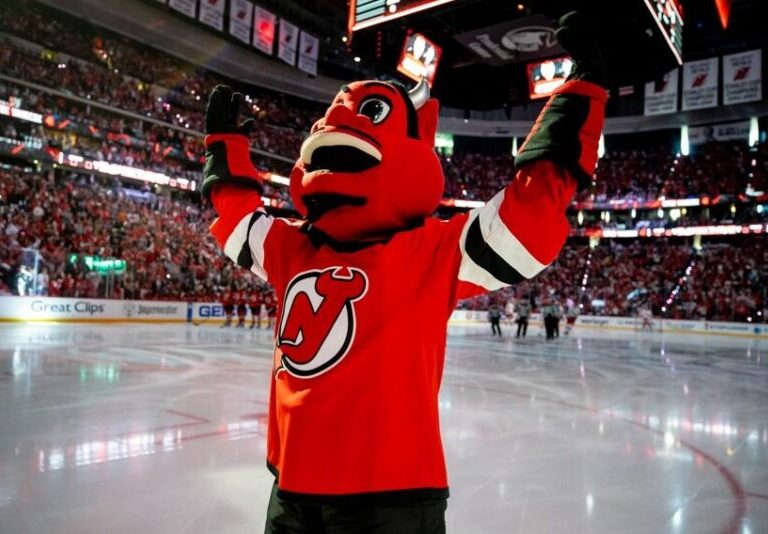
The are doing exactly what contenders are supposed to do in March—finding their game, leaning into their strengths, and stacking wins at a critical moment in the season. Following a commanding 6–3 victory over the New York Rangers at Madison Square Garden on March 18, 2026, the Devils have now pushed their winning streak to three games and are playing their most complete hockey of the year.

This wasn’t just another win. It was a statement. It was a reminder. And it may very well be the clearest indication yet of what this team is capable of when everything clicks at once.

A Rivalry Statement at Madison Square Garden

Beating the Rangers is always significant. Doing it twice in the same season by identical 6–3 scores elevates that significance into something far more meaningful. This latest victory was not just about the scoreboard—it was about control, pace, and execution.

From the opening puck drop, the Devils dictated the game. They outshot the Rangers 39–18 and overwhelmed them early with a staggering 17–2 shot advantage in the first period. The offensive zone pressure was relentless, the puck movement was sharp, and the tempo never allowed New York to settle in.

Jack Hughes once again led the charge, delivering a three-point performance with a goal and two assists. Connor Brown matched that production, also posting a goal and two assists, while Nico Hischier and Jesper Bratt each added multi-point nights of their own.

This was not a one-line effort. This was a full lineup contribution. Every unit was involved, every shift had purpose, and every opportunity felt dangerous.

Jesper Bratt Reaches a Milestone

Amid the offensive explosion, one of the most important moments of the night came from Jesper Bratt. With an assist on Hischier’s power-play goal, Bratt reached the 500-point mark in his NHL career before adding a goal to finish the night at 501.

For a sixth-round pick to reach that level is not just impressive—it is exceptional. Bratt has developed into one of the most consistent and dynamic players in the organization, and his milestone underscores the Devils’ ability to identify and develop elite talent from within.

The Offense Is Heating Up—and It’s Not a Fluke

The Devils have now scored six goals in back-to-back games and have hit that mark three times this season—all within a short span since early March. This is not random. This is a system beginning to function at full capacity.

The power play, which struggled earlier in the season, has completely flipped the narrative. Against the Rangers, the Devils went 2-for-4 with the man advantage and have now converted nine of their last 17 opportunities, an elite stretch that is changing games.

Across two matchups with New York, the Devils have gone 5-for-7 on the power play. That level of efficiency is not just productive—it is demoralizing for opponents.

When this team is generating offense at five-on-five and capitalizing on special teams, it becomes extremely difficult to contain.

A Three-Game Run Built on Momentum

This current surge did not begin in New York. It has been building.

On March 14, the Devils defeated the Los Angeles Kings 6–4 behind a dominant four-point performance from Nico Hischier, who recorded two goals and two assists. Jack Hughes added the game-winning goal, continuing his run as the team’s most dangerous offensive weapon.

Two nights later, the Devils edged the Boston Bruins 4–3 in overtime, with Paul Cotter delivering a dramatic game-winner with just seven seconds remaining.

Now, with the Rangers victory, the Devils have not only won three straight—they have done it in three very different ways: high-scoring control, late-game execution, and overtime resilience.

That versatility is what defines teams capable of sustaining success.

Jack Hughes Continues to Drive the Identity

Everything about this current stretch points back to Jack Hughes. Whether it is his playmaking, his ability to create space, or his control of tempo, Hughes is dictating how this team plays.

He has also remained in the spotlight off the ice, recently addressing the situation involving his Olympic gold medal-winning goal puck, which is currently housed at the Hockey Hall of Fame. While initially expressing frustration, Hughes clarified that he is honored by its placement—a moment that reflects both his competitiveness and his appreciation for the game’s history.

On the ice, however, there is no ambiguity. Hughes is playing at an elite level, and the Devils are following his lead.

Emerging Contributions Across the Lineup

Beyond the top stars, the Devils are getting key contributions throughout the roster.

Arseny Gritsyuk has been one of the most exciting developments, tallying four goals and three assists over his last eight games. His ability to create offense and challenge defenders is adding another layer to an already dynamic attack.

Timo Meier continues to assert himself as a physical and scoring presence, while players like Connor Brown are stepping up in key moments and delivering multi-point performances when needed.

This depth is critical. It prevents opposing teams from focusing on a single line and allows the Devils to maintain pressure throughout the game.

Goaltending: The One Area Still Under Scrutiny

Despite the recent success, one area remains under watch: goaltending consistency.

Jacob Markstrom has started nine of the ten games since the Olympic break and holds a 6–3–0 record during that stretch. While the wins are there, performances have been uneven at times, including moments in the Rangers game where rebounds and positioning created unnecessary risk.

That said, the team in front of him has been strong enough to compensate, and as long as the offense continues to produce at this level, the Devils can manage through inconsistencies in net.

Roster Movement and Organizational Outlook

Earlier this month, the Devils made strategic roster moves, placing Evgenii Dadonov, Luke Glendening, and Maxim Tsyplakov on waivers to create flexibility. These decisions signal a front office focused on adaptability as the season progresses.

From a development standpoint, the organization was recently ranked No. 22 in overall prospect pool rankings. While not at the top of the league, the Devils are noted for having strong defensive prospects, which could play a significant role in shaping the team’s future.

What Comes Next: Opportunity to Extend the Run

The Devils will look to extend their winning streak to four games as they face the Washington Capitals on March 19. With momentum building and confidence growing, this is an opportunity to solidify their current form and continue pushing toward consistency.

There are also key matchups ahead, including the completion of the season series against the Rangers on March 31 and an upcoming home contest against the Detroit Red Wings.

Every game now carries weight. Every point matters.

A Team Finally Playing to Its Strengths

What stands out most about this stretch is not just the wins—it is how the Devils are winning.

They are playing fast.
They are attacking relentlessly.
They are leaning into skill, creativity, and offensive pressure.

This is the identity that was expected from this roster. It simply took time to fully emerge.

Now that it has, the results are following.

And if this level of play continues, the Devils are no longer just a team finding its rhythm—they are a team that opponents will have to take seriously down the stretch.

Robinson Dominates Somerset Democratic Convention as Workforce Expansion Signals Broader Economic Momentum Across Central Jersey

SOMERSET, NJ — A decisive political victory and a strategic workforce investment are converging in Somerset County, underscoring a pivotal moment not only for New Jersey’s 12th Congressional District race but for the broader economic and infrastructure trajectory of Central Jersey.

Somerset County Commissioner Director Shanel Robinson delivered a commanding performance at the Somerset Democratic Convention, capturing overwhelming support in her home base and reinforcing her position as a leading contender in one of the state’s most closely watched congressional primaries. At the same time, a major lease renewal by the New Jersey Independent Electrical Contractors Association (NJIEC) signals continued confidence in Somerset as a central hub for workforce development and skilled trades training—two forces that are increasingly shaping the region’s future.

Together, these developments highlight a region that is not only politically energized but also economically strategic, with Somerset County emerging as a focal point for leadership, labor development, and long-term growth.

Robinson’s convention win was not just decisive—it was dominant. Facing a crowded field of 16 candidates vying for the Democratic nomination in a seat soon to be vacated by longtime U.S. Representative Bonnie Watson Coleman, Robinson secured 100 votes, representing 95 percent of ballots cast. The margin sends a clear signal about her strength within Somerset County and her ability to consolidate support in a competitive primary environment.

Her performance reflects years of building a countywide presence rooted in public service, administrative leadership, and local engagement. As Commissioner Director, Robinson has cultivated a reputation as a steady and pragmatic leader, one capable of navigating both policy and community priorities. That foundation translated into a landslide convention result, giving her a significant boost in momentum as the campaign shifts toward broader voter outreach across the 12th District.

While county conventions do not determine election outcomes, they serve as critical indicators of organizational strength, local influence, and the ability to mobilize key stakeholders. Robinson’s showing in Somerset aligns with a broader pattern emerging across the district: Assemblywoman Verlina Reynolds Jackson secured support in Mercer County, East Brunswick Mayor Brad Cohen carried Middlesex, and Plainfield Mayor Adrian Mapp earned the Union County Democratic endorsement.

Mapp, acknowledging the limits of convention politics, emphasized the importance of grassroots engagement moving forward, noting that the true battleground lies within communities across the district. That sentiment underscores the next phase of the race, where retail politics, voter turnout, and messaging will ultimately determine the nominee.

Yet, Robinson’s commanding performance in Somerset cannot be understated. It demonstrates not only loyalty within her home county but also the operational strength of her campaign infrastructure—a critical asset in a multi-candidate primary where fragmentation can define outcomes.

Beyond the political arena, Somerset County is simultaneously reinforcing its position as a cornerstone of workforce development in New Jersey, driven by continued investment in skilled trades education and apprenticeship programs.

The New Jersey Independent Electrical Contractors Association has officially renewed its lease at 20 Worlds Fair Drive, maintaining its 5,000-square-foot training and operational facility within a larger flex-industrial complex. The renewal reflects both stability and growth, signaling that Somerset remains a strategic location for statewide workforce initiatives.

The NJIEC facility is far more than office space—it functions as a critical training ground for the next generation of electricians and electrical contractors. Through a comprehensive four-year apprenticeship program, the organization blends classroom instruction with hands-on field experience, preparing participants for careers that are increasingly essential to New Jersey’s infrastructure, construction, and energy sectors.

With more than 4,000 member companies and over 14,000 apprentices trained annually, NJIEC plays a vital role in addressing workforce gaps while elevating standards across the electrical industry. Its programs are recognized at the federal level, with the U.S. Department of Labor designating the organization as an Apprenticeship Ambassador—a distinction that highlights its leadership in expanding access to career pathways through registered apprenticeship models.

The decision to maintain and extend its presence in Somerset speaks volumes about the county’s accessibility, infrastructure, and strategic positioning within the state. Located in the heart of Central Jersey, the Worlds Fair Drive facility provides convenient access for students and trainees traveling from multiple counties, reinforcing Somerset’s role as a regional nexus for education and workforce mobility.

This alignment between political leadership and workforce investment is not coincidental—it reflects a broader transformation taking place across Central Jersey. As infrastructure demands grow, energy systems evolve, and construction projects expand, the need for a highly trained, adaptable workforce has become increasingly urgent. Organizations like NJIEC are stepping into that space, creating pipelines that connect education directly to employment, while supporting economic resilience across the region.

At the same time, political leaders emerging from counties like Somerset are being shaped by these same dynamics. The intersection of policy, labor, and economic development is becoming central to campaign narratives, particularly in districts where suburban growth, infrastructure modernization, and workforce readiness are key voter concerns.

Robinson’s rise within this environment positions her at the crossroads of these conversations. Her leadership experience at the county level—combined with the tangible economic developments unfolding within her jurisdiction—provides a framework for addressing the challenges facing the 12th District. From workforce training to infrastructure investment and community development, the issues shaping Somerset today are increasingly reflective of broader statewide and national priorities.

Across Central Jersey, communities continue to evolve, driven by a blend of public leadership and private investment. The region’s ongoing transformation is evident in its expanding business footprint, growing educational infrastructure, and the steady influx of initiatives aimed at strengthening economic competitiveness.

For readers looking to explore more about what’s happening across the region—from business developments to community initiatives and regional growth—visit the Central Jersey section on Explore New Jersey, where ongoing coverage highlights the evolving landscape shaping counties like Somerset, Middlesex, Mercer, and Union.

As the congressional race intensifies and economic development continues to accelerate, Somerset County stands at a unique intersection of influence and opportunity. The outcomes of today’s convention and the commitments made by organizations like NJIEC are not isolated events—they are part of a larger narrative defining the future of Central Jersey.

What happens next will unfold not only at the ballot box, but in classrooms, training centers, and communities where the next generation of leaders and skilled professionals are already taking shape.

Devils vs. Rangers Tonight: New Jersey Surges Into Madison Square Garden With Momentum, Identity, and Playoff Urgency

There are regular-season games, and then there are nights that carry weight beyond the standings. Tonight’s matchup between the New Jersey Devils and the New York Rangers at Madison Square Garden falls squarely into the latter category—a high-intensity Metropolitan rivalry clash that arrives at a pivotal moment in the 2026 NHL season.

With a 7:00 PM ET puck drop in one of hockey’s most iconic arenas, the Devils (34–31–2) enter this contest not just looking for two points, but aiming to reinforce their late-season push, sharpen their playoff identity, and assert control in a rivalry that continues to define the region’s hockey culture.

Broadcast nationally on TNT and HBO Max, and carried locally across radio networks, this game is positioned as a must-watch event—not only for fans in New Jersey and New York, but for anyone tracking the evolving Eastern Conference race.

A Rivalry That Defines the Region—and Elevates the Moment

Few matchups in the NHL carry the emotional intensity of Devils vs. Rangers. The geographic proximity, the shared fan bases, and the history of postseason battles all converge to create a game environment that feels elevated from the opening faceoff.

Madison Square Garden adds another layer. It is a venue where every shift is amplified, every goal is magnified, and every mistake is exposed. For the Devils, stepping into that environment with momentum is both an opportunity and a test.

This is the second of three meetings between the teams in March, and the Devils have already set the tone. Their 6–3 victory on March 7—highlighted by a dominant hat trick performance from Jack Hughes—was not just a win, but a statement. It showcased offensive firepower, pace, and the ability to overwhelm a division rival when executing at full capacity.

Now, the challenge shifts to consistency. Can New Jersey replicate that level of execution on the road, in a building where momentum swings quickly and pressure is constant?

The Devils’ Offensive Engine Is Hitting Peak Form

New Jersey enters tonight’s matchup as one of the most dynamic offensive teams in the conference over the past two weeks. With six wins in their last eight games and an average of nearly four goals per game during that stretch, the Devils are operating with confidence and rhythm.

At the center of that surge is Jack Hughes, who continues to elevate his game at precisely the right time. With 10 points in his last five contests, Hughes is not just producing—he is dictating pace, creating space, and forcing opposing defenses into difficult decisions.

Surrounding him is a core that is beginning to click in unison. Nico Hischier’s two-way reliability, Jesper Bratt’s playmaking vision, and Timo Meier’s physical scoring presence create a layered attack that is difficult to contain when fully engaged.

This is the version of the Devils that aligns with the expectations set earlier in the season—a fast, skilled, and aggressive offensive unit capable of overwhelming opponents in transition and sustaining pressure in the offensive zone.

Rangers Responding With Physicality and Structure

While the Devils bring speed and scoring, the Rangers counter with resilience and physicality. Despite sitting behind New Jersey in the standings, New York has quietly built momentum of its own, earning points in eight of its last ten games.

Their identity is different, but no less effective. The Rangers lead the league in hits, a statistic that underscores their commitment to physical play and defensive disruption. They also enter tonight with the NHL’s longest active power-play goal streak, having converted in five consecutive games.

Players like Mika Zibanejad, Vincent Trocheck, and Adam Fox anchor a lineup that blends skill with structure. Alexis Lafrenière continues to develop into a more consistent offensive threat, adding another layer to a team that is finding ways to stay competitive even in a challenging season.

For the Devils, this presents a tactical contrast. Speed versus physicality. Fluid offense versus structured resistance. The outcome will hinge on which style can impose itself more effectively over sixty minutes.

In the Crease: A High-Stakes Goaltending Duel

Goaltending will play a decisive role tonight, with Jacob Markstrom expected to start for New Jersey against Igor Shesterkin for the Rangers.

Markstrom’s presence has provided stability for the Devils, particularly during this recent stretch of strong play. His ability to manage rebounds, control tempo, and deliver timely saves has allowed New Jersey’s offense to take calculated risks.

On the other side, Shesterkin remains one of the league’s most technically sound and capable goaltenders. Even in a season marked by inconsistency for the Rangers, he has the ability to steal games and shift momentum singlehandedly.

In a rivalry matchup where chances can come in bursts, the performance of both goaltenders could ultimately determine the outcome.

Injury Landscape and Lineup Implications

As both teams prepare for puck drop, roster availability continues to shape strategy.

The Devils will be without Brett Pesce, Stefan Noesen, and Zack MacEwen, absences that impact both defensive depth and physical presence. However, the team has adapted, leaning into its speed and offensive creativity to compensate.

The Rangers are managing their own injury situation, with Matt Rempe on injured reserve. Despite that, they have maintained a level of competitiveness that reflects strong internal adjustments and depth contributions.

These factors add another layer of unpredictability to the matchup, forcing both coaching staffs to make tactical adjustments in real time.

Where This Game Fits in the Eastern Conference Picture

From a standings perspective, the implications are clear. The Devils currently sit ahead of the Rangers, but both teams are operating in a tightly contested Eastern Conference environment where momentum can shift rapidly.

For New Jersey, this game represents an opportunity to solidify positioning and build separation. A win would reinforce their upward trajectory and strengthen their case as a team capable of making noise down the stretch.

For the Rangers, it is a chance to close the gap, disrupt a rival’s momentum, and continue their own push for relevance in the playoff conversation.

The stakes are not abstract—they are immediate, tangible, and significant.

The Broader Impact: Hockey Culture in New Jersey Continues to Rise

Beyond the numbers and narratives, tonight’s game reflects something larger: the continued growth of hockey culture in New Jersey.

The Devils are not just competing—they are evolving into a team that represents the state’s identity. Fast, resilient, and forward-thinking. Their recent surge has energized the fan base and reinforced the organization’s trajectory as a contender in the making.

Coverage across Explore New Jersey continues to highlight this evolution, capturing not only the results on the ice but the broader cultural impact of the team. Games like this—against a historic rival, in a high-pressure environment—serve as defining moments in that journey.

What to Watch When the Puck Drops

As the Devils take the ice at Madison Square Garden tonight, several key elements will define the game:

The pace of play—whether New Jersey can dictate tempo and avoid being slowed by the Rangers’ physical style
Special teams execution, particularly given New York’s recent power-play success
The continued dominance of Jack Hughes and the Devils’ top offensive unit
Goaltending consistency from Markstrom in a high-pressure road environment

Each of these factors will contribute to a game that promises intensity, skill, and significance.

In a season where every point matters and every performance carries weight, tonight’s Devils vs. Rangers matchup stands out as a defining moment—not just for the standings, but for the identity of a team determined to rise.

New Jersey Transportation at a Crossroads: Early Portal Bridge Success and Newark Bay Bridge Shift Signal a New Infrastructure Era

New Jersey’s transportation network is entering a defining moment—one shaped by urgency, innovation, and a fundamental rethinking of how the state moves people and goods. Two major developments now sit at the center of that transformation: the early opening of the new Portal Bridge, hailed as a breakthrough in modern rail infrastructure, and Governor Mikie Sherrill’s decision to reject a highway expansion plan for the Newark Bay Bridge in favor of a more environmentally conscious and forward-looking strategy.

Together, these moves represent more than isolated policy decisions or engineering milestones. They signal a broader shift in how New Jersey approaches mobility, infrastructure investment, and long-term sustainability—particularly across its most densely populated and economically vital corridors.

The Portal Bridge Moment: A Test Passed Under Pressure

When the newly constructed Portal Bridge was pressed into early service during emergency repairs to overhead power lines, it delivered exactly what modern infrastructure is supposed to provide: resilience under pressure. NJ TRANSIT leadership described the moment as nothing short of extraordinary—a real-world validation of years of planning, engineering, and execution.

The bridge, which replaces a century-old swing span that has long been a bottleneck along the Northeast Corridor, is a critical link in one of the busiest passenger rail lines in the United States. For decades, delays, mechanical failures, and congestion at the old bridge disrupted commutes and hindered regional mobility.

The new fixed-span structure changes that equation entirely. By eliminating the need to open for maritime traffic and significantly increasing reliability, the Portal Bridge is designed to support faster, more consistent rail service between New Jersey and New York City.

Its early deployment during an emergency scenario underscores a key reality: infrastructure is not just about capacity—it is about dependability. And in a state where hundreds of thousands rely on daily rail service, that dependability is transformative.

Newark Bay Bridge: A Policy Pivot with Statewide Implications

While the Portal Bridge represents progress through expansion and modernization, the Newark Bay Bridge decision reflects a different kind of evolution—one rooted in restraint and strategic redirection.

Governor Mikie Sherrill’s plan to move away from a previously proposed expansion of the Newark Bay Bridge marks a significant departure from traditional highway-focused infrastructure policy. The earlier proposal, part of a massive capital plan, would have added new lanes to the New Jersey Turnpike, effectively increasing capacity for vehicular traffic between Newark and Bayonne.

Instead, the new approach prioritizes replacement without expansion—an acknowledgment that simply adding lanes does not solve congestion and may, in fact, exacerbate it.

This concept, known as induced demand, has become increasingly influential in transportation planning. The principle is straightforward: expanding road capacity often leads to increased traffic volume, ultimately negating the intended benefits of congestion relief.

In New Jersey, where transportation is the leading contributor to both air pollution and greenhouse gas emissions, the implications are significant. Communities like Newark’s Ironbound—already burdened by heavy traffic and environmental stress—stand to benefit from a shift away from expansion-driven models.

Environmental Justice and Urban Impact

The Newark Bay Bridge debate has also brought environmental justice to the forefront of transportation policy. Urban communities connected by the bridge and surrounding highway infrastructure have long faced disproportionate exposure to pollution, noise, and traffic-related health impacts.

By rejecting a plan that would have increased vehicular flow through these areas, state leadership is signaling a more community-centered approach—one that considers not just mobility, but quality of life.

Local leaders in both Newark and Jersey City have supported this direction, emphasizing the need for solutions that address congestion without amplifying existing inequities. Their advocacy reflects a growing consensus that infrastructure decisions must balance economic efficiency with environmental and social responsibility.

A Unified Transportation Vision Emerging

Perhaps the most consequential element of this moment is not any single project, but the alignment of leadership and strategy across agencies. The decision to place NJ TRANSIT CEO Kris Kolluri at the helm of the New Jersey Turnpike Authority suggests a deliberate effort to integrate planning across rail and roadway systems.

This kind of coordination has historically been limited, with agencies operating in silos. Bringing them together opens the door to a more holistic approach—one that prioritizes moving people efficiently rather than simply moving vehicles.

It also creates opportunities to invest more aggressively in mass transit solutions, including rail, light rail, and bus networks that can absorb demand without increasing roadway congestion.

For ongoing coverage of how transportation policy and infrastructure projects are reshaping mobility across the state, visit Transportation on Sunset Daily News.

The Rise of Mass Transit and Changing Commuter Behavior

Data across New Jersey’s urban centers points to a clear trend: more residents are choosing transit over car ownership. In cities like Jersey City, nearly half of households are now car-free, reflecting a shift toward more sustainable and efficient modes of transportation.

Ridership on PATH trains and light rail systems has surged, while cycling and micromobility usage continue to grow. These changes are not just lifestyle preferences—they are responses to economic pressures, urban density, and evolving work patterns.

The challenge for policymakers is to meet this demand with infrastructure that is both scalable and accessible. Expanding light rail networks, improving bus service, and enhancing rail connectivity are all part of that equation.

Advocates are increasingly calling for investments that prioritize these modes, arguing that they offer more effective long-term solutions to congestion than highway expansion.

Infrastructure as Economic Strategy

Transportation in New Jersey has always been closely tied to economic performance. As a gateway state, its infrastructure supports not only local mobility but also regional and national supply chains.

Projects like the Portal Bridge are essential to maintaining that role, ensuring that rail corridors remain reliable and competitive. At the same time, policy decisions like the Newark Bay Bridge shift reflect an understanding that economic growth must be sustainable.

Balancing these priorities—efficiency, equity, and environmental impact—is the central challenge facing New Jersey’s transportation leaders today.

A Turning Point for How New Jersey Moves

What is emerging is a new framework for transportation in New Jersey—one that blends infrastructure investment with strategic restraint, and engineering innovation with policy evolution.

The early success of the Portal Bridge demonstrates what is possible when projects are executed with precision and purpose. The Newark Bay Bridge decision shows that sometimes the most impactful move is not to build more, but to build smarter.

Together, these developments mark a turning point. They suggest that New Jersey is not just reacting to transportation challenges, but actively redefining how they are addressed.

In a state where mobility underpins everything from daily commutes to economic growth, that shift carries profound implications. The decisions being made today are shaping not just how people travel, but how communities develop, how businesses operate, and how the state positions itself for the future.

New Jersey is moving forward—but it is doing so with a clearer sense of direction than ever before.

Princeton-Based Astound Names Telecom Veteran Ettienne Brandt as CEO, Signaling Major Expansion and Transformational Fiber Future

New Jersey’s position at the forefront of the nation’s evolving digital infrastructure economy just strengthened in a major way. Princeton-based Astound, a leading provider of Wi-Fi, mobile, television, and fiber-optic broadband solutions, has appointed industry veteran Ettienne Brandt as its new chief executive officer—an immediate leadership move that arrives at a defining moment for both the company and the broader telecommunications landscape.

The announcement is more than a routine executive transition. It is a strategic inflection point tied directly to Astound’s aggressive growth trajectory, its expanding fiber network footprint, and its planned combination with GFiber, formerly known as Google Fiber. That pending deal, unveiled earlier this month, is poised to create the largest independent fiber-based broadband provider in the United States—an outcome that could reshape competitive dynamics across the industry.

For New Jersey, where innovation, infrastructure, and proximity to major metropolitan markets converge, this move underscores the state’s growing relevance in the future of high-speed connectivity and next-generation broadband deployment.

A Leadership Appointment Timed for Scale and Transformation

Ettienne Brandt steps into the CEO role with more than 25 years of experience across global telecommunications platforms, bringing operational depth across both wireless and wireline ecosystems. His appointment reflects a deliberate effort to align leadership with scale—particularly as Astound prepares for a complex integration with GFiber while continuing to expand its national footprint.

Brandt’s most recent role as executive vice president of Commercial at Frontier Communications positioned him at the center of one of the industry’s most notable transformations. During his tenure, Frontier underwent a significant operational and strategic overhaul that ultimately culminated in a $20 billion acquisition by Verizon. That experience—navigating restructuring, scaling infrastructure, and driving customer-focused growth—maps directly onto the challenges and opportunities Astound now faces.

His earlier career includes leadership roles with global telecommunications giants such as British Telecom, EE, and Orange & ntl, now part of Virgin Media. This international perspective adds another layer of strategic capability, particularly as broadband providers increasingly operate within a global framework of technology standards, infrastructure investment, and service innovation.

The GFiber Combination: A Defining Moment for the Fiber Industry

At the core of this leadership transition is Astound’s planned combination with GFiber, a move that has the potential to redefine the competitive landscape of U.S. broadband. By bringing together two fiber-focused organizations, the combined entity is expected to achieve unprecedented scale among independent providers.

This is not simply about size. It is about positioning. Fiber-optic infrastructure is widely regarded as the gold standard for broadband delivery, offering faster speeds, lower latency, and greater long-term scalability than legacy cable or DSL networks. As demand for high-performance connectivity accelerates—driven by remote work, streaming, cloud computing, and smart technologies—fiber is becoming essential infrastructure.

Under Brandt’s leadership, Astound is expected to accelerate its network expansion strategy, leveraging the combined resources and capabilities of the new organization to reach more markets, improve service delivery, and compete more effectively with established incumbents.

New Jersey’s Strategic Role in the Broadband Evolution

Astound’s headquarters in Princeton places New Jersey squarely within the strategic orbit of this transformation. The state’s unique geographic and economic positioning—bridging New York City and Philadelphia while hosting a dense concentration of businesses, institutions, and residential communities—makes it a critical node in the national connectivity network.

As fiber deployment expands, New Jersey stands to benefit from increased investment, enhanced infrastructure, and improved access to high-speed broadband across both urban and suburban areas. This has implications not only for consumers, but also for economic development, business growth, and technological innovation.

The state’s technology ecosystem continues to evolve rapidly, with companies across sectors relying on robust connectivity to power operations, enable digital services, and support hybrid work environments. The expansion of fiber networks directly supports these needs, reinforcing New Jersey’s role as a hub for innovation and enterprise.

For continued coverage of how companies like Astound are shaping the future of connectivity, visit the latest updates in Technology & Tech on Sunset Daily News.

Scaling Infrastructure to Meet Surging Demand

The timing of this leadership change is critical. Demand for high-speed internet is no longer cyclical—it is structural. Households are consuming more bandwidth than ever before, while businesses are increasingly dependent on cloud-based platforms, data-intensive applications, and real-time communication tools.

Fiber networks are uniquely positioned to meet this demand, but scaling them requires significant capital investment, operational expertise, and long-term strategic planning. Brandt’s track record suggests a focus on disciplined growth—balancing expansion with service quality and customer experience.

Astound’s existing infrastructure, combined with GFiber’s capabilities, creates a foundation for accelerated deployment. The challenge—and opportunity—lies in executing that expansion efficiently while maintaining the reliability and performance that customers expect.

Customer Experience as a Competitive Differentiator

Beyond infrastructure, the broadband market is increasingly defined by customer experience. Reliability, speed, transparency, and service responsiveness are becoming key differentiators in a crowded field.

Brandt’s leadership history emphasizes these elements. His experience across both consumer and commercial segments positions him to address the diverse needs of Astound’s customer base—from residential users seeking seamless streaming and connectivity to businesses requiring enterprise-grade solutions.

As competition intensifies, particularly with the entry of new players and the evolution of existing ones, delivering consistent, high-quality service will be essential to sustaining growth and market share.

A Broader Technology Shift with Local Impact

The appointment of a new CEO at a Princeton-based telecommunications leader may appear, at first glance, to be a corporate development. In reality, it reflects a broader technological shift with direct implications for communities across New Jersey.

As fiber networks expand and connectivity improves, the benefits extend beyond faster internet speeds. They enable smarter cities, support digital education, enhance healthcare delivery through telemedicine, and create new opportunities for businesses of all sizes.

This is the infrastructure of the future—and decisions being made today at companies like Astound will shape how that future unfolds.

Positioning for Long-Term Growth

With Ettienne Brandt at the helm, Astound is entering a new phase defined by scale, integration, and innovation. The planned combination with GFiber represents a rare opportunity to build a national leader in fiber-based broadband outside of traditional incumbents.

For New Jersey, this moment reinforces the state’s role as both a participant in and a beneficiary of the next wave of telecommunications evolution. As infrastructure expands and technology advances, the impact will be felt across industries, communities, and everyday life.

In a market where connectivity is increasingly synonymous with opportunity, the leadership decisions made today are setting the stage for tomorrow’s digital economy—and New Jersey is firmly in that equation.

New Jersey Turns Green: A Deep Dive into the State’s 2026 St. Patrick’s Day Parade Season, From Revolutionary Roots to Modern Celebrations

Every March, New Jersey doesn’t just celebrate St. Patrick’s Day—it transforms. Streets become rivers of green, communities gather in force, and centuries of Irish heritage are brought vividly into the present. In 2026, that tradition reached new heights across the Garden State, with parades in Morristown, Jersey City, Asbury Park, and Belmar-Lake Como collectively telling a story that is as much about history as it is about identity, resilience, and cultural pride.

This year’s celebrations were especially meaningful, blending large-scale community turnout with a renewed awareness of New Jersey’s deep historical ties to both Irish heritage and the founding of the United States. From Revolutionary War connections in Morris County to vibrant coastal festivities and urban spectacles, the 2026 St. Patrick’s Day parade season showcased why New Jersey remains one of the most culturally dynamic states in the nation.

Morristown Leads with Legacy: A Parade Rooted in the American Revolution

The centerpiece of this year’s celebrations was the 46th Annual Morris County St. Patrick’s Day Parade, held on Saturday, March 14, 2026, in Morristown. Drawing thousands of spectators and participants, the event delivered more than just pageantry—it offered a living connection to one of the most significant chapters in American history.

Morristown’s St. Patrick’s Day tradition is uniquely tied to the winter of 1779–1780, when General George Washington and the Continental Army endured one of the harshest encampments of the Revolutionary War in the area now known as Jockey Hollow. During that time, Irish soldiers made up a substantial portion of the ranks, and in a remarkable gesture of recognition, Washington authorized a St. Patrick’s Day observance on March 17, 1780—effectively cementing the holiday as part of the American story.

That legacy continues to echo through modern celebrations. Organized by the Friendly Sons of St. Patrick of Morris County, the parade traces its contemporary origins to 1979 in Wharton but carries forward a lineage that predates the nation itself. The event today stands as a powerful convergence of past and present, honoring Irish contributions not only to Morris County but to the foundation of the United States.

The parade route through Morristown became a corridor of history and celebration, with marching bands, cultural organizations, veterans’ groups, and civic leaders all participating. The symbolism was unmistakable: this is not just a parade—it is a reaffirmation of identity, heritage, and the enduring influence of Irish Americans in shaping New Jersey’s civic and cultural landscape.

Jersey City and Asbury Park: Urban Energy Meets Coastal Tradition

While Morristown anchored the historical narrative, other regions of New Jersey brought their own distinct energy to the 2026 St. Patrick’s Day season.

Jersey City kicked off the month’s major celebrations on Saturday, March 7, with one of the state’s most anticipated parades. Known for its scale and diversity, the Jersey City St. Patrick’s Day Parade once again drew massive crowds, reflecting the city’s rich multicultural identity. The event blended traditional Irish elements—pipes, drums, and step dancing—with a distinctly urban vibrancy, creating an atmosphere that was both celebratory and inclusive.

Just one day later, Asbury Park took the spotlight on Sunday, March 8, with its parade along Ocean Avenue. Few locations in New Jersey offer a more visually striking setting for a St. Patrick’s Day celebration than the Jersey Shore, and Asbury Park delivered a uniquely coastal interpretation of the holiday. Against the backdrop of the Atlantic Ocean, the parade brought together local businesses, performers, and community groups, reinforcing the Shore’s reputation as a hub for both cultural expression and seasonal tourism.

These events highlight a key dynamic in New Jersey’s cultural ecosystem: each region interprets tradition through its own lens. Jersey City channels metropolitan intensity and diversity, while Asbury Park infuses its celebration with artistic flair and seaside charm. Together, they expand the meaning of St. Patrick’s Day beyond a single narrative, reflecting the state’s broader cultural mosaic.

Belmar-Lake Como: Resilience in the Face of Winter

No story of the 2026 parade season would be complete without acknowledging the impact of weather—specifically, the blizzard that forced the postponement of the Belmar-Lake Como St. Patrick’s Day Parade.

Originally scheduled for March 1, the parade was rescheduled to March 28, demonstrating the resilience and determination of one of New Jersey’s most beloved St. Patrick’s Day traditions. The Belmar-Lake Como parade is widely regarded as one of the largest in the state, routinely attracting tens of thousands of attendees to the Jersey Shore.

Rather than diminishing the event, the postponement has only heightened anticipation. The late-March rescheduling effectively extends the St. Patrick’s Day season in New Jersey, giving communities and visitors another opportunity to engage with the celebration. It also underscores a broader truth about New Jersey events culture: adaptability is part of the identity, and when challenges arise, communities respond with even greater enthusiasm.

A Statewide Celebration of Irish Heritage and Cultural Identity

Across all these events, a unifying theme emerges: St. Patrick’s Day in New Jersey is not confined to a single day or location. It is a statewide cultural phenomenon that unfolds over weeks, connecting communities from North Jersey to the Shore.

The celebrations reflect centuries of Irish influence in the region, from early immigration waves in the 18th century to the continued presence of Irish-American communities today. They also serve as a reminder of how cultural traditions evolve—maintaining their historical core while adapting to contemporary contexts.

This aligns seamlessly with the broader mission of Explore New Jersey’s coverage of arts and culture, where the focus is not just on events, but on the deeper narratives that define the state. St. Patrick’s Day parades exemplify this approach, offering a lens through which to understand New Jersey’s history, diversity, and creative spirit.

The Economic and Cultural Impact of Parade Season

Beyond their cultural significance, St. Patrick’s Day parades play a critical role in New Jersey’s local economies. Restaurants, bars, retail shops, and hospitality businesses all benefit from the influx of visitors, particularly in high-traffic areas like Morristown, Jersey City, and the Jersey Shore.

These events also drive tourism, drawing attendees from neighboring states and reinforcing New Jersey’s reputation as a destination for major cultural celebrations. The combination of historical depth, geographic diversity, and large-scale participation makes the state’s St. Patrick’s Day season uniquely compelling on a national level.

At the same time, the parades foster community cohesion. They bring together residents, organizations, and local leaders in a shared celebration, strengthening civic bonds and reinforcing a sense of belonging. In an era where community connection is increasingly valued, these events serve as powerful reminders of what collective celebration can achieve.

Extending the Legacy: Why St. Patrick’s Day in New Jersey Matters More Than Ever

The 2026 St. Patrick’s Day parade season in New Jersey was not just a series of events—it was a statement. A statement about heritage, about resilience, and about the enduring power of community-driven celebration.

From the Revolutionary War roots of Morristown to the coastal energy of Asbury Park and the postponed but highly anticipated return of Belmar-Lake Como, each parade contributed to a larger narrative. Together, they demonstrate that New Jersey’s cultural identity is both deeply rooted and constantly evolving.

For residents and visitors alike, these parades offer more than entertainment. They provide a connection—to history, to community, and to a shared cultural legacy that continues to shape the state in meaningful ways.

As the final celebrations of March unfold, one thing is clear: in New Jersey, St. Patrick’s Day is not just observed—it is experienced, expanded, and elevated year after year.

Steve Adubato Spotlights the Future of Vocational Education in New Jersey as Schools Align Students with Real Workforce Demand

New Jersey’s education system is undergoing a critical evolution—one that is increasingly focused on aligning classroom learning with real-world workforce needs. In a timely and forward-looking conversation, Steve Adubato sits down with Soraia Mendes, Principal of The Newark School of Architecture and Interior Design, to explore how vocational education is stepping into a central role in preparing students for high-demand careers while helping to close persistent workforce gaps.

The discussion arrives at a moment when employers across New Jersey—and the broader United States—are facing a widening disconnect between available jobs and qualified talent. Industries ranging from construction and design to advanced manufacturing and infrastructure development are actively searching for skilled workers. At the same time, students and families are rethinking traditional college-first pathways, seeking alternatives that offer both economic mobility and career stability.

This is where vocational education, long undervalued in the national conversation, is rapidly gaining traction as a strategic solution.

A Shift Toward Career-Connected Learning in New Jersey

Across New Jersey, vocational and technical education programs are being reimagined as high-performance pipelines into the workforce. Schools are no longer simply offering trade-based instruction—they are building integrated ecosystems that combine academic rigor, industry certification, and hands-on experience.

At The Newark School of Architecture and Interior Design, that transformation is already well underway. Under the leadership of Soraia Mendes, the school is positioning students at the intersection of creativity, technical skill, and professional readiness. Programs are designed not only to teach design principles, but to immerse students in the practical realities of architecture, construction, and interior environments.

This model reflects a broader statewide push to elevate career and technical education (CTE) into a premier pathway—one that stands alongside traditional academic routes rather than beneath them.

Addressing Workforce Gaps with Precision

New Jersey’s economy is diverse, but it is also facing acute labor shortages in key sectors. The construction and design industries, in particular, are experiencing a generational transition, with experienced professionals retiring faster than new talent is entering the field.

Vocational education programs are uniquely positioned to respond to this challenge because they are inherently adaptable. Curriculum can be aligned directly with industry needs, ensuring that students graduate with relevant, job-ready skills.

In the case of architecture and interior design, this includes exposure to digital modeling, spatial planning, sustainable design practices, and project-based collaboration—skills that are immediately transferable to the workplace.

The result is a more efficient talent pipeline, where students move seamlessly from education into employment, reducing the lag that often exists between graduation and career entry.

Redefining the Value of Skilled Trades and Design Careers

One of the most significant shifts highlighted in the conversation is the changing perception of vocational education itself. For decades, career and technical programs were often viewed as secondary options. Today, that narrative is being rewritten.

Students are increasingly recognizing that skilled trades and design-focused careers offer not only strong earning potential, but also long-term stability and opportunities for advancement. In fields like architecture, construction management, and interior design, demand continues to outpace supply—creating a favorable environment for those entering the workforce with the right training.

New Jersey schools are responding by expanding access to these programs and investing in modern facilities, technology, and partnerships that reflect current industry standards.

Industry Partnerships Driving Real-World Impact

A defining feature of successful vocational education programs is their connection to industry. Schools like The Newark School of Architecture and Interior Design are building relationships with local businesses, design firms, and construction companies to provide students with exposure to real projects and professional environments.

These partnerships create a feedback loop that benefits everyone involved. Employers gain access to a pipeline of emerging talent, while students gain insight into industry expectations and career pathways.

This approach also ensures that education remains dynamic. As industries evolve, so too do the skills being taught—keeping students competitive in a rapidly changing job market.

The Broader Education Landscape in New Jersey

The conversation between Steve Adubato and Soraia Mendes reflects a larger movement taking shape across the state. From urban centers like Newark to suburban and regional districts, educators are rethinking how success is defined and delivered.

There is a growing recognition that a one-size-fits-all approach to education no longer serves the needs of today’s students or tomorrow’s economy. Instead, flexibility, relevance, and real-world application are becoming the guiding principles.

This shift is also being supported by policy initiatives, funding opportunities, and community engagement efforts that aim to expand access to high-quality vocational programs.

For continued coverage of how schools across the state are evolving to meet these demands, explore the latest updates in Education on Sunset Daily News.

Preparing Students for What Comes Next

At its core, vocational education is about readiness—ensuring that students are equipped not just with knowledge, but with the ability to apply that knowledge in meaningful ways.

Programs like those at The Newark School of Architecture and Interior Design are demonstrating what that looks like in practice. Students are not waiting until after graduation to engage with their chosen fields; they are building skills, portfolios, and professional networks while still in school.

This early exposure is critical. It accelerates learning, builds confidence, and creates a clearer pathway from education to employment.

A Strategic Moment for New Jersey’s Workforce Future

As New Jersey continues to navigate economic shifts and workforce challenges, the role of vocational education is becoming increasingly strategic. It is not simply an alternative pathway—it is a cornerstone of the state’s long-term competitiveness.

By aligning education with industry needs, investing in modern training programs, and elevating the perception of skilled careers, New Jersey is positioning itself to meet the demands of a changing economy head-on.

The conversation led by Steve Adubato underscores an essential truth: the future of work is being shaped in classrooms, workshops, and design studios across the state. And in places like The Newark School of Architecture and Interior Design, that future is already taking form.

Listings Drought Tightens Competition Across U.S. Housing Market as Prices Hold Steady—What It Means for New Jersey Right Now

The U.S. housing market is entering the spring season with a tension that’s becoming increasingly familiar: prices that refuse to fall, homes that are selling faster than expected, and a dramatic pullback in new listings that is reshaping buyer behavior nationwide. For New Jersey—where proximity to New York City, limited land availability, and sustained demand already create a uniquely competitive environment—this imbalance is not just a national headline. It is a defining market condition.

Fresh data from Property Prospect, a real estate intelligence platform tracking 20 major metro areas including New York, Phoenix, Richmond, and Tucson, paints a stark picture of where the market stands today. Median home prices have held relatively steady at $636,165, inching upward by just 0.3% in recent months. At the same time, homes are moving more quickly, with median days on market dropping to 40—a nearly 10% improvement in speed.

But the most consequential figure is not price or pace—it’s supply. New listings across the tracked markets plunged to just 18,532, representing a staggering 57.9% decline. That drop is not a fluctuation. It signals a structural tightening that is redefining how buyers and sellers engage in 2026.

The Supply Shock Reshaping Buyer Behavior

What’s happening right now is not a traditional seller’s market fueled by surging prices. Instead, it’s a constrained marketplace where scarcity—not appreciation—is driving urgency. Buyers are not chasing rapidly rising values; they are competing for fewer opportunities.

In New Jersey, this dynamic is especially pronounced. From Bergen County to Monmouth and down through South Jersey, inventory levels have remained historically tight for years. Now, with fewer homeowners willing to list—often due to locked-in low mortgage rates or uncertainty about where to move next—the pipeline of available homes is narrowing even further.

This has several immediate consequences:

Buyers are acting faster. With homes spending less time on the market, hesitation is becoming a liability. Offers are being made more quickly, often with fewer contingencies.

Competition is intensifying. Even without dramatic price increases, multiple-offer situations are becoming more common simply because there are fewer homes to choose from.

Inventory is becoming hyper-localized. The difference between neighboring towns—or even neighborhoods—can be stark, with some areas seeing near-zero turnover.

Why Sellers Are Staying Put

The sharp decline in new listings is not happening in a vacuum. It is being driven by a combination of economic psychology and structural constraints.

Many homeowners who secured historically low mortgage rates in recent years are reluctant to sell and re-enter the market at higher borrowing costs. This “rate lock-in” effect is freezing mobility across the housing ladder. Move-up buyers are staying put. Downsizers are delaying decisions. First-time buyers are left competing over a shrinking pool of entry-level inventory.

In New Jersey, where property taxes and transaction costs already factor heavily into moving decisions, this hesitation is even more pronounced. Sellers are not just asking whether they can get a good price—they’re asking whether moving makes financial sense at all.

Stable Prices, Rising Pressure

At first glance, stable prices might suggest a balanced market. But that interpretation misses the underlying pressure building beneath the surface.

When prices hold steady while inventory collapses, it indicates that demand remains strong enough to absorb limited supply without triggering price declines. In other words, the market is not cooling—it is compressing.

For buyers, this creates a paradox. There is no dramatic price spike to deter entry, but there is also no relief in competition. The result is a market where affordability challenges persist, not because homes are rapidly becoming more expensive, but because access to them is becoming more restricted.

New Jersey’s Strategic Position in the Regional Market

New Jersey’s housing market does not operate in isolation. It is deeply interconnected with New York City and the broader Northeast corridor. As remote and hybrid work models continue to evolve, New Jersey remains a prime destination for buyers seeking space, value, and connectivity.

This sustained demand is colliding with the national inventory drought, amplifying its effects locally. Towns with strong commuter access, desirable school districts, and lifestyle amenities are seeing particularly intense competition.

At the same time, emerging secondary markets within the state—areas that previously saw slower growth—are beginning to attract increased attention as buyers expand their search radius in response to limited options.

What This Means for Buyers Right Now

For buyers navigating this environment, strategy is everything. The conditions reward preparation, speed, and precision.

Pre-approval is no longer optional—it is essential. Buyers who enter the market without financing clarity are at a significant disadvantage.

Flexibility is becoming a competitive edge. Whether it’s being open to different neighborhoods, property types, or closing timelines, adaptability can make the difference in securing a home.

Local expertise matters more than ever. Understanding micro-market conditions—down to specific towns and even streets—can provide a critical advantage in a landscape where inventory is unevenly distributed.

What This Means for Sellers Considering a Move

For sellers, the current market presents a nuanced opportunity. While prices may not be surging, the lack of competition from other listings creates a powerful advantage.

Homes that are priced correctly and presented well are moving quickly. The reduced inventory means that serious buyers are actively searching—and ready to act.

However, sellers must also navigate the same constrained market when purchasing their next home. This dual role requires careful planning, timing, and often creative structuring of transactions.

The Broader Market Outlook

Looking ahead, the central question is not whether demand will remain strong—it is whether supply will recover.

Until more homeowners are willing to list, or new construction meaningfully increases available inventory, the current imbalance is likely to persist. Seasonal trends may bring incremental changes, but the underlying constraints suggest that competition will remain elevated.

For New Jersey, this means continued pressure on both buyers and the broader housing ecosystem. It also reinforces the state’s position as one of the most competitive and resilient markets in the country.

For more in-depth coverage of housing trends, market shifts, and real estate insights shaping New Jersey, explore the latest updates in Real Estate on Sunset Daily News.

Devils Deliver Statement Win in Newark as Paul Cotter’s Overtime Heroics Lift New Jersey Past Bruins in Electrifying Comeback

In a season that has tested resilience, identity, and consistency, the New Jersey Devils delivered one of their most compelling performances of the year on March 16 at Prudential Center—a dramatic 4-3 overtime victory against the Boston Bruins that reminded fans exactly what this roster is capable of when everything clicks.

For a team that has spent much of the season battling adversity and falling short in critical moments, this was not just a win—it was a recalibration. It was speed, skill, and belief, all resurfacing at once in front of a home crowd that has been waiting for a night like this.

The game didn’t begin with promise. In fact, it followed a script that has become all too familiar. Early defensive lapses and a costly rebound allowed David Pastrnak to strike just over four minutes into the game, giving Boston an early edge. As the period wore on, former Devil Pavel Zacha capitalized on a breakdown to extend the Bruins’ lead to 2-0.

At that point, the weight of the season seemed ready to settle in again. The Devils have struggled to climb back from deficits, particularly multi-goal ones, and the early energy inside the building began to shift.

But something changed.

What followed was not just a comeback—it was a reassertion of identity.

The second period opened with urgency, and within seconds, the Devils found their spark. Connor Brown ignited the rally with a breakaway goal just 32 seconds in, slicing through Boston’s defense and resetting the tone of the game. Suddenly, the pace quickened. The Devils were no longer reacting—they were dictating.

That momentum carried forward as Jesper Bratt delivered one of the night’s most technically precise finishes, converting a perfectly timed pass into a one-timer that tied the game at 2-2. It was a sequence that showcased the kind of offensive fluidity that defined the Devils at the start of the season—quick transitions, sharp passing, and decisive execution.

Then came the emergence of a difference-maker.

Paul Cotter, who had been working to rediscover his scoring rhythm, stepped into the spotlight in a major way. Early in the third period, he gave New Jersey its first lead of the night, finishing a play that highlighted both positioning and instinct.

Boston responded quickly, with Pastrnak striking again to level the game at 3-3, setting the stage for a physical and emotionally charged final stretch. The Bruins, fighting for playoff positioning, leaned into a more aggressive approach, attempting to impose their will through contact and pressure. The Devils, however, didn’t fold. They absorbed it, matched it, and pushed back.

Goaltender Jacob Markstrom, despite a shaky start, steadied his performance when it mattered most, while the defensive unit held firm under increasing pressure. One of the most pivotal moments came late in regulation when Charlie McAvoy came within inches of ending the game, only to see his shot ring off the post.

That miss proved decisive.

Overtime brought a different kind of tension—open ice, heightened stakes, and the understanding that one mistake would end it. With seconds ticking down, the Devils executed one of their cleanest transition sequences of the night. Dougie Hamilton won a critical puck battle, feeding Jack Hughes, who immediately recognized the opportunity developing up ice.

Hughes, who quietly orchestrated the offense all night with three assists, delivered a perfectly weighted pass to a streaking Cotter, who broke in alone and finished with precision past Joonas Korpisalo.

With just 6.2 seconds remaining in overtime, the Devils had completed the comeback.

For Cotter, it was a defining performance—two goals, including the game-winner, marking his third multi-goal outing with the team and signaling a potential turning point in his individual season. For Hughes, it was another example of elite playmaking, reinforcing his role as the engine that drives New Jersey’s offensive identity.

More broadly, the win offered a glimpse of what this team was projected to be: fast, creative, and unafraid.

It also underscored a critical dynamic within the Eastern Conference landscape. While the Bruins entered the game fighting for postseason positioning, the Devils embraced the role of disruptor—demonstrating that even outside the playoff picture, they remain a team capable of influencing outcomes and challenging contenders.

For fans and observers across New Jersey, this performance carries weight beyond the standings. It reflects the kind of hockey that has energized the state’s fanbase in recent years—high-tempo, skill-driven, and emotionally engaging. It’s the brand of play that continues to anchor the Devils’ identity within New Jersey’s broader sports culture, which thrives on passion, resilience, and moments that feel larger than the game itself.

Looking ahead, the Devils now shift their focus to one of the most anticipated matchups on their schedule—a rivalry clash against the New York Rangers at Madison Square Garden. The Hudson River rivalry always carries added intensity, and with both teams navigating challenging seasons, the next meeting presents another opportunity for New Jersey to assert itself.

Their previous encounter—a decisive 6-3 victory powered by a Jack Hughes hat trick—serves as a reminder of what this team can do when it finds its rhythm.

And if the performance against Boston is any indication, that rhythm may be returning at exactly the right time.

For a season that has often been defined by frustration, March 16 in Newark offered something different: clarity, confidence, and a glimpse of a team that refuses to fade quietly.

In a league where momentum can shift in an instant, the Devils may have just rediscovered theirs.

New Jersey’s Next Breakout Star: Jake Thistle Captures National Attention on American Idol with a Sound Rooted in Asbury Park’s Legendary Music Scene

New Jersey’s music pipeline has long been synonymous with authenticity, grit, and unmistakable storytelling—and now, a new voice is stepping into that lineage on one of the biggest stages in the world. Jake Thistle, a rising artist with deep ties to the Shore’s creative heartbeat, has officially advanced to the Top 20 of American Idol 2026, delivering performances that are not only earning national recognition but also reinforcing New Jersey’s enduring influence on American music.

For a state that has produced some of the most iconic voices in modern music history, Thistle’s emergence is more than a moment—it’s a continuation of a legacy. And as his journey unfolds on primetime television, it’s becoming increasingly clear that his artistry is shaped by the same cultural DNA that has defined New Jersey’s music scene for generations.

Thistle’s latest breakthrough came during the Hawaii Top 20 round, where he delivered a high-energy rendition of “The Power of Love” by Huey Lewis & The News.

It was a performance that balanced technical control with raw enthusiasm—an approach that resonated immediately with the judges and audience alike. Rather than simply covering a classic track, Thistle injected it with personality, movement, and a sense of urgency that made the performance feel current and alive.

The response from the judging panel underscored just how impactful that moment was. Carrie Underwood highlighted his stage presence, noting a performance style reminiscent of Brad Paisley’s dynamic energy. Lionel Richie leaned into the emotional authenticity of the moment, emphasizing that Thistle’s willingness to fully commit—vocally and physically—was what made the performance memorable. Luke Bryan, known for recognizing crossover appeal, has also consistently pointed to Thistle’s ability to bridge genres and connect with a wide audience.

That versatility is one of Thistle’s defining strengths. Earlier in the competition, during the Ohana Round, he secured his place in the Top 20 with an original song titled “Sleep On Me.” The performance showcased a different side of his artistry—introspective, narrative-driven, and rooted in songwriting rather than spectacle. It was here that the comparisons began to crystallize. Carrie Underwood described his style as a blend of a young Bruce Springsteen and Bob Dylan, while Luke Bryan drew parallels to Paul Simon.

Those comparisons are not made lightly, particularly in the context of New Jersey’s music identity. Artists like Bruce Springsteen have long defined the state’s sound through storytelling, emotional depth, and a connection to place. For Thistle to be mentioned in that same breath speaks not only to his potential, but to the authenticity he brings to his performances.

What sets him apart is how naturally those influences translate into a modern context. He’s not imitating a past era—he’s channeling its spirit while building something that feels distinctly his own. His guitar work, stage movement, and vocal delivery all contribute to a performance style that feels both grounded and forward-looking.

That balance was further refined with guidance from guest mentor Brad Paisley, who encouraged Thistle to elevate the visual and emotional intensity of his guitar playing. The advice was strategic: in a televised competition where every moment counts, performance is as much about what the audience sees as what they hear. Thistle’s ability to integrate that feedback in real time demonstrates a level of adaptability that is critical at this stage of the competition.

As he moves forward, Thistle now faces the most pivotal phase of the American Idol journey—the public vote. With the Top 20 competing for a place in the Top 14, audience engagement becomes the deciding factor. While voting windows are tightly structured, the broader impact of each performance extends far beyond a single episode. Visibility, momentum, and connection all play a role in determining who continues and who exits.

For New Jersey, this moment represents more than just support for a hometown artist. It’s an opportunity to spotlight the state’s music ecosystem on a national platform. From Asbury Park’s storied venues to its thriving independent scene, New Jersey continues to produce artists who carry forward its tradition of authenticity and innovation. Thistle’s rise is a reflection of that environment—a reminder that the state remains a vital force in shaping the future of music.

Across the broader landscape, New Jersey’s music culture is experiencing a renewed wave of attention. Live performances, emerging artists, and genre-blending experimentation are redefining what it means to be part of the state’s creative community. Platforms like American Idol serve as amplifiers, bringing local talent into the national conversation and reinforcing the depth of artistry that exists within the region.

For audiences following Thistle’s journey, the appeal lies in both his talent and his trajectory. He’s not arriving as a fully formed, polished product—he’s evolving in real time, taking feedback, refining his approach, and expanding his range with each performance. That evolution is compelling, and it mirrors the very process that has defined so many successful artists before him.

As the competition continues, all eyes will remain on how he navigates the next stages—song selection, performance strategy, and audience connection will all play critical roles. But regardless of the outcome, one thing is already clear: Jake Thistle has established himself as a serious contender and a legitimate emerging voice within New Jersey’s music scene.

In a state where music is more than entertainment—it’s identity, history, and cultural currency—his rise feels both timely and significant. And as he steps onto each new stage, he carries with him not just his own ambitions, but the sound and spirit of New Jersey itself.

CD-11 Special Election Escalates as Mejia and Hathaway Trade Sharp Attacks in High-Stakes Fight for Sherrill’s Former Seat

The race to fill New Jersey’s 11th Congressional District has rapidly intensified into one of the most closely watched and politically charged contests in the state, as Democrat Analilia Mejia and Republican Joe Hathaway enter a decisive phase marked by escalating rhetoric, outside influence, and sharply defined ideological contrasts.

With the April 16 special election fast approaching, what began as a competitive race has evolved into a full-scale political confrontation—one that reflects not only the future of CD-11, but the broader direction of New Jersey’s political identity in 2026.

A Vacancy That Sparked a Political Flashpoint

The stakes in this election were set the moment Mikie Sherrill vacated the congressional seat following her successful gubernatorial run. CD-11, which spans parts of Essex, Morris, and Passaic counties, has long been considered a politically strategic district—suburban, highly educated, and often reflective of broader national trends.

Now, with control of the seat temporarily up for grabs, both parties are treating the race as a priority battleground.

The winner of the special election will assume office immediately and serve through the remainder of the current term, but the implications extend well beyond that timeline. With a primary and general election cycle still ahead for the next full congressional term, this contest effectively serves as both a referendum and a preview of what’s to come.

Messaging War Intensifies as Campaigns Sharpen Their Lines

In recent days, the tone of the race has shifted decisively toward confrontation.

Joe Hathaway’s campaign has amplified an endorsement from a major conservative editorial voice, using it to frame the race in stark ideological terms. The messaging positions Hathaway as a centrist alternative while characterizing Mejia with language that has drawn attention—and controversy—across the district.

The characterization of Mejia as a “radical” figure has been a central theme of Hathaway’s campaign from the outset, with particular emphasis on accusations tied to her political alignment and public statements. These claims have been repeated across campaign materials and social media channels, forming a core component of Hathaway’s outreach strategy.

Mejia, however, is not ceding ground.

Mejia Pushes Back While Reframing the Narrative

Rather than allowing the race to be defined solely by attacks, Mejia’s campaign has responded with its own counter-narrative—one that seeks to reposition Hathaway within a national political framework.

Her campaign has labeled Hathaway as aligned with “MAGA extremism,” attempting to connect his candidacy to broader national political movements that resonate differently across CD-11’s diverse electorate.

At the same time, Mejia has sought to address one of the most persistent lines of attack against her campaign: allegations related to antisemitism.

In response to a recent national tragedy involving a synagogue attack, Mejia issued a statement emphasizing the urgency of confronting hate and strengthening protections against targeted violence. Her messaging focused on unity, policy action, and community-building—an effort to directly counter claims made by her opponent while reinforcing her broader platform.

This dual strategy—defensive clarity paired with offensive positioning—reflects a campaign attempting to maintain control of its narrative in an increasingly polarized environment.

Campaign Trail Controversies Add Fuel to the Fire

As the race intensifies, campaign appearances and affiliations are also becoming focal points.

Mejia’s campaign recently criticized Hathaway for appearing at an event alongside an individual connected to the January 6, 2021 events in Washington, D.C.—a move intended to draw contrasts around political alignment and judgment.

Hathaway’s campaign, in turn, has leaned into broader themes of voter choice, attempting to frame the election as a decision between competing visions for representation rather than isolated incidents.

This back-and-forth reflects a familiar dynamic in high-stakes elections, where individual moments on the campaign trail are quickly elevated into broader narratives about character, values, and leadership.

The Role of Media Influence in a Suburban Battleground

One of the more intriguing elements of the current race is the role of media influence—particularly from outlets whose editorial positions are well-established but whose reach across district-level voters remains an open question.

The amplification of editorial endorsements has become a key tactic, particularly in shaping early perceptions among undecided voters. However, CD-11’s electorate—spanning suburban communities with varying political leanings—presents a complex environment where traditional media influence may not translate uniformly.

For both campaigns, the challenge lies in converting narrative momentum into actual voter engagement across a geographically and demographically diverse district.

A District That Mirrors National Political Tensions

What makes CD-11 especially significant is its ability to reflect broader national political dynamics within a localized context.

Suburban districts like this one have become central to electoral strategy across the country, often serving as indicators of shifting voter priorities. Issues such as economic stability, public safety, healthcare, and education intersect with national conversations around political identity and governance.

In this environment, campaigns are not just competing on policy—they are competing on perception, framing, and emotional resonance.

The current race captures that complexity.

Timing Matters: Immediate Impact and Long-Term Consequences

Unlike a typical election cycle, the April 16 special election carries immediate consequences.

The winner will step into office almost immediately, influencing legislative activity during a critical period. At the same time, the proximity of the next primary and general election ensures that the outcome will shape momentum heading into the next phase of campaigning.

This creates a compressed timeline where every message, endorsement, and campaign appearance carries amplified weight.

The “pre-game” characterization of the current contest is accurate—but it is also incomplete. What happens now will directly influence what happens next.

New Jersey’s Political Landscape Enters a High-Intensity Phase

The CD-11 race is unfolding within a broader context of political activity across New Jersey, as highlighted throughout the politics landscape.

With a new governor in office, evolving policy debates, and multiple elections on the horizon, the state is entering a period of heightened political engagement. Campaigns are becoming more aggressive, messaging is becoming more targeted, and voter outreach efforts are expanding in both scale and intensity.

This environment rewards campaigns that can maintain clarity while adapting quickly to changing dynamics.

The Defining Elements of the Race Moving Forward

As the election approaches, several factors will likely determine the outcome.

Voter turnout will be critical, particularly in a special election where participation levels can vary significantly. Messaging discipline will play a major role, as both campaigns attempt to control narratives in a fast-moving media environment. And local engagement—ground-level campaigning, community outreach, and direct voter interaction—will ultimately shape how broader narratives translate into votes.

At the same time, external factors—from national political developments to media coverage—will continue to influence the race in ways that are difficult to predict.

A Contest That Extends Beyond the District

While the immediate focus remains on CD-11, the implications of this race extend far beyond its geographic boundaries.

It is a test of messaging strategies in suburban America. It is a measure of how national narratives intersect with local priorities. And it is an early indicator of how political momentum may develop heading deeper into the 2026 election cycle.

For New Jersey, the race represents a moment of definition—a point at which political direction, voter sentiment, and campaign execution converge.

As Mejia and Hathaway continue to exchange sharp attacks and refine their strategies, one thing is certain: this is no longer a routine special election. It is a high-stakes contest that is shaping the political conversation across the state.

A Defining Transition in New Jersey’s Cultural and Economic Landscape: Carlos Medina Steps Down After Two Decades Transforming the Statewide Hispanic Chamber of Commerce

New Jersey’s business, cultural, and entrepreneurial communities are entering a pivotal moment following the resignation of Carlos Medina as president, CEO, and board member of the Statewide Hispanic Chamber of Commerce of New Jersey (SHCCNJ). After more than 20 years of leadership, Medina leaves behind a legacy that reshaped not only an organization, but an entire ecosystem supporting Latino-owned businesses across the state.

This is not simply a leadership change—it is a generational transition for one of the most influential economic and cultural institutions in New Jersey. Medina’s tenure marked a period of unprecedented growth, innovation, and statewide impact, positioning SHCCNJ as a cornerstone of both economic development and cultural identity.

When Medina first joined the chamber’s board of directors in 2005, the organization was operating on a far smaller scale. Over time, his leadership trajectory—from board member to chairman in 2012, and ultimately to president and CEO in 2019—mirrored the chamber’s own evolution. Under his direction, SHCCNJ expanded its reach to represent more than 7,000 businesses, becoming the largest Hispanic chamber in New Jersey and one of the most influential in the United States.

That growth was not incremental—it was transformational. Medina helped guide the chamber from a financial deficit of roughly $300,000 into a multimillion-dollar operation, creating a sustainable platform capable of delivering real, measurable impact. More importantly, he aligned the organization with the broader economic force of Hispanic-owned businesses in New Jersey, a sector that now includes more than 150,000 enterprises contributing over $100 billion annually to the state’s economy.

But Medina’s influence extended far beyond numbers. His leadership emphasized infrastructure—building systems, programs, and partnerships that would outlast any single tenure. Among the most notable initiatives were the Executive Training Program and the Latino Entrepreneurship Training Series, both of which provided accessible, high-level business education, mentorship, and strategic resources to hundreds of entrepreneurs. These programs were not symbolic—they were operational pipelines for growth, helping small businesses scale, stabilize, and compete in a rapidly evolving marketplace.

Equally significant was the chamber’s role during periods of economic uncertainty. Under Medina’s guidance, SHCCNJ became a critical conduit for relief and support, ensuring that minority-owned businesses were not left behind during challenging times. This ability to mobilize resources and advocate effectively at both the corporate and governmental levels reinforced the chamber’s position as a trusted voice within New Jersey’s broader economic framework.

The timing of Medina’s departure is particularly notable given the chamber’s recent expansion into large-scale cultural activations that bridge commerce and community engagement. Earlier this month, SHCCNJ announced a high-profile partnership with American Dream to launch La Plaza de Fútbol, a 39-day small business marketplace and cultural experience set to take place this summer. Designed as a vibrant celebration of entrepreneurship and Latino culture, the initiative represents the next phase of experiential commerce—where culture, retail, and community intersect in a dynamic public setting.

La Plaza de Fútbol is more than an event—it is a statement about the evolving role of cultural programming in economic development. By bringing small businesses into a high-traffic, destination environment like American Dream, the initiative creates direct exposure, real-time engagement, and new revenue opportunities. It also aligns with a broader movement across New Jersey’s arts and culture landscape, where immersive experiences and community-driven programming are redefining how audiences connect with local talent and entrepreneurship.

This approach reflects a wider trend highlighted across the state’s cultural sector, where spaces are no longer limited to traditional galleries or performance venues. Instead, New Jersey is seeing a rise in hybrid environments—places where art, culture, and commerce coexist, creating layered experiences that attract diverse audiences. From public art installations to large-scale cultural festivals, the state continues to position itself as a destination for innovation in how culture is experienced and shared.

Within this context, Medina’s work can be understood as part of a larger narrative—one that connects economic empowerment with cultural visibility. By strengthening Hispanic-owned businesses, he also amplified the cultural contributions of a community that plays an essential role in shaping New Jersey’s identity. The chamber’s evolution under his leadership ensured that these contributions were not only recognized, but integrated into the state’s economic strategy.

The response from SHCCNJ’s leadership underscores the magnitude of that impact. Chairman Luis De La Hoz acknowledged Medina’s decision while emphasizing the enduring strength of the organization he helped build. The board’s statement reflects both gratitude and continuity, highlighting a collective commitment to the programs, partnerships, and mission that have defined the chamber’s success.

That continuity will be critical in the months ahead. With an experienced board representing corporate, government, and community stakeholders, SHCCNJ is positioned to maintain momentum while navigating this leadership transition. The foundation established over the past two decades provides a strong framework for future growth, ensuring that the chamber remains a driving force for economic inclusion and opportunity.

For New Jersey, the implications are significant. The Hispanic business community is not a niche sector—it is a central pillar of the state’s economy, contributing billions in revenue and supporting thousands of jobs. Organizations like SHCCNJ play a vital role in sustaining that momentum, providing the resources, advocacy, and connectivity needed for businesses to thrive.

As Medina steps into his next chapter, his influence will continue to resonate through the programs he launched, the partnerships he forged, and the pathways he created for entrepreneurs across the state. His tenure represents a case study in how leadership, when aligned with purpose and execution, can transform an organization into a statewide force.

At the same time, this moment opens the door for a new phase of leadership—one that will build on that legacy while adapting to the evolving needs of New Jersey’s business and cultural communities. With initiatives like La Plaza de Fútbol on the horizon and a strong infrastructure already in place, the chamber is well-positioned to continue shaping the future of entrepreneurship in the state.

In a region defined by its diversity, innovation, and resilience, the story of SHCCNJ is inseparable from the story of New Jersey itself. And while one chapter has come to a close, the impact of the past two decades ensures that what comes next will be built on a foundation of strength, vision, and lasting influence.

Level99 Is Bringing the Ultimate Adult Playground to New Jersey: Inside the Game-Changing Entertainment Experience Coming to Westfield Garden State Plaza in 2027

New Jersey’s entertainment landscape is about to undergo a major evolution. A bold, immersive concept that has already redefined social gaming across the Northeast is officially making its way to Bergen County. Level99—the fast-rising experiential entertainment brand known for its high-energy, team-based challenge environments—is set to open a massive new venue at Westfield Garden State Plaza in 2027, introducing a completely new category of nightlife and interactive recreation to the region.

For a state already rich in live entertainment, dining, and cultural experiences, this arrival signals something different. Level99 isn’t just another attraction—it’s a fully realized, next-generation “adult playground” engineered for connection, competition, and repeat discovery. And with its debut in one of New Jersey’s busiest retail and lifestyle destinations, it’s poised to become one of the most talked-about openings in years.

At its core, Level99 merges multiple entertainment formats into a single, fluid experience. Think escape rooms, obstacle courses, and arcade-style gaming—but reimagined through a modern, design-forward lens. The result is a sprawling venue featuring more than 50 interactive challenge rooms, each built around a unique concept that tests both physical agility and mental sharpness. Unlike traditional escape rooms that lock players into a single narrative, Level99’s format is dynamic and fast-paced. Teams of two to six players enter individual rooms for rapid-fire challenges lasting just one to four minutes, encouraging movement, experimentation, and strategic thinking across a wide variety of environments.

This structure fundamentally changes how people engage with interactive entertainment. There’s no long wait between games, no linear storyline to follow, and no pressure to “finish” a single mission. Instead, guests circulate through a curated ecosystem of challenges, choosing their path and building their own experience in real time. It’s designed for replayability—meaning no two visits feel the same.

The competitive edge is equally compelling. For those who thrive on direct competition, Level99 introduces “duels”—head-to-head games where players can test their reflexes, timing, and tactics against one another. These player-versus-player experiences elevate the energy inside the venue, transforming it into a social arena where bragging rights are earned, not given. Whether it’s a casual night out with friends or a high-stakes group outing, the environment naturally fosters engagement and interaction.

But Level99 is not just about games—it’s about atmosphere. One of the brand’s most distinctive elements is its integration of local art throughout the venue. More than 50 custom installations are expected to be featured, turning the space into a hybrid between an interactive gallery and an entertainment complex. Every corner is designed to be visually striking, immersive, and unexpected, encouraging exploration beyond the games themselves. This emphasis on artistic identity aligns with a broader shift in experiential venues, where aesthetics and storytelling play a central role in how audiences connect with a space.

Dining and nightlife are also central to the Level99 concept. Unlike traditional entertainment centers that treat food as an afterthought, Level99 incorporates a full-service restaurant and bar program that stands on its own. Guests can expect elevated pub-style cuisine, craft cocktails, and a beverage selection designed to complement the high-energy environment. At other locations, partnerships with established brewing brands have helped anchor the culinary experience, and the New Jersey venue is expected to deliver a similarly robust offering.

This integration of gaming, dining, and social space positions Level99 squarely within the growing “eatertainment” sector—a category that continues to expand as consumers seek more immersive and memorable ways to spend their time. For Bergen County, the addition of Level99 represents a strategic upgrade to an already powerful retail and lifestyle corridor. Westfield Garden State Plaza, long recognized as one of the premier shopping destinations in the region, is steadily evolving into a full-spectrum experience hub. The inclusion of a concept like Level99 accelerates that transformation, drawing in a broader audience that extends beyond traditional retail.

From a demographic standpoint, Level99 is designed primarily for adults, with a strong appeal to the 21+ crowd looking for something beyond the standard night out. However, the venue remains accessible to younger participants, typically recommended for ages 10 and up due to the complexity of the challenges. This flexibility allows it to function as both a nightlife destination and a daytime group activity, making it suitable for everything from corporate team-building events to birthday celebrations and social gatherings.

Ticketing is structured to accommodate different levels of engagement, with options ranging from two-hour sessions to full-day passes. This tiered approach reinforces the brand’s emphasis on customization, giving guests control over how deeply they want to immerse themselves in the experience.

The expansion into New Jersey is part of a broader growth strategy for Level99, which has already established successful locations in Natick, Massachusetts; Providence, Rhode Island; and Tysons, Virginia. Additional venues are in development, including high-profile destinations like King of Prussia, Pennsylvania, and Disney Springs in Florida. Each new location builds on the brand’s core philosophy while adapting to the unique character of its surroundings.

For New Jersey, the timing couldn’t be better. The demand for experiential entertainment is surging, driven by a cultural shift toward activities that prioritize connection, movement, and shared experiences. Consumers are increasingly looking for alternatives to passive entertainment—something more engaging than simply watching a screen. Level99 answers that demand with a concept that is as social as it is immersive.

As 2027 approaches, anticipation will only continue to build. The arrival of Level99 at Westfield Garden State Plaza is more than just another opening—it’s a statement about where entertainment is headed in New Jersey. It reflects a broader evolution in how people gather, compete, and unwind, blending physical activity, mental challenge, and social interaction into a single, cohesive experience.

For Bergen County and beyond, this is not just a new venue. It’s a new standard.

$9 Million Edgewater CVS Sale Signals Intensifying Demand for Waterfront Land and Long-Term Development Plays in New Jersey

A high-visibility commercial property along the Hudson River has changed hands in a transaction that underscores the evolving dynamics of New Jersey’s real estate market. The sale of the CVS property at 65 River Road in Edgewater for $9 million is more than a single-tenant retail deal—it is a strategic acquisition that reflects growing investor confidence in waterfront corridors, land banking opportunities, and the long-term value of mixed-use redevelopment potential.

In a market where location, infrastructure access, and future zoning flexibility are becoming increasingly decisive, this transaction stands as a clear indicator of where capital is moving—and why.

A Prime Asset Positioned for Both Income and Transformation

The 13,361-square-foot CVS sits on a rare one-acre parcel directly along River Road, one of Hudson County’s most active commercial arteries. The site’s proximity to the Hudson River and its surrounding residential density make it a standout asset in a region where developable land is increasingly scarce.

Currently operating under a triple-net ground lease through 2035, the property offers immediate income stability for the new owner. This lease structure shifts operational costs—such as taxes, maintenance, and insurance—to the tenant, creating a predictable revenue stream that is particularly attractive in uncertain economic conditions.

However, what elevates this transaction beyond a standard retail investment is its dual-purpose appeal.

This is not just a stabilized asset. It is a long-term development play.

Land Banking in One of New Jersey’s Most Competitive Corridors

The concept of land banking—acquiring property today with the intention of future redevelopment—has become a dominant strategy across Northern New Jersey, particularly in waterfront municipalities like Edgewater.

With a lease in place through 2035, the buyer secures both cash flow and optionality. Over the next decade, the property can generate consistent returns while the surrounding area continues to evolve. When the lease matures, the site presents a rare opportunity for repositioning into higher-density residential, mixed-use, or vertically integrated retail development.

Edgewater, in particular, has seen sustained transformation over the past decade. Once defined primarily by low-rise commercial properties, the borough has rapidly transitioned into a high-demand residential and lifestyle destination, driven by its proximity to Manhattan and direct transportation links.

The CVS site sits directly within this growth trajectory.

Strategic Location Anchored by Infrastructure and Lifestyle Demand

Location remains the defining variable in any real estate transaction, and 65 River Road delivers on multiple fronts.

The property benefits from immediate access to the George Washington Bridge, a critical connector for commuters and logistics alike. It is also served by NJ Transit bus routes and the NY Waterway ferry system, providing direct access to Manhattan—a factor that continues to drive residential demand throughout the region.

Surrounding the site is a dense cluster of waterfront residential developments, many of which cater to professionals seeking proximity to New York City without the associated cost structure. This built-in consumer base supports both retail viability and long-term redevelopment potential.

Additionally, the presence of nearby national and regional retailers—including HomeGoods as a shadow anchor—reinforces the area’s commercial strength. Complementary businesses such as quick-service restaurants, cafes, and service providers create a layered retail ecosystem that enhances foot traffic and consumer engagement.

Investor Appetite Reflects Broader Market Trends

The level of interest generated by this property aligns with broader patterns emerging across New Jersey’s commercial real estate sector.

Investors are increasingly prioritizing assets that offer a combination of stability and upside. Single-tenant net-leased properties continue to attract capital due to their predictable income profiles, but the most competitive deals are those that also provide redevelopment potential.

This hybrid model—income today, transformation tomorrow—is becoming a defining characteristic of high-value transactions.

The Edgewater CVS sale exemplifies this trend. It attracted not only traditional single-tenant investors but also developers and strategic buyers seeking to secure a foothold in a constrained market.

The Waterfront Effect: Why Edgewater Continues to Outperform

Waterfront locations in New Jersey have consistently commanded premium attention, and Edgewater is among the most active.

The borough’s appeal is driven by a combination of geographic advantage, infrastructure access, and lifestyle positioning. Residents benefit from direct views of the Manhattan skyline, proximity to major employment centers, and a growing mix of retail and dining options.

For developers, the equation is equally compelling. Limited land availability, combined with strong demand for housing and mixed-use environments, creates conditions where well-positioned sites can command significant value upon redevelopment.

The CVS property sits at the intersection of these forces.

Retail Resilience in a Changing Landscape

While the broader retail sector has undergone significant transformation in recent years, essential-use tenants like CVS have demonstrated resilience.

Pharmacies, grocery stores, and service-oriented retail have maintained consistent demand due to their integration into daily life. In high-density areas such as Edgewater, these tenants benefit from both local foot traffic and commuter flow.

This resilience reinforces the attractiveness of triple-net leased properties anchored by essential-use tenants. Investors gain exposure to retail without the volatility associated with discretionary spending categories.

At the same time, the underlying land retains its value—creating a layered investment thesis that combines defensive positioning with long-term growth potential.

Aligning With New Jersey’s Evolving Real Estate Landscape

The transaction also reflects broader themes shaping the state’s real estate market, as seen across the real estate sector.

New Jersey is experiencing a continued shift toward mixed-use development, transit-oriented design, and higher-density residential projects. Municipalities are increasingly open to redevelopment initiatives that align with these priorities, particularly in areas with existing infrastructure and strong market demand.

Properties like 65 River Road are uniquely positioned within this framework. They offer scale, location, and flexibility—three factors that are becoming increasingly rare in Northern New Jersey.

The Long-Term Outlook: Strategic Patience Meets Market Opportunity

What makes this transaction particularly notable is the strategic patience embedded within it.

The buyer is not acquiring a property for immediate repositioning. Instead, this is a long-horizon investment that leverages current income while preserving the option to capitalize on future market conditions.

As Edgewater continues to densify and demand for waterfront living remains strong, the value of well-located parcels is expected to increase. By securing the site now, the buyer effectively locks in a position within one of the region’s most competitive corridors.

A Signal Transaction With Broader Implications

The $9 million sale of the Edgewater CVS property is more than a localized real estate deal—it is a signal.

It reflects how investors are thinking about risk, opportunity, and timing in today’s market. It highlights the growing importance of land as a strategic asset. And it reinforces the continued strength of New Jersey’s waterfront markets as both investment destinations and development frontiers.

For industry observers, developers, and investors alike, this transaction offers a clear takeaway: the most valuable properties are no longer defined solely by their current use, but by their future potential.

In Edgewater, that future is already taking shape.

Governor Mikie Sherrill’s First Months in Office Reshape New Jersey Policy, Spark National Debate, and Set the Stage for a Defining Political Year

New Jersey’s political and economic trajectory is being rapidly redefined as Governor Mikie Sherrill moves through the opening phase of her administration with a series of high-impact decisions that are already reverberating far beyond state lines. Just weeks into her tenure, Sherrill has positioned herself at the center of national policy debate, while simultaneously driving a domestic agenda focused on affordability, energy, and economic competitiveness.

This is not a quiet transition into office. It is an assertive recalibration of how New Jersey governs, competes, and defines its priorities in 2026.

A Historic Election Transitions Into Immediate Action

After securing a decisive victory in November and being sworn in on January 20, 2026, Sherrill entered office as the first Democratic woman elected governor in New Jersey history. That milestone alone marked a generational shift in leadership. What has followed is an accelerated rollout of policy initiatives that signal an administration intent on acting quickly—and, at times, controversially.

Rather than easing into governance, Sherrill’s early months have been defined by bold executive action, aggressive policy framing, and a clear willingness to engage in issues that carry both statewide and national implications.

Immigration Policy Move Draws National Spotlight

At the center of the current political landscape is a sweeping executive order that restricts federal immigration enforcement activity on certain state-owned properties. Under the directive, immigration agents are prohibited from entering non-public state facilities without a judicial warrant—a move that immediately elevated New Jersey into the national immigration policy conversation.

The administration has paired that order with the rollout of a public-facing digital reporting system, allowing residents to upload video documentation of immigration enforcement activity. The initiative reflects a broader strategy to increase transparency and public participation, but it has also intensified debate across political lines.

Supporters frame the policy as a civil liberties safeguard and a modernization of state oversight. Critics argue it introduces friction between state and federal authorities while raising concerns about enforcement consistency and operational clarity.

What is clear is that this decision has defined the early narrative of Sherrill’s governorship—establishing her as a leader willing to engage in complex, high-stakes policy arenas from the outset.

The NJ-11 Special Election Becomes a Statewide Battleground

The ripple effects of Sherrill’s move to the governor’s office are already reshaping the political map.

Her departure from New Jersey’s 11th Congressional District has triggered a special election scheduled for April 16, 2026—an increasingly competitive race that is drawing significant attention from both major parties. The district, long viewed as a strategic stronghold, is now a focal point in a broader contest for influence at the federal level.

This election is more than a local race. It is a referendum on political momentum, party alignment, and voter sentiment in a state that often serves as a bellwether for national trends.

With control of messaging, turnout dynamics, and policy positioning all in play, the NJ-11 race is shaping up to be one of the most consequential political events in New Jersey this year.

Economic Strategy: Affordability, Energy, and Stability

Beyond headline-grabbing policy decisions, Sherrill’s administration is advancing a core economic agenda centered on affordability and long-term stability.

Key areas of focus include utility cost relief, with discussions around potential rate stabilization measures aimed at addressing rising energy costs for residents. At the same time, the administration is navigating a complex energy landscape—balancing investments in renewable infrastructure with the realities of grid reliability and supply demands.

The governor’s budget framework, which approaches $60 billion, reflects the scale of these priorities. It signals an administration attempting to address immediate financial pressures on households while positioning the state for sustained economic performance.

This dual approach—short-term relief paired with long-term structural planning—will likely define how the administration is evaluated in the months ahead.

Life Sciences Take Center Stage in New Jersey’s Innovation Economy

While policy debates dominate headlines, New Jersey’s economic engine continues to be driven by one of its most powerful sectors: life sciences.

At a recent industry forum hosted at Middlesex College, Governor Sherrill underscored the state’s position as a global leader in medical innovation. With more than 2,400 life sciences companies operating across New Jersey and a workforce exceeding 350,000 jobs tied to the sector, the industry remains a cornerstone of both economic growth and global impact.

From pharmaceutical breakthroughs to advanced immunotherapies, New Jersey’s role as the “medicine chest of the world” is not just branding—it is a measurable driver of investment, research, and job creation.

The forum brought together leaders from academia, industry, and government, reinforcing a central theme: collaboration is essential to maintaining New Jersey’s competitive edge.

Institutions such as Rutgers University and Rowan University, alongside major pharmaceutical and biotech organizations, are actively shaping the next generation of medical innovation. At the same time, policy decisions at both the state and federal levels are being closely monitored for their potential impact on research funding, regulatory environments, and long-term investment.

Policy Tension: Innovation vs. Regulation

As New Jersey continues to lead in life sciences, a parallel conversation is emerging around the role of policy in sustaining—or hindering—that leadership.

Industry stakeholders are emphasizing the importance of maintaining an environment that incentivizes research and development. Concerns around regulatory pressure, pricing mandates, and shifting policy frameworks are being weighed against the need for accessibility and affordability in healthcare.

This tension is not unique to New Jersey, but the stakes are particularly high given the state’s outsized role in global pharmaceutical innovation.

The Sherrill administration’s approach to this balance will be critical. Decisions made in the coming months could influence not only the trajectory of the industry within New Jersey, but also its position relative to competing states and international markets.

Technology, Innovation, and the Expanding Digital Infrastructure

New Jersey’s broader economic strategy is also intersecting with rapid advancements in technology.

Across the evolving landscape highlighted in the technology & tech sector, the integration of artificial intelligence, data infrastructure, and digital platforms is reshaping how industries operate. From healthcare to logistics to media, organizations are increasingly dependent on intelligent systems to drive efficiency and scale.

For New Jersey, this convergence of life sciences and technology represents a strategic advantage. The state’s ability to integrate advanced research with digital innovation positions it as a hub for next-generation industry development.

The challenge—and opportunity—lies in aligning policy with this pace of change.

A Governorship Defined by Momentum and Scrutiny

What distinguishes the current moment in New Jersey is the speed at which multiple forces are converging.

A new governor with a willingness to act decisively. A high-profile policy move drawing national attention. A competitive congressional race unfolding in real time. An economic strategy balancing affordability with innovation. And an industry ecosystem that continues to drive global impact.

Each of these elements carries its own weight. Together, they create a political and economic environment that is both dynamic and unpredictable.

Governor Mikie Sherrill’s early tenure is not being shaped in isolation—it is unfolding within a broader context of national debate, technological transformation, and economic recalibration.

The Road Ahead for New Jersey

As the state moves deeper into 2026, the trajectory set during these first months will continue to influence outcomes across multiple fronts.

Policy decisions made now will affect affordability, energy stability, and business competitiveness. The NJ-11 special election will offer insight into voter sentiment and political alignment. The life sciences sector will continue to test the balance between innovation and regulation. And technology will remain an accelerating force reshaping industries statewide.

For New Jersey, this is a defining period—one where leadership, policy, and economic strategy intersect in ways that will shape the state’s future for years to come.

Governor Sherrill has made it clear that her administration intends to operate at full speed. The question now is how that momentum translates into measurable outcomes for residents, businesses, and the broader regional economy.

TruGen AI Introduces Enterprise AI Teammates, Ushering in a New Operating Layer for Modern Organizations

A new chapter in enterprise technology is unfolding as TruGen AI unveils a platform designed to fundamentally reshape how organizations operate, collaborate, and scale. Positioned far beyond traditional automation tools, TruGen’s newly launched AI teammates represent a shift toward fully integrated digital collaborators—systems built with face, voice, vision, and persistent memory that function not as tools, but as embedded contributors inside the enterprise ecosystem.

This is not incremental innovation. It is a structural change in how work itself is defined.

Across industries already grappling with fragmented workflows, siloed data, and rising operational complexity, TruGen AI’s platform introduces a unified approach: intelligent agents that retain institutional knowledge, understand context across time, and participate in business processes with a level of continuity previously reserved for human teams.

From Tools to Teammates: The Evolution of Enterprise AI

For years, enterprise AI has lived in a constrained role—task-based automation, predictive analytics, and isolated chat interfaces that deliver outputs but lack continuity. TruGen AI is pushing beyond that model by introducing systems designed to persist, evolve, and collaborate.

These AI teammates are built to operate with multimodal intelligence. They can see through integrated vision systems, communicate through natural voice interaction, and present a visual identity that enhances human connection in digital environments. More critically, they maintain persistent memory, allowing them to track projects, recall prior interactions, and build context over time.

This shift transforms AI from a reactive tool into a proactive participant.

Inside an organization, that means an AI teammate can onboard alongside human employees, absorb workflows, understand operational nuance, and remain embedded in processes long after initial deployment. Instead of resetting with every query, these systems accumulate knowledge—effectively becoming a living layer of organizational memory.

Persistent Memory as a Strategic Advantage

One of the most consequential aspects of TruGen AI’s platform is its emphasis on long-term memory architecture. In enterprise environments, knowledge fragmentation is one of the most expensive inefficiencies—critical information lives in emails, meetings, documents, and individual expertise that is often lost through turnover or time.

TruGen’s AI teammates are designed to address this directly.

By maintaining persistent memory across interactions, projects, and departments, these systems create a continuous knowledge loop. They can recall decisions made weeks or months earlier, track evolving project requirements, and ensure that institutional knowledge is not only preserved but actively utilized.

This introduces a new operational paradigm where organizations no longer rely solely on human recall or scattered documentation systems. Instead, knowledge becomes dynamic, accessible, and embedded within the workflow itself.

Human-Like Collaboration Without Human Limitations

The defining promise of AI teammates is not just intelligence—it is collaboration.

TruGen AI’s platform is engineered to simulate the dynamics of human teamwork while eliminating many of the constraints that slow organizations down. These systems can participate in meetings, contribute insights in real time, manage workflows, and coordinate across departments without the friction of scheduling, bandwidth limitations, or communication delays.

Voice interaction enables natural dialogue, while visual presence adds a layer of engagement that traditional text-based systems lack. Vision capabilities allow these AI teammates to interpret visual data—documents, dashboards, and even live operational feeds—bringing a level of situational awareness that aligns more closely with how humans process information.

The result is a collaborative model where AI is not an endpoint but an active participant in decision-making processes.

Deep Workflow Integration Across the Enterprise Stack

One of the longstanding challenges in enterprise technology is integration. Organizations operate across a patchwork of platforms—CRM systems, project management tools, communication channels, and data repositories—each with its own structure and limitations.

TruGen AI’s approach centers on deep workflow integration.

Rather than sitting on top of existing systems as a separate interface, AI teammates are designed to embed directly into operational pipelines. They can interact with multiple systems simultaneously, orchestrating workflows that span departments and functions.

For example, an AI teammate can coordinate between sales, marketing, and operations—tracking leads, updating campaign performance, and aligning fulfillment processes without requiring manual intervention at each step. This reduces friction, accelerates execution, and creates a more cohesive operational environment.

In practical terms, organizations gain a layer of intelligence that connects their entire technology stack into a unified system of action.

Organizational Memory Becomes Infrastructure

What TruGen AI is introducing is not just a product—it is an infrastructure layer.

In modern enterprises, data is abundant but often underutilized due to fragmentation and lack of context. By embedding memory directly into AI teammates, TruGen is effectively turning organizational knowledge into a continuously evolving asset.

This has far-reaching implications.

Decision-making becomes more informed as historical context is always available. Onboarding accelerates because new employees can interact with AI teammates that already understand the organization’s processes. Continuity improves because knowledge persists beyond individual roles or teams.

In essence, organizations gain a form of institutional intelligence that compounds over time.

The Technology Context: Where TruGen Fits in a Rapidly Advancing AI Landscape

The launch of TruGen AI’s enterprise teammates arrives at a moment when the technology sector is rapidly redefining the boundaries of artificial intelligence. Across the industry, the focus has shifted from isolated AI capabilities to integrated systems that can operate within complex environments.

The broader trend—reflected across the evolving landscape covered in the technology & tech section—is clear: enterprises are no longer asking what AI can do in isolation, but how it can be embedded into the core of their operations.

TruGen’s approach aligns with this trajectory while pushing it further.

By combining multimodal interaction, persistent memory, and deep workflow integration, the company is positioning its platform as a foundational layer rather than an optional toolset. This places it in direct alignment with the next generation of enterprise systems—those designed to operate continuously, learn over time, and scale alongside organizational growth.

Redefining Scale in the Age of AI

Scale has traditionally been tied to headcount, infrastructure, and capital. TruGen AI introduces a different model—one where scale is driven by intelligent systems capable of expanding operational capacity without proportional increases in human resources.

AI teammates can operate continuously, handle parallel workflows, and adapt to changing conditions in real time. This allows organizations to extend their capabilities without the traditional constraints of workforce expansion.

For high-growth companies, this represents a significant advantage. For established enterprises, it offers a pathway to modernization without the disruption of large-scale restructuring.

Implications for New Jersey’s Innovation and Business Ecosystem

For New Jersey’s diverse business landscape—spanning finance, healthcare, logistics, media, and technology—the introduction of enterprise AI teammates presents both opportunity and competitive pressure.

Organizations across the state are already navigating digital transformation initiatives, seeking ways to streamline operations and remain competitive in a rapidly evolving market. TruGen AI’s platform provides a blueprint for how those transformations can move beyond incremental improvements into structural change.

Companies that adopt this model early position themselves to operate with greater efficiency, stronger knowledge retention, and more agile decision-making frameworks. Those that delay may find themselves competing against organizations that are effectively augmented by continuous, intelligent systems.

A New Standard for Enterprise Collaboration

What ultimately defines TruGen AI’s launch is not just the technology itself, but the shift in expectations it creates.

Enterprise systems are no longer judged solely by their ability to process data or automate tasks. The emerging standard is collaboration—how effectively technology can integrate with human teams, contribute to workflows, and enhance organizational intelligence.

AI teammates represent the next step in that evolution.

They are designed to work alongside humans, not replace them—augmenting capabilities, preserving knowledge, and enabling a level of operational continuity that has historically been difficult to achieve.

The Transition From Adoption to Dependence

As organizations begin to integrate AI teammates into their operations, the relationship between humans and technology will continue to evolve.

What starts as adoption—testing capabilities, integrating workflows, exploring efficiencies—quickly transitions into dependence as these systems become embedded in daily operations. The more they learn, the more valuable they become. The more they integrate, the harder they are to replace.

This creates a feedback loop where AI is not just supporting the organization but becoming a core component of how it functions.

The Road Ahead for Enterprise AI

The introduction of TruGen AI’s platform signals a broader transformation already underway across the enterprise landscape. As AI systems become more capable, more integrated, and more persistent, the line between human and digital collaboration continues to blur.

Organizations are entering a phase where intelligence is no longer confined to individuals or teams—it is distributed, continuous, and embedded within the infrastructure itself.

TruGen AI’s enterprise teammates are an early expression of that future, offering a glimpse into a world where organizations operate with a level of cohesion, memory, and scalability that was previously unattainable.

For businesses across New Jersey and beyond, the message is clear: the next era of work is not just automated—it is collaborative, intelligent, and always on.

Severe Storms Slam New Jersey Overnight, Leave Thousands Without Power as Cold, Windy Conditions Take Hold Across the State

New Jersey woke up Tuesday morning to the aftermath of a volatile weather event that delivered everything from damaging wind gusts to widespread power outages, forcing residents and emergency crews into immediate response mode across multiple counties. After a late-afternoon and evening setup primed for severe weather, the system intensified overnight, pushing through with force before exiting offshore by sunrise—leaving behind a colder, wind-driven pattern that now defines the rest of the week.

The story unfolding across the Garden State is one of sharp contrast: a dramatic overnight transition from springlike warmth and storm energy into a raw, wind-chilled landscape that feels more like late winter than mid-March.

Overnight Storm System Unleashes Widespread Damage

The storm system that moved through New Jersey was not just another round of rain—it was a high-impact atmospheric event fueled by strong wind shear, a volatile warm sector, and a fast-moving cold front that accelerated beyond earlier forecast expectations.

Beginning Monday afternoon, conditions rapidly deteriorated as a pre-frontal trough delivered heavy rain and embedded thunderstorms across the state. Between roughly 2 p.m. and early evening, New Jersey experienced its most intense period of weather, with torrential downpours and powerful wind gusts capable of producing structural damage and downing trees.

As the evening progressed, the atmosphere remained unstable. The National Weather Service issued tornado alerts across much of the region, citing a dangerous combination of warm southerly flow clashing with cyclonic circulation—an environment capable of spinning up brief tornadoes. While confirmation of tornado touchdowns is still under investigation, early reports indicate extensive wind-related damage throughout multiple communities.

By the time the cold front swept through overnight, the storm transitioned into a narrower but intense line of heavy rain and gusty winds. Newark Liberty International Airport recorded a peak wind gust of 71 mph—an indicator of just how powerful this system became as it crossed the region.

Power Outages and Infrastructure Impact Across the State

The aftermath has been significant. Tens of thousands of residents across New Jersey were left without power as high winds knocked down utility lines and uprooted trees. Emergency crews have been working continuously since the overnight hours to clear debris, restore electricity, and assess structural impacts.

Reports of fallen trees and damage to buildings have surfaced from multiple counties, underscoring the widespread reach of the storm. While the full extent of the damage is still being evaluated, the early picture points to a classic high-wind event with localized severe impacts rather than a single concentrated zone.

A Dramatic Temperature Drop: Winter Returns Overnight

As quickly as the storms arrived, they exited—replaced by a much colder and drier air mass now dominating the region.

Tuesday’s high temperatures are struggling to reach the upper 30s to low 40s statewide, a stark contrast to the mild conditions experienced just 24 hours earlier. However, the bigger story is the wind: gusts up to 35 mph throughout the day are driving wind chill values down into the 20s and 30s, making it feel significantly colder than the actual temperature.

The shift in wind direction—from southerly ahead of the storm to westerly and northwesterly behind the front—marks the arrival of this colder pattern. While winds will gradually diminish later Tuesday and into the evening, the chill will remain locked in.

By Tuesday night, temperatures are expected to drop into the 20s across much of the state, reinforcing the late-winter feel.

Midweek Outlook: Cold but Quiet Across New Jersey

The good news for residents and recovery efforts is that the active weather pattern has now settled.

Wednesday continues the colder-than-average trend, with highs hovering near 40 degrees and some areas—particularly in higher elevations and along the coast—remaining stuck in the upper 30s. Winds will be lighter compared to Tuesday, but the air mass will remain firmly on the cold side.

Skies will feature a mix of sun and clouds early before trending cloudier into the afternoon and evening. Overnight lows will once again dip into the mid-20s to low-30s range statewide.

Gradual Moderation Begins Thursday

By Thursday, a noticeable shift begins as temperatures recover closer to seasonal norms. Highs will reach into the upper 40s to near 50 degrees, offering a more typical mid-March feel across New Jersey.

Conditions will remain relatively calm, with a mix of sun and clouds and light winds. Overnight temperatures will stay above freezing for most areas, signaling the beginning of a more stable pattern heading into the end of the week.

Friday into the Weekend: Spring Showers Return, But No Severe Threat

Looking ahead, Friday introduces the next weather system, though it lacks the intensity of the storm that just moved through.

Temperatures will rise into the 50s and even approach 60 degrees in parts of the state away from the immediate coastline. Clouds will increase throughout the day, with scattered showers developing Friday night into early Saturday.

Unlike Monday’s severe setup, this system appears far less aggressive. Current expectations point to typical springtime rain showers rather than widespread severe weather. However, in northern and western portions of New Jersey, there is a possibility that some precipitation could briefly mix with snow, particularly during overnight hours—though little to no accumulation is expected.

Saturday trends milder, with temperatures climbing well into the 50s and potentially touching 60 degrees in select areas. Sunday brings a slight cooldown along with additional chances for light rain.

No Major Snow Signals as Winter Window Closes

One of the more notable takeaways from the evolving forecast is the absence of any significant snowstorm signals on the horizon. While minor wintry mixes remain possible in elevated or inland areas, the broader atmospheric pattern suggests that the window for major snowfall is rapidly closing.

With each passing system trending milder and more progressive, New Jersey appears to be transitioning out of its winter phase and into a more typical early spring pattern.

What This Means for New Jersey Residents

This week’s weather evolution highlights the volatility of March in the Northeast—where severe thunderstorms, damaging winds, and winter-like cold can all occur within a 24-hour window.

For residents, the immediate focus remains on recovery and cleanup following the overnight storms, particularly in areas hit hardest by power outages and tree damage. At the same time, the colder conditions serve as a reminder that winter’s influence has not fully released its grip just yet.

As the week progresses, conditions become more manageable, offering a stretch of quieter weather before the next round of rain arrives heading into the weekend.

New Jersey’s weather story this week is one of resilience and rapid transition—an atmospheric reset that underscores just how dynamic the season can be.

New Jersey’s March Madness Story in 2026: Princeton and Fairleigh Dickinson Carry the Garden State Banner in the NCAA Women’s Tournament

March Madness has always been one of the most electric stretches on the American sports calendar. Every year the NCAA Basketball Tournament transforms college campuses, cities, and fan bases into epicenters of excitement as teams chase the dream of a national championship. In 2026, the Garden State once again finds itself watching the men’s bracket from the outside—but New Jersey’s presence remains alive and competitive thanks to two determined women’s programs ready to represent the state on the national stage.

For the second consecutive year, no New Jersey men’s basketball program earned a berth in the NCAA Division I Men’s Basketball Tournament, an outcome that reflects both the unforgiving competitiveness of college basketball and the razor-thin margins that define the tournament selection process. Yet while the men’s field moves forward without a Garden State representative, two New Jersey programs are preparing to take their shot in the NCAA Division I Women’s Basketball Tournament.

Leading the charge is the historic program at Princeton Tigers Women’s Basketball, a team that has become synonymous with excellence within Ivy League athletics. Joining them is the rising squad from Fairleigh Dickinson Knights Women’s Basketball, whose remarkable conference championship run secured one of the most inspiring tournament stories of the year.

Together, these programs will carry New Jersey’s college basketball presence into one of the sport’s most intense national competitions.

The Princeton Tigers arrive at the tournament with both momentum and expectation. Ranked No. 23 nationally and seeded ninth in their region, Princeton enters the bracket as one of the most consistent women’s basketball programs in the country.

The Tigers secured their place in the tournament by capturing their seventh consecutive Ivy League Tournament championship, a streak that underscores Princeton’s remarkable dominance within the conference. Sustaining that level of success in an academically rigorous league is no small accomplishment, and it reflects a program culture built on disciplined defense, intelligent offensive execution, and exceptional player development.

Princeton’s first-round matchup will come against Oklahoma State Cowgirls Basketball, the No. 8 seed in the region. The game is scheduled for March 21 and will take place in Los Angeles as part of the UCLA-hosted tournament quad.

The matchup promises to be one of the more intriguing contests in the opening round. Princeton’s strategic style of play often frustrates larger conference opponents, and the Tigers have developed a reputation for delivering disciplined performances that can disrupt more physically imposing teams.

Over the past decade, Princeton has repeatedly proven that Ivy League basketball belongs on the national stage. The program’s ability to compete with teams from power conferences has earned respect throughout college basketball circles, and the Tigers’ presence in this year’s tournament continues that tradition.

Equally compelling is the story of the Fairleigh Dickinson Knights.

Representing Fairleigh Dickinson University, the Knights secured their place in the NCAA Women’s Tournament by winning the Northeast Conference championship. The victory capped a determined postseason run and guaranteed the program an automatic berth in the national bracket.

For Fairleigh Dickinson, the tournament appearance represents both a major milestone and a chance to elevate the visibility of the program on a national platform.

The Knights will face one of the tournament’s most daunting challenges when they meet the top-seeded Iowa Hawkeyes Women’s Basketball in their first-round matchup in Iowa City. Playing against a No. 1 seed on its home floor is one of the most difficult scenarios a tournament team can encounter, yet March Madness has repeatedly shown that underdogs can rise to the occasion.

For Fairleigh Dickinson, the opportunity to compete against one of the nation’s premier programs represents a defining moment for the players and coaching staff who fought their way through the NEC bracket to reach this stage.

While the women’s teams prepare for tournament competition, the men’s side of New Jersey college basketball is left reflecting on what might have been.

Several programs came painfully close to earning a spot in the NCAA tournament field.

The Rutgers Scarlet Knights Men’s Basketball entered Selection Sunday as one of the teams widely considered to be on the bubble. Competing in the powerful Big Ten Conference, Rutgers had battled through one of the toughest schedules in college basketball.

Despite a competitive season, the Scarlet Knights ultimately fell just short of an NCAA berth. The selection committee identified Rutgers as one of the “First Four Out,” meaning the team narrowly missed inclusion in the tournament field.

The decisive moment came during the Big Ten Tournament, where Rutgers suffered a loss to UCLA Bruins Men’s Basketball that ultimately damaged their postseason hopes.

The near miss was especially frustrating for Rutgers fans because the program has spent the past several seasons rebuilding its national profile. The Scarlet Knights have experienced a resurgence in recent years, returning to NCAA tournament relevance after decades of inconsistency.

Meanwhile, the Seton Hall Pirates Men’s Basketball also found themselves at the center of tournament controversy.

After compiling a 21-win season, many analysts believed Seton Hall deserved serious consideration for an at-large NCAA bid. When the Pirates were left out of the bracket, the decision quickly became one of the most debated selections of the year.

In a bold response, Seton Hall declined invitations to alternative postseason tournaments, including the NIT and other emerging competitions. The program’s leadership chose instead to close the season with dignity rather than pursue consolation tournaments that lacked the prestige of the NCAA field.

For many within the Seton Hall community, the decision reinforced the program’s belief that their résumé warranted inclusion in the main tournament.

Another New Jersey program that experienced a strong season without a postseason reward was the NJIT Highlanders Men’s Basketball.

Representing the America East Conference, NJIT finished third in the conference standings and delivered several impressive performances throughout the season. However, without securing the conference tournament championship, the Highlanders were unable to claim the automatic bid required to reach the NCAA Tournament.

The absence of New Jersey men’s teams in the 2026 tournament reflects the broader reality of modern college basketball. With more than 350 Division I programs competing for just 68 tournament spots, even strong seasons can fall short of March Madness qualification.

Yet the state’s influence within college basketball remains significant.

New Jersey has long served as a pipeline for elite basketball talent, producing players who have gone on to star in both collegiate programs and professional leagues. High school basketball across the state continues to feed into major NCAA programs, and the Garden State remains one of the most competitive recruiting regions in the country.

That pipeline ensures that New Jersey’s presence in the national basketball conversation never disappears entirely.

In the meantime, the spotlight now turns to Princeton and Fairleigh Dickinson.

For the Tigers, the opportunity to continue their Ivy League dominance on a national stage represents another chapter in a program that has become a model for academic and athletic excellence.

For the Knights, the NCAA Tournament offers the chance to transform a conference championship into a moment of national recognition.

For New Jersey fans, both teams embody the determination and resilience that define college sports across the Garden State.

As the 2026 NCAA Women’s Tournament begins, two New Jersey programs will carry the state’s hopes into arenas across the country. Their journey represents not only their own programs but also the broader spirit of New Jersey athletics—competitive, ambitious, and always ready to rise to the moment when the national spotlight appears.

March Madness has arrived once again. And while the men’s bracket may not feature a Garden State team this year, New Jersey basketball still has two determined contenders ready to make their mark on the tournament stage.

Even though the local jerseys aren’t on the court for the Men’s tournament, New Jersey talent is spread all over the bracket.

Here are the biggest names from the Garden State to watch as you fill out your 2026 bracket:

Local Stars on Top Seeds

  • DJ Wagner (Arkansas): The former Camden High superstar is a key playmaker for the Razorbacks. If they make a deep run, it’ll be on his shoulders.
  • Naasir Cunningham (UConn): The West Orange native and former Overtime Elite standout is a major defensive force for the Huskies as they look for another title.
  • Aaron Bradshaw (Ohio State): Another Camden High alum (and former Kentucky big man) who has become a dominant rim protector in the Big Ten.
  • Dylan Harper (Duke): The son of Ron Harper and a Don Bosco Prep legend. He’s a projected top NBA pick and the engine of the Blue Devils’ offense.

Jersey Impact Players

  • Tahaad Pettiford (Auburn): From Hudson Catholic, this lightning-fast guard is a fan favorite in the SEC and a scoring machine in the tournament.
  • Simeon Wilcher (St. John’s): The Roselle Catholic star stayed close to home but across the border; he’s been a clutch shooter for Rick Pitino all season.
  • Akil Watson (Arizona State): A versatile forward from Roselle Catholic who provides a huge spark off the bench for the Sun Devils.

The “Jersey Connection” Teams

If you want a “surrogate” New Jersey team to root for, look at Iona or St. John’s. Both rosters are packed with Tri-State talent and coached by legends who recruit heavily in the NJ private school circuit (Non-Public A/B).


2026 NCAA Women’s Tournament: NJ Schedule

If you want to support the teams actually playing in New Jersey colors, mark your calendar for Saturday, March 21:

  • No. 23 Princeton (9 seed) vs. No. 8 Oklahoma State
    • Why watch: Princeton is a “Giant Killer” and has won a tournament game in 3 of the last 4 years.
  • FDU (16 seed) vs. No. 1 Iowa
    • Why watch: It’s the ultimate David vs. Goliath story against the top-ranked team in the country.

Historic Victories, First-Time Champions, and Legendary Performances Define New Jersey’s 2026 High School State Championship Weekend

The energy surrounding high school sports in New Jersey reached a powerful crescendo during the March 2026 state championship weekend, as athletes, coaches, families, and communities across the Garden State witnessed one of the most remarkable stretches of championship competition in recent memory. Across basketball courts, wrestling mats, and ice rinks, the weekend delivered historic drought-breaking victories, the continuation of powerhouse dynasties, and emotional first-time championships that will be remembered across New Jersey for decades.

For followers of the Garden State’s youth athletics scene, this championship weekend captured the very essence of New Jersey high school sports: fierce competition, deep community pride, and the relentless pursuit of excellence that defines the state’s student-athletes. The latest championship results also reinforce what Explore New Jersey has consistently highlighted in its ongoing coverage of the state’s scholastic athletics through the high school sports section—New Jersey continues to produce some of the most compelling high school sports stories in the country.

The most dramatic moments unfolded on the basketball court, where several programs etched their names into history.

One of the most emotional victories came from the Ramsey High School Boys Basketball program, which captured the Group 2 state championship with a commanding 68–57 victory over Rumson-Fair Haven High School Boys Basketball. For Ramsey, the championship was far more than a single-season accomplishment. The title ended a staggering 76-year drought, marking the program’s first state championship since 1950.

The Rams’ championship run became one of the defining narratives of the tournament, symbolizing perseverance and the enduring spirit of a program that refused to fade into history. For generations of Ramsey alumni and fans who had waited decades to see their team return to the summit of New Jersey basketball, the moment carried extraordinary emotional weight.

Equally historic was the championship captured by the Moorestown High School Girls Basketball team. The Quakers secured the Group 3 state title by defeating Northern Valley Regional High School at Old Tappan Girls Basketball by a final score of 50–37.

The victory marked the first girls basketball state championship in Moorestown’s program history. For a team that had steadily built its reputation through years of development and competitive performances, the title represented the culmination of a program that had long been striving to reach the state’s elite tier.

The championship weekend also delivered a powerful moment for Newark basketball.

The girls team from Arts High School, ranked No. 15 entering the tournament, delivered one of the most impressive performances of the postseason by defeating defending champion New Providence High School Girls Basketball 57–45 to capture the Group 1 state championship.

The win represented the first state title in the history of the Arts High School girls basketball program, an extraordinary achievement for a school known primarily for its artistic excellence. In Newark, where Arts High School has long served as a cultural institution producing world-class musicians, actors, and performers, the basketball victory demonstrated that athletic greatness can emerge alongside artistic achievement.

While several programs celebrated first-time titles, another powerhouse reaffirmed its dominance.

The Manasquan High School Girls Basketball program added yet another chapter to its legendary run by capturing the Group 2 state championship. The victory marked the program’s record-breaking 12th state title and its third consecutive championship, further solidifying Manasquan’s reputation as one of the most successful public school girls basketball programs in New Jersey history.

Dynasties in high school sports are difficult to sustain, but Manasquan has managed to maintain excellence year after year through disciplined coaching, player development, and a program culture built around relentless competition.

Another milestone occurred in Non-Public B boys basketball, where Gill St. Bernard’s School Boys Basketball captured the first state championship in program history with a victory over Holy Cross Preparatory Academy Boys Basketball.

The triumph marked a defining moment for Gill St. Bernard’s, showcasing the strength of smaller independent programs that continue to challenge traditional powerhouses within New Jersey’s competitive basketball landscape.

Beyond basketball, the state wrestling championships once again demonstrated why New Jersey remains one of the most respected wrestling regions in the nation.

Held annually in Atlantic City, the New Jersey State Interscholastic Athletic Association Individual Wrestling Championships brought together the best athletes from across the state for a showcase of elite talent and determination.

Among the most dominant performances came from Jayden James of Delbarton School Wrestling, who captured the 165-pound championship in decisive fashion. James secured his title with a pin and was ultimately named the tournament’s Most Outstanding Wrestler, an honor reserved for the competitor whose performance stands above the rest of the field.

Already committed to wrestle at Penn State University, James’ championship performance reinforced his status as one of the nation’s premier high school wrestling prospects.

Another program celebrating a historic milestone was Christian Brothers Academy Wrestling, which achieved something the school had never accomplished before. Wrestlers Paul Kenny and Bobby Duffy each captured individual state titles in their respective weight classes—126 pounds and 144 pounds—marking the first time in program history that CBA produced two individual state champions in the same year.

The achievement represented a remarkable moment for the Colts’ storied wrestling program and highlighted the depth of talent within the team.

History was also made by Sonny Amato of Rumson-Fair Haven High School Wrestling, who became the first two-time state champion in his school’s wrestling history by winning the 150-pound title.

Meanwhile, Killian Coluccio delivered a breakthrough moment for Lacey Township High School Wrestling. Coluccio captured the 113-pound state championship, securing the program’s first individual wrestling title since 1997 and bringing renewed attention to Lacey’s wrestling tradition.

Another inspiring victory came from Thomas Blewett of Middletown High School North Wrestling, who won the 106-pound title and became just the third wrestler in the school’s history to achieve state champion status.

The growing prominence of girls wrestling in New Jersey also took center stage during the championships.

At 165 pounds, Olivia Georges of DePaul Catholic High School Wrestling captured the state title after defeating Liliana Alicea of Central Regional High School Wrestling.

Another standout performance came from Sheyna Cruz of Paulsboro High School Wrestling, who secured the 132-pound championship with a third-period pin. Her victory made her the second girls wrestling state champion in Paulsboro’s history, reinforcing the continued expansion of women’s wrestling throughout New Jersey.

Beyond the wrestling mats and basketball courts, the championship weekend also brought significant achievements in other winter sports.

The Ocean City High School Boys Basketball team captured its first state championship in 62 years, delivering another drought-breaking moment for a program with deep roots in South Jersey athletics.

Meanwhile, powerhouse Bergen Catholic High School Basketball secured the Non-Public A state title with a dramatic overtime victory, reinforcing the Crusaders’ reputation as one of New Jersey’s premier high school basketball programs.

On the ice, the girls hockey team from Immaculate Heart Academy Girls Ice Hockey delivered one of the most historic achievements of the weekend by becoming the first North Jersey girls hockey team ever to win a state championship.

The victory marked a major milestone for the continued growth of girls hockey in the region and demonstrated how rapidly the sport is expanding throughout New Jersey schools.

Taken together, the 2026 state championship weekend showcased the extraordinary breadth of talent within New Jersey’s high school athletics programs.

From basketball arenas packed with cheering communities to the intensity of championship wrestling matches in Atlantic City, the weekend reflected the dedication of thousands of athletes who have spent years preparing for these defining moments.

It also demonstrated the power of high school sports to unite towns, alumni networks, and families around a shared sense of pride.

Across the Garden State, these championships represent more than trophies or titles. They symbolize perseverance, teamwork, and the dreams of young athletes who continue to elevate New Jersey’s reputation as one of America’s great high school sports regions.

As Explore New Jersey continues chronicling the evolving stories emerging from high school fields, gyms, and arenas across the state, the 2026 championship weekend will stand as one of the most memorable in recent history—a celebration of new champions, legendary programs, and the unstoppable spirit of New Jersey athletics.

The 98th Academy Awards Delivered a Historic Moment for New Jersey’s Film Legacy

The 98th Academy Awards delivered one of the most significant moments in modern film history for New Jersey. When Newark native Michael B. Jordan walked onto the stage to accept the Academy Award for Best Actor, the victory resonated far beyond Hollywood. It was a triumph that reflected the rising influence of New Jersey within the global film industry and highlighted the Garden State’s growing role as a creative powerhouse in television and cinema.

Jordan’s performance in the film Sinners earned him the most prestigious acting award in the world for his dual portrayal of twin brothers Elijah “Smoke” Moore and Elias “Stack” Moore. The demanding role required Jordan to embody two completely distinct personalities within a single narrative, delivering a layered performance that critics and audiences alike hailed as one of the defining acting achievements of the year.

For New Jersey, however, the victory represents something even more meaningful. Jordan’s journey from Newark to the Oscars symbolizes the extraordinary talent that continues to emerge from the state’s thriving arts and film communities.

The ceremony itself, hosted by Conan O’Brien, was packed with memorable moments, landmark wins, and a celebration of storytelling across genres. While One Battle After Another, directed by Paul Thomas Anderson, dominated the evening with six awards including Best Picture and Best Director, Sinners remained one of the night’s most celebrated films with four wins overall.

Jordan’s Best Actor victory stood as one of the ceremony’s most emotional highlights.

During his acceptance speech, the first-time Oscar winner reflected on the path that brought him from Newark classrooms to Hollywood’s biggest stage. The actor, a graduate of Arts High School in Newark, paid tribute to the generations of Black performers who helped create the path he now walks.

Jordan spoke about icons such as Sidney Poitier, Denzel Washington, and Halle Berry, acknowledging their groundbreaking achievements in an industry that historically offered limited opportunities to Black actors.

His speech carried a powerful message about representation, perseverance, and cultural storytelling.

Jordan also took a moment to thank filmmaker Ryan Coogler, the visionary director and writer behind Sinners, praising him for “betting on the culture” and believing in bold, original stories.

For many viewers watching around the world, the most moving moment came when Jordan acknowledged his family. His father had traveled from Ghana to attend the ceremony in person, a gesture that added an emotional dimension to the milestone moment.

Jordan concluded his speech with a promise that perfectly captured the spirit of his career.

He thanked audiences and supporters who had continued believing in his work and vowed to keep pushing forward creatively.

For New Jersey, the win reinforces the state’s expanding presence in the global entertainment industry.

Explore New Jersey has long highlighted the Garden State’s deep connection to film and television through its growing library of coverage in the film and TV section. The state’s influence in cinema stretches back decades, with legendary productions and iconic performers emerging from its cities, suburbs, and creative institutions.

Jordan’s career itself is deeply intertwined with that history.

Long before becoming one of Hollywood’s leading actors, Jordan appeared in groundbreaking television series including The Wire and The Sopranos, two productions that shaped modern television storytelling. The Sopranos, in particular, remains one of the most famous series ever filmed in New Jersey, using locations throughout the state to bring its narrative to life.

Those early roles helped establish Jordan as a performer capable of navigating emotionally complex characters—skills that would eventually lead to his Oscar-winning work in Sinners.

Jordan’s victory also places him in rare company within Academy Awards history. With this win, he becomes only the sixth Black man ever to receive the Best Actor Oscar, joining a short list of performers whose contributions reshaped the landscape of Hollywood.

For New Jersey filmmakers, artists, and actors, that achievement carries enormous symbolic importance.

The 98th Academy Awards also highlighted numerous other connections to New Jersey talent and storytelling.

Actor Ethan Hawke, who was raised in West Windsor, received a Best Actor nomination for his performance as legendary lyricist Lorenz Hart in the film Blue Moon. Hawke’s nomination continued his long-standing relationship with complex dramatic roles and added another New Jersey connection to the evening’s awards conversation.

Writer Robert Kaplow, a former Westfield resident who now lives in Metuchen, also earned recognition with a nomination for Best Original Screenplay for Blue Moon. Kaplow’s nomination further demonstrated the literary and storytelling talent emerging from New Jersey communities.

Another nominee with ties to the region was Timothée Chalamet, who was nominated for Best Actor for his role in Marty Supreme. Although often associated with New York, Chalamet’s roots in the broader Tri-State creative scene reinforce the interconnected nature of the region’s film culture.

Actress Kate Hudson also received a Best Actress nomination for her performance in Song Sung Blue, a film with extensive connections to New Jersey locations and production talent.

Behind the scenes, the state’s influence extended even further. Tom Bernard, a Monmouth County native and president of Sony Pictures Classics, played a key role in bringing Blue Moon to audiences worldwide.

The presence of so many New Jersey-connected nominees illustrates how deeply embedded the Garden State has become within the entertainment industry’s creative ecosystem.

New Jersey’s role in filmmaking continues to grow thanks to a combination of talent, diverse locations, and expanding production infrastructure. Several Oscar-nominated projects this year took advantage of the state’s cinematic landscapes.

Marty Supreme filmed scenes in communities including Montclair, Paterson, East Rutherford, and Chesterfield, demonstrating the visual diversity available within the state. Likewise, Song Sung Blue utilized New Jersey locations to help bring its story to life.

These productions contribute to a rapidly expanding film economy that has gained momentum in recent years. Tax incentives, studio developments, and increased investment have encouraged filmmakers to view New Jersey as a major production destination.

The result is a thriving film environment where major motion pictures, streaming series, and independent projects are choosing New Jersey as their creative home.

Jordan’s Oscar victory adds another layer to this story.

His career stands as a powerful example of what can emerge from the state’s arts programs and educational institutions. Newark’s Arts High School, where Jordan studied, has produced generations of performers, musicians, and creative leaders who have shaped the cultural landscape of both New Jersey and the nation.

For aspiring actors growing up in cities across the Garden State, Jordan’s success serves as proof that international recognition can begin with local opportunity.

The Academy Awards themselves also introduced historic changes during the 98th ceremony. For the first time, the Oscars awarded a category recognizing casting, highlighting the often overlooked craft of assembling performances that shape a film’s emotional power.

The Live Action Short category also produced a rare tie, reflecting the depth of talent emerging within the short film community.

Meanwhile, other major winners included Jessie Buckley, who won Best Actress for Hamnet, and Sean Penn, who took home Best Supporting Actor for his performance in One Battle After Another. Actress Amy Madigan earned Best Supporting Actress for Weapons.

The night also celebrated achievements in animation, cinematography, production design, and musical composition, including a standout score by Ludwig Göransson for Sinners.

But for New Jersey audiences, one moment stood above the rest.

When Michael B. Jordan stepped forward to accept the Best Actor Oscar, he carried with him the pride of Newark, the legacy of New Jersey storytelling, and the hopes of countless young artists who see themselves in his journey.

His victory represents more than an individual achievement. It reflects the growing influence of the Garden State within global film culture and reinforces the creative energy emerging from New Jersey’s film and television communities.

As Explore New Jersey continues to spotlight the state’s evolving entertainment industry, Jordan’s historic win stands as a powerful reminder that the Garden State remains a birthplace of extraordinary talent.

From Newark classrooms to Hollywood’s brightest stage, the story of Michael B. Jordan is now permanently written into the history of the Academy Awards—and into the legacy of New Jersey cinema.

98th Academy Awards Full Winners List 

The 2026 ceremony featured a historic tie in the Live Action Short category and a first-ever award for Casting. 

Category WinnerFilm
Best PictureOne Battle After Another
Best DirectorPaul Thomas AndersonOne Battle After Another
Best ActorMichael B. JordanSinners
Best ActressJessie BuckleyHamnet
Best Supporting ActorSean PennOne Battle After Another
Best Supporting ActressAmy MadiganWeapons
Original ScreenplayRyan CooglerSinners
Adapted ScreenplayPaul Thomas AndersonOne Battle After Another
Animated FeatureKPop Demon Hunters
International FeatureSentimental Value (Norway)
CinematographyAutumn Durald ArkapawSinners
Original ScoreLudwig GöranssonSinners
Original Song“Golden”KPop Demon Hunters
CastingCassandra KulukundisOne Battle After Another
Film EditingAndy JurgensenOne Battle After Another
Production DesignTamara Deverell & Shane VieauFrankenstein
Costume DesignKate HawleyFrankenstein
Visual EffectsAvatar: Fire and Ash
SoundF1
Makeup & HairstylingFrankenstein
Documentary FeatureMr. Nobody Against Putin
Live Action Short(TIE)The Singers & Two People Exchanging Saliva

Data sourced from ABC News, The New York Times, and NPR.

Devils Face Bruins at Prudential Center as the Season’s Defining Stretch Arrives for New Jersey

The closing weeks of an NHL season often reveal the true identity of a team. Momentum, resilience, and depth suddenly matter more than ever as every shift begins to carry postseason implications. For the New Jersey Devils, that reality has arrived. Tonight in Newark, the Devils welcome the Boston Bruins to Prudential Center as they conclude a crucial seven-game homestand that could shape the narrative of the remainder of their 2025–26 campaign.

At 33–31–2, the Devils remain firmly in the middle of a season defined by flashes of brilliance, stretches of adversity, and a constant search for consistency. The matchup against Boston represents more than just another game on the calendar—it marks a pivotal moment in the team’s push to remain competitive in the tightly contested National Hockey League standings.

For fans across the Garden State and the loyal audience that follows Devils coverage through the Explore New Jersey Devils section, the coming days will be critical. The Devils are entering the most demanding portion of their schedule, and every performance from this point forward carries implications for pride, development, and the future trajectory of the franchise.

The team arrives at tonight’s contest riding the emotional lift of a dramatic 6–4 victory over the Los Angeles Kings, a game that showcased both the explosive offensive potential and the unpredictable defensive volatility that has defined the Devils this season.

Captain Nico Hischier delivered one of his most complete performances of the year, scoring two goals and adding two assists in a display of leadership that energized the Devils’ attack. Hischier has long been the heartbeat of this team, and when he performs at that level, the entire roster seems to follow.

Equally impactful was star forward Jack Hughes, whose late third-period power-play goal ultimately stood as the decisive moment in the victory. Hughes continues to serve as the offensive catalyst for the Devils, blending elite skating ability with the kind of creativity that makes him one of the most electrifying young players in the league.

Between the pipes, veteran goaltender Jake Allen stepped into the spotlight and delivered a steady performance, turning aside 27 shots to secure the win. Allen’s start came after Jacob Markstrom had carried the workload through seven consecutive games, offering the Devils a timely reminder that depth in net could prove vital as the schedule intensifies.

Despite the uplifting victory, the broader picture surrounding the Devils remains complicated.

As of this week, New Jersey sits seventh in the fiercely competitive Metropolitan Division and faces a steep climb toward the postseason. With roughly sixteen games remaining in the regular season, the Devils trail the playoff cutoff by approximately eleven points. While mathematically possible, the margin leaves little room for error.

The season has been defined by swings in momentum. Earlier in the month, the Devils endured a frustrating five-game losing streak that stalled what had previously looked like a promising run of form. Those struggles highlighted ongoing issues with defensive consistency and special teams execution—areas that must stabilize quickly if the team hopes to mount any kind of late-season surge.

Yet this Devils roster still possesses undeniable talent. The offensive core built around Hughes and Hischier remains among the most dynamic in the Eastern Conference, capable of generating scoring chances in rapid bursts. When the top lines are clicking, the Devils can skate with virtually any team in the league.

The challenge, as it has been throughout the season, lies in sustaining that level of play over sixty minutes and across consecutive games.

Complicating matters further is a growing list of injuries that has tested the organization’s depth. Defenseman Brett Pesce is currently sidelined with a lower-body injury and remains week-to-week, leaving a noticeable gap on the blue line. Pesce’s ability to log heavy defensive minutes has been missed during critical matchups.

Forward Stefan Noesen remains on long-term injured reserve following knee surgery, removing an important physical presence and net-front contributor from the lineup. Meanwhile, forward Zack MacEwen was lost for the remainder of the season after undergoing ACL surgery earlier this year.

These absences have forced the Devils to rely more heavily on younger players and depth forwards, creating opportunities for emerging contributors while also exposing the challenges of maintaining lineup stability over an 82-game season.

Still, there is something about late-season hockey that often produces unexpected surges.

For the Devils, tonight’s matchup against Boston represents a measuring-stick moment. The Bruins remain one of the most disciplined and structurally sound teams in the NHL, known for their relentless forechecking and defensive organization. Facing them at this stage of the season will test New Jersey’s ability to maintain focus and structure against elite competition.

For the home crowd at Prudential Center, the game also offers a chance to rally behind a team that continues to fight despite adversity. Newark has become one of the league’s most passionate hockey environments in recent seasons, with Devils fans bringing intensity and loyalty to every home stand.

That energy could prove especially valuable tonight as the Devils attempt to build momentum heading into the next phase of their schedule.

Once the final horn sounds against Boston, New Jersey will immediately transition into a demanding five-game road trip that could determine the direction of the rest of the season. The journey begins with one of the NHL’s fiercest rivalries as the Devils travel to Madison Square Garden to face the New York Rangers in the latest installment of the Hudson River rivalry.

Few matchups in hockey generate the same intensity as Devils versus Rangers. The rivalry stretches back decades and continues to capture the imagination of fans across New Jersey and New York. Every meeting between the two teams carries an emotional edge, and this upcoming clash will be no exception.

Following the rivalry showdown, the Devils will face the Washington Capitals in another high-stakes Eastern Conference contest before heading west to take on the Dallas Stars, one of the Western Conference’s most dangerous clubs.

This stretch of games will test the Devils in nearly every possible way—travel fatigue, elite opponents, and the mounting pressure of the playoff race.

For fans who follow Devils coverage through Explore New Jersey, these games also represent an opportunity to evaluate the growth of the team’s core. While the standings present a difficult path to the postseason, the development of the roster remains a key storyline.

Hischier continues to evolve into one of the NHL’s most respected two-way centers. Hughes remains a generational offensive talent capable of redefining the tempo of a game. The supporting cast around them—both veterans and younger players—will determine how quickly the Devils can return to consistent contender status.

Equally important is the team’s long-term culture. Over the past several seasons, the Devils organization has been building toward sustained competitiveness through strategic drafting, player development, and roster additions designed to support their young stars.

The 2025–26 season has not unfolded exactly as hoped, but it continues to offer valuable lessons for a roster still establishing its identity.

For New Jersey hockey fans, the journey is far from over.

The Devils remain a team capable of thrilling performances, explosive scoring runs, and dramatic late-game heroics. As the regular season enters its final stretch, each game offers another chapter in a campaign that has been unpredictable, emotional, and deeply compelling.

Tonight in Newark, the stage is set for another test.

The Bruins arrive as formidable opponents. The Devils arrive determined to prove that the fight remains alive. And the crowd inside Prudential Center will once again serve as the pulse of New Jersey hockey.

With the homestand coming to an end and a challenging road trip looming, this matchup could become one of the defining moments of the Devils’ season.

For the players wearing red and black, and for the fans who fill the arena night after night, the message is simple: the season’s most important hockey is happening right now.