Home Blog Page 67

Bobby Lee: The Finally Tour 2026

0

Bobby Lee Brings The Finally Tour 2026 to New Jersey: A Night of Unpredictable Stand-Up Comedy Arrives May 1

May 1 @ 5:00 PM 11:30 PM

New Jersey’s thriving comedy scene is preparing for another major night of laughter as acclaimed comedian Bobby Lee brings his highly anticipated Finally Tour 2026 to the Garden State on Friday, May 1, with doors opening at 6:00 PM and the show beginning at 7:00 PM. Known for his fearless storytelling, unpredictable stage presence, and wildly popular podcasts, Bobby Lee’s arrival promises a performance that blends stand-up, cultural commentary, and his signature brand of off-the-rails humor.

For fans of live comedy in New Jersey, the show represents more than a tour stop—it is part of a broader movement that continues to elevate the state as a major destination for stand-up comedy and touring comedians. Explore New Jersey continues to chronicle this growing entertainment landscape through its dedicated Stand-Up Comedy section, where audiences can discover performances, venues, and comedians shaping the region’s vibrant comedy culture.

With reserved seating and an evening dedicated to one of comedy’s most unpredictable voices, Bobby Lee’s upcoming performance is poised to become one of the standout comedy events of the season.

A Comedian Who Redefined Chaos on Stage

Few comedians in modern stand-up have built a career quite like Bobby Lee. For more than two decades, Lee has carved out a unique position in the comedy world by blending personal storytelling, fearless honesty, and complete unpredictability.

Audiences never quite know where a Bobby Lee performance will go—and that unpredictability is precisely why fans keep coming back.

Lee first rose to national prominence during his memorable run on the sketch comedy series MADtv, where his bold characters and comedic energy quickly made him a standout cast member. During his time on the show, he developed a reputation for fully committing to every role, often pushing sketches into hilariously absurd territory.

That same fearless approach now defines his stand-up comedy. On stage, Lee delivers a mix of autobiographical humor, cultural commentary, and spontaneous crowd interaction that often turns performances into completely unique experiences.

The Rise of Bobby Lee as a Comedy Multi-Hyphenate

While many comedians focus solely on stand-up, Bobby Lee has built a career that spans multiple creative industries.

Today, he stands as one of the most recognizable multi-platform comedians working in entertainment. His influence stretches across television, film, stand-up touring, and the booming world of podcasting.

At the center of his modern comedy empire are two of the most popular comedy podcasts in the world:

TigerBelly
Bad Friends

Both shows have cultivated massive global audiences, combining comedic storytelling, celebrity interviews, and unscripted chaos that reflects Lee’s comedic personality.

TigerBelly helped pioneer a wave of comedian-hosted podcasts that blend personal vulnerability with humor, while Bad Friends has become a fan-favorite thanks to Lee’s comedic chemistry with fellow comedian Andrew Santino.

The success of these podcasts has expanded Lee’s reach far beyond traditional comedy audiences, bringing his humor to millions of listeners around the world each week.

A Stand-Up Special Years in the Making

Fans who have followed Bobby Lee’s career know that his stand-up performances have always been a core part of his identity as a comedian. That dedication culminated in the release of his long-anticipated hour-long comedy special on Hulu.

The special captures Lee’s distinctive comedic voice—one that balances absurd humor with brutally honest reflections on life, career, and identity.

For many comedians, a stand-up special represents a milestone that distills years of material and performance experience into a single defining moment. For Bobby Lee, it also serves as a reminder that behind the chaos and unpredictability lies a seasoned performer who understands how to command a stage.

The Finally Tour 2026 builds on that momentum, bringing Lee’s latest material directly to audiences across North America.

A Film and Television Career Filled With Memorable Roles

Beyond the comedy stage, Bobby Lee has quietly assembled an impressive résumé of film and television appearances.

His film credits include roles in several widely recognized projects, including:

Pineapple Express
Harold & Kumar Go to White Castle
The Dictator
The Wrong Missy

Lee has also appeared in numerous television productions, demonstrating his versatility as both a comedic performer and character actor.

His television appearances include:

And Just Like That…
Magnum P.I.
Reservation Dogs
Love
Curb Your Enthusiasm

He also held recurring roles in shows such as Splitting Up Together and Animal Practice, further demonstrating his ability to move between stand-up, scripted comedy, and ensemble television.

Voice Acting and Expanding Creative Territory

Lee’s career has also extended into the world of voice acting and animation, adding yet another dimension to his already expansive portfolio.

Among his animated roles are characters in:

Inside Job
Wish Dragon
The Awesomes

These projects highlight Lee’s adaptability as a performer. His voice work carries the same comedic intensity and expressive delivery that fans recognize from his live performances.

The Finally Tour 2026: A Night of Unfiltered Comedy

The Finally Tour 2026 showcases Bobby Lee doing what he does best—live stand-up comedy.

Lee’s shows are known for their unpredictable structure. While many comedians perform carefully scripted sets, Lee often allows his material to evolve organically on stage, interacting with the audience and embracing the unexpected.

That spontaneity creates an atmosphere where every performance becomes unique.

Fans attending the New Jersey show can expect a night filled with:

• wildly honest personal stories
• improvisational audience moments
• fearless commentary on culture and life
• unexpected comedic detours that only Bobby Lee could deliver

This combination of storytelling and improvisation has made Lee one of the most engaging live comedians touring today.

The Podcast Era and the New Comedy Landscape

Bobby Lee’s success also reflects a larger transformation happening within the comedy industry.

In recent years, podcasts have become one of the most influential platforms for comedians. Shows like TigerBelly and Bad Friends allow performers to connect directly with audiences without the traditional barriers of television or film.

Lee frequently appears on other major comedy podcasts as well, including programs hosted by some of the biggest names in stand-up such as Tom Segura, Theo Von, Joe Rogan, Andrew Schulz, and Bert Kreischer.

These appearances have introduced Lee to even wider audiences, further cementing his reputation as one of comedy’s most beloved and unpredictable personalities.

New Jersey’s Thriving Stand-Up Comedy Scene

Bobby Lee’s upcoming performance also highlights New Jersey’s continuing importance in the stand-up comedy world.

The Garden State has long served as a vital stop for touring comedians traveling between major markets like New York City and Philadelphia. Its venues host both emerging talent and established headliners, making it one of the most dynamic comedy circuits in the country.

Comedy fans across New Jersey have embraced this growing scene, regularly filling theaters and clubs to see performers from across the country.

Events like Bobby Lee’s Finally Tour help reinforce the state’s role as a major destination for live comedy.

A Night of Comedy That Fans Won’t Want to Miss

When Bobby Lee takes the stage on May 1, audiences can expect a performance that captures the essence of what makes stand-up comedy so powerful: unpredictability, honesty, and the shared experience of laughter.

Lee’s career has been defined by reinvention, resilience, and a willingness to explore every corner of the entertainment world—from television and film to podcasts and live performance.

Yet at the heart of it all remains the same foundation that launched his career: a comedian standing on stage, microphone in hand, telling stories that leave audiences laughing long after the show ends.

For comedy fans across New Jersey, the Finally Tour offers a rare chance to see one of the most distinctive voices in modern comedy performing live—an evening where chaos, storytelling, and fearless humor come together in unforgettable fashion.

Miguel

0

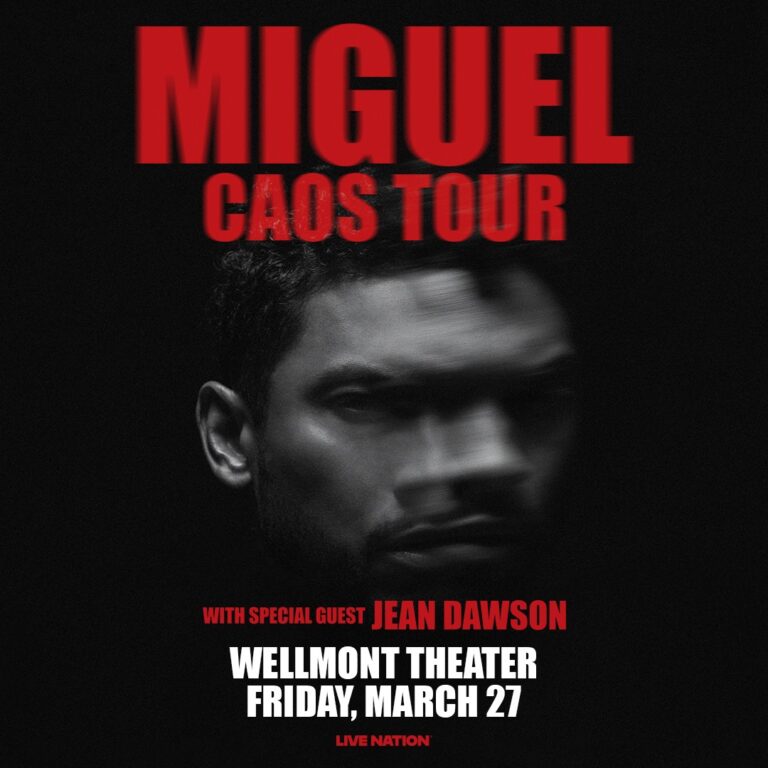
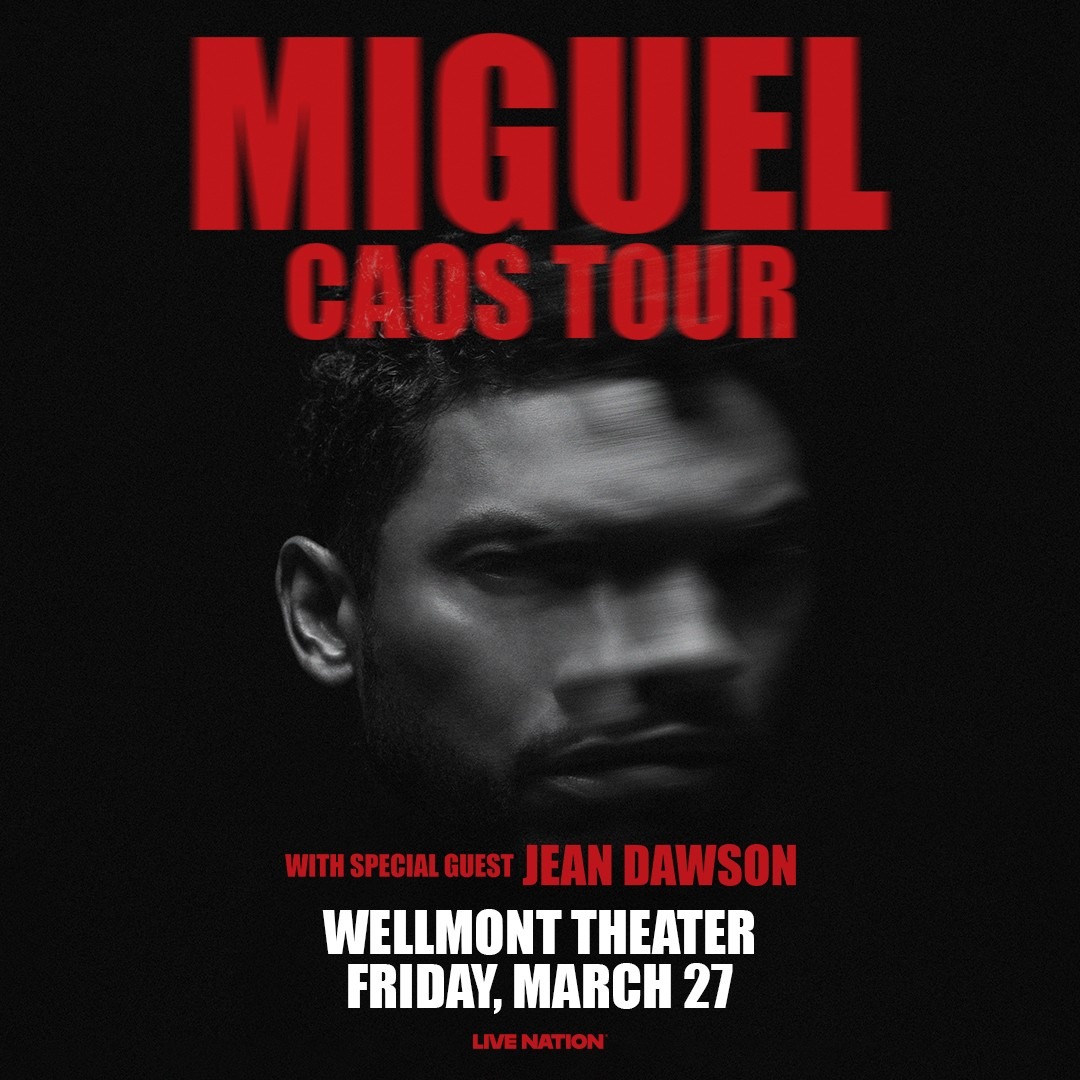
Miguel Brings the CAOS Tour to New Jersey: A Genre-Defying Artist Returns to the Stage With a Career-Spanning Performance

March 12 @ 8:00 AM 5:00 PM

New Jersey’s music calendar continues to expand with world-class performances, and one of the most compelling artists of the modern R&B era is preparing to deliver a powerful night of live music in the Garden State. Global recording artist Miguel is bringing his highly anticipated CAOS Tour to New Jersey on Friday, March 27, offering fans a performance that reflects the full scope of a career built on creativity, reinvention, and musical depth.

Known for pushing boundaries within contemporary R&B while seamlessly blending rock, soul, funk, and alternative influences, Miguel has spent more than a decade reshaping the genre. From chart-dominating singles to critically acclaimed albums, his catalog has consistently challenged expectations and expanded the sound of modern R&B. Now, the CAOS Tour arrives as both a celebration of that legacy and a bold statement about the artist he continues to become.

For New Jersey audiences, the event represents more than just another tour stop—it’s an opportunity to experience a performer whose work has helped redefine contemporary soul music. Fans can also explore additional coverage of concerts, festivals, and emerging artists shaping the Garden State’s music landscape through Explore New Jersey’s Music section, where the state’s vibrant live music culture is documented year-round.

A Career Built on Innovation and Soul

Few artists in modern R&B have navigated the intersection of mainstream success and artistic experimentation as effectively as Miguel. Emerging in the early 2010s during a transformative period for the genre, he quickly distinguished himself as an artist unwilling to remain confined within traditional stylistic boundaries.

His breakthrough moment came with the release of the hit single Adorn, a track that not only dominated radio but also earned Miguel the Grammy Award for Best R&B Song in 2013. The song’s smooth production, layered vocals, and emotionally resonant songwriting established Miguel as a major creative force in contemporary R&B.

The success of “Adorn” did more than elevate a single track—it introduced a songwriter and performer capable of balancing intimate storytelling with expansive sonic experimentation.

From that moment forward, Miguel’s career has been marked by a commitment to evolving his sound while maintaining the soulful authenticity that first captivated listeners.

From “Sure Thing” to Global Cultural Phenomenon

Long before viral trends became a central driver of music discovery, Miguel had already proven his ability to connect across audiences with songs that felt both timeless and modern.

One of the clearest examples is Sure Thing, a track that achieved triple-platinum certification and became a defining anthem of early-2010s R&B. Years after its original release, the song experienced a remarkable resurgence when it went viral across social platforms, introducing the track to an entirely new generation of listeners.

That revival demonstrated the enduring appeal of Miguel’s music—songs rooted in strong songwriting and emotional authenticity tend to transcend the moment in which they were first released.

It also highlighted Miguel’s rare ability to craft music that resonates across both traditional radio audiences and the ever-changing digital landscape.

Albums That Redefined Contemporary R&B

Miguel’s influence is perhaps most clearly reflected through his albums, many of which pushed the boundaries of what modern R&B could sound like.

The 2015 album Wildheart represented a daring creative leap, weaving together psychedelic rock textures, funk rhythms, and deeply personal lyricism. The project debuted at No. 1 on the Billboard R&B Albums Chart, signaling that listeners were eager to follow Miguel into more experimental territory.

Two years later, he continued that momentum with War & Leisure, another album that debuted at No. 1 on the Billboard R&B Albums Chart. The record combined sensual ballads with politically aware commentary and lush production, demonstrating Miguel’s ability to balance commercial appeal with artistic ambition.

Together, these albums reinforced his reputation as an artist committed to exploring new sonic landscapes while maintaining the emotional depth that defines R&B’s core identity.

Introducing the CAOS Era

The latest chapter of Miguel’s artistic journey arrives with CAOS, a project that pushes his musical evolution even further.

Rather than simply revisiting past successes, CAOS represents a reimagining of Miguel’s creative direction. The project embraces cross-genre experimentation, global influences, and a broader exploration of sound and storytelling.

In many ways, CAOS reflects a broader cultural moment in which artists are increasingly dissolving the boundaries between genres. Miguel has long been at the forefront of this movement, blending elements of rock, alternative, R&B, and electronic music into a cohesive style that feels distinctly his own.

The album signals that Miguel is not interested in repeating formulas. Instead, he continues to challenge expectations—both his own and those of his audience.

The CAOS Tour: Bridging Eras of Miguel’s Career

The CAOS Tour brings that evolution to life on stage.

Live performances have always been a central part of Miguel’s artistry. Known for his magnetic stage presence and dynamic vocal range, he transforms concerts into immersive experiences that highlight both the emotional intimacy and explosive energy of his music.

For this tour, fans can expect a performance that moves fluidly through different chapters of Miguel’s career—from early hits to newer material drawn from the CAOS era.

The result is a setlist that bridges multiple musical eras, reflecting the artist’s journey from breakthrough R&B singer to genre-blending innovator.

Each performance becomes a narrative of growth, showing how Miguel’s sound has evolved while maintaining the soulful core that first connected him with listeners.

A Night of Music With Jean Davidson

Joining Miguel on the tour stop is rising performer Jean Davidson, whose presence adds another dimension to the evening’s lineup.

Opening acts often play a crucial role in shaping the energy of a live show, and Davidson’s appearance offers audiences the opportunity to experience emerging talent alongside an established star.

The pairing of artists from different stages of their careers reflects the collaborative spirit that continues to define the modern music industry.

New Jersey’s Enduring Connection to Live Music

Miguel’s arrival in New Jersey underscores the state’s longstanding reputation as one of the most vibrant live music markets in the country.

From iconic rock venues to intimate theaters and large-scale arenas, New Jersey has hosted countless legendary performances over the decades. The state’s proximity to major metropolitan centers, combined with its deeply rooted music culture, makes it a natural stop for artists touring the United States.

Events like the CAOS Tour contribute to that tradition by bringing global artists to local stages, giving fans the opportunity to experience transformative performances without leaving the region.

For audiences throughout the Garden State, live music remains one of the most powerful ways to connect with artists and share collective cultural experiences.

A Performance That Reflects Artistic Evolution

Miguel’s career has never followed a predictable path. Each new project introduces new ideas, sounds, and perspectives, reflecting an artist constantly in search of creative growth.

That spirit of exploration is precisely what makes the CAOS Tour such an anticipated event. Rather than simply revisiting past hits, the performance represents a living snapshot of Miguel’s artistic journey—one that continues to unfold in real time.

For fans who have followed his music from the early days of “Adorn” and “Sure Thing,” the concert offers a chance to see how those songs have evolved alongside the artist himself.

For newer listeners discovering Miguel through viral moments or recent releases, the show becomes an introduction to one of the most innovative voices in contemporary R&B.

A Defining Night for New Jersey’s Music Scene

As Miguel takes the stage in New Jersey on March 27, the performance will serve as a reminder of how powerful live music can be when an artist’s past, present, and future converge in a single moment.

The CAOS Tour embodies the idea that music is not static—it grows, adapts, and reinvents itself with every new chapter.

For Miguel, that evolution has been the defining characteristic of his career. For New Jersey audiences, the upcoming performance promises a night where soulful vocals, genre-defying production, and electrifying stage presence come together in one unforgettable concert experience.

And in a state where live music continues to thrive, the arrival of the CAOS Tour stands as another exciting milestone in the ever-growing story of New Jersey’s vibrant music culture.

Live Nation Entertainment

1 (800) 653-8000

View Organizer Website

The Wellmont Theater

5 Seymour St
Montclair, NJ 07042 United States
+ Google Map
(973) 783-9500
View Venue Website

Inside Governor Mikie Sherrill’s $60.7 Billion Budget: Affordability Promises, Political Debate, and the Fiscal Crossroads Facing New Jersey

New Jersey’s political landscape entered a new chapter this week as Governor Mikie Sherrill unveiled her first state budget proposal, a sweeping $60.7 billion Fiscal Year 2027 spending plan that has already ignited debate across the State House in Trenton. Branded as an “affordability and accountability” blueprint, the governor’s inaugural budget outlines record investments in schools, full pension funding, property tax relief, and economic development—while simultaneously drawing scrutiny from critics who question spending priorities, tax policy changes, and the broader direction of the state’s finances.

The proposal represents the largest budget in New Jersey history and signals the opening move in what is expected to be one of the most closely watched budget negotiations in recent years. As lawmakers begin their formal review of the plan in the Legislature, the proposal is already shaping the central political conversation across the Garden State.

Governor Sherrill framed the spending plan as a direct response to economic pressures facing residents while attempting to address structural fiscal challenges that have lingered in New Jersey for decades.

“This is an affordability budget, rooted in lowering costs for hardworking families and making state government more accountable,” Sherrill said while presenting the plan at the State House in Trenton. According to the governor, the proposal seeks to reduce the state’s structural deficit while preserving key investments in education, pension obligations, and programs designed to support the middle class.

At the core of the spending blueprint are several major funding commitments.

The budget allocates a record $12.4 billion for school funding across New Jersey, continuing a multi-year effort to fully fund the state’s school aid formula. Education spending remains one of the largest components of the state budget and reflects ongoing efforts to ensure districts receive resources necessary to support classroom instruction, facilities, and student services.

Another centerpiece of the proposal is a $7.3 billion full pension payment. For decades, New Jersey struggled with underfunded pension obligations, a fiscal challenge that accumulated after successive administrations delayed or reduced payments into the system. The state has recently resumed making full annual contributions, and Sherrill emphasized that continuing those payments is essential for restoring long-term fiscal stability.

In addition, the budget proposes $4.2 billion in property tax relief, one of the most politically sensitive issues in New Jersey. The Garden State consistently ranks among the highest property tax states in the country, and both parties have long sought solutions that ease the burden on homeowners while maintaining funding for schools and local governments.

Sherrill’s proposal also includes approximately $2 billion in spending cuts combined with more than $700 million in new revenue measures. Much of that revenue would come from closing what the administration describes as corporate tax loopholes, a move that has already drawn mixed reactions from business leaders concerned about the potential impact on investment and job growth.

Beyond those headline figures, the governor emphasized broader reforms designed to modernize how the state government operates.

Among them is a proposed “government report card” intended to increase transparency by allowing residents to see how tax dollars are being spent. The administration also outlined plans to accelerate permitting processes for businesses, which could reduce delays that often slow construction projects and economic development across New Jersey.

These proposals come as the state navigates an increasingly uncertain financial environment shaped by federal policy shifts, inflationary pressures, and changing economic conditions.

In laying out the budget, Sherrill also warned that New Jersey cannot continue relying on temporary fiscal fixes that have characterized past budget cycles.

The governor pointed to a projected structural deficit of roughly $3 billion heading into the budgeting process. Without corrective action, she argued, the state’s current $7.2 billion surplus could be depleted within two years, potentially leaving the state with an additional budget gap of hundreds of millions of dollars.

For Sherrill, addressing that imbalance requires rethinking long-standing practices in Trenton.

“There have been too many one-offs, too many temporary fixes, and too little willingness to challenge what’s always been done,” she said. Her administration has positioned the budget as a turning point aimed at reshaping fiscal priorities while maintaining investments in programs that affect everyday residents.

Still, the proposal has sparked immediate political debate.

Democratic leaders in the Legislature responded largely with support for the governor’s approach, particularly her commitment to continuing full pension payments and maintaining strong school funding.

Senate President Nicholas Scutari, Senate Majority Leader Teresa Ruiz, and Senate Budget Committee Chairman Paul Sarlo issued a joint statement praising the continued focus on fiscal responsibility and collaboration between the executive branch and the Legislature.

The Democratic leadership emphasized that the state has successfully navigated significant fiscal challenges in recent years, pointing to the resumption of full pension payments as a major accomplishment.

For decades, New Jersey skipped or reduced contributions to the pension system, a decision that ultimately created billions of dollars in long-term liabilities. According to state officials, the current annual payment reflects both current obligations and the accumulated cost of those missed contributions.

Sherrill acknowledged that reality during her budget address, noting that the state now spends nearly $6 billion annually on pension payments because past administrations failed to meet their obligations.

She contrasted that with neighboring states such as New York, which spends significantly less on pension contributions because it maintained more consistent payments over time.

The governor argued that the consequences of those past decisions continue to affect what the state can accomplish today.

“Imagine what we could be doing with that money,” she said, referring to the billions now required each year to stabilize the pension system.

Despite the praise from Democratic leadership, Republican lawmakers responded with sharp criticism.

Several Republican leaders expressed concern about the overall size of the budget and questioned whether new revenue measures could ultimately increase costs for residents and businesses.

Senate Republican Anthony Bucco said lawmakers would carefully examine the details of the proposal, noting that the budget introduced by a governor is rarely identical to the version ultimately adopted by the Legislature.

He emphasized that Republicans would continue advocating for structural reforms aimed at controlling long-term spending growth.

Other Republican leaders focused on proposed tax and revenue changes within the budget.

One key proposal involves limiting deductions that corporations can take for net operating losses, a change the governor said could save taxpayers nearly $500 million. The administration argues that the policy is necessary because companies began claiming larger deductions following the COVID-era economic slowdown.

Republican lawmakers, however, argue that business taxes are ultimately passed along to consumers through higher prices or reduced economic activity.

Some lawmakers also raised concerns about adjustments to the Alternative Business Calculation tax structure, which the governor said would now be limited to companies earning less than $1 million annually. The administration argues the change will help small businesses while preventing large corporations from benefiting disproportionately from deductions originally intended for smaller enterprises.

Another area drawing attention involves programs connected to immigrant services within the broader state budget.

Critics reviewing the budget proposal have identified roughly $17 to $18 million in funding tied to programs that can serve individuals regardless of immigration status. Legislative critiques of the Fiscal Year 2027 Budget in Brief typically point to two specific line items within that total.

Approximately $11.2 million is allocated for immigration legal defense programs that provide legal representation to individuals facing deportation proceedings. Another $6 to $7 million supports the state’s Office of New Americans, which works to connect immigrant communities with government services and resources.

These allocations have become a flashpoint in the political debate surrounding the budget.

Supporters argue the programs help ensure fairness within the legal system while strengthening integration and economic participation among immigrant communities.

Opponents contend that taxpayer resources should be prioritized for programs serving citizens and long-term residents.

The debate highlights the broader policy tensions that often accompany major budget proposals.

Advocacy groups on the immigration side have also raised concerns that other programs supporting language access and legal services may have been reduced or omitted compared with previous budgets.

These differing perspectives underscore the balancing act facing the governor and lawmakers as they work toward a final budget agreement.

Beyond immigration policy debates, the budget also includes continued support for broader programs such as Cover All Kids, which provides health coverage to children regardless of immigration status.

Programs like this have become a defining part of New Jersey’s approach to public health policy, reflecting efforts to ensure that children have access to medical care regardless of their family’s circumstances.

As discussions unfold in Trenton, the budget will move through the Legislature’s committee review process.

Lawmakers will hold hearings, question agency leaders, and propose adjustments before ultimately negotiating a final version of the spending plan. The state constitution requires the budget to be adopted before the start of the new fiscal year on July 1.

Between now and then, political negotiations are expected to intensify.

Democratic leaders have already signaled their intention to work closely with the governor to craft a final budget that balances fiscal responsibility with continued investment in key programs.

Republicans, meanwhile, are calling for deeper structural reforms aimed at controlling spending growth and preventing future deficits.

For residents across New Jersey, the outcome of these negotiations will shape everything from property tax relief to education funding, healthcare programs, and economic development policies.

Governor Sherrill described the moment as a turning point for the state.

“In life, you rarely get to choose your mission; you rise to it,” she said while presenting the plan in the Assembly chamber.

As budget negotiations now move into full swing in Trenton, the fiscal roadmap laid out in this $60.7 billion proposal will serve as the foundation for one of the most consequential policy debates of the year in New Jersey politics.

New Jersey Devils Face Calgary Flames Tonight at Prudential Center as Playoff Pressure Builds

The New Jersey Devils return to the ice tonight at Prudential Center in Newark for a pivotal matchup against the Calgary Flames, with puck drop scheduled for 7:00 PM ET. The game marks the fifth contest of the Devils’ current seven-game homestand, a stretch that could ultimately determine whether the team can reignite its postseason hopes as the NHL regular season enters its most critical phase.

For a franchise that has long been one of New Jersey’s most iconic sports institutions, every game down the stretch now carries heightened urgency. Fans following the team across the Garden State continue to track the Devils’ push toward the playoffs through Explore New Jersey Devils, where coverage of the team’s season, roster developments, and future outlook remains front and center in the state’s passionate hockey culture.

Tonight’s matchup against Calgary arrives at a moment when the Devils must respond after seeing their momentum halted earlier in the week.

Devils’ Winning Streak Ends but Season Continues

New Jersey entered this week riding a strong four-game winning streak that had briefly revived optimism around the club’s postseason aspirations. That momentum, however, was interrupted on Sunday, March 8, when the Devils were shut out 3–0 by the Detroit Red Wings at Prudential Center.

Despite the loss, the game still showcased the steady performance of goaltender Jacob Markstrom, who turned aside 27 shots and kept the Devils within striking distance for much of the contest.

Markstrom has emerged as one of the team’s most reliable contributors since returning from the 2026 Winter Olympic break. Over his last six appearances, he has posted a .912 save percentage, providing stability in net during a stretch when the Devils have needed strong goaltending to remain competitive.

The shutout loss may have slowed the team’s momentum, but the Devils now turn their attention quickly to Calgary with an opportunity to regain the energy that fueled their recent winning run.

A Crucial Homestand in Newark

The Devils’ current seven-game homestand represents one of the most important segments of their schedule this season.

Home games at Prudential Center have historically been a cornerstone of the franchise’s identity. Known for its electrifying atmosphere and deeply loyal fan base, the Newark arena often serves as a catalyst for the team’s most memorable performances.

With several games remaining in the homestand—including tonight’s contest against Calgary and an upcoming matchup with the Minnesota Wild on March 14—the Devils have a valuable opportunity to collect points on home ice.

The question now is whether they can capitalize on that opportunity.

Playoff Outlook: The Road Becomes Steeper

As of mid-week, the Devils find themselves in a difficult position within the Eastern Conference playoff race.

The team currently sits seventh in the Metropolitan Division and eighth in the Eastern Conference Wild Card standings, leaving them several steps behind the final postseason spot.

Entering Wednesday, the Devils were 12 points back of the last wild-card position, placing their playoff probability at just over four percent according to projections.

While those numbers paint a challenging picture, the NHL season is notorious for late-season surges. Teams have overcome similar deficits before, particularly when a strong stretch of home games provides an opportunity to build momentum.

For New Jersey, the key will be stringing together consecutive wins—starting tonight.

Jack Hughes Sparks Offensive Momentum

One of the most encouraging developments for the Devils in recent weeks has been the resurgence of Jack Hughes, who continues to establish himself as the centerpiece of the franchise’s offensive attack.

On March 7, Hughes delivered one of the most electrifying performances of his career, recording his fourth career hat trick in a 6–3 victory over the New York Rangers.

The performance reinforced Hughes’ reputation as one of the NHL’s most dynamic young stars.

Since returning from international competition at the 2026 Winter Olympics, Hughes has been on an impressive run offensively, tallying nine points in six games.

His combination of speed, creativity, and playmaking ability remains central to the Devils’ success as they push through the final months of the season.

When Hughes is producing at an elite level, the Devils’ offense becomes far more dangerous.

Injury Updates Impact the Blue Line

The Devils’ defense corps continues to navigate injuries and roster challenges as the season progresses.

Defenseman Brett Pesce is currently listed as week-to-week with a lower-body injury, creating additional pressure on the remaining members of the blue line to maintain defensive stability.

Pesce’s absence removes one of the team’s most reliable defensive presences, forcing the Devils to adjust pairings and rely more heavily on depth players during critical matchups.

In a league where defensive consistency is often the difference between winning and losing tight games, injuries like this can have a ripple effect throughout the lineup.

The Trade Deadline Strategy

The NHL trade deadline, which passed on March 6, came and went with relatively minimal movement from Devils general manager Tom Fitzgerald.

While many teams across the league pursued aggressive roster upgrades in pursuit of playoff success, Fitzgerald opted for a more conservative approach.

One notable move earlier in the season was the late-January trade that sent veteran forward Ondrej Palat to the New York Islanders. Beyond that transaction, the Devils largely held their roster intact through the deadline.

Perhaps the most intriguing storyline from the deadline was the organization’s decision not to trade defenseman Simon Nemec, despite widespread speculation that the young blueliner could be moved.

Nemec, the former second overall pick in the NHL Draft, remains one of the organization’s most intriguing long-term assets.

The Simon Nemec Conversation

Few topics have generated as much discussion among Devils fans as the situation surrounding Simon Nemec.

The young defenseman is nearing the end of his entry-level contract and will be eligible for a new deal this offseason. At the same time, the Devils’ blue line has become crowded with veteran defensemen holding long-term contracts.

With players such as Dougie Hamilton, Brett Pesce, and Johnathan Kovacevic occupying key roles on the right side, Nemec has sometimes found himself navigating inconsistent ice time and occasional healthy scratches.

Despite these challenges, Nemec continues to log significant minutes and remains one of the organization’s most promising young defensemen.

The debate within the fan base centers on a critical question: should the Devils trade Nemec to address other roster needs, or should they remain patient and allow the young defenseman to develop into a cornerstone of the franchise’s future?

For now, the organization has chosen patience.

Evaluating the Devils’ Defensive Depth

One of the reasons Nemec’s situation has drawn so much attention is the complex structure of the Devils’ defensive roster.

Hamilton and Pesce are both signed to long-term contracts. Kovacevic holds a no-trade clause. Several other defensemen also carry trade protection in their deals.

These contractual realities make it difficult for the Devils to reshape their blue line quickly.

At the same time, high-quality right-handed defensemen remain one of the most valuable assets in the NHL.

Even with his growing pains this season, Nemec represents a rare commodity in today’s league—a young defenseman with offensive upside and the ability to log heavy minutes.

That value alone makes the decision surrounding his future particularly significant.

The Prospect Pipeline

As many of the Devils’ once-elite prospects have graduated to the NHL roster, the organization’s farm system has begun to shift.

Several young players remain within the development pipeline, including prospects who may eventually compete for roster spots in the coming years.

However, Nemec still stands out as one of the most impactful young players within the organization.

His development could play a major role in shaping the Devils’ long-term defensive identity.

Tonight’s Game: Flames Visit Newark

The focus now returns to the ice as the Devils prepare to host the Calgary Flames tonight at Prudential Center.

The Flames bring their own playoff ambitions and will present a difficult challenge for a Devils team attempting to regain momentum.

For New Jersey, the formula for success will likely depend on three key elements:

Strong goaltending from Markstrom
Continued offensive production from Jack Hughes
Defensive stability despite injuries on the blue line

If the Devils can execute in those areas, they have the talent to remain competitive against any opponent.

A Defining Stretch for the Season

With the regular season entering its final chapters, the Devils face a defining stretch of hockey.

Every game now carries significant implications for the standings.

A winning streak could narrow the gap in the wild-card race and restore optimism within the fan base. Another series of losses could push the team further out of playoff contention.

The players understand the stakes.

So do the fans filling Prudential Center tonight.

In New Jersey, hockey is more than a game—it is part of the state’s sports identity. And as the Devils take the ice against Calgary, they do so with the hope that the next chapter of their season still holds a surge of momentum waiting to unfold.

The Messi Experience Arrives at American Dream: An Immersive Soccer Journey Celebrating Lionel Messi Opens in New Jersey in Spring 2026

New Jersey is preparing to welcome one of the most anticipated soccer fan experiences ever created. This spring, The Messi Experience, an immersive multimedia exhibition celebrating the life and legendary career of Lionel Messi, will open at American Dream in East Rutherford, transforming the region into a global destination for soccer fans ahead of the upcoming FIFA World Cup matches scheduled at nearby MetLife Stadium.

Developed by the international sports and entertainment company RYVE | AONE, the groundbreaking exhibition blends storytelling, cutting-edge technology, and interactive sports challenges to give visitors an unprecedented look into the journey of one of the greatest athletes in the history of world football.

The attraction is expected to draw visitors from across the United States and around the globe, reinforcing New Jersey’s rapidly growing role in the international soccer community. Coverage of the state’s expanding soccer culture—from professional clubs to major global events—continues through Explore New Jersey Soccer, where the sport’s influence across the Garden State is documented and celebrated.

With the world’s attention already turning toward the region as the World Cup approaches, the arrival of The Messi Experience represents a landmark moment for both soccer fans and the broader sports entertainment landscape in New Jersey.

A New Era of Immersive Sports Experiences

Traditional sports museums have long showcased memorabilia and historic moments through static displays. The Messi Experience represents an entirely new approach.

Instead of simply observing artifacts behind glass, visitors step directly into the story of Lionel Messi’s life and career through a fully interactive environment.

The exhibition will feature nine immersive installations, each designed to place visitors inside the defining moments of Messi’s extraordinary journey—from his childhood in Argentina to the global stadiums where he became one of the most celebrated athletes in the world.

Using advanced visual technology, cinematic sound design, and interactive digital storytelling, the experience allows fans to engage with Messi’s legacy in ways that feel personal, emotional, and dynamic.

Guests will move through spaces designed to recreate key chapters of the soccer icon’s life while testing their own skills through football-inspired challenges along the way.

The result is an attraction that feels less like a museum and more like stepping into the career of a living legend.

Lionel Messi: A Global Football Icon

Few athletes have shaped the sport of soccer as profoundly as Lionel Messi.

Born in Rosario, Argentina, Messi rose from humble beginnings to become one of the most decorated and admired players in the history of the game. His remarkable journey began in the youth academy of FC Barcelona, where his extraordinary technical ability quickly set him apart.

During his time with Barcelona, Messi helped the club capture an astonishing number of league championships, domestic cups, and international trophies. His influence on the field redefined attacking play, combining breathtaking ball control, vision, and scoring ability that captivated audiences around the world.

In 2012, Messi achieved one of the most remarkable records in sports history when he scored 91 goals in a single calendar year, a feat that cemented his status as one of the most prolific goal scorers the game has ever seen.

After leaving Barcelona, Messi continued his professional journey with Paris Saint-Germain before joining Inter Miami CF, bringing global attention to Major League Soccer and expanding the sport’s influence across North America.

His crowning achievement came when he led the Argentina national team to victory in the FIFA World Cup, securing the country’s third championship and fulfilling one of the most iconic storylines in modern sports.

The Messi Experience allows fans to walk through that journey in vivid detail.

Inside the Messi Experience: What Visitors Will Discover

The exhibition is designed as a multi-room journey through Messi’s life, blending emotional storytelling with interactive sports activities.

Visitors will begin with an exploration of Messi’s early years, stepping into a recreation of the bedroom where his childhood dreams first took shape. Through immersive visuals and narrative storytelling, guests will learn about the determination and resilience that fueled his rise from a young player in Argentina to a global superstar.

As the journey unfolds, fans will move through environments inspired by locker rooms, training grounds, and iconic stadium moments.

One installation recreates the atmosphere of a professional locker room, allowing visitors to experience the anticipation and intensity that athletes feel before stepping onto the pitch.

Other installations challenge guests to test their own soccer abilities.

Interactive training zones invite fans to participate in ball-control drills, shooting challenges, and skill-based competitions inspired by the techniques that made Messi famous.

These physical activities transform spectators into participants, offering a glimpse of the precision and creativity required to perform at the highest level of the sport.

Technology Meets Storytelling

One of the defining elements of The Messi Experience is its integration of advanced digital technology.

Holographic visuals, cinematic soundscapes, and immersive projection systems create an environment that feels alive with motion and emotion. Visitors encounter moments from Messi’s career as if they are unfolding in real time.

Artificial intelligence also plays a role in bringing the exhibition to life.

Guests will have the opportunity to interact with AI-powered representations of Messi, allowing them to engage with the legend in a way that merges sports history with futuristic technology.

One particularly popular feature is expected to be the chance to capture an interactive digital selfie with Messi, creating a personalized souvenir that blends fan culture with cutting-edge multimedia design.

These elements transform the exhibition into a fully immersive narrative experience.

American Dream: A Global Entertainment Destination

Hosting The Messi Experience is American Dream, one of the largest entertainment and retail complexes in North America.

Located in East Rutherford just minutes from New York City, the complex has become a destination for major attractions, entertainment events, and immersive experiences that draw millions of visitors annually.

From indoor theme parks and water attractions to luxury retail and entertainment venues, American Dream has positioned itself as a hub where global entertainment brands can connect with audiences in innovative ways.

Bringing The Messi Experience to the complex strengthens its growing reputation as a venue capable of hosting world-class sports and cultural events.

The collaboration also highlights American Dream’s role in expanding soccer’s presence within the region’s entertainment landscape.

The World Cup Connection

The timing of the exhibition is particularly significant.

New Jersey will play a major role in the upcoming FIFA World Cup, with MetLife Stadium scheduled to host multiple tournament matches during June and July.

The World Cup is widely recognized as the most watched sporting event on the planet, attracting billions of viewers and bringing global attention to the host regions.

By launching The Messi Experience in the months leading up to the tournament, American Dream positions New Jersey as a destination where fans can celebrate the sport beyond the stadium itself.

Visitors attending World Cup matches will find an additional attraction that deepens their connection to the game and its greatest players.

The exhibition serves as both a tribute to Messi’s legacy and a broader celebration of soccer’s global cultural impact.

Industry Leaders Behind the Project

The Messi Experience is the result of collaboration between global entertainment innovators and sports industry leaders.

The project is produced by RYVE | AONE, an international company known for developing immersive fan experiences that combine sports, storytelling, and cutting-edge technology.

Real estate advisory firm Cushman & Wakefield played a role in facilitating the exhibition’s arrival in New Jersey, representing the developers in negotiations for the New York–New Jersey location.

Industry leaders involved in the project describe the launch as a significant milestone for both the brand and the region.

By choosing American Dream as its destination, the exhibition places New Jersey firmly within the global soccer conversation.

A Celebration of Soccer Culture in New Jersey

The arrival of The Messi Experience reflects the rapid growth of soccer culture across New Jersey.

The state has long served as a hub for international football fans, youth leagues, and professional clubs. With the presence of MetLife Stadium, the region frequently hosts major international matches and tournaments.

The increasing popularity of Major League Soccer, combined with global stars like Messi now playing in North America, has brought new energy to the sport across the United States.

For New Jersey, that energy is especially visible in communities where youth soccer programs, international fan clubs, and multicultural celebrations of the sport continue to flourish.

Events like The Messi Experience amplify that enthusiasm by creating opportunities for fans to connect with the game’s history and its greatest players.

A Must-Visit Attraction for Soccer Fans

When the exhibition opens in Spring 2026, it is expected to become one of the most visited sports attractions in the region.

For lifelong soccer supporters, the experience offers an emotional journey through the career of a player who transformed the sport.

For younger fans, it provides an inspiring introduction to the story of determination, passion, and excellence that defines Lionel Messi’s legacy.

And for visitors exploring New Jersey’s growing sports tourism landscape, it offers a unique destination that blends entertainment, technology, and global athletic achievement.

As the countdown to the World Cup continues, the arrival of The Messi Experience signals something even bigger.

It confirms that New Jersey is no longer just a host for major soccer events.

It is becoming a center of soccer culture—where fans can celebrate the game, connect with its history, and step inside the story of one of the greatest players ever to take the field.

Honey House Art Studio: A Creative Sanctuary Where New Jersey Artists of All Ages Can Explore, Learn, and Create Without Limits

Across New Jersey, creativity thrives in spaces where artists, families, and curious beginners are welcomed to experiment, explore, and discover the joy of making something new. Among the state’s most inviting creative destinations is Honey House Art Studio, an inclusive community art space dedicated to nurturing imagination and artistic confidence for both children and adults.

Located in a welcoming environment designed to inspire creativity, Honey House Art Studio offers a wide range of opportunities for artistic exploration—from hands-on classes and immersive workshops to seasonal art camps and weekly open studio sessions. The philosophy behind the studio is refreshingly simple: art belongs to everyone.

Whether visitors arrive with years of artistic experience or simply the curiosity to try something new, Honey House provides a supportive setting where creativity flourishes without pressure or limitation.

For those exploring the broader creative ecosystem across the Garden State, spaces like Honey House represent the vibrant grassroots arts culture documented through Explore New Jersey Art & Culture, where community studios, galleries, cultural institutions, and emerging creative hubs are shaping the state’s artistic landscape.

At Honey House Art Studio, the focus is not just on creating art—it’s about building a community where creativity can thrive.

A Community Studio Built Around Creativity and Connection

Unlike traditional art classrooms that emphasize rigid instruction or technical perfection, Honey House takes a different approach.

The studio operates as a creative playground, where experimentation, discovery, and self-expression are encouraged at every stage of the artistic process. Participants are invited to embrace the joy of making art, often exploring materials and techniques in ways that spark imagination and curiosity.

This philosophy reflects a growing movement within community art spaces that prioritizes accessibility and inclusivity.

Art becomes less about producing a perfect finished piece and more about experiencing the creative journey itself.

At Honey House, that journey often involves getting a little messy, trying new ideas, and allowing creativity to unfold naturally.

For many participants—especially children—this freedom unlocks a deeper sense of confidence and exploration that extends beyond the studio walls.

Programs Designed for Artists of Every Age

Honey House Art Studio offers an expansive range of programming tailored to meet the needs of artists at different stages of life.

Children can participate in guided classes that introduce them to painting, sculpture, mixed media, and creative storytelling through visual art. These programs emphasize play and experimentation, allowing young artists to explore colors, textures, and materials while developing foundational artistic skills.

Adults are equally welcomed into the creative process.

Many adults who join Honey House programs are rediscovering art after years away from creative pursuits. Others simply want an outlet for relaxation and self-expression outside the demands of daily life.

The studio’s workshops and classes provide a welcoming environment where adults can reconnect with their creativity in a supportive community setting.

In both cases, the emphasis remains on exploration rather than perfection.

Participants are encouraged to follow their ideas, experiment with new techniques, and celebrate the uniqueness of their artistic voice.

Saturday Open Studio: Creativity Without Boundaries

One of the most popular offerings at Honey House Art Studio is the weekly Open Studio, held every Saturday from 1:00 PM to 5:00 PM.

During open studio hours, visitors are free to drop in and create at their own pace. Materials and workspace are available, allowing artists to work independently or explore new ideas in a collaborative environment alongside fellow creatives.

Open Studio sessions attract a diverse mix of participants.

Some visitors arrive with a specific project in mind, while others simply want to experiment with materials and see where inspiration leads.

The relaxed atmosphere encourages conversation, collaboration, and the sharing of creative ideas.

For families, the Saturday sessions also offer a unique opportunity for parents and children to create together, strengthening bonds through shared artistic experiences.

Participation requires advance registration through the studio’s website, ensuring that each visitor has the space and materials needed to enjoy the session fully.

Spring Break Art Camp: A Creative Escape for Young Artists

As schools pause for spring break, Honey House Art Studio transforms into a hub of creativity for young artists eager to spend their days making art.

The studio’s Spring Break Camp invites children to immerse themselves in multi-day creative experiences where they can explore painting, crafting, sculpture, and collaborative art projects.

Each day offers new artistic challenges and opportunities to experiment with materials that spark imagination.

Camp participants often leave with a collection of artwork that reflects their unique ideas and personal creativity.

Families can choose flexible attendance options, including individual drop-in days or full-week participation, making it easy to integrate creative enrichment into spring break plans.

Dates and registration details are available directly through the studio’s website.

Summer Art Camps: Weeks of Creativity and Exploration

As summer approaches, Honey House Art Studio expands its programming to include Summer Art Camps, offering multiple weeks of creative learning and artistic exploration.

These camps provide young artists with an immersive environment where they can dive deeper into artistic techniques while building friendships with fellow creative minds.

Camp sessions often feature themed projects that explore different artistic styles, materials, and storytelling concepts.

Participants may experiment with painting techniques, sculpture building, mixed media collage, textile art, or imaginative craft projects designed to stimulate creativity.

For many children, summer art camps become a highlight of the season—a place where they can express themselves freely while developing confidence in their creative abilities.

Families can select specific weeks that fit their schedules, with registration currently open for upcoming summer sessions.

Why Community Art Studios Matter

Spaces like Honey House Art Studio play an essential role in strengthening local arts communities.

While large museums and cultural institutions offer opportunities to experience art, community studios provide the chance to actively participate in the creative process.

They serve as entry points for individuals who might otherwise feel intimidated by traditional art environments.

Children discover new forms of expression. Adults rediscover creativity they may have set aside years earlier.

Community studios also foster connections between neighbors who share an interest in creativity and exploration.

Through classes, workshops, and open studio sessions, participants become part of a larger creative network that encourages collaboration and inspiration.

New Jersey’s Growing Culture of Creative Spaces

Honey House Art Studio is part of a broader cultural movement across New Jersey that embraces community-based arts programming.

Throughout the state, creative studios, independent galleries, and cultural spaces are emerging as vital hubs where artists and residents come together to celebrate creativity.

These environments help cultivate the next generation of artists while ensuring that art remains accessible to everyone.

By offering flexible programming, welcoming spaces, and opportunities for experimentation, studios like Honey House help remove barriers that often prevent people from engaging with the arts.

The result is a more vibrant, inclusive creative culture that reflects the diversity and imagination of the Garden State.

Discover Your Creative Voice at Honey House

For anyone seeking a place where creativity can flourish—whether through painting, crafting, sculpture, or imaginative experimentation—Honey House Art Studio offers a welcoming and inspiring environment.

From weekly open studio sessions to seasonal camps and interactive workshops, the studio invites visitors to explore art in ways that are joyful, expressive, and deeply personal.

It is a place where children discover the magic of making something with their hands, where adults rediscover the power of creativity, and where community connections grow through shared artistic experiences.

At Honey House, art is not about perfection.

It is about curiosity, play, discovery, and the simple joy of creating something uniquely your own.

East Brunswick Mayor Brad Cohen Secures Overwhelming Middlesex County Democratic Endorsement in NJ’s 12th Congressional District Race

A pivotal moment has emerged in the race to represent New Jersey’s 12th Congressional District as East Brunswick Mayor Brad Cohen captured a commanding endorsement from the Middlesex County Democratic Committee, delivering one of the most decisive early signals yet in the increasingly competitive battle to succeed longtime U.S. Representative Bonnie Watson Coleman.

The convention vote, held in front of hundreds of party members and local leaders, produced a resounding victory for Cohen, who secured 67 percent of the vote in his home county. The outcome places the physician and mayor in a powerful early position as the Democratic field continues to take shape in one of New Jersey’s most influential congressional districts.

Approximately 380 participants took part in the Middlesex County Democratic convention, which was overseen by Committee Chairman Kevin McCabe. The county organization is particularly significant in the 12th District because it includes the largest concentration of municipalities within the district’s boundaries, giving its endorsement substantial political weight as candidates build regional support.

Cohen’s overwhelming margin demonstrated a strong consolidation of local backing. Activist and political organizer Sue Altman finished second in the voting with 11 percent of the support, while Assemblywoman Verlina Reynolds-Jackson of Trenton placed third in the convention tally. Reynolds-Jackson has secured backing from the Mercer County Democratic Committee, giving her a foothold in her home political base while the broader district contest continues to evolve.

The Middlesex endorsement underscores the strength of Cohen’s local leadership record and the political network he has developed during his tenure as mayor of East Brunswick. For many party insiders, the result was not entirely surprising given Cohen’s longstanding presence in the county’s political landscape and the early support he had secured from influential Democratic leaders across the region.

Among those backing Cohen heading into the convention was State Senator Linda Greenstein of the 14th Legislative District, whose support signaled growing momentum within key Democratic circles. Greenstein’s endorsement carried particular significance given the overlap between her district and areas within the congressional territory, reinforcing Cohen’s credibility as a candidate with established regional relationships.

Cohen’s path to this moment reflects a career that bridges public service, medicine, and municipal leadership.

Before entering elected office, Cohen built his professional reputation as a practicing physician specializing in obstetrics and gynecology at St. Peter’s Hospital, one of the region’s most respected healthcare institutions. His medical background has shaped much of his public messaging during the congressional campaign, particularly on issues related to healthcare access, insurance coverage, and national health policy.

Cohen first entered municipal politics in 2016 when he ran for mayor of East Brunswick, a township in Middlesex County known for its diverse residential neighborhoods, active commercial corridors, and strategic location within the central New Jersey economic region.

Upon taking office, Cohen made economic revitalization a central priority of his administration.

One of the most notable initiatives during his mayoral tenure was the redevelopment of the Route 18 corridor, a major transportation and commercial artery running through East Brunswick. Recognizing both the opportunities and challenges presented by redevelopment, Cohen worked to establish a bipartisan redevelopment agency designed to ensure that the community maintained a direct role in shaping development decisions.

The approach emphasized collaborative planning rather than top-down executive control, allowing residents, business owners, and community stakeholders to participate in discussions about how redevelopment projects would impact the township’s character and future growth.

The redevelopment effort produced a mix of projects that included retail development, restaurant expansion, commercial space, and residential construction. Importantly, the plan also incorporated affordable housing elements intended to ensure that growth remained balanced and accessible.

East Brunswick spans roughly 24 square miles and contains four distinct neighborhood areas with varying development needs. Cohen has frequently pointed to the importance of recognizing those differences when designing redevelopment strategies that preserve community identity while supporting economic expansion.

Fiscal management has also been a defining component of Cohen’s mayoral record.

Throughout his time in office, he has emphasized careful budgeting and tax restraint, often highlighting that municipal taxes have not increased by more than one percent in any year of his administration. For local voters, that approach has reinforced Cohen’s image as a pragmatic leader focused on balancing infrastructure improvements and development with financial stability for residents.

As the congressional race intensifies, Cohen has been urging voters to evaluate not only his political experience but also the perspective he brings as a healthcare professional.

Healthcare policy remains one of the central themes of his campaign.

Cohen has repeatedly warned that ongoing national debates around healthcare coverage, insurance protections, and federal healthcare policy could leave millions of Americans vulnerable if reforms weaken existing protections. As a practicing physician who has worked directly with patients navigating insurance barriers and treatment costs, Cohen argues that healthcare access is one of the defining challenges facing the country.

He believes the United States must continue strengthening systems that ensure families can obtain medical care without facing financial hardship.

At campaign events and political gatherings across the district, Cohen has framed healthcare policy not just as a national debate but as a local concern affecting communities throughout New Jersey.

Hospitals, medical research centers, and pharmaceutical innovators form a major part of the regional economy within the 12th Congressional District. Cohen frequently references the powerful life sciences ecosystem stretching through central New Jersey, a corridor that includes Princeton, Trenton, and communities along the Interstate 287 region.

This area is widely recognized as one of the country’s most important centers for pharmaceutical development, biotechnology research, and medical innovation.

The corridor is sometimes referred to as “Einstein Alley,” a nickname reflecting the concentration of scientific research institutions, corporate laboratories, and technology-driven companies operating within the region.

According to Cohen, protecting and expanding that innovation economy should be a central focus for federal leadership.

He has warned that national policies undermining research funding, education investment, or scientific development could threaten the economic engine that powers many communities across the district.

For Cohen, the stakes extend beyond economic policy.

The research institutions and technology companies located in central New Jersey create thousands of high-paying jobs, support small businesses, and contribute significantly to local school systems and municipal services through economic growth.

When companies establish research centers or corporate headquarters within the region, they bring highly skilled professionals who contribute to the broader economy while strengthening local communities.

Maintaining that environment, Cohen argues, requires strong federal support for science, healthcare innovation, and education programs that develop the workforce needed to sustain the life sciences industry.

The 12th Congressional District itself represents a complex and dynamic political region.

Stretching across parts of Middlesex, Mercer, Somerset, and Hunterdon counties, the district includes a blend of suburban communities, university centers, research institutions, and historic towns. It encompasses major academic institutions such as Princeton University, state government centers in Trenton, and thriving suburban areas that serve as residential hubs for professionals working throughout the New York–Philadelphia corridor.

The district’s diversity means candidates must connect with voters across a wide range of economic priorities, community concerns, and regional identities.

For Democrats, the upcoming election carries added significance because Representative Bonnie Watson Coleman’s retirement will mark the end of a decade of leadership in Congress. Watson Coleman has served as a prominent voice on civil rights, social justice, and progressive policy initiatives during her tenure representing the district.

Her departure opens the door to a new generation of leadership at a time when national political debates over healthcare, science funding, infrastructure investment, and economic competitiveness are shaping the country’s policy agenda.

Within that context, the Middlesex County endorsement represents a critical early milestone for Cohen.

Party endorsements at the county level often influence fundraising momentum, volunteer recruitment, and regional organizing efforts that are essential for building a competitive congressional campaign.

Winning two-thirds of the vote at the convention sends a strong message to political observers that Cohen has consolidated significant support among party activists and local leaders in one of the district’s most influential counties.

As the campaign moves forward, the focus will expand beyond county conventions to broader voter engagement across the district’s diverse communities.

Candidates will need to address issues ranging from transportation infrastructure and economic development to housing affordability, education funding, and environmental protection.

For now, however, the Middlesex County Democratic convention has clearly reshaped the early landscape of the race.

With a commanding endorsement from the county that anchors much of the district’s population, Mayor Brad Cohen has emerged from the convention as a leading contender in the contest to represent New Jersey’s 12th Congressional District.

The months ahead will determine how that momentum translates across the rest of the district, but one thing is already clear: the race to succeed Bonnie Watson Coleman has officially entered a new phase, and East Brunswick’s mayor has positioned himself squarely at the center of the conversation.

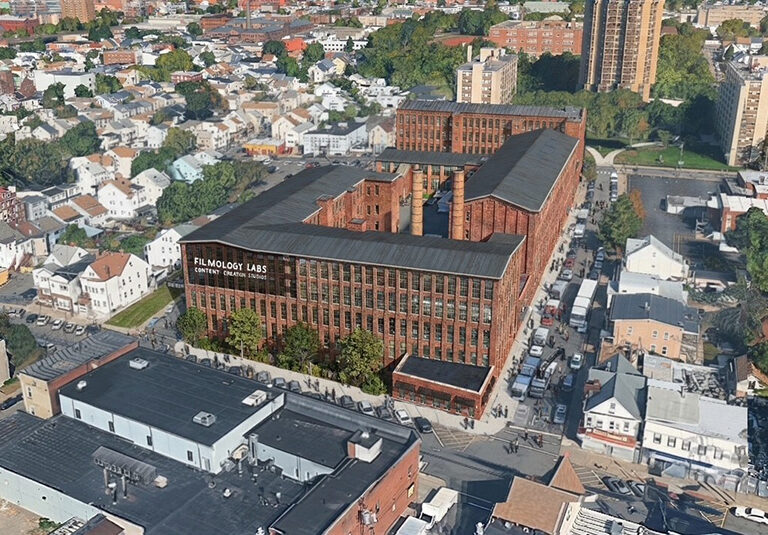
Filmology Labs Launches Next-Generation Studio Campus in Paterson, Strengthening New Jersey’s Rise as a Major Film and Television Production Hub

New Jersey’s rapidly expanding film and television industry is entering another transformative chapter as Filmology Labs announces plans for a next-generation studio campus in Paterson, a development that signals both the continued growth of the state’s creative economy and the strengthening of North Jersey as a premier destination for major productions.

The project represents more than just another studio development. It reflects a larger movement underway across the Garden State, where film, television, and digital media companies are increasingly choosing New Jersey for its infrastructure, incentives, and proximity to the world’s largest entertainment markets. With the launch of this new production campus, Paterson is positioning itself as a centerpiece in the region’s evolving media landscape.

As the state continues attracting large-scale productions, innovative studios, and streaming-era content creators, the Filmology Labs campus stands as a powerful example of how New Jersey is building a sustainable future for film and television production. Readers can explore additional coverage of the state’s rapidly expanding screen industry by visiting Explore New Jersey’s dedicated Film & TV section, which chronicles the ongoing resurgence of filmmaking across the state.

Paterson Emerges as a Strategic Location for Film and Television Production

The decision to establish a major studio campus in Paterson is no accident. The city’s historic industrial landscape, expansive architectural character, and proximity to New York City create an ideal environment for film and television production.

Paterson has long been known as a city rich in cultural heritage and cinematic potential. Its historic mills, brick factory complexes, urban streetscapes, and unique architectural textures provide filmmakers with a wide range of authentic locations that can double for multiple cities and eras.

In recent years, producers and location scouts have increasingly recognized the value of filming in Paterson and throughout Passaic County. The new Filmology Labs campus builds on that momentum by creating a dedicated production infrastructure capable of supporting projects from concept development through post-production.

The studio complex is expected to provide modern sound stages, advanced production facilities, creative development space, and technology-driven workflows designed for the demands of today’s content-driven entertainment industry.

For the city of Paterson, the campus represents both a cultural milestone and a powerful economic catalyst.

The Rise of New Jersey as a National Production Destination

The development of the Filmology Labs campus reflects a broader shift in the entertainment industry. Over the past decade, New Jersey has experienced a dramatic resurgence in film and television production, fueled by competitive tax incentives, improved infrastructure, and a growing network of professional talent.

Once known as the birthplace of early American cinema through the pioneering work of Thomas Edison, New Jersey is reclaiming its role as a creative powerhouse in the modern entertainment economy.

Large streaming platforms, independent filmmakers, and television networks have increasingly turned to the state for production opportunities. The combination of urban settings, coastal landscapes, historic architecture, and suburban environments allows New Jersey to replicate countless locations on screen.

This versatility has made the state especially attractive for productions seeking diverse visual environments within a relatively compact geographic area.

The addition of the Filmology Labs studio campus in Paterson strengthens this ecosystem by providing a facility designed for the next generation of media production.

A Vision for a Modern Studio Campus

While traditional studio lots have long served as the backbone of filmmaking, modern content creation requires facilities that integrate technology, flexibility, and creative collaboration.

The Filmology Labs campus aims to meet these demands by offering a comprehensive production environment designed to support multiple stages of the filmmaking process.

Plans for the campus highlight a forward-looking approach that blends traditional production infrastructure with emerging digital tools. Sound stages are expected to accommodate feature films, episodic television, streaming productions, commercials, and independent projects, while support spaces will allow creators to move seamlessly from development through post-production.

Such integrated studio environments are becoming increasingly important in the era of streaming media, where content production cycles are faster and creative teams require highly adaptable facilities.

By establishing a campus capable of supporting large-scale productions as well as smaller independent projects, Filmology Labs is positioning itself at the center of a rapidly evolving industry.

Economic Impact for Paterson and the Surrounding Region

Beyond its creative significance, the Filmology Labs campus is expected to deliver meaningful economic benefits for Paterson and surrounding communities.

Film and television productions generate a wide range of employment opportunities, extending far beyond the actors and directors visible on screen. Every production requires skilled professionals across multiple disciplines, including:

• cinematography and camera operation
• lighting and electrical work
• production design and set construction
• costume design and wardrobe departments
• makeup and special effects
• transportation logistics
• catering and hospitality services

These industries collectively form the backbone of the film production economy.

When productions establish themselves within a region, they also generate significant spending across local businesses—from hotels and restaurants to equipment rental companies and construction suppliers.

For Paterson, the arrival of a major studio campus represents an opportunity to expand its creative workforce while attracting new business investment tied to the film and television sector.

Building a Creative Ecosystem in North Jersey

Filmology Labs’ expansion into Paterson also contributes to the growing cluster of film and television production activity throughout northern New Jersey.

Across the region, municipalities are investing in production facilities, studio infrastructure, and creative development spaces designed to attract projects from around the world. These initiatives are helping transform New Jersey into a fully integrated filmmaking environment capable of competing with long-established production centers.

By adding another major facility to the state’s production network, Filmology Labs strengthens the infrastructure necessary to sustain this growth.

The campus will also create opportunities for collaboration between filmmakers, digital creators, post-production specialists, and emerging storytellers seeking access to professional-grade production environments.

For aspiring filmmakers and media professionals across the region, this development expands the possibilities for launching careers within the industry without needing to relocate to distant entertainment capitals.

The Role of Technology in Next-Generation Production

Modern film and television production is increasingly driven by technological innovation. Digital cinematography, advanced visual effects, virtual production environments, and high-resolution streaming formats are redefining how content is created and delivered to audiences.

Next-generation studio campuses must therefore integrate technological capabilities that support these evolving workflows.

Filmology Labs is positioning its Paterson facility as a production hub capable of embracing these changes. The campus is expected to incorporate modern post-production capabilities, digital collaboration tools, and infrastructure designed for the demands of contemporary filmmaking.

Such technology-focused studio environments allow productions to operate more efficiently while giving creative teams greater flexibility in shaping their visual storytelling.

In an era where streaming platforms release thousands of hours of content annually, facilities that enable faster production timelines and integrated creative workflows are becoming increasingly valuable.

Paterson’s Cultural Identity Meets the Film Industry

For Paterson, the arrival of Filmology Labs also represents a cultural opportunity.

The city has long been known for its historic significance, diverse communities, and industrial heritage. Now, it has the chance to add another identity to its story: a city where creative industries thrive.

Film and television production has the power to reshape how communities are seen by the world. Locations that appear on screen often become destinations in their own right, attracting visitors eager to experience the places they recognize from movies and television series.

As Paterson becomes more closely associated with filmmaking, its streets, architecture, and cultural landmarks may soon find themselves appearing in productions watched by audiences around the globe.

This intersection of storytelling and place has the potential to amplify the city’s visibility while celebrating its unique character.

New Jersey’s Film Renaissance Continues

The launch of the Filmology Labs studio campus marks another milestone in New Jersey’s ongoing film renaissance.

For decades, the state played an essential role in early cinema history. Today, it is reclaiming that legacy by building an ecosystem capable of supporting modern storytelling at every level—from independent creators to major studio productions.

The expansion of studio infrastructure, combined with the state’s production incentives and diverse filming locations, continues to attract filmmakers searching for new creative environments.

As projects begin taking shape at the Paterson campus, Filmology Labs will help drive the next phase of that growth.

A Future Where New Jersey Leads in Film and Television Production

The arrival of a next-generation studio campus in Paterson demonstrates that New Jersey is no longer simply participating in the film and television industry—it is actively shaping its future.

By investing in infrastructure, fostering creative talent, and welcoming innovative production companies, the Garden State is building a foundation for long-term leadership in media and entertainment.

Filmology Labs’ decision to plant roots in Paterson reflects confidence in that vision. It signals that New Jersey’s creative economy is expanding, its communities are ready to host the next wave of storytelling, and its filmmakers are prepared to bring ambitious projects to life.

As cameras roll and new productions take shape in the coming years, the Filmology Labs campus will stand as a symbol of a revitalized industry—one where New Jersey’s role in the global film and television landscape continues to grow stronger with every new project.

Haddonfield Barricaded Person Safely Taken Into Protective Custody After Coordinated Response by Local First Responders and Camden County SERT

A potentially dangerous situation in the quiet borough of Haddonfield was resolved peacefully Wednesday morning after local first responders and the Camden County Sheriff’s Emergency Response Team worked together to bring a barricaded individual into protective custody. Authorities confirmed that the incident concluded without injuries and that no criminal charges are pending at this time.

The situation drew a swift and coordinated response from Haddonfield police and regional emergency personnel, highlighting the effectiveness of crisis response protocols designed to prioritize safety and de-escalation. For residents in this historic South Jersey community, the resolution reinforced the importance of trained emergency teams capable of managing high-stress incidents while protecting both the public and the individual at the center of the situation.

Coverage of law enforcement developments and public safety issues across the region continues through platforms such as Sunset Daily Law & Order, which tracks significant incidents, emergency responses, and policing efforts affecting communities throughout New Jersey and beyond.

In Haddonfield, the incident ultimately concluded with a peaceful outcome thanks to the combined efforts of local officers and specialized response units.

Early Morning Response in Haddonfield

Authorities responded Wednesday morning after reports indicated that an individual had barricaded themselves inside a residence in Haddonfield. Situations involving barricaded individuals can present complex challenges for law enforcement, requiring careful assessment, strategic communication, and specialized tactical support.

Upon receiving the report, local police initiated standard emergency response procedures. Officers secured the surrounding area to ensure the safety of nearby residents while assessing the situation inside the property.

Given the nature of the incident, officials requested assistance from the Camden County Sheriff’s Emergency Response Team (SERT), a specialized tactical unit trained to respond to high-risk situations including barricaded persons, hostage scenarios, and other incidents requiring advanced crisis negotiation and containment strategies.

The arrival of the SERT unit provided additional resources, including trained negotiators and tactical officers experienced in managing volatile situations.

The Role of Crisis Negotiation

Barricaded person incidents often require patience and careful communication rather than immediate intervention. Crisis negotiators are trained to establish dialogue with the individual involved, working to de-escalate the situation and guide it toward a peaceful resolution.

In this case, authorities focused on communication and containment while ensuring the surrounding neighborhood remained secure.

Law enforcement officials coordinated closely throughout the incident, maintaining a controlled perimeter while negotiators engaged with the individual inside the residence.

These efforts are designed to reduce risk and provide time for tensions to ease, often leading to voluntary surrender or protective custody rather than confrontation.

Situation Resolved Without Injuries

After a period of negotiation and tactical coordination, the individual was taken into protective custody without incident.

Officials confirmed that the situation concluded safely, with no injuries reported among law enforcement personnel, the individual involved, or members of the public.

Authorities also confirmed that no charges are pending, indicating that the matter was handled as a protective intervention rather than a criminal enforcement action.

Protective custody in situations like this is typically used when individuals may be experiencing distress or other circumstances requiring assistance rather than arrest.

The Importance of Specialized Emergency Response Teams

The Camden County Sheriff’s Emergency Response Team plays a critical role in supporting local municipalities during high-risk incidents.

While smaller police departments often manage routine law enforcement responsibilities, specialized units such as SERT provide additional capabilities when complex or dangerous situations arise.

These teams receive extensive training in tactical response, crisis negotiation, and coordinated operations designed to resolve incidents safely.

Their involvement allows local officers to maintain control of the situation while benefiting from the experience and resources of a regional response unit.

In communities like Haddonfield—known for its historic charm and tight-knit neighborhoods—having access to such specialized support ensures that even rare emergency situations can be managed effectively.

Community Safety and Preparedness

Incidents involving barricaded individuals are relatively uncommon in smaller suburban communities, but law enforcement agencies maintain detailed response protocols precisely for moments like these.

Preparedness involves collaboration between multiple agencies, including local police departments, county emergency teams, and communication centers that coordinate dispatch and resource deployment.

The Haddonfield response demonstrated how those systems function in real time.

From the initial call to the arrival of specialized units, each step was carried out with a focus on minimizing risk while maintaining clear communication between responding teams.

Reassuring Residents After a Tense Situation

Although the incident generated concern among nearby residents, the peaceful resolution helped reassure the community that local emergency systems are equipped to handle complex situations responsibly.

In towns like Haddonfield—where historic homes, walkable streets, and close community ties define daily life—public safety remains a top priority for both residents and officials.

Law enforcement agencies increasingly emphasize strategies that combine tactical preparedness with crisis intervention training. This approach allows officers to address sensitive situations in ways that reduce harm and promote positive outcomes.

The events of Wednesday morning serve as an example of how those strategies can succeed.

A Model of De-Escalation and Coordination

The safe resolution of the Haddonfield barricaded person incident reflects a broader shift in modern policing toward de-escalation and collaborative crisis response.

Rather than rushing toward confrontation, officers worked methodically—securing the scene, communicating with the individual involved, and coordinating with specialized units.

These efforts ultimately led to a peaceful outcome in which the individual was safely taken into custody and the community was protected.

For residents across Camden County and the wider New Jersey region, the incident stands as a reminder that behind every emergency response is a network of trained professionals working together to ensure public safety.

Through preparation, patience, and coordination, what began as a tense situation ended without harm—demonstrating the effectiveness of crisis response strategies that prioritize both safety and humanity.

CHAMPS Trade Show Returns to Atlantic City: The Global Counterculture Industry Converges at the Atlantic City Convention Center This March

Atlantic City is preparing to host one of the most influential trade events in the global counterculture and cannabis-adjacent retail industry as the CHAMPS Trade Show returns to the Atlantic City Convention Center from March 17 through March 19, 2026. Recognized as the world’s largest business-to-business wholesale expo for smoke shops, vape retailers, cannabis accessory brands, and counterculture product manufacturers, the CHAMPS Trade Show once again positions New Jersey as a focal point for innovation, commerce, and networking across one of the fastest-growing retail sectors in the United States.

Since its founding in 1999, CHAMPS has evolved into a powerhouse event that connects thousands of retailers, wholesalers, glass artists, manufacturers, and emerging brands under one roof. Each year the expo draws industry professionals from across North America and beyond, creating a marketplace where new products debut, partnerships are formed, and the direction of the industry often takes shape.

For New Jersey’s rapidly expanding cannabis and dispensary landscape, the event’s return to Atlantic City reflects the state’s growing importance in the national conversation around cannabis culture, smoke shop retail, and alternative lifestyle commerce. Across the Garden State, platforms like Explore New Jersey Dispensaries continue to highlight the businesses, retail innovations, and cultural movements driving this evolving marketplace.

When CHAMPS arrives in Atlantic City this March, it brings with it not only thousands of buyers and exhibitors but also a snapshot of where the industry is headed next.

The Largest B2B Counterculture Expo in the World

Few trade events match the scale and influence of CHAMPS.

Over the past two decades, the show has grown from a niche wholesale gathering into the largest B2B trade expo dedicated to the smoke shop, cannabis accessories, and counterculture retail industries. The event now features hundreds of exhibitors representing everything from high-end glass art studios to major manufacturers of vape devices, lifestyle apparel, and CBD-related wellness products.

For retailers attending the Atlantic City edition, the show serves as a vital opportunity to discover new products, evaluate emerging brands, and secure wholesale deals that will shape their store inventory for the coming year.

Unlike public expos or consumer festivals, CHAMPS remains strictly business-to-business, meaning access is limited to verified retailers, distributors, and wholesalers. Attendees must present two forms of business identification to enter the exhibition floor, ensuring the event remains a focused marketplace designed for professionals within the industry.

This structure has made CHAMPS a critical hub for decision-makers who influence retail trends across thousands of smoke shops and specialty stores nationwide.

Event Details: CHAMPS Atlantic City 2026

The 2026 Atlantic City edition of the CHAMPS Trade Show will take place at the Atlantic City Convention Center, one of the East Coast’s largest and most recognizable convention venues.

The event will be held on the second floor of the convention complex, providing expansive exhibition space for hundreds of vendors and interactive demonstrations.

Dates and Hours:

Tuesday, March 17, 2026
11:00 AM – 6:00 PM

Wednesday, March 18, 2026
11:00 AM – 6:00 PM

Thursday, March 19, 2026
11:00 AM – 4:20 PM

Location: Atlantic City Convention Center
1 Convention Boulevard
Atlantic City, New Jersey

Admission: Free for verified retail and wholesale buyers. Two forms of business identification are required for entry.

The convention center’s on-site parking garage offers approximately 1,400 spaces, typically available at a flat daily rate. Many attendees also take advantage of nearby accommodations, including the Sheraton Atlantic City Convention Center Hotel, which connects directly to the venue via pedestrian bridge.

What Retail Buyers and Industry Leaders Will Discover

Walking onto the CHAMPS show floor is like stepping into the future of counterculture retail.

Hundreds of booths line the convention hall, each showcasing new designs, emerging technologies, and products that reflect the evolving tastes of consumers within the smoke shop and cannabis lifestyle markets.

Exhibitors represent a wide spectrum of categories including:

Hand-blown glass pipes and artistic glassware
Vape devices and accessories
CBD wellness products
Lifestyle apparel and streetwear
Novelty items and collectible merchandise
Smoking accessories and rolling supplies
Retail display innovations and packaging solutions

For independent retailers, the show offers an unparalleled opportunity to meet manufacturers directly, compare product lines, and secure wholesale agreements that can differentiate their stores in competitive markets.

Many brands also choose CHAMPS as the launchpad for entirely new product lines, making the event one of the first places retailers can see emerging trends before they reach mainstream retail shelves.

The CHAMPS Glass Games: Where Craft Meets Competition

Among the most anticipated highlights of the expo are the CHAMPS Glass Games, a live glass-blowing competition that transforms the trade show floor into a stage for some of the most talented glass artists in the world.

During the competition, skilled artisans demonstrate the delicate and complex process of shaping molten glass into intricate smoking accessories and artistic pieces.

Spectators witness the full creative process in real time—heating, sculpting, shaping, and finishing unique designs under intense time constraints.

The Glass Games are more than entertainment.

They celebrate the artistry that has long been central to counterculture craftsmanship, highlighting the creativity and skill required to produce high-quality hand-blown glass.

For many attendees, watching these artists work offers a deeper appreciation of the craftsmanship behind products often displayed in specialty smoke shops and boutique retailers.

JOLLY Brings a Fresh Energy to the Show Floor

Among the brands making an appearance at CHAMPS Atlantic City this year is JOLLY, a cannabis lifestyle brand that has been gaining attention for its vibrant approach to premium gummies and modern cannabis experiences.

The company will showcase its products at Booth #8048, bringing a colorful and energetic presence to the show floor.

JOLLY’s product philosophy centers on creating cannabis-inspired experiences that blend flavor innovation with contemporary branding. The company has positioned itself as a brand that speaks to the next generation of cannabis consumers—individuals seeking quality, creativity, and lifestyle integration.

By appearing at CHAMPS, JOLLY joins a growing roster of companies using the expo as a platform to introduce their brand identity to thousands of retail buyers and distributors.

Atlantic City’s Role in the Industry’s Growth

Atlantic City has increasingly become a strategic destination for large-scale trade events tied to emerging industries.

The city’s convention infrastructure, hospitality capacity, and accessibility from major metropolitan regions such as New York, Philadelphia, and Washington, D.C. make it an ideal location for events that draw national audiences.

Hosting CHAMPS further strengthens Atlantic City’s reputation as a gathering place for innovation within alternative retail markets.

Beyond the convention halls, the city offers an environment where business meetings often continue long after the expo floor closes.

Restaurants, lounges, and entertainment venues throughout Atlantic City become informal networking hubs where industry leaders continue conversations sparked during the day’s trade show activity.

The Broader Cannabis and Dispensary Landscape in New Jersey

The timing of CHAMPS’ return to Atlantic City is particularly significant given the rapid evolution of New Jersey’s cannabis market.

Since legalization, the state has seen a wave of new dispensaries, cannabis brands, and ancillary businesses emerge across the region.

Smoke shops and specialty retailers increasingly serve as lifestyle hubs connected to the broader cannabis culture ecosystem. These stores carry products that extend beyond traditional accessories, including wellness items, apparel, art pieces, and curated merchandise.

Trade shows like CHAMPS provide the marketplace where these retailers discover the brands and products that will shape the next phase of retail growth.

For entrepreneurs operating in New Jersey’s dispensary and smoke shop sectors, the event offers direct access to manufacturers and distributors that might otherwise require extensive travel to meet.

A Major Gathering for Industry Networking

While product discovery is a central component of the CHAMPS experience, networking remains one of the event’s most valuable aspects.

Thousands of professionals gather in one place—shop owners, brand founders, product designers, distributors, and artists.

The environment creates opportunities for conversations that lead to collaborations, wholesale partnerships, and long-term business relationships.

For new retailers entering the industry, CHAMPS provides exposure to the broader ecosystem that powers the market—from product sourcing to merchandising strategies and retail innovation.

Atlantic City’s Culinary Scene Adds Flavor to the Experience

Visitors attending CHAMPS will also encounter a city alive with culinary and cultural activity.

March coincides with Taste Atlantic City, a month-long celebration where restaurants throughout the city offer special prix-fixe menus and seasonal culinary experiences.

Nearby dining destinations such as Tun Tavern and Dock’s Oyster House often become gathering places for attendees looking to unwind after a day on the show floor.

These experiences add another layer to the event, transforming the trade show trip into a full exploration of Atlantic City’s food, hospitality, and entertainment offerings.

A Trade Show That Continues to Shape the Industry

For more than two decades, CHAMPS has played a defining role in the evolution of the smoke shop and counterculture retail market.

The event continues to serve as the meeting point where artistry, entrepreneurship, and retail innovation intersect.

As thousands of industry professionals arrive in Atlantic City this March, the expo will once again function as a living snapshot of where the industry stands today—and where it may be heading next.

For New Jersey, hosting an event of this scale reinforces the state’s growing influence within the national cannabis and lifestyle retail landscape.

And for the retailers, brands, and creators gathering inside the Atlantic City Convention Center, CHAMPS 2026 promises three days of discovery, opportunity, and the energy of an industry that continues to evolve.

Gateway Tunnel, Portal North Bridge, Housing Mandates, West New York Middle School Project and a National Equipment Boom: Why New Jersey’s Construction Sector Is Entering One of the Most Consequential Weeks in Its Modern History

New Jersey’s construction industry has entered a defining moment in March 2026, as massive infrastructure projects, urgent housing policy deadlines, and a national surge in heavy equipment demand converge to reshape the Garden State’s economic and development landscape. From the Hudson River rail corridor to municipal planning boards across suburban communities, the coming days will influence transportation reliability, housing supply, and the pace of regional growth for years to come.

At the center of the conversation is the renewed momentum surrounding the Gateway Hudson Tunnel Project, one of the most ambitious infrastructure undertakings in the United States. After a turbulent period marked by funding uncertainty and political battles in Washington, full construction has officially resumed across all sites connected to the project. Workers have returned to tunnel construction zones, staging areas, and associated infrastructure points along the Hudson River corridor, bringing back thousands of jobs and restarting critical engineering activity that had been paused amid federal funding disputes.

Yet despite the renewed progress, the Gateway Development Commission has made it clear that the project remains vulnerable. Officials warn that construction could again slow or pause if federal funding disbursements are not maintained consistently in the months ahead. The Hudson Tunnel Project alone carries a price tag approaching $16 billion and represents the most critical component of the broader Gateway Program designed to modernize rail infrastructure between New Jersey and New York.

For commuters, business leaders, and policymakers alike, the stakes could not be higher.

Every weekday, hundreds of thousands of passengers travel through the Northeast Corridor rail system, one of the busiest rail networks in the Western Hemisphere. Much of the infrastructure supporting that travel—including tunnels beneath the Hudson River and the aging Portal Bridge—dates back more than a century. When Hurricane Sandy flooded portions of the existing rail tunnels in 2012, it exposed vulnerabilities that engineers have warned about for years. Saltwater damage continues to affect electrical systems, structural components, and long-term reliability, increasing the urgency for a modern replacement.

The Gateway Hudson Tunnel Project aims to solve that problem by building a brand-new two-track rail tunnel beneath the Hudson River while rehabilitating the original tunnel once the new infrastructure is operational. Together with new bridge projects and rail upgrades, the initiative is expected to expand capacity, improve reliability, and strengthen the economic backbone connecting New Jersey to New York City.

And the timing could not be more critical.

New Jersey’s economy depends heavily on cross-Hudson mobility. Tens of thousands of residents commute daily into Manhattan for finance, technology, healthcare, media, and corporate jobs. Any disruption in that corridor reverberates across housing markets, workforce productivity, and business investment throughout the state.

This is why construction progress along the Northeast Corridor has become one of the most closely watched infrastructure developments in the region.

Adding to the momentum is the near completion of another cornerstone project: the Portal North Bridge. The first track of the new bridge is scheduled to open this month in March 2026, marking a historic milestone in the modernization of rail infrastructure across northern New Jersey.

The existing Portal Bridge—an aging swing bridge built in 1910—has long been infamous among commuters for mechanical failures and operational delays. When the bridge fails to close properly after opening for river traffic, trains can sit idle for extended periods, triggering cascading delays throughout the Northeast Corridor.

The replacement structure, the Portal North Bridge, is designed to eliminate those problems entirely. Unlike the original swing bridge, the new fixed-span design rises high enough above the Hackensack River to allow ships to pass beneath without requiring the bridge to open.

The result is expected to dramatically improve reliability for rail service connecting Newark, Secaucus, and New York Penn Station while reducing the risk of system-wide disruptions.

Infrastructure analysts often point to the Portal Bridge replacement as the first visible sign that the Gateway Program is transitioning from planning to reality. Once both tracks are operational, the bridge will serve as a modern gateway into Manhattan, supporting faster and more dependable rail operations for decades to come.

But transportation is only one side of New Jersey’s construction story this week.

Across the state, municipalities are racing against a looming March 15 deadline tied to one of the most significant housing policy shifts in recent memory. Under updated state housing mandates, towns must adopt new plans to accommodate affordable housing obligations or risk losing local control over zoning decisions.

For many municipalities, the deadline represents a moment of reckoning.

Local planning boards, zoning officials, and municipal attorneys have been working at a breakneck pace to finalize housing compliance strategies that align with state requirements while balancing community concerns about density, infrastructure strain, and school capacity.

If towns fail to meet the deadline, courts could gain authority to override local zoning rules and approve development proposals directly—a scenario that would dramatically reshape how housing projects move forward across New Jersey.

Supporters of the mandates argue that the policies are necessary to address the state’s chronic housing shortage and skyrocketing costs. New Jersey has long struggled with limited housing supply, particularly near transit hubs and employment centers where demand continues to outpace construction.

Critics, however, warn that municipalities may be forced into development patterns that strain roads, utilities, and local budgets without sufficient planning time.

Regardless of which side communities fall on, the pressure is undeniable. Municipal leaders across the Garden State are holding emergency meetings, consulting planning experts, and negotiating development frameworks as the clock ticks toward the compliance deadline.

Taken together, the Gateway infrastructure revival, the Portal Bridge milestone, and the housing mandate deadline represent three pillars of the same story: New Jersey’s next development era.

The state is experiencing one of the most significant construction cycles in its modern history.

Transportation infrastructure is expanding. Housing policy is forcing new development conversations. Private investment is flowing into transit-oriented communities and urban redevelopment corridors.

And beyond the region itself, another trend is shaping how construction companies prepare for the months ahead.

Across the United States, paving contractors and road construction companies are gearing up for a particularly busy infrastructure season in 2026. Demand for reliable equipment—from asphalt pavers to milling machines—is climbing rapidly as municipalities and transportation agencies accelerate road repair, resurfacing, and modernization projects.

Recognizing that surge in demand, equipment marketplace Ironmart Online has expanded its inventory of asphalt paving equipment and milling machines to help contractors secure the tools needed for upcoming projects. The expansion reflects a nationwide construction push fueled by federal infrastructure investments, state transportation programs, and increased development activity.

For contractors in New Jersey, the timing aligns perfectly with the state’s infrastructure boom.

Major transportation corridors are being rebuilt. Local governments are resurfacing roads and modernizing streetscapes. Private developers are breaking ground on residential and mixed-use projects designed to meet the state’s growing housing demand.

All of it requires equipment, labor, and coordination at a scale rarely seen outside of historic building cycles.

Industry analysts say the ripple effects could extend far beyond construction sites.

Large-scale infrastructure programs typically generate significant economic impact, supporting thousands of jobs while creating billions of dollars in regional economic activity. The Gateway Program alone is projected to support tens of thousands of construction and engineering jobs while injecting long-term economic growth into the New York–New Jersey metropolitan region. (RPA)

For New Jersey, that growth arrives at a pivotal moment.

The state is balancing the need for modern transportation infrastructure, increased housing supply, and economic competitiveness within one of the most complex metropolitan regions in the world.

Each project underway—from the Hudson Tunnel excavation sites to the towering steel spans of the Portal North Bridge—represents a step toward a more resilient and connected future.

But the road ahead is not without uncertainty.

Federal funding debates remain unresolved. Housing policy battles continue to unfold in courtrooms and town halls. And the logistics of executing massive construction programs in densely populated areas require constant coordination between state agencies, contractors, engineers, and community leaders.

Still, momentum is clearly building.

As March unfolds, New Jersey’s construction landscape is entering a period defined by ambition, urgency, and transformation. Rail tunnels beneath the Hudson River are moving forward once again. A new bridge is preparing to carry its first trains. Municipalities are redefining housing policy under tight deadlines.

Together, these developments signal something larger than a single project or policy shift.

They mark the beginning of a new construction chapter for New Jersey—one that will shape transportation, housing, and economic opportunity across the state for decades to come.

A New Era for Education Infrastructure: West New York Advances $91.75 Million Middle School Project with Two-Year Construction Timeline

West New York, New Jersey is moving decisively toward one of the most transformative educational infrastructure projects in its modern history. A major new middle school is now entering its final design phase, setting the stage for a two-year construction timeline that will reshape the academic landscape for thousands of students in Hudson County. With construction preparations underway and design details being finalized, the planned West New York Middle School represents a critical investment in education, community development, and the long-term future of one of the most densely populated municipalities in the Garden State.

The project is being developed to directly address one of the most pressing challenges facing West New York’s school district: overcrowding. As population growth continues throughout Hudson County and along the New Jersey waterfront corridor, classrooms have increasingly struggled to accommodate the expanding number of students entering the public education system. Local officials, educators, and parents have spent years advocating for expanded facilities that can provide modern learning environments while relieving the strain on existing schools.

Now, after years of planning and coordination, that vision is becoming reality.

Earlier this year, the New Jersey Schools Development Authority finalized a $91.75 million design-build contract with Terminal Construction Corporation to deliver the new West New York Middle School. The project will rise at 6400–6415 Broadway, the location of the former Warminster building, which has already been demolished to make way for the new campus.

Once completed, the facility will serve students in grades six through eight and will stand as one of the most advanced public education environments in Hudson County.

The new school will span approximately 162,000 square feet, creating a large, purpose-built academic complex capable of accommodating up to 862 students. The design is structured around both traditional academic learning and modern interdisciplinary education, reflecting evolving teaching models that prioritize collaboration, innovation, and hands-on learning.

The campus will include 30 general classrooms designed to support core academic subjects such as mathematics, language arts, and social studies. In addition, the facility will feature six fully equipped science laboratories, giving students expanded opportunities to explore biology, chemistry, and environmental science through experiential learning.

One of the centerpiece features of the project is the inclusion of a dedicated STEAM laboratory—an advanced instructional environment focused on integrating science, technology, engineering, arts, and mathematics into a unified curriculum. STEAM programs have rapidly gained prominence across the country as educators increasingly emphasize problem-solving, design thinking, and technical literacy as essential skills for the modern workforce.

By incorporating a dedicated STEAM lab into the new facility, West New York is positioning its students to engage with emerging technologies and creative disciplines in ways that traditional classroom structures rarely allow.

Beyond the academic core, the building will also prioritize creative arts and physical expression as key components of the student experience. Plans for the school include a specialized dance studio, three art classrooms designed for visual and multimedia arts, and dedicated spaces for instrumental and vocal music instruction.

These additions underscore a broader philosophy guiding the design of the school: education should nurture creativity as much as it supports academic achievement.

Students will have access to spaces where they can explore visual arts, develop musical talents, and participate in performance-based programs that foster confidence, collaboration, and artistic exploration.

Architectural renderings of the planned school have already been released, offering the public an early glimpse of the structure that will soon rise along Broadway. The architectural design is being led by DMR Architects, a firm known for its work in educational and civic design projects throughout the region.

The design phase is expected to take between six and nine months, during which architects, engineers, and construction planners will finalize structural layouts, interior classroom configurations, and building systems required for the facility’s long-term operation.

Once design approvals are completed, full construction will move forward under an accelerated timeline intended to deliver the school in time for the 2028–2029 academic year.

This timeline reflects a carefully coordinated approach between the New Jersey Schools Development Authority, the West New York School District, and the project’s construction partners.

For the community, the opening of the new school cannot come soon enough.

West New York is one of the most densely populated municipalities in the United States. Located directly across the Hudson River from Manhattan and perched atop the dramatic Palisades cliffs, the township has experienced steady residential growth fueled by its proximity to New York City and the broader economic activity of the metropolitan region.

As housing demand expanded and new families moved into the community, enrollment in local schools steadily climbed.

Existing facilities have worked to accommodate that growth, but many schools have reached capacity limits that strain classroom space, scheduling flexibility, and educational resources.

The new middle school is designed specifically to relieve that pressure.

By creating a dedicated campus for grades six through eight, the project will allow the district to reorganize grade distributions across existing schools, improving classroom availability and enabling educators to deliver more specialized programming for middle school students.

Middle school represents a critical stage in academic development. Students at this age transition from foundational elementary learning into more complex subject exploration that prepares them for high school coursework.

Purpose-built middle school environments are therefore designed differently than elementary schools. They require science laboratories, collaborative learning spaces, arts studios, and technology-equipped classrooms that support project-based learning and interdisciplinary instruction.

The new West New York facility will provide precisely that environment.

But the project is not only about educational space—it is also part of a broader investment in community infrastructure.

The middle school is one component of a larger $121.8 million investment aimed at strengthening educational facilities throughout West New York. These investments are intended to ensure that the township’s public school system can keep pace with the demands of a growing population while maintaining high standards for educational access and learning quality.

Community leaders see the project as an investment in the future of the town itself.

Strong schools are widely recognized as one of the most important factors shaping community stability, property values, and long-term economic development. Families considering where to live often place school quality at the top of their list, and municipalities that invest in education infrastructure tend to attract sustained residential growth.

For West New York, the new middle school sends a powerful message: the township is committed to ensuring that its students learn in modern, well-equipped environments that prepare them for the challenges of the 21st century.

The project also highlights the growing role of large-scale construction initiatives in reshaping the built environment across Hudson County.

In recent years, the region has seen a wave of development tied to housing expansion, transportation upgrades, and public infrastructure investments. From waterfront residential towers to transit improvements along the Northeast Corridor, Hudson County is rapidly evolving as one of the most dynamic urban regions in the northeastern United States.

Education infrastructure is now becoming a key part of that transformation.

Schools are no longer simply buildings where classes take place—they are community anchors that serve as gathering places, cultural centers, and hubs for youth development.

The new West New York Middle School is being designed with that broader civic role in mind. Its classrooms, arts spaces, and learning labs will support not only academic instruction but also extracurricular programs, performances, and community engagement activities that strengthen the fabric of the township.

Construction of the project will also generate significant economic activity.

Large public infrastructure projects typically create hundreds of construction jobs while supporting local suppliers, engineers, and subcontractors involved in the building process. As work begins on the Broadway site, the project will contribute to Hudson County’s already active construction sector while delivering long-term benefits for residents.

For families in West New York, however, the project represents something far more personal.

It represents opportunity.

It means smaller class sizes, better learning environments, expanded arts programs, and access to science and technology education that can inspire the next generation of engineers, doctors, artists, and entrepreneurs.

And when the doors open for the 2028–2029 school year, the building rising today on Broadway will stand as a symbol of a community investing in its future—one classroom, one student, and one generation at a time.

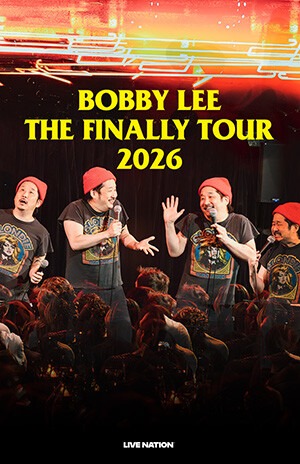
The 27th Annual Knecht Cup Regatta Returns to Cooper River Park: One of America’s Largest Collegiate Rowing Showcases Set for April 11–12, 2026 in South Jersey

Rowing has long held a unique place in the sporting tradition of the Northeast, where historic waterways, collegiate rivalries, and generations of athletes have helped shape one of the most enduring competitive cultures in American athletics. In New Jersey, few events capture the spirit, scale, and prestige of that tradition quite like the Knecht Cup Regatta, which returns to Cooper River Park for its 27th annual edition on Saturday, April 11 and Sunday, April 12, 2026.

Held along the pristine waters of the Cooper River in Cherry Hill and Pennsauken, the Knecht Cup has grown into one of the largest collegiate rowing events in the United States, attracting more than 60 college programs, over 300 race entries, and thousands of elite athletes from across the country. For two days each spring, South Jersey becomes a national hub for competitive rowing, drawing upwards of 20,000 spectators to witness a remarkable display of endurance, strategy, and teamwork.

As part of the evolving landscape of New Jersey athletics, the Knecht Cup continues to expand its reach and impact, reinforcing the Garden State’s reputation as a premier destination for major sporting events. Readers can explore additional coverage of major athletic events and sporting culture throughout the state by visiting Explore New Jersey’s Sports section, where the region’s diverse sports community is highlighted year-round.

A Premier Collegiate Regatta on One of the Nation’s Finest Courses

The Knecht Cup Regatta takes place at Cooper River Park, 5300 North Park Drive in Pennsauken, a venue widely recognized within the rowing community as one of the finest competitive courses in the country. The Cooper River course features a six-lane, fully buoyed 2,000-meter racing course, the international standard for Olympic-style rowing competition.

This meticulously maintained waterway has hosted countless regattas and championship-level competitions, earning praise from coaches, athletes, and governing bodies for its fairness, accessibility, and spectator-friendly layout. For rowing fans and newcomers alike, Cooper River offers exceptional viewing opportunities along its banks, allowing audiences to watch the full intensity of the races unfold from start to finish.

Each spring, the Knecht Cup transforms the riverfront into a vibrant gathering point for athletes, families, coaches, alumni, and sports enthusiasts. Tents line the shoreline, equipment trailers arrive from campuses across the nation, and the atmosphere blends elite competition with a festival-like energy that has become synonymous with the event.

Honoring the Legacy of Olympic Champion William J. “Bill” Knecht

The regatta carries deep historical significance, honoring William J. “Bill” Knecht, a South Jersey native whose legacy continues to shape American rowing.

Knecht captured Olympic gold at the 1964 Summer Games and went on to become a member of the American Rowing Hall of Fame. Beyond his achievements on the water, he played a pivotal role in developing the Cooper River course into a premier rowing venue, helping establish the infrastructure that now supports major collegiate competitions.

The regatta that bears his name reflects not only athletic excellence but also the values Knecht championed throughout his life: dedication, mentorship, and the advancement of rowing as a sport accessible to future generations.

Every edition of the Knecht Cup serves as both a high-level competition and a celebration of this enduring legacy.

A Massive Collegiate Field from Across the United States

What distinguishes the Knecht Cup from many other collegiate regattas is its scale and inclusivity. The event welcomes teams from NCAA Division I, Division II, Division III, and collegiate club programs, creating one of the most diverse competitive fields in American rowing.

Athletes compete across a full slate of boat classes, including:

• Eights
• Fours
• Quadruple sculls (quads)
• Double sculls
• Single sculls

These events showcase a wide range of rowing disciplines, from the powerful synchronization of eight-person shells to the technical precision of single sculls.

For many programs, the Knecht Cup serves as a critical benchmark within the collegiate rowing season, providing an opportunity to measure performance against some of the strongest programs in the nation.

The event’s size—often exceeding 300 race entries—ensures a packed schedule of races across both days, delivering continuous competition and dramatic finishes along the Cooper River course.

Expanded Para Rowing and Inclusion Events in 2026

One of the most significant developments for the 2026 edition of the Knecht Cup is the expansion of Para Rowing and inclusion categories, reinforcing the regatta’s commitment to accessibility and opportunity within the sport.

This year’s event will introduce additional races in the following divisions:

• Men’s PR1 Single Sculls
• Women’s PR1 Single Sculls
• Men’s PR2 Single Sculls
• Women’s PR2 Single Sculls
• Men’s PR3 Single Sculls
• Women’s PR3 Single Sculls
• Inclusion Double Sculls

Para rowing divisions are designed for athletes with physical or visual impairments, ensuring that competitive rowing remains inclusive and accessible at the highest levels of competition.

By expanding these categories, the Knecht Cup strengthens its role as a platform for athletes of all backgrounds and abilities, reflecting the broader movement within sports to create more equitable pathways for participation and achievement.

New Trophies Celebrating Icons of the Rowing Community

The 2026 regatta will also introduce two newly dedicated trophies honoring influential figures within the rowing world.

The Lois Trench-Hines Trophy

The Women’s Varsity Quad race trophy will now bear the name of Lois Trench-Hines, a trailblazing advocate for women’s rowing and the founder of the Hines Rowing Center.

Through decades of work mentoring athletes and expanding youth rowing programs, Trench-Hines played a transformative role in opening doors for women and young athletes across the Philadelphia and South Jersey rowing communities.

The dedication of this trophy recognizes her contributions to growing the sport and empowering generations of rowers.

The Albert Wachlin Trophy

The Men’s Varsity Quad race trophy will now honor Albert Wachlin, widely known within the rowing community as the legendary “Buoy Master.”

Wachlin’s work maintaining race courses and supporting regattas ensured the smooth operation of countless events. His dedication behind the scenes helped make high-level competitions possible for athletes across the region.

By naming this trophy after Wachlin, the Knecht Cup acknowledges the many individuals who support rowing outside the spotlight yet remain essential to its success.

Sanctioned by USRowing: Ensuring Safety and Competitive Excellence

The Knecht Cup continues to operate under the sanctioning of USRowing, the national governing body for the sport.

This designation ensures that the event meets strict standards regarding:

• Safety protocols
• Certified race officials
• Fair course conditions
• Athlete eligibility
• Competition oversight

For participating programs, this level of sanctioning guarantees a professionally run regatta that adheres to national rowing standards.

For spectators, it means witnessing a competition that reflects the highest levels of collegiate rowing organization and professionalism.

Thousands of Athletes and Spectators Converge on Cooper River

Beyond the races themselves, the Knecht Cup is a major regional event that energizes the local community.

Across the two-day competition, the regatta typically hosts:

More than 2,000 athletes
Over 60 collegiate programs
Hundreds of coaches and team staff
Approximately 20,000 spectators

This influx transforms Cooper River Park into a bustling gathering place filled with team tents, cheering fans, and the unmistakable rhythm of racing shells slicing through the water.

Families, alumni, and sports fans line the shoreline to watch dramatic finishes unfold, while the surrounding park provides ample space for spectators to move freely along the course.

Free Admission Makes the Event Accessible to Everyone

One of the most appealing aspects of the Knecht Cup is its accessibility.

Admission and parking are completely free for spectators, making the event an ideal weekend destination for families, students, and sports enthusiasts across New Jersey and the greater Philadelphia region.

Visitors can arrive early to watch the first races of the morning, explore the park throughout the day, and experience the excitement of championship-level rowing without the barriers that often accompany major sporting events.

This open format has helped the Knecht Cup grow into one of the most widely attended rowing events in the country.

Vendor Row and the Regatta Experience

Near the finish line area, visitors will find Vendor Row, a lively marketplace featuring rowing merchandise, equipment suppliers, apparel vendors, and event-related products.

This section of the regatta allows athletes and fans to browse gear, pick up team merchandise, and connect with companies involved in the sport.

Combined with the scenic beauty of Cooper River Park, Vendor Row contributes to the broader regatta atmosphere, turning the weekend into a full experience that extends beyond the races themselves.

Live Streaming Expands the Event’s National Reach

For those unable to attend in person, the Knecht Cup also provides live streaming coverage, allowing fans, alumni, and rowing supporters around the world to watch the races online.

This digital access has significantly expanded the event’s audience, ensuring that the excitement of the regatta reaches viewers far beyond the banks of the Cooper River.

Coaches reviewing race performance, alumni following their programs, and rowing enthusiasts nationwide can tune in to watch the competition unfold in real time.

New Jersey’s Role in the National Rowing Landscape

The success and growth of the Knecht Cup reflect a broader truth: New Jersey continues to play a vital role in the national sports ecosystem.

From professional franchises and collegiate programs to youth leagues and elite training facilities, the state’s athletic culture is remarkably diverse. Events like the Knecht Cup highlight another dimension of that ecosystem—one that combines tradition, community engagement, and world-class competition.

As spring arrives in 2026, the Cooper River will once again host one of the most anticipated regattas on the collegiate rowing calendar. The return of the Knecht Cup promises two days of extraordinary athleticism, meaningful tributes to rowing pioneers, and a powerful reminder of the enduring connection between New Jersey and the sport of rowing.

For athletes chasing victory, spectators seeking an unforgettable sporting event, and the broader rowing community celebrating its history and future, the 27th Annual Knecht Cup Regatta stands as one of the most significant moments of the spring sports season in the Garden State.

Antique Toys and Holiday Treasures Lead the Way at Bertoia’s $1.2 Million Winter Antiques Auction in Vineland

New Jersey’s deep connection to the antiques and collectibles world was on full display as collectors, historians, and enthusiasts from around the country turned their attention to Vineland for one of the most exciting specialty auctions of the season. Bertoia Auctions’ highly anticipated Holiday Antiques Auction, held January 29–30, delivered an extraordinary result—generating approximately $1.2 million in sales and confirming that antique toys, holiday memorabilia, and rare vintage collectibles continue to command powerful interest in the global collectors market.

The two-day auction spotlighted some of the most desirable historic toys and festive artifacts ever brought to the auction block, including museum-quality Santa Claus figures, early Steiff teddy bears, and an impressive selection of early holiday decorations. Collectors competed vigorously for many of the lots, demonstrating the enduring appeal of objects that capture the imagination and nostalgia of generations past.

For New Jersey’s thriving arts and collectibles community, the auction also reinforced the state’s growing reputation as a destination for cultural events that celebrate craftsmanship, history, and preservation. Across the Garden State, platforms like Explore New Jersey Art & Culture continue to document the museums, galleries, cultural institutions, and historic events that keep the state’s creative and collecting traditions alive.

In Vineland, that tradition reached a new high point as antique toys and holiday collectibles captivated bidders and collectors alike.

A Landmark Auction for Collectors of Holiday Memorabilia

Bertoia Auctions has long been recognized internationally as a premier authority in antique toys and historic collectibles. The company’s specialized auctions routinely draw collectors from across the United States, Europe, and Asia who seek rare pieces that combine craftsmanship, nostalgia, and historical significance.

This year’s Holiday Antiques Auction once again proved that the market for vintage toys and Christmas artifacts remains remarkably strong.

The standout lot of the sale was an extraordinary German terracotta Santa Claus figure, which soared to $66,000 after spirited bidding. The piece represents a remarkable example of nineteenth-century holiday craftsmanship and reflects the deep cultural roots of Santa Claus imagery in German decorative arts.

German artisans played a central role in shaping the visual identity of Santa Claus during the nineteenth century. Terracotta figures like this one were often handcrafted and painted with extraordinary attention to detail, making surviving examples exceptionally rare today.

Collectors recognized the historical importance and artistic quality of the piece, propelling it to the highest sale price of the auction.

Historic Santa Figures Capture the Imagination of Collectors

Holiday artifacts dominated many of the auction’s top results, highlighting how deeply Christmas traditions resonate with collectors.

Among the most notable pieces was a remarkable papier-mâché Santa Claus figure dating to the 1800s, which realized $26,400.

Papier-mâché figures from the nineteenth century were widely used as decorative holiday displays in homes and storefronts. Crafted by skilled artisans, these figures combined sculptural form with hand-painted surfaces, giving each piece a distinctive personality and presence.

Over time, many of these fragile decorations were lost or damaged, making surviving examples highly sought after.

The strong result for the papier-mâché Santa demonstrated that collectors continue to value pieces that represent the earliest expressions of modern holiday imagery.

Each artifact offers a glimpse into how Christmas traditions evolved—from handcrafted European decorations to the global holiday iconography recognized today.

The Enduring Appeal of Early Steiff Teddy Bears

Another major highlight of the auction came from one of the most beloved names in toy history: Steiff.

A rare 1904 Steiff “rod bear” achieved $20,400, attracting significant attention from collectors of antique teddy bears and early plush toys.

Steiff, the German toy company founded by Margarete Steiff in the late nineteenth century, revolutionized the toy industry with the creation of the teddy bear. Early Steiff bears are particularly prized for their construction techniques and historical importance.

The “rod bear” design—named for the internal metal rods used to articulate the limbs—represents one of the earliest engineering innovations in plush toy design.

What made this example even more remarkable was the presence of an X-ray image revealing the internal structure of the bear’s torso, offering collectors a rare glimpse into the craftsmanship and mechanics of early Steiff production.

For historians and collectors alike, the piece represented both a cultural artifact and an engineering curiosity from the early days of the teddy bear phenomenon.

Antique Toys: Where Nostalgia Meets Cultural History

The strong performance of antique toys at the auction reflects a broader trend within the collectibles world.

These objects are no longer viewed solely as nostalgic childhood artifacts. Instead, they are increasingly recognized as historical documents—objects that capture the artistic styles, manufacturing techniques, and cultural values of the eras in which they were created.

Early toy makers were often highly skilled artisans.

Materials such as cast iron, terracotta, wood, tin, and papier-mâché were shaped into imaginative designs that reflected both technological innovation and storytelling traditions.

In the case of holiday toys and decorations, these objects also represent the evolution of seasonal traditions that have become central to modern culture.

Collectors today seek these pieces not only for their rarity but also for the stories they preserve.

Each toy carries with it a narrative of craftsmanship, childhood wonder, and the historical moment in which it was created.

Vineland’s Role in the Global Collectibles Market

The success of the Bertoia Holiday Antiques Auction highlights the importance of New Jersey as a hub for the antiques and collectibles world.

Vineland has become synonymous with some of the most important toy auctions in the United States, attracting international collectors who travel to South Jersey specifically to participate in these events.

For decades, the region has supported a vibrant community of collectors, dealers, and historians dedicated to preserving antique toys and cultural artifacts.

Events like this auction contribute to the broader cultural economy of the state, drawing visitors who explore museums, antique shops, galleries, and historic destinations throughout New Jersey.

They also reinforce the state’s reputation as a place where history, craftsmanship, and collecting culture intersect.

Why Antique Toys Continue to Command Global Attention

The continued success of auctions like this one speaks to the enduring emotional power of antique toys.

Unlike many other collectibles, toys evoke immediate personal memories.

They remind collectors of childhood experiences, family traditions, and the imaginative worlds created through play.

At the same time, these objects also represent remarkable examples of industrial and artistic history.

The materials used, the techniques employed, and the designs themselves reveal how toy makers responded to technological advancements and cultural trends.

For collectors, owning a piece of that history creates a tangible connection to the past.

And when particularly rare examples appear at auction—such as nineteenth-century Santa figures or early Steiff teddy bears—the excitement within the collecting community becomes palpable.

A Strong Start to the 2026 Auction Season

With $1.2 million in total sales, Bertoia’s Holiday Antiques Auction has set an impressive tone for the year ahead.

The results demonstrate that rare antique toys and holiday memorabilia remain among the most desirable categories in the collectibles market.

More importantly, the event reaffirmed the passion and dedication of collectors who continue to preserve these artifacts for future generations.

For New Jersey’s cultural landscape, the auction serves as another reminder that the state’s influence extends far beyond traditional museums and galleries.

Through events like this one, New Jersey continues to play a vital role in celebrating the craftsmanship, creativity, and cultural heritage embedded in historic objects.

As collectors look ahead to future auctions and discoveries, one thing is certain: the stories hidden within antique toys and holiday treasures will continue to captivate audiences for generations to come.

New Jersey Symphony Presents Bartók’s Concerto for Orchestra

0

New Jersey Symphony Program Update: Markus Stenz and Albert Cano Smit Step In for a Powerful Night of Chopin, Farrenc, and Bartók

March 14 @ 1:30 AM 2:00 AM

The world of live classical music is defined by artistry, adaptability, and the shared commitment of musicians who ensure that extraordinary performances continue regardless of the challenges behind the scenes. The New Jersey Symphony has announced a significant program update for its upcoming orchestral performance, bringing new artistic voices to the stage while preserving the brilliance of a program centered on three towering composers: Louise Farrenc, Frédéric Chopin, and Béla Bartók.

The concert will now be conducted by internationally respected maestro Markus Stenz, who steps in for conductor Ruth Reinhardt, as the acclaimed German conductor and rising orchestral leader prepares to welcome her first child. Following medical guidance that restricts travel during her pregnancy, Reinhardt has withdrawn from the performance.

In addition, pianist Albert Cano Smit will appear as the featured soloist in place of Eva Gevorgyan, who is unable to travel to the United States due to ongoing visa processing delays.

Despite these changes, the spirit and artistic depth of the evening remain fully intact. The revised program will feature Louise Farrenc’s Overture No. 1 in E Minor, Frédéric Chopin’s Piano Concerto No. 2, and Béla Bartók’s monumental Concerto for Orchestra—a trio of works that together reflect the emotional power, beauty, and resilience that define the classical repertoire.

For audiences following the continued growth of orchestral and classical performance throughout the region, the event represents another major cultural moment highlighted through the Explore New Jersey Music platform, where the evolving stories of New Jersey’s music institutions, venues, and artists are documented and celebrated.

A Celebration of Music’s Enduring Power

At its core, this program reflects a powerful theme that resonates deeply within the classical tradition: music’s remarkable ability to endure and inspire even in the face of uncertainty.

Each composition on the program represents a different chapter in the story of musical resilience.

Louise Farrenc’s overture bursts with dramatic vitality and rhythmic energy. Chopin’s piano concerto captures emotional elegance and youthful brilliance. Bartók’s Concerto for Orchestra stands as one of the most extraordinary examples of artistic triumph over adversity in twentieth-century music.

Together, these works create an evening that celebrates both the emotional intimacy and the monumental scale that orchestral music can achieve.

Markus Stenz Takes the Podium

Stepping in to lead the performance is Markus Stenz, a conductor widely recognized for his commanding interpretations of both classical masterworks and modern orchestral repertoire.

Throughout his career, Stenz has conducted many of the world’s leading orchestras and opera companies, earning international acclaim for his intellectual depth, precision, and ability to illuminate the structural brilliance of complex compositions.

His approach to orchestral leadership blends analytical clarity with expressive power—qualities that make him particularly well suited for a program of this scope.

With Bartók’s Concerto for Orchestra serving as the evening’s centerpiece, Stenz’s experience with twentieth-century orchestral music will bring a compelling perspective to one of the most demanding and exhilarating works ever written for symphony orchestra.

Audiences can expect a performance that highlights the intricate musical dialogues between orchestral sections while maintaining the sweeping emotional narrative that defines the piece.

Albert Cano Smit Brings Chopin’s Romantic Masterpiece to Life

Joining the New Jersey Symphony as guest soloist is Spanish-Dutch pianist Albert Cano Smit, a performer whose rising international profile has made him one of the most exciting young interpreters of Romantic piano repertoire.

Cano Smit will perform Frédéric Chopin’s Piano Concerto No. 2, a work beloved for its lyrical beauty and expressive depth.

Composed when Chopin was only twenty years old, the concerto reveals the composer’s early mastery of melody and emotional nuance. The work is often celebrated for its delicate balance between virtuosic piano writing and graceful orchestral accompaniment.

The concerto’s opening movement unfolds with sweeping Romantic drama, followed by a luminous slow movement that captures the intimate emotional world for which Chopin’s music is renowned.

The final movement, infused with rhythmic vitality inspired by Polish dance traditions, closes the work with exuberant energy.

For Cano Smit, the concerto offers an opportunity to showcase both technical brilliance and poetic sensitivity—qualities that have earned him widespread recognition on international concert stages.

His interpretation promises to deliver a performance that honors Chopin’s expressive language while revealing the fresh perspective of a new generation of pianists.

Louise Farrenc’s Overture Sets the Stage

Opening the evening is Louise Farrenc’s Overture No. 1 in E Minor, a vibrant and dramatic orchestral work that reflects the composer’s remarkable talent and historical significance.

Farrenc, a nineteenth-century French composer and pianist, was one of the most accomplished musicians of her era. Her music combines Classical clarity with early Romantic expressiveness, producing works that are both structurally refined and emotionally engaging.

The overture bursts forth with driving rhythms and bold orchestral gestures, immediately capturing the audience’s attention.

Its energetic momentum and dramatic contrasts create an exhilarating opening to the program, preparing listeners for the expressive journey that follows.

In recent years, Farrenc’s music has experienced a well-deserved resurgence as orchestras around the world revisit her contributions to the symphonic repertoire.

Presenting her overture as the concert’s opening work highlights both her historical importance and the continued relevance of her music today.

Bartók’s Concerto for Orchestra: A Masterpiece Born from Adversity

The evening culminates with one of the most remarkable compositions in twentieth-century orchestral music: Béla Bartók’s Concerto for Orchestra.

Composed during one of the darkest periods of the composer’s life, the work was written while Bartók was living in exile in the United States and struggling with illness and financial hardship.

At the time, many believed the composer was nearing the end of his life.

Yet the process of creating the Concerto for Orchestra reignited Bartók’s creative spirit. The result was a composition that radiates vitality, imagination, and emotional power.

Rather than focusing on a single soloist, the work treats the entire orchestra as a collection of virtuosic voices. Individual sections—strings, woodwinds, brass, and percussion—are given moments to shine, transforming the orchestra into a dynamic tapestry of musical dialogue.

The piece moves through a series of contrasting moods: mysterious openings, playful interludes, haunting melodies, and triumphant climaxes.

Its final movement erupts with exhilarating energy, bringing the symphony orchestra to full expressive power.

For audiences, the Concerto for Orchestra represents more than a masterpiece of musical craft. It stands as a testament to the resilience of creativity even during life’s most difficult moments.

The New Jersey Symphony’s Continuing Artistic Legacy

As the state’s premier orchestral institution, the New Jersey Symphony continues to present performances that bring world-class classical music to audiences across the region.

Through a combination of masterworks from the traditional repertoire, innovative programming, and collaborations with internationally recognized artists, the orchestra remains a cornerstone of the Garden State’s cultural landscape.

Concerts like this one demonstrate the depth and adaptability of the organization. Even as circumstances require adjustments, the commitment to artistic excellence remains unwavering.

With Markus Stenz on the podium and Albert Cano Smit at the piano, the evening promises to deliver a performance worthy of the extraordinary music being presented.

Program

Louise Farrenc
Overture No. 1 in E Minor

Frédéric Chopin
Piano Concerto No. 2

Béla Bartók
Concerto for Orchestra

A Night Where Music’s Resilience Takes Center Stage

Every great concert tells a story—not only through the music itself, but through the artists who bring it to life.

This New Jersey Symphony performance stands as a reminder that live music is a living art form, shaped by the dedication of musicians who ensure that the music continues to resonate with audiences no matter the circumstances.

With a program that moves from the stirring energy of Farrenc to the lyrical beauty of Chopin and the triumphant brilliance of Bartók, the evening promises to be a celebration of orchestral music at its most powerful.

For audiences across New Jersey, it will be a night that reflects the enduring spirit of creativity, resilience, and artistic excellence that defines the world of symphonic music.

State Theatre New Jersey

732-246-7469

View Organizer Website

The Wellmont Theater

5 Seymour St
Montclair, NJ 07042 United States
+ Google Map
(973) 783-9500
View Venue Website

Santiago Cruz

0

Santiago Cruz Brings the “Quince de Caminos” Anniversary Tour to State Theatre New Jersey — A Landmark Latin Music Event Celebrating 15 Years of Cruce de Caminos

March 14 @ 8:00 PM 11:30 PM

New Jersey’s diverse and ever-growing music landscape will take center stage once again as internationally acclaimed Colombian singer-songwriter Santiago Cruz arrives at State Theatre New Jersey in New Brunswick for a powerful and emotional live performance celebrating one of the most beloved albums in modern Latin music.

On Saturday, March 14, 2026 at 8:00 PM, Cruz will present “Quince de Caminos,” a commemorative concert experience marking the 15th anniversary of his iconic album Cruce de Caminos. The evening promises to be far more than a typical tour stop. It is a celebration of music, memory, and artistic evolution—an opportunity for longtime fans and new listeners alike to experience the songs that helped define an entire era of Latin pop songwriting.

Tickets for the performance begin at $34 including fees and are currently available. The concert is expected to draw audiences from across New Jersey, the New York metropolitan region, and the broader Latin music community that continues to grow throughout the Garden State.

For readers following the ongoing evolution of New Jersey’s vibrant live music culture, the event stands as another major moment in the region’s expanding international concert calendar, which is continuously spotlighted through the Explore New Jersey Music platform documenting the artists, venues, and cultural movements shaping the state’s sound.

A Global Latin Music Storyteller Returns to the United States

Few Latin singer-songwriters of the past two decades have cultivated the type of emotional connection with audiences that Santiago Cruz has achieved.

With a career that now spans more than twenty years, Cruz has built a reputation as one of the most authentic voices in Spanish-language songwriting. His work blends poetic lyricism with melodic sophistication, creating songs that explore love, identity, vulnerability, and personal reflection with remarkable honesty.

Since the early days of his career, Cruz has released nine studio albums, each expanding his musical language while deepening his relationship with fans across Latin America, Europe, and the United States.

That journey has earned him six Latin Grammy® nominations and the admiration of critics and audiences who recognize him as one of the most emotionally resonant singer-songwriters in contemporary Latin pop.

Yet the foundation of that career can be traced to one defining moment: the release of Cruce de Caminos.

Revisiting a Landmark Album: Cruce de Caminos

Originally released fifteen years ago, Cruce de Caminos quickly established itself as one of the most important albums in Santiago Cruz’s discography.

More than just a collection of songs, the record became a deeply personal artistic statement that connected with listeners navigating their own crossroads in life. Its themes of emotional vulnerability, introspection, and personal growth resonated across generations, turning the album into a cultural touchstone within the Latin music world.

Many of its songs remain staples of Cruz’s live performances and continue to be discovered by new audiences today.

The “Quince de Caminos” anniversary tour was created to honor that legacy.

Rather than presenting a standard retrospective concert, the tour invites audiences to experience the album’s emotional arc in a live setting that reflects both the spirit of the original recording and the artistic evolution Cruz has undergone over the past decade and a half.

Each performance becomes both a celebration and a reflection—an opportunity to revisit the songs that shaped Cruz’s career while hearing them through the lens of the artist he has become today.

A Performance Built on Emotion, Storytelling, and Musical Craft

Santiago Cruz’s concerts are known for their intimacy, even in larger venues.

His performances emphasize storytelling and connection rather than spectacle. Songs unfold with emotional nuance, allowing audiences to experience the narrative and vulnerability embedded in each lyric.

Cruz’s voice—instantly recognizable for its warmth and expressive tone—remains the centerpiece of these performances. Backed by a talented ensemble of musicians, his live shows often move seamlessly between stripped-down acoustic arrangements and fuller orchestral moments that highlight the emotional depth of his songwriting.

For fans who have followed Cruz for years, the Quince de Caminos tour offers something even more meaningful.

It brings them back to the songs that first introduced them to his music.

For newer listeners discovering his catalog for the first time, the concert becomes an entry point into a body of work that has influenced an entire generation of Spanish-language singer-songwriters.

State Theatre New Jersey: A Premier Stage for International Artists

Hosting the New Jersey stop of the tour is one of the region’s most historic and respected performing arts venues.

State Theatre New Jersey, located in the heart of downtown New Brunswick, has long served as a cultural anchor for the state’s arts community. The theater’s programming spans Broadway productions, major touring musicians, international cultural performances, and innovative live entertainment experiences that reflect the diversity of audiences across the region.

The venue’s architecture and acoustics provide an ideal setting for artists like Santiago Cruz whose performances rely on emotional nuance and musical clarity.

Over the years, the theater has welcomed globally recognized performers and emerging artists alike, creating an environment where audiences can experience world-class entertainment without leaving the Garden State.

For the New Jersey Latin music community, Cruz’s upcoming appearance represents another major moment in the venue’s expanding commitment to international music programming.

The Growth of Latin Music in New Jersey’s Live Performance Scene

New Jersey has long played a crucial role in the cultural landscape of Latin music in the United States.

From salsa and reggaeton to Latin pop and contemporary singer-songwriter traditions, the state’s communities have supported artists whose work reflects the diversity and richness of Latin American musical expression.

Concerts like Santiago Cruz’s Quince de Caminos tour stop highlight how deeply that cultural connection continues to resonate.

Across cities like Newark, Jersey City, Paterson, Elizabeth, and New Brunswick, Latin music has become a vital part of the state’s creative identity. Venues throughout the region increasingly host artists whose work bridges cultures and generations.

Events like this one demonstrate how New Jersey continues to serve as a gateway for international music reaching audiences across the United States.

A Night of Music That Spans Generations

What makes Santiago Cruz’s work particularly compelling is the way it resonates with listeners at different stages of life.

For many fans who discovered Cruce de Caminos when it first debuted, the album became a soundtrack to formative moments—relationships, personal milestones, and emotional turning points.

Returning to those songs fifteen years later creates a powerful sense of reflection.

Listeners hear the music with new perspective, understanding the lyrics through the lens of their own experiences since the album’s release.

At the same time, younger audiences encountering Cruz’s work for the first time bring fresh energy and curiosity to the performance.

The result is a shared musical experience that bridges generations.

Event Details

Santiago Cruz — Quince de Caminos Tour
State Theatre New Jersey
New Brunswick, New Jersey

Date: Saturday, March 14, 2026
Start Time: 8:00 PM
Run Time: Approximately 2 hours
Tickets: Starting at $34 including fees
Availability: On sale now

The concert is part of a special anniversary tour celebrating the enduring impact of Cruce de Caminos and the remarkable career Santiago Cruz has built since its release.

A Celebration of Music, Memory, and Artistic Legacy

For audiences in New Jersey and the greater New York region, Santiago Cruz’s upcoming performance represents a rare opportunity to witness one of Latin music’s most compelling storytellers in a setting designed to highlight the emotional depth of his work.

It is a celebration not only of a landmark album but of the journey that followed—two decades of songwriting, global touring, and artistic growth that continues to resonate with listeners around the world.

As the Quince de Caminos tour arrives at State Theatre New Jersey, fans will gather to revisit songs that shaped their lives and to experience them once again through the voice of the artist who created them.

For one night in New Brunswick, music history, personal memory, and live performance will converge in a way that only a truly great songwriter can deliver.

State Theatre New Jersey

732-246-7469

View Organizer Website

The Wellmont Theater

5 Seymour St
Montclair, NJ 07042 United States
+ Google Map
(973) 783-9500
View Venue Website

The Sound Studio – Rock Series – Always Now – An Immersive Musical Experience in STNJ’s Studio Space

0

Always Now Ignites the Sound Studio Rock Series at State Theatre New Jersey with an Immersive Folk-Rock Experience

March 12 @ 5:00 PM 11:30 PM

New Jersey’s thriving live music landscape continues to evolve, and few venues capture the spirit of that evolution quite like the legendary State Theatre New Jersey in New Brunswick. This week, audiences will step directly into the music itself as the Sound Studio Rock Series launches a powerful and intimate evening of performance with Always Now, a progressive folk-rock trio whose emotionally resonant sound is designed to be experienced up close.

Taking place Thursday, March 12, 2026 at 7:30 PM inside the State Theatre Studio, this immersive performance marks the beginning of the theater’s dynamic rock-focused Sound Studio programming. Tickets are currently available for $30, offering music fans an opportunity to witness a performance designed not just to be heard—but deeply felt. (State Theatre New Jersey)

For music lovers across the Garden State and beyond, the event represents something increasingly rare in the modern concert landscape: an environment where the distance between performer and listener disappears, allowing artistry, storytelling, and musical connection to unfold in real time.

For readers exploring the broader New Jersey music scene, the event also reflects the continued expansion of live performance coverage and cultural storytelling across the state through platforms like Explore New Jersey Music, which documents the venues, artists, and creative communities shaping the region’s vibrant sonic identity.

The Sound Studio Experience: Where Audience and Artist Share the Same Space

Unlike traditional concert halls where audiences observe from afar, the Sound Studio series at State Theatre New Jersey was created to dismantle that separation.

Held inside the theater’s intimate studio environment, the series places the audience at the heart of the performance itself. Musicians perform only steps away from listeners, creating a sonic landscape that feels less like a conventional concert and more like stepping inside the creative process.

Every element of the series is intentionally designed to foster connection.

The acoustics are tuned for closeness. The seating brings listeners into the same space as the performers. Even the post-show experience continues the interaction, as audiences are invited to remain after the performance for a casual meet-and-greet with the artists while concessions stay open and conversations flow freely.

The result is an atmosphere that echoes the energy of New Brunswick’s historic underground rock scene—when music was raw, immediate, and shared between artist and audience in small rooms filled with curiosity and discovery. (State Theatre New Jersey)

In a time when many concerts are dominated by massive production and distance between stage and seats, Sound Studio offers the opposite: proximity, authenticity, and immersion.

Always Now: A Cinematic Folk-Rock Journey

At the center of this opening Rock Series performance is Always Now, a trio that has developed a reputation for creating deeply emotional and multidimensional musical experiences.

Their music blends progressive folk-rock textures with poetic lyricism and layered vocal harmonies, drawing audiences into narratives that explore time, love, connection, and the human experience.

The group’s sound has been compared to some of the most influential voices in the history of modern folk and rock music.

Three-part harmonies evoke the timeless vocal interplay of Crosby, Stills and Nash. Songwriting depth reflects the introspective storytelling traditions of Joni Mitchell. Meanwhile, emotional crescendos and melodic intensity recall the atmospheric energy of Fleetwood Mac.

Yet Always Now is not an imitation of past eras. Instead, the trio channels those influences into a sound that feels contemporary, emotionally raw, and uniquely immersive.

Their performances have often been described by audiences as transformative—moments where music becomes something more than entertainment. It becomes reflection, connection, and shared emotional experience. (Bandsintown)

Within the intimate Sound Studio setting, that transformation becomes even more powerful.

Listeners don’t simply hear the music—they experience the breath between harmonies, the texture of acoustic instruments, and the subtle emotional shifts that can be lost in larger venues.

A Performance Rooted in Presence and Connection

One of the defining characteristics of Always Now is their philosophical approach to performance.

Rather than presenting music as a static set of songs, the band approaches each show as a living experience—one rooted in presence and shared energy between performers and listeners.

Their songs explore themes that resonate across generations:

• The passage of time and how memory shapes identity
• The emotional complexity of love and human relationships
• The search for meaning and authenticity in modern life
• The quiet power of vulnerability and honesty in storytelling

These themes unfold through layered harmonies, expressive guitar work, and a stage presence that invites audiences into the emotional core of each piece.

It is precisely the type of performance that the Sound Studio format was designed to support.

Without the distance of a large stage, the musicians’ storytelling becomes immediate. Facial expressions, subtle instrumental dynamics, and vocal interplay become part of the audience’s experience.

Every seat feels like the front row.

The State Theatre New Jersey Legacy

Hosting this experience is one of the most important cultural institutions in the state.

Located in the heart of downtown New Brunswick, State Theatre New Jersey has served as a cornerstone of the region’s arts ecosystem for decades. Originally built as a vaudeville and silent film palace, the venue has evolved into the largest performing arts center in Central New Jersey while maintaining its historic charm and cultural significance. (NewJerseyStage.com)

Since reopening as a nonprofit performing arts center in 1988, the theater has welcomed millions of visitors and played a critical role in revitalizing the surrounding arts district.

Today the venue hosts an extraordinary range of performances—from international touring artists and Broadway productions to community programming and innovative concert series like Sound Studio.

By combining historic architecture with forward-thinking programming, the theater continues to serve as a hub where New Jersey’s creative communities converge.

A Night Designed for Discovery

The March 12 performance is not simply another stop on a tour schedule.

It represents the opening chapter of the Sound Studio Rock Series for the year—a curated set of performances that spotlight artists whose work thrives in intimate settings where musicianship and storytelling take center stage.

Each concert in the series invites audiences into a musical environment where the line between performer and listener dissolves.

Always Now’s appearance launches that journey.

For longtime fans of progressive folk-rock, the evening offers a chance to experience the band’s sound in one of the most immersive formats possible. For new listeners, it provides an introduction to a trio whose music blends emotional depth with intricate musical craftsmanship.

Either way, the result promises to be unforgettable.

Event Details

The Sound Studio – Rock Series: Always Now
State Theatre Studio – New Brunswick, New Jersey

Date: Thursday, March 12, 2026
Start Time: 7:30 PM
Run Time: Approximately 60–70 minutes
Tickets: $30
Availability: On sale now

Following the performance, audiences are invited to remain for a post-show meet-and-greet with the artists, creating an environment where conversations about music, creativity, and inspiration can continue long after the final chord fades.

Why Intimate Concerts Matter More Than Ever

In an era where the live music industry often focuses on massive stadium tours and elaborate stage productions, experiences like the Sound Studio series offer a reminder of music’s most powerful form: connection.

Small-room performances allow listeners to rediscover the emotional immediacy that originally made live music transformative.

They highlight the craftsmanship behind songwriting, the vulnerability behind storytelling, and the communal energy that emerges when artists and audiences share the same space.

For New Jersey’s music community, events like Always Now’s Sound Studio performance reinforce why the state continues to be one of the country’s most compelling cultural ecosystems.

From legendary venues to emerging artists, the Garden State remains a place where music is not only performed—it is experienced.

And on March 12 in New Brunswick, audiences will have the chance to experience exactly that.

State Theatre New Jersey

732-246-7469

View Organizer Website

The Wellmont Theater

5 Seymour St
Montclair, NJ 07042 United States
+ Google Map
(973) 783-9500
View Venue Website

Staged Reading – Grandma Gatewood Took a Walk

0

March 16 @ 5:00 PM 11:30 PM

Staged Reading of Grandma Gatewood Took a Walk Comes to Long Branch: A Powerful True Story of Courage, Freedom, and the First Woman to Solo the Appalachian Trail

New Jersey’s vibrant theatre community continues to deliver unforgettable cultural experiences, and this March the spotlight turns to Long Branch as audiences are invited to experience a remarkable true story brought to life on stage. On March 16 at 7:00 PM, the New Jersey Repertory Company will present a staged reading of Grandma Gatewood Took a Walk, a powerful dramatic work by Catherine Bush, directed by Joel Stone, and starring James Hindman and Anne O’Sullivan.

The performance will take place at the West End Arts Center Auditorium in Long Branch, offering theatre lovers across the Garden State an opportunity to witness a moving and inspiring story rooted in American history. Tickets range from $15 to $20 including fees, making the event accessible for audiences eager to experience an evening of thoughtful storytelling and compelling live performance.

This staged reading is more than a theatrical presentation—it is a celebration of resilience, determination, and the extraordinary human spirit embodied by one of the most unlikely pioneers in outdoor adventure history.

A True Story That Redefined What Was Possible

At the heart of the production is the remarkable life story of Emma “Grandma” Gatewood, a 67-year-old Ohio woman who quietly changed history in 1955.

According to legend, Gatewood called her son one day and casually told him she was “going for a walk.” What she did not reveal was that the walk would span the entire Appalachian Trail, a rugged and demanding 2,050-mile journey stretching from Georgia to Maine.

At a time when long-distance hiking was still largely unexplored territory—especially for women traveling alone—Gatewood set out with minimal equipment, little preparation, and a determination that would soon inspire generations.

Her trek would ultimately make her the first woman to solo hike the Appalachian Trail, turning what began as a personal escape into one of the most inspiring feats of endurance in American outdoor history.

The play follows Gatewood along this extraordinary path, revealing the emotional, physical, and psychological terrain she navigated along the way. As the story unfolds, audiences travel not only through forests and mountains but through the deeper valleys of her life experiences—moments of hardship, resilience, and quiet strength that ultimately fueled her journey toward freedom.

A Staged Reading That Brings History to Life

The upcoming presentation at the West End Arts Center is a staged reading, a theatrical format that emphasizes storytelling, performance, and dramatic interpretation.

Rather than elaborate scenery or full production staging, the focus is placed squarely on the actors, the script, and the emotional truth of the story. This approach often creates an intimate and powerful connection between the performers and the audience.

With acclaimed actors James Hindman and Anne O’Sullivan leading the performance, audiences can expect a deeply engaging interpretation of Bush’s script—one that captures both the humor and hardship of Gatewood’s adventure.

Director Joel Stone brings his own creative insight to the production, guiding the narrative through the rhythms of reflection, struggle, and triumph that defined Gatewood’s historic journey.

Staged readings often serve as an important part of the creative life cycle of new plays, giving audiences the chance to experience the story in its purest form while allowing artists to explore character, pacing, and emotional depth.

For theatergoers, it’s a rare opportunity to witness the creative heartbeat of a production before it evolves into a fully staged performance.

The New Jersey Repertory Company: A Leader in Original Theatre

The production is hosted by the New Jersey Repertory Company, one of the state’s most respected professional theatre organizations. Known for championing new works and developing original voices in American theatre, the company has built a reputation for presenting bold and meaningful productions.

The organization operates from the West End Arts Center, located at 132 West End Avenue in Long Branch, a venue that has become a cultural anchor for the Jersey Shore arts community.

New Jersey’s theatre landscape is widely recognized for its diversity and creativity, offering audiences everything from intimate experimental works to major productions. As highlighted throughout the theatre coverage on Explore New Jersey’s theatre section, the state’s performing arts scene continues to thrive with a wide range of musicals, dramas, and thought-provoking productions that engage audiences year-round. (Explore New Jersey)

Within that ecosystem, New Jersey Repertory Company plays a critical role in developing new storytelling voices while creating space for audiences to experience compelling live theatre.

Why Grandma Gatewood’s Story Resonates Today

More than seventy years after her groundbreaking hike, Grandma Gatewood’s story continues to resonate with modern audiences.

Her journey was not just about hiking across mountains and forests—it was about reclaiming independence, confronting personal hardship, and redefining what a person can accomplish regardless of age or circumstance.

At a time when many people believe life’s greatest adventures belong to youth, Gatewood proved that determination and courage can ignite at any stage of life.

The play explores the emotional landscape behind her decision to embark on the Appalachian Trail, revealing the personal challenges she faced and the strength it took to leave them behind.

Through moments of reflection, humor, and perseverance, the narrative reveals a woman who refused to be defined by expectations placed upon her.

Instead, she chose the trail.

The Power of Live Theatre in New Jersey

Productions like Grandma Gatewood Took a Walk highlight why live theatre remains one of the most powerful storytelling mediums.

When audiences gather in a shared space to experience a story unfolding in real time, the emotional connection between performers and viewers creates a unique kind of energy that cannot be replicated elsewhere.

Across New Jersey, theatre companies continue to nurture this connection by presenting productions that entertain, challenge, and inspire.

From the historic stages of major performing arts centers to intimate venues like the West End Arts Center, the Garden State has cultivated a thriving cultural environment where artists and audiences come together to celebrate storytelling.

Events like this staged reading reinforce the importance of local theatre as both an artistic platform and a community gathering space.

Event Details

Staged Reading: Grandma Gatewood Took a Walk
Date: March 16
Time: 7:00 PM
Location: West End Arts Center – Auditorium
132 West End Avenue
Long Branch, NJ 07740

Tickets: $15 – $20 (including fees)

Written by: Catherine Bush
Directed by: Joel Stone
Starring: James Hindman and Anne O’Sullivan

For additional information, audiences can visit the New Jersey Repertory Company through the word New Jersey Repertory Company.

A Night of Inspiration at the Jersey Shore

The upcoming performance promises to be more than an evening of theatre—it will be a journey into one of the most extraordinary true stories of courage and independence in American history.

Emma “Grandma” Gatewood set out on the Appalachian Trail with little more than determination and belief in herself. What followed became a defining moment not only in hiking history but in the broader story of resilience and possibility.

Now, through the power of live performance in Long Branch, her remarkable walk continues—one step, one memory, and one story at a time.

For audiences throughout New Jersey, this staged reading offers an opportunity to experience a piece of living history while supporting the state’s thriving theatre community.

And for anyone who has ever dreamed of taking a bold step into the unknown, Grandma Gatewood’s story is a reminder that sometimes the most extraordinary journeys begin with a simple phrase:

“I’m going for a walk.”

NJRep

732-229-3166

View Organizer Website

The Wellmont Theater

5 Seymour St
Montclair, NJ 07042 United States
+ Google Map
(973) 783-9500
View Venue Website

Universal Pictures Announces Bon Jovi Movie About the Band’s Rise to Fame

A new cinematic chapter celebrating one of New Jersey’s most iconic rock bands is on the way. Universal Pictures has announced plans for a major motion picture chronicling the early years of Bon Jovi, focusing on the band’s formative roots in New Jersey and the remarkable rise that transformed a group of local musicians into global rock legends.

For fans of both music and film, the announcement is more than just another biopic entering development. It represents a powerful convergence of New Jersey’s cultural identity, its deep musical heritage, and the rapidly expanding film and television industry that is once again turning the Garden State into a production powerhouse.

At its core, the upcoming film promises to capture the spirit of the New Jersey music scene that shaped Jon Bon Jovi and his bandmates during the early 1980s—a time when bars, clubs, and local stages across the state served as launchpads for artists who would eventually dominate international charts.

The project also arrives at a time when New Jersey’s entertainment industry is experiencing a dramatic resurgence, fueled by new studios, expanding production infrastructure, and a renewed focus on the state’s historic role in the development of American cinema.

A Story Rooted in New Jersey

Few bands are as closely tied to their home state as Bon Jovi. From the streets of Sayreville to the clubs of the Jersey Shore, the group’s identity has always been inseparable from New Jersey’s working-class culture and relentless creative drive.

Long before arena tours and global chart success, the band built its reputation performing in local venues throughout the region. Small clubs, bars, and music halls became testing grounds where the group honed its sound and developed the stage presence that would soon captivate audiences far beyond the Garden State.

The upcoming film will explore that defining period—when ambition, grit, and a uniquely New Jersey spirit collided to produce one of the most enduring rock acts of the modern era.

Rather than focusing solely on the band’s later superstardom, the project is expected to dive into the critical early moments that shaped Bon Jovi’s identity: the songwriting sessions, the relentless touring circuit, the breakthrough recordings, and the community that rallied behind them.

For longtime fans, the movie promises an intimate look at how local roots evolved into a global phenomenon.

A Perfect Story for the Screen

Biographical music films have become a major force in Hollywood over the past decade, and Bon Jovi’s story carries all the elements that define a compelling cinematic narrative.

The band’s rise reflects a classic American music journey: young musicians driven by passion, struggling to break through, finding their sound, and ultimately reshaping the rock landscape.

Their early albums captured a generation’s sense of hope, ambition, and rebellion. Songs like “Livin’ on a Prayer,” “Runaway,” and “You Give Love a Bad Name” helped define the sound of 1980s rock while embedding New Jersey’s identity into the global music conversation.

That emotional connection is precisely what makes the upcoming Universal Pictures project so promising. By focusing on the band’s New Jersey origins, the film has the opportunity to portray not just the rise of a rock band—but the story of a place, a community, and a cultural movement.

New Jersey’s Growing Presence in Film and Television

The Bon Jovi film announcement also highlights a broader transformation taking place across the state’s entertainment industry.

New Jersey has long held a special place in film history. The early innovations of Thomas Edison helped launch the motion picture industry here, establishing the state as one of the birthplaces of cinema. Today, more than a century later, that legacy is experiencing a remarkable revival.

As highlighted throughout the Explore New Jersey Film & TV hub, the Garden State has become an increasingly attractive destination for filmmakers thanks to its diverse landscapes, expanding studio infrastructure, and skilled workforce. Productions can move quickly between urban skylines, suburban neighborhoods, coastal shorelines, forests, and farmland—often within a single day of filming. (Explore New Jersey)

The state’s film industry has also benefited from strong economic incentives designed to attract major productions. In recent years, hundreds of film and television projects have been shot across New Jersey, bringing significant economic activity and thousands of jobs to local communities. (NJEDA)

Major studios are taking notice. Large-scale developments such as Lionsgate’s studio project in Newark and Netflix’s planned facility at Fort Monmouth are expected to anchor the state’s growing production ecosystem for decades to come. (Explore New Jersey)

Against that backdrop, a Bon Jovi biopic rooted in New Jersey feels not only appropriate—it feels inevitable.

The Cultural Power of a New Jersey Icon

Bon Jovi’s impact extends far beyond music charts or record sales. The band represents a defining chapter in the cultural identity of New Jersey itself.

Their songs have long captured the voice of everyday Americans striving for something bigger. Stories of factory workers, dreamers, and small-town rebels became global anthems precisely because they reflected real experiences that resonated far beyond state lines.

In many ways, Bon Jovi’s rise mirrors the broader narrative of New Jersey’s creative community. Artists, filmmakers, and musicians across the state have long found inspiration in its mix of industrial grit, seaside beauty, and urban energy.

By bringing the band’s story to the big screen, Universal Pictures is not just telling a rock biography—it is capturing a defining moment in New Jersey’s artistic legacy.

A New Generation Discovering Jersey Rock

One of the most exciting aspects of the upcoming film is its potential to introduce Bon Jovi’s music to new audiences.

While longtime fans know the band’s catalogue by heart, younger listeners continue to discover the group through streaming platforms, social media, and classic rock revival playlists.

A cinematic retelling of the band’s origins has the potential to reignite interest in the music that defined a generation.

Films centered on iconic musicians often trigger renewed global interest in their songs, albums, and legacy. For Bon Jovi, that could mean another wave of listeners rediscovering the powerful storytelling and melodic energy that made the band one of the most successful rock acts in history.

What This Means for New Jersey’s Creative Economy

Beyond the cultural excitement surrounding the film itself, the project represents another milestone in New Jersey’s growing reputation as a destination for film production.

The state’s expanding film ecosystem now includes soundstages, post-production facilities, training programs, and a rapidly growing community of filmmakers and crew members.

Recent productions have demonstrated the economic potential of this resurgence, generating hundreds of millions of dollars in local spending while creating thousands of jobs across the state. (NJBIZ)

Projects like the Bon Jovi biopic can further amplify that momentum by drawing national attention to New Jersey’s creative industries.

Each major film or television project filmed or developed in the state strengthens the case that New Jersey is once again reclaiming its historic role as a central hub of American filmmaking.

A Story That Belongs to the Garden State

The announcement of a Bon Jovi movie feels like a natural extension of New Jersey’s evolving entertainment story.

From the earliest experiments in filmmaking to the vibrant modern production environment now taking shape, the state has always been deeply intertwined with the arts.

And few stories represent that connection more clearly than the rise of Bon Jovi.

It is a story about ambition born in local clubs, about songs that traveled from Jersey stages to global arenas, and about a band that never forgot where it came from.

Now, with Universal Pictures preparing to bring that journey to theaters, the world will once again turn its attention to the Garden State—this time to witness how one of its greatest musical legends began.

For fans, filmmakers, and anyone who believes in the enduring power of New Jersey creativity, the upcoming Bon Jovi film promises to be far more than a rock biography.

It will be a celebration of a place, a culture, and a sound that helped shape the soundtrack of generations.

New Jersey Craft Beer Scene Enters a Defining Moment: Craft Beverage Month Begins as Breweries Celebrate, Adapt, and Innovate Across the Garden State

New Jersey’s craft beer industry is entering one of the most dynamic periods of the year as Craft Beverage Month officially kicks off in Monmouth County, bringing new attention to the breweries, taprooms, and independent beer makers that continue to shape the state’s growing craft beverage culture.

At the same time, this week’s news cycle reflects the full spectrum of changes happening across the brewing world. Historic corporate breweries are preparing to close long-standing facilities, local craft producers are earning national recognition, and new experimental brewing concepts are preparing to open their doors.

For beer enthusiasts across the Garden State, the moment highlights the resilience and creativity that continue to define New Jersey’s beer culture. The state has evolved into one of the most vibrant craft brewing destinations on the East Coast, with dozens of independent breweries offering everything from classic lagers and traditional ales to innovative flavor-forward experiments.

Explore New Jersey continues to spotlight the growing influence of the state’s brewing community, with expanded coverage of taprooms, craft beer destinations, and local brewing stories available through the platform’s guide to beer and breweries.

This week’s developments show that while the industry is experiencing change, the spirit of brewing in New Jersey remains stronger than ever.

Craft Beverage Month Highlights New Jersey’s Thriving Brewing Culture

March 2026 has been officially designated Craft Beverage Month in Monmouth County, a recognition intended to support and promote the region’s expanding community of breweries, distilleries, and local beverage producers.

The initiative encourages residents and visitors alike to explore taprooms, attend tastings, and support independent craft beverage businesses that contribute significantly to the local economy.

Across Monmouth County and beyond, breweries are hosting special releases, live music events, seasonal beer launches, and social gatherings designed to bring communities together.

Craft Beverage Month also reflects the broader rise of beer tourism in New Jersey, where visitors are increasingly planning trips around brewery visits, taproom experiences, and tasting trails.

For many guests, the experience goes beyond sampling a beer. Breweries have become cultural gathering spaces where music, art, conversation, and culinary creativity meet.

Triumph Brewing Company Closes Its New Hope Location

One of the most notable pieces of news this week involves Triumph Brewing Company, a brand closely associated with New Jersey’s craft beer history.

After more than two decades of operation, the brewery’s New Hope, Pennsylvania location closed permanently on March 9, 2026.

The New Hope facility had served as a regional destination for craft beer enthusiasts for 23 years, hosting countless events and serving generations of customers.

Despite the closure of the Pennsylvania location, Triumph’s New Jersey presence remains strong.

The brewery continues to operate its popular Princeton and Red Bank locations, both of which remain important fixtures in the state’s craft beer landscape.

These establishments have long served as community gathering spaces where guests can enjoy locally brewed beer alongside a vibrant dining and social atmosphere.

For fans of the brand, the remaining New Jersey locations will continue carrying the Triumph tradition forward.

The Historic Anheuser-Busch Brewery in Newark Prepares to Close

While independent breweries continue to expand across the state, another piece of news marks the end of an era in New Jersey brewing history.

The Anheuser-Busch brewery in Newark, which has operated since 1951, is slated to close later this year following its sale to the Goodman Group, which plans to repurpose the site for industrial development.

For decades, the Newark facility stood as one of the most recognizable brewing landmarks in the region.

Its massive brewing operations represented the large-scale corporate side of the American beer industry, producing products distributed across the country.

The closure signals a shift that has been unfolding for years in the beer industry—one in which large-scale brewing operations face changing market dynamics while independent craft brewers continue to reshape consumer preferences.

Although the facility’s brewing operations will come to an end, its legacy remains part of New Jersey’s long and influential brewing history.

South Jersey Brewery Receives National Recognition

While some breweries are closing or restructuring, others are gaining national attention for their innovation and creativity.

South Jersey’s Buena Connection was recently named one of the best new breweries in the United States in the USA TODAY 10Best Readers’ Choice Awards.

The recognition highlights the brewery’s rapid rise within the craft beer community and places it among the most exciting emerging breweries in the country.

Buena Connection has earned praise for its inventive approach to brewing, blending traditional techniques with bold flavor experimentation.

For New Jersey’s brewing industry, national recognition like this reinforces the state’s reputation as a destination for craft beer innovation.

Local breweries are increasingly earning attention for pushing the boundaries of brewing while staying rooted in community culture.

Brewsology Beer Fest Brings Craft Beer to Liberty Science Center

One of the most unique beer events of the season arrives on Saturday, March 14, when the Brewsology Beer Fest takes place at the Liberty Science Center.

The event is often described as a “boozy museum field trip,” offering guests the chance to explore the science center while sampling beers from dozens of regional craft breweries.

Participants can wander through exhibits while tasting a diverse selection of beers ranging from hop-forward IPAs to experimental seasonal releases.

Brewsology has quickly become one of the most anticipated beer festivals in the region, combining education, entertainment, and craft beer culture into one unforgettable experience.

For many breweries, events like this provide an opportunity to introduce new audiences to their creations.

For visitors, it becomes a night of discovery where science and brewing collide.

March Mildness Celebrates a Historic Beer Style

Another collaborative event gaining momentum this month is March Mildness 2026, a regional passport program celebrating the traditional mild ale beer style.

Thirty breweries across New Jersey, Pennsylvania, and New York are participating in the initiative.

Participants can visit multiple breweries throughout the month, sample mild ales, and collect passport stamps as they explore different interpretations of the historic style.

Mild ales are known for their balanced flavor profile and lower alcohol content, making them a refreshing alternative to heavier craft styles.

The program offers brewers an opportunity to revisit a classic beer style that once dominated pub culture but has become less common in modern craft brewing.

Magnify Brewing Hosts Networking Event in Medford

South Jersey’s Magnify Brewing is bringing together professionals and craft beer enthusiasts with a special happy hour networking event on Thursday, March 12 at its newest location in Medford.

Networking events at breweries have become increasingly popular as professionals seek relaxed environments to connect outside traditional office settings.

Taprooms provide a casual atmosphere where conversations flow naturally over a locally brewed pint.

Magnify Brewing has developed a strong reputation for producing bold, creative beers, making the Medford location an ideal setting for an evening of conversation, collaboration, and community building.

Weekly Brewery Events Across the State

Breweries throughout New Jersey continue to host a wide variety of events designed to bring people together around craft beer culture.

At Woodbridge Brewing Company, movie fans can participate in Oscars Trivia on March 11, testing their film knowledge while enjoying locally brewed beers.

The town of Freehold will host a Downtown Pub Crawl on March 12, inviting visitors to explore the area’s bars and breweries during an evening of tasting and entertainment.

In Jersey City, The Ashford will celebrate the season with a lively St. Paddy’s Party on March 14, featuring music, drinks, and festive celebrations.

Meanwhile, Village Idiot Brewing will host Game Show Palooza on March 18, transforming the brewery into an interactive game show experience for guests.

Events like these illustrate how New Jersey breweries have evolved into cultural destinations that offer entertainment alongside exceptional beer.

Xbeerimental Brewing Co. Prepares to Open in Hackensack

Looking ahead, the New Jersey brewing landscape is preparing to welcome an exciting new addition.

Xbeerimental Brewing Co. is currently in development at 283 Main Street in Hackensack, where founder and head brewer Harry Peck is preparing to transform his longtime homebrewing passion into a full-scale craft brewery.

Peck has spent more than a decade refining his brewing approach, focusing on experimentation and globally inspired ingredients.

His vision for Xbeerimental Brewing centers on blending history, culture, and science into every batch.

Rather than focusing solely on mainstream craft beer styles, the brewery plans to revive historic and forgotten styles while introducing modern twists through unique ingredients and unconventional brewing techniques.

The goal is to create beers that tell a story—each one representing a blend of tradition and innovation.

The project recently reached an important milestone when the lease for the Hackensack location was officially signed, allowing construction to begin.

Once completed, the brewery is expected to become a destination for beer enthusiasts looking for creative alternatives to typical craft beer offerings.

An official opening date has not yet been announced, but anticipation is already building within the local craft beer community.

New Jersey’s Craft Beer Future Remains Bright

This week’s developments reveal a brewing industry in transition but also one filled with energy and opportunity.

Historic facilities may be closing, but independent breweries continue to expand, experiment, and redefine the craft beer experience.

From nationally recognized breweries to small experimental startups, New Jersey’s brewing culture remains one of the most exciting in the country.

For beer lovers exploring the state’s taprooms, festivals, and new brewing concepts, the message is clear: the story of New Jersey beer is still being written—and the next chapter promises to be just as bold and creative as the last.

New Jersey Business Community Signals Early Confidence in Governor Mikie Sherrill’s Pro-Business Engagement Strategy

New Jersey’s political and economic landscape is entering a new chapter as Governor Mikie Sherrill moves quickly to redefine how Trenton interacts with the state’s business community. In the first weeks of her administration, the state’s 57th governor has launched a series of policy initiatives and executive actions that have drawn early praise from business leaders who see the outreach as a meaningful shift toward collaboration, regulatory clarity, and economic stability.

For companies operating across the Garden State—from small local entrepreneurs to major corporate employers—the early signals from the new administration are being closely watched. What many business organizations are emphasizing is not just the policies themselves, but the tone of engagement emerging from the governor’s office.

After years of debate surrounding regulatory burdens, permitting timelines, and economic competitiveness, leaders within New Jersey’s business community say the administration’s willingness to engage directly with employers and industry organizations represents an encouraging step forward.

Governor Sherrill has moved swiftly since taking office in January, balancing the complex task of assembling her administration with the rollout of key policy priorities. The early weeks of her tenure have included executive actions addressing energy affordability, regulatory reform, and operational efficiency within state government—areas that have long been central concerns for businesses across New Jersey.

Taken together, the moves suggest an administration attempting to recalibrate the relationship between state government and the private sector at a moment when economic competitiveness remains a top concern for policymakers.

For many business leaders, the governor’s first actions in office provided a strong signal that economic issues would play a central role in the administration’s agenda.

One of the earliest steps came during Sherrill’s inauguration, when she declared a state of emergency related to utilities and immediately signed two executive orders focused on energy policy. The decision underscored the importance of energy affordability in New Jersey, where rising utility costs have increasingly affected both residents and employers.

Energy prices play a crucial role in the state’s economic environment. For manufacturers, logistics companies, and large commercial operations, utility costs can represent a major operational expense. Even smaller businesses—from restaurants to retail stores—must carefully manage energy costs as part of maintaining profitability.

By placing energy affordability at the forefront of her administration’s agenda, the governor signaled an awareness that economic competitiveness and cost-of-living issues are deeply interconnected.

For business leaders, the move was viewed as an important acknowledgement of the pressures facing employers across the state.

However, the administration’s outreach to the business community did not stop with energy policy.

Soon after the initial executive orders, Governor Sherrill introduced a series of regulatory reform measures designed to streamline government processes and reduce bureaucratic delays. Among the most notable changes was the creation of a centralized permitting office intended to simplify how businesses navigate regulatory approvals.

Permitting timelines have long been a source of frustration for companies attempting to launch new projects or expand existing operations in New Jersey. Complex approval processes, overlapping agency jurisdictions, and extended review periods can slow down economic development and increase project costs.

The new centralized permitting structure is intended to address those challenges by coordinating approval processes across agencies and providing a more predictable pathway for businesses seeking permits.

The administration also established the Office of the Chief Operating Officer within state government, a move designed to improve operational coordination and increase efficiency across departments.

By focusing on internal government operations, the administration aims to ensure that state agencies function in a way that supports both public service and economic growth.

Another significant step involved a temporary pause on certain rules and regulations for a ninety-day review period.

This review process is intended to evaluate whether existing regulations are achieving their intended objectives while also examining opportunities to reduce unnecessary complexity.

For business organizations, the review represents a chance to revisit regulatory frameworks that have evolved over time but may no longer reflect the realities of modern industries.

Leaders within the state’s business community responded quickly to these initiatives, welcoming the administration’s willingness to engage with employers and industry groups during the early stages of policy development.

The New Jersey Business & Industry Association, one of the state’s most influential business advocacy organizations, praised the executive actions aimed at improving regulatory efficiency and reducing permitting delays.

For companies attempting to launch new projects or expand operations, faster permitting timelines can have a direct impact on job creation and economic investment.

Projects that move more quickly from planning to construction generate earlier economic activity and allow businesses to respond more effectively to market opportunities.

Business leaders say the administration’s actions suggest an understanding that regulatory efficiency plays a central role in shaping New Jersey’s economic environment.

Beyond the specific policies themselves, however, many leaders are emphasizing the broader importance of communication between government and the private sector.

Governor Sherrill has made it clear that engagement with businesses will remain a priority for her administration.

During discussions with business organizations and policymakers, she has emphasized the importance of maintaining open dialogue between state government and the companies that create jobs and drive economic growth.

The governor has also acknowledged a perception that sometimes exists within the business community—that Trenton may not always fully understand the challenges facing employers.

Her administration appears determined to address that perception by fostering stronger partnerships between policymakers and industry leaders.

By encouraging direct engagement with business stakeholders, the administration hopes to ensure that economic policies are informed by the experiences of companies operating within the state.

For small businesses in particular, this engagement can be especially important.

Entrepreneurs launching new ventures often face significant regulatory and financial hurdles during the early stages of their business development. Access to clear information, efficient permitting processes, and responsive government agencies can make a substantial difference in determining whether new businesses succeed.

The governor has highlighted the importance of helping small businesses move quickly from concept to operation.

When entrepreneurs are able to start businesses efficiently, the broader public benefits through job creation, economic activity, and the development of vibrant local communities.

Across New Jersey’s cities and towns, small businesses form the backbone of the local economy.

Restaurants, retail stores, professional services firms, and technology startups all contribute to the state’s diverse economic ecosystem. Supporting these businesses through efficient government processes can help strengthen the overall business climate.

Large employers are also paying close attention to the administration’s early actions.

Major corporations evaluating potential expansion projects often consider a range of factors when deciding where to invest. Regulatory clarity, government responsiveness, and economic stability are among the key elements that influence those decisions.

By emphasizing efficiency and engagement early in her administration, Governor Sherrill is signaling that New Jersey intends to remain competitive in attracting business investment.

The state already benefits from significant advantages, including proximity to major metropolitan markets, a highly skilled workforce, and a strong transportation infrastructure.

However, maintaining competitiveness in a global economy requires ongoing collaboration between public and private sector leaders.

The governor’s early outreach efforts suggest an administration aware of the importance of those partnerships.

At the same time, policymakers must balance economic priorities with other responsibilities such as environmental protection, consumer safety, and fiscal stability.

The regulatory review process underway within the administration aims to examine how these goals can coexist within a modernized policy framework.

For business leaders across the state, the key takeaway from the administration’s early weeks is the willingness to engage directly with the private sector.

Rather than approaching economic policy solely through legislative channels, the administration appears to be focusing on dialogue and collaboration as tools for shaping policy outcomes.

This approach reflects a broader trend in modern governance where economic development strategies increasingly rely on partnerships between government agencies, industry organizations, and community stakeholders.

As Governor Sherrill continues assembling her administration and advancing policy initiatives, the relationship between Trenton and New Jersey’s business community will remain an important area to watch.

Early signals from both sides suggest that a renewed emphasis on communication and cooperation could shape the state’s economic trajectory in the years ahead.

For companies across New Jersey—from startup founders to major employers—the administration’s message is clear: economic growth and business success remain central to the state’s future.

And if the first weeks of the Sherrill administration are any indication, the dialogue between Trenton and the business community may be entering a more collaborative and constructive phase than many have seen in years.

The Bruce Springsteen Center for American Music Opens at Monmouth University: A Landmark Cultural Destination for New Jersey and the Nation

New Jersey’s legacy as one of America’s most influential music states is about to reach a new milestone. On June 7, 2026, the Bruce Springsteen Center for American Music will officially open its doors at Monmouth University, unveiling a dynamic new cultural destination dedicated not only to the life and work of Bruce Springsteen but also to the broader story of American music itself.

The $50 million facility represents one of the most ambitious music history projects ever built in the Garden State. Situated on the campus of Monmouth University in West Long Branch, the center will offer visitors an immersive journey through the creative world of one of New Jersey’s most iconic artists while exploring the deeper cultural roots that shaped the American sound.

For anyone who has followed the enduring influence of Springsteen—from the streets of Freehold to the stages of Asbury Park and beyond—the opening of this center is far more than a museum launch. It is the creation of a permanent home for a musical legacy that has defined generations.

The project also reinforces New Jersey’s status as a powerhouse in American music history, a story that continues to evolve through the artists, venues, and cultural movements highlighted across Explore New Jersey’s extensive coverage of music throughout the state.

A New Home for the Legacy of Bruce Springsteen

Located at the corner of Cedar and Norwood Avenues in West Long Branch, the Bruce Springsteen Center for American Music sits on a 32,000-square-foot footprint designed to serve as both an archival institution and a vibrant public cultural center.

The building will function as the official repository of Bruce Springsteen’s archives, preserving the artifacts, documents, recordings, and stories that chronicle the life and work of one of the most influential musicians in American history.

But the mission of the center goes well beyond preserving memorabilia.

It aims to explore the evolution of American music itself—from folk and blues traditions to rock, soul, and contemporary genres—placing Springsteen’s work within the larger narrative of cultural expression across the United States.

Visitors will discover how American music reflects the country’s social history, political conversations, and artistic revolutions.

A $50 Million Investment in Music History

The new center represents a major investment in arts and culture within New Jersey.

Designed by COOKFOX Architects, the two-story facility was conceived as a modern, environmentally conscious building that balances archival preservation with interactive public spaces.

Architecturally, the design reflects both the intimacy of music storytelling and the grandeur of Springsteen’s global impact.

The structure integrates exhibition spaces, performance venues, archival research areas, and educational facilities, creating a multifaceted environment where visitors can explore music through multiple perspectives.

The center’s design emphasizes accessibility and engagement, ensuring that fans, scholars, students, and music enthusiasts alike can interact with the material in meaningful ways.

Inside the Archives: Preserving a Musical Legacy

At the heart of the facility lies one of the most significant collections of music history artifacts ever assembled in New Jersey.

The center houses more than 35,000 items, including rare photographs, handwritten lyrics, notebooks, manuscripts, stage materials, and oral history recordings.

These materials document the evolution of Bruce Springsteen’s career—from early songwriting sessions to global tours that helped define the sound of American rock.

Visitors will gain rare insight into the creative process behind some of the most celebrated songs in modern music history.

The archive also preserves interviews, recordings, and firsthand accounts that capture the voices of musicians, collaborators, and cultural figures connected to Springsteen’s journey.

For scholars and researchers, the collection represents an extraordinary resource for studying the development of American music and its cultural influence.

Immersive Exhibitions That Tell the Story of American Music

Beyond the archives, the center will feature state-of-the-art exhibition galleries designed to immerse visitors in the creative world of Bruce Springsteen and the broader landscape of American musical traditions.

Interactive displays will allow guests to explore the inspirations behind Springsteen’s songwriting, from the working-class stories of New Jersey communities to the musical traditions that shaped his sound.

Multimedia installations will combine sound, visuals, and storytelling to create an experience that feels both educational and deeply emotional.

Visitors will encounter thematic exhibits that examine the intersection of music, culture, and identity—highlighting how artists like Springsteen have used their voices to reflect the struggles, hopes, and resilience of everyday people.

The galleries will also explore the broader context of American music history, connecting Springsteen’s work to the traditions that came before him.

A Theater Built for Music, Film, and Conversation

One of the most exciting features of the new center is a 250-seat performance theater equipped with Dolby sound technology.

This intimate venue will host concerts, film screenings, lectures, and symposia dedicated to music and culture.

Unlike large concert halls, the theater is designed to foster a close connection between performers and audiences.

Fans may experience acoustic performances, documentary premieres, artist discussions, and academic presentations in a space built specifically for storytelling through sound.

The venue will also serve as a gathering place for conversations about music’s role in shaping society.

Exclusive Documentary Content

Among the highlights awaiting visitors is a new documentary created by renowned filmmaker Thom Zimny, whose work has long been associated with documenting Bruce Springsteen’s career.

The film explores Springsteen’s role in the broader American musical landscape, tracing how his songwriting captured the emotional pulse of communities across the country.

Through rare footage, interviews, and archival material, the documentary provides a deeper understanding of the cultural impact behind the music.

For longtime fans, the experience offers a new way to view Springsteen’s work—not just as entertainment but as a powerful form of storytelling.

The American Music Honors Returns

Even before the center officially opens, the campus will host one of the most anticipated music events of the year.

The American Music Honors ceremony will take place on April 18, 2026, at Monmouth University’s Pollak Theatre.

The annual event celebrates artists whose work has shaped the American musical landscape.

This year’s honorees represent an extraordinary range of influence across genres and generations.

Among those being recognized are Patti Smith, whose poetic punk rock voice helped redefine artistic rebellion; The E Street Band, whose sound became inseparable from Springsteen’s career; The Doors, pioneers of psychedelic rock; Dionne Warwick, one of the most celebrated vocalists in American music history; and Dr. Dre, a groundbreaking producer whose influence reshaped modern hip-hop.

The ceremony reflects the center’s broader mission: honoring the diversity and evolution of American music.

A Cultural Landmark for the Jersey Shore

The opening of the Bruce Springsteen Center for American Music also strengthens the cultural identity of the Jersey Shore region.

For decades, the area has been synonymous with the birth of iconic music movements.

From the legendary clubs of Asbury Park to the rehearsal rooms and recording studios scattered throughout Monmouth County, the Jersey Shore has played an essential role in shaping the sound of American rock.

Springsteen himself emerged from this environment, drawing inspiration from the communities, boardwalks, and working-class neighborhoods that define the region.

The new center ensures that those stories will be preserved and shared with future generations.

Monmouth University’s Expanding Cultural Influence

Monmouth University has increasingly positioned itself as a hub for cultural scholarship and artistic exploration.

By hosting the Bruce Springsteen Center for American Music, the university further solidifies its role as a destination for academic research and creative engagement.

Students will gain access to unparalleled archival resources while participating in educational programs centered on music history, songwriting, cultural studies, and media production.

The center will also attract visitors from across the country and around the world, transforming the campus into a landmark destination for music enthusiasts.

A Destination for Fans Around the World

For millions of fans who have followed Bruce Springsteen’s career over the past five decades, the opening of this center represents something deeply meaningful.

It is a place where the stories behind the music can finally be explored in full depth.

Visitors will walk through exhibits that capture the spirit of songs that defined entire generations.

They will encounter handwritten lyrics, stage photographs, recordings, and personal reflections that illuminate the journey of an artist whose voice has resonated across continents.

More importantly, they will discover how those stories connect to the broader American experience.

A New Chapter for Music in New Jersey

The opening of the Bruce Springsteen Center for American Music marks a defining moment in New Jersey’s cultural history.

It celebrates the legacy of one of the state’s most beloved artists while shining a spotlight on the larger story of American music itself.

From its expansive archives to its immersive exhibitions and live performance spaces, the center promises to become one of the most important music destinations in the United States.

For fans, scholars, and music lovers everywhere, June 7, 2026 will mark the beginning of a new chapter—one where the music, stories, and spirit of Bruce Springsteen continue to inspire generations to come.

After a Year of Uncertainty, the Jersey Kebab Family’s Immigration Fight Continues With No Clear Resolution in Sight

Immigration debates often unfold in statistics, political talking points, and sweeping policy arguments. Yet behind every policy decision and court ruling are families whose lives are shaped by years of legal uncertainty. One such story continues to unfold in New Jersey, where the family behind a well-known Jersey Kebab restaurant remains locked in a decades-long battle with the United States immigration system.

For Muhammed Emanet and his family, the journey toward legal residency in the United States has stretched across more than twenty years. What began as an effort to establish a life in America and build a small business has gradually evolved into a prolonged legal struggle that remains unresolved even after years of court proceedings and public attention.

Now, after a year of upheaval that brought renewed scrutiny to the case, the family finds itself in a familiar position: waiting for answers while navigating a complex immigration system that continues to delay resolution.

Instead of receiving the long-anticipated approval of a green card, Muhammed Emanet now faces the possibility of deportation, with a final hearing scheduled later this year.

The uncertainty surrounding the case has reignited conversations throughout New Jersey about immigration policy, the role of small businesses in immigrant communities, and the human realities that exist behind the nation’s legal immigration framework.

At the center of the story is Jersey Kebab, a family-run restaurant that has become part of the local culinary landscape. Like many immigrant-owned businesses across the state, the restaurant represents both entrepreneurial ambition and the pursuit of stability in a country built on immigration.

For the Emanet family, the restaurant is more than a workplace. It is the foundation of their life in the United States.

Yet despite decades of effort to secure permanent residency, the family’s legal status remains uncertain.

Muhammed Emanet, who is married to a United States citizen, has long pursued the path toward obtaining a green card through family sponsorship. For many immigrants, this process eventually leads to permanent residency and ultimately citizenship.

In the Emanet family’s case, however, the process has become entangled in a series of legal hurdles that have prolonged their case far beyond the timelines most applicants experience.

The situation underscores one of the most complicated aspects of the U.S. immigration system: the intersection between legal eligibility and administrative barriers.

Immigration law involves an intricate web of statutes, procedural requirements, and court decisions that can stretch cases across many years. Even applicants who meet eligibility requirements can find themselves navigating prolonged delays, appeals, or enforcement proceedings.

For the Emanet family, the result has been an ongoing cycle of hope and uncertainty.

After more than two decades pursuing legal residency, the family expected that their situation would eventually resolve through the immigration courts.

Instead, recent developments have pushed the case back into the spotlight as a final deportation hearing approaches.

Muhammed Emanet has spoken openly about the emotional toll of living under this uncertainty. While many immigration stories in the public conversation are framed with clear beginnings and hopeful conclusions, he has emphasized that the reality for his family is far more complicated.

The narrative arc that often accompanies immigration coverage—one that moves neatly from struggle to success—does not reflect the unresolved nature of their situation.

For families caught in long immigration proceedings, life continues in the shadow of legal deadlines and court hearings.

Businesses must still operate, children still attend school, and communities continue to rely on local establishments that serve as gathering places.

Yet the looming possibility of deportation creates a constant layer of instability.

The Jersey Kebab case illustrates how immigration enforcement decisions can ripple outward into local communities.

Small businesses run by immigrant families are a cornerstone of New Jersey’s economy. Across cities and towns throughout the state, immigrant entrepreneurs operate restaurants, retail shops, construction companies, and service businesses that contribute to local economic vitality.

These businesses often represent years of work and investment, built with the hope that success in business will accompany stability in immigration status.

When legal challenges arise, the consequences can extend beyond the immediate family to employees, customers, and neighborhood economies.

For many residents who have followed the Emanet family’s story, the situation raises broader questions about how immigration laws are implemented and how long unresolved cases should continue within the legal system.

Immigration courts across the United States have struggled with significant backlogs in recent years.

The number of pending immigration cases has grown dramatically, creating delays that can stretch across several years or longer. Judges, attorneys, and immigration officials must process thousands of cases while navigating complex legal frameworks that often involve overlapping regulations and procedural requirements.

For families seeking legal resolution, these delays can create an extended period of uncertainty that affects every aspect of daily life.

The Emanet family’s experience reflects these broader systemic challenges.

While the details of immigration law can be technical and highly specific, the human impact is easier to understand. A family that has lived in the United States for decades continues to wait for clarity about whether they will be allowed to remain in the country they now consider home.

The scheduled deportation hearing later this year represents another critical moment in that long legal journey.

Depending on the outcome, the hearing could determine whether Muhammed Emanet will be able to remain with his family in the United States or face removal from the country.

For families in similar situations, these hearings often carry enormous emotional weight.

They represent not only a legal decision but the potential reshaping of family life, business operations, and community ties.

New Jersey has long been one of the most diverse states in the country, with immigrant communities playing a major role in shaping its culture, economy, and social fabric.

From restaurants and neighborhood markets to technology companies and professional services firms, immigrant entrepreneurs contribute significantly to the state’s economic growth.

Stories like the one unfolding around Jersey Kebab remind residents that immigration policy is not an abstract political issue—it directly affects neighbors, workers, and small business owners who are deeply embedded within local communities.

For many supporters of the Emanet family, the case highlights the need for clearer pathways toward permanent residency for individuals who have built stable lives in the United States.

Advocates often argue that long-term residents who have contributed to their communities and established businesses should have opportunities to resolve their legal status without facing sudden deportation.

At the same time, immigration enforcement remains a central component of federal law, and courts must apply the statutes that govern residency and removal proceedings.

This tension between enforcement and humanitarian considerations is a defining feature of immigration debates across the country.

Cases like the Emanet family’s bring that tension into sharp focus.

While policymakers in Washington continue to debate broader immigration reforms, individual families must navigate the system as it exists today.

For the Jersey Kebab family, the coming months will likely determine whether their decades-long effort to secure legal residency will reach a turning point.

The December hearing represents the latest chapter in a journey that has already spanned more than two decades.

In the meantime, life continues inside the restaurant that has become central to their story.

Customers still arrive, meals are still prepared, and the daily rhythm of running a small business continues even as legal uncertainty lingers in the background.

For many who follow the case, the story reflects both the promise and the complexity of the American immigration experience.

It is a reminder that behind every legal proceeding are families trying to build stable lives, businesses striving to serve their communities, and individuals navigating a system that often moves far more slowly than the lives it affects.

As the next court date approaches, the future of the Jersey Kebab family remains uncertain.

What is clear, however, is that their story continues to resonate across New Jersey as a powerful example of how immigration policy intersects with the everyday realities of business ownership, family life, and the pursuit of opportunity in the United States.

New Study Reveals Drop in Tylenol Use Among Pregnant Patients After Public Health Claims — New Jersey’s Medical Community Emphasizes Science-Based Guidance

Public health conversations can shift quickly when influential voices enter the discussion. A newly published medical analysis has revealed how powerful that influence can be, particularly when it comes to health decisions made by expecting mothers.

According to a study released in early March in the medical journal The Lancet, emergency room orders for Tylenol (acetaminophen) among pregnant patients declined significantly following controversial remarks made during a White House briefing in September 2025. The comments suggested that the commonly used over-the-counter medication might increase the risk of autism when taken during pregnancy.

The claims sparked immediate debate across the medical and scientific communities. In the weeks that followed, researchers documented a measurable shift in clinical prescribing patterns, demonstrating how quickly public statements can alter health care behavior—even when the claims themselves lack scientific validation.

For New Jersey, a state with one of the most influential pharmaceutical and life sciences sectors in the world, the conversation surrounding this study carries particular importance. Medical experts, industry leaders, and health organizations across the state have responded by reinforcing a central message: healthcare decisions should always be guided by evidence-based science and consultation with qualified medical professionals.

The story also highlights a larger issue explored across many conversations within the state’s expanding wellness and medical landscape, including topics frequently covered within Explore New Jersey’s ongoing coverage of health and wellness.

The Study Behind the Headlines

The research behind the findings was conducted by teams from Harvard Medical School and the Brown University School of Public Health, who examined an enormous data set of electronic medical records from hospitals and clinics across the United States.

Their analysis included more than 294 million patient records drawn from approximately 1,600 hospitals and 37,000 clinics. Within that dataset, researchers focused specifically on emergency room visits involving pregnant patients.

Among roughly 89,000 pregnant individuals treated in emergency departments, orders for acetaminophen dropped by approximately 10 percent following the September 2025 press event in which the controversial remarks were made.

Notably, the study did not observe a similar decline among non-pregnant patients, suggesting the shift was directly linked to concerns about pregnancy safety.

Within several weeks, prescribing patterns began gradually returning to their previous levels. Researchers believe that may have occurred as medical organizations and health authorities issued statements correcting the claims and emphasizing existing scientific evidence.

The Influence of Public Messaging on Health Behavior

One of the most striking takeaways from the research was not simply the drop in medication orders—but how rapidly the change occurred.

The authors of the study concluded that the episode demonstrates the profound influence that public officials and authority figures can have on health decisions, even when statements are based on limited or low-quality evidence.

The researchers observed that widespread media attention surrounding the comments appeared to generate concern among patients and healthcare providers alike.

Although the study cannot determine whether physicians prescribed the medication less frequently or whether patients declined it when offered, the result was the same: thousands of pregnant individuals who may have otherwise received treatment for fever or pain did not receive it during that period.

This trend raises broader questions about how health information spreads and how misinformation can impact real-world medical care.

Why Acetaminophen Is Commonly Used During Pregnancy

Acetaminophen has long been considered one of the safer options for pain relief and fever reduction during pregnancy, particularly when compared to other medications such as nonsteroidal anti-inflammatory drugs.

High fevers during pregnancy can pose serious risks, including complications such as miscarriage, premature labor, and certain fetal developmental issues. For that reason, physicians frequently rely on acetaminophen as a first-line treatment.

Medical experts stress that untreated fever during pregnancy can sometimes present a greater risk than the medication itself.

The controversy surrounding the remarks therefore raised concerns within the medical community that pregnant individuals might avoid necessary treatment due to fear or uncertainty.

No Proven Link Between Acetaminophen and Autism

Following the comments that sparked the controversy, numerous major medical organizations reiterated a critical point: no proven causal relationship has been established between acetaminophen use during pregnancy and autism.

Professional organizations reaffirming this position included leading groups in obstetrics, pediatrics, and global health.

These organizations emphasized that while researchers continue to study a wide range of environmental and biological factors that may influence neurodevelopment, current evidence does not support the claim that acetaminophen causes autism.

The response from medical authorities was swift and unified.

Health experts stressed that medical guidance must be grounded in peer-reviewed research and clinical evidence rather than speculation.

New Jersey’s Pharmaceutical and Life Sciences Sector Responds

The debate also drew attention from leaders within New Jersey’s pharmaceutical and life sciences industries, which play a central role in the development and production of medications used worldwide.

Tylenol, one of the most recognizable over-the-counter medications globally, was originally developed and marketed by Johnson & Johnson, a company historically rooted in New Jersey.

In 2023, Johnson & Johnson separated its consumer health division into a new independent company known as Kenvue, headquartered in Summit, New Jersey.

Kenvue’s portfolio includes several globally recognized consumer health brands, from skincare products and allergy medications to wound care and digestive health treatments.

In response to the renewed attention surrounding acetaminophen safety, company representatives emphasized the importance of relying on well-established scientific evidence when making health decisions.

Industry leaders warned that misinformation can create unnecessary confusion for patients—particularly for expecting mothers who may already be navigating complex health considerations.

Medical Organizations Emphasize Evidence-Based Guidance

Health organizations across New Jersey also weighed in on the broader implications of the study.

Leaders from hospital associations and life sciences organizations reinforced the importance of rigorous clinical research and scientific review in determining medical safety.

Modern medications undergo extensive testing, including clinical trials, safety monitoring, and regulatory oversight, before becoming widely available to patients.

These processes are designed specifically to ensure that treatments used in hospitals and clinics meet strict standards for safety and effectiveness.

Medical experts stress that healthcare decisions should ultimately be made through collaboration between patients and their physicians, based on individual health circumstances and professional medical advice.

The Challenge of Health Misinformation

The events surrounding the study also highlight a growing challenge in the digital age: the rapid spread of health misinformation.

In a world where social media, television, and online news cycles can amplify messages instantly, public comments about health topics can quickly reach millions of people.

When those messages conflict with established scientific consensus, they can create confusion that affects medical behavior in unexpected ways.

Health experts increasingly emphasize the importance of clear communication from trusted institutions, including doctors, researchers, public health agencies, and medical organizations.

Accurate information allows patients to make informed decisions and helps maintain trust in the healthcare system.

New Jersey’s Role as a Global Health Innovation Hub

New Jersey occupies a unique position in the global healthcare ecosystem.

The state is home to hundreds of pharmaceutical companies, biotechnology firms, research institutions, and medical technology innovators. Collectively, these organizations form one of the most influential life sciences clusters in the world.

From vaccine development to groundbreaking cancer therapies, New Jersey’s research community has played a pivotal role in advancing modern medicine.

Conversations surrounding medication safety, public health communication, and scientific research therefore carry particular significance within the state.

They reflect not only the importance of accurate health information but also the responsibility of industry leaders and researchers to ensure that science remains at the center of healthcare decision-making.

Supporting Expecting Mothers Through Reliable Health Information

For pregnant individuals navigating health decisions, clarity and trust in medical guidance are essential.

Doctors routinely advise patients to consult healthcare providers before taking any medication during pregnancy, even over-the-counter options.

This approach ensures that treatment decisions reflect the unique health needs of both the mother and the developing baby.

Healthcare professionals emphasize that open communication with physicians remains the best way for expecting parents to evaluate potential risks and benefits of medications.

The recent study serves as a reminder of how quickly public narratives can influence these decisions.

It also reinforces the need for reliable, evidence-based information that empowers patients rather than alarming them.

A Larger Lesson for Public Health

Beyond the specific discussion about acetaminophen, the study illustrates a broader reality: public health messaging matters.

When influential voices speak about medical issues, their words can have immediate and measurable effects on patient behavior and healthcare practices.

For physicians, researchers, and healthcare organizations, this underscores the importance of proactive communication that clearly explains scientific evidence.

For patients, it highlights the value of consulting trusted healthcare professionals when evaluating health claims that appear in public discourse.

In a rapidly evolving information landscape, maintaining a strong connection between science, medicine, and the public is more important than ever.

New Jersey’s medical and life sciences communities continue to play a central role in that mission—helping ensure that healthcare decisions remain guided by knowledge, research, and a commitment to improving lives.

Artist Workshop: Harmony in Nature at METC Celebrates Creativity, Nature, and Artistic Expression in New Jersey

New Jersey’s arts community continues to flourish through programs that invite residents and visitors to explore creativity in meaningful and inspiring ways. One such opportunity arrives with Harmony in Nature, an immersive artist workshop led by Book Arts Roundtable artist Mickey Waring at the Morris Educational Center, where participants will experience an evening dedicated to artistic exploration, nature-inspired design, and hands-on creativity.

This special workshop offers more than just an introduction to painting techniques. It presents a chance to reflect on the relationship between art, individuality, and the natural world while engaging directly with the artistic philosophies that have shaped modern environmental expression in visual art.

Events like this represent exactly the type of cultural programming that defines New Jersey’s thriving creative scene. Through initiatives highlighted within the state’s growing arts landscape, including those featured in the Explore New Jersey guide to art and culture, artists and institutions continue to build spaces where creativity, community, and inspiration intersect.

The Harmony in Nature workshop at METC is poised to become one of those memorable experiences.

Discovering the Vision of Friedensreich Hundertwasser

At the heart of the Harmony in Nature workshop is the artistic influence of Friedensreich Hundertwasser, the Austrian-born painter, architect, and visionary who became internationally known for promoting the idea that humanity must live in balance with nature.

Hundertwasser rejected rigid architectural lines and conventional artistic structures. Instead, he celebrated organic forms, vibrant color palettes, irregular patterns, and designs that reflected the natural rhythms of the environment.

His work often incorporated spirals, flowing shapes, and radiant gold accents—elements that symbolized life, creativity, and the interconnectedness of the natural world.

Participants in the workshop will explore these concepts while examining how Hundertwasser’s philosophy encouraged artists to embrace individuality and reject uniformity.

For many artists, his ideas remain deeply influential today.

Mickey Waring Brings Artistic Inspiration to METC

Guiding participants through this creative experience will be Mickey Waring, an accomplished artist associated with the Book Arts Roundtable.

Waring’s artistic approach reflects a deep appreciation for color, texture, and narrative storytelling within visual art. During the workshop, attendees will have the opportunity to examine examples of his paintings while learning about the techniques and creative choices that shape his work.

Rather than focusing solely on technical instruction, the session will encourage participants to interpret nature through their own artistic voice.

This philosophy mirrors the ideals of Hundertwasser himself—art should not be rigid or constrained but should evolve from the personal imagination of each individual creator.

A Hands-On Artistic Experience

The Harmony in Nature workshop invites attendees to move beyond observation and engage directly with the creative process.

Participants will create their own artwork using oil pastels and gold paper highlights, a technique inspired by the shimmering gold elements frequently seen in Hundertwasser’s paintings.

The use of gold accents is particularly significant. In many artistic traditions, gold represents illumination, vitality, and the spiritual energy of the natural world.

When combined with vibrant oil pastel colors, the result becomes a dynamic composition that reflects movement, light, and natural beauty.

Even those who have never participated in an art workshop before will find the environment welcoming and accessible.

The emphasis of the event is exploration rather than perfection.

Every participant leaves with a unique piece of art that reflects their personal interpretation of nature’s harmony.

The Role of Artistic Workshops in New Jersey’s Cultural Landscape

Programs like the Harmony in Nature workshop play a critical role in strengthening New Jersey’s cultural identity.

Across the state, museums, cultural centers, and creative institutions have embraced educational programming that invites the public to engage directly with art.

These workshops transform art from something that is simply viewed on a gallery wall into something that is experienced and created.

This approach encourages community members to see themselves as part of the creative ecosystem rather than just observers.

New Jersey’s artistic institutions have increasingly recognized the importance of these participatory experiences.

They foster creativity, inspire curiosity, and create lasting connections between artists and their communities.

METC: A Cultural Hub for Learning and Creativity

The Morris Educational Center continues to expand its reputation as a destination for cultural programming and educational experiences.

By hosting events such as Harmony in Nature, METC demonstrates its commitment to supporting artists while offering the public opportunities to explore creative expression in meaningful ways.

The center’s Education Annex provides an intimate and inspiring environment where participants can focus on their work, learn from experienced artists, and interact with fellow creatives.

This kind of setting allows ideas to flow freely and encourages collaboration among participants.

In many ways, workshops like this serve as incubators for creativity.

They allow individuals to experiment with new artistic approaches while discovering their own visual language.

Connecting Art and Nature Through Creativity

The concept of harmony with nature resonates deeply in today’s world.

As conversations surrounding environmental awareness continue to grow, artists have increasingly explored ways to reflect ecological themes through their work.

Hundertwasser’s philosophy emphasized that humans must reconnect with natural systems rather than attempting to dominate them.

His paintings often depicted vibrant landscapes, organic structures, and living environments that blurred the line between architecture and nature.

By drawing inspiration from these ideas, the Harmony in Nature workshop encourages participants to consider how artistic expression can reflect our relationship with the environment.

Through color, form, and creative experimentation, attendees explore the beauty of nature while expressing their own interpretation of its rhythms and patterns.

Why Artistic Experiences Matter

Creative workshops offer benefits that extend far beyond the finished artwork.

Participants often describe these experiences as deeply relaxing and mentally rejuvenating. The act of creating something with your hands allows the mind to slow down and focus, offering a break from the fast pace of everyday life.

Art workshops also encourage problem-solving, imagination, and emotional expression.

For many people, they become an entry point into a lifelong appreciation for art.

Programs like Harmony in Nature are particularly valuable because they blend education with creativity.

Participants learn about influential artists, artistic techniques, and historical context while also experiencing the joy of creating something unique.

The Growing Influence of Community Art Programs

Across New Jersey, community-based art initiatives continue to gain momentum.

Local museums, cultural organizations, and arts groups are increasingly offering workshops, exhibitions, and artist talks that make creative experiences accessible to a wider audience.

These programs help cultivate the next generation of artists while also enriching the cultural fabric of the state.

They transform creative spaces into community gathering points where ideas, inspiration, and artistic expression flourish.

Events like the Harmony in Nature workshop demonstrate how powerful these programs can be.

They bring together people from different backgrounds, experiences, and skill levels with a shared interest in creativity.

The result is an environment where art becomes a bridge connecting individuals through imagination and expression.

An Invitation to Explore Creativity in New Jersey

The Harmony in Nature workshop at METC represents the kind of artistic opportunity that makes New Jersey’s cultural scene so vibrant.

It invites participants to step into the world of creative exploration, learn from an accomplished artist, and discover the beauty of expressing ideas through visual art.

For those looking to deepen their connection with the arts, events like this offer the perfect starting point.

They combine inspiration, education, and creativity in a way that is both engaging and memorable.

As New Jersey continues to grow as a center for artistic innovation and cultural experiences, programs like Harmony in Nature remind us that creativity thrives when communities come together to explore, learn, and create.

And for anyone who has ever felt the urge to pick up a pastel, experiment with color, or express their appreciation for the natural world through art, this workshop offers a chance to do exactly that.

Veteran SAP Leader Toros Aledjian Joins Crave InfoTech to Accelerate AI Innovation and SAP Business Technology Platform Expansion

The global enterprise technology sector continues to evolve at a remarkable pace as organizations embrace artificial intelligence, data-driven transformation, and cloud-native platforms to modernize their operations. In a significant move reflecting these accelerating trends, Crave InfoTech has announced the appointment of veteran SAP leader Toros Aledjian as Director of SAP BTP Solutions, bringing more than 25 years of enterprise technology expertise to the company’s rapidly expanding digital transformation initiatives.

The appointment signals a strategic step forward for Crave InfoTech as it strengthens its leadership team to meet growing global demand for SAP Business Technology Platform (BTP) adoption, AI-driven enterprise solutions, and platform-centric innovation strategies.

For companies navigating increasingly complex digital environments, the role of enterprise platforms has never been more critical. From integrating data across systems to enabling artificial intelligence workflows, platforms like SAP BTP are becoming the backbone of modern business infrastructure. Crave InfoTech’s decision to bring in an experienced SAP executive underscores the importance of deep platform expertise in driving next-generation enterprise transformation.

As organizations across industries accelerate investments in cloud computing, automation, and AI-enabled analytics, the demand for specialists capable of guiding large-scale technology implementations continues to grow.

Toros Aledjian’s arrival at Crave InfoTech represents a direct response to that demand.

With more than two decades of experience working across the SAP ecosystem, Aledjian brings extensive expertise in enterprise architecture, SAP platform innovation, and digital transformation leadership. Throughout his career, he has helped organizations design and implement complex enterprise solutions that integrate business processes, data intelligence, and scalable technology platforms.

At Crave InfoTech, his new role will focus on expanding the company’s capabilities around SAP BTP—the Business Technology Platform that SAP positions as the foundation for intelligent enterprise applications.

SAP BTP enables organizations to integrate data sources, develop new applications, extend existing enterprise software, and deploy artificial intelligence capabilities within a unified environment. As companies increasingly move toward platform-led transformation strategies, BTP has become a critical layer connecting business operations with emerging technologies.

Crave InfoTech’s leadership believes the platform will play a central role in how enterprises build digital resilience and unlock new operational efficiencies.

The addition of Aledjian to lead SAP BTP solutions is designed to accelerate that vision.

The Business Technology Platform itself represents one of the most significant evolutions in enterprise software architecture over the past decade. Traditionally, companies relied on siloed enterprise systems that managed separate functions such as finance, supply chain, human resources, and customer relationship management.

While these systems provided operational capabilities, they often created fragmented data environments that limited real-time insight and strategic agility.

SAP BTP addresses this challenge by providing a unified platform that integrates data, analytics, application development, automation, and artificial intelligence tools into a single technology environment.

This architecture enables organizations to connect legacy systems with modern cloud services, allowing them to innovate without completely replacing their existing enterprise infrastructure.

As digital transformation accelerates across industries, this kind of flexibility has become a crucial advantage.

Companies today must adapt rapidly to changing market conditions, regulatory requirements, and customer expectations. Platforms that allow rapid development of new applications and intelligent workflows provide the agility required to compete in an increasingly digital economy.

Crave InfoTech has positioned itself as a key partner for organizations pursuing this transformation.

The company specializes in helping enterprises implement SAP solutions that combine platform integration with advanced analytics and AI-driven decision-making tools. By leveraging the capabilities of SAP BTP, Crave InfoTech enables businesses to modernize their operations while maintaining the reliability and scalability expected from enterprise-grade systems.

Aledjian’s experience is expected to further strengthen these capabilities.

His background includes extensive work in enterprise platform architecture, where he has helped organizations navigate the complexities of migrating to modern SAP environments while ensuring seamless integration with existing systems.

This type of expertise is particularly valuable in today’s technology landscape, where many companies operate hybrid infrastructures that combine on-premise systems with cloud-based services.

Successfully orchestrating these environments requires both technical depth and strategic insight.

In his role as Director of SAP BTP Solutions, Aledjian will lead initiatives aimed at expanding the adoption of SAP BTP across industries while also advancing the integration of artificial intelligence capabilities within enterprise workflows.

AI has rapidly emerged as one of the most transformative forces in enterprise technology.

Organizations are increasingly using machine learning models to analyze operational data, predict customer behavior, automate repetitive tasks, and optimize supply chain performance.

When integrated within enterprise platforms like SAP BTP, AI can transform how businesses operate by embedding intelligence directly into everyday processes.

For example, predictive analytics tools can help organizations forecast demand more accurately, while automated decision engines can streamline workflows in finance, procurement, and logistics.

These capabilities allow companies to operate more efficiently while responding faster to changing market conditions.

Crave InfoTech’s strategy reflects the growing recognition that AI is most powerful when integrated into the core infrastructure of enterprise platforms rather than deployed as isolated tools.

By combining SAP BTP capabilities with advanced AI frameworks, the company aims to help organizations unlock new levels of operational intelligence.

Another important aspect of this platform-led transformation is data integration.

Modern enterprises generate enormous volumes of data across multiple systems, including ERP platforms, customer engagement tools, operational technologies, and external data sources.

Without a unified platform architecture, extracting actionable insight from this data can be extremely challenging.

SAP BTP addresses this challenge by enabling organizations to centralize data integration and analytics within a single ecosystem.

This allows decision-makers to access real-time insights that can inform strategic planning, operational improvements, and customer experience enhancements.

Crave InfoTech’s expanding focus on BTP implementation reflects the growing demand for these capabilities.

Enterprises across sectors—including manufacturing, retail, healthcare, financial services, and logistics—are increasingly seeking technology partners that can guide them through the complexities of platform adoption.

The appointment of a seasoned SAP leader like Aledjian strengthens the company’s ability to deliver those services.

Beyond technical expertise, leadership experience in enterprise software ecosystems is crucial when managing large-scale digital transformation initiatives.

Implementing platform solutions often requires close collaboration between technology teams, executive leadership, and operational stakeholders.

Ensuring alignment across these groups is essential for successful adoption.

Aledjian’s track record within the SAP ecosystem positions him to lead initiatives that combine technical implementation with strategic guidance.

By helping organizations understand how to leverage SAP BTP’s capabilities within their broader digital transformation roadmap, he will play a key role in shaping the company’s future growth.

The announcement also reflects broader trends unfolding across the global technology industry.

As artificial intelligence becomes increasingly embedded within enterprise software platforms, companies are seeking leadership that understands both traditional enterprise architecture and emerging AI frameworks.

This convergence of disciplines is reshaping how technology leaders approach digital transformation.

Instead of treating AI, analytics, and application development as separate initiatives, forward-looking organizations are integrating these capabilities within unified platform ecosystems.

SAP BTP represents one of the most prominent examples of this approach.

By providing tools for data integration, AI development, application extension, and process automation within a single platform, BTP enables organizations to build intelligent enterprises that operate with greater agility and insight.

Crave InfoTech’s leadership sees this platform-centric model as the future of enterprise technology.

With Toros Aledjian now guiding the company’s SAP BTP initiatives, the organization is positioning itself to play an even larger role in helping businesses navigate the next phase of digital transformation.

For companies seeking to modernize their operations while unlocking the full potential of artificial intelligence, platform-led innovation will continue to be a defining theme of the years ahead.

Crave InfoTech’s latest leadership appointment reflects that reality—and highlights how experienced technology leaders are becoming central figures in shaping the intelligent enterprises of tomorrow.

PalletTrader Marks Three Years of Disrupting the Commercial Pallet Industry as Digital Marketplace Model Reshapes the Global Supply Chain

The global logistics and supply chain industry is built upon infrastructure that most consumers never see but depends on every single day. One of the most overlooked yet essential components of that infrastructure is the commercial pallet. These wooden or plastic platforms quietly power the movement of goods across warehouses, trucks, distribution centers, and retail shelves across the world.

Now, three years after its launch, PalletTrader has emerged as one of the most influential digital platforms transforming how this critical supply chain resource is bought, sold, managed, and distributed.

What began as an ambitious attempt to modernize a fragmented industry has evolved into a rapidly expanding digital marketplace that is redefining how businesses source and manage commercial pallets at scale. The company’s platform—built around a collaborative network model—connects buyers and sellers through a streamlined system that simplifies transactions, improves visibility, and introduces a new level of operational efficiency into a traditionally analog market.

As PalletTrader celebrates its third anniversary, the company’s growth offers a revealing look into how digital transformation is reaching even the most foundational corners of global commerce.

For industries that depend on reliable supply chain infrastructure—from manufacturing and retail to food distribution and pharmaceuticals—the implications are substantial.

The pallet market, long characterized by regional fragmentation and manual transaction processes, is undergoing a technological shift that mirrors the broader digitization of logistics.

PalletTrader is positioning itself squarely at the center of that shift.

At its core, the platform operates as the first collaborative digital marketplace specifically designed for commercial pallets. Instead of relying on traditional sourcing channels or one-off vendor relationships, companies can use the platform to manage pallet procurement through an integrated network of suppliers, recyclers, and logistics providers.

The platform’s managed service model allows businesses to coordinate pallet purchasing, inventory visibility, and resale opportunities through a centralized system. This approach replaces a patchwork of phone calls, local vendor agreements, and manual spreadsheets with a digital environment that delivers transparency and scalability.

For large-scale operators managing thousands—or even millions—of pallets moving through their supply chain each year, the ability to streamline these processes represents a significant operational advantage.

The pallet industry itself represents a far larger economic footprint than most people realize.

In North America alone, billions of pallets circulate through warehouses and distribution networks annually. Every major retail product—from groceries and consumer electronics to building materials and industrial components—spends part of its journey resting on a pallet.

Yet despite the enormous scale of this ecosystem, the buying and selling of pallets has historically remained highly decentralized. Local suppliers, independent recyclers, and regional logistics providers often operate in isolation, creating inefficiencies that ripple through the supply chain.

PalletTrader’s marketplace was designed to address precisely this fragmentation.

By connecting participants across the pallet lifecycle—manufacturers, recyclers, distributors, and end users—the platform introduces a network effect that increases market efficiency while reducing procurement friction.

This collaborative model reflects a broader trend in logistics technology, where digital marketplaces are increasingly replacing traditional procurement methods.

Companies across multiple sectors have embraced marketplace platforms to optimize freight, warehouse space, and equipment sourcing. PalletTrader extends that concept into an industry that had largely remained untouched by large-scale digital platforms.

The result is a system that allows businesses to buy pallets, sell excess inventory, and manage pallet recovery through a single digital interface.

The platform’s managed service model has proven particularly attractive to enterprises seeking turnkey solutions.

Rather than dedicating internal resources to coordinating pallet supply across multiple facilities, companies can rely on PalletTrader’s network to handle sourcing, pricing visibility, and vendor coordination.

This service-driven approach enables logistics teams to focus on broader operational priorities while maintaining confidence that pallet supply will remain stable and predictable.

For companies managing complex distribution networks, this level of predictability is critical.

Supply chain disruptions over the past several years—from pandemic-related shutdowns to transportation bottlenecks—have underscored the importance of resilient logistics infrastructure. Even relatively small disruptions in pallet availability can create cascading effects across warehouses and transportation schedules.

By introducing real-time marketplace visibility, PalletTrader helps organizations mitigate those risks.

Businesses can quickly locate available pallets within the network, compare pricing across suppliers, and coordinate transactions without the delays often associated with traditional procurement channels.

This capability is particularly valuable during periods of supply volatility when access to reliable inventory data can mean the difference between operational continuity and costly delays.

Another important dimension of the platform is its role in supporting sustainability within the pallet industry.

Wood pallets are one of the most widely reused shipping platforms in the world, yet managing the lifecycle of these assets requires coordination among multiple stakeholders.

PalletTrader’s marketplace enables companies to recover, repair, and resell pallets more efficiently by connecting businesses with recycling partners and secondary market buyers.

By extending the useful life of pallets and facilitating circular supply chain practices, the platform contributes to broader environmental goals within the logistics sector.

Reducing waste, improving asset utilization, and minimizing unnecessary production are increasingly central priorities for companies seeking to reduce their environmental footprint.

Digital infrastructure that supports those goals is becoming an essential component of modern supply chain strategy.

The rapid adoption of PalletTrader’s marketplace also highlights the growing role of data in logistics decision-making.

Traditional pallet procurement often relies on static pricing agreements and limited market visibility. By contrast, digital marketplaces generate valuable data insights that help organizations understand supply trends, regional availability, and pricing dynamics.

Over time, these insights allow businesses to make more informed purchasing decisions and optimize their pallet management strategies.

As the platform continues to grow, the accumulation of network data has the potential to unlock additional efficiencies across the supply chain.

For example, predictive analytics could help organizations anticipate pallet demand across different regions, while automated procurement tools could further streamline purchasing workflows.

These innovations align with a broader transformation taking place across the logistics industry.

Technology platforms are increasingly being deployed to modernize supply chain infrastructure, enabling businesses to operate with greater agility and transparency.

From freight optimization to warehouse automation, digital solutions are redefining how goods move from manufacturers to consumers.

PalletTrader represents a key part of that evolution.

By bringing the pallet market into the digital era, the company is addressing a long-standing gap in supply chain technology.

The success of the platform over its first three years demonstrates that even industries built around seemingly simple physical assets can benefit enormously from digital transformation.

As more companies recognize the operational advantages of marketplace-based procurement, adoption is likely to continue accelerating.

Within the broader business landscape, the rise of platforms like PalletTrader also reflects a shift toward collaborative logistics ecosystems.

Instead of operating as isolated entities, businesses increasingly participate in interconnected networks where resources, information, and services can be shared more efficiently.

This network-driven approach not only reduces operational costs but also strengthens the resilience of supply chains that must adapt to constant change.

For industries dependent on reliable distribution infrastructure, these innovations offer a powerful competitive advantage.

Looking ahead, the continued expansion of PalletTrader’s marketplace will likely introduce new capabilities that further enhance supply chain visibility and operational coordination.

As the logistics sector embraces digital infrastructure at an accelerating pace, platforms that enable collaboration, transparency, and efficiency are poised to become foundational elements of modern commerce.

Three years after its launch, PalletTrader has already demonstrated that a digital-first approach can transform even the most established industries.

By modernizing how commercial pallets are bought, sold, and managed, the company has helped bring one of the supply chain’s most fundamental components into the era of connected logistics.

In doing so, PalletTrader is not just streamlining pallet transactions—it is helping reshape how businesses think about supply chain infrastructure itself.

Elite Site Optimizer Launches Industry-Defining “Specific Generative AI” Platform Designed to Transform Digital Accessibility, Governance, and AI-Driven Search Visibility Worldwide

The global technology landscape is entering a new phase of rapid transformation as artificial intelligence reshapes how websites are built, discovered, and governed. In one of the most consequential developments for enterprise digital strategy in 2026, Elite Site Optimizer (ESO) has unveiled what it describes as the industry’s first “Specific Generative AI” framework—an innovation engineered to address some of the most pressing challenges organizations face in accessibility compliance, website governance, and visibility in AI-driven search environments.

The launch represents a significant step forward in the evolution of digital optimization platforms. While most AI tools have focused primarily on content generation or automation, ESO’s new approach introduces highly specialized generative AI modules designed to tackle narrowly defined technical and regulatory challenges that impact how websites perform, comply with accessibility standards, and appear in next-generation AI search systems.

For organizations navigating an increasingly complex digital ecosystem—where compliance requirements, AI indexing, and accessibility expectations intersect—this new platform signals a potential shift in how enterprise websites are managed, optimized, and governed at scale.

Across industries ranging from healthcare and finance to government services and e-commerce, the introduction of Specific Generative AI is poised to reshape the operational backbone of modern digital platforms.

The announcement comes at a moment when businesses, institutions, and media organizations are confronting a dramatically evolving search environment. Traditional search engine optimization remains essential, but AI-powered discovery systems are now influencing how information is surfaced, summarized, and delivered to users across the web.

ESO’s latest platform innovation aims to address that reality directly.

The concept behind Specific Generative AI is built around a fundamental insight: the most powerful AI tools are not necessarily the broadest, but the most precise. Rather than deploying generalized generative AI models for every task, ESO’s architecture introduces targeted AI modules that specialize in solving individual digital governance challenges.

Each module is designed to operate with domain-specific intelligence, enabling organizations to manage technical performance, accessibility compliance, regulatory documentation, and AI-search compatibility through a unified system.

The result is a platform capable of operating not just as an optimization tool, but as an integrated digital governance engine for enterprise-scale websites.

In an era where websites are no longer static information hubs but complex ecosystems of data, services, applications, and compliance obligations, the need for this kind of structured AI oversight has grown rapidly.

One of the most critical areas addressed by the new platform is global digital accessibility.

Across the world, regulatory standards governing website accessibility continue to expand. Governments, universities, healthcare institutions, and corporations are increasingly required to ensure their digital platforms meet accessibility guidelines designed to make online services usable for individuals with disabilities.

Failure to meet these standards can expose organizations to legal liability, reputational risk, and regulatory penalties.

ESO’s Specific Generative AI modules are engineered to proactively detect accessibility barriers within website architecture, content structure, and user interface components. Rather than merely identifying compliance issues, the AI is capable of generating precise remediation strategies tailored to each individual site environment.

For enterprise organizations managing thousands of pages across multiple domains, this capability has the potential to dramatically streamline compliance workflows while ensuring accessibility standards are consistently maintained.

The platform’s focus on accessibility also reflects a broader shift in digital governance priorities. Accessibility is increasingly viewed not just as a regulatory requirement but as a core component of responsible digital design.

Websites that are accessible to all users—including individuals using screen readers, adaptive input devices, or assistive technologies—create a more inclusive digital environment while simultaneously improving overall usability.

ESO’s technology aims to embed accessibility optimization directly into the development and governance lifecycle rather than treating it as a separate compliance checklist.

Another major dimension of the platform centers on the rapidly changing dynamics of search visibility.

The rise of AI-driven search assistants, generative search results, and conversational information platforms has begun to reshape how users interact with online content. Instead of simply scanning traditional search results, users increasingly rely on AI systems to summarize information, interpret content, and deliver direct answers.

This shift has profound implications for how websites must be structured in order to remain visible within AI-curated information ecosystems.

ESO’s Specific Generative AI modules address this challenge by analyzing how website content is interpreted by AI systems and then optimizing structural signals that influence discoverability.

Rather than focusing exclusively on keyword rankings, the platform examines the semantic architecture of websites—how information is organized, contextualized, and interpreted by machine learning models that power modern search environments.

For organizations competing in crowded digital markets, maintaining visibility within these evolving systems is becoming an increasingly strategic priority.

The introduction of AI-focused discoverability optimization represents a new frontier in search strategy—one that goes beyond traditional SEO and into the realm of AI interpretation.

In addition to accessibility and AI-search optimization, the ESO platform also introduces enhanced capabilities in enterprise website governance.

Large organizations frequently operate complex digital ecosystems composed of multiple websites, microsites, internal applications, and regional content hubs. Maintaining consistency, compliance, and performance across these distributed systems can be an enormous operational challenge.

ESO’s platform integrates monitoring, analytics, and automated governance controls designed to provide centralized oversight across an entire digital portfolio.

By combining generative AI with governance frameworks, the system enables organizations to detect anomalies, identify compliance risks, and recommend corrective actions before issues escalate into operational or legal problems.

This governance layer is particularly relevant for industries where digital compliance carries significant regulatory implications.

Healthcare providers must ensure patient-facing digital services meet privacy and accessibility standards. Financial institutions must comply with strict digital communication regulations. Government agencies must deliver public information in ways that meet transparency and accessibility requirements.

ESO’s approach positions AI not merely as a productivity tool, but as a compliance and governance partner embedded within the digital infrastructure itself.

The timing of this innovation reflects the broader acceleration of artificial intelligence across nearly every aspect of the technology industry.

Over the past several years, generative AI has rapidly expanded from experimental applications into mainstream enterprise workflows. Organizations are deploying AI to assist with content creation, software development, customer support, and data analysis.

Yet many enterprise leaders have also recognized the limitations of generalized AI systems when applied to highly specialized operational challenges.

ESO’s Specific Generative AI concept attempts to bridge that gap by developing narrowly focused AI modules that operate within well-defined domains of expertise.

Instead of asking one AI system to perform every task, the platform deploys multiple specialized AI engines—each designed to excel in its specific functional area.

This modular architecture allows organizations to integrate AI capabilities into their digital operations without sacrificing precision or regulatory compliance.

For technology leaders responsible for managing large digital platforms, the potential benefits are significant.

Automation can accelerate remediation workflows, reduce manual auditing tasks, and provide real-time oversight of website health across thousands of pages.

Meanwhile, the integration of AI-search optimization tools ensures that organizations remain competitive in an environment where discoverability increasingly depends on how content is interpreted by machine learning systems rather than just traditional search algorithms.

Within the broader technology sector, the introduction of Specific Generative AI may represent an early indicator of where enterprise AI strategy is headed.

As artificial intelligence continues to mature, the next phase of innovation is likely to focus less on general capabilities and more on highly specialized tools designed for particular industries, workflows, and compliance frameworks.

This shift mirrors patterns seen in previous technology revolutions. Early platforms tend to emphasize broad experimentation, while later stages focus on precision, reliability, and enterprise integration.

ESO’s platform appears to reflect that transition, positioning itself at the intersection of AI innovation and enterprise digital governance.

For media platforms, government agencies, universities, and large corporations, the implications extend beyond technical optimization.

Digital presence is increasingly tied to institutional credibility, operational efficiency, and public trust. Websites serve as the primary interface between organizations and the communities they serve.

Ensuring those platforms remain accessible, discoverable, secure, and compliant has become a mission-critical priority.

Technologies that help organizations manage those responsibilities more effectively are likely to play a central role in the next generation of digital infrastructure.

As the technology sector continues to evolve, the introduction of platforms like ESO’s Specific Generative AI framework highlights the growing intersection between artificial intelligence, accessibility standards, and digital governance.

In an environment where AI systems increasingly shape how information is created, distributed, and discovered, organizations must adapt not only their content strategies but also the technical architecture underlying their digital presence.

The launch of Specific Generative AI suggests that the future of enterprise digital optimization will not rely on one-size-fits-all automation, but on specialized AI systems capable of understanding the complex rules that govern the modern web.

For businesses, institutions, and technology leaders seeking to stay ahead in an AI-driven digital economy, the emergence of this new platform signals an important milestone in the ongoing transformation of the internet itself.

New Frontier Group Employees Step Into the Wild for a Night of Impact at the Megan Bradley Rose Safari Soirée

Community engagement and charitable giving continue to define the spirit of New Jersey, and that commitment was on full display during one of the region’s most vibrant fundraising events of the season. Employees from New Frontier Group recently joined supporters, advocates, and community leaders at the Megan Bradley Rose Safari Soirée Ladies Night Out fundraiser, an event that blended celebration, philanthropy, and meaningful impact.

The evening was more than just a social gathering. It was a powerful reminder that when organizations and communities unite behind a cause, real change becomes possible. For New Frontier Group, a marketing and sales organization known for its dedication to community outreach and nonprofit partnerships, participating in the Safari Soirée represented an extension of the company’s broader mission: connecting people, elevating local causes, and helping communities thrive.

Across New Jersey, events like this continue to demonstrate the unique culture that defines the state’s charitable landscape. From fundraising galas and awareness campaigns to local festivals and community gatherings, opportunities to give back are woven deeply into the fabric of life across the Garden State. Explore New Jersey has long highlighted these experiences as part of its ongoing coverage of local culture, and initiatives like those featured within our guide to activities and fun showcase just how vibrant and diverse community engagement can be.

A Night Dedicated to Awareness, Advocacy, and Community

The Megan Bradley Rose Safari Soirée Ladies Night Out brought together an energetic crowd united by a shared purpose: supporting causes that matter while celebrating the strength and generosity of the community.

Attendees embraced the safari theme with enthusiasm, transforming the event into a colorful evening filled with creativity, connection, and meaningful conversations. Guests arrived dressed for the occasion, blending elegance with playful safari-inspired fashion that reflected the spirit of the night.

But behind the festive atmosphere was a deeper purpose. Fundraisers like the Safari Soirée exist to create momentum for causes that rely on public support and community involvement. Each ticket purchased, each conversation shared, and each contribution made during the event directly supported initiatives dedicated to improving lives and strengthening communities.

For New Frontier Group employees in attendance, the event provided a unique opportunity to engage directly with local advocates and supporters while reinforcing their company’s philosophy of service-driven engagement.

New Frontier Group’s Commitment to Community Engagement

New Frontier Group has built its reputation around more than just marketing and sales success. The organization is widely recognized for integrating charitable outreach into its corporate culture.

Team members are encouraged to actively participate in community initiatives, volunteer programs, and fundraising events that benefit organizations across New Jersey and beyond.

Events like the Safari Soirée offer employees the chance to step outside their day-to-day responsibilities and connect with the community in a meaningful way. It’s not just about attending an event—it’s about strengthening relationships, supporting important causes, and demonstrating that businesses can play an active role in shaping positive outcomes.

Throughout the evening, New Frontier Group employees joined fellow attendees in supporting the mission of the Megan Bradley Rose Foundation while celebrating the shared belief that community involvement matters.

The Power of Fundraising Events in New Jersey

New Jersey has long been a hub for charitable activity, and events like the Safari Soirée illustrate how powerful local fundraising efforts can be.

Across the state, nonprofit organizations and advocacy groups depend on gatherings like these to generate awareness and financial support. Whether through auctions, themed galas, or social mixers, fundraising events create an environment where generosity and celebration coexist.

They also play an important role in bringing people together. Guests who may never have crossed paths otherwise often meet through these events, creating new partnerships, friendships, and networks that extend far beyond a single evening.

That sense of connection is part of what makes New Jersey’s philanthropic culture so unique.

Ladies Night Out with a Purpose

The Safari Soirée Ladies Night Out concept reflects a growing trend in fundraising: creating events that feel both meaningful and enjoyable.

Rather than formal charity dinners that can sometimes feel rigid or distant, modern fundraisers are designed to be immersive experiences. Guests are encouraged to engage with the theme, interact with one another, and celebrate the cause in creative ways.

The safari theme, in particular, brought an element of adventure to the event. Decorations, music, fashion, and atmosphere combined to create an environment that felt lively and memorable while keeping the focus firmly on the mission behind the fundraiser.

For attendees, the night became a celebration of generosity, empowerment, and community unity.

Corporate Philanthropy Making a Difference

One of the most encouraging aspects of events like the Safari Soirée is the growing presence of businesses and corporate teams.

Companies such as New Frontier Group are demonstrating that professional success and social responsibility can go hand in hand. By supporting nonprofit initiatives and participating in fundraising events, businesses help amplify the impact of charitable organizations.

Corporate involvement also encourages employees to embrace a culture of giving back.

When teams attend events together, volunteer together, and advocate for causes together, the experience strengthens internal relationships while contributing to meaningful change within the community.

For many organizations, these experiences become defining moments that shape company culture.

New Jersey’s Growing Culture of Community Events

The Safari Soirée also highlights the broader trend of community-centered events taking place throughout New Jersey.

From charity walks and themed galas to cultural festivals and seasonal celebrations, the state continues to offer countless opportunities for residents and visitors to engage with local causes while enjoying memorable experiences.

Events like these are part of what makes New Jersey such a dynamic place to live, work, and explore. They combine entertainment with purpose, offering participants the chance to enjoy themselves while supporting initiatives that make a difference.

Explore New Jersey regularly highlights these opportunities as part of its ongoing mission to showcase everything the Garden State has to offer.

Building Momentum for the Future

While the Safari Soirée itself was a single evening, the impact of the event will continue long after the final guests departed.

Fundraising efforts support ongoing programs, provide resources for future initiatives, and inspire continued community involvement.

For organizations like the Megan Bradley Rose Foundation, every event represents an opportunity to expand their reach and strengthen their ability to serve the community.

For New Frontier Group employees, participating in the evening reinforced their commitment to supporting causes that align with their company values.

And for the broader community, the event served as a reminder that meaningful change often begins with people coming together for a shared purpose.

A Celebration of Generosity and Community Spirit

New Jersey’s philanthropic culture thrives because of individuals and organizations willing to step forward and contribute their time, energy, and resources.

The Megan Bradley Rose Safari Soirée Ladies Night Out fundraiser showcased exactly that spirit.

It was a night of celebration, connection, and compassion—a reflection of the generosity that continues to define communities across the Garden State.

As events like this continue to grow and inspire participation, they reinforce a powerful message: when businesses, nonprofits, and community members unite behind a cause, the impact can be extraordinary.

For New Frontier Group and everyone who attended the Safari Soirée, the evening represented more than just a fundraiser.

It was a testament to what happens when people embrace their wild side for a purpose that truly matters.

New Jersey Devils Grinding Through March: Inside the Critical Stretch of the 2025–26 Season

The New Jersey Devils are entering one of the most important stretches of their season, and the energy surrounding the team right now reflects a franchise that is refusing to fade quietly from the playoff conversation. With the calendar turning deeper into March and the NHL regular season entering its decisive weeks, every game now carries enormous weight for a Devils roster determined to remain competitive down the stretch.

For fans following the latest developments surrounding the New Jersey Devils, the past several weeks have been a mixture of encouraging wins, frustrating setbacks, roster uncertainty, and the kind of late-season urgency that defines playoff races across the NHL.

While the Devils’ playoff chances may currently appear slim on paper, the team’s recent performances and the overall atmosphere surrounding the organization suggest that this season is far from finished.

A Team Fighting to Stay in the Playoff Picture

As of March 11, 2026, the Devils hold a 32-30-2 record with 66 points, placing them seventh in the Metropolitan Division. The standings position is not ideal, but it also does not eliminate the possibility of a late-season push.

Across the NHL, teams often surge late in the year when momentum, health, and confidence begin to align. For the Devils, the opportunity to build that momentum is arriving at a critical moment.

The team recently saw a four-game winning streak snapped with a 3-0 loss to Detroit, a result that served as a reminder of how thin the margin for error has become. Still, the Devils remain mathematically alive in the postseason race, with a playoff probability hovering around 4.2 percent.

While that number might appear small, hockey history is filled with teams that have caught fire in March and April to dramatically alter the standings.

What matters most right now is that the Devils are still competing — and the upcoming schedule provides an opportunity to gain ground.

The Prudential Center Homestand Could Define the Season

One of the most significant storylines surrounding the Devils this month is their seven-game homestand at the Prudential Center, a stretch that could ultimately determine how the remainder of the season unfolds.

Home games in the NHL carry a unique energy, especially in Newark where Devils fans have consistently created one of the most passionate atmospheres in the league. The chance to remain in front of their home crowd for an extended stretch offers a valuable opportunity for the team to build consistency.

So far, the homestand has delivered a mix of highs and setbacks.

March 8 – Detroit Red Wings

Loss, 3-0

The Devils were shut out on home ice in a game that halted their recent winning streak. Despite several scoring chances, the offense struggled to convert, and Detroit capitalized on key opportunities.

While disappointing, the result served as a reminder of how quickly momentum can shift during a long NHL season.

March 7 – New York Rangers

Win, 6-3

This game delivered one of the most electric performances of the season.

Jack Hughes recorded the fourth hat trick of his career, leading a dominant offensive display against the Devils’ long-time rivals. Hughes’ performance showcased exactly why he remains one of the most exciting young players in the NHL.

The victory also energized the fan base and reinforced the idea that this team is capable of explosive performances against elite competition.

March 4 – Toronto Maple Leafs

Win, 4-3 (Shootout)

In one of the most thrilling games of the month, the Devils battled the Maple Leafs through regulation and overtime before Paul Cotter sealed the victory in the shootout.

The win demonstrated the team’s resilience and highlighted the importance of depth scoring during tight games.

March 3 – Florida Panthers

Win, 5-1

Perhaps the most impressive victory of the recent stretch came against the defending Stanley Cup champions.

The Devils delivered a dominant 5-1 performance, controlling the pace of play and showcasing their ability to compete against one of the league’s strongest teams.

For many fans and analysts, this game served as a glimpse of what the Devils could be when everything clicks.

Next Challenge: Calgary Flames

The Devils will continue their homestand with a matchup against the Calgary Flames on Thursday, March 12 at 7:00 PM ET.

At this stage of the season, every game carries heightened significance, and the Flames contest represents another opportunity for New Jersey to regain momentum following the loss to Detroit.

If the Devils can string together another series of victories during the homestand, the standings picture could shift rapidly.

Trade Deadline Strategy: Standing Pat

One of the most discussed topics surrounding the Devils this month was the March 6 NHL trade deadline.

Many observers expected General Manager Tom Fitzgerald to make a significant move as the team hovered near the playoff bubble. Instead, the organization chose a more measured approach.

The Devils did not complete any major acquisitions, opting instead to maintain roster flexibility and preserve assets for the future.

While some fans hoped for an aggressive push, the decision also reflects a longer-term vision for the franchise.

Rather than sacrificing future pieces for a short-term gamble, the Devils appear focused on maintaining a strong foundation while evaluating the current roster during the final stretch of the season.

Simon Nemec: A Name to Watch

Another storyline gaining attention around the league involves young defenseman Simon Nemec.

Nemec has been the subject of trade speculation and contract discussions, with some viewing him as a potential centerpiece in a future roster reshaping.

Despite the rumors, Nemec remains with the Devils and continues to represent one of the organization’s most intriguing young talents.

Whether he becomes a cornerstone of the defensive unit or a major asset in a future trade remains one of the more fascinating questions surrounding the franchise.

For now, the Devils appear comfortable holding onto him as the season continues.

Recent Roster Moves

Although the Devils avoided major trade deadline deals, the organization has still made several smaller moves to reinforce depth.

Defenseman Dennis Cholowski was recently recalled, adding experience to the blue line.

Meanwhile, prospect Matyas Melovsky signed a two-year entry-level contract, a move that signals the team’s continued investment in developing young talent.

These transactions may not generate headlines across the NHL, but they reflect the organization’s ongoing effort to strengthen its pipeline.

Injuries Creating Additional Challenges

Like many NHL teams deep into the season, the Devils are also navigating several injuries that have impacted roster stability.

Brett Pesce

The defenseman is currently dealing with a lower-body injury and is listed as week-to-week.

Stefan Noesen

Noesen recently underwent knee surgery and will be placed on injured reserve.

Zack MacEwen

MacEwen will miss the remainder of the 2025-26 season following knee surgery.

Cody Glass

Glass has been placed on injured reserve with a lower-body injury, adding another layer of difficulty for the lineup.

Injuries are a reality for every team in the NHL, but their timing can significantly influence playoff races. For the Devils, maintaining depth and adaptability will be critical.

Jack Hughes Continuing to Lead the Way

Even with the challenges surrounding injuries and standings pressure, Jack Hughes continues to be the engine driving the Devils’ offense.

His recent hat trick against the Rangers reminded fans why he remains one of the league’s most electrifying players.

Hughes represents the future of the franchise, and performances like that reinforce the belief that the Devils still possess the star power needed to compete with the NHL’s elite teams.

When Hughes is at his best, the Devils become a far more dangerous opponent.

What the Devils Need Moving Forward

For New Jersey to remain competitive over the final weeks of the season, several factors will be essential:

  • Strong goaltending performances
  • Consistent defensive structure
  • Secondary scoring support
  • Health across the roster
  • Continued leadership from core players

If those elements align, the Devils could still create a surprising late-season surge.

The Devils’ Identity Remains Intact

Despite the ups and downs of the season, the identity of the Devils organization remains clear.

This is a franchise built on speed, youth, skill, and long-term potential.

While the standings may not currently reflect the team’s full ambitions, the foundation of the roster continues to develop.

Fans watching closely can see the pieces that could shape the next era of Devils hockey.

Newark Remains the Heart of Devils Hockey

One thing that has remained constant throughout the season is the passion of the fan base inside the Prudential Center.

The energy inside the arena continues to reflect a community that believes in the future of the franchise.

Every home game carries the intensity of a team that knows the stakes are rising.

For the Devils, the remaining weeks of the season represent both a challenge and an opportunity.

The standings may say the climb is steep, but hockey seasons are rarely defined by probabilities alone.

And if the Devils have proven anything this year, it’s that they are not ready to stop fighting yet.

Governor Mikie Sherrill Unveils Record $60.7 Billion New Jersey Budget in First Fiscal Address, Setting the Stage for an “Affordability” Agenda Across the Garden State

New Jersey politics entered a defining new chapter this week as Governor Mikie Sherrill delivered her first budget address to the Legislature, unveiling a record-setting $60.7 billion spending proposal for Fiscal Year 2027 and laying out a sweeping agenda centered on one theme that resonated throughout the speech: affordability.

In what quickly became one of the most consequential policy moments of the year in Trenton, Sherrill outlined a comprehensive fiscal plan designed to stabilize the state’s finances while continuing major investments in education, infrastructure, healthcare, and property tax relief. The proposal arrives during a challenging fiscal moment for New Jersey, as state officials confront a projected $3 billion structural deficit while attempting to maintain critical programs that millions of residents rely on.

Rather than introducing sweeping tax increases, the governor framed her budget as a disciplined recalibration of state spending — an effort to restore fiscal balance while prioritizing the middle-class families, workers, and seniors who increasingly feel squeezed by the high cost of living in the Garden State.

The proposal now moves to the Legislature for months of negotiation and review before a final state budget must be adopted prior to the July 1 deadline.

A Historic Budget Proposal at a Financial Crossroads for New Jersey

Governor Sherrill’s inaugural budget address arrives at a moment when New Jersey faces both economic strength and structural financial pressure.

State revenues remain robust compared with historic norms, yet long-term obligations — including pensions, education funding commitments, and public infrastructure — continue to demand sustained investment. At the same time, policymakers are increasingly focused on affordability concerns as residents confront rising housing costs, property taxes, healthcare expenses, and transportation challenges.

Against that backdrop, Sherrill presented what she described as a fiscally responsible path forward: a record $60.7 billion budget that attempts to narrow the state’s structural deficit without raising the individual income tax rate.

Central to the plan is a strategy aimed at reducing the state’s deficit from roughly $3 billion to approximately $1.6 billion. The administration proposes accomplishing this primarily through the elimination of certain one-time expenditures and by trimming roughly $2 billion in previously anticipated spending commitments.

The governor emphasized that stabilizing the state’s financial outlook is essential not only for responsible governance but also for protecting long-term investments that drive economic opportunity and quality of life in New Jersey.

Record Investments in Education Signal Continued Priority for Students and Families

Education funding stands as one of the most prominent components of the governor’s budget proposal.

The Fiscal Year 2027 plan includes a historic $12.4 billion allocation in school formula aid, marking the highest level of direct K–12 education funding in New Jersey’s history. The investment reflects a continuation of the state’s effort to fully implement its school funding formula while addressing disparities among districts.

In addition to traditional K–12 support, the governor’s proposal includes $1.4 billion dedicated to preschool education. That figure also represents a record investment and continues New Jersey’s expansion of early childhood education programs designed to provide universal access to high-quality preschool.

Education advocates have long argued that early childhood investment delivers long-term benefits ranging from improved academic outcomes to stronger workforce development. Sherrill’s proposal suggests the administration intends to continue building on that foundation.

By pairing record K–12 funding with expanded preschool access, the administration is attempting to position education policy as a cornerstone of long-term economic competitiveness and family stability within the state.

Property Tax Relief Remains a Central Theme

Few issues resonate more deeply with New Jersey residents than property taxes, which remain among the highest in the nation. As a result, the governor’s budget proposal continues to emphasize direct relief programs aimed at homeowners and seniors.

The spending plan maintains $4.2 billion in total property tax relief through programs including ANCHOR and Stay NJ, two initiatives designed to help residents offset the burden of rising property tax bills.

However, the proposal also introduces a significant change to the Stay NJ program — one that is already sparking debate across the political spectrum.

Under the governor’s plan, eligibility for Stay NJ would be capped at households earning $250,000 per year, a reduction from the previously established $500,000 income threshold.

The administration argues that the adjustment would allow the state to better target relief toward middle-class seniors while saving hundreds of millions of dollars annually. Critics, however, contend that the change could reduce benefits for some residents who had expected broader eligibility.

The debate highlights a recurring philosophical question in New Jersey fiscal policy: whether tax relief programs should be broadly distributed or more tightly focused on households with the greatest financial need.

As legislative negotiations unfold in the coming months, the future structure of the Stay NJ program is likely to become one of the most closely watched components of the final state budget.

Fully Funding the Pension System Signals Fiscal Discipline

Another major pillar of the governor’s proposal is the continued commitment to fully funding New Jersey’s public pension system.

The Fiscal Year 2027 budget includes a $7.3 billion pension contribution, maintaining the state’s policy of meeting its actuarially recommended payment in full.

This approach marks a continuation of a fiscal strategy aimed at restoring stability to a pension system that had faced decades of underfunding. By maintaining full contributions, state leaders hope to improve the long-term health of the pension fund while protecting retirement security for public employees including teachers, police officers, and other government workers.

Pension funding has historically represented one of the most complex financial challenges in New Jersey state government. Sustaining full payments is viewed by many fiscal analysts as a critical step toward maintaining investor confidence and preventing future budgetary shortfalls.

Major Investments in Transportation and Infrastructure

Infrastructure investment also features prominently in the proposed budget, particularly in support of New Jersey Transit.

The spending plan allocates $1 billion to the state’s transit system, reflecting the administration’s recognition that reliable public transportation remains essential to economic mobility and regional growth.

New Jersey Transit serves hundreds of thousands of daily riders across rail, bus, and light rail networks. Continued investment is seen as essential not only for maintaining existing infrastructure but also for modernizing service in an era when transportation reliability has become a major public concern.

The governor also highlighted broader infrastructure projects that support regional connectivity, including ongoing investments tied to the Gateway Tunnel project — one of the most significant rail infrastructure initiatives in the country.

These efforts are positioned as part of a broader economic strategy designed to strengthen the state’s transportation backbone while supporting job creation across multiple industries.

Launching SPARK: A New Youth Mental Health Initiative

Beyond fiscal and infrastructure policy, the proposed budget also introduces a new youth mental health initiative known as SPARK — short for School-based Partnerships for Access and Resilience for Kids.

The program aims to expand access to mental health services directly within schools, creating partnerships that connect students with counseling resources and support systems.

Youth mental health has emerged as one of the most pressing public health issues facing communities across the United States. Schools increasingly serve as front-line support networks for students coping with anxiety, depression, and other mental health challenges.

By embedding services within educational settings, the SPARK initiative aims to remove barriers that often prevent young people from receiving timely care.

The proposal reflects a broader trend among policymakers nationwide to integrate mental health resources more deeply into public institutions that interact with children and families every day.

Proposed Changes to Corporate Taxes and Business Fees

While the governor emphasized that the budget does not increase individual income taxes, the proposal does include several policy adjustments affecting corporations and business entities.

Among the changes under consideration are efforts to close certain corporate tax loopholes and place limits on specific deductions used by larger companies.

At the same time, the administration proposes lowering filing fees for smaller businesses and nonprofit organizations. The goal, according to the governor, is to create a more balanced tax environment that maintains fairness while supporting entrepreneurship and community-based organizations.

Business leaders have responded cautiously but constructively to the proposal, emphasizing the importance of continued dialogue between the administration and the private sector.

Maintaining New Jersey’s economic competitiveness remains a critical priority as neighboring states continue to compete for business investment and workforce growth.

Political Reactions Begin as Budget Negotiations Start

As expected, the governor’s proposal has already sparked debate among lawmakers.

Some Republican legislators argued that the budget does not go far enough in reducing taxes or addressing long-term spending growth. Others suggested that the administration should pursue deeper structural reforms related to corporate tax rates or the state sales tax.

At the same time, several lawmakers acknowledged that the governor’s effort to reduce the structural deficit without raising income taxes represents a politically significant balancing act.

The coming months will involve intense negotiation between the governor’s office and the Legislature as policymakers refine spending priorities and revenue assumptions.

New Jersey’s budget process traditionally culminates with a final agreement in late June, often following weeks of negotiation and last-minute adjustments as lawmakers work to meet the constitutional July 1 deadline.

A First Budget That Defines a New Administration

For Governor Sherrill, the Fiscal Year 2027 budget represents more than a financial document — it is a defining policy statement that signals the governing priorities of a new administration.

By emphasizing affordability, fiscal responsibility, and targeted investment in education, infrastructure, and mental health, the governor is attempting to navigate one of the most challenging balancing acts in modern state governance.

New Jersey remains one of the most economically dynamic states in the country, yet it also faces persistent cost-of-living pressures that shape everyday life for residents.

The administration’s budget proposal attempts to address those pressures while preserving investments that many policymakers believe are essential for long-term prosperity.

As legislative negotiations unfold and the details of the final budget begin to take shape, the debate surrounding affordability, fiscal discipline, and economic opportunity will remain at the center of New Jersey’s political conversation.

What began this week with the governor’s first budget address now evolves into a months-long process that will determine how the Garden State allocates more than $60 billion in public resources for the year ahead.