Home Blog Page 13

Memorial Day Weekend Washout Set to Slam New Jersey as Cold Marine Pattern Delivers Days of Rain, Wind, Chilly Temperatures, and Serious Economic Impact to Shore Communities

What was supposed to be the unofficial launch of Summer 2026 across New Jersey is instead shaping up to become one of the coldest, wettest, and most frustrating Memorial Day weekends the state has seen in years.

New Jersey 3-Day Forecast (Cherry Hill) – The holiday weekend will remain unsettled with steady, soaking rains on Saturday followed by persistent showers on Sunday.

Day Sky ConditionTemperatureChance of Rain
Fri, May 22weatherIconCloudy64°F / 52°F17% (Day) / 45% (Night)
Sat, May 23weatherIconRain showers53°F / 51°F75%
Sun, May 24weatherIconRain61°F / 54°F75%

Saturday Battle of the Big Bands Impact (Manhattan)

If you head up to the Intrepid Museum tomorrow, New York City’s forecast mirrors New Jersey’s chill, dropping highs to 56°F with a 45% to 75% chance of steady rain. []

HourSky ConditionTemperatureChance of Rain
5 PM – 7 PMweatherIconRain showers53°F – 52°F45%
7 PM – 9 PMweatherIconRain showers52°F45% – 65%
9 PM – 11 PMweatherIconRain showers52°F45% – 65%

After days of waiting for forecast models to shift toward a more optimistic solution, meteorologists are now increasingly aligned on a bleak outcome for nearly the entire holiday corridor stretching from Friday afternoon through at least Monday afternoon. For millions of residents planning beach trips, boardwalk weekends, concerts, shore rentals, barbecues, campground excursions, fleet week events, and early summer tourism activity, the timing could hardly be worse.

New Jersey is preparing for a prolonged stretch of chilly rain, dense cloud cover, gusty onshore winds, raw marine air, and temperatures that will feel dramatically more like early March than late May.

The forecast is not pointing toward a short-lived thunderstorm pattern or intermittent passing showers. Instead, the state appears trapped beneath a broad, slow-moving coastal rain regime capable of producing two to three inches of rainfall across many communities over the course of the holiday weekend. In some localized regions, totals could push even higher.

Fortunately, forecasters do not currently expect widespread flash flooding because the precipitation is projected to unfold gradually over multiple days rather than through rapid tropical-style downpours. But the extended duration of the event will likely create an entirely different kind of disruption — one centered on economic activity, outdoor recreation, travel logistics, and coastal tourism.

For Jersey Shore businesses, restaurants, hotels, rental operators, boardwalk vendors, breweries, beach towns, and seasonal employers, Memorial Day weekend is traditionally one of the most important revenue periods of the entire year. It marks the psychological and economic transition into the summer tourism season.

Instead, businesses may find themselves confronting empty boardwalks, soaked beach towns, wind-driven rain, gray skies, and temperatures struggling to escape the 50s and lower 60s.

In practical terms, this is not “beach weather.”

It is soup weather.

The atmosphere responsible for this unusually raw late-May pattern is particularly fascinating because the storm setup does not resemble a classic nor’easter at first glance. Upper-level atmospheric maps alone would not immediately suggest such a cold and miserable outcome for the Mid-Atlantic.

In fact, at higher atmospheric levels, conditions initially appear relatively benign.

Meteorologists examining the 250mb jet stream and 500mb height anomalies see a weak ridge extending across portions of the Northeast and Mid-Atlantic. Normally, such a pattern might support milder temperatures and more stable conditions.

The true story, however, is unfolding lower in the atmosphere.

At approximately 850mb — a critical layer for analyzing lower atmospheric dynamics and temperature transport — two major pressure systems are creating a prolonged zone of atmospheric conflict directly impacting the Northeast corridor.

One high-pressure system positioned near Bermuda is attempting to push warmer, moisture-rich Atlantic air northward. Simultaneously, another sprawling area of high pressure tracking from New England toward the southeast is forcing cooler marine air southwestward along the coast.

The collision zone between these opposing circulations is generating a large-scale convergence field stretching from the Mid-Atlantic coastline deep into portions of the Great Lakes and potentially southern Canada.

When air masses converge horizontally and cannot move through one another, they are forced upward.

That lifting process is the engine driving the widespread cloud formation and persistent rainfall now expected across New Jersey through much of the holiday weekend.

Because New Jersey sits on the northern side of this convergence boundary, the state will remain locked beneath a persistent easterly to east-northeasterly wind flow coming directly off the Atlantic Ocean.

That marine influence is critical.

Ocean temperatures off the New Jersey coast remain primarily in the 50s, meaning every sustained onshore wind effectively acts like a refrigeration system feeding chilly, damp air inland. The result is a sprawling coastal marine layer capable of suppressing daytime temperatures statewide while simultaneously fueling low clouds, mist, drizzle, and periods of steady rain.

Even inland communities far from the immediate shoreline will struggle to escape the effects.

Friday begins the transition phase into the worst of the pattern.

Northwestern New Jersey may briefly approach 70 degrees before conditions deteriorate more aggressively later in the day. Elsewhere across the state, especially closer to the coast, temperatures will likely remain trapped near 60 degrees beneath increasingly thick cloud cover.

Light sprinkles may develop during daytime hours Friday, but the steadier, more organized rainfall is expected to intensify Friday afternoon and continue through Friday night as easterly winds strengthen.

By Saturday, the full impact of the marine pattern settles across the state.

Most of New Jersey will likely remain stuck between 55 and 60 degrees for daytime highs — temperatures astonishingly cold for Memorial Day weekend standards. Persistent rain, gusty coastal winds, and overcast skies are expected statewide, with many forecasters describing Saturday as essentially a complete washout.

Along Eastern and Southern New Jersey coastal communities, easterly wind gusts may become especially noticeable, creating an even colder and more unpleasant feel.

Boardwalk conditions could become particularly miserable.

Sunday offers only modest improvement.

Temperatures may creep slightly higher into the lower 60s for portions of the state, but periods of steady rainfall are still expected through at least the first half of the day, with lingering scattered showers continuing afterward into Sunday night.

The second half of Sunday may gradually improve somewhat away from the coast, but skies are expected to remain mostly cloudy and unstable.

Monday — Memorial Day itself — appears somewhat better but still far from ideal.

Temperatures may recover toward 70 degrees in some inland areas while isolated showers continue lingering beneath stubborn cloud cover. Some partial sunshine may finally begin breaking through in spots, but coastal communities will likely remain cooler due to continued marine flow.

Ironically, immediately after the holiday weekend concludes, the broader weather pattern appears poised to improve rapidly.

Forecast guidance strongly suggests a return to sunshine, warmer temperatures, and far more seasonable conditions beginning Tuesday and continuing through much of the final week of May.

Highs should rebound into the 70s and even 80s next week as the competing pressure systems finally shift offshore, allowing warmer return flow to surge back up the East Coast.

That timing, of course, is likely to intensify frustration for many New Jersey residents.

The weather pattern is particularly unfortunate for major regional events scheduled throughout the weekend, including outdoor concerts, Fleet Week activities, shore festivals, and tourism-driven gatherings across both New Jersey and New York City.

One highly anticipated casualty may be the “Battle of the Big Bands” event aboard the historic Intrepid Museum in Manhattan.

Current forecasts for New York City mirror New Jersey’s dreary setup, with temperatures hovering near 52 to 56 degrees during evening event hours alongside steady rain showers and persistent easterly winds.

Given those conditions, many attendees now expect activities originally planned for the outdoor flight deck to be relocated inside the museum’s indoor Hangar Deck facilities.

Travelers planning vintage-themed attire, especially 1940s-inspired fashion associated with the event, are increasingly being advised to incorporate heavier outerwear, trench coats, knit layers, and weather-resistant clothing for comfort during transit throughout the city.

Despite the disappointment surrounding the holiday weekend itself, the rainfall does offer one major long-term benefit for the region.

New Jersey’s reservoirs, aquifers, vegetation systems, and drought-sensitive landscapes badly needed a prolonged soaking event. The gradual nature of the rainfall should allow substantial water absorption into soil systems rather than rapid runoff associated with severe thunderstorm events.

So while the timing could hardly be worse economically for tourism communities and outdoor businesses, the precipitation itself may prove critically important environmentally as the state heads toward the hotter summer months ahead.

Still, for millions of residents hoping Memorial Day weekend would deliver sunshine, beach weather, rooftop dining, concerts, fireworks, and summer energy, the reality is likely to feel very different.

Cold rain.

Gray skies.

Wind-driven mist.

Empty beaches.

And a Memorial Day weekend across New Jersey that may ultimately be remembered less for summer’s arrival and more for the strange late-season marine storm pattern that temporarily brought autumn back to the Garden State.
Jersey City Preservation Victory Signals New Direction for New Jersey Development as Historic Heights Property Avoids “Bayonne Box” Fate

In a state where rising housing demand, escalating land values, redevelopment pressure, and rapid urban expansion continue reshaping entire neighborhoods block by block, one restored property in Jersey City’s Heights section is emerging as something larger than a successful construction project.

It is becoming a symbol of a growing debate over what the future of New Jersey development should actually look like.

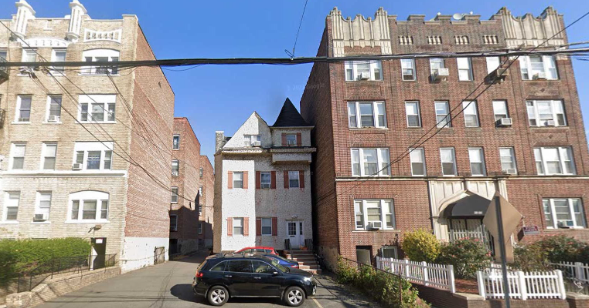
For longtime Heights resident Norrice Raymaker, the aging three-story home on Beacon Avenue represented both a piece of neighborhood history and a familiar source of anxiety.

Like many residents deeply connected to Jersey City’s historic fabric, Raymaker had watched wave after wave of older residential properties disappear throughout the neighborhood during the last decade. Elegant Second Empire homes, historic multifamily residences, porched Victorian structures, and century-old streetscapes increasingly gave way to fast-built replacement projects designed primarily around maximizing lot efficiency and parking capacity.

In many cases, the result was the now-infamous “Bayonne Box.”

The term — often used critically by preservationists, urban planners, architects, and longtime residents — refers to a repetitive style of modern multifamily construction that spread rapidly across Hudson County and especially neighboring Bayonne following World War II development patterns. These structures are typically characterized by elevated living spaces positioned above garages, highly vertical massing, flat façades, limited ornamentation, and designs critics argue prioritize development efficiency over architectural identity or neighborhood continuity.

For many communities across North Jersey, the Bayonne Box became a visual symbol of larger anxieties surrounding redevelopment itself.

Residents worried not only about density, parking, and infrastructure pressure, but also about the gradual erosion of neighborhood character and historic streetscapes that helped define older urban communities throughout Hudson County for generations.

That is why the Beacon Avenue property attracted so much attention.

Instead of demolishing the existing structure entirely, developers pursued a dramatically different strategy — one attempting to blend historic preservation, adaptive redevelopment, additional housing creation, and modern urban density into a single integrated project.

The redevelopment effort led by Behrang Behin and collaborator Alan Feld ultimately transformed what preservation advocates feared could become another demolition casualty into a hybrid restoration-and-expansion project now increasingly viewed as a possible blueprint for future neighborhood-sensitive development.

Rather than leveling the historic structure outright, the project preserved and restored the existing home while incorporating additional townhouse units at the rear of the property.

That design decision became central to winning zoning approvals.

According to zoning board findings tied to the project, preserving the original structure while adding carefully positioned townhomes helped maintain neighborhood integrity and preserve the surrounding streetscape — a critical concern in a rapidly transforming section of Jersey City where many residents increasingly fear architectural homogenization and speculative redevelopment.

The design itself intentionally attempted to soften the impact of added density.

Instead of conventional rear-yard configurations, the townhouses were designed with enclosed front-yard spaces separated by fencing, helping create greater privacy and visual buffering between the restored historic structure and the newly constructed residential units.

The approach represented something increasingly rare in high-pressure redevelopment markets: compromise.

The project added housing inventory without erasing the architectural identity already embedded within the block.

That balance is becoming one of the defining urban development debates not only in Jersey City, but throughout New Jersey itself.

Across the state, municipalities continue wrestling with extraordinarily difficult questions surrounding housing production, historic preservation, affordability, infrastructure capacity, environmental sustainability, zoning reform, and neighborhood identity.

New Jersey remains one of the nation’s most densely populated states while simultaneously facing major housing shortages and affordability pressures. That dynamic places enormous pressure on older urban and suburban neighborhoods where redevelopment opportunities often collide directly with preservation concerns.

The Heights section of Jersey City has become one of the clearest examples of that collision.

Once viewed as a quieter, more working-class counterpart to Jersey City’s rapidly transforming waterfront, the Heights has increasingly become one of the region’s most competitive residential markets. Rising demand, proximity to Manhattan, transit accessibility, and changing demographic patterns have accelerated redevelopment activity throughout the neighborhood.

Older properties now frequently sit at the center of intense economic calculations.

Developers see opportunity in underutilized lots and aging structures positioned inside one of the country’s hottest regional housing markets. Residents and preservationists, meanwhile, often fear that unchecked redevelopment risks destroying the architectural and cultural identity that made these neighborhoods desirable in the first place.

The Beacon Avenue project stands out because it attempted to navigate both realities simultaneously.

The effort was not without obstacles.

The COVID-19 pandemic delayed construction timelines substantially, complicating financing, labor coordination, permitting schedules, and broader development logistics across the industry. Yet the project ultimately reached completion last year with a reported development cost of approximately $2.3 million.

Importantly, the project also reflected a deeply personal dimension of development increasingly common among smaller-scale urban builders.

Rather than functioning solely as a large institutional investment operation, the redevelopment effort carried strong family involvement throughout the process. Behin’s mother reportedly handled apartment listings and applicant qualification reviews, while family participation extended into leasing and tenant coordination as well.

That kind of family-centered development model contrasts sharply with the corporate-scale institutional redevelopment reshaping many urban markets nationally.

The completed project now generates approximately $14,600 per month in combined rental income, illustrating another major reality driving redevelopment pressure across Hudson County: the extraordinary economic value of housing demand in Northern New Jersey.

High rents, constrained inventory, and intense regional demand continue fueling redevelopment interest throughout Jersey City, Hoboken, Union City, Weehawken, Bayonne, and surrounding municipalities.

Yet the Beacon Avenue story resonates beyond economics alone.

It highlights a growing shift in urban planning philosophy increasingly visible in portions of New Jersey redevelopment policy.

For decades, preservation and housing development were often framed as opposing forces. Historic advocates frequently battled developers in zero-sum political fights where either preservation won or redevelopment prevailed.

Now, however, a more integrated conversation is beginning to emerge.

Cities increasingly recognize that adaptive reuse, historically sensitive infill development, mixed-density planning, and contextual architectural approaches may offer more sustainable long-term solutions than purely demolition-driven redevelopment cycles.

The Beacon Avenue project fits squarely inside that evolving framework.

Rather than maximizing every square foot through standardized high-density construction, the project attempted to preserve streetscape continuity while still increasing housing capacity and economic viability.

That balancing act may become increasingly important statewide.

New Jersey’s housing crisis continues intensifying. Demand remains extraordinarily high. Land scarcity continues worsening. Infrastructure systems face mounting pressure. Communities remain divided over zoning reform and density expansion. Historic neighborhoods face accelerating redevelopment interest.

Against that backdrop, projects capable of integrating preservation with modern housing production may attract growing attention from planners, architects, local officials, and residents alike.

For longtime neighborhood advocates like Raymaker, the successful preservation of the Beacon Avenue structure represents more than simply saving one historic home.

It reflects a larger argument that growth and preservation do not necessarily have to function as enemies.

And in Jersey City — where redevelopment pressure continues reshaping entire neighborhoods at remarkable speed — that idea may ultimately prove as important as the project itself.

Collingswood Teachers Union Issues Symbolic No-Confidence Vote as Financial Pressures and Leadership Tensions Intensify Inside South Jersey School District

A growing divide between educators and district leadership in Collingswood has now erupted into one of the most visible school governance conflicts currently unfolding in South Jersey, as members of the Collingswood teachers union delivered a symbolic vote of no confidence against Superintendent Fred McDowell during an increasingly tense public school board meeting dominated by frustration over staffing pressures, district finances, morale concerns, and long-simmering dissatisfaction among educators.

The vote itself carries no direct legal authority.

But politically and symbolically, the action represents a significant escalation inside a district already struggling with broader structural pressures affecting school systems throughout New Jersey and across the country.

At the center of the conflict sits a difficult reality confronting many public school districts simultaneously: rising operational costs, persistent staffing challenges, increasing student support demands, state funding uncertainty, inflation-driven budget pressure, mental health concerns, and growing friction between educators and administrative leadership over how limited resources should be allocated.

Collingswood has increasingly become a local example of those larger statewide tensions.

Union members speaking publicly at recent board meetings described what they characterized as worsening dissatisfaction among educators, citing concerns involving communication, district leadership culture, workload pressure, morale erosion, staffing instability, and trust between faculty and administration.

The no-confidence vote reflects that broader frustration.

Educators involved in the effort framed the action not simply as a disagreement over isolated administrative decisions, but as a response to what they view as deeper structural and cultural problems affecting day-to-day operations throughout the district.

At the same time, Superintendent McDowell has argued that the district is navigating serious long-term systemic challenges requiring difficult management decisions during a financially constrained period for public education.

That tension — between operational leadership realities and employee frustration — is increasingly common throughout New Jersey school systems.

Districts statewide continue wrestling with the aftershocks of pandemic-era disruption while simultaneously confronting inflationary pressure, enrollment fluctuations, staffing shortages, evolving educational expectations, facility maintenance demands, transportation costs, special education obligations, mental health support expansion, and increasingly polarized public scrutiny surrounding schools themselves.

The result has been mounting strain on school governance structures.

In many communities, school board meetings have transformed from relatively routine administrative gatherings into emotionally charged public forums where educators, parents, administrators, and residents openly clash over leadership decisions, staffing priorities, curriculum concerns, budget constraints, and district direction.

Collingswood now appears firmly inside that statewide trend.

The symbolic no-confidence vote also reflects the increasingly important role teacher morale plays in district stability.

School systems across New Jersey continue struggling not only with teacher recruitment but also retention. Burnout, workload expansion, political polarization surrounding education, mental health strain, and rising living costs have all contributed to growing dissatisfaction throughout parts of the profession.

For districts operating under tight fiscal conditions, that creates a difficult balancing act.

Administrators often argue they must make operational decisions based on financial limitations and long-term sustainability. Educators, meanwhile, frequently experience those same decisions as cuts to support systems, increased pressure inside classrooms, diminished collaboration, or declining institutional trust.

That divide appears to be widening in Collingswood.

Union representatives speaking publicly during board proceedings reportedly emphasized what they described as grassroots frustration among faculty members, portraying the no-confidence vote as reflective of broader educator sentiment rather than isolated internal disputes.

School board members, meanwhile, offered relatively limited public response — itself a notable feature of the controversy.

Across New Jersey, boards of education increasingly face pressure to balance transparency, legal considerations, labor negotiations, political sensitivity, and public accountability simultaneously. In contentious situations involving union criticism or personnel-related concerns, board members often respond cautiously in public settings to avoid escalating already volatile dynamics.

But silence or limited comment can also deepen frustration among employees and residents demanding greater clarity.

That tension has become increasingly visible in school districts statewide.

The conflict unfolding in Collingswood additionally highlights the financial fragility many suburban New Jersey districts continue facing despite perceptions of relative stability compared to larger urban systems.

Even districts with strong academic reputations often operate under severe financial constraints driven by rising healthcare costs, pension obligations, facility maintenance needs, transportation expenses, and state aid volatility.

At the same time, public expectations placed on schools continue expanding dramatically.

Modern school districts are now expected not only to deliver academic instruction, but also to provide mental health support, social services coordination, security infrastructure, special education services, technology integration, career readiness programming, crisis response systems, extracurricular expansion, and increasingly individualized student support.

Those responsibilities require staffing, funding, and administrative coordination many districts struggle to sustain consistently.

The situation becomes even more difficult in communities where residents simultaneously demand strong schools while resisting significant local tax increases needed to fund expanding educational obligations.

That broader economic reality forms part of the backdrop surrounding the Collingswood conflict.

South Jersey districts in particular continue navigating uneven economic pressures, shifting enrollment patterns, aging facilities, workforce shortages, and growing operational costs during a period when public education itself remains under intense social and political scrutiny nationwide.

The no-confidence vote therefore represents more than a localized labor dispute.

It reflects a broader moment of institutional strain affecting public education across New Jersey and much of the country.

Educators increasingly want stronger collaboration, improved communication, greater workplace support, and more direct involvement in district decision-making. Administrators increasingly emphasize fiscal realities, operational complexity, regulatory obligations, and long-term sustainability pressures.

Bridging those competing realities has become one of the defining governance challenges of modern public education.

The situation in Collingswood also illustrates how public school leadership has become significantly more politically and emotionally difficult over the past decade.

Superintendents now operate inside an environment shaped by constant public visibility, social media scrutiny, labor pressures, parent activism, political polarization, financial instability, and rapidly evolving educational expectations.

Even highly experienced administrators increasingly face public backlash from multiple directions simultaneously.

For educators, meanwhile, frustration often builds when they feel operational decisions occur without sufficient classroom-level input or transparency regarding long-term district planning.

That mutual frustration can gradually erode institutional trust.

And once trust deteriorates inside school systems, even routine administrative disagreements can evolve into broader governance crises involving morale, communication breakdowns, public confrontation, and political division.

The Collingswood dispute increasingly appears to be moving into that territory.

The symbolic nature of the no-confidence vote does not diminish its significance politically or culturally inside the district. Such actions often serve as highly visible indicators of deeper internal instability, particularly when aired publicly before residents and school board officials.

Whether district leadership and educators can eventually rebuild trust remains uncertain.

What is clear, however, is that the conflict unfolding in Collingswood reflects much larger pressures reshaping public education throughout New Jersey.

School systems today are being asked to do more than ever while operating inside environments defined by rising costs, staffing challenges, evolving student needs, political scrutiny, and increasingly fragile public confidence.

In communities across the state, those pressures are beginning to surface not only through budget debates and policy disputes, but through direct institutional confrontations like the one now unfolding in Collingswood itself.

And as financial strain, governance pressure, and educator dissatisfaction continue intersecting statewide, the challenges facing districts may increasingly extend beyond budgets and staffing charts into larger questions surrounding leadership, trust, and the future structure of public education altogether.

Sunset Sips & Sounds at Terhune Orchards Turns New Jersey Summer Nights into One of the Garden State’s Most Charming Weekly Wine and Music Traditions

As New Jersey’s summer entertainment calendar begins filling with large-scale concerts, crowded festival weekends, and packed shore nightlife, one of the state’s most beloved recurring seasonal traditions is quietly preparing to transform Friday evenings in Mercer County into a uniquely relaxed celebration of wine, live music, local agriculture, and community connection. Beginning June 6 and continuing every Friday night through September 5, Terhune Orchards Vineyard and Winery will once again host its highly anticipated Sunset Sips & Sounds series, bringing together award-winning local wine, rotating live musicians, scenic orchard views, farm-fresh food, and family-friendly atmosphere inside one of the most picturesque agricultural settings anywhere in New Jersey.

Held directly within Terhune Orchards’ historic apple orchard, the weekly series has steadily evolved into far more than a casual winery event. It has become one of Central New Jersey’s defining summer experiences — an atmosphere-driven gathering that captures the increasingly popular intersection between agritourism, live entertainment, culinary culture, and vineyard hospitality that continues reshaping how residents and visitors explore the Garden State.

At a moment when New Jersey’s winery industry is simultaneously battling severe agricultural challenges and expanding experiential tourism programming across the state, events like Sunset Sips & Sounds illustrate exactly why vineyard destinations have become such an important part of New Jersey’s cultural and economic landscape. These are no longer simply places to purchase bottles of wine. Modern winery destinations throughout New Jersey increasingly function as entertainment venues, culinary hubs, gathering spaces, and lifestyle experiences that encourage visitors to slow down, reconnect socially, and experience the state’s agricultural beauty in a far more immersive way.

And few places embody that atmosphere more naturally than Terhune Orchards.

Long recognized as one of New Jersey’s most beloved family-owned farms, Terhune Orchards has spent years building a destination that blends farming heritage, seasonal recreation, winery culture, educational experiences, and local food traditions into a year-round attraction. During autumn, the property becomes synonymous with apple picking, pumpkin festivals, cider donuts, and harvest celebrations. But during the summer months, the vineyard and winery transform into an entirely different kind of destination — one centered around sunsets, live music, relaxed evenings, and the slower rhythms of farm life.

That seasonal transformation sits at the heart of Sunset Sips & Sounds.

Every Friday evening from 5:00 PM to 8:00 PM, guests are invited into the orchard to enjoy an ever-changing lineup of local musicians spanning jazz, blues, folk, acoustic rock, and Americana-inspired performances while surrounded by rows of apple trees and vineyard scenery. The winery itself remains open from noon until 8:00 PM, allowing visitors to spend an entire afternoon and evening on the property if they choose.

What makes the event particularly appealing is its accessibility.

There is no admission fee.
No reservations are required.
Families are welcomed.
The environment remains intentionally casual and community-oriented.

Rather than creating an exclusive or formal wine-tasting atmosphere, Terhune Orchards leans into comfort, openness, and familiarity. Guests arrive with lawn chairs, groups of friends gather around picnic tables, parents bring children, couples share tasting flights beneath the evening sky, and visitors drift between music performances, food offerings, and wine selections at their own pace.

That flexibility has become a defining feature of successful winery programming throughout New Jersey.

Consumers increasingly seek experiences that feel authentic rather than overly curated, and Terhune Orchards succeeds because the setting itself does much of the work naturally. The backdrop of historic farmland, open air, and sunset vineyard views creates an atmosphere impossible to replicate inside urban nightlife venues or conventional restaurants.

The wine program itself remains central to the experience.

Guests can choose from Terhune’s lineup of award-winning wines, tasting flights, and seasonal wine slushies that have become especially popular during warm-weather weekends. The casual presentation encourages exploration without intimidation, making the event equally appealing for serious wine enthusiasts and casual visitors simply looking to unwind after the workweek.

Importantly, the experience extends well beyond beverages alone.

Light fare offerings include cheese platters, chips, homemade salsa, desserts, and rotating snack selections, while the on-site Barn Door Café expands the menu with additional dinner options designed specifically for relaxed vineyard dining. The combination allows visitors to turn the evening into a complete social outing rather than a brief stop for drinks.

The live music lineup for the 2026 season reflects Terhune Orchards’ continued commitment to showcasing local and regional talent across a broad range of styles and sounds.

The season opens June 5 with Grant Peterson & Greg Merle, setting the tone for a summer built around acoustic warmth and easygoing atmosphere. ALBO performs June 12, followed by Bud & Carm on June 19 and the popular jazz ensemble Three to Get Ready on June 26.

As the summer continues, the schedule moves fluidly between genres and performance styles. Jon Savage performs July 3, Four the Record arrives July 10, and Three to Get Ready returns July 17. Mike & Laura appear July 24 before the Barbara Lin Band takes over July 31 with what is expected to be one of the season’s standout evenings.

August continues the momentum with performances from Joah Blume on August 7, Mark Miklos on August 14, Kindred Spirit on August 21, and Audio Pilot on August 28 before Mike & Laura close the series on September 4.

The variety matters because it allows the series to maintain fresh energy throughout the entire season while still preserving its relaxed vineyard identity. Some evenings lean more folk-inspired and intimate, while others bring stronger jazz grooves or upbeat acoustic rock energy that subtly shifts the atmosphere of the orchard itself.

And increasingly, that type of recurring live music programming is becoming a major driver of winery tourism throughout New Jersey.

The state’s wine industry has undergone enormous evolution over the past decade, with vineyards now competing not only on bottle quality but on hospitality experiences, event programming, seasonal activities, and destination appeal. Vineyard yoga sessions, artisan craft workshops, food festivals, educational vineyard tours, wellness retreats, wine trails, and outdoor music events have all become critical parts of the modern winery business model.

That shift has become especially important during a difficult year for New Jersey agriculture.

Following devastating spring freeze damage that impacted vineyards and farms across the state — with some South Jersey growers reporting losses as high as 80% to 100% — wineries have increasingly leaned into tourism programming to sustain traffic, support local agriculture, and maintain consumer engagement during a highly challenging growing season.

Events like Sunset Sips & Sounds therefore carry significance beyond entertainment alone.

They help support local agriculture.
They drive direct-to-consumer winery traffic.
They strengthen community connections.
They encourage residents to spend locally.
And they remind visitors that New Jersey’s agricultural identity remains one of the defining cultural forces shaping the state.

In many ways, Terhune Orchards represents the ideal expression of that identity.

Unlike the stereotypical perception outsiders often hold about New Jersey, destinations like this reveal a far different reality — one defined by preserved farmland, multigenerational agriculture, local craftsmanship, culinary creativity, seasonal beauty, and small businesses building authentic experiences rooted directly in community tradition.

That authenticity is exactly why events like Sunset Sips & Sounds continue growing in popularity each year.

Visitors are not simply attending another live music series. They are participating in a distinctly New Jersey experience — one that blends agriculture, hospitality, entertainment, and social connection into a setting that feels simultaneously timeless and modern.

As the summer season unfolds across the Garden State, countless large-scale entertainment options will compete for attention. Yet some of the most memorable evenings may ultimately happen not inside arenas or crowded city streets, but beneath the fading sunset glow of a historic orchard where live music drifts through the trees, glasses of local wine catch the evening light, and New Jersey’s farming heritage quietly becomes the backdrop for one of the state’s most genuinely special summer traditions.

Music Schedule

June 5
Grant Peterson & Greg Merle

June 12
ALBO

June 19
Bud & Carm

June 26
Three to Get Ready

July 3
Jon Savage

July 10
Four the Record

July 17
Three to Get Ready

July 24
Mike & Laura

July 31
Barbara Lin Band

August 7
Joah Blume

August 14
Mark Miklos

August 21
Kindred Spirit

August 28
Audio Pilot

September 4
Mike & Laura

Princeton Area Community Foundation’s $500,000 Summer Initiative Grants Deliver Critical Support to New Jersey Students Facing Academic, Economic, and Social Barriers

As communities across New Jersey prepare for another summer shaped by rising economic pressures, educational recovery challenges, and widening opportunity gaps for young people, the Princeton Area Community Foundation has launched one of the region’s most significant seasonal investments in youth development by awarding $500,000 in grants to 25 nonprofit organizations working directly with students throughout Central New Jersey.

The large-scale initiative represents far more than a standard grant cycle. It reflects a growing recognition throughout New Jersey that summer itself has become one of the most important battlegrounds in the fight against educational inequality, youth isolation, food insecurity, and long-term social disconnection. By directing substantial resources toward organizations serving vulnerable children and teenagers, the Community Foundation is helping create an expansive safety net designed not only to prevent academic regression, but also to restore access to creativity, mentorship, enrichment, recreation, nutrition, and emotional stability during months when many families struggle most.

At a time when the cost of camps, enrichment programs, transportation, childcare, and extracurricular activities continues climbing sharply, many families across Mercer County and neighboring regions increasingly find themselves unable to provide consistent summer opportunities for their children. The result has been a growing divide between students who remain actively engaged during the summer months and those who become disconnected academically, socially, and emotionally.

The Princeton Area Community Foundation’s latest round of grants directly targets those challenges.

The funding will support nonprofits addressing some of the most urgent barriers facing young people today, including affordability, transportation limitations, food and housing instability, gaps in middle-school programming, and trust barriers that often prevent underserved families from accessing traditional summer opportunities. Rather than concentrating resources into a narrow category of academic intervention, the initiative takes a broader view of youth development by supporting organizations focused on arts education, environmental learning, literacy, mentorship, athletics, wellness, emotional support, leadership development, and community engagement.

That expansive philosophy reflects a deeper shift taking place in modern youth programming throughout New Jersey and nationally.

Summer learning loss has long been a concern for educators, but recent years have exposed how much broader the issue truly is. For many students, especially those in economically vulnerable households, summer can mean reduced structure, limited access to meals, increased social isolation, mental health strain, and fewer opportunities for supervised enrichment. Community organizations increasingly function not only as educational partners but as stabilizing forces that help young people maintain confidence, connection, and momentum during critical developmental years.

The organizations receiving support through the Community Foundation’s initiative represent a wide cross-section of New Jersey’s nonprofit landscape, each bringing a specialized approach to youth engagement.

The Arts Council of Princeton and Artworks Trenton continue expanding arts access for young people through creative programming that allows students to explore visual arts, performance, expression, and community collaboration. Programs like these have become especially important as schools across the country continue struggling to fully restore arts programming after years of budgetary strain.

Organizations such as Boys & Girls Club of Mercer County, Hamilton Area YMCA, and Greater Somerset County YMCA’s Princeton branch provide broad-based youth support systems that combine recreation, mentoring, educational assistance, and safe environments for children throughout the summer months. Their role extends beyond programming alone; these institutions often serve as essential anchors for working families balancing employment demands with childcare challenges during school breaks.

Other grant recipients focus on highly specialized areas of support that address unique community needs.

The Down Syndrome Association of Central New Jersey provides programming tailored for students and families navigating developmental disabilities, while PEI Kids continues its work supporting vulnerable youth through intervention and advocacy initiatives. HomeFront and Mercer Street Friends remain critical frontline organizations addressing poverty, food insecurity, and family stabilization throughout the region, helping ensure that basic needs do not become barriers to youth participation and development.

Environmental and experiential learning also play a significant role within this year’s grant structure.

Fernbrook Environmental Education Center and Snipes Farm and Education Center create opportunities for students to engage directly with nature, sustainability, agriculture, and hands-on outdoor learning experiences that have become increasingly valuable in a digitally saturated culture. These types of immersive programs help reconnect students with physical environments, teamwork, problem-solving, and ecological awareness while simultaneously supporting emotional wellness and curiosity.

Meanwhile, organizations like Trenton Circus Squad and Capital Harmony Works illustrate how unconventional educational models can often produce extraordinary outcomes for young people.

Trenton Circus Squad has become nationally recognized for blending circus arts with social-emotional development, leadership training, and community-building exercises that help students develop confidence and resilience. Capital Harmony Works similarly uses music education not merely as artistic instruction but as a tool for discipline, collaboration, and emotional expression.

The diversity of funded organizations reveals the Community Foundation’s understanding that no single solution exists for supporting youth development.

Instead, effective intervention requires a broad ecosystem of organizations capable of meeting students where they are socially, emotionally, academically, and economically.

Community Foundation leadership emphasized that point directly while announcing the grants.

President and CEO Mathieu Nelessen noted that the programs are designed not only to strengthen academic growth but also to provide students with enriching experiences that many families would otherwise struggle to access, including field trips, arts initiatives, recreation, and educational programming that foster long-term confidence and engagement.

Vice President of Grants, Programs and Community Relations Nelida Valentin further highlighted the larger significance of the initiative by framing summer programming as an essential community lifeline for children across the region. Her remarks reflect a growing awareness among nonprofit leaders that youth development today requires holistic investment rather than narrow educational metrics alone.

The funding itself also underscores the increasingly important role community foundations now play within New Jersey’s broader social infrastructure.

Since its founding 35 years ago, the Princeton Area Community Foundation has awarded more than $259 million in grants supporting nonprofit initiatives locally and beyond. That scale of philanthropy places the organization among the state’s most influential community-focused funding institutions, particularly in areas tied to education, equity, health, and long-term economic mobility.

Importantly, the summer initiative is not operating in isolation.

The grants are funded through the Community Impact Grants Fund and supported through partnerships involving individual philanthropists, corporations, and major foundations including J&J and the Burke Foundation. That collaboration between private philanthropy, corporate support, and nonprofit infrastructure reflects a broader statewide trend in which public challenges increasingly require cross-sector partnerships capable of scaling community solutions more rapidly than traditional government systems alone.

And in New Jersey, those partnerships are becoming increasingly necessary.

Across the state, nonprofit organizations continue facing rising operational costs, increased demand for services, staffing pressures, transportation challenges, and growing youth mental health concerns. Yet despite those pressures, community-based organizations remain among the most agile institutions capable of delivering direct impact where it is needed most.

The Community Foundation’s summer initiative effectively strengthens that entire ecosystem at once.

For families throughout Mercer County and neighboring communities, the grants may ultimately translate into something simple but profoundly important: access.

Access to safe environments.
Access to mentorship.
Access to arts and music.
Access to nutritious meals.
Access to transportation.
Access to leadership development.
Access to social belonging.
Access to opportunity.

And perhaps most importantly, access to a summer experience that allows children not merely to avoid falling behind, but to actively grow.

As New Jersey communities continue confronting economic uncertainty and widening educational inequities, initiatives like this increasingly serve as reminders that meaningful investment in youth development produces effects far beyond a single season. The students participating in these programs this summer are not simply filling time between school years. They are building confidence, discovering interests, developing relationships, strengthening emotional resilience, and gaining experiences that can shape academic trajectories and personal futures long after the summer months end.

In that sense, the Princeton Area Community Foundation’s $500,000 commitment represents more than charitable giving.

It represents a direct investment in the long-term social, educational, and cultural future of New Jersey itself.

New Jersey Symphony’s $29 Million Jersey City Theater Project Signals a Historic New Era for Arts, Culture, and Economic Growth in Hudson County

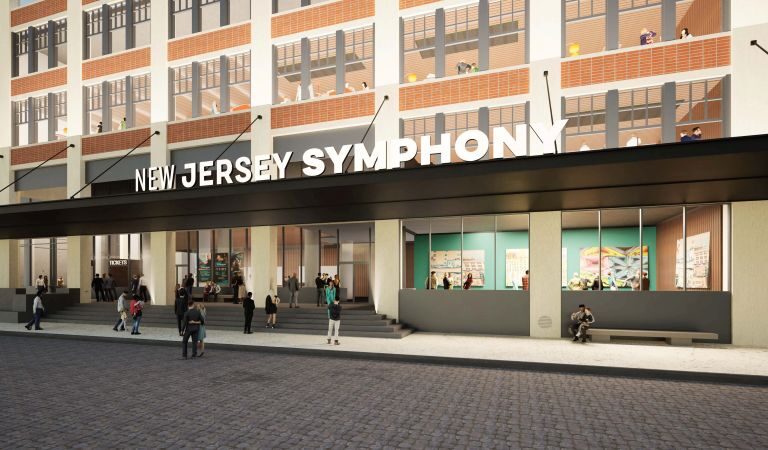
A transformative new chapter in New Jersey’s cultural future is officially taking shape in Downtown Jersey City as the New Jersey Economic Development Authority has approved a major $29 million tax credit to help construct a permanent performance venue for the New Jersey Symphony inside the rapidly evolving Powerhouse Arts District. More than simply another development announcement, the project represents one of the most ambitious investments in New Jersey’s performing arts infrastructure in recent memory and signals the continuing emergence of Jersey City as one of the Northeast’s fastest-growing cultural capitals.

The new theater, planned for the ground floor of the recently completed 151 Bay Street development, will create a long-awaited permanent Jersey City home for the New Jersey Symphony while dramatically expanding arts accessibility, educational programming, live performance opportunities, and civic engagement across Hudson County. The project combines large-scale cultural investment, modern urban development, and community-centered arts programming into a single vision that could permanently reshape the region’s entertainment and creative economy.

Located just steps from the Grove Street PATH Station in one of the state’s most aggressively developing neighborhoods, the future venue is designed to become far more than a traditional concert hall. Plans for the project include a 550-seat state-of-the-art theater alongside rehearsal spaces, production facilities, educational classrooms, workshop areas, and year-round programming spaces intended to support performances, public forums, cultural celebrations, after-school initiatives, and artistic collaborations across multiple disciplines.

The scale of the project reflects how dramatically New Jersey’s arts ecosystem has evolved in recent years.

For decades, major cultural institutions in the state remained concentrated primarily in Newark, Princeton, and select suburban arts corridors. But Jersey City’s explosive growth over the last fifteen years — particularly in the Powerhouse Arts District — has fundamentally altered that landscape. What was once viewed primarily as a commuter extension of Manhattan has steadily transformed into one of the most ambitious urban redevelopment stories anywhere in the Northeast, blending residential expansion, nightlife, culinary innovation, technology, public transit access, and increasingly sophisticated arts programming into a highly interconnected downtown environment.

The arrival of a permanent New Jersey Symphony venue now elevates that transformation to another level entirely.

The significance of the project extends beyond music itself because cultural institutions of this magnitude function as long-term civic anchors. They attract tourism, stimulate restaurant and hospitality spending, create educational partnerships, increase foot traffic for local businesses, and establish year-round economic activity that extends well beyond individual performances.

In practical terms, the venue is expected to host more than 100 public events annually, creating a constant stream of visitors moving through Downtown Jersey City’s restaurants, bars, hotels, galleries, and retail corridors. That frequency matters enormously because modern urban entertainment districts increasingly thrive on consistency rather than isolated mega-events.

The theater’s placement inside 151 Bay Street also reflects the growing integration between luxury residential development and cultural infrastructure in New Jersey’s largest cities.

The 34-story tower, developed through a partnership involving Toll Brothers and Sculptor Capital Management, stands alongside The Morgan residential complex within the broader Powerhouse Arts District redevelopment zone. The surrounding neighborhood has rapidly become one of the state’s densest concentrations of new mixed-use development, with projects such as Warren at Bay, 144 First Street, and 351 Marin helping reshape the district into a modern live-work-entertainment corridor.

Yet what distinguishes the New Jersey Symphony project from standard mixed-use development is its civic purpose.

Rather than functioning purely as a commercial amenity for nearby residents, the theater is being positioned as a publicly engaged cultural institution designed to serve both local neighborhoods and broader regional audiences. Plans for educational programming, workshops, youth engagement initiatives, and affordable arts access indicate a deliberate effort to ensure the project maintains community relevance rather than becoming an isolated luxury destination.

That emphasis on accessibility aligns closely with the broader mission the New Jersey Symphony has cultivated over the past several decades.

Founded in 1922, the orchestra has spent over a century evolving into one of the state’s defining cultural institutions. Although many residents now primarily associate the Symphony with its longstanding relationship with the New Jersey Performing Arts Center in Newark, the organization’s roots stretch even deeper into the state’s urban cultural history.

The Symphony’s predecessors were originally founded in Newark in the nineteenth century before later expanding operations into communities including Montclair and Orange. By the mid-twentieth century, the orchestra had returned to Newark as a fully established statewide institution, performing at the former Grand Mosque Theater — later renamed Newark Symphony Hall — before eventually relocating operations to NJPAC in 1997.

The Jersey City expansion therefore represents both a continuation and evolution of that legacy.

Rather than replacing Newark, the new theater broadens the Symphony’s physical footprint and extends its statewide accessibility into one of New Jersey’s fastest-growing urban regions. In many ways, the move reflects a larger statewide recognition that cultural infrastructure must expand alongside population growth and urban redevelopment if cities hope to sustain long-term economic vitality.

The investment also demonstrates how arts funding itself is increasingly being understood as economic development rather than discretionary spending.

The Cultural Arts Facilities Expansion program administered through the NJEDA reflects a broader strategy emerging throughout New Jersey: leveraging arts infrastructure to stimulate neighborhood revitalization, tourism growth, and economic diversification. Entertainment districts today function as economic engines capable of attracting both residents and businesses seeking vibrant, culturally active environments.

And Jersey City’s Powerhouse Arts District has become one of the clearest examples of that model in action.

Once heavily industrial, the district has steadily transformed into a creative and residential hub defined by adaptive reuse, modern towers, public arts initiatives, galleries, performance venues, and nightlife growth. The addition of a major Symphony theater dramatically accelerates the district’s evolution into a true cultural corridor capable of competing with major urban arts destinations throughout the region.

Equally important is what this project represents symbolically for New Jersey itself.

For decades, conversations surrounding world-class arts and entertainment infrastructure in the Northeast were dominated almost entirely by New York City and Philadelphia. But projects like this increasingly demonstrate New Jersey’s growing confidence in developing large-scale cultural destinations within its own cities rather than functioning solely as a commuter extension of neighboring metropolitan economies.

That shift matters because cultural identity increasingly influences how cities attract residents, businesses, tourism, and long-term investment.

And in Jersey City, the combination of public transit accessibility, residential growth, waterfront proximity, nightlife, restaurants, and now major performing arts infrastructure is rapidly creating one of the most compelling urban entertainment ecosystems anywhere in the state.

The theater itself will likely become one of the defining cultural landmarks of the next generation of Jersey City development.

Visitors attending Symphony performances, jazz showcases, multimedia productions, educational events, public forums, and cultural celebrations will experience not only the venue itself but the surrounding district’s broader transformation. Restaurants, cocktail lounges, hotels, galleries, waterfront spaces, and nightlife venues all stand positioned to benefit from the year-round audience traffic the project is expected to generate.

For New Jersey’s arts community, the project also sends a powerful message about the future.

At a moment when many arts organizations nationally continue navigating financial uncertainty, shifting audience habits, and post-pandemic rebuilding, the state’s willingness to support a large-scale permanent performance venue signals continued confidence in the long-term importance of live cultural experiences.

And in an era increasingly dominated by digital entertainment, projects like this reaffirm something essential: people still crave shared public experiences centered around music, performance, storytelling, creativity, and community.

That reality may ultimately be the most important aspect of the entire development.

Because while cranes, towers, tax credits, and construction plans define the project today, the true legacy of the new New Jersey Symphony venue will emerge later — when audiences begin filling seats, students begin attending workshops, musicians begin rehearsing inside its walls, and Jersey City gains not just another building, but a permanent new cultural heartbeat woven directly into the future of New Jersey itself.

Ocean County Young Democrats Endorse Zack Mullock in Intensifying Battle for New Jersey’s 2nd Congressional District

The political battle for New Jersey’s 2nd Congressional District continues accelerating across South Jersey as the Ocean County Young Democrats formally endorsed Zack Mullock, signaling growing momentum among younger Democratic activists eager to reshape representation in one of the state’s most politically competitive congressional regions.

The endorsement arrives at a pivotal moment in the Democratic primary campaign as candidates intensify voter outreach operations ahead of the June 2 election, with turnout strategies increasingly focused on younger voters, suburban moderates, climate-conscious independents, and working families frustrated by rising living costs and continued political polarization in Washington.

In a public statement announcing its support, the Ocean County Young Democrats described Mullock as a “solutions-based leader” capable of bringing a more pragmatic, accountable, and locally grounded style of leadership to Congress during a period when many voters feel disconnected from national political institutions.

The organization pointed specifically to Mullock’s experience governing at the municipal level as Mayor of Cape May, arguing that his record reflects hands-on executive leadership tied directly to everyday community concerns rather than ideological performance politics dominating much of the current national political landscape.

That framing is becoming increasingly important throughout New Jersey politics.

Across both parties, voters continue showing growing interest in candidates capable of presenting themselves as operational problem-solvers rather than purely partisan figures. In competitive districts especially, local governance experience increasingly functions as a political asset because it allows candidates to emphasize direct results, constituent engagement, infrastructure management, budget oversight, and quality-of-life improvements.

For Mullock, the endorsement strengthens precisely that narrative.

Rather than positioning himself solely through national ideological messaging, his campaign continues emphasizing local governance, community responsiveness, environmental planning, affordability concerns, anti-corruption efforts, and practical economic development — themes particularly relevant across the geographically and politically diverse territory comprising New Jersey’s 2nd Congressional District.

The district itself remains one of the most fascinating political landscapes in the state.

Stretching across large portions of South Jersey, the district includes coastal tourism communities, working-class municipalities, suburban neighborhoods, environmentally vulnerable shoreline regions, fishing economies, agricultural areas, retirement populations, and growing commuter corridors. That diversity creates a uniquely complicated political environment where campaigns must balance economic, environmental, cultural, and regional concerns simultaneously.

The Ocean County Young Democrats’ endorsement reflects how younger Democratic voters increasingly view those issues as interconnected rather than separate policy silos.

Their statement specifically highlighted what they described as Mullock’s understanding of the “intersectionality” connecting climate policy, energy infrastructure, affordability pressures, governance reform, and economic stability.

That language reflects the broader evolution of modern Democratic coalition politics.

Younger Democratic voters increasingly approach issues like housing affordability, environmental resilience, transportation investment, healthcare access, campaign finance reform, and economic inequality as overlapping structural challenges rather than isolated political topics.

That shift is especially visible in coastal regions like South Jersey.

Communities throughout New Jersey’s shore counties increasingly confront rising insurance costs, flooding concerns, infrastructure vulnerabilities, tourism pressures, environmental preservation debates, housing affordability challenges, and climate resiliency questions all at once. For younger voters in particular, those issues often merge into a broader conversation about long-term sustainability and generational economic stability.

Mullock’s background as mayor of Cape May gives his campaign a particularly strong connection to those conversations.

Cape May itself sits directly on the front lines of many of the issues reshaping coastal New Jersey — balancing tourism growth, environmental protection, historic preservation, infrastructure demands, flood mitigation, economic development, and quality-of-life concerns inside one of the region’s most recognizable shore communities.

That local executive experience allows his campaign to present governance not as abstract ideology, but as direct operational management involving real-world policy consequences.

The endorsement also highlights the growing strategic importance of younger voter blocs inside New Jersey congressional politics.

Historically, youth turnout in non-presidential elections often lagged older demographics substantially. But recent election cycles have shown increasingly strong political engagement among younger voters, particularly around issues tied to reproductive rights, climate policy, student debt, housing affordability, economic opportunity, and democratic institutions.

Campaigns statewide are responding accordingly.

The Ocean County Young Democrats emphasized exactly those concerns in their endorsement, arguing that Mullock’s campaign addresses issues young Americans confront daily, including economic pressures, institutional accountability, and government responsiveness.

The organization also highlighted campaign finance reform and anti-corruption policy as central reasons for its support.

That focus reflects broader frustration among younger voters toward entrenched political systems, large donor influence, institutional distrust, and perceptions that Washington remains disconnected from ordinary economic realities.

Those themes continue gaining traction nationally.

Candidates increasingly attempt to position themselves as outsiders to dysfunctional political systems even when holding elected office themselves. Municipal governance backgrounds often help support that positioning because local government remains more closely tied to direct community interaction and practical administration than national politics typically allows.

The endorsement additionally illustrates how local Democratic organizations are attempting to energize grassroots participation heading toward the primary election.

Ocean County, historically viewed as more politically conservative than several neighboring regions, remains strategically important because shifts among younger suburban voters, coastal communities, and moderate independents continue gradually reshaping portions of South Jersey’s electoral map.

The district includes communities such as Barnegat, Beach Haven, Harvey Cedars, Long Beach Township, Stafford Township, Tuckerton, Surf City, Little Egg Harbor, Eagleswood, and portions of Berkeley and Lacey townships — municipalities where economic pressures, coastal resiliency concerns, transportation issues, and housing affordability increasingly intersect with national political debates.

The endorsement also underscores the broader nationalization of congressional races.

Although local concerns remain central, campaigns increasingly operate inside larger national narratives surrounding democracy, institutional trust, climate policy, economic fairness, reproductive rights, and government accountability.

For younger Democratic organizations, congressional races often become symbolic contests over generational political direction itself.

The Ocean County Young Democrats framed the election in similarly expansive terms, describing Congress as increasingly “cold and tone deaf” to public needs while portraying Mullock as part of a potential generational shift toward more responsive and community-oriented leadership.

That message aligns closely with broader Democratic efforts nationally to mobilize younger voters through appeals centered around institutional reform, accessibility, and future-focused policymaking.

At the same time, the endorsement highlights how competitive New Jersey’s congressional politics continue becoming.

Even in districts historically viewed as leaning toward one party or another, demographic shifts, migration patterns, suburban realignment, economic pressures, and evolving generational voting behavior continue reshaping electoral assumptions statewide.

South Jersey remains particularly dynamic in that regard.

The region combines traditional working-class political culture with growing suburban development, environmental vulnerability, retirement migration, tourism economics, and changing demographic composition. That creates highly fluid political terrain where coalition-building becomes essential.

For candidates like Mullock, endorsements from younger activist organizations help reinforce both grassroots credibility and broader generational momentum.

As the June primary approaches, campaigns throughout the district are intensifying efforts to define not only policy positions but also larger political identities capable of resonating across a politically fragmented electorate.

And in a congressional district where local governance, coastal resiliency, affordability concerns, institutional trust, and generational political change increasingly converge, endorsements like this may signal more than routine campaign support.

They may represent an emerging fight over what the future political identity of South Jersey itself will ultimately become.

Congress Revives Long-Stalled Housing Legislation as New Jersey Faces Intensifying Affordability Crisis and Historic Supply Shortage

After years of stalled negotiations, partisan gridlock, failed reform packages, and mounting economic pressure tied to America’s worsening housing shortage, lawmakers in Washington are once again attempting to move comprehensive housing legislation forward — a rare moment of bipartisan cooperation emerging at a time when the United States remains millions of housing units short of meeting current demand.

The renewed congressional push arrives as affordability pressures continue reshaping communities across the country, with states like New Jersey sitting directly at the center of the crisis.

From Jersey City luxury towers and Bergen County redevelopment projects to suburban zoning disputes, shore-region price surges, senior housing shortages, and escalating rent burdens across working-class municipalities, housing availability has become one of the defining economic and political issues confronting New Jersey residents, developers, planners, and policymakers alike.

Now, with Congress revisiting long-delayed housing legislation ahead of national midterm election battles, the conversation surrounding supply, affordability, construction incentives, and infrastructure investment is once again moving to the forefront of national politics.

The effort represents one of the few major areas where members of both parties appear increasingly willing to acknowledge the scale of the national housing emergency.

For years, economists, urban planners, developers, local governments, housing advocates, and financial analysts have warned that the United States has dramatically underbuilt housing relative to population growth, household formation, migration patterns, and changing demographic needs.

That imbalance worsened significantly following the 2008 financial crisis.

In the aftermath of the Great Recession, homebuilding activity collapsed nationally. Construction financing tightened, developers reduced production, zoning resistance intensified in many suburban regions, and large segments of the housing industry never fully recovered to pre-crisis output levels.

At the same time, population growth and demographic shifts continued.

Millennials entered prime household formation years. Remote work accelerated migration patterns. Investors increasingly entered residential markets. Institutional ownership expanded. Construction costs climbed sharply. Mortgage rates fluctuated dramatically. Labor shortages hit the construction sector. Land scarcity intensified in dense metropolitan regions.

The result has been a nationwide supply deficit now measured in millions of housing units.

New Jersey illustrates many of those pressures simultaneously.

The state’s housing market remains among the most constrained and expensive in the nation, driven by a combination of geographic limitations, intense regional demand, proximity to New York and Philadelphia employment centers, restrictive zoning battles, infrastructure pressures, rising construction costs, and limited large-scale development opportunities.

Housing inventory shortages have become particularly acute in commuter suburbs, transit-oriented corridors, and high-demand redevelopment zones.

The effects ripple throughout the economy.

Younger residents increasingly struggle to enter the housing market. Middle-income families face shrinking affordability. Rental prices continue climbing. Senior housing demand intensifies. Workforce recruitment becomes more difficult for employers. Municipal infrastructure systems face growing stress. Long-term economic mobility becomes harder to sustain.

Against that backdrop, the revival of federal housing legislation carries potentially enormous implications.

While details continue evolving through congressional negotiations, the broader effort focuses on accelerating housing production, reducing development bottlenecks, increasing affordability incentives, expanding financing mechanisms, encouraging zoning modernization, and supporting infrastructure tied to residential growth.

The political significance of the legislation is equally important.

Housing has increasingly emerged as a uniquely bipartisan crisis because its consequences now affect voters across ideological, geographic, and economic lines. Urban renters, suburban families, first-time buyers, retirees, employers, developers, and local governments all increasingly confront the effects of supply shortages directly.

That reality has begun reshaping political calculations in Washington.

For Democrats, housing affordability connects directly to economic inequality, cost-of-living concerns, labor mobility, and social stability. For Republicans, supply shortages increasingly intersect with workforce growth, economic competitiveness, inflation concerns, and local development pressures.

Even so, major disagreements remain.

The current negotiations continue facing significant hurdles surrounding federal spending levels, zoning authority, regulatory oversight, environmental review processes, tax incentives, affordable housing mandates, infrastructure funding, and the appropriate balance between federal involvement and local land-use control.

Zoning remains one of the most contentious issues.

Many housing experts argue restrictive local zoning laws — including single-family-only development patterns, height restrictions, parking mandates, and density limitations — significantly constrain housing production in high-demand regions. Reform advocates increasingly push for federal incentives encouraging municipalities to permit denser development near transit hubs and employment centers.

But resistance remains intense in many suburban communities nationwide, including throughout New Jersey.

Local officials and residents often express concerns about overdevelopment, school overcrowding, traffic congestion, infrastructure strain, environmental impacts, neighborhood character changes, and rising municipal service demands tied to higher-density housing expansion.

Those tensions have become deeply embedded in New Jersey politics.

Communities across the state continue wrestling with redevelopment battles involving warehouse construction, multifamily housing projects, affordable housing obligations, transit-oriented growth, environmental preservation, and suburban density debates.

At the same time, the economic pressure driving housing demand continues accelerating.

New Jersey’s proximity to New York City remains one of the dominant forces shaping statewide real estate dynamics. Hybrid work patterns and post-pandemic migration trends intensified demand throughout many suburban and exurban counties while simultaneously driving redevelopment activity in urban centers like Jersey City, Newark, Hoboken, New Brunswick, and parts of the Hudson waterfront.

The shortage affects nearly every segment of the market.

Luxury construction continues expanding in certain corridors, but affordable workforce housing remains critically limited. Entry-level ownership opportunities remain scarce. Senior housing demand is rising rapidly. Rental markets remain highly competitive. First-time buyers increasingly face barriers tied to down payments, mortgage rates, taxes, and inventory scarcity.

The federal legislative effort therefore arrives during a moment of unusually broad consensus regarding the scale of the problem itself — even if consensus on solutions remains elusive.

Another major issue involves infrastructure.

Housing production cannot expand meaningfully without parallel investment in transportation systems, utilities, drainage networks, schools, energy grids, broadband access, and environmental resiliency infrastructure. In dense states like New Jersey, infrastructure limitations often become one of the largest obstacles to large-scale residential expansion.

Developers frequently face enormous costs tied to sewer capacity upgrades, stormwater management systems, roadway improvements, utility modernization, environmental mitigation requirements, and transit coordination.

Federal housing legislation increasingly recognizes that housing policy and infrastructure policy are now inseparable.

The conversation is also becoming increasingly intertwined with labor economics.

Businesses across multiple sectors now report workforce recruitment challenges tied directly to regional housing affordability. Teachers, healthcare workers, first responders, municipal employees, hospitality workers, logistics personnel, and service-industry professionals increasingly struggle to live near the communities where they work.

That dynamic affects both economic growth and quality of life.

In New Jersey specifically, the shortage has become especially visible across high-demand counties including Bergen, Hudson, Middlesex, Monmouth, Essex, and Ocean counties, where rising home prices and rents continue reshaping demographic patterns and economic accessibility.

Recent housing growth studies have shown New Jersey building at its fastest pace in decades, yet demand continues outpacing supply in many critical regions.

That paradox underscores the scale of the challenge.

Even substantial new construction often fails to close the affordability gap quickly enough because underlying demand remains so strong and development constraints remain so significant.

The revived congressional legislation therefore represents more than just another federal policy debate.

It reflects a growing recognition that housing shortages are no longer isolated local problems but major national economic issues influencing inflation, labor markets, infrastructure planning, population mobility, family formation, and long-term economic stability.

For New Jersey, where development pressure, affordability concerns, and infrastructure strain continue converging simultaneously, the stakes surrounding federal housing action may be particularly high.

Whether Congress ultimately succeeds in moving comprehensive legislation forward remains uncertain.

Political divisions remain sharp. Midterm election pressures continue intensifying. Local zoning conflicts remain deeply contentious. Budget negotiations remain volatile.

But after years of paralysis, the fact that housing legislation has reemerged as a serious bipartisan conversation at all signals how dramatically the issue has moved toward the center of America’s economic future.

And in a state like New Jersey — where housing affordability increasingly shapes everything from workforce growth and transportation planning to generational mobility and regional development itself — that conversation is no longer theoretical.

It is already redefining the landscape.

Morris County Launches Major Stormwater Infrastructure Mapping Initiative in Mount Olive as New Jersey Expands Flood Resiliency and Environmental Compliance Efforts

As New Jersey communities continue confronting increasingly intense rainfall events, aging drainage systems, roadway flooding concerns, and expanding environmental compliance mandates, Morris County is beginning a new infrastructure mapping initiative designed to modernize stormwater management data across critical county transportation corridors in Mount Olive Township.

Beginning Friday, May 22, Morris County officials will officially launch a field-based stormwater infrastructure mapping operation along county-owned roadways in Mount Olive, representing another major step in the broader statewide push toward improved environmental monitoring, drainage system accountability, flood resiliency planning, and infrastructure modernization.

The initiative is being conducted by Aqualis on behalf of the County of Morris in order to satisfy compliance obligations tied to the New Jersey Department of Environmental Protection’s Municipal Separate Storm Sewer System Highway Agency Permit program, commonly known as the MS4 permit framework.

While the project may appear highly technical on the surface, the implications stretch far beyond simple infrastructure inventory work.

In reality, the mapping initiative represents part of a much larger transformation occurring across New Jersey as counties, municipalities, engineers, planners, and environmental agencies race to adapt aging stormwater systems to modern environmental realities shaped by climate volatility, suburban expansion, roadway runoff challenges, and stricter federal and state water quality regulations.

Field crews working throughout Mount Olive will collect GPS-based data documenting county-owned stormwater infrastructure assets including storm drains, catch basins, drainage inlets, pipes, and outfall structures positioned along county roadways.

The effort aims to create a far more precise digital understanding of how stormwater moves throughout county transportation infrastructure — a task growing increasingly important as rainfall intensity patterns continue changing across the Northeast.

Modern stormwater management has become one of the most urgent infrastructure issues facing New Jersey.

For decades, many drainage systems throughout the state were designed around historical precipitation assumptions that no longer consistently reflect modern weather conditions. Stronger storms, heavier rainfall bursts, flash flooding events, and expanding development pressure have significantly increased stress on systems originally built generations ago.

That reality has pushed counties and municipalities into a new era of infrastructure oversight.

Today, local governments are under growing pressure not only to maintain roads and drainage systems, but also to digitally catalog, monitor, inspect, and strategically manage those assets under evolving environmental compliance standards.

The Morris County mapping initiative reflects exactly that shift.

Rather than relying on fragmented records, paper documents, aging engineering diagrams, or inconsistent infrastructure inventories, counties increasingly seek comprehensive GPS-based asset management systems capable of supporting long-term planning, emergency response coordination, environmental reporting, maintenance prioritization, and future capital improvement projects.

The work itself will involve a marked company vehicle operated by Aqualis alongside two field personnel collecting infrastructure location data directly from county roadway systems.

Additional traffic control measures may be implemented depending on roadway conditions and operational requirements. Data collection activities are expected to occur between 7 a.m. and 4 p.m. over an estimated three-to-five-day operational window.

Motorists traveling through affected county roadways in Mount Olive are being advised to use caution around slow-moving field vehicles and personnel operating on foot near road shoulders and drainage infrastructure.

Although temporary traffic slowdowns may occur intermittently, officials view the short-term inconvenience as part of a much larger long-term investment in infrastructure reliability and environmental preparedness.

The timing of the initiative is significant.

Across New Jersey, stormwater management has rapidly become one of the defining infrastructure and environmental challenges of the decade. Major flooding events in recent years exposed vulnerabilities not only in rivers and coastal zones, but also in ordinary roadway drainage systems unable to process sudden high-volume runoff events.

Suburban and semi-rural communities like Mount Olive face unique challenges in that regard.

As development patterns expand and impervious surfaces increase — including roads, parking lots, rooftops, and commercial sites — stormwater runoff intensifies. Water that once absorbed naturally into open ground now moves rapidly across paved surfaces, increasing drainage pressure throughout municipal and county systems.

That has elevated the importance of accurate stormwater infrastructure mapping dramatically.

Without precise infrastructure data, local governments struggle to identify weak points, prioritize upgrades, coordinate maintenance, or respond effectively to flooding complaints and emergency weather events.

Digital mapping therefore becomes foundational infrastructure intelligence.

The MS4 permit requirements driving the Morris County initiative reflect a broader regulatory evolution happening statewide and nationally. Under these environmental frameworks, counties and municipalities are increasingly required to monitor stormwater systems more aggressively in order to reduce pollutant discharge into waterways and improve overall watershed protection.

Stormwater runoff often carries oils, chemicals, heavy metals, litter, sediment, fertilizers, and other pollutants into streams, rivers, lakes, and coastal ecosystems. Modern MS4 compliance programs aim to reduce those impacts through improved infrastructure oversight, maintenance planning, and environmental accountability.

For counties like Morris, the challenge involves balancing environmental compliance with transportation operations, public safety, engineering priorities, and long-term fiscal management.

Infrastructure mapping initiatives help bridge those objectives by creating centralized datasets capable of supporting multiple functions simultaneously.

The information gathered through projects like this can eventually assist with flood mitigation planning, emergency response coordination, roadway improvement design, drainage maintenance scheduling, environmental permitting, infrastructure replacement forecasting, and future resiliency investments.

It also reflects how infrastructure management itself is changing technologically.

Historically, drainage systems often existed largely out of public view unless problems emerged. Today, counties increasingly manage infrastructure through advanced GIS mapping systems, digital engineering databases, satellite positioning technologies, asset lifecycle tracking, and predictive maintenance planning tools.

That modernization trend is accelerating rapidly throughout New Jersey.

From transportation departments to utilities, environmental agencies, engineering offices, and emergency management teams, infrastructure operators are increasingly transitioning toward integrated digital oversight systems designed to improve operational efficiency and long-term resiliency.

The Morris County project fits squarely inside that broader transformation.

Mount Olive Township itself represents a strategically important location for this kind of work. Positioned within one of New Jersey’s major regional transportation corridors, the township contains an extensive network of county roadways, commercial traffic routes, residential growth areas, and environmentally sensitive drainage zones.

As development and climate pressures continue reshaping infrastructure demands statewide, accurate stormwater mapping becomes increasingly valuable not only for current operations but also for future planning decisions.

County officials have emphasized that the initiative forms part of Morris County’s ongoing infrastructure stewardship responsibilities and environmental compliance efforts.

Residents with questions regarding the operation or roadway activity are being directed to contact the Morris County Division of Engineering and Transportation.

But beyond the operational details, the project illustrates something larger happening across New Jersey itself.

Stormwater systems — once viewed as largely invisible public works infrastructure — are now becoming central to discussions surrounding climate adaptation, environmental protection, roadway resiliency, development planning, and public safety.

And as counties throughout the state confront the realities of modern weather extremes and aging infrastructure networks, the quiet work taking place this week along Mount Olive’s roadways represents a growing recognition that the future of infrastructure management will depend not only on building systems, but on understanding them with far greater precision than ever before.

Yellowcard, New Found Glory, and Plain White T’s – The Up Up Down Down Tour

0

Yellowcard, New Found Glory, and Plain White T’s Bring a Full-Scale Pop-Punk Revival to The Stone Pony Summer Stage with The Up Up Down Down Tour

June 12 @ 8:00 PM 11:30 PM

For an entire generation of music fans, pop-punk was never simply a genre. It was the soundtrack to late-night drives, burned CDs, summer boardwalk nights, skate parks, basement shows, AIM away messages, Warped Tour parking lots, and emotionally charged anthems that somehow made heartbreak, rebellion, friendship, anxiety, and growing up feel survivable all at once. It was loud, melodic, vulnerable, chaotic, and deeply communal. And now, one of the biggest nostalgia-fueled yet creatively energized tours of 2026 is bringing that entire emotional universe directly to the Jersey Shore.

Yellowcard officially arrives at The Stone Pony Summer Stage in Asbury Park with The Up Up Down Down Tour, joined by fellow pop-punk heavyweights New Found Glory and Plain White T’s for what is rapidly shaping up to become one of the most explosive and emotionally charged live music nights of the entire New Jersey summer concert season.

The lineup is not simply a collection of recognizable names from the early 2000s alternative explosion.

It is effectively a traveling celebration of an era that permanently reshaped youth culture, alternative radio, festival touring, and emotionally driven rock music for millions of listeners worldwide.

And there may be no better location in New Jersey to host that kind of night than Asbury Park.

The Stone Pony Summer Stage has increasingly become one of the Northeast’s most powerful outdoor concert destinations precisely because it preserves something many modern venues lose: atmosphere. Concerts at the Summer Stage feel connected to the city itself. Fans move through the boardwalk, bars, restaurants, oceanfront streets, and nightlife before gathering beneath the open sky inside one of America’s most historically significant live music environments.

That communal energy feels tailor-made for pop-punk.

Because at its best, pop-punk has always thrived on collective emotional release.

And few bands mastered that formula more successfully than Yellowcard.

For longtime fans, Yellowcard occupies a uniquely emotional space within alternative music history. While many of their contemporaries leaned heavily into sarcasm, aggression, or theatricality, Yellowcard distinguished themselves through sincerity, melodic ambition, and emotional openness. Their music carried an unmistakable sense of yearning — songs about change, memory, distance, relationships, youth, and self-discovery delivered through soaring choruses and one of the most distinctive instrumental signatures in modern rock history: Sean Mackin’s violin.

That violin became transformative for the genre itself.

Rather than functioning as a gimmick, it expanded the emotional vocabulary of pop-punk and alternative rock, helping Yellowcard carve out a sound that felt simultaneously massive and deeply personal. Albums like Ocean Avenue evolved beyond scene-defining records into generational touchstones, filled with songs that continue to resonate decades after their release.

What makes Yellowcard’s current touring resurgence especially compelling, however, is that it no longer feels rooted solely in nostalgia.

The band now performs with the confidence and emotional maturity of artists fully aware of their cultural impact while still embracing the urgency and energy that made them beloved in the first place. Their modern live shows balance celebration with catharsis, transforming entire crowds into communal singalongs where thousands of voices collectively relive moments tied to the music.

That experience becomes amplified outdoors at a venue like the Stone Pony Summer Stage.

Summer air, ocean proximity, packed crowds, and emotionally charged choruses create the kind of concert atmosphere that feels almost cinematic — particularly for music so closely associated with adolescence, freedom, and memory.

Adding New Found Glory to the bill elevates the event into full-scale pop-punk history.

If Yellowcard brought emotional expansiveness to the genre, New Found Glory brought relentless energy and infectious momentum. Few bands helped define the structure and spirit of modern pop-punk more directly than the Florida-based group, whose blend of hardcore energy, melodic hooks, humor, and youthful chaos helped shape the genre’s explosion throughout the late 1990s and early 2000s.

Even today, New Found Glory remains one of the most respected live acts in alternative music because their performances still operate with genuine intensity rather than passive nostalgia. Their concerts feel kinetic. Crowds bounce continuously. Choruses erupt instantly. Fans scream every lyric with almost ritualistic enthusiasm. The band’s chemistry remains intact because the music itself was always built around shared emotional energy rather than detached coolness.

That spirit has aged remarkably well.

In an era increasingly dominated by polished digital presentation and hyper-curated online identities, audiences continue gravitating toward music that feels emotionally direct and physically communal. Pop-punk concerts succeed today for the same reason they succeeded twenty years ago: they allow people to feel everything loudly and together.

The addition of Plain White T’s gives the lineup another emotional dimension entirely.

While often associated with softer melodic songwriting and crossover radio success, the band played a major role in expanding alternative rock’s emotional accessibility during the 2000s. Songs like “Hey There Delilah” became cultural phenomena not because they followed trends, but because they stripped songwriting down to emotional vulnerability and melodic intimacy at a time when sincerity still cut through mainstream noise.

Yet beyond their biggest hits, Plain White T’s have always functioned as a far more versatile and musically grounded band than casual listeners sometimes realize. Their catalog bridges pop-punk, acoustic rock, alternative pop, and emotionally driven songwriting in ways that make them an ideal complement to the rest of the tour lineup.

Together, Yellowcard, New Found Glory, and Plain White T’s effectively recreate an entire chapter of alternative music history.

But importantly, this tour is not being presented as a museum piece.

The continued popularity of pop-punk and alternative nostalgia tours speaks to something much larger happening within live music culture right now. Audiences increasingly crave concerts tied to genuine emotional memory. People want experiences that reconnect them not only with songs, but with periods of their lives attached to those songs.

Music tied to first heartbreaks.

First freedoms.

First friendships.

First concerts.

First summers that felt endless.

The Up Up Down Down Tour taps directly into that emotional architecture.

And doing so in Asbury Park makes the event even more significant.

The Jersey Shore has always existed as a place deeply tied to youth culture, emotional memory, escape, and music-driven identity. For generations, summers along the Shore have carried their own mythology — long nights, loud music, boardwalk lights, ocean air, friendships, heartbreaks, and the feeling that life temporarily becomes larger and more emotionally vivid during warm-weather months.

Pop-punk was built for environments exactly like that.

The Stone Pony itself further deepens the emotional resonance of the evening. Few venues in America possess the same level of cultural symbolism when it comes to emotionally driven rock music and communal live performance. Concerts there feel connected to decades of music history while still remaining fully alive in the present.

That tension between nostalgia and immediacy mirrors the current pop-punk revival itself.

These bands are not simply revisiting the past.

They are proving that the emotional honesty embedded in their music still matters today.

And when thousands of fans gather at the Summer Stage singing every word beneath the Asbury Park sky, it becomes clear that these songs were never really left behind in the first place.

The Stone Pony

732-502-0600

View Organizer Website

The Stone Pony Summer Stage

909 Ocean Ave N
Asbury Park, New Jersey 07712 United States
+ Google Map
(732) 502-0600
View Venue Website

Young the Giant Victory Garden Tour

0

Young the Giant’s Victory Garden Tour Brings One of Summer 2026’s Most Dynamic Alternative Rock Lineups to The Stone Pony Summer Stage

May 21 @ 8:00 AM 5:00 PM

Asbury Park’s summer concert calendar continues expanding into one of the most diverse and culturally significant live music destinations on the East Coast, and few upcoming performances capture the modern evolution of alternative rock quite like the arrival of Young the Giant’s Victory Garden Tour at The Stone Pony Summer Stage. Featuring support from Cold War Kids and almost monday, the show is shaping up to become one of the defining indie-rock and alternative music events of the entire 2026 Jersey Shore season.

For longtime fans of modern alternative music, the lineup represents something increasingly rare in contemporary touring: a multi-generational package where every artist arrives with a fully established identity, loyal audience, and meaningful catalog rather than functioning as filler between headliners. The result is less a traditional concert and more a carefully curated celebration of alternative rock’s continuing evolution — from emotionally expansive indie anthems to danceable coastal pop-rock and introspective modern songwriting built for massive outdoor singalongs.

At the center of the evening stands Young the Giant, a band that has quietly evolved from breakout indie-rock newcomers into one of the most artistically ambitious and emotionally resonant groups of the modern alternative era.

The Victory Garden Tour arrives during a creatively important moment for the band.

Over the years, Young the Giant has consistently resisted the temptation to become static or formulaic. Instead of endlessly recreating the same radio-friendly indie-rock structures that first propelled them into national attention, the group has continually expanded its sonic identity — weaving together atmospheric rock, emotionally layered lyricism, cinematic arrangements, electronic textures, introspective storytelling, and deeply collaborative musicianship.

That evolution has become especially evident surrounding Victory Garden, a project that reflects not only musical maturity but also a renewed commitment to authentic creative collaboration.

In recent discussions surrounding the release and its themes, the band has openly explored the idea of reclaiming the emotional and artistic power of creating music collectively rather than mechanically. That philosophy has resonated strongly throughout the alternative music community, particularly at a time when many artists and fans alike are increasingly searching for music that feels emotionally sincere, human, and deeply intentional.

The project’s thematic depth recently became a focal point during coverage on the NRN Radio Show on JamFest, where Young the Giant’s renewed collaborative energy and creative reinvention were highlighted as major components of the band’s current artistic chapter. Rather than relying on nostalgia or simply revisiting past success, the group appears fully committed to forward momentum — building music designed not only to sound expansive, but to emotionally connect with audiences navigating an increasingly fragmented modern world.

That emotional connection has always been one of Young the Giant’s greatest strengths.

Led by vocalist Sameer Gadhia, the band has built an unmistakable sonic identity rooted in vulnerability, atmosphere, melody, and scale. Their music often feels simultaneously intimate and enormous — capable of translating personal emotional experiences into sweeping festival-sized moments that audiences can collectively inhabit together.

That quality makes the Stone Pony Summer Stage an especially ideal setting for the Victory Garden Tour.

Asbury Park’s legendary outdoor venue has increasingly become one of the Northeast’s most important destinations for modern alternative rock, indie touring acts, and emotionally driven live performances. The venue’s unique blend of Shore culture, music history, oceanfront atmosphere, and communal audience energy creates a concert environment fundamentally different from sterile arena experiences.

At the Summer Stage, audiences do not simply attend shows.

They immerse themselves inside a larger cultural moment shaped equally by the city, the crowd, the music, and the venue’s deep-rooted connection to live performance history.

Young the Giant’s expansive live sound feels built for exactly that kind of environment.

Their concerts have long been praised for balancing musical precision with emotional spontaneity, creating performances that feel immersive rather than overly choreographed. Songs swell organically. Audiences sing entire choruses in unison. Atmospheric lighting collides with ocean air and packed crowds. Quiet moments suddenly explode into towering crescendos. The experience becomes less about individual songs and more about collective emotional release.

Adding Cold War Kids to the lineup elevates the night even further.

Few alternative rock bands of the last two decades have maintained the kind of sustained relevance and artistic consistency that Cold War Kids have achieved. Emerging during the mid-2000s indie-rock explosion, the band developed a reputation for emotionally charged songwriting, raw piano-driven arrangements, blues-infused rock structures, and intensely expressive performances anchored by Nathan Willett’s unmistakable vocals.

Over time, Cold War Kids successfully evolved beyond indie cult status into one of alternative rock radio’s defining bands, producing songs that continue filling festival grounds, theaters, and amphitheaters nationwide. Their ability to blend introspection with explosive live energy makes them an especially strong pairing alongside Young the Giant.

Together, the two bands create a lineup that spans multiple eras of alternative rock evolution while remaining sonically cohesive.

Meanwhile, almost monday injects a younger, coastal-inspired energy into the evening.

Known for upbeat rhythms, shimmering guitars, infectious hooks, and sun-soaked indie-pop textures, almost monday has rapidly become one of the fastest-rising names within the modern alternative scene. Their music carries a distinctly youthful optimism that contrasts beautifully against the emotional depth and introspection of the night’s headliners, helping create a lineup with both emotional range and dynamic pacing.

The combination of these three acts also reflects larger trends currently reshaping live music culture.

Modern audiences increasingly gravitate toward emotionally authentic experiences rather than rigid genre loyalty. Fans who once exclusively identified with indie rock, alternative, pop, folk, or electronic scenes now move fluidly between styles as long as the music feels emotionally genuine. The Victory Garden Tour lineup captures that shift perfectly — blending introspection, energy, melody, experimentation, nostalgia, and communal atmosphere into one cohesive live experience.

For Asbury Park specifically, concerts like this continue reinforcing the city’s transformation into one of the Northeast’s most vibrant entertainment destinations.

While the Stone Pony has always remained culturally iconic, recent years have seen the city fully reemerge as a year-round hub for live music, arts programming, nightlife, boutique hospitality, culinary experiences, and large-scale tourism. Major concerts now function as citywide activations that benefit restaurants, bars, hotels, retail businesses, and the broader local economy.

And few genres thrive in Asbury Park quite like alternative rock.

The city’s musical DNA has always been built around emotionally expressive songwriting, rebellious energy, and communal live performance experiences. In many ways, Young the Giant, Cold War Kids, and almost monday all operate within that same broader lineage — artists focused less on spectacle for its own sake and more on building emotional connection through music.

That connection will likely define the Summer Stage performance itself.

Fans attending the Victory Garden Tour will not simply experience a collection of songs performed outdoors. They will step into one of New Jersey’s most iconic live music spaces alongside thousands of fellow concertgoers sharing the same emotional currents — anticipation, nostalgia, excitement, catharsis, movement, memory, and celebration.

That is what the best summer concerts ultimately become.

Not just entertainment.

Shared experiences people carry with them long after the amplifiers power down and the lights disappear into the Asbury Park night sky.

The Stone Pony

732-502-0600

View Organizer Website

The Stone Pony Summer Stage

909 Ocean Ave N
Asbury Park, New Jersey 07712 United States
+ Google Map
(732) 502-0600
View Venue Website

Turnpike Troubadours

0

Turnpike Troubadours Bring the Wild America Tour 2026 to The Stone Pony Summer Stage for a Defining Jersey Shore Concert Event

May 21 @ 8:00 AM 5:00 PM

The evolution of modern American roots music has produced very few bands capable of balancing literary songwriting, barroom electricity, emotional vulnerability, and full-throttle live intensity the way the Turnpike Troubadours have over the last decade and a half. They are not merely another successful touring act riding the country-rock resurgence. They have become something considerably rarer — a band with myth, scars, loyalty, unpredictability, and the kind of fiercely personal catalog that transforms concerts into emotional communal experiences rather than simple performances.

Now, one of the most respected live bands in modern Americana is bringing that energy directly to the Jersey Shore as the Turnpike Troubadours officially arrive at The Stone Pony Summer Stage in Asbury Park for the Wild America Tour 2026 alongside special guest Lucero, creating what is already shaping up to become one of New Jersey’s most anticipated outdoor music events of the summer concert season.

For New Jersey audiences, the announcement represents a collision between two deeply authentic music cultures.

On one side stands the Stone Pony Summer Stage, one of the East Coast’s most iconic outdoor concert environments and a permanent symbol of Asbury Park’s enduring role in American live music history. On the other stands the Turnpike Troubadours, a band whose reputation has been built almost entirely through the power of songwriting, road-earned credibility, emotional honesty, and unforgettable live performances that feel less like polished productions and more like spiritual experiences shared between musicians and audiences.

That combination feels especially powerful in 2026.

The Turnpike Troubadours are currently operating in one of the most creatively significant chapters of their career. Just two years removed from the release of their celebrated comeback album A Cat in the Rain, the Oklahoma-based group stunned fans once again with the surprise arrival of The Price of Admission, a record already being viewed by many listeners as one of the defining Americana releases of the modern era.

The album does not simply continue the band’s return.

It deepens it.

Working once again with Grammy-winning producer Shooter Jennings, who helped shape the emotional and sonic identity of A Cat in the Rain, the Turnpike Troubadours crafted eleven new songs that reaffirm exactly why the group has remained so beloved even through periods of uncertainty, hiatus, reinvention, and recovery.

The new material feels lived-in, bruised, reflective, and fearless.

At the center of it all is frontman and songwriter Evan Felker, whose transformation over the last several years has become one of modern country-rock’s most compelling artistic arcs. Felker writes with the kind of detail-oriented poetic realism that recalls classic American storytellers while still sounding completely contemporary. Across The Price of Admission, themes of sobriety, emptiness, searching, redemption, loss, memory, and survival emerge repeatedly, giving the album a weight that transcends genre categorization.

The comparisons to Bruce Springsteen have become increasingly common, and not simply because of the lyrical craftsmanship.

Like Springsteen at his best, Felker writes about ordinary people confronting emotional wreckage, trying to outrun loneliness, searching for meaning, and clinging to fleeting moments of grace while the world keeps moving around them. There is a working-class honesty embedded in the Turnpike Troubadours’ music that resonates deeply with audiences far outside traditional country demographics.

That emotional connection becomes even more powerful in live settings.

Few bands touring today have built a stronger reputation for live performance authenticity than the Turnpike Troubadours. Their concerts carry a unique combination of emotional intensity and reckless musical freedom that makes every set feel alive and unrepeatable. Songs stretch, breathe, accelerate, and explode differently each night depending on the crowd, the energy, and the chemistry between the musicians.

That chemistry remains one of the band’s greatest strengths.

Felker is joined by a lineup that has evolved into one of the tightest ensembles in modern Americana: fiddler Kyle Nix, multi-instrumentalist Hank Early, guitarist Ryan Engleman, bassist RC Edwards, and drummer Gabe Pearson. Together, they create a sound that seamlessly blends red dirt country, Southern rock, folk storytelling, heartland rock, bluegrass textures, and unfiltered bar-band grit into something entirely their own.

The fiddle lines soar. The guitars roar. The rhythms gallop. And underneath everything sits a persistent emotional ache that gives the music its enduring power.

That intensity is likely to translate beautifully onto the Stone Pony Summer Stage.

Asbury Park’s legendary outdoor venue has increasingly become one of the Northeast’s premier destinations for Americana, roots rock, country-rock, jam bands, and legacy touring acts who thrive in communal, open-air environments. Unlike oversized stadium settings that can dilute emotional intimacy, the Summer Stage maintains a closeness between artist and audience that often transforms concerts into citywide cultural moments.

And few cities understand the emotional power of live music better than Asbury Park.

For decades, the city has existed as a crossroads between working-class Shore culture, independent music scenes, artistic reinvention, nightlife energy, and deeply rooted rock-and-roll mythology. There is something especially fitting about a band like the Turnpike Troubadours performing there because their music shares many of the same emotional textures that have always defined Asbury Park itself — resilience, longing, hard living, redemption, community, and the search for meaning through music.

The addition of Lucero as special guest only deepens the significance of the night.

Long regarded as one of the most influential alternative country and Southern rock bands of the last twenty years, Lucero brings its own fiercely loyal audience and emotionally raw performance style to the bill. Their blend of Memphis soul, punk energy, Southern storytelling, and whiskey-soaked rock-and-roll has earned them cult status throughout the Americana world, and pairing them with the Turnpike Troubadours creates one of the strongest roots-oriented touring packages of the year.

For fans of authentic songwriting and emotionally charged live music, the concert represents an unusually stacked lineup.

But beyond the music itself, the event also reflects larger changes happening across New Jersey’s live entertainment landscape.

Over the last several years, Americana and roots-based touring acts have experienced explosive audience growth throughout the Northeast, particularly among younger listeners searching for music that feels emotionally direct, lyrically meaningful, and less manufactured than mainstream commercial pop-country trends. The Turnpike Troubadours have become central figures in that movement precisely because their music feels earned rather than engineered.

They are not chasing trends.

They are surviving them.

That authenticity has helped transform the band into one of the most respected touring acts in modern American music, attracting audiences that span generations and genres. At a Turnpike Troubadours concert, it is not unusual to find lifelong country fans standing beside indie-rock listeners, classic rock devotees, folk enthusiasts, and younger audiences discovering the band for the first time.

Everyone arrives for the same reason.

To feel something real.

That pursuit of emotional honesty is increasingly rare in modern entertainment, which may explain why the band’s popularity continues expanding even after years of instability, hiatus, and uncertainty. Their comeback was not fueled by marketing machinery or nostalgia campaigns. It was fueled by connection — audiences reconnecting with songs that mattered deeply to them and a band rediscovering its purpose together.

The Wild America Tour now carries that momentum directly into Asbury Park.

And on the Stone Pony Summer Stage, under summer skies along the Jersey Shore, surrounded by one of America’s most historic live music environments, the Turnpike Troubadours appear poised to deliver exactly the kind of unforgettable night that has made them one of the most revered live bands of their generation.

Not polished perfection.

Not scripted spectacle.

Something much more valuable.

Something human.

The Stone Pony

732-502-0600

View Organizer Website

The Stone Pony Summer Stage

909 Ocean Ave N
Asbury Park, New Jersey 07712 United States
+ Google Map
(732) 502-0600
View Venue Website

David Lee Roth

0

David Lee Roth Brings Arena-Level Rock Spectacle to The Stone Pony Summer Stage for One of the Jersey Shore’s Biggest Concert Nights of 2026

June 5 @ 8:00 PM 11:30 PM

The Jersey Shore has always held a unique place in the mythology of American live music. Long before massive corporate festivals dominated the touring landscape, New Jersey’s coastline built its reputation through raw stages, crowded clubs, loud amplifiers, unpredictable nights, and legendary performers who understood that rock and roll works best when audiences are close enough to feel every note. Few venues embody that spirit more completely than the Stone Pony in Asbury Park, and this summer one of rock music’s most recognizable frontmen is preparing to bring that energy roaring back onto one of New Jersey’s most iconic stages.

David Lee Roth is officially set to headline the Stone Pony Summer Stage for what is shaping up to become one of the most anticipated rock events of the 2026 Jersey Shore concert season. The evening promises to combine classic hard rock spectacle, Shore nightlife culture, and multi-stage live entertainment into a full-scale Asbury Park experience that stretches from the inside stage to the massive outdoor summer setup and late into the night after the headlining performance ends.

For longtime rock fans, the announcement represents far more than a routine tour stop.

It is the collision of two enduring pieces of American music history.

David Lee Roth remains one of the most charismatic and influential frontmen ever to emerge from the hard rock era. Decades after redefining arena rock performance alongside Van Halen, Roth continues to occupy a singular place in live music culture — part rock vocalist, part showman, part comedian, part acrobat, and entirely built for spectacle. His performances have always been larger than life, blending explosive stage energy with theatrical personality and a sense of unpredictability that helped shape the visual identity of rock concerts throughout the 1980s and beyond.

Pairing that kind of performer with the Stone Pony Summer Stage feels especially fitting.

The Stone Pony has long operated as one of New Jersey’s most culturally important live music institutions, serving as both a historic landmark and an active modern venue that continues bringing nationally recognized artists directly into the heart of the Jersey Shore. While the venue remains permanently connected to the mythology of the Asbury Park music scene, its modern Summer Stage has evolved into one of the Northeast’s premier outdoor concert environments, capable of hosting major national acts while preserving the raw, communal atmosphere that makes Shore concerts distinct from arena experiences.

That atmosphere becomes especially electric during summer nights in Asbury Park.

As the boardwalk crowds swell, bars fill, restaurants overflow, and ocean air mixes with guitar feedback and street traffic, the city transforms into one of the East Coast’s most active entertainment destinations. Events at the Summer Stage increasingly function as citywide experiences rather than isolated concerts, bringing together longtime music fans, Shore visitors, younger concertgoers, and multi-generational audiences into a single outdoor environment.

David Lee Roth’s arrival only amplifies that dynamic.

The night’s programming has been designed as a complete entertainment experience rather than simply a headlining set. Gates for the Summer Stage officially open at 6:00 PM, with the main outdoor show beginning at 7:00 PM, but the full evening of music starts even earlier inside the legendary Stone Pony itself.

At 5:00 PM, the Inside Pony Door opens, immediately activating the venue before the outdoor stage programming even begins. At 5:30 PM, Kobi Reese performs on the indoor stage, giving early arrivals the opportunity to experience live music inside one of New Jersey’s most historic club spaces before transitioning outside for the main Summer Stage event.

Following the headlining performance, the music continues with a special late-night inside show featuring Illegally Blind from 10:00 PM to 11:15 PM, ensuring the venue maintains its signature high-energy atmosphere long after the Summer Stage performance concludes.

That structure reflects one of the defining characteristics of the Stone Pony experience itself.

Unlike many outdoor concert venues that empty immediately after a headliner exits the stage, the Pony traditionally turns major shows into full-night destination events. Fans move between spaces, continue socializing after performances, and remain immersed in the surrounding nightlife ecosystem that has helped make Asbury Park one of New Jersey’s defining entertainment capitals.

The David Lee Roth performance also arrives during a period of enormous momentum for the city overall.

Over the last decade, Asbury Park has continued evolving into one of the Northeast’s most important live entertainment corridors. Major music events, boutique hotels, restaurant expansions, rooftop venues, cocktail bars, art programming, and large-scale redevelopment projects have transformed the city into a year-round cultural destination while still preserving the live music identity that made it famous in the first place.

The Summer Stage now sits directly at the center of that revival.

Every major concert season reinforces Asbury Park’s position as one of New Jersey’s most powerful tourism engines, bringing substantial economic activity not only to venues, but to restaurants, bars, retail shops, hotels, rideshare services, and surrounding local businesses. A marquee performer like David Lee Roth only intensifies that impact, drawing regional audiences from across New Jersey, New York, Pennsylvania, and beyond.

For rock fans specifically, the event also taps directly into the growing nostalgia-driven resurgence currently dominating live entertainment.

Classic rock tours, legacy acts, anniversary performances, and iconic frontman appearances have become some of the strongest ticket drivers in the entire concert industry. But Roth’s continued appeal extends beyond nostalgia alone. His reputation as a dynamic live performer continues attracting audiences who understand that his stage presence remains fundamentally different from many of his peers.

Even decades into his career, Roth still performs with the kind of exaggerated charisma, humor, physicality, and crowd engagement that helped define rock frontmanship during the peak MTV era. His catalog alone guarantees a massive audience response, with generations of fans instantly recognizing songs that became permanent fixtures of American rock culture.

Yet what makes the Stone Pony date particularly compelling is the scale and intimacy contrast.

David Lee Roth is historically associated with massive arena environments, giant festival stages, and oversized rock productions. Seeing that level of performer in a Shore-based outdoor setting like the Summer Stage creates an entirely different audience experience — one that feels considerably more immediate, immersive, and personal than traditional arena touring environments.

That intimacy is part of what continues separating New Jersey’s live music culture from many other regional scenes.

The state’s strongest venues often preserve a closeness between artists and audiences that larger entertainment markets sometimes lose. At places like the Stone Pony, audiences are not simply watching a performance from a distance. They are participating in a communal live experience shaped equally by the venue, the crowd, the city, and the artist.

That atmosphere becomes especially meaningful when attached to performers whose music helped define entire eras of American nightlife and rock culture.

Asbury Park itself was built on those kinds of nights.

Loud guitars echoing near the ocean. Packed crowds moving through bars and boardwalk streets. Multi-stage venues overflowing with music. Summer air mixed with amplifiers and anticipation. The David Lee Roth Summer Stage performance fits naturally into that long tradition while simultaneously reinforcing the city’s ongoing cultural evolution.

For Explore New Jersey readers planning summer entertainment schedules, this concert stands out as considerably more than a standard live show.

It is an opportunity to experience one of rock music’s most recognizable personalities inside one of the state’s most legendary live music environments during the peak of the Jersey Shore season itself.

And for one night, the center of the rock and roll universe once again shifts directly onto the Asbury Park boardwalk.

The Stone Pony

732-502-0600

View Organizer Website

The Stone Pony Summer Stage

909 Ocean Ave N
Asbury Park, New Jersey 07712 United States
+ Google Map
(732) 502-0600
View Venue Website

Pride on the Plaza Returns to Princeton as One of New Jersey’s Most Vibrant Celebrations of Community, Music, Visibility, and Belonging

As summer begins to unfold across New Jersey, communities throughout the state are once again preparing for one of the most meaningful and celebratory times of the year: Pride season. But while many events across the region focus solely on spectacle or nightlife, Princeton’s rapidly growing “Pride on the Plaza” has evolved into something considerably deeper — a multi-generational public celebration built around visibility, acceptance, creativity, and genuine human connection.

On Friday, June 5 from 6:30 PM to 9:00 PM, the Princeton Public Library will once again transform Hinds Plaza into a colorful, music-filled, open-air community gathering as “Pride on the Plaza” returns for its sixth annual edition. What began several years ago as a collaborative local celebration has now become one of Central New Jersey’s defining Pride Month events, drawing residents, families, students, artists, performers, advocates, and community organizations together into a shared public space where inclusion is not simply discussed, but actively lived.

Positioned directly in the cultural heart of downtown Princeton, the event reflects the continuing evolution of New Jersey’s public arts and civic programming landscape — one increasingly centered around accessibility, diversity, and experiences that invite broad participation across generations and backgrounds.

At its core, Pride on the Plaza is designed to be radically welcoming.

That philosophy shapes every aspect of the evening.

Unlike events that cater exclusively to nightlife crowds or narrowly defined demographics, Princeton’s celebration intentionally creates a fully all-ages environment where children, parents, students, seniors, longtime residents, first-time visitors, and LGBTQ+ community members can all occupy the same celebratory space together. The atmosphere is intentionally communal rather than exclusive, emphasizing participation, creativity, joy, and visibility over formality or performance alone.

This year’s event promises to continue expanding that spirit through music, dance, live entertainment, local partnerships, interactive activities, and public engagement designed to turn Hinds Plaza into one of the most energetic and affirming gathering spaces in New Jersey.

Anchoring the evening’s entertainment is DJ Darius the First, whose electrifying live set will provide the soundtrack for the outdoor dance party atmosphere that has become central to the event’s identity. Known for dynamic crowd engagement and genre-spanning musical selections, DJ Darius the First will curate a high-energy mix designed to keep the plaza active throughout the night while maintaining the event’s welcoming, family-friendly atmosphere.

Music, however, is only one part of the experience.

Organizers have continued shaping Pride on the Plaza into a multidimensional community festival that extends far beyond a traditional dance event. Guests attending this year’s celebration will encounter local organizations, interactive activities, community outreach opportunities, marketplace vendors, performances, and creative programming woven throughout the evening.

Among the featured appearances this year is drag artist Gym Da Hollow, whose participation adds another layer of performance artistry, theatricality, and LGBTQ+ cultural expression to the festivities. Drag performance has increasingly become one of the most visible and celebrated artistic forms within Pride programming nationwide, and events like Pride on the Plaza continue demonstrating how these performances can exist inside inclusive, welcoming public settings accessible to broad audiences.

The event’s marketplace component further reinforces its community-driven identity.

Local makers, creators, and small businesses will showcase handcrafted goods, art, and creative products throughout the evening, giving attendees the opportunity to directly engage with independent regional artists and entrepreneurs while contributing to the broader atmosphere of celebration and local support.

Importantly, organizers have also remained deeply attentive to accessibility and comfort.

While much of the event unfolds outdoors across Hinds Plaza, indoor space inside the Princeton Public Library Community Room will remain open throughout the evening for guests who may prefer quieter environments, conversation spaces, or opportunities to relax away from the dance floor atmosphere. This balance between energy and accessibility reflects a thoughtful approach that has helped distinguish Pride on the Plaza from many larger-scale festival environments.

The Princeton Public Library’s continued leadership role in the event also highlights the changing role libraries increasingly play within modern civic life.

Far beyond book circulation alone, institutions like Princeton Public Library have evolved into major community-building hubs that support public dialogue, arts programming, cultural celebration, education, accessibility, and social connection. Pride on the Plaza reflects that larger mission perfectly — utilizing public space not simply for entertainment, but for visibility, affirmation, and communal participation.

That mission becomes even more powerful through the event’s unusually broad coalition of co-sponsors and community partners.

This year’s Pride on the Plaza is co-sponsored by the Princeton Public Library alongside the Arts Council of Princeton, Center for Modern Aging Princeton, HiTOPS, McCarter Theatre Center, the Municipality of Princeton, and the Princeton Gender + Sexuality Resource Center. Together, these organizations represent a remarkable cross-section of New Jersey’s arts, education, advocacy, wellness, and civic leadership communities.

Their collective involvement demonstrates how Pride programming across New Jersey continues evolving beyond symbolic celebration into substantial institutional collaboration and community investment.

The event also arrives during a period when Princeton itself continues strengthening its position as one of New Jersey’s most culturally active and civically engaged communities.

Over the past decade, Princeton has increasingly emerged as a destination not only for higher education and historic tourism, but for arts programming, live performance, public events, literary culture, food experiences, family activities, and community-centered festivals that attract visitors from across the region. Pride on the Plaza now stands comfortably alongside many of the town’s most significant annual public gatherings.

Its continued growth reflects broader statewide cultural shifts as well.

Across New Jersey, municipalities and arts organizations are increasingly recognizing the importance of creating public programming that actively welcomes diverse audiences while encouraging participation rather than passive observation. Events like Pride on the Plaza succeed precisely because they feel less like performances being presented to a crowd and more like communities collectively creating something together.

That distinction matters.

Especially at a moment when many Americans continue searching for meaningful public connection in increasingly fragmented social environments, gatherings like this provide something increasingly rare: open civic spaces where people of different generations, identities, backgrounds, and experiences can celebrate side-by-side without barriers.

The emotional power of Pride events has always extended beyond entertainment alone.

At their best, they create visibility for people who may not always feel visible. They create safety for people who may not always feel safe. They create celebration for people who may not always feel celebrated.

And they remind communities that inclusion is not passive.

It is something actively built.

Pride on the Plaza captures that idea exceptionally well.

The dancing matters. The music matters. The performances matter. The energy matters. But underneath all of it is something even more important: the creation of a joyful public environment where everyone is welcomed exactly as they are.

As Hinds Plaza once again fills with music, color, movement, laughter, conversation, and celebration on June 5, the event will continue proving why it has become one of Princeton’s most beloved annual traditions.

Not simply because it entertains.

But because it brings people together in a way that feels increasingly valuable, increasingly necessary, and unmistakably human.

Christian McBride & Ursa Major

0

Christian McBride & Ursa Major Bring GRAMMY-Winning Jazz Power, New Jersey Legacy, and the Future of Modern Improvisation to the Berlind Theatre

June 7 @ 7:00 PM 11:30 PM

New Jersey’s relationship with jazz has never been passive.

This is a state that helped shape the music itself — from the clubs of Newark and Jersey City to the legendary artistry that emerged from towns and cities across the region. Jazz in New Jersey has always existed as both cultural identity and artistic language, carried forward through generations of musicians, educators, broadcasters, institutions, festivals, and audiences who understand that the music is not frozen in history. It is constantly evolving.

That continuing evolution will take center stage on Sunday, June 7, 2026 at 7:00 PM, when internationally celebrated bassist, composer, bandleader, educator, and eleven-time GRAMMY winner Christian McBride arrives at the Berlind Theatre alongside his electrifying ensemble Ursa Major for what promises to be one of the most important jazz performances of New Jersey’s summer arts season.

Running 90 minutes without intermission, the evening represents far more than a major concert booking.

It is the convergence of New Jersey jazz history, contemporary virtuosity, intergenerational mentorship, and the future of modern improvisational music all unfolding in real time on a single stage.

Few artists in contemporary music possess the stature, versatility, influence, and universal respect commanded by Christian McBride.

For more than three decades, McBride has occupied a singular position within the global music world — one equally grounded in technical mastery, artistic curiosity, cultural leadership, and relentless innovation. Although widely recognized as one of the greatest jazz bassists of his generation, that description alone barely scratches the surface of his impact.

McBride has become one of the defining ambassadors of American music itself.

Whether performing straight-ahead acoustic jazz, avant-garde improvisation, fusion, R&B, funk, orchestral composition, neo-soul, or cross-genre collaborations, he approaches every musical setting with remarkable fluidity and emotional intelligence. His work continuously demonstrates that jazz is not a museum piece but a living artistic force capable of absorbing and transforming virtually every musical language it encounters.

That expansiveness has helped make McBride one of the most respected figures not only in jazz circles, but across the broader global music industry.

His career has included collaborations with legends spanning multiple generations and genres, while his role as a bandleader continues pushing contemporary jazz into new territory without abandoning the deep traditions that shaped it.

Importantly for New Jersey audiences, McBride’s influence extends far beyond performance alone.

He currently serves as Artistic Director for several of the nation’s most important jazz institutions, including the historic Newport Jazz Festival, the New Jersey Performing Arts Center, the TD James Moody Jazz Festival, and the National Jazz Museum in Harlem. His leadership inside these organizations reflects a larger mission that has become central to his career: preserving jazz history while aggressively investing in its future.

That investment in future generations remains one of McBride’s defining characteristics.

As Artistic Director of Jazz House KiDS and the Jazz Aspen Snowmass Summer Sessions, McBride has become deeply involved in mentoring and supporting emerging musicians. His work as an educator and advocate continues shaping the next generation of jazz artists while expanding access to music education for young performers nationwide.

In many ways, Ursa Major represents the purest extension of that philosophy.

Rather than surrounding himself exclusively with established veterans, McBride intentionally assembled Ursa Major around four extraordinary rising musicians whose collective chemistry, technical daring, and creative fearlessness embody the future of contemporary jazz.

The ensemble features saxophonist Nicole Glover, guitarist Ely Perlman, pianist Mike King, and drummer Savannah Harris — each already rapidly emerging as major voices within the modern jazz landscape.

Together, the group creates a sound that feels simultaneously rooted in classic jazz language and entirely forward-looking.

Nicole Glover’s saxophone work brings a powerful combination of lyricism, harmonic sophistication, and spiritual intensity that has quickly established her as one of the most compelling improvisers of her generation. Her playing balances emotional warmth with technical authority, capable of moving seamlessly from intimate melodic passages into explosive improvisational flights.

Ely Perlman contributes a guitar voice that resists easy categorization, blending jazz tradition with contemporary harmonic experimentation and rhythmic fluidity. His work inside the ensemble adds both atmospheric texture and sharp-edged improvisational momentum.

Mike King’s piano playing introduces another dimension entirely — one balancing rhythmic drive, harmonic daring, and modern compositional sensibility. His ability to shift dynamically between supportive ensemble work and highly adventurous solo exploration helps give Ursa Major much of its unpredictable energy.

Meanwhile, drummer Savannah Harris continues establishing herself as one of the most exciting rhythmic voices in contemporary music. Her playing combines precision, emotional instinct, and explosive creativity, creating rhythmic environments that continuously push the ensemble into new terrain.

At the center of it all remains McBride himself.

His bass playing has long been celebrated not simply for technical excellence, but for its extraordinary ability to unify ensemble performance. McBride functions simultaneously as rhythmic anchor, melodic counterpoint, emotional guide, and improvisational instigator. Few musicians possess his ability to elevate every player around them while still commanding the full emotional gravity of a performance.

That leadership becomes especially compelling inside a group like Ursa Major.

The ensemble operates less like a traditional hierarchy and more like an evolving musical conversation between generations — one where experience and emerging innovation continuously challenge and inspire each other. The result is jazz that feels urgent, adventurous, and deeply alive.

For New Jersey’s arts scene, the performance also represents another major moment in the state’s continuing emergence as a premier destination for world-class live jazz.

Over the past decade, New Jersey’s jazz ecosystem has expanded dramatically through a combination of institutional investment, educational outreach, performance programming, and audience development. Venues throughout Newark, Princeton, Montclair, Red Bank, Jersey City, and beyond have increasingly attracted elite international performers while simultaneously supporting local musicians and youth development initiatives.

Christian McBride stands directly at the center of that cultural movement.

As both performer and arts leader, he has become one of the most important figures shaping New Jersey’s contemporary jazz identity. His involvement with NJPAC and Jazz House KiDS has helped reinforce the state’s position as one of the nation’s most vibrant jazz communities while ensuring younger audiences continue discovering the music in meaningful ways.

The upcoming Berlind Theatre performance therefore carries significance beyond entertainment alone.

It reflects the ongoing vitality of jazz culture itself.

At a moment when live music audiences increasingly crave authenticity, improvisation, emotional connection, and artistic risk-taking, jazz has experienced a renewed cultural resurgence. Younger listeners are discovering the genre not as historical artifact, but as one of the few remaining musical forms built around spontaneity, interaction, and real-time creativity.

Ursa Major embodies that resurgence perfectly.

The group refuses predictability. Songs evolve organically. Solos become conversations. Rhythms fracture and reconnect. Harmonies expand unexpectedly. Every performance becomes unique because the music itself is being actively discovered in the moment.

That sense of unpredictability remains one of jazz’s greatest powers.

And few musicians understand how to harness that power more effectively than Christian McBride.

His work consistently demonstrates that technical brilliance alone is never enough. The greatest jazz performances create emotional immediacy — the feeling that anything might happen at any moment, and that the musicians themselves are discovering new possibilities alongside the audience.

For attendees entering the Berlind Theatre on June 7, that is precisely the experience awaiting them.

An evening led by one of the most important musicians of his era. A rising ensemble helping define the future of modern jazz. A performance rooted deeply in tradition while fearlessly reaching toward new artistic ground. And a reminder that in New Jersey, jazz is not simply preserved.

It is still evolving.

McCarter Theatre Center

609-258-2787

View Organizer Website

The Stone Pony Summer Stage

909 Ocean Ave N
Asbury Park, New Jersey 07712 United States
+ Google Map
(732) 502-0600
View Venue Website

Oran Etkin: Timbalooloo

0

Oran Etkin’s “Timbalooloo” Brings a Global Musical Adventure for Families to New Jersey in an Interactive Celebration of Creativity, Jazz, Storytelling, and Early Childhood Discovery

June 7 @ 2:00 PM 11:30 PM

In New Jersey’s rapidly evolving arts landscape, some of the most meaningful performances are no longer aimed solely at seasoned theatergoers, classical music enthusiasts, or longtime concert audiences.

Increasingly, major cultural institutions across the state are investing in a different kind of artistic experience altogether — productions designed to introduce children to creativity, live music, storytelling, rhythm, imagination, and emotional connection at the earliest possible age. These events are not treated as simplified entertainment or educational afterthoughts. Instead, they are being presented with the same artistic seriousness, production quality, and cultural importance as any major mainstage performance.

That philosophy comes vividly to life on Sunday, June 7, 2026 at 11:00 AM, when internationally acclaimed musician, composer, and educator Oran Etkin brings his celebrated “Timbalooloo” experience to the Berlind Theatre for a one-hour interactive musical journey designed for children ages 1 through 8 and their families.

But describing “Timbalooloo” simply as a children’s concert would dramatically undersell what the production actually is.

The event functions simultaneously as live performance, musical storytelling, global cultural exploration, imaginative theater, rhythm workshop, educational experience, and family celebration. Built around audience participation and emotional accessibility, “Timbalooloo” transforms the theater into an immersive creative environment where instruments become characters, melodies become adventures, and young audiences become active participants rather than passive observers.

At a time when digital entertainment increasingly dominates childhood attention spans, productions like this carry growing cultural importance.

“Timbalooloo” is rooted in the belief that music should be experienced physically, emotionally, socially, and imaginatively from the very beginning of life. Instead of teaching music as rigid instruction or technical discipline, Oran Etkin’s approach invites children into music through play, curiosity, storytelling, rhythm, movement, and emotional discovery.

That educational philosophy has helped transform Timbalooloo into an internationally respected program reaching more than 10,000 children annually through concerts, recordings, workshops, and classes led by a worldwide network of trained Timbalooloo teaching artists.

Etkin himself remains uniquely qualified to bridge those worlds.

Known globally as both an extraordinary jazz musician and visionary educator, he has performed on major concert stages internationally while also contributing to Grammy Award-winning recordings. Yet unlike many elite performers who maintain distance from younger audiences, Etkin has dedicated much of his career to making sophisticated musical ideas emotionally accessible to children without ever diluting their artistic integrity.

That distinction matters enormously.

Too often, children’s entertainment assumes simplicity requires artistic compromise. “Timbalooloo” rejects that idea entirely. Instead, it introduces children to real musicality, global rhythms, improvisation, instrumental texture, and collaborative creativity through emotionally engaging storytelling frameworks specifically designed to spark imagination.

The result feels joyful, spontaneous, and deeply human.

The upcoming Berlind Theatre performance begins with one of the production’s signature narrative moments.

A character named Clara unexpectedly arrives at the concert still asleep in her bed — only for the audience to discover that Clara is actually “Clara Net,” the clarinet itself transformed into a living personality. With the help of the children in attendance, Oran gently awakens Clara, launching a larger musical adventure that soon introduces another unforgettable character: Big Mama Tuba, whose booming voice rumbles dramatically from the back of the hall.

From there, the performance expands into a global journey through rhythm, movement, percussion, melody, and storytelling.

Children are encouraged to sing, dance, clap, drum, move, respond, and fully immerse themselves inside the unfolding musical world. Rather than separating performer from audience, Etkin dissolves those boundaries entirely, creating an atmosphere where participation becomes central to the experience itself.

That communal structure reflects something deeply important about music education.

Young children do not naturally experience music as an academic subject. They experience it physically and emotionally first — through rhythm, repetition, voice, movement, and interaction. “Timbalooloo” embraces that natural instinct, allowing children to connect with music intuitively before intellectualizing it technically.

In doing so, the production often succeeds in introducing children to jazz, improvisation, and global musical traditions long before they might encounter those forms in traditional educational environments.

That global perspective remains one of Timbalooloo’s defining strengths.

Throughout the performance, children are exposed to rhythms, melodies, and musical influences drawn from cultures around the world. Etkin carefully frames music as a universal language connecting communities across geography, ethnicity, and tradition. For families attending the performance, the show becomes not only entertaining but deeply enriching — subtly introducing ideas of cultural openness, empathy, collaboration, and curiosity through artistic play.

For New Jersey families, events like this are becoming increasingly valuable as arts institutions continue prioritizing intergenerational programming.

Across the state, theaters, orchestras, museums, and performing arts centers have expanded efforts to create meaningful family experiences that go beyond conventional children’s entertainment. Parents are increasingly seeking opportunities that combine creativity, education, live performance, and emotional engagement in ways that feel both memorable and substantive.

“Timbalooloo” fits that demand perfectly.

The production avoids overstimulation and commercial gimmickry in favor of authentic connection. The pacing encourages engagement without chaos. The humor feels warm and intelligent rather than frantic. And the musicianship remains consistently exceptional throughout the performance, giving children exposure to genuinely world-class artistry within an environment designed specifically for them.

Importantly, the experience also gives families something increasingly rare in modern entertainment culture: shared participation.

Rather than placing adults on the sidelines while children consume content independently, “Timbalooloo” invites entire families into the creative process together. Parents sing alongside children. Adults laugh at the same moments. Caregivers and young audiences experience discovery simultaneously. That collective atmosphere transforms the event into a genuine communal experience rather than a segmented one.

The setting itself further reinforces the production’s theatrical sophistication.

Hosting the performance inside the Berlind Theatre elevates the event beyond standard children’s programming and places it within the broader ecosystem of New Jersey’s thriving live arts scene. Families attending the performance are not merely visiting a casual activity; they are participating in the state’s larger cultural life and introducing children to the magic of live theater from an early age.

That exposure can have profound long-term impact.

Research consistently demonstrates that early engagement with music, storytelling, rhythm, and live performance strengthens cognitive development, emotional intelligence, creativity, language acquisition, social confidence, and collaborative skills. Productions like “Timbalooloo” therefore serve not only artistic goals, but developmental ones as well.

Yet the show never feels instructional.

Its greatest achievement may be how naturally it balances education with genuine wonder.

Children are not being lectured about music. They are discovering it through play.

And in many ways, that spirit mirrors the very foundations of jazz itself.

Jazz has always thrived on improvisation, communication, emotional responsiveness, individuality, rhythm, and collective interaction. “Timbalooloo” channels those same values into a format accessible even to the youngest audiences, creating an experience where children begin understanding music not as something distant or intimidating, but as something alive, joyful, and deeply personal.

For Oran Etkin, that mission has become central to his artistic identity.

Over two decades, he has steadily built Timbalooloo into one of the most respected family-oriented music programs in the world precisely because it refuses to underestimate children’s emotional and creative capacities. Instead of simplifying art, he invites children upward into it.

And on June 7, families across New Jersey will have the opportunity to step directly into that world together — a world where clarinets wake up in bed, tubas speak from the back of the theater, rhythms travel across continents, and music becomes an adventure powerful enough to spark imagination long after the final note fades.

McCarter Theatre Center

609-258-2787

View Organizer Website

The Stone Pony Summer Stage

909 Ocean Ave N
Asbury Park, New Jersey 07712 United States
+ Google Map
(732) 502-0600
View Venue Website

Dizzy Gillespie All Stars with John Lee and special guest Paquito D’Rivera

0

WBGO’s “All That Jazz” Concert Series Brings the Dizzy Gillespie Legacy Roaring Back to New Jersey with Paquito D’Rivera, Live Music, Art, and a Celebration of Bebop History – Two Shows at 5PM and 8PM

June 6 @ 5:00 PM 11:30 PM

New Jersey’s jazz legacy has never existed quietly.

It lives in the late-night club circuits of Newark. It echoes through the radio airwaves of WBGO. It survives in university rehearsal rooms, performing arts centers, intimate lounges, historic theaters, and in the generations of musicians who continue carrying forward one of America’s most important artistic languages. In a state where musical identity stretches from legendary boardwalk venues to internationally respected arts institutions, jazz has always remained part of the cultural heartbeat of New Jersey itself.

Now, one of the most significant celebrations of that legacy is returning to the stage with extraordinary force.

WBGO’s acclaimed “All That Jazz” concert series is once again bringing world-class performers to New Jersey audiences, this time spotlighting one of the most historically important catalogs in jazz history as the Dizzy Gillespie All Stars arrive alongside legendary special guest Paquito D’Rivera for a major live performance event that blends bebop history, modern virtuosity, visual art, and cultural preservation into one immersive evening.

The performance stands as far more than a standard concert date.

It is a living continuation of the musical revolution Dizzy Gillespie helped ignite during the 1940s and 1950s, a period that permanently transformed jazz from dance-hall entertainment into one of the most intellectually ambitious and artistically fearless forms of music in the world. Through rapid-fire improvisation, complex harmonics, Afro-Cuban experimentation, and explosive rhythmic invention, Gillespie became one of the defining architects of bebop, influencing virtually every generation of jazz musicians that followed.

That influence remains fully alive inside the Dizzy Gillespie All Stars.

Performing as a dynamic six-to-eight-piece ensemble, the group recreates the energy, sophistication, unpredictability, and joy that defined Gillespie’s historic live performances while simultaneously keeping the music fresh for modern audiences. Rather than functioning as a nostalgia act, the ensemble approaches the material as a living musical tradition — vibrant, aggressive, technically masterful, and emotionally alive.

For jazz audiences throughout New Jersey, this upcoming performance represents a rare opportunity to hear many of the most important compositions in jazz history performed in a setting specifically designed to honor their enduring cultural impact.

The evening’s setlist reads almost like a masterclass in bebop evolution itself.

Audience members can expect powerful interpretations of classics including “A Night In Tunisia,” “Anthropology,” “BeBop,” “Birks Works,” “Blue ‘N’ Boogie,” “Con Alma,” “Dizzy Atmosphere,” “Groovin’ High,” “Hot House,” “Oop-Pop-Sh’-Bam,” “Ow,” and the immortal “Salt Peanuts,” among numerous others that helped redefine modern jazz vocabulary.

These are not merely standards.

They are foundational works that reshaped twentieth-century music.

Many of these compositions became launching pads for generations of improvisers while also influencing rhythm and blues, rock music, Latin jazz, fusion, film composition, and contemporary orchestration. Their harmonic daring and rhythmic complexity permanently altered the direction of American music culture.

And joining the ensemble for this major New Jersey event is one of the most decorated and globally respected figures in Latin jazz history: Paquito D’Rivera.

For serious jazz audiences, D’Rivera’s presence immediately elevates the evening into something exceptional.

The Cuban-born saxophonist, clarinetist, composer, and author remains one of the most celebrated crossover musicians in the world, equally revered in both classical and jazz circles. Across a career spanning decades, D’Rivera has won an extraordinary collection of GRAMMY and Latin GRAMMY Awards while establishing himself as one of the defining architects of modern Latin jazz fusion.

His career has consistently bridged stylistic boundaries without sacrificing technical excellence or cultural authenticity.

D’Rivera’s ability to combine bebop precision, Afro-Cuban rhythmic sophistication, chamber music discipline, and explosive improvisational freedom makes him uniquely suited for a concert rooted in Dizzy Gillespie’s musical universe. Gillespie himself famously embraced Afro-Cuban influences throughout his career, helping pioneer cross-cultural collaborations that reshaped jazz permanently.

That spirit of fearless musical exploration remains central to this performance.

For New Jersey’s jazz scene, the concert also represents another major moment in WBGO’s ongoing role as one of the country’s most influential jazz institutions.

For decades, WBGO has functioned as far more than a radio station. It has served as a cultural preservation force, educational resource, artist incubator, historical archive, and international ambassador for jazz music. Headquartered in Newark, WBGO remains deeply connected to New Jersey’s musical identity while simultaneously reaching audiences across the globe through broadcast, streaming, live programming, and educational outreach.

Its “All That Jazz” concert series continues expanding that mission by creating experiences that combine live performance with broader artistic engagement.

This particular evening reflects that philosophy perfectly.

Guests are encouraged to arrive early not only for the concert itself, but for a complete cultural experience surrounding the event. Before the performance begins, audiences can enjoy cocktails and live piano music from Leonieke Scheuble inside the WBGO Piano Lounge, creating an atmosphere reminiscent of classic jazz-era sophistication while allowing patrons to fully immerse themselves in the evening’s artistic environment.

Simultaneously, Essex County College will present a featured exhibition by artist Dino Gravado Commodore inside the Hamilton Lobby, adding a visual arts dimension that further broadens the event’s cultural reach.

That multidisciplinary structure matters.

One of the defining characteristics of historic jazz culture has always been its interconnected relationship with visual art, literature, nightlife, fashion, theater, poetry, and urban creative communities. WBGO’s event programming consciously preserves that atmosphere, transforming concerts into larger artistic gatherings rather than isolated performances.

The concert also highlights New Jersey’s increasingly important role within the national live jazz landscape.

While cities like New York, New Orleans, and Chicago traditionally dominate jazz tourism conversations, New Jersey continues building an increasingly sophisticated arts and performance ecosystem of its own. Institutions across Newark, Montclair, Princeton, Red Bank, Morristown, Asbury Park, and Jersey City continue attracting internationally respected performers while cultivating local audiences deeply invested in live cultural experiences.

Partnerships like the collaboration between WBGO, UCPAC, and Smooth Jazz NJ further strengthen that ecosystem by connecting broadcast media, performance venues, community arts organizations, and audiences under a shared commitment to preserving and advancing jazz culture.

Importantly, the event also arrives during a broader cultural resurgence for live music itself.

Across New Jersey, audiences have increasingly gravitated toward immersive, high-quality live entertainment experiences that offer authenticity, artistry, and communal energy impossible to replicate digitally. Jazz, in particular, has benefited from renewed appreciation among younger audiences discovering both classic catalogs and modern improvisational scenes through streaming platforms, educational programs, vinyl culture, and live performance circuits.

Events like this therefore function simultaneously as celebration, preservation, and reintroduction.

For longtime jazz devotees, the evening offers the thrill of hearing legendary material interpreted by elite musicians carrying forward one of the genre’s greatest traditions. For younger audiences, it provides a direct encounter with the musical innovations that continue shaping contemporary sound across countless genres.

And for New Jersey itself, the performance reinforces the state’s ongoing emergence as one of the East Coast’s most vibrant cultural destinations.

The limited-time promotional ticket offer using code “DIZZY” for $50 admission through May 25 only adds further momentum surrounding the event, making one of the season’s premier jazz showcases more accessible to audiences eager to experience world-class musicianship inside an elevated live setting.

Ultimately, WBGO’s latest “All That Jazz” installment is not simply about revisiting history.

It is about demonstrating that this music still breathes.

The compositions remain daring. The improvisation remains explosive. The rhythmic interplay remains unpredictable. And the cultural spirit that Dizzy Gillespie helped ignite generations ago still continues evolving in real time on stages like this one across New Jersey.

For one evening, bebop history, Latin jazz brilliance, live artistry, visual culture, and New Jersey’s enduring love affair with jazz will converge into a singular performance experience that feels simultaneously timeless and entirely alive.

Union County Performing Arts Center (UCPAC)

732-499-8226

View Organizer Website

The Stone Pony Summer Stage

909 Ocean Ave N
Asbury Park, New Jersey 07712 United States
+ Google Map
(732) 502-0600
View Venue Website

Intelligent Audit Executive Arin Lipman Earns National Cybersecurity Recognition as New Jersey’s Technology and Logistics Sectors Face Rising Digital Threats

As cyberattacks, infrastructure breaches, supply chain vulnerabilities, and digital security threats continue escalating across virtually every sector of the modern economy, the role of information security leadership has rapidly evolved from a back-office technical function into one of the most strategically important positions inside corporate America.

That shift is now placing greater national attention on executives capable of protecting increasingly complex operational ecosystems where logistics, finance, artificial intelligence, cloud systems, transportation networks, and enterprise data infrastructure intersect simultaneously.

Against that backdrop, Arin Lipman of Intelligent Audit has been recognized nationally as one of the country’s leading cybersecurity professionals after earning a place among the 2026 OnCon Icon Top 50 Information Security Professionals.

The recognition highlights not only Lipman’s individual leadership inside the rapidly evolving cybersecurity landscape, but also the growing importance of digital infrastructure protection within industries traditionally viewed through entirely different lenses — including logistics, freight auditing, transportation technology, enterprise analytics, and supply chain management.

That evolution matters enormously in New Jersey.

The state sits at the center of one of the largest logistics and transportation corridors in the world, housing critical port infrastructure, major warehousing operations, pharmaceutical supply chains, transportation networks, financial institutions, healthcare systems, and increasingly sophisticated technology ecosystems. As those sectors digitize further, cybersecurity risks have become deeply intertwined with economic stability itself.

Companies like Intelligent Audit operate directly inside that environment.

Originally associated primarily with freight auditing and shipping optimization, firms in this category have increasingly transformed into sophisticated data and analytics enterprises managing enormous volumes of operational information, logistics intelligence, financial transactions, carrier systems, enterprise integrations, and customer infrastructure data.

That transformation dramatically raises the stakes surrounding information security.

Modern logistics companies are no longer simply coordinating shipments or tracking invoices. They are managing highly interconnected digital ecosystems vulnerable to ransomware attacks, data breaches, operational disruption, supply chain infiltration, credential theft, AI manipulation, and increasingly sophisticated cyber intrusion campaigns.

In that environment, cybersecurity leadership becomes mission-critical.

Lipman’s recognition by the OnCon Icon Awards reflects how rapidly the information security profession itself has evolved over the past decade. Once viewed largely as an IT support function focused primarily on compliance and technical defense, cybersecurity leadership now sits directly at the center of corporate strategy, risk management, operational continuity, regulatory planning, and executive governance.

Boards of directors increasingly treat cybersecurity as a core business survival issue rather than merely a technical concern.

That change accelerated dramatically following waves of high-profile attacks targeting healthcare systems, pipeline infrastructure, municipal governments, financial institutions, logistics providers, and multinational corporations across the United States and globally.

The logistics sector has become especially vulnerable.

Modern supply chains depend heavily on interconnected software systems, digital tracking architecture, cloud infrastructure, vendor integrations, transportation routing systems, AI-driven forecasting platforms, and real-time operational analytics. A successful cyberattack today can potentially disrupt not just one company but entire regional or national distribution networks.

New Jersey’s role inside that ecosystem makes the issue particularly significant locally.

The state’s ports, warehouses, trucking corridors, pharmaceutical operations, rail infrastructure, and distribution centers form part of a larger national supply chain architecture essential to both commercial stability and national economic security. Companies operating inside that environment face increasing pressure to strengthen cybersecurity readiness while maintaining operational speed and technological innovation.

That balancing act has become extraordinarily difficult.

Organizations are simultaneously expanding cloud environments, integrating AI systems, increasing remote accessibility, automating workflows, deploying predictive analytics, and accelerating digital transformation initiatives — all while trying to defend against a threat landscape growing more sophisticated every year.

Executives like Lipman therefore occupy increasingly influential positions inside corporate leadership structures.

The role now extends far beyond firewall management or software oversight. Modern information security leadership involves enterprise-wide risk assessment, regulatory coordination, infrastructure resilience planning, employee training, incident response management, vendor security governance, AI oversight, and executive-level strategic decision-making.

Recognition programs such as the OnCon Icon Awards reflect that broader evolution.

These awards increasingly spotlight professionals not merely for technical competence but for organizational leadership, innovation strategy, operational impact, team development, and the ability to build security cultures capable of functioning inside rapidly changing digital environments.

For New Jersey’s technology and business sectors, the announcement also highlights the growing prominence of the state’s cybersecurity ecosystem itself.

While New Jersey is often associated publicly with pharmaceuticals, logistics, finance, and transportation, it is simultaneously becoming a major regional center for cybersecurity, enterprise technology, AI development, and data infrastructure management.

The state’s proximity to New York City, dense corporate concentration, infrastructure networks, university systems, and transportation importance create enormous demand for advanced security expertise.

At the same time, cyber threats are becoming more economically consequential than ever.

The cost of a major breach today extends far beyond direct financial losses. Companies now face regulatory penalties, reputational damage, operational shutdowns, legal exposure, customer attrition, shareholder pressure, and long-term trust erosion following major cybersecurity incidents.

For logistics and transportation-related companies especially, operational downtime can trigger cascading economic consequences.

Delayed shipments, disrupted routing systems, compromised tracking platforms, frozen payment systems, or disabled warehouse operations can rapidly impact entire commercial networks. As a result, information security increasingly functions as a form of operational infrastructure protection rather than simply digital defense.

That reality has elevated cybersecurity professionals into strategic leadership roles across industries.

The rise of artificial intelligence is intensifying those dynamics even further.

AI systems now introduce both new opportunities and new vulnerabilities simultaneously. Companies increasingly use AI-driven analytics, automation, predictive logistics, and machine learning tools to optimize operations. But malicious actors are also deploying AI-enhanced attack methods capable of increasing the sophistication, speed, and scale of cyber threats.

Information security leadership must therefore evolve continuously.

Professionals in the field now navigate an environment where technological advancement itself constantly reshapes the threat landscape. Defensive strategies that worked several years ago may quickly become outdated as infrastructure complexity and attack methodologies continue accelerating.

That constant adaptation is becoming one of the defining characteristics of modern cybersecurity leadership.

Lipman’s recognition also reflects another important trend: cybersecurity excellence is no longer confined to Silicon Valley technology giants or federal defense contractors alone.

Today, information security leadership is emerging across logistics firms, healthcare systems, financial operations, manufacturing companies, transportation networks, and regional enterprise organizations throughout the country.

Cybersecurity has become universal business infrastructure.

And in New Jersey — where logistics, transportation, finance, healthcare, technology, and infrastructure all converge inside one of America’s most economically dense corridors — the importance of that infrastructure continues growing rapidly.

The recognition of executives like Lipman therefore represents something larger than an individual professional achievement.

It reflects how deeply cybersecurity now shapes the operational future of American business itself.

In an economy increasingly dependent on interconnected systems, AI-driven operations, digital supply chains, real-time analytics, and cloud-based infrastructure, protecting information networks has become inseparable from protecting commerce, transportation, healthcare, finance, and institutional stability altogether.

For New Jersey companies operating inside that environment, cybersecurity is no longer simply part of the business.

It is increasingly the foundation holding the business together.

NOW Endorses Tim Alexander in New Jersey’s 2nd Congressional District as Democrats Intensify Fight Over Rights, Representation, and South Jersey’s Political Future

The battle for New Jersey’s 2nd Congressional District is continuing to gain momentum as National Organization for Women formally endorsed Tim Alexander for Congress, positioning the South Jersey candidate as part of a broader national political struggle centered on reproductive rights, civil liberties, gender equality, economic security, and the future direction of federal policymaking in the post-Roe political era.

The endorsement marks a significant moment in the increasingly competitive political landscape surrounding New Jersey’s southern congressional corridor, where Democrats are attempting to strengthen coalition support by emphasizing issues tied to civil rights protections, healthcare access, voting rights, and constitutional freedoms amid continuing national polarization.

In announcing its support, NOW highlighted Alexander’s background as a civil rights attorney and emphasized what the organization described as his commitment to reproductive freedom, equal opportunity, economic fairness, and legal protections for historically marginalized communities.

The endorsement also reflects the broader strategic importance of New Jersey’s 2nd Congressional District itself.

Long viewed as one of the more politically volatile and ideologically mixed districts in the state, NJ-2 occupies a uniquely complex position inside New Jersey’s electoral geography. Stretching across large portions of South Jersey, the district blends suburban communities, shore regions, working-class municipalities, rural territory, tourism economies, agricultural areas, and military-connected populations into one politically diverse congressional battleground.

That diversity has historically made the district difficult to categorize cleanly.

Unlike heavily Democratic urban districts or deeply Republican rural strongholds elsewhere in the country, NJ-2 often operates politically inside a narrower and more competitive middle ground where cultural issues, economic anxieties, healthcare policy, reproductive rights, taxation, infrastructure, and local identity all intersect simultaneously.

As a result, endorsements from major advocacy organizations carry heightened importance.

The endorsement from NOW signals an effort to frame the race not simply as a conventional partisan contest but as part of a larger national debate over bodily autonomy, civil protections, democratic institutions, and the role federal government should play in safeguarding individual rights.

That framing has become increasingly central to Democratic strategy nationwide following the Supreme Court’s overturning of Roe v. Wade and the subsequent wave of state-level abortion restrictions and legal battles that transformed reproductive rights into one of the defining issues of modern American politics.

For organizations like NOW, congressional races are no longer viewed in isolation.

Instead, they are treated as frontline battles inside a broader ideological struggle over judicial appointments, federal legislation, healthcare access, constitutional interpretation, and social policy direction.

Alexander’s legal background appears central to that positioning.

Civil rights attorneys often occupy a particularly powerful role inside Democratic political narratives because they symbolize institutional advocacy, constitutional protections, legal accountability, and direct engagement with questions surrounding equality and justice. That professional identity allows campaigns to frame candidates not merely as politicians, but as advocates shaped by courtroom experience and public-interest legal work.

In New Jersey specifically, that message may resonate strongly with portions of the Democratic electorate increasingly focused on institutional stability and civil protections amid ongoing national political volatility.

The endorsement also underscores how deeply reproductive rights remain embedded in New Jersey politics despite the state’s relatively strong abortion protections compared to many other parts of the country.

Even though New Jersey maintains legal safeguards for reproductive healthcare access, Democratic campaigns throughout the state continue emphasizing the issue heavily, arguing that federal elections remain critically important because congressional control affects judicial appointments, national legislation, healthcare funding, interstate protections, and broader constitutional interpretations.

That argument has become especially influential among suburban voters and women voters throughout the Northeast.

Organizations like NOW are therefore not simply endorsing based on state-level policy positions alone. They are evaluating candidates through the lens of national congressional control and the potential long-term direction of federal governance.

The endorsement additionally reflects the increasingly coalition-driven structure of modern Democratic politics.

Successful Democratic congressional campaigns now frequently rely on overlapping alliances involving labor groups, reproductive rights advocates, civil rights organizations, environmental groups, voting rights activists, healthcare advocates, education organizations, and grassroots mobilization networks.

Endorsements from established national organizations help campaigns consolidate credibility within those overlapping political ecosystems.

For Alexander, the endorsement offers several strategic advantages simultaneously.

It strengthens progressive credibility, enhances visibility among activist networks, potentially expands fundraising opportunities, energizes volunteer infrastructure, and reinforces issue alignment with key Democratic constituencies likely to play major roles in turnout operations.

At the same time, the endorsement highlights the continuing nationalization of local congressional races.

Historically, many congressional contests — especially in mixed suburban and regional districts — centered heavily on local issues such as transportation, taxes, economic development, veterans services, tourism, infrastructure, or constituent outreach.

Those issues still matter enormously.

But increasingly, congressional campaigns are also being absorbed into larger national ideological narratives surrounding democracy, reproductive rights, immigration, constitutional protections, cultural conflict, and federal institutional power.

The Alexander endorsement clearly fits within that larger nationalized framework.

The emphasis on “equality and justice” reflects language now deeply embedded within Democratic coalition messaging, particularly among organizations focused on gender equity, reproductive healthcare access, anti-discrimination protections, LGBTQ rights, economic fairness, and voting access.

Those themes continue shaping Democratic turnout strategy heading into upcoming federal election cycles.

South Jersey itself represents an especially fascinating political terrain for these battles.

The region often occupies a complicated middle space between New Jersey’s heavily Democratic urban cores and the more conservative political tendencies visible in portions of rural and exurban America. Voters in South Jersey frequently prioritize practical economic concerns alongside cultural moderation, local identity, and institutional trust.

That creates highly competitive political conditions where messaging balance becomes critical.

Candidates must simultaneously energize progressive coalitions while remaining credible to moderates, independents, suburban families, organized labor communities, and economically anxious voters concerned about affordability, taxes, healthcare costs, and quality-of-life issues.

The evolving political identity of South Jersey has therefore become increasingly important statewide.

Population shifts, housing development, migration patterns, tourism economies, healthcare expansion, infrastructure investment, and changing commuter dynamics continue reshaping the region politically. Both parties recognize the area’s growing strategic value.

That broader context helps explain why endorsements now receive such significant attention.

They are no longer merely symbolic gestures.

They serve as signals about coalition alignment, ideological positioning, institutional support networks, fundraising capability, activist energy, and the larger narrative campaigns hope to build heading toward Election Day.

The endorsement also arrives during a period when Democratic organizations nationally are placing renewed emphasis on candidate biography.

Voters increasingly respond not only to policy platforms but also to personal narrative — military service, legal advocacy, community activism, healthcare experience, educational background, or direct public-interest work. Campaigns now regularly attempt to frame candidates as embodiments of broader societal values rather than traditional career politicians alone.

Alexander’s profile as a civil rights attorney aligns closely with that modern strategy.

In many ways, the endorsement reveals how New Jersey congressional politics are evolving alongside national political culture itself.

Campaigns are becoming more coalition-oriented, more issue-driven, more nationally interconnected, and more emotionally centered around competing visions of rights, governance, and institutional direction.

For advocacy organizations like NOW, congressional races increasingly represent opportunities to shape not just individual districts, but the broader trajectory of federal power and constitutional interpretation nationwide.

And in New Jersey’s 2nd District — a politically complex region where suburban moderates, working-class voters, shore communities, and progressive activists all intersect — those national battles are increasingly playing out at the local level with growing intensity.

CareRite Centers Honors Frontline Compassion and Clinical Excellence During 12th Annual National Nursing Home Week Celebration Across New Jersey and Beyond

In every healthcare system, there are professionals whose work rarely receives the level of public recognition it truly deserves.

They are the caregivers arriving before sunrise to help residents begin their day with dignity. They are the nurses monitoring medications, responding to emergencies, offering emotional reassurance, and supporting families during vulnerable moments. They are therapists rebuilding confidence after surgeries and illnesses. They are dietary teams preparing meals that bring comfort and familiarity. They are recreation coordinators creating moments of joy and human connection inside long-term care communities where emotional wellbeing matters just as much as clinical treatment.

And increasingly, after years of unprecedented strain across the healthcare industry, organizations throughout New Jersey are recognizing that honoring these professionals can no longer be treated as symbolic or secondary.

It must become central to the culture of healthcare itself.

That philosophy stood at the center of CareRite Centers’ 12th Annual National Nursing Home Week celebration, which unfolded from May 11 through May 15, 2026, across the organization’s healthcare network spanning New Jersey, New York, Florida, and Tennessee. The multi-day initiative recognized thousands of healthcare employees working across skilled nursing, rehabilitation, memory care, and long-term care facilities while simultaneously spotlighting the growing importance of senior healthcare services throughout the region.

For New Jersey especially, the celebration arrives during a period of major transformation within healthcare and elder care infrastructure.

Across the state, healthcare systems are rapidly expanding facilities, increasing investments in specialized treatment programs, modernizing patient care environments, and addressing the mounting demands associated with aging populations. From major hospital expansions in Camden and Newark to community-based wellness initiatives, behavioral healthcare outreach programs, rehabilitation investments, and senior care modernization efforts, healthcare has become one of the defining economic and social sectors shaping New Jersey’s future.

Long-term care facilities sit directly within the center of that transformation.

While hospitals often dominate public healthcare conversations, nursing centers, rehabilitation facilities, memory care communities, and transitional care programs increasingly function as critical pillars supporting the broader healthcare ecosystem. These facilities provide continuity of care that bridges acute hospitalization and long-term recovery while also serving residents who require ongoing daily support, therapeutic services, and complex medical management.

National Nursing Home Week has therefore evolved far beyond a ceremonial observance.

Originally established by the American Health Care Association decades ago, the annual recognition week has grown into a nationwide initiative focused on celebrating healthcare workers, strengthening resident engagement, fostering intergenerational community connections, and highlighting the essential role long-term care professionals play within public health systems.

For CareRite Centers, this year’s 12th annual celebration carried particular emotional significance.

The organization used the week not simply as an internal employee appreciation campaign, but as a broader reaffirmation of the human-centered values increasingly shaping modern healthcare culture. Across multiple facilities, employees, residents, families, and local communities participated in themed celebrations, wellness events, recognition ceremonies, social gatherings, entertainment programming, and appreciation initiatives designed to celebrate both staff excellence and resident quality of life.

In many ways, the week reflected a larger shift occurring throughout healthcare itself.

Following years of workforce shortages, pandemic-era trauma, emotional burnout, staffing pressures, and rising demands on healthcare professionals nationwide, healthcare organizations are increasingly recognizing that morale, workplace culture, emotional support, and employee recognition are not optional public relations exercises. They directly impact patient outcomes, staff retention, clinical quality, and long-term organizational stability.

Healthcare workers today are being asked to provide not only medical expertise, but emotional resilience, compassion, adaptability, and extraordinary interpersonal care under increasingly complex conditions.

Within long-term care environments, those responsibilities become even more profound.

Unlike many traditional clinical settings where patient interactions may be relatively brief, nursing and rehabilitation professionals frequently develop long-standing personal relationships with residents and families over extended periods of time. Staff members often become integral emotional figures within residents’ daily lives, creating environments that balance clinical structure with human warmth and emotional familiarity.

That emotional dimension helps explain why National Nursing Home Week remains so deeply meaningful for both caregivers and residents alike.

Across CareRite Centers’ facilities, celebrations reportedly emphasized themes of gratitude, community connection, and recognition for the extraordinary commitment demonstrated daily by frontline healthcare workers. Events ranged from appreciation luncheons and wellness activities to themed resident engagement programs, entertainment showcases, and employee recognition ceremonies honoring clinical and support staff members across departments.

Importantly, the celebrations also reinforced the idea that healthcare excellence depends on entire operational ecosystems working together.

While nurses and physicians understandably receive significant public attention, long-term care environments rely equally on certified nursing assistants, housekeeping teams, therapists, social workers, recreation coordinators, transportation personnel, dietary professionals, administrative staff, maintenance crews, and countless others whose work directly shapes resident experience and quality of care.

That collective structure has become especially important as senior healthcare grows more medically sophisticated.

Modern nursing and rehabilitation centers increasingly operate as hybrid healthcare environments combining clinical treatment, rehabilitation medicine, chronic disease management, post-acute recovery services, behavioral health support, cognitive care, and social engagement programming. Facilities are no longer viewed simply as custodial care environments; they are becoming highly specialized healthcare ecosystems designed to improve quality of life, accelerate recovery, and support aging populations with greater dignity and personalization.

New Jersey’s healthcare landscape reflects that evolution clearly.

As the state continues confronting demographic shifts associated with an aging population, demand for rehabilitation services, skilled nursing care, memory care programs, and transitional recovery facilities continues rising sharply. Simultaneously, healthcare providers face mounting pressure to recruit and retain qualified workers within an increasingly competitive labor market.

Events like National Nursing Home Week therefore carry operational significance beyond public celebration alone.

Recognition programs can strengthen employee morale, reinforce organizational identity, encourage retention, and help rebuild emotional cohesion within industries still recovering from years of extraordinary stress. For many healthcare workers, especially within long-term care settings, feeling visible and appreciated remains critically important after enduring periods of intense emotional and physical exhaustion.

CareRite Centers’ decision to maintain and expand its annual recognition efforts over twelve consecutive years reflects that broader understanding.

The organization’s continued investment in employee-centered culture initiatives also mirrors larger trends emerging across healthcare leadership nationally, where patient experience and employee experience are increasingly understood as interconnected rather than separate priorities.

Residents themselves also benefit enormously from these environments.

One of the most overlooked realities within senior healthcare is how directly staff morale influences daily resident quality of life. Facilities where employees feel supported, connected, and valued often foster stronger resident engagement, improved communication, greater emotional warmth, and more stable care continuity.

That sense of human connection can become especially meaningful within rehabilitation and long-term care environments where residents may face physical limitations, cognitive challenges, emotional isolation, or major life transitions.

Throughout New Jersey, healthcare organizations are increasingly embracing more holistic approaches to wellness that prioritize emotional and social wellbeing alongside traditional clinical outcomes. From hospital-based street medicine programs and mental health outreach initiatives to integrated senior wellness programming and rehabilitation innovations, healthcare systems are steadily broadening their understanding of what meaningful care truly involves.

Long-term care facilities stand at the heart of that movement.

And during National Nursing Home Week, the focus shifts appropriately toward the professionals making those environments function every single day.

For CareRite Centers, the 2026 celebration ultimately became more than a commemorative event.

It served as a reminder that healthcare’s future will depend not only on technology, infrastructure, and clinical advancement, but also on preserving compassion, human dignity, emotional care, and community connection within increasingly complex medical systems.

As New Jersey’s healthcare sector continues expanding rapidly across hospitals, rehabilitation centers, wellness programs, and long-term care communities, organizations capable of balancing operational growth with genuine human-centered care will likely define the industry’s next era.

And inside nursing centers across the region this May, that future was already being celebrated — one caregiver, one resident, and one act of compassion at a time.

Inside Misfits Theatre Co.’s Ambitious Leap Into Musical Theatre With “She Loves Me” at Matawan Regional High School

Across New Jersey’s thriving performing arts landscape, some of the most compelling theater stories are not always unfolding under Broadway marquees, inside massive regional arts centers, or within nationally touring productions. Increasingly, many of the state’s most passionate and artistically meaningful performances are emerging from grassroots theater organizations built around creativity, collaboration, community investment, and an uncompromising love for live performance itself.

That spirit is now taking center stage in Monmouth County as Misfits Theatre Co. prepares for one of the most important productions in the young company’s history.

This summer, the organization will officially present its inaugural full-scale book musical production, She Loves Me, running July 10 through July 12, 2026, at Matawan Regional High School. While the title itself is widely respected among theater fans for its wit, elegance, and timeless romantic storytelling, the significance of the production extends far beyond the musical alone. For Misfits Theatre Co., the show represents a defining artistic milestone — a moment where a growing theater organization transitions into a more ambitious phase of creative identity, production scale, and community presence.

In many ways, She Loves Me is the perfect choice for that evolution.

Warm, intelligent, emotionally layered, and deeply character-driven, the beloved musical has long occupied a special place within musical theater history. Based on the same source material that later inspired films such as The Shop Around the Corner and eventually modern romantic classics like You’ve Got Mail, the musical thrives not on spectacle alone but on emotional precision, chemistry, charm, humor, and humanity.

That emphasis aligns closely with what community and regional theater often do best.

Unlike larger commercial productions that sometimes rely heavily on scale and visual excess, smaller theater companies succeed through intimacy, emotional connection, and ensemble authenticity. She Loves Me requires performers capable of balancing vulnerability, comedic timing, romantic tension, and musical sophistication while creating a believable emotional world audiences can genuinely invest in.

For Misfits Theatre Co., tackling that challenge as its first official book musical signals significant artistic confidence.

It is also a reflection of how rapidly New Jersey’s community theater ecosystem has evolved in recent years.

Throughout the state, independent theater companies, youth organizations, nonprofit arts groups, and regional ensembles have become increasingly ambitious in both programming and execution. Productions once considered far beyond the scope of smaller local companies are now being mounted with striking professionalism, strong design work, advanced musical direction, and increasingly sophisticated technical execution.

Misfits Theatre Co. appears determined to position itself firmly within that rising movement.

Behind the scenes, preparations for She Loves Me have reportedly transformed Matawan Regional High School into a fast-moving creative hub filled with rehearsals, staging development, vocal preparation, choreography work, set construction, costume coordination, and technical planning. Like all musical productions, especially those rooted heavily in emotional rhythm and ensemble chemistry, the rehearsal process itself becomes almost as important as the final performances.

That process is where theater companies truly define themselves.

Producing a musical requires far more than assembling performers and learning songs. It demands coordination across dozens of artistic and logistical disciplines simultaneously. Directors, music staff, choreographers, designers, stage managers, technicians, costume coordinators, crew members, and performers all work within overlapping creative ecosystems where collaboration becomes essential to survival.

In community theater environments especially, that collaboration often carries extraordinary emotional investment.

Unlike commercial productions built around contractual obligations, local theater companies frequently operate through passion, volunteerism, friendship, mentorship, and artistic devotion. Rehearsal rooms become temporary communities. Casts evolve into creative families. Productions become collective acts of belief.

That emotional infrastructure often becomes visible to audiences once performances finally reach the stage.

She Loves Me is especially dependent on that chemistry.

The musical’s emotional success relies heavily on nuanced interpersonal dynamics, gradual romantic tension, and believable ensemble interactions inside the fictional European parfumerie where the story unfolds. The show’s elegance comes not from giant spectacle sequences but from the humanity of its characters — flawed, lonely, hopeful individuals navigating love, misunderstanding, pride, and vulnerability.

That timeless emotional core helps explain why the musical continues resonating with audiences decades after its original debut.

At a moment when entertainment culture often moves at hyper-speed through digital algorithms, short-form content, and increasingly fragmented attention spans, musicals like She Loves Me offer something radically different: patience, emotional sincerity, and carefully developed human connection.

That type of storytelling feels increasingly valuable inside modern theater culture.

Audiences throughout New Jersey have shown growing enthusiasm for productions emphasizing emotional authenticity rather than cynicism or irony alone. Community theater companies especially are benefiting from that shift because intimate venues and local productions naturally create stronger audience-performer proximity and emotional immediacy.

For Misfits Theatre Co., this production therefore becomes more than a programming decision.

It becomes a statement about identity.

By choosing a sophisticated, character-driven classic for its inaugural book musical rather than a safer novelty production or purely commercial crowd-pleaser, the company signals confidence in both its performers and its audience. It suggests an organization interested not only in entertainment, but in craftsmanship.

That artistic ambition matters for the broader New Jersey theater ecosystem as well.

The state’s performing arts culture has long existed in the shadow of New York City and Philadelphia, despite maintaining one of the country’s richest independent theater infrastructures. Yet increasingly, New Jersey companies are developing distinct identities independent of those neighboring cultural giants.

Organizations like Misfits Theatre Co. contribute directly to that evolution by building local arts engagement from the ground up.

Productions staged at schools, community venues, regional theaters, and independent performance spaces play a major role in sustaining the state’s cultural health. They provide accessible opportunities for emerging performers, technical artists, directors, musicians, and theater enthusiasts while also cultivating future audiences for live performance itself.

That audience development has become increasingly critical in the post-pandemic arts landscape.

Live theater organizations across the country continue working to rebuild attendance habits and reconnect communities to in-person performance experiences. Productions like She Loves Me help accomplish that by emphasizing warmth, humor, emotional accessibility, and the irreplaceable communal energy unique to live theater.

Inside the rehearsal room, however, the focus remains intensely practical.

Every successful musical depends on hundreds of invisible details audiences rarely see. Timing adjustments. Harmony refinement. Costume fittings. Lighting cues. Prop tracking. Scene transitions. Vocal endurance. Set movement. Orchestra coordination. Emotional pacing. Technical synchronization.

The magic audiences eventually experience on opening night emerges from weeks and months of repetition, experimentation, problem-solving, and collaborative refinement.

That process is particularly meaningful for inaugural productions because they establish foundational standards moving forward.

How a company approaches its first major musical often shapes its future identity, internal culture, audience expectations, and artistic ambitions for years afterward. The success of She Loves Me could become a launching point for increasingly larger productions, expanded programming, deeper community partnerships, and broader recognition throughout New Jersey’s theater community.

Already, anticipation surrounding the July performances appears to be growing steadily.

Part of that excitement stems naturally from the enduring popularity of She Loves Me itself. The musical remains beloved among theater fans for iconic songs, emotionally satisfying storytelling, and elegant romantic comedy structure. But another major factor is curiosity surrounding Misfits Theatre Co. and its evolution into larger-scale musical production work.

Audiences are not simply attending a show.

They are witnessing a company defining its next chapter in real time.

The Matawan Regional High School setting further reinforces the production’s community-centered spirit. School auditoriums and local performance spaces have historically functioned as critical incubators for New Jersey arts culture, providing accessible venues where emerging companies and performers can experiment, grow, and connect directly with audiences.

That accessibility remains essential.

One of theater’s greatest strengths is its ability to create immediate human connection within shared physical spaces. Community productions often intensify that connection because audiences personally know performers, volunteers, families, educators, and artists involved in the work itself. The result is an atmosphere where audiences feel emotionally invested not only in the story unfolding on stage, but in the people bringing it to life.

For Misfits Theatre Co., She Loves Me now represents an opportunity to channel all of those dynamics into a production capable of announcing the company’s artistic ambitions to a wider audience.

And as rehearsals continue behind the scenes in Matawan, one thing is already becoming increasingly clear.

This is not simply another local theater production.

It is a company stepping confidently into a larger creative future — one song, scene, rehearsal, and performance at a time.

She Loves Me

0

Misfits Theatre Co. Launches a Major New Chapter With “She Loves Me,” Its First Full-Scale Book Musical Production in Aberdeen

July 10 @ 8:00 PM July 12 @ 11:30 PM

New Jersey’s theater community has always thrived on ambition.

Not only the ambition found under major regional theater spotlights or within nationally recognized performing arts institutions, but the quieter, deeply personal ambition that emerges inside rehearsal rooms, school auditoriums, community stages, black box spaces, and independent companies determined to create meaningful live performance experiences regardless of scale. Across the state, some of the most passionate artistic work continues unfolding far from commercial Broadway pipelines, driven instead by artists and organizations committed to storytelling, collaboration, and the irreplaceable emotional electricity of live theater.

This summer, Misfits Theatre Co. is stepping boldly into that tradition with what may become a defining milestone in the company’s artistic evolution.

From July 10 through July 12, 2026, the company will officially present its inaugural full-scale book musical production, She Loves Me, at Matawan Regional High School in Aberdeen, marking a major moment not only for the organization itself but for Monmouth County’s increasingly vibrant community theater landscape.

For Misfits Theatre Co., the production represents much more than simply staging another musical.

It is the company’s formal entrance into a larger theatrical arena — an opportunity to establish artistic identity, production standards, audience connection, and long-term creative ambition through one of musical theater’s most beloved romantic comedies. Choosing She Loves Me for that debut says a great deal about the company’s aspirations because the musical is widely regarded as one of the genre’s most emotionally sophisticated and deceptively difficult works to execute successfully.

At first glance, the story feels wonderfully simple.

Two feuding coworkers exchange anonymous romantic letters without realizing they are already entangled in each other’s daily lives. Their sharp workplace friction slowly collides with growing emotional vulnerability as misunderstandings, longing, pride, humor, and intimacy intertwine throughout the story.

But beneath that charming premise lies a musical requiring tremendous emotional precision.

She Loves Me succeeds not through spectacle alone but through chemistry, timing, sincerity, vulnerability, and nuanced character work. It demands performers capable of balancing wit with emotional authenticity while sustaining a romantic narrative that unfolds gradually and delicately rather than through exaggerated theatrical shortcuts.

That subtlety is precisely why theater lovers continue revering the musical decades after its debut.

Written by legendary playwright and librettist Joe Masteroff, the production remains celebrated for its elegance, emotional warmth, and remarkably timeless understanding of human connection. The story itself has influenced generations of romantic storytelling, serving as the foundation for iconic works like The Shop Around the Corner and later inspiring modern romantic classics such as You’ve Got Mail.

Yet within the theater world, She Loves Me has maintained its own unique identity.

Its emotional appeal comes from how deeply human the story feels. The musical explores loneliness, pride, hope, insecurity, and emotional risk in ways that continue resonating powerfully with modern audiences. Unlike many contemporary productions built around irony or emotional detachment, She Loves Me embraces sincerity unapologetically.

That emotional sincerity feels especially significant in today’s entertainment culture.

As digital content becomes increasingly fragmented, hyper-accelerated, and algorithmically driven, audiences are rediscovering appreciation for storytelling rooted in emotional patience and interpersonal nuance. Theater, more than perhaps any other medium, still offers space for those slower emotional rhythms — moments where character relationships develop organically in real time inside a shared physical environment.

For community and regional theater companies especially, productions like She Loves Me can become transformative because they allow performers and audiences alike to connect through intimacy rather than scale alone.

Misfits Theatre Co. appears to understand that dynamic deeply.

The company’s decision to launch its first major book musical with such a character-driven classic signals considerable artistic confidence. Rather than selecting a simpler novelty production or relying purely on large-scale spectacle, the organization has embraced a musical requiring genuine ensemble chemistry, emotional intelligence, vocal sophistication, and refined storytelling.

That choice immediately elevates expectations surrounding the production.

Leading the creative team is director Christopher J. Guell, whose vision will shape the emotional tone and theatrical pacing of the musical’s delicate balance between humor and romance. Musical direction is being handled by David F. Shirley, a critical role for any production of She Loves Me given the score’s lyrical complexity and emotional layering. Choreography by Lizbeth Mongone adds another major creative dimension, particularly within a musical where physical movement often reinforces subtle emotional storytelling rather than existing purely as visual spectacle.

Together, the production team faces the challenge of translating the musical’s timeless elegance into a fresh and emotionally immediate live experience for modern New Jersey audiences.

That process has reportedly transformed rehearsals into a deeply collaborative artistic environment as cast and crew prepare for opening weekend.

Like all musical productions, especially those mounted by growing theater companies, the work happening behind the scenes extends far beyond memorizing lines and learning songs. Every aspect of the production requires synchronization: blocking, harmonies, choreography, scene transitions, costume coordination, prop management, emotional pacing, technical timing, and ensemble interaction.

In many ways, the rehearsal process itself becomes the true heartbeat of community theater.

Unlike large commercial productions built primarily around contractual systems and industrial production structures, independent and local theater companies often operate through passion, volunteer commitment, artistic trust, and emotional investment. Cast members frequently balance rehearsals alongside jobs, school schedules, families, and daily responsibilities, making every production an act of collective dedication as much as artistic performance.

That spirit often becomes visible to audiences once performances begin.

Theatergoers can sense when productions are being powered not only by technical competence but by genuine emotional investment from the people creating them. Community theater’s greatest strength has always been its ability to transform local performance spaces into emotionally charged communal experiences where audiences feel directly connected to the artists on stage.

Matawan Regional High School provides exactly the kind of venue where that intimacy can thrive.

School auditoriums and regional performance spaces have historically played a foundational role within New Jersey’s theater ecosystem, serving as incubators for performers, directors, musicians, technicians, and emerging arts organizations. Productions staged within these spaces often feel uniquely personal because audiences are not simply watching a performance; they are supporting a growing artistic community in real time.

That communal atmosphere may become especially powerful during She Loves Me’s limited three-performance run.

The production schedule includes Friday, July 10 at 8:00 p.m., Saturday, July 11 at 8:00 p.m., and Sunday, July 12 at 2:00 p.m. at Matawan Regional High School, located at 450 Atlantic Avenue in Aberdeen.

Importantly, the company has emphasized that all tickets must be purchased in advance online.

No tickets will be sold at the venue itself, a decision likely reflecting both logistical planning and anticipated audience demand. Tickets are priced at $25 per person and available exclusively through the company’s official online ticketing platform. Misfits Theatre Co. has also publicly warned audiences to remain cautious regarding scams or unauthorized payment methods, clarifying that Venmo and Zelle are not accepted for ticket purchases.

That professionalism reflects another important dimension of the company’s growth.

Producing a successful musical today requires far more than artistic talent alone. Theater organizations increasingly operate within highly competitive entertainment environments requiring strong logistical coordination, digital ticketing systems, audience communication strategies, marketing infrastructure, licensing compliance, and operational discipline.

Misfits Theatre Co.’s careful attention to those details suggests an organization positioning itself for sustained future expansion rather than one-off productions alone.

The production itself is presented through special arrangement with Music Theatre International, with all authorized materials supplied directly by MTI — the globally respected licensing organization responsible for many of musical theater’s most celebrated works.

That partnership further reinforces the production’s legitimacy and seriousness within the broader theater landscape.

As opening weekend approaches, anticipation surrounding the production appears to be steadily building across Monmouth County and beyond. Part of that excitement stems naturally from the enduring popularity of She Loves Me itself, a musical beloved for its unforgettable melodies, romantic wit, and emotional warmth. But another major factor is the sense that audiences may be witnessing the beginning of an important new chapter for Misfits Theatre Co.

In many respects, inaugural productions carry unique significance.

They establish artistic identity. They define audience expectations. They shape internal company culture. They become reference points for future productions and future ambitions. A successful debut musical can fundamentally alter the trajectory of an emerging theater organization.

For Misfits Theatre Co., She Loves Me now stands poised to become precisely that kind of defining moment.

And when audiences gather this July inside Matawan Regional High School, they will not simply be attending another local musical.

They will be witnessing a company announcing itself — confidently, ambitiously, and wholeheartedly — through one of musical theater’s most enduring love stories.

Misfits Theatre Co

View Organizer Website

The Stone Pony Summer Stage

909 Ocean Ave N
Asbury Park, New Jersey 07712 United States
+ Google Map
(732) 502-0600
View Venue Website

School Funding Battle Intensifies in New Jersey as O’Scanlon Accuses Governor Sherrill of Misleading Parents and Districts

A rapidly escalating political confrontation over education funding is exposing the growing tensions surrounding New Jersey’s school aid structure as Declan O’Scanlon sharply criticized Mikie Sherrill over comments he described as “condescending,” misleading, and disconnected from the financial realities facing local school districts across the state.

The dispute marks the latest flashpoint in what has become one of the defining policy and political battles unfolding inside Trenton: how New Jersey funds public education in an era of rising costs, shifting demographics, taxpayer fatigue, and widening pressure on suburban and middle-class communities already struggling under some of the highest property taxes in America.

O’Scanlon’s criticism emerged after remarks by Governor Sherrill regarding school funding formulas and state aid allocations, comments the Republican senator argued oversimplified the financial strain affecting districts confronting budget reductions, staffing uncertainty, program cuts, and mounting operational costs.

The exchange immediately resonated because school funding remains one of the most politically explosive issues in New Jersey government.

Education is deeply woven into the state’s political identity, property tax structure, suburban development patterns, and economic competitiveness. Few issues mobilize local communities faster than changes to school aid formulas, classroom funding, extracurricular programs, transportation budgets, or staffing levels.

And increasingly, those tensions are intensifying.

Over the past several years, numerous districts throughout New Jersey have faced substantial aid adjustments tied to the state’s evolving school funding framework, demographic recalculations, enrollment changes, and broader budget redistribution efforts. While some districts have benefited from increased state support, others — particularly in suburban and middle-income communities — have experienced significant financial disruption.

That reality has fueled bipartisan frustration in many regions.

Local officials frequently argue that funding formulas fail to adequately account for rising operating costs, inflationary pressures, transportation expenses, special education obligations, and the structural financial demands facing districts operating in one of the nation’s most expensive states.

For many communities, the issue is no longer abstract policy debate.

It is personal.

School boards are increasingly forced into painful decisions involving layoffs, larger class sizes, reduced programming, deferred maintenance, extracurricular reductions, and local tax increases simply to maintain baseline operations. Parents see those impacts directly in classrooms, sports programs, arts education, counseling services, and transportation systems.

That emotional intensity helps explain why O’Scanlon’s criticism gained immediate traction.

The senator framed the governor’s comments not merely as political disagreement, but as evidence of a broader disconnect between state leadership and local educational realities. By describing the remarks as “condescending,” O’Scanlon tapped into frustrations already simmering across many communities where residents feel state policymakers underestimate the severity of local budget strain.

The political backdrop makes the confrontation even more significant.

Governor Sherrill continues navigating the difficult early stages of her administration while simultaneously attempting to balance progressive policy priorities, fiscal management pressures, educational obligations, and statewide political expectations inside a deeply divided economic landscape.

Education funding sits directly at the center of that balancing act.

New Jersey consistently ranks among the highest-spending states in the nation on a per-pupil basis. At the same time, it remains one of the country’s most heavily taxed states, creating enormous pressure on elected officials attempting to maintain educational quality while containing taxpayer frustration.

That tension has existed for decades.

But it is becoming increasingly difficult to manage as demographic shifts, enrollment changes, inflation, housing affordability problems, labor costs, and infrastructure pressures collide simultaneously.

The state’s school funding formula itself remains extraordinarily complex.

Designed to allocate aid based on enrollment, community wealth, student needs, and local tax capacity, the formula has long been criticized by lawmakers, educators, parents, and local officials who argue it often produces unpredictable outcomes disconnected from practical operational realities.

Districts losing aid frequently argue that reductions occur too quickly for local systems to absorb responsibly.

Meanwhile, districts gaining aid argue additional funding is necessary to address longstanding inequities and concentrated student needs.

The result is a perpetual statewide political conflict where virtually every region believes it is being underserved.

That dynamic has transformed school funding into one of the most volatile political issues in Trenton.

Republicans often frame the debate around taxpayer fairness, suburban burden-sharing, and government accountability. Democrats frequently emphasize educational equity, constitutional obligations, and resource disparities between communities.

Yet increasingly, frustration crosses ideological lines.

Even many traditionally Democratic suburban voters have become more vocal about school funding instability, particularly in communities experiencing repeated aid reductions despite rising taxes and strong academic performance.

The broader economic environment only intensifies those pressures.

New Jersey districts are now confronting rising insurance costs, labor contract increases, transportation inflation, utility expenses, cybersecurity requirements, mental health service expansion, and growing special education demands simultaneously. Even districts maintaining relatively stable aid levels often face structural budget gaps because operational costs continue rising faster than revenue growth.

That creates enormous political vulnerability for state leadership.

Parents tend to evaluate education funding through tangible local impacts rather than abstract statewide formulas. If programs disappear, taxes rise, or classroom conditions deteriorate, frustration frequently targets governors and legislators regardless of the technical explanations behind funding calculations.

O’Scanlon’s comments appear designed to capitalize on precisely that frustration.

The senator has long positioned himself as a vocal critic of aspects of New Jersey’s school funding structure, particularly regarding how suburban districts are treated under evolving aid formulas. His latest criticism continues that broader political strategy while attempting to frame Sherrill’s administration as dismissive toward legitimate local concerns.

The language itself matters politically.

Describing a governor as “condescending” attempts to shift debate away from technical funding disputes and toward emotional perception — specifically whether state leadership appears genuinely empathetic to community struggles or overly detached from them.

In modern politics, tone often becomes as important as policy.

That dynamic is especially powerful in education debates because schools function not only as public institutions but also as emotional anchors inside local communities. School identity influences home values, municipal reputation, family stability, and community cohesion throughout New Jersey.

As a result, funding controversies frequently become existential political battles rather than ordinary budget disputes.

The issue also intersects with broader questions about New Jersey’s long-term economic sustainability.

The state continues facing enormous pressure tied to affordability, outward migration concerns, infrastructure costs, pension obligations, and taxpayer fatigue. Maintaining world-class public education systems while preserving middle-class affordability has become one of the state’s most difficult governing challenges.

Many suburban residents increasingly worry those goals may no longer be compatible under the current financial structure.

Meanwhile, advocates for urban and historically underserved districts argue robust state investment remains absolutely necessary to address systemic inequities and ensure educational opportunity across all communities.

Both arguments carry political and moral weight.

That is why school funding remains so uniquely combustible.

It sits at the intersection of taxation, equity, community identity, educational quality, suburban stability, demographic change, and political ideology all at once.

The dispute between O’Scanlon and Sherrill therefore represents much more than a single exchange over public comments.

It reflects the larger battle now unfolding over who bears financial responsibility for sustaining New Jersey’s educational system in one of the nation’s most expensive and economically polarized states.

And with districts across New Jersey continuing to confront difficult budget decisions, staffing pressures, and uncertain financial planning horizons, the political temperature surrounding school funding appears likely to intensify even further in the months ahead.

New Jersey Declares Statewide Agricultural Emergency After Historic Freeze Devastates More Than $300 Million in Crops Across the Garden State

New Jersey’s identity has always been tied to the land.

Long before the state emerged as one of the nation’s densest economic corridors and one of America’s most strategically important transportation, pharmaceutical, logistics, and financial hubs, New Jersey built its reputation through agriculture. From the sprawling blueberry fields of Hammonton and the peach orchards of Gloucester County to the vineyards of South Jersey, cranberry bogs, apple farms, nurseries, greenhouses, and vegetable operations spread throughout rural communities, farming has remained deeply embedded within both the state’s economy and its cultural identity.

The phrase “Garden State” was never intended as marketing mythology.

It reflected reality.

Now, following one of the most economically devastating agricultural weather events New Jersey has experienced in decades, that identity is under extraordinary pressure.

Governor Mikie Sherrill’s declaration of a statewide State of Emergency following catastrophic April freeze damage marks a defining moment for New Jersey agriculture — not simply because of the staggering scale of the losses already confirmed, but because the disaster exposes the growing vulnerability of the state’s farming industry to increasingly volatile climate swings capable of collapsing entire harvest cycles in a matter of hours.

According to state officials and preliminary agricultural assessments, the April freeze event has already generated more than $300 million in crop losses across New Jersey, with many growers reporting destruction levels exceeding 30%, and some farms facing near-total devastation of critical seasonal crops.

For many producers, the losses are not abstract percentages on spreadsheets.

They represent an entire growing season erased before it truly began.

The damage originated from an unusually volatile weather pattern that unfolded across New Jersey during mid-April. After an extended stretch of abnormally warm early-spring temperatures accelerated bloom cycles throughout orchards, vineyards, berry farms, and other agricultural sectors, a sudden freeze descended across the state between April 19 and April 22, with temperatures plunging into the 20s precisely as vulnerable crops entered critical early growth stages.

That timing proved catastrophic.

In agriculture, timing often determines everything. Once buds emerge and flowering begins, crops become dramatically more vulnerable to sudden temperature collapses. What might normally be survivable cold weather during dormant winter periods becomes extraordinarily destructive once plants have entered active spring growth cycles.

That is exactly what happened across New Jersey.

Peaches, cherries, apples, pears, strawberries, blueberries, blackberries, grapes, plums, and numerous additional crops suffered extensive damage almost simultaneously across multiple regions of the state. In many orchards and vineyards, what appeared days earlier to be a promising growing season quickly transformed into large-scale agricultural loss.

Some growers now report destruction approaching or exceeding 90% in key fruit categories.

For an industry already operating within razor-thin economic margins, those losses are profound.

Governor Sherrill’s emergency declaration, issued through Executive Order No. 18, represents an attempt to rapidly mobilize government coordination, regulatory flexibility, and recovery infrastructure while positioning New Jersey to secure broader federal disaster assistance from the United States Department of Agriculture.

The move signals that state leadership views the freeze not as an isolated agricultural setback, but as a major statewide economic emergency with cascading implications extending far beyond farms themselves.

That broader economic reality cannot be overstated.

Agriculture in New Jersey generates more than $1.5 billion in annual wholesale economic value while supporting over 25,000 jobs tied directly and indirectly to farming operations, food production, nursery industries, greenhouse systems, agritourism, transportation, distribution, and local retail economies.

The damage therefore does not stop at the edge of farm fields.

Reduced crop output creates downstream consequences affecting wineries, roadside markets, food distributors, seasonal labor networks, restaurants, agritourism destinations, processing operations, transportation providers, and entire local economies built around seasonal agricultural activity.

Governor Sherrill acknowledged precisely that concern in her federal disaster designation request submitted to USDA Secretary Brooke Rollins.

The request emphasized that the impacts “extend beyond the field,” warning that downstream businesses, retail establishments, agritourism operations, and regional economies may all experience severe financial strain as reduced farm production ripples through broader economic systems over the coming year.

That warning appears increasingly credible.

Across South Jersey especially, agriculture functions not only as economic infrastructure but also as tourism infrastructure. Wineries, orchards, farm markets, berry-picking operations, vineyard events, and seasonal agricultural festivals collectively drive enormous visitor traffic throughout the summer and fall tourism seasons.

If crop yields collapse, those experiences become harder to sustain at full scale.

The concern is particularly acute for fruit growers and vineyard operators whose crops depend heavily on delicate spring bloom cycles. Tree fruit and berry sectors appear among the hardest hit, with some Salem County operations reportedly suffering between 50% and 100% crop losses depending on location and microclimate exposure.

For vineyards already managing the financial pressures associated with rising operational costs, labor shortages, weather unpredictability, and competitive distribution markets, the freeze arrives at an especially dangerous moment.

Yet notably, many wineries and growers throughout the state have already indicated they do not plan to sharply raise consumer pricing despite the losses.

That decision reflects both economic necessity and long-term survival strategy.

New Jersey’s agricultural sector understands that maintaining consumer loyalty remains critical during recovery periods. Growers increasingly view public support, local purchasing, agritourism participation, and direct-to-consumer sales as essential components of stabilization while federal and state relief efforts unfold.

New Jersey Secretary of Agriculture Ed Wengryn emphasized exactly that point while supporting the emergency declaration.

His remarks underscored that recovery will require both government coordination and public participation, encouraging residents to continue supporting local farms, wineries, and agricultural businesses throughout the recovery process.

That public support may become more important than many consumers fully realize.

Unlike some industries capable of rapidly scaling production back upward after disruption, agriculture operates through seasonal biological timelines that cannot easily be accelerated or reset. A destroyed harvest often means lost annual revenue with limited opportunity for recovery until the following growing season — assuming future conditions cooperate.

For perennial crops like peaches, grapes, apples, and berries, damage may also extend beyond a single year depending on vine and tree stress.

That longer-term uncertainty has elevated concern throughout the agricultural sector.

Senator Cory Booker described the freeze as unlike anything growers have experienced “in decades,” emphasizing the staggering scale of destruction that occurred within only a few hours. His support for federal disaster relief reflects growing bipartisan recognition that the event represents one of the largest single-weather agricultural disasters New Jersey has faced in recent memory.

The federal designation request therefore carries enormous importance.

If approved, it would unlock critical USDA assistance mechanisms capable of providing financial relief, emergency lending access, operational stabilization support, and broader recovery infrastructure for affected growers statewide. Without substantial federal involvement, many smaller and mid-sized operations could face significant difficulty surviving into future planting and production cycles.

At the same time, the freeze also intensifies broader conversations surrounding climate volatility and agricultural resilience in the Northeast.

New Jersey agriculture increasingly finds itself navigating unpredictable seasonal swings where unusually warm winters and early spring heat accelerate bloom timing only for sudden cold reversals to inflict catastrophic damage. These rapid transitions create precisely the kind of vulnerability witnessed during the April freeze event.

Farmers now face growing pressure to adapt operations around increasingly unstable climate behavior while simultaneously managing rising insurance costs, labor shortages, land development pressures, and fluctuating commodity markets.

That reality makes the current emergency more than simply a short-term weather crisis.

It may become a defining warning about the long-term structural challenges facing agriculture throughout the region.

And yet, despite the devastation, New Jersey’s farming industry remains remarkably resilient.

The state’s agricultural community has survived hurricanes, floods, droughts, labor crises, market disruptions, supply-chain instability, and economic downturns before. What distinguishes New Jersey agriculture is not simply productivity, but adaptability — the ability of growers, farm families, agricultural organizations, and local communities to repeatedly rebuild under difficult conditions.

That resilience is now being tested again on a historic scale.

For many New Jersey residents, the freeze may initially appear as an agricultural story occurring far from suburban neighborhoods or urban commercial corridors. In reality, its effects will likely become visible throughout the state over the coming year — in reduced local fruit availability, smaller harvests, altered agritourism seasons, economic strain on local businesses, and mounting pressure across food and farming systems already facing major structural challenges.

The losses unfolding now are not isolated to rural fields.

They touch restaurants, wineries, tourism economies, seasonal employment, community events, supply chains, retail markets, and the broader identity of the Garden State itself.

New Jersey’s farms are not simply businesses.

They remain part of the state’s historical foundation, cultural character, and economic future.

And after a freeze that erased hundreds of millions of dollars in crops almost overnight, the fight to protect that future has suddenly become far more urgent.

Otter Moving Expands Into New Jersey With Devils Partnership as Regional Relocation Industry Enters Aggressive Growth Phase

A major new partnership between rapidly expanding relocation company Otter Moving and the New Jersey Devils is signaling more than a standard sports sponsorship deal. It reflects the increasingly aggressive competition unfolding across the Northeast moving, logistics, and relocation sector as companies race to establish regional dominance in one of the country’s most densely populated and economically active corridors.

Otter Moving has officially been named an “Official Small Business Partner” of the Devils as the company simultaneously accelerates its East Coast expansion plans and prepares to broaden its operational footprint deeper into New Jersey.

The move comes shortly after the company’s earlier partnership activity involving the Brooklyn Nets, positioning Otter Moving squarely inside a growing category of modern service-based companies leveraging sports affiliations not merely for brand awareness, but for geographic market penetration, consumer trust-building, and long-term regional identity establishment.

In New Jersey specifically, the timing is particularly notable.

The state’s moving, housing, and relocation industries are currently undergoing substantial transformation driven by housing shortages, migration shifts, rising urban redevelopment, suburban population growth, luxury apartment expansion, warehouse corridor development, remote work flexibility, and continued demographic realignment tied to the greater New York metropolitan region.

For moving companies, those trends represent enormous opportunity.

New Jersey occupies one of the most strategically important relocation corridors in the United States. Positioned between New York City and Philadelphia while simultaneously functioning as a massive standalone residential and commercial market, the state experiences constant movement involving residential relocations, corporate transitions, student housing turnover, luxury apartment migration, suburban expansion, and commercial logistics operations.

That movement intensified dramatically following the pandemic-era population reshuffling that altered housing patterns throughout the Northeast.

Residents relocated from dense urban environments into suburban communities. Hybrid work arrangements increased geographic flexibility. Jersey City, Hoboken, Newark, Morristown, Montclair, Princeton, Red Bank, Asbury Park, and dozens of other communities experienced renewed housing demand from buyers and renters seeking access to metropolitan economies while gaining more space and lifestyle flexibility.

The result has been a continuously active housing and relocation environment.

Companies operating inside the moving sector are no longer competing solely on trucks and manpower alone. Increasingly, they are competing on branding, digital visibility, customer trust, operational scalability, logistics technology, social media presence, and regional reputation.

That is where partnerships with professional sports franchises become strategically valuable.

Aligning with the Devils gives Otter Moving immediate visibility inside one of New Jersey’s strongest regional sports brands. The Devils remain deeply woven into the cultural identity of large portions of North and Central Jersey, particularly within affluent suburban corridors and younger professional demographics heavily engaged in housing movement and apartment transitions.

Sports partnerships increasingly function as lifestyle positioning tools.

Rather than advertising purely transactional services, companies seek association with community identity, regional loyalty, entertainment ecosystems, and aspirational branding. For relocation companies especially, consumer trust is critical because moving remains one of the most stressful and financially sensitive services consumers regularly purchase.

Brand familiarity therefore matters enormously.

By partnering with the Devils, Otter Moving gains not only exposure but implied regional legitimacy. For consumers unfamiliar with a growing company entering a new market, affiliation with a major professional sports organization can accelerate recognition and credibility much faster than traditional advertising alone.

The partnership also highlights the broader economic intersection between sports, housing, transportation, and urban development now reshaping New Jersey itself.

Professional sports franchises increasingly operate as anchors inside larger commercial ecosystems involving redevelopment districts, transportation infrastructure, hospitality growth, residential construction, retail activity, and regional branding strategies.

The Devils’ home base in Newark exemplifies that transformation.

Newark has undergone substantial redevelopment over the past decade, with major investment flowing into residential towers, transportation upgrades, entertainment districts, educational institutions, office redevelopment, logistics infrastructure, and mixed-use urban projects. The city increasingly serves not only as a commuter hub but also as a destination residential market attracting professionals, students, entrepreneurs, and regional businesses.

That environment naturally fuels demand for relocation services.

The broader East Coast moving industry itself is also becoming increasingly competitive and technologically sophisticated.

Modern moving companies now operate inside a marketplace shaped by digital booking systems, AI-enhanced logistics coordination, customer review ecosystems, real-time shipment tracking, dynamic pricing models, and highly aggressive online marketing competition. Consumer expectations have evolved rapidly, particularly among younger renters and professionals accustomed to app-based service convenience and transparent digital experiences.

Companies unable to modernize operationally often struggle to scale.

Otter Moving appears to be positioning itself aggressively within that next-generation relocation model by combining brand marketing, regional expansion, digital visibility, and sports-affiliated partnerships simultaneously.

Its growth strategy mirrors larger trends occurring throughout the logistics and service economy.

Small and mid-sized service providers increasingly pursue strategic partnerships previously associated mostly with major national corporations. Professional sports sponsorships, influencer campaigns, digital media integrations, and experiential branding efforts are no longer limited to Fortune 500 companies alone.

Regional growth companies now compete similarly for consumer attention.

The New Jersey market offers especially attractive conditions for expansion because of its unusually high residential turnover rates, dense population, extensive apartment development, and continuous commuter movement between metropolitan centers.

Transit infrastructure plays a major role in that ecosystem as well.

New Jersey’s extensive rail networks, highways, ports, airports, and urban commuter systems make the state one of the nation’s largest transportation corridors. Residential mobility therefore remains deeply tied to broader infrastructure and economic activity.

Communities surrounding major transit hubs continue seeing substantial residential development growth, particularly in areas connected to Manhattan commuter access. That ongoing expansion generates continuous demand for moving services across both residential and commercial categories.

At the same time, rising housing costs throughout the Northeast continue pushing many residents into new geographic patterns.

Some residents relocate from New York City into New Jersey suburbs. Others move deeper into Central or South Jersey seeking affordability. Young professionals cycle between urban apartment markets and suburban homeownership phases. Retirees downsize into adult communities. Students move between university housing systems and regional employment centers.

All of that movement fuels a remarkably active relocation economy.

The partnership announcement also reflects how deeply interconnected modern local economies have become.

A moving company sponsorship deal now intersects with professional sports branding, regional economic development, real estate expansion, urban redevelopment, transportation systems, demographic migration, and digital consumer culture simultaneously.

That interconnectedness increasingly defines New Jersey’s modern economy.

The state no longer functions simply as a suburban extension of nearby cities. It has evolved into a highly dynamic standalone economic engine where logistics, redevelopment, healthcare, education, technology, sports, entertainment, transportation, and housing markets constantly interact.

Companies expanding into New Jersey therefore often view the state not merely as another territory, but as a strategic growth platform capable of supporting broader regional scale.

For Otter Moving, the Devils partnership appears designed precisely around that ambition.

The company is not simply entering New Jersey quietly.

It is entering through one of the state’s most recognizable sports institutions while attempting to establish itself inside a housing and relocation ecosystem likely to remain extraordinarily active for years ahead.

And in a state where movement itself has become one of the defining economic realities — movement of residents, businesses, redevelopment capital, infrastructure investment, and demographic change — the companies helping facilitate that movement may become increasingly influential players in New Jersey’s evolving economic landscape.

New Jersey Housing Market Shows Signs of Rebalancing as Inventory Climbs, Prices Stay Elevated, and Buyers Face a More Competitive Spring Market

New Jersey’s housing market is beginning to reveal the early contours of a long-anticipated transition phase, with fresh statewide data showing modest inventory growth, stabilizing pricing pressure in certain sectors, and continued strength in single-family housing even as overall transaction activity softens across much of the state.

The latest April 2026 housing figures released by New Jersey Realtors paint the picture of a market still defined by high prices, constrained affordability, and persistent buyer demand, but also one slowly shifting away from the extreme supply shortages and hyper-accelerated transactional pace that dominated much of the post-pandemic housing boom.

At the center of the report is a development many buyers have been waiting years to see: inventory is finally beginning to expand.

Statewide housing inventory rose 5.4% year-over-year in April, bringing the number of homes for sale across New Jersey to 19,023. While that figure still reflects a historically tight market by long-term standards, the increase signals a measurable change in a housing environment that for years has been characterized by severe shortages, bidding wars, compressed decision timelines, and limited consumer choice.

That increase in available inventory is beginning to ripple through multiple areas of the market.

Homes are now sitting slightly longer before selling, with the statewide average days on market climbing to 46 days — a nearly 10% increase from the previous year. At the same time, pending sales and closed transactions have both declined, suggesting buyers are becoming more selective, more cautious, and increasingly constrained by affordability pressures tied to elevated mortgage rates and persistently high pricing.

Yet despite those softer transaction numbers, prices themselves continue moving upward.

The statewide median sales price reached $515,000 through April 2026, representing a 3.1% annual increase and reinforcing the broader reality that New Jersey remains one of the nation’s most expensive and competitive housing markets.

The state’s single-family housing sector continues driving much of that upward pricing momentum.

Single-family homes posted a median sales price of $575,000, climbing 4% year-over-year while continuing to command the strongest buyer demand across nearly every region of the state. Even with sales volume declining slightly, detached residential housing remains the most aggressively pursued segment of the market as buyers continue prioritizing space, flexibility, suburban access, home office capability, and long-term residential stability.

That sustained strength reflects structural changes that continue reshaping New Jersey real estate years after the pandemic-era migration wave first accelerated suburban demand.

Remote and hybrid work models remain deeply embedded across large portions of the professional economy, particularly in regions connected to New York City and Philadelphia commuter corridors. As a result, many buyers continue seeking larger homes, suburban neighborhoods, flexible layouts, and communities offering both residential quality-of-life advantages and transportation access.

Those priorities have fundamentally altered development patterns throughout the state.

Communities once viewed primarily as commuter suburbs have increasingly evolved into full-time residential lifestyle destinations where buyers now expect walkable downtowns, mixed-use redevelopment, outdoor amenities, restaurant corridors, upgraded infrastructure, and modernized housing stock.

That transformation is especially visible throughout counties such as Bergen, Hudson, Monmouth, Middlesex, Ocean, Morris, Somerset, and Union, where demand remains particularly resilient despite broader affordability challenges.

The townhouse and condominium sector tells a somewhat different story.

While still active, attached housing categories showed softer performance overall, with median prices rising only modestly to $420,000 and closed sales falling nearly 10% year-over-year. That slowdown may reflect a combination of rising monthly carrying costs, HOA fee sensitivity, elevated interest rates, and buyers recalibrating expectations amid ongoing economic uncertainty.

Still, the condo market remains critically important to New Jersey’s housing ecosystem.

Attached housing continues serving as a key entry point for first-time buyers, downsizers, commuters, and residents seeking urban or transit-oriented lifestyles. In densely populated regions like Jersey City, Hoboken, Newark, and portions of Bergen County, condominium development remains deeply tied to broader economic growth and redevelopment activity.

At the same time, one of the more notable developments in the latest data involves New Jersey’s adult community market.

Housing inside adult communities showed measurable momentum, with closed sales increasing and median pricing remaining relatively stable. That segment continues benefiting from powerful demographic trends tied to aging populations, downsizing retirees, and older homeowners seeking lower-maintenance living environments while remaining inside New Jersey rather than relocating out of state.

Ocean County remains especially central to that dynamic.

The county continues experiencing substantial growth tied both to retirement-oriented communities and expanding Orthodox Jewish populations relocating from New York City boroughs and North Jersey urban centers. Large-scale residential construction in the region reflects how demographic migration patterns continue reshaping the state’s development geography.

New Jersey’s broader housing market cannot be understood solely through pricing and sales data alone.

The state is currently navigating one of the most complicated housing environments in decades, shaped simultaneously by affordability pressures, inventory constraints, development battles, zoning debates, demographic shifts, infrastructure limitations, migration trends, and economic uncertainty.

Mortgage rates remain a major factor.

Although inventory has improved modestly, elevated financing costs continue limiting affordability for many households, particularly first-time buyers already struggling against historically high property taxes, insurance costs, and limited starter-home inventory.

Many homeowners also remain effectively locked into historically low mortgage rates secured during earlier refinancing periods, discouraging them from selling and further restricting supply turnover.

That “rate lock” phenomenon continues distorting normal housing mobility patterns nationwide and remains especially pronounced in high-cost states like New Jersey.

At the same time, development pressure remains intense.

The state continues facing substantial demand for new housing construction, particularly near transit corridors, redevelopment zones, and employment centers. Yet development itself often collides with local political resistance, infrastructure concerns, environmental regulations, school funding debates, and broader tensions surrounding density and suburban identity.

As a result, supply expansion continues moving slower than long-term demographic and economic demand likely requires.

This tension is increasingly shaping local politics throughout the state.

Affordable housing mandates, redevelopment approvals, warehouse expansion, mixed-use zoning proposals, transit-oriented development, and infrastructure modernization are becoming major flashpoints inside municipal governments across New Jersey.

The housing market is therefore no longer simply a real estate story.

It has become an economic development story, a labor market story, a transportation story, an infrastructure story, and increasingly a generational political story.

Millennials continue driving much of the state’s housing demand while simultaneously confronting some of the most difficult affordability conditions in modern history. Meanwhile, older homeowners often possess significant equity advantages accumulated during decades of appreciation.

That generational imbalance is reshaping market behavior.

Younger buyers are increasingly willing to compromise on location, commute length, property size, or housing type simply to secure ownership access in an expensive state where housing availability remains deeply constrained.

At the luxury end of the market, however, demand remains remarkably resilient.

High-end suburban properties in communities close to New York City continue attracting affluent buyers seeking privacy, larger lots, upgraded amenities, and flexible living environments. Waterfront redevelopment areas, luxury condominium projects, and premium suburban housing corridors continue benefiting from long-term wealth migration trends that accelerated during the pandemic.

All of these dynamics now coexist simultaneously inside the New Jersey market.

Inventory is improving — but not dramatically.

Prices are stabilizing in some sectors — but not declining broadly.

Buyers have slightly more leverage — but competition remains fierce in desirable areas.

Developers are building aggressively — but not fast enough to fundamentally resolve supply shortages.

The result is a housing market that appears to be transitioning away from emergency-level scarcity without yet entering anything resembling true balance.

For buyers, sellers, investors, developers, and policymakers alike, the April numbers offer a clearer glimpse into where New Jersey real estate may be heading next.

Not toward collapse.

Not toward runaway acceleration.

But toward a slower, more complex, and more selective housing environment where strategy, affordability, inventory positioning, and long-term demographic forces will increasingly shape the next chapter of the state’s residential market.

“Bluey’s Big Play” Brings the Global Children’s Phenomenon to New Jersey Stages With Live Music, Interactive Theater, and a New Era of Family Entertainment

Children’s entertainment has undergone a profound transformation over the last decade as modern families increasingly search for experiences capable of bringing multiple generations together in ways that feel emotionally meaningful rather than simply distracting. In an era dominated by streaming platforms, tablets, short-form content, and fragmented digital viewing habits, only a small number of children’s properties have managed to transcend the screen itself and evolve into genuine cultural phenomena capable of resonating equally with kids, parents, educators, and even theater audiences.

Few modern franchises have achieved that balance as successfully as Bluey.

What began as an animated Australian children’s television series has rapidly evolved into one of the most beloved family entertainment brands in the world, celebrated not only for its humor and visual charm but for its emotional intelligence, warmth, creativity, and unusually sophisticated understanding of family dynamics, childhood imagination, and modern parenting. Now, that phenomenon continues expanding into the live performance world through Bluey’s Big Play, the theatrical adaptation bringing Bluey, Bingo, Bandit, and Chilli directly onto the stage in a fully immersive live production that is quickly becoming one of the most sought-after family theater experiences touring across the country.

For New Jersey audiences, the arrival of Bluey’s Big Play represents something much larger than a standard children’s stage production.

It reflects the continuing evolution of live family entertainment itself — a growing movement toward theatrical experiences that prioritize emotional storytelling, interactivity, music, imagination, and shared family connection over passive spectacle alone. Across the Garden State, theaters and performing arts venues are increasingly recognizing that modern audiences want productions capable of engaging children without alienating adults, creating experiences where entire families can participate together rather than simply accompanying younger viewers.

Bluey’s Big Play appears uniquely positioned to succeed within that environment.

At its core, the production adapts the emotional spirit and playful energy of the Emmy Award-winning television series into a live theatrical setting built around an original story created by Bluey mastermind Joe Brumm himself, alongside new music composed by series composer Joff Bush. That direct creative continuity matters enormously because one of the defining strengths of the Bluey franchise has always been its authenticity.

Unlike many children’s entertainment properties that rely heavily on overstimulation, frenetic pacing, or simplistic storytelling, Bluey has built its global reputation through emotional nuance, observational humor, imaginative play, and remarkably grounded portrayals of everyday family life. The series consistently treats childhood not as chaos to be controlled but as imagination to be celebrated.

That philosophy carries directly into the live production.

The premise of Bluey’s Big Play immediately captures the emotional simplicity and relatability that has made the franchise resonate so strongly worldwide. When Dad — Bandit — decides he needs a little time to relax on the bean bag, Bluey and Bingo have entirely different plans. What follows becomes an escalating sequence of games, imagination, humor, and playful chaos as the sisters deploy every ounce of creativity they possess to pull their father back into active playtime.

It is a deceptively simple narrative framework.

Yet that simplicity is precisely what allows Bluey to work so effectively both on television and on stage. The stories are never truly about grand adventures or complicated plot mechanics. They are about relationships, attention, emotional presence, family connection, and the tiny moments of imagination that shape childhood itself.

That emotional accessibility has become one of the franchise’s defining cultural strengths.

Parents watching Bluey often find themselves emotionally affected as deeply as their children because the show understands the realities of modern family life with unusual honesty. It recognizes parental exhaustion, emotional vulnerability, time pressures, and the complicated balance between adulthood responsibilities and the desire to remain fully present for children. Simultaneously, it celebrates childhood imagination without ever talking down to young audiences.

Translating that emotional tone into live theater creates enormous potential.

Theater, perhaps more than any other entertainment form, thrives on emotional immediacy and collective experience. Watching Bluey and Bingo leap from the screen into physical space allows children to experience beloved characters as tangible, living presences while allowing parents to share directly in that emotional excitement in real time.

That shared participation is becoming increasingly valuable in modern entertainment culture.

In many ways, productions like Bluey’s Big Play function as antidotes to isolated digital viewing habits. Rather than consuming content individually on personal devices, families gather together inside a shared physical environment where laughter, music, storytelling, and emotional reactions unfold collectively. The communal energy of live performance transforms familiar characters into something newly immersive and memorable.

The production’s emphasis on games and imaginative play further strengthens that effect.

One of Bluey’s greatest accomplishments has been reminding modern audiences how powerful imaginative play can be for both children and adults. The show consistently portrays ordinary household objects, routines, and spaces becoming gateways to creativity and adventure through sheer imagination. That sensibility naturally aligns with theater itself, an art form fundamentally built around transforming physical space through storytelling and audience belief.

Live theater therefore becomes an ideal medium for Bluey’s imaginative world.

The addition of original music by Joff Bush also significantly enhances the production’s emotional potential. Music has always been central to Bluey’s emotional identity, helping elevate scenes from simple comedy into moments of surprising tenderness, joy, nostalgia, or reflection. Bush’s compositions often operate almost cinematically within the series, giving emotional weight to everyday family interactions in ways that resonate deeply with audiences across generations.

On stage, that musical dimension becomes even more powerful.

Live music introduces emotional texture, pacing, and theatrical rhythm capable of intensifying audience immersion while reinforcing the warmth and playfulness central to the Bluey universe. For younger audiences especially, music often functions as an entry point into emotional engagement, helping children connect physically and emotionally with the performance unfolding in front of them.

Importantly, Bluey’s Big Play also arrives during a particularly strong period for family-focused live entertainment throughout New Jersey.

The state’s theater ecosystem has increasingly expanded its family programming in recent years as venues recognize growing demand for high-quality all-ages productions capable of drawing broad demographic audiences. Family theater has evolved far beyond simplistic children’s programming into a sophisticated sector blending Broadway touring productions, immersive theatrical experiences, interactive storytelling, educational engagement, and large-scale franchise adaptations.

New Jersey’s performing arts venues are now competing aggressively to attract these productions because they generate multi-generational attendance and help cultivate future theater audiences.

That long-term audience development matters enormously for the sustainability of live performance itself. Productions like Bluey’s Big Play often serve as children’s first exposure to live theater, shaping how they emotionally associate with performance spaces for years to come. A positive first theatrical experience can create lifelong engagement with performing arts culture.

The emotional sincerity of Bluey may make it particularly effective in that role.

Unlike louder, more commercially aggressive children’s franchises, Bluey consistently prioritizes emotional intelligence, empathy, creativity, humor, and relational warmth. Those qualities align naturally with theater’s strongest traditions — storytelling that brings audiences together emotionally while encouraging imagination and connection.

The production’s emphasis on “real life” also feels increasingly significant.

In an entertainment culture dominated by fantasy universes, superheroes, CGI spectacle, and constant sensory escalation, Bluey succeeds largely because it remains grounded in recognizable emotional reality. Parents and children recognize themselves within these stories. They recognize exhaustion, playfulness, sibling dynamics, imagination, frustration, joy, and affection.

That emotional familiarity creates unusually deep audience attachment.

When families attend Bluey’s Big Play, they are not simply seeing fictional characters brought to life. They are stepping into a world already emotionally connected to their own homes and daily lives. The live production extends that emotional intimacy into physical space, creating a theater experience that feels personal rather than distant.

As Bluey’s Big Play continues touring and drawing massive audiences nationwide, its growing success also reveals something important about the future of family entertainment more broadly.

Audiences increasingly crave sincerity.

They want humor without cynicism, emotional depth without manipulation, and entertainment capable of genuinely connecting generations rather than segmenting them. Bluey has succeeded because it understands those desires better than most modern franchises.

Now, through live theater, that emotional connection becomes even more immediate.

For New Jersey families preparing to experience Bluey’s Big Play, the production offers far more than a simple stage adaptation of a popular television series. It offers an opportunity to share laughter, music, imagination, and emotional connection together inside a live communal space where storytelling unfolds in real time.

And in a world increasingly dominated by isolated screens and fragmented attention, that kind of shared experience may ultimately be the most powerful form of family entertainment of all.

New Jersey’s Workforce Future May Be Taking Shape Inside Vocational Classrooms as Steve Adubato Examines Career Education’s Growing Economic Role

As New Jersey businesses confront mounting labor shortages, skilled trade gaps, construction demand, infrastructure expansion, technological disruption, and rapidly shifting workforce expectations, a growing number of educators, employers, policymakers, and economic strategists are turning renewed attention toward one of the state’s most important — and increasingly redefined — educational sectors: vocational and career-focused learning.

That conversation moved back into the spotlight recently as veteran broadcaster and public affairs host Steve Adubato sat down with Soraia Mendes to examine how vocational education programs are evolving to help prepare students for emerging workforce realities while simultaneously addressing critical labor shortages across multiple industries throughout New Jersey and beyond.

Their discussion centered on a topic rapidly becoming one of the most consequential economic and educational issues facing the state: whether New Jersey’s schools are adequately preparing students for the actual labor market they are entering — not the labor market that existed decades ago.

The answer increasingly appears to depend on institutions willing to rethink traditional assumptions surrounding education, career readiness, technical training, and professional opportunity.

For years, vocational education in America often carried outdated stereotypes.

Trade-focused learning pathways were frequently viewed as secondary alternatives to conventional four-year college preparation tracks, despite the fact that industries ranging from construction and engineering to healthcare technology, logistics, architecture, manufacturing, cybersecurity, design, and infrastructure development continued generating enormous demand for technically skilled workers.

That perception is now undergoing a dramatic shift.

Across New Jersey, employers are confronting severe workforce shortages in both traditional trades and highly specialized technical professions. Simultaneously, rising college costs, student debt burdens, technological disruption, and changing economic conditions are forcing many families and students to reconsider what educational success actually looks like in the modern economy.

Vocational and career-focused education programs increasingly sit at the center of that recalibration.

The Newark School of Architecture and Interior Design represents one example of how these institutions are evolving far beyond older models of vocational instruction. Rather than focusing narrowly on traditional trade training alone, schools like this are increasingly integrating technical education with design thinking, digital tools, engineering concepts, architecture principles, construction systems, urban planning awareness, and real-world professional pathways tied directly to industries facing major labor demand.

That integration matters enormously in New Jersey.

The state is currently experiencing significant redevelopment activity involving housing expansion, infrastructure modernization, transportation upgrades, commercial construction, logistics growth, waterfront revitalization, environmental adaptation projects, and urban redevelopment initiatives. All of those sectors require highly trained workers capable not only of technical execution but also creative problem-solving and multidisciplinary collaboration.

The challenge is growing more urgent by the year.

Construction companies throughout the Northeast continue reporting shortages of skilled labor. Architecture firms increasingly seek workers comfortable with advanced design software and integrated planning systems. Infrastructure projects require technicians, planners, engineers, and project coordinators capable of operating inside increasingly technology-driven environments.

At the same time, younger generations are entering the workforce during one of the most disruptive economic periods in modern history.

Artificial intelligence, automation, remote work shifts, digital transformation, sustainability mandates, supply chain restructuring, and rising housing costs are all reshaping career expectations and economic mobility simultaneously. Many traditional educational pathways no longer align neatly with the realities students will face after graduation.

That disconnect has become impossible to ignore.

Employers increasingly complain that graduates often leave school without practical workforce preparation, technical fluency, or industry-specific experience. Meanwhile, students frequently struggle to connect academic instruction to tangible career opportunities.

Vocational education advocates argue that career-focused programs help bridge that gap.

The conversation between Adubato and Mendes reflects a broader statewide debate now unfolding around how education systems should evolve to meet modern economic conditions rather than older institutional assumptions. Increasingly, educators are asking whether schools should focus less on abstract credential accumulation alone and more on preparing students for sustainable, adaptable, high-demand career pathways.

Architecture and design education offer a particularly interesting lens into that transformation.

Modern architecture programs now intersect with environmental sustainability, smart city planning, infrastructure resilience, urban redevelopment, climate adaptation, digital modeling, and advanced construction technology. Students entering those fields must understand not only aesthetics and engineering principles but also data systems, environmental regulations, collaborative project management, and emerging digital design tools.

Career-focused schools capable of exposing students to those environments early may therefore hold growing strategic importance.

Newark itself serves as a compelling backdrop for this discussion.

The city has become one of New Jersey’s most active redevelopment centers, experiencing major investment in housing, commercial real estate, transportation infrastructure, educational institutions, healthcare systems, logistics operations, and technology expansion. Students studying architecture, interior design, urban planning, and construction systems in Newark are effectively learning inside a living laboratory of modern urban transformation.

That proximity to real-world development ecosystems creates enormous educational value.

Rather than learning purely theoretical concepts disconnected from practical application, students can observe firsthand how cities evolve, how infrastructure projects reshape communities, how public and private development interact, and how design decisions affect everyday life.

Those experiences increasingly matter in workforce preparation.

Employers across industries now emphasize adaptability, collaboration, technical fluency, communication skills, and applied problem-solving as essential workforce competencies. Career-focused education environments often provide opportunities to develop those capabilities earlier and more directly than traditional academic models alone.

The political and economic implications are also significant.

New Jersey’s economy depends heavily on sectors currently facing labor shortages: healthcare, logistics, infrastructure, construction, transportation, engineering, manufacturing, and technical services among them. Workforce development therefore increasingly functions not simply as an educational issue but as a major economic competitiveness issue.

If industries cannot find workers, projects stall.

Housing construction slows. Infrastructure modernization delays increase. Supply chain systems weaken. Development costs rise. Economic growth becomes constrained.

Vocational education increasingly sits at the center of those concerns.

The discussion around workforce preparation has also evolved beyond blue-collar versus white-collar distinctions that historically shaped educational debates. Modern career-focused education often blends technical training with advanced digital literacy, creative problem-solving, entrepreneurship, engineering concepts, and applied technological systems.

The lines separating vocational, technical, and professional education are blurring rapidly.

Architecture and interior design programs demonstrate that evolution clearly.

Students entering these fields today may eventually work with AI-assisted modeling platforms, sustainable materials systems, climate resilience planning, digital fabrication technologies, immersive visualization tools, smart building infrastructure, and integrated urban analytics environments.

Those are highly sophisticated professional ecosystems.

And increasingly, exposure to them begins not in graduate school or late-stage professional training, but inside specialized secondary education environments preparing students earlier for complex workforce realities.

The broader societal perception of skilled work is changing as well.

Rising college tuition costs, mounting student debt burdens, and growing skepticism regarding the economic return of certain traditional academic pathways have pushed more families to reconsider alternative career preparation models. Many technical professions now offer strong salaries, long-term demand, entrepreneurship opportunities, and economic stability without requiring massive debt accumulation.

That reality is reshaping educational priorities nationwide.

At the same time, younger generations increasingly value practical purpose, tangible impact, and career flexibility over rigid institutional prestige structures that dominated previous decades. Career-focused education often aligns naturally with those shifting priorities.

The conversation highlighted by Adubato and Mendes therefore reflects much more than a discussion about one school or one educational model.

It reflects a larger transformation underway across New Jersey’s workforce ecosystem itself.

The state is being forced to reconsider how education, economic development, labor markets, infrastructure planning, and technological evolution connect to one another in an increasingly volatile and rapidly changing economy.

Vocational education is no longer simply about preparing students for jobs.

It is increasingly about preparing communities for economic survival, preparing industries for workforce continuity, and preparing students for a labor market that demands adaptability, technical fluency, creative thinking, and real-world capability simultaneously.

That shift may ultimately become one of the most important educational transformations New Jersey experiences over the next decade.

And if the conversation unfolding in Newark is any indication, the future workforce pipeline may already be under construction inside classrooms many people once underestimated.

Camden’s Healthcare Boom Accelerates as Cooper University Health Care’s $3 Billion Expansion Reshapes the City’s Future

For decades, Camden was too often defined nationally through the narrow lens of economic collapse, industrial decline, population loss, and urban disinvestment. Yet beneath those long-standing narratives, a very different transformation has steadily been unfolding across the city — one driven not by speculative luxury development or isolated megaprojects alone, but by healthcare, biomedical research, education, infrastructure investment, and institutional expansion on a scale now reshaping the entire economic trajectory of South Jersey.

Today, towering construction cranes above Camden’s skyline tell the story more clearly than any political slogan ever could.

At the center of that transformation stands Cooper University Health Care’s historic multi-phase $3 billion expansion initiative, one of the largest healthcare infrastructure investments currently underway anywhere in New Jersey and one of the most ambitious urban medical expansion projects in the Northeast. Combined with simultaneous expansion projects from Virtua Health, the Coriell Institute for Medical Research, Rowan-affiliated healthcare initiatives, and mixed-use healthcare housing developments throughout the city, Camden is rapidly emerging as one of the most significant healthcare growth corridors in the state.

What is unfolding is no longer merely hospital expansion.

It is the construction of an entirely new economic identity for Camden.

Rising above downtown Camden, the massive crane positioned over Cooper University Health Care’s campus has become both a literal and symbolic marker of that evolution. Beneath it, crews are constructing the first phase of Cooper’s enormous “Project Imagine” initiative — a new 10-story, 345,000-square-foot patient tower that will dramatically expand the hospital system’s capacity, technology infrastructure, surgical capabilities, emergency response systems, and long-term regional healthcare footprint.

The scale of the project is staggering.

The new tower alone will include 125 private patient rooms, expanded labor and delivery services, additional operating rooms, and a state-of-the-art neonatal intensive care unit designed to modernize critical maternal and pediatric care throughout South Jersey. Yet this first tower represents only the opening stage of a much larger multi-year transformation.

Ultimately, Cooper’s full expansion plan includes three entirely new patient towers containing 745 all-private inpatient beds, a dramatically upgraded emergency department, expanded surgical and trauma facilities, and a new Regional Medical Coordination Center intended to strengthen Cooper’s role as one of the most important healthcare institutions in the region.

The implications extend far beyond medicine itself.

Healthcare systems increasingly function as modern urban economic anchors in ways once occupied by manufacturing, shipping, or industrial employers. Large-scale hospital systems generate enormous ecosystems surrounding them — construction employment, permanent medical jobs, biomedical research partnerships, university collaboration, transportation investment, housing demand, hospitality growth, food-service expansion, and long-term professional workforce development.

Camden is now experiencing that process in real time.

Mayor Victor Carstarphen described the Cooper expansion as a major catalyst in the city’s ongoing renaissance, emphasizing not only the healthcare benefits but the substantial economic opportunities attached to the project. The expansion is expected to create extensive construction employment immediately while supporting hundreds of additional long-term healthcare jobs once operational.

That workforce impact alone could reshape major portions of the city’s employment landscape over the next decade.

Healthcare has increasingly become one of the most stable and recession-resistant sectors within the American economy. By positioning itself as a major healthcare and biomedical hub, Camden is effectively building long-term economic infrastructure rooted in industries expected to remain central to national growth for decades.

The Cooper expansion also reinforces Camden’s growing importance within New Jersey’s broader medical ecosystem.

Historically, many residents throughout South Jersey often traveled toward Philadelphia or North Jersey for highly specialized care. Cooper’s expansion strengthens Camden’s ability to retain advanced medical treatment, trauma services, surgical procedures, maternal care, cancer research, and specialty medicine directly within the region itself.

That regional influence is only expanding further through parallel investment occurring elsewhere in the city.

Less than two miles away along Haddon Avenue, Virtua Our Lady of Lourdes Hospital is simultaneously constructing its own major patient tower expansion. The $500 million, 200,000-square-foot project includes 78 private patient rooms and 10 new operating rooms, further reinforcing Camden’s growing concentration of advanced medical infrastructure.

The Virtua project carries significant symbolic importance as well.

Our Lady of Lourdes has served Camden for generations, celebrating its 75th anniversary recently before entering a new era following its acquisition by Virtua Health in 2019. The new tower represents not merely renovation but a major recommitment to long-term healthcare investment inside the city itself.

Combined together, Cooper and Virtua are effectively creating one of the largest concentrated healthcare development zones in New Jersey.

Yet Camden’s transformation extends beyond hospitals alone.

Increasingly, the city is becoming a nexus for integrated healthcare infrastructure, research development, transit-oriented medical access, and biomedical innovation. One of the clearest examples of that broader strategy can be found at Oliver Station, the innovative mixed-use development created through a partnership between The Michaels Organization and Virtua Health.

Located adjacent to the Ferry Avenue PATCO Speedline station, Oliver Station blends age-restricted residential housing with directly integrated healthcare access. The $24 million development includes 47 senior apartments positioned above a 5,200-square-foot Virtua primary care facility featuring 10 examination rooms staffed directly by Virtua physicians and healthcare professionals.

The concept represents a growing national trend toward integrated wellness-centered urban development.

Rather than separating housing and healthcare infrastructure geographically, projects like Oliver Station intentionally place medical access directly inside residential environments, particularly for aging populations who may face transportation or mobility challenges. Residents effectively gain healthcare services “an elevator ride away,” fundamentally rethinking how urban healthcare access can function.

The transit connectivity further strengthens the model.

Located directly beside the PATCO Speedline, Oliver Station also allows patients from surrounding communities to easily access primary care services via public transportation, expanding regional healthcare accessibility beyond Camden residents alone.

The Michaels Organization has already indicated interest in replicating the concept elsewhere throughout New Jersey, signaling that Camden may become a prototype for future mixed-use healthcare development statewide.

Meanwhile, another major institutional expansion is preparing to reshape the city’s biomedical research landscape even further.

The Coriell Institute for Medical Research — one of Camden’s most historically important scientific institutions — is preparing to relocate into a new 96,000-square-foot headquarters near Campbell’s corporate campus. Founded more than 70 years ago by Dr. Lewis L. Coriell, the institute has become internationally respected for research involving rare diseases, cancer, aging, and cell science.

For over five decades, Coriell has also served as a National Institutes of Health cell repository, making it one of the country’s most significant biomedical research resources.

Now, the institute is expanding both physically and strategically.

Its new headquarters will help anchor the recently announced New Jersey Biomedical Strategic Innovation Center, created through a partnership between Coriell and the New Jersey Economic Development Authority. That initiative positions Camden as a future center for biomedical innovation, translational research, and advanced healthcare technology development.

Coriell has also partnered with Rowan University and Cooper University Health Care to establish the Camden Cancer Research Center, further strengthening the city’s emerging role in advanced medical research and treatment innovation.

Taken together, these developments reveal a much larger transformation underway.

Camden is not simply adding hospital beds or constructing isolated buildings. The city is systematically evolving into a highly interconnected healthcare, research, education, and biomedical innovation corridor capable of reshaping South Jersey’s economic future.

The transformation also reflects broader national trends surrounding urban redevelopment.

In many post-industrial American cities, healthcare systems, universities, and research institutions have become primary drivers of urban reinvestment. These “eds and meds” economies often provide more stable long-term economic growth than speculative real estate cycles because they are tied directly to healthcare demand, scientific research funding, educational expansion, and population wellness needs.

Camden increasingly fits that model.

Importantly, these projects are also helping alter psychological perceptions surrounding the city itself.

For years, Camden’s identity was often framed externally through decline narratives disconnected from the complexity and resilience of the community actually living there. Large-scale healthcare investment changes that narrative structurally because it represents institutional confidence in the city’s future.

A $3 billion expansion does not happen accidentally.

These investments reflect long-term commitments from some of New Jersey’s most influential healthcare systems, research organizations, educational institutions, and economic development leaders. They indicate belief not only in healthcare demand, but in Camden’s long-term viability as a regional center for employment, innovation, and urban growth.

Former Governor Jon S. Corzine captured that larger sentiment during Cooper’s groundbreaking ceremony when he described Camden as a potential national model for urban renewal.

Whether that vision fully materializes remains to be seen, but the scale of healthcare investment currently underway undeniably represents one of the most aggressive redevelopment periods in modern Camden history.

As construction cranes continue reshaping the skyline over the next several years, the city’s future increasingly appears tied to operating rooms, research laboratories, trauma centers, biotech partnerships, academic medicine, and integrated wellness infrastructure rather than the industrial economy that once defined it generations ago.

What is emerging in Camden is not simply a healthcare expansion.

It is the construction of a new urban identity — one built around medicine, science, research, opportunity, and long-term institutional growth at a scale capable of redefining the future of South Jersey itself.

New Poll Shows Rebecca Bennett Emerging as Democratic Frontrunner in NJ-7 as Voters Focus Intensely on Defeating Tom Kean Jr.

A newly released poll from Insider NJ and StimSight Research is offering one of the clearest snapshots yet of the rapidly intensifying Democratic primary battle unfolding in New Jersey’s highly competitive 7th Congressional District, revealing a race increasingly defined less by ideological purity and more by one overriding political calculation: who Democratic voters believe can defeat Tom Kean Jr. in November.

According to the survey, Rebecca Bennett currently leads the Democratic field among likely primary voters, positioning herself as the apparent early frontrunner in one of the most closely watched congressional races in the state.

The poll found Bennett receiving 31% of initial voter support among Democratic primary participants, ahead of Brian Varela at 17%, Tina Shah at 16%, and Michael Roth at 15%.

When voters leaning toward a candidate were included, Bennett’s advantage expanded further, climbing to 36%, while Varela rose to 20%, and both Shah and Roth reached 19%.

The numbers matter not only because of Bennett’s lead itself, but because of what the broader polling data reveals about the psychology of Democratic voters inside New Jersey’s 7th District at this moment in the political cycle.

This race appears increasingly driven by electability concerns above almost everything else.

More than half of likely Democratic primary voters — 52% according to the survey — said their top priority is selecting the candidate they believe has the strongest chance of defeating Kean in the general election.

That finding may ultimately become the defining story of the entire primary.

Unlike some recent Democratic contests elsewhere in the country where ideological positioning and activist issue alignment dominated campaign dynamics, the NJ-7 electorate appears far more strategically oriented. Voters here are signaling that the race is less about symbolic positioning inside the Democratic coalition and more about assembling the strongest possible challenge against a Republican incumbent representing one of the state’s most politically competitive districts.

That strategic focus reflects the enormous stakes surrounding New Jersey’s 7th Congressional District itself.

NJ-7 remains one of the most important swing districts in the Northeast and one of the most closely monitored suburban battlegrounds in national politics. The district sits at the center of the broader political struggle over affluent suburban voters, moderate independents, post-Trump coalition shifts, and the evolving electoral geography shaping modern congressional elections.

The district has become politically symbolic in many ways.

Stretching across portions of suburban and exurban North and Central Jersey, NJ-7 contains affluent communities, commuter populations, highly educated voters, business-oriented moderates, and politically independent suburban blocs that have increasingly become decisive in modern federal elections.

Both parties view the district as critically important.

For Republicans, retaining the seat helps preserve continued relevance in suburban New Jersey. For Democrats, flipping the district would represent another major step toward reclaiming congressional ground in affluent suburban regions that have become increasingly volatile politically over the past decade.

That larger context appears heavily influencing Democratic primary voters.

The poll suggests many voters are approaching the race pragmatically rather than ideologically, evaluating candidates primarily through the lens of general election viability instead of strict issue alignment.

Bennett appears to benefit most from that environment.

According to the survey, 75% of Democratic voters believe Bennett could probably or definitely defeat Kean in a general election matchup, significantly outperforming the perceived electability ratings of Roth, Varela, and Shah.

That perception advantage may prove crucial as the race intensifies.

In modern congressional politics, especially inside competitive suburban districts, electability often becomes a self-reinforcing narrative. Candidates viewed as stronger general election contenders frequently attract additional institutional support, donor attention, volunteer enthusiasm, and undecided voters seeking strategic cohesion heading into high-stakes races.

The ideological breakdown inside the poll is also revealing.

Bennett reportedly performs strongest among moderates and somewhat progressive Democrats, while Varela shows more traction among voters identifying as very progressive. That divide reflects broader tensions currently reshaping Democratic politics nationally between pragmatic coalition-building strategies and activist-driven ideological movements.

But in NJ-7, the poll suggests the pragmatic wing may currently hold the advantage.

Patrick Murray of StimSight Research summarized the dynamic bluntly, describing the race as one centered overwhelmingly on defeating Kean and confronting the broader MAGA movement rather than internal Democratic ideological disputes.

That distinction could shape the remainder of the campaign.

The poll indicates that voters in the district are prioritizing issues connected to democratic institutions, anti-Trump positioning, and general election competitiveness more heavily than many issue-specific policy agendas dominating other Democratic primaries nationally.

Forty-three percent of respondents listed defending democracy and voting rights among their top priorities, while 37% emphasized fighting Trump directly.

By contrast, fewer voters prioritized issues like universal healthcare, ICE abolition, ending military support to Israel, or even Social Security protections, despite those topics frequently dominating progressive political discourse elsewhere.

That issue hierarchy says a great deal about the district itself.

NJ-7 remains relatively affluent, highly educated, suburban, and politically competitive — a demographic profile often associated with voters prioritizing institutional stability, democratic norms, and general election strategy over more ideologically polarizing policy battles.

The findings also underscore how suburban congressional districts continue functioning differently from deep-blue urban Democratic strongholds.

In many suburban battleground districts, coalition-building and perceived moderation still play significant roles in shaping electoral behavior. Candidates capable of appealing simultaneously to establishment Democrats, moderate suburbanites, persuadable independents, and anti-Trump voters may hold substantial strategic advantages.

That dynamic appears to be working in Bennett’s favor for now.

The poll additionally found Bennett holding the highest overall favorability ratings within the Democratic electorate, with 55% viewing her favorably compared to 14% unfavorably. The remaining candidates also posted generally positive ratings, though with somewhat lower familiarity among voters.

Name recognition remains particularly important at this stage of congressional primaries.

Many voters are only beginning to engage deeply with the race, and candidates capable of establishing early visibility advantages often gain substantial momentum heading toward the final weeks before voting begins.

The timing of the poll itself also matters.

Researchers noted the survey was conducted before negative advertising efforts targeting Bennett began circulating publicly. That introduces a major variable into the race moving forward, particularly because modern congressional primaries increasingly involve aggressive outside spending, digital advertising campaigns, opposition research operations, and rapid-response political messaging designed to reshape voter perceptions quickly.

Still, the poll suggests attacks centered on ideological purity may not resonate strongly with the current electorate.

If voters remain primarily focused on identifying the candidate they view as most capable of defeating Kean in November, strategic electability arguments could outweigh internal ideological critiques during the final phase of the campaign.

That possibility reflects a larger national trend emerging inside many competitive congressional districts.

After years of increasingly polarized intra-party battles, many Democratic voters in swing districts appear recalibrating around general election viability amid growing concerns over congressional control, democratic stability, reproductive rights, judicial appointments, and broader national political direction.

The NJ-7 race therefore represents more than a local congressional primary.

It is becoming a case study in how suburban Democratic electorates are evolving politically in the post-Trump era.

Are voters prioritizing ideological movement politics or strategic coalition-building?

Are suburban Democrats seeking activist confrontation or pragmatic electability?

Are anti-MAGA positioning and institutional stability now stronger organizing forces than issue-specific policy agendas?

The current polling suggests clear answers may already be emerging.

And for now, Rebecca Bennett appears to be benefiting most from them.