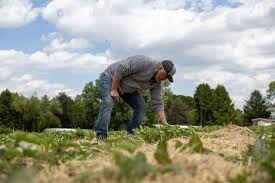

New Jersey’s identity has always been tied to the land.
Long before the state emerged as one of the nation’s densest economic corridors and one of America’s most strategically important transportation, pharmaceutical, logistics, and financial hubs, New Jersey built its reputation through agriculture. From the sprawling blueberry fields of Hammonton and the peach orchards of Gloucester County to the vineyards of South Jersey, cranberry bogs, apple farms, nurseries, greenhouses, and vegetable operations spread throughout rural communities, farming has remained deeply embedded within both the state’s economy and its cultural identity.
The phrase “Garden State” was never intended as marketing mythology.
It reflected reality.
Now, following one of the most economically devastating agricultural weather events New Jersey has experienced in decades, that identity is under extraordinary pressure.
Governor Mikie Sherrill’s declaration of a statewide State of Emergency following catastrophic April freeze damage marks a defining moment for New Jersey agriculture — not simply because of the staggering scale of the losses already confirmed, but because the disaster exposes the growing vulnerability of the state’s farming industry to increasingly volatile climate swings capable of collapsing entire harvest cycles in a matter of hours.
According to state officials and preliminary agricultural assessments, the April freeze event has already generated more than $300 million in crop losses across New Jersey, with many growers reporting destruction levels exceeding 30%, and some farms facing near-total devastation of critical seasonal crops.
For many producers, the losses are not abstract percentages on spreadsheets.
They represent an entire growing season erased before it truly began.
The damage originated from an unusually volatile weather pattern that unfolded across New Jersey during mid-April. After an extended stretch of abnormally warm early-spring temperatures accelerated bloom cycles throughout orchards, vineyards, berry farms, and other agricultural sectors, a sudden freeze descended across the state between April 19 and April 22, with temperatures plunging into the 20s precisely as vulnerable crops entered critical early growth stages.
That timing proved catastrophic.
In agriculture, timing often determines everything. Once buds emerge and flowering begins, crops become dramatically more vulnerable to sudden temperature collapses. What might normally be survivable cold weather during dormant winter periods becomes extraordinarily destructive once plants have entered active spring growth cycles.
That is exactly what happened across New Jersey.
Peaches, cherries, apples, pears, strawberries, blueberries, blackberries, grapes, plums, and numerous additional crops suffered extensive damage almost simultaneously across multiple regions of the state. In many orchards and vineyards, what appeared days earlier to be a promising growing season quickly transformed into large-scale agricultural loss.
Some growers now report destruction approaching or exceeding 90% in key fruit categories.
For an industry already operating within razor-thin economic margins, those losses are profound.
Governor Sherrill’s emergency declaration, issued through Executive Order No. 18, represents an attempt to rapidly mobilize government coordination, regulatory flexibility, and recovery infrastructure while positioning New Jersey to secure broader federal disaster assistance from the United States Department of Agriculture.
The move signals that state leadership views the freeze not as an isolated agricultural setback, but as a major statewide economic emergency with cascading implications extending far beyond farms themselves.
That broader economic reality cannot be overstated.
Agriculture in New Jersey generates more than $1.5 billion in annual wholesale economic value while supporting over 25,000 jobs tied directly and indirectly to farming operations, food production, nursery industries, greenhouse systems, agritourism, transportation, distribution, and local retail economies.
The damage therefore does not stop at the edge of farm fields.
Reduced crop output creates downstream consequences affecting wineries, roadside markets, food distributors, seasonal labor networks, restaurants, agritourism destinations, processing operations, transportation providers, and entire local economies built around seasonal agricultural activity.
Governor Sherrill acknowledged precisely that concern in her federal disaster designation request submitted to USDA Secretary Brooke Rollins.
The request emphasized that the impacts “extend beyond the field,” warning that downstream businesses, retail establishments, agritourism operations, and regional economies may all experience severe financial strain as reduced farm production ripples through broader economic systems over the coming year.
That warning appears increasingly credible.
Across South Jersey especially, agriculture functions not only as economic infrastructure but also as tourism infrastructure. Wineries, orchards, farm markets, berry-picking operations, vineyard events, and seasonal agricultural festivals collectively drive enormous visitor traffic throughout the summer and fall tourism seasons.
If crop yields collapse, those experiences become harder to sustain at full scale.
The concern is particularly acute for fruit growers and vineyard operators whose crops depend heavily on delicate spring bloom cycles. Tree fruit and berry sectors appear among the hardest hit, with some Salem County operations reportedly suffering between 50% and 100% crop losses depending on location and microclimate exposure.
For vineyards already managing the financial pressures associated with rising operational costs, labor shortages, weather unpredictability, and competitive distribution markets, the freeze arrives at an especially dangerous moment.
Yet notably, many wineries and growers throughout the state have already indicated they do not plan to sharply raise consumer pricing despite the losses.
That decision reflects both economic necessity and long-term survival strategy.
New Jersey’s agricultural sector understands that maintaining consumer loyalty remains critical during recovery periods. Growers increasingly view public support, local purchasing, agritourism participation, and direct-to-consumer sales as essential components of stabilization while federal and state relief efforts unfold.
New Jersey Secretary of Agriculture Ed Wengryn emphasized exactly that point while supporting the emergency declaration.
His remarks underscored that recovery will require both government coordination and public participation, encouraging residents to continue supporting local farms, wineries, and agricultural businesses throughout the recovery process.
That public support may become more important than many consumers fully realize.
Unlike some industries capable of rapidly scaling production back upward after disruption, agriculture operates through seasonal biological timelines that cannot easily be accelerated or reset. A destroyed harvest often means lost annual revenue with limited opportunity for recovery until the following growing season — assuming future conditions cooperate.
For perennial crops like peaches, grapes, apples, and berries, damage may also extend beyond a single year depending on vine and tree stress.
That longer-term uncertainty has elevated concern throughout the agricultural sector.
Senator Cory Booker described the freeze as unlike anything growers have experienced “in decades,” emphasizing the staggering scale of destruction that occurred within only a few hours. His support for federal disaster relief reflects growing bipartisan recognition that the event represents one of the largest single-weather agricultural disasters New Jersey has faced in recent memory.
The federal designation request therefore carries enormous importance.
If approved, it would unlock critical USDA assistance mechanisms capable of providing financial relief, emergency lending access, operational stabilization support, and broader recovery infrastructure for affected growers statewide. Without substantial federal involvement, many smaller and mid-sized operations could face significant difficulty surviving into future planting and production cycles.
At the same time, the freeze also intensifies broader conversations surrounding climate volatility and agricultural resilience in the Northeast.
New Jersey agriculture increasingly finds itself navigating unpredictable seasonal swings where unusually warm winters and early spring heat accelerate bloom timing only for sudden cold reversals to inflict catastrophic damage. These rapid transitions create precisely the kind of vulnerability witnessed during the April freeze event.
Farmers now face growing pressure to adapt operations around increasingly unstable climate behavior while simultaneously managing rising insurance costs, labor shortages, land development pressures, and fluctuating commodity markets.
That reality makes the current emergency more than simply a short-term weather crisis.
It may become a defining warning about the long-term structural challenges facing agriculture throughout the region.
And yet, despite the devastation, New Jersey’s farming industry remains remarkably resilient.
The state’s agricultural community has survived hurricanes, floods, droughts, labor crises, market disruptions, supply-chain instability, and economic downturns before. What distinguishes New Jersey agriculture is not simply productivity, but adaptability — the ability of growers, farm families, agricultural organizations, and local communities to repeatedly rebuild under difficult conditions.
That resilience is now being tested again on a historic scale.
For many New Jersey residents, the freeze may initially appear as an agricultural story occurring far from suburban neighborhoods or urban commercial corridors. In reality, its effects will likely become visible throughout the state over the coming year — in reduced local fruit availability, smaller harvests, altered agritourism seasons, economic strain on local businesses, and mounting pressure across food and farming systems already facing major structural challenges.
The losses unfolding now are not isolated to rural fields.
They touch restaurants, wineries, tourism economies, seasonal employment, community events, supply chains, retail markets, and the broader identity of the Garden State itself.
New Jersey’s farms are not simply businesses.
They remain part of the state’s historical foundation, cultural character, and economic future.
And after a freeze that erased hundreds of millions of dollars in crops almost overnight, the fight to protect that future has suddenly become far more urgent.