
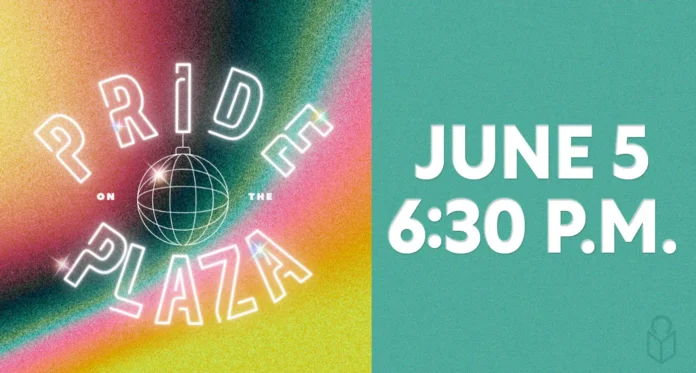

As summer begins to unfold across New Jersey, communities throughout the state are once again preparing for one of the most meaningful and celebratory times of the year: Pride season. But while many events across the region focus solely on spectacle or nightlife, Princeton’s rapidly growing “Pride on the Plaza” has evolved into something considerably deeper — a multi-generational public celebration built around visibility, acceptance, creativity, and genuine human connection.
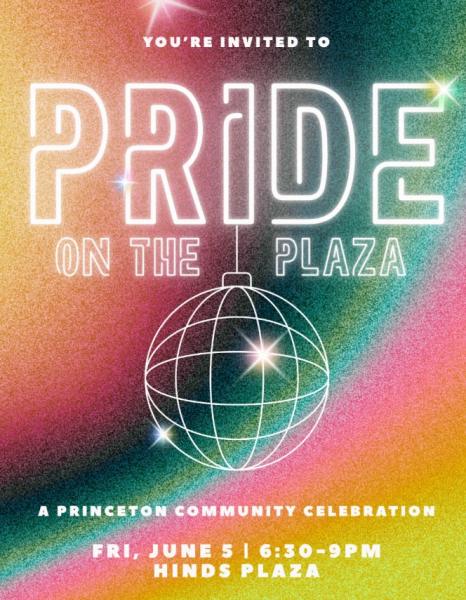
On Friday, June 5 from 6:30 PM to 9:00 PM, the Princeton Public Library will once again transform Hinds Plaza into a colorful, music-filled, open-air community gathering as “Pride on the Plaza” returns for its sixth annual edition. What began several years ago as a collaborative local celebration has now become one of Central New Jersey’s defining Pride Month events, drawing residents, families, students, artists, performers, advocates, and community organizations together into a shared public space where inclusion is not simply discussed, but actively lived.
Positioned directly in the cultural heart of downtown Princeton, the event reflects the continuing evolution of New Jersey’s public arts and civic programming landscape — one increasingly centered around accessibility, diversity, and experiences that invite broad participation across generations and backgrounds.
At its core, Pride on the Plaza is designed to be radically welcoming.
That philosophy shapes every aspect of the evening.
Unlike events that cater exclusively to nightlife crowds or narrowly defined demographics, Princeton’s celebration intentionally creates a fully all-ages environment where children, parents, students, seniors, longtime residents, first-time visitors, and LGBTQ+ community members can all occupy the same celebratory space together. The atmosphere is intentionally communal rather than exclusive, emphasizing participation, creativity, joy, and visibility over formality or performance alone.
This year’s event promises to continue expanding that spirit through music, dance, live entertainment, local partnerships, interactive activities, and public engagement designed to turn Hinds Plaza into one of the most energetic and affirming gathering spaces in New Jersey.
Anchoring the evening’s entertainment is DJ Darius the First, whose electrifying live set will provide the soundtrack for the outdoor dance party atmosphere that has become central to the event’s identity. Known for dynamic crowd engagement and genre-spanning musical selections, DJ Darius the First will curate a high-energy mix designed to keep the plaza active throughout the night while maintaining the event’s welcoming, family-friendly atmosphere.
Music, however, is only one part of the experience.

Organizers have continued shaping Pride on the Plaza into a multidimensional community festival that extends far beyond a traditional dance event. Guests attending this year’s celebration will encounter local organizations, interactive activities, community outreach opportunities, marketplace vendors, performances, and creative programming woven throughout the evening.
Among the featured appearances this year is drag artist Gym Da Hollow, whose participation adds another layer of performance artistry, theatricality, and LGBTQ+ cultural expression to the festivities. Drag performance has increasingly become one of the most visible and celebrated artistic forms within Pride programming nationwide, and events like Pride on the Plaza continue demonstrating how these performances can exist inside inclusive, welcoming public settings accessible to broad audiences.
The event’s marketplace component further reinforces its community-driven identity.
Local makers, creators, and small businesses will showcase handcrafted goods, art, and creative products throughout the evening, giving attendees the opportunity to directly engage with independent regional artists and entrepreneurs while contributing to the broader atmosphere of celebration and local support.
Importantly, organizers have also remained deeply attentive to accessibility and comfort.
While much of the event unfolds outdoors across Hinds Plaza, indoor space inside the Princeton Public Library Community Room will remain open throughout the evening for guests who may prefer quieter environments, conversation spaces, or opportunities to relax away from the dance floor atmosphere. This balance between energy and accessibility reflects a thoughtful approach that has helped distinguish Pride on the Plaza from many larger-scale festival environments.
The Princeton Public Library’s continued leadership role in the event also highlights the changing role libraries increasingly play within modern civic life.
Far beyond book circulation alone, institutions like Princeton Public Library have evolved into major community-building hubs that support public dialogue, arts programming, cultural celebration, education, accessibility, and social connection. Pride on the Plaza reflects that larger mission perfectly — utilizing public space not simply for entertainment, but for visibility, affirmation, and communal participation.
That mission becomes even more powerful through the event’s unusually broad coalition of co-sponsors and community partners.
This year’s Pride on the Plaza is co-sponsored by the Princeton Public Library alongside the Arts Council of Princeton, Center for Modern Aging Princeton, HiTOPS, McCarter Theatre Center, the Municipality of Princeton, and the Princeton Gender + Sexuality Resource Center. Together, these organizations represent a remarkable cross-section of New Jersey’s arts, education, advocacy, wellness, and civic leadership communities.
Their collective involvement demonstrates how Pride programming across New Jersey continues evolving beyond symbolic celebration into substantial institutional collaboration and community investment.
The event also arrives during a period when Princeton itself continues strengthening its position as one of New Jersey’s most culturally active and civically engaged communities.
Over the past decade, Princeton has increasingly emerged as a destination not only for higher education and historic tourism, but for arts programming, live performance, public events, literary culture, food experiences, family activities, and community-centered festivals that attract visitors from across the region. Pride on the Plaza now stands comfortably alongside many of the town’s most significant annual public gatherings.
Its continued growth reflects broader statewide cultural shifts as well.
Across New Jersey, municipalities and arts organizations are increasingly recognizing the importance of creating public programming that actively welcomes diverse audiences while encouraging participation rather than passive observation. Events like Pride on the Plaza succeed precisely because they feel less like performances being presented to a crowd and more like communities collectively creating something together.
That distinction matters.
Especially at a moment when many Americans continue searching for meaningful public connection in increasingly fragmented social environments, gatherings like this provide something increasingly rare: open civic spaces where people of different generations, identities, backgrounds, and experiences can celebrate side-by-side without barriers.
The emotional power of Pride events has always extended beyond entertainment alone.
At their best, they create visibility for people who may not always feel visible. They create safety for people who may not always feel safe. They create celebration for people who may not always feel celebrated.
And they remind communities that inclusion is not passive.
It is something actively built.
Pride on the Plaza captures that idea exceptionally well.
The dancing matters. The music matters. The performances matter. The energy matters. But underneath all of it is something even more important: the creation of a joyful public environment where everyone is welcomed exactly as they are.
As Hinds Plaza once again fills with music, color, movement, laughter, conversation, and celebration on June 5, the event will continue proving why it has become one of Princeton’s most beloved annual traditions.
Not simply because it entertains.
But because it brings people together in a way that feels increasingly valuable, increasingly necessary, and unmistakably human.
















