
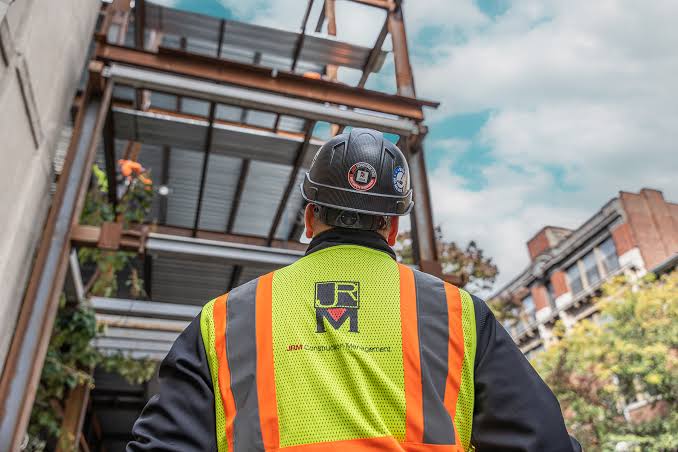

JRM Construction Management, the general contracting and construction management firm that co-founder and Chief Executive Officer Joseph P. Romano established in 2007 with a specific organizational philosophy — that a construction company’s quality of work is ultimately a function of the quality of the people doing it and the degree to which those people feel genuinely invested in the outcome — has received its 2026 Great Place To Work Certification. The recognition, which is granted based on direct employee survey responses rather than external evaluation, confirms what the company’s hiring and retention practices have been built to produce: an internal culture in which employees describe their work environment as one defined by honest management, meaningful responsibility, and the specific motivational dynamic that employee ownership creates when it is taken seriously rather than deployed as a marketing phrase.
The company’s connection to New Jersey is substantive and growing. JRM maintains an active office presence in the state, hires across project management, estimating, and field supervision roles in the New Jersey market, and has completed significant projects within the state — most recently a comprehensive façade and entry modernization of the Bergen Town Center shopping complex in Paramus, completed in August 2025 in partnership with Urban Edge Properties. The Bergen Town Center project, a major commercial renovation in one of the state’s most trafficked retail corridors, reflects the range of sectors and client types that JRM serves from its New York City headquarters and its regional offices: property owners and developers, Fortune 500 corporations, media and technology firms, major law firms, luxury retailers, hospitality groups, life sciences and healthcare organizations, and financial services companies. New Jersey, with its dense concentration of corporate campuses, life sciences facilities, luxury retail, and mixed-use development, represents exactly the kind of market where JRM’s approach to construction management — large-firm technical capability delivered through a boutique-style, top-down involved model — has particular relevance for clients who want both.
The Great Place To Work Certification is issued by the same organization that produces Fortune’s 100 Best Companies to Work For rankings, and its methodology is specific: the certification derives entirely from the percentage of employees who respond positively to the Trust Index survey, which asks about the experience of working at the company across dimensions including management credibility, fairness, camaraderie, and pride. The 2026 certification for JRM reflects employee responses that consistently clustered around several specific affirmations: that clients would rate JRM’s service as excellent, that management operates with honesty and integrity, that they feel proud to be part of the company, and that the environment welcomes and trusts new employees with meaningful work. These are not the generic satisfaction metrics that large-sample employee survey instruments typically optimize for — they are relational and purposive claims about what the daily experience of working at JRM actually produces.
The employee ownership dimension of JRM’s organizational structure is the element that most directly connects the certification’s findings to the company’s founding philosophy. Employee-owned companies — those organized under Employee Stock Ownership Plans or similar structures that give employees an equity stake in the firm — consistently outperform their conventional-ownership peers on employee engagement and retention metrics, and the reason is not difficult to understand: when the financial performance of the business is directly connected to the financial wellbeing of the people doing the work, the alignment between individual effort and organizational outcome is more immediate and more legible than in a conventionally structured company where equity accrues primarily to outside shareholders. At JRM, Romano’s articulation of that alignment in his statement about the 2026 certification is direct: as an employee-owned company, everyone has a stake in what is being built — for clients and for each other. The certification is meaningful, he noted, precisely because it comes from the employees themselves rather than from an external assessment that the company could manage or influence.
The practical expression of that ownership culture in JRM’s project delivery is what the company’s clients encounter on the job site and in the preconstruction process: a workforce that approaches client projects with the specific orientation that an owner brings to their own assets rather than the orientation of a contractor whose financial interest ends at the completion of the contract. Romano established JRM with a stated belief that the key to building lasting client relationships is taking ownership of every aspect of a project from the top down — a formulation that the employee ownership structure makes more than rhetorical, because the financial structure of the company gives the people executing that ownership orientation a direct stake in the reputation and performance that determines whether the client relationship extends beyond a single project.
JRM’s trajectory since its 2007 founding reflects a company that has expanded its geographic footprint — from New York City to New Jersey, California, and Florida — while maintaining the organizational coherence that rapid expansion typically erodes. Crain’s New York Business named the company to its Best Places to Work list in 2024, a recognition that preceded the Great Place To Work Certification and that established a pattern of workforce-culture recognition consistent with the ESOP structure’s stated objectives. The company works with over 200 artists and construction professionals annually across its projects and has built a client base that includes some of the most demanding institutional and corporate end-users in the markets it serves — organizations that have the resources to hire any contractor and the sophistication to evaluate the difference between construction management as a transactional service and construction management as a sustained partnership.
For New Jersey construction industry professionals and for the developers, property owners, and corporate occupiers who commission construction projects throughout the state, the 2026 Great Place To Work Certification represents something more specific than a human resources achievement. It is an indicator that the organizational culture JRM has been building since 2007 — the ownership mindset, the management integrity, the genuine investment of every employee in the quality of the outcome — has been substantiated by the people closest to the daily reality of the work. The Bergen Town Center completion in Paramus, the active New Jersey office and hiring pipeline, and now the 2026 certification together describe a company whose presence in New Jersey is not incidental to its identity but integral to the multi-market organization that Romano’s founding philosophy has been building toward for nearly two decades. Information about career opportunities with JRM in New Jersey and across the company’s other markets is available through the company’s careers page at jrmcm.com.
















