


Ken Ludwig’s Baskerville: A Sherlock Holmes Mystery has built its reputation as a genuinely distinctive piece of theater, written specifically as a highly kinetic, self-aware slapstick farce wrapped around a quick-change comedy thriller. While the script remains faithful to the core suspense driving Arthur Conan Doyle’s original mystery, its theatrical identity depends entirely on intense physical comedy and a genuinely extreme commitment to minimalist staging, making it as much a showcase for sheer performance athleticism as it is a traditional mystery production.
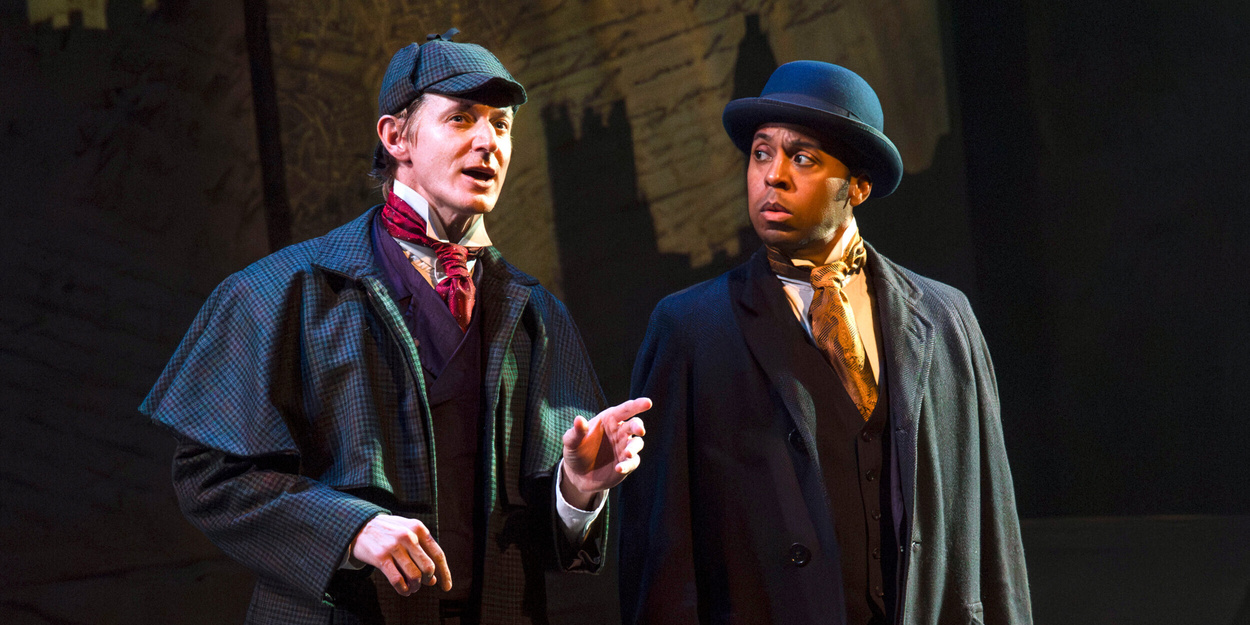
At the center of that theatrical identity sits the show’s genuinely audacious approach to casting. While Sherlock Holmes and Dr. Watson remain grounded as a consistent, traditional duo throughout, the remaining 30 to 40 characters populating the story are handled entirely by just three supporting performers, typically billed simply as Actor 1, Actor 2, and Actress 1. That structure forces those three actors into a genuinely relentless string of costume and character changes throughout the show, and critics consistently point to the production’s overall success or failure as hinging almost entirely on how impeccably that pacing gets executed. Actors routinely exit a scene as one character only to reenter mere seconds later from an entirely different wing, wearing a completely new costume, adopting a wildly different accent, or carrying new props specifically designed to instantly signal a shift in location or identity.
Supporting that hyper-speed transition style requires an equally deliberate approach to staging. Directors typically request sparse, genuinely fluid scenery specifically to accommodate the show’s warp-speed scene changes, favoring a largely blank stage background, a series of mobile doors, or digital projection screens over heavy, traditional set pieces. That minimalism allows productions to rapidly conjure Baker Street, bustling London train stations, and the murky, fog-filled moors central to the original Hound of the Baskervilles story, all without pausing the show’s relentless comedic momentum for a traditional scene change.
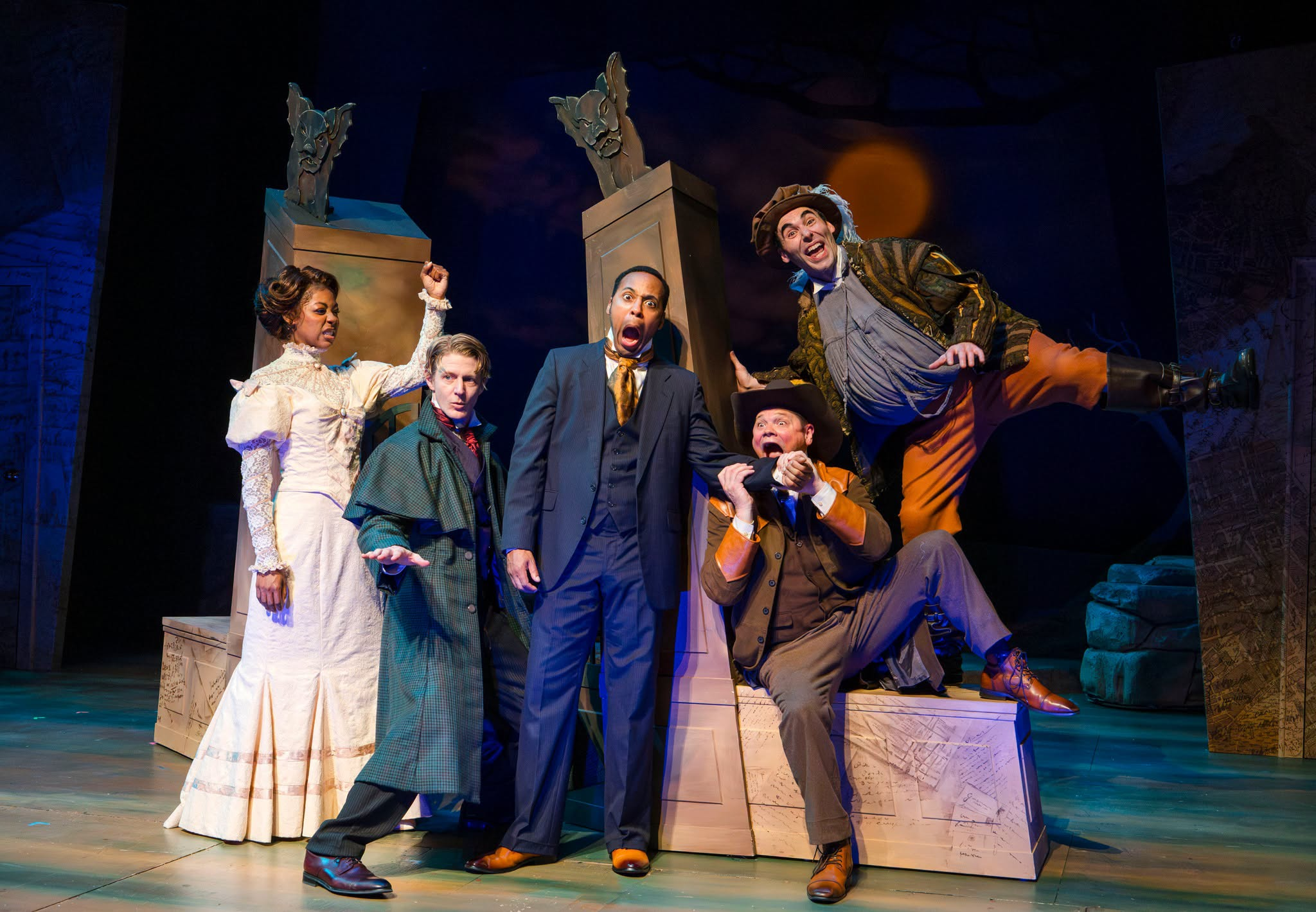
Regional productions of the show have consistently drawn praise for how skillfully individual creative teams manage that inherent chaos. One reviewer described walking away genuinely delighted after watching a small cast of versatile performers tackle dozens of wildly different roles in under two hours, admitting to being caught off guard by just how much detailed ingenuity went into keeping the rapid-fire character work coherent throughout the night. Another critic singled out a lead performance as Sherlock for successfully anchoring the audience through a mystery plot that runs noticeably stranger and more convoluted than a typical Holmes story, while noting the actor’s own performance loosened up considerably as the show progressed, allowing for an increasingly playful take on the character by the second act. A separate review offered a slightly more measured take, suggesting the material doesn’t always match the tight comedic acceleration found in some of Ludwig’s other work, while still praising the production’s abundance of wild comic action and its genuinely immersive atmosphere built around stormy moors, thick fog, and the eerie baying sound at the heart of the original mystery.
New Jersey audiences currently have their own opportunity to experience the production firsthand, as the Shakespeare Theatre of New Jersey is presenting a genuinely well received run of Baskerville on the Madison stage at the F.M. Kirby Shakespeare Theatre. Directed by Artistic Director Brian B. Crowe, the STNJ production leans on a genuinely sharp local creative team to pull off the show’s demanding technical requirements, including scenic design from Dick Block and intricate costume mechanics engineered by Austin Blake Conlee, both essential contributors given how much the show’s comedic success depends on flawlessly executing its rapid-fire character transformations without ever letting the audience catch the seams.
For theatergoers drawn to genuinely inventive stagecraft as much as clever mystery plotting, STNJ’s current Baskerville run offers a fitting showcase of exactly what makes this particular script such a beloved challenge for regional theater companies, three actors, dozens of characters, and a minimalist set built entirely around keeping pace with a story that never lets its own momentum slow down.
















