
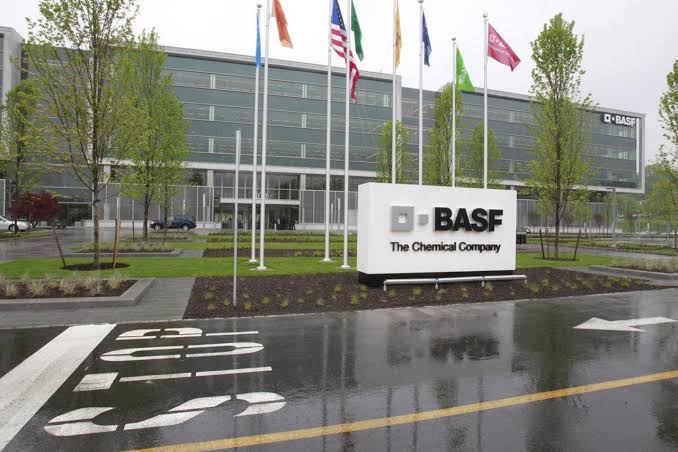

For many Americans, the BASF name brings back memories of cassette tapes, VHS tapes, and the familiar red-and-black logo that became synonymous with recorded music during the latter half of the twentieth century. Long before digital downloads, streaming platforms, and cloud storage transformed how media was consumed, BASF played a foundational role in the development of modern magnetic recording technology. While that chapter remains an important part of the company’s legacy, today’s BASF represents something far larger—a global technology and chemical leader whose innovations touch industries ranging from automotive manufacturing and clean energy to aerospace, environmental sustainability, and advanced materials.
That evolution continues with BASF Environmental Catalyst and Metal Solutions’ announcement of a new strategic distribution partnership with Topcast Aviation Supplies, a move designed to strengthen support for aerospace customers throughout East Asia, Southeast Asia, and Oceania. Although the agreement focuses on expanding BASF ECMS’s presence across one of the world’s fastest-growing aviation markets, it also underscores an important fact that often goes unnoticed outside the business community. The global headquarters for BASF Environmental Catalyst and Metal Solutions is located in Iselin, New Jersey, placing one of the company’s most technologically advanced divisions at the center of one of the state’s most significant corporate success stories.
For New Jersey, this announcement represents more than another international business agreement. It reinforces the state’s position as a global center for research, innovation, advanced manufacturing, and corporate leadership, where companies headquartered within its borders continue to influence industries and economies around the world.
The newly announced partnership with Topcast Aviation Supplies expands BASF ECMS’s ability to serve aerospace customers across a region experiencing sustained growth in commercial aviation, aircraft maintenance, and aerospace manufacturing. As airlines continue modernizing fleets and increasing capacity throughout the Asia-Pacific region, demand for specialized materials, filtration systems, catalyst technologies, and technical support continues to rise. By appointing Topcast as its distributor for East Asia, Southeast Asia, and Oceania, BASF ECMS is strengthening its regional supply network while ensuring customers have improved access to its portfolio of aerospace products and engineering expertise.
This strategic relationship reflects broader trends within the aviation industry. Airlines are investing in newer, more efficient aircraft, maintenance organizations are expanding their capabilities, and manufacturers continue seeking innovative technologies that improve performance while meeting increasingly stringent environmental and operational standards. BASF ECMS has built its reputation by developing solutions that address those challenges, making the new distribution agreement an important step in supporting continued growth throughout the global aerospace sector.
While the announcement focuses on international expansion, its operational significance begins in New Jersey.
BASF Environmental Catalyst and Metal Solutions conducts its global leadership operations from Iselin, where executives oversee a business responsible for developing technologies used throughout the automotive, industrial, aerospace, and environmental sectors. The division specializes in catalyst technologies that reduce vehicle emissions, industrial clean air systems, precious metals services, battery recycling initiatives, and advanced aerospace solutions that support commercial aviation around the world.
This distinction is significant because it illustrates the role New Jersey continues to play in the international economy. Rather than serving merely as a regional office, the Iselin headquarters directs worldwide operations that influence industries across multiple continents. Decisions made in Middlesex County ultimately affect manufacturers, airlines, industrial facilities, and technology partners operating thousands of miles away.
The company’s New Jersey footprint extends well beyond executive leadership. BASF ECMS maintains a substantial research and technical presence at its Union Technical Center in Union, New Jersey, one of the organization’s premier innovation facilities. Scientists, engineers, chemists, and technical specialists working at the center develop technologies designed to improve emissions control, increase industrial efficiency, advance catalyst performance, and support the recovery and recycling of valuable precious metals used throughout modern manufacturing.
The facility represents the type of advanced research infrastructure that has helped establish New Jersey as one of the nation’s leading centers for scientific innovation. Research conducted there contributes directly to products used in automobiles, industrial manufacturing, environmental protection systems, aerospace applications, and numerous other technologies that quietly shape everyday life.
BASF’s relationship with innovation, however, stretches back nearly a century.
In 1934, the company introduced the world’s first practical magnetic recording tape, an invention that fundamentally changed the future of audio recording. Before magnetic tape, recording and reproducing sound presented significant technical limitations. BASF’s breakthrough created new possibilities for broadcasters, musicians, recording studios, researchers, educators, and businesses by providing a reliable medium capable of capturing and preserving high-quality audio.
That innovation laid the groundwork for decades of technological advancement within the recording industry. As magnetic recording evolved, BASF remained at the forefront of media development, eventually introducing the world’s first commercial chromium dioxide audio cassette in 1971. Chrome cassette technology provided improved fidelity, lower noise, and greater durability, quickly becoming the preferred choice for music enthusiasts and professionals seeking superior recording performance.
Throughout the 1970s, 1980s, and much of the 1990s, BASF became one of the most recognizable names in consumer recording media. Its cassette tapes were found in homes, automobiles, classrooms, and professional recording studios around the world. The company also became a major producer of VHS videotapes and floppy disks during the height of the analog and early personal computing eras, establishing a reputation for quality and reliability that remains familiar to generations of consumers.
As digital technologies transformed media consumption during the late twentieth century, BASF made a strategic decision that would redefine its future. Rather than remaining focused on declining consumer recording media markets, the company redirected its resources toward advanced chemistry, industrial materials, environmental technologies, and scientific research. Its consumer media business eventually transitioned to EMTEC, while BASF concentrated on becoming one of the world’s largest and most diversified chemical and technology companies.
That transition proved remarkably successful.
Today, BASF operates across numerous industries where scientific expertise drives innovation. Its technologies support cleaner transportation through advanced emissions control systems, improve manufacturing efficiency through catalyst development, enable more sustainable industrial processes, and contribute to research involving battery materials, recycling technologies, and environmental protection.
Among BASF ECMS’s most important areas of expertise is emissions control technology. Modern catalytic converters depend upon sophisticated catalyst formulations capable of reducing harmful pollutants while maintaining vehicle performance and meeting increasingly demanding environmental regulations. Developing these technologies requires extensive scientific research involving chemistry, materials science, engineering, and precision manufacturing—disciplines that have become central to BASF ECMS’s global operations.
Equally important is the company’s leadership in precious metals management. Platinum, palladium, and rhodium play essential roles in catalyst technologies used throughout the automotive and industrial sectors. Through advanced recovery and recycling processes, BASF ECMS helps recover these valuable materials from spent products, reducing waste while supporting more sustainable manufacturing practices. As industries place greater emphasis on resource conservation and supply chain resilience, these capabilities continue growing in strategic importance.
The aerospace sector represents another critical area of expansion. Commercial aviation depends upon highly specialized products capable of meeting rigorous safety, durability, and performance standards. BASF ECMS develops technologies supporting aircraft cabin air quality, filtration systems, specialty materials, and other applications where precision engineering and consistent quality are essential. The partnership with Topcast Aviation Supplies enhances the company’s ability to deliver those technologies efficiently throughout one of the world’s most dynamic aviation markets while strengthening relationships with airlines, maintenance providers, and aerospace manufacturers across the Asia-Pacific region.
For New Jersey, announcements such as this highlight the extraordinary concentration of global business leadership operating within the state. While many residents recognize New Jersey’s strengths in pharmaceuticals, biotechnology, logistics, telecommunications, and financial services, companies like BASF ECMS demonstrate that the state also serves as a global center for industrial innovation and advanced engineering. Research laboratories, technical centers, manufacturing facilities, and corporate headquarters located throughout New Jersey continue producing technologies that influence industries far beyond the state’s borders.
The BASF story also serves as a reminder that innovation rarely stands still. A company once known primarily for producing magnetic recording tape evolved into an international leader in chemistry, environmental technologies, advanced materials, and industrial engineering without abandoning the spirit of innovation that defined its earliest achievements. Its history reflects an ability to anticipate technological change, invest in scientific research, and continually adapt to new markets while maintaining a commitment to solving increasingly complex global challenges.
The announcement of BASF ECMS’s partnership with Topcast Aviation Supplies is therefore more than a business expansion. It represents another milestone in the continuing evolution of a company whose influence spans generations of technological progress. From pioneering magnetic recording in the 1930s to advancing cleaner transportation, sustainable manufacturing, and aerospace innovation today, BASF continues demonstrating how scientific research and strategic investment can create lasting global impact.
For New Jersey, it is another reminder that some of the world’s most important technological decisions are not made only in Silicon Valley, New York, London, or Frankfurt. They are also made in offices, laboratories, and research facilities across the Garden State, where internationally recognized companies continue shaping industries that define the modern world. BASF Environmental Catalyst and Metal Solutions stands as one of those companies, and its latest global aerospace partnership further reinforces New Jersey’s position as a state where innovation is not simply encouraged—it is engineered, developed, and exported to the world.
















