
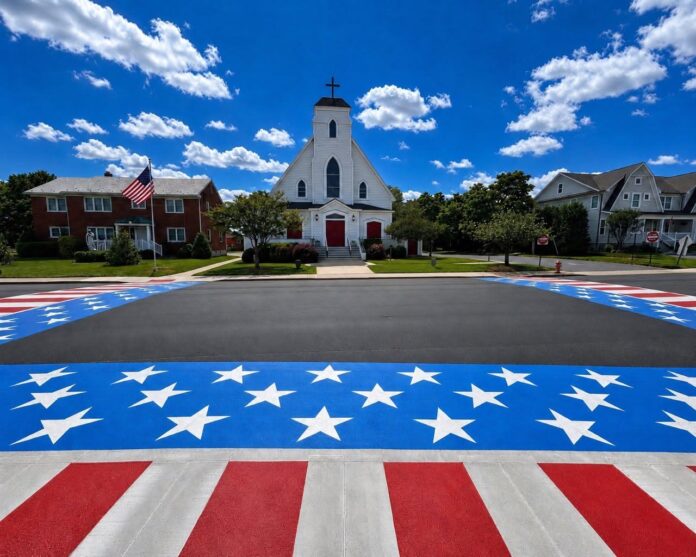

Some celebrations are measured in fireworks. Others are measured in footsteps. When an entire community lines a main street — flags out, bands playing, children perched on curbs — there is a communal act happening that no stadium event or waterfront spectacular can fully replicate. A parade moves through a town the way memory moves through a family: it follows a path, it carries the past forward, and it reminds everyone watching that they are part of something that began long before them and will continue long after. In 2026, as the United States reaches the extraordinary threshold of its 250th year of independence, New Jersey is honoring that tradition with one of the most ambitious and historically layered parade seasons the state has ever assembled.
Dozens of marches are confirmed across all 21 counties, ranging from century-old civic processions in Bergen County to officially designated Semiquincentennial parades bearing the full weight of the RevolutionNJ initiative — the state’s sweeping commemoration of 250 years of American liberty. Some of these events are intimate enough that spectators know half the people marching past them. Others will draw tens of thousands of residents and visitors to the streets of New Jersey’s most historically significant communities. Together, they form a portrait of a state that takes its role in American history seriously, and that understands, perhaps better than most, exactly what there is to celebrate on July 4, 2026.
Why New Jersey’s Parades Carry Special Weight This Year
The significance of the 2026 parade season in New Jersey cannot be separated from the state’s foundational place in the American story. The Revolution was not a distant event here — it was fought on this ground, in these towns, along these roads. The Battle of Trenton. The Battle of Princeton. The Battle of Monmouth. Washington’s crossing of the Delaware. The Continental Army’s winter at Morristown. The supply lines that kept the Revolution alive ran through New Jersey farms and communities, and the people of this state paid an enormous price for the nation’s independence before that independence was even secured.
RevolutionNJ, the state’s official 250th anniversary initiative, was created in recognition of that legacy. It is not a generic birthday celebration — it is a structured, historically informed effort to connect the New Jersey of 2026 to the New Jersey of 1776, and to ensure that the communities where American history actually happened take their rightful place at the center of the national Semiquincentennial commemoration. The parades carrying official America 250 and RevolutionNJ designations this summer are not simply civic events. They are historically grounded ceremonies that place the people marching and the people watching in direct dialogue with 250 years of American memory.
The Official America 250 and RevolutionNJ Parades
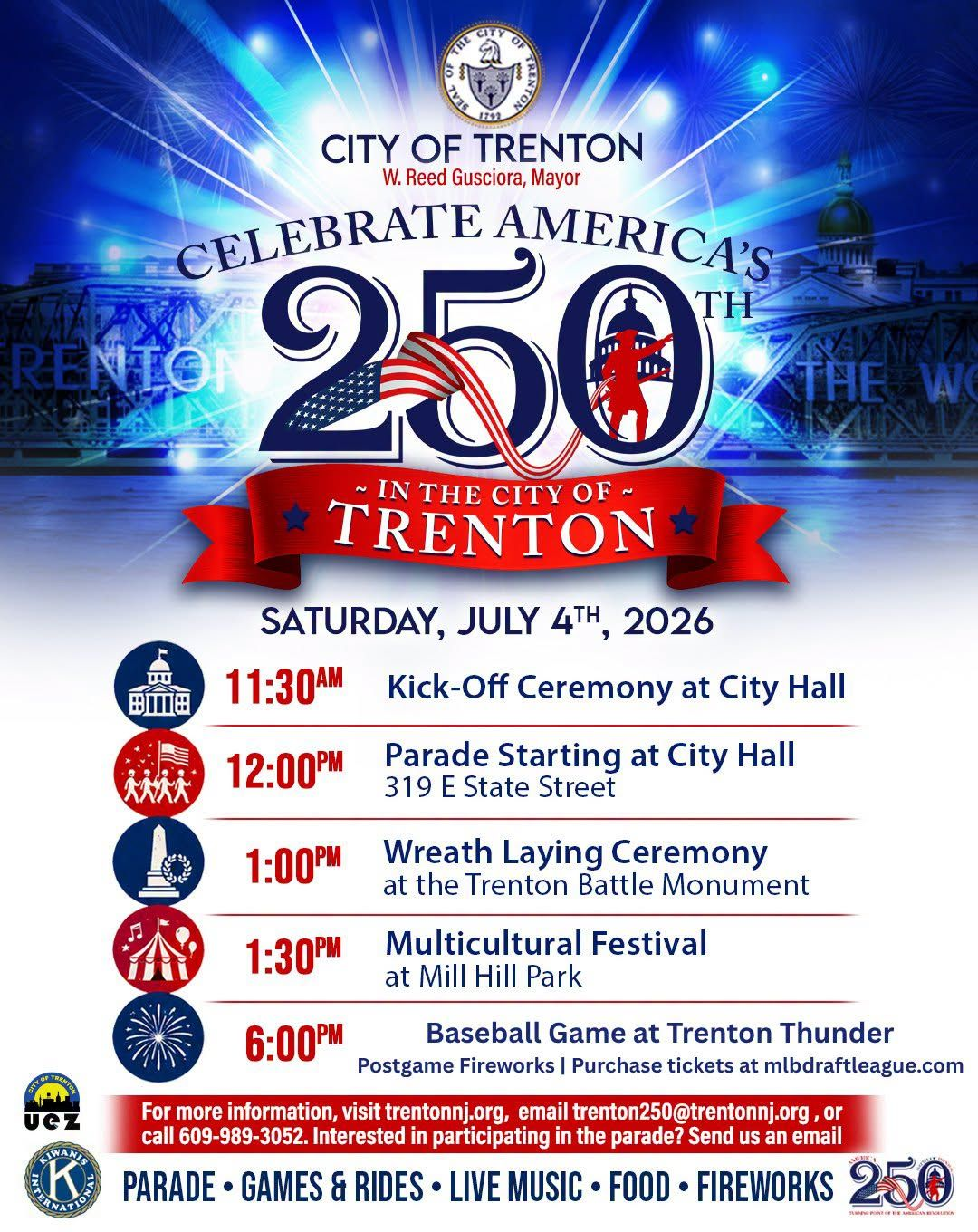
At the center of the state’s official Semiquincentennial parade calendar is the Trenton Multi-Cultural Parade, which steps off down historic State Street in the capital city on July 4. Trenton’s claim to the American founding story is as strong as any city’s in the nation — this is where Washington’s army crossed the Delaware and turned the tide of the Revolution on a frozen December morning, and where the outcome of American independence was arguably decided. The Multi-Cultural Parade honors that history while also reflecting the full complexity of the community that calls Trenton home today, weaving together the threads of the city’s many cultures into a single procession down the street that leads to the statehouse. It is one of the most symbolically complete parade experiences available anywhere in New Jersey on July 4.

In Union County, the Scotch Plains Revolution 250 Parade has become one of the signature events of the state’s Semiquincentennial calendar. This is a march built around historical substance — period elements, Revolutionary War heritage programming, and community participation that reflects Scotch Plains’ deep roots in the region’s founding era. The parade routes toward the historic Shady Rest Country Club, a site of profound American significance as the first African American-owned country club in the United States, adding a layer of layered national memory that makes the Scotch Plains celebration one of the most intellectually rich parade destinations of the season. The full festival surrounding the march runs across two days, incorporating reenactments and community programming that reward participants who treat it as a full experience rather than a single parade stop.
In Monmouth County, Middletown’s “America’s Big Birthday Parade” takes its historic designation from the ground on which it marches. Middletown sits within the terrain of the Battle of Monmouth — one of the largest and most strategically significant engagements of the Revolutionary War — and the Church Street parade route is timed and programmed specifically to acknowledge that legacy. The Battle of Monmouth marked a turning point in how the Continental Army fought, and the town’s Semiquincentennial parade carries that history with it down every block of its route.
Rounding out the official America 250 designated marches, Milltown’s America 250 Parade in Middlesex County brings the state’s Semiquincentennial initiative to central New Jersey with the full backing of the RevolutionNJ program. Milltown is a community with a strong sense of local identity and a tradition of civic participation that makes its designated parade a genuinely felt celebration rather than a ceremonial formality.
Historic Multi-Parade Traditions That Define the Season
Not every great New Jersey Fourth of July parade is measured by its RevolutionNJ designation. Some of the most beloved marching traditions in the state have been running long enough that the parades themselves have become historical events worth attending for their own sake.
In Bergen County, Ridgefield Park’s 4th of July Celebration stages two distinct parades in a single morning — a format that is nearly unique in the state and has made Ridgefield Park a destination for families who want the full breadth of the parade experience. The Baby and Youth Parade comes first, a beloved community tradition that puts the youngest residents at the center of the celebration, followed immediately by the historic Main Civic Parade, which has been running for over a century. A hundred-year parade tradition is not something that can be manufactured or replicated in a newer community, and Ridgefield Park’s dual-parade format deserves recognition as one of the most authentically rooted July 4 events in North Jersey.

Down at the Jersey Shore, the Wildwood Baby & Pooch Parades fold into a week-long America 250 celebration that captures exactly the kind of joyful community spirit the holiday was built around. The Baby Parade is a cherished shore tradition, and the separate Pooch Parade — a patriotic march for four-legged Wildwood residents — has become its own beloved fixture. The combination of these two processions within a larger Semiquincentennial week of programming makes Wildwood one of the more whimsically complete July 4 destinations on the calendar.
Landmark Community and Shore Parades Across the State
Beyond the flagship and historically designated events, New Jersey’s community parade tradition runs deep and wide, covering every region of the state with marches that reflect the character of the towns that host them.
In Burlington County along the Delaware River, Riverton’s 4th of July parade anchors a full slate of traditional holiday festivities that make the entire day feel like a throwback to the kind of Independence Day celebration that has almost disappeared from modern American life. Riverton is one of those towns that does the holiday with a sincerity and completeness that rewards the detour.
In Bergen County, Ridgewood’s USA 250 Bash opens its celebration with an early morning flag-raising ceremony at Wilsey Square before launching into a massive town-wide parade that draws one of the largest crowds in the county. The combination of a formal flag ceremony and a full-scale community march gives Ridgewood’s July 4 a structured progression that builds genuine patriotic momentum through the morning hours.
Morris County is well represented with the Chatham Independence Day Parade, one of the county’s premier traditional marching routes, and the Florham Park 4th of July Parade, a grand community march that leads into a multi-generational town festival. Both events reflect Morris County’s strong tradition of community investment in the holiday, and both draw the kind of loyal annual attendance that speaks to how deeply embedded these parades are in the local calendar.
In Bergen County, the Oradell Fourth of July Parade follows its classic route from Third Street and Oradell Avenue straight to Memorial Field — a tight, walkable procession through a community that has the neighborly character that makes a small-town parade feel nothing like a big-city event. Down in Atlantic County, Galloway Township’s parade routes through regional neighborhoods to serve as the anchor of a highly attended coastal celebration, while Glen Rock’s 4th of July Parade steps off near Glen Rock High School to bring out thousands of red, white, and blue spectators in one of Bergen County’s most spirited annual marching traditions.
In Hunterdon County, Lebanon Borough’s parade routes from Sutton Place to Holjes-Shepard Memorial Park in a march that stands as one of the oldest established parade traditions in the region. The Lebanon parade is the kind of event that grandparents bring grandchildren to because they were brought by their own grandparents — that continuity of participation is what separates a true parade tradition from a scheduled event.
The Jersey Shore contributes two distinctly different parade experiences. The Ocean City South End Bike Parade begins around 40th Street and Asbury Avenue in a beloved beach community tradition that gives the morning a looser, more personal feel than a formal civic march — kids decorate their bikes, families walk alongside, and the whole procession has the easy energy that the shore does best. Further south, the Strathmere 4th of July Parade steps off from the local firehouse and marches south along Commonwealth Avenue in one of the most intimate and genuinely local parade experiences available on the Jersey Shore, where the community is small enough that the parade feels like it belongs to everyone watching it.
Rounding out the statewide lineup, Pitman’s Independence Day Parade in Gloucester County has built a particular reputation for the quality and creativity of its float competition. A small-town parade with a highly competitive float contest is exactly the kind of civic tradition that keeps local pride alive and ensures that the holiday means something specific in the community that celebrates it, rather than blending into the generic backdrop of national programming.
Experiencing New Jersey’s 2026 Parade Season
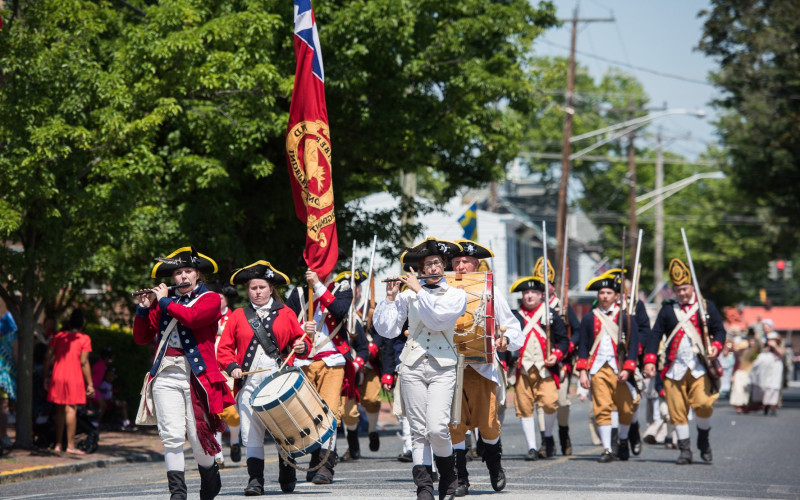
With parades confirmed across all 21 counties and events ranging from century-old Bergen County civic traditions to officially designated Semiquincentennial marches rooted in Revolutionary War battle sites, the 2026 Fourth of July parade season in New Jersey offers more variety and historical depth than any single day could contain. Planning matters more than usual this year given the scale of programming, and a few considerations are worth building into any parade itinerary.
The official America 250 events in Trenton, Scotch Plains, Middletown, and Milltown will draw regional attendance beyond the local base, and arriving early to secure good viewing positions along these routes is strongly recommended. Trenton in particular, given its capital city location and the State Street routing of the Multi-Cultural Parade, will see significant inbound traffic and warrants a transit-first approach — NJ Transit connections to the capital are reliable and eliminate the parking calculus entirely.
For families with young children, the Ridgefield Park dual parade format and the Wildwood Baby and Pooch Parades offer the most child-centered experiences on the calendar, with programming built around younger participants in a way that the larger civic marches are not. Shore families based in Ocean City or the surrounding communities will find the South End Bike Parade and the Strathmere march to be the most naturally integrated into a full beach day, with both events scheduled to clear the morning and leave the afternoon open.
The Scotch Plains Revolution 250 festival, running across two days with historical reenactments and community programming alongside the parade itself, is worth a dedicated visit for anyone interested in the deeper history that the Semiquincentennial is commemorating. This is not a parade you attend on the way to something else — it is the destination.
The Road Has Always Led Here
Two hundred and fifty years of American independence is a span of time that stretches the imagination. The nation that declared itself free in Philadelphia in 1776 and fought to make that declaration real on the fields of New Jersey could not have conceived of the country that exists today — and yet the thread connecting that moment to this one is unbroken. Every July 4 parade that has ever marched through a New Jersey town is part of that thread: a recurring act of collective memory that says the date matters, the history is real, and the community gathered on these sidewalks chooses to honor both.
In 2026, that act of collective memory carries special weight. The people who line the streets of Trenton and Scotch Plains and Middletown and Ridgefield Park and Pitman and Ocean City this summer are doing what New Jersey communities have done every Fourth of July since the nation was young — and they are doing it at a moment when the full arc of 250 years is visible in a way it can only be once in a lifetime. The bands will play, the floats will roll, the children will wave their flags, and New Jersey will march forward into its next chapter the same way it has always moved: together, and with intention.
Explore New Jersey will continue covering America 250 and RevolutionNJ celebrations throughout the summer season.
















