
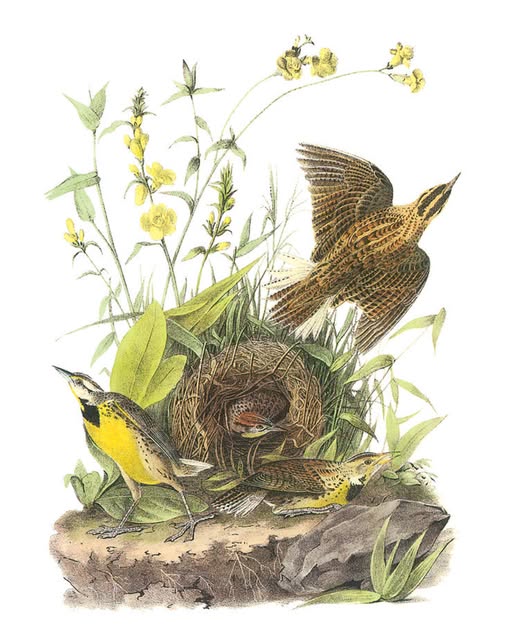

The Morris Museum has once again demonstrated why it remains one of New Jersey’s most distinctive cultural institutions with the opening of an exhibition that invites visitors to experience American art history through an entirely new perspective. Bringing together original hand-colored prints from John James Audubon’s monumental Birds of America alongside an extraordinary collection of mechanical singing birds, the exhibition offers a rare opportunity to explore the intersection of fine art, scientific observation, craftsmanship, natural history, and mechanical innovation within a single gallery experience. The presentation is more than an exhibition of treasured objects; it is a thoughtful examination of humanity’s enduring fascination with birds and the many ways artists, inventors, collectors, and naturalists have sought to capture their beauty across generations.
Located in Morris Township, the Morris Museum has long distinguished itself among New Jersey’s cultural destinations by presenting exhibitions that challenge conventional museum experiences. Rather than limiting visitors to traditional displays of paintings or sculpture, the institution frequently combines fine art, history, science, music, decorative arts, and technology into immersive exhibitions that encourage broader conversations about creativity and innovation. The newest exhibition continues that tradition, pairing one of the most celebrated artistic achievements in American history with remarkably intricate mechanical creations that blur the boundaries between engineering and art.
At the center of the exhibition are original hand-colored engravings from Birds of America, the landmark publication created by John James Audubon between 1827 and 1838. Widely regarded as one of the most ambitious natural history projects ever undertaken, the collection transformed the study and artistic representation of wildlife through illustrations that combined scientific observation with dramatic composition. Audubon departed from the static style that had characterized many earlier ornithological works, instead portraying birds in lifelike poses that conveyed movement, behavior, habitat, and personality. His illustrations reflected careful field observation while simultaneously elevating bird illustration into the realm of fine art.
Nearly two centuries after their creation, Audubon’s prints continue to command worldwide attention for both their artistic mastery and historical significance. Their scale alone remains remarkable. Produced in what became known as “double elephant folio” format, the oversized prints allowed birds to be depicted at or near life size, giving viewers an unprecedented appreciation for anatomical detail, feather structure, coloration, and natural posture. Each engraving was painstakingly hand-colored, ensuring that every finished print represented an extraordinary collaboration between artistic vision and meticulous craftsmanship.
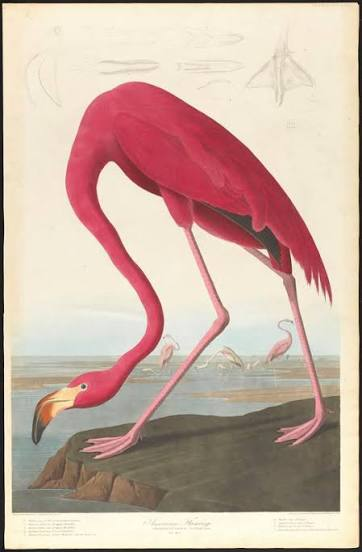
The Morris Museum’s presentation allows modern audiences to encounter these celebrated works outside the pages of rare books or private collections. Seeing the original prints firsthand offers an experience impossible to duplicate through digital reproductions or photographs. Subtle variations in color, delicate engraving techniques, and the remarkable precision of the hand-coloring process become immediately apparent, revealing the extraordinary labor invested in every individual image.
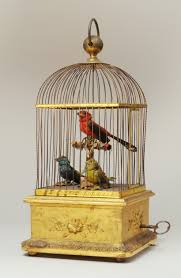
Yet what distinguishes this exhibition from more traditional presentations of Audubon’s work is its unexpected dialogue with another remarkable artistic tradition: mechanical singing birds. These intricate automata represent centuries of engineering ingenuity and decorative craftsmanship, demonstrating humanity’s fascination with recreating the sounds, movements, and behavior of birds through increasingly sophisticated mechanical design.
Mechanical songbirds have captivated audiences since the eighteenth and nineteenth centuries, when European artisans developed extraordinarily complex clockwork mechanisms capable of producing realistic birdsong while animating delicate feathered figures. Hidden gears, miniature bellows, precisely engineered cams, tiny whistles, and elaborate mechanical assemblies worked together to create performances that astonished viewers long before the age of electronics. Often housed within elegant boxes, clocks, jewelry, decorative objects, or luxury automata, these creations represented some of the highest achievements of precision engineering available during their era.
The pairing of Audubon’s illustrations with mechanical birds creates a compelling conversation across artistic disciplines. While Audubon sought to preserve the living presence of birds through observation and illustration, mechanical artisans pursued the equally ambitious goal of recreating their movement and song through mechanical invention. Both traditions reveal a profound appreciation for the natural world while demonstrating how artists and inventors have continually drawn inspiration from wildlife.
The exhibition encourages visitors to consider how different generations interpreted nature through the technologies available to them. Audubon’s field sketches, copperplate engraving process, and hand-coloring techniques represented cutting-edge artistic production during the early nineteenth century. Mechanical songbirds similarly embodied the technological sophistication of master clockmakers and engineers whose innovations anticipated many principles later employed in modern automation and robotics.
Viewed together, these collections reveal that scientific curiosity and artistic expression have rarely existed independently. Throughout history, advances in observation, engineering, and craftsmanship have consistently expanded humanity’s ability to document, celebrate, and better understand the natural world.
For New Jersey audiences, the exhibition also reinforces the growing importance of museums as interdisciplinary educational institutions. Contemporary museum experiences increasingly move beyond traditional object display, instead encouraging visitors to connect art with broader historical, scientific, technological, and cultural narratives. The Morris Museum has embraced that philosophy for years, presenting exhibitions that appeal equally to art enthusiasts, historians, educators, students, engineers, musicians, collectors, and families seeking intellectually engaging cultural experiences.
The timing of the exhibition is particularly significant as interest in wildlife conservation, environmental stewardship, and biodiversity continues to grow. Although Audubon created his illustrations during the nineteenth century, many of the issues surrounding habitat preservation and species protection remain deeply relevant today. His work documented North American birdlife during a period of rapid expansion and environmental transformation, preserving visual records of species whose populations would later experience significant decline due to habitat loss, industrialization, pollution, and changing land use.
Modern audiences often encounter Audubon’s illustrations not only as masterpieces of American art but also as historical documents that capture ecological conditions nearly two hundred years ago. Comparing those observations with today’s conservation efforts offers visitors an opportunity to reflect on both environmental change and ongoing initiatives to protect bird populations across North America.
New Jersey itself plays a vital role in those conservation efforts. The state serves as an essential migratory corridor within the Atlantic Flyway, one of North America’s most important bird migration routes. Each year millions of birds travel through New Jersey’s forests, marshes, beaches, rivers, and coastal habitats during seasonal migrations connecting breeding grounds with wintering habitats. From the Highlands to the Delaware River Valley and from the Pine Barrens to the Jersey Shore, diverse ecosystems support hundreds of bird species throughout the year.
That ecological importance makes the Morris Museum’s exhibition especially meaningful for local audiences. Visitors can appreciate Audubon’s artistic achievements while recognizing that many of the birds depicted in his illustrations continue to inhabit landscapes found throughout New Jersey. Birdwatching has become one of the state’s fastest-growing outdoor recreational activities, supported by numerous parks, wildlife refuges, nature centers, and conservation organizations dedicated to protecting critical habitats for resident and migratory species alike.
The exhibition also highlights the remarkable craftsmanship behind both collections. Audubon’s prints required exceptional coordination among artists, engravers, printers, and colorists working through labor-intensive processes that demanded extraordinary technical skill. Likewise, master makers of mechanical birds combined metallurgy, woodworking, watchmaking, acoustics, sculpture, textiles, and decorative arts into remarkably sophisticated objects that continue to fascinate engineers and historians centuries later.
In many respects, both traditions anticipated today’s interdisciplinary approach to innovation. Neither could have been achieved through artistic talent or engineering expertise alone. Success required collaboration across multiple disciplines, illustrating how creativity often flourishes where different forms of knowledge intersect.
Visitors to the Morris Museum will discover that the exhibition unfolds as more than a chronological presentation of historical artifacts. Instead, it offers an immersive meditation on observation, imagination, invention, and the enduring human desire to understand the natural world. Every Audubon print reflects countless hours spent studying birds in their native environments, while every mechanical songbird demonstrates extraordinary ingenuity devoted to reproducing nature’s elegance through mechanical precision.
For collectors and historians, the opportunity to view original Birds of America prints remains exceptionally rare. Complete editions of Audubon’s monumental publication rank among the most valuable illustrated books ever produced, with surviving sets carefully preserved by major museums, universities, libraries, and private collectors worldwide. Individual prints similarly occupy an important place within American art history, admired for both their technical excellence and historical significance.
The exhibition further reinforces the Morris Museum’s reputation as one of New Jersey’s most innovative cultural destinations. While larger metropolitan museums often dominate national attention, institutions throughout New Jersey continue presenting exhibitions of exceptional quality that attract visitors from across the region. By combining internationally significant artworks with distinctive collections rarely exhibited together, the Morris Museum demonstrates how thoughtful curatorial vision can create experiences that rival those found anywhere in the country.
As cultural institutions increasingly seek meaningful ways to engage contemporary audiences, exhibitions that connect art, science, history, technology, and conservation offer particularly lasting value. They encourage visitors not simply to observe remarkable objects but to consider the broader stories those objects tell about human curiosity, artistic ambition, technological progress, and our evolving relationship with the natural environment.
The Morris Museum’s latest exhibition succeeds precisely because it refuses to isolate these narratives. Instead, it reveals how illustration, engineering, music, natural history, craftsmanship, and scientific observation have long informed one another, producing works whose influence extends far beyond their original purpose. Whether admired for their artistic brilliance, historical importance, technical ingenuity, or ecological relevance, the rare Audubon prints and remarkable mechanical songbirds together create one of New Jersey’s most compelling museum experiences of the year. For residents, visitors, educators, collectors, and anyone interested in the rich intersection of art and innovation, the exhibition offers a memorable reminder that some of history’s greatest achievements emerge when creativity and curiosity take flight together.
















