

The week ending June 28, 2026 delivered a compressed summary of the central tensions defining Governor Mikie Sherrill’s first year in office: a state government navigating a structural budget deficit while attempting to protect residents from the compounding effects of federal policy changes in Washington, advancing landmark environmental legislation that the fossil fuel industry is preparing to litigate, and managing the practical demands of being the gateway to a World Cup summer with transit infrastructure that has never been tested at this scale. The NJ Spotlight News Reporters Roundtable captured the breadth of the week’s policy action, and what it revealed is a Trenton in genuine motion — not the paralytic gridlock that defines too many state capitals at budget time, but a political environment where consequential decisions are being made under pressure and with real stakes for every household in the Garden State.
The June 30 budget deadline that has structured months of negotiation produced an agreement in the final week, the state’s hurricane season risk profile drew fresh attention from climate experts, landmark corporate accountability legislation moved closer to a floor vote, and the question of who pays for artificial intelligence infrastructure’s enormous resource demands landed in front of the Legislature with unusual urgency. Each story is, at its core, the same story: who bears the cost of the choices New Jersey is being asked to make, and who gets the relief.
The Budget Deal: What StayNJ Survived, What It Lost, and What the Numbers Actually Mean
Governor Sherrill, Senate President Nick Scutari, and Assembly Speaker Craig Coughlin announced a budget agreement last week that resolves the central legislative confrontation of Sherrill’s first months in office and allows the state to meet its constitutionally mandated June 30 budget deadline without the government shutdown that a failure to reach consensus would have triggered. The $60.7 billion spending plan — the largest in New Jersey history — was finalized around a framework that cuts the state’s structural deficit roughly in half, continues full pension payments at $7.3 billion, fully funds the school aid formula at $12.4 billion, expands the Child Tax Credit, and increases the state’s budget surplus to provide insulation against potential federal funding reductions affecting Medicaid, food assistance, and healthcare programs.
The most contested element of the negotiation was the fate of StayNJ, the senior property tax relief program championed by Assembly Speaker Coughlin and widely credited with giving thousands of New Jersey seniors the financial justification to remain in a state where property tax burdens have made retirement increasingly untenable. The program, approved in 2023 and only recently beginning to issue its first quarterly checks in 2026, had been targeted in Sherrill’s original March budget for significant reductions: she proposed cutting the income eligibility threshold from $500,000 to $250,000 and reducing the maximum benefit from $6,500 to $4,000. Those changes would have affected seniors across the income spectrum, including the middle-class homeowners who were the program’s intended primary beneficiaries.
The compromise that emerged from closed-door negotiations adjusted those parameters in ways that reflect both the fiscal pressure Sherrill was managing and the political reality Coughlin was defending. The income eligibility threshold will be lowered from $500,000 to $200,000 — slightly deeper than Sherrill’s original $250,000 proposal — meaning households earning above $200,000 no longer qualify for the benefit regardless of their property tax burden. Seniors earning below $100,000 will retain the maximum $6,500 annual benefit. Those earning between $100,000 and $150,000 will receive $5,000. The $150,000 to $200,000 band receives $4,000. The deal also restores approximately $100 million to the program beyond what Sherrill’s initial proposal had allocated, and the overall outcome preserves the maximum benefit for the lowest-income seniors while reducing or eliminating it for higher earners.
The joint statement from the three Democratic leaders framed the agreement as delivering “the most property tax relief in the state’s history” while ensuring StayNJ “is a sustainable benefit retirees can count on.” They also tied the budget’s increased surplus directly to the federal policy environment: the additional reserves, they said, are needed to fight the Trump administration’s unprecedented attacks on Medicaid, food assistance, affordable healthcare, and jobs programs. That framing — a state budget designed in part as a financial buffer against federal policy changes — is one of the defining characteristics of Democratic-led state governance in 2026, and New Jersey’s approach is consistent with what governors in comparable states have described as fiscal preparation for continued disruption from Washington.
What the deal did not resolve is the legitimate frustration of seniors who made housing decisions based on the original StayNJ promise and who now receive a smaller benefit or no benefit at all. The program was created to change the retirement calculation for New Jersey homeowners — to provide enough relief that staying in the state they had spent decades in felt financially viable. For households between $200,000 and $500,000, that promise has been modified or eliminated. That is not an abstraction. It is the difference between staying and leaving for tens of thousands of families who organized their finances around a commitment that has now been restructured.
The Delaney Hall Hunger Strike: What Ended It and What the Allegations Mean
In Newark, the hunger strike at the Delaney Hall detention facility — a high-profile confrontation between detainees and Immigration and Customs Enforcement operations at what is one of the most scrutinized immigration detention centers in the state — ended this week under circumstances that immigration advocates are characterizing in terms of institutional coercion rather than resolution. Reports from investigators and advocacy organizations indicate that the conclusion of the hunger strike was preceded by what participating detainees described as internal retaliation — actions by facility staff or administration that, in the framing used by immigrant rights groups, effectively pressured detainees to end the strike rather than creating the conditions that addressed their stated concerns.
Delaney Hall, which is operated by the GEO Group, has been the focus of sustained advocacy and legal attention throughout 2026, including reporting from the NJ Spotlight News team and the New Jersey State Pension Fund’s decision to divest its holdings in the GEO Group — a divestiture that came after sustained pressure from advocates who argued that state pension investments in private prison operators were incompatible with the state’s stated values. The conditions and practices at the facility that prompted the hunger strike remain a live issue regardless of the strike’s conclusion, and the allegations of retaliation add a layer of concern that the state’s oversight mechanisms will need to address.
The Fourth Congressional District Race: Rachel Peace Enters the Field
Democratic challenger Rachel Peace formally hit the campaign trail this week to outline her platform for the 2026 midterm race in New Jersey’s 4th Congressional District, which spans portions of Mercer County and covers communities including Trenton, Hamilton, and the surrounding area. The district has been represented by Republican Christopher Smith since 1981 — a tenure that makes Smith one of the longest-serving members of the House — but the national political environment, combined with constituent concerns about federal Medicaid cuts and the rollback of healthcare protections, has elevated Democratic interest in challenging his hold on the seat.
Peace’s entry into the race signals that Democrats see a competitive opportunity in a district that has historically been difficult territory but that has shifted in its demographic composition and in its political responsiveness to federal health policy. The 4th District campaign will unfold against the backdrop of the same national issues — Medicaid, prescription drug costs, the status of the Affordable Care Act — that are shaping competitive congressional races across the country, and will receive increasing attention as the November midterms approach.
The Polluters Pay Act: $50 Billion, Corporate Liability, and the Legal Fight Ahead
The most structurally ambitious environmental legislation in Trenton this year moved closer to a floor vote this week as Senate Budget Committee members publicly called for passage of the Polluters Pay to Make New Jersey More Affordable Act before the budget deadline. The bill — designated S2338 in the Senate and carrying companion legislation in the Assembly — would establish a $50 billion climate adaptation fund drawn entirely from the fossil fuel companies responsible for the greenhouse gas emissions that the scientific record attributes to the climate-related damage New Jersey communities have already experienced and will continue to experience.
The mechanism is specific. The legislation targets companies that extracted fossil fuels between January 1, 1995, and December 31, 2024, and that are responsible for more than one billion metric tons of covered greenhouse gas emissions during that period. Those entities would receive cost recovery assessments proportional to their share of total emissions during the covered period, with payments spread over twenty years at approximately $2.5 billion annually. The funds would flow into a newly created Climate Adaptation, Resiliency, and Affordability Trust — the CARA Trust — which would develop a statewide climate adaptation master plan and distribute funding to state agencies for specific projects: flood protection, coastal wetland restoration, stormwater and drainage upgrades, energy-efficient cooling in public buildings and schools, infrastructure resilience work, and emergency response capacity.
The bill’s proponents have constructed their argument around a straightforward accountability framework: New Jersey taxpayers have already absorbed more than $109 billion in climate-related damages, the fifth highest per capita spending on climate disasters in the nation with every county experiencing at least five federal disaster declarations between 2011 and 2024. Superstorm Sandy alone accounted for $62.7 billion in losses across New York, New Jersey, and Connecticut, with climate change factors contributing to approximately 13 percent of that total according to Rutgers University and Stevens Institute of Technology research. The Polluters Pay Act would require the companies whose products generated those emissions to contribute to addressing the consequences rather than leaving the cost entirely with the public.
The bill has cleared the Assembly Environment Committee and the Assembly Appropriations Committee and, as of this week, has 43 co-sponsors in the Assembly — more than a majority of the chamber — making passage essentially assured if leadership brings it to the floor. New York and Vermont have already enacted comparable legislation, providing a legal and policy precedent that New Jersey’s sponsors cite as evidence of feasibility. Both of those laws are currently in various stages of implementation and legal challenge, which previews what New Jersey would face upon passage. Business groups and energy industry representatives have made clear they will contest the legislation on constitutional and federal preemption grounds if it becomes law, and they have also argued that assessment costs will be passed directly to consumers through energy prices. Industry advocates were blunt in committee testimony: money is like water, they said, and it always runs downhill to the ratepayer.
The timing — with advocates pressing for passage before the June 30 budget date — reflects both a strategic judgment and a political reality. The longer the legislation waits for a floor vote, the more opportunity exists for the coalition supporting it to erode under industry pressure and the more likely it becomes that the legislation is deferred to the next session. Senate Budget Democrats made their position explicit: any delay means taxpayers and ratepayers continue to pay more while big oil companies avoid their proportionate share of costs. The bill’s fate in the final days of this session will be one of the most closely watched outcomes in Trenton’s summer calendar.
AI Data Centers: Transparency, Resource Consumption, and the Heat Island Problem
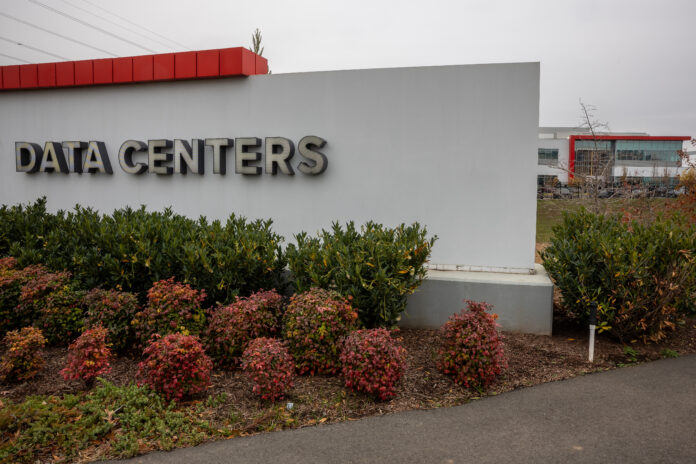
A quieter but structurally significant piece of legislation gaining traction in Trenton this week would impose new disclosure requirements on the artificial intelligence data center industry — an industry that has expanded dramatically across New Jersey over the past several years and that has become a focus of concern among residents, environmentalists, and utility regulators who are tracking its consequences for electricity demand, water consumption, and local air quality.
The proposed legislation would require AI data center operators to publicly disclose their water and electricity consumption every six months, providing the kind of baseline information that communities, utilities, and policymakers currently lack when evaluating the cumulative impact of these facilities. The transparency requirement is the first step in a policy response that acknowledges a set of facts the industry has been reluctant to publicize: AI data centers operate around the clock at high power density, consuming electricity at rates that are already straining the regional grid. Many are powered in part by natural gas generation, which produces both carbon emissions and waste heat. The waste heat problem is particularly acute in dense communities where these facilities are sited — the concentrated thermal output of large server facilities compounds the urban heat island effect, raising ambient temperatures in surrounding neighborhoods and increasing the cooling burden on nearby residents and businesses.
The Assembly’s budget committee also advanced a separate measure earlier in the negotiations that would cancel $250 million in previously authorized tax credits for data center construction — a decision that reflected both fiscal pressure and a growing recognition that the incentives offered to attract these facilities may not have been designed with adequate attention to their environmental and grid impacts. Data center developers and technology industry representatives have pushed back against both the disclosure requirement and the tax credit changes, arguing that New Jersey risks losing investment to neighboring states with more permissive regulatory environments.
The counterargument from legislators and environmental advocates is that the cost of not regulating — in grid strain, in local air quality impacts, in the urban heat island effect on communities that are already disproportionately burdened — is a real public cost that falls on residents rather than on the industry generating it. The parallel to the Polluters Pay Act’s underlying logic is not accidental. Both pieces of legislation reflect the same policy premise: that industries generating externalities should bear some proportionate share of the costs those externalities impose on the public.
Hurricane Season and Coastal Risk: What El Niño Does and Does Not Change
As the Atlantic hurricane season reaches its most active period, New Jersey’s climate experts and emergency management community are maintaining an elevated posture despite forecasts that suggest overall Atlantic activity may be somewhat dampened by El Niño atmospheric conditions this year. The distinction climate scientists are drawing is important and has direct implications for how New Jersey communities should approach preparedness through the remainder of the summer.
El Niño — the periodic warming of surface temperatures in the central and eastern Pacific Ocean — tends to increase wind shear over the Atlantic basin, which disrupts hurricane formation and reduces the likelihood of major sustained storm systems developing and making landfall on the East Coast. Historically, El Niño years produce fewer and weaker Atlantic hurricanes. That pattern, if it holds in 2026, represents relatively good news for the Gulf Coast and the Florida peninsula, which bear the brunt of direct hurricane landfalls in most years.
New Jersey’s specific vulnerability, however, is not primarily to direct landfalls. It is to the secondary effects that tropical systems — even weakened or extratropical ones — produce as they move through the Mid-Atlantic region: extreme rainfall, rapid flash flooding in communities that are already managing persistent stormwater challenges, and coastal storm surge that in a state with 130 miles of ocean coastline and extensive bay and estuary exposure can produce inundation at distances significant from the shoreline itself. Climate scientists note that the atmospheric moisture content associated with tropical systems has increased measurably as ocean temperatures have risen, meaning that even a storm that weakens before reaching New Jersey can carry more precipitation than historical analogs. El Niño’s suppressing effect on overall hurricane frequency does not reduce that precipitation loading once a system forms and makes its way toward the coast.
New Jersey’s coastal communities should treat the climate expert guidance — elevated risk for flash flooding and storm surge despite dampened overall storm activity — as a call to review preparedness measures now rather than waiting for a storm to be in the forecast. The window between June and November when tropical systems can affect the region is long enough that delayed preparation is a significant risk in itself.
NJ Transit and the World Cup: What the Dry Runs Revealed
NJ Spotlight News investigators this week tracked the system’s early performance through a series of World Cup test events designed to evaluate transit readiness before the full international soccer audience arrives in force. The 2026 FIFA World Cup — with the United States hosting for the first time since 1994, with matches at MetLife Stadium in East Rutherford serving as one of the tournament’s primary venues — has placed demands on NJ Transit that go well beyond what any previous event has required.
The transit authority’s capacity to move large volumes of international visitors, many of whom will be unfamiliar with New Jersey’s transit geography and some of whom will not speak English, through a system that was not designed for peak capacity at multiple concurrent demand points is the fundamental operational challenge. The early dry-run assessments tracked by NJ Spotlight News were intended to identify bottlenecks, staffing gaps, signage deficiencies, and coordination failures before they became problems in front of a global audience. What specific issues those assessments revealed, and how the transit authority is addressing them in the remaining weeks before peak demand arrives, will determine whether New Jersey’s World Cup moment is remembered as a logistical success or a cautionary example of infrastructure pushed beyond its design limits.
The World Cup’s presence in the New Jersey-New York metropolitan area through the tournament’s group stage and into the knockout rounds is one of the most significant public-facing tests of the region’s transit and hospitality infrastructure in years, and the outcome has implications not only for visitors’ experience during the tournament but for the region’s long-term reputation as a viable major event destination.
The Federal Policy Backdrop: What Washington Is Doing to New Jersey
Running through each of this week’s major New Jersey policy stories is a common thread: the consequences of federal policy decisions being absorbed at the state level in real time. The budget deal’s increased surplus was explicitly framed as preparation for federal Medicaid cuts. The Polluters Pay Act’s urgency is magnified by a federal regulatory environment that has been rolling back emissions oversight rather than strengthening it. The federal housing bill that New Jersey desperately needs to address its affordable housing crisis remains stalled by presidential intervention. Data center growth is partly a function of federal permitting environments and investment tax structures over which the state has no direct control.
The picture that emerges is of a state government that is increasingly functioning as a buffer — using its own fiscal resources, regulatory authority, and legislative agenda to protect residents from the combined effects of market failures, climate consequences, and federal policy reversals that originate outside Trenton but land directly on New Jersey families. That is not a sustainable long-term position, and the structural deficit that Sherrill is working to reduce by half in this budget reflects the fiscal pressure of playing that role. But it is where New Jersey’s government finds itself in the summer of 2026, and the week’s policy action is the clearest possible illustration of what that means in practice.
















