

As Americans continue embracing wearable technology, health-tracking applications, smart watches, artificial intelligence, personalized nutrition platforms, and digital wellness tools, a growing number of experts are beginning to ask an important question: Are people becoming better at tracking their health than actually improving it?
The answer may shape the future of the wellness industry.
For years, the health and fitness market has been dominated by a constant pursuit of optimization. Consumers have been encouraged to monitor every calorie, count every step, track every workout, analyze every sleep cycle, and measure countless data points in the hope of achieving peak performance and ideal health outcomes.
Yet despite unprecedented access to technology and health information, long-term weight management and sustainable wellness remain significant challenges for millions of Americans.
A New Jersey-based health technology company believes it understands why.
Weight Loss Buddy, a digital health platform headquartered in Tenafly, is attracting growing attention for promoting a philosophy that stands in contrast to much of the modern wellness industry. Rather than focusing on perfection, aggressive targets, or endless optimization, the company is emphasizing something considerably simpler: consistency.
The message is resonating at a time when consumers are increasingly overwhelmed by competing health advice, rapidly evolving technology, and unrealistic expectations often promoted through social media.
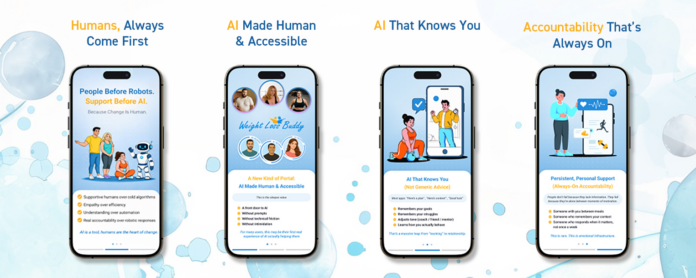
Founded by entrepreneur Joey Dweck, Weight Loss Buddy has quietly evolved from its origins as a community-focused online support platform into a modern health and wellness application incorporating advanced artificial intelligence, behavioral tracking, accountability systems, and personalized coaching tools.
The company’s latest innovations reflect a broader trend occurring across the healthcare and fitness industries as artificial intelligence begins transforming how people monitor, understand, and improve their health.
Yet unlike many technology companies rushing to promote AI as a solution to every wellness challenge, Weight Loss Buddy is positioning artificial intelligence as a tool for reinforcing sustainable habits rather than replacing them.
That distinction may prove increasingly important.
Across the country, health-conscious consumers are investing heavily in wearable devices that monitor everything from heart rate and blood oxygen levels to stress, sleep quality, activity levels, and recovery metrics. Smart scales, connected fitness equipment, nutrition tracking platforms, and biometric monitoring systems generate vast amounts of personal health data every day.
The challenge is no longer collecting information.
The challenge is turning that information into meaningful, sustainable action.
Many users experience what wellness experts often describe as data fatigue. They begin enthusiastically, tracking every aspect of their lives, only to become overwhelmed by the constant flow of information and eventually abandon their routines altogether.
This phenomenon has become increasingly common as technology advances faster than human behavior.
Weight Loss Buddy’s approach attempts to bridge that gap.
At the center of the platform’s latest evolution is an artificial intelligence feature designed to create what the company describes as a continuously learning digital twin. Rather than serving as a simple tracking tool, the system develops a personalized profile based on daily user behavior.
The platform evaluates factors including nutrition habits, sleep patterns, hydration, mood fluctuations, weight trends, and lifestyle routines. Over time, it learns how individual behaviors influence outcomes and provides personalized recommendations designed to support long-term success.
Importantly, the focus is not on achieving perfection.
Instead, the goal is helping users remain consistent during the inevitable disruptions that occur in everyday life.
That philosophy reflects a growing body of research suggesting that sustainable health improvements often result from small, repeatable actions rather than dramatic transformations.
Many individuals successfully maintain healthy lifestyles not because they follow perfect plans, but because they develop routines that remain manageable over months and years.
Consistency, not intensity, frequently determines long-term outcomes.
The timing of the company’s message is particularly relevant.
The wellness industry has entered a period of rapid technological change. Artificial intelligence, predictive analytics, biometric monitoring, and personalized health algorithms are increasingly becoming standard features within consumer health applications.
At the same time, public interest in preventative health continues to grow.
Consumers are paying closer attention to nutrition, exercise, mental health, sleep quality, stress management, and overall well-being. Healthcare providers are emphasizing preventative strategies designed to reduce long-term health risks and improve quality of life.
New Jersey has emerged as an important contributor to that conversation.
The state has long been recognized as a center for healthcare innovation, pharmaceutical research, biotechnology development, medical technology, and health sciences. From major healthcare systems and research institutions to emerging health-tech startups, New Jersey continues to play a significant role in shaping the future of healthcare and wellness.
Weight Loss Buddy represents another example of homegrown innovation contributing to that ecosystem.
Based in Bergen County, the company reflects the entrepreneurial spirit increasingly driving New Jersey’s technology sector. Its evolution from a web-based support community into an AI-powered wellness platform illustrates how digital health companies are adapting to changing consumer expectations.
What differentiates the platform from many competitors is its emphasis on accountability and social connection.
Health experts have long recognized that behavior change rarely occurs in isolation.
Support systems matter.
Encouragement matters.
Community matters.
Weight Loss Buddy incorporates those principles through accountability groups, peer interaction, progress-sharing tools, and social engagement features designed to help users stay connected to others pursuing similar goals.
This community-driven approach reflects one of the most overlooked aspects of successful health improvement.
Technology can provide information.
Artificial intelligence can generate recommendations.
Wearables can collect data.
But lasting behavior change often depends on motivation, support, and human connection.
Many users struggle not because they lack knowledge, but because they struggle to maintain momentum during difficult periods.
A supportive community can help bridge that gap.
The broader implications extend beyond weight loss.
Increasingly, healthcare professionals recognize that wellness encompasses far more than a number on a scale. Physical activity, sleep quality, stress management, hydration, mental health, nutrition habits, and social well-being all contribute to overall health outcomes.
Modern wellness strategies are becoming more holistic.
Consumers are shifting away from crash diets and short-term fixes toward sustainable approaches focused on long-term quality of life.
That evolution aligns closely with Weight Loss Buddy’s messaging.
The company argues that individuals should focus less on achieving perfect metrics and more on building routines that remain achievable through life’s inevitable challenges.
Missed workouts happen.
Busy schedules happen.
Travel happens.
Stress happens.
Unexpected disruptions happen.
The key, according to this philosophy, is developing systems that allow people to recover quickly rather than abandoning healthy habits altogether.
For New Jersey residents, that message may be particularly timely.
The demands of modern life continue accelerating. Long commutes, demanding careers, family responsibilities, economic pressures, and constant digital connectivity create challenges that make maintaining healthy lifestyles increasingly difficult.
Many people know what they should do.
The challenge is consistently doing it.
Technology can help, but only when it supports realistic behavior rather than unrealistic expectations.
Artificial intelligence may represent one of the next major frontiers in personal wellness, but its effectiveness will ultimately depend on how it is applied.
The most successful platforms may not be those that generate the most data or provide the most sophisticated analytics. Instead, they may be the ones that help users transform information into practical, sustainable action.
That is the opportunity companies like Weight Loss Buddy are attempting to seize.
As healthcare continues shifting toward prevention, personalization, and digital engagement, the integration of artificial intelligence into wellness platforms will likely accelerate. Consumers can expect increasingly sophisticated tools capable of analyzing behavior, predicting challenges, and providing tailored recommendations.
Yet amid all the technological advancement, one principle remains remarkably simple.
The healthiest habits are often the ones people can maintain.
In an era obsessed with optimization, Weight Loss Buddy is making the case that consistency may be the most powerful wellness tool of all.
For New Jersey’s growing health-tech sector, that message represents more than a marketing strategy. It reflects an emerging understanding that the future of wellness may not be about doing everything perfectly.
It may simply be about continuing to move forward, one sustainable habit at a time.
















