

Independent cinema has always thrived when filmmakers are willing to explore emotional territory larger studios often avoid. The most memorable festival programming rarely depends on explosions, franchise branding, or celebrity spectacle. Instead, it succeeds by presenting audiences with stories that feel deeply personal, emotionally complicated, stylistically daring, and unmistakably human. That spirit has defined the long-running success of the New Jersey International Film Festival for more than three decades, and one of the strongest examples of that curatorial philosophy arrives on Saturday, May 30, 2026, with an ambitious triple-feature lineup that moves through childhood memory, fractured families, social class, nostalgia, emotional isolation, and the existential absurdities of adulthood.
Presented by the Rutgers Film Co-op at Rutgers University in New Brunswick, the 31st Annual New Jersey International Film Festival continues its reputation as one of the Northeast’s most respected showcases for independent film, experimental storytelling, emerging directors, and international cinema. This year’s festival drew more than 680 submissions from around the globe before narrowing the field to just 36 finalist selections, creating a highly curated event that consistently punches far above the profile of many regional film festivals.
The Saturday evening lineup on May 30 may ultimately emerge as one of the defining programs of the entire 2026 festival. The evening combines three radically different works — Counterfeit Kids, Sundays, and Middle Life — into a cohesive emotional journey examining memory, identity, dysfunction, alienation, youth, and the surreal emotional distortions that shape how people experience their lives. Though stylistically distinct, the films complement each other remarkably well, creating a full evening of cinema that moves fluidly between dark comedy, experimental animation, psychological reflection, and absurdist drama.
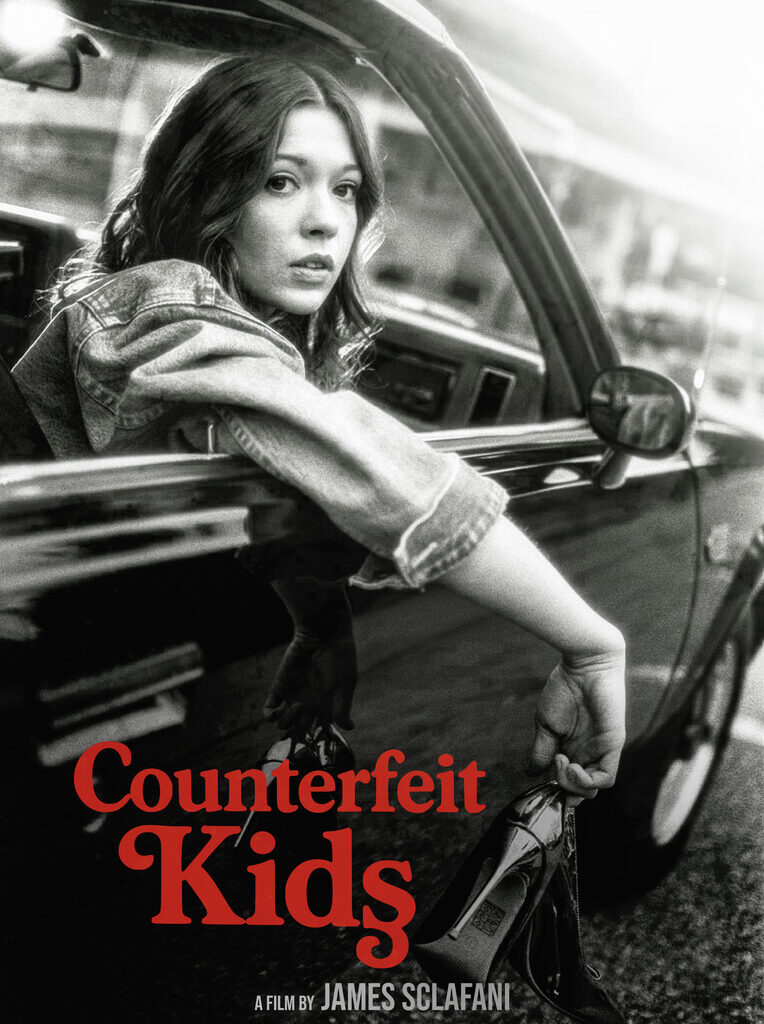
The night begins with Counterfeit Kids, an 11-minute short film written and directed by filmmaker James Sclafani. Set against the backdrop of 1980 Baltimore, the film follows an eccentric neighborhood group of children navigating social class divides, difficult family environments, toxic parental figures, and the strange emotional confusion that often defines childhood long before people have the language to understand it. The film mixes humor, melancholy, nostalgia, and emotional unease in a way that feels both deeply specific and broadly relatable.
What makes Counterfeit Kids especially fascinating within the independent film landscape is the unusual path that led to its creation. The project originated indirectly from a larger feature screenplay Sclafani previously wrote titled King of Counterfeit, which was sold directly to Hollywood icon Bill Murray. Rather than adapting scenes directly from that feature script, Sclafani instead used the opportunity to develop an entirely original short-form proof of concept exploring similar emotional terrain while establishing his own voice as a director.
The Bill Murray connection immediately adds industry intrigue to the project, but the real substance lies in the deeply personal emotional foundation behind the production itself. During development and filming, Sclafani’s father was terminally ill. According to festival interviews surrounding the project, his father strongly encouraged him to complete the film and even visited the set during production before later watching the finished cut as an honest critic shortly before his passing. That emotional backdrop gives the project additional resonance, particularly considering the film’s themes surrounding memory, family dysfunction, emotional inheritance, and the complicated emotional worlds children absorb from adults around them.
The production itself also overcame major obstacles before cameras even rolled. Just one week prior to filming, the actress originally cast to portray the toxic mother figure, Trisha, dropped out because of scheduling conflicts. Through a last-minute connection facilitated by Sclafani’s cousin, television writer Elizabeth Beckwith, the production secured actress Clodagh Boyer, whose recent work in Irish cinema had already begun attracting international attention after appearing in a film shortlisted for Academy Award consideration.
Music also plays a central role in establishing the atmosphere and emotional authenticity of Counterfeit Kids. The soundtrack heavily incorporates material tied directly to Sclafani’s own family history. His uncle, Joe “TV” Guido, was a founding member of influential punk and glam rock group The Brats, and the film prominently features several of the band’s original songs, including “Right on the Money” and “Rock Candy.” Combined with additional licensed tracks including Joey Ramone performances and period-specific music selections, the soundtrack helps immerse viewers in a gritty, emotionally charged vision of early-1980s East Coast youth culture.
Thematically, Counterfeit Kids explores the unsettling realization many children eventually experience: the understanding that adults are often unstable, flawed, emotionally destructive, and deeply confused themselves. That emotional undercurrent gives the film far more depth than a standard nostalgic coming-of-age short. Beneath its dark humor and eccentricity lies a deeply observant portrait of children learning to interpret a chaotic adult world through fragmented emotional understanding.
Following Counterfeit Kids comes Sundays, an 11-minute experimental animated short directed by David Suchar. While dramatically different stylistically, the film continues the evening’s emotional exploration of childhood perspective and fractured family experience. Sundays approaches those themes through highly abstract visual language, using collage-style animation and fragmented imagery to visualize the emotional memory of a child processing divorced parents and weekend visitation routines.
Rather than relying on traditional narrative structure, Sundays functions almost like emotional memory itself. Images blur together. Moments repeat. Familiar spaces become distorted. Emotional associations override linear storytelling. The result is a deeply immersive psychological experience that reflects how children often internalize family instability not through concrete understanding, but through recurring sensory impressions, emotional discomfort, confusion, and lingering emotional atmospheres.
Experimental animation remains one of independent cinema’s most underappreciated art forms because it allows filmmakers to visualize internal emotional states in ways live-action filmmaking often cannot. Sundays appears to embrace that freedom completely, using abstract visual composition not simply as artistic style, but as emotional storytelling language. The film reportedly examines how memory reshapes experience over time, particularly memories tied to family separation and emotional uncertainty.
That transition from Counterfeit Kids into Sundays creates one of the evening’s most intelligent programming decisions. Both films examine childhood perspective and emotional instability, but they approach those themes through radically different cinematic languages. One uses grounded dark comedy and nostalgic realism. The other moves into surreal abstraction and emotional fragmentation. Together, they create a fascinating dialogue about memory, family, and emotional perception.
The evening’s centerpiece then arrives with Middle Life, an 81-minute Australian feature film directed by David Throssell making its international festival premiere at the New Jersey International Film Festival. While the earlier shorts focus largely on childhood perspective and emotional development, Middle Life shifts attention toward adulthood, aging, identity crisis, and existential anxiety.
The premise itself immediately signals the film’s absurdist sensibility. The story centers on a middle-aged suburban accountant who wakes up one day to discover that he has literally shrunk in physical size. What begins as a bizarre high-concept comedic premise gradually unfolds into something more psychologically revealing and emotionally reflective. The protagonist’s physical diminishment becomes a literal manifestation of emotional irrelevance, middle-aged invisibility, personal stagnation, and the fear of losing significance within modern adult life.
Absurdist cinema works best when the surreal premise exposes recognizable emotional truths, and Middle Life appears positioned squarely within that tradition. Rather than treating the shrinking concept as simple fantasy gimmickry, the film reportedly uses it as a metaphor for the ways adulthood can gradually erode confidence, visibility, ambition, and identity. The suburban setting further reinforces the emotional landscape many middle-aged adults quietly navigate — careers that plateau, routines that calcify, emotional isolation hidden beneath ordinary life, and the slow realization that youthful expectations no longer align with reality.
What makes the overall triple-feature lineup especially impressive is how naturally the films speak to each other emotionally despite their wildly different styles. Counterfeit Kids examines children learning that adulthood is unstable. Sundays explores the emotional fragmentation family instability creates within childhood memory. Middle Life then examines adulthood itself collapsing inward under emotional and existential pressure. Together, the films create an unexpectedly unified meditation on identity formation, emotional inheritance, family tension, memory, and personal reinvention.
The hybrid presentation format also continues one of the festival’s most audience-friendly modern adaptations. Viewers can either attend in person at Rutgers University’s Voorhees Hall #105 in New Brunswick or stream the full program virtually through the festival’s Eventive platform. Virtual access opens at 12:01 AM on May 30 and remains available until 11:59 PM the same evening, giving audiences flexibility while preserving the event-based exclusivity that makes film festivals feel special.
For those attending in person, the evening begins with early gathering and check-in opportunities starting at 5:00 PM before screenings officially begin at 7:00 PM. After all three films conclude, festival director Al Nigrin will host a live filmmaker Q&A session expected to feature James Sclafani alongside members of the cast and creative teams. These post-screening discussions have long been one of the defining strengths of the New Jersey International Film Festival, offering audiences direct insight into creative process, production challenges, thematic interpretation, and independent filmmaking realities rarely accessible within mainstream theatrical environments.
The festival’s continued ability to attract ambitious independent filmmakers from across the United States and internationally speaks to the reputation Rutgers and the New Jersey International Film Festival have built over the years. While many regional festivals increasingly chase celebrity headlines or streaming acquisition attention, NJIFF continues prioritizing distinctive voices, artistic experimentation, emerging directors, and emotionally driven storytelling.
That curatorial commitment is precisely what makes a lineup like this possible. A darkly funny Baltimore childhood drama with connections to Bill Murray. An emotionally abstract animated meditation on divorce and memory. An Australian absurdist feature about physical shrinkage as existential metaphor. On paper, the films may sound wildly disconnected. In practice, they create one of the most emotionally layered and intellectually engaging evenings of the festival season.
For audiences willing to embrace independent cinema at its most personal, stylistically adventurous, and emotionally reflective, the May 30 triple-feature program represents exactly what film festivals are supposed to offer: not simply entertainment, but perspective, conversation, emotional confrontation, artistic discovery, and the reminder that cinema still possesses the power to explore the complicated realities of human experience in ways no other medium can fully replicate.
















