

Somewhere in a boardroom, a hotel suite, or the back seat of a luxury sedan, there might be a microphone the size of a grain of rice, powered down and waiting, invisible to anything but the right equipment. Finding that microphone is the entire business of USA Bugsweeps, a Freehold, New Jersey company that started as a local operation and has since built itself into one of the largest counter-surveillance networks operating anywhere in the country.
Founded by security investigator Jimmie Mesis and headquartered on US Highway 9 in Freehold, the firm occupies a genuinely narrow, specialized corner of the security industry. This isn’t a private investigation agency that also happens to do bug sweeps on the side. USA Bugsweeps does exactly one thing, Technical Surveillance Countermeasures, commonly abbreviated TSCM, the formal term for professionally detecting hidden spying equipment. They don’t track cheating spouses through parking lots or run background checks on prospective hires. Their entire operation exists to find electronic threats that someone deliberately hid, and nothing else.
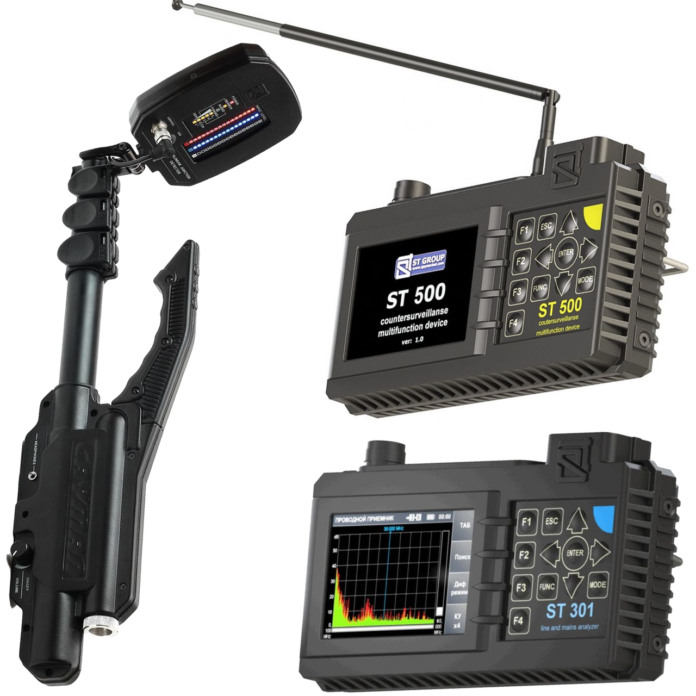
That kind of specialization requires serious hardware, not the consumer-grade bug detectors sold online for a hundred dollars that mostly catch nothing worth catching. USA Bugsweeps deploys more than $150,000 worth of what amounts to military-grade detection equipment, including advanced RF spectrum analyzers capable of identifying signals far beyond what a basic frequency scanner would ever notice. Their sweeps cover the full range of ways someone might actually try to spy on another person or organization. They check for planted microphones and active wiretaps, hidden voice-activated recorders, and covert pinhole cameras tucked inside everyday objects nobody thinks twice about, smoke detectors, alarm clocks, wall chargers, even ordinary lightbulbs. They check vehicles for hidden GPS trackers attached underneath, the kind that can quietly document someone’s exact movements for weeks without a single visible sign anything’s wrong.
The detail that actually separates a serious TSCM operation from an amateur one, though, is the ability to catch devices that aren’t even transmitting at the moment of the sweep. Sophisticated surveillance equipment can sit dormant, powered down or in a low-power sleep state specifically to avoid triggering basic radio-frequency detection. A cheap bug detector scanning for active signals would walk right past a device like that and report the room clean. USA Bugsweeps’ equipment is built to catch exactly that kind of dormant threat, which is precisely the difference between a real security sweep and expensive theater that gives someone false confidence in a room that isn’t actually safe.
Who actually calls a company like this in the first place is its own genuinely revealing story about where privacy anxiety runs hottest in modern life. On the residential side, individuals navigating high-stakes divorce or child custody battles make up a real share of the client base, people who have legitimate reason to suspect an ex-partner has planted something to monitor them during an already painful legal fight. On the corporate side, executive boardrooms, private offices, and conference spaces get swept regularly by companies worried about corporate espionage or leaked trade secrets, the kind of quiet, expensive threat that never makes headlines until a competitor mysteriously beats a company to market with suspiciously similar plans. USA Bugsweeps also sweeps vehicles and hotel rooms ahead of sensitive meetings, luxury cars, rental vehicles, private suites, anywhere a confidential conversation might happen away from an office’s normal security protocols. Perhaps most strikingly, schools are also part of the client mix, with classrooms, administrative offices, and locker rooms getting swept specifically to protect student and faculty privacy, a use case that says a lot about how seriously institutions now take the possibility of hidden recording devices in spaces meant to be safe.
The firm’s reach extends far past Monmouth County despite staying headquartered there. Its technician network covers all fifty states, meaning a client anywhere in the country can bring in genuinely qualified counter-surveillance expertise without needing New Jersey-based specialists to fly out personally for every job. That’s a meaningful operational achievement for a company that started as a regional operation, and it explains how a firm founded and still based in Freehold has become a recognized national name in an industry most people never think about until they suddenly, urgently need it.
That national reputation just received a genuinely notable federal stamp of approval. The U.S. Department of Labor recently selected founder Jimmie Mesis to serve as an expert contributor to the Occupational Information Network, known as O*NET, the government’s official database defining and classifying occupations across the entire American economy. Getting tapped by a federal agency to help formally define and describe a profession as niche and specialized as technical surveillance countermeasures is a real form of recognition, and it signals that TSCM work has matured from a shadowy, unregulated specialty into something the federal government now considers worth formally documenting as a legitimate occupational category. For an industry that spends its entire existence looking for things other people are trying to hide, having the government publicly acknowledge the profession itself is a fitting, almost ironic form of validation.
I’ll be direct about why a company like this deserves genuine respect rather than skepticism about whether any of this is really necessary. Modern surveillance technology has gotten cheap, small, and genuinely good enough that planting a working bug or hidden camera no longer requires any real technical skill, just intent and a credit card. That reality makes a company built entirely around finding those devices, backed by real equipment and now backed by federal recognition of the profession itself, considerably more relevant to ordinary people’s lives than it would have been even a decade ago. A business built in Freehold, New Jersey, quietly protecting boardrooms, custody battles, and classrooms across all fifty states from exactly that kind of intrusion, is exactly the sort of understated, essential work this state doesn’t get nearly enough credit for producing.
















