
New Jersey’s park system is one of the most underrated collections of outdoor destinations anywhere in the United States. While much of the national conversation surrounding parks often centers on the massive landscapes of the American West, New Jersey quietly offers something entirely different and remarkably unique: an extraordinary concentration of beaches, forests, waterfalls, mountain trails, wetlands, river corridors, historic battlefields, wildlife refuges, and urban green spaces all packed into one geographically diverse state.
Within a few hours, visitors can stand atop a mountain overlooking three states, kayak through cedar water trails in the Pine Barrens, walk beneath one of the country’s most significant waterfalls, bike along Atlantic Ocean dunes, explore Revolutionary War landmarks, or hike portions of the Appalachian Trail. Few states combine natural diversity, accessibility, history, and recreational variety the way New Jersey does.
What makes the Garden State’s parks especially compelling is their proximity to millions of people. Unlike remote wilderness destinations that require major travel planning, New Jersey’s parks are woven directly into everyday life. They exist beside cities, suburbs, shore towns, farms, and historic communities, creating an outdoor culture that remains deeply connected to the state’s identity.
From the Highlands of Sussex County to the barrier islands of the Jersey Shore, New Jersey’s outdoor destinations collectively form one of the East Coast’s most expansive recreational networks. Whether visitors are seeking hiking, camping, wildlife photography, family recreation, fishing, kayaking, history, or quiet scenic escapes, the state offers a remarkable range of experiences throughout all four seasons.
Among the most iconic destinations is Liberty State Park, a waterfront park that delivers one of the most recognizable views in America. Located along the Hudson River in Jersey City, the park provides sweeping panoramas of Lower Manhattan, Ellis Island, and the Statue of Liberty. Yet Liberty State Park represents far more than a scenic overlook. It has evolved into one of New Jersey’s defining civic gathering spaces, blending recreation, history, transportation access, and urban renewal into one of the Northeast’s most important public parks.
The park’s extensive walking and biking paths attract visitors year-round, while ferry access to Ellis Island and the Statue of Liberty makes it a gateway to American immigration history. Liberty State Park also contains the Empty Sky Memorial, New Jersey’s official September 11 memorial honoring state residents lost during the attacks. Its location directly facing the Manhattan skyline gives the memorial extraordinary emotional power, reinforcing how parks can serve not only recreational functions but also cultural and civic purposes.
Along the Jersey Shore, Island Beach State Park remains one of the most environmentally significant coastal preserves in the region. Unlike heavily commercialized shore destinations, Island Beach preserves a large portion of New Jersey’s natural barrier island ecosystem almost exactly as it existed before modern development transformed much of the coastline.
Stretching for miles along the Atlantic Ocean, the park features protected dunes, maritime forests, tidal marshes, and extensive beachfront habitats supporting migratory birds, marine life, and coastal vegetation. Visitors come for swimming, surf fishing, kayaking, birdwatching, hiking, and photography, but the park’s greatest value may be its preservation of what the Jersey Shore once looked like before widespread urbanization reshaped the coastline.
The park has become increasingly important in conversations surrounding coastal resilience, climate adaptation, and environmental conservation. As sea-level rise and intensified storms continue affecting Atlantic coastal communities, Island Beach State Park serves as both a recreational destination and a living environmental laboratory demonstrating the ecological importance of intact dune systems and natural coastal barriers.
Far to the north, High Point State Park offers an entirely different landscape experience. Located in Sussex County, the park contains the highest elevation in New Jersey, providing panoramic views extending across New Jersey, New York, and Pennsylvania. The High Point Monument itself has become one of the state’s most recognizable outdoor landmarks, standing atop Kittatinny Mountain as both a scenic overlook and memorial site.
High Point also serves as a major access point for the Appalachian Trail, attracting hikers from throughout the Northeast. Dense forests, glacial lakes, and rugged terrain give the area a dramatically different character from the rest of the state. During autumn, the region becomes one of New Jersey’s premier leaf-peeping destinations as the mountains erupt in color.
Nearby, Stokes State Forest and Hacklebarney State Park further establish North Jersey as one of the region’s top hiking and camping destinations. Stokes offers extensive backcountry trails, scenic ridges, waterfalls, and camping opportunities, while Hacklebarney is particularly known for its gorge trails, old-growth forest atmosphere, and dramatic Black River scenery.
In contrast to New Jersey’s mountain parks, the Pine Barrens region delivers one of the most unusual ecosystems in North America. Wharton State Forest stands as the largest state forest in New Jersey and one of the defining landscapes of South Jersey. The forest contains vast expanses of pine and cedar wilderness, winding rivers, historic villages, and ecological systems found nowhere else in the state.
Wharton State Forest is especially popular for canoeing and kayaking along cedar-stained rivers including the Mullica River and Batsto River. The forest also contains Batsto Village, a preserved historic iron and glassmaking community that offers visitors insight into early industrial life within the Pine Barrens.
The Pine Barrens themselves remain one of New Jersey’s most mysterious and culturally significant landscapes. Long associated with folklore, isolation, and environmental preservation, the region continues attracting hikers, campers, paddlers, photographers, and historians interested in experiencing one of the East Coast’s largest surviving wilderness corridors.
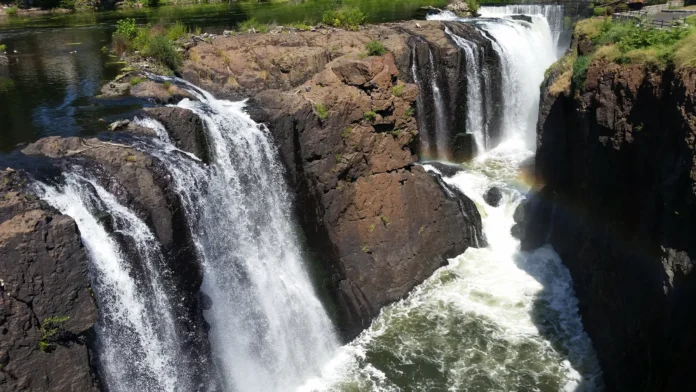
One of the state’s most visually dramatic destinations is Paterson Great Falls National Historical Park. Located directly within the urban environment of Paterson, the Great Falls plunge more than 70 feet along the Passaic River, creating one of the largest waterfalls by volume east of the Mississippi River.
The falls played a foundational role in American industrial history. Alexander Hamilton viewed the site as critical to building the country’s early manufacturing economy, helping transform Paterson into one of the nation’s first industrial centers. Today, the park combines natural spectacle with historical significance, making it one of the most distinctive national historical parks in the country.
The juxtaposition of massive waterfalls against dense urban infrastructure gives the site extraordinary visual character. Visitors experience both the power of nature and the layered history of industrial America simultaneously, something few parks anywhere in the nation can replicate.
For coastal history and maritime culture, Barnegat Lighthouse State Park remains one of the Shore’s most beloved destinations. “Old Barney,” as the lighthouse is widely known, has guided ships along the New Jersey coast since the nineteenth century and continues standing as one of the state’s most recognizable historic structures.
Visitors climb the lighthouse for expansive Atlantic views while also exploring fishing jetties, maritime habitats, and shoreline ecosystems surrounding the park. The location has become especially popular among anglers, photographers, and birdwatchers throughout the year.
Another extraordinary coastal destination is Sandy Hook within Gateway National Recreation Area. Sandy Hook combines beaches, military history, maritime heritage, biking trails, and wildlife habitats within one of the most unique recreational landscapes in the region.
The area contains historic Fort Hancock, a former Army coastal defense installation featuring preserved military buildings and coastal fortifications. Simultaneously, the peninsula offers miles of oceanfront recreation, migratory bird habitats, and some of the region’s best cycling routes.
Meanwhile, Delaware Water Gap National Recreation Area continues ranking among the Northeast’s premier outdoor destinations. The park encompasses thousands of acres surrounding the Delaware River where mountains dramatically split apart, creating one of the region’s most scenic geological features.
The area attracts hikers, rafters, kayakers, campers, and photographers year-round. Trails range from gentle riverside walks to demanding mountain ascents, while the Delaware River itself remains one of the East Coast’s most popular recreational waterways.
In Central Jersey, Cheesequake State Park occupies one of the most ecologically unusual locations in the state. The park sits at the transitional boundary between North Jersey and South Jersey ecosystems, creating a rare convergence of habitats rarely found together elsewhere.
Salt marshes, hardwood forests, pine barrens vegetation, and freshwater wetlands all exist within the same park system, making Cheesequake particularly valuable for environmental education and wildlife observation.
For families and local recreation, county parks remain equally essential to New Jersey life. Warinanco Park in Union County offers extensive recreation facilities, sports fields, walking trails, playgrounds, boating areas, and seasonal programming. Similarly, Fasola Park has become a major destination for families seeking playgrounds, open space, and community recreation.
Wildlife-focused destinations also continue expanding in popularity. Cattus Island County Park features salt marsh boardwalks, educational centers, and protected habitats supporting birdwatching and coastal ecology programs.
New Jersey’s outdoor appeal even extends into highly unconventional attractions like Diggerland USA, the country’s only construction-themed amusement park where visitors can operate heavy machinery. While fundamentally different from traditional parks, its uniqueness has helped establish it as one of South Jersey’s most unusual family attractions.
What ultimately separates New Jersey’s parks from many outdoor systems elsewhere is the extraordinary diversity compressed into a relatively small geographic footprint. Visitors can experience mountains, beaches, forests, wetlands, rivers, waterfalls, farmland, barrier islands, historic battlefields, and dense urban parks all within a single state.
As outdoor recreation continues growing nationwide, New Jersey’s parks are becoming increasingly important not only environmentally, but economically and culturally. Tourism, conservation, environmental education, wellness initiatives, and local identity all intersect within these public spaces. They are not merely recreational areas. They are essential components of the state’s infrastructure, history, and quality of life.
For residents and visitors alike, New Jersey’s parks collectively tell the story of the state itself: geographically diverse, historically layered, culturally complex, and consistently underestimated by those who have never fully explored it.
For more New Jersey parks, trails, forests, and outdoor destination coverage, visit Explore New Jersey National Parks