
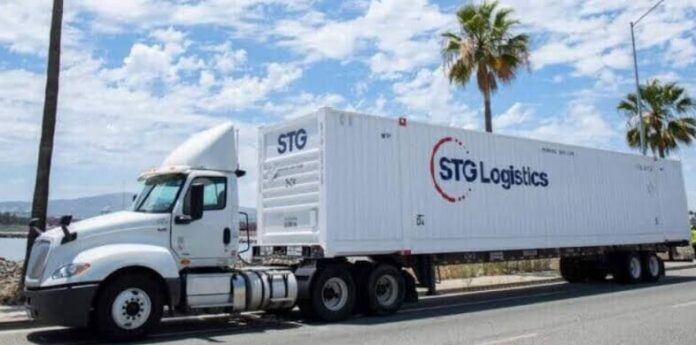

Hundreds of truck drivers hauling freight through the Port of New York and New Jersey are about to see real money land in their accounts, and it’s coming from a company that spent years insisting they were never actually its employees to begin with.
STG Logistics, an Ohio-based transportation and logistics provider with more than 60 locations across North America, agreed to pay at least $2.8 million to settle a driver misclassification case brought by the New Jersey Attorney General’s Office and the state Department of Labor and Workforce Development. The announcement landed July 29, and the math behind it breaks down cleanly. Roughly $2.2 million goes directly to the drivers themselves as back wages, money the state says they should have received all along. Another $555,000 heads to the state itself, covering wage and hour penalties along with contributions to unemployment and disability benefit funds. On top of all that, the settlement carries real teeth going forward, an additional $7.5 million penalty if STG violates the agreement’s terms.
This case actually started years before STG ever entered the picture. New Jersey’s Department of Labor opened an investigation back in 2019 into XPO Logistics’ intermodal operation in Newark, long before anyone had heard the name STG in this context. STG acquired that operation in 2022, and when it did, it inherited more than just trucks and contracts. It took on liability for whatever employment practices had already been in place, a detail that matters enormously for any company weighing an acquisition in an industry where labor classification questions run this deep.
What investigators actually found paints a pretty clear picture of a company that wanted the control of an employer relationship without any of the corresponding obligations. According to the state, STG required these drivers to display the company’s name directly on their trucks, forced them into exclusive equipment leases with the company, assigned them specific routes and rates rather than letting them operate independently, installed GPS tracking devices on their vehicles, and had them sign independent contractor agreements with no room for negotiation. Read that list again and ask yourself honestly how much independence these drivers actually had. Mandatory branding, exclusive leasing, assigned routes, tracked movements, and a take-it-or-leave-it contract isn’t what an independent business relationship looks like. It’s what an employment relationship looks like wearing a disguise.
New Jersey’s ABC test exists specifically to cut through exactly this kind of arrangement, and it’s worth understanding why the standard is built the way it is. Under state law, workers are presumed to be employees unless a company can prove three separate things simultaneously, that the worker operates free from the company’s control, that the work performed falls outside the company’s usual line of business, and that the worker runs a genuinely independent, established business of their own. Fail even one of those three prongs and the presumption of employee status stands. State officials said flatly that STG failed to satisfy any of them, not a close call on one technical point, but a clean miss across the board.
The state filed its lawsuit in December 2023, and this case carries genuine legal significance beyond just STG’s bottom line. It marked the first case ever brought under a 2021 New Jersey law specifically granting the attorney general authority to sue employers directly over worker misclassification. That’s a meaningful first, and it tells other companies operating in this state exactly how seriously New Jersey intends to use that authority going forward.
Here’s where the story gets genuinely more complicated, because this settlement didn’t happen in a vacuum of corporate stability. STG filed for Chapter 11 bankruptcy protection earlier this year in the U.S. Bankruptcy Court for the District of New Jersey, working to restructure close to a billion dollars in debt stemming from a rough freight market downturn, acquisition-related liabilities, and ongoing litigation with lenders. The company actually emerged from that bankruptcy process with a 90 percent reduction in its funded debt obligations and $150 million in fresh capital earmarked for technology, service improvements, and operations. That’s a company that just got a genuine financial reset, and the state made sure this settlement carries priority status within that bankruptcy proceeding specifically so these drivers get paid before other creditors get their cut. That’s a smart, deliberate legal move, because plenty of workers owed money by bankrupt or restructuring companies end up watching their claims get buried under secured lenders and bondholders who negotiated better protection for themselves years earlier.
Attorney General Jennifer Davenport didn’t mince words about the underlying principle at stake, arguing that companies shouldn’t be able to pad profits by exploiting the very workers keeping their operations running. Acting Labor Commissioner Kevin Jarvis added that this was the state’s first-ever Superior Court misclassification case, one that survived a corporate sale, a bankruptcy filing, and years of litigation before finally reaching resolution. That’s a genuinely notable point on its own. Cases like this frequently die quietly somewhere in the gap between a company changing hands and a bankruptcy court reshuffling who owes what to whom. This one didn’t, and that persistence matters for every other misclassified worker watching to see whether the state actually follows through once a case gets legally complicated.
STG’s local footprint runs through Linden, Newark, and North Bergen, sites directly tied to port drayage and freight handling operations connected to the Port of New York and New Jersey, some of the busiest cargo infrastructure on the entire East Coast. A representative from the company didn’t immediately respond to a request for comment on the settlement, which leaves this story currently told entirely from the state’s side of the ledger. Going forward, STG is now required to comply fully with New Jersey labor law and provide ongoing information to the Department of Labor to verify that compliance continues. I’ll say plainly what I think this case actually demonstrates. Misclassification isn’t a minor paperwork technicality companies can shrug off as an accounting choice. It’s a real cost shifted directly onto workers who lose out on minimum wage protections, overtime pay, paid sick leave, workers’ compensation coverage, and standard employment benefits, all while the company enjoys the labor without the liability. New Jersey just proved it will chase that kind of arrangement through a corporate sale and a bankruptcy filing to get workers what they’re actually owed, and that’s exactly the kind of follow-through that gives real weight to a law that would otherwise just sit on the books looking tough.
















