
Some stories transcend traditional news categories because they capture something far more human than a headline alone can convey. They become stories about survival, loyalty, service, second chances, and the deeply personal relationships that quietly shape communities long after the public moments have passed.
That is exactly what is unfolding in Camden City, where a highly trained Belgian Malinois named K9 Meslin is preparing to join the security team at a Virtua Health hospital under circumstances that feel less like a standard institutional announcement and more like a full-circle moment of gratitude, resilience, and human connection.
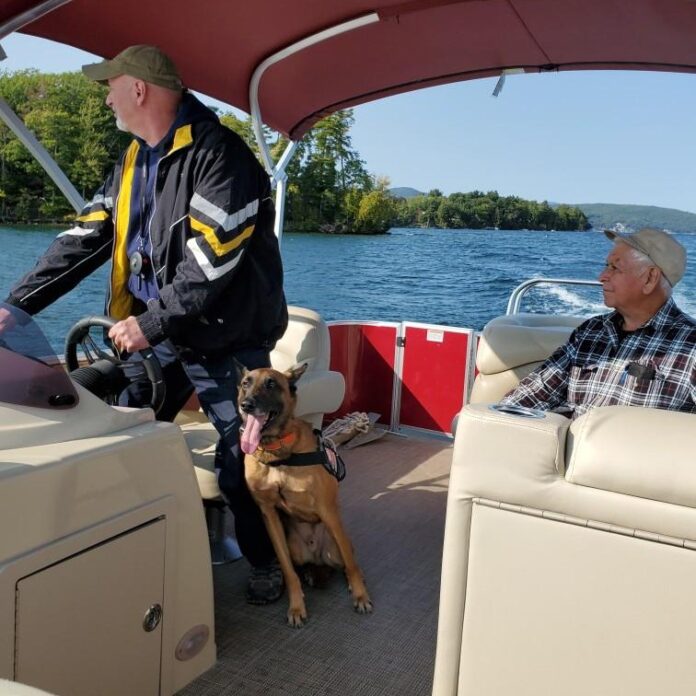
At the center of the story is retired Medford Police Officer Perry Parks — a veteran law enforcement professional, experienced dog trainer, cancer survivor, and South Jersey resident whose life was profoundly changed by colorectal surgeon Dr. Keith Meslin of Virtua Health.
Now, Parks has chosen to honor the physician he credits with saving his life in the most meaningful way he knew how: by donating a professionally trained rescue K9 named directly after the surgeon himself.
The result is one of the most emotionally powerful and uniquely New Jersey healthcare-community stories to emerge this year.
K9 Meslin, a Belgian Malinois rescue trained extensively for hospital and security deployment work, will officially become part of the security operations team at Virtua’s Camden City hospital campus. But reducing the story to a simple K9 donation barely scratches the surface of what makes this moment resonate so deeply across South Jersey.
This is not merely about a dog entering service.
It is about the convergence of healthcare, survival, law enforcement, rehabilitation, emotional recovery, community investment, and the extraordinary bonds formed when one life changes another permanently.
For Explore New Jersey readers following stories connected to healthcare innovation, community wellness, public service, and the evolving relationship between hospitals and public safety, the arrival of K9 Meslin represents something much larger than institutional expansion.
It reflects the increasingly human-centered role modern hospitals now play inside local communities.
Healthcare systems today are no longer viewed solely as treatment centers where patients arrive, receive care, and leave. Increasingly, hospitals function as emotional, psychological, and civic anchors within their surrounding regions. The best institutions now understand that healing extends beyond procedures and prescriptions into trust, security, emotional reassurance, and human connection itself.
The addition of trained K9 units to healthcare environments reflects that broader transformation.
Across the country, hospitals have increasingly expanded security infrastructure in response to rising concerns surrounding workplace violence, emergency preparedness, patient protection, behavioral health incidents, and overall campus safety. Yet many institutions are simultaneously attempting to humanize that security presence rather than creating environments that feel cold, militarized, or intimidating.
Properly trained K9 units often bridge that gap uniquely well.
Belgian Malinois in particular are among the most respected working dogs in modern law enforcement and security operations because of their intelligence, focus, athleticism, loyalty, trainability, and situational awareness. These dogs operate at elite levels within police departments, military units, detection teams, and specialized security environments worldwide.
But K9 Meslin’s story carries another dimension entirely because of his origins as a rescue dog.
That detail matters profoundly.
Rescue animals entering high-level professional service roles symbolize something powerful about rehabilitation itself — the idea that overlooked or displaced lives can still evolve into meaningful service, purpose, and extraordinary contribution. In many ways, the dog’s journey mirrors the broader emotional themes surrounding the people connected to this story.
Second chances. Recovery. Survival. Reinvention.
Perry Parks’ own journey through cancer treatment sits directly at the center of that emotional architecture.
As a retired police officer and longtime K9 trainer, Parks spent much of his life operating within environments built around discipline, readiness, and public protection. Yet cancer introduces an entirely different form of vulnerability — one that strips away professional certainty and places individuals into profoundly personal battles centered around mortality, trust, fear, and survival.
According to the story surrounding the donation, Parks credits Dr. Keith Meslin with saving his life during that battle.
For many patients, especially those confronting serious illnesses like colorectal cancer, the relationship with a surgeon becomes deeply personal in ways difficult to fully articulate publicly. Surgeons often occupy a unique emotional role because they exist at the intersection of technical mastery and intimate human trust. Patients place their futures, families, fears, and survival directly into another person’s hands.
That reality creates bonds extending far beyond routine medical care.
Parks reportedly wanted to find a way to honor Dr. Meslin that reflected not only gratitude, but service — something meaningful, lasting, and beneficial to the broader community itself.
The decision to train and donate a working rescue dog in the surgeon’s name ultimately transforms private gratitude into public impact.
K9 Meslin will now serve not simply as a symbolic tribute, but as an active contributor to hospital safety and daily operations inside Camden City.
That location adds another important layer to the story.
Camden has spent years undergoing a complex and highly visible transformation involving healthcare investment, infrastructure redevelopment, institutional partnerships, public safety initiatives, and broader community stabilization efforts. Healthcare institutions in the city increasingly function as foundational pillars supporting not only medical treatment, but economic activity, employment, public trust, and neighborhood investment.
Virtua’s Camden campus therefore occupies a role extending far beyond healthcare delivery alone.
The addition of K9 Meslin reinforces the hospital’s broader commitment to security, community presence, and operational readiness while simultaneously carrying an emotional narrative rooted in humanity rather than bureaucracy.
Stories like this resonate particularly strongly because they cut through increasingly impersonal healthcare conversations dominated by insurance systems, administrative structures, policy battles, staffing shortages, and institutional complexity.
At its core, this story remains intensely personal.
A man survived cancer.
A doctor changed his life.
A rescue dog found purpose.
And a hospital community gained both protection and a symbol of resilience.
That combination creates something extraordinarily powerful.
It also highlights the evolving role of K9 programs themselves within modern public institutions.
Working dogs are increasingly valued not solely for enforcement capability, but for their broader psychological impact on environments under stress. Trained K9s can help de-escalate tension, provide emotional reassurance, improve public comfort, and create calmer atmospheres in settings where anxiety often runs high.
Hospitals especially benefit from that dynamic because healthcare environments inherently involve fear, uncertainty, vulnerability, and emotional strain for patients, visitors, and staff alike.
A disciplined, highly trained dog presence can simultaneously reinforce security while softening emotional tension inside high-pressure environments.
The symbolism surrounding the name “K9 Meslin” also cannot be overlooked.
Naming the dog after Dr. Keith Meslin transforms the animal into a living extension of the surgeon’s legacy inside the institution itself. Every interaction, patrol, training exercise, or security response connected to the dog will quietly carry that recognition forward.
It is an unusually meaningful form of tribute because it continues serving others rather than existing purely as ceremonial acknowledgment.
For South Jersey communities, the story also reinforces something fundamental about the region’s identity itself.
New Jersey’s strongest stories often emerge not from celebrity spectacle or national headlines, but from deeply interconnected local relationships between healthcare workers, first responders, educators, coaches, volunteers, small-business owners, and ordinary residents whose lives intersect in profoundly meaningful ways.
Those relationships form the invisible infrastructure holding communities together.
This story captures that dynamic perfectly.
A retired police officer, a surgeon, a rescue dog, and a hospital security team may initially sound like separate pieces of unrelated systems. Yet together they form a narrative about how service, healing, and gratitude can ripple outward into entire communities.
For Explore New Jersey readers, K9 Meslin’s arrival in Camden City ultimately represents more than another hospital security enhancement.
It stands as a reminder that some of the most meaningful acts of public service begin as deeply personal acts of thanks.
And in a healthcare landscape often dominated by statistics, policy debates, and institutional complexity, stories like this restore attention to the people, relationships, and acts of humanity that still sit quietly at the center of medicine itself.