

The Carpenter Contractor Trust has released a Contractor Spotlight documentary honoring Railroad Construction Company’s century-long partnership with union labor, giving national audiences an inside look at exactly how much heavy infrastructure work quietly runs through a firm headquartered right in Paterson. The documentary features an exclusive look inside the Purple Line rail tunnel project currently underway in Maryland, using that high-profile job as a lens into how the company’s union carpenters and tradespeople make genuinely dangerous, high-stakes construction work possible.
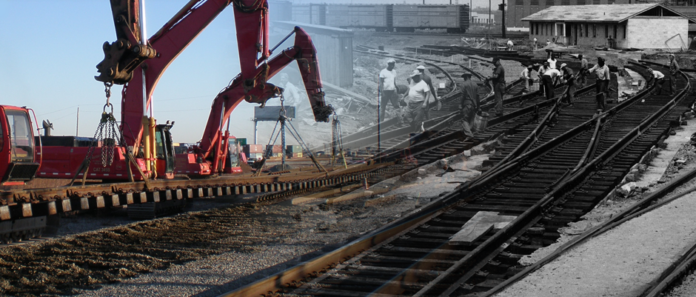
Railroad Construction Company began in 1926 as a straightforward railroad track maintenance operation, but over the following century, the firm has grown into a genuine force across the tri-state area’s broader infrastructure network. Today, RCC operates as a full-service general contractor handling heavy civil infrastructure, track work, and major building projects, a considerably wider scope than its original, narrowly focused founding mission ever suggested.
The company’s current operations split across three major heavy civil divisions. Its railway infrastructure work covers building, laying, and maintaining transit tracks, third-rail power systems, passenger platforms, and complex rail yards for some of the region’s largest public transit agencies, including Amtrak, NJ Transit, the MTA, and SEPTA. Its heavy civil engineering division handles genuinely massive public works projects, spanning highway bridges, road overpasses, structural concrete foundations, complex utility pipelines, and underground utility networks. Rounding out its capabilities, the company’s tunneling and specialized drilling teams handle heavy underground excavation, retaining wall construction, and complex transit tunneling, precisely the kind of specialized work highlighted in the Carpenter Contractor Trust’s own documentary spotlight.
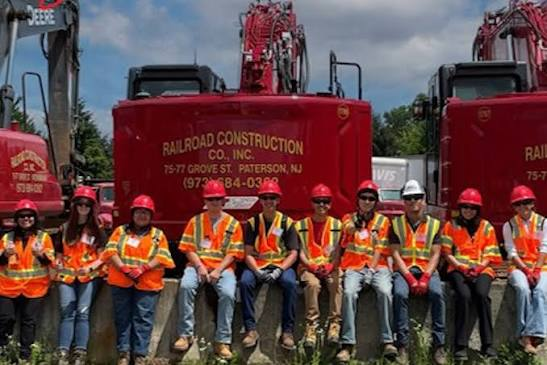
That documentary centers heavily on RCC’s identity as a fully union affiliated contractor, and for genuinely good reason. Heavy civil and railway construction carries real, constant danger, and the company relies entirely on highly trained union carpenters, dockbuilders, and timbermen to build the safety scaffolding, concrete formwork, and heavy shoring systems required to keep massive transit projects structurally sound throughout every stage of construction. That reliance on skilled union labor isn’t incidental to the company’s business model, it’s genuinely foundational to how RCC has managed to complete a century’s worth of high-risk infrastructure work without compromising on safety.
Despite recently taking on large, high-profile regional projects like the Maryland Purple Line tunnel, New Jersey remains firmly the center of RCC’s operational footprint, with the overwhelming majority of the company’s yards, offices, and active job sites located directly within the state. The company’s primary executive headquarters, responsible for project bidding and design work, operates out of 75-77 Grove Street in Paterson. Beyond that main office, RCC runs an active operational hub and equipment yard in Eatontown, along with a substantial storage and logistics warehouse located on Route 206 in Vincentown, within Southampton Township. The company also maintains a satellite project office in Manasquan, specifically managing its central and coastal New Jersey engineering teams from that location.
For anyone who regularly commutes or drives through New Jersey’s transit corridors, there’s a genuine chance they’ve already passed directly through one of RCC’s job sites without realizing it. The company completed the major passenger platform extension at Secaucus Junction Station, a project that allows longer trains to pull directly into the hub rather than being limited by the station’s previous platform length. At Newark Liberty International Airport, RCC handled high security vehicle barrier installation and gate hardening infrastructure specifically around Terminals A and C, reinforcing the airport’s physical security perimeter. Along the state’s industrial waterfront, the company constructed the heavy industrial crude oil receiving terminal used by Phillips 66 at the Bayway Refinery in Linden, a genuinely significant piece of the state’s energy infrastructure. RCC has also served as the heavy general contractor for structural bridge repairs and resurfacing work along segments of the Garden State Parkway, placing the company’s fingerprints directly on one of the state’s most heavily traveled highways.
Taken together, Railroad Construction Company’s century of work reflects considerably more than train tracks alone, spanning transit infrastructure, airport security hardening, industrial energy terminals, and major highway repair, all built through a sustained partnership with skilled union labor that the Carpenter Contractor Trust’s new documentary spotlight is now bringing to a genuinely wider national audience. For a company that began in 1926 as a modest track maintenance operation, that hundred year evolution into one of the tri-state area’s genuinely essential infrastructure contractors offers a compelling case study in exactly what disciplined, safety focused, union built construction can accomplish over a full century of continuous work.
















