
Public art has always had the power to transform a space, but the most meaningful projects do far more than beautify a wall or brighten a streetscape. The strongest public art initiatives become reflections of the people who live there, preserving stories, honoring cultures, and creating visual landmarks that help communities see themselves represented in the places they call home. In Camden, one remarkable project is demonstrating exactly how powerful that process can be.
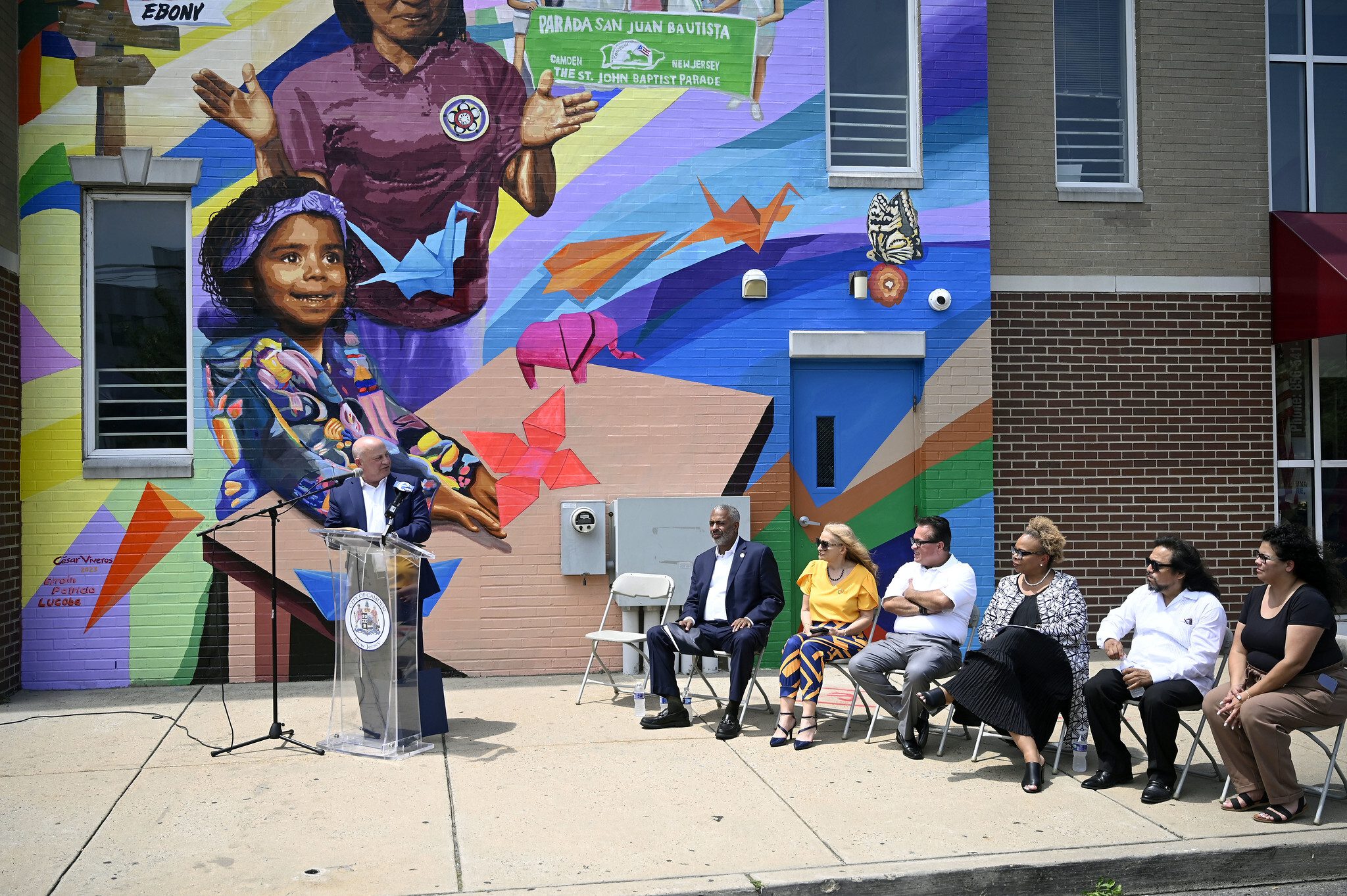
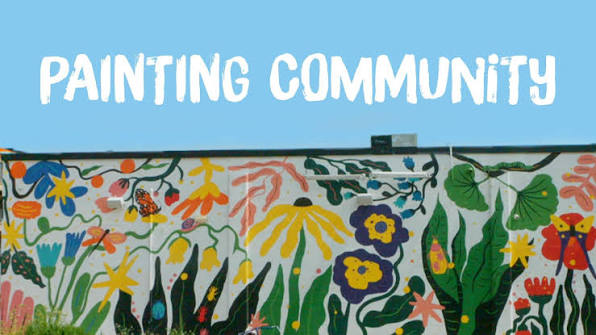
A recent special edition of the acclaimed “Painting Community” documentary series shined a spotlight on an extraordinary collaboration unfolding in East Camden, where artist De’von Downes partnered with members of Resilient Roots Farm to create a mural that is as much a community history project as it is a work of art. Located at the intersection of 29th Street and Saunders Avenue, the mural stands as a vibrant reflection of neighborhood identity, agricultural resilience, cultural heritage, and the enduring ability of communities to build something meaningful together.
The project represents far more than a traditional public art installation. It sits at the center of a larger story about food access, cultural preservation, neighborhood revitalization, and the role creativity can play in strengthening community connections.
Camden has long been one of New Jersey’s most fascinating cities. Rich in history, culture, industry, and innovation, the city has experienced periods of tremendous success as well as significant challenges. In recent years, many of Camden’s most inspiring stories have emerged from grassroots organizations, neighborhood leaders, artists, educators, and community advocates working to improve quality of life block by block. The partnership between Resilient Roots Farm and De’von Downes fits squarely within that tradition.
At first glance, Resilient Roots Farm may appear to be a simple community garden. In reality, it represents something much larger. Operating within an area frequently described as a food desert, the farm serves as a critical source of fresh produce for local residents while creating educational opportunities, community gathering spaces, and connections between generations.
Food deserts remain a significant issue in many urban communities throughout the United States, including parts of New Jersey. These are neighborhoods where residents have limited access to affordable, nutritious food options. Community gardens and urban farms have increasingly emerged as practical solutions that not only provide fresh fruits and vegetables but also create opportunities for education, empowerment, and local engagement.
Resilient Roots Farm embodies those goals while adding another important layer: cultural storytelling.
The farm’s history reflects the diverse communities that have helped shape Camden over the decades. The original founders brought Vietnamese traditions and agricultural knowledge that continue to influence the space today. Over time, the farm evolved into a shared community resource connecting residents from Black, Latine, Asian, and other backgrounds who contribute to its growth and success. Rather than existing as a single cultural narrative, the farm became a living representation of Camden itself—a place where multiple histories intersect and thrive together.
When artist De’von Downes began work on the mural, he deliberately avoided imposing an outside vision onto the community. Instead, he started with conversations.
Downes met with growers, volunteers, organizers, and neighborhood residents, asking a deceptively simple question: What does home mean to you?
The answers shaped every aspect of the project.
Rather than creating a symbolic or abstract design disconnected from local experiences, Downes built the artwork around the personal stories of the people who cultivate the farm and sustain the neighborhood. Their memories, journeys, traditions, and aspirations became the foundation of the visual narrative.
The resulting mural unfolds almost like a storybook stretched across a wall.
Viewers can follow a progression that mirrors both agricultural growth and community development. Seeds emerge from the soil. Young plants climb trellises and reach toward sunlight. Gardens mature and flourish. Harvests are gathered. Neighbors prepare food, share meals, and come together around common experiences.
The imagery serves as a reminder that growth is never an individual process. Just as a garden depends on countless interconnected elements working together, healthy communities are built through cooperation, mutual support, and shared investment in a common future.
What makes the mural particularly compelling is the way it bridges multiple narratives simultaneously. It celebrates the agricultural mission of the farm. It honors Vietnamese heritage and the contributions of the farm’s founders. It recognizes the Black and Latine communities that continue to shape East Camden today. And it documents the everyday experiences that define neighborhood life.
The project illustrates a growing trend throughout New Jersey’s arts landscape. Increasingly, public art is moving beyond decorative aesthetics and embracing deeper forms of community engagement. Artists are being asked not simply to create beautiful works but to facilitate conversations, document histories, preserve cultural identities, and foster civic pride.
That shift is evident across the state, from large-scale murals in Newark and Jersey City to community arts initiatives in Trenton, Atlantic City, Paterson, New Brunswick, and Camden. Public art has become an important tool for economic development, neighborhood revitalization, cultural preservation, and tourism while simultaneously providing residents with opportunities to see their own stories reflected in public spaces.
For Camden, projects like the Resilient Roots mural help challenge outdated narratives that often focus exclusively on the city’s struggles. Instead, they highlight creativity, resilience, innovation, and community leadership. They reveal a city actively shaping its future through collaboration and grassroots action.
The documentary spotlight also underscores the importance of storytelling in public art. Murals are often viewed as static objects, but their true value lies in the stories they preserve and communicate. Every image, symbol, and design choice becomes part of a larger conversation about identity, place, and belonging.
In the case of Resilient Roots Farm, those stories extend beyond the wall itself. They continue in the gardens where produce is grown. They continue in the volunteers who maintain the space. They continue in the families who receive fresh food and gather together around shared meals. The mural simply provides a visual gateway into those ongoing experiences.
As New Jersey continues investing in public art, cultural programming, and community-driven creative initiatives, projects like this one offer a compelling model for the future. They demonstrate that the most successful public art is not necessarily the largest or most expensive. Instead, it is the art that emerges directly from the people it represents.
The collaboration between De’von Downes and Resilient Roots Farm reminds us that murals can do much more than transform blank walls. They can preserve history, celebrate diversity, strengthen neighborhoods, encourage dialogue, and inspire future generations.
Standing at 29th Street and Saunders Avenue in East Camden, this mural serves as a vivid reminder that community is something cultivated over time. Like a garden, it requires care, patience, effort, and collaboration. When those elements come together, the results can be both beautiful and transformative.
In a city filled with stories worth telling, the Resilient Roots Farm mural has become one of Camden’s most powerful visual narratives—a testament to heritage, resilience, food justice, artistic expression, and the enduring strength of community.