Home Blog Page 77

Love, Lager and Local Flavor: New Jersey Breweries Turn Valentine’s Weekend Into a Statewide Celebration & A New Monthly Tradition in Morris County

Valentine’s Day weekend in New Jersey is no longer limited to candlelit dinners and prix-fixe menus. Across the Garden State, breweries are transforming February’s most romantic weekend into a full-scale celebration of community, creativity and craft culture, blending themed entertainment, specialty beer releases and interactive experiences designed for couples, friends and families alike.

From Friday through Sunday, taprooms across the state are hosting a wide range of “Love, Lager and Luck” events that reflect how New Jersey’s brewery scene has evolved into one of the most socially driven corners of the local hospitality landscape. This weekend’s programming highlights how breweries now function as neighborhood gathering spaces—offering everything from pop culture-inspired nights and live music to fitness classes and kid-friendly activities.

Among the most imaginative events of the weekend is a Galentine’s Night Out at River Horse Brewing Company, where the focus shifts away from traditional Valentine’s themes and toward friendship, humor and pop culture. The evening blends a playful atmosphere with limited-edition “glittered” beer releases, a hands-on flower bouquet bar and a live true-crime themed show built around music and storytelling. The concept taps into the growing demand for experiential brewery events that go beyond simple tastings and instead create full-scale social programming.

In Somerset County, Readington Brewery is leaning into classic styles and live entertainment with a multi-day Lagerfest celebration running throughout the weekend. The highlight arrives Saturday night, when a live band performs a full set of Grateful Dead-inspired music, pairing laid-back jam sessions with crisp lagers and a taproom atmosphere built for long, social evenings.

Further north along the coast, 902 Brewing Co. is taking a family-first approach with a Valentine’s party designed to welcome guests of all ages. The Saturday event features a kids’ DJ dance party and professional face painting, allowing parents and children to share in the festivities while still enjoying the relaxed environment that has become a defining feature of modern New Jersey taprooms.

In Cape May County, MudHen Brewing Company is stretching Valentine’s programming across an entire week of events, culminating in a Saturday lineup that includes comedy performances, live music and a themed cocktail offering built around a strawberry chocolate martini. The extended schedule reflects the brewery’s emphasis on blending food, drink and entertainment into a unified destination experience rather than a single-night attraction.

Armageddon Brewing is offering one of the most unconventional Valentine’s experiences of the weekend with a barre and cider workout session on Saturday morning. The event combines a guided 45-minute fitness class with a post-workout pour of mead or cider, bringing wellness culture directly into the brewery setting and underscoring how taprooms are increasingly experimenting with daytime and lifestyle-focused programming.

In Essex County, Montclair Brewery is closing out the weekend with a Blues and Brews session on Sunday afternoon, featuring live performances designed to pair smooth, roots-driven music with the brewery’s rotating tap list. The laid-back format offers an alternative to louder evening events and caters to guests looking for a slower-paced way to wrap up the holiday weekend.

Beyond the entertainment calendar, one of the biggest draws of the weekend is the wave of limited-release Valentine’s beers debuting across multiple breweries. These small-batch offerings are built around dessert-inspired profiles and shareable formats, reinforcing the social tone of the weekend.

Axe & Arrow is releasing two specialty beers designed specifically for the occasion, including a chocolate-covered strawberry pastry ale made with lactose and a caramel chocolate truffle porter intended for sharing. Buck Hill Brewing is introducing Love Potion No. 9, a smooth stout layered with chocolate and dark cherry notes. Source Farmhouse Brewery is unveiling a Valentine’s Day hazy IPA conditioned on cherry, raspberry and strawberry, adding a bright, fruit-forward twist to its seasonal lineup. MudHen is joining the themed releases with Captain Doug’s In Love, a strawberry porter crafted to bridge dessert flavors with traditional dark beer structure.

For many breweries, these limited releases serve as both a creative outlet and a way to draw in guests who may be exploring local taprooms for the first time. Themed beers have become an important part of how New Jersey brewers experiment with new ingredients, test future seasonal concepts and create buzz around short-run offerings.

Interactive games and social competitions are also playing a major role in this weekend’s programming. At 4 By 4 Brewing, the taproom will host its first-ever Couples Olympics, featuring beer pong, oversized Jenga and a beer-themed relay race designed to blend lighthearted competition with team-based challenges. The format encourages guests to engage with each other throughout the afternoon rather than simply sitting at tables, reflecting a broader shift toward participatory events inside brewery spaces.

Hub City Brewing is taking a more culinary approach, offering Love Bites and Sour Flights on Saturday night. Guests can sample curated sour beer flights paired with handcrafted charcuterie boards, creating a guided tasting experience that blends flavor education with casual dining.

These brewery-driven celebrations are part of a much larger movement within the state’s craft beverage culture. Across New Jersey, breweries are expanding their event calendars and redefining what it means to spend a night—or an afternoon—at a taproom. Readers interested in discovering additional destinations, tasting rooms and statewide brewery trends can explore ongoing coverage of the New Jersey craft beer scene through Explore New Jersey’s beer and brewery features, which spotlight how local producers continue to reshape social life across the state.

Valentine’s weekend is not limited solely to beer lovers, either. The Garden State Wine Growers Association is also hosting its annual Wine and Chocolate Trail weekend across participating wineries throughout New Jersey, offering another layer of seasonal tourism and pairing experiences for residents looking to build full-day itineraries around local producers.

Together, these events illustrate how February has become one of the most dynamic months on the New Jersey brewery calendar. By blending themed releases, live entertainment, wellness programming and family-friendly activities, breweries are positioning themselves as all-purpose community venues—capable of hosting everything from romantic nights out to group celebrations and daytime social gatherings.

As “Love, Lager and Luck” weekend unfolds across the state, New Jersey’s breweries are doing more than celebrating Valentine’s Day. They are showcasing the creativity, flexibility and community focus that now define one of the state’s fastest-growing hospitality sectors—and giving residents dozens of new ways to connect, celebrate and support local craft culture.

A New Monthly Tradition in Morris County: Double Tap Brewing Turns Thursdays Into a High-Energy Music Bingo Experience

A new monthly entertainment tradition is quickly taking shape inside one of Morris County’s most popular taprooms, as Double Tap Brewing in Whippany rolls out a recurring Music Bingo night designed to bring together craft beer fans, music lovers, and local regulars for an interactive evening built around playlists, prizes, and community energy.

Beginning this month and continuing year-round, Music Bingo at Double Tap Brewing will take place on the second Thursday of every month from 7 to 9 p.m., transforming the brewery’s tasting room into a fast-moving, music-driven game night where familiarity with chart-topping hits, classic throwbacks, and crowd-favorite anthems becomes the key to winning.

The event, hosted on site by the Double Tap team, replaces traditional bingo numbers with recognizable song clips and curated playlists, creating a format that is easy for first-timers to pick up while still offering enough variety to keep returning players engaged. Instead of listening for a number to be called, players listen for songs, match them to their themed bingo cards, and race to complete a winning pattern.

According to the brewery, the goal behind launching Music Bingo is to give Whippany residents and neighboring communities another reason to gather locally on a weeknight, without needing to travel into larger nightlife hubs. The format encourages casual participation, group play, and friendly competition, making it equally appealing for couples, after-work groups, and longtime regulars.

What sets Music Bingo apart from many traditional trivia and game nights is its ability to bring people into the action almost immediately. There is no need for deep knowledge or specialized topics. Instead, the focus is on recognition, nostalgia, and the shared experience of hearing songs that span multiple eras and genres. From classic rock staples and pop favorites to newer releases and unexpected throwbacks, each round is built to keep the energy moving and the room fully engaged.

Winners throughout the night receive prizes provided by the brewery, adding an extra layer of excitement to each round. While the competition is friendly, the atmosphere is intentionally upbeat, social, and welcoming to new players who may be attending their first organized event at the brewery.

Double Tap Brewing has steadily become a gathering place in Whippany not just for its beer lineup, but for its emphasis on community-focused programming. Music Bingo joins a growing schedule of taproom events that reflect how New Jersey breweries are evolving beyond production spaces and into neighborhood social hubs.

That broader trend is visible across the state’s craft beverage scene, where taprooms increasingly serve as venues for live entertainment, interactive games, themed nights, and local collaborations. Readers interested in exploring similar destinations across the state can find additional features and regional spotlights through Explore New Jersey’s coverage of the New Jersey craft beer and brewery scene, which highlights how breweries are shaping nightlife and community culture well beyond the bar.

Located at 50 Parsippany Road in Whippany, Double Tap Brewing offers a relaxed, open taproom layout that allows players to easily form small groups or join tables throughout the evening. The space is designed to encourage conversation between rounds, making Music Bingo less about silent competition and more about shared participation.

In addition to the entertainment, Double Tap continues to extend a standing benefit for members of the New Jersey Craft Beer community, offering a ten percent discount on brewery merchandise during regular business hours. For many attendees, Music Bingo night doubles as an opportunity to pick up branded glassware, apparel, or gifts while enjoying the event.

For the brewery, launching a recurring monthly program provides consistency for customers who prefer predictable scheduling. Knowing that Music Bingo is locked into the second Thursday of each month allows regulars to plan ahead, build routines, and invite new guests without needing to track rotating dates or limited-run events.

As spring approaches and local residents begin looking for new social outings closer to home, Music Bingo positions Double Tap Brewing as a midweek destination that blends entertainment with the relaxed atmosphere that defines modern New Jersey taprooms. The combination of curated music, prize rounds, and casual gameplay offers an alternative to traditional bar trivia and live music nights, while still preserving the community feel that has become central to the brewery’s identity.

For Whippany and surrounding Morris County neighborhoods, Music Bingo at Double Tap Brewing adds another accessible, recurring option for residents who want to support local businesses, reconnect with friends, and enjoy an interactive night out—without the pressure or formality of large-scale venues.

As the second Thursday of each month becomes a familiar date on local calendars, Double Tap’s Music Bingo is shaping up to be more than a one-off novelty. It is quickly emerging as a new rhythm for the community—where good beer, great music, and friendly competition meet in one of Whippany’s most recognizable gathering spaces.

Sherrill Signs Order Limiting ICE Cooperation as New Jersey Lawmakers Push Immigration Policy Changes

TRENTON — Gov. Mikie Sherrill has signed a significant executive order aimed at restricting how New Jersey state agencies interact with U.S. Immigration and Customs Enforcement (ICE), a move that intensifies the state’s ongoing debate over immigration enforcement and civil rights protections. The action coincides with momentum in the State Legislature to enshrine the governor’s policies into law, part of a broader legislative effort that has drawn sharp partisan clashes and heightened public attention.

The governor’s executive order directs all relevant state departments to limit assistance and data sharing with federal immigration enforcement beyond what is already required under existing law, signaling a decisive shift in New Jersey’s approach to cooperation with ICE agents operating within the state. According to aides in the governor’s office, the directive is intended to protect immigrants’ rights, build trust between law enforcement and immigrant communities, and ensure that local resources are not diverted toward federal immigration enforcement actions.

Supporters of the order say it will help safeguard due process and community safety by preventing local agencies from acting as de facto immigration enforcers. The governor’s order also outlines clear protocols for how state law enforcement should respond to federal detainer requests, emphasizing that compliance should be limited to circumstances outlined under state statutes and constitutional protections.

Parallel to the governor’s executive action, the New Jersey Legislature is actively advancing a package of bills designed to codify the Immigrant Trust Directive, the policy framework that governs state dealings with federal immigration authorities. Proponents argue that codification will provide permanence and clarity, ensuring that protections for immigrant residents cannot easily be rolled back with future administrative changes.

However, the push for legislative action has not proceeded without controversy. On Thursday, Assemblyman Paul Kanitra (R-Ocean) engaged in a heated exchange with Democratic lawmakers during an Assembly committee hearing focused on the sanctuary state and anti-ICE legislation. Kanitra, one of the most vocal opponents of the bills, argued that limiting cooperation with federal immigration enforcement could undermine public safety and hinder law enforcement’s ability to remove dangerous individuals from communities.

Kanitra’s comments drew sharp rebuttals from Democrats serving on the committee, including the panel’s chairman, who defended the proposed legislation as a necessary response to what he described as “overreach and threats from our own federal government.” The chairman underscored the need for local governments to assert autonomy over how and when federal immigration authorities can access state and municipal resources.

Despite opposition from Republican lawmakers, the Assembly panel approved several immigration-related bills, including measures similar to ones recently vetoed by former Gov. Murphy. The legislative advances indicate strong support among Democratic majorities to reframe New Jersey’s immigration policy landscape, even as debates intensify over jurisdiction, public safety and the boundaries of state authority.

The bills advanced by the committee include provisions that would further codify limits on ICE detainer compliance, restrict access to certain state databases by federal immigration agents, and enhance legal protections for immigrant residents. Sponsors argue these protections are vital for building trust between immigrant communities and local authorities, encouraging cooperation with community policing efforts without fear of immigration consequences.

Opponents of the legislation emphasize the need for balance, asserting that public safety should not be compromised and that local and state agencies should maintain the ability to work with federal partners when threats to public safety are present.

The policy dispute taps into a broader national conversation over immigration enforcement and the role of states in defining how federal priorities are implemented on the ground. In New Jersey, which is home to a diverse immigrant population and major urban centers, the stakes are particularly high for both supporters and critics of tighter limits on ICE cooperation.

As the legislative session progresses, lawmakers are expected to continue refining the bills, with additional committee hearings and public testimonies likely in the coming weeks. The governor’s office has signaled its support for the legislative effort to codify the Immigrant Trust Directive, framing the collaboration between the executive and legislative branches as a unified strategy to protect residents’ rights and clarify enforcement boundaries.

Residents and community groups have been actively weighing in on both sides of the debate, with immigrant advocacy organizations applauding the governor’s directive and proposed legislation as affirmations of inclusion and civil liberties. At the same time, several law enforcement associations and conservative advocacy groups have echoed concerns raised by Assemblyman Kanitra, calling for greater safeguards to ensure that law enforcement retains appropriate tools to address serious criminal activity.

For ongoing updates on statewide policy developments and legislative actions in Trenton, including immigration reform and law enforcement directives, check Sunset Daily News’ legislation coverage.

With the turf battle over immigration enforcement now unfolding in both the executive chambers and the Legislature, New Jersey is poised to become a focal point for how states assert control over federal immigration interactions while navigating complex questions of public safety, civil rights and community trust.

Historic Jersey City Powerhouse Deemed Structurally Unsafe as New Cracks Trigger Road Closures and Renew Urgency Over Its Future

A defining industrial landmark that once helped power the region’s earliest cross-Hudson rail service is now facing its most serious structural crisis in decades, after new damage was discovered at the long-neglected Hudson & Manhattan Railroad Powerhouse in downtown Jersey City.

City officials confirmed that newly visible structural cracking has emerged along portions of the massive brick and steel complex at the corner of Greene and Bay streets, prompting emergency safety measures and temporary traffic disruptions around the site. The building, located just two blocks from the Hudson River, has now been formally classified as an unstable structure as engineers continue to assess the risks posed by ongoing deterioration.

Municipal officials said the latest damage appears to be tied to long-term vibration impacts from the light rail line that runs directly beneath and alongside the property. The transit corridor has operated under the structure for years, but recent inspection activity revealed cracking patterns that had not previously been present or visible.

In response, emergency stabilization efforts were initiated, including the installation of vertical steel restraint straps along the exterior of the building in an effort to hold compromised sections of the façade and interior framing in place. However, city representatives acknowledged that some of the newly installed stabilization hardware showed early signs of loosening, raising further concerns about public safety.

The situation was compounded by one of the harshest winters Jersey City has experienced in years, with repeated snow, freezing temperatures and heavy moisture creating conditions that can accelerate masonry failure and weaken already compromised structural elements.

Out of an abundance of caution, Greene Street was temporarily closed at Bay Street and designated a potential collapse zone while inspectors reviewed the most severely affected areas. Southbound traffic was rerouted along Bay Street during the closure, and pedestrian access around the perimeter of the property was restricted. While the street has since reopened, officials have made clear that monitoring and safety controls will remain in place as the investigation continues.

The scale of the building and the complexity of its deterioration make this far more than a routine property maintenance issue. The former powerhouse stretches the length of an entire city block and has remained largely vacant and deteriorating for years, despite repeated public and private attempts to stabilize, redevelop or repurpose the structure.

The Powerhouse occupies a singular place in Jersey City’s infrastructure history. It first opened in 1908 as a coal- and steam-powered generating facility for the newly constructed Hudson River rail tunnels. Those tunnels made it possible, for the first time, for electric trains to run directly between New Jersey and Manhattan, laying the groundwork for what would later become the modern PATH system.

At the height of its operation, the facility was a critical piece of regional transportation infrastructure, supplying power to one of the most ambitious transit projects in the country at the time. Today, the same building stands as a highly visible reminder of both Jersey City’s industrial legacy and the growing challenges facing large-scale historic preservation in dense urban environments.

The current instability has intensified long-standing questions about whether the Powerhouse can realistically be saved.

For more than a decade, multiple mayoral administrations and redevelopment entities have explored potential reuse scenarios, ranging from cultural and commercial conversions to mixed-use development. None of those concepts have progressed beyond early planning stages, and no formal redevelopment proposals are currently active for the structure itself.

Despite the uncertainty surrounding its future, ownership of the site is scheduled to change in the coming period.

Jersey City is set to formally acquire the Powerhouse property once the Port Authority of New York and New Jersey completes construction of a new electrical substation on an adjacent parcel located directly behind the historic building. The substation project, which broke ground in 2023, remains under active construction and is designed to modernize and replace existing power infrastructure serving the surrounding transportation network.

Under a settlement agreement executed in 2018, the Port Authority is required to transfer the full Powerhouse property to the Jersey City Redevelopment Agency upon completion of the new substation facility. That agreement was intended to finally place the future of the site under local redevelopment control after years of jurisdictional and legal complications.

The redevelopment framework negotiated as part of that settlement includes a Future Revenue Agreement between the city and the Port Authority. Under its terms, any future revenue generated through redevelopment of the Powerhouse would be split evenly between the two parties.

What remains unclear is whether the building’s physical condition will allow any meaningful redevelopment at all.

Structural engineers and preservation advocates have long warned that prolonged vacancy, exposure to moisture and deferred maintenance would significantly increase the cost and complexity of any future rehabilitation. The appearance of fresh cracking and the need for emergency stabilization measures now raise the possibility that portions of the structure may require partial dismantling or extensive reconstruction before any adaptive reuse could be considered.

The situation places Jersey City at a difficult crossroads between preservation, public safety and redevelopment feasibility—an increasingly common challenge for older industrial sites across the state as large legacy structures age faster than funding and planning solutions can keep pace.

As the city prepares to assume ownership, the Powerhouse will almost certainly become one of the most closely watched and technically demanding redevelopment cases in Jersey City. Future decisions about its fate are expected to involve a combination of historic review, structural engineering studies and broader planning discussions tied to nearby infrastructure investment and surrounding neighborhood growth.

Ongoing updates and coverage related to major redevelopment, infrastructure upgrades and structural rehabilitation projects across the state can be found in Sunset Daily News’ dedicated [construction and redevelopment] coverage.

For now, the hulking Powerhouse remains standing, but newly classified as structurally unstable and surrounded once again by uncertainty—its next chapter still unwritten, more than a century after it helped power one of the region’s most transformative transportation breakthroughs.

Clifton Retail Center Secures $11.5 Million in New Financing as Major Repositioning Plans Move Forward Along Route 46

A long-vacant retail property in Clifton is set for a major transformation after new acquisition financing cleared the way for a comprehensive redevelopment and tenant repositioning along one of North Jersey’s most heavily traveled commercial corridors.

JLL Capital Markets announced it has arranged a three-year, floating-rate $11.5 million loan to support the acquisition and redevelopment of a retail center located at 1030–1050 Route 46, near the high-volume intersection of Route 46 and Route 3. The financing was placed through Fidelity Investments on behalf of an undisclosed buyer.

The property, which spans approximately 4.3 acres, is now positioned to be reintroduced to the Clifton market as a modern, grocery-anchored community retail destination. The new owner is planning roughly $1.5 million in capital improvements designed to reposition the center and support a diversified, service-oriented tenant mix aimed at everyday neighborhood demand.

JLL said the center was already approximately 80 percent pre-leased at the time of closing, signaling strong early leasing traction and retailer confidence in the location’s long-term performance.

The redevelopment effort focuses on transitioning the formerly underutilized site into a high-functioning convenience and community hub. According to project details, the proposed improvements are intended to support new uses that will bring daily traffic back to the property and strengthen its role within the surrounding residential and commuter base.

Public records show that the Clifton Zoning Board of Adjustment recently reviewed site plan approvals and use variances tied to the project. The proposals, attributed to Albi Properties LLC, include the addition of a supermarket and a day care center within the existing shopping center footprint. The plans also call for a new indoor playground concept paired with a restaurant and food court, which would further expand the property’s family-oriented and experiential offerings.

If fully implemented, the updated tenant mix would reflect the broader shift in retail real estate toward essential services, food, health, and experience-driven uses that are less vulnerable to e-commerce competition.

Planned upgrades at the site will include exterior façade enhancements, new signage and branding elements, parking lot repairs and resurfacing, HVAC system replacements, roof improvements and other building modernizations intended to elevate the overall customer experience and support long-term operational efficiency for incoming tenants.

Construction is expected to begin immediately following the closing, with full stabilization projected within approximately 18 months.

JLL’s Capital Markets Debt Advisory team, led by Director Ryan Carroll alongside Nazario Paragano and analyst Christian Badalamenti, structured the transaction and worked with the borrower to secure financing for the repositioning strategy.

Carroll said the transaction reflects continued investor confidence in well-located retail assets that offer clear redevelopment and re-tenanting potential, particularly in established suburban markets such as Clifton. He noted that the site’s location, combined with the ownership group’s operating history, played a significant role in attracting lender interest for the project.

The center’s location remains one of its strongest competitive advantages. Situated along Route 46 and immediately adjacent to Route 3, the property sits within a corridor that carries an estimated 56,000 vehicles per day, making it one of the most visible retail sites in the region.

Market fundamentals across North Jersey continue to support investor and lender interest in grocery-anchored and service-based retail properties. Industry data shows that vacancy rates throughout much of the region remain historically low, while rent growth has stayed relatively stable despite broader economic uncertainty.

In the Route 3 and Garden State Parkway submarket, vacancy has hovered near 1.7 percent for several consecutive years, underscoring the limited supply of well-located retail space and the difficulty of delivering new construction in already developed corridors.

Retail investment professionals note that rising construction costs, land constraints and more selective lending conditions have significantly slowed new retail development across the state. As a result, existing centers that can be repositioned and modernized are increasingly viewed as some of the most attractive opportunities for investors seeking stable, long-term cash flow.

The Clifton project also aligns with broader national retail trends, where grocery, personal services, childcare, dining and family entertainment uses are driving absorption in suburban markets. Industry outlooks for 2026 continue to point to a tightening supply environment for well-performing neighborhood and community centers, particularly those anchored by food and necessity-based tenants.

With limited new retail inventory entering the market, repositioned assets that can capture unmet local demand are expected to remain highly competitive among both tenants and lenders.

As redevelopment efforts move forward, the Clifton center is expected to become a prominent example of how aging retail properties can be successfully repositioned to meet modern consumer behavior while strengthening the surrounding commercial landscape.

Readers following major commercial property transactions and redevelopment activity across the state can find expanded coverage in Sunset Daily News’ New Jersey real estate section.

Marlboro’s Breakthrough, Milestone Nights and a Statewide Sprint Toward Championship Season, Shore Statement, Ivy Drama and Burlington County

Bracket Week Arrives: New Jersey High School Winter Championships Shift Into Full Postseason Mode

The most anticipated stretch of the New Jersey high school winter calendar has officially arrived, as the NJSIAA prepares to release the majority of its postseason tournament brackets and launches a statewide run of championship events that will shape the next three weeks of competition.

Across gyms, rinks and wrestling rooms, programs are now transitioning from regular-season positioning to true postseason survival. Seeding meetings for both basketball and ice hockey will take place on Tuesday, February 17, immediately triggering the release of official state tournament brackets and confirming which teams will extend their seasons and which will see their campaigns come to an end.

From that point forward, schedules tighten, travel increases, and every matchup becomes elimination-based. For athletes, coaches and communities, bracket week is the gateway to championship season.

As brackets go live, readers can continue following daily updates and local postseason coverage through Explore New Jersey’s high school sports hub, which tracks qualifying teams, playoff paths and key regional storylines across every winter sport.

Wrestling is already at the front edge of the postseason wave.

Team wrestling brackets have been finalized, and competition opens Monday for public school programs in what many coaches describe as the most demanding portion of the entire winter season. The format leaves little margin for error, forcing teams to manage lineup depth, injury risk and strategic weight-class decisions under constant pressure.

Public school quarterfinals and semifinals will be contested on Monday, February 16, with the top two seeds in each section serving as host sites. The sectional championships will follow on Wednesday, February 18, setting the field for group title matches.

Non-public schools and girls team wrestling will open their tournament schedules one day later, beginning Tuesday, February 17. Those brackets advance rapidly, with state semifinals scheduled for Thursday, February 19. All roads ultimately lead to a single championship stage, as every group final will be contested on Sunday, February 22 at Rutgers University, creating one of the largest single-day wrestling showcases of the year.

The addition of the girls team wrestling championship continues a historic expansion of the sport in New Jersey, where participation numbers and program investment have surged over the past several seasons. This first team-based postseason provides an entirely new competitive platform for female wrestlers who have already demonstrated strong individual success across multiple districts.

Basketball now stands on the verge of its most scrutinized moment of the winter.

The cutoff date for state tournament qualification, based on power point totals, arrives Saturday, February 14. For dozens of programs hovering near the qualification threshold, Friday night games and makeups carry outsized importance, as even a single result can alter postseason fate.

Once power points are finalized, seeding meetings on Tuesday afternoon will determine official placement and first-round matchups across all public and non-public classifications. The release of brackets will immediately clarify travel assignments, potential rematches and projected sectional paths.

Public school tournament play will begin on February 24 for Groups 2 and 4, followed by opening-round games for Groups 1 and 3 on February 25. Non-public programs will open their postseason slightly later, with first-round games scheduled for February 26 in Group A and February 27 in Group B.

The staggered schedule places an added premium on preparation and scouting, particularly for programs that have relied heavily on in-conference familiarity during the regular season. Postseason opponents are often unfamiliar, and neutral-court environments introduce new variables that can quickly test composure.

Ice hockey now enters its own championship runway as well, with seeding meetings scheduled for the same February 17 release window.

The top 16 teams in each classification will qualify for postseason play, launching a tightly compressed tournament schedule that builds toward one of the most recognizable championship stages in New Jersey high school sports.

Public school sectional finals will be contested on March 5, split between Mennen Arena for North and South sectional champions and Codey Arena for co-op programs. Those sectional winners will then advance to the ultimate destination for every program in the state—the Prudential Center—where the state championship games will be played on March 9.

For players who grow up skating in community rinks and youth leagues across New Jersey, competing on the same ice surface that hosts professional hockey remains one of the most powerful motivational drivers in the sport.

Indoor track and field, already deep into its postseason cycle, will shift to state-level championship competition later this week. The State Group Championships are scheduled for February 20 through February 22, bringing together sectional champions and top qualifiers from across the state.

Unlike team-bracket sports, indoor track’s postseason revolves around precise qualification standards and event-specific depth. One performance in a preliminary round can determine whether an athlete reaches a medal podium or sees their season conclude within minutes. The compressed schedule places enormous physical and mental demands on multi-event competitors attempting to balance sprint, relay and field-event responsibilities over consecutive days.

Together, these overlapping championship paths create one of the busiest and most logistically complex weeks of the New Jersey high school sports calendar.

Wrestling teams are preparing for multi-day dual competitions. Basketball programs are watching power point totals update by the hour. Hockey teams are finalizing line combinations ahead of postseason seeding. Track athletes are tapering and adjusting training cycles to peak during a narrow championship window.

The convergence of these events also reshapes how schools allocate athletic resources, transportation, staffing and facility use, particularly for districts that qualify multiple teams across different sports. It is not uncommon for athletic departments to coordinate buses, trainers and administrators across two or three postseason events on the same day.

For communities across the state, bracket week signals a shift in attention. Crowds grow larger. Rivalries resurface under elimination conditions. And athletes who have spent months training suddenly find themselves competing with their entire season on the line.

As official brackets begin to roll out Tuesday afternoon, New Jersey’s winter sports calendar transitions fully into championship mode—where preparation meets opportunity, and every result carries the weight of a season.

New Jersey’s winter sports calendar has reached its most intense and consequential stretch, with postseason cutoffs, sectional championships and state tournament preparations converging across nearly every major high school sport. From packed gyms on the Shore to championship pools and ice rinks across the state, this is the point on the calendar when résumés are finalized, rankings are reshaped and seasons can be extended—or abruptly ended—by a single performance.

The NJSIAA winter postseason is entering its busiest period. Most state tournament brackets will be officially released on Tuesday, February 17, following the seeding meetings for basketball and ice hockey. NJSIAA Brackets will be updated live as these meetings conclude. 

State Tournament Schedule & Brackets

Sport Cutoff DateBrackets ReleasedTournament Start Date
Wrestling (Team)Feb. 7Live NowFeb. 16 (Public) / Feb. 17 (Non-Public)
BasketballFeb. 14Feb. 17Feb. 24 (Groups 2 & 4) / Feb. 25 (Groups 1 & 3)
Ice HockeyFeb. 14Feb. 17Feb. 23 (Public) / Feb. 24 (Non-Public & Girls)
Indoor TrackN/AGroup RegsFeb. 20–22 (State Group Championships)

Wrestling: Team State Championships (Starting Monday)

Brackets for the Team Wrestling Tournament are finalized. This “postseason sprint” concludes with all state finals at Rutgers University on Feb. 22. 

  • Public Schools: Quarterfinals and semifinals start Monday, Feb. 16 (hosted by #1 and #2 seeds). Sectional finals are Wednesday, Feb. 18.
  • Non-Public & Girls: The tournament begins Tuesday, Feb. 17, with state semifinals on Thursday, Feb. 19

Basketball: Selection Saturday & Seeding 

The cutoff for qualifying via power points is tomorrow, Feb. 14. You can track the latest power point rankings to see where your team stands before the official brackets drop Tuesday afternoon. 

  • Public Round 1: Feb. 24 (Groups 2/4) and Feb. 25 (Groups 1/3).
  • Non-Public Round 1: Feb. 26 (Group A) and Feb. 27 (Group B). 

Ice Hockey: The Road to the Rock

Seeding also takes place on Feb. 17. The top 16 teams in each group qualify. 

  • Public Sectional Finals: March 5 at Mennen Arena (North/South) and Codey Arena (Co-Op).
  • State Finals: March 9 at the Prudential Center

One of the clearest statements of the week came on the Shore Conference basketball stage, where Marlboro’s boys delivered a commanding 61–30 victory over Toms River South to move forward in tournament play. The win was not only decisive on the scoreboard, but also symbolized how quickly the competitive landscape can shift in February, as teams that peak at the right moment begin separating themselves from equally talented rivals.

Marlboro’s defensive pressure, disciplined ball movement and depth across its rotation defined the matchup. The Mustangs controlled tempo from the opening tip, forced difficult perimeter looks and consistently converted transition opportunities. In a tournament environment where nerves often disrupt execution, Marlboro displayed composure that reflected both experience and preparation—two qualities that become increasingly valuable as teams turn their attention toward state tournament seeding.

That urgency now spreads statewide, as the New Jersey State Interscholastic Athletic Association prepares to lock in the field for the boys and girls basketball state tournaments. The official cutoff date for qualification arrives Saturday, February 14, making every remaining regular-season game meaningful for teams hovering near the edge of tournament inclusion. Once results are finalized, seeding meetings scheduled for Tuesday, February 17 will determine the brackets that shape each program’s postseason path.

For coaches and athletic directors, the coming days represent a balancing act between maintaining competitive intensity and protecting player health. For players, it is the moment when individual performances and team cohesion must align, often under the pressure of packed schedules and emotionally charged rivalry games.

Several of the state’s top individual scorers have already used this stretch to etch their names into New Jersey basketball history. Dorsett Mulcahy of Gill St. Bernard’s, X’Zavion Hunt of Dwight-Morrow and Devin Williams of Woodbury each recently crossed the coveted 1,000-point career milestone—an achievement that reflects sustained excellence across multiple seasons. Even more rare, Andrew Del Rey reached the 2,000-point plateau on February 12, placing him among a small and distinguished group of elite scorers in state history.

At the team level, few programs are carrying more momentum into the postseason than Paul VI. The Eagles remain the top seed in the Camden County Tournament and are riding a 19-game winning streak while holding a 20–3 overall record. Their ability to maintain defensive discipline, share scoring responsibilities and close out tight games has made them one of the most dangerous teams in the state as bracket play approaches.

Not every headline this week, however, has been celebratory. In Hudson County, Snyder’s girls basketball program was dealt a major blow when head coach Reggie Quinn was suspended for the remainder of the season following multiple infractions. The disciplinary action resulted in the team being removed from the Hudson County Tournament, abruptly ending what had been shaping up as a promising postseason opportunity for the players.

The situation serves as a stark reminder of how administrative decisions and program leadership can dramatically alter competitive outcomes, particularly during a postseason window where timing is everything.

While basketball commands much of the winter spotlight, wrestling now moves into its most demanding phase of the season as well.

The NJSIAA Team Wrestling Tournament begins what many coaches refer to as the sport’s “postseason sprint,” where depth, lineup flexibility and late-match composure often determine success. For public school programs, quarterfinals and semifinals are scheduled to begin Monday, February 16, followed by sectional championship matches on Wednesday, February 18.

Non-public schools will open their team championship brackets on Tuesday, February 17, while a historic milestone arrives with the launch of the first-ever girls team wrestling championship tournament. The introduction of girls team brackets marks a major step forward for a sport that has experienced rapid growth in participation and competitive opportunities across New Jersey over the past several seasons.

All group state championship finals—public, non-public and girls—will culminate on Sunday, February 22 at Rutgers University’s Jersey Mike’s Arena, bringing together the state’s best programs under one roof for a full day of championship competition.

Beyond basketball and wrestling, multiple winter sports are already deep into championship rounds.

Indoor track and field sectional meets have been underway across the state, with Pennsauken’s girls and Colts Neck’s boys capturing Central Jersey Group 3 titles. These performances highlight the growing depth of sprint, distance and field-event talent emerging from programs that have increasingly invested in year-round development.

In the pool, sectional swimming championships were finalized this week, producing significant movement within statewide rankings as teams closed the gap on traditional powerhouses. The results reshaped competitive expectations heading into upcoming group championships, particularly in relays and individual medley events where depth has become a decisive factor.

Ice hockey tournament play has also intensified, with several county and conference cups reaching their final rounds. One of the most anticipated matchups features a No. 1 versus No. 2 showdown in the Librera Cup final, where Morristown-Beard will skate for a championship in what promises to be one of the most evenly matched title games of the winter season.

Bowling, often one of the most quietly competitive winter sports, continues its run through state tournament play as well, with results and team standings being updated throughout February 13 and 14. Programs from across the state remain in contention, and the sport’s unique scoring dynamics make for one of the most unpredictable championship paths of the winter calendar.

Collectively, this convergence of cutoffs, sectionals and championship events marks the true turning point of the winter season. Programs that have spent months building chemistry and refining systems now enter a phase where single performances can define entire seasons.

For readers looking to follow the rapidly changing postseason landscape across every sport, Explore New Jersey continues to track results, standout athletes and championship storylines through its comprehensive high school sports coverage, providing a centralized view of how New Jersey’s student-athletes are shaping one of the most competitive winter playoff runs in the country.

As February unfolds, the message across gyms, pools, mats and rinks remains consistent: opportunity is narrowing, margins are shrinking, and New Jersey’s winter postseason has officially arrived.

Shore Statement, Ivy Drama and Burlington County Battles Highlight a Packed Night on New Jersey’s Wrestling Mats. A busy Thursday night across the state delivered exactly what February wrestling is supposed to bring in New Jersey—tight duals, late-match swings, individual breakthrough performances and a growing sense that postseason positioning is beginning to take shape for several programs.

From the Shore Conference to Mercer and Burlington counties, multiple teams tested their depth, lineup flexibility and composure under pressure, producing one of the most competitive slates of high school wrestling action this week. It also underscored why New Jersey continues to be regarded as one of the nation’s deepest wrestling states, with programs capable of producing meaningful results across every weight class.

Readers following the wider pulse of local competition can continue tracking programs statewide through Explore New Jersey’s high school sports coverage, which remains focused on in-season matchups, rising individual standouts and the road toward district and regional tournaments.

The marquee result of the night came in a rivalry matchup, where Ocean Township handed Hopewell Valley just its third loss of the season with a decisive 42–26 victory. The dual was far closer than the final score suggests, especially through the middle portion of the lineup, but Ocean Township separated itself with a commanding sweep from 190 pounds through heavyweight—a stretch that ultimately flipped the match and sealed the Shore Conference team’s momentum.

Hopewell Valley showed its firepower in the middle weights, earning three falls that kept the dual competitive well into the later bouts. Dylan Hersh delivered a critical pin at 138 pounds, followed by a lightning-fast fall from Isaac Miller at 150 and another momentum boost when Ethan Barker secured a pin at 175. Those results allowed Hopewell Valley to briefly narrow the gap and apply pressure heading into the upper weights.

Ocean Township, however, answered with discipline and clutch performances in the final four bouts. Nicholas Allen’s controlled decision at 190 pounds set the tone for the closing stretch, followed by a narrow one-point win at 215 and a dramatic ultimate tiebreaker victory at heavyweight that punctuated the team’s late surge. Two of those final wins came by just a single point, reinforcing how thin the margins were despite the widening scoreboard.

The individual results in the Ocean Township–Hopewell Valley dual reflected the back-and-forth nature of the night. At 120 pounds, Hopewell Valley’s Luca Schiavon produced a dominant technical fall, while Parker Humphrey added a solid decision at 126. Ocean Township countered with a technical fall at 132 and a fall at 144, maintaining control of the overall match flow. The heavyweight bout ultimately delivered one of the night’s most dramatic moments, as Ocean Township’s Tae’jon Nevins edged David Johnson in ultimate tiebreaker to close the dual.

In Central Jersey, one of the night’s most tightly contested matches unfolded as North Brunswick escaped with a 38–36 victory over Princeton in a dual that came down to bonus points and lineup depth.

Princeton generated significant momentum through the middle and upper-middle weights, collecting four falls and one decision that nearly swung the contest. Lucas Li ignited the Tigers with a first-period fall at 120 pounds, while Matthew Ocampo, Matthew Brophy and Rehan Ahmed followed with back-to-back pins that pushed Princeton squarely into contention. Adam Schwarz-Manocchio added a rapid fall at 215 to keep Princeton within striking distance late.

North Brunswick proved just as opportunistic, capitalizing on early matchups and several forfeits that became decisive by night’s end. Bonus points at 150 and 165, along with two forfeiture victories at 126 and 190, allowed North Brunswick to withstand Princeton’s surge. The dual ultimately turned on the cumulative impact of those early points, even as Princeton outscored North Brunswick in individual falls.

At 144 pounds, Princeton’s Colin Fitzgerald delivered a critical decision that briefly shifted momentum, while Dayron Ospina Posada added a hard-fought decision at 175 to keep the match alive until the final bout. North Brunswick’s heavyweight forfeit secured the narrow two-point team margin.

In Burlington County, Rancocas Valley continued its strong stretch of performances by defeating Moorestown, 42–23, in a dual marked by consistent scoring and timely pins throughout the lineup.

Rancocas Valley secured falls at 113, 150, 175, 215 and 285 pounds, creating steady separation across the match. Luca Russo opened the scoring with a quick fall, and Mason Walker followed with a controlled pin at 150. Raymond Miller’s fall at 175 and Kristofer Oesterle Jr.’s pin at 215 kept Rancocas Valley firmly in command.

Moorestown responded with several strong individual performances, including falls at 106, 126, 144 and 190. Max Soto’s opening pin set an early tone for Moorestown, while Logan Zimmer and Michael Damerjian each added falls that kept the dual competitive during the middle weights. Ultimately, Rancocas Valley’s ability to stack bonus points in clusters proved too much to overcome.

Another Burlington County program found itself in a difficult road matchup, as Toms River South defeated Northern Burlington, 43–29, in a dual that showcased Toms River South’s balance from lightweight through heavyweight.

The visitors opened with back-to-back wins at 144 and 150 before Northern Burlington responded with a pin at 157. From that point forward, Toms River South steadily rebuilt separation with a fall at 165, a technical fall at 175 and a decision at 190. Heavyweight Austin Reed’s fall further widened the gap.

Northern Burlington found bright spots at 120 and 126 with forfeiture victories, and Jason Marasco’s quick fall at 132 provided a late highlight. Rocco Giangeruso also added a technical fall at 138, demonstrating Northern Burlington’s competitiveness in the lower half of the lineup even as the team result slipped away.

The night concluded with one of the most complete team performances on the board, as Central Regional rolled past Pemberton, 50–21, using a blend of technical superiority and depth across nearly every weight.

Central Regional collected falls at 120, 144, 150, 165 and 190, while also piling up multiple technical falls in the upper middle weights. Patrick Carnevale’s 33-second fall at 150 sparked a stretch that saw Central Regional secure three consecutive bonus-point victories. Joseph Dunne and Alexander Setaro followed with dominant performances that pushed the dual firmly out of reach.

Pemberton answered with several standout efforts of its own. Diego Loeza Castillo delivered a pin at 126, Dan Skinner added a fall at 138, and Josh Dixon and Ja’Zeer Oliver closed the dual with strong wins at 215 and 285, respectively. Even in defeat, Pemberton’s upper weights demonstrated competitive resilience against one of the region’s most balanced lineups.

As the regular season enters its closing weeks, nights like this offer a clear snapshot of how quickly momentum can shift in high school wrestling. Teams that can string together bonus points at critical weights—especially through the upper classes—are increasingly separating themselves as postseason contenders.

With district alignments looming and regional brackets beginning to take shape, every dual now carries added weight. Thursday’s slate served as a reminder that New Jersey’s wrestling depth extends well beyond headline programs, with rivalries, narrow finishes and individual excellence unfolding in gymnasiums across the state.

Mid-February Momentum as New Jersey College Sports Enter a Defining Stretch Across Basketball, Baseball and a Changing Division III Landscape

Mid-February has arrived as one of the most revealing points of the college sports calendar in New Jersey, where conference races are tightening, postseason positioning is beginning to crystallize, and spring programs are finally stepping onto the field. From nationally relevant Big East and Big Ten basketball storylines to historic Division III performances and a sweeping realignment that will permanently reshape part of the state’s athletic footprint, this week has become a snapshot of how broad and competitive New Jersey’s college sports ecosystem truly is.

New Jersey’s collegiate and high school teams are deep into their winter and spring transition seasons.

Event Matchup/TournamentDate/Time
Men’s BasketballCornell vs. Princeton TigersFeb 13, 7:00 PM
Men’s BasketballRider Broncs vs. Mt. St. Mary’sFeb 13, 7:00 PM
Women’s BasketballStony Brook vs. Monmouth HawksFeb 13, 7:00 PM
Women’s SwimmingNJAC Championships (Day 2)Feb 13
BaseballRutgers at College of CharlestonFeb 13, 4:00 PM
BaseballSeton Hall Pirates at Puerto Rico ChallengeFeb 12-15

The spotlight continues to shine brightest on men’s and women’s basketball, where several programs are navigating very different but equally pivotal moments in their seasons.

New Jersey college sports news for mid-February 2026 is dominated by Big East and Big Ten basketball play, alongside the start of baseball season and significant realignment in the state’s Division III landscape.

Basketball Updates

  • Seton Hall Pirates: The men’s team (17–8) secured an 87–80 victory over Providence on February 11. Adam Clark led the way with 31 points, becoming the first Big East player since 1997 to record at least 31 points, 8 assists, and 5 steals in a regulation game. The women’s team recently swept Marquette for the first time in program history with a 70–58 win.
  • Rutgers Scarlet Knights: The men’s program is currently struggling, having lost seven straight games, including an 80–68 home defeat to Nebraska on February 7. They look to bounce back against Maryland at home on February 15. The women’s team (9–15) faces Purdue on February 14.
  • Princeton Tigers: The men (8–15) host Cornell tonight, February 13, at 7 p.m.. The women’s team, currently at the top of the Ivy League, also plays Columbia tonight in a high-stakes televised matchup on ESPNU.
  • Montclair State: The Red Hawks remain undefeated (23–0) and ranked No. 1 nationally in Division III after a 98–85 win over NJCU. 

Baseball & Spring Sports

  • Season Openers: Rutgers baseball begins its 2026 campaign at the College of Charleston on February 13 with a roster featuring 24 newcomers. Seton Hall opens its season at the Puerto Rico Challenge.
  • Track & Field: The MAAC Indoor Championships, featuring New Jersey teams like Rider and Saint Peter’s, will be broadcast live on ESPN+ for the first time on February 21–22. 

Major Local News

  • NJCU/Kean Merger: In a major shift for N.J. athletics, New Jersey City University (NJCU) will merge with Kean University in July 2026. Most NJCU teams will be absorbed into Kean, though NJCU’s men’s basketball program plans to remain independent.
  • Rutgers Coaching: Head coach Greg Schiano officially introduced Travis Johansen as the new defensive coordinator for Rutgers football. 

At Seton Hall Pirates, momentum is building on both sides of the program. The men’s team enters the back half of February riding one of its most complete performances of the season, coming off a high-tempo conference victory that underscored both depth and late-game execution. Senior guard Adam Clark delivered a historic individual performance, erupting for 31 points while also contributing eight assists and five steals in regulation, a statistical combination that has rarely been seen in Big East play over the past three decades. The performance immediately elevated Seton Hall’s national profile as the conference schedule tightens and postseason résumés begin to take shape.

The success has extended to the women’s program as well, where Seton Hall recently earned its first season sweep of Marquette in program history. The win was not simply symbolic; it reflected measurable growth in defensive consistency, rebounding efficiency, and late-game composure. For a program that has steadily rebuilt its identity within one of the nation’s toughest leagues, the result represents a meaningful benchmark rather than a single-night surprise.

While Seton Hall is surging, the men’s team at Rutgers Scarlet Knights is facing one of the most challenging stretches of its Big Ten schedule. A seven-game losing streak has placed significant pressure on the program as it attempts to stabilize its rotation and re-establish its defensive identity against some of the deepest lineups in the conference. A recent home loss to Nebraska further emphasized how thin the margin has become in league play, where brief scoring droughts can quickly determine outcomes.

The immediate focus now shifts to a crucial home matchup against Maryland, a contest that offers an opportunity to reset momentum before the final push toward conference tournament positioning. On the women’s side, Rutgers continues to search for consistency as the schedule intensifies, with a key matchup against Purdue serving as another test of a young roster that has shown flashes of competitiveness but has struggled to sustain complete forty-minute performances.

In Ivy League play, both programs at Princeton Tigers are entering defining moments of their own. The men’s team returns home to host Cornell in an evening matchup that carries significant implications for conference positioning. With a record hovering below .500, Princeton’s margin for error has narrowed considerably, making every remaining home contest essential for any postseason aspirations.

The women’s team, however, continues to set the standard within the Ivy League. Currently holding the top spot in the conference standings, Princeton faces Columbia in a nationally televised matchup on ESPNU, placing the program directly into the broader national conversation. The game represents more than a rivalry contest—it serves as a measuring stick for how Princeton’s disciplined defensive schemes and efficient half-court offense compare against the league’s other title contenders.

Beyond Division I headlines, one of the most remarkable stories in the state is unfolding at the Division III level. Montclair State Red Hawks remains undefeated deep into February, standing at 23-0 and holding the No. 1 national ranking after a statement win over New Jersey City University. The Red Hawks’ season has been defined by balanced scoring, consistent perimeter shooting, and an ability to control tempo regardless of opponent. In a landscape where parity often dominates Division III competition, Montclair State’s sustained dominance has elevated the program into national championship discussions.

While basketball continues to command most of the attention, the calendar finally turns toward spring sports as well.

Baseball season officially opens for several of the state’s flagship programs this weekend, marking the start of a long and demanding non-conference slate that often determines postseason viability months later. Rutgers begins its 2026 campaign with a road series at the College of Charleston, introducing a dramatically retooled roster that features 24 newcomers. The early-season emphasis will be on evaluating pitching depth and defensive cohesion, two areas that typically define success in the Big Ten’s expanded baseball landscape.

Seton Hall opens its season at the Puerto Rico Challenge, providing the program with a valuable early test against geographically diverse opponents while also offering younger players meaningful innings under competitive conditions. These early tournaments often serve as laboratories for lineup experimentation before conference play begins.

Track and field is also entering a milestone moment for New Jersey programs. The MAAC Indoor Championships, featuring institutions such as Rider Broncs and Saint Peter’s Peacocks, will be streamed live on ESPN+ for the first time. The expanded exposure represents a meaningful step forward for conference visibility and recruiting, particularly for student-athletes competing in disciplines that historically receive limited broadcast attention.

Perhaps the most consequential news of the week, however, is not taking place on a court or field.

In a major structural shift for collegiate athletics in the state, New Jersey City University Gothic Knights will merge with Kean Cougars beginning in July 2026. Under the current framework, most NJCU athletic programs will be absorbed into Kean’s athletic structure, creating one of the most significant institutional consolidations New Jersey college sports has seen in decades. Notably, NJCU’s men’s basketball program plans to remain independent, an unusual arrangement that will draw close attention from conference administrators and athletic directors across the region.

The long-term implications extend beyond scheduling logistics. Recruiting pipelines, institutional branding, alumni engagement, and facility planning will all be affected as two athletic cultures are brought together. For student-athletes currently enrolled at NJCU, the transition introduces both uncertainty and opportunity as competitive classifications and conference affiliations evolve.

Football also made a quiet but meaningful headline this week at Rutgers, where head coach Greg Schiano formally introduced Travis Johansen as the program’s new defensive coordinator. The move signals continued emphasis on defensive continuity as Rutgers prepares for another physically demanding Big Ten schedule next fall.

This convergence of competitive milestones, new seasons, and institutional change reflects a broader moment for collegiate athletics throughout the Garden State. Whether it is nationally ranked Division III programs, conference-leading Ivy League contenders, or high-profile Big East and Big Ten matchups, New Jersey’s universities are simultaneously navigating growth, pressure, and reinvention.

For readers following the wider collegiate landscape across the state, Explore New Jersey continues to track developing storylines through its dedicated coverage of New Jersey college athletics, highlighting how programs at every level are shaping the next chapter of competition and campus life.

As February reaches its midpoint, the picture is becoming clearer. Some teams are positioning themselves for postseason runs. Others are searching for answers. And behind the scenes, structural changes are quietly redrawing the future of how college sports will operate in New Jersey for years to come.

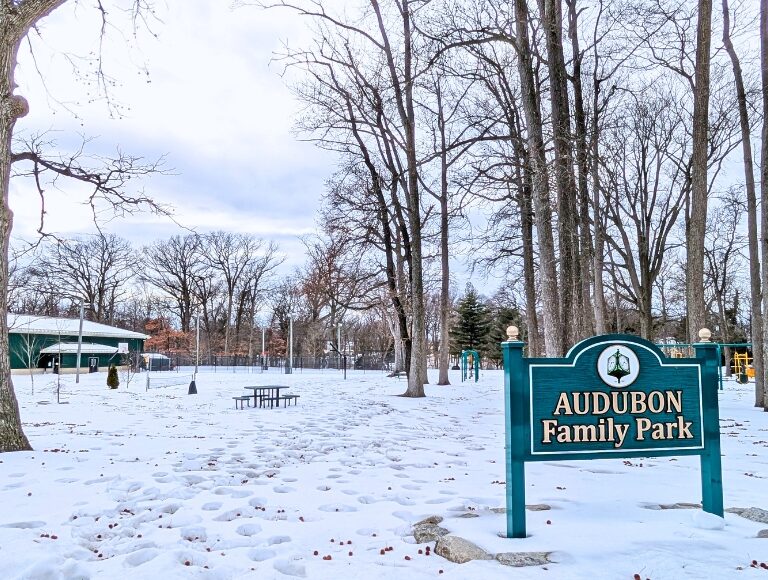
Audubon Unveils Vision to Transform Hampshire Avenue Park Into a Safer, More Welcoming Community Destination

Audubon officials have unveiled an ambitious new vision for the borough’s public park on Hampshire Avenue, outlining a multi-phase investment that would reshape the site into a modern, family-friendly gathering space while dramatically improving pedestrian access and neighborhood safety.

During a special public meeting this week, borough leaders presented preliminary plans for a comprehensive revitalization project estimated at approximately $900,000, a figure that reflects both long-term infrastructure needs and a growing demand for high-quality outdoor recreational space in one of Audubon’s most heavily used community corridors.

The proposed improvements are being prepared in advance of a forthcoming grant application, which municipal officials hope will offset a significant portion of the project’s overall cost and accelerate the timeline for construction.

The Hampshire Avenue park has long served as a neighborhood hub for families, youth sports, and casual recreation, but borough leaders acknowledged that much of the site’s equipment, layout, and accessibility no longer reflect how residents use public space today. The new plan focuses on creating a more inclusive, flexible park environment designed to accommodate children, caregivers, older adults, and visitors with mobility challenges.

According to the presentation shared with residents, the revitalization will be rolled out in carefully sequenced phases to minimize disruptions while ensuring the most critical safety and accessibility improvements are delivered first. The initial phase is expected to prioritize circulation, pathways, and site flow—elements that determine how safely and comfortably people can move through the park.

One of the most impactful components of the overall project is a coordinated traffic and pedestrian safety upgrade scheduled to begin this spring. These improvements will focus on the streets surrounding the park, where vehicle speeds and limited crossing infrastructure have long been a concern for families walking to and from the site.

Planned roadway enhancements include improved crosswalk visibility, traffic-calming measures, and pedestrian-oriented design features intended to slow vehicles and clearly define pedestrian priority zones near park entrances. Borough officials emphasized that the goal is not simply to beautify the park itself, but to create a safer approach to the park—particularly for children, seniors, and residents arriving on foot or by bicycle.

Community feedback has played a central role in shaping the project’s direction. At the special meeting, residents were invited to review conceptual layouts, ask questions about construction timelines, and offer input on how the park is used throughout the year. Families shared the need for more age-appropriate play structures, shaded seating, and open areas that allow for both informal recreation and organized programming.

The current plan proposes modernized playground equipment designed to support a broader range of physical abilities, encouraging inclusive play for children with varying mobility and sensory needs. Expanded seating and gathering areas are also being considered to give parents and caregivers clear sightlines while providing comfortable places for rest and social interaction.

In addition to play areas, borough officials outlined concepts for upgraded landscaping, improved drainage, and refreshed surface materials that would extend the park’s usable season and reduce maintenance challenges. These behind-the-scenes infrastructure upgrades, while less visible, are expected to significantly improve long-term durability and reduce the likelihood of weather-related closures.

The Hampshire Avenue project reflects a wider shift underway across South Jersey and the state as municipalities rethink how local green spaces serve public health, social connection, and neighborhood identity. Parks are increasingly viewed not only as recreational amenities, but as essential community infrastructure that supports mental wellness, physical activity, and civic engagement.

Audubon’s initiative aligns with broader efforts highlighted through

Prospect Park Police Captain Files Civil Lawsuit as Legal Team Seeks Accountability After Serious On-Duty Injuries

A civil lawsuit has been filed on behalf of Prospect Park Police Captain Walter R. Richmond III by the law firm LaBarbiera, Martinez, Griffin & Sullivan, marking a significant legal step in a case involving severe injuries sustained while the veteran officer was performing his duties.

According to the filing, the legal action seeks compensation and accountability related to injuries that have had a lasting impact on Captain Richmond’s health, professional responsibilities and quality of life. The complaint outlines allegations that negligence and unsafe conditions contributed to the incident, prompting the firm to pursue damages tied to medical care, lost income, long-term rehabilitation and future limitations caused by the injuries.

Captain Richmond, who has served the Prospect Park Police Department for years and holds a leadership role within the department, was seriously hurt during an on-duty incident that, according to his legal team, should have been prevented through proper safety measures and responsible conduct by the parties named in the lawsuit. The firm said the civil action is intended to ensure that those responsible are held legally accountable and that the financial and personal burden does not fall solely on the injured officer and his family.

Attorneys representing Richmond emphasized that the case centers on far more than a single event. The filing highlights the broader issue of workplace safety for law enforcement professionals who routinely operate in unpredictable and high-risk environments, often relying on the actions and decisions of outside entities, contractors, or third parties to maintain safe conditions.

The lawsuit details the physical and emotional toll associated with the injuries, including extensive medical treatment, rehabilitation services and ongoing limitations that have affected both professional and personal aspects of Captain Richmond’s life. Legal filings indicate that future medical needs and long-term care requirements are also expected to be significant factors in the case.

LaBarbiera, Martinez, Griffin & Sullivan, which represents clients in complex injury and liability matters across New Jersey, said the case reflects its continued focus on advocating for first responders and public safety professionals who suffer life-altering injuries in the line of duty. The firm noted that officers often face heightened exposure to risk and deserve legal protections when those risks are amplified by negligence or unsafe operational practices.

The civil action comes at a time when police departments across New Jersey are confronting increasing concerns over officer safety, training standards and liability exposure involving third-party interactions and operational environments. Legal experts say civil litigation remains one of the primary avenues through which injured officers can pursue financial recovery and institutional accountability outside of workers’ compensation systems.

While criminal investigations and internal reviews may determine whether departmental or procedural violations occurred, civil cases focus on responsibility, damages and whether reasonable steps were taken to prevent foreseeable harm. In this case, attorneys for Captain Richmond argue that those standards were not met.

The lawsuit also underscores the broader legal landscape surrounding public safety and municipal liability, an area of growing focus within New Jersey’s courts as communities, agencies and private entities increasingly intersect during emergency response, public events and routine operations.

Readers following developments involving public safety litigation, police accountability and court proceedings across the state can find ongoing coverage through Sunset Daily News’ dedicated law and public safety reporting section.

Representatives for the firm said they will continue to pursue the matter aggressively as the case moves through the court system, with the goal of securing financial relief for Captain Richmond and reinforcing legal standards designed to protect law enforcement professionals from preventable harm.

Signature Inc. Posts Strong Momentum in Verizon Fios and Wireless Programs as Demand for Customer Experience and Field Operations Surges in New Jersey

Signature Inc., a business consulting and customer engagement support firm, reported new operational gains tied to its ongoing Verizon Fios and Verizon Wireless campaigns, signaling continued expansion in performance-driven services as telecommunications providers accelerate customer acquisition and retention efforts across New Jersey and the wider Northeast.

Company leadership said the latest reporting period reflects measurable improvements in campaign execution, field productivity and customer conversion efficiency, driven by a refined operational model that blends localized market knowledge with real-time performance analytics and scalable staffing strategies.

The growth is closely connected to the rising demand for high-speed home connectivity and mobile services in New Jersey, where competition among major providers continues to intensify as households and businesses prioritize faster internet, more reliable mobile coverage and bundled service options. Industry analysts note that New Jersey remains one of the most strategically valuable regional markets for fiber and wireless expansion because of its dense population, mixed urban–suburban footprint and proximity to major corporate and logistics corridors.

Signature Inc. said its teams supporting Verizon Fios and Verizon Wireless initiatives have focused on streamlining customer outreach, improving frontline engagement training and optimizing route and territory management for field representatives. The company emphasized that its operational structure is designed to reduce friction between marketing strategy and on-the-ground execution, allowing campaigns to scale more quickly while maintaining consistent service standards.

Executives also pointed to investments in internal digital tools that track campaign performance at a granular level, enabling managers to quickly identify high-performing outreach strategies, improve staffing alignment and adapt messaging to local market conditions. This data-driven approach has helped the company improve activation rates and shorten turnaround times between customer interest and service installation.

In New Jersey, where fiber availability and 5G expansion are both rapidly evolving, Signature Inc. said its role increasingly extends beyond traditional marketing support and into performance consulting for field operations. That includes workforce development, quality assurance monitoring and compliance support designed to ensure campaign teams meet regulatory, safety and customer experience benchmarks.

The company’s leadership added that sustained growth in Verizon-related programs reflects a broader shift in the telecom industry toward outsourcing specialized customer engagement and operational support functions to firms with regional expertise and scalable infrastructure. Rather than relying solely on internal sales and outreach teams, providers are seeking partners capable of rapidly deploying trained personnel while maintaining consistent performance reporting and accountability.

Signature Inc. believes this operating model positions the firm well for continued expansion as broadband and wireless providers compete for market share in high-demand states like New Jersey, where customer expectations for service quality and responsiveness continue to rise.

Beyond its work with Verizon Fios and Wireless, the company indicated it is also expanding its internal innovation pipeline, particularly in areas tied to analytics-driven campaign optimization, workforce scheduling technology and performance forecasting tools. These initiatives are designed to strengthen the firm’s ability to respond to rapidly shifting consumer behavior and increasingly complex service delivery environments.

The company’s growth strategy aligns with broader industry trends shaping the future of customer engagement and telecom support services, including automation, predictive performance modeling and integrated field operations platforms. These developments are becoming central to how providers manage large-scale service rollouts and localized market campaigns.

For readers following the business and innovation landscape behind customer engagement platforms, field operations and campaign optimization tools, more coverage on emerging systems and industry developments can be found in Sunset Daily News’ dedicated technology and digital operations section.

Signature Inc. said it expects continued momentum through the remainder of the year as Verizon expands service availability and strengthens customer outreach in competitive regional markets, with New Jersey remaining a key focus area for operational growth and campaign deployment.

From Pastry Kitchens to Personal Healing: How New Jersey Wellness Entrepreneur Katie Patterson Is Redefining What “Healthy” Really Means

For many people, the word “healthy” arrives loaded with rules, rigid programs, and a sense that success depends on willpower alone. New Jersey-based integrative nutrition health coach and classically trained pastry chef Katie Patterson has built her entire professional life around dismantling that idea—and replacing it with something far more personal, sustainable, and human.

Patterson, the founder of My Kind of Healthy, was recently featured on a national Close Up Radio segment focused on women-led leadership and entrepreneurship. Over the course of the wide-ranging conversation, she shared the philosophy behind her growing wellness platform, her unconventional path from elite pastry kitchens to integrative health coaching, and the deeply personal experiences that shaped how she now supports women, caregivers, and business owners navigating both physical and emotional burnout.

What makes Patterson’s story especially compelling is not simply her impressive professional résumé—it is the rare combination of high-level culinary training, behavioral health coaching, and lived experience that allows her to translate wellness into something people can actually use in everyday life.

At the core of Patterson’s approach is a deceptively simple idea: health is not universal. It is situational. It is shaped by stress, family responsibilities, finances, time, emotional history, and even the unspoken expectations people place on themselves.

She speaks often about how the modern wellness industry encourages people to chase perfection instead of awareness. Her coaching work centers on teaching clients how to listen to their own bodies, recognize individual patterns, and stop outsourcing decisions about food and lifestyle to rigid plans that were never designed for their realities. In her words, health cannot be separated from the lives people are actually living.

That philosophy resonates strongly with many of the women she serves—especially those balancing careers, caregiving, parenting, and entrepreneurship. Patterson openly challenges the culture of extreme restriction and trend-driven dieting that dominates social media and marketing, emphasizing that sustainable change happens through small, consistent behavioral shifts rather than dramatic short-term transformations.

Her message is particularly powerful coming from someone who built her early career in one of the most demanding corners of the culinary world.

A graduate of the International Culinary Center—formerly known as the French Culinary Institute—Patterson trained in the classical traditions of pastry and fine dining. Her professional background includes time at some of the industry’s most prestigious institutions, including Le Cirque in New York City and The Ritz-Carlton in Palm Beach. Those environments demand technical precision, creativity under pressure, and relentless stamina—qualities that later became unexpectedly valuable in her wellness work.

In 2004, Patterson launched Katie Cakes, a custom cake and specialty dessert business that quickly became known for both craftsmanship and creativity. Running her own culinary company offered freedom, but it also exposed her to the realities of small-business ownership in a highly competitive and physically demanding industry—long hours, inconsistent schedules, and constant pressure to perform.

Over time, her professional life began to intersect with something far more personal.

Patterson is a breast cancer survivor. She is also a single mother and someone who has openly shared her recovery from an eating disorder. These experiences reshaped her relationship with food, control, and health—and ultimately led her to pursue formal training as an integrative nutrition health coach.

Rather than abandoning her culinary background, she integrated it into a new professional identity. My Kind of Healthy was created as a bridge between real-life eating habits and evidence-informed wellness strategies—without moral judgment attached to food choices.

Her clients do not come to her for meal plans alone. They come for support navigating emotional triggers, energy crashes, chronic stress, and the guilt that often follows people who feel they are failing at self-care.

One of the most impactful moments during her recent radio appearance came when Patterson spoke about the role stress plays in undermining even the best intentions around health. She explains that when the nervous system is constantly activated—by work pressure, family responsibilities, financial strain, or unresolved trauma—the body responds defensively. Fatigue, cravings, inflammation, digestive issues, and sleep disruption are not signs of personal weakness, she says, but signals that something deeper needs attention.

This understanding has become especially important in the newest initiative she announced: a specialized group coaching program designed specifically for people experiencing caregiver stress.

Caregivers often disappear inside their responsibilities—supporting children with special needs, aging parents, ill partners, or extended family members. Patterson knows this reality firsthand. She has lived the emotional exhaustion, isolation, and internal conflict that comes from prioritizing everyone else’s wellbeing while postponing one’s own.

Her new coaching group is structured to address not only nutrition and movement, but also boundaries, emotional processing, nervous system regulation, and realistic routines that can be sustained even during crisis-heavy weeks. Rather than positioning wellness as another obligation, she reframes it as a form of protection—one that enables caregivers to continue supporting others without sacrificing their own health in the process.

The program reflects a growing shift within New Jersey’s wellness and entrepreneurship community, where holistic health is increasingly being understood as a business leadership issue as much as a personal one. Patterson frequently mentors women who are building food, wellness, and creative enterprises—many of whom struggle with imposter syndrome, burnout, and the lingering cultural barriers that still exist in male-dominated culinary and business environments.

Her advocacy for women entrepreneurs is not abstract. She actively supports clients who are launching home-based food businesses, creative brands, and service-driven companies, helping them navigate both the emotional and operational challenges of early-stage growth. Patterson often speaks about how confidence, clarity, and personal sustainability are foundational business tools—especially for women who have historically been conditioned to overwork, underprice, and undervalue their expertise.

Readers interested in how women across the state are reshaping New Jersey’s food and wellness economy can also explore Explore New Jersey’s ongoing coverage of women-owned culinary and wellness businesses, which highlights how local entrepreneurs are building more inclusive and community-driven models of success.

Throughout her radio interview, Patterson offered several practical strategies that reflect her coaching style—approachable, grounded, and adaptable. She encourages clients to start with hydration and consistent movement before tackling more complicated nutritional changes. She teaches people how to read food labels without panic or obsession, and how to identify ingredients that may be contributing to inflammation or energy fluctuations. She emphasizes routine—not rigidity—and helps clients design daily practices that can flex with unpredictable schedules.

Importantly, she rejects the idea that wellness must feel punitive. Enjoyment, pleasure, and cultural food traditions are not enemies of health in her framework. Instead, she teaches clients how to make informed decisions without shame and how to rebuild trust with their own bodies after years of dieting, restriction, or conflicting information.

This balanced, psychologically informed approach is one reason My Kind of Healthy continues to attract clients far beyond traditional nutrition coaching audiences. Patterson’s work speaks to people who have tried programs, challenges, and diets before—and felt defeated when those systems failed to account for real life.

Her ability to connect so seamlessly across industries—fine dining, entrepreneurship, coaching, and caregiving advocacy—reflects a broader evolution within the wellness space. Increasingly, leaders like Patterson are reframing health as a lifelong relationship rather than a short-term goal.

For New Jersey residents navigating demanding careers, family responsibilities, or personal recovery journeys, Patterson’s work offers a rare combination of credibility and compassion. She understands the science behind nutrition and stress physiology. She understands the operational realities of building a business. And she understands the emotional complexity of trying to care for yourself while caring for others.

In a landscape crowded with quick fixes and wellness trends, Katie Patterson is quietly building something more durable—a practice grounded in empathy, experience, and the belief that every person deserves a version of health that actually fits their life.

New Jersey Remembers James Van Der Beek, a Drew University Alumnus Whose Journey to Stardom Began in Madison

Dawson’s Creek Star and Drew University Alum James Van Der Beek Dies at 48, Leaving a Lasting Mark on New Jersey and Television

New Jersey is mourning the loss of one of television’s most recognizable faces, as actor James Van Der Beek—forever associated with a generation through his breakout role as Dawson Leery—has died at the age of 48.

While Van Der Beek was born and raised in Cheshire, Connecticut, a pivotal chapter of his personal and professional life unfolded in the Garden State, where he arrived as a college student and unknowingly began the path that would lead to international recognition.

Van Der Beek passed away on February 11, 2026, following a private and courageous battle with colorectal cancer. In a statement shared through his official social media account, his family confirmed that he died peacefully, surrounded by loved ones, and asked for privacy as they grieve a husband, father, son, brother, and friend.

He is survived by his wife of nearly sixteen years, Kimberly, and their six children.

For New Jersey, his legacy is deeply intertwined with Drew University in Madison, where Van Der Beek enrolled on an academic scholarship and studied English and sociology. At Drew, he immersed himself in campus life and creative expression, including performing with the university’s all-male a cappella group, 36 Madison Ave., long before his name would become a fixture in pop culture.

It was during those college years in Morris County that Van Der Beek’s life changed dramatically.

In 1998, while still a student at Drew, he landed the lead role in the WB teen drama Dawson’s Creek, securing the part of aspiring filmmaker Dawson Leery. The opportunity required him to step away from school during his junior year and relocate for production, a decision that would ultimately reshape the trajectory of his career.

The series went on to become one of the defining television dramas of its era, airing for six seasons from 1998 through 2003 and launching the careers of an entire generation of actors. Alongside Van Der Beek, the show introduced audiences to future stars Katie Holmes, Michelle Williams, and Joshua Jackson, and became a cultural touchstone for young viewers around the world.

Although his national breakthrough happened far from New Jersey, Van Der Beek often spoke warmly about his formative years in Madison and the creative confidence he developed while at Drew. For him, the campus was not simply a stepping stone, but a place where his identity as a performer and storyteller first took shape.

More than two decades after leaving the university to pursue his acting career, Van Der Beek returned to Drew in May 2024 in a moment that many at the school described as deeply meaningful. He served as the university’s commencement speaker and was awarded an honorary Bachelor of Arts degree, formally closing a chapter that had remained unfinished since his sudden departure for Hollywood.

Standing at the podium in Madison, he addressed graduates with a message shaped by his own unconventional path.

He encouraged students to approach the future with presence, curiosity, optimism and a sense of awe, noting that uncertainty itself often creates opportunity. For many in attendance, it was a rare and personal glimpse into how deeply his college experience in New Jersey had continued to influence him.

In the days following his passing, Drew University released a tribute recognizing both his artistic achievements and his lasting connection to the campus community, recalling how he once described himself as having “deferred his education” to accept the role that would define his early career.

Beyond his association with Dawson’s Creek, Van Der Beek built a wide-ranging film and television résumé that demonstrated both versatility and self-awareness. He appeared in feature films such as Varsity Blues and developed a reputation later in his career for embracing comedic and satirical roles, including his critically praised, self-referential performance in the series Don’t Trust the B—- in Apartment 23.

His work also connected him directly to New Jersey’s broader creative community through collaborations with Red Bank native and filmmaker Kevin Smith. Van Der Beek appeared in both Jay and Silent Bob Strike Back and Jay and Silent Bob Reboot, becoming part of a film universe closely associated with New Jersey’s independent cinema identity.

Those collaborations further strengthened his ties to the state’s film culture and placed him within a network of creators who helped shape New Jersey’s modern reputation as a serious hub for production and storytelling. Readers interested in how the Garden State continues to influence the entertainment industry can explore more about New Jersey’s growing presence in film and television through Explore New Jersey’s film and TV coverage, which highlights the artists, locations, and projects driving the state’s screen culture forward.

In November 2024, Van Der Beek publicly revealed that he had been diagnosed with stage 3 colorectal cancer. At the time, he shared that he had been managing the diagnosis privately and was undergoing treatment with the support of his family. He expressed optimism and gratitude, emphasizing how deeply the experience had reshaped his perspective on time, health, and connection.

Even as his health challenges continued, he remained engaged with his creative community. In September, a charity fundraiser organized in part by members of the Dawson’s Creek cast—led by Michelle Williams—was held in support of cancer awareness and research. Although illness prevented Van Der Beek from attending in person, he appeared virtually, offering words of thanks and encouragement to supporters.

For fans in New Jersey, his passing carries a particularly personal resonance. He was not simply a television star who passed through the state, but a student who lived, learned, performed and grew within one of its college communities before stepping onto the world stage.

From rehearsing with fellow students in Madison, to delivering a commencement address on the same campus decades later, Van Der Beek’s New Jersey story formed a quiet but powerful throughline in a career defined by visibility and reinvention.

As tributes continue to pour in from across the entertainment industry and from those who knew him as a classmate, collaborator, and mentor, James Van Der Beek is being remembered not only for the character that made him famous, but for a life shaped by creativity, resilience, humility, and a deep appreciation for the people and places that helped launch his journey.

New Jersey Breaks the Ice as February Thaw Brings Relief After Deadly Deep Freeze

After weeks of punishing cold that pushed much of New Jersey into survival mode, the Garden State is finally preparing for a meaningful turnaround in temperatures this Valentine’s Day weekend — a welcome shift following a stretch of weather that has already been linked to at least 20 cold- and weather-related deaths statewide between late January and early February.

Many of the victims were discovered in unheated or inadequately heated environments, underscoring how severe and sustained this winter pattern has been across urban, suburban, and rural communities alike. Emergency responders and social service agencies have described the period as one of the most dangerous cold spells in recent memory, particularly for older residents, people experiencing housing insecurity, and those living in homes with unreliable heat.

The first ten days of February alone averaged just 16.6 degrees statewide — nearly 13 degrees below seasonal norms — locking New Jersey into a deep freeze that stalled outdoor activity, strained local infrastructure, and intensified public health concerns. Road crews battled repeated refreezing, municipal public works departments faced frozen pipes and water-main issues, and schools and local governments scrambled to manage heating challenges during the prolonged cold snap.

Now, forecasters say a long-awaited “February thaw” is finally arriving — and for many residents, the timing could not be better.

Saturday, which also falls on Valentine’s Day, is shaping up to be the most pleasant day of the entire week across New Jersey. Skies are expected to be mostly sunny statewide, with afternoon temperatures climbing into the mid-to-upper 40s. In parts of South Jersey, thermometers could briefly touch the 50-degree mark, offering a rare midwinter opportunity for outdoor plans, small business foot traffic, and community events that were repeatedly postponed during the bitter cold.

The return of calmer conditions will be especially noticeable after days of strong northwest winds that frequently gusted between 25 and 35 miles per hour earlier this week. Those winds are forecast to fade by Friday night, setting the stage for a much quieter and more comfortable Saturday throughout North, Central, and South Jersey.

The improved weather will also accelerate snowmelt from the lingering snowpack left behind by late January storms. With sunshine dominating both Friday and Saturday, residents can expect visible clearing of sidewalks, driveways, and secondary roadways. However, officials are urging drivers and pedestrians to remain cautious, as melting during the daytime followed by overnight refreezing could still create slick conditions in shaded areas and on untreated surfaces.

Sunday, however, brings a less predictable and increasingly unsettled weather pattern.

Cloud cover is expected to thicken through the morning, and forecasters are tracking a coastal storm system that could begin influencing the state late in the afternoon and evening hours. Current projections suggest a 30 to 51 percent chance of precipitation developing toward the end of the day, with rain or snow showers possible depending on location and timing. High temperatures will remain in the low-to-mid 40s, keeping much of the state right on the edge of rain versus snow as the system moves closer.

Looking beyond Sunday, meteorologists are paying close attention to a developing storm that could affect New Jersey Sunday night into Monday. While the exact track remains uncertain, the current outlook leans toward rain for much of South Jersey, while northern counties may experience a mix of rain and snow if colder air lingers longer. Small shifts in the storm’s path could still change precipitation types, particularly in higher elevations and interior northern communities.

For emergency management officials, the transition from extreme cold to fluctuating temperatures introduces a new set of concerns. Rapid snowmelt combined with incoming rainfall could lead to localized ponding of water, clogged storm drains, and minor flooding in low-lying and poor-drainage areas. Residents are encouraged to clear nearby storm grates and remain alert for changing road conditions as the thaw unfolds.

State and local agencies are also continuing to stress cold-weather safety, reminding residents that despite the upcoming warmup, winter hazards remain very real. Heating systems, carbon monoxide detectors, and access to warm shelter continue to be top priorities as temperatures fluctuate.

New Jersey residents can continue to follow evolving conditions, storm timing updates, and localized forecasts by checking the latest statewide weather report coverage throughout the weekend and into early next week.

While this weekend’s thaw will not erase the toll of one of the harshest stretches of winter weather in recent years, it does provide a critical break — offering safer travel, renewed outdoor activity, and a brief sense of seasonal normalcy after weeks defined by dangerous cold, high winds, and mounting public safety concerns across the Garden State.

Fifty Years on the Boardwalk: How The Stone Pony Turns a Local Club Into a New Jersey Legend

Statewide Honors, National Spotlight and a Full Calendar of Celebrations Mark The Stone Pony’s 50th Anniversary in Asbury Park. The Sound of Asbury Comes Home: A Beloved Local Tradition Takes the Stage Again

Asbury Park Music Awards Make a Long-Awaited Comeback at The Stone Pony, Reviving a Cornerstone of New Jersey’s Live Music Culture

One of New Jersey’s most deeply rooted celebrations of original music is finally returning to where it belongs—on a stage, in front of the community that built it.

After a seven-year absence, the Asbury Park Music Awards will officially return on Friday, February 20, bringing artists, venues, producers, promoters and fans back together inside the legendary Stone Pony for a full evening devoted to the people who continue to define Asbury Park as one of the East Coast’s most influential music cities.

Doors open at 6:30 p.m., with the ceremony and live programming running from 7 p.m. through approximately 11:30 p.m. Tickets are available for $25 in advance and $30 at the door.

More than an awards show, the revival represents the return of a hometown institution that helped unify a fiercely independent local scene for a generation. For musicians who cut their teeth in small rooms, late-night showcases and local festivals, the Asbury Park Music Awards have long served as one of the rare platforms built specifically to recognize artists before national success—and sometimes long after it.

The ceremony traces its roots back to 1993, when it was created to spotlight original music and the creative ecosystem surrounding it. Over the next quarter century, the awards became an annual anchor for the city’s live performance community, celebrating not only artists, but also the venues and organizers who sustained Asbury Park’s reputation during periods of both growth and uncertainty.

The event was originally founded by Scott Stamper of the iconic club The Saint, along with Peter Mantas, who served as entertainment director at the former Langosta Lounge. From its earliest years through 2018, the awards developed a reputation as a grassroots gathering where recognition came directly from the scene itself—musicians honoring musicians, and fans celebrating the people whose work shaped their weekends, soundtracks and social circles.

When The Saint closed its doors in 2022, the end of that era carried emotional weight throughout the local music community. Now, with Stamper’s full support, stewardship of the awards has passed to the Asbury Park Music Foundation, which is producing the revived ceremony and guiding it into its next chapter.

That transition brings a powerful new dimension to the event.

Proceeds from the 2025 Asbury Park Music Awards will directly support the foundation’s mission to provide meaningful music education opportunities to under-resourced youth. The return of the ceremony is now tied not only to celebrating the artists of today, but also to creating access for the musicians of tomorrow—an evolution that reflects the values of a scene built on mentorship, collaboration and community.

The 2025 ceremony will feature 31 award categories, capturing the full scope of the local creative landscape. Core honors will include New Music of the Year, Artist of the Year and Musician of the Year, alongside a wide range of genre-specific Performer of the Year awards designed to reflect the stylistic diversity that has long defined Asbury Park’s stages.

In a meaningful nod to the years when the ceremony was inactive, four special awards will recognize standout releases created during the “gap years” from 2019 through 2024. Those years reshaped how local artists recorded, released and promoted their work, forcing musicians to adapt to changing technology, new touring realities and evolving audience habits. The additional honors are intended to acknowledge both artistic excellence and the resilience that kept Asbury Park’s creative culture alive during one of the most turbulent periods the industry has ever faced.

The return of the awards to The Stone Pony is especially symbolic.

Few venues in the country hold the cultural gravity of the Pony, which has long stood at the heart of the city’s live music identity. Hosting the revived ceremony inside its walls reinforces the deep connection between the venue and the local artists who continue to rely on it as both a proving ground and a creative home.

For emerging performers sharing the same room with veteran players who helped shape the scene decades earlier, the evening offers a rare moment of cross-generational recognition—one that connects the city’s past, present and future on a single stage.

The revived awards arrive at a moment when Asbury Park’s creative economy is experiencing renewed momentum. New artists are recording locally, independent shows are selling out across town, and collaborations between musicians, visual artists and community organizations continue to broaden the city’s cultural footprint well beyond the boardwalk.

Across the state, similar grassroots movements are helping redefine how local music communities operate and grow. Readers who follow the broader evolution of New Jersey’s live performance and independent recording landscape can explore additional coverage through Explore New Jersey’s music section, which highlights the artists, venues and creative forces shaping the sound of the Garden State.

For Asbury Park, however, the return of its hometown awards carries a uniquely personal meaning.

It restores a shared tradition that once brought the entire scene into one room each year—a place where accomplishments were recognized, new projects were discovered, and friendships were formed between people who might otherwise only pass one another in darkened clubs and crowded hallways.

On February 20, the Asbury Park Music Awards will once again become that gathering point. After seven years away, the ceremony returns not as a nostalgia act, but as a reimagined platform—one that honors legacy, celebrates the city’s present-day creators and invests directly in the next generation of musicians who will carry Asbury Park’s sound forward.

One of the most influential live music rooms in America is officially turning 50—and New Jersey is celebrating in a big way.

The Stone Pony, the storied Asbury Park venue that has helped define the sound and soul of the Jersey Shore for five decades, is marking its golden anniversary with year-long programming, special releases, national media attention and an expanding lineup of events that place the club firmly at the center of New Jersey’s cultural conversation.

Founded in 1975 by Jack Roig and Butch Pielka, The Stone Pony has grown from a neighborhood bar with a stage into an internationally recognized landmark. In honor of that legacy, the State of New Jersey, Monmouth County and the City of Asbury Park have formally proclaimed February 8 as Stone Pony Day, recognizing the venue’s extraordinary impact on the state’s artistic identity and its role in shaping generations of musicians and fans.

For Asbury Park, the proclamation is more than ceremonial. It signals just how deeply the venue is woven into the city’s revival, reputation and creative economy.

Over fifty years, the Pony has become synonymous with discovery, community and musical authenticity. It has hosted countless breakthrough performances, surprise guest appearances and defining hometown moments—many of them now part of American music lore. But what continues to distinguish the venue is its ability to remain rooted in local culture while staying globally relevant.

The anniversary year is being positioned as a living celebration rather than a single milestone event. Throughout 2026, the venue will spotlight its history while continuing to do what it has always done best: serve as a launchpad for artists and a gathering place for music lovers from across the region.

National attention has also returned to Asbury Park’s most famous stage.

A primetime ABC special, “Bruce Springsteen: Backstage and Backstreets,” brings viewers inside Bruce Springsteen’s personal story, career and creative connection to Asbury Park and The Stone Pony. The broadcast offers rare behind-the-scenes access and reflections on how the venue shaped the early chapters of one of the most iconic careers in modern music. The program further reinforces the Pony’s reputation as more than a club—it is a cornerstone of American rock history.

That national spotlight continues with the release of Springsteen’s new documentary, “Road Diary: Bruce Springsteen and the E Street Band,” which deepens the narrative around the artist’s touring life and creative evolution, while tying his legacy back to the Jersey Shore scene that helped launch it.

The anniversary also coincides with the release of a major new oral history book, “I Don’t Want to Go Home,” a sweeping, firsthand chronicle of The Stone Pony and the rise, fall and rebirth of Asbury Park itself. The book features interviews with Bruce Springsteen, Steven Van Zandt, Southside Johnny, members of the E Street Band and the Asbury Jukes, along with artists spanning multiple generations including the Ramones, the Jonas Brothers and Jack Antonoff. The project captures not only the story of a venue, but the cultural ecosystem that grew around it.

Even the Pony’s anniversary toast carries a distinctly local flavor.

To mark the milestone, the venue has introduced a commemorative beer, Pony Pale, an American-style pale ale brewed specifically for the 50th anniversary. Featuring bright citrus, pine and tropical fruit notes, the collector can release is available at the Pony and select local retailers, offering fans a tangible way to celebrate half a century of live music on the Shore.

While the history is being honored, the calendar remains firmly focused on live performance.

One of the signature winter events tied to the anniversary is the return of Splintered Sunlight for its annual Grateful Date Night Valentine’s show. The longtime Grateful Dead tribute act, which has been performing at The Stone Pony for three decades, takes the stage for a special evening built around two full sets of Dead classics. Doors open at 7 p.m., with music running from 7:30 p.m. through 11:30 p.m., continuing a tradition that has become a staple for both longtime Deadheads and new fans discovering the scene.

But perhaps the most meaningful anniversary-year moment for the local artist community arrives later in February, when one of Asbury Park’s most beloved traditions officially returns to the room where so many careers were born.

After a seven-year hiatus, the Asbury Park Music Awards will be held Friday, February 20, inside The Stone Pony.

Now presented by the Asbury Park Music Foundation, the revived ceremony restores a long-standing platform dedicated entirely to celebrating original artists and the people who sustain the city’s independent music culture. The awards were first established in 1993 and ran annually through 2018, becoming a cornerstone of the local creative community.

The 2025 edition will feature 31 award categories, including New Music of the Year, Artist of the Year, Musician of the Year and multiple genre-based Performer of the Year honors. In recognition of the years when the ceremony was inactive, four special awards will acknowledge standout releases created between 2019 and 2024—years that challenged local artists while also redefining how music was created, shared and supported.

Doors open at 6:30 p.m., with the ceremony and performances running from 7 p.m. until approximately 11:30 p.m. Tickets are priced at $25 in advance and $30 at the door.

Proceeds from the awards directly support the Asbury Park Music Foundation’s mission to provide life-changing music education opportunities for under-resourced youth, ensuring that the Pony’s legacy is tied not only to its past, but to the future of the scene it helped build.

Together, these events illustrate why The Stone Pony continues to stand at the center of New Jersey’s creative identity. It remains one of the few venues in the country where global recognition and grassroots culture still intersect nightly.

Readers following the evolution of the state’s live performance landscape and the artists driving it forward can explore broader coverage of New Jersey’s music scene through Explore New Jersey’s music section, which highlights the venues, performers and movements shaping the sound of the Garden State.

As Stone Pony Day now officially anchors February 8 on the New Jersey calendar, the venue enters its second half-century with renewed momentum—celebrating its past while continuing to give the next generation of musicians the same opportunity that defined its first 50 years: a stage, a crowd and the chance to be heard.

Emo Night Brooklyn: Valentines Day

0

Emo Night Brooklyn Turns Valentine’s Day Into a High-Energy Late-Night Sing-Along for New Jersey Fans

February 12 @ 8:00 AM 5:00 PM

Emo Night Brooklyn Brings Its Valentine’s Day Party to the Heart of New Jersey’s After-Dark Music Crowd

Valentine’s Day in New Jersey is about to take a louder, more emotional, and far more electric turn as Emo Night Brooklyn delivers its signature late-night DJ dance party experience for a special holiday edition designed for couples, friends, and anyone who still knows every word to the songs that defined an era.

Open to guests 21 and over, Emo Night Brooklyn’s Valentine’s Day celebration invites New Jersey’s nightlife crowd to trade traditional dinner plans for a full-throttle, nostalgia-driven dance floor built around the biggest emo and pop-punk anthems of the last two decades. Tickets start at $17 in advance plus applicable surcharges, with admission available at the door for $23, making it one of the most accessible and high-energy Valentine’s events on the regional calendar.

Doors open at 9 p.m., with the party officially launching at 10 p.m. and continuing deep into the night. From the moment the first track drops, the atmosphere is built for collective release—singing at the top of your lungs, jumping into the crowd, and reconnecting with the soundtrack that shaped a generation of fans who grew up on emotionally charged lyrics and unforgettable hooks.

Unlike a traditional concert, Emo Night Brooklyn operates as a DJ-driven celebration rather than a single-artist performance. The focus is on nonstop momentum, mixing fan-favorite emo, pop-punk, and alternative classics into a continuous dance party that never loses its energy. The result is a room full of people screaming every chorus together, moving from dance-floor chaos to shared sing-alongs in a way that feels more like a community reunion than a typical club night.

A defining element of Emo Night Brooklyn is its reputation for unexpected moments. Past events have become known for surprise guest appearances by well-known artists and bands who drop in to join the party, jump behind the mic, or simply celebrate with the crowd. While nothing is guaranteed, the possibility of an unannounced appearance adds a layer of anticipation that keeps fans talking long after the night ends.

For New Jersey’s late-night crowd, this Valentine’s edition arrives at a moment when themed DJ events and alternative-focused dance parties are becoming an increasingly important part of the state’s live entertainment ecosystem. Emo Night Brooklyn has helped redefine how fans experience the music they grew up with—transforming beloved tracks into shared, high-volume, dance-floor moments that bring together longtime scene veterans and first-timers discovering the culture for the first time.

The Valentine’s Day party also reflects the broader strength and diversity of the New Jersey nightlife and concert landscape, where club shows, DJ events, touring acts, and specialty theme nights coexist side by side. Fans looking to discover more shows, parties, and touring events happening across the state can explore ongoing coverage of the New Jersey live music scene through Sunset Daily News’ dedicated concert and nightlife guide.

Emo Night Brooklyn’s appeal lies in its ability to turn emotional lyrics and high-octane choruses into something communal and celebratory. It is not about standing still and watching a performance—it is about participation. Mosh pits form without warning. Entire rooms lock into the same chorus at once. Strangers become instant friends over shared memories of the songs that once lived in headphones and car stereos and now explode across packed dance floors.

This Valentine’s Day edition is expected to draw a crowd ready for exactly that kind of experience—one built on nostalgia, energy, and unapologetic fun. Whether arriving with a partner, a group of friends, or simply a love for pop-punk and emo classics, Emo Night Brooklyn offers New Jersey fans a different way to celebrate the holiday: louder, later, and surrounded by people who still believe the best love stories were written in three-minute songs.

The Stone Pony

732-502-0600

View Organizer Website

The Stone Pony

913 Ocean Avenue New Jersey 07712 United States + Google Map
732-502-0600
View Venue Website

Splintered Sunlight Grateful Date Night Valentines Show

0

Splintered Sunlight Brings a Valentine’s “Grateful Date Night” Celebration Back to the Stone Pony in Asbury Park

February 13 @ 7:00 PM 11:30 PM

For New Jersey couples searching for a Valentine’s night that trades candlelit clichés for real musical chemistry, few traditions feel as authentic as a night with Splintered Sunlight at the Stone Pony. The legendary New Jersey–based Grateful Dead tribute returns to Asbury Park for a special “Grateful Date Night” Valentine’s show, delivering an evening built on deep grooves, spontaneous jams, and a community of fans who treat live music as a shared experience, not just a soundtrack.

For more than three decades, Splintered Sunlight has been a fixture on the regional live circuit, earning a reputation as one of the most faithful and emotionally resonant Grateful Dead tributes anywhere in the Northeast. Their long-running relationship with the Stone Pony is part of New Jersey music history itself. Year after year, the band continues to fill the room with dancers, longtime Deadheads, and newer fans discovering just how powerful a live reinterpretation of this legendary catalog can be when it is delivered with authenticity and heart.

This Valentine’s edition of “Grateful Date Night” is designed to be exactly what its name promises: an immersive, upbeat evening that invites couples and friends to celebrate together on the dance floor. The band is scheduled to perform two full sets, drawing from the classic Grateful Dead songbook that fans know by memory and feel by instinct. Expect extended improvisations, joyful sing-along moments, and the kind of musical spontaneity that makes every Splintered Sunlight show feel completely different from the last.

Doors open at 7:00 p.m., with music running from 7:30 p.m. through 11:30 p.m., giving fans four solid hours of live performance inside one of New Jersey’s most iconic venues. The Stone Pony’s intimate layout and legendary acoustics continue to make it a favorite destination for both touring artists and devoted local followings, and Splintered Sunlight’s return only reinforces why the venue remains a cornerstone of the state’s nightlife and concert culture.

Beyond the Valentine’s theme, the night carries deeper significance for longtime supporters of the band. Splintered Sunlight has been performing at the Pony for roughly 30 years, a milestone that reflects not only the group’s staying power but also the enduring appetite in New Jersey for jam-driven, improvisational live music. Few tribute acts maintain such consistency without becoming predictable. Instead, Splintered Sunlight thrives on reinterpretation, letting the spirit of the original recordings guide them while still allowing every performance to evolve organically in real time.

The show also highlights the broader strength of the New Jersey concert ecosystem, which continues to produce and sustain acts that can anchor regional touring calendars year after year. Fans looking to explore more concerts, festivals, and artist coverage across the state can find a constantly updated guide to the New Jersey live music scene through Sunset’s ongoing coverage of local and national performances on our dedicated music hub.

In an era when many Valentine’s outings revolve around reservations and rigid schedules, Splintered Sunlight offers something refreshingly unstructured: an invitation to move, connect, and lose track of time together inside a room full of people who share the same love for timeless songs and live improvisation. Whether you’re a longtime Dead devotee, a first-time visitor to the Pony, or simply searching for a memorable and genuinely New Jersey way to spend Valentine’s night, this Grateful Date Night promises exactly what the band has delivered for decades — great music, a packed dance floor, and a night that feels like a celebration from the first note to the last encore.

The Stone Pony

732-502-0600

View Organizer Website

The Stone Pony

913 Ocean Avenue New Jersey 07712 United States + Google Map
732-502-0600
View Venue Website

Asbury Park Music Awards

0

The Heartbeat of Asbury Park Comes Roaring Back to the Pony

February 20 @ 8:00 PM 11:30 PM

Asbury Park Music Awards Return After Seven Years, Reuniting the City’s Artists, Venues and Fans for a Night of Recognition and Renewal

After a seven-year silence, one of New Jersey’s most meaningful music traditions is officially returning to the stage. The Asbury Park Music Awards are back, restoring a beloved hometown institution that has long served as a rallying point for the artists, musicians, promoters and fans who power the city’s legendary live music culture.

The 2025 Asbury Park Music Awards will take place on Friday, February 20, inside the storied walls of The Stone Pony, bringing the local scene together for a full evening dedicated to celebrating original music and the people who continue to shape Asbury Park’s identity as one of the East Coast’s most important creative hubs.

Doors open at 6:30 p.m., with the show running from 7 p.m. through 11:30 p.m. Tickets are available for $25 in advance, with admission priced at $30 at the door.

For longtime supporters of the local scene, the return of the awards represents far more than another concert night. It marks the revival of a community tradition that began in 1993 and grew into an annual gathering point for Asbury Park’s diverse and fiercely independent music ecosystem.

The awards were originally founded by Scott Stamper of the iconic club The Saint and Peter Mantas, former entertainment director at Langosta Lounge. For twenty-five consecutive years, through 2018, the ceremony served as a grassroots platform that recognized the artists who built their careers on local stages long before national attention followed.

Known affectionately throughout the city as “the heart of the Asbury music scene,” The Saint closed its doors in 2022, a moment that deeply resonated with musicians and fans alike. Now, with Stamper’s full blessing and support, stewardship of the awards has officially passed to the Asbury Park Music Foundation, ensuring the event’s legacy continues under a mission-driven, community-focused organization.

The revived awards are being produced by the Asbury Park Music Foundation, a nonprofit dedicated to expanding access to music education for under-resourced youth across the region. Proceeds from the 2025 ceremony will directly support the foundation’s educational programs, connecting the celebration of today’s artists with meaningful investment in the next generation of performers, producers and songwriters.

This renewed purpose brings a powerful new layer to the ceremony. The awards now function not only as recognition of artistic achievement, but also as a funding engine for youth instruction, mentorship and creative opportunity—strengthening the long-term health of Asbury Park’s music culture from the ground up.

The 2025 ceremony will feature an expansive slate of 31 award categories, reflecting the depth and stylistic diversity of the local scene. Core honors will include New Music of the Year, Artist of the Year and Musician of the Year, along with multiple genre-based Performer of the Year awards designed to spotlight excellence across rock, soul, alternative, Americana, pop, hip-hop and other creative communities that coexist within the city’s compact geography.

In a meaningful nod to the years when the awards were on hiatus, organizers have also created four special honors recognizing standout music released during the “gap years” from 2019 through 2024. Those years encompassed one of the most challenging periods in modern music history, when artists and venues navigated shutdowns, shifting business models and a radically altered touring environment. The new awards will acknowledge not only artistic output, but also the resilience and innovation that helped keep Asbury Park’s creative heartbeat alive through unprecedented disruption.

Holding the ceremony at The Stone Pony brings the celebration home in every sense. Few venues in the country carry the cultural weight of the Pony, whose stage has launched careers, hosted legendary collaborations and anchored the city’s reputation for live performance for decades. For emerging artists being honored alongside longtime scene veterans, the opportunity to be recognized in that room holds deep symbolic value.

The revived awards are expected to draw musicians, venue owners, independent promoters, educators and community leaders from across Monmouth County and beyond, reinforcing Asbury Park’s role as a cultural connector within the broader New Jersey creative landscape. The ceremony is designed to remain community-driven and accessible, preserving the grassroots character that originally defined the event while expanding its impact through nonprofit leadership and youth programming.

As interest in local and regional live music continues to surge statewide, the return of the Asbury Park Music Awards also reflects a wider resurgence of community-centered music culture. Across New Jersey, artists are building sustainable careers through small venues, collaborative festivals and independent releases that place local audiences at the center of creative growth. Readers who follow the evolving statewide scene can explore broader coverage of New Jersey’s live and independent music movement through Explore New Jersey’s music coverage, which highlights artists, venues and events shaping the state’s sound.

For Asbury Park, however, the awards carry a uniquely personal significance. They reunite a scene that has always thrived on collaboration rather than competition, celebrating the people who show up night after night—on stage, behind mixing boards, at ticket booths and in rehearsal rooms—to keep original music at the core of the city’s identity.

Seven years after the final pre-hiatus ceremony, the Asbury Park Music Awards return not as a nostalgic revival, but as a re-imagined platform—one that honors legacy, elevates today’s artists and invests directly in tomorrow’s talent. On February 20, under the lights of The Stone Pony, Asbury Park’s music community will once again gather to celebrate what it has always done best: create, connect and keep the sound of the city alive.

The Stone Pony

732-502-0600

View Organizer Website

The Stone Pony

913 Ocean Avenue New Jersey 07712 United States + Google Map
732-502-0600
View Venue Website

A Legendary Battleship Becomes the Backdrop for New Jersey’s Most Distinctive Spring Fundraiser

Battleship New Jersey Unveils a Full Slate of Signature Events, Led by the 2nd Annual Sporting Clay Invitational on May 7

The Battleship New Jersey Museum and Memorial is transforming one of the most iconic symbols of American naval history into a one-of-a-kind setting for competition, community and culture this spring, as it welcomes guests aboard for its second annual Sporting Clay Invitational on Thursday, May 7—an experience that blends sporting tradition with living history on the deck of the nation’s most decorated battleship.

The all-day invitational places participants inside a setting unlike any other in the region, allowing shooters to compete on a custom sporting clay course created specifically for the ship. Registration and breakfast begin at 9 a.m., setting the tone for a full day of friendly rivalry, team play and waterfront hospitality. The event once again features support from Cedar Creek Sporting Clays, which is providing materials and operational expertise to help bring the competition to life.

Unlike traditional outdoor shooting venues, the Invitational delivers a tightly organized, professionally managed course experience built around the ship’s layout and open-air viewing points. Shooters may bring their own firearms, but all ammunition is supplied on site to ensure consistency and safety throughout the competition.

Participants will fire a minimum of 50 targets, rotating through stations with five shots per station. At the conclusion of the initial rounds, the top four teams will advance to a championship shoot-off. Members of each championship team will receive an additional 24 shots in the final round, while other shooters will have the opportunity to continue enjoying open stations during the closing phase of the competition.

The day concludes with cocktails, lunch and a presentation of awards on the fantail of the ship, where the Delaware River and the Camden skyline provide a dramatic backdrop for one of the museum’s most popular annual fundraising events.

Organizers say the Invitational has quickly become a cornerstone event for regional supporters who value both competitive recreation and historic preservation. Proceeds directly support the ongoing restoration of the Battleship New Jersey as well as the museum’s expanding education programs that serve schools, youth groups and community organizations throughout South Jersey and beyond.

Sponsorship opportunities remain available for organizations looking to align their brand with one of the state’s most respected cultural institutions. Sponsorship packages offer prominent visibility to a highly engaged and civic-minded audience, along with access to networking opportunities and recognition across event signage, promotional materials and digital outreach.

The Sporting Clay Invitational is only one part of a broader calendar of signature programming designed to elevate the museum’s public profile and deepen community engagement.

On Thursday, March 5, the Battleship New Jersey will host its fifth annual Admiral Halsey Awards, an evening dedicated to recognizing outstanding leadership, public service and civic impact inspired by the legacy of Fleet Admiral William “Bull” Halsey. This year’s honorees reflect a wide range of public and private leadership across the Delaware River region.

The 2026 Admiral Halsey Award recipients include Dana Redd, President and Chief Executive Officer of Camden Community Partnership; Greg Carlisle, President of TD Bank Commercial Market for South and Coastal New Jersey; Captain Kent “Brewski” Smith, Commanding Officer of Naval Weapons Station Earle; and Commander Steven A. Halle, United States Navy (Retired), Plankowner Commanding Officer of the future USS New Jersey submarine.

The gala will feature a full dinner, open bar, live entertainment, and both live and online auctions, all in support of the Battleship New Jersey Museum and Memorial. Corporate and individual sponsorships continue to play a vital role in sustaining the ship’s preservation and education mission.

A special public service award presentation during the evening will honor Dana Redd for her work advancing community development, innovation and regional quality of life through her leadership in Camden and the surrounding communities. Guests will gather at Adventure Aquarium overlooking the Delaware River for the celebration, with longtime Philadelphia broadcast journalist Karen Rogers serving as master of ceremonies.

Beyond its major fundraising events, Battleship New Jersey is expanding its cultural and public programming throughout the year, reinforcing its role as one of South Jersey’s most distinctive destinations for immersive learning and shared heritage. Visitors can now book overnight experiences aboard the ship for scout troops, youth groups and families, including guided tours, evening programming, meals, and the rare opportunity to sleep in the same bunks once used by the ship’s crew. An adults-only overnight program is also scheduled for April 4, offering a more intimate after-hours experience for history enthusiasts.

The museum’s growing lineup of specialty tours continues to attract new audiences as well. Guests can explore the massive five-story gun structure during the Guided Turret II Tour, step deep into the armored citadel on the Guided Engine Room Tour, or join the adults-only Twilight Tour, which highlights rarely seen spaces and sailor-created artwork while offering beer and wine following the tour. A dedicated Small Sailors Tour introduces younger visitors to the mechanics and history of battleship operations in an interactive, family-friendly format.

The museum has also expanded its storytelling reach through its in-house audio series, WETSU: A Battleship New Jersey Podcast. Hosted by museum president and chief executive officer Marshall Spevak, the podcast brings listeners inside the ship’s legacy through interviews with veterans, historians and national leaders connected to naval service. A recent episode features a wide-ranging conversation with retired Rear Admiral Mark “Buz” Buzby, an Atlantic City native whose career included commanding at sea and leading both Military Sealift Command and the U.S. Maritime Administration. The episode explores the often overlooked logistics and replenishment missions that keep the modern Navy operational worldwide.

Collectively, these programs highlight how Battleship New Jersey continues to evolve from a preserved artifact into a living cultural institution—one that blends hands-on education, large-scale community events and original storytelling.

For readers interested in how heritage sites, museums and creative organizations across the state are shaping New Jersey’s public life, Explore New Jersey’s ongoing coverage of arts and culture offers a broader look at how history, creativity and civic engagement intersect throughout the region.

With limited spots available for the Sporting Clay Invitational and strong early interest in the Admiral Halsey Awards, museum officials encourage supporters to reserve their places early and take part in a season that promises to combine competition, recognition and storytelling—all aboard one of the most storied ships in American history.

Painted With Purpose: Camden Students Turn a Maple Shade Wall Into a Message About Home

New South Jersey Youth Art Projects Bring Community Pride to Maple Shade and Cherry Hill

A stretch of wall inside the Habitat for Humanity ReStore in Maple Shade is no longer just part of a storefront—it’s now a bold, student-built statement about belonging, neighborhood pride, and what “home” can mean when young people are trusted to tell their own story in public. On February 6, 2026, students from the Camden City School District officially unveiled a large-scale community mural at the ReStore, completing a monthlong effort that blended design, teamwork, and civic responsibility into a piece of art meant to live where the community shops, renovates, and rebuilds.

The mural’s central theme—home—lands with extra weight in a place like a ReStore, where donated materials, discounted furnishings, and renovation finds become second chances for houses and apartments across the region. That setting makes the finished artwork feel less like decoration and more like a mission statement: a reminder that stability and pride aren’t abstract concepts, they’re built day by day, board by board, neighbor by neighbor. For the students who created it, the project offered a rare opportunity to make something permanent, public, and meaningful—an experience that can reshape how young artists see their role in the community.

The month of work behind the mural wasn’t just about paint and brushes. Students moved through the full creative process from idea to installation, developing concepts, refining imagery, and making choices about color, layout, and visual storytelling. Projects like this demand more than talent; they require negotiation, time management, and accountability—real-world skills that mirror what many employers and colleges look for, while still giving students the freedom to express something personal. The end result is a piece that invites customers to pause, look closer, and see the neighborhood through the eyes of the people growing up in it.

The initiative was supported through a State Farm Youth Action Grant, with the effort organized in partnership with Habitat for Humanity. In practical terms, that kind of funding can be the difference between a great idea staying in a classroom and becoming a real public asset. In cultural terms, it’s an investment in young people as community contributors—proof that art education and civic engagement don’t have to compete for attention when the right organizations come together.

Maple Shade’s mural unveiling is also part of a broader South Jersey movement that’s putting youth creativity into the public sphere, and it’s happening in more than one town this week. In nearby Cherry Hill, a major student showcase is drawing families and art lovers to a different kind of stage. Opening today, February 12, 2026, the “I Heart Art” Youth Art Show at the local community center is featuring individual works created by more than 100 students in grades K–8, turning the space into a gallery of imagination, technique, and personality. Where the Maple Shade mural emphasizes collective design and community messaging, the Cherry Hill show highlights the power of individual voice—each piece a snapshot of how a child sees the world right now.

Taken together, the two projects show how youth art can function on multiple levels at once. It’s enrichment, yes—but it’s also visibility. It’s a confidence builder. It’s a way for students to feel seen beyond test scores and report cards, and for parents to witness their kids being celebrated for creativity, patience, and craft. And it’s an opportunity for the wider community to engage with local schools in a positive, tangible way, especially in a time when public education can feel too often defined by challenges instead of achievements.

There’s also a deeper civic impact that doesn’t always make the headlines: public youth art projects help create “third spaces” where people feel connected outside of work and home. A mural in a ReStore becomes a conversation starter between shoppers. A youth exhibit in a community center becomes a reason for families to gather, take pride, and spend time in shared spaces. Those small moments add up to something bigger—stronger community identity and a more vibrant local culture.

For South Jersey, where many towns sit close together but have distinct histories and challenges, these kinds of student-led creative efforts help build bridges across municipal lines. A Camden student project unveiled in Maple Shade reinforces the idea that regional pride doesn’t stop at a border. A Cherry Hill exhibit that draws visitors from surrounding communities shows how student creativity can become a magnet for families looking for meaningful local experiences.

As more towns look for ways to energize community spaces and celebrate young people, these February projects offer a blueprint: create partnerships that make the work real, put students in the driver’s seat, and place the art where the public actually lives and gathers. For readers tracking how New Jersey communities are using creativity to strengthen public life—from murals and youth showcases to galleries and performance spaces—Explore New Jersey’s ongoing coverage of [arts and culture]https://explorenewjersey.org/art-culture/ continues to highlight the people and projects shaping what the state looks like, sounds like, and feels like right now.

In the end, the Maple Shade mural and the Cherry Hill youth show aren’t simply “nice events.” They’re proof of something more important: when students are given resources, guidance, and a real platform, they don’t just make art—they make community.

Devils, Olympics, and the End of an Era: New Jersey’s Hockey Story Hits Full Speed in February 2026

Eight Devils Skate on the World Stage as the Black “Jersey” Alternate Nears Its Farewell at Prudential Center

The New Jersey Devils have reached one of those rare stretches where the storylines feel bigger than the standings. In the middle of the 2025–26 season, the club is simultaneously closing the book on one of its most talked-about uniform experiments and sending a sizable contingent of players into the brightest international spotlight the sport can offer, with Olympic hockey underway in Milan-Cortina.

The result is a perfect storm for Devils fans: the pride of seeing key players represent their countries in a true best-on-best tournament, the intrigue of how those minutes and matchups might shape the second half of the NHL season, and the nostalgic edge of a “goodbye tour” for the black alternate look that has split opinion since the moment it debuted.

New Jersey’s Olympic footprint this winter is significant. Eight Devils are skating for five different countries, a reminder that the franchise has become one of the league’s most internationally diverse rosters. On Team USA, Jack Hughes steps into the tournament not only as a game-breaking talent, but as a leadership figure, wearing an alternate captain’s “A” while shouldering the kind of creative burden that can define a country’s medal hopes. Switzerland is effectively a Devils watch party all by itself, with captain Nico Hischier joined by Timo Meier and Jonas Siegenthaler, giving New Jersey fans a direct line to some of the tournament’s most compelling two-way hockey. Sweden features Jesper Bratt and goaltender Jacob Markström, while Slovakia brings defenseman Šimon Nemec into a role that could accelerate his development with heavy minutes against elite competition. Czechia’s Ondřej Palát adds experience, edge, and championship pedigree to a team built to frustrate favorites and turn close games into coin flips.

For Devils followers trying to keep up with both the NHL pause and the international schedule, this is the kind of week that turns casual fans into full-on scoreboard watchers. The tournament’s group stage format and compressed calendar mean momentum swings quickly. A hot power play, an unexpected goaltending performance, or one signature game from a star can reshape the bracket in a hurry. That’s especially true with NHL players back in the Olympics for the first time in over a decade, raising the overall level and pushing every lineup decision, matchup, and special teams unit under a microscope.

Team USA’s Olympic debut today adds an immediate pulse to the day for Devils fans. The Americans open their tournament against Latvia at 3:10 p.m. Eastern, with the game airing on USA Network and streaming on Peacock. On paper, it’s a matchup the U.S. is expected to control, but Olympic hockey has a long history of punishing teams that treat early games like formalities. Latvia is disciplined, opportunistic, and capable of turning a tight first period into a frustrating grind, which makes puck management, patience, and special teams execution essential. For Devils fans, the spotlight naturally shifts to Jack Hughes and how he navigates the tournament’s intensity, larger ice dynamics, and the pressure of being one of the players opponents game-plan around.

Switzerland’s Devils trio may be the most intriguing storyline from a New Jersey perspective. Hischier captaining a national team in a best-on-best event is a major moment for the franchise and the player, and it’s also the type of responsibility that can sharpen a leader’s game when the NHL schedule resumes. Meier’s blend of power and shot volume can change games in a hurry, while Siegenthaler’s steady defensive presence becomes even more valuable against elite top lines. If Switzerland makes a deep run, it won’t be because they got lucky; it will be because they can defend, counter, and capitalize—exactly the kind of identity Devils fans want to see translate back into their NHL season.

Sweden’s inclusion of Bratt and Markström creates another compelling layer. Bratt’s speed and creativity can thrive in international play, where time and space appear in different pockets than in the NHL. Markström, meanwhile, represents a potential swing factor at any tournament: a goaltender who can steal a game and quiet a crowd, or a goalie who gets tested early and faces a storm. If Sweden goes on a run, don’t be surprised if it’s because their structure tightens and their netminding holds.

Then there’s Nemec, whose Olympic opportunity could be quietly massive. Young defensemen often take a major leap when they get thrown into a tournament environment where every shift matters and every mistake is magnified. The experience of playing against world-class forwards, managing the pace, and handling late-game situations can compress months of learning into a week. Devils fans have watched plenty of prospects develop in real time; Olympic pressure is a different kind of accelerator.

Back home in Newark, another storyline is unfolding with more symbolism than statistics: the Devils are in the final season of their polarizing black alternate uniforms, widely nicknamed the “Jersey” jersey. Love it or hate it, it became a lightning rod in the NHL’s modern uniform era—instantly recognizable, heavily debated, and inevitably tied to specific seasons and memories for fans who wore it proudly or couldn’t wait to see it gone.

This year is the farewell lap. The Devils are expected to retire the black alternate after the 2025–26 campaign, with the final scheduled appearance set for Sunday, April 12, 2026, when New Jersey hosts the Ottawa Senators in the regular-season home finale. For collectors, it’s a last call. For fans who embraced the look, it’s the final chance to see it on the ice as a living part of the Devils identity. For those who never warmed to it, it’s the end of a design era that stood out by doing something very different—especially in a league where tradition tends to win most uniform debates.

Part of what made the jersey notable wasn’t just the bold “Jersey” wordmark; it was the internal symbolism built into the striping, including references to New Jersey’s counties and the franchise’s retired numbers. Whether or not fans loved the aesthetic, the concept tried to pull state identity into the uniform in a way most alternates only gesture toward. In that sense, it served its purpose: it got people talking, it sold, and it made the Devils visually distinct on nights it was worn.

Looking ahead, the next uniform chapter is already the subject of speculation. The Devils are expected to unveil a new alternate for the 2026–27 season, one rumored to carry a “Hometown Remix” concept that could pull from New Jersey culture and Devils history in a fresh way. If the franchise gets it right, it becomes more than merch—it becomes an instant visual tradition tied to a new era of the team.

Between the Olympics and the uniform farewell, Devils hockey currently feels like it’s being experienced on two stages at once: the global arena of Milan-Cortina and the local heartbeat of Prudential Center. For fans, it’s an unusually rich midseason moment, where the future, the present, and the identity of the team are all in motion at the same time.

For more Devils and statewide coverage tied to the game at every level—from pro storylines to the broader culture around the sport—readers can explore ongoing reporting in Explore New Jersey’s hockey coverage.

As the Olympic tournament accelerates and the NHL schedule waits on the other side, Devils fans are watching more than just highlights. They’re watching leadership take shape, chemistry form in real time, and a franchise’s modern era come into focus—one international shift and one last black “Jersey” jersey night at a time.

The schedule for Group Stage is as follows:

Feb 11:

  • Slovakia v. Finland, 10:40 AM EST (local time 16:40)
  • Sweden v. Italy, 3:10 PM EST (local time 21:10)

Feb 12:

  • Switzerland v. France, 6:10 AM EST (local time 12:10)
  • Czechia v. Canada, 10:40 AM EST (local time 16:40)
  • Latvia v. United States, 3:10 PM EST (local time 21:10)
  • Germany v. Denmark, 3:10 PM EST (local time 21:10)

Feb 13:

  • Finland v. Sweden, 6:10 AM EST (local time 12:10)
  • Italy v. Slovakia, 6:10 AM EST (local time 12:10)
  • France v. Czechia, 10:40 AM EST (local time 16:40)
  • Canada v. Switzerland, 3:10 PM EST (local time 21:10)

Feb 14:

  • Sweden v. Slovakia, 6:10 AM EST (local time 12:10)
  • Germany v. Latvia, 6:10 AM EST (local time 12:10)
  • Finland v. Italy, 10:40 AM EST (local time 16:40)
  • United States v. Denmark, 3:10 PM EST (local time 21:10)

Feb 15:

  • Switzerland v. Czechia, 6:10 AM EST (local time 12:10)
  • Canada v. France, 10:40 AM EST (local time 16:40)
  • Denmark v. Latvia, 1:10 PM EST (local time 19:10)
  • United States v. Germany, 3:10 PM EST (local time 21:10)

New Jersey’s Winter Playoff Push Reaches Fever Pitch as Schools Across the State Chase Championships

From Hardwood to Ice and the Mats, New Jersey High School Sports Enter a Defining Postseason Week

New Jersey high school sports have surged into the most intense stretch of the winter calendar, with postseason brackets tightening, championship paths becoming clearer, and standout performances reshaping expectations across the state as of February 12, 2026. From basketball and wrestling to ice hockey, indoor track and swimming, student-athletes are competing under growing pressure as state and sectional tournaments approach.

Across the state, schools are navigating one of the busiest weeks of the winter schedule, with rankings fluctuating daily and coaches preparing their programs for postseason qualification meetings and playoff seeding.

For families and fans following the rapidly changing landscape of high school competition, expanded coverage of New Jersey’s high school sports scene continues to highlight how local programs are building elite talent, community pride and statewide rivalries.

On the basketball courts, the final push before tournament qualification is underway. The regular season is entering its closing days, and teams across every section are fighting for critical power points that will determine who advances and where they land in the state brackets. The official cutoff for boys and girls basketball power points is set for Saturday, February 14, placing enormous importance on this week’s remaining games.

The New Jersey State Interscholastic Athletic Association will hold its seeding meeting on Tuesday, February 17, at which time official tournament brackets will be finalized and released. For programs sitting on the bubble, every possession and every result over the next several days could determine whether their season continues.

Individual performances have already defined the winter. Deptford’s Jordan Williams delivered one of the most memorable scoring nights in recent state history earlier this season, erupting for a school-record 54-point performance that immediately vaulted him into statewide conversation. In South Jersey, Paul VI has emerged as one of the most dominant programs in the state, carrying an 18-game winning streak into the final stretch of regular-season play.

The postseason picture has also been shaped by off-court developments. St. Benedict’s boys program will not participate in this year’s state tournament following a bench-related incident in January, a decision that altered the competitive balance within several sections and opened new paths for rival programs.

While basketball teams sprint toward their cutoff, wrestling programs are entering the heart of their championship phase.

The state team tournament brackets have been released, with competition scheduled to begin Monday, February 16. Across the northern and southern sections, programs are preparing for tightly contested matchups that often hinge on a single bout. One of the most anticipated early clashes is developing in North 2, Group 1, where second-seeded Hasbrouck Heights is on track for a potential showdown with Hanover Park and top-seeded Cedar Grove.

Beyond the team format, individual wrestlers are already focusing on the sport’s biggest stage. The New Jersey State Individual Championships will return to Boardwalk Hall in Atlantic City from March 12 through March 14, an annual destination that draws packed crowds and showcases the deepest wrestling talent pool in the country.

Ice hockey has delivered its own wave of drama as county and state-level races tighten.

In Bergen County, St. Joseph of Montvale captured the county championship in thrilling fashion, sealing the title with an overtime goal by Akhmedov that sent the student section into celebration. At the statewide level, Delbarton continues to set the standard. The Green Wave remain ranked No. 1 after rallying past Christian Brothers Academy in a marquee matchup that reinforced their position as the team to beat.

State tournament seeding for ice hockey will be announced on February 17, the same day basketball brackets are finalized, giving coaches and players only a short window to prepare for playoff matchups that often feature razor-thin margins.

Elsewhere across the winter sports calendar, athletes are delivering record-setting performances in track and reshaping the competitive order in the pool.

Indoor track sectional championships are actively influencing statewide rankings, including the highly followed “Fab 50” lists. One of the most eye-catching results came from Mount Olive, where Rupprecht shattered the North 1, Group 3 record in the 55-meter hurdles, immediately positioning himself as a contender for statewide honors.

Swimming programs are also deep into postseason competition. Sectional finals for public school girls are taking place today, with twelve meets being contested across the state to determine which teams will advance and which swimmers will carry momentum into the next round. On the boys side, Don Bosco Prep turned heads in a recent meet with an explosive early scoring run that helped establish control and underscored the program’s depth.

Several key dates now anchor the remainder of the winter championship schedule. Basketball power points will close on February 14, while both basketball and ice hockey teams will learn their postseason paths during the February 17 seeding meetings. Boys bowling sectional championships will follow on February 21, and wrestling’s individual state finals will command statewide attention in Atlantic City from March 12 through March 14.

Amid the statewide postseason surge, Mercer County added another championship to its winter résumé on Wednesday night.

The Pennington School girls basketball team captured the Prep B championship with a convincing 57–36 victory over Villa Walsh, bringing the title back to the county after a dominant second-half performance. The Red Hawks pulled away after halftime by outscoring Villa Walsh 25–10, turning a competitive opening half into a decisive win.

Anna Hokkanen led the balanced scoring attack with 16 points, while Dayonna Doggett added 14. Eden Ashiavor finished with 12 points and Sara Surtz contributed 11 as Pennington placed four players in double figures. The Red Hawks, now 7–12 on the season, displayed disciplined defense and steady ball movement that neutralized Villa Walsh’s offense and allowed them to control the tempo in the final two quarters.

Pennington will close its season this weekend by hosting the Mid-Atlantic Prep League Tournament, offering the program an opportunity to extend its momentum and showcase its championship form on its home floor.

As winter sports across New Jersey reach their decisive phase, the coming days will define seasons, create new champions and elevate the athletes who thrive under postseason pressure. With brackets soon to be finalized and championship venues looming, this week represents a turning point for hundreds of programs statewide—and a reminder of why New Jersey remains one of the nation’s most competitive and deeply rooted high school sports landscapes.

Here are the Top 20 rankings and a few specific live stream resources to catch the action this week:

🏆 Current NJ High School Rankings (Top 5)

As of today, February 12, 2026, these are the heavyweights to watch:

Boys Basketball

  1. Don Bosco Prep (Ironmen are dominant)
  2. St. Benedict’s (Despite the tourney ban, they remain a powerhouse)
  3. Paul VI (On a massive win streak)
  4. Hudson Catholic
  5. Ramsey

Girls Basketball

  1. St. John Vianney (The perennial gold standard)
  2. Red Bank Catholic
  3. Rutgers Prep
  4. Manasquan
  5. Ewing

📺 How to Watch (Live Streams)

If you can’t make it to the gym or the rink, New Jersey high school sports are heavily streamed through these platforms:

  • NJ.com High School Sports: The primary hub for schedules, live scores, and “Game of the Week” features.
  • NFHS Network: This is the “Netflix” of NJ high school sports. They have automated cameras in many NJ schools. You can search by school name (e.g., “Cherry Hill East” or “Haddonfield”).
  • Jersey Sports Zone: Excellent for high-quality highlights and post-game interviews if you missed the live action.
  • YouTube: Many local districts (like Trenton Public Schools or Middletown) stream home games for free on their official school district YouTube channels.

🔥 Must-Watch Event Tonight

Ice Hockey Sectional Semifinals: Check the NJSIAA Ice Hockey brackets for tonight’s matchups. Delbarton and CBA are both in action, and these games are notoriously loud and intense.

Pro-Tip: Since the Basketball Seeding Meeting is this Tuesday (Feb 17), every game tonight and tomorrow carries “double” weight for power points. Teams like Cherokee and Camden are fighting for that crucial #1 seed to ensure home-court advantage throughout the playoffs.

A Creative Summer Awaits: All Children’s Art Center Expands 2026 Camp Experience Across Three New Jersey Communities

All Children’s Art Center Unveils a Longer, More Immersive 2026 Summer Camp for Young Artists in Denville, Boonton and Bound Brook

Families across New Jersey searching for a summer program that blends creativity, confidence-building, and meaningful enrichment will once again find a standout option in the All Children’s Art Center’s 2026 Summer Camp, an expanded seasonal offering designed to engage children and teens through hands-on visual arts, theatre exploration, and imaginative play across three studio locations in Denville, Boonton and Bound Brook.

The All Children’s Art Center of New Jersey, widely known as ACAC, will operate its 2026 summer program from June 1 through September 11, creating one of the longest-running creative camp seasons in the region. The extended schedule gives families greater flexibility while allowing students to return for multiple sessions without repeating the same experience.

The camp welcomes young participants from age three through sixteen and is structured around weekly themed sessions that rotate projects, creative challenges and collaborative activities.

Whether children are attending for a single week or enrolling throughout the summer, every session is built to feel fresh, exploratory and age-appropriate.

The 2026 program will be offered at three accessible studio locations. In Morris County, the Denville campus is located at 424 West Main Street. In neighboring Boonton, the studio is based at 117 Washington Street. Somerset County families can attend the Bound Brook location at 15 John Street. Together, the three sites allow ACAC to serve families across a wide stretch of North and Central New Jersey.

What distinguishes the All Children’s Art Center from traditional day camps is its emphasis on creative process rather than finished results. Campers are encouraged to experiment with materials, collaborate with peers and explore personal expression through multiple artistic disciplines. Visual art remains the backbone of the program, but theatre-based activities and creative games are intentionally integrated to strengthen communication skills, confidence and teamwork.

Throughout the summer, children participate in rotating projects that may include sculpting with clay, slime and texture-based art experiments, wearable and mixed-media design, tie-dye and textile work, drawing and painting, as well as imaginative theatre exercises that introduce storytelling, movement and performance in a supportive setting. Group performances and informal showcases are often woven into the weekly themes to give students the opportunity to present their work in a fun, low-pressure environment.

Each week of camp introduces a new creative theme, allowing returning campers to continuously build new skills while exploring different artistic styles and concepts. The program is designed to appeal equally to beginners who are discovering creative activities for the first time and to experienced young artists who are ready to expand their techniques.

For older students who want to develop leadership experience, ACAC will again offer its Counselor-in-Training program in 2026. The CIT program is open to youth ages twelve through fifteen and is structured to provide early leadership development, classroom assistance experience and mentorship from professional teaching artists. The program runs at a weekly rate of $200 and is ideal for students interested in working with younger children, pursuing creative education pathways or gaining structured volunteer-style experience in a supervised environment.

In addition to the CIT track, the center also continues to welcome camp volunteers who are passionate about arts education and youth engagement. Volunteer opportunities allow teens and young adults to assist instructors with projects, classroom organization and group activities while contributing to a creative and community-driven learning environment.

The 2026 camp day is offered in multiple schedule options to accommodate working families and varying summer routines. Families may choose from half-day and extended-day formats, including 9:00 a.m. to 1:00 p.m., 11:00 a.m. to 3:00 p.m. and 1:00 p.m. to 5:00 p.m. sessions, each priced at $169 per child per week. Mid-length options, including 9:00 a.m. to 3:00 p.m. and 11:00 a.m. to 5:00 p.m., are available at $249 per week. The full-day schedule from 9:00 a.m. to 5:00 p.m. is offered at $339 per child per week.

Sibling discounts are typically applied during the registration process, making the program more accessible for families enrolling multiple children. Camp enrollment is completed online through the All Children’s Art Center’s registration system and partner marketplace platform, allowing families to review weekly themes, select preferred locations and customize schedules based on availability.

Beyond creative instruction, the All Children’s Art Center places strong emphasis on social growth and emotional development. Camp activities are intentionally structured to help children practice collaboration, problem-solving and creative risk-taking in a welcoming setting. Small group instruction and guided exploration help foster friendships and reinforce a sense of belonging for campers of all ages.

As New Jersey families increasingly seek programs that support well-rounded development during the summer months, creative camps such as ACAC’s are becoming an important part of the broader youth enrichment and family lifestyle landscape. Readers interested in discovering additional community-centered programs, family activities and seasonal experiences can explore more coverage through Explore New Jersey’s lifestyle section, which highlights how local organizations continue to support healthy, balanced and engaging family living across the state.

With its long-running reputation for accessible arts education, its expanded 2026 schedule, and three convenient studio locations, the All Children’s Art Center’s Summer Camp is positioned to be one of the region’s most comprehensive creative programs for children and teens. For families seeking a summer experience that blends artistic discovery, personal growth and joyful community connection, ACAC’s 2026 camp season offers a vibrant and enriching destination for young creators throughout New Jersey.

Federal Donuts & Chicken Sets Aggressive New Jersey Expansion With Princeton and Atlantic City Locations on the Way

Beloved Philadelphia Doughnut and Fried Chicken Brand Builds Major Garden State Footprint Following Marlton Debut

One of Philadelphia’s most recognizable fast-casual food brands is officially laying long-term roots in New Jersey, and the expansion of Federal Donuts & Chicken is quickly shaping up to be one of the most closely watched regional food growth stories of the year.

After opening its first New Jersey location in Marlton last spring, Federal Donuts & Chicken is now preparing to roll out multiple additional sites across the state, signaling strong confidence in the Garden State’s appetite for chef-driven comfort food and specialty doughnuts.

The brand’s New Jersey launch began at Marlton Square in Burlington County, where local franchise partners Mark Heinz and Debbie Grady introduced the concept to South Jersey diners. The Marlton location immediately became the company’s first operational outpost in the state and served as the opening move in a four-unit development agreement.

That first shop has now paved the way for a second New Jersey location, which is currently in development at MarketFair in Princeton. While an official grand opening date has not yet been announced, the Princeton site is expected to significantly broaden the brand’s reach into Central Jersey and the high-traffic Route 1 corridor.

Heinz and Grady have confirmed that two additional New Jersey locations are planned as part of their multi-unit agreement, though specific communities and timelines for those future stores have not yet been publicly disclosed.

At the same time, a separate franchise group is bringing the brand to Atlantic City, where a Federal Donuts & Chicken location is scheduled to open this spring inside the Hard Rock Hotel & Casino. The new restaurant will join a slate of fresh dining concepts debuting as part of the property’s sweeping $50 million renovation initiative, positioning the brand squarely in one of New Jersey’s most visible tourism and entertainment hubs.

With locations now spanning South Jersey, Central Jersey, and the state’s premier resort destination, Federal Donuts & Chicken is clearly building a geographically strategic footprint designed to reach both everyday local customers and high-volume visitor traffic.

Founded in 2011, the company was created by an acclaimed hospitality team that includes James Beard Award-winning restaurateurs Michael Solomonov and Steve Cook. From its earliest days, the brand set out to blend chef-driven culinary standards with the speed and accessibility of a fast-casual model.

Today, Federal Donuts & Chicken has become widely known for its hand-crafted doughnuts, twice-fried crispy chicken, and specialty coffee program. The doughnut menu is divided into three distinct styles: “fancy” varieties topped with creative glazes and seasonal finishes, “classic” versions built around traditional milk glazes and old-fashioned flavors, and “hot fresh” doughnuts made to order and finished immediately with custom sugar and spice blends.

The chicken program centers on hand-battered tenders and wings, double-fried for extra crunch and paired with house-made dipping sauces or dry seasoning blends. The menu also includes fried chicken sandwiches and chicken-forward salads, giving the concept broader appeal beyond its signature doughnuts.

Federal Donuts & Chicken’s New Jersey growth is arriving at a moment when experiential dining and cult-favorite brands continue to drive interest across the state’s evolving food scene. Readers following the broader expansion of destination dining and specialty concepts can explore more statewide coverage in New Jersey’s growing food and beverage landscape.

The company’s regional momentum is also tied closely to its recent shift toward franchising. After formally launching its franchise program in 2024, Federal Donuts & Chicken has expanded to 12 locations nationwide in a relatively short period of time, with New Jersey emerging as one of its most aggressive new development markets.

But for many longtime fans, the brand’s cultural profile extends well beyond its storefronts.

Federal Donuts & Chicken holds a unique place in live music history thanks to its role in Phish’s legendary 13-night “Baker’s Dozen” residency at Madison Square Garden in 2017. During the run, each concert night was paired with a custom Federal Donuts flavor created specifically for the show, with the daily doughnut theme revealed each afternoon and woven directly into the band’s setlists.

Over the course of the residency, the nightly doughnut themes ranged from Coconut, Strawberry, Red Velvet, Jam Filled and Powdered to Double Chocolate, Cinnamon, Jimmies, Maple, Lemon, Boston Cream and Glazed. One night was even dedicated entirely to donut holes.

Here are the 13 flavors featured during the run:

  • July 21: Coconut
  • July 22: Strawberry
  • July 23: Red Velvet
  • July 25: Jam Filled
  • July 26: Powdered
  • July 28: Double Chocolate
  • July 29: Cinnamon
  • July 30: Jimmies (Sprinkles)
  • August 1: Maple
  • August 2: Holes (Donut Holes)
  • August 4: Lemon
  • August 5: Boston Cream
  • August 6: Glazed 

The band embraced the concept with playful precision, building song selections, debuts and improvisational segments around each flavor. On Jam Filled night, the group stretched “Lawn Boy” into a marathon 30-minute performance. On Lemon night, they debuted Radiohead’s “Everything In Its Right Place” and quoted the track throughout the second set. On Powdered night, the surprise debut of Prince’s “1999” became one of the most talked-about moments of the entire residency.

The residency followed a strict “no repeats” rule across all 13 nights, producing 237 distinct songs and an unusually high number of rare bust-outs and cover debuts. During one of the shows, frontman Trey Anastasio even delivered a now-famous on-stage narration concluding that the universe itself is shaped like a donut, tying the entire concept together.

Nightly Debuts and Major Bust-outs

Date DonutPhish DebutsNotable Bust-outs
July 21Coconut“Shake Your Coconuts” (Junior Senior), “Coconut” (Harry Nilsson)N/A
July 23Red Velvet“Sunday Morning” (Velvet Underground)“Sweet Jane” (First time since 2012, 193 shows)
July 25Jam FilledN/A“Lawn Boy” (transformed into a 30-minute jam)
July 26Powdered“White Winter Hymnal” (Fleet Foxes), “Powderfinger” (Neil Young)1999” (Prince; first time since 1998, 524 shows)
July 28Double Chocolate“Chocolate Rain” (Tay Zonday), “You Sexy Thing” (Hot Chocolate)N/A
July 30Jimmies“The Wind Cried Mary” (Jimi Hendrix)Esther,” “Colonel Forbin’s Ascent,” “Fly Famous Mockingbird” (All 76-show gaps)
August 1Maple“O Canada” (Instrumental), “Maple Leaf Rag” (Scott Joplin)Swept Away > Steep” (First time since 2012, 192 shows)
August 2Holes“Way Down in the Hole” (Tom Waits), “O Holy Night”N/A
August 4Lemon“See That My Grave Is Kept Clean” (Blind Lemon Jefferson), “Everything In Its Right Place” (Radiohead)Dinner and a Movie” (First time since 2013, 164 shows)
August 6Glazed“Most Events Aren’t Planned” (Vida Blue)Izabella” (Jimi Hendrix; first time since 1998, 576 shows)

That pop-culture crossover helped cement Federal Donuts & Chicken as a brand that resonates far beyond traditional restaurant audiences, especially among music fans and younger, experience-driven consumers.

For New Jersey, the brand’s arrival represents more than another fast-casual opening. It reflects a broader shift toward chef-led concepts expanding into suburban and mixed-use retail centers, bringing destination-level food experiences into everyday neighborhoods.

With a second location headed to Princeton, a casino-anchored outpost opening in Atlantic City, and two additional stores planned behind the scenes, Federal Donuts & Chicken is positioning itself as a long-term player in New Jersey’s competitive dining market. The pace and scope of its expansion suggest that the Marlton debut was only the beginning of a much larger Garden State rollout.

New Jersey Power Shift Redefines State Politics as Labor-Focused Campaigns, Immigration Policy, and Budget Battles Take Center Stage

From Mejia’s Breakthrough Win to Sherrill’s First Executive Orders, a New Political Era Emerges Across New Jersey

New Jersey’s political landscape is undergoing one of its most consequential transitions in years, shaped by a new governor, high-profile special elections, rising labor-centered campaigns, and a growing confrontation between state leaders and federal immigration authorities.

At the center of the moment is a rapidly changing executive branch and a political environment increasingly defined by economic fairness, civil liberties, and a widening push to rebalance power away from entrenched institutions.

Progressive activist Analilia Mejia’s victory in the Democratic primary for the open 11th Congressional District is being widely viewed as a blueprint for how a candidate rooted in working-class advocacy can win decisively in a district that is neither majority Latino nor traditionally aligned with progressive grassroots organizing.

Her campaign emphasized a platform built around a living wage, paid sick leave, and sustained criticism of an economic system that, in her words, continues to reward only a narrow ruling class. That message resonated strongly with voters across racial, geographic, and ideological lines, demonstrating how labor-centered policy language and affordability issues have become a unifying political force in modern New Jersey elections.

Political observers say Mejia’s performance is already being studied by campaign strategists statewide as a model for how working-family economics can outperform traditional partisan messaging. Her general election matchup against Republican nominee Joe Hathaway on April 16, 2026, is now positioned as one of the most closely watched congressional races in the state.

The electoral shift is unfolding alongside a dramatic change in the Governor’s Office.

Governor Mikie Sherrill was sworn in as New Jersey’s 57th governor on January 20, 2026, following the conclusion of Phil Murphy’s administration. In her first weeks in office, Sherrill has moved swiftly to establish a policy posture focused on strengthening state oversight and limiting what her administration views as unchecked federal authority, particularly in immigration enforcement.

Just days into her tenure, Sherrill signed Executive Order No. 12, barring federal Immigration and Customs Enforcement agents from entering or operating on non-public state property without a judicial warrant. The restriction applies to a wide range of locations, including state offices, child-care facilities, and university residential housing. The order represents one of the strongest state-level limits on federal enforcement access adopted anywhere in the region.

At the same time, the administration launched a public reporting and transparency portal that allows residents to submit photos, videos, and documentation of ICE activity. Submissions are reviewed by the Attorney General’s office as part of a new oversight framework designed to track enforcement actions and identify potential civil rights concerns.

The governor’s early actions have reinforced New Jersey’s emerging identity as a state willing to challenge federal enforcement policy through administrative authority rather than legislative standoffs alone.

That policy pivot is arriving at a difficult fiscal moment.

Sherrill’s nominee for state treasurer, Aaron Binder, is now preparing to manage a projected one-billion-dollar budget shortfall tied largely to federal funding reductions. Binder and the governor’s budget team face the complex task of assembling the administration’s first spending plan, due in early March, while balancing education funding, public safety, transportation, and health services amid growing pressure to avoid deep municipal and school-aid cuts.

The shifting executive strategy is reverberating through statewide and federal races.

In the 2026 United States Senate contest, a new Republican challenger has entered the field. Former News 12 reporter Alex Zdan announced his candidacy after receiving the Passaic County Republican endorsement and is seeking to consolidate GOP support ahead of a general election challenge to Democratic incumbent Cory Booker later this year.

The congressional realignment continues with the special election in the 11th District, where Mejia’s nomination has reshaped expectations for turnout, coalition-building, and messaging in suburban and mixed-income communities.

At the municipal level, political tensions are playing out in city halls and council chambers across the state.

In Trenton, city leaders and business organizations are hosting a Merchant and Community Stakeholder Briefing focused on economic stability and rights awareness following recent federal enforcement activity in the region. The meeting is expected to bring together small business owners, community advocates, and municipal officials seeking clarity on workplace protections and compliance obligations during periods of heightened federal scrutiny.

In Piscataway, the Township Council has approved a controversial ordinance allowing the municipality to remove hotel occupants if they have been arrested or charged with a crime. The 5-2 vote immediately drew protests and public demonstrations from civil rights groups, who argue the policy undermines due process and could disproportionately affect vulnerable populations, including unhoused residents and immigrant families.

In Hudson County, newly elected progressive Assemblymembers Ravi Bhalla and Katie Brennan introduced legislation aimed at reforming how New Jersey finalizes its state budget. Their proposal would require any finalized budget to remain unchanged for 14 days before a final vote, effectively banning last-minute closed-door amendments. Supporters say the measure would dramatically increase transparency and limit backroom negotiations that often determine billions of dollars in public spending with little public scrutiny.

Legal and regulatory developments are further intensifying the political climate.

A 14-judge federal appellate panel in Philadelphia heard arguments this week challenging New Jersey’s prohibition on firearms in 25 designated “sensitive locations.” Gun-rights organizations argue the law is overly broad and conflicts with recent Supreme Court precedent. State officials maintain the restrictions are essential to public safety and constitutional under existing legal standards. The outcome of the case could reshape how New Jersey regulates firearms in public spaces statewide.

Meanwhile, the state’s gaming industry continues to demonstrate its expanding economic footprint. Preliminary data released by the Division of Gaming Enforcement shows that more than $126.5 million was wagered in New Jersey on Super Bowl LX, representing a sharp year-over-year increase and reinforcing the state’s position as one of the nation’s dominant sports betting markets.

Together, these developments reflect a state in political transition—where labor advocacy, immigration enforcement oversight, budget transparency, and public safety policy are increasingly intertwined across every level of government.

The rapid pace of change is also placing New Jersey squarely in the national spotlight for its evolving approach to executive authority, grassroots organizing, and institutional reform. Ongoing coverage of the state’s fast-moving politics continues to highlight how New Jersey’s leadership and voters are redefining power, accountability, and representation at a moment when economic pressure and federal-state tensions are reshaping the future of governance statewide.

Montville Divided as Immigration Enforcement Debate Erupts Following Pro-ICE Message and Regional Detention Facility Concerns

Local Politics, Federal Immigration Policy, and Community Tensions Collide in Morris County After “I Stand With ICE” Post

A single social media post has ignited a far-reaching and emotionally charged debate in Montville, exposing deep divisions within the community over immigration enforcement, federal authority, and the role of local government in a national policy fight that is increasingly landing at the doorstep of suburban New Jersey.

The post, brief and blunt in its message—“I stand with ICE”—was attributed to a local Republican group and surfaced at a particularly sensitive moment, appearing shortly after the fatal shooting of Renee Good in Minneapolis. While the incident occurred hundreds of miles away, the timing intensified public reaction and quickly propelled the message into local political discourse.

In a township of roughly 22,000 residents, the issue has now dominated public comment periods at two consecutive Montville Township Committee meetings, transforming what might otherwise have been a fleeting online statement into a sustained and highly visible community confrontation.

Notably, the debate has unfolded almost entirely among residents rather than elected officials. During both meetings, members of the public engaged in pointed, often emotional exchanges over immigration enforcement, detention practices, and the broader national role of U.S. Immigration and Customs Enforcement.

What makes the situation particularly unusual is that, at present, ICE operations have no direct footprint in Montville itself. The township has not been targeted for enforcement actions, facilities, or official federal partnerships. Yet the controversy has grown well beyond symbolic disagreement.

The local connection, and the catalyst for much of the public anxiety, is centered approximately 15 miles west in Roxbury, where reports have circulated that ICE is exploring the possibility of establishing a detention facility. The prospect of a federal detention site has unsettled residents across the region and has sharpened fears about how immigration enforcement infrastructure could expand into suburban communities.

That concern has already translated into official action elsewhere. In Roxbury, an all-Republican township council adopted a resolution opposing the potential placement of an ICE detention facility within its borders, citing community impact, public perception, and quality-of-life considerations.

That move prompted residents in Montville to press their own governing body to take a similar stand.

However, the legal reality facing municipalities remains clear. Local resolutions carry no binding authority over federal agencies. While such measures can express the political sentiment of a governing body, they do not restrict federal property use, operational decisions, or enforcement authority.

Despite that limitation, speakers during the most recent township meeting argued that symbolic action still carries weight and sends an important message to residents and neighboring communities.

Opponents of immigration detention spoke at length about what they described as inhumane conditions inside detention facilities nationwide and raised concerns that many individuals held by ICE are neither charged with nor convicted of serious crimes. One resident shared a personal account, claiming that a man who had been detained had previously worked in Montville as a waiter, underscoring what she described as the human cost of enforcement policies.

Several speakers insisted that township leaders have a moral obligation to publicly oppose detention practices and to demonstrate solidarity with immigrant residents and families who may feel targeted or fearful, even in the absence of direct enforcement activity within Montville.

Supporters of ICE, in turn, countered that immigration law enforcement is essential to public safety and national sovereignty. They emphasized cases involving violent crimes committed by individuals who entered or remained in the country illegally and argued that a nation cannot function without meaningful border and immigration controls.

One resident noted that previous Democratic presidents, including Bill Clinton and Barack Obama, publicly acknowledged the importance of enforcing immigration laws, pushing back against the notion that the issue is solely partisan. Another speaker, identifying herself as a legal immigrant, argued that individuals who follow established legal pathways should not be treated the same as those who enter the country unlawfully, and said legal immigrants deserve stronger protections under federal policy.

The exchange underscored how immigration enforcement has become one of the most polarizing public issues in local governance, even in communities where no immediate operational changes are occurring.

The discussion ultimately concluded without any formal action by the Montville Township Committee. No resolution was introduced, and elected officials largely remained silent during the public commentary.

Mayor Frank Cooney has not publicly addressed the latest meeting. However, during an earlier session when the controversy first emerged, he stated that the social media post that triggered the backlash did not originate from the Montville Township Republican Club. According to remarks reported by local media at that time, Cooney said the organization was not responsible for the message.

That clarification has done little to slow the debate.

At the same time, the Montville controversy is unfolding against a broader statewide backdrop in which immigration policy and law enforcement boundaries are being redefined at the executive level.

Earlier this year, Governor Mikie Sherrill signed an executive order limiting federal ICE agents’ use of state-owned property, prohibiting such sites from being used as staging areas or processing locations without a judicial warrant. The administration also launched a new “Know Your Rights” website and a public reporting portal designed to document interactions with ICE and provide guidance for residents navigating federal immigration encounters.

Those statewide actions have intensified public attention on the evolving relationship between New Jersey and federal immigration authorities, reinforcing the view among many residents that immigration enforcement is no longer an abstract federal issue, but a policy area with tangible local implications.

As municipal leaders across Morris County monitor developments in Roxbury and other nearby communities, Montville now finds itself drawn into a wider conversation about public safety, civil liberties, and the limits of local authority in shaping federal enforcement policy.

The situation has become a flashpoint in New Jersey’s broader law and order landscape, where questions surrounding public trust, enforcement transparency, and community impact are increasingly intersecting with national political rhetoric.

For now, Montville residents remain divided, and township leaders remain cautious. With no official resolution adopted and no direct federal action pending within the town, the debate is likely to continue—fueled by regional developments, statewide policy shifts, and a community struggling to reconcile sharply different views about immigration, enforcement, and what role local government should play when national controversies arrive at the local microphone.

New Federal Voting Proposal Sparks Intense Debate in New Jersey Over Access, Security, and Election Rules

SAVE America Act Advances in U.S. House as New Jersey Leaders Clash Over Proof-of-Citizenship and Voter ID Mandates

A sweeping federal proposal aimed at reshaping how Americans register to vote and verify their eligibility is now moving toward the U.S. Senate, placing New Jersey squarely at the center of one of the most consequential election policy debates in years.

The Safeguard American Voter Eligibility, or SAVE America Act, cleared the U.S. House of Representatives on February 11, 2026, by a narrow 218–213 vote. The legislation would require voters to present documentary proof of U.S. citizenship when registering and impose a nationwide photo identification requirement at the polls. The measure now faces a difficult path in the Senate, where supporters must secure 60 votes to overcome a filibuster.

At its core, the bill seeks to fundamentally alter how voter eligibility is verified in federal elections. Supporters frame the proposal as a long-overdue modernization of election safeguards, while opponents warn it would dramatically restrict access to the ballot—particularly in states such as New Jersey, where registration systems are designed to reduce administrative barriers.

The bill’s backers, led primarily by Republican lawmakers and supported by President Donald Trump, describe the legislation as a “common sense” election security measure intended to ensure that only U.S. citizens participate in federal elections. Proponents argue that the current system relies too heavily on self-attestation and creates opportunities for improper registrations to go undetected. They say the SAVE America Act would close perceived gaps by requiring physical proof of citizenship, such as a passport or birth certificate, before a voter could be added to the rolls.

Supporters also emphasize that the bill establishes a uniform national standard for voter identification. Under the proposal, states would be required to enforce photo identification at polling locations, replacing the patchwork of state-based rules that currently govern voter verification. Advocates contend that voters are already accustomed to showing identification for everyday transactions and believe that applying similar standards to elections would strengthen public confidence in the integrity of the system.

Another central provision of the legislation would require states to proactively review and update voter rolls using federal immigration databases to identify and remove non-citizens. Backers argue that this data-driven approach would improve the accuracy of registration lists and reduce the administrative burden placed on local election officials who must currently rely on a mix of state and federal records.

Opponents of the SAVE America Act, including Democratic leaders and civil rights organizations, argue that the bill addresses a problem that data shows is exceedingly rare while creating sweeping obstacles for lawful voters. Critics warn that millions of eligible U.S. citizens do not have immediate access to the specific documents required to prove citizenship, particularly older residents, low-income individuals, and people born outside traditional hospital settings.

Advocates also raise concerns about the potential impact on women who have changed their names after marriage or divorce. In many cases, a current driver’s license or state ID may not match the name on a birth certificate, creating documentation mismatches that could delay or block registration altogether.

Beyond the documentation requirements, critics say the bill would effectively dismantle modern registration methods that have expanded access to the ballot in recent years. The legislation requires in-person registration with physical documents, a shift that would functionally eliminate most mail-in and online voter registration systems that many states now rely on to reach younger voters, working families, and people with limited transportation options.

Civil rights advocates also point to the bill’s enforcement provisions, which introduce potential criminal penalties for election workers who mistakenly register an individual without the required paperwork. Under the proposal, local officials could face serious legal exposure for clerical or verification errors, raising fears that overly cautious practices could emerge—particularly in communities with large immigrant populations or complex documentation histories.

New Jersey’s own congressional delegation has become divided over the measure. Representative Jeff Van Drew of New Jersey’s Second Congressional District has offered strong public support for the legislation, arguing that only American citizens should participate in American elections and that the bill would restore confidence in national voting systems.

For New Jersey, the SAVE America Act would represent a dramatic shift from long-standing state practices that prioritize convenience, accessibility, and digital enrollment. Under current state law, residents can register to vote online by providing a driver’s license number or the last four digits of their Social Security number and affirming their citizenship under penalty of perjury. This system, often described as an “honor-based” verification model, is paired with extensive cross-checking and post-registration review processes.

If enacted, the federal legislation would override several cornerstone elements of New Jersey’s election infrastructure. The state would be required to collect documentary proof of citizenship for every new registration, a move that election administrators say would dramatically increase processing times, staffing demands, and administrative costs. Online and mail-based registration—two of the most widely used methods in New Jersey—would become largely unworkable under the bill’s in-person documentation requirements.

The proposal would also impose a strict photo identification requirement at the polls for the first time in New Jersey. The state currently verifies voter eligibility through signature matching and registration records rather than mandatory ID checks. Election officials and voting rights advocates warn that implementing a nationwide ID mandate would require new training, equipment, and procedural changes across hundreds of local polling locations.

The debate surrounding the SAVE America Act has become deeply intertwined with New Jersey’s broader political and policy landscape. Some members of the New Jersey Legislature have introduced formal resolutions urging the U.S. Senate to approve the bill, arguing that stronger federal standards would increase public trust in election outcomes and reinforce the credibility of future results.

At the same time, executive and legislative leaders aligned with Democratic leadership have taken a markedly different approach. In early 2026, outgoing Governor Phil Murphy signed the state’s Safe Communities Act while declining to approve other immigration-related measures that would have expanded state cooperation with federal immigration authorities, citing legal concerns and the risk of federal litigation. That broader policy posture has shaped opposition to federal voting proposals that rely on immigration databases and expanded data-sharing requirements.

With one of the largest immigrant populations in the nation, New Jersey is uniquely sensitive to changes in voter registration rules that intersect with citizenship documentation and federal data systems. Advocacy organizations warn that naturalized citizens, multilingual households, and long-term residents who lack easy access to original documentation could face disproportionate hurdles under the new framework, even when fully eligible to vote.

The legislation is now becoming a focal point of statewide political organizing, public messaging, and legal analysis, with election administrators, municipal clerks, and county officials closely tracking how a federal mandate would reshape their operations. Ongoing coverage of voting policy and federal election proposals is also drawing heightened attention within New Jersey’s broader legislation landscape as lawmakers prepare for what could become one of the most significant federal election law changes in decades.

As the SAVE America Act heads to the Senate, New Jersey’s leaders and residents are confronting a fundamental question: how to balance election security with broad and equitable access to the ballot in a state whose diversity, mobility, and digital infrastructure have long shaped its approach to voting. The outcome of the federal debate will determine not only how New Jersey voters register and cast ballots in the future, but how the state reconciles its access-driven election system with a rapidly changing national standard.

New Jersey Law Firm Strengthens High-Stakes Financial and Tax Defense Practice with Strategic Attorney Hire

Scura, Wigfield, Heyer, Stevens & Cammarota, LLP Welcomes Joseph Valenti to Expand Federal Criminal Tax and Forensic Financial Advocacy Services

Scura, Wigfield, Heyer, Stevens & Cammarota, LLP has announced the addition of attorney Joseph Valenti, a move that significantly deepens the firm’s capabilities in federal criminal tax defense, forensic financial advocacy, and complex estate matters for clients across New Jersey and the surrounding region.

Valenti joins the firm with a practice focused on navigating some of the most legally and financially sensitive challenges facing individuals, business owners, and families today, including federal tax investigations, financial and accounting-driven litigation, and sophisticated estate planning and administration. His arrival reflects the firm’s continued investment in high-impact legal talent as demand grows for attorneys who can operate at the intersection of criminal exposure, regulatory scrutiny, and long-term wealth protection.

Federal criminal tax matters have become increasingly complex in recent years, driven by intensified enforcement activity, broader data sharing among agencies, and the growing use of forensic accounting and digital evidence in investigations. Valenti’s background in this arena allows clients to benefit from early-stage strategic guidance—often before formal charges are filed—when legal positioning, document review, and communication with federal authorities can shape the ultimate outcome of a case.

In addition to defending clients facing potential criminal tax exposure, Valenti brings a specialized approach to forensic financial advocacy, a discipline that blends legal strategy with financial analysis to uncover, interpret, and present financial data in high-stakes disputes. This work is especially critical in matters involving alleged financial misconduct, complex asset structures, business valuations, and disputes that hinge on tracing funds, reconstructing financial activity, or identifying irregularities in accounting records.

For businesses and professionals across New Jersey, these skills are increasingly vital. Companies operating in regulated industries, closely held businesses, and family-owned enterprises frequently encounter financial disputes or compliance questions that require both technical legal knowledge and a precise understanding of financial systems. Valenti’s experience allows him to work closely with internal teams, accountants, and outside financial experts to build defensible positions grounded in clear financial evidence.

Beyond his litigation and investigative work, Valenti also concentrates on estate planning and estate administration, providing comprehensive legal support to individuals and families seeking to protect assets, manage succession, and navigate probate and trust administration. His practice addresses both proactive planning and complex post-death administration, including matters involving blended families, business interests, multi-asset estates, and disputes among beneficiaries.

The firm’s leadership noted that Valenti’s dual focus on financial advocacy and estate law enhances its ability to serve clients through the full lifecycle of their legal needs—from compliance and planning to dispute resolution and courtroom advocacy. This integrated approach is particularly relevant for high-net-worth individuals and business owners whose financial and personal legal matters often overlap.

Scura, Wigfield, Heyer, Stevens & Cammarota, LLP has built its reputation on delivering strategic, results-driven representation in matters that carry serious legal, financial, and reputational consequences. The firm’s growing footprint in financial litigation and regulatory defense aligns with broader shifts in New Jersey’s legal environment, where enforcement actions and financial disputes continue to rise in both volume and complexity.

Valenti’s addition also supports the firm’s continued engagement with the evolving law and order landscape in New Jersey, where regulatory oversight, financial investigations, and white-collar enforcement remain central issues for businesses and professionals throughout the state.

With a practice rooted in precision, discretion, and analytical depth, Valenti is positioned to play a key role in expanding the firm’s service offerings in federal criminal tax defense, forensic financial litigation support, and estate matters. His work will further strengthen the firm’s ability to protect clients facing intense scrutiny, guide families through complex planning and administration decisions, and deliver sophisticated legal strategies in an increasingly data-driven legal environment.

The hiring underscores Scura, Wigfield, Heyer, Stevens & Cammarota, LLP’s commitment to remaining at the forefront of financial and regulatory legal services in New Jersey—offering clients a powerful combination of courtroom advocacy, investigative insight, and forward-looking legal planning under one unified firm.

Buddy Guy

0

A Living Legend Returns to New Brunswick for a Once-in-a-Generation Night of Blues

August 8 @ 8:00 PM 11:30 PM

Buddy Guy Brings His Historic 90th Anniversary Tour to State Theatre New Jersey This August

State Theatre New Jersey will welcome one of the most important and enduring figures in American music when Buddy Guy takes the stage in New Brunswick on Saturday, August 8, 2026, delivering a landmark performance that is already shaping up to be one of the most significant concert events in New Jersey’s live music calendar.

At nearly 90 years old, Buddy Guy is not simply continuing his career—he is actively expanding one of the most influential legacies in modern music. His appearance at State Theatre New Jersey comes as part of his national Buddy Guy 90 Tour, a limited run of headline performances celebrating a lifetime spent shaping the sound, attitude, and emotional power of electric blues.

The New Brunswick stop places New Jersey directly on the map for one of the most historically meaningful tours currently crossing North America. The performance is scheduled to begin at 8:00 p.m., with tickets now available and pricing starting at $93, including fees.

For generations of musicians and fans alike, Buddy Guy represents the bridge between the roots of Southern blues and the explosive evolution of electric guitar that transformed popular music in the second half of the twentieth century. Long regarded as the architect of Chicago’s West Side blues sound, his influence stretches far beyond blues itself, helping define the vocabulary of rock, funk, and modern guitar-driven music.

The timing of this New Jersey performance adds even greater significance. In 2026, Buddy Guy earned his ninth Grammy Award, taking home Best Traditional Blues Album for Ain’t Done with the Blues, a late-career triumph that reaffirmed his relevance and creative authority at a moment when most artists are long retired. The album’s success stands as a rare example of sustained artistic excellence across seven decades of recording and performance.

Few artists in any genre can match the scope of recognition Buddy Guy has accumulated. Alongside his multiple Grammy wins, his honors include a Lifetime Achievement Grammy Award, dozens of Blues Music Awards, the Billboard Century Award, the Presidential National Medal of Arts, and the Kennedy Center Honor. Rolling Stone has ranked him among the greatest guitarists in history, a distinction that reflects not only technical mastery but also his singular ability to translate raw emotion through the instrument.

Yet accolades tell only part of the story.

Born in 1936 in rural Lettsworth, Louisiana, Buddy Guy’s earliest connection to music came through necessity and imagination. As a child, he built his first guitar using wire and wood, teaching himself the fundamentals long before formal instruction was accessible. In 1957, he moved to Chicago, a decision that would place him at the heart of one of the most fertile musical movements in American history.

Within a short time, he became a key figure in the city’s thriving blues scene, recording and performing alongside many of the genre’s most influential artists. His aggressive phrasing, elastic bends, searing tone, and unpredictable stage presence helped reshape expectations of what blues guitar could be. What followed was not only a remarkable recording career, but also decades of mentorship and inspiration for countless younger musicians who would later dominate rock and popular music worldwide.

Buddy Guy’s role as a cultural torchbearer has only grown more visible in recent years. His memoir offered an unfiltered account of his journey from the Louisiana countryside to international stages, while a wave of critically praised albums throughout the 2010s and 2020s reintroduced him to new audiences without compromising the grit and emotional honesty that defined his earliest work.

His most recent studio release, Ain’t Done with the Blues, stands as both a declaration and a celebration. Produced by longtime collaborator Tom Hambridge, the album features a remarkable lineup of guest artists, uniting multiple generations of blues, rock, and roots musicians in a project that feels more like a living conversation than a retrospective. The record’s lead tracks reflect the humor, resilience, and hard-earned wisdom that have become hallmarks of his late-career renaissance.

Released on his birthday and immediately embraced by critics and fans alike, the album confirmed that Buddy Guy is not operating in legacy mode. He remains creatively restless, emotionally direct, and fully engaged with the present moment of American music.

In recent years, he publicly scaled back from the grueling pace of extended global touring, announcing a farewell to full-scale road life. But that shift never signaled a retreat from performing or recording. Instead, it marked a transition toward carefully selected appearances that allow him to deliver his music at the highest possible level. The Buddy Guy 90 Tour reflects that philosophy—fewer dates, greater focus, and a renewed emphasis on the shared experience between artist and audience.

The New Brunswick performance will take place inside State Theatre New Jersey, one of the state’s most respected and acoustically refined live performance venues. Known for hosting internationally recognized touring acts and culturally significant programming, the theater provides a uniquely intimate setting for an artist whose career has filled stadiums, festivals, and historic concert halls around the world.

For New Jersey audiences, the opportunity to experience Buddy Guy in this environment is exceptionally rare. His concerts are widely known for their spontaneity, extended improvisation, and direct interaction with the crowd. Even after decades on stage, his performances remain unpredictable and emotionally charged, balancing blistering guitar work with deeply personal storytelling drawn from his life, his mentors, and the communities that shaped him.

This appearance also arrives during a period of renewed interest in roots music, live performance culture, and intergenerational collaboration across the state. New Jersey’s live music landscape continues to expand across venues large and small, connecting legacy performers with emerging artists and new audiences. Readers interested in the broader regional scene can explore more of New Jersey’s evolving music culture through Explore New Jersey’s music coverage, which highlights the artists, venues, and creative movements shaping the state’s sound today.

Beyond the technical brilliance and historical importance, Buddy Guy’s enduring appeal lies in something far more human. His music speaks openly about survival, loss, perseverance, humor, and hope. It carries the voices of earlier blues pioneers who shaped him and the responsibility he continues to carry forward for the genre itself.

As he approaches his 90th year, Buddy Guy remains one of the last living architects of electric blues—a direct link from the fields of rural Louisiana to the clubs of Chicago and onward to the world’s most prestigious stages. His upcoming performance at State Theatre New Jersey is more than a concert. It is a living chapter in American musical history, unfolding in real time for New Jersey audiences.

On August 8, 2026, New Brunswick will host not just a legendary guitarist, but a defining voice of American culture—still playing, still creating, and still proving that the blues is not a relic of the past, but a living, evolving force.

State Theatre New Jersey

732-246-7469

View Organizer Website

The Stone Pony

913 Ocean Avenue New Jersey 07712 United States + Google Map
732-502-0600
View Venue Website

New Email Defense Playbook Aims to Help New Jersey Companies Shut Down Costly Business Email Scams

As cybercriminals continue to refine their social engineering tactics, a new practical resource from Blueclone Networks is giving New Jersey organizations a much-needed blueprint for defending one of their most vulnerable business systems: email.

The company has introduced a comprehensive Email Security Best Practices Guide designed specifically to help organizations reduce exposure to Business Email Compromise (BEC), account takeovers, phishing attacks, and invoice-fraud schemes that increasingly target small and mid-sized companies across the state. The guide focuses on real-world protections that can be deployed immediately, without requiring large security teams or enterprise-level budgets.

Email remains the primary gateway into most corporate networks. It is also the preferred entry point for cybercriminals because it combines technology weaknesses with human behavior. A single convincing message that appears to come from an executive, vendor, or internal department can bypass traditional security controls and trigger wire transfers, credential theft, or malicious software infections in seconds. For many New Jersey businesses—especially those in professional services, healthcare, construction, logistics, and municipal operations—email compromise has become one of the most financially damaging forms of cybercrime.

Blueclone’s new guide was developed to address the most common breakdowns seen in real incidents: outdated authentication policies, poor visibility into mailbox activity, lack of employee training, and the absence of formal response procedures when suspicious messages are detected. Rather than offering high-level theory, the resource walks organizations through how attackers actually gain access to mailboxes, how they establish persistence, and how internal workflows are often manipulated to move money or sensitive data without triggering alarms.

A central focus of the guide is protecting organizations against executive impersonation and vendor fraud—two of the fastest-growing attack patterns affecting New Jersey companies. In many recent cases, attackers quietly monitor internal conversations for days or weeks after compromising an employee account. Once a payment discussion or contract exchange appears, they insert themselves into the conversation with subtle changes to bank information, payment instructions, or document links. Because the email thread looks legitimate, victims often do not realize a crime has occurred until funds are gone.

The Blueclone guide outlines concrete steps for preventing these attacks, including stronger domain protection, consistent use of multi-factor authentication for all users, advanced phishing detection, and tighter controls over inbox forwarding rules and third-party application access. It also emphasizes the importance of monitoring for anomalous login activity and unusual mailbox behavior—signals that frequently indicate an attacker is already inside the system.

Beyond technical safeguards, the guide stresses that employee awareness is just as critical as software. Modern phishing campaigns increasingly use language, formatting, and tone that closely match legitimate corporate communications. The resource recommends structured, role-specific training for finance teams, executive assistants, IT staff, and operations leaders, ensuring employees who regularly handle sensitive requests can recognize red flags such as urgent payment demands, unexpected document links, and changes to established vendor processes.

For organizations navigating a rapidly changing digital landscape, the guide also serves as a broader reference for evolving cybersecurity and workplace tools. Readers can explore more coverage on enterprise platforms and emerging security solutions through Sunset Daily’s ongoing technology reporting, which tracks how regional businesses are adapting to new digital risks.

Another major component of the Blueclone resource addresses incident response readiness—an area many organizations underestimate. Even companies with modern email filtering and endpoint protection can still experience account compromise. The guide provides a practical response framework for IT and leadership teams, outlining how to immediately isolate affected accounts, preserve evidence, notify internal stakeholders, reset credentials, and validate recent financial transactions. Rapid response, the guide notes, is often the difference between containing an incident and suffering a multi-day operational disruption.

The publication also highlights the importance of aligning email security with broader business continuity planning. Email systems frequently serve as the backbone for scheduling, approvals, document sharing, and customer communication. When access is disrupted during a security incident, organizations can quickly experience cascading delays that affect billing, service delivery, and regulatory obligations. By integrating email protection into business continuity and disaster recovery planning, organizations can reduce operational downtime while maintaining compliance and customer trust.

For New Jersey’s growing ecosystem of professional services firms, healthcare providers, nonprofits, and municipal agencies—many of which operate with lean IT teams—the guide offers a structured, accessible path to strengthening defenses without introducing unnecessary complexity. It outlines how to prioritize protections based on organizational size, risk profile, and regulatory requirements, allowing leaders to make informed decisions about where to invest time and resources.

As digital collaboration continues to accelerate and attackers become more patient and more targeted, email security has shifted from a basic IT responsibility to a core business risk management function. Blueclone Networks’ new Email Security Best Practices Guide reflects that reality, giving organizations across New Jersey a timely, actionable resource to help close security gaps, reduce exposure to financial fraud, and build more resilient communication systems in an era where a single email can determine the outcome of an entire incident.

Physician Collaborators Expands Support for New Jersey Telehealth Urgent Care Practices with Faster Agreements and Industry-Leading Rates

A growing number of nurse practitioner– and physician assistant–led telehealth urgent care practices across New Jersey are turning to Physician Collaborators as a streamlined solution for securing compliant, affordable physician collaboration agreements—an essential requirement for operating modern virtual care services in regulated clinical environments.

Physician Collaborators announced an expanded service model designed specifically for telehealth urgent care providers, offering one of the most competitive rate structures available for collaborating physician agreements, along with accelerated onboarding, simplified chart review workflows, and a complimentary consultation for new practices evaluating their compliance needs.

As virtual urgent care continues to reshape how New Jersey residents access medical services, practice leaders face mounting pressure to meet regulatory requirements without sacrificing operational efficiency. For NP- and PA-led telehealth groups, finding qualified, board-certified physicians willing to serve as collaborators—while also navigating documentation standards and audit readiness—has become one of the most significant barriers to growth.

Physician Collaborators was built to remove those obstacles.

Through its nationwide network of board-certified physicians, the organization connects telehealth urgent care practices with experienced medical collaborators who understand the demands of virtual care delivery, state-specific oversight requirements, and the pace of high-volume, on-demand clinical environments.

What sets the platform apart, company leaders say, is its ability to match practices with physicians quickly and move agreements into place without the lengthy back-and-forth that often delays launches, licensing milestones, and payer enrollment.

For new and expanding New Jersey telehealth urgent care practices, time to activation is critical. Delays in collaboration agreements can stall credentialing, prevent the opening of virtual clinics, and slow expansion into additional service areas. Physician Collaborators has structured its intake and matching process to reduce administrative lag, allowing practices to move from inquiry to signed agreement in a fraction of the time typically required.

Equally important is how clinical oversight is managed once agreements are in place.

Physician Collaborators provides a secure chart upload and review workflow that enables collaborating physicians to efficiently complete supervisory responsibilities while maintaining thorough documentation and quality assurance standards. For telehealth urgent care models—where visit volumes can be high and patient acuity can vary widely—this structure helps ensure that oversight remains consistent, traceable, and compliant.

The organization’s model is particularly attractive to small and mid-sized NP and PA groups that do not have the internal administrative teams or compliance infrastructure of large hospital systems. By offering standardized review tools and ongoing support, Physician Collaborators allows clinicians to remain focused on patient care rather than operational complexity.

The company’s leadership notes that demand from New Jersey practices has accelerated alongside the rapid expansion of virtual urgent care across the state. Patients increasingly rely on telehealth platforms for acute issues such as respiratory infections, minor injuries, dermatologic concerns, and medication management—placing telehealth urgent care at the center of modern outpatient access.

That shift has also elevated expectations around clinical governance, documentation standards, and physician oversight. Practices are under growing scrutiny from regulators, payers, and credentialing organizations to demonstrate that collaborating relationships are active, meaningful, and properly documented.

Physician Collaborators positions its service as a compliance-forward solution, designed not only to satisfy statutory requirements, but also to support quality assurance programs and long-term practice sustainability.

In addition to offering some of the lowest collaboration rates in the telehealth market, the organization provides a free consultation for practice owners and administrators evaluating how physician collaboration requirements apply to their specific operational structure. This consultative approach helps clarify issues such as supervisory scope, chart review expectations, and how collaboration agreements interact with state licensure and telehealth practice models.

For many emerging urgent care telehealth providers in New Jersey, this early guidance can be the difference between a smooth regulatory pathway and costly missteps.

As virtual care continues to expand, physician collaboration is becoming more closely linked with broader quality and outcomes initiatives. Telehealth providers are increasingly expected to demonstrate alignment with evolving clinical best practices, patient safety frameworks, and population-based care strategies. This growing convergence between regulatory compliance and quality-driven care mirrors wider trends in digital medicine and healthcare delivery, which are reshaping how clinicians and organizations approach long-term health and wellness services.

Readers interested in broader coverage of how digital healthcare, clinical innovation, and patient-centered care models are evolving across the state can explore more reporting and analysis in Explore New Jersey’s health and wellness coverage.

Physician Collaborators’ leadership believes that the next phase of telehealth urgent care will be defined not just by speed and convenience, but by governance, transparency, and physician-supported clinical operations.

By pairing fast, affordable collaborating agreements with practical oversight infrastructure and experienced physician partners, the organization aims to help New Jersey’s NP- and PA-led urgent care practices grow confidently in an increasingly regulated and competitive healthcare environment.

For practices seeking to expand virtual services, launch new urgent care programs, or strengthen compliance frameworks without inflating overhead, Physician Collaborators is positioning itself as a long-term operational partner—supporting the clinicians driving the future of telehealth across New Jersey.

Morris County Launches a Centennial Tribute to Black History with a Countywide Cultural Vision for 2026

Morris County is entering Black History Month in 2026 with a renewed sense of purpose, officially proclaiming February as Black History Month while simultaneously honoring a national milestone that reaches back a full century to the very first organized recognition of what was then known as Black History Week in 1926.

The proclamation does more than mark a date on the calendar. It places Morris County within a nationwide moment of reflection and recommitment to preserving, elevating, and sharing the stories that have shaped American life, culture, and democracy for generations. As the 100th anniversary of the original national observance arrives, county leaders are framing 2026 as a landmark year for education, community engagement, historical preservation, and creative expression across Morris County’s municipalities, schools, libraries, and cultural institutions.

The roots of this centennial stretch back to the early twentieth century, when historian Carter G. Woodson and fellow scholars launched the first coordinated effort to document and celebrate the contributions of African Americans at a time when those stories were largely excluded from mainstream historical narratives. What began as a single week of recognition has grown into a nationwide month of programming, scholarship, and public engagement, and Morris County’s 2026 proclamation positions the county to play an active role in shaping how that legacy continues to evolve.

County officials and cultural leaders describe the upcoming Black History Month as both a tribute and a forward-looking initiative. While the centennial anniversary provides a powerful historical anchor, the broader goal is to deepen public understanding of Black history as a living and ongoing story—one that continues to influence education, entrepreneurship, public service, social justice, science, and the arts throughout New Jersey.

Throughout February 2026, residents can expect a coordinated calendar of community-based programs that will extend well beyond ceremonial observances. Public libraries across the county are preparing curated reading programs, lecture series, and archival displays focused on African American history in New Jersey and the broader Mid-Atlantic region. School districts are planning classroom-based initiatives that emphasize primary source learning, student research projects, and intergenerational storytelling.

Local historical organizations are also working to highlight narratives that have often gone unrecorded—stories of Black families, veterans, business owners, educators, and faith leaders whose impact helped shape towns across Morris County long before their contributions were widely acknowledged in public records.

Cultural organizations and creative partners are expected to play a central role in transforming the centennial into an immersive public experience. Exhibitions, performances, film screenings, and community conversations are being designed to connect historical scholarship with contemporary voices and artistic expression. Residents interested in exploring how cultural programming across the state continues to amplify diverse stories and perspectives can follow expanded coverage through Explore New Jersey’s [arts and culture features], which spotlight creative initiatives and heritage programming that connect communities through shared history.

In Morris County, organizers are placing particular emphasis on community participation and accessibility. Programs are being developed not only for established cultural venues but also for neighborhood centers, houses of worship, and public gathering spaces, ensuring that residents of all ages and backgrounds can engage with the centennial in meaningful ways. Many initiatives will be free and open to the public, reinforcing the county’s commitment to making cultural and historical education widely available.

The 2026 proclamation also aligns with ongoing efforts throughout the county to strengthen inclusive historical preservation. Local historians are collaborating with community members to collect oral histories and family archives that capture lived experiences spanning multiple generations. These efforts are expected to expand existing historical collections and create new educational resources for future students, researchers, and cultural institutions.

Beyond its educational and cultural significance, the centennial observance is being recognized as an opportunity to foster dialogue around civic engagement, representation, and equity. Community panels and facilitated discussions are being planned to explore how historical understanding can inform present-day leadership, public policy, and community development. Organizers have emphasized that Black History Month in 2026 is not intended to be confined to retrospection, but rather to encourage broader conversations about opportunity, participation, and shared responsibility within Morris County’s rapidly changing communities.

Faith organizations, civic associations, and youth leadership groups are also preparing programming that centers on service, mentorship, and cross-cultural exchange. From student-led heritage projects to community service initiatives honoring local trailblazers, the county’s Black History Month framework is being shaped as an active and participatory experience rather than a passive observance.

Morris County’s proclamation arrives at a moment when public interest in local history is expanding statewide. Residents are increasingly seeking out place-based narratives that connect national history to neighborhood streets, schools, and institutions. By anchoring its 2026 observance to the 100th anniversary of the nation’s first formal recognition of Black history, the county is underscoring the importance of both national legacy and local responsibility.

As February 2026 approaches, Morris County’s centennial Black History Month will stand as a comprehensive, community-driven effort to honor the past while investing in cultural education, creative expression, and historical storytelling for the next generation. Through collaborative programming, inclusive outreach, and a countywide commitment to visibility and representation, the proclamation signals that Black history is not simply remembered in Morris County—it is actively celebrated, studied, and carried forward.