
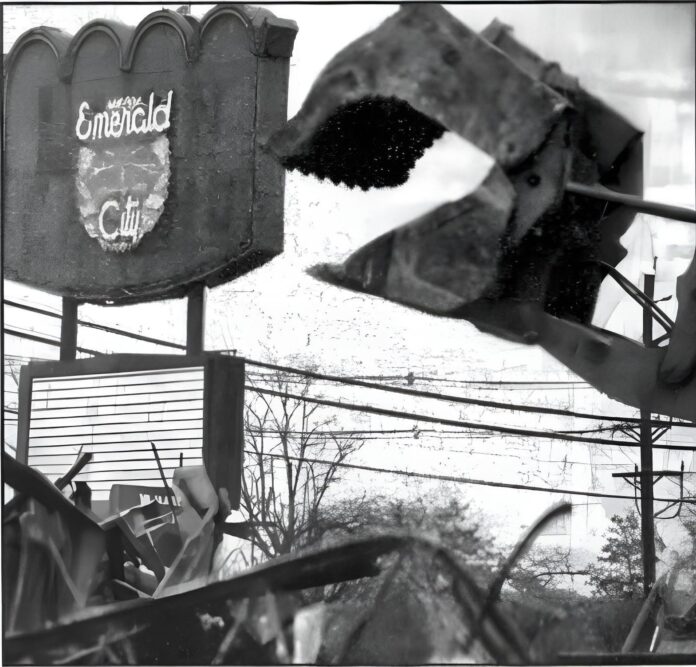

What always seemed like the center of the world, I was too young to have ever set foot inside Emerald City myself. But growing up in this area, it was impossible not to hear about it constantly. It was the kind of place we talked about with a mix of disbelief and genuine nostalgia.
The disbelief came from realizing that bands like Talking Heads, in 1979 at the height of their rise to stardom, were playing just minutes from the house where I grew up. Looking back now, it’s almost impossible to comprehend that a venue so close to home attracted artists who would go on to become some of the most influential names in rock history.
Long before it became a short-lived disco palace and later a full-blown rock and New Wave landmark, the building on Route 70 in Cherry Hill had already lived an entire previous life as one of the most star-studded entertainment venues on the East Coast.
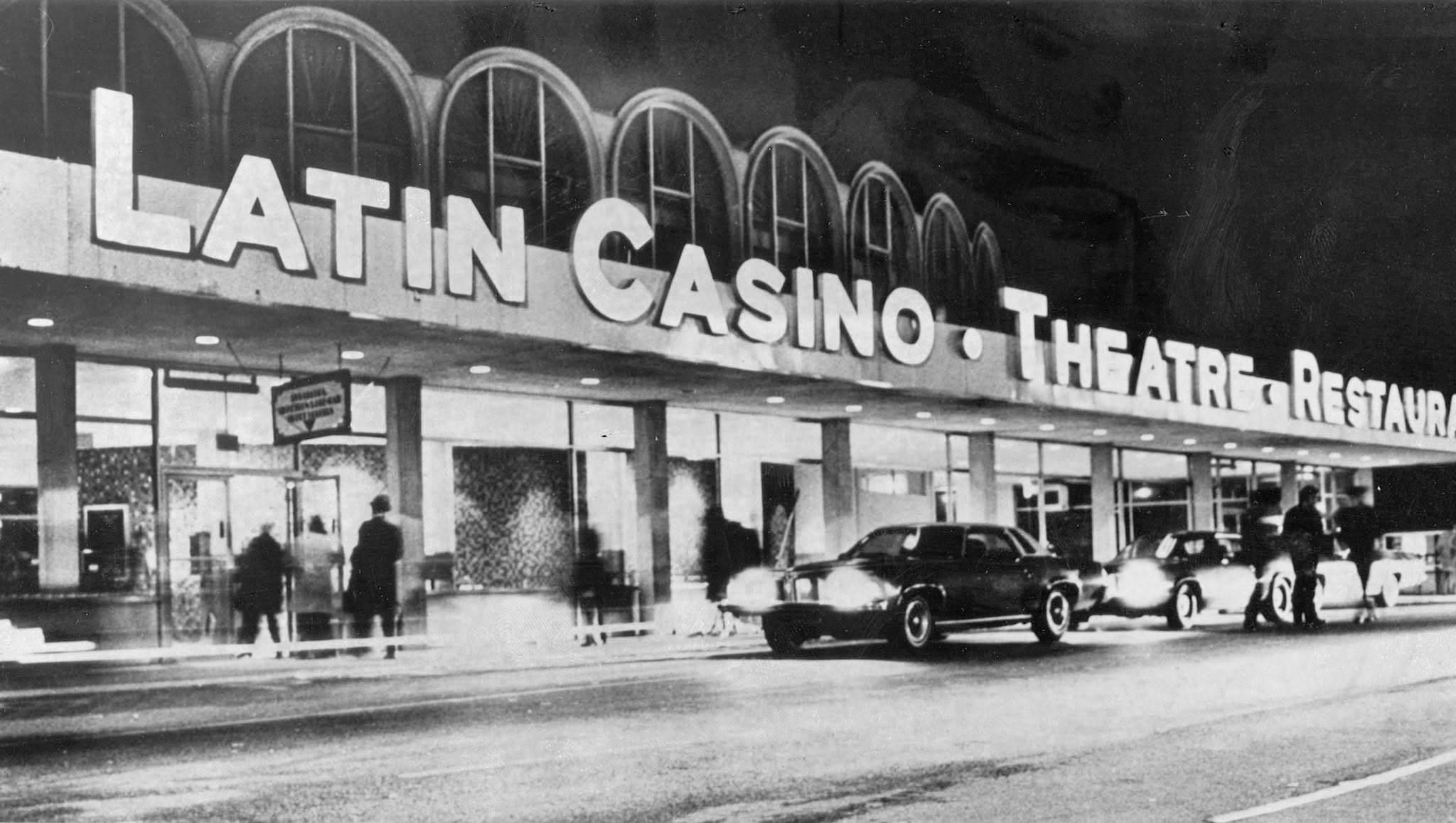
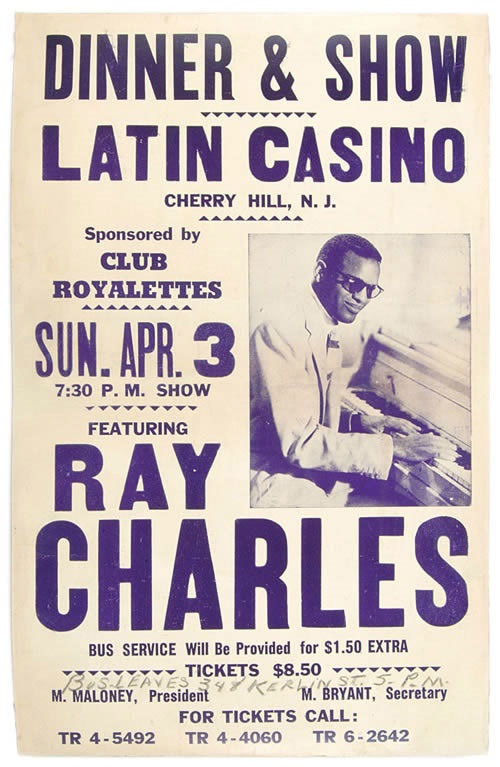
That earlier chapter belonged to the Latin Casino, widely known throughout its run as the Showplace of the Stars. Operating from 1960 to 1978, the Latin Casino functioned as a genuine Vegas style dinner theater outside Nevada, drawing some of the biggest names in entertainment history to Cherry Hill for extended, high profile residencies. The Rat Pack itself made regular appearances there, with Frank Sinatra, Dean Martin, and Sammy Davis Jr. each headlining individual solo weeks inside the room. The venue also served as a primary East Coast hub for Motown royalty, with The Supremes featuring Diana Ross, The Temptations, The Four Tops, and Gladys Knight and the Pips all holding legendary runs on that same stage. Pop and vocal giants filled out the marquee just as regularly, including Tom Jones, whose Cherry Hill audiences famously threw hotel keys and undergarments onto the stage the same way his fans did everywhere else he performed, along with Wayne Newton, Tony Bennett, Liza Minnelli, and Johnny Mathis. Jazz and soul legends including Louis Armstrong, Ray Charles, and Ella Fitzgerald routinely graced the marquee as well, and even a young Michael Jackson performed there with his brothers during a highly publicized series of Jackson 5 shows throughout the 1970s.
Comedy held equal standing at the Latin Casino, which booked some of the sharpest and most unfiltered names in stand up during that era. Richard Pryor recorded some of his earliest, most groundbreaking live material during his South Jersey club residencies there, while Don Rickles, known widely as the Merchant of Venom, made a career out of roasting affluent Cherry Hill and Philadelphia crowds directly from that same stage. Joan Rivers and Phyllis Diller, two genuinely groundbreaking female comics of their era, frequently headlined the main room as well, and Steve Martin brought his surrealist, prop comedy act to Cherry Hill right at the very dawn of his rise to superstardom.
The venue also carries a genuinely tragic footnote in music history. On September 29, 1975, legendary soul singer Jackie Wilson, known to fans as Mr. Excitement, was performing live on the Latin Casino stage as part of a Dick Clark oldies revue. In the middle of singing his hit song, “Your Love Keeps Lifting Me Higher and Higher,” Wilson suffered a sudden, massive heart attack and collapsed on stage, striking his head in the fall. The injury caused severe brain damage that left him hospitalized in a semi comatose state for the remainder of his life, a devastating end to a performance that had begun as just another night at one of the country’s premier showrooms.
For all its star power, the Latin Casino has also spent decades tangled up in persistent rumors linking it to organized crime, mafia families, and even drug smuggling networks, stories that have circulated throughout South Jersey for generations. It’s worth being clear about what’s actually documented here. The Latin Casino was never officially shut down, raided, or legally exposed as any kind of smuggling ring or drug transportation hub. What did exist was an era, and a stretch of Route 70, where the lines between legitimate entertainment, the Philadelphia and Atlantic City underworld, and the broader underground economy were notoriously blurred, giving these rumors just enough real texture to keep circulating long after the venue itself was gone.
The club’s owners, David Dushoff and Daniel Gerson, known widely as Dallas, were legitimate, high profile businessmen running a major nightlife operation, but the sheer scale of cash flowing through a venue of that size, combined with its roster of A-list celebrity guests, inevitably drew federal scrutiny. A prominent national columnist went so far as to publicly accuse the owners of direct ties to the Philadelphia Mafia, an allegation that was never proven in any court of law. Even so, the accusation alone was enough to trigger a lengthy, multiyear IRS investigation, with federal auditors repeatedly combing through the club’s books searching for signs of money laundering or hidden mob investment, a process that placed genuine financial strain on the venue during its final years in business.
Some of that suspicion traces directly back to the neighborhood the Latin Casino operated in. Route 70 during the 1960s and 1970s sat squarely within territory controlled by the Bruno-Scarfo crime family, and mob figures were known to frequent the club regularly, taking seats in the VIP sections alongside everyone else watching Frank Sinatra or Sammy Davis Jr. perform. Because upscale lounges along that same stretch of Route 70 doubled as informal meeting spots where organized crime figures held sit downs and quietly managed local bookmaking, loan sharking, and cargo theft operations, the public understandably began associating the venue itself with that same criminal world, even though the club’s actual business remained entertainment rather than anything illicit.
Backstage culture added its own layer to the club’s underground reputation as well, though this part of the story had far less to do with organized crime and far more to do with the entertainment industry itself during that era. Like nearly every major showroom and concert venue of the 1970s, the Latin Casino saw its share of personal drug use among traveling performers and wealthy patrons alike. Richard Pryor, who recorded his 1975 album “Is It Something I Said?” live at the venue, was openly struggling with severe substance abuse during that exact stretch of his career, and the backstage areas of high end supper clubs throughout that era were widely known for exactly this kind of activity, a dynamic that had far more to do with the culture surrounding celebrity nightlife in the 1970s than any organized criminal enterprise.
When New Jersey legalized gambling in Atlantic City in 1976, the calculus that had made the Latin Casino such a draw for decades collapsed almost overnight. The A-list acts that once filled Cherry Hill’s showroom began flocking instead to the new casino stages along the boardwalk, and the Latin Casino simply could not compete. Rather than fold entirely, the owners closed the Latin Casino in June 1978 and completely gutted its interior, transforming the space into a futuristic disco palace that reopened that September under an entirely new name, Emerald City, built explicitly to compete directly with Manhattan’s Studio 54.
Local memory has also blurred the Latin Casino together with what eventually replaced it. Once the building was gutted and reborn as the disco Emerald City in 1978, it opened right into the peak of the late 1970s and early 1980s club scene, an era deeply intertwined nationally with the rise of cocaine distribution networks throughout nightlife culture generally. Actual large scale drug smuggling in the region, though, typically moved through the Delaware River’s ports and commercial shipping docks rather than a dinner theater sitting along Route 70, a distinction that tends to get lost as these decades old stories keep getting passed down. In the end, the Latin Casino’s closure in 1978 had nothing to do with any criminal bust at all. It closed because Atlantic City had just legalized casino gambling, instantly stripping the Cherry Hill venue of its ability to book the A-list stars its entire business model had always depended on.
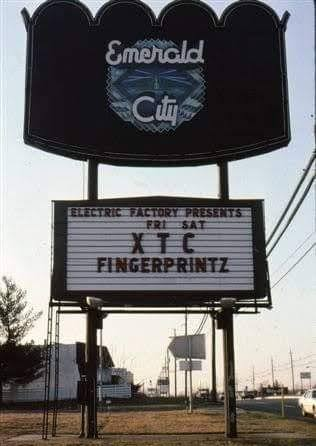
The transformation was genuinely staggering in scale. Owners poured more than a million dollars into the neon lighting rig alone, creating what was designed to be a dazzling, almost overwhelming sensory experience the moment guests walked through the door. The entire space was built around a Wizard of Oz theme, complete with an actual indoor yellow brick road splitting the club down the center, leading guests toward a massive 4,000 square foot dance floor anchored by a 17 foot custom light tower that dropped down over the crowd. Beyond the dance floor itself, the venue housed The Forest, an upscale on site restaurant that could seat 350 diners, two full retail shopping boutiques built directly into the club, an elevated VIP lounge upstairs equipped with cutting edge video and arcade game rooms, and a dedicated indoor spectator grandstand built purely so weary dancers could sit and watch the crowd from above. During its first year, the club operated exclusively as a dance venue, driven by pioneering local DJs like Alex Garcia spinning twelve inch disco records for a crowd dressed in peak late 1970s fashion.
That disco moment burned out almost as quickly as it arrived. As crowds began thinning noticeably by late 1979, the club slid into bankruptcy, forcing its owners to make a genuinely consequential pivot. Partnering with Philadelphia’s legendary Electric Factory promotion agency, they converted the space entirely away from dance music and into a live rock, punk, and New Wave venue beginning in 1980, a decision that would ultimately define the building’s most legendary era.
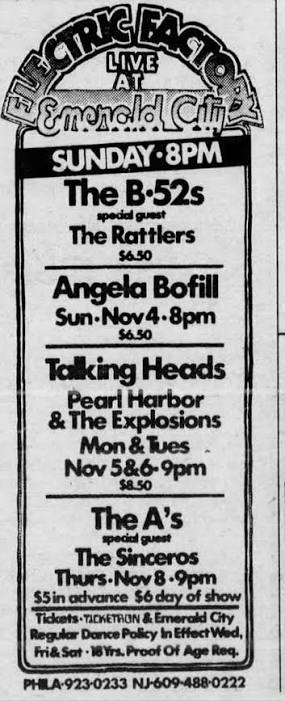
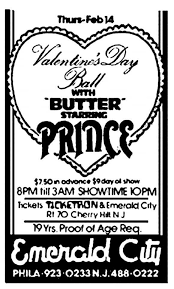
Emerald City’s sheer physical scale made it an essential tour stop for artists who were still years away from filling stadiums but were already becoming genuine cultural forces. Prince played the venue twice, first during his debut tour and again on March 18, 1981, for his iconic Dirty Mind tour. The Cure played their very first American show ever on that same Emerald City stage on April 10, 1980. The Ramones tore through their high speed punk catalog there on March 7, 1980, and The Go-Go’s delivered a highly memorable set at the absolute peak of their 1981 commercial breakthrough. XTC recorded a full concert at the venue during their 1981 Black Sea tour, a performance considered so exceptional that the band officially released the recording decades later as a double LP vinyl set titled Live Boots. Talking Heads brought their experimental art punk sound to the room right before graduating to considerably larger arenas, and the broader roster of legendary acts who played Emerald City before the building came down included The Clash, Elvis Costello, R.E.M., Alice Cooper, Squeeze, Joan Jett, Cyndi Lauper, and The B-52’s.
Joe Jackson’s own appearance at Emerald City offers a genuinely vivid snapshot of exactly what those nights were like. Jackson played the venue on Tuesday, February 12, 1980, while touring behind his sophomore album, I’m the Man, just months removed from breaking through commercially with his hit single, “Is She Really Going Out With Him?” Longtime local music fans who attended shows from that specific era at Emerald City frequently recall the club handing out exclusive VIP passes to its upstairs lounge, and employees from the old Peaches Records and Tapes store down the road have described hanging out with Jackson and his bandmates in the green room before he took the stage that night, the kind of small, personal detail that captures just how tightly woven the venue was into the broader South Jersey music community at the time.
Despite its genuinely legendary run of concerts, Emerald City could not overcome rising operating costs and broader structural shifts reshaping the nightlife industry, and the venue closed its doors permanently in late 1982. The building itself was completely demolished before that same year ended. For decades afterward, the site became known to locals for an entirely different reason, serving as the headquarters for Subaru of America. Once Subaru eventually relocated its headquarters to Camden, that later building was torn down as well, and the legendary Route 70 footprint that once housed the Rat Pack, Motown royalty, Prince, The Cure, and The Ramones was ultimately redeveloped into a modern commercial retail and medical complex, a considerably quieter final chapter for a stretch of land that spent more than two decades as one of the most electric entertainment destinations anywhere in the region.
















