Home Blog Page 69

Devils and Rangers Renew the Rivalry at Prudential Center as New Jersey Charts Its Course After the NHL Trade Deadline

Few rivalries in hockey ignite the passion of New Jersey fans quite like a matchup between the New Jersey Devils and the New York Rangers. Tonight, inside the electric atmosphere of Prudential Center in Newark, the two Metropolitan Division adversaries meet for the first time this season, adding another chapter to one of the most intense rivalries in the National Hockey League.

With the Devils entering the game holding a 31–29 record and the Rangers arriving at 24–29, the contest represents more than just a regular-season matchup. It arrives at a pivotal moment in the Devils’ season as the franchise moves forward following the NHL trade deadline and begins shaping the final stretch of the 2025–26 campaign.

For New Jersey, the game serves as both a measuring stick and a statement opportunity. Rivalry games carry an emotional intensity that transcends standings, and with a packed home crowd behind them, the Devils have the chance to build momentum at a critical point in the season.

The meeting also comes immediately after the league’s March 6 trade deadline, a day that often reshapes playoff races and rosters across the NHL. While many teams made significant moves in pursuit of postseason positioning, the Devils’ front office chose a different strategy: stability.

General Manager Tom Fitzgerald opted to keep the team’s core intact rather than pursuing a short-term roster overhaul. Despite being several points outside the playoff picture, the organization decided against selling off key assets or making major acquisitions, signaling confidence in the group already in place.

The decision to stand pat reflects a long-term approach to roster development. Instead of sacrificing future flexibility for immediate gains, the Devils chose to maintain continuity within a young and talented core that the organization believes can still grow into a consistent contender.

One notable roster move did occur on Friday when center Luke Glendening was claimed off waivers by the Philadelphia Flyers. Glendening had provided veteran depth and defensive reliability for the Devils, and his departure slightly reshapes the team’s forward group moving forward.

At the same time, forwards Evgenii Dadonov and Maxim Tsyplakov cleared waivers, giving the organization additional salary cap flexibility while allowing the players to remain available for potential lineup adjustments.

The trade deadline also brought speculation regarding the future of several Devils defensemen, particularly former second overall draft pick Simon Nemec. Reports surfaced earlier in the week indicating that the Devils had received inquiries from multiple teams interested in acquiring the young blueliner.

Nemec, a skilled puck-moving defenseman with significant offensive upside, has drawn attention from teams seeking help on the blue line. While the Devils were open to listening to offers, moving Nemec would have required a return that significantly improved the team’s forward depth.

Ultimately, no deal materialized before the deadline, and Nemec remains part of the organization’s long-term defensive plans. The decision underscores the balancing act facing New Jersey’s front office: maximizing the potential of a young roster while managing salary commitments and roster construction for the future.

The Devils’ defense corps continues to be anchored by a combination of experienced veterans and emerging young talent. Dougie Hamilton remains a cornerstone of the blue line, providing offensive firepower and leadership from the back end. His presence has been instrumental in stabilizing the defense while contributing significantly to the team’s scoring production.

Another central figure in the Devils’ long-term blueprint is Luke Hughes, whose development has been one of the most exciting storylines of the season. Earlier this year, Hughes signed a major contract extension worth seven years with an average annual value of $9 million, matching Hamilton as the highest-paid active player on the roster.

The extension represents a clear investment in Hughes as a franchise pillar moving forward. His skating ability, offensive instincts, and composure with the puck have already established him as one of the NHL’s most promising young defensemen.

While the core remains intact, the Devils are also navigating injuries and roster adjustments. Defenseman Brett Pesce is currently listed as week-to-week with a lower-body injury, creating additional pressure on the remaining defensive group to maintain stability during his absence.

To help address depth concerns on the blue line, the Devils recalled defenseman Dennis Cholowski from the Utica Comets of the American Hockey League. Cholowski’s recall provides the team with another option on defense as the organization manages injuries and workload throughout the remainder of the schedule.

The Devils’ minor league affiliate in Utica has played an important role in developing players and providing reinforcements when needed. The pipeline between the AHL and NHL rosters continues to be a key component of the organization’s long-term success strategy.

As tonight’s rivalry game unfolds, attention will also begin turning toward the Devils’ upcoming home schedule. Following the matchup with the Rangers, New Jersey remains at Prudential Center for a busy stretch of games.

The Devils return to the ice tomorrow night, March 8, when they host the Detroit Red Wings at 7:00 PM. That contest will be followed by another home game on March 12 against the Calgary Flames, giving fans multiple opportunities to watch the team during this extended home stand.

These games carry significant importance as the Devils attempt to gain ground in the standings and reestablish momentum. With the playoff race tightening across the Eastern Conference, every point becomes increasingly valuable.

Beyond the immediate results, the broader question facing the Devils is how to translate their promising roster into sustained winning seasons. The team entered the 2025–26 campaign with high expectations built around one of the league’s most talented young cores.

Players such as Jack Hughes, Nico Hischier, Luke Hughes, Dawson Mercer, and others have demonstrated flashes of elite performance. However, the challenge lies in transforming those flashes into consistent results over the course of an 82-game season.

Achieving that consistency requires contributions throughout the lineup, improved defensive structure, and the ability to close out tight games. For a team with significant skill and speed, refining those areas will be essential to becoming a perennial playoff contender.

Rivalry games like tonight’s matchup against the Rangers often reveal the character of a team. The intensity, physicality, and emotional stakes of these contests demand focus and resilience from every player on the ice.

For Devils fans filling Prudential Center, the atmosphere surrounding the game reflects the deep-rooted rivalry that has defined hockey in the region for decades. When the Devils and Rangers meet, every shift carries extra meaning, every goal sparks thunderous reactions, and every defensive stand becomes a moment of pride.

The passion surrounding the team continues to be one of the defining elements of hockey culture in New Jersey. From the roaring crowd in Newark to youth hockey rinks across the state, the Devils remain a central part of the Garden State’s sports identity.

Fans looking to stay connected with the team throughout the season can explore the latest coverage, analysis, and updates through Explore New Jersey’s dedicated New Jersey Devils coverage, where the team’s evolving story continues to unfold.

As the Devils battle the Rangers tonight and prepare for the games ahead, the path forward remains clear. The core is intact, the talent is undeniable, and the opportunity to build momentum still lies within reach.

For the players wearing the Devils crest, every game represents a chance to prove that the future of hockey in New Jersey remains bright — and that the next great chapter in franchise history is still being written on the ice.

Last, the opportunity you’ve been waiting for is here — Black and Red Memberships are officially on sale for next season, and this is your chance to lock in the best seats at the best price with the most comprehensive benefits package in the NHL.

As a Black and Red Member, you’re not just attending games — you’re getting full‑access to the perks and flexibility that elevate your Devils experience all year long, including:

  • B+R Eats (specially priced concessions menu)
  • Ticket Swap Program
  • Buyback Program
  • Stanley Cup Playoff Priority
  • Black & Red Rewards Program
  • Annual Team Autograph Event
  • Interest‑Free Monthly Payment Plan

Becoming a Member of the Black and Red means joining the most committed community of Devils fans — the ones who stand united through every heart‑pounding moment at The Rock.

Championship Runs, Historic Matchups, and State Tournament Drama: New Jersey High School Sports Surge Into the Spotlight in March 2026

March is always a defining month for high school athletics across New Jersey, and the 2026 season is already delivering an electrifying mix of championship moments, historic announcements, and postseason drama that is capturing attention throughout the Garden State. From wrestling regionals determining the state’s top grapplers to thrilling basketball finishes and a groundbreaking interstate football matchup on the horizon, the current wave of high school sports activity reflects the deep passion and competitive spirit that continues to define New Jersey’s scholastic athletic culture.

Across gyms, arenas, and school communities statewide, student-athletes are delivering performances that will be remembered long after the season ends. Whether it is a buzzer-beating basketball shot that secures a long-awaited title, a wrestler battling through regional brackets toward Atlantic City glory, or a football program preparing to represent New Jersey on a national stage, the momentum surrounding high school athletics is building rapidly as spring approaches.

One of the most intense competitions unfolding this weekend is the 2026 NJSIAA Region Wrestling Tournament, where the state’s best wrestlers are battling for regional supremacy and coveted qualification spots for the NJSIAA State Wrestling Championships. The regional tournaments, taking place March 6 and 7, serve as one of the most critical gateways in the New Jersey wrestling calendar.

Across multiple regions throughout the state, athletes have advanced through grueling brackets to reach the regional finals scheduled for today and Sunday. Each match carries enormous significance, as wrestlers compete not only for regional titles but also for the opportunity to advance to the state championships in Atlantic City, one of the most prestigious high school wrestling events in the country.

New Jersey wrestling has long been recognized as one of the most competitive high school wrestling landscapes in America. Programs across the state have produced national champions, Olympic competitors, and collegiate standouts, making the regional tournaments a showcase of elite-level talent and determination.

For athletes stepping onto the mat this weekend, the stakes are immense. A single match can determine whether a season ends or continues toward the bright lights of the state championship stage. The intensity of these contests reflects the years of training and commitment required to reach this level of competition.

At the same time that wrestling tournaments are capturing statewide attention, high school basketball is delivering its own dramatic storylines. One of the biggest highlights of the current postseason came when Plainfield High School successfully defended its boys’ basketball sectional championship with a decisive victory over Linden.

Plainfield’s repeat title represents a remarkable achievement in one of the state’s most competitive basketball environments. The program has consistently demonstrated a blend of disciplined defense, efficient scoring, and strong team chemistry that has allowed it to rise above a challenging field of opponents.

Winning back-to-back sectional titles requires more than talent. It demands leadership, resilience, and the ability to perform under intense postseason pressure. Plainfield’s latest championship run reinforces the program’s reputation as a powerhouse within New Jersey high school basketball.

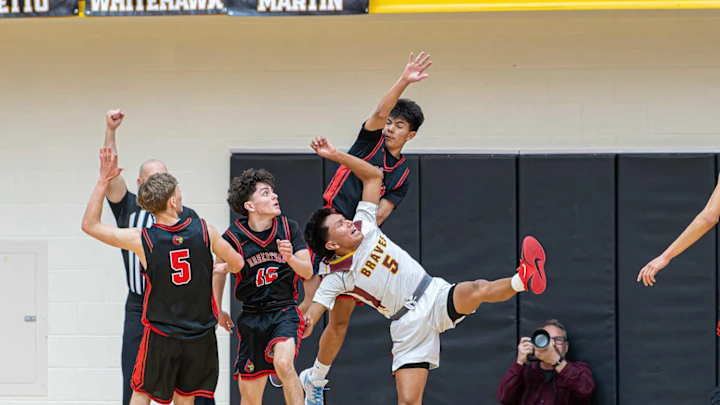
Yet perhaps the most dramatic moment of the basketball postseason came from another New Jersey team that delivered a storybook finish decades in the making. In a moment that will likely become part of school sports lore, an incredible buzzer-beater secured the program’s first championship title in 45 years.

As the final seconds ticked away, the game appeared destined for overtime before a perfectly timed shot at the horn sent the crowd into an eruption of celebration. Moments like these capture the emotional power of high school sports, where the outcome of a single play can define a season and create memories that last a lifetime.

For players, coaches, and alumni who had waited nearly half a century for another championship banner, the shot represented more than a victory. It symbolized perseverance, community pride, and the enduring magic that makes high school basketball one of the most exciting sports environments in the country.

While winter sports championships continue to unfold, the future of New Jersey high school football is also making headlines with an announcement that has generated national interest. Camden High School, the reigning 2025 Group 2 state champions, has revealed plans to travel to Texas in 2026 to face the legendary Permian Panthers.

The matchup carries enormous historical significance. Permian High School, immortalized in the iconic football story Friday Night Lights, is widely considered one of the most storied high school football programs in American history. Their teams have long represented the intense football culture of Texas, where high school stadiums often rival college facilities in size and atmosphere.

Camden’s upcoming trip to Texas will mark the first time a New Jersey public high school football team has traveled there to compete against such a prominent program. The game will place Camden’s championship squad on one of the biggest stages in high school football, offering a rare opportunity to showcase New Jersey talent against one of the sport’s most recognizable teams.

For Camden High School, the invitation represents recognition of the program’s recent success and rising national reputation. The Panthers’ 2025 Group 2 championship season demonstrated a level of dominance that caught the attention of football observers beyond the state’s borders.

Traveling to Texas will present both a challenge and an opportunity. Facing a legendary opponent in one of the nation’s most football-obsessed regions is a daunting task, but it also provides Camden’s athletes with an unforgettable experience that highlights the expanding national footprint of New Jersey high school football.

Beyond the headline events, the broader high school sports landscape continues to produce compelling performances across multiple disciplines. Student-athletes across the region are competing at extraordinary levels, balancing demanding academic schedules with the intense preparation required for postseason success.

Stories from across the region illustrate the powerful intersection of family, competition, and community pride that defines scholastic athletics. One example comes from a standout basketball performance by Hazleton Area’s Sophia Benyo, who delivered a remarkable all-around game with 19 points, 14 rebounds, five steals, and five assists to lead her team to a commanding victory in the opening round of the PIAA Class 6A tournament.

Her performance came on the same day that her brothers secured medal opportunities at the PIAA Wrestling Championships, highlighting the unique family connections that often emerge in high school sports. The Benyo siblings’ simultaneous success across multiple sports demonstrates the shared dedication and competitive drive that fuels many young athletes.

For coaches, these moments represent the culmination of countless hours of practice and preparation. Building championship-caliber teams requires developing both physical skills and mental resilience, qualities that enable athletes to perform under the intense pressure of tournament play.

The excitement surrounding wrestling regionals, basketball championships, and football announcements reflects a larger truth about New Jersey’s sports culture. High school athletics remain one of the most powerful community institutions in the state, bringing together students, families, and alumni in support of local teams.

Packed gymnasiums, roaring wrestling arenas, and football stadiums filled with school colors are more than just sporting environments. They are places where communities celebrate achievement, support young athletes, and create traditions that endure for generations.

The breadth of athletic programs across New Jersey is also remarkable. From wrestling and basketball to football, soccer, track, and countless other sports, high school athletes continue to elevate the level of competition while inspiring the next generation of players.

Explore New Jersey’s comprehensive high school sports coverage continues to spotlight these achievements, documenting the players, teams, and rivalries that shape the Garden State’s dynamic scholastic sports landscape.

As March continues, the momentum surrounding New Jersey high school sports shows no sign of slowing down. Wrestling champions will soon be crowned in Atlantic City. Basketball teams will continue their pursuit of state titles. Football programs will prepare for the upcoming fall season with renewed excitement.

And across every gym, mat, and field, student-athletes will continue to deliver the unforgettable moments that define high school sports in New Jersey — moments of determination, triumph, and community pride that remind everyone why these competitions hold such a special place in the heart of the Garden State.

New Jersey Weather Update: Foggy Start Gives Way to Spring-Like Warmth Across the Garden State

New Jersey is experiencing a dramatic early-March weather transition this weekend, shifting from gray skies, damp conditions, and lingering fog into a stretch of unseasonably warm temperatures that could push the Garden State into the 70s by early next week. For residents across North, Central, and South Jersey, the coming days represent a classic example of what meteorologists often describe as a “false spring”—a brief burst of warm weather that arrives before winter fully loosens its grip on the region.

The evolving forecast highlights the dynamic nature of early March weather across the Mid-Atlantic and Northeast. As winter’s last remnants fade and atmospheric patterns begin to reorganize for the spring season ahead, New Jersey’s climate is moving through a transitional phase marked by rapid temperature swings, shifting fronts, and increasingly mild conditions.

The weekend began under gray and damp skies, with patchy fog and drizzle lingering across much of the state throughout Saturday. Visibility remained limited in some areas, particularly along coastal communities and the Jersey Shore where earlier dense fog advisories prompted caution for drivers navigating roadways during the morning hours.

Across North Jersey, temperatures struggled to climb out of the upper 40s to around 50 degrees during the day, reinforcing the lingering chill from the previous cold pattern. Meanwhile, residents in Central and South Jersey experienced slightly milder conditions, with afternoon highs reaching the mid-50s and some locations briefly approaching the low 60s.

Despite the gloomy start, the weather pattern is already shifting.

A warm front advancing toward the region is gradually altering atmospheric conditions across the state. As the system moves through, temperatures are expected to actually rise overnight Saturday into early Sunday—an unusual but not uncommon occurrence during spring transition periods.

Later Saturday evening and into the early overnight hours, a line of showers accompanied by isolated thunderstorms is expected to sweep through New Jersey. Meteorologists anticipate this band of precipitation will pass through the state roughly between 9:00 p.m. and 2:00 a.m., ahead of a cold front moving across the broader Mid-Atlantic region.

While the storms are not expected to be severe, the passing showers will mark the final stage of the current damp weather pattern before the warmup begins.

By Sunday morning, conditions across the Garden State will begin to noticeably improve.

Cloud cover will gradually break apart as the day progresses, allowing for a mix of sunshine and passing clouds. Temperatures will respond accordingly, climbing well into the mid-60s in many inland locations.

For much of New Jersey, Sunday is expected to be the warmest day of the weekend, providing a welcome taste of spring following months of colder winter conditions.

Coastal communities, however, may experience slightly cooler temperatures due to the influence of ocean waters that remain in the mid-30s. This marine effect often keeps immediate shoreline areas several degrees cooler than inland regions, particularly during early-season warmups.

Sunday will also bring another notable change that signals the approach of spring: the return of Daylight Saving Time.

At 2:00 a.m. Sunday morning, clocks will “spring forward” one hour, extending daylight into the evening hours and gradually shifting the region’s daily rhythm toward longer days and brighter afternoons.

While the time change often takes a day or two for residents to fully adjust to, it also marks an important seasonal milestone as the Northeast moves closer to the official start of spring later in March.

Looking ahead to the start of the workweek, the warming trend is expected to accelerate significantly.

Monday will usher in mostly sunny skies across much of New Jersey, accompanied by temperatures climbing toward 70 degrees in many areas. For early March, these readings are well above seasonal norms.

Tuesday and Wednesday are expected to bring the peak of the warmup.

Under abundant sunshine and favorable atmospheric conditions, high temperatures across inland portions of the state could reach the mid-to-upper 70s—levels more commonly associated with late April or early May than the first half of March.

This warm stretch will be driven by a change in the large-scale weather pattern affecting the eastern United States.

As a high-pressure system moves eastward across the Canadian border, a warmer southwest flow of air will develop across the Mid-Atlantic region. This circulation pattern, often associated with the influence of the Bermuda High pressure system in the Atlantic, will transport milder air northward into New Jersey and surrounding states.

The result will be a multi-day period of spring-like warmth that stands in sharp contrast to the cooler conditions experienced earlier in the week.

The recent rainfall that moved through the region has also played an important role in the seasonal transition.

Over the past 24 hours, steady precipitation helped melt much of the remaining snowpack across parts of North Jersey and higher elevations throughout the region.

For water resources and groundwater recharge, this rainfall has been beneficial. Meltwater and precipitation draining into rivers, reservoirs, and underground aquifers helps replenish water tables after winter’s colder and drier stretches.

Any remaining snow accumulations across the state are now largely confined to plowed snowbanks and isolated mounds. With temperatures rising steadily through the weekend and into next week, those remnants are expected to disappear entirely.

For residents eager to get outdoors after the long winter season, the coming days offer an ideal opportunity.

Parks, trails, boardwalks, and downtown districts across New Jersey are likely to see increased activity as warmer weather encourages residents to step outside.

Across the state’s diverse landscapes—from the hills of North Jersey to the waterfront communities along the Shore—this early warmup provides a preview of the milder conditions that typically begin to dominate the region’s weather by mid-to-late spring.

However, meteorologists caution that the upcoming warmth should be viewed as a temporary break rather than a permanent shift into spring.

A cold front expected to move through the region later next week will likely bring temperatures back closer to seasonal averages.

Longer-range outlooks also suggest that another trough of colder air could arrive around the middle of March, potentially restoring below-average temperatures for a period before the true spring pattern takes hold.

At the moment, there are no indications of a significant snowstorm returning to the region. Any colder pattern developing later in the month appears unlikely to produce daytime snowfall events, although forecasters will continue monitoring conditions as the month progresses.

This type of fluctuating weather pattern is typical for early March in New Jersey.

The state’s climate sits at the crossroads of several atmospheric influences, including cold air masses descending from Canada, warm air surging northward from the Gulf of Mexico, and maritime conditions shaping coastal weather along the Atlantic.

These competing forces often produce dramatic temperature swings as winter transitions into spring.

Residents of the Garden State are accustomed to these rapid shifts—moving from chilly mornings and foggy skies one day to near-summerlike warmth the next.

For now, the upcoming stretch of warmer weather offers a welcome break from winter’s lingering chill.

With sunshine returning, temperatures climbing toward the 70s, and daylight hours growing longer, New Jersey is poised to experience a brief but unmistakable preview of the spring season just ahead.

For continuous regional weather coverage, forecasts, and statewide updates, readers can explore the latest insights in the Sunset Daily News Weather Report section, where evolving conditions across the Garden State are tracked as winter gradually gives way to spring.

North Jersey Real Estate Market Holds Steady in February 2026 as Inventory Growth Slows and Mortgage Rates Reach Three-Year Low

North Jersey’s real estate market entered 2026 navigating a complex mix of stabilizing home prices, slowly improving inventory levels, and a mortgage rate environment that is beginning to tilt cautiously back in favor of buyers. February’s housing data paints a picture of a market that is no longer experiencing the intense volatility that defined the immediate post-pandemic years, but one that is still working through structural supply challenges that continue to shape the state’s housing landscape.

Across New Jersey—and particularly throughout the densely populated counties of North Jersey—the housing market in February remained broadly consistent with trends that have been developing over the past year. Inventory levels are gradually increasing compared with the same period last year, but the pace of that recovery has slowed considerably. At the same time, home prices are showing signs of stabilization rather than the dramatic increases that characterized the market during the early 2020s.

What is emerging is a housing environment defined by cautious equilibrium: buyers are beginning to regain leverage, sellers are adjusting expectations, and mortgage rates have reached a three-year low, potentially signaling the start of a more balanced market cycle.

February’s data reveals that the number of homes available for sale across the United States continued to grow for the 28th consecutive month. Active housing inventory nationwide rose 7.9 percent compared with the same time last year. However, the speed of that growth has been slowing steadily for nine straight months, indicating that the inventory rebound may be leveling off.

Even with nearly two and a half years of incremental increases, the national housing supply still remains well below historical norms. Current inventory levels sit roughly 16.8 percent below pre-pandemic benchmarks, underscoring the long-term supply shortage that continues to shape the American housing market.

In New Jersey, February’s housing statistics reflect many of those same national patterns while also highlighting unique characteristics of the state’s high-demand real estate environment.

The Garden State recorded 13,201 active residential listings during February. That represents an 11.39 percent increase compared with the same period in 2025, suggesting that more homeowners are gradually entering the market after several years of tight inventory conditions.

However, the month-to-month data tells a more nuanced story. Active listings actually declined slightly from January 2026, falling 2.93 percent as the winter season continued to influence listing activity. Seasonal slowdowns are typical during the early months of the year, with inventory levels often rising again as the spring home-buying season approaches.

Within those overall numbers, 6,476 homes were newly listed for sale across New Jersey during February. The steady appearance of new listings reflects the typical seasonal rhythm of the housing market, where early-year inventory growth builds momentum ahead of the highly competitive spring and summer buying seasons.

While supply has begun to inch upward, demand across North Jersey remains resilient. The region’s proximity to New York City, strong employment base, and highly regarded suburban communities continue to drive sustained interest from both in-state and out-of-state buyers.

Housing affordability, however, remains a central challenge.

The median listing price for homes across New Jersey stood at $529,000 in February. That figure represents a 2.93 percent decrease compared with the same period last year, suggesting that the explosive price increases of recent years are beginning to moderate.

Yet on a month-to-month basis, the median listing price actually rose slightly—up 2.02 percent compared with January—illustrating the delicate balance between supply and demand currently shaping the market.

In practical terms, the numbers suggest that while home prices are no longer accelerating rapidly, they are not falling dramatically either. Instead, the market is settling into a phase of relative price stability.

One indicator that the market is adjusting is the rising number of price reductions.

During February, 2,210 New Jersey listings saw their asking prices reduced. That represents an 8.76 percent increase compared with last year and a striking 19.59 percent increase compared with January.

Price reductions often signal that sellers are adapting to evolving buyer expectations, particularly in markets where affordability concerns have constrained demand.

Buyers who spent much of the past several years navigating bidding wars and rapidly escalating prices may now be encountering slightly more negotiating power.

Another sign of shifting dynamics can be seen in the time homes are spending on the market.

Across the United States, properties remained listed for roughly 70 days on average during February—four days longer than the same time last year. That marks the 23rd consecutive month in which homes have taken longer to sell on a year-over-year basis.

In New Jersey specifically, homes remained on the market for approximately 45 days before going under contract.

Although still relatively fast compared with historical norms, the gradual increase in market time indicates that the frenzy of pandemic-era home buying has cooled.

For buyers who previously faced intense competition and lightning-fast sales cycles, the extra time on the market provides an opportunity to evaluate properties more carefully and negotiate purchase terms.

Perhaps the most significant development influencing the February housing landscape is the movement of mortgage interest rates.

Mortgage rates have recently dropped to their lowest level in three years, offering a potentially meaningful shift in affordability for prospective buyers.

Lower borrowing costs can dramatically affect purchasing power, enabling buyers to qualify for larger loans or reduce monthly payments on existing price levels.

For many buyers who paused their home search during periods of higher interest rates, this change could reignite activity as the 2026 spring housing season begins.

Real estate professionals across North Jersey are closely watching how this development may influence buyer behavior in the coming months.

If mortgage rates remain stable or continue to decline, the combination of slightly higher inventory and improved financing conditions could lead to a more active market during the second quarter of the year.

North Jersey’s housing market has long been defined by strong demand driven by several key factors.

The region offers direct access to New York City employment centers, extensive commuter rail and highway networks, top-rated school systems, and a diverse mix of suburban and urban communities.

These advantages have historically supported home values even during periods of broader national housing volatility.

Cities such as Jersey City, Hoboken, and Newark continue to attract buyers seeking proximity to Manhattan, while suburban towns throughout Bergen, Essex, Morris, and Passaic counties remain highly desirable for families seeking space, schools, and neighborhood amenities.

At the same time, new residential development and redevelopment projects are gradually expanding housing supply in certain areas, particularly along transit corridors and within mixed-use redevelopment zones.

Many of these developments are part of broader urban planning strategies designed to accommodate population growth while revitalizing downtown districts and transportation hubs.

Throughout New Jersey, real estate activity continues to intersect with infrastructure investment, transportation expansion, and commercial development.

Projects highlighted across the region’s real estate landscape—including those covered within the evolving property market insights on the Sunset Daily News real estate section—illustrate how housing, economic development, and regional planning are increasingly interconnected.

For homeowners considering selling their properties, the current market conditions offer a mixed but potentially favorable environment.

Inventory levels are still historically constrained, meaning well-priced homes in desirable neighborhoods continue to attract attention.

At the same time, buyers are demonstrating greater selectivity, which means sellers must pay close attention to pricing strategy, property condition, and marketing presentation.

For buyers, February’s data provides cautious optimism.

More listings are gradually becoming available, price growth is stabilizing, and lower mortgage rates may improve affordability for those who have been waiting for a more favorable entry point into the market.

The coming months will likely provide clearer signals about where the market is headed.

As spring approaches, real estate activity traditionally accelerates across North Jersey and the broader metropolitan region.

If inventory levels continue to grow modestly while borrowing costs remain favorable, 2026 could mark the beginning of a more balanced housing market—one in which buyers and sellers operate on more equal footing than they have in recent years.

For now, February’s data shows a market in transition.

North Jersey’s housing sector is no longer experiencing the rapid escalation that once defined the post-pandemic boom, but it remains resilient, competitive, and central to the economic vitality of New Jersey.

With mortgage rates falling, inventory gradually improving, and demand continuing to flow into the region, the next phase of the Garden State’s real estate cycle is beginning to take shape.

Samantha Inside Out

0

Bold, Funny, and Deeply Human: “Samantha Inside Out” Takes Center Stage This Winter in New Jersey’s Thriving Theatre Scene

March 15 @ 5:00 PM 11:30 PM

The lights dim, the stage comes alive, and a single character invites audiences into the most personal corners of her life. That is the premise behind Samantha Inside Out, the powerful new theatrical production running from February 19 through March 15, 2026. Written by acclaimed playwright Marisa Smith and directed by celebrated theatre artist Theresa Rebeck, the play brings an intimate and emotionally charged performance to New Jersey audiences while highlighting the continued strength and creativity of the state’s theatre community.

Set within a deceptively simple scenario that evolves into a deeply layered character study, Samantha Inside Out explores the unraveling — and reinvention — of a woman confronting the truths she has spent years ignoring. It is a story filled with humor, vulnerability, frustration, and resilience, offering audiences a theatrical experience that feels both intensely personal and universally relatable.

Performances run throughout the production’s engagement with evening shows on Thursdays at 7:00 PM, Friday and Saturday matinee and evening performances at 2:00 PM and 7:00 PM, and Sunday matinees at 2:00 PM. This flexible schedule allows theatre lovers from across New Jersey to experience the production in a variety of formats, whether attending an intimate evening performance or enjoying a weekend afternoon at the theatre.

At the center of Samantha Inside Out is a character who many audience members may recognize in pieces of their own lives. Samantha is a high school English teacher navigating the complicated realities of middle age. She is a mother whose children have grown into adulthood and a wife whose marriage has become increasingly unbearable. Her husband, a self-important and openly unfaithful college professor, has spent years undermining her confidence and sense of self-worth.

The play begins during a seemingly ordinary social gathering that quickly spirals into a humiliating moment for Samantha. When her husband publicly embarrasses her at the party, she escapes the scene in search of privacy and finds herself in the bedroom of the host’s daughter. What begins as a moment of emotional refuge soon transforms into a confessional journey that drives the entire narrative.

Alone in the room, Samantha begins to unpack the frustrations, regrets, and revelations that have defined her life. She speaks openly about the wreckage of her marriage, the compromises she has made over the years, and the quiet dreams she once carried before life’s responsibilities took over.

The result is a theatrical experience that feels like an extended conversation between Samantha and the audience. Through humor, self-reflection, and moments of emotional honesty, she slowly reveals the layers of her identity and begins to confront the choices that brought her to this moment.

Marisa Smith’s writing is widely recognized for its sharp wit and emotional authenticity, and Samantha Inside Out continues that tradition. The script blends biting humor with poignant introspection, allowing audiences to laugh while also reflecting on the complex realities of relationships, personal identity, and the pursuit of happiness.

The dialogue moves fluidly between comedic observations and moments of profound vulnerability. Samantha’s reflections on marriage, motherhood, and personal fulfillment feel deeply human, capturing the tension between the life we build and the life we once imagined for ourselves.

Directing the production is Theresa Rebeck, an accomplished playwright, screenwriter, and director known for her work across theatre, film, and television. Rebeck’s creative vision brings a layered approach to the staging of the play, emphasizing both the emotional intimacy of the story and the theatrical energy that keeps audiences fully engaged.

Her direction ensures that Samantha’s journey unfolds with both dramatic intensity and moments of playful theatricality. As Samantha moves through memories, realizations, and confessions, the audience becomes a silent witness to a deeply personal transformation.

The production also reflects a broader trend within contemporary theatre that prioritizes character-driven storytelling. In an era where large-scale productions often dominate commercial stages, plays like Samantha Inside Out remind audiences of the extraordinary power of a single voice telling a compelling story.

For New Jersey’s theatre community, productions like this one play an important role in sustaining a vibrant cultural ecosystem. Across the state, theatres continue to stage new works, reinterpret classic plays, and create opportunities for emerging artists to share their voices with audiences.

From historic performing arts venues to innovative regional theatre companies, New Jersey has long been home to a thriving theatrical tradition. Productions like Samantha Inside Out contribute to that legacy by bringing fresh storytelling to the stage while inviting audiences to experience theatre in its most intimate form.

The play also speaks to a broader cultural conversation about identity and reinvention. Samantha’s story resonates because it captures a moment many people face at some point in their lives — the realization that something must change. Whether it is a career path, a relationship, or a long-held belief about who we are supposed to be, moments of self-examination can become turning points that reshape the future.

Through Samantha’s candid reflections, the play explores themes of empowerment, resilience, and the courage required to confront uncomfortable truths. The character’s journey is not simply about escaping a difficult marriage; it is about rediscovering the parts of herself that have been buried beneath years of compromise.

For audiences, the experience can feel both cathartic and inspiring. Samantha’s humor and honesty invite viewers to reflect on their own lives while appreciating the complexity of human relationships.

The production’s limited engagement from February 19 through March 15 makes it a must-see event for theatre enthusiasts seeking powerful storytelling and memorable performances. Whether attending as a devoted theatre fan or simply looking for a compelling cultural experience, audiences will find themselves immersed in a narrative that feels both entertaining and deeply meaningful.

The show’s run also offers multiple ways for audiences to engage with the production beyond the stage. Theatre patrons can explore cast details, digital program materials, and behind-the-scenes insights that provide a deeper understanding of the creative process behind the performance.

Experiences like this demonstrate why live theatre remains one of the most powerful forms of storytelling. Unlike film or television, theatre unfolds in real time, allowing audiences to share a moment of emotional connection with the performers on stage.

In New Jersey, that connection is part of a much larger cultural landscape that includes a wide array of performing arts venues presenting everything from Broadway-caliber productions to experimental new works. Visitors and residents alike can explore the state’s thriving performing arts community through Explore New Jersey’s comprehensive theatre guide, which highlights the many productions, venues, and artistic organizations shaping the region’s cultural identity.

The continued growth of theatre throughout New Jersey underscores the state’s role as a hub for artistic innovation. Playwrights, directors, actors, and designers continue to create compelling productions that draw audiences from across the region.

Samantha Inside Out stands proudly within that tradition, offering a theatrical experience that is at once intimate, humorous, and deeply reflective. Through a single character’s candid exploration of her life, the play captures something universal about the human experience: the search for meaning, the courage to confront change, and the possibility of rediscovering oneself when everything seems to be falling apart.

For audiences attending this winter’s production, the experience promises more than just an evening at the theatre. It offers a chance to witness a powerful story unfold live on stage — one that reminds us that even in moments of uncertainty, transformation is always possible.

NJRep

732-229-3166

View Organizer Website

West End Arts Center

132 West End Ave
Long Branch, New Jersey 07740 United States
+ Google Map
732-229-3166
View Venue Website

Camden County Breaks Ground on Atlantic Avenue Trail Project, Advancing the Vision of a 34-Mile LINK Trail Connecting South Jersey Communities

A transformative new chapter for outdoor recreation, transportation connectivity, and regional trail development officially began on March 6, 2026, as Camden County leaders broke ground on the Atlantic Avenue Trail Project, a major milestone in the development of the ambitious Camden County LINK Trail. The project marks the start of construction on Segment 1B, a 1.08-mile multi-use trail that will run along Atlantic Avenue between Merchant Street in Audubon and Station Avenue in Haddon Heights.

Official Maps & Visuals

  • Interactive Trail Map (Camden County): Use the Camden County Open Data Portal to explore the trail network, including existing segments and planned extensions.
  • 2020 LINK Alignment Map (PDF): This official document shows the precise “spine” alignment from the Ben Franklin Bridge to Winslow.
  • Circuit Trails Finder: An interactive tool that places the LINK Trail within the context of the larger 850-mile regional network. Camden County, NJCamden County, NJ +4

The Route at a Glance

The trail is designed to connect 17 municipalities across three distinct zones: Camden County, NJCamden County, NJ +1

  • The Urban Hub: Starts at the Benjamin Franklin Bridge pedestrian ramp in Camden City.
  • The Atlantic Avenue Spine: A 12-mile stretch following the active Conrail rail corridor through suburban towns like Audubon, Haddon Heights, and Somerdale.
  • The Rural Reach: Ends in the Winslow Wildlife Management Area at the Gloucester County line. 

Virtual Tours

For a “birds-eye” view of where the trail will go, Camden County has released a series of drone videos broken down by municipality: 

  • Camden & Pennsauken (Drone Video 1)
  • Collingswood & Haddon Township (Drone Video 2)
  • Winslow Township (Drone Video 8)
  • These can be found on the Camden County LINK Trail page.

The new trail segment represents far more than a simple pathway. It is a critical demonstration piece for what will ultimately become a 34-mile trail system stretching across Camden County from the Benjamin Franklin Bridge in Camden to the Gloucester County line in Winslow Township. When completed, the LINK Trail will connect neighborhoods, parks, schools, downtown districts, and transit corridors through a continuous greenway designed for cyclists, pedestrians, runners, and outdoor enthusiasts.

The Atlantic Avenue segment is being constructed with an investment of approximately $3 million and is expected to reach substantial completion within roughly 276 days, placing the anticipated completion window toward the end of 2026. Once finished, the trail will provide residents with a safe, accessible corridor that supports both recreational use and everyday transportation.

At the heart of the project is a carefully designed 12-foot-wide paved trail engineered to accommodate a wide range of users, including cyclists, walkers, joggers, and mobility-assisted travelers. The path will follow a “rails-with-trails” design concept, meaning it will run parallel to the active Conrail railroad line that travels through the area. This approach allows the trail to make use of an existing transportation corridor while preserving rail operations, a solution that required years of negotiation and planning to achieve.

County officials emphasized that the groundbreaking represents the culmination of nearly a decade of coordination, planning, and collaboration. Securing the necessary right-of-way access from Conrail was one of the most complex elements of the project, requiring detailed agreements to ensure that both the railroad operations and the trail could coexist safely.

The result will be a carefully integrated transportation corridor where trains and trail users share the landscape in a way that enhances accessibility without compromising safety.

The Atlantic Avenue segment also introduces a number of infrastructure upgrades and community amenities that will significantly improve the surrounding area. Camden County’s Public Works Department has incorporated several safety and accessibility improvements as part of the construction process.

ADA-accessible curb ramps will be installed at all intersections along the route, ensuring that the trail remains accessible for individuals of all mobility levels. These upgrades are particularly important for creating an inclusive recreational environment that welcomes residents with disabilities, families with strollers, and seniors seeking safe walking routes.

Traffic-calming measures will also be introduced along Atlantic Avenue to improve safety for both motorists and trail users. These improvements aim to create a more pedestrian-friendly environment in neighborhoods where vehicle traffic previously dominated the streetscape.

In addition to safety enhancements, the project includes major upgrades to the area’s storm sewer infrastructure. Improvements to the drainage system will help manage stormwater runoff more effectively, reducing the risk of flooding and protecting nearby neighborhoods from water-related issues.

The trail will also incorporate a variety of public amenities designed to enhance the outdoor experience. New landscaping will bring rows of trees and shrubs along the corridor, creating shade, visual beauty, and environmental benefits such as improved air quality and stormwater absorption.

Benches will be installed at key points along the trail, giving walkers and cyclists places to rest while enjoying the scenery. Trash receptacles, bike racks, and pet waste stations will also be included, helping maintain cleanliness while making the trail welcoming for families and pet owners.

While the Atlantic Avenue Trail segment may appear modest in length at just over a mile, its importance within the larger LINK Trail vision cannot be overstated. Segment 1B serves as a demonstration project that illustrates what future sections of the trail will look like and how they will function within the surrounding communities.

The ultimate goal of the Camden County LINK Trail is to create a 34-mile greenway that connects multiple municipalities across the county, offering a continuous route for recreation and transportation. Once completed, the trail will link the urban waterfront near the Benjamin Franklin Bridge to suburban neighborhoods and rural landscapes stretching toward the Gloucester County border.

This expansive network will transform how residents move through the county, providing a safe alternative to road travel while encouraging healthier, more sustainable transportation options.

Equally significant is the LINK Trail’s integration with the regional Circuit Trails network. The Circuit Trails initiative is an ambitious multi-state effort to create more than 850 miles of connected multi-use trails throughout the Greater Philadelphia region.

By connecting with the Circuit Trails system, Camden County’s LINK Trail will become part of a much larger regional infrastructure network that allows residents to travel across counties and even state lines using continuous trail corridors. This type of connectivity expands recreational opportunities while supporting regional tourism and economic development.

Outdoor trail systems like this one have increasingly become essential infrastructure for modern communities. They encourage physical activity, provide safe commuting routes for cyclists, reduce vehicle congestion, and create vibrant public spaces that improve quality of life.

Across New Jersey, similar investments in parks and trail systems have been transforming communities and strengthening local economies. Trails bring visitors to local downtown districts, connect neighborhoods to parks and waterfronts, and create outdoor destinations that attract families, athletes, and nature lovers.

The growing network of parks, nature preserves, and trail systems highlighted throughout Explore New Jersey’s parks and outdoor destinations guide reflects the state’s increasing commitment to accessible outdoor recreation. From scenic hiking paths in the Highlands to coastal greenways along the Jersey Shore, New Jersey continues to expand its outdoor infrastructure in ways that benefit residents and visitors alike.

Camden County’s LINK Trail stands as one of the most ambitious projects within that movement. By creating a long-distance trail that spans multiple municipalities, the county is building a regional asset that will serve communities for generations.

For residents of Audubon, Haddon Heights, and surrounding towns, the Atlantic Avenue segment will provide immediate benefits once completed. Local families will gain a safe walking and biking path close to home, commuters will have a new alternative route for short trips, and outdoor enthusiasts will gain access to a scenic corridor that links neighborhoods and natural spaces.

The trail will also create new opportunities for community gatherings, outdoor fitness activities, and local events. Trails often become social spaces where neighbors meet, joggers pass cyclists, and families explore the outdoors together.

As construction progresses throughout 2026, the Atlantic Avenue Trail will gradually take shape as a visible symbol of Camden County’s investment in sustainable infrastructure and community wellness.

The groundbreaking ceremony held on March 6 marked the beginning of that journey. Local leaders, community members, and project partners gathered to celebrate a milestone that reflects years of planning and a shared commitment to building a more connected, active, and vibrant Camden County.

Once completed, the trail will stand as both a recreational destination and a transportation corridor, illustrating how modern infrastructure can bring communities together while promoting healthier lifestyles and environmental sustainability.

The Atlantic Avenue Trail Project represents the first visible step toward realizing the full vision of the Camden County LINK Trail. As additional segments are developed in the years ahead, the network will continue expanding across the region, creating a continuous pathway that connects communities, parks, schools, and transit hubs throughout South Jersey.

For residents and visitors alike, the trail promises a future where outdoor adventure, neighborhood connectivity, and sustainable transportation intersect along one of the most exciting new greenways in New Jersey.

County College of Morris Opens $12 Million Center for Entrepreneurship & Culinary Science, Positioning Morris County as a Future Hub for Culinary Innovation and Food Entrepreneurship in New Jersey

A major investment in culinary education, entrepreneurship, and workforce development has officially arrived in Morris County as County College of Morris unveiled its new $12 million Center for Entrepreneurship & Culinary Science at the college’s Randolph campus. The newly opened facility represents one of the most significant developments in New Jersey’s evolving food and hospitality education landscape, combining culinary training, business incubation, and industry partnerships under one roof to prepare the next generation of chefs, restaurant owners, hospitality professionals, and entrepreneurs.

The ribbon-cutting ceremony on March 5 brought together government officials, educators, business leaders, and members of the regional hospitality industry to celebrate the launch of a facility designed to strengthen the state’s culinary workforce while fostering innovation across the food and beverage sector. With funding totaling nearly $12 million, including $7.3 million from the State of New Jersey and $4.6 million from the Morris County Board of County Commissioners, the new center represents a coordinated investment in the region’s economic future.

Located at County College of Morris in Randolph, the Center for Entrepreneurship & Culinary Science will serve as a central hub for culinary education, hospitality training, and business development programming. The facility also houses the Culinary and Hospitality Arts Institute of New Jersey, which provides students with access to professional-grade kitchens, advanced culinary labs, and hands-on training environments designed to mirror real-world restaurant and hospitality settings.

For students pursuing careers in the food industry, the facility introduces a learning experience that blends creativity, business strategy, and technical culinary skill. Programs offered through the center include certificate programs, associate degrees, and workforce development training designed to meet the needs of both aspiring chefs and individuals seeking to launch new food businesses. From baking and pastry arts to restaurant management and hospitality leadership, the programs provide pathways for students to build careers within one of New Jersey’s most dynamic economic sectors.

The culinary component of the center features a state-of-the-art baking kitchen and instructional cooking spaces designed to replicate professional restaurant environments. These kitchens allow students to practice advanced techniques while learning the operational realities of food service management, menu development, and kitchen logistics. By working in facilities modeled after professional culinary operations, students gain the type of experience that prepares them for immediate entry into the hospitality industry.

But the vision behind the new center extends far beyond culinary training. The entrepreneurship component of the facility focuses on helping innovators transform ideas into successful businesses. Students and aspiring entrepreneurs will have access to mentorship programs, startup guidance, and practical business tools designed to support new ventures from concept development through launch and long-term growth.

The center’s entrepreneurship programs aim to cultivate the next generation of restaurant owners, food innovators, and hospitality entrepreneurs across New Jersey. By combining culinary education with business development, the facility addresses a critical need within the food industry: the ability to translate creative culinary ideas into sustainable business models.

Mentorship and collaboration will play a central role in the center’s programming. Through partnerships with industry leaders, students will gain direct exposure to experienced chefs, restaurateurs, and business founders who bring real-world insight into the classroom. These connections are expected to help students better understand the operational challenges of running food businesses while providing guidance on navigating the competitive hospitality marketplace.

The project was developed in collaboration with the Morris County Chamber of Commerce, strengthening ties between the academic institution and the regional business community. The partnership will introduce initiatives such as a speaker series that connects students with entrepreneurs and industry leaders, offering firsthand perspectives on launching and scaling successful ventures.

By bridging education and industry, the center is designed to function as more than a traditional academic facility. It serves as a collaborative ecosystem where students, local businesses, and community leaders work together to cultivate innovation within the region’s culinary and entrepreneurial landscape.

The opening ceremony highlighted the importance of such investments in shaping the future workforce of New Jersey. Among the featured speakers was internationally acclaimed chef and restaurateur David Burke, who delivered the keynote address during the event. Known for his creative culinary vision and influential role in the restaurant industry, Burke emphasized the long-term potential of the new facility in shaping New Jersey’s culinary future.

During the ceremony, Burke shared a bold prediction about the impact of the program. He noted that within the next twenty-five years, Morris County could become home to some of the best restaurants in the state thanks to the training and talent emerging from the new culinary institute.

The event also recognized a philanthropic contribution from Tom and Donna Pepe, whose donation supported the creation of the Tom & Donna Pepe Pavilion. This new event space within the center will host gatherings, culinary demonstrations, industry events, and community programming, further expanding the center’s role as a destination for collaboration and innovation.

Local officials emphasized that the center represents a strategic investment not only in education but in economic development. The food and hospitality industry continues to be one of the most influential sectors in the state’s economy, and initiatives that support entrepreneurship and workforce development play a key role in maintaining that momentum.

Morris County leaders highlighted how programs like those offered at the new center will prepare students not just for employment, but for leadership roles within the hospitality industry. By equipping graduates with both culinary expertise and business acumen, the center aims to empower individuals to open restaurants, launch food companies, manage hospitality operations, and contribute to the region’s expanding culinary ecosystem.

The broader economic impact of community colleges across New Jersey reinforces the significance of this investment. Community college systems contribute billions of dollars annually to the state economy while supporting thousands of jobs and providing accessible education pathways for students seeking career advancement.

County College of Morris has long been recognized for its role in workforce development, and the new Center for Entrepreneurship & Culinary Science expands that mission into new territory. By integrating entrepreneurship education with culinary arts training, the college is helping shape an educational model that reflects the realities of today’s food industry, where creativity, branding, business strategy, and operational management are deeply interconnected.

For the regional hospitality sector, the new center offers a pipeline of trained talent prepared to enter kitchens, restaurants, catering companies, hotels, and hospitality businesses throughout New Jersey. At the same time, it fosters a culture of entrepreneurship that encourages graduates to create new culinary ventures that enrich local communities.

This type of innovation aligns closely with the broader food culture that continues to evolve across the Garden State. From family-owned restaurants and emerging food startups to artisan bakeries, farm-to-table kitchens, and hospitality groups expanding throughout the region, New Jersey’s culinary identity is stronger than ever.

The growing network of dining destinations, culinary experiences, and food-focused events highlighted within Explore New Jersey’s Food & Beverage guide reflects just how dynamic the state’s food landscape has become. Across cities, suburbs, and shore communities, chefs and restaurateurs are redefining what it means to experience food in New Jersey.

The new Center for Entrepreneurship & Culinary Science at County College of Morris is positioned to play a central role in shaping that future. By cultivating talent, encouraging innovation, and supporting business creation, the facility stands as a catalyst for the next generation of culinary leaders who will influence the state’s dining scene for decades to come.

For students entering the program, the opportunity is both practical and inspiring. They will train in professional kitchens, learn directly from experienced industry leaders, and gain access to the mentorship and resources necessary to transform culinary passion into successful careers.

For Morris County and the surrounding region, the center represents something even larger: a commitment to building a thriving ecosystem where education, entrepreneurship, and the food industry intersect to create lasting economic and cultural impact.

As the doors open on this new chapter for County College of Morris, the message is clear. The future of New Jersey’s culinary and hospitality industries is being built today in Randolph, where the next generation of chefs, innovators, and entrepreneurs are preparing to shape the food landscape of the Garden State.

Spring Takes Flight at the Jersey Shore: The Annual Kites at the Pier Festival Returns to Pier Village in Long Branch for a Spectacular Oceanfront Celebration on April 11, 2026

Each spring along the Jersey Shore, a breathtaking tradition returns that transforms the Atlantic coastline into a living canvas of color, creativity, and motion. On Saturday, April 11, 2026, the skies above Long Branch will once again come alive as the beloved Annual Kites at the Pier Festival returns to Pier Village, delivering one of the most vibrant family-friendly events of the season. From towering inflatable kites dancing above the beach to interactive activities stretching across the boardwalk, the festival is set to draw visitors from across New Jersey and the Northeast for a full day of oceanfront entertainment, artistic displays, and unforgettable springtime energy.

Running from 9:00 AM through 4:00 PM on the beach at Pier Village, the festival offers free admission and open access to a full lineup of activities designed for families, kite enthusiasts, and anyone eager to experience the unique charm of the Jersey Shore in early spring. If weather conditions shift, the event will move to its scheduled rain date of Sunday, April 12, ensuring that the celebration continues uninterrupted.

Against the backdrop of the Atlantic Ocean and the lively boardwalk atmosphere that defines Long Branch, the Annual Kites at the Pier Festival has grown into one of the most recognizable seasonal events in coastal New Jersey. For visitors arriving at Pier Village, the experience begins with a remarkable sight: enormous inflatable kites rising high above the shoreline, their vibrant shapes and designs visible for miles along the coast.

Professional kite flyers from across the eastern seaboard gather for this event, including respected kite flying groups such as the South Jersey Kite Flyers and the Keystone Kiters. These skilled performers specialize in launching intricate giant kites that transform the sky into a kinetic art gallery. Spectators can expect to see enormous sea creatures, colorful marine animals, and imaginative airborne sculptures gracefully gliding through the ocean breeze. Some of these inflatable masterpieces stretch dozens of feet across, turning the shoreline into one of the most visually striking scenes anywhere along the Jersey Shore.

The artistry involved in professional kite flying is both technical and theatrical. Expert flyers must carefully read wind conditions, balance tension on multiple lines, and coordinate launches with precision to keep the giant kites dancing smoothly in the sky. The result is a mesmerizing display that blends aerodynamics with creativity, offering a rare spectacle that delights both children and adults.

While the professional kite displays remain a centerpiece of the festival, the event is equally focused on participation. Visitors are encouraged to bring their own kites and take part in the Public Flying Field, a designated area where families and aspiring kite flyers can launch their creations into the ocean breeze. For those who arrive without a kite, an on-site kite shop offers a wide selection of colorful options, from beginner-friendly models for children to larger performance kites designed for enthusiasts.

This interactive element is part of what makes the Annual Kites at the Pier Festival such a cherished event. Rather than simply observing the spectacle, attendees are invited to become part of it, filling the sky with their own designs and sharing the joy of kite flying in one of the most scenic coastal settings in the region.

One of the most energetic highlights of the festival is the wildly entertaining Running of the Bols competition. In this high-energy activity, participants strap themselves to eight-foot-diameter parachute-style kites and sprint directly into the wind across the beach. The powerful ocean gusts inflate the giant kite sails, creating a thrilling challenge that combines speed, balance, and plenty of laughter as competitors attempt to stay upright while the wind pulls them forward.

The Running of the Bols has become one of the festival’s most anticipated traditions, drawing cheers from spectators who gather along the sand to watch the dramatic bursts of motion and wind-powered chaos unfold. It’s a playful reminder that kite flying is as much about fun and spontaneity as it is about skill.

Beyond the sky-filled spectacle on the beach, the entire Pier Village district transforms into a lively festival environment filled with activities designed to entertain visitors of all ages. The boardwalk hosts a vibrant Makers and Artisan Market, where local artists, craftspeople, and small businesses showcase handmade goods, creative products, and unique Jersey Shore souvenirs. From handcrafted jewelry and coastal artwork to locally produced gifts and decorative items, the market reflects the creative spirit that thrives throughout New Jersey’s coastal communities.

Families attending the festival will find an abundance of activities designed specifically for younger visitors. A special meet-and-greet with the Easter Bunny provides the perfect opportunity for springtime photos and seasonal fun, while face painting stations allow children to transform into colorful characters inspired by the festive atmosphere surrounding them.

Bubble artist stations create an additional layer of magic throughout the event. Skilled performers craft enormous shimmering bubbles that drift across the boardwalk and beach, captivating crowds as they expand, twist, and float in the ocean breeze. These playful displays add another dimension to the visual spectacle unfolding above the shoreline.

Festivalgoers will also encounter stilt walkers moving through the crowds, towering performers whose colorful costumes and impressive height make them impossible to miss. Their playful interactions with visitors create spontaneous moments of laughter and photo opportunities that add to the celebratory mood of the day.

Music also plays an essential role in the event’s lively atmosphere. Throughout the festival, live performances at the Carousel Stage provide a soundtrack of upbeat tunes that echo across Pier Village. The music energizes the boardwalk as visitors explore the artisan market, watch kite displays, and enjoy the many activities unfolding across the waterfront district.

One of the defining features of the Kites at the Pier Festival is its setting within Pier Village itself, one of the Jersey Shore’s most dynamic oceanfront destinations. Located along the beachfront in Long Branch, Pier Village blends classic seaside charm with modern attractions, creating a destination where visitors can spend an entire day exploring entertainment, shopping, dining, and recreational activities.

Families attending the festival can extend their visit by experiencing some of the many attractions located within Pier Village. The Pier Village Carousel offers a nostalgic ride that delights children and adults alike, while miniature golf courses provide a fun challenge for groups looking to add a little friendly competition to their day.

Arcade games and boardwalk entertainment bring an additional layer of excitement to the experience, offering classic seaside amusements that have been part of Jersey Shore culture for generations. These activities complement the festival atmosphere perfectly, giving visitors countless ways to enjoy their time along the waterfront.

Dining is another major highlight of the Pier Village experience. Visitors attending the festival will find a wide selection of restaurants, cafés, and eateries offering everything from casual boardwalk fare to upscale coastal dining. One standout destination is McLoone’s Pier House, a popular oceanfront restaurant known for its sweeping Atlantic views and diverse menu. Dining on the terrace while watching colorful kites drift across the sky is an experience that captures the essence of a perfect Jersey Shore spring day.

For those exploring beyond the festival itself, the surrounding area offers a wealth of recreational opportunities that highlight why Long Branch continues to attract visitors year-round. The city’s beachfront promenade stretches along the coastline, providing scenic walking paths where visitors can enjoy ocean views, fresh sea air, and the vibrant atmosphere of the shore.

Events like the Annual Kites at the Pier Festival are also part of a broader network of experiences that showcase the incredible variety of activities available throughout the Garden State. From outdoor adventures and coastal festivals to cultural attractions and family entertainment, New Jersey offers countless ways for residents and visitors to explore new destinations and create memorable experiences.

The expanding directory of events and experiences available through Explore New Jersey’s activities and fun guide highlights just how diverse these opportunities have become. Across the state, communities continue to develop innovative events that celebrate local culture, natural beauty, and the unique character of New Jersey’s towns and cities.

The Annual Kites at the Pier Festival stands as a perfect example of how these experiences bring people together. It blends artistry, recreation, community celebration, and oceanfront scenery into a single event that captures the spirit of spring along the Jersey Shore.

As April arrives and warmer breezes begin to sweep across the coastline, the skies above Long Branch will once again fill with motion and color. Giant kites will rise high above the sand, families will gather along the beach, and the joyful energy of the festival will transform Pier Village into one of the most exciting destinations on the Jersey Shore.

For anyone seeking a memorable way to welcome the season, the Annual Kites at the Pier Festival offers something truly special: a day where creativity takes flight, community gathers by the ocean, and the timeless joy of kite flying reminds everyone just how magical a spring day at the Jersey Shore can be.

Eddie Bauer Retail Closures Hit New Jersey as 174 Store Leases Across North America Go Up for Grabs

A major shift is unfolding across the North American retail landscape as Eddie Bauer LLC moves toward closing nearly all of its brick-and-mortar stores in the United States, triggering the availability of 174 retail leases across the U.S. and Canada—including five locations in New Jersey.

The iconic outdoor apparel brand, long recognized for its quilted down jackets and rugged lifestyle clothing, is dramatically restructuring its physical retail presence after canceling a planned bankruptcy auction that was expected to determine the future of its store network.

With no buyers stepping forward to acquire the retail operation, the company’s extensive footprint of mall and outlet stores is now being marketed individually to potential tenants, creating new opportunities for retailers seeking space in some of the most heavily trafficked shopping destinations in New Jersey.

For the Garden State’s retail sector, the development represents both a major brand exit and a potential reshaping of premium retail space across several of the state’s most prominent shopping centers.

Eddie Bauer LLC officially sought Chapter 11 bankruptcy protection earlier this year in a filing that revealed approximately $1.7 billion in debt tied to its retail operations. The company initially hoped to secure a buyer who would take control of the majority of its physical stores while continuing operations under new ownership.

A bankruptcy auction had been scheduled for early March, but the process came to an abrupt halt when the company announced that no qualifying bids had been received before the deadline.

Without a buyer for the retail division, the company is now proceeding with the liquidation of its physical store network.

Importantly, the bankruptcy case applies only to the retail store operator—Eddie Bauer LLC—and does not affect the broader Eddie Bauer brand’s online sales platform, wholesale distribution channels, or apparel manufacturing operations.

Those segments of the business continue to operate independently.

The result is a retail restructuring that mirrors broader changes across the apparel industry, where e-commerce growth and evolving consumer shopping habits have increasingly challenged traditional brick-and-mortar retail.

Across North America, the retailer’s real estate portfolio is now being actively marketed to prospective tenants through commercial brokerage firm RCS Real Estate Advisors.

The portfolio includes 174 store leases spread across 40 U.S. states and six Canadian provinces.

Many of the spaces range between approximately 2,500 and 15,000 square feet and are located within established shopping malls, lifestyle centers, and premium outlet destinations.

For retailers seeking ready-to-operate storefronts in high-traffic locations, these “second-generation” retail spaces present attractive opportunities because they already include infrastructure suited for apparel retail.

Within New Jersey, five prominent shopping destinations are affected by the closure of Eddie Bauer stores.

These locations represent some of the most visited retail centers in the state and serve regional shopping markets that attract customers from across the Northeast.

The New Jersey Eddie Bauer store leases now available include:

Store NameCitySq. FootageLease Exp DateTotal RentTotal Rent PSF
Gloucester Premium OutletsBlackwood5,0003/31$209,754$41.95
American DreamEast Rutherford3,6771/31/2031$40,000$10.88
Garden State PlazaParamus4,1197/31/2026$623,570$151.39
Rockaway TownsquareRockaway5,3057/31/2027$280,375$52.85
Jersey Shore Premium OutletsTinton Falls6,5087/31/2028$542,004$83.28

Gloucester Premium Outlets in Blackwood, a 5,000-square-foot retail space with a lease expiration date of March 31 and total annual rent of approximately $209,754, or about $41.95 per square foot.

American Dream in East Rutherford, a 3,677-square-foot location with a lease running through January 2031 and annual rent estimated at $40,000, or approximately $10.88 per square foot.

Garden State Plaza in Paramus, a 4,119-square-foot store with a lease expiration of July 2026 and annual rent of approximately $623,570, representing one of the highest-value retail spaces in the state at roughly $151.39 per square foot.

Rockaway Townsquare in Rockaway, a 5,305-square-foot location with a lease expiring July 2027 and annual rent of approximately $280,375, or about $52.85 per square foot.

Jersey Shore Premium Outlets in Tinton Falls, a 6,508-square-foot space with a lease through July 2028 and annual rent estimated at $542,004, equating to about $83.28 per square foot.

Each of these locations sits within major commercial hubs that draw steady consumer traffic from across New Jersey and neighboring states.

Retail analysts say the availability of these leases could trigger significant competition among brands seeking to expand their presence in the region’s high-profile shopping centers.

For shopping mall operators and property managers, the closure of Eddie Bauer stores creates both challenges and opportunities.

On one hand, losing a nationally recognized brand leaves temporary vacancies within established retail environments.

On the other hand, the availability of fully built retail spaces in prime locations often attracts new tenants eager to capitalize on existing customer traffic.

Retailers ranging from athletic apparel companies to lifestyle brands, specialty fashion labels, and experiential retailers may view these spaces as valuable entry points into high-performing shopping destinations.

The situation also reflects broader structural changes reshaping the American retail industry.

In recent years, the traditional mall model has faced increasing pressure from online shopping, shifting consumer preferences, and economic volatility.

Even well-known brands with decades of brand recognition have struggled to maintain large brick-and-mortar footprints in the face of rising operating costs and changing shopping habits.

Eddie Bauer’s journey illustrates those challenges.

Founded in Seattle and known for its heritage in outdoor clothing and adventure-inspired apparel, the brand has experienced multiple ownership transitions and financial restructurings over the past two decades.

The company previously filed for Chapter 11 bankruptcy protection in 2009 during the global financial crisis. After that restructuring, the brand was acquired by Golden Gate Capital.

In 2021, Eddie Bauer became part of the Authentic Brands portfolio, which specializes in acquiring and licensing heritage retail brands.

More recently, the company was purchased by Catalyst Brands in 2025 as part of a broader consolidation within the apparel and retail sector.

Despite the brand’s enduring recognition among outdoor enthusiasts and casual apparel consumers, the retail store operator continued to face mounting challenges.

Industry analysts cite a combination of factors contributing to the current bankruptcy proceedings.

Supply chain disruptions following the COVID-19 pandemic significantly affected inventory management across the retail industry.

Inflationary pressures raised operational costs for retailers while simultaneously reducing discretionary consumer spending on apparel.

Outdoor apparel brands in particular experienced fluctuating demand patterns as pandemic-era shifts in lifestyle and travel gradually normalized.

Together, those forces created financial pressures that ultimately led to the closure of Eddie Bauer’s retail store network.

The restructuring now underway highlights how many traditional retailers are pivoting toward digital-first business models.

E-commerce platforms allow brands to reach customers nationwide without the overhead associated with operating large numbers of physical stores.

At the same time, wholesale distribution partnerships with department stores and third-party retailers can extend brand reach without requiring standalone locations.

For customers who still hold Eddie Bauer gift cards, there is an additional development to be aware of.

Unused gift cards issued by the retail store operator must be redeemed soon, as the company has indicated they will no longer be honored after March 12.

Consumers who still have outstanding balances are encouraged to use them before the deadline while store-closing sales remain underway.

Across New Jersey, shoppers visiting malls and outlet centers in Paramus, East Rutherford, Rockaway, Blackwood, and Tinton Falls may already be seeing signs of liquidation sales as the retailer winds down its physical presence.

These store-closing sales often attract significant customer interest as merchandise is discounted ahead of final closures.

Yet beyond the immediate consumer impact, the bigger story lies in what happens next.

The retail spaces left behind by Eddie Bauer may soon be filled by a new generation of brands and retail concepts eager to establish themselves within New Jersey’s competitive commercial landscape.

The Garden State remains one of the most important retail markets in the United States due to its dense population, strong consumer spending, and proximity to New York City and Philadelphia.

Major shopping destinations like Garden State Plaza, American Dream, and the state’s premium outlet centers continue to attract both national brands and international retailers seeking visibility in a high-traffic environment.

As Eddie Bauer’s leases enter the market, industry observers expect leasing activity to accelerate as property owners work to fill prime retail spaces with new tenants.

For shoppers, the coming months could bring noticeable changes to the mix of brands inside some of New Jersey’s most prominent malls.

For the retail industry, the story of Eddie Bauer’s store closures serves as another powerful reminder of how quickly the sector continues to evolve.

Legacy brands that once dominated mall corridors are increasingly shifting toward digital platforms, while shopping centers themselves are adapting to new consumer expectations by introducing entertainment venues, restaurants, experiential retail, and mixed-use development.

The reshaping of Eddie Bauer’s physical retail presence is therefore more than just a store closure story—it is part of a broader transformation taking place across North American retail.

In New Jersey, where retail has long been a cornerstone of the state’s commercial economy, the next chapter for these newly available storefronts will be closely watched by both industry leaders and consumers alike.

Republicans Back Trump’s War Powers as Congress Declines to Intervene While New Jersey Politics Erupts Over Attorney General’s Lawsuit Against Federal Tariffs

Washington and Trenton are colliding once again as debates over presidential war powers, economic policy, and partisan alliances spill into the national spotlight. In a week defined by escalating geopolitical tension and intensifying domestic political maneuvering, Congress declined—twice—to limit the president’s authority to continue the latest American military operation in the Middle East. At the same time, New Jersey’s political landscape has erupted into controversy after the state’s attorney general filed yet another lawsuit against former President Donald Trump, this time targeting federal tariff policy, despite receiving full backing from Republican leadership within the New Jersey Senate caucus.

The convergence of these developments is shaping a volatile moment in American politics, with national security debates unfolding in Washington while legal battles and partisan alignments reverberate across the Garden State.

The central issue on Capitol Hill revolves around the expanding use of presidential war powers as the United States becomes increasingly involved in a new phase of military conflict in the Middle East. Lawmakers from both parties have raised concerns about the scope of executive authority, yet Republican leadership in the Senate has largely supported the administration’s ability to continue military operations without additional congressional restrictions.

Over the course of the week, Congress had two opportunities to intervene. Both times, proposals aimed at checking the president’s war authority were rejected, leaving the executive branch with broad latitude to continue military engagement overseas.

Supporters of the president argue that maintaining flexibility is essential during a volatile international conflict. They contend that the commander-in-chief must be able to respond quickly to emerging threats without being constrained by lengthy legislative processes.

Critics, however, warn that the current situation mirrors past moments when American military commitments expanded without explicit congressional authorization. For them, the refusal to limit presidential authority raises concerns about the long-term trajectory of U.S. involvement in foreign conflicts and the balance of power between the legislative and executive branches.

The debate over war powers has deep historical roots in American governance. Since the passage of the War Powers Resolution in the aftermath of the Vietnam War, Congress has repeatedly grappled with how to assert its constitutional role in authorizing military action while allowing the president to respond to immediate threats.

In practice, the balance between these powers has often shifted depending on political dynamics and national security circumstances.

This week’s developments highlight how those tensions remain unresolved. As foreign conflicts evolve, lawmakers are once again confronting the question of whether the president should retain broad unilateral authority in matters of war and peace.

While Washington debates the scope of presidential power abroad, a separate but equally contentious political battle has erupted within New Jersey.

State Attorney General Jennifer Davenport has launched a new lawsuit challenging federal tariff policies linked to former President Donald Trump’s economic agenda. The legal challenge argues that certain tariffs imposed during the Trump administration have caused economic harm and overstepped executive authority in trade policy.

What has drawn particular attention is the political dynamic surrounding Davenport’s position within New Jersey’s government.

Davenport, who serves as the state’s attorney general, has received full endorsement from the entire New Jersey Republican Senate caucus aligned with gubernatorial candidate Mikie Sherrill. That endorsement has now become a focal point in the escalating legal and political conflict.

Critics within Republican circles argue that the lawsuit contradicts the broader national Republican platform, which has largely defended the use of tariffs as a tool to protect domestic industries and reshape international trade relationships.

Supporters of Davenport’s legal action say the lawsuit is about safeguarding New Jersey’s economic interests rather than aligning with any national political figure.

The clash underscores how state-level politics can intersect with national policy debates in unexpected ways.

Tariffs have long been one of the most contentious elements of American economic policy. Advocates see them as a strategic instrument for protecting domestic manufacturing and countering unfair trade practices. Opponents argue they raise consumer prices, disrupt supply chains, and provoke retaliatory measures from international trading partners.

During the Trump presidency, tariffs became a defining feature of U.S. trade policy. The administration implemented sweeping duties on a range of imported goods as part of an effort to renegotiate global trade relationships and strengthen American manufacturing.

Those policies sparked a wave of lawsuits, economic studies, and political disputes that continue to reverberate years later.

The new lawsuit filed by Davenport represents another chapter in that ongoing legal battle. By challenging tariff authority at the federal level, the case has the potential to influence broader debates over how much power the executive branch should wield in shaping trade policy.

For New Jersey, the stakes are particularly high. The state’s economy is deeply integrated into global trade networks through its ports, logistics hubs, pharmaceutical sector, and manufacturing industries.

Changes to tariff policy can ripple through supply chains that connect New Jersey businesses to markets around the world.

That reality helps explain why state officials are closely monitoring—and in some cases actively challenging—federal economic policies.

Yet the lawsuit also highlights the political complexity of New Jersey’s evolving partisan landscape.

The fact that Davenport holds the backing of the Republican Senate caucus while simultaneously challenging policies associated with Trump has created a dynamic that analysts say could reshape alliances within the state’s political structure.

For some observers, the situation reflects a broader shift in how local leaders navigate national party dynamics.

State officials often face pressure to balance ideological loyalty with the practical realities of governing in a diverse economic environment. Decisions about legal challenges or policy positions may reflect local priorities even when they diverge from national political narratives.

Meanwhile, the national conversation about presidential authority—whether in war powers or economic policy—continues to intensify.

Both issues ultimately revolve around the same fundamental question: how much power should the executive branch possess when making decisions that affect the nation’s security and economy?

In Washington, lawmakers wrestle with that question in the context of military conflict. In New Jersey, the debate is playing out through the courts as state officials challenge federal trade policies.

Together, these parallel developments illustrate the interconnected nature of modern governance.

Foreign policy decisions influence global markets. Economic policies trigger legal battles in state capitals. Political alliances evolve as leaders respond to shifting national and local priorities.

For residents of New Jersey and observers across the country, the events of this week offer a vivid snapshot of that complexity.

Congress has chosen—for now—not to limit the president’s authority in an emerging foreign conflict, reinforcing the executive branch’s dominant role in shaping military strategy.

At the same time, New Jersey’s attorney general has stepped directly into a national economic debate by challenging tariff policies that remain deeply tied to Trump-era trade strategy.

Both stories are still unfolding.

In Washington, the trajectory of American involvement in the Middle East will likely determine whether lawmakers revisit the war powers debate in the coming months.

In Trenton, the outcome of Davenport’s lawsuit could influence how courts interpret the limits of presidential authority in trade policy.

What is certain is that these developments highlight the evolving intersection of national leadership, state-level governance, and the broader political forces shaping the United States today.

As new conflicts emerge abroad and economic policies continue to shift at home, the balance of power between Congress, the presidency, and state governments will remain one of the defining issues in American political life.

New Jersey’s Craft Beer Scene Surges Into March 2026 With Festivals, Industry Shifts, and Community Taproom Events Driving a Statewide Brewing Renaissance

New Jersey’s craft beer culture continues to expand with remarkable momentum in March 2026, fueled by major festivals, new brewery developments, evolving industry dynamics, and an energized community of brewers and beer enthusiasts across the Garden State. From Monmouth County’s official recognition of Craft Beverage Month to a packed calendar of beer festivals, brewery reopenings, and weekly taproom gatherings, the state’s brewing ecosystem is entering one of its most active periods in recent memory. For both longtime craft beer fans and newcomers exploring the scene, March represents a celebration of local brewing craftsmanship, regional flavor, and the collaborative spirit that defines New Jersey’s modern beer movement.

Across the state, breweries, festivals, and community events are drawing thousands of visitors while reinforcing New Jersey’s reputation as one of the most vibrant craft brewing destinations in the Northeast. The growing industry now encompasses dozens of independent breweries and taprooms that collectively contribute to local tourism, economic development, and neighborhood culture. With expanded brewery events, specialty beer releases, and immersive festival experiences scheduled throughout March, the Garden State’s brewing community is proving that its growth remains both creative and resilient.

One of the most significant developments this month comes from Monmouth County, which has officially proclaimed March 2026 as Craft Beverage Month. The initiative highlights the county’s growing network of breweries, distilleries, wineries, and craft beverage manufacturers while encouraging residents and visitors to support local producers. This proclamation reflects a broader statewide recognition that craft beverages are now a key pillar of New Jersey’s hospitality economy. Breweries in Monmouth County have increasingly become destinations not only for beer lovers but also for families, food enthusiasts, and tourists seeking authentic local experiences.

The declaration also underscores the economic importance of the craft beverage industry. Independent breweries have become anchors for downtown redevelopment, tourism initiatives, and small business collaboration across New Jersey. Taprooms often partner with local restaurants, food trucks, artists, and musicians, creating vibrant spaces where community engagement and entrepreneurship intersect. As Craft Beverage Month unfolds, breweries throughout Monmouth County are expected to host tastings, collaborations, and special events that spotlight the creativity and innovation of local brewers.

While the month-long celebration highlights the regional industry, March 2026 is also packed with major craft beer festivals that attract attendees from across the Northeast. These large-scale events showcase the diversity of brewing styles emerging from New Jersey and beyond while giving fans opportunities to sample limited releases, experimental brews, and award-winning beers.

The Red, White & Brew Fest takes place Saturday, March 7 at the CURE Insurance Arena in Trenton from 1:00 PM to 5:00 PM. Known as one of the region’s largest craft beverage festivals, the event brings together more than fifty breweries, wineries, and distilleries for an afternoon of tastings, live entertainment, and food vendors. Attendees can explore a wide spectrum of beverages ranging from hop-forward IPAs and crisp lagers to barrel-aged stouts and seasonal specialty beers. The festival continues to grow in popularity as craft beverage enthusiasts seek out unique tasting opportunities and direct interaction with brewers.

Further south, the Blues, Brews & Country Festival transforms Wildwood into a three-day celebration of music and craft beer from March 6 through March 8. Hosted at MudHen Brewing Company, the festival blends live performances with a curated selection of local brews, creating an immersive atmosphere that celebrates both regional music culture and independent brewing. The event highlights how breweries have evolved beyond simple tasting rooms into full-scale entertainment destinations capable of hosting large festivals and cultural gatherings.

Another innovative event arrives on March 14 with the Brewsology Beer Fest at Liberty Science Center in Jersey City. This distinctive experience merges craft beer with interactive science exhibits, giving attendees the chance to explore the museum while sampling a wide variety of craft beers. Running from 7:00 PM to 11:00 PM, the festival offers unlimited tastings alongside access to the center’s immersive exhibits and planetarium experiences. The concept reflects the evolving creativity of craft beer festivals, which increasingly combine brewing with art, education, and experiential entertainment.

Also scheduled for March 14 is one of the state’s most unique brewery experiences: the Brew to Brew Train. Passengers will board a restored vintage train from the 1930s and travel along the historic Woodstown Central Railroad while visiting two South Jersey breweries. The event combines New Jersey’s brewing heritage with transportation history, creating a memorable day trip that appeals to both craft beer fans and rail enthusiasts. The Brew to Brew Train demonstrates how creative partnerships can transform local tourism by connecting breweries through immersive travel experiences.

The festival calendar continues March 21 with the Jersey City Craft Brew Fest at the Harborside Atrium, where attendees will sample more than one hundred styles of craft beer while enjoying panoramic views of the Manhattan skyline. The event has become one of the region’s premier urban beer festivals, drawing breweries from across the country alongside New Jersey’s rapidly expanding roster of craft producers. The waterfront setting and extensive beer selection make the festival a highlight of the spring craft beer season.

That same day, River Horse Brewing Company will host Cask Fest 2026 from 4:00 PM to 8:00 PM, presenting more than twenty unique cask-conditioned beers crafted specifically for the event. Unlike standard kegged beers, cask ales are served without forced carbonation and often feature small-batch ingredients or experimental brewing techniques. Cask festivals have gained popularity among beer aficionados because they showcase rare creations that are unavailable anywhere else. River Horse’s annual event continues to attract enthusiasts eager to explore these one-of-a-kind brews.

While festivals dominate the calendar, the New Jersey brewing industry is also experiencing significant structural changes. One of the most notable developments is the upcoming closure of the iconic Anheuser-Busch brewery in Newark, a facility that has operated for decades and employed hundreds of workers. The site is slated to close in early 2026 following its sale to the Goodman Group, affecting approximately 475 employees. The closure marks the end of a historic chapter in New Jersey’s brewing legacy while also reflecting broader shifts in the national beer market as major corporations consolidate operations.

Despite the loss of such a prominent industrial brewery, the independent craft beer sector continues to expand across the state. Smaller breweries have filled the cultural and economic space once dominated by large-scale operations, offering localized experiences and distinctive brewing styles that resonate with modern consumers. Taprooms across New Jersey now function as neighborhood gathering places where visitors can interact directly with brewers and discover limited-release beers unavailable in traditional retail channels.

The industry’s rapid evolution can also be seen in the recent closure of Jersey Cyclone Brewing in Somerset, which permanently shut its doors on February 28, 2026. While closures remain an inevitable part of a competitive market, they often create opportunities for new breweries and brewing concepts to emerge. The craft beer landscape is constantly shifting as brewers experiment with new recipes, adapt to changing consumer tastes, and refine their business models.

At the same time, other breweries are embracing growth and reinvention. Eclipse Brewing in Pennsauken recently celebrated a grand reopening under new ownership following extensive renovations that transformed the brewery into a modernized destination featuring a redesigned taproom and an expansive open-air beer garden. The revitalized space reflects the increasing importance of outdoor hospitality environments within the craft beer industry, where social spaces and community engagement play a central role in the brewery experience.

The coming months will also mark a historic milestone for New Jersey’s craft beer culture with the final edition of the Atlantic City Beer and Music Festival scheduled for April 11, 2026. Celebrating its twentieth anniversary, the festival has been one of the state’s most influential craft beer gatherings, drawing thousands of visitors to Atlantic City each year. The final event promises to serve as both a farewell celebration and a tribute to two decades of brewing innovation that helped elevate New Jersey’s craft beer reputation nationwide.

Beyond large festivals and industry headlines, the everyday life of New Jersey’s brewing community continues to thrive inside local taprooms that host weekly gatherings designed to bring people together. Across the state, breweries have embraced recurring events that combine craft beer with entertainment, games, and social interaction.

Trivia nights remain a staple of taproom culture, including Thursday trivia events hosted by Double Tap Brewing in Whippany. These gatherings transform breweries into lively community spaces where teams compete in friendly knowledge challenges while sampling fresh pours from the tap list. Events like these demonstrate how breweries increasingly function as social hubs that extend far beyond beer tasting alone.

Quizzo nights have also become popular weekly traditions, including Friday evening competitions at Garden State Beer Company. These interactive events blend craft beer with pub-style trivia, drawing crowds of regulars who return week after week for both the competition and the camaraderie.

One of the most spirited recurring events takes place in Pompton Lakes at Pompton Craft House, where Sunday Funday Bingo has become a standout attraction. Scheduled for the first and third Sunday of each month from 1:00 PM to 3:00 PM, the event reimagines traditional bingo with a lively atmosphere inspired by Las Vegas-style entertainment. Participants enjoy free gameplay alongside special drink offerings such as a Sunday mimosa bar, while prizes are awarded during each round of bingo.

The event has become a community favorite thanks to its playful energy and local partnerships. Pompton Craft House collaborates with nearby food establishments including Frank’s Pizza and Smoke Shack Burger, giving visitors the opportunity to enjoy a full afternoon of food, drinks, and entertainment. The concept illustrates how breweries frequently collaborate with surrounding businesses to create shared economic opportunities while strengthening neighborhood connections.

This type of local engagement has become a defining characteristic of New Jersey’s craft beer scene. Breweries often serve as incubators for local culture by hosting live music, art exhibitions, food truck nights, charity fundraisers, and seasonal festivals. These experiences build loyal communities around individual breweries while helping to promote regional tourism.

For visitors exploring the state’s growing brewing landscape, the expanding directory at Explore New Jersey’s dedicated New Jersey breweries guide highlights the wide range of breweries now operating across the Garden State. From coastal brewpubs and historic industrial taprooms to suburban microbreweries and urban craft beer labs, the diversity of venues reflects the creativity driving the industry forward.

The breadth of styles being produced by New Jersey brewers is equally impressive. Modern breweries are experimenting with everything from hazy IPAs and fruited sours to Belgian farmhouse ales, smoked lagers, and barrel-aged imperial stouts. Many breweries are also embracing hyper-local ingredients, incorporating regional honey, fruit, herbs, and grains into their recipes. This spirit of experimentation has elevated New Jersey’s brewing reputation while giving beer enthusiasts a constantly evolving selection of flavors to explore.

As March 2026 unfolds, the convergence of festivals, brewery expansions, industry changes, and community events reveals a craft beer culture that remains dynamic and deeply rooted in local identity. New Jersey’s brewers continue to push creative boundaries while preserving the sense of community that has always been central to the craft beer movement.

For residents and visitors alike, the coming weeks offer countless opportunities to experience the state’s brewing renaissance firsthand. Whether attending a large-scale beer festival, exploring a newly renovated brewery, or enjoying a casual trivia night with friends, the craft beer scene across the Garden State continues to thrive as one of the most vibrant and welcoming communities in American brewing.

Pulaski Skyway Closed in Both Directions Today & Schuyler Place Closure in Morristown Next Week

Schuyler Place Closure in Morristown Signals Next Phase of Morris County Courthouse Infrastructure Upgrades

A key block in the heart of Morristown’s government and business district will temporarily close as Morris County advances critical infrastructure work tied to the construction of the new Morris County Courthouse. Local officials confirmed that Schuyler Place will be closed to vehicular traffic on Tuesday, March 10 from 7:00 a.m. until 3:00 p.m. as crews perform roadway excavation necessary to install new sanitary connections supporting the courthouse development.

While the closure is temporary, the work represents another visible milestone in a broader transformation underway around the Morris County government complex—an area that continues to evolve as new public facilities, infrastructure improvements, and downtown investment reshape this historic county seat.

Drivers traveling through Morristown during the closure window are encouraged to plan alternate routes, as excavation activity will require the roadway to be fully closed to normal traffic. The work will begin shortly after 7 a.m. and is expected to conclude by mid-afternoon once crews complete the underground connection work that will serve the courthouse facility.

Importantly, despite the construction activity, businesses located on Schuyler Place will remain open and accessible to customers throughout the day. Popular local establishments including Kirshenbaum Baking Co. and Mindy’s Munchies will continue serving visitors, ensuring that the area’s vibrant small business community remains active even as infrastructure improvements move forward nearby.

The temporary closure is specifically designed to allow construction teams to safely excavate the roadway surface and install sanitary utility connections required for the new courthouse project. These underground connections are a critical component of modernizing the utilities serving the courthouse complex and ensuring that the new building meets current standards for municipal infrastructure.

For Morris County officials and local planners, the courthouse project represents far more than a single construction site. It is part of a broader effort to modernize public facilities in Morristown while preserving the city’s longstanding role as the administrative center of the county.

Morristown has long served as a focal point for government, transportation, and commerce in North Jersey. The courthouse complex sits within walking distance of the Morristown Green and is surrounded by restaurants, small businesses, transit access points, and county offices that collectively form one of the most active civic corridors in the region.

As infrastructure improvements continue, maintaining access for residents, visitors, and employees has been a key planning priority. During the March 10 closure, access to the Administration & Records Building parking garage will remain available. Drivers can enter the garage by making either a right or left turn from Ann Street onto Schuyler Place, where a police officer will be stationed to direct traffic safely through the area.

Additionally, access to the Schuyler Place parking garage will remain open via Bank Street, allowing drivers to continue utilizing parking facilities without interruption.

This traffic management plan ensures that county operations and nearby businesses can continue functioning while the utility installation work is underway.

For commuters and visitors who regularly pass through downtown Morristown, the temporary closure highlights how infrastructure improvements often unfold in phases. Utility work such as sanitary connections typically occurs early in the construction timeline because these systems must be fully integrated before major structural work on buildings proceeds.

Installing these systems beneath the roadway requires careful excavation and coordination among engineers, construction crews, and local traffic authorities. The short daytime closure window—scheduled from 7 a.m. to 3 p.m.—reflects an effort to complete the work efficiently while minimizing long-term disruption.

Downtown Morristown has seen steady investment in recent years, driven by its unique combination of historic character, regional transportation access, and a thriving restaurant and retail scene. The courthouse project and surrounding infrastructure upgrades are part of a broader push to ensure that the county’s core government facilities match the modern needs of residents while remaining integrated within the downtown fabric.

Projects like this also demonstrate how public infrastructure and local business ecosystems intersect. Even as construction takes place, county officials have emphasized maintaining access for businesses on Schuyler Place so that customers can continue supporting neighborhood establishments.

Local bakeries, cafés, and specialty shops remain a defining part of Morristown’s appeal, and maintaining foot traffic during construction periods helps protect the vitality of the downtown district.

Transportation coordination is another key component of projects like the courthouse utility installation. Road closures must be carefully timed and managed so that emergency vehicles, public service operations, and municipal employees can still move efficiently through the area.

By scheduling the excavation during daytime hours and limiting the closure to a single day, county planners aim to complete the necessary underground work while keeping disruptions to a minimum.

For motorists traveling through Morristown on March 10, planning ahead will be the best strategy. Alternate routes around the courthouse area will help avoid delays while crews carry out the excavation work.

Drivers should also expect traffic direction from on-site officers, particularly near Ann Street and the Administration & Records Building garage entrance, where vehicles will be guided safely through the controlled access point.

Infrastructure upgrades like this one often happen quietly beneath the surface, but they are fundamental to supporting new public buildings and ensuring reliable municipal services for decades to come.

The Morris County Courthouse project itself is designed to provide modern court facilities capable of meeting the demands of a growing population while improving efficiency for the justice system and public services housed within the complex.

As the courthouse development progresses, residents will likely see additional phases of construction activity around the government district. Each phase—from underground utility connections to structural development—represents another step toward completing a facility that will serve Morris County residents for generations.

For the Morristown community, the temporary closure of Schuyler Place may be brief, but it marks tangible progress in a larger effort to modernize the county’s civic infrastructure while supporting continued growth in one of New Jersey’s most historic downtown centers.

Motorists traveling through the area on March 10 should allow extra time for travel, follow posted detours or police direction, and continue supporting the businesses that make Schuyler Place part of Morristown’s dynamic local economy.

Pulaski Skyway Closed in Both Directions Today as Major Infrastructure Rehabilitation Moves Forward in Northern New Jersey

Drivers traveling between Newark and Jersey City today are encountering one of the region’s most significant temporary transportation disruptions as the Pulaski Skyway is closed in both directions for critical infrastructure rehabilitation work. Transportation crews have shut down the historic corridor to perform structural repairs that include pier and bearing replacements, part of an ongoing effort to preserve one of the most important transportation links connecting Hudson and Essex counties.

Officials overseeing the project expect the closure to remain in place throughout the day, with the roadway scheduled to reopen to traffic by 11 p.m. once the intensive repair operations are completed.

For commuters, freight operators, and travelers moving between New Jersey’s urban centers and the New York metropolitan region, the Pulaski Skyway has long served as a vital artery. Its temporary closure underscores both the complexity of maintaining aging infrastructure and the importance of investing in large-scale transportation rehabilitation across the state.

The Pulaski Skyway, which carries U.S. Routes 1 and 9 across the Passaic and Hackensack River corridors, is among the most recognizable highway structures in New Jersey. Elevated above an intricate network of rail yards, industrial sites, waterways, and port facilities, the structure has been a defining element of the region’s transportation landscape for decades.

Today’s closure is tied directly to a series of structural upgrades designed to reinforce the skyway’s foundation and ensure the long-term reliability of the roadway. Crews are focusing on the replacement of bearings and structural piers—components that play a crucial role in supporting the elevated roadway and distributing the immense weight of daily traffic.

Bearings allow bridges and elevated roadways to expand, contract, and shift slightly in response to temperature changes, traffic loads, and environmental stress. Over time, these components can deteriorate due to wear, corrosion, and constant movement. Replacing them requires careful coordination, specialized engineering equipment, and temporary traffic closures to ensure worker safety and structural stability.

Similarly, pier rehabilitation involves strengthening or replacing key support columns that anchor the roadway structure. These piers carry the weight of the skyway and distribute forces across the structure’s foundation system. Repairing or upgrading them is essential to maintaining the long-term safety of the corridor.

Because of the scale and complexity of this work, the entire roadway must be temporarily closed while crews operate heavy equipment, stabilize sections of the bridge, and complete precise structural adjustments.

For the millions of drivers who rely on the Pulaski Skyway annually, closures like this represent a temporary inconvenience—but they also signal necessary progress in preserving one of the region’s most important transportation routes.

New Jersey’s transportation infrastructure is among the busiest in the United States, connecting major cities, international airports, seaports, rail corridors, and interstate highways. Maintaining that network requires constant monitoring, repairs, and modernization efforts across highways, bridges, tunnels, and transit corridors.

In North Jersey, where traffic volumes are among the highest in the nation, infrastructure projects are often scheduled strategically to minimize disruption while still allowing engineers to complete essential structural work.

Today’s skyway closure is one such example. By concentrating rehabilitation efforts within a defined time window and reopening the roadway by late evening, transportation planners aim to limit impacts while still performing high-priority structural repairs.

Drivers traveling between Newark, Jersey City, and the broader Hudson County region are advised to follow posted detours and plan alternate routes throughout the day.

Nearby roadways—including local surface streets and major connectors in the surrounding transportation network—are absorbing diverted traffic as vehicles reroute around the closure.

The Pulaski Skyway occupies a particularly complex section of the state’s transportation grid. The structure rises above rail corridors serving freight and passenger operations, industrial port facilities connected to the Port of New York and New Jersey, and key access points to major regional highways.

Because of its elevated design and unique location, performing maintenance work on the skyway often requires extensive planning and coordination among transportation officials, engineers, construction teams, and local law enforcement.

Today’s closure allows crews to safely access structural components beneath and within the roadway—areas that would be difficult or dangerous to repair while traffic remains active.

The skyway itself has long held a distinctive place in New Jersey transportation history. Since opening in the early twentieth century, it has served as a primary connection for vehicles traveling between Newark and Jersey City, linking industrial zones, residential neighborhoods, and commercial districts across the region.

Over the decades, the structure has become both a functional transportation route and a recognizable landmark rising above the surrounding urban landscape.

Maintaining infrastructure of this scale is a continuous process. Structural steel, concrete supports, expansion joints, and mechanical bearings all experience wear over time due to weather exposure, heavy truck traffic, and constant vibration.

Large-scale rehabilitation projects help extend the lifespan of these structures while ensuring they meet modern safety and engineering standards.

New Jersey’s transportation agencies continue to prioritize investments that address aging infrastructure while supporting the state’s economic activity and commuter mobility.

Roadways like the Pulaski Skyway are particularly important because they connect major employment centers, shipping hubs, and regional transit networks that move both people and goods across the metropolitan area.

The rehabilitation work taking place today represents another step in safeguarding that connectivity.

Throughout the day, crews are working with specialized equipment to lift sections of the structure, replace worn mechanical components, and reinforce structural supports. These procedures must be completed with precise engineering oversight to ensure that the bridge remains balanced and stable as components are removed and replaced.

Such operations require experienced structural engineers and construction teams trained specifically in bridge rehabilitation techniques.

Safety is the highest priority during these operations, which is why complete closures are often necessary. With traffic temporarily removed from the roadway, crews can operate heavy machinery and access difficult structural points without the risk posed by passing vehicles.

Once repairs are completed and engineers confirm that all systems are functioning properly, the roadway will reopen and normal traffic patterns will resume.

For drivers across northern New Jersey, the temporary shutdown of the Pulaski Skyway serves as a reminder of how vital infrastructure investment is to keeping the region moving.

From highways and bridges to transit corridors and port access routes, New Jersey’s transportation network supports one of the most active economic regions in the country.

Projects like the one underway today ensure that critical roadways remain safe, reliable, and capable of supporting the traffic demands of the future.

Motorists planning to travel through the Newark and Jersey City corridor should remain aware of detours throughout the day and allow additional travel time if their route normally includes the Pulaski Skyway.

Transportation officials anticipate that the roadway will reopen by 11 p.m., restoring full access to one of the state’s most recognizable and heavily traveled elevated highways.

Congresswoman Nellie Pou Responds to Dismissal of Homeland Security Secretary Kristi Noem, Renewing Calls for Federal Oversight and Immigration Policy Reform

A dramatic shakeup in Washington has triggered strong reactions from members of New Jersey’s congressional delegation following the removal of U.S. Homeland Security Secretary Kristi Noem. Among the most forceful responses came from Congresswoman Nellie Pou, who represents New Jersey’s 9th Congressional District and serves as a member of the House Homeland Security Committee.

Pou, who has been a vocal critic of Noem’s leadership at the Department of Homeland Security, described the dismissal as overdue and called for significant reforms across federal immigration enforcement agencies moving forward.

In a sharply worded statement, Pou accused the former Homeland Security secretary of overseeing policies that created instability within federal law enforcement operations and raised serious concerns about transparency, accountability, and the treatment of detainees within the immigration system.

Pou’s reaction reflects a broader debate in Washington over immigration policy, border enforcement, and the structure of federal agencies responsible for homeland security. As one of the most prominent voices from New Jersey on national security and immigration oversight, Pou has spent much of the past year scrutinizing decisions made by the Department of Homeland Security under Noem’s tenure.

Serving both on the House Homeland Security Committee and as the top Democrat on the congressional task force focused on security planning for the upcoming FIFA World Cup, Pou has been directly involved in reviewing federal security preparedness and immigration enforcement policies.

The congresswoman argued that the Department of Homeland Security had experienced widespread operational failures during Noem’s leadership. According to Pou, those failures extended beyond immigration enforcement to include broader concerns about national security planning and coordination.

Her remarks also reflected mounting frustration among some members of Congress who have pushed for greater oversight of federal agencies tasked with managing immigration detention and border security.

Pou’s criticism of Noem did not begin with the recent dismissal. Over the past year, the New Jersey lawmaker has repeatedly challenged the administration on issues related to immigration enforcement, federal funding for security initiatives, and the treatment of individuals held in immigration detention facilities.

In October 2025, Pou joined eleven members of New Jersey’s congressional delegation in urging the Department of Homeland Security to restore security grant funding that had been significantly reduced. The lawmakers argued that cuts approaching fifty percent threatened to weaken critical safety programs designed to protect communities from terrorism and other security risks.

Security grant funding plays an essential role in helping local governments strengthen emergency response capabilities, improve infrastructure protection, and enhance preparedness for large-scale public events.

With the United States preparing to host several matches during the upcoming World Cup tournament, Pou and other members of Congress have emphasized the importance of maintaining strong coordination between federal and local authorities.

As ranking Democrat on the Homeland Security task force focused on World Cup security, Pou has been deeply involved in evaluating federal planning efforts related to stadium security, crowd management, and international travel safety.

New Jersey is expected to play a major role in hosting global visitors during the tournament, particularly through venues in the greater New York metropolitan region. That reality has placed additional attention on federal agencies responsible for coordinating security operations across multiple jurisdictions.

Beyond funding concerns, Pou has also focused on oversight of immigration detention practices within federal agencies including U.S. Immigration and Customs Enforcement and U.S. Customs and Border Protection.

In January 2026, the congresswoman joined other lawmakers in demanding answers from the Department of Homeland Security regarding deaths reported in immigration detention facilities operated by ICE and CBP.

The letter called for detailed explanations of the circumstances surrounding those incidents and requested information about medical care, oversight procedures, and accountability mechanisms within the agencies.

Pou’s advocacy on the issue has centered on the belief that federal agencies must operate with transparency and adhere to legal and ethical standards when detaining individuals under immigration law.

Her oversight efforts also included a confrontation during a congressional hearing in May 2025, when Pou challenged Noem directly about the department’s actions and accused the secretary of violating legal obligations.

During the hearing, Pou questioned the department’s policies and raised concerns about whether federal immigration enforcement actions were being conducted in accordance with existing law.

The exchange highlighted the increasingly tense relationship between members of Congress and the Department of Homeland Security during the past year.

By early 2026, Pou had escalated her criticism, publicly calling for Noem’s removal from office. In January she urged congressional leaders and the administration to either dismiss the secretary or pursue impeachment proceedings.

The eventual firing of Noem therefore represents a significant moment in the ongoing political debate surrounding homeland security policy.

While the decision has drawn applause from critics within Congress, it also raises new questions about the direction of the Department of Homeland Security moving forward.

Lawmakers across the political spectrum are now focusing on who will replace Noem and how the agency’s priorities may shift under new leadership.

For Pou, the transition presents an opportunity to pursue structural reforms aimed at improving oversight and accountability within immigration enforcement agencies.

She has called on the next Homeland Security secretary to address longstanding concerns about the operations of ICE and other federal agencies responsible for border security and immigration detention.

The debate surrounding immigration policy remains one of the most complex and politically charged issues in Washington. Federal lawmakers continue to grapple with questions about border security, humanitarian protections, enforcement practices, and the role of federal agencies in implementing immigration laws.

New Jersey’s congressional delegation has often been at the center of these discussions, reflecting the state’s diverse population and its proximity to major international transportation hubs.

Airports such as Newark Liberty International Airport and major seaports within the region serve as key entry points into the United States, making homeland security policy particularly relevant to residents and businesses throughout the Garden State.

As a member of the Homeland Security Committee, Pou plays a direct role in shaping legislation and oversight efforts that influence how federal agencies operate within the state.

Her involvement in World Cup security planning also underscores the intersection between international events and domestic security responsibilities.

The upcoming global tournament is expected to bring millions of visitors to the United States, placing increased pressure on federal and local agencies to coordinate security strategies that protect attendees while ensuring smooth travel and transportation operations.

Members of Congress involved in security planning are working closely with federal agencies, local law enforcement, and international partners to ensure that preparations are comprehensive and effective.

For Pou, the leadership transition at the Department of Homeland Security represents a moment to reassess those preparations and strengthen collaboration between federal and local authorities.

The congresswoman has indicated that she intends to continue pressing for reforms that improve oversight, transparency, and coordination within federal security agencies.

As Washington navigates the next phase of homeland security leadership, the perspectives of lawmakers like Pou will likely play an influential role in shaping the policy debate.

Political developments affecting New Jersey’s representatives and national policy discussions are regularly covered in the Sunset Daily News politics section, where ongoing reporting examines how decisions in Washington impact communities across the Garden State.

The dismissal of Homeland Security Secretary Kristi Noem marks a turning point in the administration’s approach to immigration enforcement and national security oversight. For New Jersey’s congressional delegation—and for lawmakers like Nellie Pou who have been pushing for accountability—the moment signals both the end of a contentious chapter and the beginning of a new phase in the debate over how federal agencies should protect the nation while respecting the rule of law.

Philadelphia Flyers Shake Up the Future on NHL Trade Deadline Day With Bobby Brink–David Jiricek Deal as Playoff Push Intensifies

The Philadelphia Flyers made one of the most intriguing moves of NHL Trade Deadline Day, executing a bold young-talent swap that signals both urgency and long-term planning as the franchise navigates the final stretch of the 2025–26 season. With the 3 p.m. deadline looming on March 6, Philadelphia completed a headline-grabbing trade that sends winger Bobby Brink to the Minnesota Wild in exchange for highly regarded defenseman David Jiricek, a 22-year-old former top draft pick widely viewed as one of the most promising young blue-liners in professional hockey.

The move immediately reshapes the Flyers’ roster and offers a clear indication that Philadelphia’s front office is focused on strengthening its defensive foundation while maintaining the youth-driven core that has defined the organization’s recent rebuild. The deal also comes at a moment when the Flyers remain very much alive in the Eastern Conference playoff race, sitting just outside the Wild Card picture with several critical weeks left in the regular season.

For fans following the evolving storylines surrounding the team, ongoing analysis and coverage can be found in the Philadelphia Flyers section at Explore New Jersey.

A High-Profile Young Talent Exchange

The centerpiece of the Flyers’ trade deadline activity is the one-for-one deal involving Bobby Brink and David Jiricek, a transaction that has sparked significant discussion around the league due to the age, upside, and positional importance of both players involved.

Brink, 24, has spent the past several seasons developing into a skilled offensive winger capable of generating scoring chances through creativity and puck movement. Known for his vision and playmaking ability, Brink represented part of the Flyers’ next generation of offensive talent.

In exchange, Philadelphia receives Jiricek, a defenseman selected sixth overall in the 2022 NHL Draft. At just 22 years old, Jiricek has already built a reputation as a physically strong, mobile defender with a powerful shot and the ability to play in multiple situations across the blue line.

For a Flyers organization that has spent recent seasons trying to solidify its defensive core, acquiring a player with Jiricek’s pedigree represents a significant strategic investment.

Young defensemen capable of playing top-pair minutes are among the most valuable assets in today’s NHL, and the Flyers appear to believe Jiricek can develop into exactly that type of player.

What David Jiricek Brings to Philadelphia

Jiricek arrives in Philadelphia carrying the expectations that come with being a top draft selection. Scouts have long praised his combination of size, physicality, and offensive instincts from the blue line.

His ability to move the puck quickly through the neutral zone, join the rush when opportunities arise, and deliver heavy shots from the point makes him a potentially impactful two-way defenseman.

The Flyers have spent several seasons attempting to rebuild their defensive depth, and Jiricek’s arrival adds another young piece to that effort.

If he continues developing along the trajectory projected when he was drafted, he could eventually play a major role in shaping Philadelphia’s defensive identity for years to come.

For a team that is attempting to balance rebuilding with competing for a playoff spot, the move reflects a calculated decision to strengthen a position that often defines postseason success.

Bobby Brink’s Departure Marks the End of a Development Journey

While the acquisition of Jiricek has generated excitement, the departure of Bobby Brink also represents the end of a significant chapter for the Flyers organization.

Brink developed within the Flyers’ system after being selected in the 2019 NHL Draft and gradually worked his way through the organization’s pipeline.

His offensive skill set made him a player capable of contributing in the top six of an NHL lineup, and he provided flashes of creativity that energized Philadelphia’s attack.

Trades involving young players often come with emotional responses from fans, particularly when the player involved was developed internally.

But from a roster-building perspective, the Flyers clearly determined that acquiring a young defenseman with Jiricek’s ceiling represented a strategic opportunity worth pursuing.

Additional Moves Reflect Flyers’ Deadline Strategy

The Brink–Jiricek trade was not the only move made by the Flyers in the days leading up to the deadline.

Earlier in the week, the organization added forward Boris Katchouk from the Minnesota Wild in exchange for defenseman Roman Schmidt, a depth move designed to provide additional forward options as the team navigates the final stretch of the season.

Philadelphia also signed Lehigh Valley Phantoms captain Garrett Wilson to a two-way NHL contract for the remainder of the year. The move makes Wilson immediately eligible for a call-up, giving the Flyers additional veteran depth should injuries or lineup adjustments require reinforcement.

Wilson’s leadership experience within the Phantoms organization has made him a respected figure within the Flyers’ development system, and his signing provides the NHL club with flexibility during a crucial stage of the season.

Rasmus Ristolainen Remains With the Flyers

Another storyline surrounding the Flyers heading into the trade deadline involved veteran defenseman Rasmus Ristolainen.

Ristolainen recently reached the milestone of appearing in his 800th NHL game, a testament to his durability and long-standing role in the league.

Despite persistent trade speculation in the days leading up to the deadline, Ristolainen remains part of the Flyers’ roster as the clock winds down on deadline day.

His presence continues to provide Philadelphia with experience and physicality on the defensive side of the puck, and his veteran leadership could prove valuable as the Flyers pursue a postseason berth.

Flyers’ Playoff Push Faces Increasing Pressure

Philadelphia enters the weekend with a record of 28-22-11, placing the team sixth in the Metropolitan Division with 67 points.

The Flyers remain within striking distance of the Eastern Conference Wild Card race, but the margin for error is shrinking.

Currently trailing the Boston Bruins by approximately six points for the second Wild Card position, Philadelphia’s path to the postseason will require consistent performance over the final 21 games of the regular season.

Analytical projections currently place the Flyers’ playoff probability at roughly fifteen percent.

While the odds remain challenging, teams have overcome similar deficits before, and the Flyers are approaching the final stretch with a sense of urgency.

Win Streak Ends but Opportunity Remains

Philadelphia’s recent three-game winning streak came to an abrupt end Thursday night with a 3-0 loss to the Utah Mammoth at Xfinity Mobile Arena.

Despite the setback, the Flyers have shown signs of improved defensive structure and competitive resilience during recent weeks.

Maintaining that level of play will be essential if the team hopes to remain in the playoff conversation.

The addition of Jiricek and the roster flexibility created through recent moves suggest that the organization believes there is still an opportunity to push for a late-season surge.

Injury Challenges Continue to Test the Lineup

Like many teams in the NHL this season, the Flyers have also dealt with several injury setbacks.

Forward Travis Konecny recently missed time with an upper-body injury and is currently listed as day-to-day.

Defenseman Nick Seeler was also unavailable for the Utah game due to a lower-body issue.

More significant injuries have affected the team’s long-term depth. Tyson Foerster is expected to miss several months following arm surgery, while Rodrigo Abols remains sidelined with a fractured ankle.

Managing these injuries while integrating new players into the lineup will be one of the Flyers’ key challenges over the final portion of the season.

A Crucial Stretch of Games Ahead

Philadelphia’s upcoming schedule presents several important opportunities to gain ground in the standings.

The Flyers travel to Pittsburgh on March 7 to face the Penguins at PPG Paints Arena, a matchup that carries major implications within the Metropolitan Division.

Two days later, the team returns home to host the New York Rangers at Xfinity Mobile Arena.

The Rangers game could become a pivotal moment in the Flyers’ playoff pursuit, as both teams continue battling within the crowded Eastern Conference standings.

Philadelphia will then face another difficult opponent when the Washington Capitals visit on March 11.

Each of these games represents an opportunity for the Flyers to build momentum while integrating their newly adjusted roster.

A Defining Moment for the Flyers’ Direction

The Flyers’ decision to acquire David Jiricek reflects a broader vision that balances present competition with future potential.

Philadelphia’s front office has been deliberate in reshaping the roster with younger talent capable of growing together into a competitive core.

At the same time, the team remains close enough to the playoff race that every game carries real stakes.

The next several weeks will determine whether the Flyers can translate their roster adjustments into a late push toward the postseason.

What is clear is that the organization is not standing still.

By making one of the most notable trades of deadline day, the Flyers have once again signaled that the future of the franchise is being built aggressively, strategically, and with a clear eye on long-term success.

For fans following the NHL season across the region, the Flyers’ evolving story remains one of the most compelling narratives in the Eastern Conference as the race toward the Stanley Cup Playoffs continues to unfold.

New Jersey’s Housing Market Enters a New Phase as Home Values Shift Across the Garden State Ahead of Spring Buying Season

New Jersey’s real estate market is entering a period of subtle but important change as housing prices across the Garden State continue to evolve heading into the spring buying season. While property values are still projected to rise in most communities, the pace of growth appears to be moderating, signaling a shift that could bring renewed balance to a market that has experienced years of intense competition and rapid price increases.

The latest projections suggest that the majority of New Jersey ZIP codes will see home values climb modestly in the coming months. For buyers and sellers alike, that trend points toward a market environment that may offer greater stability and new opportunities after a prolonged period defined by tight inventory and aggressive bidding.

Real estate professionals across the state are closely monitoring the spring forecast as homeowners, investors, and first-time buyers prepare for what is traditionally the most active season in the housing market.

The data indicates that home values in most communities across the state will increase slightly by spring, though the gains are expected to remain relatively modest. Analysts reviewing more than 500 ZIP codes throughout New Jersey found that most areas will see home prices rise by less than 2.5 percent by April.

While that figure may appear modest compared with the rapid appreciation seen during the pandemic-era housing boom, many real estate professionals view the slowdown as a sign that the market is moving toward a more sustainable pace.

One community expected to see the strongest short-term increase is Somers Point in Atlantic County, where home values are projected to climb approximately 2.2 percent during the forecast period. The coastal city has increasingly drawn attention from buyers seeking waterfront access and proximity to the Jersey Shore while maintaining more attainable price points than some neighboring shore towns.

Somers Point’s projected growth reflects broader trends in the state’s coastal housing markets, where demand for year-round residences and vacation homes remains steady. Communities along the Jersey Shore continue to benefit from both lifestyle appeal and proximity to major metropolitan areas such as Philadelphia and New York City.

Despite the generally positive outlook across much of the state, not every area is expected to see home values rise in the short term. Forecasts suggest that 28 ZIP codes across New Jersey could experience slight price declines heading into the spring season.

Among those projected to see the most noticeable dips are ZIP code 07114 in Newark and ZIP code 08321 in Fortescue, located within Downe Township in Cumberland County. In both areas, home values are expected to decrease by roughly 1.1 percent.

While declines of that size remain relatively small in the broader context of the housing market, they reflect localized shifts in demand and supply that can vary widely across different regions of the state.

New Jersey’s housing landscape is uniquely complex due to its diversity of communities. From dense urban centers to suburban commuter towns and coastal destinations, each local market is influenced by different economic conditions, population trends, and housing inventory levels.

Even modest fluctuations in mortgage rates or employment trends can produce noticeable changes in specific local markets.

Industry professionals say the broader market environment heading into the spring appears more balanced than it has been in recent years.

Mortgage rates, which climbed sharply during the past two years, have begun to decline slightly, offering potential relief to buyers who have struggled with affordability challenges.

Lower borrowing costs could help bring additional buyers back into the market while also encouraging homeowners who had postponed selling to list their properties.

For buyers, the shift in mortgage rates may translate into increased purchasing power, allowing households to consider homes that might previously have been out of reach.

For sellers, improving affordability conditions could help reduce the number of listings that linger on the market for extended periods.

Real estate broker Michael DePalma, who manages operations at DePalma Realty in Millville, believes the current moment may represent an ideal window for both buyers and sellers to reengage with the market.

Properties that have been sitting on the market for extended periods could begin to attract renewed interest as mortgage rates ease and buyers gain confidence in the stability of the housing market.

At the same time, sellers who had hesitated to list their homes during periods of higher borrowing costs may find that spring conditions bring a new wave of demand.

Across New Jersey, the housing market continues to reflect the broader economic forces shaping the region. Population shifts, remote work trends, and infrastructure investments have all contributed to evolving patterns in where people choose to live.

Suburban communities within commuting distance of major employment centers remain popular among buyers seeking more space and lifestyle flexibility.

Meanwhile, urban markets continue to adapt as developers and city planners respond to changing residential preferences.

The state’s housing supply also remains a critical factor in shaping price movements. New Jersey has long faced constraints related to limited land availability, zoning regulations, and development costs, all of which influence the pace of new construction.

These structural factors have helped maintain relatively strong home values even during periods of economic uncertainty.

As the spring season approaches, real estate professionals anticipate an increase in both listings and buyer activity. Historically, the months between March and June represent the most active period for residential real estate transactions in New Jersey.

Families often prefer to move during the summer months, making spring the ideal time to list homes and finalize purchase agreements.

For many homeowners, the coming months could present opportunities to capitalize on stable property values while benefiting from renewed buyer demand.

For prospective buyers, the evolving market conditions may offer improved negotiating power compared with the intense competition that characterized previous years.

The modest pace of price increases also suggests that buyers may encounter fewer bidding wars and greater flexibility when exploring potential purchases.

Real estate analysts say the key story unfolding in New Jersey’s housing market is not a dramatic boom or downturn, but rather a gradual recalibration toward equilibrium.

After years of volatility driven by pandemic-era migration patterns and historically low mortgage rates, the market appears to be settling into a steadier rhythm.

That shift could ultimately benefit both buyers and sellers by creating conditions where transactions occur at a more predictable and sustainable pace.

Throughout the Garden State, communities are watching closely to see how these trends unfold in the months ahead.

For homeowners curious about how their local markets may perform, examining ZIP code-level projections can provide valuable insight into neighborhood-specific trends.

Even within the same county, housing markets can vary significantly depending on factors such as school districts, transportation access, and proximity to employment centers.

As new listings emerge and buyers return to the market this spring, New Jersey’s real estate landscape will continue evolving in ways that reflect both local dynamics and broader economic forces.

Readers interested in tracking property trends, development activity, and housing market updates across the Garden State can explore additional coverage in the Sunset Daily News real estate section, where ongoing reporting highlights the economic drivers shaping New Jersey’s residential and commercial property markets.

With home values expected to rise modestly across most of the state and mortgage rates showing signs of improvement, the spring season may mark a pivotal moment for buyers and sellers seeking new opportunities in one of the nation’s most dynamic housing markets.

Boots in the Borough

0

Boots in the Borough: Washington Borough, New Jersey Launches a Brand-New Country Music Street Festival Bringing Live Music, Line Dancing, BBQ, and Downtown Energy to Warren County This Spring

April 18 All day

Country music fans across the Garden State are about to discover a brand-new reason to head west this spring. Washington Borough in Warren County is preparing to debut one of New Jersey’s most exciting new outdoor entertainment events with the launch of Boots in the Borough, a full-scale country music and line dancing street festival designed to transform the borough’s historic downtown into a lively open-air celebration of music, food, dancing, and community.

Scheduled for Saturday, April 18, 2026 from 11:00 AM through 7:00 PM, the inaugural event promises a full day of entertainment centered around Washington Borough Veterans Park and the surrounding streets near 44 East Washington Avenue, where festival organizers will create a high-energy downtown block party atmosphere. The event is completely free to attend, making it one of the most accessible country-themed festivals in New Jersey this year.

Hosted by the Washington Borough Business Improvement District under the banner of Little Washington events programming, Boots in the Borough is designed to bring residents, visitors, families, and country music lovers together for a day that celebrates both the spirit of country culture and the revitalization of downtown Washington Borough.

With live music performances, professional line dancing instruction, dozens of vendors, local food and BBQ, crafts, and family activities, the festival is expected to draw crowds from throughout Warren County and beyond.

For fans of country music festivals and open-air community celebrations, Boots in the Borough is poised to become one of the most talked-about spring entertainment events in New Jersey.

A Country Music Festival Designed for Downtown Washington Borough

Unlike many larger festival grounds that take place in remote venues, Boots in the Borough is intentionally designed as a downtown takeover event. The heart of the festival will be Washington Borough Veterans Park, a central gathering space that will host the main stage, music performances, and dance activities.

From there, the celebration spills outward along Washington Avenue, creating a vibrant street-festival environment where music, vendors, food, and interactive activities fill the borough’s main corridor.

Visitors can expect a welcoming, community-driven atmosphere where live entertainment blends seamlessly with local businesses, craft vendors, and outdoor festival experiences.

The goal is simple but powerful: turn the downtown district into a lively destination where people gather, dance, eat, shop, and experience the energy of a country-inspired street festival right in the heart of Warren County.

Events like this reflect a growing movement across New Jersey to activate downtown spaces with music, culture, and community-centered entertainment programming.

Readers looking to discover more events shaping the Garden State’s cultural scene can explore additional coverage in the Entertainment section of Explore New Jersey.

Live Country Music Takes Center Stage

At the core of Boots in the Borough is what country music fans come for most: live performances.

Throughout the day, the festival’s outdoor stage will feature country music acts delivering a mix of classic country sounds, modern Nashville-inspired hits, and high-energy performances designed to keep the crowd engaged from the opening notes of the morning until the final songs in the evening.

Outdoor music festivals have become an increasingly popular way for communities across New Jersey to bring people together, and Washington Borough’s new event embraces that tradition by putting music at the center of the celebration.

Festival organizers are emphasizing a relaxed, welcoming environment where attendees can spread out in the park, dance near the stage, or simply enjoy the music while exploring the surrounding vendor booths.

Line Dancing Takes Over the Streets

No country festival would be complete without dancing, and Boots in the Borough is putting a major focus on line dancing.

Throughout the event, instructors and DJs will lead open-air line dancing sessions in the festival zone, encouraging both experienced dancers and beginners to join in.

The dancing will be led by DJ Dave Rupe, who will guide the crowd through popular line dances while keeping the energy high between live music performances.

For many attendees, the line dancing portion of the event will be one of the most memorable experiences of the day. These sessions create a welcoming environment where strangers quickly become dance partners and where the entire crowd participates together.

From traditional country two-step rhythms to modern line dancing favorites, the event aims to create a dance floor that stretches across the open streets of downtown Washington Borough.

More Than 40 Vendors Bring Food, Crafts, and Western Style

Boots in the Borough is also designed to highlight local vendors and small businesses, with more than forty outdoor booths planned for the festival.

Visitors can expect a wide variety of offerings, including:

BBQ and festival-style comfort foods
Western apparel and cowboy hats
Handmade jewelry and crafts
Artisan goods
Family activities and face painting
Interactive booths and local vendors

The food scene will play a particularly big role, with BBQ vendors and festival food stands offering everything from smoked meats to classic fair favorites.

This combination of food, crafts, and country-inspired merchandise helps transform the festival from simply a music event into a full-scale outdoor market experience.

The vendor lineup also reflects Washington Borough’s effort to support small businesses and regional artisans while giving visitors something unique to discover throughout the day.

A Family-Friendly Festival for All Ages

While the event is rooted in country music culture, organizers are emphasizing that Boots in the Borough is designed to be family-friendly and welcoming to all ages.

Children will find interactive booths and activities such as face painting and games, while adults can explore vendor markets, enjoy live music, and take part in dancing.

Events like this often serve as gathering points where families, friends, and visitors from surrounding communities come together to enjoy a shared experience.

That community spirit is a central goal of the Washington Borough Business Improvement District, which sees Boots in the Borough as a signature event capable of drawing new visitors to the town.

Buttzville Brewing Company and Local Businesses Join the Celebration

Just steps from the festival area, local businesses will also play a role in the celebration.

One notable partner is Buttzville Brewing Company, located along Route 57 near the downtown district. The brewery has become a gathering hub in Washington Borough and frequently hosts themed events, live music, and community gatherings.

During Boots in the Borough, nearby businesses like Buttzville Brewing Company often become natural extensions of the festival environment, offering indoor spaces where visitors can relax, grab a drink, and continue enjoying the country-music atmosphere.

This partnership between event organizers and local businesses helps ensure that the entire borough benefits from the influx of visitors attending the festival.

Weather Considerations for the Outdoor Festival

Because Boots in the Borough is an outdoor street festival, weather conditions will naturally play a role in the event experience.

As the April 18 date approaches, organizers encourage attendees to check official event announcements for any updates regarding weather plans or potential schedule adjustments.

Outdoor festivals across New Jersey often prepare rain-date contingencies or flexible scheduling to ensure that performances and activities can still proceed safely.

Regardless of weather considerations, the goal remains the same: deliver a vibrant country-music celebration that fills Washington Borough with energy and excitement.

How Boots in the Borough Fits Into New Jersey’s Growing Country Festival Scene

While Boots in the Borough is a brand-new event, New Jersey has steadily built a reputation for hosting popular country-themed festivals across the state.

Fans of country music may already recognize events like Boots on the Bay, the summer festival held in Seaside Park that combines live music with food trucks along the Jersey Shore.

Another well-known event is Boots at the Beach, a large two-day country music festival that takes place every September in North Wildwood at Seaport Pier.

Meanwhile, year-round country culture can also be found at Boots & Bones, the Jersey City BBQ restaurant and bar known for hosting regular line dancing nights and live country entertainment.

Boots in the Borough joins this growing lineup by bringing the country festival experience to northwestern New Jersey, expanding the reach of the state’s country music scene beyond the Shore.

A New Signature Event for Warren County

For Washington Borough and the surrounding communities of Warren County, Boots in the Borough represents more than just a music festival.

It represents a vision for how local events can activate public spaces, support small businesses, and create new traditions that draw visitors to the region.

As the inaugural event prepares to welcome its first crowds, organizers hope the festival will become an annual spring celebration that residents look forward to each year.

With live music, line dancing, food vendors, crafts, family activities, and a downtown atmosphere designed to bring people together, Boots in the Borough is poised to deliver one of the most unique entertainment experiences in New Jersey this spring.

For country music fans, festival lovers, and anyone looking for a lively day out in the Garden State, Washington Borough is ready to roll out the boots, fire up the music, and turn downtown into a full-scale country celebration.

Little Washington

View Organizer Website

West End Arts Center

132 West End Ave
Long Branch, New Jersey 07740 United States
+ Google Map
732-229-3166
View Venue Website

Major Logistics Investment Strengthens New Jersey’s Industrial Corridor as JLL Secures Financing for Millstone 8 Logistics Center

New Jersey’s position as one of the most important logistics and distribution hubs in the United States continues to gain momentum as new investment flows into the state’s industrial real estate sector. The latest example comes from Millstone Township in western Monmouth County, where JLL Capital Markets has successfully arranged acquisition financing for the Millstone 8 Logistics Center, a nearly one-million-square-foot Class A logistics facility positioned within one of the strongest performing industrial corridors in the Northeast.

The financing transaction marks another significant milestone for New Jersey’s rapidly expanding warehouse and distribution market, underscoring the state’s role as a gateway for global commerce and a critical node in the supply chain connecting the Port of New York and New Jersey with consumers throughout the eastern United States.

Located at 505 Route 33 in Millstone, the Millstone 8 Logistics Center is a modern industrial facility totaling 997,965 square feet. Built in 2022, the property represents the new generation of logistics infrastructure designed to support the speed, scale, and efficiency required by modern e-commerce and distribution networks.

JLL Capital Markets arranged the acquisition loan on behalf of the borrower, BGO, a global real estate investment management adviser with a broad institutional client base and approximately $90 billion in assets under management as of the end of 2025. The financing was secured through Northwestern Mutual, reflecting continued institutional confidence in New Jersey’s logistics real estate market.

For investors, the Millstone 8 Logistics Center offers a combination of strategic location, modern building specifications, and strong tenant occupancy that has become increasingly attractive in a market where demand for distribution space remains elevated.

The property is fully leased to a U.S.-based third-party logistics provider, reinforcing the facility’s role as an operational hub supporting the movement of goods throughout the region.

Industrial real estate in New Jersey has experienced substantial growth over the past decade as companies seek locations capable of supporting same-day and next-day delivery to dense population centers. Facilities like Millstone 8 Logistics Center are designed specifically to meet these demands.

The building features 40-foot clear ceiling heights, allowing operators to maximize vertical storage capacity while accommodating automated logistics systems increasingly used in modern distribution centers.

The facility also includes 170 loading doors and cross-dock loading capabilities, enabling efficient movement of goods between inbound and outbound shipments. Cross-dock facilities have become particularly important in logistics operations because they allow products to be transferred quickly between trucks without long-term storage.

Parking capacity is another critical feature for large-scale logistics facilities. Millstone 8 Logistics Center includes parking for 458 vehicles and 273 trailers, supporting the continuous flow of freight transportation required by large distribution networks.

The site’s location along Route 33 places it within close proximity to one of the most active transportation corridors in the United States. The property sits less than ten minutes from Exit 8 of Interstate 95, also known as the New Jersey Turnpike, providing direct connectivity to major highways including Interstates 295, 78, and 287.

From this strategic vantage point, logistics operators can efficiently access major metropolitan markets including New York City, Philadelphia, and Washington, D.C.

Proximity to critical transportation infrastructure further enhances the property’s value. The logistics center is located within accessible distance of Newark Liberty International Airport and the Port of New York and New Jersey, the busiest port complex on the East Coast.

This connectivity allows goods arriving from international shipping routes to be quickly transported into regional distribution networks serving millions of consumers throughout the Northeast.

Millstone Township’s geographic position also offers unique advantages for companies operating large distribution networks. Situated roughly halfway between New York City and Philadelphia, the region allows logistics providers to reach more than 130 million consumers within a single day’s drive.

This level of accessibility has helped make New Jersey one of the most sought-after locations for logistics real estate development.

In addition to transportation advantages, the surrounding area offers a strong labor market and an affluent consumer base. More than 300,000 residents live within a ten-mile radius of the property, with average household incomes around $180,000.

These demographics make the region particularly attractive for logistics providers supporting retail and e-commerce operations.

According to industry data cited by JLL, the Exit 8 and Exit 8A industrial submarket continues to outperform many competing logistics markets across the country. The area currently maintains a vacancy rate of just 5.4 percent, a figure that reflects sustained demand for modern distribution facilities.

Rental growth has also been significant, with average industrial rents in the submarket rising by more than 12 percent year over year since 2018.

This sustained growth reflects broader changes in the global economy. The rapid expansion of e-commerce, evolving supply chain strategies, and the increasing need for regional fulfillment centers have all contributed to strong demand for industrial real estate.

Companies are seeking strategically located distribution centers capable of supporting rapid delivery expectations while minimizing transportation costs.

For institutional investors like BGO, these market dynamics present compelling opportunities to acquire high-quality logistics assets in markets with long-term growth potential.

The acquisition financing arranged for the Millstone 8 Logistics Center reflects confidence in the continued strength of New Jersey’s industrial real estate sector.

JLL’s Capital Markets Debt Advisory team led the financing effort on behalf of BGO. Senior Managing Directors Jim Cadranell and Jon Mikula worked alongside Associate John Cumming and Analyst Caleb Henry to structure the loan transaction.

Industry experts say the Millstone facility represents a best-in-class logistics asset, combining modern building design with a location that offers unmatched connectivity to regional transportation networks.

For New Jersey’s economy, investments like this one reinforce the state’s growing reputation as a logistics powerhouse. Warehousing, distribution, and supply chain operations have become increasingly important components of the state’s economic landscape.

The expansion of logistics infrastructure also supports thousands of jobs across transportation, warehousing, operations management, and supply chain technology.

In recent years, municipalities across New Jersey have worked to balance the economic benefits of industrial development with planning considerations related to traffic, land use, and environmental impact.

Facilities like Millstone 8 Logistics Center demonstrate how modern logistics developments are evolving to incorporate advanced design features that improve efficiency while reducing operational impacts.

As supply chains continue to transform, industrial real estate will remain a critical component of economic growth in the region.

The successful financing of the Millstone 8 Logistics Center highlights how institutional capital continues to flow into strategic logistics assets that support the movement of goods across the Northeast and beyond.

New Jersey’s combination of infrastructure, market access, and economic scale ensures that the state will remain central to the future of logistics and distribution.

Readers interested in following the latest developments shaping New Jersey’s commercial property market can explore additional coverage in the Sunset Daily News real estate section, where ongoing reporting examines investment trends, development projects, and economic forces influencing the Garden State’s rapidly evolving property landscape.

The Millstone 8 Logistics Center stands as another example of how New Jersey continues to attract major investment in industrial infrastructure, reinforcing its position as one of the most vital logistics gateways in the United States.

New Jersey Supreme Court Rules Federal Title IX Regulations Override Rutgers Union Contract Grievance Process

A landmark ruling from the New Jersey Supreme Court is reshaping how universities, unions, and workplace discipline intersect with federal civil rights law, after the court determined that certain union contract provisions at Rutgers University cannot override federal Title IX regulations governing sexual harassment investigations and appeals.

The decision in In the Matter of Rutgers v. AFSCME Local 888 represents a significant moment in the evolving legal landscape surrounding workplace rights, higher education compliance, and the authority of federal regulations within public institutions that receive federal funding. The unanimous ruling clarifies that when conflicts arise between union grievance procedures and federally mandated Title IX processes, the federal framework must prevail.

For universities across New Jersey and the nation, the ruling carries far-reaching implications. It signals that institutions must ensure collective bargaining agreements align with federal civil rights regulations, particularly when addressing claims of sexual harassment and discrimination.

The case arose from a dispute involving Rutgers University and AFSCME Local 888, the labor union representing certain Rutgers employees. At the center of the legal battle was whether a union grievance process could be used to challenge disciplinary action resulting from a Title IX investigation.

As a recipient of federal education funding, Rutgers is legally required to comply with Title IX regulations established by the U.S. Department of Education. These regulations are designed to ensure that institutions receiving federal funds respond appropriately to allegations of sexual harassment and sex discrimination.

In 2020, the Department of Education implemented new Title IX regulations that established specific procedural requirements for handling complaints of sexual harassment. Those regulations require universities to maintain grievance procedures that guarantee fairness and equal participation for both the complainant and the accused throughout the investigative and appeals process.

Following the adoption of those federal rules, Rutgers implemented an updated Title IX policy to ensure compliance with the regulations. The university’s procedures included formal investigations, hearings, and appeal mechanisms designed to provide equal procedural rights to both parties involved in a complaint.

The dispute that ultimately reached the New Jersey Supreme Court began in February 2022 when a Rutgers custodian, identified in court records as “Jane,” filed a complaint against a coworker referred to as J.M. The complaint triggered Rutgers’ Title IX grievance process.

After conducting an investigation and hearing, university decision-makers concluded that J.M. had violated two provisions of Rutgers’ Title IX policy. As a result, Rutgers determined that termination of employment was justified. That decision was later upheld through the university’s internal appeal process.

The union representing the employee subsequently filed a grievance under the collective negotiations agreement between Rutgers and AFSCME Local 888. The union sought a meeting to challenge whether the employee’s termination met the contractual standard of “just cause.”

Rutgers denied the request, arguing that the federal Title IX regulations prevented the union grievance procedure from reviewing the outcome of a Title IX disciplinary decision.

The union then filed a request for arbitration with the Public Employment Relations Commission, asserting that Rutgers had violated provisions of the collective bargaining agreement by refusing to proceed with the grievance process.

PERC ruled in favor of the union and declined Rutgers’ request to restrain arbitration. Applying state preemption principles, the commission concluded that the Title IX regulations did not prevent arbitration under the union contract.

Rutgers appealed the decision, and the case eventually reached the Appellate Division of the New Jersey Superior Court. That court sided with the union, concluding that the federal regulations did not explicitly prohibit arbitration under the collective bargaining agreement.

The appellate court reasoned that the arbitration process would focus only on the employee’s termination and would not interfere with the Title IX investigative process itself. It also suggested that Rutgers could ensure the interests of the complainant were considered by presenting relevant evidence during arbitration.

However, the New Jersey Supreme Court took a different view when the case reached the state’s highest judicial authority.

Writing for a unanimous court, Justice Douglas Fasciale explained that the federal Title IX regulations contain procedural requirements that must be applied equally to both the complainant and the accused. Under the specific grievance procedures outlined in federal law, both parties must have equal opportunities to participate in appeals of disciplinary determinations.

The court found that the arbitration process contained in the union contract did not meet that standard.

Under the collective bargaining agreement between Rutgers and AFSCME Local 888, the grievance procedure included multiple steps involving discussions between union representatives and university administrators. If those steps failed to resolve the dispute, the union could proceed to binding arbitration.

The problem, according to the court, was that the arbitration process allowed only the union and the university to participate in challenging the disciplinary action. The complainant—whose rights are protected under Title IX—would not be a party to that proceeding.

Because the federal regulations require equal treatment of both parties in grievance and appeals procedures, the court determined that the arbitration mechanism in the union contract conflicted with federal law.

Under established principles of federal preemption, when state law or contractual provisions conflict with federal regulations, federal law takes precedence.

Justice Fasciale wrote that the Title IX regulations mandate equal procedural rights for both the complainant and the accused in any appeals process following a determination of responsibility. The union’s arbitration process did not satisfy that requirement because it excluded the complainant from participating in the proceedings.

As a result, the court ruled that the arbitration provision in the collective bargaining agreement was preempted by federal law.

The ruling effectively blocks arbitration of the employee’s termination through the union grievance process.

Importantly, the court emphasized that its decision does not invalidate all union grievance procedures involving university employees. Instead, the ruling is limited to situations in which contractual grievance mechanisms conflict with the specific requirements of Title IX regulations.

The court also noted that Rutgers and AFSCME Local 888 remain free to renegotiate their collective bargaining agreement to create procedures that comply with federal law while preserving the union’s role in representing employees.

Legal observers say the decision highlights the increasingly complex relationship between federal civil rights regulations and collective bargaining agreements within public institutions.

Universities must comply with federal Title IX requirements to maintain eligibility for federal funding. At the same time, many institutions operate under union contracts that govern employee discipline and grievance procedures.

When those frameworks intersect, conflicts can arise over how disciplinary decisions should be reviewed.

The New Jersey Supreme Court’s ruling provides guidance on how such conflicts should be resolved, making clear that federal regulations designed to protect civil rights take precedence when they conflict with contractual grievance procedures.

For Rutgers University, the decision reinforces the importance of aligning internal policies and labor agreements with evolving federal regulatory frameworks.

For unions representing university employees, the ruling underscores the need to ensure collective bargaining agreements account for federal compliance obligations, particularly in areas involving discrimination and harassment complaints.

The case also reflects broader national debates about how institutions balance employee representation rights with the legal requirements imposed by federal civil rights laws.

As Title IX enforcement continues to evolve, universities across the country are closely monitoring court decisions that clarify how federal regulations interact with workplace policies and labor agreements.

In New Jersey, the ruling stands as one of the most significant judicial interpretations of Title IX’s procedural requirements within the context of public employment and collective bargaining.

Coverage of major legal decisions, legislative developments, and policy changes affecting New Jersey institutions can be found in the Sunset Daily News legislation section, where ongoing reporting examines the intersection of law, education, and public policy across the state.

The New Jersey Supreme Court’s decision in Rutgers v. AFSCME Local 888 is likely to influence how universities structure both disciplinary procedures and labor agreements moving forward, ensuring that federal civil rights protections remain central to institutional governance while opening the door for new negotiations that bring union contracts into alignment with federal law.

Collingswood Police Department Launches New K-9 Unit, Expanding Public Safety Capabilities and Community Engagement Across Camden County

The Collingswood Police Department is preparing to introduce a new chapter in its law enforcement operations with the launch of a K-9 program that will bring two highly trained police dogs into active service while strengthening connections between officers and the community they serve. The initiative, announced by Chief Kevin Carey, represents both a strategic investment in public safety and a creative approach to community outreach that places residents—especially young people—at the center of the program’s development.

The program is expected to begin its training phase within weeks, marking the first time in recent years that Collingswood will operate a dedicated K-9 unit. The addition of two police dogs will enhance the department’s ability to respond to a range of situations including narcotics detection, suspect tracking, search operations, and public safety demonstrations that build trust between law enforcement and the public.

For Collingswood, a borough known for its strong sense of community and vibrant downtown, the launch of the K-9 unit reflects a broader effort to balance proactive policing with engagement and transparency. Chief Carey emphasized that the program is designed not only to expand operational capabilities but also to create meaningful opportunities for residents—particularly young people—to connect with the department in positive and memorable ways.

A key component of the initiative involves youth contests that will allow local students and families to participate in naming the department’s new police dogs. The contests are expected to generate excitement throughout the community while giving residents a sense of ownership in the program’s development. Police officials believe that initiatives like these help build familiarity and trust, allowing the department to interact with residents outside of emergency situations.

Community engagement has become an increasingly important priority for law enforcement agencies across New Jersey. Programs that bring residents closer to police operations can foster stronger relationships, improve communication, and create opportunities for collaboration between officers and the neighborhoods they serve.

In Collingswood, the new K-9 program will function as both a public safety resource and a platform for education. Demonstrations, school visits, and public events featuring the dogs and their handlers are expected to become regular components of the program. These appearances will provide residents with an inside look at how police dogs are trained and deployed while highlighting the critical role they play in modern policing.

Police dogs are among the most versatile tools available to law enforcement agencies. Specially trained K-9 units assist officers in locating missing persons, tracking suspects, detecting illegal substances, and protecting both officers and civilians in high-risk situations. Their speed, intelligence, and acute senses allow them to perform tasks that would otherwise require significant manpower or time.

Training for police dogs and their handlers is an intensive process that involves weeks of specialized instruction. Handlers must learn how to communicate effectively with their canine partners while mastering techniques that ensure the dogs respond accurately to commands during complex operations.

The upcoming training period for the Collingswood K-9 teams will focus on building those critical skills. During this time, both dogs and handlers will undergo rigorous exercises designed to simulate real-world scenarios, from locating hidden narcotics to tracking individuals across varied terrain.

Chief Carey noted that the new program also has long-term benefits for the department’s recruitment and professional development efforts. By establishing a dedicated K-9 unit, Collingswood positions itself as an attractive destination for officers interested in pursuing specialized roles within law enforcement.

Across the country, K-9 units are often viewed as elite assignments that require additional training and commitment. Officers selected as handlers typically form close partnerships with their canine counterparts, working together on a daily basis and often caring for the dogs outside of normal duty hours.

The Collingswood program aims to create those opportunities locally, offering officers the chance to expand their expertise while contributing to the borough’s evolving public safety strategy.

Beyond operational advantages, the presence of K-9 units can also serve as a powerful deterrent to crime. The visibility of trained police dogs during patrols and public events sends a strong message that law enforcement agencies are equipped with specialized resources to respond to criminal activity.

For residents and visitors in Collingswood, the new program reinforces the borough’s commitment to maintaining a safe and welcoming environment.

The borough’s police department has long prioritized community relationships as part of its policing philosophy. From neighborhood patrol initiatives to public outreach programs, Collingswood officers regularly engage with residents to address concerns and promote public safety awareness.

The introduction of the K-9 unit builds upon that foundation by creating new opportunities for interaction. Whether through school presentations, public demonstrations, or community events, the dogs will become visible ambassadors for the department.

Programs like this one also help young residents develop positive perceptions of law enforcement. For many children, meeting a police dog is a memorable experience that can spark curiosity about public safety careers or encourage conversations about the role of police officers in protecting communities.

Chief Carey believes the K-9 initiative will strengthen those connections while showcasing the professionalism and dedication of the Collingswood Police Department.

The department’s leadership has also emphasized the importance of transparency and public involvement throughout the process. By inviting residents to participate in naming the dogs and celebrating their arrival, the department is creating a shared sense of excitement around the program’s launch.

This approach reflects a broader trend in policing across New Jersey, where agencies are increasingly incorporating community input into their initiatives.

Public safety strategies are evolving as departments seek new ways to engage with residents, build trust, and adapt to the changing needs of the communities they serve. Specialized units such as K-9 teams provide both practical tools for law enforcement and unique opportunities for outreach.

For Collingswood, the timing of the program aligns with ongoing efforts to modernize and strengthen the borough’s public safety infrastructure. Investments in training, equipment, and personnel continue to shape the department’s ability to respond effectively to emerging challenges.

As the first K-9 teams begin training in the coming weeks, the borough is preparing to welcome two new members to its law enforcement family—partners who will play a vital role in protecting the community while inspiring curiosity and engagement among residents.

The launch of the K-9 program underscores the idea that effective policing is not solely about enforcement. It is also about building relationships, fostering trust, and creating opportunities for communities to work alongside law enforcement in pursuit of shared safety goals.

Across Camden County and throughout New Jersey, initiatives like Collingswood’s K-9 program demonstrate how local departments are adapting to meet both operational and community expectations.

Readers interested in additional reporting on public safety initiatives and law enforcement developments across the state can explore the latest coverage in the Sunset Daily News law and order section.

As the program moves forward and the dogs complete their training, Collingswood residents will soon see these new K-9 officers joining patrols, demonstrations, and community events—marking the beginning of a new era for the borough’s police department and its ongoing commitment to public safety and community partnership.

New Jersey City University and The BLOC Foundation Launch Workforce Training Hub to Expand Opportunity and Career Pathways in Jersey City

New Jersey City University is ushering in a transformative chapter in workforce development with a groundbreaking partnership designed to expand opportunity for women and historically underrepresented communities across the Garden State. By collaborating with The BLOC Foundation, the university is converting underutilized campus space into a dynamic training hub that will provide hands-on construction education, industry certifications, and direct pathways into higher education programs.

The initiative marks a major step forward in connecting workforce training with academic advancement, positioning New Jersey City University as a leading institution driving inclusive economic growth and career mobility in urban communities. Through this collaboration, participants will gain access to professional construction training alongside academic opportunities that can lead to college credentials and long-term career advancement.

The program represents a powerful model for how universities and nonprofit organizations can work together to address workforce shortages while expanding educational access for individuals who may have previously faced barriers to entering skilled trades or higher education.

At the center of this initiative is a repurposed campus facility that once served a different purpose within the university’s Visual Arts Building. The space has now been reimagined as a workforce development center dedicated to preparing the next generation of construction professionals while supporting career advancement for women and marginalized populations.

Through the partnership agreement, The BLOC Foundation will operate its workforce training program from the NJCU campus at no cost, allowing participants to train in a collegiate environment while gaining real-world technical skills that are in high demand across the construction industry.

The program itself is designed as a comprehensive 16-week training experience that combines classroom instruction with hands-on learning. Participants will work directly with construction tools and materials while completing coursework aligned with nationally recognized industry certifications. These certifications are critical stepping stones for individuals seeking employment in construction, infrastructure development, and building trades throughout New Jersey.

Each cohort will include approximately twenty-five to thirty participants, creating an environment that allows for individualized instruction and mentorship while maintaining a collaborative learning atmosphere. Over the course of a year, the program aims to certify between 150 and 200 individuals, helping to expand the pipeline of skilled workers entering the state’s construction workforce.

Beyond the technical training itself, the partnership also introduces a seamless pathway into New Jersey City University’s continuing education programs and degree offerings. Participants who complete the workforce training program will have direct access to NJCU’s academic resources, allowing them to build on their newly acquired skills and pursue additional credentials or college degrees.

This bridge between workforce training and higher education is one of the most significant elements of the collaboration. Rather than limiting participants to entry-level skills training, the program creates opportunities for long-term academic and professional growth.

University leaders say this approach reflects NJCU’s mission to serve as an engine of opportunity within the communities surrounding its campus.

NJCU President Andrés Acebo emphasized that the initiative reflects a broader commitment to meeting students where they are and creating pathways that lead to sustainable careers.

By partnering with The BLOC Foundation, the university is opening doors for individuals who have historically been underrepresented in construction trades while also providing access to higher education opportunities that can reshape career trajectories.

For participants entering the program, the benefits extend well beyond classroom instruction. The training hub provides wraparound support services designed to address real-world challenges that often prevent individuals from completing educational programs or pursuing new career paths.

Participants will receive stipends during their training, helping offset the financial barriers that can make workforce development programs difficult to access. Child care assistance will also be available, ensuring that parents and caregivers can participate without sacrificing family responsibilities.

In addition, the program includes job placement support, helping graduates transition directly into employment opportunities within the construction industry. These services are particularly important for participants who may be entering the workforce for the first time or seeking to rebuild their careers after periods of economic hardship.

The BLOC Foundation brings extensive experience in community-based workforce development, particularly in serving populations that have historically faced limited access to training programs.

The nonprofit organization is an extension of The BLOC Society, a full-service construction and investment firm founded in 2021 that is entirely minority women-owned. Through its nonprofit arm, the organization focuses on expanding access to skilled trades while also contributing to urban revitalization efforts through housing redevelopment and community investment.

The BLOC Foundation’s programs are designed to reach individuals who often face systemic barriers to employment, including formerly incarcerated women, veterans, young adults of color, high school dropouts, and individuals seeking second chances in the workforce.

By combining workforce training with mentorship and support services, the organization has developed a reputation for helping participants achieve meaningful career outcomes.

The partnership with New Jersey City University significantly expands the reach of those programs by embedding them within a higher education environment.

Participants will train in classrooms and laboratories on campus while benefiting from access to NJCU’s computer labs, event spaces, and academic facilities. The university will also provide secure storage areas for training materials and equipment used during the program.

Meanwhile, The BLOC Foundation will supply all construction tools, materials, and personal protective equipment required for the training program.

This division of responsibilities reflects a collaborative model in which both institutions contribute resources to create a comprehensive workforce development experience.

Leaders from both organizations have emphasized that the partnership has the potential to serve as a national model for how universities and nonprofit training providers can work together to build equitable workforce pipelines.

Natasha Davis, co-founder and chief executive officer of The BLOC Foundation, described the collaboration as an example of how community-based organizations and higher education institutions can align their strengths to expand opportunity.

By integrating workforce training with access to academic credentials, the program strengthens outcomes for participants while also addressing labor shortages in industries that are essential to regional economic growth.

University officials believe the initiative will also play a critical role in strengthening the broader community surrounding NJCU.

The program not only prepares individuals for employment but also contributes to the revitalization of neighborhoods through economic empowerment and career advancement.

For Wanda Rutledge, interim dean of graduate studies and adult and continuing education at NJCU, the program represents an opportunity to bring new learners into the university ecosystem.

The goal is for participants who complete The BLOC Foundation’s training program to view NJCU as the next step in their educational journey, whether that means pursuing professional certificates, associate degrees, or further academic advancement.

The agreement between the two organizations took effect in November 2025 and is designed as a one-year partnership with strong potential for renewal and expansion.

Importantly, the program is structured to continue operating even as New Jersey City University prepares for a major institutional transition.

NJCU is currently in the process of merging with Kean University, an initiative that will create a new academic entity known as Kean Jersey City. The merger is expected to be finalized in the summer of 2026, and provisions have been built into the partnership agreement to ensure the workforce training hub continues operating through the transition.

This forward-looking planning ensures that the initiative will remain a central component of workforce development efforts in Jersey City regardless of institutional changes.

For residents of Hudson County and surrounding communities, the launch of the training hub signals a renewed commitment to expanding economic opportunity.

The construction industry continues to face significant labor shortages across the United States, and programs like this one are increasingly recognized as essential for developing the skilled workforce needed to support infrastructure development, housing construction, and urban revitalization.

By focusing on women and marginalized populations, the NJCU–BLOC partnership also addresses longstanding disparities within the construction sector, where women remain significantly underrepresented.

The initiative aims to change that narrative by creating pathways that empower women to pursue careers in skilled trades while also offering opportunities for leadership and entrepreneurship within the industry.

As the first cohorts begin their training, the partnership stands as a powerful example of how education institutions can play a direct role in shaping workforce development strategies that benefit entire communities.

New Jersey City University’s commitment to innovative educational partnerships continues to expand across multiple sectors, and readers interested in additional developments across the state’s schools and universities can explore the latest updates in the Sunset Daily News education section.

With the launch of the new workforce training hub, NJCU and The BLOC Foundation are not only creating opportunities for individuals seeking new career paths—they are also building a blueprint for inclusive economic development that could reshape how universities and communities collaborate across New Jersey and beyond.

New Jersey Launches an Aggressive Push to Confront Rising Prescription Drug Prices as the Drug Affordability Council Begins Investigating the Complex Supply Chain Driving Costs

New Jersey residents have long faced one of the most frustrating realities in modern healthcare: the price of prescription medications continues to climb, often faster than wages, insurance coverage, or household budgets can keep up. Now, a newly activated state panel is stepping directly into the center of that challenge. The New Jersey Drug Affordability Council has begun a sweeping investigation into the intricate network of companies, policies, and financial incentives that ultimately determine what residents pay at the pharmacy counter.

Created under New Jersey’s Prescription Drug Affordability and Transparency Law, which fully took effect on January 1, 2025, the council represents one of the state’s most ambitious efforts to understand—and potentially reshape—the economics of prescription drug pricing. The panel is now gathering public input, analyzing industry practices, and examining the complicated pharmaceutical supply chain with the goal of recommending legislative reforms that could significantly reduce costs for New Jersey patients. (Frier Levitt)

For residents across the Garden State—from seniors managing chronic conditions to families dealing with asthma, diabetes, and life-saving medications—the stakes are enormous.

The work underway has the potential to reshape how prescription drugs are priced, negotiated, and delivered in New Jersey’s healthcare system.

Why New Jersey Created the Drug Affordability Council

The creation of the council is rooted in a growing recognition among policymakers that the traditional prescription drug market is anything but straightforward. A patient paying for medication at a pharmacy may only see the final price on the receipt, but that number is the result of negotiations and transactions involving manufacturers, insurance carriers, wholesalers, pharmacy chains, and pharmacy benefit managers.

The state established the council as an independent advisory body tasked with studying the entire pharmaceutical distribution and payment system operating within New Jersey. Its primary mission is to identify the factors driving rising costs and develop policy recommendations that protect residents, healthcare providers, insurers, and public programs from escalating drug prices. (Justia Law)

The panel is expected to review industry data, pricing trends, and the broader economics of the pharmaceutical marketplace while delivering regular recommendations to the governor and the state legislature.

The ultimate goal is clear: make prescription medications more affordable without compromising access or innovation.

The “Dizzying” Drug Supply Chain Under Investigation

One of the council’s earliest priorities is unpacking the complexity of the pharmaceutical supply chain itself.

For many residents, the price of a medication appears to be determined solely by the drug manufacturer. In reality, the path from pharmaceutical development to a pharmacy shelf involves a series of financial relationships that can dramatically influence costs.

The council is now closely examining the roles played by wholesalers, insurers, pharmacies, and especially pharmacy benefit managers—often referred to as PBMs.

These middlemen occupy a powerful position within the healthcare system, negotiating pricing and rebates between drug manufacturers and insurance companies.

While PBMs were originally intended to help control costs, critics argue that some of their practices may actually contribute to higher prices.

Pharmacy Benefit Managers and the Question of “Spread Pricing”

One of the most closely scrutinized practices now under investigation is spread pricing.

Spread pricing occurs when a pharmacy benefit manager charges an insurance plan more for a medication than it reimburses the pharmacy that actually dispenses the drug. The difference between those two amounts—the “spread”—can become a source of revenue for the PBM.

State officials are analyzing whether this system is contributing to higher drug costs for consumers, insurers, and government programs.

The council is also examining how rebates negotiated between PBMs and drug manufacturers are handled. In many cases, drug companies offer significant rebates to insurers or PBMs in exchange for favorable placement on insurance formularies.

But critics argue that those rebates are not always passed along to patients.

Instead, they may be absorbed within the system, leaving consumers paying inflated prices based on a drug’s list price rather than its discounted value.

The Role of Rebates and Rising List Prices

Another major area of focus for the council involves the relationship between rebates and drug list prices.

In theory, rebates are intended to reduce costs for insurers and patients.

In practice, however, some policymakers believe they may create unintended consequences.

Manufacturers sometimes raise the list price of medications to offset the rebates demanded by insurers and pharmacy benefit managers. The higher list price allows companies to maintain profitability while still providing rebates.

But patients who must pay coinsurance based on the list price—rather than the discounted amount—can end up paying significantly more.

The council’s work aims to determine whether the current rebate-driven model is functioning as intended or whether it is inadvertently driving prices higher across the system.

Patent Strategies and the Battle Over Generic Competition

Generic competition has historically been one of the most powerful forces for lowering drug prices.

Once a drug’s patent expires and generic manufacturers enter the market, prices typically drop dramatically.

However, the council is also examining strategies that brand-name manufacturers sometimes use to extend their market exclusivity.

These strategies can include complex patent portfolios known as “patent thickets,” where multiple overlapping patents are filed around a single drug. Critics argue that such tactics can delay generic competitors for years, allowing manufacturers to maintain higher prices long after the original patent should have expired.

By studying these practices, New Jersey policymakers hope to identify ways to accelerate the arrival of lower-cost alternatives.

The Possibility of Upper Payment Limits

Perhaps the most consequential power tied to the broader prescription drug affordability framework is the concept of Upper Payment Limits.

Under the state’s legislative framework, policymakers may eventually consider establishing caps on the amount that certain programs or insurers can pay for specific high-cost drugs.

These limits would apply to medications identified as creating significant affordability challenges within the healthcare system.

Before such measures can be implemented, however, extensive analysis is required. The council’s research and recommendations will help determine whether price caps are a viable tool and how they might be structured without disrupting access to necessary medications. (New Jersey Legislature)

The issue is complex, and any decision to impose payment limits would likely require legislative approval.

Transparency Laws Already Delivering Immediate Relief

While the council works toward long-term reforms, several provisions of New Jersey’s drug affordability legislation are already delivering tangible benefits to residents.

Among the most immediate changes are caps on certain out-of-pocket costs.

For many patients enrolled in state-regulated insurance plans, insulin costs are now capped at $35 per month. Epinephrine auto-injectors are capped at $50, and asthma inhalers are also limited to $50 out of pocket.

These caps are designed to ensure that essential medications remain accessible to patients who depend on them for life-saving treatment.

At the same time, new transparency rules require pharmaceutical manufacturers to report significant price increases to the state. This data helps regulators and policymakers track trends in drug pricing and identify medications that may require closer review.

Manufacturers, insurers, wholesalers, and pharmacy benefit managers are now required to report detailed pricing information, creating an unprecedented level of visibility into how prescription drug prices evolve across the supply chain. (New Jersey Legislature)

A Data-Driven Approach to Drug Pricing Reform

One of the most important aspects of the new system is its reliance on comprehensive data.

Every year, the state’s Division of Consumer Affairs collects and analyzes information from manufacturers, insurers, PBMs, and wholesalers regarding pricing trends, sales volumes, and revenue changes.

These reports are intended to identify the underlying drivers of prescription drug costs and highlight areas where policy changes may be necessary.

The Drug Affordability Council uses that information as the foundation for its recommendations.

By combining industry data with expert analysis and public input, the council aims to develop policy solutions grounded in real-world evidence rather than speculation.

What This Means for New Jersey Residents

For patients across New Jersey, the council’s work represents a significant shift toward greater accountability within the pharmaceutical marketplace.

Prescription drug affordability has become one of the most pressing healthcare issues nationwide, affecting seniors, families, and patients managing chronic diseases.

New Jersey’s approach recognizes that the problem cannot be solved by targeting a single actor within the system.

Instead, the council’s mandate is to examine the entire ecosystem—from manufacturers and wholesalers to insurers and pharmacy benefit managers—to determine how each component contributes to the final price patients pay.

The recommendations emerging from this process could ultimately shape new legislation, regulatory reforms, and pricing strategies designed to bring relief to consumers.

A New Chapter in New Jersey’s Health Policy Landscape

The activation of the Drug Affordability Council marks a new phase in New Jersey’s broader effort to strengthen healthcare affordability across the state.

As the council gathers testimony, reviews industry data, and studies pricing practices, its work will likely become a central focus in future healthcare policy debates.

For residents following developments in health policy, prescription drug affordability, and consumer protections, the issue will remain one of the most important areas to watch in the months ahead.

Explore more health coverage and updates shaping healthcare access across the state in the Health & Wellness section at Explore New Jersey, where we continue tracking the policies, programs, and innovations shaping the future of health across the Garden State.

New Jersey Lawmakers Split as U.S. House Passes Resolution Reaffirming Iran as a State Sponsor of Terrorism

A significant vote in the United States House of Representatives on March 5, 2026 has sparked debate across New Jersey’s political landscape after members of the state’s congressional delegation split on a Republican-led resolution reaffirming that Iran remains the world’s largest state sponsor of terrorism. While the resolution ultimately passed with overwhelming bipartisan support, the differing positions taken by New Jersey’s representatives reflect broader tensions in Washington over national security policy, congressional war powers, and the political framing of foreign policy debates during a period of escalating global instability.

The resolution, H.Res. 1099, passed the House with a commanding vote of 372–53. Despite the broad margin, the measure has drawn attention in the Garden State because three Democratic members of New Jersey’s delegation—Representatives LaMonica McIver, Rob Menendez, and Bonnie Watson Coleman—voted against it, placing them in a minority within both the House and their own state’s delegation.

Their opposition stands in contrast to five other Democratic representatives from New Jersey who supported the resolution, including Josh Gottheimer, Frank Pallone, Donald Norcross, Herb Conaway, and Nellie Pou. The division highlights the ideological and strategic differences that continue to shape debates inside the Democratic Party, particularly when national security issues intersect with concerns about military escalation and congressional authority.

The measure itself was largely symbolic in nature. Iran has long been officially designated by the United States government as a state sponsor of terrorism, a classification maintained by the U.S. State Department for decades. The resolution therefore did not create new sanctions or change U.S. policy toward Iran. Instead, it served as a reaffirmation of existing U.S. positions, reinforcing the view that Iran continues to support militant organizations and destabilizing activities throughout the Middle East.

Even though the resolution does not carry direct legal force, the timing of the vote gave it greater political weight. The debate unfolded amid rising tensions between the United States and Iran following recent military actions in the region and dramatic developments in Iranian leadership.

In Washington, lawmakers are increasingly grappling with how Congress should respond to shifting geopolitical dynamics in the Middle East while also preserving its constitutional authority over declarations of war. The vote on H.Res. 1099 therefore became a flashpoint for competing views about how strongly Congress should position itself against Iran at a moment when military tensions remain high.

For supporters of the resolution, reaffirming Iran’s designation as a sponsor of terrorism was viewed as a straightforward statement of U.S. policy. Advocates argued that the resolution underscored the longstanding position of the United States government that Iran’s activities—including support for militant groups and regional proxy forces—continue to pose a threat to stability in the Middle East and beyond.

Many lawmakers framed the vote as an opportunity to demonstrate bipartisan unity on national security issues. The overwhelming margin of passage reflected a rare moment of agreement across party lines in a deeply polarized Congress.

Yet the opposition from some lawmakers, including members of New Jersey’s delegation, illustrates the complexities surrounding foreign policy debates in today’s political environment. Representatives who voted against the resolution emphasized that their decision was not a defense of Iran’s actions but rather a reflection of concerns about how the resolution could be used politically in the current geopolitical climate.

One of the primary concerns raised by opponents involved the potential for the resolution’s language to be interpreted as a step toward expanded military engagement. Critics argued that strong rhetorical statements about terrorism and national security can sometimes be used by executive branch leaders as justification for military action without further authorization from Congress.

For these lawmakers, the issue was not whether Iran supports terrorism—a point widely acknowledged across the political spectrum—but whether Congress should pass additional symbolic measures that might contribute to an escalation of conflict.

Another concern centered on what some members described as the political framing of the resolution. Opponents suggested that the measure restated a position already codified in U.S. law while adding language that they believed served more as a political message than a substantive policy change.

This debate over symbolism versus policy substance is not new in Congress. Resolutions that reaffirm existing policies are often used by lawmakers to signal political priorities, demonstrate solidarity with allies, or express concern about international developments.

The discussion surrounding H.Res. 1099, however, has taken on added significance because of the broader context in which it occurred. In recent weeks, developments in the Middle East have intensified scrutiny of U.S. foreign policy decisions and the role of Congress in shaping them.

As global tensions rise, lawmakers from both parties are increasingly confronting questions about how to balance national security imperatives with the constitutional limits on military authority. The debate has revived longstanding concerns about congressional oversight and the extent to which Congress should assert its authority when the United States considers military engagement abroad.

The split among New Jersey’s representatives reflects these competing priorities. Some lawmakers believe that strong messaging against Iran is essential to maintaining U.S. credibility and deterring hostile actions. Others emphasize the importance of ensuring that congressional statements do not inadvertently pave the way for military escalation without a clear legislative mandate.

Within New Jersey’s political community, the vote has generated discussion among policy observers, political leaders, and constituents about the direction of U.S. foreign policy and the role of congressional oversight. The state’s congressional delegation has historically included a wide range of perspectives on national security, reflecting the diversity of political viewpoints across the Garden State.

The outcome of the vote also illustrates the broader divisions that continue to shape debates inside the Democratic Party. While many Democratic lawmakers support a strong stance against Iran, others remain cautious about policies that could increase the likelihood of military conflict.

These internal debates mirror broader national conversations about how the United States should engage with global adversaries in an increasingly complex international environment. As geopolitical tensions evolve, lawmakers are being asked to navigate difficult choices that balance diplomacy, deterrence, and the potential use of military force.

The vote on H.Res. 1099 may not alter existing U.S. policy toward Iran, but it highlights the challenges facing Congress as it seeks to respond to international developments while maintaining constitutional checks and balances.

For New Jersey residents, the differing votes cast by members of the state’s congressional delegation underscore the importance of understanding how federal decisions are shaped by both national security considerations and political judgment. Each representative must weigh the potential implications of their vote not only for foreign policy but also for the broader principles governing congressional authority.

As debates over foreign policy and military engagement continue in Washington, the actions of New Jersey’s lawmakers will remain closely watched by constituents, advocacy groups, and political analysts alike.

Coverage of legislative developments affecting New Jersey and the nation can be found in the Sunset Daily News legislation section, where ongoing reporting explores how policy decisions made in Washington shape communities throughout the Garden State.

The House vote on reaffirming Iran’s status as a state sponsor of terrorism may have been largely symbolic, but the conversations it has sparked—about war powers, political messaging, and the future of American foreign policy—are likely to continue shaping the national debate in the months ahead.

Morris County Unveils the Center for Entrepreneurship & Culinary Science at County College of Morris, Marking a Transformational Investment in Workforce Development, Culinary Excellence, and Business Innovation

Morris County is stepping confidently into the future of workforce training, entrepreneurship, and culinary innovation with the grand opening of the new Center for Entrepreneurship & Culinary Science (CECS) at the Randolph campus of County College of Morris. The unveiling of the facility represents more than the ribbon cutting of a building — it marks the arrival of a new hub designed to cultivate entrepreneurs, elevate culinary education, and expand opportunities for students and professionals throughout New Jersey.

The opening ceremony brought together local and state leaders, educators, industry professionals, and students to celebrate the completion of the state-of-the-art facility. Among the highlights of the event was the keynote appearance by internationally recognized chef and restaurateur David Burke, whose presence underscored the significance of the initiative for the region’s culinary future.

Burke’s message was simple but powerful: Morris County is positioning itself to become one of the most influential culinary and hospitality centers in the state. With the right training, mentorship, and facilities in place, he noted, the next generation of restaurant owners, executive chefs, and hospitality leaders will emerge from the programs now taking shape at County College of Morris.

The new center represents years of planning and investment. First announced in 2021 and breaking ground in 2023, the project was made possible through nearly $12 million in funding dedicated to expanding educational and economic opportunities in Morris County. The State of New Jersey contributed $7.3 million to the project, while the Morris County Board of County Commissioners approved an additional $4.6 million to bring the vision to life.

What has emerged is a forward-looking educational environment that merges academic learning with real-world application. The CECS facility is designed not only as a classroom space but as an incubator for new ideas, culinary experimentation, and business creation.

County officials emphasized that this investment is part of a larger strategy to strengthen Morris County’s role as a center of innovation and economic growth. By expanding access to workforce training and entrepreneurial resources, the county is helping ensure that local talent has the tools needed to build successful careers without leaving the region.

The programs housed within the Center for Entrepreneurship & Culinary Science are structured to provide students with both foundational knowledge and hands-on experience. Courses and training opportunities span business development, hospitality management, culinary arts, and entrepreneurial leadership.

Students will have the opportunity to work directly in environments that replicate professional kitchens and hospitality operations. The facility features a modern baking kitchen equipped with industry-grade appliances and equipment, allowing students to train under conditions that mirror the expectations of real-world culinary careers.

One of the most important components of the new facility is its role as the home of the Culinary and Hospitality Arts Institute of New Jersey. Through this institute, students will pursue specialized training that prepares them for roles ranging from executive chef positions to hospitality management and restaurant ownership.

The culinary programs at the college have long been recognized for their commitment to practical learning, and the new center expands those opportunities dramatically. Students will not only learn cooking techniques and kitchen management but also develop the business and leadership skills necessary to build sustainable ventures in the competitive hospitality industry.

Local leaders emphasized that the center’s focus goes beyond preparing students for employment. It is designed to empower individuals to create businesses, develop new culinary concepts, and contribute to the region’s evolving economic landscape.

Programs within the Center for Entrepreneurship will support aspiring business owners through multiple educational pathways. Certificates, associate degree programs, and non-credit workforce development courses will provide flexible entry points for students and professionals seeking to launch or expand businesses.

Mentorship and collaboration are central to the model. Entrepreneurs will have access to guidance from experienced professionals and business leaders who can help transform ideas into viable ventures. Through these resources, the center aims to create a supportive ecosystem where innovation can thrive.

For Morris County, the center represents a strategic investment in the long-term strength of the regional economy. By cultivating skilled workers and business creators, the county is helping ensure that economic growth remains rooted in local talent and local opportunity.

County officials attending the event highlighted the broader impact of educational initiatives like this one. Workforce development has become one of the most important drivers of economic resilience, particularly as industries evolve and new technologies reshape the business landscape.

Programs that combine education with real-world training provide students with a competitive advantage. Instead of graduating with theoretical knowledge alone, students emerge with practical experience, professional connections, and a clearer understanding of the industries they are entering.

The ribbon-cutting ceremony brought together a wide range of local and state officials who have supported the project from its earliest stages. Morris County Commissioner Director Stephen Shaw joined fellow commissioners, county administrators, municipal leaders, and members of the New Jersey Legislature in celebrating the milestone.

State Senator Anthony Bucco and Assemblymembers Aura Dunn, Michael Inganamort, and Marisa Sweeney all participated in the event, emphasizing the role that community colleges play in shaping career pathways for students across the state.

The presence of leaders from multiple levels of government highlighted the collaborative effort required to bring a project of this scale to completion. The new center stands as a testament to what can be achieved when public institutions, local government, and industry partners work together toward a shared vision.

Another notable moment during the ceremony was the recognition of longtime supporters of the college. Former CCM Board of Trustees Chair Tom Pepe and CCM Foundation member Donna Pepe were honored for their contributions to the institution.

In acknowledgment of their dedication and philanthropy, the college unveiled the Tom & Donna Pepe Pavilion within the new facility. The pavilion will serve as an event and gathering space, reinforcing the center’s role as a place where community engagement and collaboration flourish.

The opening of the Center for Entrepreneurship & Culinary Science also reflects broader trends shaping higher education and workforce development across New Jersey. Colleges and universities are increasingly designing programs that connect academic instruction with industry partnerships, ensuring that graduates are prepared for rapidly changing job markets.

Community colleges, in particular, have emerged as critical players in this transformation. Their ability to provide affordable education, targeted training programs, and strong connections to local employers makes them uniquely positioned to drive regional economic development.

County College of Morris has embraced this role, building programs that address both current workforce needs and future opportunities. The new center expands that mission by creating an environment where students can experiment, collaborate, and innovate.

For aspiring entrepreneurs, the center offers resources that extend far beyond the classroom. Business development workshops, mentorship opportunities, and networking events will help individuals refine their ideas and build sustainable enterprises.

For culinary students, the facility provides a professional training environment that rivals those found in top hospitality programs. The opportunity to work with modern equipment and learn from experienced instructors gives students the confidence and skills needed to succeed in competitive culinary careers.

For Morris County residents, the center represents something even larger: a commitment to investing in the future of the community. By nurturing creativity, supporting small businesses, and preparing the next generation of industry leaders, the Center for Entrepreneurship & Culinary Science stands as a powerful example of how education can drive opportunity.

The ripple effects of this investment are expected to be felt across the region. As new businesses launch and graduates enter the workforce, the center will contribute to a dynamic local economy that benefits both residents and visitors.

Restaurants, hospitality ventures, and entrepreneurial startups born from the programs at County College of Morris could become defining features of the county’s economic and cultural identity in the years ahead.

Those interested in exploring educational pathways offered through the Center for Entrepreneurship & Culinary Science can learn more through the college’s programs in entrepreneurship, culinary arts, and hospitality training.

For readers following business and economic development stories across New Jersey, additional coverage can be found in the Sunset Daily News business section, where ongoing reporting highlights initiatives shaping the state’s economic future.

With the launch of the Center for Entrepreneurship & Culinary Science, Morris County has taken a decisive step toward building a stronger workforce, encouraging innovation, and supporting the entrepreneurs who will shape the region’s next chapter.

Devils Rally Past Maple Leafs 4–3 as Newark’s Trade Deadline Week Turns into a Full-Blown Inflection Point for New Jersey

The New Jersey Devils are finally playing the kind of hockey that makes Prudential Center feel like a pressure cooker again. On a night when the standings, the schedule, and the NHL trade deadline all seemed to collide at once, New Jersey authored a resilient 4–3 comeback win over the Toronto Maple Leafs to push its winning streak to three games and inject real urgency into March hockey in Newark.

It wasn’t flawless. It wasn’t comfortable. It was exactly what a team on the edge of something needs: a response, a push, and a reminder that this roster can still punch at a level that changes the conversation.

For a Devils team that has battled inconsistency, injuries, and stretches where offense felt harder than it should for a group built around speed and skill, the win carried extra weight. Toronto is the kind of opponent that can punish even brief lapses. The Devils bent, absorbed the moment, and then found answers—on the forecheck, in transition, and in the details that decide one-goal games.

And as the fanbase rides the emotional high of a gutsy win, the franchise is simultaneously staring down the most consequential question of the season: what do the Devils do at the trade deadline—buy, sell, or operate as a strategic hybrid that reshapes the roster without torching the future?

For ongoing coverage and game-by-game context, the latest updates are always living in the Explore New Jersey New Jersey Devils hub.

A comeback that looked like belief, not luck

A 4–3 comeback win can be framed as chaos, bounces, or opportunism. This one felt more structural. The Devils stayed in the fight long enough for the game to tilt—and once it tilted, they leaned into what they do best.

The hallmarks were familiar to anyone who has watched New Jersey at its peak over the last few seasons:
Speed through the neutral zone that forces defenders to pivot early
Controlled entries that keep the puck out of “dump-and-chase roulette”
A forecheck that creates second and third opportunities instead of one-and-done possessions
A willingness to attack the middle of the ice, not just live on the perimeter

Toronto’s skill always threatens to hijack a game. The Devils didn’t win because the Leafs stopped being dangerous. They won because New Jersey stayed aggressive when the moment demanded it—and because they didn’t wait for the “perfect” look to start playing downhill.

That’s what separates a team that survives from a team that asserts.

Takeaways from the Devils’ 4–3 win over Toronto

This is what stood out—not as a single-night story, but as a roadmap for how the Devils can actually make March matter.

1) The Devils found a “next shift” mentality

One of the defining traits of the Devils’ frustrating stretches this season has been how quickly games can unravel after a mistake—an odd-man rush against, a soft goal, a turnover at the wrong blue line, and suddenly the bench looks like it’s waiting for something to go right.

This game had the opposite energy. A mistake didn’t become a spiral. A deficit didn’t become a panic. The Devils played like a team that believed the next shift could change the game—and then proved it.

2) The forecheck looked connected and intentional

When New Jersey’s forecheck is disjointed—F1 in alone, F2 late, defense pinching without support—it becomes a free exit for opponents and a rush chance against. Against Toronto, the pressure looked coordinated. Pucks were forced to uncomfortable areas. Retrievals turned into chances. And just as importantly, it kept Toronto from playing the game they want: quick ups, controlled speed, and attack mode.

3) The Devils’ “core identity” re-emerged at the right time

There’s a reason the organization has built around Jack Hughes, Nico Hischier, and Jesper Bratt. Their combined impact is less about one highlight and more about repeated stress on the opposition—shifts that tilt the ice, draw penalties, and force matchup decisions.

When New Jersey plays with pace, those pillars become a multiplier for everyone else in the lineup. This win felt like the team rediscovered that identity, which matters even more than the two points.

If you’re tracking how this week has been framed inside Newark, the broader narrative and stakes have been building in pieces, including the team’s positioning heading into deadline turbulence in Devils Week Ahead and the bigger-picture breakdown in Trade Deadline Crossroads.

4) One-goal games still come down to details

This isn’t a philosophical statement—it’s a warning label. The Devils have the high-end talent to hang with anyone. But one-goal games demand competence in the boring areas:
Clean line changes
Stick positioning in the slot
Winning the first rebound
Managing the puck at the offensive blue line
Getting pucks behind defenders when the play isn’t there

New Jersey did enough of that to win. The next step is doing it reliably, because the margin only shrinks from here.

The bigger story: the Devils are winning… as the deadline forces a decision

A three-game winning streak complicates everything. It’s the best kind of complication, because it reintroduces hope—but it also raises the cost of indecision.

The Devils are living in the NHL’s most uncomfortable place: good enough to beat anyone on a given night, inconsistent enough that the standings keep pulling them back into reality. That’s why the trade deadline isn’t a footnote. It’s a fork in the road.

If you believe the Devils are one or two right moves away from stabilizing this season’s arc, you buy.
If you believe the roster has structural imbalance—blue line construction, cap inefficiencies, scoring distribution, defensive redundancy—you sell, not as surrender, but as recalibration.
If you believe both are true, you operate as a hybrid: reshape the middle of the roster, create cap flexibility, and add assets without touching the franchise pillars.

That’s the conversation happening now, and it’s exactly why this Leafs win matters. It doesn’t answer the question—but it forces the front office to answer it with even more scrutiny.

What if the Devils were aggressive sellers at the deadline?

Let’s talk about the uncomfortable version of this week—the one that feels brutal in the moment but can create a cleaner runway for the next chapter.

If the Devils were to lean into an aggressive seller posture, the objective wouldn’t be to dismantle the core. The objective would be to do three things that modern contenders need:
Create meaningful cap flexibility for upcoming seasons
Rebuild draft capital that can be used as currency in hockey trades
Rebalance the roster so the blue line and middle-six stop feeling like mismatched puzzle pieces

That kind of approach begins with a hard rule: the pillars stay. Hughes, Hischier, Bratt—off limits. You don’t sell the identity. You sell redundancy, misfit contracts, and pieces that can bring back real value.

The aggressive seller blueprint would look like this in concept:
Move valuable veterans with term if the return accelerates the reset
Turn one player into multiple assets (pick + prospect + roster piece)
Add speed and skill, not just “grit,” because the Devils’ best hockey is built on pace
Reduce blue line logjams and build a clearer long-term defensive hierarchy

In other words, if the Devils are going to sell, it should be with intent—not a clearance rack.

Why this moment feels different in Newark

The Devils don’t feel like a team fading quietly. They feel like a team trying to shove the door back open. That’s what a comeback win over a marquee opponent does: it sharpens the contrast between what the Devils are and what they could be.

Now comes the part that defines seasons—decision-making.

If the Devils keep stacking wins, the home ice energy rises, the standings tighten, and the temptation becomes simple: don’t mess with it.
But if management believes changes are necessary to prevent this season from becoming another “almost,” the deadline becomes the opportunity to reshape the story before the offseason forces harder choices.

Either way, the Devils have re-entered the most important kind of hockey calendar: meaningful March games with consequences on every shift.

For continuing coverage of the homestand, trade deadline fallout, and the Devils’ evolving identity as the season turns, keep it locked on Explore New Jersey’s New Jersey Devils page.

Olympic Champion Jordan Burroughs Brings Elite Wrestling Training to New Jersey with Merchantville’s New All I See Is Gold Academy as NJSIAA Basketball Tournament Intensifies Across the State

New Jersey’s high school sports landscape is entering a remarkable moment where championship ambition, elite athletic development, and the future of youth sports are converging across the Garden State. From Olympic gold medalists investing in local training infrastructure to electrifying playoff action on basketball courts statewide, the momentum surrounding New Jersey high school athletics has rarely been stronger.

At the center of one of the most exciting developments is Olympic wrestling champion Jordan Burroughs, one of the most accomplished athletes in the history of American wrestling. Burroughs is bringing his legacy, experience, and championship mindset to South Jersey with the launch of the All I See Is Gold Academy in Merchantville, a new training facility that promises to become a regional powerhouse for youth wrestling development.

The academy will be housed in a transformed retail space in downtown Merchantville, where a former CVS location is being reimagined as a high-performance training environment dedicated to developing the next generation of wrestlers. For young athletes throughout Camden County, South Jersey, and the broader New Jersey region, the arrival of a training academy founded by an Olympic champion represents a rare opportunity to learn directly from one of the sport’s most dominant competitors.

Jordan Burroughs’ career speaks for itself. Known worldwide for his relentless work ethic, explosive style, and championship pedigree, Burroughs has captured Olympic gold, multiple world championships, and numerous national titles throughout a career that helped redefine American freestyle wrestling. His presence in the wrestling community has long extended beyond the mat, as he has become a mentor, ambassador, and advocate for youth development within the sport.

The creation of the All I See Is Gold Academy reflects Burroughs’ commitment to passing that knowledge forward. The facility is designed to serve as a comprehensive training center for young athletes seeking to develop both their wrestling skills and their competitive mindset.

By situating the academy in Merchantville, Burroughs is placing elite-level training directly within reach of New Jersey families. The borough’s location within Camden County offers easy access for athletes throughout South Jersey while also drawing interest from the broader Philadelphia metropolitan region.

The academy will emphasize technical instruction, strength and conditioning, mental preparation, and leadership development—core principles that have defined Burroughs’ own career. For aspiring wrestlers in New Jersey’s deeply competitive high school landscape, access to that level of mentorship could prove transformative.

Wrestling has long been one of New Jersey’s most celebrated high school sports. The state consistently produces nationally ranked athletes, collegiate champions, and Olympic-caliber competitors. From powerhouse programs in Bergen County to dominant teams in South Jersey, the Garden State has built a reputation as one of the premier wrestling territories in the country.

The All I See Is Gold Academy has the potential to elevate that tradition even further by providing year-round training and development opportunities. Young wrestlers who train at the facility will not only refine their techniques but also gain exposure to the mindset required to compete at the highest levels of the sport.

Burroughs has frequently spoken about the importance of discipline, resilience, and belief in personal potential. Those values will form the foundation of the academy’s philosophy. In many ways, the name itself—All I See Is Gold—captures the mentality that defined Burroughs’ rise to the top of the wrestling world.

For Merchantville, the academy represents an exciting addition to the local community. Transforming a former retail property into a youth sports training center reinforces the borough’s commitment to creating opportunities for families, athletes, and community engagement.

While wrestling fans celebrate the arrival of a legendary athlete investing in New Jersey’s sports future, high school basketball across the state is simultaneously reaching one of its most thrilling moments of the season.

The NJSIAA State Tournament is now entering its semifinal stage, where the best programs in New Jersey are battling for the chance to advance to championship games that will define the 2026 high school basketball season.

Among the most anticipated boys matchups is the clash between St. Joseph (Metuchen) and Paul VI, scheduled for a 7:00 PM tipoff. Both programs bring championship aspirations and deep postseason experience into the semifinal showdown, creating what many expect to be one of the most competitive games of the tournament.

St. Mary (Rutherford) will face Gill St. Bernard’s in another highly anticipated boys semifinal matchup also scheduled for 7:00 PM. Both teams have demonstrated resilience and scoring power throughout the tournament, making the contest a must-watch battle for fans of New Jersey high school basketball.

On the girls side of the bracket, the semifinal round features equally compelling matchups. Paul VI will take on St. John Vianney in a 5:30 PM contest that pits two powerhouse programs against each other in what promises to be a high-energy game.

Meanwhile, St. Thomas Aquinas will face Red Bank Catholic in another 5:30 PM girls semifinal that highlights the depth of talent across New Jersey’s girls basketball programs.

These semifinal matchups represent the culmination of months of preparation, teamwork, and competition. For players, coaches, and communities, the opportunity to advance to the state championship stage is one of the most meaningful accomplishments in high school sports.

While these marquee games capture statewide attention, one of the most dominant performances of the tournament has emerged in the Central Jersey Group I boys bracket.

Defending state champion Thrive Charter has once again demonstrated why it remains one of the most formidable teams in the state. In a stunning semifinal performance, Thrive Charter delivered an overwhelming 73–25 victory against Shore Regional.

The game quickly turned into a showcase of Thrive Charter’s relentless pace and defensive intensity. Within seconds of the opening tip, the Titans established control when Javion Cesar-Jones converted a layup and completed a three-point play to give his team an early lead.

The momentum only accelerated from there. Marjon Skillman erupted for eight quick points in the opening minutes, including two powerful slam dunks that electrified the home crowd. Sean Turner added two three-point baskets during the opening quarter while Cesar-Jones continued to contribute offensively.

Meanwhile, Thrive Charter’s defense suffocated Shore Regional from the outset. Applying a relentless full-court press, the Titans forced turnovers and prevented the Shore Conference team from establishing any offensive rhythm.

By the end of the first quarter, Thrive Charter had already built an astonishing 32–4 lead.

Head coach Khalid Lewis emphasized the defensive focus that has defined his team’s success throughout the tournament.

Holding an opponent to just four points in the opening quarter demonstrated the discipline and preparation that Thrive Charter has brought into the postseason. Lewis noted that the team’s rebounding and ability to limit opponents to single-shot possessions have been key components of their dominance.

Although Shore Regional showed brief signs of improvement during the second quarter, the halftime score still reflected Thrive Charter’s overwhelming control of the game.

When the second half began, the Titans once again intensified their defensive pressure and transition offense. By the end of the third quarter, the lead had grown to 68–20.

In one of the most memorable moments of the game, Ty Hobbs drilled a long-range three-pointer at the buzzer to close the third quarter, punctuating a performance that showcased both skill and confidence.

Even after clearing the bench during the fourth quarter, Thrive Charter continued to play with defensive intensity, allowing only five points during the final period.

Tyler Hammond led the Titans with 18 points while showcasing his shooting touch from beyond the arc by hitting four three-pointers. Marjon Skillman finished with 14 points and led the team in rebounding with eight boards. Sean Turner added 11 points with three three-pointers, while Javion Cesar-Jones contributed 10 points to round out a balanced scoring effort.

The result sends Thrive Charter into the sectional final on its home court, where the Titans will face Point Pleasant Beach following their victory over Manville.

For coach Khalid Lewis and his players, the mission remains clear: defending their state championship and achieving back-to-back titles.

In the fiercely competitive environment of New Jersey high school basketball, repeating as state champion requires extraordinary consistency and determination. Thrive Charter’s performance so far suggests that they possess both.

Across the Garden State, the intensity of the NJSIAA tournament continues to showcase why New Jersey remains one of the most exciting states for high school athletics. From wrestling mats and basketball courts to baseball diamonds and football fields, the level of competition consistently produces athletes capable of competing at collegiate and national levels.

The arrival of training initiatives like the All I See Is Gold Academy only strengthens that ecosystem. By investing in youth development and mentorship, legendary athletes like Jordan Burroughs are helping ensure that New Jersey continues to produce elite competitors for generations to come.

For families, athletes, and sports fans, these developments reinforce a powerful truth about the Garden State: the future of New Jersey high school sports is brighter than ever.

Readers interested in following the latest tournament updates, athlete achievements, and championship storylines across the Garden State can explore ongoing coverage in the Explore New Jersey high school sports section, where the excitement of local athletics continues to unfold throughout the season.

Red Bank Battlefield in Gloucester County Brings New Life to New Jersey’s Revolutionary History and Agricultural Heritage Through Tours, Historic Gardens, and Living Farm Traditions

New Jersey’s reputation as the Garden State is rooted not only in its fertile farmland and vibrant agricultural industry but also in centuries of history that shaped the relationship between land, farming, and community life. In Gloucester County, one historic destination continues to preserve and celebrate that legacy with extraordinary authenticity. Red Bank Battlefield, located along the scenic Delaware River waterfront, stands today as one of the most significant Revolutionary War sites in New Jersey while simultaneously serving as a living classroom for colonial agriculture, heritage gardening, and early American farm life.

For visitors seeking to explore the deep historical roots of New Jersey agriculture and the region’s Revolutionary past, Red Bank Battlefield offers a rare opportunity to step into the eighteenth century. The park’s centerpiece, the historic James and Ann Whitall House, built in 1748, remains one of the most compelling examples of colonial architecture and family life preserved in the state.

Through guided tours, immersive educational programs, and meticulously maintained historic gardens, Red Bank Battlefield has evolved into a powerful destination where New Jersey’s military history and agricultural traditions intersect.

Overlooking the Delaware River, the park occupies land that once served as the site of Fort Mercer during the American Revolutionary War. On October 22, 1777, the area became the stage for one of the most dramatic military encounters in New Jersey history when Hessian forces launched an attack on the American fortification. The Battle of Red Bank remains a defining moment in the Revolutionary War campaign for control of the Delaware River, and today visitors can walk the same grounds where American soldiers defended the region during the struggle for independence.

At the heart of the battlefield stands the James and Ann Whitall House, a remarkable colonial residence that has survived more than two centuries of American history. Built decades before the Revolutionary War began, the home served as the residence of the Whitall family, whose lives became intertwined with the conflict that unfolded outside their doorstep.

The house itself is a remarkable historical artifact, offering visitors an authentic glimpse into the architecture, domestic life, and agricultural practices of the eighteenth century. Inside, preserved rooms and period furnishings reflect the daily routines of colonial families who lived and worked on farms along the Delaware River corridor.

Guided tours of the Whitall House bring these stories to life, allowing guests to explore the house while learning about the people who lived there and the dramatic events that shaped their world. From April through October, visitors can join tours from Thursday through Sunday between 11:00 AM and 3:00 PM, providing ample opportunity to experience one of Gloucester County’s most treasured historic sites.

The Whitall House closes for tours during the winter months from November through March, but when the doors reopen each spring, the property once again becomes a center of historical exploration and education for visitors from across New Jersey and beyond.

Beyond its Revolutionary War significance, Red Bank Battlefield offers something even more unique—a living representation of colonial agricultural life. Surrounding the historic home are carefully cultivated gardens that reflect the types of crops, herbs, and flowers that would have been grown during the eighteenth century.

These gardens are maintained by the Gloucester County Certified Gardeners, a dedicated group of volunteers who bring historical agriculture to life through hands-on cultivation and educational outreach. Their work transforms the grounds of Red Bank Battlefield into a living agricultural exhibit where visitors can see firsthand how early American families grew food, prepared medicines, and used plants for everyday household needs.

The gardens feature a wide variety of vegetables, culinary herbs, medicinal plants, and historically accurate flowers. Every plant cultivated within the garden spaces reflects species that would have been common during the colonial era. Visitors can observe how colonial households relied on gardens not only for nourishment but also for health, clothing, and household tools.

For example, many of the herbs grown in the garden represent remedies that Ann Whitall herself might have used to treat common illnesses or injuries. Visitors can learn how plants were used to soothe coughs, heal wounds, and provide natural remedies long before modern medicine became widely available.

The gardens also include dye plants that demonstrate how early American settlers produced natural pigments to color fabrics and textiles. These vibrant plants illustrate an often-overlooked aspect of colonial life: the ability to create clothing dyes from flowers, roots, and leaves grown directly on family farms.

The presence of cutting flowers and decorative plants further reveals the aesthetic side of colonial agriculture. Gardens served not only practical purposes but also contributed beauty to the landscape surrounding early American homes.

This careful recreation of eighteenth-century farming and gardening practices provides visitors with a deeper understanding of the “farm to table” lifestyle that defined early American households. Families like the Whitalls depended entirely on their land for food, medicine, clothing materials, and household supplies.

Today, the gardens allow visitors to witness these traditions firsthand while appreciating the agricultural ingenuity that shaped early New Jersey communities.

Another fascinating feature of the Red Bank Battlefield property is the Gloucester County Certified Gardeners Butterfly House. Operating seasonally from June through September, the Butterfly House introduces visitors to the delicate ecological balance that supports pollinators and local wildlife.

Open Thursday through Sunday from 10:00 AM to 12:30 PM during the summer months, the Butterfly House serves as an educational hub where visitors can observe butterflies and other pollinators that play a crucial role in agricultural ecosystems. These species are essential for crop pollination, making them vital contributors to both historical and modern farming practices.

The Butterfly House remains closed during the cooler months from October through May, but when it opens each summer, it becomes a favorite destination for families, nature enthusiasts, and anyone interested in the relationship between agriculture and environmental conservation.

While the gardens and historic house provide a vivid look at colonial life, Red Bank Battlefield also offers guided battlefield tours that dive deeper into the military events that shaped the region’s Revolutionary history.

These tours allow visitors to walk the grounds where American forces defended Fort Mercer during the British campaign to control the Delaware River. Guides explain the strategic importance of the location, the tactics used by both American and Hessian forces, and the broader impact of the battle on the Revolutionary War effort.

Tours typically begin at 10:00 AM in front of the Whitall House and last approximately one hour. Guests are encouraged to wear comfortable shoes, as the experience includes walking through the historic landscape that once formed the defensive perimeter of the American fortification.

Upcoming tour dates include April 4, April 18, May 2, and May 16, providing multiple opportunities for visitors to explore the site during the spring season.

Because these tours often attract strong interest from history enthusiasts, registration is required in advance to ensure that participants can be accommodated. Visitors interested in joining the tours can register through the park’s official program listings and receive additional details about the event schedule.

The tours are recommended for visitors ages 14 and older due to the depth of historical content presented during the experience.

For Gloucester County, Red Bank Battlefield represents far more than a historic park. It stands as a living link between New Jersey’s agricultural past and its present-day identity as the Garden State. The preservation of colonial gardens, the maintenance of historic farmland traditions, and the educational programs offered at the site all contribute to a broader understanding of how agriculture shaped the state’s earliest communities.

Across New Jersey, agricultural heritage continues to play a vital role in shaping regional culture and local economies. From family farms and roadside produce markets to historic agricultural sites like Red Bank Battlefield, the Garden State remains deeply connected to the land and traditions that have defined it for generations.

Red Bank Battlefield provides a rare opportunity to experience that heritage in a setting where history, agriculture, and education come together. Visitors can explore Revolutionary War battlefields, tour a preserved eighteenth-century home, walk through historically accurate gardens, and learn how early American families cultivated the land to sustain their communities.

For those interested in discovering more about the state’s agricultural legacy, heritage farms, and rural traditions, the Explore New Jersey agriculture and farming section continues to highlight destinations, events, and educational programs that celebrate the Garden State’s enduring connection to farming and land stewardship.

At Red Bank Battlefield, that connection remains alive every day—rooted in the soil, preserved through history, and shared with every visitor who walks the grounds where New Jersey’s past continues to grow.

Tribute to John Prine

0

Montclair to Host a Powerful Tribute to John Prine: Outpost in the Burbs and Montclair Film Unite for an Unforgettable Day of Music and Storytelling on April 11, 2026

April 11 @ 5:00 PM 11:30 PM

New Jersey’s thriving music and arts community will come together in Montclair this spring for a deeply meaningful celebration of one of America’s most beloved songwriters. On Saturday, April 11, 2026, two of Montclair’s most respected cultural institutions—Outpost in the Burbs and Montclair Film—will partner to present a special double-feature tribute honoring the life, songs, and enduring influence of legendary songwriter John Prine.

The event will unfold as an immersive, two-part experience that blends documentary storytelling with live performance, offering fans a rare opportunity to celebrate Prine’s extraordinary legacy through both film and music in the heart of Essex County. The afternoon begins with a cinematic tribute at The Clairidge, followed by an evening concert at the First Congregational Church, home of the celebrated Outpost in the Burbs concert series.

For music lovers across New Jersey, the event represents more than just a tribute concert. It stands as a reflection of Montclair’s vibrant cultural ecosystem, where independent music, film, storytelling, and community engagement converge to create unforgettable experiences for audiences throughout the region.

Montclair has long been recognized as one of New Jersey’s premier destinations for arts and culture. From independent music venues and historic theaters to film festivals and live performance spaces, the town has cultivated a creative environment that continues to attract artists, filmmakers, and audiences from across the state and beyond. The collaboration between Outpost in the Burbs and Montclair Film represents the kind of artistic partnership that has helped define the community’s cultural identity.

The day begins at 4:00 PM with a screening of the acclaimed documentary You Got Gold: A Celebration of John Prine at The Clairidge, Montclair’s historic cinema operated by Montclair Film. The documentary captures the emotional and powerful tribute concerts held in 2022 at Nashville’s legendary Ryman Auditorium, where an extraordinary group of artists gathered to celebrate Prine’s songwriting legacy following his passing.

The film offers a moving window into the music, humor, and humanity that defined John Prine’s career. Through live performances and personal reflections from fellow musicians, the documentary reveals the profound influence Prine had on generations of songwriters and performers. The Nashville tribute concerts brought together an all-star lineup of artists whose careers were shaped by Prine’s storytelling and musical spirit.

Viewers will witness heartfelt performances and reflections from celebrated musicians including Bonnie Raitt, Brandi Carlile, and Jason Isbell—artists who have often spoken about Prine as one of the most important songwriting voices in American music history. The film captures the emotional resonance of those performances within the historic walls of the Ryman Auditorium, widely regarded as one of the most sacred venues in American music.

For audiences in New Jersey, the screening offers a rare opportunity to experience the documentary in a theater setting, surrounded by fellow fans who share a deep appreciation for Prine’s music. The Clairidge provides the perfect setting for the film, with its intimate theater atmosphere allowing audiences to fully immerse themselves in the stories, performances, and spirit of the tribute concerts.

Following the screening, attendees will have the opportunity to participate in a post-film Q&A discussion, creating space for deeper reflection on Prine’s influence, the legacy of American songwriting, and the cultural impact of artists who bridge generations through their music.

As the evening approaches, the celebration will shift just a few blocks away to the First Congregational Church of Montclair, home to the renowned Outpost in the Burbs concert series. For decades, Outpost in the Burbs has built a reputation as one of New Jersey’s most respected venues for acoustic, folk, and singer-songwriter performances.

The organization has consistently championed artists who represent the heart of American songwriting tradition. By hosting the live portion of the John Prine tribute, Outpost continues its mission of connecting audiences with meaningful music in a setting that prioritizes intimacy, authenticity, and community engagement.

The evening tribute concert will feature an impressive lineup of acclaimed performers, each bringing their own unique voice to the songs that defined John Prine’s career.

Among the featured artists is Ted Leo, widely recognized as the frontman of the influential indie rock band Ted Leo and the Pharmacists. Known for his sharp songwriting and energetic performances, Leo has long been admired for his ability to blend political commentary with melodic power. His participation in the tribute promises a dynamic interpretation of Prine’s material, highlighting the cross-genre reach of the songwriter’s influence.

Joining the lineup is Laura Cantrell, one of the most respected voices in contemporary country and folk music. Cantrell’s work has been praised for its warmth, storytelling depth, and connection to classic American roots traditions. Her interpretations of Prine’s songs are expected to resonate deeply with audiences who appreciate the emotional honesty that defined his songwriting.

Leslie Mendelson will also take the stage as part of the tribute. A Grammy-nominated singer-songwriter known for her collaborations with Jackson Browne and other celebrated artists, Mendelson brings a powerful vocal presence and thoughtful musical approach that aligns beautifully with the spirit of Prine’s work.

Also performing will be Carolann Solebello, a respected folk artist whose career has been rooted in the storytelling tradition that Prine helped elevate throughout his life. Her connection to the folk music community and her ability to deliver emotionally resonant performances make her a natural addition to the evening’s tribute lineup.

Completing the roster is rising singer-songwriter Sam Robbins, whose thoughtful lyricism and acoustic-driven performances represent the next generation of artists influenced by the songwriting traditions that Prine helped define. Robbins’ inclusion in the event highlights the enduring impact that Prine’s music continues to have on younger musicians entering the world of folk and Americana.

Together, the lineup reflects the wide-ranging musical legacy of John Prine. His work crossed genre boundaries, resonating with artists in folk, country, rock, and Americana. The evening concert will celebrate that diversity through performances that honor the humor, tenderness, and storytelling brilliance that made Prine one of the most beloved figures in modern songwriting.

The format of the tribute concert allows each performer to interpret selections from Prine’s extensive catalog, creating an evening filled with songs that have touched audiences for decades. From deeply personal ballads to sharp-witted narratives and timeless folk anthems, the music of John Prine continues to capture the full spectrum of the human experience.

The setting of the First Congregational Church adds another dimension to the event. Known for its remarkable acoustics and welcoming atmosphere, the venue has hosted countless memorable performances through the Outpost in the Burbs series. The intimate environment allows audiences to experience music in its purest form, emphasizing the storytelling and emotional connection at the heart of great songwriting.

Doors for the evening concert are expected to open around 7:30 PM, giving audiences time to gather and transition from the afternoon film experience to the live musical tribute.

Tickets for the combined celebration are expected to draw strong demand. With announcements made in early March indicating that tickets are now going on sale, fans are encouraged to secure their seats through the Outpost in the Burbs or Montclair Film platforms while availability remains.

The partnership between these two organizations highlights the collaborative spirit that continues to drive Montclair’s arts community forward. By combining film and live music into a single day-long celebration, the event offers audiences a deeper understanding of John Prine’s legacy and the powerful emotional connections that great songs can create.

For Explore New Jersey readers who follow the state’s evolving music scene, events like this demonstrate why Montclair remains one of the most important cultural centers in the region. Independent venues, film organizations, and passionate music communities continue to create spaces where artists and audiences come together to celebrate the stories that define American music.

John Prine’s songs have long resonated with listeners who appreciate honesty, humor, and compassion in songwriting. His ability to capture life’s small moments with extraordinary clarity has inspired generations of musicians and listeners alike. Through events like this tribute in Montclair, that legacy continues to grow, bringing people together through the timeless power of music.

For fans across New Jersey and the greater New York region, April 11 promises to be a remarkable day filled with storytelling, reflection, and unforgettable performances. The combination of documentary film and live music will create an experience that honors the spirit of John Prine while showcasing the vibrant artistic community that continues to thrive in Montclair.

Readers interested in discovering more live performances, concerts, and music events happening across the state can explore additional coverage and upcoming shows in the Explore New Jersey music section, where the Garden State’s thriving music culture continues to take center stage.

Outpost in the Burbs

973-744-6560

View Organizer Website

West End Arts Center

132 West End Ave
Long Branch, New Jersey 07740 United States
+ Google Map
732-229-3166
View Venue Website

Trader Joe’s Officially Expanding Into Jersey City: Downtown Grocery Landscape Set for Major Transformation at 55 Hudson Street

Downtown Jersey City is preparing for another milestone in its rapid transformation into one of New Jersey’s most dynamic urban neighborhoods. Trader Joe’s, one of America’s most recognizable specialty grocery chains, is officially heading to Jersey City, bringing its distinctive shopping experience to the ground floor of the towering new development at 55 Hudson Street.

The announcement marks a significant moment for the city’s retail and food landscape. For years, residents of Jersey City’s growing downtown district have watched the neighborhood evolve with new residential towers, restaurants, and retail destinations. Now, with Trader Joe’s preparing to establish a flagship presence in the heart of the Exchange Place area, the grocery options available to local residents, commuters, and visitors are expanding once again.

The new location will be part of a massive mixed-use development that is currently under construction and expected to wrap later this year. Rising 58 stories above the waterfront district, the building represents one of the most ambitious residential projects in Jersey City’s skyline transformation. At street level, however, the arrival of Trader Joe’s may prove just as impactful as the tower itself.

For local residents, the news confirms long-standing speculation that Downtown Jersey City would soon attract another major grocery destination. The area has already seen dramatic changes to its food retail environment in recent years, most notably with the arrival of Whole Foods. That development alone reshaped the way residents shop for groceries in the neighborhood. The addition of Trader Joe’s signals that the area’s population growth and consumer demand are strong enough to support multiple high-profile supermarket brands within walking distance of each other.

The new Trader Joe’s will occupy the ground-floor retail space at 55 Hudson Street, placing it directly in one of Jersey City’s most transit-accessible locations. The building sits just blocks from the Hudson River waterfront and steps away from the Exchange Place PATH station and Hudson-Bergen Light Rail stops. For commuters traveling between New Jersey and Manhattan, the location could become one of the most convenient grocery stops in the region.

Accessibility is expected to be one of the defining features of the store. With thousands of commuters passing through Exchange Place daily and tens of thousands of residents living within a short walk of the site, the store is positioned to serve not only the immediate neighborhood but also a broader regional customer base.

Downtown Jersey City has experienced extraordinary population growth over the past decade, transforming from a quiet waterfront business district into one of the most vibrant urban residential communities in the Northeast. Luxury residential towers continue to rise across the skyline, bringing new residents who increasingly expect walkable access to high-quality food markets and specialty grocers.

The developers behind 55 Hudson Street anticipated this demand. During the project’s planning phase, they sought approval to increase the number of off-street retail parking spaces in the building. The adjustment expanded retail parking capacity while reducing residential parking allocations, a move that reflects the evolving priorities of urban development in Jersey City. In dense, transit-rich neighborhoods like Exchange Place, retail accessibility and foot traffic are often more valuable than traditional residential parking.

The shift also hinted that a major grocery tenant was being targeted for the building’s ground floor. Grocery stores require specific infrastructure considerations, including customer parking, delivery access, refrigeration capacity, and large-scale storage. Increasing retail parking space signaled that the developers were preparing the property for a high-volume grocery anchor tenant.

Those hints have now been confirmed. Trader Joe’s will officially occupy the space, bringing its distinctive mix of private-label products, affordable gourmet foods, international specialties, and cult-favorite items to the neighborhood.

The brand’s arrival is likely to draw shoppers not just from Jersey City but from across Hudson County. Trader Joe’s already maintains a strong regional following, with customers often traveling across municipalities to visit their nearest store. The new Jersey City location will become only the second Trader Joe’s in Hudson County, joining the Hoboken location that opened in 2016 and quickly became one of the busiest stores in the region.

For Hudson County residents, the addition of another store will likely ease some of the congestion and demand that the Hoboken location has experienced over the past several years. At the same time, the Jersey City store will introduce Trader Joe’s to a significantly larger residential base, including thousands of new apartment units built throughout Downtown Jersey City and the nearby Paulus Hook and Newport neighborhoods.

The timing of the new store’s development reflects the broader evolution of grocery retail in New Jersey. Over the past decade, supermarket operators have increasingly targeted dense urban environments that combine high population density with strong transit connectivity. These locations often support smaller-format grocery stores designed for frequent visits and walk-in customers rather than traditional suburban bulk shopping.

Trader Joe’s, in particular, has mastered this model. Its stores are often located in high-traffic neighborhoods where residents value convenience, quality, and unique product offerings. The company’s curated inventory, affordable pricing, and recognizable store culture have helped it build an intensely loyal customer base across the country.

In New Jersey, that loyalty is especially strong. The state’s dense suburban and urban communities provide ideal conditions for Trader Joe’s expansion. From North Jersey to the Jersey Shore, residents frequently seek out specialty grocery options that blend high-quality ingredients with approachable pricing.

The Jersey City store will likely become a central grocery destination not just for everyday shopping but for the distinctive items that have made Trader Joe’s famous. Products such as frozen meals, international snacks, private-label sauces, organic produce, and specialty desserts often generate cult-like followings among shoppers. Seasonal items and limited releases frequently drive customer traffic and social media buzz.

Beyond the brand recognition itself, the store’s location places it within one of the most exciting food and retail corridors in the state. Downtown Jersey City has rapidly developed into a culinary destination, featuring everything from independent restaurants and bakeries to specialty markets and gourmet cafes.

Adding Trader Joe’s to that mix strengthens the neighborhood’s reputation as one of New Jersey’s most diverse and vibrant food hubs. For residents living in nearby towers and historic brownstones, the ability to walk a few blocks to pick up groceries from multiple premium supermarkets represents a dramatic shift from the limited retail options the area once offered.

The presence of both Trader Joe’s and Whole Foods in close proximity also signals a broader trend across New Jersey’s urban centers. As cities like Jersey City continue to grow, developers increasingly view grocery stores as essential anchors for mixed-use developments. Grocery retailers drive consistent daily traffic, encourage neighborhood walkability, and help support surrounding retail and restaurant businesses.

This strategy has become particularly important in Jersey City, where new residential developments continue to reshape the skyline. Large towers now dominate the waterfront district, housing thousands of residents who rely on nearby amenities for daily life.

55 Hudson Street itself reflects this evolution. The building’s scale and design position it among the most prominent additions to the Jersey City skyline, offering residential units that overlook the Hudson River and the Manhattan skyline. At the same time, the ground-floor retail component ensures that the tower contributes to the street-level vibrancy that has become a defining feature of the city’s downtown neighborhoods.

For local officials and economic development leaders, attracting a major grocery brand like Trader Joe’s also reinforces Jersey City’s growing reputation as a retail destination. National brands increasingly view the city as a high-value market due to its population density, rising household incomes, and proximity to Manhattan.

The store’s opening timeline has not yet been officially announced, but current projections suggest that the location could launch sometime around 2027 once construction of the tower and interior retail space is fully completed. When it does open, the store is expected to become an immediate focal point for the neighborhood’s shopping activity.

Residents who live within walking distance of Exchange Place will gain a new option for everyday grocery needs. Commuters traveling through the PATH station may soon find themselves stopping in for quick grocery runs on their way home. Visitors exploring the waterfront district will encounter yet another reason to spend time in Jersey City’s rapidly expanding downtown.

For Explore New Jersey readers tracking the state’s evolving food and retail landscape, the arrival of Trader Joe’s in Jersey City represents more than just a new supermarket opening. It reflects the broader transformation of urban living across the Garden State, where dense, walkable neighborhoods are attracting major national brands that once focused primarily on suburban markets.

As Jersey City continues to grow into one of the Northeast’s most exciting urban centers, developments like 55 Hudson Street illustrate how residential expansion, transit accessibility, and retail innovation are shaping the future of New Jersey communities.

And when Trader Joe’s finally opens its doors in Downtown Jersey City, shoppers across Hudson County will have another reason to explore the city’s thriving waterfront district—one grocery cart at a time.

For more coverage of grocery expansion, specialty markets, and food retail trends shaping communities across the state, explore the latest updates in the Explore New Jersey supermarkets section.

Why Are New Jersey’s Lowest-Income Students Falling Behind Mississippi? A Deep Look at the Education Efficiency Gap, the “Mississippi Miracle,” and What It Means for the Future of Learning in the Garden State

New Jersey has long been celebrated as one of the top-performing education systems in the United States. For decades, the Garden State has ranked among the nation’s leaders in academic achievement, graduation rates, and college readiness. Its suburban school districts are routinely cited as national models, and the state invests more money per student than almost anywhere else in the country.

Yet a startling development in national testing data is challenging the narrative that New Jersey’s education system is universally strong.

When researchers isolate test results for economically disadvantaged students—particularly in fourth-grade reading and math—Mississippi is now outperforming New Jersey despite spending less than half as much per pupil.

The contrast is dramatic.

New Jersey spends nearly $30,000 per student each year on public education, while Mississippi spends closer to $12,000. Despite that massive difference in investment, Mississippi’s low-income fourth graders have surged ahead on recent national assessments, producing results that have stunned policymakers and education experts across the country.

The trend has sparked a national conversation about educational efficiency, teaching strategies, literacy policy, and the growing gap between wealthy and low-income school districts—even inside states widely considered educational powerhouses.

For New Jersey, the implications are profound.

The question now confronting educators, policymakers, and parents is no longer simply how much money the state spends on schools.

It is whether the system is delivering results for the students who need it most.

Understanding the “Two Americas” Inside U.S. Education

At first glance, New Jersey’s education system appears extraordinarily strong.

Overall rankings consistently place the state among the top five education systems in the United States. High-performing suburban districts, strong college preparation programs, and significant funding commitments contribute to impressive statewide averages.

But those averages tell only part of the story.

When the results are broken down by income level, a more complicated picture emerges.

Students from affluent communities continue to perform exceptionally well. Their outcomes are buoyed by stable school funding, experienced teachers, strong parental support systems, and access to academic enrichment opportunities outside the classroom.

However, students from low-income communities—particularly those in urban districts—are not seeing the same gains.

Recent data from the National Assessment of Educational Progress, often referred to as the Nation’s Report Card, shows that economically disadvantaged fourth graders in Mississippi are outperforming their counterparts in New Jersey in both reading and mathematics.

The difference is not marginal.

Mississippi’s low-income students scored approximately 12 points higher in fourth-grade math assessments and rank near the top of the nation in fourth-grade reading performance for economically disadvantaged students.

Meanwhile, New Jersey’s low-income student performance has stagnated and in some cases declined since the pandemic.

For a state that prides itself on educational excellence, the findings have triggered serious reflection.

The Rise of the “Mississippi Miracle”

Education analysts increasingly refer to Mississippi’s turnaround as the “Mississippi Miracle.”

For decades, Mississippi ranked near the bottom of national education rankings. Poverty rates were high, school resources were limited, and academic outcomes lagged behind most other states.

But beginning in 2013, Mississippi launched a sweeping transformation of how reading was taught in its schools.

The state passed the Literacy-Based Promotion Act, a law that fundamentally reshaped literacy instruction across the entire public education system.

The reform introduced three key pillars that many experts now credit with Mississippi’s dramatic improvement.

First was the adoption of the “Science of Reading.”

This instructional approach emphasizes structured literacy and systematic phonics instruction—teaching students how letters and sounds combine to form words and sentences. The model focuses on decoding skills and language comprehension rather than relying on contextual guessing strategies.

For years, many school systems across the country—including numerous districts in New Jersey—relied on a different approach known as “balanced literacy.”

Balanced literacy often encouraged students to infer words based on context clues, pictures, or partial recognition of letters. Critics of the method argue that it downplayed the importance of phonics and decoding skills.

Mississippi made a decisive shift away from those methods and mandated that teachers across the state be retrained in structured literacy.

The change required extensive professional development for educators and a statewide commitment to new curriculum standards.

Second, Mississippi introduced what became known as the “Third Grade Reading Gate.”

Under this policy, students must demonstrate basic reading proficiency before being promoted from third grade to fourth grade.

Students who cannot read at grade level receive intensive intervention, tutoring, and remediation until they reach the required literacy threshold.

While critics initially feared that the policy would unfairly penalize struggling students, supporters argue that it forced schools to address literacy challenges early rather than allowing students to advance through the system without mastering fundamental reading skills.

Third, the state invested heavily in teacher retraining.

Thousands of educators underwent professional development programs designed to align classroom instruction with the Science of Reading model.

Over time, those changes produced measurable results.

Mississippi’s literacy scores began rising steadily, particularly among low-income students who often depend on schools as their primary source of structured literacy instruction.

Why New Jersey’s Low-Income Students Are Struggling

New Jersey’s education system operates within a very different environment.

The state’s overall academic success is supported by some of the nation’s most affluent communities and well-funded school districts. High-performing suburban schools significantly elevate statewide averages.

But critics argue that this demographic advantage can obscure deeper inequalities within the system.

When wealthy students are removed from the analysis and comparisons are made strictly among low-income populations, New Jersey’s performance advantage largely disappears.

In other words, the state’s impressive overall rankings may partially reflect demographic advantages rather than systemic instructional strength.

The pandemic further complicated the picture.

School closures, remote learning disruptions, and uneven access to technology disproportionately affected low-income students nationwide.

In New Jersey’s urban districts, those disruptions were especially severe.

Students who were already struggling with literacy and foundational math skills faced extended periods away from traditional classroom instruction.

The learning loss from that period continues to affect academic outcomes today.

At the same time, debates over reading instruction methods have intensified across the country.

Many educators now acknowledge that balanced literacy approaches may have left some students without the phonics-based decoding skills necessary to become fluent readers.

Several New Jersey districts have begun shifting toward structured literacy programs inspired by the Science of Reading model, though implementation varies widely due to the state’s tradition of local control over school curriculum decisions.

The Cost Question: Why New Jersey Spends So Much

New Jersey’s education system is not just high-performing—it is also among the most expensive in the United States.

Average spending per pupil now approaches $30,000 annually, more than double the level seen in states like Mississippi.

However, much of that cost difference reflects economic realities rather than inefficiency alone.

New Jersey’s cost of living is significantly higher than Mississippi’s, affecting everything from teacher salaries to facility maintenance.

Teachers in New Jersey earn an average salary of more than $82,000, compared with roughly $53,000 in Mississippi.

Higher wages help attract experienced educators, but they also contribute to the state’s elevated per-pupil spending levels.

Special education services also account for a large portion of New Jersey’s education budget.

The state has one of the highest rates of special education classification in the country. These services are federally mandated and often require specialized staff, individualized instruction, and additional support systems that increase costs significantly.

Infrastructure expenses, energy costs, transportation, and school construction are also substantially higher in New Jersey than in many southern states.

All of these factors contribute to the perception that New Jersey spends far more money per student.

But critics say spending alone does not guarantee academic success.

The key question, they argue, is whether resources are being used in ways that produce the strongest outcomes for students most at risk of falling behind.

Reforming Literacy in New Jersey

In response to growing national attention on the Science of Reading movement, many New Jersey districts are now reevaluating their literacy instruction models.

Some have begun introducing phonics-based curriculum frameworks designed to align more closely with structured literacy principles.

Teacher training programs across the state are also evolving, with universities and professional development organizations placing greater emphasis on evidence-based reading instruction.

The transition is gradual, however.

Because curriculum decisions in New Jersey are largely controlled at the district level, changes often occur unevenly across the state.

Urban districts facing the greatest literacy challenges must often navigate complex funding structures, staffing shortages, and administrative constraints as they implement new instructional strategies.

Meanwhile, education coverage featured in the broader Sunset Daily News education reporting hub continues to explore how evolving teaching methods, literacy reforms, and policy debates are shaping the future of schools across the Garden State.

What Happens Next for New Jersey Education

The comparison between New Jersey and Mississippi has become one of the most talked-about education stories in the country.

It raises difficult questions about whether the nation’s most expensive education systems are producing the strongest outcomes for all students.

For New Jersey policymakers, the issue is not about abandoning the state’s long-standing commitment to school funding.

Rather, the challenge is ensuring that resources translate into measurable gains for the students who face the greatest obstacles to academic success.

Improving literacy outcomes for low-income students will likely require a combination of curriculum reform, teacher training, early intervention programs, and expanded academic support services.

The stakes are enormous.

Fourth-grade literacy is widely considered one of the most important predictors of long-term academic success. Students who cannot read proficiently by the end of third grade are significantly more likely to struggle in later subjects, fall behind academically, and face barriers to college and career opportunities.

For New Jersey, maintaining its reputation as one of America’s top education systems may ultimately depend on whether it can close the gap between its highest-performing districts and its most vulnerable students.

The state has the resources, talent, and institutional experience to achieve that goal.

What remains to be seen is whether the lessons emerging from Mississippi’s dramatic turnaround will inspire a new era of literacy reform and educational innovation across the Garden State.

New Jersey’s Class of 2026 Delivers a Historic Signing Year as Hundreds of Garden State Athletes Secure Division I Futures

The February signing period has officially closed, and with it comes another defining moment in the legacy of New Jersey high school athletics. Across the Garden State, hundreds of student-athletes from the Class of 2026 have finalized their commitments to Division I programs, representing one of the most impressive and talent-rich recruiting classes the state has produced in years. From nationally ranked football prospects to elite baseball and basketball standouts, New Jersey continues to reinforce its reputation as one of the most important pipelines for collegiate athletics in the United States.

With the Class of 2026 signing period concluding in February, hundreds of New Jersey high school athletes have finalized their Division 1 commitments. The class is headlined by the nation’s top-ranked recruit Luke Wafle (The Hun School), who signed with USC, and a strong contingent of talent heading to Big Ten programs like Penn StateRutgers, and Ohio State

Top Football Recruits (Class of 2026)

The Class of 2026 is one of New Jersey’s strongest in recent years, featuring a rare #1 overall national prospect.

The “Blue Chip” Signees

  • Luke Wafle (Edge) – The Hun School → USC (Ranked #1 overall prospect by some services).
  • Jordan Thomas (DB) – Bergen Catholic → Ohio State.
  • Elijah Reeder (Edge) – Central Regional → Penn State.
  • Derek Zammit (QB) – DePaul Catholic → Washington.
  • Jermaine Kinsler (DL) – Bergen Catholic → Texas A&M.
  • Kai Pritchard (OL) – Donovan Catholic → Illinois.
  • Damari Simeon (DL) – St. Augustine → Ohio State

Notable Division 1 Commitments

  • Amari Sabb (ATH) – Glassboro → Alabama.
  • Cameron Greene (OL) – St. Thomas Aquinas → Rutgers.
  • Jonah Glenn (RB) – Jackson Township → Villanova.
  • Sebastian Gray (DL) – St. Peter’s Prep → Bucknell.
  • Finbar Malloy (WR) – The Hun School → Army West Point.
  • KJ McClain (Safety) – St. Joseph (Montvale) → Tennessee.
  • Logan Nagle (DL) – DePaul Catholic → Miami (FL).
  • Zaiden McDonald (Safety) – Shabazz → Stanford

Basketball & Baseball Commitments

While football dominates the February headlines, other sports had major signing periods in November 2025.

Baseball (Class of 2026)

  • Braeden Lipoff – Gloucester Catholic → East Carolina.
  • Sean Loggie – Christian Brothers Academy → Virginia.
  • Alex Weingartner – St. Augustine Prep → Penn State.
  • Guy Lynam (3B) – Gloucester Catholic → Auburn

Girls Basketball

  • Nilah Rivera (PG) – St. John Vianney → Georgetown (Verbal).
  • Sophia Georgiades (PG) – Saddle River Day → Columbia.
  • Taylor Sofilkanich (PF/C) – St. John Vianney → Bucknell

Full Databases & Tracking

Because there are over 300+ NJ athletes signing to D1 programs annually across all sports, the “complete” list is best viewed through regularly updated databases.

  • NJ.com Signing Day Tracker: The most comprehensive local list, broken down by “Football” and “All Other Sports” during signing periods (November & February).
  • 247Sports NJ Ranking: Best for tracking “undeclared” athletes and sorting by Star Rating.
  • Prep Redzone NJ: Deep dives into FCS and D2 signings that often get missed by national networks.

This year’s signing cycle showcases not only star power at the very top but also remarkable depth across multiple sports and regions of the state. Schools across North, Central, and South Jersey—from powerhouse programs to rising contenders—have helped produce athletes ready to take the next step at some of the most prestigious universities in the country.

The Class of 2026 story is anchored by a generational football prospect and supported by an extraordinary group of elite recruits heading to programs in the Big Ten, SEC, ACC, and beyond. At the same time, standout athletes in baseball and girls basketball have also secured major opportunities at nationally respected programs, further underscoring the breadth of talent emerging from New Jersey high school sports.

For the communities that support these programs—from Bergen County and Mercer County to Monmouth and Ocean counties—this signing class represents the culmination of years of dedication, development, and competitive excellence.

The result is a recruiting cycle that not only celebrates individual achievement but also highlights the strength of New Jersey’s athletic infrastructure, coaching, and high school competition.

The headliner of the Class of 2026 is without question defensive edge rusher Luke Wafle of The Hun School. Widely regarded as the nation’s top overall football recruit by several recruiting services, Wafle’s commitment to USC immediately made national headlines and reaffirmed New Jersey’s status as a breeding ground for elite defensive talent.

Wafle’s recruitment journey drew attention from powerhouse programs across the country, but his decision to join the Trojans signals the next step in a career that many analysts believe could eventually lead to the NFL. Known for explosive pass-rushing ability, elite athleticism, and a relentless motor, Wafle dominated opposing offenses throughout his high school career while helping elevate The Hun School’s national reputation.

While Wafle stands at the top of the recruiting rankings, he is far from the only New Jersey athlete commanding national attention.

Bergen Catholic continues its long tradition as one of the premier football programs in the Northeast, producing multiple blue-chip prospects in this class. Defensive back Jordan Thomas has committed to Ohio State, one of the nation’s most consistent producers of NFL defensive backs. Thomas brings elite coverage skills, physical playmaking ability, and a high football IQ that made him a priority recruit for major programs across the country.

Another major Bergen Catholic standout, defensive lineman Jermaine Kinsler, will head to Texas A&M. Kinsler’s power and explosiveness along the defensive front made him one of the most sought-after defensive line recruits in the region. His presence in the SEC promises to add another New Jersey name to one of college football’s most competitive conferences.

Central Regional High School has also produced one of the most exciting pass-rushing prospects in the country in Elijah Reeder, who signed with Penn State. The Nittany Lions have long valued recruiting within the Northeast, and Reeder’s blend of speed, length, and defensive instincts makes him a perfect fit for the program’s defensive philosophy.

Ohio State also secured another New Jersey standout with the commitment of St. Augustine defensive lineman Damari Simeon. Simeon’s physical dominance in the trenches helped power St. Augustine’s defensive success, and his transition to one of the nation’s premier college football programs highlights the strength of South Jersey football development.

Quarterback Derek Zammit of DePaul Catholic is headed west to join Washington, bringing a dynamic arm and strong leadership presence to the Huskies’ offense. Zammit’s ability to extend plays and deliver accurate throws under pressure made him one of the most intriguing quarterback prospects in the Northeast.

Meanwhile, Donovan Catholic offensive lineman Kai Pritchard will continue his career at Illinois, where his size, technique, and physicality project well for the Big Ten’s demanding line play.

Beyond the elite tier of blue-chip recruits, the Class of 2026 also features a deep group of Division I commitments that illustrate the incredible breadth of football talent emerging from New Jersey.

Glassboro’s Amari Sabb has committed to Alabama, adding yet another New Jersey athlete to the SEC powerhouse’s recruiting pipeline. Sabb’s versatility as an athlete makes him one of the most exciting prospects in the region, capable of contributing on both sides of the ball.

St. Thomas Aquinas offensive lineman Cameron Greene will remain in the Garden State as he joins Rutgers. For Rutgers football, retaining top New Jersey talent has become a critical component of rebuilding the program’s long-term competitiveness within the Big Ten.

Jackson Township running back Jonah Glenn has committed to Villanova, bringing speed and playmaking ability to one of the most respected FCS programs in the country.

St. Peter’s Prep defensive lineman Sebastian Gray will continue his football career at Bucknell, representing another example of the Ivy League and Patriot League programs recognizing New Jersey’s depth of talent.

The Hun School’s Finbar Malloy will take his talents to Army West Point, combining elite athletics with a commitment to leadership and service.

St. Joseph Regional safety KJ McClain has committed to Tennessee, bringing high-level defensive instincts to an SEC program that continues to expand its recruiting footprint in the Northeast.

DePaul Catholic defensive lineman Logan Nagle is headed to Miami, joining the Hurricanes as another powerful presence along the defensive front.

Shabazz High School standout Zaiden McDonald will head to Stanford, blending elite athletic performance with academic excellence at one of the nation’s most prestigious universities.

While football dominates the headlines during the February signing period, New Jersey’s talent pipeline extends across numerous sports, including baseball and girls basketball, which saw major commitments finalized during the November signing window.

In baseball, Gloucester Catholic continues its remarkable tradition as one of the nation’s most respected high school baseball programs. Braeden Lipoff will take his talents to East Carolina, while fellow Gloucester Catholic standout Guy Lynam has committed to Auburn. Both athletes represent the continued strength of South Jersey baseball development and the region’s ability to produce college-ready talent.

Christian Brothers Academy pitcher Sean Loggie has signed with Virginia, joining a program that consistently competes at the highest level of NCAA baseball. Loggie’s development at one of New Jersey’s premier athletic institutions highlights the state’s ability to produce high-level pitching talent.

St. Augustine Prep’s Alex Weingartner will continue his baseball career at Penn State, further strengthening the program’s connection to New Jersey recruits.

Girls basketball has also produced remarkable Division I commitments within the Class of 2026.

St. John Vianney point guard Nilah Rivera has committed to Georgetown, bringing elite ball-handling, leadership, and scoring ability to one of the Big East’s most respected programs. Rivera has been instrumental in maintaining St. John Vianney’s reputation as one of the most successful girls basketball programs in the region.

Saddle River Day point guard Sophia Georgiades has committed to Columbia, showcasing the balance between athletic achievement and academic excellence that defines many of New Jersey’s top student-athletes.

Another St. John Vianney standout, Taylor Sofilkanich, will continue her career at Bucknell. Her versatility in the frontcourt and ability to impact both ends of the floor made her one of the most valuable recruits in the class.

Across New Jersey, the Class of 2026 signing cycle highlights the remarkable strength of the state’s high school athletic ecosystem. Programs such as Ridge High School, Northern Highlands, Steinert High School, and Scotch Plains continue to develop athletes capable of competing at the highest collegiate levels, reinforcing the statewide culture of athletic excellence.

The volume of talent emerging each year is staggering. More than 300 New Jersey athletes sign Division I scholarships annually across all sports, reflecting the depth and diversity of the state’s athletic programs. These commitments span powerhouse football conferences, nationally respected baseball programs, elite basketball institutions, and academically prestigious universities.

For fans, families, and local communities, signing day represents the culmination of years of dedication. Early morning workouts, long bus rides to away games, countless practices, and unwavering support from coaches and teammates all lead to this defining milestone.

For college programs across the country, New Jersey remains one of the most fertile recruiting territories in America. The state’s combination of competitive high school leagues, experienced coaching staffs, and strong athletic traditions consistently produces athletes who are prepared for the intensity of Division I competition.

For the athletes themselves, signing day marks the beginning of a new chapter. The journey that started on local fields and courts across New Jersey now continues on the national stage of college athletics.

As the Class of 2026 prepares to graduate and begin their collegiate careers, one thing is certain: the Garden State’s reputation for producing elite athletes remains stronger than ever. From nationally ranked football prospects to standout baseball and basketball recruits, New Jersey continues to shape the future of college sports while inspiring the next generation of high school athletes striving to follow the same path.

And as another signing cycle closes, the message resonates clearly across the state’s athletic landscape—New Jersey’s pipeline of talent is not slowing down. It is only getting stronger.