Home Blog Page 54

New Jersey Hospitals Earn National Recognition as Among America’s Safest for 2026, Reinforcing the State’s Leadership in Patient Care

New Jersey’s healthcare system has reached a defining milestone, with a significant number of its hospitals earning national distinction as some of the safest in the United States for 2026. Recognized through Healthgrades’ Patient Safety Excellence Award—an honor reserved for the top 10% of hospitals nationwide—these facilities represent the highest standard in minimizing preventable complications, improving outcomes, and delivering consistent, high-quality care across a wide spectrum of medical services.

New Jersey Hospitals Ranked Among the Safest in the Nation (Healthgrades 2026)

Core Patient Safety Excellence + Top Clinical Performance Facilities

  • Bayshore Medical Center (Holmdel)
  • Chilton Medical Center (Pompton Plains)
  • Cooperman Barnabas Medical Center (Livingston)
  • Hackensack University Medical Center (Hackensack)
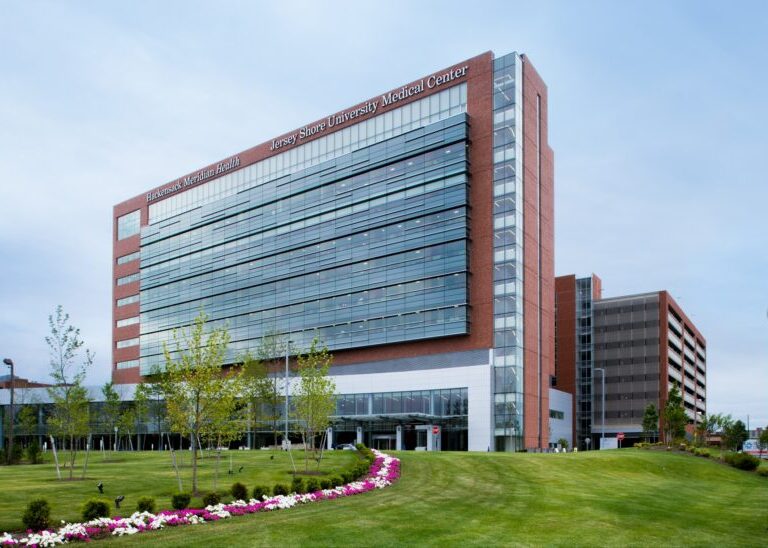
  • Jersey Shore University Medical Center (Neptune)
  • Morristown Medical Center (Morristown)
  • Newton Medical Center (Newton)
  • Ocean University Medical Center (Brick)
  • Overlook Medical Center (Summit)
  • Riverview Medical Center (Red Bank)
  • Robert Wood Johnson University Hospital Somerset (Somerville)
  • The Valley Hospital (Paramus/Ridgewood area)

Additional NJ Facilities Frequently Included in Safety/Excellence Groupings

  • Hackettstown Medical Center
  • Raritan Bay Medical Center (Perth Amboy)

📊What This Ranking Actually Means

  • These hospitals are part of the top tier nationally for patient safety outcomes
  • Healthgrades analyzed ~4,500 hospitals using Medicare data (2022–2024)
  • Metrics include:
    • Surgical complications
    • Hospital-acquired infections
    • Respiratory failure
    • Falls, pressure injuries, and preventable events

Patients treated at these hospitals are statistically less likely to experience major preventable complications.

This recognition is not symbolic; it is data-driven, comprehensive, and rooted in measurable performance. Healthgrades evaluated approximately 4,500 hospitals across the country using Medicare data spanning multiple years, focusing on 13 critical patient safety indicators. These metrics include rates of surgical complications, hospital-acquired infections, respiratory failure, pressure injuries, and other preventable adverse events. Hospitals that achieve this distinction demonstrate a sustained ability to protect patients at every stage of care, from admission through recovery.

For New Jersey, the results are both significant and revealing. The state has long maintained a reputation for strong healthcare infrastructure, but the concentration of hospitals achieving top-tier safety performance in 2026 underscores a broader shift—one in which clinical precision, operational discipline, and patient-centered care converge to create a consistently high standard across multiple regions.

Among the facilities recognized are Bayshore Medical Center, Chilton Medical Center, and Cooperman Barnabas Medical Center, each of which has demonstrated excellence in both safety outcomes and overall clinical performance. These hospitals are joined by Hackensack University Medical Center and Jersey Shore University Medical Center, two of the state’s most prominent institutions, whose inclusion reflects their continued leadership in delivering complex, high-acuity care while maintaining strong safety metrics.

Further reinforcing this statewide achievement are Morristown Medical Center and Overlook Medical Center, both of which have built reputations for combining advanced medical capabilities with patient-focused environments. In more regional markets, facilities such as Newton Medical Center and Ocean University Medical Center highlight the depth of quality care available beyond major urban centers, ensuring that high safety standards are accessible across the state.

The list continues with Riverview Medical Center and Robert Wood Johnson University Hospital Somerset, both of which have demonstrated consistent performance in reducing preventable complications, as well as The Valley Hospital, a facility widely recognized for its comprehensive approach to patient care. Additional hospitals frequently included in safety and excellence groupings, such as Hackettstown Medical Center and Raritan Bay Medical Center, further expand the scope of New Jersey’s presence within this national ranking.

What makes this recognition particularly meaningful is the consistency it represents. Patient safety is not achieved through isolated successes; it requires coordinated systems, rigorous protocols, and a culture of accountability that permeates every level of hospital operations. From infection control procedures to surgical precision and post-operative monitoring, each of these facilities has demonstrated the ability to execute at a level that reduces risk and improves patient outcomes.

As explored through Explore New Jersey’s dedicated health & wellness coverage, the state’s healthcare sector is increasingly defined by its integration of advanced technology, clinical expertise, and patient-centered design. Hospitals are not only investing in new equipment and facilities, but also in data analytics, staff training, and process improvements that allow them to identify potential risks before they escalate into complications. This proactive approach is a key factor in achieving and maintaining top-tier safety performance.

The implications of these rankings extend beyond institutional recognition. For patients, they provide a level of assurance that care will be delivered within an environment that prioritizes safety at every step. Statistically, individuals treated at these hospitals are less likely to experience major preventable complications, a factor that can significantly influence both short-term recovery and long-term health outcomes. In a healthcare landscape where choice and access are increasingly important, this level of performance becomes a critical differentiator.

For New Jersey as a whole, the concentration of high-performing hospitals reinforces the state’s position as a leader in healthcare delivery. It reflects a system that is not only capable of meeting national standards, but of exceeding them in meaningful and measurable ways. This is particularly significant in a region where population density and demand for services place additional pressure on healthcare providers to maintain both efficiency and quality.

The 2026 Healthgrades recognition also highlights an important trend within the industry: the growing emphasis on transparency and accountability. Patients are more informed than ever, and rankings based on objective data provide a valuable tool for evaluating where to seek care. For hospitals, this creates both an opportunity and a responsibility—to continuously improve, to adapt to new challenges, and to ensure that safety remains at the forefront of every decision.

As the healthcare landscape continues to evolve, the achievements of these New Jersey hospitals serve as a benchmark for what is possible when systems, leadership, and clinical expertise align. They represent not just individual successes, but a collective standard that elevates the entire state.

In a field where outcomes matter above all else, New Jersey’s presence among the nation’s safest hospitals is more than a distinction—it is a reflection of a healthcare system that is actively shaping the future of patient care, one outcome at a time.


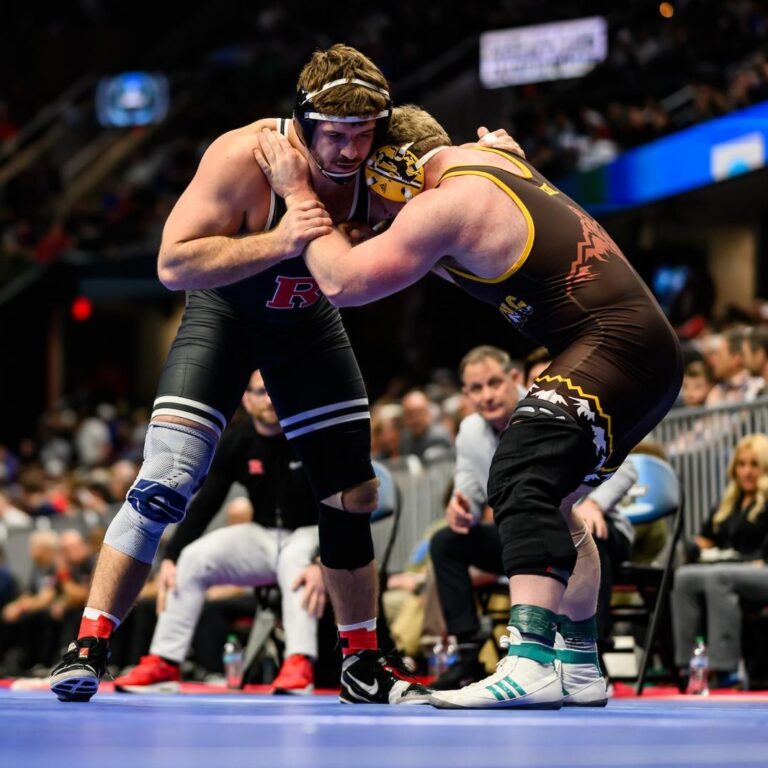
New Jersey Wrestling Takes Center Stage as NCAA Championships Spotlight Rutgers, Princeton, and a Defining Moment for the State

New Jersey’s influence on the national wrestling stage has long been undeniable, but the latest NCAA Wrestling Championships have brought that dominance into even sharper focus. From coaching excellence to controversial championship moments, the performances and storylines surrounding Rutgers Scarlet Knights wrestling and Princeton Tigers wrestling underscore a broader truth: New Jersey is not just participating in college wrestling’s biggest moments—it is helping define them.

At the center of the conversation is Chris Ayres, a New Jersey native whose impact on the sport has been recognized at the highest level. Ayres, widely credited with elevating Princeton’s wrestling program into a nationally competitive force, earned a major honor at the NCAA Championships—an acknowledgment that reflects years of sustained program-building, athlete development, and strategic leadership. His recognition is not simply a personal milestone; it is a reflection of the infrastructure and talent pipeline that continues to position New Jersey as a cornerstone of collegiate wrestling.

Ayres’ tenure at Princeton redefined expectations for Ivy League wrestling. Traditionally viewed as academically elite but athletically constrained, Princeton emerged under his leadership as a legitimate contender on the national stage. That transformation required more than recruiting—it demanded a cultural shift, one that emphasized discipline, technical development, and a belief that Ivy League athletes could compete with—and defeat—the best programs in the country. The results have been evident not only in team performance but in the caliber of individual wrestlers produced during his tenure.

That legacy was on full display during the NCAA Championships, where Princeton’s Marc-Anthony McGowan reached the national final in a performance that captured both the promise and the volatility of elite-level competition. McGowan’s path to the championship match reflected the technical precision and competitive resilience that have become hallmarks of the program. Yet the final itself introduced a layer of controversy that has sparked debate across the wrestling community.

In a match defined by strategy as much as execution, McGowan’s loss on a stalling call drew immediate and vocal प्रतिक्रिया from the crowd. Boos echoed throughout the arena, signaling a collective reaction to a decision that many viewed as pivotal—and potentially decisive. In wrestling, where control, pace, and positioning are as critical as scoring moves, the interpretation of stalling can alter the trajectory of a match in an instant. That reality was fully realized in this championship bout, where a single call became the focal point of both the outcome and the broader discussion that followed.

For McGowan, the result represents both an achievement and a moment of frustration. Reaching the NCAA final places him among the elite competitors in the country, yet the manner of the loss ensures that the conversation will extend beyond the match itself. These are the moments that define careers—not only through results, but through the narratives that surround them. In this case, the narrative is one of excellence intersecting with controversy, a reminder of how thin the margins can be at the highest level of collegiate wrestling.

Within the broader context of New Jersey’s wrestling ecosystem, these developments highlight the state’s continued prominence in producing and shaping top-tier talent. As consistently explored through Explore New Jersey’s dedicated college sports coverage, the region’s impact extends beyond individual programs. It is embedded in a network of high school pipelines, collegiate institutions, and coaching leadership that collectively sustain a level of competitiveness few states can match.

Rutgers, in particular, remains a central pillar of that ecosystem. The Scarlet Knights have built a program that reflects both the state’s wrestling tradition and its forward momentum, consistently competing at a national level while developing athletes who embody the discipline and intensity associated with New Jersey wrestling. The presence of Rutgers alongside Princeton at the NCAA Championships reinforces the depth of talent within the state, illustrating a landscape where multiple programs can thrive simultaneously.

What emerges from this year’s championships is a portrait of New Jersey wrestling at a critical juncture—one defined by both achievement and ongoing evolution. The recognition of Chris Ayres affirms the importance of coaching leadership in shaping successful programs, while the experience of Marc-Anthony McGowan highlights the unpredictable and often contentious nature of competition at the highest level.

These dual narratives are not contradictory; they are complementary. Together, they reflect the full spectrum of what it means to compete in college wrestling today: the preparation, the performance, the scrutiny, and the stakes. For New Jersey, they also reinforce a broader identity—one built on resilience, technical excellence, and a willingness to engage with the sport at its most demanding levels.

As the NCAA Championships conclude, the impact of these moments will extend far beyond a single weekend. They will influence recruiting, program development, and the perception of New Jersey wrestling on a national scale. More importantly, they will continue to shape the athletes and coaches who carry the state’s legacy forward.

In a sport where every match is a test of both physical and mental endurance, New Jersey has once again demonstrated its ability to compete, to lead, and to command attention on the national stage. The stories emerging from this year’s championships are not isolated events—they are part of a larger, ongoing narrative that continues to position the state at the forefront of collegiate wrestling in America.

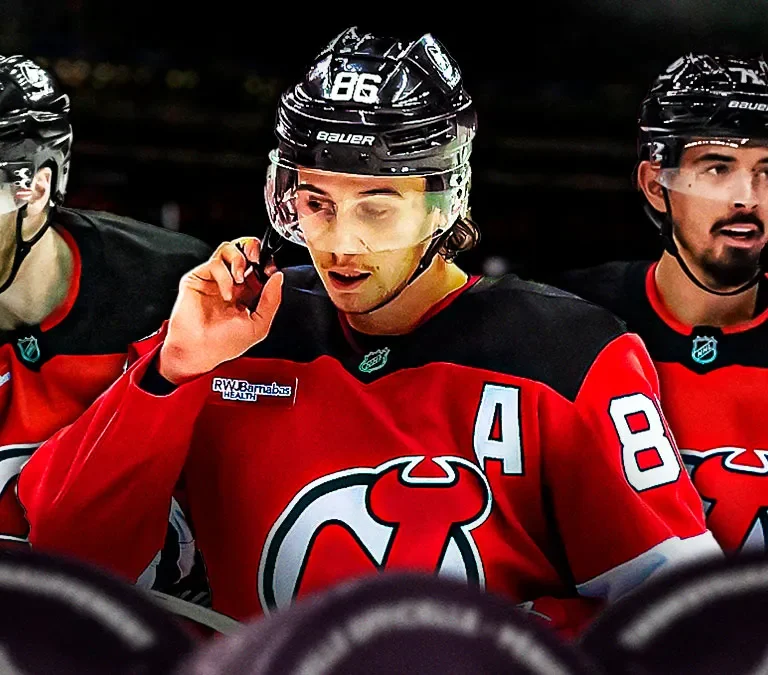
New Jersey Devils Face Critical Stretch as Playoff Hopes Dim Amid Late-Season Surge and Lingering Questions

As the 2025–26 NHL season pushes into its decisive final stretch, the New Jersey Devils find themselves caught between momentum and mathematics—a team playing some of its most complete hockey of the year while simultaneously confronting a narrowing path to the postseason. Entering the week of March 23 with a 35-32-2 record and positioned seventh in the Metropolitan Division, the Devils sit approximately 12 points outside the second wild-card spot, a gap that underscores both the urgency of their remaining schedule and the cost of inconsistency earlier in the season.

Yet beneath the surface of the standings lies a more complex and, in many ways, more compelling story. The Devils have gone 7-3-0 in their last 10 games, a stretch that has showcased the team’s offensive ceiling, improved goaltending stability, and flashes of the identity many expected to define their season. That recent form has been particularly evident during a successful homestand that briefly reignited optimism, even as the broader playoff picture remains increasingly difficult to overcome.

Recent results illustrate both the promise and the frustration that have defined this campaign. A high-scoring 6-3 victory over the New York Rangers highlighted the team’s offensive capabilities, with Jack Hughes and Connor Brown driving a performance that demonstrated how dangerous the Devils can be when their top lines are in sync. That energy carried into a tightly contested overtime win against the Boston Bruins, where Paul Cotter delivered the decisive goal in a game that reflected both resilience and execution under pressure. However, a narrow 2-1 loss to the Washington Capitals served as a reminder of the team’s ongoing challenge—generating chances without consistently converting them into results, even with contributions from key players like Jesper Bratt.

As explored throughout Explore New Jersey’s dedicated New Jersey Devils coverage, the current state of the team is defined not by a single issue, but by the convergence of several factors: injuries, roster adjustments, and fluctuating individual performance. Head coach Sheldon Keefe has navigated a lineup that has been anything but stable, with significant injury updates continuing to shape the team’s outlook. Stefan Noesen has been ruled out for the remainder of the season, while Brett Pesce faces uncertainty due to a lower-body injury that could sideline him long-term. Meanwhile, Hughes remains day-to-day, a status that carries considerable weight given his central role in the team’s offensive structure.

The roster itself has undergone measured adjustments, though not the kind of sweeping changes that often define teams on the playoff bubble. At the trade deadline, the Devils opted for a relatively restrained approach, adding Nick Bjugstad and Maxim Tsyplakov while moving on from Ondřej Palát. These moves reflected a balancing act—attempting to reinforce depth without compromising long-term flexibility—but they also signaled a level of caution that has left the team relying heavily on internal performance improvements.

No player embodies the complexity of this season more than Timo Meier. His year has unfolded in two distinctly different phases, separated by a personal leave of absence that appears to have had both statistical and intangible effects on his performance. Early in the season, Meier was producing at a level consistent with his reputation as a power forward capable of driving offense, generating 10 goals and 12 assists in his first 26 games while maintaining a strong presence on the power play.

Since his return, however, the numbers tell a different story. While Meier has continued to generate scoring chances—evidenced by his expected goals metrics—his finishing ability has declined significantly, with a shooting percentage that has dropped sharply despite increased shot volume. On the power play, the Devils have not lacked opportunities, but execution has been inconsistent, with Meier’s production falling well below expected levels. This disconnect between process and results has become a defining characteristic of both his individual season and the team’s broader offensive challenges.

At even strength, the situation becomes even more nuanced. Advanced metrics indicate that the Devils are controlling play effectively when Meier is on the ice alongside Nico Hischier, generating favorable shot attempts and expected goals. Yet those advantages have not translated into actual scoring success, with the team posting a significantly lower goals-for percentage in those minutes. This disparity suggests a combination of finishing struggles, defensive lapses, and perhaps an element of variance that has yet to correct itself.

Defensively, the data points to a more tangible shift. Tracking metrics reveal an increase in failed zone exits and retrievals, contributing to extended defensive zone time and, ultimately, goals against. These are not isolated incidents but recurring patterns that disrupt the flow of play and place additional strain on both the defensive unit and goaltending.

The broader system implemented by Keefe has also come under scrutiny in relation to Meier’s performance. The team’s more conservative, structured approach—particularly during stretches when injuries limited offensive firepower—has not always aligned with Meier’s strengths as a north-south, forechecking-driven player. The contrast between his Olympic performance, where he thrived in a more aggressive role, and his NHL output has only intensified questions about usage, deployment, and overall fit within the system.

Despite these challenges, it would be reductive to define Meier’s season solely through a statistical lens. Context matters, and his personal circumstances provide an important dimension to his performance. Players operate within a framework that often obscures the human element, yet it remains a critical factor. The expectation of consistency at the professional level is real, but so too is the reality that external factors can influence on-ice results in ways that are not always immediately visible.

Beyond individual performance, the Devils’ season is also shaped by broader organizational developments. The announcement that the team will retire its black “Jersey” alternate uniform at the end of the season, with a new “Hometown Remix” design set to debut in 2026–27, reflects an ongoing effort to connect with both tradition and innovation. Meanwhile, the team’s prospect pool, recently ranked 22nd in the league, highlights areas of strength—particularly in goaltending—while also pointing to a need for greater depth among forward prospects.

As the Devils prepare to embark on a road trip beginning with a matchup against the Dallas Stars, the margin for error has effectively disappeared. Each game carries implications not just for the standings, but for the team’s ability to sustain the level of play demonstrated in recent weeks. The challenge is not simply to win, but to maintain consistency across all areas—offense, defense, and special teams—while navigating the ongoing impact of injuries and lineup adjustments.

In the context of New Jersey’s broader sports landscape, this moment represents both a test and an opportunity. The Devils have shown that they are capable of competing at a high level, even under less-than-ideal circumstances. The question now is whether that capability can be sustained long enough to overcome the deficit in the standings.

For a team that has spent much of the season oscillating between promise and frustration, the final weeks will serve as a defining chapter. Whether or not the playoffs remain within reach, the performance during this stretch will shape perceptions heading into the offseason and influence the decisions that follow.

What remains clear is that the New Jersey Devils are not a team defined solely by their record. They are a team in transition, navigating the complexities of growth, adversity, and expectation. As the season continues to unfold, the focus will remain not just on where they stand, but on how they respond—game by game, shift by shift, in a race that has become as much about identity as it is about outcomes.

Dino Fest 2026 Transforms Arrowhead Farmstead into a Prehistoric Adventure Across 150 Acres

New Jersey’s agricultural landscape continues to redefine itself as more than a source of fresh produce—it has become a dynamic, experience-driven destination where farming, education, and entertainment intersect in increasingly creative ways. This spring, that evolution takes a bold and imaginative leap forward as Arrowhead Farmstead unveils Dino Fest 2026, a large-scale immersive attraction that transforms hundreds of acres of working farmland into a prehistoric environment unlike anything else in the region.

Set against the backdrop of sprawling tulip fields across approximately 150 acres, Dino Fest 2026 introduces visitors to a landscape where agriculture and experiential design converge. More than 30 life-size dinosaurs are positioned throughout the property, creating a fully integrated environment that encourages exploration, interaction, and discovery. From towering predators to gentle herbivores, each installation is designed to evoke both scale and realism, turning a day at the farm into an encounter with a world long vanished yet vividly reimagined.

What distinguishes Dino Fest is not simply its visual spectacle, but its ability to align with the broader trajectory of New Jersey’s evolving agritourism sector. As regularly highlighted through Explore New Jersey’s dedicated agriculture & farming coverage, farms across the state are increasingly embracing experiential programming to engage wider audiences. These initiatives extend the traditional role of agriculture, positioning farms as destinations where education, recreation, and seasonal tourism intersect in meaningful ways. Arrowhead Farmstead’s Dino Fest stands at the forefront of this movement, offering a model for how agricultural spaces can be reimagined without losing their foundational identity.

At the center of the experience is the scale and layout of the farm itself. The expansive tulip fields provide a striking visual contrast to the prehistoric theme, blending natural beauty with imaginative staging. Visitors move through curated pathways that guide them from one encounter to the next, with each section of the farm offering a distinct perspective on the prehistoric world. The presence of recognizable dinosaurs such as the Tyrannosaurus rex and Triceratops adds an immediate sense of familiarity, while smaller installations and themed zones create opportunities for more intimate, interactive moments.

Among the most engaging elements of Dino Fest are the live stage shows, scheduled to take place every hour throughout the day. These performances introduce a dynamic layer to the experience, combining storytelling, education, and theatrical presentation to bring the prehistoric theme to life. Rather than functioning as passive displays, the dinosaurs become part of an evolving narrative, one that invites audiences—particularly younger visitors—to engage actively with the material. This approach reflects a broader shift in family-oriented programming, where interactivity and participation are central to audience engagement.

Complementing the stage performances are dedicated dinosaur dig sites, where visitors can uncover fossils in a hands-on environment designed to simulate paleontological exploration. These areas serve as both entertainment and educational platforms, encouraging curiosity about science, history, and the natural world. By integrating these elements into the overall experience, Dino Fest reinforces the idea that learning can be seamlessly woven into recreational activities, creating an environment that is both engaging and informative.

The inclusion of features such as a Baby T-Rex encounter further enhances the event’s appeal, offering moments that are specifically designed for photo opportunities and personal interaction. These elements are carefully positioned throughout the farm, ensuring that the experience remains varied and engaging from start to finish. For families, content creators, and visitors seeking visually distinctive experiences, Dino Fest delivers a setting that is both immersive and highly shareable.

Within the broader context of New Jersey’s tourism and agricultural economy, events like Dino Fest play a critical role in expanding the reach and relevance of local farms. By introducing thematic programming that attracts diverse audiences, farms are able to extend their seasonal appeal and create new revenue streams while maintaining their connection to the land. This approach not only supports individual operations like Arrowhead Farmstead, but also contributes to the overall vitality of the state’s agricultural sector.

The timing of Dino Fest aligns strategically with the spring season, when New Jersey’s farms are already experiencing increased visitor interest. The addition of a large-scale, themed attraction enhances that momentum, drawing attention not only to the event itself but to the broader offerings of the region. Visitors who come for the dinosaurs are also exposed to the natural beauty and agricultural richness of the farm, creating a layered experience that extends beyond a single attraction.

From a logistical standpoint, the scale of the property allows for a spacious and comfortable visitor experience, accommodating large crowds while preserving the sense of immersion that defines the event. The layout encourages movement and exploration, ensuring that each visit unfolds as a unique journey rather than a linear walkthrough. This design philosophy reflects an understanding of how modern audiences engage with experiential environments, prioritizing flexibility, discovery, and personal pacing.

Dino Fest 2026 represents a significant moment for Arrowhead Farmstead and for New Jersey’s broader agritourism landscape. It demonstrates how traditional agricultural spaces can be transformed into destinations that resonate with contemporary audiences while remaining rooted in their original purpose. By combining the visual impact of life-size dinosaur installations with interactive programming and educational elements, the event creates a multi-dimensional experience that appeals across age groups and interests.

As visitors step onto the grounds of Arrowhead Farmstead, they are entering more than a farm—they are entering a carefully constructed environment where past and present intersect in unexpected ways. The tulip fields provide a living canvas, the dinosaurs introduce a sense of wonder, and the interactive elements invite participation at every level.

In a state where agriculture continues to evolve alongside shifting cultural and economic dynamics, Dino Fest 2026 stands as a clear example of what is possible when innovation meets tradition. It is an event that captures attention, invites exploration, and reinforces New Jersey’s position as a destination where even the most familiar landscapes can be transformed into something extraordinary.

CD-11 Special Election Upended as Debate Dispute Between Analilia Mejia and Joe Hathaway Injects New Volatility Into New Jersey’s Political Landscape

A congressional race that was expected to move quickly and quietly toward an April 16 decision has instead taken on a sharper, more unpredictable edge, as a dispute over debate terms between Democratic candidate Analilia Mejia and Republican challenger Joe Hathaway has reframed the dynamics of New Jersey’s 11th Congressional District special election. What began as a routine effort to organize a single candidate forum has evolved into a broader political flashpoint—one that touches on representation, institutional neutrality, campaign strategy, and the evolving expectations voters now place on public discourse.

At the center of the controversy is Mejia’s decision to decline participation in a debate organized by the League of Women Voters, a longstanding civic institution widely associated with nonpartisan voter engagement. The League, working in coordination with its Morris Area chapter and affiliated groups in Montclair, Livingston, and Mountain Lakes, ultimately announced it could not reach an agreement with Mejia’s campaign while maintaining its established debate policies. That breakdown prompted a public response from Mejia that immediately shifted the narrative of the race.

Her position was direct and calibrated to resonate within a district whose demographic composition has changed significantly over time. With more than a third of residents identifying as people of color, Mejia argued that the structure of a public debate—particularly one intended to inform and engage voters—should reflect that diversity at every level, including among moderators. For her campaign, the issue was not procedural but philosophical, grounded in the belief that neutrality and representation are not mutually exclusive, but rather essential components of a modern democratic process.

The League’s inability to commit to those terms created an impasse that now leaves the race without what would likely have been its only formal debate. In a district that spans portions of Essex, Passaic, and Morris counties, the absence of a structured, side-by-side candidate exchange introduces a new layer of complexity for voters attempting to evaluate competing visions in a compressed election timeline.

Mejia’s broader messaging reinforces a campaign built around contrasts. She has framed her candidacy as one focused on protecting democratic institutions, expanding access to affordable housing, and addressing rising healthcare costs that have impacted tens of thousands of New Jersey residents. Her critique of Hathaway positions him within a national political context, aligning him with policies and figures she argues undermine democratic norms and economic fairness. In doing so, her campaign has leaned into a narrative that prioritizes urgency and ideological clarity over traditional campaign rituals like formal debates.

Hathaway, for his part, has seized on the moment to present himself as the candidate willing to engage without conditions. His response—offering Mejia the opportunity to select moderators herself—was both tactical and symbolic, aimed at reframing the debate issue as one of accessibility and accountability. By emphasizing his readiness to participate under any reasonable format, Hathaway has attempted to position himself as aligned with voters seeking transparency and direct engagement.

This exchange highlights a broader shift in how debates are perceived and utilized within contemporary campaigns. Once considered essential forums for voter education, debates have increasingly become strategic tools, with candidates weighing the potential benefits against the risks of unscripted exchanges. In highly polarized environments, campaigns often calculate that message control, targeted outreach, and digital engagement can be more effective than traditional debate formats, particularly when those formats are viewed as constrained or misaligned with campaign priorities.

The League of Women Voters itself has not been immune to scrutiny in recent years. While it remains a respected organization with a long history of promoting civic participation, it has faced criticism from multiple political perspectives. Some Republican candidates have declined League-sponsored debates, citing concerns about perceived ideological leanings. At the same time, progressive voices have begun to question whether traditional debate structures adequately reflect the diversity and complexity of modern electorates. The current dispute in CD-11 encapsulates this tension, illustrating how institutions once seen as neutral arbiters are now operating within a more contested and scrutinized environment.

Beyond the immediate debate controversy, the stakes of the CD-11 special election remain significant. The seat, previously held by Mikie Sherrill, represents a district with a blend of suburban, urban, and semi-rural communities, each with distinct economic and social priorities. Issues such as housing affordability, healthcare access, public safety, and economic development are not abstract policy discussions but lived realities for constituents navigating a rapidly evolving regional landscape.

The compressed timeline of a special election further intensifies these dynamics. Without the extended campaign cycles typical of general elections, candidates must establish visibility, define their platforms, and connect with voters in a matter of weeks rather than months. In this context, every development—particularly one that captures public attention—can have an outsized impact on voter perception and engagement.

From a strategic standpoint, Mejia’s decision reflects a campaign willing to challenge traditional norms in pursuit of a broader message about representation and inclusivity. It signals an understanding that, for many voters, the process by which political dialogue occurs is as important as the content of that dialogue. Hathaway’s response, meanwhile, underscores a contrasting approach that emphasizes accessibility and a willingness to engage within established frameworks, even as those frameworks are being questioned.

For voters in CD-11, the absence of a formal debate does not eliminate the need to assess these competing approaches—it heightens it. In place of a single, structured forum, voters are left to evaluate candidates through a combination of public statements, campaign outreach, media coverage, and community engagement. This decentralized information environment places greater responsibility on both campaigns to communicate clearly and on voters to seek out and interpret that information effectively.

Within the broader context of New Jersey politics, this episode serves as a microcosm of larger trends shaping electoral discourse. Questions about who participates, how discussions are structured, and what constitutes fair and meaningful engagement are no longer peripheral—they are central to how campaigns are conducted and how voters make decisions. As demographic shifts continue to redefine districts and as political expectations evolve, these questions are likely to surface with increasing frequency and intensity.

The CD-11 race, once expected to follow a relatively predictable path, now stands as one of the more closely watched political developments in the state. Not because of a policy shift or a dramatic polling change, but because of a debate that will not happen—and the broader conversation that absence has ignited.

New Jersey’s Minority-Owned Businesses Take Center Stage in 2026 as Economic Power, Innovation, and Leadership Redefine the State’s Business Landscape

New Jersey’s economic engine has long been defined by its diversity, but in 2026 that defining characteristic is no longer just a demographic reality—it is a driving force behind some of the most dynamic, resilient, and forward-looking business success stories in the region. Across industries that range from technology and media to hospitality, manufacturing, professional services, and beyond, minority-owned businesses are not simply participating in the state’s economy—they are actively shaping its trajectory, influencing its culture, and expanding its reach in ways that are both measurable and transformative.

The latest recognition of this momentum arrives through the annual “In the Lead: Minority-Owned Businesses 2026” spotlight, a comprehensive acknowledgment of entrepreneurs and executives whose work is not only building profitable enterprises but also strengthening the broader economic fabric of New Jersey. This year’s honorees reflect a powerful truth that has become increasingly evident: the state’s competitive advantage lies in its ability to harness a wide spectrum of perspectives, experiences, and leadership styles, translating that diversity into tangible economic output and sustained growth.

New Jersey remains one of the most economically vibrant states in the country, fueled by affluent consumer markets, dense population centers, and proximity to major metropolitan hubs. Within this environment, minority-owned businesses have emerged as critical contributors, filling market gaps, introducing culturally relevant services, and developing innovative business models that resonate with an increasingly diverse customer base. Their growth is not incidental—it is structural, reflecting both the changing composition of the state’s population and the evolving expectations of consumers who prioritize authenticity, accessibility, and value.

Yet the path to success for many of these business leaders has been anything but straightforward. Persistent barriers continue to shape the landscape, particularly when it comes to access to capital, equitable financing opportunities, and the lingering effects of systemic bias. For many minority entrepreneurs, securing funding remains one of the most significant obstacles to scaling operations, investing in infrastructure, or expanding into new markets. At the same time, fragmented support systems and inconsistent access to mentorship or institutional backing can create additional layers of complexity that require both resilience and strategic navigation.

Overlaying these challenges are the broader structural realities faced by all businesses operating in New Jersey, including high operational costs, regulatory demands, and competitive market pressures. These factors, while not unique to minority-owned enterprises, can amplify existing disparities when combined with unequal access to resources. And yet, despite these conditions, the businesses recognized in this year’s feature demonstrate a consistent pattern: the ability to not only survive but to excel, often outperforming expectations and setting new benchmarks within their respective industries.

What distinguishes these leaders is not simply their capacity to overcome obstacles, but their ability to convert those challenges into strategic advantages. Many have built organizations that are inherently agile, culturally attuned, and deeply connected to the communities they serve. This alignment allows them to anticipate market trends, respond to shifting consumer demands, and create products and services that resonate on both local and national levels. In sectors such as media and the arts, this has translated into culturally impactful content and experiences. In technology and professional services, it has led to innovative solutions that address real-world problems with precision and scalability. In hospitality and retail, it has resulted in customer experiences that prioritize personalization, quality, and trust.

The broader economic implications of this growth are significant. Numerous studies over the past several decades have consistently shown that organizations with diverse leadership structures tend to outperform their less diverse counterparts, particularly in areas such as profitability, innovation, and long-term sustainability. In New Jersey, this dynamic is playing out in real time, as minority-owned businesses contribute not only to job creation and tax revenue but also to the overall competitiveness of the state’s economy.

At the same time, the national conversation surrounding diversity, equity, and inclusion has entered a more complex and, at times, contentious phase. While earlier decades saw a growing consensus around the economic and social value of inclusive business practices, recent years have introduced new challenges, including shifting political narratives and evolving institutional priorities. In some sectors, initiatives that once enjoyed broad support are now being reevaluated or, in certain cases, scaled back. This evolving landscape has introduced a degree of uncertainty, particularly for business leaders who have relied on such frameworks to expand opportunities and access.

Despite these headwinds, New Jersey continues to stand out as a state where commitment to inclusive growth remains embedded within its economic identity. Across public and private sectors, there is a sustained recognition that supporting minority-owned businesses is not merely a matter of social policy—it is a strategic imperative. Elected officials, educational institutions, and corporate leaders throughout the state have maintained a focus on fostering equitable opportunities, investing in workforce development, and creating pathways for entrepreneurship that reflect the diversity of the population.

This environment provides a foundation for continued growth, but it also places a responsibility on the business community itself. The success of minority-owned enterprises is not solely dependent on policy or institutional support; it is also driven by consumer behavior, corporate partnerships, and the willingness of stakeholders to engage with and invest in these businesses. In New Jersey, there is a clear indication that the market is responding positively. Consumers are increasingly seeking out businesses that deliver high-quality products and services while also reflecting the values of inclusivity and representation.

For aspiring entrepreneurs, the message is both clear and compelling. New Jersey offers a landscape rich with opportunity, but success requires a combination of vision, execution, and adaptability. The leaders recognized in this year’s “In the Lead” feature exemplify these qualities, demonstrating that it is possible to build impactful, scalable businesses even within a challenging environment. Their stories serve as both inspiration and blueprint, illustrating the pathways through which innovation, determination, and strategic thinking can converge to produce meaningful results.

As the state continues to evolve, the role of minority-owned businesses will only become more central to its economic narrative. These enterprises are not operating on the margins; they are at the core of New Jersey’s growth strategy, influencing how industries develop, how communities are served, and how the state positions itself in an increasingly competitive national and global marketplace. Their impact extends beyond balance sheets and revenue figures, shaping the cultural and social dynamics that define New Jersey as a place to live, work, and do business.

Within the broader Sunset Daily News New Jersey business landscape, this moment represents more than recognition—it signals a shift in how success is defined and who is driving it. The entrepreneurs and executives highlighted in this year’s feature are not just participants in the economy; they are architects of its future, building enterprises that reflect the complexity, diversity, and ambition of the state itself.

ICE Newark Intensifies Crackdown Across New Jersey With Arrests of Convicted Child Predators Amid Ongoing Sanctuary Policy Tensions

As federal immigration enforcement intensifies across the Northeast, a series of high-profile arrests in New Jersey has placed renewed focus on the intersection of public safety, immigration policy, and the legal complexities shaping cooperation between local and federal authorities. In recent weeks, U.S. Immigration and Customs Enforcement (ICE) operations out of Newark have resulted in the apprehension of multiple individuals previously convicted of serious sexual offenses involving minors, underscoring a targeted enforcement strategy that federal officials describe as focused on removing “high-threat” offenders from communities across the state.

The most recent case, unfolding on March 22, 2026, involved the arrest of Alvaro Tuero, a Cuban national taken into ICE custody immediately upon his release from a state correctional facility in Bridgeton. Federal authorities characterize Tuero as a repeat offender with a documented history of violent and predatory criminal behavior. His record includes convictions for sexually assaulting a child under the age of 13, endangering the welfare of a child through sexual conduct, as well as charges of lewdness and burglary. The timing of his arrest—executed at the precise moment of release—reflects a broader federal tactic designed to prevent reentry into communities by individuals deemed to pose an ongoing risk.

Earlier in the month, on March 12, 2026, ICE Newark publicly called on New Jersey officials to honor a detainer request involving Gerardo Garcia Gonzalez, a Mexican national arrested by the Ocean County Sheriff’s Office. Gonzalez faces allegations of sexual assault involving a minor between the ages of 13 and 15, along with charges of criminal sexual contact and sexual assault involving force or coercion. The case has become emblematic of a recurring friction point between federal enforcement agencies and state-level policies, particularly as New Jersey continues to operate under directives that limit the extent to which local law enforcement can cooperate with federal immigration detainers.

This tension is not new, but it has become increasingly pronounced as federal agencies escalate operations under initiatives such as Operation Apex Predator, a program specifically designed to identify, track, and remove non-citizens convicted of sex offenses. According to federal enforcement officials, this initiative prioritizes individuals with serious criminal histories involving exploitation, abuse, or violence against minors, categorizing them as among the highest priority threats within the broader immigration enforcement framework.

The scope of these operations extends beyond isolated arrests. Over the past several months, ICE Newark has highlighted a series of cases tied to individuals previously convicted of severe offenses across multiple New Jersey jurisdictions. Among them is Francisco Morales-Corado, a Guatemalan national whose criminal record includes convictions for sexual assault and kidnapping in Plainfield. His case, spanning from late 2025 into early 2026, has been included in what federal authorities have described as “worst of the worst” enforcement actions—operations aimed at removing individuals whose crimes are considered particularly egregious.

Similarly, Brallan Josue Garcia-Castro, a Honduran national arrested on January 2, 2026, was taken into custody following convictions in Morris County for sexual assault and endangering the welfare of a child, including offenses involving child pornography. His arrest was part of a broader New Year’s enforcement surge that signaled a more aggressive posture entering 2026, with federal agencies emphasizing a zero-tolerance approach toward repeat offenders with documented histories of predatory conduct.

These cases collectively illustrate a consistent operational pattern: identify individuals with prior convictions involving minors, coordinate with correctional facilities or local agencies where possible, and execute custody transfers at critical moments—often immediately upon release from state or county detention. The strategy is designed to minimize gaps in enforcement that could allow individuals to evade federal custody or reestablish themselves within communities.

At the same time, the legal and political landscape in New Jersey continues to shape how these operations unfold. The state’s sanctuary policies, which restrict certain forms of cooperation between local law enforcement and federal immigration authorities, have become a focal point in discussions surrounding public safety and jurisdictional authority. In cases like that of Gerardo Garcia Gonzalez, federal officials have openly criticized what they view as missed opportunities for collaboration, arguing that detainer noncompliance can result in preventable risks.

State officials, however, have consistently maintained that these policies are designed to build trust between immigrant communities and local law enforcement, ensuring that victims and witnesses feel safe reporting crimes without fear of immigration consequences. This ongoing policy divide has created a complex enforcement environment in which federal agencies must often operate independently, relying on targeted operations rather than routine coordination with local jurisdictions.

What is clear is that federal enforcement activity in New Jersey is not slowing down. If anything, the pace and visibility of these operations suggest a sustained and potentially expanding effort throughout 2026. With initiatives like Operation Apex Predator continuing to drive enforcement priorities, and with ICE Newark maintaining a high operational tempo, additional arrests and custody actions are expected in the months ahead.

For New Jersey residents, the issue sits at the intersection of public safety concerns and broader national debates over immigration enforcement. The recent arrests highlight the federal government’s focus on removing individuals with serious criminal histories, particularly those involving crimes against children. At the same time, they bring renewed attention to the structural and policy challenges that define how, when, and where enforcement actions take place within the state.

As these dynamics continue to evolve, New Jersey remains a critical focal point in the national conversation—where enforcement priorities, legal frameworks, and community considerations converge in ways that are both immediate and deeply consequential.

Nimesh Patel: With All Due Disrespect Tour

0

2nd Show Added!

April 10 @ 8:00 PM 11:30 PM

New Jersey’s comedy scene continues to expand with a confidence and cultural relevance that mirrors the state’s broader rise as a destination for premier live entertainment, and this April, that momentum reaches a new level with the arrival of one of stand-up’s sharpest and fastest-rising voices. Due to overwhelming demand, a second show has been added for Nimesh Patel: With All Due Disrespect Tour at State Theatre New Jersey on April 10, 2026, marking a significant debut for a comedian whose trajectory has been defined by precision writing, fearless perspective, and a rapidly expanding national audience.

The addition of a second performance is not merely a scheduling update—it is a signal. It reflects both the scale of anticipation surrounding Nimesh Patel and the strength of New Jersey’s comedy-going audience, which continues to support artists who push beyond conventional stand-up into more layered, intellectually sharp territory. Patel’s work occupies that space with clarity. His comedy is built on structure, discipline, and a willingness to engage directly with topics that many performers approach more cautiously, delivering material that is as technically refined as it is culturally resonant.

As consistently highlighted across Explore New Jersey’s dedicated stand-up comedy coverage, the state has developed into a critical hub for both emerging and established comedic talent. From intimate club environments to larger theatrical stages, New Jersey offers a range of performance settings that allow comedians to evolve their material while reaching increasingly diverse audiences. The State Theatre New Jersey stands at the top tier of that ecosystem, providing a platform where comedians like Patel can transition from club success to full-scale theater performances without losing the immediacy that defines stand-up at its best.

Patel’s rise within the comedy world has been anything but conventional. His reputation was initially built on the strength of his joke writing—tight, deliberate, and unflinchingly direct. That reputation reached a turning point when Chris Rock recognized his talent and brought him on as a writer for the 2016 Academy Awards, an opportunity that quickly expanded into touring alongside one of the most influential figures in modern comedy. From there, Patel moved into high-profile writing roles, including Saturday Night Live, where his work drew attention for its originality and edge, as well as contributions to major cultural events like the White House Correspondents Dinner and television platforms such as Full Frontal with Samantha Bee and A Little Late with Lilly Singh.

What distinguishes Patel within this landscape is his ability to operate simultaneously as a writer’s comedian and a performer with broad audience appeal. His material is constructed with a level of technical precision that rewards close attention, yet it lands with an accessibility that has allowed him to scale rapidly from sold-out comedy clubs to major theater engagements. This duality is central to the appeal of the With All Due Disrespect tour, which showcases a comedian fully in control of his voice and increasingly confident in expanding its reach.

In recent years, Patel has also demonstrated a keen understanding of the evolving distribution landscape for comedy. His self-produced specials—Thank You China, Jokes to Get You Through Quarantine, and Lucky Lefty—have collectively generated millions of views, driven not by traditional network backing but by direct-to-audience strategies that reflect a broader shift within the industry. Lucky Lefty, in particular, stands out for its ability to transform deeply personal material into something both sharply comedic and unexpectedly reflective, further reinforcing Patel’s range as a storyteller.

The With All Due Disrespect tour builds on that foundation, presenting a body of material that is current, unfiltered, and intentionally provocative without sacrificing structure or craft. Patel’s approach to comedy resists easy categorization; he moves fluidly between observational humor, cultural critique, and personal narrative, often within the same set. The result is a performance style that feels both immediate and carefully engineered, maintaining a balance that keeps audiences engaged at multiple levels.

The April 10 engagement at State Theatre New Jersey, co-presented with Stress Factory Comedy Club, further underscores the collaborative strength of New Jersey’s comedy infrastructure. The Stress Factory has long been recognized as one of the region’s premier comedy venues, and its partnership in this event reflects a shared commitment to presenting top-tier talent in settings that enhance both performance quality and audience experience.

From a logistical standpoint, ticket pricing begins at $34, positioning the event as both accessible and high-demand. The imposed limit of eight tickets per order reflects the level of interest already generated, while the addition of a second show ensures that more audiences will have the opportunity to experience Patel’s work live. For a comedian whose material thrives on immediacy and audience interaction, the theater setting offers a compelling scale—large enough to amplify energy, yet intimate enough to preserve the connection that defines stand-up.

Within the broader narrative of New Jersey’s live entertainment growth, this event represents a convergence of several key trends: the rise of comedians who control their own creative output, the increasing importance of theater venues in the comedy circuit, and the sustained appetite for performances that combine intellectual rigor with entertainment value. Patel’s debut at State Theatre New Jersey encapsulates all of these dynamics, positioning it as a standout moment in the state’s 2026 comedy calendar.

As audiences take their seats on April 10, they are not simply attending another stop on a national tour—they are participating in a performance that reflects the current state of stand-up comedy at a high level. Nimesh Patel brings with him a body of work that is evolving in real time, shaped by both personal experience and a broader cultural awareness that informs every line.

For New Jersey, the significance is clear. Events like this continue to reinforce the state’s position as a destination where major comedic voices choose to perform, test material, and connect with audiences that are both engaged and discerning. With a second show now added and demand continuing to build, With All Due Disrespect stands as one of the most anticipated comedy events of the spring, delivering an evening that is as sharp, insightful, and unapologetically original as the comedian at its center.

State Theatre New Jersey

732-246-7469

View Organizer Website

State Theatre New Jersey

15 Livingston Avenue , NJ
New Brunswick, NJ 08901 United States
+ Google Map
(732) 246-7469
View Venue Website

The Sound Studio – Rock Series The Patrice Pike Band

0

An Immersive Musical Experience in STNJ’s Studio Space

April 8 @ 8:00 PM 11:30 PM

New Jersey’s reputation as a destination for serious live music experiences continues to deepen, not just through large-scale touring productions, but through carefully curated performances that prioritize connection, artistry, and immediacy. On April 8, 2026, State Theatre Studio will host a standout installment of its evolving Sound Studio series with The Patrice Pike Band, delivering an intimate, immersive concert that places audiences directly inside the creative energy of the performance itself.

This is not a traditional concert environment. The Sound Studio series has been deliberately designed to dismantle the barriers between performer and audience, replacing distance with proximity and spectacle with authenticity. Within the Studio space at State Theatre New Jersey, every detail—from acoustics to seating configuration—is calibrated to create a setting where music is experienced at its most immediate and unfiltered. The result is a format that reflects a broader shift within New Jersey’s live music culture, one that increasingly values depth of engagement over scale.

As consistently explored through Explore New Jersey’s dedicated music coverage, the state’s music scene is not defined solely by headline acts or arena tours. It is equally shaped by these kinds of intentional, artist-driven experiences—performances that emphasize storytelling, musicianship, and emotional resonance. The Sound Studio series stands as a prime example of that evolution, offering audiences a chance to encounter artists in a setting that feels personal, unscripted, and deeply human.

At the center of this particular performance is Patrice Pike, a vocalist and songwriter whose career has been defined by both intensity and authenticity. Best known as the former frontwoman of the Austin-based band Sister Seven, Pike has built a reputation for performances that move beyond entertainment into something more transformative. Her voice carries a distinctive emotional weight—capable of shifting from raw vulnerability to commanding strength within a single phrase—while her songwriting engages directly with themes of resilience, identity, and personal truth.

What distinguishes Patrice Pike’s live performances is not simply technical ability, but presence. There is a deliberate refusal to separate the artist from the audience, an insistence on shared experience that aligns seamlessly with the Sound Studio format. Each song becomes less a performance and more a conversation, shaped in real time by the energy in the room. This approach transforms the concert into a collective experience, where the emotional arc is not dictated solely by the setlist, but by the interaction between artist and audience.

The Patrice Pike Band brings an additional layer of depth to this dynamic. Backed by musicians who understand the nuances of Pike’s material, the performance is expected to balance precision with spontaneity. Instrumentation is not merely supportive; it is integral to the storytelling, creating a sonic landscape that allows each song to expand and evolve within the intimate confines of the Studio space. This is where the Sound Studio concept reaches its full potential—every note, every vocal inflection, every subtle shift in tempo is felt with heightened clarity.

The structure of the evening further reinforces this sense of connection. Following the performance, audiences are invited to remain in the space for a post-show meet-and-greet, an element that transforms the event from a one-directional presentation into a fully interactive experience. With concessions remaining open, the environment becomes a gathering point where artists and attendees share the same space, extending the conversation beyond the stage. It is a format that reflects a broader cultural movement within live music—one that prioritizes accessibility, community, and genuine engagement.

From a programming standpoint, the inclusion of The Patrice Pike Band within the Sound Studio series signals a commitment to artists who bring both musical depth and narrative substance to their work. Pike’s ability to confront complex themes while maintaining a sense of hope and uplift aligns with the series’ broader mission: to present performances that resonate on an emotional as well as a musical level. Her work does not shy away from difficult truths, but it consistently channels those realities into something that feels constructive, even cathartic.

The runtime, approximately 60 to 70 minutes, reflects a focused, intentional approach to programming. This is not an extended set designed to fill time; it is a curated experience that maintains intensity and cohesion from beginning to end. At a ticket price of $30, the event offers significant value, particularly given the level of access it provides—not just to the performance itself, but to the artist behind it.

Within the broader trajectory of New Jersey’s live music evolution, events like this underscore a critical shift. The state is no longer simply a secondary market for touring acts; it is a destination where innovative formats and artist-centric programming can thrive. Venues like State Theatre New Jersey and its Studio space are leading that transformation, creating opportunities for audiences to engage with music in ways that feel both contemporary and deeply rooted in the tradition of live performance.

For those attending on April 8, the expectation should not be a conventional night out, but an experience that lingers beyond the final note. The Patrice Pike Band, within the immersive framework of the Sound Studio series, offers something increasingly rare in today’s music landscape: a performance that prioritizes connection over spectacle, substance over surface, and shared experience over passive observation.

As the lights come up and the final chords settle into silence, what remains is not just the memory of a performance, but the imprint of a moment—one shaped by proximity, authenticity, and the unmistakable power of live music delivered exactly as it was meant to be experienced.

State Theatre New Jersey

732-246-7469

View Organizer Website

State Theatre New Jersey

15 Livingston Avenue , NJ
New Brunswick, NJ 08901 United States
+ Google Map
(732) 246-7469
View Venue Website

Yellow Brick Joel: The Tribute Concert—Elton John & Billy Joel

0

April 4 @ 8:00 PM 11:30 PM

New Jersey’s live music landscape continues to distinguish itself as one of the most vibrant and musically diverse regions in the country, and this spring, a uniquely electrifying concert experience arrives that captures the essence of two of the most influential artists in modern music history. On April 4, 2026, State Theatre New Jersey will host Yellow Brick Joel: The Tribute Concert—Elton John & Billy Joel, a dynamic, high-energy production that reimagines the catalog of two legendary piano-driven icons through a meticulously crafted live performance.

At a time when audiences are seeking not just concerts but immersive musical experiences, Yellow Brick Joel positions itself at the intersection of nostalgia, virtuosity, and theatrical presentation. This is not simply a tribute—it is a full-scale celebration of the songwriting, performance style, and cultural impact of Elton John and Billy Joel, artists whose influence has shaped decades of popular music and whose work continues to resonate across generations.

The production is led by David Clark, who takes on the role of Billy Joel, alongside Bill Connors, who embodies Elton John with striking musical and visual authenticity. Together, they recreate not just the sound, but the spirit of two performers whose live shows became legendary for their energy, emotional range, and connection with audiences. What unfolds on stage is a carefully orchestrated interplay between two distinct musical identities—Joel’s New York-rooted storytelling and Elton John’s flamboyant, genre-blending theatricality—brought together in a format that feels both cohesive and exhilarating.

The concept behind Yellow Brick Joel taps into something deeper than a standard tribute format. It recognizes that Elton John and Billy Joel are not just artists with parallel careers—they are intertwined figures in the evolution of piano-driven rock and pop. Their shared history, including co-headlining tours that became iconic in their own right, informs the structure of this production. The result is a concert experience that moves fluidly between their catalogs, allowing audiences to engage with the music in a way that mirrors the energy of those legendary joint performances.

From a musical standpoint, the setlist is designed to balance mass recognition with deeper cuts that reward longtime fans. Audiences can expect the unmistakable opening chords of classics like “Piano Man” and “Rocket Man,” songs that have transcended their original release to become cultural touchstones. These are complemented by high-energy anthems such as “You May Be Right” and “I’m Still Standing,” as well as more nuanced selections like “Miami 2017,” “Captain Jack,” and “Honky Cat,” which showcase the breadth and depth of both artists’ songwriting. The inclusion of these deeper tracks signals a respect for the artistry behind the hits, offering a more comprehensive and musically satisfying experience.

This performance arrives within the broader context of New Jersey’s expanding role as a destination for premier live music events. As regularly highlighted through Explore New Jersey’s dedicated music coverage, the state has cultivated a dynamic ecosystem where legacy acts, tribute productions, and contemporary performers coexist within a robust network of venues. State Theatre New Jersey stands at the center of that ecosystem, consistently attracting productions that deliver both artistic quality and audience appeal.

What distinguishes this venue—and, by extension, this event—is its ability to provide an intimate yet technically sophisticated environment for performances that might otherwise be confined to larger metropolitan stages. The acoustics, sightlines, and production capabilities of State Theatre New Jersey allow Yellow Brick Joel to deliver its full impact, ensuring that every piano flourish, vocal nuance, and instrumental detail is experienced with clarity and immediacy.

The cultural significance of a production like this extends beyond entertainment value. It reflects an ongoing demand for live interpretations of music that has defined multiple generations, as well as a desire to experience that music in a communal setting. In an era dominated by digital streaming, events like Yellow Brick Joel reassert the importance of live performance as a shared, immersive experience—one that cannot be replicated through headphones or screens.

Ticket pricing, starting at $34, positions this event as both accessible and high-value, aligning with a broader trend in New Jersey’s arts programming that prioritizes inclusivity without compromising on quality. For audiences seeking a night that combines technical excellence with emotional resonance, the April 4 performance offers a compelling opportunity to engage with music that has stood the test of time.

As the lights go down at State Theatre New Jersey, what unfolds is more than a tribute—it is a carefully constructed musical dialogue between two of the most influential voices in popular music. Through the performances of David Clark and Bill Connors, the songs of Elton John and Billy Joel are not simply revisited; they are revitalized, presented with a level of care and precision that honors their legacy while delivering a fresh and immediate live experience.

For New Jersey audiences, this event underscores the state’s growing stature as a hub for significant live entertainment. It is a reminder that world-class musical experiences are not confined to New York City or major touring circuits—they are happening here, in venues that continue to elevate the cultural profile of the region.

On April 4, Yellow Brick Joel transforms an evening at State Theatre New Jersey into a celebration of melody, storytelling, and performance at the highest level. It is an invitation to rediscover the music of Elton John and Billy Joel not as distant classics, but as living, breathing works brought vividly to life on stage.

State Theatre New Jersey

732-246-7469

View Organizer Website

State Theatre New Jersey

15 Livingston Avenue , NJ
New Brunswick, NJ 08901 United States
+ Google Map
(732) 246-7469
View Venue Website

So Good! The Neil Diamond Experience Starring Robert Neary

0

April 3 @ 8:00 PM 11:30 PM

New Jersey’s live music calendar continues to evolve into one of the most compelling in the country, and this spring, a singular performance arrives that bridges nostalgia, musicianship, and theatrical precision in a way that resonates across generations. On April 3, 2026, State Theatre New Jersey will host So Good! The Neil Diamond Experience, starring Robert Neary—a production that has rapidly earned its status as the premier tribute to one of America’s most enduring musical icons, Neil Diamond.

This is not a conventional tribute act. It is a fully realized concert experience engineered to replicate not only the sound of Neil Diamond’s legendary catalog, but the emotional architecture that made his performances resonate so deeply with audiences for decades. From the opening notes to the final crescendo, the production is designed as a meticulous, immersive journey through a body of work that has defined eras, shaped popular music, and remained culturally relevant across multiple generations of listeners.

At the center of this experience is Robert Neary, whose career spans more than four decades across Broadway, television, and film. With three Broadway leading roles and an extensive portfolio of on-screen appearances, Neary brings a level of interpretive depth that distinguishes this production from the broader field of tribute performances. His approach is not imitation for its own sake; it is a studied embodiment of Neil Diamond’s vocal cadence, stage presence, and emotional delivery, executed with a precision that has drawn widespread acclaim from both critics and audiences nationwide.

What has propelled So Good! The Neil Diamond Experience into the upper echelon of touring music productions is its commitment to authenticity. Backed by The Mystic, a premier New York-based band, the show reconstructs the sonic textures that defined Diamond’s recordings and live performances, from the layered orchestration to the unmistakable rhythmic drive that powered hits across decades. The result is a concert environment that feels immediate and alive, rather than retrospective—an important distinction that has fueled the show’s sustained success and consistent sell-outs across the United States.

The timing of this performance is particularly notable within the broader context of New Jersey’s thriving music scene. As highlighted across Explore New Jersey’s dedicated music coverage, the state has become a dynamic hub where legacy acts, contemporary artists, and innovative live productions intersect. Venues like State Theatre New Jersey play a critical role in that ecosystem, serving as both a gateway for nationally recognized touring productions and a cornerstone for regional cultural engagement. The arrival of So Good! underscores that positioning, reinforcing New Jersey’s ability to host performances that meet—and often exceed—the expectations of major metropolitan markets.

Since its debut in 2019, Neary’s production has undergone a steady evolution, shaped in part by the unique challenges of the pandemic era. Rather than pausing momentum, that period became a refinement phase, during which Neary collaborated closely with The Mystic to elevate the show’s musical and production standards. Now entering its fifth year, the result is a performance that operates with the confidence and cohesion of a long-running, critically honed production.

The show’s reach has extended beyond the stage as well. Filmed as a documentary feature and released on Amazon Prime Video, the production has garnered additional visibility and acclaim, introducing wider audiences to its distinctive approach and reinforcing its reputation as the most authentic Neil Diamond tribute currently touring. That cross-platform presence has only amplified demand, contributing to a touring schedule defined by strong ticket sales and repeat audiences.

From a repertoire standpoint, audiences can expect a sweeping traversal of Neil Diamond’s catalog, encompassing the songs that have become embedded in the fabric of American music culture. These are not presented as isolated performances, but as part of a cohesive narrative arc that reflects the evolution of Diamond’s artistry—from early breakout successes to the arena-defining anthems that cemented his legacy. Each song is treated as both a standalone moment and a component of a larger story, allowing the audience to experience the full scope of his career within a single evening.

The production’s structure also reflects an understanding of pacing and audience engagement that mirrors the dynamics of a major headlining concert. There is a deliberate build, an attention to emotional peaks and transitions, and a commitment to maintaining energy throughout the performance. This is where Neary’s theatrical background becomes particularly evident, as the show balances musical fidelity with a sense of narrative progression that keeps audiences fully immersed from start to finish.

For New Jersey audiences, the accessibility of this event adds another layer of appeal. With ticket prices starting at $33, the performance offers a high-caliber live music experience at a price point that invites broad participation. This aligns with a larger trend within the state’s cultural programming, where institutions are increasingly focused on delivering premium experiences without creating barriers to entry.

The April 3 engagement at State Theatre New Jersey is expected to draw a diverse audience—longtime Neil Diamond fans, live music enthusiasts, and those seeking a night that combines nostalgia with high-level performance execution. It is precisely this cross-generational appeal that has allowed So Good! to maintain its momentum, positioning it not merely as a tribute, but as a contemporary live event in its own right.

In a landscape where authenticity often determines longevity, So Good! The Neil Diamond Experience has distinguished itself by delivering a product that respects its source material while standing confidently on its own artistic merits. It captures the spirit of Neil Diamond’s music without reducing it to imitation, offering instead a fully realized concert experience that feels both familiar and immediate.

As New Jersey continues to expand its influence as a destination for premier live entertainment, events like this serve as a reminder of the state’s ability to host performances that resonate on a national level. On April 3, the stage at State Theatre New Jersey will not simply revisit the legacy of Neil Diamond—it will bring it vividly, powerfully, and convincingly back to life for a new audience ready to experience it in real time.

State Theatre New Jersey

732-246-7469

View Organizer Website

State Theatre New Jersey

15 Livingston Avenue , NJ
New Brunswick, NJ 08901 United States
+ Google Map
(732) 246-7469
View Venue Website

Stereophonic

0

March 28 @ 8:00 PM March 29 @ 11:30 PM

New Jersey’s theater scene continues to assert itself as a national cultural force, and this spring, one of Broadway’s most celebrated productions arrives with the kind of momentum rarely seen outside of New York itself. For two nights only, Stereophonic—the most Tony Award-winning show of 2024—takes over State Theatre New Jersey, delivering an immersive, high-stakes theatrical experience that merges music history, psychological drama, and the volatile alchemy of artistic creation into one of the most talked-about productions of the decade.

Scheduled for March 28 and 29, 2026, this limited engagement is more than a touring stop—it is a defining moment for New Jersey audiences seeking access to the very best of contemporary theater without crossing the Hudson. As part of the venue’s acclaimed Broadway Series, Stereophonic arrives with a reputation built on critical dominance, industry recognition, and word-of-mouth intensity that has positioned it as essential viewing for theatergoers, musicians, and creatives alike.

At its core, Stereophonic is an intimate yet explosive portrait of a rock band on the brink. Set inside a recording studio in 1976, the play unfolds in real time as a rising group attempts to capture the sound that could define their career. What begins as a routine album session quickly evolves into a pressure cooker of ego, ambition, creative obsession, and interpersonal fracture. The stakes are clear: the band stands on the edge of superstardom, but the same forces that could elevate them may just as easily tear them apart.

Written by David Adjmi and directed by Daniel Aukin, the production operates with a level of authenticity that borders on documentary realism. The audience is positioned as a silent observer—almost an unseen presence inside the studio—watching as relationships shift, tensions escalate, and the fragile process of creation reveals both brilliance and breakdown. The result is a theatrical experience that feels less like a performance and more like privileged access to a moment that was never meant to be witnessed.

What elevates Stereophonic beyond traditional stage drama is its sonic architecture. Featuring original music by Will Butler—an Academy Award nominee and Grammy Award winner—the production integrates fully realized songs into its narrative framework, blurring the line between play and live album session. Butler’s compositions don’t simply accompany the story; they are the story, capturing the emotional volatility and creative urgency of a band chasing something just out of reach.

The industry response has been nothing short of historic. Stereophonic became the most Tony Award-nominated play of all time, earning 13 nominations before going on to secure five wins, including Best Play and Best Direction. It dominated year-end “Best of Theater” lists across every major publication, from The New York Times to New York Magazine and beyond, cementing its status as a cultural landmark rather than a fleeting success.

For New Jersey, this engagement represents something larger than a touring production—it underscores the growing prominence of venues like the State Theatre New Jersey as essential stops for premier Broadway programming. With its central location in New Brunswick and a calendar that consistently bridges national tours with local artistic excellence, the theater has become a cornerstone of the region’s performing arts identity. Those looking to explore more of what the state’s vibrant theater ecosystem has to offer can find expanded coverage and ongoing features through Explore New Jersey’s dedicated theatre section, where productions like this are contextualized within a broader cultural landscape.

The logistics surrounding Stereophonic reflect both its demand and its stature. Performances run approximately two hours and fifty minutes, including an intermission, and audiences are strongly encouraged to arrive early, as late seating is carefully controlled to preserve the integrity of the experience. Ticket pricing begins at $52, making this an accessible entry point for a production of this caliber, particularly given its Broadway pedigree and award-winning status.

In a move that reinforces its commitment to accessibility and audience development, the State Theatre is also offering student rush tickets at 50% off beginning March 20. Available in person with valid student identification, this initiative opens the door for younger audiences to engage with a production that speaks directly to the creative process—its risks, its rewards, and its relentless demands.

What ultimately defines Stereophonic is its refusal to simplify the mythology of music and fame. This is not a nostalgic tribute to rock’s golden era, nor is it a conventional backstage drama. Instead, it is a meticulous excavation of what it means to create under pressure—to chase perfection while navigating the unpredictable dynamics of collaboration. It captures the tension between art and commerce, individuality and unity, inspiration and exhaustion, all within the confined space of a recording studio that becomes both sanctuary and battleground.

For audiences in New Jersey, the opportunity to experience this production live is both rare and significant. It offers a front-row seat to a work that has already secured its place in theater history while continuing to resonate with contemporary audiences navigating their own creative and professional landscapes.

As the curtain rises at State Theatre New Jersey this March, Stereophonic does more than tell a story—it invites audiences into the fragile, electrifying moment where ambition meets reality, and where the sound of something extraordinary is just beginning to take shape.

State Theatre New Jersey

732-246-7469

View Organizer Website

State Theatre New Jersey

15 Livingston Avenue , NJ
New Brunswick, NJ 08901 United States
+ Google Map
(732) 246-7469
View Venue Website

Copland, Saint-Saëns & Prokofiev

0

May 9 @ 8:00 PM May 10 @ 11:30 PM

Explore New Jersey’s classical music landscape reaches a defining moment this spring as Princeton University Concerts presents a commanding orchestral program that bridges emotional depth, historical resonance, and virtuosic brilliance. The Edward T. Cone Concert, set for Saturday, May 9, 2026 at 7:30 p.m. and Sunday, May 10, 2026 at 4:00 p.m. at Richardson Auditorium, is not simply another addition to the region’s cultural calendar—it is a carefully curated artistic statement that underscores New Jersey’s role as a serious destination for world-class classical performance.

At the center of this highly anticipated event is Serbian-born cellist Maja Bogdanović, whose long-awaited debut at Richardson Auditorium signals a major artistic arrival for audiences across the state. Widely celebrated for her expressive intensity and tonal richness, Bogdanović brings a rare combination of technical precision and emotional storytelling that aligns seamlessly with the evening’s repertoire. Her performance of Camille Saint-Saëns’ Cello Concerto No. 1 in A Minor, Op. 33 anchors the program with a work that remains one of the most beloved in the cello canon, known for its lyrical immediacy and structural ingenuity.

This concert is not merely about showcasing a single soloist; it is a fully realized orchestral experience shaped under the direction of conductor Rossen Milanov, whose interpretive clarity and dynamic leadership have earned international recognition. Milanov’s approach to programming reflects a deep understanding of narrative within music, and this particular lineup—featuring Aaron Copland’s Letter from Home and Sergei Prokofiev’s Symphony No. 5—creates a powerful thematic arc rooted in humanity, resilience, and the enduring spirit of expression.

Copland’s Letter from Home, composed in 1944 during the height of World War II, opens the program with a deeply personal and introspective tone. The piece captures the emotional weight of distance and longing, evoking the experience of soldiers receiving letters from loved ones. It is quintessential Copland—transparent, sincere, and unmistakably American in its voice—yet universally relatable in its emotional reach. In the context of today’s world, the work resonates with renewed poignancy, offering audiences a moment of quiet reflection before the program expands into broader emotional territory.

The transition into Saint-Saëns’ concerto provides a striking contrast while maintaining thematic continuity. The concerto’s seamless structure, performed without traditional pauses between movements, creates a sense of continuous narrative flow. Bogdanović’s interpretation is expected to highlight the work’s duality—its elegance and its urgency—while drawing out the expressive nuances that have made it a cornerstone of the repertoire. Saint-Saëns, widely recognized for his iconic composition The Carnival of the Animals, brings the same melodic sophistication to this concerto, particularly in passages that echo the lyrical beauty associated with “The Swan,” one of the most enduring pieces written for cello.

Closing the program is Prokofiev’s Symphony No. 5 in B-flat Major, Op. 100, a monumental work that stands as one of the composer’s most celebrated achievements. Also written in 1944, the symphony offers a contrasting yet complementary perspective to Copland’s wartime reflection. Where Copland turns inward, Prokofiev expands outward, crafting a sweeping musical narrative that celebrates the strength and dignity of the human spirit. The composer himself described the work as a tribute to the “free and happy man,” emphasizing themes of resilience, generosity, and moral clarity. The symphony’s expansive architecture and emotional breadth provide a fitting culmination to an evening built on depth and intention.

The setting of Richardson Auditorium further elevates the experience. Known for its exceptional acoustics and intimate yet grand atmosphere, the venue allows for a level of sonic clarity that enhances both solo and orchestral performance. It is a space where nuance matters, where every phrase and dynamic shift can be fully appreciated, making it an ideal environment for a program of this caliber.

Accessibility remains a key component of this event, with children ages five and up welcomed and a 50% discount offered with an adult purchase. This commitment to inclusivity reflects a broader effort to cultivate the next generation of classical music audiences while maintaining the high artistic standards that define Princeton University Concerts.

The significance of this performance extends beyond the stage. Supported by The Edward T. Cone Foundation, with a generous contribution from Len and Laura Berlik, the concert represents a continued investment in the cultural vitality of New Jersey. It is a reminder that meaningful artistic experiences are not confined to major metropolitan centers but are thriving within the state’s own communities, contributing to a dynamic and evolving arts ecosystem.

For those following the pulse of New Jersey’s music scene, this event stands as a clear highlight. It exemplifies the level of artistry, programming sophistication, and cultural relevance that defines the region’s best offerings. Readers exploring more about the state’s thriving live music landscape can discover additional performances and features through Explore New Jersey’s dedicated coverage of [music], where classical, contemporary, and emerging sounds converge.

As anticipation builds for this May engagement, the Edward T. Cone Concert with Maja Bogdanović is positioned to deliver more than a night of exceptional music. It promises a fully immersive artistic experience—one that connects history, emotion, and performance at the highest level, reinforcing New Jersey’s standing as a destination for serious, transformative cultural expression.

Princeton Symphony Orchestra

info@princetonsymphony.org

View Organizer Website

State Theatre New Jersey

15 Livingston Avenue , NJ
New Brunswick, NJ 08901 United States
+ Google Map
(732) 246-7469
View Venue Website

Severe Thunderstorm Threat Targets New Jersey Today: Timing, Risks, and What Residents Need to Know as Storms Move Across the State

New Jersey is entering a volatile weather window today as forecasters warn that a developing line of thunderstorms could bring a dangerous combination of damaging winds, large hail, and localized flash flooding across the state by late afternoon into the evening hours. The setup reflects a classic early-spring instability pattern—one that is increasingly familiar across the region—where warm, moisture-rich air collides with an advancing front, triggering fast-developing and potentially severe storms.

For continuous updates and expanded statewide forecasts, visit our dedicated weather report coverage hub.

Storm Timeline: When New Jersey Will Be Impacted

The current forecast window places the first wave of storm development in northwestern New Jersey between approximately 4:00 p.m. and 6:00 p.m., with activity expected to intensify and expand southeastward through the evening commute hours and into the night.

This progression is critical for both residents and emergency planners. Storms initiating in higher-elevation and inland areas often strengthen as they move toward more densely populated corridors, including Central Jersey and the urbanized northeast region. By roughly 10:00 p.m., the system is expected to have traversed much of the state, though lingering showers and isolated thunderstorm activity may persist beyond that timeframe.

Primary Threats: Wind, Hail, and Flash Flooding

The most immediate concern tied to today’s forecast is the potential for damaging wind gusts. These are not routine spring breezes—they have the capacity to down tree limbs, disrupt power lines, and create hazardous driving conditions, particularly on major roadways and exposed bridges.

Hail is another notable risk, with some projections indicating the possibility of stones reaching up to two inches in diameter in isolated cells. While not widespread, these pockets of severe hail can cause significant damage to vehicles, roofing, and outdoor infrastructure in a matter of minutes.

Flash flooding rounds out the triad of concerns. With atmospheric moisture levels elevated, any slow-moving or training thunderstorms could produce intense rainfall rates over short periods. Urban areas, already prone to drainage challenges, are especially vulnerable, but suburban and rural communities are not immune—particularly in low-lying or flood-prone zones.

Why This System Matters: A Classic but Dangerous Setup

Meteorologically, this event is being driven by a convergence of instability, lift, and wind shear—three key ingredients that elevate ordinary thunderstorms into severe weather producers.

Warm surface temperatures combined with increasing humidity are creating an unstable air mass across New Jersey. As a frontal boundary approaches from the west, it provides the lift necessary to trigger storm development. Meanwhile, wind shear—changes in wind speed and direction with height—adds the potential for storm organization, allowing individual cells to strengthen and persist longer than typical pop-up storms.

This combination increases the likelihood of severe thunderstorm warnings and, in some cases, rapid intensification with little lead time.

Regional Breakdown: Where Impacts Could Be Strongest

Northwestern New Jersey will be the first region to experience storm development, and it may also see some of the strongest early activity. As storms move southeast, the I-287 corridor, parts of Morris, Sussex, and Warren counties, and eventually Essex, Union, and Hudson counties could all face periods of intense weather.

Central Jersey—including Middlesex and Monmouth counties—may encounter storms during peak evening hours, increasing the potential for disruptions to travel and outdoor activities. Southern New Jersey could see a slightly diminished but still impactful version of the system later in the evening, depending on how storms evolve upstream.

Infrastructure and Travel Impacts

Timing is a key factor in today’s forecast. With storms expected to move through during late afternoon and evening hours, the overlap with commuter traffic raises the risk profile significantly.

Heavy rainfall can quickly reduce visibility and create ponding on highways, while strong winds may impact high-profile vehicles. Downed branches or debris could also lead to localized road closures. Residents are encouraged to monitor conditions closely and adjust travel plans where possible.

Air travel delays at regional hubs are also a possibility, particularly if storm cells intensify near major airports.

Preparedness: What Residents Should Do Now

Preparation remains the most effective tool in mitigating risk during severe weather events. Residents should ensure that mobile devices are fully charged, outdoor items are secured, and emergency alerts are enabled.

Those in flood-prone areas should be especially vigilant, avoiding travel through water-covered roadways and remaining aware of rapidly changing conditions. Even a small amount of moving water can pose a serious hazard to vehicles and pedestrians.

It is also advisable to have multiple ways to receive weather updates, particularly as storms can evolve quickly and warnings may be issued with limited lead time.

The Broader Pattern: Spring Volatility in New Jersey

Today’s storm threat is part of a broader seasonal transition that often brings heightened weather volatility to New Jersey. As winter recedes and spring conditions take hold, the atmosphere becomes more dynamic, increasing the frequency of strong storm systems.

This pattern is not unusual, but it does require heightened awareness. Each event carries its own variables—timing, intensity, and geographic impact—and today’s setup is a reminder of how quickly conditions can escalate.

What Comes Next

Once this system moves through, conditions are expected to stabilize, though residual moisture and cloud cover may linger into the early part of the week. Longer-term forecasts will determine whether this is an isolated event or part of a more active stretch of weather for the region.

For now, the focus remains squarely on today’s developing situation. With multiple hazards in play and a defined timeline for impact, New Jersey residents are being urged to stay informed, remain prepared, and take all necessary precautions as severe thunderstorms move into the state.

New Jersey Devils’ Late-Season Surge Collides With Playoff Reality as Critical Offseason Questions Take Center Stage

As the 2025–26 NHL season enters its decisive final stretch, the New Jersey Devils find themselves caught in a paradox that defines both their present and their future: a team playing some of its most compelling hockey of the year, yet staring down playoff odds that have all but evaporated.

Friday night’s narrow 2–1 loss to the Washington Capitals encapsulated the season in microcosm. Despite a relentless third-period push that saw the Devils fire 19 shots on goal, the comeback effort fell just short. Jesper Bratt’s late tally prevented a shutout and extended his point streak, but it wasn’t enough to overcome a composed performance from Washington goaltender Logan Thompson.

For a team that entered the season with postseason expectations, the standings tell a far harsher truth. At 35–32–2 and sitting seventh in the Metropolitan Division, the Devils’ playoff probability has dwindled to near mathematical impossibility. Yet beneath that surface-level disappointment lies a far more nuanced—and arguably encouraging—story.

A Team Finding Its Identity Too Late

The Devils’ recent form tells a different story than their record. Winners of seven of their last ten games, New Jersey has quietly rediscovered elements of the dynamic, high-tempo identity that once made them one of the most exciting young teams in the league.

Victories over the New York Rangers, Boston Bruins, and Los Angeles Kings in recent days showcased a team capable of explosive offense and clutch execution. Jack Hughes reaching the 400-point milestone served as both a personal achievement and a reminder of the elite talent anchoring this roster. Performances like the 6–3 win over the Rangers—where Hughes and Connor Brown each recorded three-point nights—highlight what this team can be when firing on all cylinders.

But the timing of this surge raises an unavoidable question: why now?

For much of the season, inconsistency, defensive lapses, and an inability to establish a cohesive two-way structure plagued the Devils. The late push suggests that solutions may have existed internally all along—but were either underutilized or discovered too late to salvage the standings.

Roster Utilization Under the Microscope

As the Devils transition from postseason hopefuls to offseason evaluators, one of the most pressing storylines centers on how this roster has been deployed—and whether adjustments could unlock a higher ceiling moving forward.

The top of the lineup remains elite. Hughes, Nico Hischier, and Jesper Bratt continue to drive offense at a first-line level, supported by contributors like Timo Meier and Dawson Mercer. However, the gap between the top unit and the rest of the forward group has been a persistent issue.

That’s where emerging contributors like Cody Glass and Arseny Gritsyuk enter the conversation—not as depth pieces, but as potential catalysts for a more balanced and dangerous lineup.

Cody Glass: A Quiet Breakout With Major Implications

When Cody Glass arrived in New Jersey, expectations were modest. Viewed initially as a depth acquisition, he has instead delivered a career-best season that challenges the way the Devils structure their forward lines.

Glass has established himself as a physically imposing presence around the net—something the Devils have lacked in recent years. Nearly all of his offensive production comes from high-danger areas, a stark contrast to the perimeter-heavy tendencies that have often defined New Jersey’s attack.

At 6’3” and 200 pounds, Glass provides a dimension that complements the speed and creativity of players like Hughes. His defensive reliability, faceoff ability, and willingness to play in traffic make him an ideal candidate for increased responsibility—whether as a third-line center with elevated minutes or as a complementary winger in top-six situations.

The underlying analytics reinforce the eye test. Glass is generating high-quality chances at rates comparable to top-line centers across the league, yet he continues to receive middle-six deployment. For a team searching for internal solutions, the case for expanding his role is becoming increasingly difficult to ignore.

Arseny Gritsyuk: Untapped Offensive Potential

If Glass represents stability and structure, Arseny Gritsyuk embodies untapped offensive upside.

The numbers tell a striking story: Gritsyuk has been a decisive factor in the Devils’ wins, contributing significantly to scoring output in victories while remaining largely absent from the stat sheet in losses. This stark contrast suggests not inconsistency, but rather underutilization in key offensive situations.

Gritsyuk possesses elite shooting ability, particularly from high-danger areas, yet too often settles for attempts from low-percentage zones. With proper deployment—especially increased power play time and top-six minutes—his production could see a significant uptick.

Advanced metrics further support this potential. Despite limited power play usage, Gritsyuk ranks among the team’s most efficient contributors in five-on-four situations. Expanding his role on the top unit could provide the offensive spark the Devils have lacked in critical moments.

In a league increasingly defined by depth scoring and lineup flexibility, players like Gritsyuk represent the difference between a competitive team and a true contender.

Trade Deadline Restraint and Offseason Opportunity

The Devils’ quiet approach at the March 6 trade deadline signaled a calculated decision by management. Despite reported interest in key assets like Dougie Hamilton and Simon Nemec, the organization chose continuity over immediate change.

That restraint now shifts the focus squarely onto the offseason.

Reports of interest in Toronto Maple Leafs forward Matthew Knies suggest that management is already identifying areas for improvement—particularly in adding size, physicality, and net-front presence. Combined with internal adjustments to player roles, the Devils have a clear pathway to reshaping their roster without a full-scale overhaul.

The upcoming offseason will also bring aesthetic change, with the retirement of the black “Jersey Jersey” alternate uniform and the introduction of a new “Hometown Remix” design for the 2026–27 season. While cosmetic on the surface, it reflects a broader theme of transition and redefinition for the franchise.

Injuries: The Unavoidable Variable

No evaluation of the Devils’ season would be complete without acknowledging the impact of injuries.

Jack Hughes’ ongoing lower-body issue, Luke Hughes’ shoulder surgery, Brett Pesce’s absence, and Jacob Markstrom’s monitored condition have all disrupted continuity at critical points. For a team already struggling to find consistency, these setbacks compounded existing challenges.

Health alone doesn’t explain the entirety of the Devils’ struggles, but it remains a significant factor in understanding why a roster with this level of talent has underperformed relative to expectations.

Looking Ahead: A Defining Stretch Beyond the Standings

With a road matchup against the Dallas Stars looming on March 24, the Devils’ immediate focus remains on closing the season with purpose. While playoff qualification is no longer a realistic goal, the final games carry significant weight in shaping the narrative heading into the offseason.

For players like Glass and Gritsyuk, this stretch represents an opportunity to solidify their case for expanded roles. For the coaching staff and front office, it offers a live evaluation period that could influence roster decisions, system adjustments, and long-term strategy.

Most importantly, it provides a glimpse into what this team can become.

The New Jersey Devils are not a rebuilding team. They are not devoid of talent. They are, instead, a team in transition—one that has shown flashes of excellence but has yet to fully align its roster, system, and execution.

If this late-season surge proves anything, it’s that the foundation is already in place. The challenge now lies in refining it, optimizing it, and ensuring that when the 2026–27 season begins, the Devils are no longer chasing their identity—but defining it from the opening puck drop.

New Jersey Enters a New Political Era Under Governor Mikie Sherrill as High-Stakes Battles, Policy Shifts, and Elections Redefine 2026

New Jersey’s political landscape has undergone a rapid and consequential transformation in early 2026, ushering in a new governing era under Mikie Sherrill, who took the oath of office as the state’s 57th governor on January 20. What has followed is not a gradual transition, but a fast-moving recalibration of priorities, policy direction, and political tensions that are already shaping the trajectory of the state for years to come.

From legal confrontations with federal authorities to a record-setting state budget proposal, and from contentious healthcare developments to emerging legislative battles around technology and consumer protection, New Jersey has positioned itself at the center of some of the most pressing debates in American governance. At the same time, electoral shifts—including a pivotal congressional race—are signaling deeper changes within the Democratic Party and across the broader political ecosystem.

For readers tracking the evolving pulse of state politics, this moment represents a convergence of leadership, policy, and public response that is both complex and consequential. For more ongoing coverage and developments, visit our expanded political reporting at politics.

A Defining Start for Governor Mikie Sherrill

Governor Sherrill’s early tenure has been marked by immediate engagement with structural challenges that have long defined New Jersey’s fiscal and policy landscape. Her first major act—delivering a proposed $60.7 billion state budget—signals both ambition and constraint, reflecting a careful balancing act between investment and fiscal discipline.

The proposed spending plan aims to reduce the state’s structural deficit from approximately $3 billion to $1.7 billion, a move that underscores a commitment to long-term financial stability without retreating from core Democratic priorities. Central to the proposal is record-level funding for K–12 education, reinforcing New Jersey’s longstanding emphasis on public schooling as a foundational pillar of economic and social mobility.

Equally significant is the continued commitment to funding public worker pensions, an issue that has historically carried both political sensitivity and fiscal weight. By maintaining this support, the administration is signaling continuity with prior obligations while attempting to stabilize long-term liabilities.

Budget hearings, led by Paul Sarlo, are expected to draw intense scrutiny and public engagement, as stakeholders across sectors weigh in on spending priorities that will ultimately define the state’s economic posture.

Legal Showdown with Federal Authorities

Perhaps the most high-profile confrontation of the early Sherrill administration is a joint lawsuit involving New Jersey and Roxbury Township against the U.S. Department of Homeland Security and Immigration and Customs Enforcement.

At the center of the dispute is a proposed conversion of a large warehouse into a 1,500-person immigration detention facility. State and local officials argue that the project has advanced without adequate environmental review, infrastructure planning, or public safety consideration. The legal challenge frames the issue not only as a matter of immigration policy, but as a broader question of federal overreach and local governance rights.

This case is poised to become a defining legal and political battle, potentially setting precedents that extend beyond New Jersey. It also places the Sherrill administration squarely within a growing national movement of states asserting authority in opposition to federal directives they deem harmful or improperly executed.

Healthcare Policy Flashpoint: Gender-Affirming Care

Another emerging issue generating intense public attention is the reported rollback of gender-affirming care services for minors across major New Jersey hospital systems, including RWJBarnabas Health.

Families and advocates have expressed alarm over what they describe as abrupt changes in care availability, with reports suggesting that external political pressure—particularly at the federal level—may be influencing institutional decisions. The situation has introduced a deeply personal and politically charged dimension to healthcare policy in the state.

For the Sherrill administration, this issue presents both a policy challenge and a political test. New Jersey has historically positioned itself as a leader in progressive healthcare access, and any perceived erosion of those standards is likely to generate sustained advocacy and legislative response.

Legislative Momentum: Technology, Consumer Protection, and Public Health

The New Jersey Legislature is advancing a series of proposals that reflect the state’s responsiveness to emerging economic and technological realities.

One of the most closely watched initiatives is the “Fair Price Protection Act” (A4523), which seeks to prohibit retailers from using artificial intelligence and consumer data to implement individualized pricing. The bill addresses growing concerns that algorithmic pricing models could exploit personal data to create inequitable market conditions, particularly in essential sectors like grocery retail.

In parallel, the Senate Health Committee has moved forward with a proposal to classify 7-hydroxymitragynine—a compound found in certain kratom products—as a Schedule I controlled substance. This measure targets products widely available in convenience stores and gas stations, reflecting increasing concern over unregulated substances and public health risks.

Environmental policy is also evolving, with legislation that would require new data centers in New Jersey to operate exclusively on renewable or nuclear energy. As the demand for digital infrastructure accelerates, this proposal positions the state at the forefront of integrating sustainability into high-growth industries.

Meanwhile, election policy is seeing incremental expansion through a bill that would allow municipalities to extend early voting periods for local May elections to up to seven days, potentially increasing accessibility and voter participation at the local level.

The CD-11 Race: A Congressional Seat in Transition

The political ripple effects of Sherrill’s move to the governor’s office are most visible in New Jersey’s 11th Congressional District, where a special election scheduled for April 16, 2026, will determine her successor in the U.S. House of Representatives.

Analilia Mejia emerged from a crowded Democratic primary as the party’s nominee, signaling a potential ideological shift within the district. Mejia’s victory reflects the growing influence of progressive organizing within New Jersey politics, particularly in districts that have historically balanced moderate and progressive factions.

The outcome of this race will be closely watched not only for its immediate implications in Washington, but also as a bellwether for the direction of Democratic politics in suburban New Jersey.

Political Undercurrents and Unusual Developments

Beyond formal policy and elections, several developments are adding layers of complexity to the state’s political environment.

Republican Assemblyman Sean Kean is reportedly facing personal financial challenges, including a foreclosure proceeding and a significant federal tax lien. While personal matters are distinct from public office, such developments can carry political ramifications, particularly in an era of heightened scrutiny.

At the same time, New Jersey’s commitment to hosting matches for the 2026 FIFA World Cup has prompted additional state investment, with $20 million in new funding approved for the host committee. The move builds on prior allocations made under former Governor Phil Murphy and reflects the state’s strategy of leveraging global events for economic and tourism impact.

On the public engagement front, Cory Booker continues to maintain a visible presence across the state, including a current book tour tied to his latest release, STAND. His scheduled appearance at Prudential Hall in Newark underscores the intersection of political leadership, public discourse, and cultural engagement in New Jersey’s civic life.

A State in Motion

Taken together, these developments illustrate a state in motion—politically, economically, and socially. The transition to new executive leadership has not slowed the pace of change; if anything, it has accelerated it, bringing longstanding issues into sharper focus while introducing new debates shaped by technology, federal-state relations, and evolving voter expectations.

New Jersey’s role as a national political bellwether is increasingly evident. The decisions made in Trenton, the outcomes of key elections, and the responses to emerging challenges are all contributing to a broader narrative about governance in a complex, high-density, and deeply engaged state.

As 2026 unfolds, the interplay between leadership, legislation, and public response will continue to define New Jersey’s political identity. For voters, stakeholders, and observers alike, the current moment offers both clarity and uncertainty—clarity in the direction of immediate priorities, and uncertainty in how those priorities will ultimately reshape the state’s future.

Four Candidates Secure Essex County Democratic Line, Reshaping the 2026 Commissioners Race

In a decisive and closely watched convention that signals the early contours of the 2026 primary season, the Essex County Democratic Committee has formally aligned behind four candidates to carry the party’s official slogan into the June primary election. The outcome not only establishes a clear institutional preference but also underscores the evolving dynamics of Democratic politics in one of New Jersey’s most influential counties.

The candidates selected—Christien McGrath, Shawn Klein, Wayne Richardson, and Abdur Yasin—emerged from a competitive field with strong delegate support, earning the coveted party-backed positioning that has historically played a pivotal role in primary outcomes across Essex County.

McGrath led the vote tally with 387 votes, followed by Klein with 355, Richardson with 296, and Yasin securing 282. While the margins reflect varying degrees of support, each candidate demonstrated sufficient coalition-building strength to secure placement on the official Democratic line—a structural advantage that continues to shape voter behavior in county-level elections throughout New Jersey.

The Power of the Party Line in Essex County Politics

In Essex County, the Democratic line is more than a ballot designation—it is a political infrastructure. Candidates endorsed by the county committee gain access to a coordinated campaign apparatus, including organizational support, voter outreach networks, and heightened visibility. Historically, this alignment has translated into a significant edge in primary elections, particularly in down-ballot races like county commissioner contests where name recognition can be decisive.

The 2026 convention results reaffirm that dynamic. By consolidating support behind four candidates, the Essex County Democratic Committee has effectively streamlined the field, signaling to voters and donors alike where institutional momentum lies heading into June.

This year’s selection process also reflects a broader strategic calculus: balancing experience, community representation, and geographic reach. Essex County remains one of the most politically diverse regions in New Jersey, encompassing urban centers like Newark alongside suburban municipalities with distinct voter priorities. The chosen slate appears calibrated to resonate across that spectrum.

Candidate Profiles and Political Positioning

Christien McGrath enters the race with the strongest delegate backing, suggesting a well-organized campaign and deep connections within party leadership. Leading the vote count positions McGrath not only as a frontrunner but also as a potential consensus builder within the broader Democratic electorate.

Shawn Klein follows closely behind, demonstrating substantial support that signals both grassroots traction and institutional confidence. Klein’s placement indicates a campaign capable of mobilizing across multiple voting blocs—an essential attribute in a countywide race.

Wayne Richardson brings a distinct base of support that reflects both community engagement and strategic outreach. With nearly 300 votes, Richardson’s showing highlights the competitiveness of the field and the importance of coalition-building in securing the line.

Abdur Yasin rounds out the slate, earning his position through a strong showing that underscores the diversity of voices within the Essex County Democratic Party. Yasin’s inclusion signals an emphasis on broad representation as the party looks toward the general election landscape.

What This Means for the June Primary

With the party line now set, the June Democratic primary takes on a more defined structure. Candidates aligned with the county organization will benefit from ballot positioning that places them prominently before voters—often grouped together in a way that reinforces slate voting.

However, Essex County politics is rarely static. While the line confers a measurable advantage, it does not eliminate competition. Independent-minded candidates and challengers outside the official slate may still mount credible campaigns, particularly in an era where voter engagement and digital outreach are reshaping traditional political playbooks.

Still, history suggests that the endorsed slate begins the race with a meaningful head start. The ability to leverage party resources, combined with the signaling effect of the endorsement itself, creates a powerful foundation for campaign momentum.

Broader Political Implications Across New Jersey

The Essex County convention is not just a local story—it is a bellwether for Democratic politics across New Jersey. As one of the state’s most populous and politically active counties, Essex often sets the tone for organizational strategy, coalition-building, and electoral messaging.

The 2026 commissioner race unfolds against a backdrop of heightened political engagement statewide, with local elections increasingly viewed as critical arenas for shaping policy direction and community priorities. Issues such as economic development, public safety, infrastructure investment, and equitable access to services remain central to voter concerns—placing additional scrutiny on candidates seeking county-level leadership roles.

The composition of the endorsed slate also reflects ongoing efforts within the Democratic Party to balance continuity with emerging leadership. By elevating a mix of candidates with varying levels of experience and community ties, the Essex County Democratic Committee is positioning itself to navigate both current challenges and future opportunities.

The Road Ahead

As campaigns transition from convention strategy to voter outreach, the focus will shift toward messaging, visibility, and turnout. The endorsed candidates now face the task of translating organizational support into electoral success—engaging voters across Essex County’s diverse communities while articulating a clear vision for county governance.

Expect the coming months to bring increased activity, from community events and policy discussions to targeted outreach efforts designed to mobilize key constituencies. With the June primary approaching, the groundwork laid at the convention will serve as the foundation for what is likely to be a closely followed and highly consequential race.

For Essex County voters, the stakes are clear. The individuals selected in this primary will play a central role in shaping the county’s direction, influencing decisions that impact everything from local infrastructure to public services. The convention results have set the stage—now the campaign begins in earnest.

Race Against Time: Battleship New Jersey Launches Urgent Mission to Save Priceless Naval History from USS Charleston Before It’s Lost Forever

A decade in the making has come down to a matter of weeks.

In one of the most urgent and consequential preservation efforts in New Jersey’s cultural history, the Battleship New Jersey Museum & Memorial is mobilizing a time-sensitive recovery operation to salvage irreplaceable artifacts, documents, and original equipment tied to the legendary Iowa-class battleships—before they are permanently lost in the dismantling of the former USS Charleston (LKA-113).

What is unfolding is not just a recovery mission. It is a high-stakes race to preserve a critical chapter of American naval history, one that directly connects to USS New Jersey herself—the most decorated battleship in U.S. Navy history and a cornerstone of New Jersey’s cultural identity.

At the center of this effort lies an extraordinary reality: inside the massive cargo holds of USS Charleston sits what may be the single largest remaining collection of Iowa-class battleship materials in existence.

These include original blueprints, operational manuals, mechanical components, and historical artifacts that were removed and stored when ships like USS New Jersey transitioned into museum status decades ago.

Now, with Charleston en route to a scrapyard in Brownsville, Texas, the window to recover these materials is closing rapidly.

The timeline is unforgiving. Charleston’s cargo hatches were sealed on March 5, 2026, marking the beginning of her final journey. Once the ship arrives and the holds are opened, the Battleship New Jersey team will have approximately four weeks to locate, extract, and transport the items they previously identified—if they can mobilize in time.

This mission has been years in preparation. As far back as December 2020, during a severe snowstorm, a museum curator traveled to Philadelphia under extreme conditions to begin cataloging what could be saved. With just a day and a half to navigate cargo holds packed floor-to-ceiling with crates, the team tagged as many critical items as possible, prioritizing those that would have the greatest impact on restoration, preservation, and public education.

What they found was nothing short of extraordinary.

Among the most valuable recoverable assets are air handler units designed specifically for Iowa-class battleships. These components are essential to maintaining the ship’s internal climate systems, and replacing or repairing them using modern methods can cost upwards of $40,000 per unit. Recovering original parts not only preserves historical accuracy but could save hundreds of thousands of dollars—resources that can instead be reinvested into further restoration efforts.

Equally significant is the discovery of an original World War II-era steam whistle, an artifact that carries both historical and emotional weight. Items like this are not merely mechanical—they are sensory connections to the past, capable of bringing visitors closer to the lived experience of those who served aboard these ships.

Perhaps most critical, however, are the complete log office blueprints and operational manuals from USS New Jersey and USS Missouri. No single, fully intact set of Iowa-class blueprints currently exists in any archive. The recovery of these documents represents a once-in-a-generation opportunity to fill gaps in the historical record, with plans to eventually preserve and digitize portions of the collection through national archival systems.

The urgency is compounded by the condition of these materials. After years without proper climate control, many paper documents are already showing signs of deterioration. Exposure to humidity and mold poses a serious risk, threatening to render some items unusable if they are not recovered and stabilized quickly. Every day that passes increases the likelihood of irreversible loss.

From an operational standpoint, the mission is as complex as it is critical. It requires coordination with Naval Sea Systems Command, logistical planning for long-distance transport, crane operations to remove heavy equipment, and the mobilization of specialized teams capable of handling fragile and historically significant materials. The financial requirements reflect this complexity, encompassing travel, labor, equipment, and transportation costs that must be secured in advance.

This effort also represents a defining moment for New Jersey’s broader cultural preservation landscape. As highlighted across the Explore New Jersey Art & Culture section, institutions throughout the state are increasingly engaged in initiatives that protect, interpret, and elevate historical narratives. The Battleship New Jersey’s mission stands at the forefront of that movement, demonstrating how preservation is not a passive act, but an active, time-sensitive commitment.

The significance of this recovery extends beyond the museum itself. USS New Jersey is more than a historic vessel—it is a living educational platform, a symbol of service, and a tangible link to pivotal moments in global history. Every artifact, every document, and every component recovered from Charleston has the potential to deepen that connection, enhancing exhibits, informing research, and ensuring that future generations can engage with history in a meaningful way.

What makes this moment particularly powerful is its singularity. There is no second opportunity. Once Charleston is dismantled, the contents of her cargo holds will be dispersed, destroyed, or lost to time. The materials currently within reach represent the last consolidated repository of Iowa-class resources anywhere in the world.

For the Battleship New Jersey Museum & Memorial, this is not just about preservation—it is about responsibility. It is about honoring the legacy of those who served, maintaining the integrity of one of the most important naval artifacts in existence, and ensuring that history is not only remembered, but accurately represented.

As the clock continues to tick, the mission moves from planning to execution. The coming weeks will determine whether these irreplaceable pieces of history are saved or lost forever.

In New Jersey, where history and identity are deeply intertwined, the outcome of this effort will resonate far beyond the deck of a single ship. It will define how we preserve the past—and how we carry it forward.

Big Bad Voodoo Daddy

0

Big Bad Voodoo Daddy Brings Timeless Swing Energy to New Jersey This June in a Must-See Live Music Event

June 6 @ 10:00 PM 11:30 PM

New Jersey’s live music calendar is set to surge with vintage energy and modern precision as Big Bad Voodoo Daddy takes the stage on Saturday, June 6, delivering a performance that bridges generations of American sound. Known globally for their role in reviving swing music and redefining jazz for contemporary audiences, the band’s return to New Jersey signals more than a concert—it marks a cultural moment rooted in rhythm, history, and enduring artistry.

For over three decades, Big Bad Voodoo Daddy has built a legacy that few bands in any genre can match. Emerging during a pivotal era for American music, the group didn’t simply revisit swing—they reignited it. Their sound, deeply influenced by the golden age of jazz while infused with modern intensity, has carried them across the world’s most prestigious stages, from the Hollywood Bowl to Lincoln Center, establishing a reputation for performances that are both technically masterful and relentlessly engaging.

Their name itself carries musical lineage, drawn from an autograph by blues legend Albert Collins, a detail that underscores the band’s deep connection to the roots of American music. That connection is evident in every note they play. Big Bad Voodoo Daddy’s catalog reflects a commitment to preserving the authenticity of swing while pushing it forward, creating a sound that feels both nostalgic and immediate.

The June 6 performance arrives at a time when audiences are increasingly seeking live experiences that offer more than passive listening. Big Bad Voodoo Daddy delivers exactly that. Their concerts are immersive, high-energy environments where musicianship meets showmanship, and where the boundary between performer and audience dissolves into a shared celebration of rhythm and movement. From horn-driven crescendos to tightly arranged ensemble work, every element is executed with precision, creating a live experience that resonates long after the final note.

This event also reinforces New Jersey’s position as a dynamic hub for live music. As highlighted across the Explore New Jersey Music section, the state continues to attract artists who bring both legacy and innovation to the stage. Big Bad Voodoo Daddy fits squarely within that landscape, offering a performance that honors tradition while delivering a contemporary edge that appeals to a broad audience.

The band’s reach extends far beyond the concert stage. Their music has been featured in hundreds of films and television productions, embedding their sound into the cultural fabric of multiple generations. Appearances on major platforms, from national television broadcasts to high-profile events like the Super Bowl, have further cemented their status as ambassadors of swing music. Yet despite this व्यापक exposure, their live performances remain the definitive way to experience their artistry.

What makes this upcoming New Jersey appearance particularly compelling is the intersection of history and momentum. After 32 years, Big Bad Voodoo Daddy is not a legacy act resting on past success—they are a continuously evolving ensemble that approaches each performance with the same intensity and commitment that defined their early years. That consistency has allowed them to maintain relevance in an ever-changing music landscape while staying true to their core identity.

Ticket demand is expected to be strong, with presale access already generating significant interest. Early access began on March 18 with a dedicated code, followed by general public availability on March 20. This structured release reflects both the band’s enduring popularity and the anticipation surrounding their return to the region.

For attendees, the experience promises to be both musically rich and emotionally engaging. Swing music, by its nature, invites participation—it encourages movement, connection, and a sense of shared energy that few genres can replicate. Big Bad Voodoo Daddy amplifies that dynamic, creating performances that feel less like concerts and more like communal celebrations.

Within the broader context of New Jersey’s entertainment ecosystem, this event represents a continuation of a larger trend: the elevation of live music experiences that combine authenticity, technical excellence, and audience engagement. It is a reflection of a state that continues to invest in cultural programming that resonates across demographics, offering something both familiar and new.

As June 6 approaches, the anticipation surrounding this performance continues to build. Big Bad Voodoo Daddy is not simply revisiting New Jersey—they are bringing with them a legacy of sound that has shaped modern interpretations of jazz and swing, delivered with a level of energy and precision that defines world-class live music.

For one night, the rhythm of the past and the pulse of the present will converge on a New Jersey stage, creating an experience that captures the essence of what live music is meant to be: immediate, powerful, and unforgettable.

The Wellmont Theater

State Theatre New Jersey

15 Livingston Avenue , NJ
New Brunswick, NJ 08901 United States
+ Google Map
(732) 246-7469
View Venue Website

Illusionist Lyn Dillies

0

Sensory-Friendly Magic Comes to New Jersey: Illusionist Lyn Dillies Brings Inclusive, High-Impact Performance Experience to the Stage

March 21 @ 8:00 AM 5:00 PM

New Jersey’s entertainment landscape continues to evolve with purpose-driven programming that expands access, deepens community engagement, and redefines what live performance can be. On Thursday, April 23 at 7:00 PM, audiences will experience a powerful example of that evolution as acclaimed illusionist Lyn Dillies presents a sensory-friendly performance designed specifically for teens and adults on the autism spectrum and individuals with sensory sensitivities.

This is not simply a modified version of a traditional magic show. It is a fully reimagined theatrical experience—carefully structured to ensure that every guest can engage with the performance in a way that feels comfortable, welcoming, and empowering. Hosted in an intimate studio setting, the event reflects a broader shift in New Jersey’s cultural programming toward inclusivity without compromise on artistic quality.

Lyn Dillies brings a national reputation to this performance, widely recognized as one of the most accomplished female illusionists in the country. Her career spans some of the most prestigious stages in the world, from Lincoln Center to the Magic Castle in Hollywood. What distinguishes Dillies is not only her technical mastery but her ability to blend illusion with humor, storytelling, and direct audience interaction. Her performances are designed to captivate, but also to connect—an approach that aligns seamlessly with the goals of a sensory-friendly environment.

For this special presentation, every aspect of the experience has been thoughtfully calibrated. Lighting and sound levels are carefully moderated to reduce overstimulation, ensuring that the performance remains engaging without becoming overwhelming. The atmosphere embraces flexibility, allowing guests to move, vocalize, or take breaks as needed without fear of judgment. This shift in expectation transforms the traditional theater model into something more adaptive and responsive.

A dedicated quiet area will be available throughout the event, equipped with soft seating and sensory-support tools such as fidget devices, noise-reducing headphones, and weighted blankets. These resources are not secondary additions—they are integral components of the experience, designed to provide comfort and stability for those who may need a moment to reset before returning to the performance.

Equally important is the presence of trained staff and volunteers who understand the unique needs of the audience. Their role extends beyond basic assistance, offering guidance, reassurance, and support that helps create a seamless and stress-free environment from arrival through departure. In advance of the show, attendees will also have access to a detailed social story, allowing them to familiarize themselves with the venue, the flow of the event, and what to expect during the performance.

This level of preparation reflects a broader commitment within New Jersey’s arts community to remove barriers and expand access to high-quality entertainment. As highlighted across the Explore New Jersey Entertainment section, venues and organizations throughout the state are increasingly prioritizing inclusive programming that ensures everyone has the opportunity to participate in shared cultural experiences.

At the center of this initiative is a recognition that accessibility is not a limitation—it is an enhancement. By designing performances that accommodate a wider range of needs, venues are not only reaching new audiences but also enriching the overall experience for everyone involved. The sensory-friendly model demonstrates that innovation in entertainment is not just about technology or spectacle—it is about empathy, adaptability, and intentional design.

Ticket sales for this event reflect strong early interest, with general availability opening on Friday, March 20 at 10:00 AM, and early access extended to select members the day prior. This tiered approach supports the ongoing mission of the hosting organization, reinforcing the importance of community investment in sustaining diverse and impactful programming.

For New Jersey, this event represents more than a single night of entertainment. It is part of a larger movement toward redefining what it means to gather, to perform, and to experience art together. By bringing a performer of Lyn Dillies’ caliber into a sensory-friendly format, the state continues to position itself as a leader in inclusive cultural innovation.

The performance itself promises to deliver everything audiences expect from a world-class illusionist—precision, surprise, and moments that challenge perception. But it also offers something more enduring: a space where individuals can engage with that magic on their own terms, free from the constraints that often accompany traditional theater settings.

As the lights dim on April 23, what unfolds will not just be a showcase of illusion, but a demonstration of how thoughtful design and artistic excellence can intersect to create something truly meaningful. In New Jersey, the future of entertainment is not only about what happens on stage—it is about who gets to experience it.

State Theatre New Jersey

732-246-7469

View Organizer Website

Orpheus & Jeremy Denk

0

Orpheus Chamber Orchestra and Jeremy Denk Bring a Transformational Beethoven Experience to New Jersey’s Morris Museum

March 27 @ 7:00 PM 11:30 PM

New Jersey’s classical music landscape is set for a defining cultural moment as the Orpheus Chamber Orchestra joins forces with internationally acclaimed pianist Jeremy Denk for an extraordinary performance on Friday, March 27, 2026, at 7:00 PM. Hosted at the Morris Museum, this highly anticipated concert is more than a traditional recital—it is a reimagining of Beethoven’s legacy through collaboration, innovation, and artistic precision that reflects the evolving sophistication of the state’s music scene.

At a time when audiences are seeking deeper, more immersive cultural experiences, this performance stands out as a meticulously curated program that bridges classical tradition with contemporary interpretation. Anchored by Beethoven’s First Piano Concerto, the evening expands beyond familiar territory, presenting bold reinterpretations and orchestrations that challenge expectations and elevate the listening experience.

Jeremy Denk, widely recognized as one of the most compelling pianists of his generation, brings a distinctive voice to this collaboration. Known for his intellectual depth, technical mastery, and interpretive originality, Denk approaches Beethoven not as a fixed monument, but as a living body of work open to exploration. His performances are defined by a rare combination of precision and expressive freedom—qualities that align seamlessly with the ethos of the Orpheus Chamber Orchestra.

The program itself is constructed with deliberate intent, offering a layered journey through Beethoven’s repertoire as reimagined by modern arrangers. Highlights include innovative orchestrations of works such as the “Tempest” Sonata and selections from the “Razumovsky” String Quartet, each transformed to reveal new textures and emotional dimensions. The inclusion of a newly orchestrated version of the “Pathétique” Sonata adds another layer of intrigue, demonstrating how canonical works can be reshaped without losing their core identity.

Following intermission, the performance culminates in Beethoven’s Piano Concerto No. 1 in C major, a work that serves as both a showcase for Denk’s virtuosity and a testament to Beethoven’s enduring influence. Under the Orpheus model—performed without a conductor—the concerto becomes a collaborative dialogue rather than a hierarchical presentation, allowing for a level of responsiveness and cohesion that is rarely achieved in traditional orchestral settings.

The Orpheus Chamber Orchestra itself remains one of the most innovative ensembles in the world, redefining orchestral performance through a democratic structure that eliminates the role of a conductor. Since its founding in 1972, Orpheus has built a global reputation for its ability to function as a collective, with musicians sharing leadership responsibilities and shaping interpretations collaboratively. This approach results in performances that are not only technically precise but also dynamically alive, reflecting the collective intelligence and artistry of the ensemble.

Their partnership with Denk is particularly compelling because it represents a meeting of philosophies. Both the pianist and the orchestra prioritize curiosity, adaptability, and a willingness to challenge convention. Together, they create an environment where interpretation becomes a shared process, and where each performance carries a sense of immediacy and discovery.

This event also reinforces New Jersey’s growing prominence as a destination for world-class music. As highlighted across the Explore New Jersey Music section, the state continues to attract top-tier talent and innovative programming, offering audiences access to performances that rival those found in major metropolitan centers. The Morris Museum, with its commitment to presenting high-caliber cultural events, plays a critical role in this ecosystem, serving as both a venue and a catalyst for artistic engagement.

Beyond the performance itself, the evening represents a broader cultural investment. Support from key patrons and sponsors underscores the importance of sustaining classical music within the region, ensuring that audiences have continued access to transformative experiences that inspire, educate, and connect communities.

For attendees, the experience promises to be both intellectually stimulating and emotionally resonant. Denk’s interpretive style invites listeners to hear familiar works in new ways, uncovering nuances that might otherwise go unnoticed. Combined with Orpheus’s collaborative energy, the result is a performance that feels both intimate and expansive—chamber music in scale, orchestral in impact.

Ticketing details reflect the accessibility of the event, with options available through the Morris Museum box office, ensuring that a wide audience can engage with this performance. While programs remain subject to change, the core promise of the evening remains clear: a redefinition of Beethoven through the lens of modern artistry and collective expression.

As New Jersey continues to expand its cultural footprint, events like this serve as a reminder of the state’s capacity to host and cultivate world-class talent. The convergence of Orpheus Chamber Orchestra and Jeremy Denk is not simply a concert—it is a statement about the future of classical music in the region, where tradition and innovation coexist to create something truly exceptional.

On March 27, the Morris Museum will not just host a performance—it will become the stage for a musical experience that resonates far beyond a single evening, reinforcing New Jersey’s place at the forefront of artistic excellence.

The Morris Museum

(973) 971-3700

View Organizer Website

State Theatre New Jersey

15 Livingston Avenue , NJ
New Brunswick, NJ 08901 United States
+ Google Map
(732) 246-7469
View Venue Website

New Jersey Law & Order Surge: Animal Cruelty Arrests, Violent Crimes, and School Safety Incidents Highlight Intensifying Public Safety Challenges Across the State

A series of alarming incidents unfolding across New Jersey is placing renewed focus on law enforcement response, community safety, and the broader social conditions driving criminal activity. From animal cruelty arrests spanning multiple towns to violent offenses, school lockdowns, and fatal encounters, the latest developments underscore a rapidly evolving law and order landscape that is commanding statewide attention.

At the forefront is a disturbing animal cruelty investigation that has led to the arrest of three individuals following the discovery of abandoned dogs confined in crates across several New Jersey communities. Authorities report that the investigation revealed not only neglect but fatal consequences, with two dogs found deceased during the course of the operation. The case has sparked outrage and intensified calls for stricter enforcement of animal welfare laws, as well as harsher penalties for those found responsible for abuse and abandonment.

Animal cruelty cases often serve as early indicators of broader patterns of neglect and violence, and law enforcement agencies across New Jersey have increasingly prioritized these investigations. The multi-town nature of this case suggests a level of coordination and duration that elevates its severity, prompting deeper examination into how such conditions were allowed to persist and what safeguards may need to be strengthened moving forward.

Simultaneously, Bergen County is confronting a separate but equally concerning situation involving a group of teenagers charged in a series of pellet gun attacks. According to authorities, the incidents included interactions where victims were questioned about geopolitical issues—specifically the Middle East—before being targeted with gel pellet projectiles. While the weapons involved are not classified as traditional firearms, the nature of the attacks raises serious concerns about intent, targeting, and the psychological impact on victims.

These incidents highlight a growing challenge for law enforcement: addressing behavior that blurs the line between juvenile misconduct and criminal aggression. The involvement of minors adds complexity to the legal process, requiring a balance between accountability and rehabilitation, while also addressing the broader social influences that may contribute to such actions.

In Essex County, a case that has already drawn significant public attention reached a decisive conclusion with the sentencing of a man convicted in the fatal shooting of a teacher. The victim, who reportedly sought help from a police officer moments before the attack, became the focal point of a case that underscores the unpredictable and often tragic nature of violent crime. The life sentence handed down reflects the severity of the offense and the judicial system’s commitment to delivering justice in cases involving extreme violence.

This case, in particular, has resonated deeply within the community, highlighting both the vulnerability of individuals in moments of crisis and the critical role of law enforcement in responding to rapidly unfolding situations. It also reinforces ongoing discussions about public safety strategies, emergency response protocols, and the resources available to prevent such incidents.

Adding to the week’s developments, a separate incident involving a student found with a fake gun triggered a school lockdown, illustrating the heightened sensitivity surrounding potential threats in educational environments. Even when weapons are not real, the perception of danger can lead to significant disruption and anxiety, prompting immediate and comprehensive responses from school officials and law enforcement.

School safety remains a top priority across New Jersey, with districts continuously refining their protocols to address both real and perceived threats. Incidents like this demonstrate the importance of vigilance, communication, and preparedness, as well as the need for ongoing education around the consequences of bringing imitation weapons into school settings.

Further compounding the state’s law and order challenges are additional fatal incidents, including a reported case of an individual killed after being pinned beneath a truck and a separate early-morning police encounter resulting in a fatal shooting. Each of these events contributes to a broader narrative of unpredictability and risk, reinforcing the need for coordinated response strategies and community awareness.

Taken together, these cases reflect a complex and multifaceted public safety environment. They span a wide spectrum of issues—from animal welfare and juvenile conduct to violent crime and accidental fatalities—each requiring tailored approaches from law enforcement, policymakers, and community organizations.

From a strategic standpoint, the convergence of these incidents highlights several key priorities for New Jersey moving forward. Strengthening enforcement mechanisms, enhancing inter-agency coordination, and expanding community outreach efforts will be essential in addressing both immediate concerns and underlying causes. Additionally, continued investment in public safety infrastructure and training will play a critical role in ensuring that agencies are equipped to respond effectively to a diverse range of scenarios.

For residents, the recent surge in high-profile cases serves as a reminder of the importance of awareness and engagement. Whether through reporting suspicious activity, participating in community initiatives, or staying informed about local developments, public involvement remains a cornerstone of effective law enforcement.

As New Jersey navigates this period of heightened activity, the focus will remain on accountability, prevention, and resilience. Each case, while distinct, contributes to a larger conversation about safety, responsibility, and the collective effort required to maintain secure and thriving communities.

For ongoing updates on these stories and comprehensive coverage of law enforcement developments across the state, visit the law and order section of Sunset Daily News New Jersey, where in-depth reporting continues to track the issues shaping public safety across the region.

Rutgers Wrestling Faces Defining Crossroads After Back-to-Back NCAA Championship Heartbreak and All-American Drought

For a program that has spent the better part of the last decade building toward national relevance, the 2026 NCAA Wrestling Championships delivered a result that cuts deeper than a single tournament outcome. Rutgers wrestling, once synonymous with grit, breakthrough performances, and podium finishes, leaves this year’s championships without an All-American for the second consecutive season—a stark reality underscored by a troubling trend in the sport’s most unforgiving round.

The Scarlet Knights went 0–5 in the blood round across the last two NCAA Championships, a statistic that tells a far more revealing story than any single loss ever could. In wrestling, the blood round is where seasons are defined. It is the gateway to All-American status, the dividing line between national recognition and near-miss frustration. For Rutgers, it has become an obstacle that has proven just out of reach.

This year’s tournament followed a familiar script. Rutgers entered with a roster capable of competing, with athletes who had navigated the regular season and conference competition with enough consistency to earn their place on the national stage. Yet once again, the transition from contender to finisher proved elusive. Match after match, the Scarlet Knights found themselves within striking distance, only to fall short in the moments that mattered most.

The absence of an All-American is not simply a symbolic gap—it represents a measurable shift in the program’s competitive positioning. For years, Rutgers built its identity around producing wrestlers who could not only qualify for nationals but also place among the elite. That standard elevated the program within the Big Ten and nationally, creating expectations that extended beyond participation.

Now, those expectations are being challenged.

The 2026 NCAA Wrestling Championships showcased the depth and evolution of the sport at every weight class. The top eight finishers across all ten divisions reflected a field that is deeper, faster, and more technically refined than ever before. Programs across the country are investing heavily in development, analytics, and recruiting pipelines, raising the bar for what it takes to reach the podium. Within that environment, the margin between advancement and elimination has never been thinner.

For Rutgers, the issue is not a lack of talent. The roster continues to feature athletes capable of competing with the nation’s best. The challenge lies in converting opportunity into outcome—executing in high-pressure situations where a single takedown, escape, or ride can determine an entire season.

The blood round losses over the past two years highlight a pattern that extends beyond individual performances. They point to a program-wide hurdle in closing matches at the highest level. Whether it is late-match strategy, positional awareness, or simply the composure required in those final exchanges, Rutgers has repeatedly found itself on the wrong side of razor-thin margins.

This moment, however, is not without context. As covered across the Explore New Jersey Rutgers Scarlet Knights section, Rutgers athletics as a whole continues to evolve within one of the most competitive conferences in collegiate sports. The Big Ten remains the epicenter of wrestling excellence, where week-to-week competition mirrors the intensity of national tournaments. For Rutgers, this environment has been both a proving ground and a pressure point.

Competing in the Big Ten means facing ranked opponents consistently, preparing for styles and strategies that vary widely, and maintaining a level of performance that leaves little room for error. It also means that by the time wrestlers reach the NCAA Championships, they have already endured one of the most demanding schedules in the sport. The expectation, however, is that this preparation translates into postseason success.

At present, that translation is incomplete.

The implications of this stretch extend into recruiting, program perception, and long-term trajectory. High-level recruits are drawn to programs that consistently produce All-Americans and national contenders. While Rutgers still offers a strong platform—facilities, coaching, and conference exposure—the absence of podium finishes introduces new challenges in maintaining that competitive edge on the recruiting trail.

At the same time, this period presents an opportunity for recalibration. Programs often define themselves not only by their peaks but by how they respond to adversity. For Rutgers, the path forward will require a detailed evaluation of match management, training methodologies, and competitive mindset. It will demand a renewed emphasis on situational wrestling—the specific scenarios that define close matches at the national level.

There is also a psychological dimension that cannot be overlooked. The blood round is as much a mental battle as it is a physical one. Wrestlers must navigate the weight of expectation, the immediacy of elimination, and the knowledge that a single mistake can erase months of preparation. Building resilience in those moments is critical, and it is an area where incremental gains can yield significant results.

Despite the disappointment, the foundation of the program remains intact. Rutgers wrestling has established itself as a consistent presence on the national stage, and that baseline provides a platform for resurgence. The difference between a near miss and a breakthrough is often measured in adjustments—small, precise changes that accumulate over time.

As the offseason begins, the focus will shift to development, refinement, and preparation for the next cycle. The goal is clear: return to the podium, restore the program’s standing among the nation’s elite, and transform close losses into defining victories.

For the Scarlet Knights, the narrative is not finished. It is evolving.

New Jersey Devils’ Playoff Hopes Fade After Gritty but Ineffective 2–1 Loss to Capitals in Washington

The New Jersey Devils arrived in Washington, D.C. facing long odds, but left Capital One Arena confronting a far more definitive reality. In a tightly contested 2–1 loss to the Washington Capitals on March 20, 2026, the Devils delivered effort without execution—a combination that has defined too many nights this season and now places them on the brink of playoff elimination.

With the Eastern Conference wildcard race accelerating toward a near 100-point pace, the margin for error had already disappeared. This loss doesn’t just sting in the standings—it underscores systemic issues that have persisted across the Devils’ campaign: slow starts, inconsistent offensive pressure, and an overreliance on goaltending to mask structural breakdowns.

The result may not officially end the season mathematically, but functionally, it places the Devils in a position where anything short of a near-perfect finish would be required to keep postseason hopes alive.

From the opening puck drop, the game revealed a familiar pattern. The first period unfolded cautiously, but Washington struck first on a defensive breakdown that left Ryan Leonard with time and space to beat Jake Allen high glove side. It marked yet another instance in which New Jersey surrendered the opening goal—a recurring trend that has undermined their ability to control games and dictate pace.

Despite a handful of isolated offensive flashes—most notably a missed opportunity on a developing odd-man rush involving Jack Hughes and Jesper Bratt—the Devils struggled to generate sustained pressure. Washington dictated the tempo, outchancing New Jersey significantly and controlling high-danger opportunities. By the end of the period, the Devils were fortunate to trail by just one.

The second period reinforced the imbalance. The Capitals tightened their structure through the neutral zone, effectively stifling the Devils’ transition game and forcing them into low-percentage entries. New Jersey’s inability to carry speed through center ice has been a critical weakness, and Washington exploited it with precision.

Jake Allen emerged as the defining figure of the period, delivering a sequence of high-level saves that kept the Devils within striking distance. From point-blank denials on Alexander Ovechkin to multiple stops on Anthony Beauvillier, Allen provided the kind of goaltending performance that typically shifts momentum. Instead, it merely preserved the deficit.

Special teams offered a potential turning point. The Devils were granted two power-play opportunities, including a sequence late in the period where Dougie Hamilton came inches from equalizing, ringing a shot off the crossbar. Yet the inability to convert in those moments further emphasized a season-long inconsistency in capitalizing on critical chances.

Entering the third period down 1–0, the Devils finally found another gear. The pace increased, the forecheck intensified, and for a stretch, New Jersey tilted the ice in their favor. Advanced metrics reflected the shift, with the Devils controlling expected goals share and outshooting Washington during key segments.

But hockey games are not won on momentum alone. Despite multiple net-front scrambles and sustained offensive zone time, the Devils were unable to solve Capitals goaltender Logan Thompson, who remained composed under pressure. Washington’s defensive structure tightened around the crease, effectively neutralizing second-chance opportunities.

With time winding down, the Devils pulled Allen in favor of the extra attacker, a calculated risk that ultimately backfired. Washington capitalized with an empty-net goal from Aliaksei Protas, extending the lead to 2–0 and delivering what appeared to be the decisive blow.

To their credit, the Devils responded immediately. On a subsequent six-on-five sequence, Jack Hughes found Jesper Bratt with a cross-ice feed, and Bratt finished with precision, lifting the puck over a sliding defender and past Thompson. It was a moment of skill and urgency—but it came too late to alter the outcome.

This loss encapsulates the Devils’ season in microcosm. There is talent. There are stretches of dominance. There are elite individual performances, particularly in goal. But there is also a persistent inability to align those elements into a complete, consistent effort across sixty minutes.

For New Jersey, the implications extend beyond a single game. The gap between potential and execution has become the defining storyline, and as the standings tighten, that gap has proven too large to overcome.

Within the broader context of New Jersey’s sports and entertainment landscape, moments like these resonate deeply. As covered across the Explore New Jersey Entertainment section, the connection between teams and communities remains a powerful force, with fan engagement tied not just to wins and losses, but to identity, resilience, and shared experience. The Devils, even in defeat, continue to occupy a central role in that narrative.

Looking ahead, the focus inevitably shifts from playoff positioning to evaluation and recalibration. The remaining games will serve as a proving ground—not for postseason qualification, but for establishing the foundation of what comes next. Young talent will be scrutinized, systems will be assessed, and leadership will be tested.

The margin for error is gone. What remains is an opportunity to redefine the trajectory.

In Washington, the Devils showed fight. They showed flashes of the team they are capable of being. But in a league where consistency is currency, flashes are not enough.

New Jersey Weather Shift: Milder Weekend Signals End of Snow Season as Active Rain Pattern Takes Hold Across the State

New Jersey is entering a transitional stretch that signals a decisive turn away from winter and into a more dynamic early spring weather pattern. After a week of fluctuating temperatures and lingering seasonal chill, conditions across the state are moderating, with a milder weekend ahead and a broader atmospheric shift that points to increased rainfall, reduced snow potential, and the early formation of thunderstorm season dynamics.

This evolving forecast is more than a short-term adjustment—it represents a structural change in the regional weather pattern. A weak disturbance moving from northwest to southeast late Friday is setting the stage for a sequence of atmospheric developments that will define New Jersey’s climate trajectory through the end of March and into April. As this system clears out by the early hours of Saturday morning, it will give way to weak ridging, allowing temperatures to stabilize on the warmer side through the remainder of the weekend.

Friday’s conditions have already introduced a preview of this shift. Temperatures along the I-95 and New Jersey Turnpike corridor—from New Brunswick down toward the Delaware Memorial Bridge—have climbed into the mid-to-upper 60s, offering a noticeable departure from recent cooler trends. Meanwhile, coastal regions in eastern and southern New Jersey remain cooler, hovering in the upper 40s to low 50s, while northern elevations are experiencing a more moderate 55 to 63-degree range.

Cloud cover is expected to increase throughout the evening, with rain advancing into northwest New Jersey between 4 and 5 p.m. before reaching southeastern portions of the state by approximately 7 to 8 p.m. This system, while not particularly strong, will bring a steady period of rainfall before clearing overnight—exiting northwest areas by midnight and fully departing the southeastern region by around 3 a.m. Winds will remain light to occasionally breezy out of the southwest, particularly along coastal zones, with overnight lows settling into the 40 to 45-degree range statewide.

By Saturday, the state will experience a markedly improved weather profile. With the overnight system fully cleared, conditions will transition to a mix of sun and clouds, supported by light northerly to northwesterly winds. High temperatures are expected to range from 55 to 60 degrees in northern elevations and along the southern coast, while inland areas of central and southern New Jersey could reach 60 to 65 degrees. The result is a stable, comfortable day that reinforces the broader warming trend now taking hold.

Sunday continues this trajectory, with temperatures rising into the low-to-mid 60s across most of the state and the potential for localized readings exceeding 70 degrees in inland central and southern regions. Northern New Jersey may experience increased cloud cover and the possibility of scattered afternoon showers, while southern areas remain comparatively drier and brighter. Winds will shift to a light southerly to southwesterly flow, further supporting the influx of milder air.

However, the next system is already on the horizon. By Sunday evening, another disturbance is expected to move into the region, bringing renewed rainfall that will persist into Monday morning. While the majority of the state will see a straightforward rain event, there remains a limited possibility of a wintry mix in the highest elevations of extreme northern New Jersey. Even in those areas, any snow or mixed precipitation is expected to be minimal, with little to no accumulation.

This potential wintry element carries broader significance. Meteorologically, it may represent the final opportunity for snow this season in northernmost parts of the state. For areas south of Interstate 80—and likely southeast of Interstate 287—the snow season has effectively concluded. The pattern now firmly favors rain over snow, marking a clear transition into spring conditions.

Looking ahead to the week of March 23 through March 27, temperatures are expected to settle back toward seasonal averages or slightly below. Daytime highs will generally range from 48 to 55 degrees statewide, while overnight lows will remain mostly above freezing, between 33 and 40 degrees. Some localized dips below freezing are possible, particularly in higher elevations and the Pine Barrens of southern New Jersey, but these will be exceptions rather than the norm.

More notably, the precipitation pattern is shifting toward increased frequency. The emerging outlook suggests a series of weaker synoptic systems moving through the region every three to five days, bringing consistent rainfall opportunities. This type of pattern is significant for several reasons. It not only reduces the likelihood of prolonged dry spells but also contributes to groundwater replenishment and early-season agricultural support—factors that are particularly relevant as New Jersey moves deeper into the spring growing season.

From a broader atmospheric perspective, this pattern aligns with the onset of thunderstorm season, which typically begins to develop in late March before intensifying through April and into the summer months. While severe weather is not immediately anticipated, the increasing presence of moisture and instability in the atmosphere will gradually elevate the potential for convective activity in the weeks ahead.

The combination of milder temperatures, diminishing snow prospects, and a more active precipitation cycle reflects a classic seasonal transition—one that is unfolding with increasing clarity. For residents across New Jersey, the implications are both practical and immediate: lighter outerwear, shifting travel considerations during periodic rain events, and the gradual reemergence of springtime conditions that influence everything from outdoor activity to local economies.

This evolving weather narrative is part of a larger pattern being closely monitored across the state, where environmental conditions intersect with infrastructure, public safety, and daily life. For continued updates on weather developments and their broader impact across New Jersey, visit the law and order section of Sunset Daily News New Jersey, where comprehensive coverage continues to track the stories shaping communities statewide.

Collingswood Teen Manslaughter Case Intensifies as Defense Raises Claims of Prior Threats, Self-Defense, and Escalation Dynamics in Fatal Altercation

A high-profile manslaughter case unfolding in South Jersey is drawing heightened attention as courtroom testimony introduces complex questions around provocation, self-defense, and the sequence of events that led to a fatal encounter. The case centers on a Collingswood teenager, Luke Humphrey, who is accused in connection with the death of Oron Carl “Snook” Beebe, Jr., a Mt. Ephraim resident who later died from injuries sustained during the incident.

As proceedings continue, the defense has advanced a narrative that reframes the altercation as a response to perceived threats and escalating tension, rather than an unprovoked act of violence. Humphrey took the stand in his own defense, joined by his mother, Meghan Humphrey, and multiple character witnesses, in a coordinated effort to establish context around the confrontation and the defendant’s state of mind at the time.

Central to the defense’s argument is the assertion that the Humphrey family had been subjected to prior threats, creating an environment of heightened fear and emotional volatility. According to testimony presented in court, these alleged threats contributed to a sense of imminent danger that influenced the teenager’s actions during the encounter. Defense attorney Robert Agre emphasized this context, positioning the incident within a broader pattern of tension rather than as an isolated moment.

The legal strategy reflects a nuanced approach to manslaughter defense, where intent, perception, and reaction time become critical variables. In cases involving a single punch that results in fatal consequences, the court must examine not only the physical act itself but also the surrounding circumstances—what the defendant believed, how quickly events unfolded, and whether the response was proportionate to the perceived threat.

Prosecutors, meanwhile, are expected to challenge this framing, focusing on the outcome of the altercation and the responsibility attached to the use of force. The death of Beebe has elevated the case beyond a typical assault scenario, placing it firmly within the realm of serious criminal liability. The prosecution’s task is to establish that the defendant’s actions meet the legal threshold for manslaughter, regardless of any prior tension or verbal exchanges.

This tension between competing narratives—provocation versus accountability—lies at the heart of the case. It is a dynamic frequently encountered in New Jersey’s criminal courts, particularly in incidents where a physical confrontation escalates rapidly and produces unintended but irreversible consequences.

Testimony from character witnesses has added another layer to the proceedings, offering insight into Humphrey’s background, behavior, and reputation within the community. These accounts are intended to humanize the defendant and provide the jury with a broader understanding of who he is beyond the events in question. While such testimony does not directly address the facts of the incident, it can influence how jurors interpret intent and credibility.

The inclusion of family testimony, particularly from Humphrey’s mother, underscores the personal dimension of the case. It highlights the intersection between legal proceedings and the lived experiences of those involved, bringing forward perspectives that extend beyond the immediate facts of the altercation. For the defense, this approach is designed to reinforce the argument that the incident cannot be fully understood without considering the emotional and environmental context in which it occurred.

From a legal standpoint, the case raises important questions about how New Jersey courts evaluate self-defense claims, especially when the outcome is fatal. The standard typically requires that the defendant reasonably believed force was necessary to prevent imminent harm and that the level of force used was proportionate to the threat. Determining whether these criteria are met often depends on a detailed reconstruction of events, supported by testimony, physical evidence, and expert analysis.

The concept of escalation is also central to the case. In situations where verbal disputes evolve into physical confrontations, the line between defense and aggression can become blurred. The court must assess not only who initiated the physical act but also how the interaction developed over time—whether there were opportunities to de-escalate, and whether those opportunities were realistically available given the circumstances.

For the broader community, the case serves as a stark reminder of how quickly conflicts can escalate and the profound consequences that can follow. It also reflects the challenges faced by the legal system in adjudicating cases where intent and outcome diverge—where a single moment leads to a result that neither party may have anticipated.

As the trial progresses, attention will remain focused on how the jury interprets the competing narratives presented by the defense and prosecution. The outcome will hinge on their assessment of credibility, context, and the application of legal standards to a highly complex set of facts.

This case is part of a larger pattern of law and order developments across New Jersey, where courts continue to grapple with cases involving nuanced questions of responsibility, intent, and public safety. For ongoing coverage of this case and other significant legal proceedings across the state, visit the law and order section of Sunset Daily News New Jersey, where in-depth reporting continues to track the stories shaping the state’s legal landscape.

Luxury Reimagined on the Jersey Shore: The Wild Resort Set to Transform Wildwood’s Boardwalk with First New Beachfront Hotel in Decades

Wildwood is entering a new era of coastal hospitality, and at the center of that transformation stands The Wild Resort—a bold, design-forward luxury hotel poised to redefine the standard for beachfront accommodations along the iconic Jersey Shore. Rising at 3000 Boardwalk at the intersection of Glenwood Avenue, this long-anticipated development marks the first new hotel to open directly on Wildwood’s boardwalk in more than two decades, signaling a major evolution in both the city’s skyline and its tourism economy.

What was once a modest stretch of apartments is now being reshaped into a five-story, 75-room destination built with precision, ambition, and a clear vision: to deliver a premium hospitality experience that aligns with the modern traveler while honoring the unmistakable energy of Wildwood’s beachfront culture. Backed by developer Solly Levy Baghdadi and Wildwood Hospitality Group LLC, the project has been years in the making, overcoming early delays before accelerating into full construction last year. Now, with a projected opening aligned with the upcoming summer season, anticipation is building across New Jersey and beyond.

The Wild Resort will operate under the InnZenn brand, a hospitality concept already familiar to the area through its operation of the nearby Oceanic Hotel. This expansion into a flagship boardwalk property reflects a strategic move to elevate the brand’s presence while introducing a new tier of accommodations that merges contemporary luxury with the vibrancy of the Jersey Shore.

The property’s design philosophy is immediately apparent in both its structure and its offerings. Guest accommodations are intentionally diverse, ranging from well-appointed standard rooms to expansive luxury suites featuring private balconies with sweeping ocean views. At the top tier, ten presidential suites will anchor the experience, each equipped with private outdoor Jacuzzis overlooking the Atlantic—an amenity rarely seen on the Wildwood boardwalk and a clear indicator of the resort’s upscale positioning.

Beyond the rooms, The Wild Resort is being constructed as a full-service destination rather than a simple place to stay. Guests will have access to a curated mix of amenities designed to enhance both relaxation and convenience, including a fully equipped fitness center, an outdoor pool integrated into the second-floor deck, and a dedicated gift shop offering locally inspired merchandise and Wildwood memorabilia. The inclusion of both surface and underground parking further reinforces the property’s commitment to functionality without compromising design.

One of the most compelling aspects of the development is its integration with the boardwalk itself. Rather than existing as a standalone structure, The Wild Resort is being built as part of a larger, mixed-use experience that brings new retail and dining options directly into the heart of Wildwood’s most trafficked corridor. Confirmed tenants include a Starbucks location, an It’s Sugar candy store, and a new outpost of Angelo’s, a beloved family-owned pizzeria with deep local roots. This combination of national brands and community staples creates a layered experience that appeals to both tourists and year-round residents.

Visually, the resort is set to make an immediate impact. The exterior will feature a modern architectural approach, complemented by large-scale murals along the north and south façades. These artistic elements are designed to reflect the creative energy of the Jersey Shore while distinguishing the property from the more traditional motel-style accommodations that have historically defined the area.

The significance of this project extends well beyond its physical footprint. As highlighted across the Explore New Jersey Hotels & Lodging section, the state’s hospitality sector is undergoing a notable shift toward experiential, design-driven properties that cater to evolving traveler expectations. The Wild Resort is a direct response to that shift, offering a level of sophistication and amenity-rich programming that aligns with national trends while remaining deeply rooted in local identity.

Wildwood itself is uniquely positioned to benefit from this transformation. Long celebrated for its expansive beaches, retro charm, and family-friendly attractions, the city has also been actively working to modernize its tourism infrastructure. The arrival of a luxury boardwalk hotel introduces a new dimension to that strategy, attracting a broader demographic that includes not only families but also couples, groups, and high-end travelers seeking a more refined coastal experience.

From an economic standpoint, the development represents a significant investment in the region’s future. The property was acquired in 2022 for $6.2 million, and its redevelopment has already contributed to job creation during construction, with long-term employment opportunities expected once the resort becomes fully operational. The addition of new retail tenants further amplifies this impact, creating a micro-economy within the boardwalk that will drive foot traffic and extend visitor engagement.

Operationally, the timing of the opening is critical. With the Jersey Shore’s peak season approaching, The Wild Resort is positioned to capture immediate demand from travelers eager to experience something new within a familiar destination. While an exact opening date has yet to be formally announced, projections indicate that the property could begin welcoming guests as early as late spring, just ahead of the summer surge.

For visitors, the appeal is clear. The Wild Resort offers a rare combination of location, design, and amenities that elevates the traditional beach vacation into something more immersive and memorable. For Wildwood, it represents a turning point—a moment where the past and future converge on the boardwalk, creating a new standard for what the Jersey Shore can offer.

As cranes give way to final finishes and anticipation builds toward opening day, one thing is certain: The Wild Resort is not just another addition to the coastline. It is a statement—about growth, about ambition, and about the next chapter of hospitality in New Jersey.

Music Bingo Takes Over the Jersey Shore: DJ Dave Brings High-Energy Entertainment to Pier Pins with Prizes, Sound, and Community Vibes

Along the New Jersey coastline, where entertainment continues to evolve beyond the traditional nightlife blueprint, Pier Pins is redefining what a night out looks like—and they’re doing it with a concept that’s equal parts interactive, competitive, and undeniably fun. Music Bingo with DJ Dave is quickly becoming one of the most talked-about experiences on the Shore, transforming a casual evening into a fully immersive, crowd-driven event that blends music culture, social energy, and live entertainment into one seamless experience.

At the center of it all is DJ Dave of Modern DJ, whose ability to read a room and curate an atmosphere in real time has elevated Music Bingo far beyond a novelty concept. This is not passive entertainment. This is engagement at its core. Guests aren’t just listening—they’re participating, competing, and reacting to every beat, lyric, and unexpected throwback that fills the room.

Pier Pins, already recognized as a dynamic destination within New Jersey’s growing entertainment ecosystem, provides the perfect backdrop for this experience. The venue’s design, energy, and accessibility make it a natural fit for interactive programming that thrives on crowd participation. With free entry and an open invitation to all, the barrier to entry is intentionally low—but the payoff is anything but. From the moment the first track plays, the room shifts into a shared experience where strangers become teammates, competitors, and ultimately part of the same collective energy.

Music Bingo itself is deceptively simple in structure but incredibly effective in execution. Instead of numbers, players receive bingo cards filled with song titles or artists. As DJ Dave spins tracks across genres and eras, participants mark off matches, building toward that moment everyone is chasing—the win. The format creates instant familiarity while allowing for endless variation, making each event feel fresh, unpredictable, and tailored to the audience in the room that night.

What sets this particular event apart is the integration of high-value incentives that amplify engagement. Pier Pins has leaned into the competitive aspect with a range of prize giveaways, culminating in a $50 grand prize that raises the stakes just enough to keep the energy high without overshadowing the experience itself. It’s a strategic balance—rewarding participation while keeping the focus on fun, connection, and shared moments.

This event also reflects a broader shift happening across the state’s entertainment landscape. As highlighted across the Explore New Jersey Entertainment section, venues are increasingly investing in experiential programming that prioritizes interaction over observation. Music Bingo fits squarely within this movement, offering a format that appeals to a wide demographic—from casual nightlife seekers to groups looking for a structured but relaxed social outing.

For New Jersey, this kind of programming is more than just a trend—it’s an evolution. The state’s entertainment identity has always been multifaceted, blending live music, nightlife, dining, and community events. Music Bingo at Pier Pins taps into all of these elements simultaneously. It’s live music without the stage barrier. It’s nightlife without the exclusivity. It’s competition without the pressure. And most importantly, it’s community-driven in a way that keeps people coming back.

DJ Dave’s role in this equation cannot be overstated. His approach is rooted in adaptability and audience awareness, ensuring that no two nights feel the same. Whether it’s a mix of classic hits, current chart-toppers, or unexpected deep cuts, the playlist becomes a living, breathing part of the event—shaped by the crowd’s reactions and energy. This level of responsiveness is what transforms a simple game into a full-scale entertainment experience.

Pier Pins has also positioned this event as part of a larger strategy to become a go-to destination for innovative programming in New Jersey. By combining bowling, social gaming, and live entertainment under one roof, the venue is creating a hybrid model that reflects how audiences want to engage today. Music Bingo is a cornerstone of that strategy, offering a recurring event that builds familiarity while still delivering something new each time.

The accessibility of the event—free entry, inclusive format, and a welcoming environment—ensures that it remains open to a broad audience. Whether you’re a local looking for a midweek break, a group planning a night out, or a visitor exploring the Shore’s evolving entertainment scene, Music Bingo at Pier Pins delivers a high-value experience without the typical barriers associated with nightlife.

As New Jersey continues to expand its reputation as a destination for innovative, community-driven entertainment, events like this are leading the charge. They represent a shift toward experiences that prioritize connection, participation, and shared enjoyment—qualities that resonate deeply in today’s social landscape.

Music Bingo with DJ Dave at Pier Pins isn’t just another event on the calendar. It’s a reflection of where entertainment in New Jersey is headed—interactive, inclusive, and built around the idea that the audience is just as important as the performance. And with every round played and every prize won, that vision becomes a little more real.

WBI Investments Earns National Recognition as ‘Retirement Management Solution Provider of the Year,’ Elevating New Jersey’s Position in the FinTech Innovation Economy

New Jersey’s expanding footprint in financial technology is gaining national attention as WBI Investments secures a major industry distinction, earning the title of “Retirement Management Solution Provider of the Year” at the 2026 FinTech Breakthrough Awards. The recognition not only highlights the firm’s rapidly evolving advisor technology platform, but also reinforces the state’s growing role as a hub for next-generation wealth management solutions.

At a time when the financial advisory landscape is undergoing structural transformation, WBI Investments is positioning itself at the center of a critical shift—one that blends behavioral finance, automated portfolio construction, and operational infrastructure into a unified platform designed to function as both a strategic and executional engine for advisors. The company’s approach reflects a broader industry movement toward integrated solutions that reduce complexity while enhancing decision-making precision.

The award arrives amid a period of accelerated innovation across the FinTech sector, where firms are competing to redefine how advisors serve clients in an increasingly data-driven and digitally enabled environment. WBI’s platform distinguishes itself by operating not merely as a software tool, but as a comprehensive support system that effectively extends an advisor’s capabilities. By acting as an outsourced Chief Investment Officer and Chief Operating Officer, the platform allows wealth managers to focus on client relationships while delegating key functions such as asset allocation, risk management, and operational workflows.

This model addresses one of the most pressing challenges facing financial advisors today: scale. As client expectations grow and regulatory requirements become more complex, advisors are under increasing pressure to deliver personalized, high-quality service without sacrificing efficiency. WBI’s solution is engineered to meet that demand, offering a framework that integrates behavioral planning—understanding how clients think and react to market conditions—with disciplined portfolio construction and automated execution.

Behavioral finance, in particular, has emerged as a defining component of modern wealth management. Investors are not purely rational actors, and market volatility often triggers emotional responses that can undermine long-term financial goals. By embedding behavioral insights directly into its platform, WBI is helping advisors anticipate and mitigate these tendencies, creating more resilient investment strategies that align with client objectives.

At the same time, the platform’s automation capabilities are reshaping how portfolios are built and maintained. Through advanced algorithms and systematic processes, advisors can implement consistent investment strategies across a wide range of client accounts, ensuring alignment with predefined parameters while reducing the potential for human error. This level of precision is increasingly essential in a market environment characterized by rapid change and heightened scrutiny.

From an operational standpoint, the ability to function as an outsourced COO represents a significant value proposition. Administrative tasks, compliance requirements, and back-office functions can consume a substantial portion of an advisor’s time, limiting their ability to focus on growth and client engagement. By streamlining these processes, WBI’s platform enables firms to operate more efficiently, scale their practices, and deliver a higher level of service.

The recognition from the FinTech Breakthrough Awards underscores the effectiveness of this integrated approach. It signals that WBI is not only keeping pace with industry trends but actively shaping them. In a competitive field where differentiation is often incremental, achieving this level of acknowledgment suggests a meaningful leap forward in how retirement management solutions are conceptualized and delivered.

For New Jersey, the implications extend beyond a single company. The state has been steadily building a reputation as a center for financial innovation, supported by its proximity to major financial markets, a strong talent pool, and a growing ecosystem of technology-driven firms. WBI’s success contributes to this narrative, demonstrating that impactful innovation is not confined to traditional tech hubs but is thriving within the Garden State.

This development also aligns with broader economic trends in New Jersey, where sectors such as technology, finance, and professional services are increasingly interconnected. The convergence of these industries is creating new opportunities for growth, investment, and job creation, further solidifying the state’s position in the national economy.

For financial advisors and wealth management firms, the emergence of platforms like WBI’s represents a fundamental shift in how services are delivered. The traditional model—reliant on manual processes and fragmented systems—is giving way to a more cohesive, technology-driven approach that emphasizes efficiency, scalability, and client-centric outcomes. Advisors who adopt these tools are better positioned to navigate the complexities of modern markets while maintaining a competitive edge.

Clients, in turn, stand to benefit from more sophisticated and responsive financial planning. With access to strategies that incorporate behavioral insights, systematic portfolio management, and real-time adjustments, investors can pursue their long-term goals with greater confidence and clarity. The alignment between advisor capabilities and client needs becomes stronger, fostering deeper relationships and improved outcomes.

As the FinTech landscape continues to evolve, recognition such as this serves as both validation and momentum. It highlights what is working while setting a benchmark for future innovation. For WBI Investments, the award marks a significant milestone—but it also signals the beginning of a new phase of growth, where continued development and expansion will be key to maintaining its leadership position.

The broader takeaway is clear: technology is no longer a supplementary component of wealth management—it is the foundation upon which the future of the industry is being built. Firms that successfully integrate advanced tools with strategic insight will define the next generation of financial services.

For ongoing coverage of financial technology advancements, industry breakthroughs, and innovation across New Jersey, explore the latest updates in the technology section of Sunset Daily News New Jersey, where the intersection of finance and technology continues to drive the state’s economic evolution.

New Jersey Budget Showdown Begins: Senator Paul Sarlo Opens Public Hearings on Governor Mikie Sherrill’s FY2027 Plan Amid Rising Fiscal Pressure

New Jersey’s fiscal future is moving into sharp focus as Senator Paul Sarlo, chairman of the Senate Budget and Appropriations Committee, formally launches a critical phase of the state’s budget process—public hearings on Governor Mikie Sherrill’s proposed Fiscal Year 2027 budget. With economic uncertainty, affordability concerns, and structural spending pressures all converging, these hearings are expected to become one of the most consequential public policy forums in the state this year.

The hearings, scheduled for March 24 and March 30, are more than procedural checkpoints—they are strategic inflection points where public input, political priorities, and fiscal realities intersect. At stake is not just a spending plan, but a broader vision for how New Jersey navigates competing demands: maintaining essential services, controlling costs, investing in growth, and addressing the persistent affordability challenges facing residents across the state.

Senator Sarlo’s framing of the hearings underscores the gravity of the moment. The state, he notes, is confronting “difficult fiscal challenges,” a phrase that captures a complex budget environment shaped by inflationary pressures, shifting revenue streams, and the long-term obligations that continue to define New Jersey’s financial landscape. From pension liabilities and healthcare costs to infrastructure investment and education funding, the FY2027 budget must balance immediate needs with long-term sustainability.

The first hearing, set for 10:00 a.m. on Tuesday, March 24, will be conducted remotely, reflecting a continued commitment to accessibility and broad civic participation. By leveraging virtual platforms, the Legislature is expanding the reach of the budget process, enabling residents from every corner of the state to engage directly with policymakers. This approach has become an increasingly important tool in modern governance, particularly in a state as geographically and demographically diverse as New Jersey.

The second hearing, scheduled for 10:00 a.m. on Monday, March 30, will take place in person at the New Jersey Institute of Technology’s Campus Center Atrium in Newark. This setting is significant—not only because of its location in one of the state’s key urban centers, but also because it reinforces the importance of direct, face-to-face engagement in shaping public policy. By hosting the hearing in Newark, lawmakers are positioning the budget conversation within a city that embodies many of the economic and social dynamics the state must address.

Together, these two hearings create a hybrid model of participation that reflects the evolving nature of public engagement in New Jersey politics. The remote session lowers barriers to entry, while the in-person event fosters a more immediate, tangible exchange between residents and decision-makers. This dual approach is designed to capture a wide spectrum of perspectives, ensuring that the final budget reflects not only legislative priorities but also the lived experiences of New Jerseyans.

At the core of the discussion is Governor Mikie Sherrill’s FY2027 budget proposal, a document that will undergo intense scrutiny in the weeks ahead. While the specifics of the proposal will be dissected line by line, the broader themes are already emerging: affordability, efficiency, and strategic investment. For many residents, the question is straightforward but urgent—how will the state’s fiscal plan make life more manageable in a region where the cost of living remains among the highest in the nation?

Senator Sarlo has made it clear that taxpayer protection will be a central consideration. In an environment where residents are already navigating rising housing costs, utility expenses, and everyday financial pressures, the ability of the state to deliver services without imposing additional burdens is a defining challenge. This tension between revenue generation and cost containment will likely shape much of the debate during the hearings.

Equally important is the search for efficiencies within the state’s existing spending framework. Identifying areas where resources can be optimized—without compromising essential services—requires a level of fiscal discipline and innovation that goes beyond traditional budgeting. It involves rethinking how programs are delivered, how funds are allocated, and how outcomes are measured.

The public hearings provide a platform for these conversations to take place in real time. Residents, advocacy groups, industry leaders, and policy experts will have the opportunity to present testimony, raise concerns, and propose solutions. This input is not merely symbolic; it plays a substantive role in shaping the committee’s recommendations and, ultimately, the final budget that will be enacted.

From a political standpoint, the hearings also serve as a barometer of broader sentiment across the state. They offer insight into which issues resonate most strongly with the public and where there may be alignment—or divergence—between constituents and policymakers. In a state where political dynamics are continually evolving, this feedback loop is essential for informed decision-making.

The FY2027 budget process is unfolding against a backdrop of heightened attention to fiscal policy nationwide. States are grappling with similar challenges, from managing post-pandemic economic shifts to addressing long-standing structural imbalances. In this context, New Jersey’s approach will be closely watched, both within the region and beyond.

For residents, the message is clear: participation matters. Whether through virtual testimony or in-person engagement, the hearings represent a direct opportunity to influence the direction of state policy. They are a reminder that the budget is not an abstract document—it is a blueprint that affects everything from education and transportation to healthcare and public safety.

As the process moves forward, the Senate Budget and Appropriations Committee will synthesize public input, analyze fiscal data, and work toward a plan that reflects both necessity and ambition. The outcome will shape New Jersey’s trajectory in the coming year, with implications that extend far beyond the confines of Trenton.

For continued updates on the budget hearings, legislative developments, and the evolving political landscape in New Jersey, visit the politics section of Sunset Daily News New Jersey, where in-depth coverage continues to track the decisions defining the state’s future.