Home Blog Page 53

New Jersey at a Crossroads: Rising Healthcare Costs, Political Crowding, Environmental Pressure, and Immigration Battles Shape the State’s Future

New Jersey’s policy landscape is entering a period of heightened complexity and consequence, as a convergence of economic strain, political intensity, environmental scrutiny, and legal battles reshapes the direction of the state in real time. From warnings of a destabilizing cycle within public employee health plans to an unprecedentedly crowded congressional primary field, and from offshore environmental regulation debates to renewed challenges surrounding immigration detention facilities, the issues dominating the current moment reflect a state navigating both immediate pressures and long-term structural questions.

At the center of the economic conversation is growing concern over the sustainability of public school employee health benefits, with analysts and officials warning of what has been described as a potential “death spiral.” This term, increasingly used in policy discussions, refers to a cycle in which rising premiums drive participants out of the system, leaving behind a smaller, higher-cost pool that further accelerates premium increases. For New Jersey’s education system, the implications are significant. School districts already operating under tight fiscal constraints are facing escalating healthcare costs that threaten to crowd out funding for classroom instruction, staffing, and essential student services.

The challenge is not isolated to any single district but reflects a systemic issue that has been building over time. As healthcare expenses continue to rise nationwide, New Jersey’s public sector is experiencing amplified effects due to the scale of its workforce and the structure of its benefits programs. Policymakers are now confronted with difficult decisions about how to stabilize these plans without undermining the benefits that educators and staff rely on. The outcome of these discussions will have lasting consequences for both the financial health of school systems and the broader education landscape across the state.

Simultaneously, the political arena in New Jersey is becoming increasingly crowded and competitive, with the 2026 congressional primary field drawing an extraordinary number of candidates. With dozens of individuals vying for a limited number of seats, the primary is shaping up to be one of the most contested in recent memory. This level of participation reflects both the high stakes of federal representation and the growing interest among candidates seeking to influence national policy from a New Jersey platform.

The sheer size of the candidate pool introduces new dynamics into the electoral process. Voter engagement, campaign strategy, and messaging are all likely to be affected as candidates work to distinguish themselves in a crowded field. For voters, the abundance of choices presents both an opportunity and a challenge, requiring careful evaluation of platforms, experience, and priorities in order to navigate an increasingly complex ballot.

Beyond economics and politics, environmental concerns are also taking center stage, particularly in relation to offshore development and whale protection efforts. State officials are actively addressing regulatory frameworks designed to safeguard marine life while balancing the demands of energy development and economic growth. The debate highlights the delicate balance between environmental stewardship and infrastructure expansion, a theme that has become increasingly prominent as New Jersey advances its renewable energy goals.

Whale protection has emerged as a focal point within this broader conversation, drawing attention from environmental advocates, industry stakeholders, and policymakers alike. The issue underscores the interconnected nature of ecological preservation and economic planning, as decisions made in one domain inevitably influence outcomes in the other. As regulatory discussions continue, the state’s approach will serve as a benchmark for how coastal regions navigate similar challenges in the years ahead.

At the same time, legal battles surrounding proposed Immigration and Customs Enforcement detention facilities are adding another layer of complexity to the state’s policy environment. These challenges reflect ongoing tensions between federal immigration enforcement priorities and New Jersey’s approach to community relations and local governance. The outcome of these cases will have significant implications for how immigration policies are implemented within the state, as well as for the broader relationship between state and federal authorities.

The intersection of these issues—healthcare sustainability, political competition, environmental regulation, and immigration policy—illustrates the multifaceted nature of governance in New Jersey today. Each area carries its own set of challenges, yet they are deeply interconnected, influencing one another in ways that shape the overall trajectory of the state.

Coverage and analysis within NJ Spotlight News continue to provide a comprehensive view of these developments, offering insight into how policy decisions are unfolding and what they mean for residents across New Jersey. As these stories evolve, they reveal a state grappling with both immediate demands and long-term strategic considerations, striving to balance competing priorities while maintaining stability and progress.

For residents, the implications of these developments are far-reaching. Rising healthcare costs may affect local school budgets and property taxes, while the outcomes of congressional primaries will influence representation at the national level. Environmental regulations will shape the state’s coastal future, and immigration policies will impact communities and local economies. Together, these issues form a complex tapestry that defines the current moment in New Jersey’s history.

What emerges from this convergence is a picture of a state in transition, where decisions made today will have lasting effects on its economic resilience, political landscape, environmental health, and social fabric. New Jersey’s ability to navigate these challenges will depend on the effectiveness of its leadership, the engagement of its citizens, and the willingness of stakeholders to collaborate in pursuit of sustainable solutions.

As the state moves forward, the focus will remain on addressing these issues with a combination of urgency and foresight. The challenges are significant, but so too are the opportunities for innovation, reform, and progress. In this environment, New Jersey continues to demonstrate its capacity to adapt and evolve, positioning itself as a key player in shaping the future of policy and governance in the United States.

Watch every night at 630PM

Yankees Open 2026 Season with Renewed Identity, as Aaron Judge’s Off-Field Reset Sets the Tone for a New Era

The New York Yankees step into the 2026 Major League Baseball season with more than just expectations—they arrive with a recalibrated identity shaped by leadership, perspective, and a renewed sense of purpose that begins at the top with Aaron Judge. As Opening Day unfolds at Oracle Park against the San Francisco Giants, the narrative surrounding this team extends beyond lineup construction and pitching rotations. It is about a cultural reset, one that has quietly taken shape during the offseason and now defines how the Yankees approach the year ahead.

For a franchise synonymous with tradition, pressure, and championship standards, every season carries weight. Yet 2026 feels distinctly different. The Yankees are not simply chasing wins; they are reestablishing the foundation of what it means to compete at the highest level in modern baseball. At the center of that evolution is Judge, whose influence reaches far beyond his role as one of the game’s premier power hitters. His leadership has become more nuanced, more grounded, and more reflective—qualities that teammates and coaches have increasingly pointed to as the driving force behind the team’s early cohesion.

Part of that transformation stems from an unexpected source. During the offseason, Judge embraced a quieter, more personal shift in lifestyle—one that included time away from the spotlight and a renewed focus on balance. Even the simple addition of a companion, his dog, has become emblematic of that change, offering a glimpse into a more centered version of a player who has long carried the weight of the Yankees’ expectations. While it may seem like a small detail, within the context of a demanding professional environment, it represents something far more significant: the ability to reset mentally and return with clarity.

That clarity is already influencing the clubhouse dynamic. The Yankees enter the season with a roster that blends established stars with emerging contributors, and the tone set by Judge has created an environment where accountability and composure coexist. This is a team that understands the scrutiny it faces, particularly in a media market that leaves little room for inconsistency. Yet there is a noticeable shift in how that pressure is being managed—less reactive, more deliberate, and increasingly focused on long-term execution rather than short-term narratives.

Opening Day at Oracle Park provides an immediate test. Facing the Giants on the road, in one of baseball’s most iconic venues, offers both challenge and opportunity. It is a setting that demands precision, particularly for a lineup that must adjust to the park’s unique dimensions and environmental conditions. For the Yankees, it is also a chance to establish rhythm early, to demonstrate that the internal adjustments made during the offseason are translating into on-field performance.

The broader significance of this moment extends into the regional baseball landscape as well, where interest in the sport continues to grow across New Jersey and the surrounding areas. Coverage and fan engagement through platforms like Explore New Jersey baseball reflect a deepening connection between local audiences and the game’s biggest stages. The Yankees, long a focal point for fans throughout the state, remain central to that conversation, with each season serving as both a sporting event and a cultural touchpoint.

What makes this year particularly compelling is the sense that the Yankees are redefining how they measure success. While postseason aspirations remain non-negotiable, there is an increased emphasis on sustainability—on building a team that can endure the length of a demanding season while maintaining consistency. This approach is evident in the way the roster has been constructed, prioritizing versatility, depth, and adaptability over singular reliance on star power.

Judge’s role in that framework cannot be overstated. His presence provides both stability and momentum, serving as a constant in a sport defined by variability. More importantly, his evolution as a leader signals a shift in how the Yankees operate internally. The emphasis is no longer solely on performance metrics but on creating an environment where players can perform at their highest level consistently, supported by a culture that values preparation, resilience, and focus.

As the first pitch of the 2026 season is delivered, the Yankees are not just beginning another campaign—they are unveiling a refined version of themselves. The offseason adjustments, both visible and subtle, have positioned the team to approach the year with a different mindset, one that balances ambition with discipline.

The road ahead will be long, filled with the inevitable highs and lows that define baseball. But if the early indicators hold true, this is a Yankees team that is better equipped to navigate that journey, anchored by leadership that has embraced growth in all its forms.

In a season where every detail matters, even the smallest changes can have a lasting impact. For Aaron Judge and the Yankees, those changes have already begun to reshape the narrative, setting the stage for a year that promises not only competition, but transformation.

Easter Bunny Train Ride Returns to Phillipsburg as Delaware River Railroad Excursions Delivers One of New Jersey’s Most Immersive Spring Family Experiences

As spring awakens across New Jersey, one of the state’s most distinctive seasonal traditions is once again drawing families, visitors, and experience-seekers to the banks of the Delaware River. The Delaware River Railroad Excursions in Phillipsburg is bringing back its highly anticipated Easter Bunny Train Ride and Easter Egg Hunt for 2026, transforming a historic rail journey into a fully immersive, multi-sensory celebration that blends heritage, entertainment, and family fun into one of the region’s most memorable springtime events.

Scheduled across two consecutive weekends—March 28 and 29, followed by April 4 and 5—this event is far more than a simple train ride. It is a curated experience designed to capture the imagination of children while offering adults a rare opportunity to step into a living piece of New Jersey history. Departing from the Historic District at 38 Market Street in Phillipsburg, the excursion invites guests aboard a vintage train that winds its way along the scenic Delaware River, offering views that underscore the natural beauty and historical depth of the region.

The journey itself is a defining feature of the experience. As the train rolls toward Carpentersville, passengers are transported through a landscape shaped by centuries of industry and nature, culminating at the site of the area’s iconic lime kilns—structures that date back more than 150 years and stand as enduring symbols of New Jersey’s industrial heritage. This setting provides a dramatic and authentic backdrop for the event’s centerpiece: an interactive Easter egg hunt that unfolds in a wooded glade just beyond the historic kilns.

For children, the egg hunt is both a highlight and a carefully orchestrated adventure. Candy-filled eggs are hidden throughout the glade, encouraging exploration and discovery in a safe, engaging environment. Most participants leave with a collection of four to six eggs, but the real takeaway is the experience itself—a moment of excitement, curiosity, and connection that defines the event’s family-first approach.

What elevates this excursion beyond traditional seasonal offerings is its commitment to live, in-motion entertainment. Throughout the ride, performers move through the train cars, bringing an element of spontaneity and theatrical charm to the journey. From juggling hobos to roaming musicians and the uniquely styled “Wrong Direction” singing group, the entertainment is intentionally unconventional, adding character and humor that resonates with both children and adults. This dynamic atmosphere transforms the train into a rolling stage, where every car offers a slightly different experience.

At the heart of the event is the Easter Bunny—referred to here as Mr. E. Bunny—who interacts with passengers throughout the ride and is available for photos at the destination. This personal interaction adds a layer of authenticity and warmth, reinforcing the event’s focus on creating lasting memories rather than simply delivering a scripted attraction.

Ticketing is structured to make the experience accessible, with adult fares set at $20, children ages 2 to 12 at $14, and lap sitters under two years old admitted for $4. Multiple departure times—11:00 AM, 12:30 PM, 2:00 PM, and 3:30 PM—allow families to select a schedule that fits their day, though demand for the event continues to grow each year, making early planning essential.

Beyond the core experience, visitors have the option to enhance their day with additional activities, including gemstone panning at the nearby Susquehanna Mining Company. For a modest additional fee, guests can engage in a hands-on activity that adds an educational and exploratory dimension to the visit, further reinforcing the event’s blend of entertainment and enrichment.

Importantly, the Delaware River Railroad Excursions operates as a living museum, and every ticket purchased contributes directly to the preservation and restoration of historic rail equipment. This means that attendees are not only participating in a family-friendly event but also supporting the ongoing effort to maintain and celebrate a vital piece of New Jersey’s transportation and industrial history. It is a model that merges recreation with preservation, ensuring that future generations can continue to experience these historic journeys.

The return of the Easter Bunny Train Ride aligns seamlessly with the broader landscape of seasonal attractions highlighted across New Jersey’s activities and family experiences, where immersive, experience-driven events are increasingly defining how residents and visitors engage with the state. From outdoor adventures to interactive cultural programming, New Jersey continues to position itself as a destination where tradition and innovation intersect.

Phillipsburg, in particular, has emerged as a focal point for this type of experiential tourism. Its combination of historic charm, scenic geography, and accessible location makes it an ideal setting for events that draw audiences from across the region, including neighboring states. The Delaware River Railroad Excursions plays a central role in that identity, offering programming that evolves with the seasons while remaining grounded in authenticity.

As families plan their spring outings, the Easter Bunny Train Ride stands out as a rare offering that delivers both nostalgia and novelty. It is an experience that invites participants to slow down, engage with their surroundings, and connect with one another in a setting that feels both timeless and immediate.

In a landscape where entertainment options are increasingly digital and disconnected from physical space, this event offers something fundamentally different—a chance to step aboard a moving piece of history, to explore a natural environment shaped by generations, and to participate in a celebration that feels genuinely rooted in place.

With its combination of scenic travel, interactive activities, live performance, and historical significance, the Delaware River Railroad Excursions’ Easter event continues to define what a seasonal experience can be when it is thoughtfully designed and authentically executed. As the trains prepare to depart once again this spring, they carry with them not just passengers, but a tradition that continues to grow in both scale and meaning across New Jersey.

New Jersey’s Immigration Landscape in Focus: Population Trends, County Concentrations, and the Policy Debate Shaping the State

New Jersey’s position as one of the most diverse and economically dynamic states in the nation is once again at the center of a complex and evolving conversation, as new estimates highlight the concentration of undocumented immigrant populations across key counties. With urban hubs in Northern and Central Jersey continuing to serve as primary destinations, the data underscores both the scale of the population and the broader implications for labor markets, public policy, and law enforcement strategies throughout the state.

At the forefront of this landscape is Hudson County, which remains the jurisdiction with the largest estimated undocumented population in New Jersey. With figures ranging into the tens of thousands, Hudson’s status reflects its unique combination of dense urban infrastructure, proximity to New York City, and longstanding immigrant communities that have shaped the region’s identity for generations. The county’s demographic composition illustrates a global cross-section, with individuals arriving from countries including India, Mexico, Guatemala, El Salvador, and Ecuador, contributing to a multicultural environment that continues to evolve.

Middlesex County follows closely behind, emerging as another major center of immigrant population growth. Its strategic location, robust transportation networks, and expanding residential developments have made it an attractive destination for families and workers alike. Essex County, home to Newark, further reinforces the trend, combining historic migration patterns with ongoing economic activity that draws individuals seeking opportunity in one of the state’s most significant urban centers.

Bergen, Union, and Passaic counties round out the list of areas with the highest estimated undocumented populations, each contributing to a broader regional pattern that reflects New Jersey’s role as a gateway state. These counties are characterized by diverse communities and strong economic integration, where immigrant populations—both documented and undocumented—play a vital role in supporting industries ranging from construction and hospitality to healthcare and logistics.

Statewide, estimates suggest that New Jersey is home to between roughly half a million and more than 600,000 undocumented immigrants, placing it among the states with the largest such populations in the country. This scale has far-reaching implications, particularly when considering the workforce. In several counties, foreign-born workers account for a substantial share of the labor force, often exceeding 40 percent when both documented and undocumented individuals are included. This level of participation highlights the integral role that immigrant communities play in sustaining economic activity and meeting labor demands across multiple sectors.

The diversity of origins within New Jersey’s undocumented population further adds to the complexity of the issue. While Mexico remains a leading country of origin, significant populations also come from Guatemala, Honduras, India, and other nations, reflecting a shift toward a more globally representative demographic profile. This diversity is mirrored in local communities, where cultural influences are evident in everything from small businesses and restaurants to community organizations and educational institutions.

These demographic realities intersect directly with ongoing policy discussions at both the state and federal levels. Lawmakers and officials continue to grapple with how best to balance enforcement priorities, economic needs, and humanitarian considerations. The debate often centers on questions of resource allocation, public safety, and the role of local jurisdictions in cooperating with federal immigration authorities.

Within New Jersey, this conversation is shaped by a distinct policy environment that emphasizes both community engagement and measured enforcement approaches. The state has implemented guidelines that limit certain forms of cooperation between local law enforcement and federal immigration agencies, aiming to foster trust within immigrant communities while maintaining public safety. Supporters argue that such policies encourage individuals to report crimes and cooperate with investigations without fear, while critics contend that they complicate enforcement efforts and create challenges for federal authorities.

Coverage across the law & order landscape continues to track how these policies are applied and debated, particularly as national attention remains focused on immigration as a defining issue. The intersection of local demographics and federal policy creates a dynamic environment in which decisions made in Washington have immediate and tangible effects on communities throughout New Jersey.

From an economic perspective, the presence of a large immigrant population—regardless of legal status—has become deeply intertwined with the state’s growth and stability. Industries that rely heavily on labor-intensive work often depend on a workforce that includes immigrants, contributing to the state’s competitiveness and ability to meet demand. At the same time, this reliance raises questions about long-term sustainability, workforce development, and the need for comprehensive immigration reform that addresses both labor needs and legal pathways.

For local governments, the concentration of undocumented populations in specific counties presents both opportunities and challenges. Public services, including education, healthcare, and housing, must adapt to meet the needs of diverse communities, often under tight budget constraints. School districts, in particular, play a critical role in integrating immigrant families, providing educational opportunities that can shape the next generation of New Jersey residents.

The law enforcement dimension of this issue remains equally significant. Agencies across the state must navigate the complexities of maintaining public safety while operating within the framework of state and federal policies. This includes addressing concerns related to crime, community relations, and resource allocation, all while ensuring that enforcement efforts are consistent with legal and constitutional standards.

As New Jersey continues to evolve, the conversation surrounding immigration is unlikely to diminish. Instead, it will remain a central component of broader discussions about identity, economic growth, and governance. The data highlighting county-level concentrations provides a clearer picture of where these dynamics are most pronounced, offering valuable insight for policymakers, community leaders, and residents alike.

In this context, New Jersey stands as a microcosm of the national immigration debate—diverse, complex, and deeply interconnected with the forces shaping modern society. The state’s approach, balancing economic realities with policy considerations, will continue to influence how these issues are addressed in the years ahead, ensuring that immigration remains a defining element of New Jersey’s ongoing story.

Devils Ignite Offensive Surge in Statement 6–4 Road Win Over Stars as Playoff Push Gains Momentum

The New Jersey Devils delivered one of their most electrifying performances of the season with a high-tempo 6–4 victory over the Dallas Stars at American Airlines Center, a result that not only energized the roster but also reinforced a growing narrative—this team is finding its identity at exactly the right time. While the standings may not yet reflect a dominant position, the trajectory is unmistakable. The Devils, now sitting at 36-34-2 with 74 points as of March 25, 2026, are beginning to resemble a dangerous, offensively dynamic group capable of shifting the balance in the Eastern Conference as the season enters its most critical stretch.

What unfolded in Dallas was more than just a win—it was a blueprint for how the Devils intend to compete down the stretch. Speed, depth scoring, and relentless pressure defined the night, with Jack Hughes once again proving to be the catalyst behind the team’s offensive engine. His two-goal performance marked his 19th and 20th of the season, further cementing his status as one of the NHL’s most impactful young stars. Since returning from the international spotlight of the Winter Olympics—where he delivered a defining golden goal for Team USA—Hughes has elevated his game, bringing both confidence and urgency back to a Devils lineup that thrives when he dictates tempo.

Support across the lineup was equally critical. Jesper Bratt, continuing his evolution into one of the league’s most consistent playmakers, added to the scoring effort, while Connor Brown, Timo Meier, and Dougie Hamilton each found the back of the net in a balanced offensive display that overwhelmed Dallas at key moments. This kind of distributed scoring is precisely what the Devils need as they navigate a tightly contested Metropolitan Division, where every point carries postseason implications.

The victory comes during a demanding road trip that will further test the team’s resilience and cohesion. Next up is a matchup against the Nashville Predators, followed by a critical game against the Carolina Hurricanes—two opponents that will challenge both the Devils’ defensive structure and their ability to sustain offensive pressure. These games are no longer routine stops on the schedule; they are defining opportunities for a team attempting to convert momentum into meaningful standings movement.

Within the broader context of the season, the Devils’ recent surge reflects a team that has chosen internal belief over external noise. At the March 6 trade deadline, management opted to stand firm with its core rather than pursue sweeping changes. While additions like Maxim Tsyplakov and Nick Bjugstad provided depth, the overarching strategy was clear—trust the existing foundation. That decision is now being validated by a team that appears more cohesive, more aggressive, and more confident with each passing game.

There are, however, challenges that cannot be ignored. Arseny Gritsyuk’s early exit from the Dallas game introduces uncertainty, with further evaluation needed to determine the extent of his injury. Meanwhile, the loss of Stefan Noesen for the remainder of the season and the unclear status of Brett Pesce continue to test the team’s depth and defensive stability. These are the types of variables that can define a season, particularly for a team operating on the margins of playoff contention.

Yet even amid adversity, the Devils are showing signs of maturity. Jesper Bratt’s recent milestone—reaching 500 career NHL points—serves as both a personal achievement and a reflection of the organization’s ability to develop elite talent. It also highlights the continuity that exists within this roster, a factor that often becomes decisive during late-season pushes.

For fans and observers tracking the pulse of hockey across the Garden State, the implications of this win extend beyond a single game. The Devils are not just competing—they are evolving. The speed of their transition game, the confidence in their offensive zone execution, and the willingness to play an up-tempo style against high-caliber opponents all point to a team that is beginning to align its potential with performance.

This resurgence is unfolding at a time when interest in the team continues to grow across the state, with coverage and fan engagement expanding through platforms like Explore New Jersey Devils coverage, where the team’s journey is being followed with increasing intensity. The connection between on-ice performance and off-ice enthusiasm is becoming more pronounced, reinforcing the Devils’ role as a central figure in New Jersey’s sports and entertainment landscape.

As the season progresses, the margin for error will narrow, but the Devils have given themselves something invaluable—momentum backed by belief. The victory over Dallas is not an endpoint; it is a signal. A signal that this team, once viewed as inconsistent, is beginning to stabilize into a legitimate contender capable of disrupting expectations and making a meaningful run.

The path ahead remains demanding, but the formula is now visible. If the Devils continue to execute with the same pace, depth, and confidence displayed in Dallas, they will not only remain in the conversation—they will redefine it.

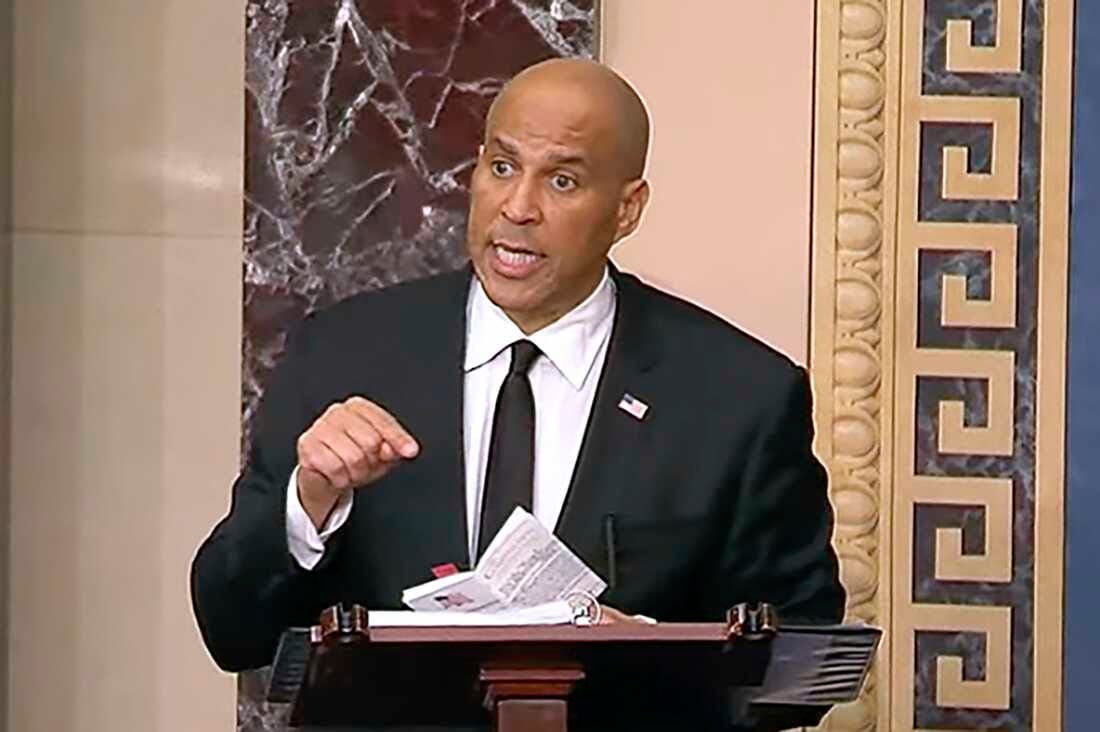
Senator Cory Booker Draws Firm Line on ICE Funding and Voting Legislation as National Debate Intensifies

New Jersey’s voice on the national stage is once again commanding attention as U.S. Senator Cory Booker delivers a forceful stance on two of the most consequential issues shaping the current political landscape: federal funding for Immigration and Customs Enforcement and the future of voting legislation tied to the controversial SAVE America Act. In a moment defined by heightened partisan tension and a prolonged Department of Homeland Security impasse, Booker’s remarks signal both a policy position and a broader ideological line that is resonating far beyond Washington.

Appearing on a nationally televised interview, Booker made clear that his position on ICE funding is unequivocal, stating that he will not support additional appropriations for what he characterized as an agency operating outside acceptable bounds. His refusal to back further funding reflects a growing faction within Democratic leadership that is demanding structural reforms before committing taxpayer dollars to enforcement operations. The statement lands at a critical juncture, as the Department of Homeland Security faces an extended shutdown exceeding five weeks, leaving lawmakers under increasing pressure to reach a resolution.

The standoff in Washington has been shaped by rapidly shifting negotiations, with Republican senators recently attempting to advance a narrower funding package that would exclude more polarizing provisions. However, momentum behind that approach quickly dissolved as Democratic leaders, including Booker, rejected proposals that did not sufficiently address concerns surrounding ICE oversight and broader immigration policy reforms. The resulting deadlock underscores the difficulty of forging consensus in a political environment where both sides are navigating internal divisions as well as external pressure from constituents.

At the same time, Booker has emerged as a prominent voice in the debate over voting rights legislation, particularly in response to the SAVE America Act, which has been championed by former President Donald Trump. While acknowledging support for voter identification measures—pointing to existing frameworks in New Jersey—Booker has drawn a sharp distinction between widely accepted safeguards and what he describes as restrictive policies that could limit access to the ballot.

Central to his argument is the concern that the proposed legislation would impose logistical barriers on voters, particularly in geographically expansive or rural regions. Booker amplified remarks made by Republican Senator Lisa Murkowski of Alaska, who warned that certain provisions could force voters to undertake significant travel simply to participate in elections. By highlighting bipartisan skepticism, Booker has sought to reframe the debate as one that transcends party lines and centers on the fundamental accessibility of democratic participation.

The rhetoric surrounding voter fraud has also become a focal point of Booker’s critique. He has emphasized that instances of in-person voter fraud remain exceedingly rare, challenging narratives that suggest widespread irregularities. In doing so, he positions the current legislative push as less about election security and more about shaping public perception of electoral integrity. His argument reflects a broader Democratic strategy aimed at countering claims that could undermine confidence in the voting process.

This debate is unfolding against a backdrop of increasingly polarized political discourse, where statements from national leaders carry significant weight in shaping public opinion. Booker’s comments on the potential consequences of restrictive voting measures—paired with his critique of efforts to cast doubt on election outcomes—highlight the stakes involved as lawmakers consider policies that could redefine how Americans engage with the electoral system.

Within New Jersey, Booker’s position reinforces the state’s longstanding emphasis on accessible voting practices and balanced regulatory frameworks. The Garden State has implemented voter ID requirements alongside measures designed to expand participation, including mail-in voting and early voting options. By referencing these systems, Booker underscores a model that he argues achieves security without sacrificing accessibility, offering a counterpoint to more restrictive proposals at the federal level.

The intersection of immigration policy and voting rights within this broader debate reflects the complexity of the current political moment. Both issues touch on fundamental questions about governance, accountability, and the role of federal institutions in shaping daily life. For Booker, the linkage is clear: policies that affect who can vote and how agencies operate must be evaluated through the lens of fairness, transparency, and long-term impact on democratic norms.

Coverage within the politics landscape continues to track these developments closely, as lawmakers navigate an environment where legislative outcomes are uncertain and public scrutiny remains intense. The ongoing DHS funding impasse, combined with the contentious debate over voting legislation, has created a scenario in which individual voices—particularly those of high-profile senators—play a critical role in shaping the direction of policy discussions.

As negotiations continue, the path forward remains unclear. Efforts to bridge the divide will require not only policy concessions but also a willingness to address the underlying concerns driving each side’s position. For Democrats, that includes demands for accountability and reform within federal agencies, while Republicans face pressure to balance security priorities with the need to maintain broad voter access.

Booker’s stance reflects a broader strategic positioning within the Democratic Party, one that seeks to align policy decisions with core principles around equity, access, and institutional oversight. His willingness to take a firm position on both ICE funding and voting legislation signals an approach that prioritizes long-term implications over short-term political expediency.

For New Jersey residents, these debates carry tangible significance. Federal policies on immigration enforcement and voting rights have direct and indirect effects on communities across the state, influencing everything from local governance to civic engagement. As one of the state’s most prominent political figures, Booker’s role in these discussions ensures that New Jersey remains at the center of national conversations about the future of American policy.

In a political climate defined by rapid developments and high stakes, the positions taken today will shape the contours of governance for years to come. Booker’s recent remarks offer a clear indication of where one influential voice stands, contributing to a broader dialogue that will ultimately determine how the nation addresses some of its most pressing challenges.

Summit Tower Rises in Newark: 46-Story Residential High-Rise Signals New Era of Urban Growth in Downtown

Newark’s skyline is once again entering a period of transformation as heavy construction officially gets underway on Summit Tower, a major residential development poised to redefine the city’s urban core. Rising at 200 Market Street in the heart of Downtown Newark, the project represents a significant milestone not only for the city’s ongoing revitalization but also for the broader trajectory of large-scale development across New Jersey. Positioned just steps from the Prudential Center and within one of the state’s most historically significant districts, Summit Tower is emerging as a symbol of Newark’s accelerating momentum as a destination for modern living, investment, and architectural ambition.

Developed by Newark-based KS Group, Summit Tower is the latest in a series of high-impact projects reshaping the city’s built environment. The site itself carries a layered history, having sat largely dormant for more than two decades before demolition cleared the way for this next phase of development. What was once an underutilized parcel is now the foundation for a vertical expansion that reflects both market demand and a renewed confidence in Newark’s future as a residential and commercial hub.

Designed by INOA Architects, the tower is set to rise more than 500 feet, delivering a commanding presence that will further define the city’s evolving skyline. While early approvals referenced a 41-story structure, the broader vision for Summit Tower aligns with a high-density, mixed-use development model that prioritizes both scale and livability. The project will introduce 514 residential units, with 20 percent designated as affordable housing, reinforcing Newark’s commitment to inclusive growth even as it attracts new investment and development.

The location of Summit Tower is particularly strategic. Situated in the Four Corners Historic District, the development exists at the intersection of Newark’s past and future. This district, recognized on both the National and New Jersey Register of Historic Places, has long been a focal point of civic and commercial activity. Integrating a modern high-rise into this context requires a careful balance of preservation and progress, a challenge that developers and designers are increasingly navigating as urban centers across the state continue to densify.

Beyond its residential offerings, Summit Tower is designed to function as a lifestyle-driven development. Planned amenities include a fitness center, resident lounges, recreational spaces such as a foosball area and golf simulator, and family-oriented features like a dedicated children’s room. These elements reflect a broader shift in residential design, where buildings are no longer simply places to live but comprehensive environments that support work, leisure, and community engagement.

The inclusion of ground-level retail along Edison Place further enhances the project’s integration into the surrounding neighborhood. This addition is expected to complement the growing collection of bars, restaurants, and entertainment venues that have emerged in recent years, particularly in the corridor surrounding the Prudential Center. As foot traffic increases and the area continues to evolve, Summit Tower is positioned to contribute to a vibrant, mixed-use streetscape that supports both residents and local businesses.

Parking infrastructure, often a critical consideration in urban developments, has also been incorporated into the plan, with 142 spaces allocated within the building. While the emphasis remains on walkability and proximity to transit, the inclusion of parking ensures that the development can accommodate a diverse range of resident needs, particularly in a city that continues to balance urban density with regional accessibility.

The construction timeline reflects both ambition and resilience. Although initial plans for a groundbreaking ceremony were delayed due to winter weather conditions, work on the site has now accelerated, signaling a clear commitment to bringing the project to life. While an official completion date has not yet been announced, the scale and complexity of the development suggest a multi-year buildout that will unfold in phases, gradually transforming the site into one of Newark’s most prominent residential addresses.

KS Group’s continued investment in Newark underscores a broader trend within the state’s construction sector, where developers are increasingly focusing on urban cores with strong infrastructure, transit access, and proximity to major economic centers. The firm’s portfolio already includes notable projects such as 50 Sussex and Central Pointe, and its pipeline features additional high-rise developments, including Nova Towers and Mulberry Pointe. Together, these projects illustrate a sustained commitment to Newark’s growth and a belief in its long-term potential as a competitive urban market.

The rise of Summit Tower also reflects changing demographics and housing preferences across New Jersey. As more individuals and families seek the convenience and connectivity of city living, demand for high-quality residential options in urban environments has intensified. Newark, with its strategic location and expanding amenities, is increasingly positioned to meet that demand, attracting residents who value both accessibility and a dynamic city lifestyle.

At a macro level, the project highlights the evolving relationship between development and economic vitality. Large-scale construction initiatives like Summit Tower generate not only housing but also jobs, investment, and increased activity across multiple sectors. From construction and design to retail and hospitality, the ripple effects of such developments contribute to a broader ecosystem of growth that extends well beyond the immediate footprint of the building itself.

As Summit Tower begins its ascent, it joins a growing list of projects that are collectively redefining Newark’s identity. The city is no longer viewed solely through the lens of its past but is increasingly recognized for its forward-looking vision and capacity for transformation. Developments of this scale serve as tangible indicators of that shift, demonstrating how strategic investment and thoughtful design can reshape urban landscapes and create new opportunities for residents and businesses alike.

In the months and years ahead, Summit Tower will stand as both a physical landmark and a representation of Newark’s continued evolution. Its construction marks not just the addition of another high-rise, but the continuation of a broader narrative—one in which New Jersey’s cities are embracing growth, innovation, and the possibilities of a more connected and dynamic future.

Collingswood Confronts Deepening School Funding Crisis as District Moves to Close Garfield Elementary and Restructure Programs

A profound financial reckoning is unfolding in Collingswood, New Jersey, where district leaders have announced a sweeping plan to close Garfield Elementary School while implementing staff reductions and program cuts in response to a $4.6 million budget shortfall. The decision marks a defining moment for the borough’s education system, reflecting not only immediate fiscal pressures but also years of structural imbalance that have steadily narrowed the district’s financial flexibility.

At the center of this crisis is a convergence of economic realities that have been building over more than a decade. District officials point to sustained increases in operational costs, reductions in federal funding streams, declining student enrollment, and ongoing shifts in New Jersey’s state aid formula as key drivers of the current deficit. Together, these forces have created a financial environment that leadership describes as unsustainable, leaving few options beyond significant structural changes.

The closure of Garfield Elementary represents one of the most visible and consequential components of the district’s response. For families and educators, the decision carries both logistical and emotional weight, as students will be reassigned and school communities reshaped. Beyond the immediate impact on those directly connected to Garfield, the move signals a broader recalibration of how educational resources are distributed across the district.

District leadership has acknowledged that these measures are not the result of a sudden downturn but rather the culmination of long-standing fiscal challenges. Collingswood Schools have operated with a structural budget deficit for approximately 13 years, a condition that has required repeated adjustments and short-term solutions. Compounding this issue, the state has indicated that for 17 years the district has relied on a below-adequate level of locally derived funding to support its operations, further limiting its ability to stabilize finances through traditional means.

The implications extend well beyond budgetary line items. Staffing reductions and program cuts inevitably affect the quality and scope of educational offerings, raising concerns among parents, educators, and community stakeholders about how to maintain academic excellence in a constrained environment. Extracurricular programs, specialized services, and classroom resources are all subject to reevaluation as the district works to align expenditures with available funding.

This situation also reflects broader trends within New Jersey’s education landscape, where districts across the state are navigating a complex interplay of funding formulas, demographic shifts, and rising costs. The evolving nature of state aid calculations has introduced new variables into local budgeting processes, often creating disparities between what districts receive and what they require to meet student needs. For communities like Collingswood, these changes have amplified existing vulnerabilities, accelerating the need for decisive action.

At the same time, declining enrollment has emerged as a significant factor in the district’s financial equation. Fewer students can translate into reduced funding allocations, while many fixed costs remain unchanged. This imbalance places additional strain on budgets, forcing districts to make difficult decisions about resource allocation and infrastructure utilization. The closure of an elementary school, while challenging, is often viewed as a necessary step in aligning facilities with current enrollment realities.

The conversation surrounding these changes is not occurring in isolation. Across the state, education leaders are increasingly focused on sustainability, equity, and long-term planning as they navigate similar challenges. The evolving coverage within the education sector highlights how districts are rethinking traditional models to adapt to new financial and demographic conditions. Collingswood’s situation serves as a case study in the complexities of balancing fiscal responsibility with the commitment to provide high-quality education.

Community response is expected to play a critical role in shaping the path forward. Public meetings, stakeholder engagement, and ongoing dialogue between district officials and residents will be essential in navigating the transition. Transparency and communication are key as families seek clarity on how changes will affect their children’s educational experience and what measures will be taken to preserve continuity and support.

Despite the challenges, district leadership has emphasized a commitment to maintaining educational standards and supporting students through the transition. Strategic planning efforts are focused on optimizing remaining resources, enhancing operational efficiency, and identifying opportunities to strengthen programs within the constraints of the new budget framework. The goal is not only to address the immediate deficit but also to establish a more sustainable financial model for the future.

The broader significance of this moment lies in what it reveals about the evolving realities of public education in New Jersey. Financial pressures are reshaping how districts operate, prompting a shift toward more adaptive, data-driven decision-making. While the closure of a school and the reduction of programs are difficult steps, they also reflect an effort to confront underlying issues directly rather than defer them further.

As Collingswood moves through this period of transition, the outcomes will likely influence conversations in other districts facing similar challenges. The balance between fiscal discipline and educational quality remains a central tension, one that requires careful navigation and a willingness to make difficult choices in pursuit of long-term stability.

In the months ahead, the focus will remain on implementation—how effectively the district can execute its plan while minimizing disruption and maintaining trust within the community. For students, families, and educators, the priority is clear: ensuring that despite the financial constraints, the core mission of education remains strong, resilient, and forward-looking in a rapidly changing environment.

Holmdel’s Vonage Expands AI-Powered Future with ServiceNow Integration, Redefining Enterprise Workflow and Customer Experience

New Jersey continues to solidify its role as a national leader in enterprise technology innovation, and the latest advancement from Holmdel-based Vonage—part of global telecommunications giant Ericsson—signals a significant leap forward in how businesses manage customer interactions and operational workflows. With the expansion of its strategic partnership with ServiceNow, Vonage has introduced a native integration with ServiceNow Voice built directly on the ServiceNow AI Platform, delivering a powerful convergence of voice communication, artificial intelligence, and real-time automation that is poised to reshape the enterprise landscape.

This announcement represents more than a technical upgrade; it marks a pivotal evolution in how organizations approach customer service management and IT service delivery. By embedding enterprise-grade voice capabilities directly into ServiceNow’s Customer Service Management (CSM) and IT Service Management (ITSM) environments, Vonage is eliminating long-standing inefficiencies that have traditionally required agents to move between disconnected systems. The result is a unified, intelligent workspace where communication and action occur simultaneously, streamlining operations and dramatically enhancing productivity.

At the core of this integration is Vonage Contact Center (VCC), a platform already recognized for its deep connectivity with leading customer relationship management tools. The addition of native voice integration within ServiceNow elevates that capability to a new level, enabling real-time AI-driven engagement that is both context-aware and operationally efficient. Calls are no longer isolated events; they become actionable data points that can automatically trigger incident categorization, initiate workflow automation through ServiceNow Flow Designer, and update resolution statuses instantly—all without requiring agents to step outside the platform.

For enterprises operating in today’s high-demand digital environment, this level of integration addresses a critical challenge: the fragmentation of customer data and communication channels. As organizations increasingly rely on AI to drive decision-making and automate processes, the quality and completeness of data become essential. By embedding high-quality voice interactions directly into ServiceNow workflows, Vonage ensures that generative AI tools, including ServiceNow’s Now Assist capabilities, have access to richer, more accurate context. This leads to more intelligent automation, faster issue resolution, and a more seamless customer experience.

The implications of this development extend far beyond technical efficiency. In a state like New Jersey, where proximity to major business hubs and a highly competitive corporate ecosystem demand constant innovation, solutions that enhance operational agility are invaluable. Companies across industries—from finance and healthcare to logistics and technology—are under pressure to deliver faster, more personalized service while managing increasingly complex workflows. The Vonage-ServiceNow integration offers a blueprint for meeting those demands by aligning communication, data, and automation into a single, cohesive system.

This advancement also reflects broader trends shaping the technology sector, where the convergence of AI and communication platforms is driving a new era of enterprise transformation. Businesses are no longer satisfied with siloed tools that require manual coordination; they are seeking integrated ecosystems that can adapt in real time, reduce friction, and deliver measurable outcomes. Vonage’s approach demonstrates how voice—a traditionally standalone channel—can be reimagined as a central component of an AI-driven workflow strategy.

From a user experience perspective, the benefits are immediate and tangible. Agents gain access to a unified interface that consolidates communication and operational tools, reducing cognitive load and enabling faster, more accurate responses. AI-driven insights provide guidance and automation at critical moments, allowing teams to focus on higher-value interactions rather than repetitive tasks. For customers, this translates into quicker resolutions, more consistent service, and a level of responsiveness that aligns with modern expectations.

Reggie Scales, president and head of Business Unit Applications at Vonage, emphasized the strategic importance of this integration, highlighting the company’s commitment to enhancing both agent productivity and customer engagement. By combining voice, digital channels, and AI within a single platform, Vonage is delivering a differentiated solution that addresses the evolving needs of enterprise workflow management.

The integration’s key capabilities—unified agent experiences, AI-driven productivity enhancements, seamless workflow automation, and enriched AI context—collectively represent a significant advancement in enterprise technology. Each element is designed to work in harmony, creating a system where data flows effortlessly, decisions are informed by real-time insights, and actions are executed with precision.

For New Jersey’s technology ecosystem, this development reinforces the state’s position as a hub for innovation and enterprise leadership. Holmdel’s legacy as a center for telecommunications excellence continues to evolve, with Vonage at the forefront of a new wave of digital transformation that is influencing industries on a global scale. The expansion of this partnership with ServiceNow not only enhances Vonage’s capabilities but also contributes to the broader narrative of New Jersey as a driver of cutting-edge technological solutions.

As enterprises continue to navigate the complexities of digital transformation, the integration of communication, AI, and workflow management will become increasingly critical. Solutions like the Vonage-ServiceNow integration demonstrate how these elements can be brought together to create systems that are not only more efficient but also more intelligent and adaptable.

In an era where speed, accuracy, and customer experience define competitive advantage, the ability to unify voice and AI within enterprise workflows is a game-changing development. Vonage’s latest innovation offers a glimpse into the future of business operations—one where technology works seamlessly behind the scenes, empowering organizations to deliver exceptional service while maintaining the agility needed to thrive in a rapidly evolving market.

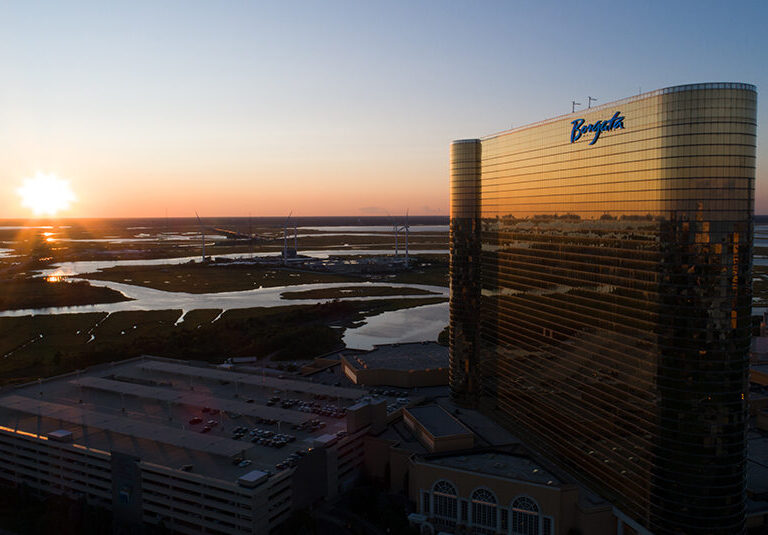
Borgata Atlantic City Launches Major Multi-Day Hiring Event to Power Summer 2026 Entertainment Season

Borgata Hotel Casino & Spa is once again setting the pace for Atlantic City’s dynamic entertainment and hospitality economy, announcing a multi-day hiring event designed to fuel one of the most anticipated summer seasons at the Shore. As one of the East Coast’s premier resort destinations, Borgata’s latest initiative is more than a seasonal recruitment push—it is a signal of continued growth, high-volume tourism demand, and a renewed investment in the workforce that powers New Jersey’s entertainment capital.

From March 30 through April 2, Borgata will open its doors to job seekers looking to step directly into the energy of Atlantic City’s peak season, offering immediate access to hiring managers across key operational departments. This focused, multi-day event will take place at the Central Conference Center on the property’s upper level at 1 Borgata Way in Atlantic City, creating a streamlined, professional environment where candidates can engage face-to-face with decision-makers in real time. The structure of the event reflects Borgata’s commitment to efficiency and precision, with each day dedicated to specific roles, ensuring that applicants are matched with the right opportunities based on their experience and career goals.

The hiring schedule is carefully organized to align with the resort’s most in-demand positions. Security officers will be recruited on March 30 from 2 p.m. to 6 p.m., followed by bartenders on March 31 from 9 a.m. to noon and beverage servers later that same day from 2 p.m. to 6 p.m. Culinary talent will take center stage on April 1, with cooks interviewed from 9 a.m. to noon and kitchen stewards from 2 p.m. to 5 p.m. The final day, April 2, will focus on environmental services roles from 9 a.m. to noon, rounding out a comprehensive staffing effort designed to support every facet of Borgata’s high-performance summer operations.

This hiring event underscores the scale and sophistication of Borgata’s seasonal infrastructure. From its award-winning restaurants and nightlife venues to its expansive gaming floor and luxury accommodations, every aspect of the resort depends on a highly coordinated team. The ability to bring in seasonal professionals across food and beverage, security, and environmental services ensures that Borgata can maintain its elevated service standards during periods of peak demand.

For job seekers, the opportunity extends beyond seasonal employment. Borgata has long been recognized as a gateway to long-term careers within hospitality, gaming, and entertainment. By offering direct access to hiring managers, this event creates a rare opportunity for candidates to make immediate impressions, accelerate the hiring process, and position themselves within one of the most respected brands in the industry. Applicants are required to pre-register and maintain an active job application prior to attending, reinforcing the company’s structured and professional approach to recruitment.

The announcement also aligns with broader momentum across the state’s entertainment scene, where Atlantic City continues to evolve as a year-round destination for live events, dining, nightlife, and immersive experiences. Borgata remains at the center of that evolution, consistently investing in both its physical spaces and its operational capabilities to meet rising expectations from visitors across the region and beyond.

Adding to that momentum is Borgata’s previously announced redevelopment of the former Premier Nightclub space into a new 18,000-square-foot entertainment venue. This forthcoming addition signals a continued expansion of Atlantic City’s nightlife and live entertainment footprint, positioning Borgata to capture even greater audience demand while enhancing the overall visitor experience. The hiring event, in this context, is not an isolated initiative—it is part of a larger strategy to scale operations in tandem with new attractions and increased guest volume.

Atlantic City’s summer economy depends heavily on institutions like Borgata that can deliver both consistency and innovation. By proactively building its seasonal workforce, the resort ensures that it is not only prepared for the influx of visitors but also capable of delivering the high-caliber service that defines its brand. This forward-thinking approach reinforces Borgata’s leadership role within New Jersey’s hospitality sector and highlights the importance of workforce development as a cornerstone of sustained growth.

As the summer season approaches, this multi-day hiring event stands as one of the most significant employment opportunities in the region, offering candidates a direct pathway into the heart of Atlantic City’s entertainment ecosystem. With a combination of strategic timing, targeted recruitment, and long-term vision, Borgata is once again demonstrating why it remains a driving force in shaping the future of entertainment, hospitality, and economic vitality across New Jersey.

Nationwide Medical Billing Launches AI-Powered Enterprise RCM Services in Westwood, New Jersey, Redefining Healthcare Operations

Nationwide Medical Billing has officially entered a new era of healthcare operations in New Jersey with the launch of its AI-driven, enterprise-grade medical billing and revenue cycle management (RCM) services, establishing a strategic presence in Westwood and signaling a significant advancement in how healthcare providers across the region manage financial performance, administrative workflows, and patient engagement. This announcement represents more than a company expansion—it reflects a broader shift toward intelligent automation, predictive analytics, and precision-driven healthcare administration that is rapidly redefining the operational backbone of medical practices, specialty clinics, and health systems throughout New Jersey and beyond.

At a time when healthcare providers are navigating increasingly complex reimbursement models, regulatory requirements, and patient expectations, the introduction of advanced AI-powered billing infrastructure offers a critical advantage. Nationwide Medical Billing’s new platform is designed to streamline every phase of the revenue cycle, from patient intake and insurance verification to coding accuracy, claims submission, denial management, and final payment reconciliation. By integrating machine learning algorithms with real-time data processing, the company positions itself at the forefront of a transformation that reduces administrative burden while maximizing financial outcomes for providers.

The decision to launch operations in Westwood is both strategic and symbolic. Bergen County has long served as a hub for healthcare innovation, with a dense concentration of medical practices, outpatient centers, and specialty providers seeking scalable, technology-forward solutions. By embedding itself in this ecosystem, Nationwide Medical Billing is aligning with a region that is actively embracing modernization in healthcare delivery, particularly in areas tied to operational efficiency and patient-centered care. This move strengthens New Jersey’s growing reputation as a leader in digital health infrastructure and reinforces the state’s commitment to advancing healthcare accessibility and sustainability.

Central to the company’s offering is its enterprise-grade AI engine, which is engineered to identify inefficiencies and optimize billing performance at a granular level. Unlike traditional billing systems that rely heavily on manual input and retrospective corrections, this platform proactively analyzes patterns in claims data, flags potential errors before submission, and adapts to payer-specific requirements in real time. The result is a measurable reduction in claim denials, faster reimbursement cycles, and a significant improvement in overall revenue capture. For healthcare providers operating on tight margins, these efficiencies translate directly into stronger financial stability and the ability to reinvest in patient care.

Equally important is the platform’s impact on administrative workload. Healthcare professionals across New Jersey have long faced the challenge of balancing patient care with the demands of documentation, billing compliance, and insurance navigation. By automating routine processes and introducing intelligent workflows, Nationwide Medical Billing enables providers to redirect their focus toward clinical outcomes and patient experience. This shift is particularly relevant in the context of the state’s expanding health and wellness landscape, where practices are increasingly integrating holistic services, preventive care, and personalized treatment plans that require more time and attention from medical staff.

The launch also aligns with broader trends highlighted across New Jersey’s health and wellness sector, where innovation is not limited to clinical treatments but extends into the operational frameworks that support them. From wellness centers and integrative health practices to advanced outpatient facilities, there is a growing recognition that administrative efficiency is a critical component of delivering high-quality care. AI-powered RCM solutions like those introduced by Nationwide Medical Billing are becoming essential tools in this ecosystem, enabling providers to scale their services while maintaining accuracy, compliance, and financial transparency.

Another defining feature of the company’s new offering is its emphasis on data-driven decision-making. The platform provides healthcare organizations with detailed analytics dashboards that offer insights into billing performance, payer trends, patient payment behaviors, and operational bottlenecks. These insights empower providers to make informed strategic decisions, whether that involves adjusting service offerings, renegotiating payer contracts, or implementing new patient engagement strategies. In an industry where margins can be influenced by subtle shifts in reimbursement patterns, access to real-time intelligence is a transformative advantage.

Patient experience is also a key focus of the new system. As healthcare consumers become more informed and engaged, expectations around billing transparency and ease of payment have evolved. Nationwide Medical Billing addresses this by integrating user-friendly patient portals, clear billing statements, and flexible payment options that reduce confusion and improve satisfaction. By simplifying the financial aspect of care, providers can strengthen trust and foster long-term patient relationships, which are essential in today’s competitive healthcare environment.

The introduction of AI enterprise-grade RCM services in Westwood arrives at a pivotal moment for New Jersey’s healthcare industry. As the state continues to expand its network of medical facilities and wellness providers, the demand for scalable, efficient, and intelligent administrative solutions will only intensify. Nationwide Medical Billing’s entry into this space not only meets that demand but sets a new benchmark for what healthcare operations can achieve when powered by advanced technology.

This launch underscores a fundamental evolution in how healthcare organizations approach their business infrastructure. No longer viewed as a back-office function, revenue cycle management is emerging as a strategic pillar that directly influences growth, sustainability, and patient outcomes. By leveraging AI to enhance accuracy, speed, and insight, Nationwide Medical Billing is helping to redefine the standard for operational excellence in New Jersey’s healthcare sector.

As providers across the state continue to adapt to changing economic pressures, regulatory landscapes, and patient expectations, solutions that combine technological sophistication with practical application will be essential. The arrival of Nationwide Medical Billing’s AI-driven services in Westwood signals a forward-looking approach that aligns with the future of healthcare—one where innovation, efficiency, and patient-centered care are seamlessly integrated into every aspect of the system.

KickCharge® Creative Unveils KickCharge One: A Unified Marketing Engine Transforming the Home Service Industry

In a decisive move that reflects both the acceleration of digital transformation and the growing complexity of modern customer acquisition, KickCharge® Creative has introduced KickCharge One, a fully integrated marketing solution designed to consolidate every essential brand, digital, and growth function into a single, cohesive platform for the home service industry. At a time when contractors, HVAC specialists, plumbers, electricians, and trade professionals are under increasing pressure to compete in an increasingly digital-first marketplace, this launch signals a strategic shift toward simplification, scalability, and performance-driven marketing execution.

KickCharge® Creative has long established itself as a dominant force in branding and marketing for the trades, building a reputation around high-impact visual identity systems, conversion-focused digital strategies, and a deep understanding of the operational realities of service-based businesses. With the introduction of KickCharge One, the company is moving beyond traditional agency services and into a unified model that addresses the fragmented nature of marketing workflows that have historically slowed growth for contractors across New Jersey and nationwide.

The core value proposition behind KickCharge One is both straightforward and transformative: eliminate the inefficiencies of juggling multiple vendors, disconnected platforms, and inconsistent brand messaging by delivering a single source of truth for all marketing needs. From brand development and website design to search optimization, paid media, content strategy, and ongoing performance management, the platform is engineered to provide a seamless, end-to-end solution that aligns every touchpoint of a company’s marketing ecosystem.

This approach arrives at a critical moment for the home services sector in New Jersey, where competition has intensified across virtually every vertical. As more consumers rely on digital channels to discover, evaluate, and select service providers, the margin for error in online visibility and brand perception has narrowed considerably. Businesses that fail to present a cohesive, professional, and easily discoverable presence risk being overshadowed by competitors who have embraced more advanced marketing infrastructures.

KickCharge One directly addresses these challenges by integrating strategy and execution into a unified framework. Rather than treating branding, web development, SEO, and advertising as separate disciplines, the platform operates on the principle that each component must work in concert to drive measurable results. This alignment ensures that a contractor’s brand identity reinforces their digital presence, that their website converts traffic efficiently, and that their marketing campaigns are continuously optimized based on real-time data and performance insights.

The implications for New Jersey-based businesses are particularly significant. The state’s dense population, diverse housing stock, and proximity to major metropolitan markets create both opportunity and complexity for service providers. Contractors must not only stand out locally but also compete against regional and national players with substantial marketing budgets. KickCharge One’s unified model provides a pathway for leveling that playing field, enabling smaller and mid-sized businesses to operate with the sophistication and consistency typically associated with larger enterprises.

Beyond its operational efficiencies, the platform reflects broader trends emerging across the technology landscape, where consolidation and integration are becoming key drivers of innovation. Businesses are increasingly seeking solutions that reduce friction, streamline decision-making, and deliver actionable insights without requiring extensive technical expertise. KickCharge One embodies this shift by offering a system that is not only comprehensive but also accessible, allowing business owners to focus on their core operations while maintaining confidence in their marketing performance.

The launch also underscores a growing recognition that branding and digital marketing are no longer optional enhancements but foundational elements of business success. In the home services industry, where trust and reputation are paramount, a strong brand identity combined with a high-performing digital presence can directly influence customer acquisition, retention, and long-term growth. KickCharge One’s integrated approach ensures that these elements are not developed in isolation but are strategically aligned to support a company’s overall objectives.

From a strategic standpoint, the introduction of KickCharge One represents an evolution in how marketing services are conceptualized and delivered. It challenges the traditional agency model by emphasizing continuity, accountability, and measurable outcomes over fragmented, project-based engagements. Clients are no longer navigating a patchwork of solutions but are instead operating within a unified system designed to adapt and scale alongside their business.

For New Jersey’s home service professionals, this shift arrives at a time when adaptability is essential. Changing consumer expectations, advances in digital technology, and increased competition are reshaping the industry at a rapid pace. Companies that can respond with agility, maintain a strong brand presence, and leverage data-driven strategies will be best positioned to thrive in this environment.

KickCharge® Creative’s introduction of KickCharge One is more than a product launch—it is a strategic response to the evolving demands of the marketplace. By consolidating the essential components of modern marketing into a single, integrated solution, the company is providing a blueprint for how service-based businesses can achieve sustainable growth in an increasingly complex digital landscape.

As the home services industry continues to modernize, solutions like KickCharge One are poised to redefine expectations around what effective marketing looks like. For businesses across New Jersey and beyond, the message is clear: success in today’s market is no longer about doing more marketing, but about doing it smarter, more cohesively, and with a level of precision that turns visibility into measurable, lasting growth.

New Jersey’s Local Moving Boom: Safeway Moving Reports Surge as Residents Relocate Within the State

The dynamics of moving in New Jersey are evolving rapidly, and one of the clearest signals of that shift is the growing demand for local moving services across the state. According to Safeway Moving, more residents are choosing to relocate within New Jersey rather than leave it altogether—a trend that is reshaping not only the moving industry but also the way communities expand, neighborhoods transform, and local economies strengthen.

This surge in intrastate movement reflects a broader recalibration of how people are thinking about where—and how—they live. Rather than chasing opportunities across state lines, many New Jersey residents are finding new value in staying close to home while upgrading their living situations. Whether it’s moving from dense urban centers to quieter suburban enclaves, downsizing within the same county, or relocating closer to employment hubs, the demand for efficient, trustworthy local movers has reached a new level of urgency.

Safeway Moving’s recent observations underscore a key reality: local moves are no longer a secondary segment of the industry. They are becoming a primary driver of business, fueled by a population that is actively reshuffling within state borders. This is particularly evident in regions with strong infrastructure, proximity to major metropolitan areas like New York City and Philadelphia, and access to essential services that support long-term residential stability.

As communities across New Jersey continue to develop, the availability of reliable moving services is becoming a central factor in how and where people choose to relocate. Residents are prioritizing convenience, accessibility, and quality of life—seeking out areas where transitions can be handled smoothly and efficiently. The ability to move with confidence, knowing logistics will be handled professionally, is now a key part of the decision-making process for individuals and families alike.

The connection between local moving trends and community growth is not coincidental. As housing developments expand and neighborhoods continue to evolve, they create a steady flow of relocation activity. Families and individuals are drawn to areas that offer both opportunity and livability, and that movement fuels demand for movers who understand the nuances of local geography—from navigating tight city streets to coordinating logistics in sprawling suburban developments.

Safeway Moving’s emphasis on reliability and experience speaks directly to the expectations of today’s New Jersey residents. Local moves may cover shorter distances, but they are often more complex in execution. Timing becomes critical, particularly in high-density areas where building regulations, parking limitations, and traffic patterns can complicate even the simplest relocation. Customers are seeking movers who can deliver precision, efficiency, and peace of mind—qualities that are no longer optional but essential in a competitive market.

What’s particularly notable is how this trend aligns with broader economic patterns across the state. New Jersey continues to attract investment in housing, infrastructure, and business development, creating a cycle of growth that encourages residents to remain within its borders. As new developments emerge and established communities evolve, the need for local moving services will only intensify. Safeway Moving’s data suggests that this is not a temporary spike but a sustained shift in consumer behavior.

For the moving industry, this represents both an opportunity and a challenge. Companies must adapt to a clientele that is more informed, more selective, and more focused on service quality than ever before. Technology, customer service, and operational efficiency are becoming key differentiators. At the same time, maintaining a strong understanding of local markets—down to specific neighborhoods and their unique characteristics—has never been more valuable.

For residents, the implications are equally significant. The ability to move seamlessly within New Jersey opens up new possibilities for lifestyle changes without the disruption of leaving the state. It allows individuals and families to remain connected to their communities while still pursuing new opportunities, whether that means a larger home, a shorter commute, or access to better amenities and local resources.

As this trend continues to gain momentum, it is clear that local moving is no longer just a logistical service—it is a critical component of how New Jersey grows and adapts. Safeway Moving’s insights offer a window into a state in motion, where residents are actively redefining what it means to live well within its borders. The demand for skilled, dependable movers is a direct reflection of that evolution, signaling a future where staying local is not just practical, but increasingly preferred.

New Jersey Devils Open Crucial Southern Road Stretch in Dallas as Dougie Hamilton Hits 900-Game Milestone

DALLAS, TX — The next phase of the New Jersey Devils’ season begins under the bright lights of Texas, where urgency, identity, and opportunity collide in a defining moment of their campaign. As the Devils continue their five-game road trip with the first of three matchups against Southern Conference opponents, tonight’s clash against the Dallas Stars is more than just another stop—it is a measuring stick, a test of adaptability, and a chance to solidify momentum at a critical juncture.

With an 8:08 p.m. puck drop at American Airlines Center, New Jersey enters the matchup carrying both confidence and pressure. The team has quietly assembled a strong stretch of play, going 7-3-0 over its last ten games, yet remains on the outside of the playoff picture in a tightly contested Metropolitan Division. Every shift, every adjustment, and every result now carries amplified significance.

For a franchise followed closely across Explore New Jersey’s dedicated New Jersey Devils coverage, this road swing represents a pivotal storyline—one that could define how the remainder of the season unfolds.

The immediate challenge is clear. Dallas is not just another opponent; it is a team built on structure, discipline, and defensive precision. With one of the league’s strongest home records and a system designed to eliminate high-danger chances, the Stars force opponents to rethink how they generate offense. For a Devils team that thrives on speed and transition, that presents a tactical dilemma.

Head coach Sheldon Keefe has made it clear that adaptation—not reinvention—is the key. The Devils are not abandoning their identity, but they are refining it. Against teams that shut down the rush and clog the neutral zone, the emphasis shifts toward patience, puck placement, and sustained pressure.

That evolution was already visible in their recent performance against Washington. Rather than forcing plays through traffic, New Jersey leaned into a more deliberate approach—dumping pucks deep, establishing possession, and generating chances through layered offensive sequences. It is a style that may not always produce immediate highlights, but it creates the kind of consistent pressure needed to break down elite defensive teams like Dallas.

Forward Connor Brown emphasized that shift, pointing to the team’s growing ability to adjust within games. The Devils are learning when to attack with speed and when to slow the pace, using their forecheck as a weapon rather than a fallback.

That concept—forechecking as an offensive asset—is central to how New Jersey plans to approach this matchup. Against a Stars team that excels at protecting the middle of the ice and limiting clean entries, offensive opportunities will not come easily. They will have to be earned below the dots, through puck battles, sustained zone time, and second-chance efforts.

At the same time, the Devils remain confident in their core identity. This is still a team built on skill, creativity, and pace. The challenge is not to abandon that DNA, but to deploy it more selectively—choosing the right moments to attack while maintaining discipline in all three zones.

That balance becomes even more critical when considering the statistical contrasts between these two teams. New Jersey ranks among the league leaders in shots per game, consistently generating volume, yet has struggled with finishing efficiency. Dallas, by comparison, produces fewer shots but converts at a significantly higher rate, reflected in a substantial positive goal differential.

It is a classic clash of quantity versus efficiency, and tonight’s outcome may hinge on which approach prevails.

Adding another layer to the evening is a major individual milestone for one of New Jersey’s most important players. Defenseman Dougie Hamilton is set to appear in the 900th game of his NHL career—a testament to durability, consistency, and elite-level performance over time.

For Hamilton, the milestone underscores a career defined not just by longevity, but by impact. As a cornerstone of the Devils’ blue line, he continues to log heavy minutes, contribute offensively, and anchor a defensive unit that is still evolving. His presence on the ice provides both stability and production, making him a critical piece in matchups like this one.

Within the locker room, the respect for that achievement is evident. Teammates recognize the grind required to reach such a milestone—the physical toll, the mental resilience, and the daily commitment to preparation that defines a long NHL career. For a team pushing toward the next level, having a veteran presence like Hamilton is invaluable.

On the ice, the Devils are expected to maintain lineup consistency, with Jake Allen projected to start in goal. The forward group remains anchored by a mix of established stars and emerging contributors, including Nico Hischier, Jack Hughes, Jesper Bratt, and Timo Meier, while the defensive corps continues to rely on a blend of experience and youth.

Hughes, in particular, enters the game as one of the hottest players in the league, tallying 10 points in his last five games. His ability to create offense, both individually and as a playmaker, will be a focal point against a Dallas defense designed to limit exactly that kind of production.

For the Stars, the offensive threat is led by Jason Robertson, whose scoring consistency and finishing ability have made him one of the most dangerous players in the NHL. His presence alone demands attention, adding another layer of complexity to New Jersey’s defensive responsibilities.

Beyond individual matchups, the game carries several key indicators that could shape the outcome. Both teams are nearly unbeatable when leading after two periods, underscoring the importance of early execution. Dallas thrives when scoring first, while New Jersey has struggled to recover when trailing—a dynamic that places heightened emphasis on the opening minutes.

Special teams could also play a decisive role. The Devils’ discipline has been among the best in the league, committing the fewest penalty minutes per game. However, they face a Dallas power play that ranks among the NHL’s elite, capable of capitalizing quickly on any opportunity.

All of these elements converge to create a game that is as much about structure and decision-making as it is about talent. For the Devils, success will require a complete performance—one that blends patience with aggression, discipline with creativity, and execution with adaptability.

As this southern road trip continues with stops in Nashville and Carolina, the stakes will only intensify. Each game represents an opportunity to close the gap in the standings, to build on recent momentum, and to reinforce the identity that this team is still shaping.

Tonight in Dallas, that process takes center stage. The opponent is formidable, the environment is challenging, and the margin for error is slim. But for a Devils team that believes it is trending in the right direction, this is exactly the kind of test that defines who they are—and who they are becoming.

In a season where every point matters and every adjustment counts, the road ahead starts here.

“Take Back New Jersey” Rally Draws Statewide Attention as Immigration Policy Debate Intensifies in Trenton

A significant political moment unfolded in Trenton on the morning of March 23, 2026, as lawmakers, activists, and residents gathered on the steps of the New Jersey State House Annex for the “Take Back New Jersey” rally, an event that quickly became a focal point in the state’s ongoing debate over immigration policy, public safety, and the role of government in shaping enforcement priorities. Organized by Assemblyman Paul Kanitra, the rally was positioned as both a protest and a call to action, aimed squarely at three legislative proposals that critics argue would fundamentally reshape how New Jersey interacts with federal immigration enforcement and internal data practices.

The timing and location of the rally were deliberate. Held at 11:00 AM in the center of New Jersey’s political infrastructure, the event placed its message directly in front of lawmakers and policymakers at a moment when legislative decisions are actively being considered. This was not a symbolic gathering removed from the process, it was an attempt to influence it in real time, reinforcing how public demonstrations continue to play a role in shaping policy conversations across the state. Coverage and analysis across Sunset Daily News Politics reflect how events like this are becoming increasingly central to understanding New Jersey’s evolving political climate.

At the core of the rally were three specific legislative proposals that have generated strong reactions from multiple sides of the political spectrum. The first centers on restricting local law enforcement from assisting federal immigration authorities in civil enforcement actions. Supporters of the rally framed this proposal as a limitation on cooperation that could, in their view, impact public safety and reduce the effectiveness of coordinated enforcement efforts. The second proposal involves limiting the ability of healthcare providers to collect information related to a patient’s immigration status, a measure that advocates say is intended to ensure access to care without fear, while critics argue it could create gaps in data that influence policy decisions. The third issue raised at the rally focused on the perceived financial implications of these policies, with speakers asserting that the cumulative effect could place additional burdens on taxpayers.

The event brought together a diverse lineup of speakers, each contributing a different perspective to the broader argument being presented. Among them were individuals known as “Angel Moms,” including Agnes Gibboney and Anne Fundner, who shared personal stories of loss connected to crimes and drug-related issues that they associate with illegal immigration. Their presence underscored the emotional dimension of the debate, highlighting how policy discussions often intersect with deeply personal experiences.

Jeremy Beck, co-president of NumbersUSA, added a data-driven component to the conversation, offering statistics and analysis intended to support the rally’s central claims about the impact of sanctuary-style policies. Representatives from organizations such as Turning Point USA and Moms for Liberty, including Jarrett Branch and Alex Bougher, contributed perspectives that emphasized broader concerns about governance, accountability, and the direction of state policy. Media voices were also represented, with Mike Currie of the Wake Up NJ podcast addressing the crowd and reinforcing the role of independent platforms in shaping political discourse.

What made the rally particularly notable was not just the range of speakers, but the consistency of the message. Across different backgrounds and areas of focus, participants returned to a central theme, that the proposed legislation represents a shift in priorities that warrants public scrutiny and debate. This alignment reflects a broader trend in New Jersey politics, where coalition-building around specific issues is becoming increasingly visible, particularly in moments when legislative action is imminent.

At the same time, the issues raised at the rally exist within a larger and more complex policy framework. Immigration enforcement, healthcare access, and data collection are all areas where legal, ethical, and practical considerations intersect. Supporters of the proposed bills argue that measures limiting cooperation with federal authorities and protecting patient information are essential for maintaining trust within communities and ensuring that individuals feel safe accessing services. Opponents, as reflected in the rally, contend that these policies may have unintended consequences that affect safety, transparency, and fiscal responsibility.

This dynamic illustrates the broader challenge facing policymakers in New Jersey. Balancing competing priorities, public safety, individual rights, economic impact, and community trust requires navigating a landscape where clear answers are often elusive. Events like the “Take Back New Jersey” rally bring these tensions into sharp focus, providing a platform for one side of the debate while also prompting further discussion across the political spectrum.

The location of the rally, at the State House Annex, serves as a reminder of how closely connected public advocacy and legislative action have become. In New Jersey, as in many states, the proximity of civic engagement to policymaking creates an environment where voices from outside government can directly influence the conversation inside it. Whether through rallies, public hearings, or direct communication with elected officials, the feedback loop between constituents and lawmakers remains a defining feature of the state’s political process.

As the legislative session continues, the impact of this rally will be measured not only by attendance or visibility, but by how it shapes the trajectory of the bills in question. Will lawmakers adjust their approach in response to public pressure, or will they proceed with the proposals as originally drafted? Will additional voices emerge to support or challenge the positions presented at the rally? These are the questions that will define the next phase of this issue.

What is clear is that New Jersey’s political environment remains highly engaged and actively contested. The “Take Back New Jersey” rally is one example of how that engagement is expressed, bringing together individuals, organizations, and ideas in a setting designed to influence outcomes. As debates over immigration policy and related issues continue to unfold, events like this will remain a central part of the conversation, shaping not only what policies are enacted, but how they are understood by the public.

In a state where policy decisions carry immediate and tangible consequences for residents, businesses, and communities, the intersection of advocacy and legislation is not just a backdrop, it is the main stage. And on March 23 in Trenton, that stage was fully in use, reflecting both the intensity of the issues at hand and the ongoing evolution of New Jersey’s political landscape.

New Jersey Weather Outlook: Spring Takes Hold as Temperatures Swing, Storm Systems Pass, and a Milder Pattern Emerges Across the Garden State

New Jersey’s transition into spring is unfolding in real time, and this week’s weather pattern offers a clear look at how atmospheric dynamics are shaping conditions across the region. A largely zonal flow at the upper levels of the atmosphere is setting the tone, creating a sequence of temperature swings, passing fronts, and evolving pressure systems that will carry the state from a brief cooldown into a much more pronounced spring-like stretch. As highlighted across Sunset Daily Weather, even weather trends are increasingly relevant to business activity, commuting patterns, and regional planning, making this week’s forecast more than just a daily update, it is part of a broader operational landscape across New Jersey.

At approximately 250 millibars, the jet stream is maintaining a relatively flat, west-to-east orientation, but subtle shifts within that pattern are driving meaningful changes at the surface. Early in the week, a slight dip in the jet stream is lowering atmospheric heights, allowing cooler air to filter into the region. This aligns with the passage of a high-pressure system that is influencing conditions through midweek. The leading edge of that system is pulling colder air southward, reinforcing a cooler feel across the state through Wednesday.

By late week, the pattern begins to reverse. A gradual rise in the jet stream lifts atmospheric heights, and the backside of the high-pressure system introduces a warmer air mass from the south. This transition is expected to produce a noticeable warming trend, particularly on Thursday and Friday, before another frontal boundary moves through and resets conditions heading into the weekend. These oscillations are typical of late March in New Jersey, where winter’s residual influence competes with the advancing energy of spring.

The week began with a cold front that brought rain across much of the state overnight and into the early morning hours. As that system exits, conditions improve, but the pattern remains active. The next meaningful chance for precipitation arrives late in the week, as another cold front approaches on Friday. This system is expected to bring additional rain, followed by a return to cooler temperatures for the weekend.

From a day-to-day perspective, Monday sets the tone with cooler conditions statewide. High temperatures are expected to reach the mid-to-upper 40s, with a few locations briefly touching the low 50s. Cloud cover dominates much of the day, particularly in the morning as lingering rain gives way to gradual clearing by late afternoon and evening. Winds begin light but increase out of the north and northwest, adding a noticeable chill. Overnight temperatures drop to around 30 degrees across much of New Jersey, with a persistent breeze carrying into Tuesday.

Tuesday brings a modest rebound, though temperatures remain seasonably cool. Highs climb to around 50 degrees for most inland areas, with coastal regions holding in the mid-40s. Skies feature a mix of sun and clouds, and winds, while breezy in the morning, ease as the day progresses, shifting to a lighter west-northwest flow. Overnight lows settle into the 30s and low 40s, marking a gradual moderation compared to the previous night.

By Wednesday, the warming trend becomes more apparent. Temperatures rise into the mid-to-upper 50s across the state, supported by a shift in wind direction to the south and southwest. Skies remain partly cloudy, and while the day is largely dry, there is a slight chance of a passing shower overnight as moisture begins to increase ahead of the next system. Overnight lows hold in the 40 to 45 degree range, reflecting the influence of the incoming warmer air mass.

Thursday stands out as the warmest day of the week, offering a preview of the spring conditions that are beginning to take hold. High temperatures approach 70 degrees in many locations, with parts of central and southern New Jersey potentially reaching the mid-70s away from the moderating influence of the ocean. Northern elevations and coastal areas remain slightly cooler, generally in the 60s. Skies continue to feature a mix of sun and clouds, with somewhat greater cloud cover in northern areas. Winds remain light out of the southwest, and overnight temperatures stay mild, ranging from the low to mid-50s, as the next round of showers begins to move in.

Friday introduces the next shift, as a cold front brings renewed chances for rain and a drop in temperatures. Highs fall back into the mid-to-upper 50s, with some locations briefly reaching 60 degrees. Skies turn mostly cloudy, and winds shift to the north and northwest behind the front. Overnight temperatures drop sharply, ranging from the mid-20s in northern areas to the mid-30s in southern parts of the state, setting up a cooler weekend.

Looking ahead to the weekend, conditions stabilize but remain below average for late March. High temperatures are expected to stay primarily in the 40s, with a few spots reaching just above 50 degrees. Despite the cooler air, both Saturday and Sunday appear dry, offering a break from the active pattern that defines the workweek.

Beyond the immediate forecast, longer-range signals suggest a more sustained warming trend as April begins. Persistent ridging across the eastern United States between April 1 and April 7 is expected to support milder temperatures at the surface, reinforcing the transition into a more consistent spring pattern. While forecasting beyond this window carries greater uncertainty, the overall trajectory points toward improving conditions and a gradual departure from winter’s influence.

Notably, there are no significant indicators of late-season snowfall in the current outlook. As March comes to a close, the likelihood of meaningful snow events diminishes rapidly. While isolated, non-accumulating snow or mixed precipitation can occasionally occur in higher elevations of northern New Jersey during April, such events are rare and typically short-lived. The concept of a true synoptic snowstorm at this stage of the season is even more uncommon, making it increasingly likely that the state will move forward without another winter weather event.

In practical terms, this means that New Jersey is entering the final phase of its seasonal transition. The fluctuations of this week, from cooler early conditions to a brief warm surge and back to a weekend cooldown, are characteristic of this period. They serve as a bridge between the colder months and the more stable, warmer patterns that define spring.

For residents, businesses, and communities across the state, this evolving weather pattern carries both immediate and longer-term implications. From planning outdoor activities to managing operations that are sensitive to temperature and precipitation, understanding these shifts is essential. As the atmosphere continues to adjust, one thing is becoming increasingly clear, spring is no longer just a date on the calendar, it is beginning to take hold across New Jersey.

Marigold Academy Expands Into Cedar Grove, Signaling Continued Growth in New Jersey’s Early Childhood Education Sector

New Jersey’s education and business landscapes are intersecting in increasingly dynamic ways, and the latest expansion from Marigold Academy underscores how early childhood education is becoming one of the most strategically important sectors in the state’s broader economic framework. With a new franchise partnership set to bring its signature model to Cedar Grove, Marigold Academy is not simply opening another location, it is extending a rapidly growing footprint that reflects both rising demand and evolving expectations among families seeking high-quality, modern early learning environments.

This expansion arrives at a time when New Jersey’s business ecosystem is being reshaped by sectors that blend service, community, and long-term value creation. As highlighted across Sunset Daily News Business, growth is increasingly being driven by organizations that address foundational needs, and few needs are more critical than early childhood development. Marigold Academy’s continued expansion positions it squarely within that trajectory, offering a model that aligns educational philosophy with operational scalability and community integration.

At the core of Marigold Academy’s approach is a concept that resonates strongly with today’s parents, a nurturing, home-away-from-home environment combined with a structured, play-based curriculum designed to support both academic readiness and social development. This is not a traditional daycare model. It is an intentionally designed early education framework that prioritizes emotional well-being, cognitive growth, and experiential learning in equal measure. By creating environments where children feel secure, engaged, and encouraged to explore, the academy is responding to a shift in parental expectations that has been building for years.

The Cedar Grove location represents a strategic entry into a community that reflects many of the characteristics driving demand for this type of offering. With a strong base of families, proximity to major employment centers, and a growing emphasis on educational quality, Cedar Grove provides an ideal setting for a concept that thrives on both accessibility and reputation. The franchise partnership model further amplifies this alignment, allowing local operators to bring community-specific insight while maintaining the standards and structure that define the Marigold brand.

This dual approach, combining centralized curriculum and brand identity with localized ownership, has become a defining feature of successful franchise expansion in New Jersey. It enables rapid growth without sacrificing consistency, ensuring that each new location delivers the same level of quality while also adapting to the unique needs of its surrounding community. For Marigold Academy, this means that the Cedar Grove facility will not only reflect the company’s established philosophy, but also integrate seamlessly into the local educational and social landscape.

The broader implications of this expansion extend beyond education. Early childhood centers play a critical role in supporting workforce participation, particularly for families with young children. By providing reliable, high-quality care and education, facilities like Marigold Academy enable parents to engage more fully in their professional lives, contributing to economic productivity and stability. This connection between education and economic development is increasingly recognized at both the state and local levels, reinforcing the importance of continued investment in this sector.

From a business perspective, the expansion also highlights the strength of franchise-driven growth models in New Jersey. The state’s diverse population, strong infrastructure, and proximity to major metropolitan areas create an environment where well-executed franchise concepts can scale effectively. Marigold Academy’s ability to secure new partnerships and enter new markets is a reflection of both brand strength and market opportunity, signaling confidence among investors and operators who see long-term potential in the concept.

The design and programming of the Cedar Grove location are expected to reflect the hallmarks that have defined Marigold Academy’s growth to date. Thoughtfully designed classrooms, age-appropriate learning materials, and a curriculum that emphasizes exploration and creativity are central to the experience. At the same time, operational elements such as safety protocols, staff training, and parent communication systems are structured to meet the highest standards, ensuring that families not only choose the academy, but remain engaged over time.

This focus on retention and community building is critical. In the early childhood education space, trust is the primary currency. Families are not simply selecting a service, they are choosing an environment that will play a formative role in their child’s development. By consistently delivering on its promise of a supportive, enriching experience, Marigold Academy is building a reputation that extends beyond individual locations, creating a network of trust that supports continued expansion.

As the Cedar Grove location prepares to open, it does so within a competitive but opportunity-rich landscape. Demand for early childhood education remains strong, driven by demographic trends, workforce dynamics, and an increasing awareness of the importance of early learning. At the same time, the sector is becoming more sophisticated, with providers differentiating themselves through curriculum design, facility quality, and community engagement. Marigold Academy’s model positions it well within this environment, offering a balance of innovation and reliability that appeals to modern families.

The expansion also reinforces a broader narrative about New Jersey’s economic direction. Growth is not confined to traditional industries or large-scale corporate developments. It is happening at the community level, through businesses that address everyday needs while contributing to long-term societal outcomes. Early childhood education sits at the intersection of these priorities, making it a focal point for both investment and innovation.

As Marigold Academy continues to build its presence across the state, each new location adds to a larger story, one that reflects the evolving relationship between education, business, and community. The Cedar Grove partnership is the latest chapter in that story, a development that not only expands access to high-quality early learning, but also underscores the role of thoughtful, well-executed business models in shaping New Jersey’s future.

In a state defined by its ability to adapt and grow, the expansion of Marigold Academy stands as a clear example of how targeted investment, strategic partnerships, and a commitment to quality can come together to create lasting impact.

Strive Marlton Grand Opening Signals a New Era for South Jersey’s Flexible Workspace Economy

South Jersey’s business landscape continues to evolve at a rapid pace, and the arrival of Strive Marlton marks a decisive step forward in how professionals, entrepreneurs, and growing companies define where and how they work. Strive Workspaces is officially introducing its newest location in the heart of Marlton with a grand opening celebration in partnership with the Chamber of Commerce of Southern New Jersey, positioning the space not simply as another office option, but as a strategic hub for collaboration, productivity, and modern business growth in one of the region’s most active commercial corridors.

This launch is more than a ribbon cutting. It reflects a broader shift that has been gaining traction across New Jersey, where the demand for flexible, high-quality work environments is accelerating. As traditional office models continue to adapt to changing workforce expectations, coworking spaces like Strive Marlton are emerging as a critical solution, offering businesses the ability to scale, connect, and operate efficiently without the constraints of long-term leases or rigid infrastructure. Coverage across Sunset Daily News Business has consistently highlighted this transition, with flexible workspace models increasingly becoming a defining feature of the state’s economic development strategy.

Strive Marlton is entering the market at a moment when location matters as much as flexibility. Marlton, situated within the greater Burlington County and South Jersey business ecosystem, has long served as a strategic node for commerce, offering proximity to major highways, access to regional markets, and a growing base of small and mid-sized businesses. By establishing a presence here, Strive Workspaces is aligning itself with a community that is already primed for expansion and innovation, while also contributing to the continued elevation of the area as a destination for forward-thinking companies.

The grand opening event, structured as an open house, is designed to showcase not just the physical space, but the philosophy behind it. Attendees will have the opportunity to explore a workspace environment that has been intentionally designed to balance functionality with experience. From private offices and dedicated desks to shared coworking areas and meeting rooms, every element of the space reflects an understanding of how modern professionals operate. It is not about providing square footage, it is about creating an environment that supports focus, collaboration, and adaptability in equal measure.

What sets Strive Marlton apart is its emphasis on community integration. The partnership with the Chamber of Commerce of Southern New Jersey is not incidental, it is foundational. By aligning with one of the region’s most influential business organizations, Strive is embedding itself directly into the local economic fabric, creating opportunities for networking, partnerships, and knowledge exchange that extend beyond the walls of the workspace itself. This approach transforms the location from a passive office provider into an active participant in the region’s business ecosystem.

This model reflects a larger trend across the coworking sector, where success is increasingly defined by the strength of the community within the space, not just the amenities offered. Businesses today are looking for environments that provide access to ideas, talent, and opportunities, and coworking spaces that can deliver on those expectations are becoming essential infrastructure for growth. Strive Marlton is positioning itself squarely within that category, offering not just a place to work, but a platform for connection and advancement.

The timing of this expansion is particularly significant. As companies reassess their operational strategies in a post-traditional office environment, flexibility has moved from being a perk to a necessity. Entrepreneurs and small businesses are seeking cost-effective solutions that allow them to maintain professionalism without overextending resources. Larger organizations are exploring hybrid models that require satellite locations capable of supporting distributed teams. Strive Marlton addresses both needs, providing a scalable solution that adapts to a wide range of business models.

Beyond the immediate benefits to its members, the opening of Strive Marlton contributes to the broader economic vitality of the region. Coworking spaces have a multiplier effect, attracting professionals who in turn support local restaurants, retailers, and service providers. They also create a pipeline for new businesses, offering startups a launchpad that reduces barriers to entry and accelerates growth. In this way, the impact of a single workspace extends far beyond its footprint, influencing the surrounding community in tangible and measurable ways.

The design and execution of Strive Marlton also reflect a growing emphasis on experience-driven work environments. Modern professionals expect more than desks and conference rooms, they expect spaces that inspire productivity, support well-being, and reflect the pace of contemporary business. By delivering on these expectations, Strive is not only meeting current demand, it is anticipating where the market is heading.

As the open house approaches, anticipation is building within the South Jersey business community. Events like this serve as both a celebration and a signal, a moment to recognize progress while also setting the stage for what comes next. For Strive Workspaces, this is an opportunity to introduce its vision to a new audience. For Marlton and the surrounding region, it is another step in the ongoing transformation of how business is conducted, where innovation is nurtured, and how communities grow.

In a state where economic momentum is increasingly driven by adaptability and forward-thinking infrastructure, the opening of Strive Marlton stands out as a meaningful development. It captures the essence of where New Jersey’s business environment is heading, toward flexibility, connectivity, and a renewed focus on creating spaces that work as hard as the people who use them.

Urban Crystal Garden Transforms Hoboken Into an Immersive Light and Sound Playground

HOBOKEN, NJ — A new kind of public experience has arrived on the Hudson waterfront, and it is redefining how residents and visitors engage with art, space, and one another. The Hoboken Business Alliance, in collaboration with LeMonde Studio, has introduced Urban Crystal Garden—an interactive installation that blends sculpture, sound design, and illuminated technology into a living, participatory environment in the heart of the city.

At first glance, the installation presents itself as a striking visual centerpiece: six sculptural crystal forms, each engineered to catch ambient light during the day and radiate an entirely different presence after sunset. But Urban Crystal Garden is not meant to be passively admired. It is built to be activated. Each crystal invites direct interaction, encouraging passersby to step forward, engage physically, and become part of the experience itself.

By turning a wheel integrated into each structure, participants trigger a responsive system of light and sound. The result is immediate and immersive—colors shift, tones emerge, and the installation comes alive in a way that is unique to each interaction. No two engagements are identical. The environment evolves continuously, shaped by the movement and curiosity of those who encounter it.

This approach signals a deliberate shift in how public art is being conceived and deployed across New Jersey. Urban Crystal Garden is not simply an installation placed within a space; it is a dynamic system embedded into the rhythm of Hoboken’s streetscape. It reflects a growing emphasis on experiential design—art that invites participation, fosters connection, and transforms everyday environments into destinations.

For Hoboken, a city already known for its walkability and dense cultural footprint, the installation adds a new layer to its identity. Positioned within a high-traffic urban corridor, Urban Crystal Garden seamlessly integrates into the flow of daily life while offering a moment of discovery. Commuters, families, and visitors alike are drawn into the experience, often stopping unexpectedly to engage, experiment, and share in the collective atmosphere.

The timing of the installation aligns with a broader movement across the state to elevate accessible, outdoor experiences that blend creativity with community engagement. As highlighted across Explore New Jersey’s coverage of curated destinations and interactive attractions found within the activities & fun space, there is a clear and growing demand for experiences that go beyond traditional recreation. Visitors are seeking environments that are not only visually compelling but also participatory and memorable—spaces where they can engage directly rather than observe from a distance.

Urban Crystal Garden meets that demand with precision. It operates at the intersection of art, technology, and urban design, delivering an experience that is both intuitive and sophisticated. The tactile element—the simple act of turning a wheel—bridges the gap between viewer and creator, allowing each participant to influence the environment in real time. This accessibility is key to the installation’s success. There are no barriers, no instructions required beyond instinct. The design invites exploration naturally, making it equally engaging for children, adults, and first-time visitors to Hoboken.

As night falls, the installation reaches its full potential. The crystals transition into luminous anchors within the cityscape, casting vibrant colors and layered soundscapes that shift with each interaction. The visual effect is both striking and fluid, transforming the surrounding area into a kind of open-air gallery that feels alive with motion and energy. It is in these moments that Urban Crystal Garden distinguishes itself not just as an art piece, but as a shared experience—one that draws people together in a way that is organic and unscripted.

The collaboration between the Hoboken Business Alliance and LeMonde Studio underscores a strategic commitment to placemaking—using creative installations to enhance public spaces, drive foot traffic, and elevate the overall experience of the city. Initiatives like this are not isolated events; they are part of a broader vision to position Hoboken as a hub for innovative, community-driven programming that resonates with both residents and visitors.

For Explore New Jersey audiences, Urban Crystal Garden represents exactly the kind of forward-thinking attraction that defines the state’s evolving cultural landscape. It is accessible, immersive, and rooted in a sense of place that feels distinctly local while also tapping into global trends in experiential design. It complements the expanding portfolio of destinations across New Jersey that prioritize engagement, creativity, and shared experiences—whether through outdoor installations, seasonal events, or interactive exhibits.

What makes this installation particularly compelling is its ability to exist simultaneously as art, entertainment, and community infrastructure. It does not require a ticket or a scheduled visit. It is woven into the fabric of the city, available to anyone who passes through, and continuously redefined by those who choose to interact with it. In this way, Urban Crystal Garden becomes more than a temporary attraction—it becomes part of Hoboken’s identity, even if only for a moment in time.

As New Jersey continues to invest in experiences that bring people together in meaningful ways, projects like Urban Crystal Garden set a new benchmark. They demonstrate how thoughtful design and creative vision can transform public spaces into destinations that inspire curiosity, connection, and repeat engagement.

In Hoboken, that transformation is already underway. The crystals are glowing, the sound is evolving, and the city has gained a new focal point—one that invites everyone to step forward, engage, and become part of something larger than themselves.

New Jersey Expands Access to Capital as NJEDA Awards Funding to Seven New Micro Business Lenders Under Main Street Initiative

New Jersey’s economic engine is being reinforced at its foundation, as the New Jersey Economic Development Authority moves aggressively to expand access to capital for the state’s smallest, most agile, and often most underserved businesses. In a major development announced on March 23, seven new micro business lenders have been awarded funding through the Main Street Lenders Grant program, a targeted initiative designed to unlock growth, fuel entrepreneurship, and strengthen local economies across the state. This latest round of funding is not just an incremental update, it represents a meaningful expansion of a program that is already reshaping how small businesses access financing in New Jersey’s evolving business landscape.

At a time when access to affordable capital remains one of the most persistent barriers for micro businesses, defined as companies with fewer than ten full-time employees and less than $1.5 million in annual revenue, the Main Street Lenders Grant program is addressing the problem with precision. By empowering lenders with up to $1.5 million each, including dedicated allocations for technical assistance, the program ensures that funding is not only available, but accessible, navigable, and aligned with the realities of running a small business in today’s economy.

The results to date underscore the program’s impact. More than 250 loans totaling over $8.8 million have already been deployed, supporting nearly 3,000 small businesses throughout New Jersey. These are not abstract numbers. They represent storefronts that stayed open, startups that gained traction, and local employers that were able to hire, retain, and expand. In a state where small businesses are a critical driver of economic activity, the ability to scale this kind of support has far-reaching implications.

What distinguishes the Main Street Lenders Grant program from traditional financing models is its structure. Participating lenders are not simply distributing capital, they are providing a full spectrum of support that includes one-on-one advisory services, educational programming, and customized guidance tailored to each business’s specific needs. This approach recognizes a fundamental truth, access to money alone is not enough. For many micro business owners, particularly those operating in underserved or disadvantaged communities, the ability to navigate financial systems, understand lending requirements, and build sustainable growth strategies is just as important as the capital itself.

The newly funded lenders reflect a diverse and strategically selected group of institutions, each bringing a unique reach and specialization to the program. Organizations such as Ascendus, Inc. and Grow America are offering loans ranging from $10,000 to $100,000, with terms designed to remain manageable and interest rates capped at 5 percent. Carver Federal Savings Bank and Renaissance Economic Development Corporation are targeting smaller loan ranges while maintaining flexible structures that accommodate a wide variety of business models. Cumberland Empowerment Zone Corporation is focusing on both for-profit and nonprofit enterprises, with loan tiers that adapt based on collateral requirements. Invest Newark is directing resources toward home-based businesses, startups, and sole proprietors within one of the state’s most dynamic urban centers. TruFund Financial Services is prioritizing businesses operating in low- to moderate-income areas, ensuring that the program reaches communities where capital gaps are often most pronounced.

This layered approach is intentional. It ensures that no single segment of the micro business ecosystem is left out, and that funding is distributed in a way that reflects the geographic and economic diversity of New Jersey. From urban corridors to suburban hubs and rural communities, the program is designed to meet businesses where they are, both literally and operationally.

The terms of the loans themselves are structured to remove common barriers that often discourage small business owners from seeking financing. With no prepayment penalties, interest rates capped at 5 percent, and deferred payments for at least 12 months after closing, the program creates a financial environment that prioritizes stability and growth over immediate repayment pressure. This is particularly critical for businesses in early stages or those recovering from economic disruptions, where cash flow management can determine long-term viability.

Equally important is the flexibility in how these funds can be used. Eligible expenses include equipment purchases, payroll, marketing, inventory, rent or mortgage payments, utilities, and other day-to-day operational costs. This breadth of allowable use acknowledges the reality that small businesses do not operate within narrow financial categories. Their needs are dynamic, and effective support must reflect that complexity.

The broader significance of this initiative becomes even clearer when viewed within the context of New Jersey’s overall business strategy. As highlighted across Sunset Daily News Business, the state has been actively positioning itself as a hub for innovation, entrepreneurship, and inclusive economic growth. Programs like the Main Street Lenders Grant are a critical component of that strategy, ensuring that growth is not confined to large corporations or established industries, but is instead distributed across the full spectrum of the business community.

For policymakers and economic development leaders, the program represents a scalable model for addressing one of the most persistent challenges in small business development. By combining capital access with technical support and community-based lending, it creates a framework that can adapt to changing economic conditions while maintaining a consistent focus on inclusion and opportunity.

For business owners, the impact is more immediate and tangible. It is the difference between delaying an expansion and moving forward with confidence. It is the ability to invest in new equipment, hire additional staff, or launch a marketing campaign that drives revenue. It is, in many cases, the foundation upon which long-term success is built.

As the seven newly funded lenders begin accepting applications, the next phase of the program is already underway. Demand is expected to remain strong, particularly as awareness continues to grow and as more businesses recognize the advantages of working with lenders who understand their specific challenges and opportunities.

In a competitive and rapidly evolving economic environment, access to the right resources at the right time can define outcomes. New Jersey’s latest move through the NJEDA is not just about providing those resources, it is about structuring them in a way that maximizes impact, supports sustainability, and reinforces the state’s commitment to building an economy that works from the ground up.

This is how real economic momentum is created, not through isolated initiatives, but through coordinated efforts that align policy, capital, and community. And with this latest expansion of the Main Street Lenders Grant program, New Jersey is making it clear that its investment in small business is not slowing down, it is accelerating.

Berkeley Heights Is Redefining Destination Living as Six New Retail and Dining Concepts Arrive at The Park This Summer

Berkeley Heights is entering a defining chapter in its evolution, as The Park continues its transformation from a traditional corporate campus into one of New Jersey’s most ambitious mixed-use destinations. This summer, that transformation accelerates in a visible and consumer-facing way, with six new retail, dining, wellness, and lifestyle concepts set to open within The District at The Park, a rapidly emerging walkable downtown designed to merge everyday living with curated experiences. As momentum builds across the state’s real estate sector, developments like this are not just projects, they are signals of where New Jersey is headed next, and why communities like Berkeley Heights are becoming central to that conversation.

At the core of this expansion is The District at The Park, a 60-acre centerpiece within the broader 185-acre campus that is being reimagined with a long-term vision in mind. This is not incremental development. It is a comprehensive repositioning of land that once served a singular purpose into a dynamic, multi-dimensional environment where residential, commercial, hospitality, and lifestyle elements converge. With plans for 160,000 square feet of retail and restaurant space, alongside residential units and experiential offerings, the District is being built to function as a true downtown, one that reflects how people live, work, and spend time today.

Beginning in July, the next phase of that vision comes into focus with a curated group of six new tenants that collectively represent the direction of modern retail. These are not generic additions. Each concept has been selected to contribute to a broader ecosystem, one that prioritizes variety, quality, and relevance to the surrounding community. Among the incoming food and beverage offerings, Four Spoons Ice Cream Company brings a family-owned, locally grounded approach that aligns with the growing demand for authentic, small-batch experiences. Doner Shack introduces Mediterranean-inspired street food, adding an international flavor profile that reflects the diversification of New Jersey’s dining scene. Cafe Exchange rounds out the trio with a hybrid concept that blends premium coffee, food, and wine, positioning itself as both a daytime anchor and an evening destination.

Beyond dining, the expansion signals a broader shift toward lifestyle integration. Prime IV Hydration & Wellness is set to open a spa-like facility focused on IV vitamin infusions, a concept that reflects the increasing intersection between wellness and retail. This is part of a larger trend across New Jersey’s real estate landscape, where tenants are no longer limited to traditional categories but instead represent services that enhance daily living and personal health. Dogtopia adds another layer to that ecosystem, offering dog daycare, boarding, and spa services, a clear acknowledgment of the role pets play in modern households and the demand for high-quality care solutions.

Completing the lineup is a flagship location for Greatness Wins, an athletic apparel brand co-founded by Chris Riccobono, Derek Jeter, and Misty Copeland. Its presence at The District is not just about retail, it is about brand positioning. By choosing Berkeley Heights as the site for a flagship, the company is aligning itself with a development that is designed to attract a discerning, experience-driven audience. This kind of tenant selection reinforces the idea that The Park is not simply filling space, it is building a destination with intent.

The scale of this transformation is rooted in a long-term investment strategy. Originally developed in the 1980s as Connell Corporate Park, the site has undergone a deliberate and substantial redevelopment effort since 2019, backed by a $500 million commitment from The Connell Company. That investment has already produced a range of assets, including a 176-room Embassy Suites hotel, a Lifetime Fitness facility, and more than 1.5 million square feet of office and coworking space designed around the concept of a “work resort.” The addition of residential units and a fully realized retail district completes the vision of a self-contained environment where multiple aspects of daily life intersect seamlessly.

What makes this project particularly significant within the broader New Jersey real estate landscape is how it reflects changing expectations. Traditional office parks, once defined by single-use zoning and limited engagement beyond working hours, are being reimagined into mixed-use environments that prioritize accessibility, walkability, and community interaction. The Park is not alone in this shift, but it is among the most comprehensive examples currently underway, and its continued expansion places it firmly at the forefront of the state’s development pipeline. Coverage across Sunset Daily News Real Estate continues to highlight how projects like this are reshaping both suburban and urban markets across New Jersey.

The leasing strategy behind The District also underscores its momentum. Working alongside Capricorn Retail Advisors, The Connell Company has already secured agreements for approximately 37,000 square feet of retail space, with additional partnerships in progress. This level of pre-leasing activity signals strong market confidence, both from tenants seeking high-quality locations and from developers committed to building environments that support long-term success. The goal is not just occupancy, it is cohesion, a tenant mix that complements itself and creates a consistent, engaging experience for visitors and residents alike.

For Berkeley Heights, the impact of this development extends beyond the immediate footprint of The Park. It introduces a new model for how suburban communities can evolve without losing their identity, blending the convenience and energy of urban environments with the space and accessibility that define suburban living. It also positions the township as a destination in its own right, attracting visitors, businesses, and residents who are looking for something more than traditional retail corridors or isolated office complexes.

As the summer opening approaches, The District at The Park stands as a tangible example of where New Jersey real estate is heading. It is experiential, integrated, and designed with a clear understanding of how people interact with space today. The arrival of these six new concepts is not the culmination of that vision, it is the next step in a larger trajectory, one that continues to unfold with each phase of development.

In a state where competition for attention, investment, and foot traffic is increasingly intense, projects that deliver both scale and substance stand out. The Park is doing exactly that, and as its next chapter comes into view, Berkeley Heights is not just participating in New Jersey’s growth story, it is helping to define it.

New Jersey Resets Its Federal Prosecutorial Leadership as Robert Frazer Steps In, A Defining Moment for Law, Order, and Political Accountability

New Jersey’s federal law enforcement apparatus has entered a new phase, one defined not by uncertainty or procedural conflict, but by an attempt to restore operational stability after a prolonged period of disruption. The appointment of Robert Frazer as interim U.S. Attorney for the District of New Jersey marks a pivotal reset, not only for the office itself, but for the broader political and legal environment across the state. In a move that reflects both urgency and institutional necessity, federal district judges exercised their authority to install a seasoned insider, a career prosecutor with more than two decades of experience, signaling a decisive shift away from what had become an extended period of internal turbulence.

Frazer’s elevation to the role is not merely administrative. It is corrective. For more than a year, the office tasked with enforcing federal law across New Jersey has been defined by instability, legal challenges, and a leadership vacuum that raised concerns among legal professionals, policymakers, and the public alike. The appointment represents a deliberate effort to return the office to its core function, prosecuting federal crimes, safeguarding constitutional rights, and ensuring that justice is administered consistently and credibly throughout the state.

The significance of this moment is amplified by the context in which it occurs. The process leading up to Frazer’s appointment has been anything but routine. The absence of a confirmed U.S. Attorney nominee for over 14 months created a leadership gap that reverberated across ongoing cases and internal operations. Attempts to fill that gap through unconventional means were repeatedly challenged in federal court, resulting in rulings that underscored the importance of adhering to established legal frameworks. These rulings did more than resolve procedural disputes, they reinforced the foundational principle that the rule of law governs not just the public, but the mechanisms of government itself.

In stepping into this role, Frazer brings institutional knowledge that few candidates could match. His tenure within the office, most recently as senior trial counsel, positions him as both a continuity figure and a stabilizing force. He is not entering an unfamiliar environment, he is assuming leadership within a system he has helped shape, understand, and navigate for decades. That familiarity is expected to translate into immediate operational effectiveness, a critical factor at a time when the office must move quickly to reestablish confidence and momentum.

The response from New Jersey’s federal lawmakers reflects both relief and frustration. U.S. Senators Cory Booker and Andy Kim publicly supported the court’s decision, emphasizing the necessity of restoring functional leadership to an office that plays a central role in public safety and legal accountability. At the same time, their statements highlighted deeper concerns about the breakdown in the traditional appointment process, a process designed to ensure that key legal positions are filled through collaboration, vetting, and Senate confirmation.

Their critique speaks to a broader tension within the current political landscape, one where procedural norms are increasingly tested against strategic considerations. The appointment of a U.S. Attorney is not a ceremonial act, it is a constitutional function with direct implications for how justice is pursued and administered. When that process is disrupted, the consequences extend beyond politics, they impact the day-to-day functioning of the legal system.

For New Jersey residents, the implications of this transition are both immediate and far-reaching. The U.S. Attorney’s Office is responsible for prosecuting a wide range of federal offenses, from violent crime and drug trafficking to public corruption and civil rights violations. Its effectiveness directly influences the safety, fairness, and integrity of the communities it serves. Restoring stability to this office is therefore not an abstract goal, it is a practical necessity that affects real lives across the state.

Frazer’s leadership will be measured not only by his ability to manage cases, but by his capacity to rebuild trust within and outside the office. That includes fostering collaboration with federal agencies, coordinating with state and local law enforcement, and ensuring that prosecutorial decisions are guided by evidence and legal standards rather than external pressures. It also involves navigating a politically charged environment where every action is subject to scrutiny, interpretation, and, at times, criticism.

The broader political narrative surrounding this appointment cannot be ignored. New Jersey has long been a focal point for discussions about governance, accountability, and institutional integrity. The events leading up to Frazer’s appointment have added another layer to that narrative, one that underscores the importance of maintaining clear boundaries between political strategy and legal responsibility. The courts’ intervention in this case serves as a reminder that those boundaries are not optional, they are enforceable.

At the same time, this moment offers an opportunity for recalibration. With a seasoned professional now at the helm, the U.S. Attorney’s Office has the chance to move beyond the disputes that have defined it in recent months and refocus on its mission. That mission is not partisan, it is procedural. It is rooted in the consistent application of federal law, the protection of individual rights, and the pursuit of justice in a manner that is both fair and transparent.

The appointment also sends a signal to the broader legal community. Stability, competence, and adherence to process remain central to the functioning of the justice system. While political dynamics may shift, the underlying structures that support the rule of law are designed to endure, and when necessary, to correct course.

As New Jersey moves forward, the focus will inevitably shift from how this appointment came about to what it produces. The success of Frazer’s tenure will be evaluated through outcomes, successful prosecutions, effective collaboration, and the restoration of confidence in an office that plays a critical role in the state’s legal ecosystem. The expectation is not perfection, but consistency, clarity, and a return to operational normalcy.

In a state that often finds itself at the intersection of national and local political currents, this development stands out as a moment where institutional mechanisms functioned as intended. Faced with prolonged uncertainty, the system responded, authority was exercised, and leadership was established.

For New Jersey, that is more than a procedural update. It is a reset, one that carries implications for law enforcement, governance, and the ongoing effort to ensure that the administration of justice remains steady, credible, and aligned with the principles it is meant to uphold.

NJ Spotlight News Special Election Spotlight: New Jersey’s 11th Congressional District Becomes a High-Stakes Test of Messaging, Momentum, and Political Reality

New Jersey’s 11th Congressional District is once again at the center of a consequential political moment, as voters prepare to decide who will fill a vacant seat in a special election scheduled for April 16. What might otherwise be a routine off-cycle contest has quickly evolved into something far more significant, a live referendum on political messaging, party alignment, and the direction of voter sentiment in a state that has long served as a microcosm of national political trends. As highlighted in a recent feature on NJ Spotlight News, journalist Joanna Gagis brings into focus a race that is drawing attention well beyond district lines, with Republican Joe Hathaway and Democrat Analilia Mejia stepping into a contest that carries implications extending into 2027 and beyond. Watch Now!

The stakes are unusually high for a seat that will be held for less than two years. The winner of this April election will serve through January 2027, but the symbolic and strategic value of the outcome is immediate. For Republicans, it represents an opportunity to extend momentum following recent electoral gains and reinforce a narrative of continued expansion into districts that were once considered reliably Democratic. For Democrats, it is a test of whether recalibration efforts are taking hold, or whether the same vulnerabilities that surfaced in recent cycles continue to persist in real time.

The 11th District itself is uniquely positioned for this kind of political confrontation. Historically competitive, with a mix of suburban voters, working families, and highly engaged civic communities, the district reflects the evolving priorities of a broader electorate that is increasingly less predictable and more responsive to immediate concerns. This is not a district where messaging can rely on legacy assumptions. It demands precision, clarity, and an ability to connect directly with voters who are evaluating candidates not just on ideology, but on perceived effectiveness and relevance.

Joe Hathaway enters the race with a campaign that is centered on directness and clarity, two attributes that have become increasingly valuable in a fragmented media environment. His approach reflects a broader Republican strategy that prioritizes concise communication, strong positioning on economic and public safety issues, and a willingness to engage in high-visibility media spaces where voters are already paying attention. This is not incidental. It is strategic, and it aligns with a larger pattern of candidates who understand that visibility and message discipline are now inseparable from electoral success. Watch Now!

Analilia Mejia, representing the Democratic side of the race, carries a different set of expectations, along with the weight of a party that is actively working to reestablish alignment with key voter blocs. Her campaign is operating within a context that requires more than traditional outreach. It requires a recalibration of how issues are framed, how priorities are communicated, and how authenticity is conveyed in an environment where voters are increasingly skeptical of political language that feels disconnected from their daily experience.

What makes this race particularly compelling is not just the contrast between the candidates, but the broader narrative it represents. This is not simply a contest between two individuals. It is a real-time test of competing theories about what voters are responding to in 2026. Are they prioritizing economic messaging above all else, or are broader social and institutional themes still resonating? Are they rewarding clarity and decisiveness, or are they still open to more layered, policy-driven communication? These are not abstract questions. They are being answered, in measurable terms, through voter turnout and ballot choices.

The timing of the election adds another layer of urgency. Special elections often serve as early indicators of political momentum, offering insights into how parties are performing outside the traditional November cycle. They can reveal shifts in enthusiasm, engagement, and organizational effectiveness that are not always visible in polling alone. For New Jersey’s 11th District, this means that April 16 is not just about filling a seat. It is about signaling direction. Watch Now!

The role of media coverage in shaping this moment cannot be overlooked. Platforms like NJ Spotlight News provide a critical space for candidates to articulate their positions and for voters to evaluate those positions in a structured format. Joanna Gagis’s conversation with Hathaway and Mejia underscores the importance of direct engagement, where candidates are required to move beyond campaign slogans and address the specific concerns of the district. In an era where soundbites often dominate, these longer-form discussions offer a clearer view into how candidates think, how they respond under pressure, and how effectively they communicate their priorities.

For voters in the 11th District, the decision ahead is both immediate and consequential. The individual they choose will represent them in Congress for the remainder of the term, but the implications of that choice extend further. It will influence how each party approaches future races, how resources are allocated, and how messaging strategies are refined in the months leading up to larger electoral contests.

This is where the race transcends its geographic boundaries. Political observers across the state, and indeed across the country, are watching closely. The outcome will be analyzed not just for who wins, but for how they win, which messages resonated, which strategies proved effective, and which assumptions were challenged.

New Jersey has long been a proving ground for political narratives, a place where national trends are tested against local realities. The 11th Congressional District special election is the latest chapter in that ongoing story, one that continues to evolve with each cycle. As April 16 approaches, the focus sharpens, the messaging intensifies, and the voters ultimately decide which vision aligns most closely with their expectations.

In a political environment defined by rapid shifts and heightened scrutiny, one thing remains constant. Elections are the clearest expression of voter intent. And in New Jersey’s 11th District, that expression is about to take center stage. Watch Now!

The Democrats Still Sound Out of Touch even as of today in March 2026

Corporations Are People, My Friend – Read on SubstackFollow on Substack

There is a persistent disconnect in American politics right now, and it is not subtle because it is still playing out in real time, in interviews, in messaging, and in the way certain political figures continue to interpret a country that has already made it clear they are not aligned with its priorities. The most striking part is not just the disconnect itself, but the fact that it continues despite recent electoral outcomes that should have forced a reset, let alone people like me pointing it out at the top of our lungs.

People do not seem to mind when politicians and world leaders admit to behavior like saying they can grab women inappropriately, or when they express a lack of empathy around serious issues like when someone dies, and yet the Democrats, even with all of that going on, still managed to lose in 2024. Not only did they lose, they lost control of all three branches of government, which is hard to do.

Now they complain, and they continue to think that Americans “get it” and do not want to deal with people who are mean. You cannot be farther from that statement, considering that is how the GOP won all three branches of government, which again is hard to lose. You have to be terrible at your jobs and completely out of touch, and a case in point is today. Watch the current media cycle closely and the pattern becomes obvious. Appearances meant to project leadership instead reinforce a deeper issue, a failure to read the room.

Take today’s commentary from Cory Booker on Morning Joe. In discussing the tone of American politics, Booker leaned into a familiar theme that Americans are looking for less hostility, less division, and more decency in public discourse. On its surface, that sounds reasonable. It sounds like something that should resonate. But the problem is not the sentiment, it is the timing and the context in which it is delivered.

Because the electorate has already responded, and it did not respond in a way that validates that message.

Invoking moments like John McCain defending Barack Obama as a “good man” during a campaign event is meant to highlight a higher standard of political conduct. But it also raises a more uncomfortable question: if that model of politics was truly what voters prioritized above all else, why has the political environment evolved in the opposite direction? Most importantly, how did that work out for John McCain? He lost that election. Why are candidates who embrace confrontation, bluntness, and aggression not only viable, but also successful?

This is where the messaging breaks down. It is not that voters reject civility entirely. It is that they are not prioritizing it over economic pressure, institutional distrust, or a sense that the system is not working for them. When political leaders emphasize tone while voters are focused on outcomes, the message lands as disconnected, regardless of intent.

Morning Joe snaps at Chuck Schumer over Iran war: 'You're not listening to  me' - Raw Story

A similar dynamic played out with Chuck Schumer last night. In moments that call for clarity, directness, and decisiveness, the response instead drifts into over-explanation, layered, cautious, and often missing the simplicity that modern political communication demands. In an environment where attention spans are short and stakes are high, voters are not parsing nuance. I could not even understand what Schumer was trying to say after like 30 or 40 seconds. It may as well have been like the teachers and adults on the Charlie Brown show, “Wah, wah, wah, wah, wah.”

We are looking for clarity, one word, one position, one clear answer, and in this case, he should have said yes, and then gone on to explain what else could be done, but he sounded like a politician avoiding a direct admission that Iran without nuclear capability and weaponry is a good thing. Schumer would not admit it, and before I knew it, 40 seconds had passed and I had no clue what he was talking about after being asked about getting rid of Iran’s military capabilities. When that is not delivered, it reinforces the perception that leadership is hesitant or out of step.

This is not a stylistic critique, it is a functional one.

Because while this messaging continues, the underlying reality remains unchanged: the Democratic Party is still operating in the shadow of a major electoral loss that reshaped the balance of power in Washington. The presidency shifted. Congress flipped. Control consolidated elsewhere. That is not ancient history, it is the current operating environment. This just happened.

Americans do not get it, and the Democrats need to admit that quickly or they will lose this year when they could, if they did the work, win back two branches. They are acting like they do not have to do the work, while people in the GOP go on shows like Bill Maher and are effective at it, while Democrats flail because they only complain and have nothing to say after that. The Democratic Party is so lazy and bad at their jobs because the only efforts they make are complaining, then asking for hearings where they complain more, and honestly, the GOP gets the better of them every time. Instead of really making huge efforts to win back two branches, they seem satisfied letting things go while complaining and thinking the people will get it and understand, which, granted, they could do no work and still win back one branch and could even manage that way. But if anyone can blow even that natural political cycle, it is the Democrats in office today. They are horrible at their jobs.

They still think that Americans “get it.”

The most revealing aspect of this moment is the contradiction between what is being said and what has already happened. When political figures assert that Americans want a less confrontational, more restrained political culture, they are making a claim that is directly testable against recent outcomes. And those outcomes suggest something more complicated, if not outright contradictory.

Voters are not monolithic, but they are consistent in one critical way: they respond to what they feel impacts their lives most immediately. Cost of living, economic stability, public safety, and institutional trust are not abstract concerns. They are daily calculations. When those concerns are not addressed directly, and instead are filtered through broader narratives about tone or civility, the message does not just miss. It alienates.

This is where the “out of touch” label gains traction. Not as a talking point, but as a reflection of misalignment.

Because being in touch politically is not about intention, it is about calibration. It is about understanding what voters are prioritizing and meeting them there, directly, clearly, and without unnecessary abstraction. When that calibration is off, even well-meaning messaging can come across as disconnected or even dismissive, let alone clueless.

What makes the current moment particularly striking is that this misalignment is happening after a clear electoral signal. This is not a case of ambiguous results or mixed messaging from the electorate. The direction was clear. The shift was measurable. And yet, the communication strategy from some corners of the Democratic Party still reflects an older framework, one that assumes a set of priorities that voters have already shown they are willing to override.

That is why these media moments matter. They are not isolated clips or throwaway interviews. They are indicators, real-time snapshots of how political figures interpret the country they are trying to lead.

And right now, those interpretations are not lining up with reality.

The path forward is not complicated, but it is difficult. It requires acknowledgment before adjustment. It requires listening before messaging. And most of all, it requires a willingness to confront the possibility that the problem is not how the message is being delivered, but what the message is, and whether it reflects what voters are actually asking for.

Until that shift happens, the perception will persist. And in politics, perception, especially when reinforced repeatedly, becomes reality.

The modern American political landscape is not shaped by sentiment, it is shaped by outcomes. Elections are the ultimate accountability mechanism, and the results of the 2024 cycle delivered one of the clearest, most decisive verdicts in recent political history. All of the power shifted. All of the control consolidated. And perhaps most importantly, a narrative collapsed in real time.

What followed was not just a change in leadership, but a deeper fracture between political messaging and voter reality, one that continues to define the national conversation even today.

The 2024 election did not produce ambiguity. It produced alignment, on the Republican side. Again, the presidency flipped. The Senate shifted to a 53–47 majority. The House remained under Republican control. This created what is commonly referred to as a governing trifecta: a unified federal government with the ability to move policy without internal legislative gridlock. Whether one supports or opposes that outcome, the clarity of the result is undeniable.

And yet, for some reason, Cory Booker even today is like, “Golly jeepers, the American people do not want to deal with anyone who is mean,” in so many words, after he and his party somehow managed to lose three branches of the government because 8 million people believed the guy with the gold toilet over the Cory Bookers of the world. Cory Booker does not admit it even today. That is the problem in a microcosm with the Democratic Party.

The aftermath of 2024 should have forced a period of internal reassessment within the Democratic Party. There should be a serious debate about whether the path forward lies in a return to economic populism, a recalibration of cultural messaging, or a doubling down on existing frameworks with improved execution, or all of the above. None of these paths are simple, and each carries its own risks.

However, one constraint is unavoidable: the electorate has already issued a data point. Ignoring that data, or attempting to reinterpret it through a preferred narrative, does not change its implications.

Now, the broader political environment in Spring 2026 reflects this tension. On one side, a governing majority with the structural advantage of unified control. On the other, an opposition party engaged in a complex process of recalibration, attempting to reconnect with voters while navigating internal divisions about identity, policy, and messaging.

This dynamic is not static. Political environments evolve, often rapidly. Midterm cycles, economic shifts, and unforeseen events can all reshape the landscape. But foundational misalignments, particularly those rooted in messaging versus reality, tend to persist until they are directly addressed.

What makes this moment particularly significant is not just the outcome of a single election, but what it revealed about the mechanics of modern political communication. Voters are not passive recipients of messaging. They are active evaluators of performance, credibility, and relevance. When those elements fall out of alignment, the consequences are measurable, and again, as 2024 demonstrated, decisive.

And failure in politics is not theoretical. It is counted in votes, in seats, and in control. There is total political science behind it.

As the country moves deeper into the 2026 cycle, the central question is not whether voters want a particular tone or narrative. It is whether political actors, on all sides, are capable of aligning their messaging with the realities those voters are already expressing through their choices.

Yes, any human with a brain will agree that saying it is good that someone like Robert Mueller is dead is heinous, disgusting, and gross, and is a moronic statement. We also know that this same guy says it is OK to grab people by the pussy, and he hung out with Jeffrey Epstein at his parties. You all lost after knowing all of that, and you think that today, because Trump was mean in some tweet, that all of a sudden 5 million votes will now go toward the Democrats. Is that what you think will happen? You meaning the people who were elected and who work for the Democratic Party. Most people will look at that tweet, call whoever posted it an asshole, and then get on with their day, or go back to doing work, or watch a soap opera on TV. No one cares about that when everyone is paying $4 a gallon for gas, so to speak.

Overall and in the end, elections are not about what is said on television, in interviews, or in carefully constructed soundbites. They are about what happens in voting booths across the country.

And in 2024, what happened was clear. Americans do not get it, Cory Booker, nor do they care about mean tweets. I would even go so far as to say that is way down the line of what Americans need today.


Today at the Sunset Entertainment & Media Companies


Sunset

Sunset Presents Peaky Blinders Returns — A Cinematic Reckoning Streaming Now — Peaky Blinders: The Immortal Man Is Streaming Now on Sunset!

Live Jam

Live Jam Presents Live From The Vault, Anastacia’s #NTK25 Live in Concert (2026), The Global Power of Live Performance and the Return of the Real Sound in 2026

Sustainable Action Now

William Shatner, Lighthiser v. Trump, Courtney Stodden, SeaWorld, Samba, National Park Service, Economic Security Act (S. 3971) & More at Sustsainable Action Now!

Explore New Jersey

Devils vs. Rangers, 2026 St. Patrick’s Day Parades, Michael B. Jordan Wins Oscar, Jake Thistle on American Idol, Bourbon Scarlet Knight Series, Level99, Portal Bridge and Newark Bay Bridge, More

Sunset Daily News

State Budget Address is Tonight, Logan Paul, Jacquie Lee, Boba Lions, Devils Prospect Daniil Orlov, Release Reentry Center Program, Asbury Park Music Awards

The Vending Lot

The Vending Lot Expands Its Shoresy Collection with Two New Statement Designs That Capture the Show’s Signature Edge

Pro Merch

Pro Merch: 2026 NHL Global Series Germany—The Ultimate Chicago Blackhawks vs. Ottawa Senators Collection Arrives

Nature’s Sunset

Nature’s Sunset Expands Its Wellness Vision with Sleep Well Gummies, Redefining the Modern Approach to Rest, Recovery, and Daily Balance

On The Rampage

The Rams’ Draft Crossroads at No. 13 and the Decision That Will Define Their Super Bowl Window

Sunset Special Markets (SSM)

Sunset Special Markets (SSM) Presents Closet Classics — Boy George Curates a Defining Collection of Club Culture, Identity, and Underground Sound

Sunset Music

Sunset Music Advocacy Presents Music in Our Schools Month 2026 Ignites a National Movement as Policy Wins, Artist Advocacy, and Industry Reckoning Converge

Sunset Recordings

Calculated Chaos and Cultural Timing: Federal Moguls’ “Vicarious” Takes Center Stage at Sunset

JamFest

JamFest Spotlight on All Things Considered Live Tonighrt is The Lumineers Light Up Newport Folk Festival 2013 in a Sing-Along Performance That Defined a Folk Revival Moment

The Improv Cafe

The Improv Cafe’ Presents The Global Resurgence of Live Jazz, Big Band, and Swing in 2026

MetalMania Live

MetalMania Live: The Ultimate Power of Heavy Metal on Stage — New Live Releases, Legendary Recordings, and the Enduring Spirit of Metal Performance

Unplugged Live

Unplugged, Reimagined, and Reborn: The Acoustic Live Albums That Redefined Music’s Most Intimate Format on Unplugged Live – The Definitive List of Live Acoustic & Unplugged Albums

The Grateful Dead Live

The Grateful Dead Live Tonight on Don’s Pick is from the Academy of Music in New York on Today’s Date, March 21, 1972

Tomorrowland Live

Tomorrowland Winter 2026 Ignites the Global Festival Season in the French Alps – Alpe d’Huez from March 21–28 – Tomorrowland Live!

Electric Daisy Carnival Live

Electric Daisy Carnival 2026 will begin a New Era: The 30-Year Milestone That Redefines Global Festival Culture and Transforms Las Vegas Into the Center of the Electronic Music Universe – Electric Daisy Carnival Live

Ultra Music Festival Live

Ultra Music Festival 2026 & Miami Music Week: a Global Lineup, Exclusive Collaborations, and a Defining Moment for Electronic Music

SunsetHost

SunsetHost Hacker News, Instagram Encryption Shutdown, Advanced Android Protections, and the Global Cybersecurity Arms Race: What the Latest Hacker Developments Mean for the Future of Digital Security


Morris County Opens 2026 Open Space Grant Cycle as New Digital Portal Signals a Modern Era of Land Preservation in New Jersey

MORRIS COUNTY, NJ — A new chapter in one of New Jersey’s most impactful land preservation initiatives is now underway, as Morris County formally launches its 2026 Open Space Trust Fund grant cycle. With the introduction of a fully digital application system and renewed funding opportunities, this latest round signals not just continuity—but evolution—in how the county safeguards its landscapes, strengthens its communities, and expands access to nature across the region.

At the center of this announcement is a program that has quietly, yet profoundly, shaped Morris County’s identity for more than three decades. Since its founding in 1994, the Open Space Trust Fund has preserved over 18,000 acres of land—transforming vulnerable parcels into protected greenways, community parks, and ecological sanctuaries that now define the county’s environmental and recreational footprint. Backed by more than $300 million in voter-supported funding, the initiative stands as one of the most successful local preservation programs in the state.

Now, as the 2026 application window opens, the county is pairing that legacy with a forward-looking approach designed to streamline access, improve transparency, and expand participation.

Beginning this cycle, all applications—including required appraisals—must be submitted through a newly launched online portal, marking a significant modernization of the process. For municipalities and conservation organizations navigating the system for the first time, Morris County will host a virtual training session on April 13 from 7 to 8 p.m., offering a guided walkthrough of the platform and its submission requirements. Registration for that session is available through the county’s official channels, and participation is strongly encouraged for prospective applicants seeking to maximize their proposals.

Eligibility remains broad and inclusive, reinforcing the program’s collaborative foundation. All 39 municipalities within Morris County, along with qualified nonprofit conservancies, are invited to apply for funding. This wide net ensures that preservation efforts can emerge from both local governments and mission-driven organizations—often resulting in projects that reflect hyper-local priorities while contributing to a cohesive countywide vision.

The deadline to submit applications for the 2026 funding round is June 12, setting the stage for a competitive evaluation process that has become a hallmark of the program’s integrity. Each proposal undergoes a rigorous review by the Open Space Trust Fund Committee, which conducts site visits and assesses projects based on environmental value, community benefit, and long-term sustainability. Final recommendations are then presented to the Board of County Commissioners in the fall, culminating in funding awards that will shape the region’s landscape for generations.

Recent funding cycles illustrate the scale and impact of these investments. In 2025 alone, nearly $7 million was allocated to preserve over 190 acres across multiple municipalities—an expansion that not only protects natural resources but also enhances public access to open land in a state where space is increasingly at a premium.

Projects like the Bee Meadow Greenway Phase II exemplify the type of strategic, forward-thinking initiatives that define the program. These are not simply land acquisitions; they are carefully planned integrations of conservation, recreation, and connectivity—linking neighborhoods to trails, waterways, and preserved habitats that elevate both quality of life and ecological resilience.

The scope of the Preservation Trust Fund extends well beyond traditional open space. It also supports farmland preservation, historic site protection, county parkland expansion, recreational trail development, and even the acquisition of flood-prone residential properties. This multifaceted approach reflects a deep understanding of how land use, environmental protection, and community planning intersect—especially in a region like Morris County, where development pressures continue to rise.

For residents and visitors alike, the results are tangible. From scenic trail systems and protected forests to community parks and agricultural landscapes, Morris County’s commitment to preservation is visible in every corner of its geography. These efforts align closely with broader initiatives across the state, including the continued expansion and stewardship of destinations featured throughout Explore New Jersey’s coverage of the Garden State’s most treasured outdoor spaces, particularly within the growing portfolio of preserved lands and recreational destinations highlighted in the parks category.

What makes Morris County’s program especially significant is not just the acreage it has preserved, but the philosophy behind it. This is a model built on long-term thinking—recognizing that open space is not a luxury, but an essential component of public health, environmental stability, and economic vitality. In an era defined by rapid development and shifting land use priorities, the preservation of open space serves as both a safeguard and a strategic investment.

Commissioner Thomas Mastrangelo, who serves as liaison to the Office of Planning and Preservation, underscored this point in announcing the new grant cycle, emphasizing the county’s continued dedication to protecting the landscapes that define its character. That commitment is echoed in every funded project, every preserved acre, and every trail that connects residents to the natural world just beyond their doorsteps.

As the 2026 cycle moves forward, the introduction of the online portal represents more than a procedural update—it is a signal that Morris County is actively refining and strengthening its approach to preservation. By making the application process more accessible and efficient, the county is positioning itself to attract a broader range of proposals, encourage innovation, and ultimately expand the impact of every dollar invested.

For municipalities, nonprofit organizations, and community leaders, this is a critical moment to engage. The opportunity to secure funding for transformative projects—whether preserving critical habitats, expanding recreational infrastructure, or protecting farmland—is now open, and the window to act is defined.

For the public, the message is equally clear: the landscapes that define Morris County today are the result of deliberate, sustained effort—and their future depends on continued participation, investment, and vision.

As New Jersey continues to balance growth with preservation, Morris County’s Open Space Trust Fund remains a powerful example of what is possible when policy, community, and environment align. The 2026 grant cycle is not just another round of funding—it is the next step in a legacy that continues to shape the state’s natural and cultural landscape in enduring ways.

New Jersey High School Sports Reach a Defining Moment as Ice Hockey All-State Honors, National Basketball Glory, and Legendary Careers Shape the 2025–26 Landscape

New Jersey high school athletics has always operated with a certain edge—fast, physical, deeply competitive, and relentlessly local. But the 2025–26 season has elevated that identity into something far more expansive: a statewide proving ground that is now commanding national attention, producing elite talent, and delivering storylines that resonate far beyond gymnasiums and ice rinks. Across ice hockey, basketball, football, and softball, this year’s defining narratives are not isolated achievements—they are signals of a system that continues to evolve, deepen, and dominate.

At the center of this surge is ice hockey, where the release of the 2025–26 All-State teams and full postseason honors underscores just how sophisticated and competitive the sport has become in New Jersey. The All-State selections are no longer simply ceremonial acknowledgments; they are a reflection of a hyper-refined pipeline where athletes are developed with precision, coached with intensity, and tested against some of the most demanding schedules in the country. This year’s honorees represent a cross-section of the state’s elite programs—players who have not only excelled statistically but have defined games, carried teams through pressure moments, and executed at a level that mirrors collegiate and even professional systems.

The modern New Jersey high school hockey player is not just a scorer or a defender—they are a systems athlete. Speed, spatial awareness, transition play, and situational intelligence have become baseline expectations. The All-State list reflects this evolution. These are players who control tempo, dictate matchups, and operate with a level of discipline that has become synonymous with the state’s top-tier programs. The postseason awards further reinforce this, recognizing not only raw production but the intangible elements—leadership, resilience, and consistency—that separate standout players from true program anchors.

That same elevation is visible on the hardwood, where one of New Jersey’s premier girls basketball programs captured a national championship in dramatic fashion at the American Dream complex. The victory at The Throne—a high-profile national tournament—was not just a win; it was a statement. In a 20-overtime marathon that pushed endurance, strategy, and mental toughness to their absolute limits, New Jersey once again proved it can compete with—and outperform—the best programs in the nation.

This moment is emblematic of a broader trend. New Jersey basketball, particularly on the girls side, has transitioned from regional powerhouse to national benchmark. The athletes coming out of these programs are not just college-ready; they are redefining expectations at the NCAA level. That trajectory is embodied in players like Hannah Hidalgo, whose rise from high school standout to one of the most electrifying talents in women’s college basketball has become a blueprint for what is possible within the state’s development ecosystem. Her continued dominance at Notre Dame is not an outlier—it is a continuation of a pipeline that is producing elite, game-changing talent year after year.

Yet, for all the attention on championships and accolades, some of the most powerful stories emerging from this season are rooted in longevity, legacy, and the human side of sport. Few narratives capture that more completely than the career of Chuck Donohue, a name synonymous with New Jersey high school football. After more than five decades on the sidelines, Donohue has stepped away from coaching at Southern Regional, closing a chapter that helped define an era of Shore Conference football. His retirement, shaped in part by a Parkinson’s diagnosis, is not framed by decline but by resilience. Even as he transitions away from coaching, his presence continues to influence the game—through players he mentored, programs he built, and a standard of leadership that remains deeply embedded in the fabric of New Jersey football.

This duality—of emerging stars and enduring legacies—is what makes the current moment in New Jersey high school sports so compelling. It is a landscape where the future is arriving rapidly, but not at the expense of the past. Instead, the two are intersecting, creating a richer, more layered narrative that strengthens the state’s identity across every sport.

Softball, too, is entering a pivotal season, with 2026 shaping up as one of the most competitive in recent memory. The statewide preview highlights a landscape filled with returning talent, emerging programs, and shifting power dynamics that promise to redefine the competitive hierarchy. From dominant pitchers to deep, balanced lineups, the level of play continues to rise, and with it, the stakes. Every conference, every county, every tournament bracket carries weight, and the margin for error has never been thinner.

What ties all of these storylines together is a shared infrastructure—one that is visible across platforms like Explore New Jersey’s dedicated high school sports coverage, where the depth and breadth of the state’s athletic ecosystem are fully on display. The ability to track performances, follow emerging talent, and contextualize achievements across multiple sports has become essential, not just for fans but for coaches, recruiters, and athletes themselves. The platform serves as both a historical record and a real-time pulse, capturing the evolution of New Jersey high school sports as it happens.

Within that ecosystem, the 2025–26 ice hockey stat leaders provide another layer of insight into the season’s impact. Numbers, when viewed in isolation, tell only part of the story—but when combined with context, they reveal patterns of dominance, efficiency, and consistency that define elite performance. The state’s top scorers, goaltenders, and playmakers are not simply accumulating statistics; they are shaping outcomes, influencing postseason trajectories, and setting new benchmarks for future classes to chase.

This convergence of data, narrative, and performance is what positions New Jersey as one of the most dynamic high school sports environments in the country. It is a state where athletes are developed with intention, where competition is relentless, and where success is measured not just by wins and losses but by progression, discipline, and impact.

As the 2025–26 season comes into sharper focus through awards, championships, and emerging storylines, one thing becomes increasingly clear: New Jersey is not following national trends in high school athletics—it is setting them. From the ice rinks to the hardwood, from football fields to softball diamonds, the state continues to produce moments that resonate far beyond its borders, reinforcing its status as a true powerhouse in the modern era of high school sports.

For those tracking the pulse of this movement, the most comprehensive and continually evolving look at these developments can be found through Explore New Jersey’s high school sports coverage, where every stat line, every accolade, and every breakthrough performance contributes to a larger story—one that is still being written, and one that shows no signs of slowing down.

Sopranos Star John Bianco Brings the Art of Cigar Rolling to New Jersey’s Luxury Event Scene

In a state where lifestyle is defined as much by experience as it is by place, New Jersey continues to cultivate a culture that blends sophistication, craftsmanship, and unmistakable personality. That convergence is now taking on a distinctly visual—and unexpectedly cinematic—form, as John Bianco, recognized for his role as Gerry Torciano on The Sopranos, emerges as a compelling figure within one of the region’s most niche yet increasingly sought-after luxury experiences: live cigar rolling.

Across North Jersey and beyond, Bianco has quietly developed a second act that operates far from the traditional spotlight of film and television. For the past several years, he has been crafting premium cigars by hand at high-end events—private gatherings, golf outings, fundraisers, and country club functions—transforming what is often considered a static luxury product into a live, interactive performance. The result is an experience that aligns seamlessly with the evolving expectations of New Jersey’s affluent and culturally engaged audiences.

This intersection of artistry and lifestyle is precisely the type of emerging trend explored through Explore New Jersey’s dedicated lifestyle coverage, where experiences increasingly define value. In this context, Bianco’s work is not simply about cigars; it is about presence, craftsmanship, and the creation of a moment that guests remember long after the event concludes.

What makes Bianco’s role particularly compelling is the authenticity behind it. His entry into cigar rolling was not orchestrated as a brand extension or promotional effort, but as a personal pursuit that evolved organically. After learning the craft from a Dominican cigar roller in New York City roughly seven years ago, Bianco dedicated himself to mastering the techniques required to produce a high-quality hand-rolled cigar. That foundation was further refined through training with a master Cuban cigar roller, elevating his skill set to a level that now commands attention in elite event settings.

Today, Bianco is part of a larger national network that reflects the growing demand for this type of experiential luxury. Through his association with CF Dominicana and the broader Cigar Catering® platform, he operates within a system that has redefined how cigar culture is presented in modern social environments. Originally developed by entrepreneur Dennis Briganti, the model brings formal cigar rolling demonstrations directly to events, creating a fusion of tradition and contemporary presentation that resonates with a wide audience.

The recent merger of CF Dominicana’s male cigar rollers with the Cigar Dolls® network has further expanded this concept, forming one of the largest coordinated cigar rolling teams in the country. With 17 rollers serving 29 cities nationwide and the introduction of the imported “Belleza” cigar brand from the Dominican Republic, the network represents a significant evolution in how cigar craftsmanship is positioned within the luxury market. Bianco’s role within this group places him at the forefront of its presence in New Jersey, where his combination of skill and recognizability adds a distinct layer of appeal.

There is an undeniable visual element to what Bianco brings to an event. The process of rolling a cigar—selecting the leaf, shaping the filler, wrapping and finishing the product—is inherently tactile and deliberate, a sequence that draws attention in a way few other event features can. In a setting where guests are accustomed to polished, predictable experiences, the sight of a live cigar roller introduces something unexpected. It invites curiosity, conversation, and engagement, transforming a traditional luxury item into a focal point.

That visual impact is amplified by Bianco’s presence. For many guests, the realization that the cigar roller before them is a familiar face from one of television’s most iconic series adds an additional dimension to the experience. It is a moment of recognition that bridges entertainment and lifestyle, reinforcing the idea that New Jersey’s cultural identity is built on layers—film, food, craftsmanship, and community intersecting in ways that feel both organic and elevated.

Bianco’s connection to the cigar world extends even into his acting career. CF Dominicana cigars were supplied to productions associated with The Sopranos, including scenes that required authentic props reflective of the show’s aesthetic. This overlap between his on-screen persona and his off-screen craft creates a continuity that is rare, allowing him to move seamlessly between industries while maintaining a consistent narrative.

Beyond The Sopranos, Bianco’s acting credits include appearances in films such as The Irishman and Clean, as well as recurring roles on Law & Order: Organized Crime and Law & Order: Special Victims Unit. Yet it is his work in cigar rolling that is currently redefining how audiences encounter him, shifting the focus from scripted performance to live, unscripted interaction.

The North Jersey connection is central to this story. As a resident of the region, Bianco’s work is deeply rooted in the local event landscape, where demand for distinctive, high-end experiences continues to grow. From Mahwah to Montclair, from private estates to exclusive clubs, his presence reflects a broader trend in which New Jersey is not merely hosting luxury experiences—it is shaping them.

This trend speaks to a larger cultural shift. In today’s lifestyle economy, value is increasingly tied to uniqueness and authenticity. Guests are not just attending events; they are seeking moments that feel curated, personal, and memorable. The inclusion of a live cigar roller—particularly one with Bianco’s background—meets that demand in a way that is both subtle and impactful.

It also underscores the enduring appeal of craftsmanship. In an era dominated by speed and automation, the act of creating something by hand carries a different weight. It slows the pace, draws attention to detail, and reminds audiences of the skill involved in producing even the most familiar items. Within the context of a New Jersey event, that emphasis on craft aligns with a broader appreciation for quality, whether it is found in food, design, or experience.

As Bianco continues to expand his presence across New Jersey and neighboring states, his work represents more than a personal endeavor. It is part of a larger movement that is redefining how lifestyle, entertainment, and craftsmanship intersect. It reflects a state that is increasingly comfortable blending tradition with innovation, creating experiences that are both rooted and forward-looking.

In the end, what John Bianco brings to New Jersey is not just a skill, but a perspective—one that transforms a familiar luxury into a living, breathing experience. It is a reminder that in a region known for its depth and diversity, even the most unexpected elements can find their place, shaping a lifestyle that is as dynamic as it is distinctive.

New Jersey Pushes Back on Proposed ICE Presence at Airports as Federal-State Tensions Escalate Over Security, Authority, and Travel Infrastructure

A new flashpoint in the evolving relationship between federal immigration enforcement and state governance is emerging in New Jersey, where officials are raising sharp concerns over a proposed plan to deploy Immigration and Customs Enforcement agents at major airports, including Newark Liberty International Airport. The proposal, tied to reported staffing shortages within the Transportation Security Administration, has triggered a forceful response from state leadership, reframing what might otherwise be viewed as a logistical adjustment into a broader confrontation over jurisdiction, training standards, and the role of federal agencies in civilian travel environments.

At the center of the issue is a federal initiative that would expand the presence of ICE personnel into airport operations traditionally managed by TSA agents. The stated objective is to address operational gaps and maintain security efficiency amid staffing challenges. However, New Jersey officials are making it clear that such a move cannot be treated as a simple substitution of personnel. Instead, they are emphasizing the need for clearly defined authority, specialized training, and strict adherence to protocols that distinguish airport security functions from immigration enforcement activities.

Governor Mikie Sherrill has emerged as a leading voice in this debate, characterizing the proposal as emblematic of what she describes as a broader pattern of federal overreach and operational instability. Her administration’s position is grounded in a central concern: that introducing ICE agents into airport screening or security-adjacent roles without clear guardrails could blur the lines between transportation security and immigration enforcement, creating confusion for travelers and raising potential civil liberties issues.

Newark Liberty International Airport, as one of the busiest transportation hubs in the region and a critical gateway for both domestic and international travel, represents a particularly sensitive environment for such changes. The airport serves millions of passengers annually and operates within a complex framework that balances security, efficiency, and passenger rights. Any shift in personnel or operational structure has immediate and far-reaching implications, not only for travelers but also for airline operations, federal-state coordination, and public perception of safety.

State officials are not opposing federal involvement outright; rather, they are demanding clarity and accountability. The insistence that any ICE presence must be accompanied by appropriate training underscores a broader concern about role alignment. TSA agents are specifically trained in screening procedures, threat detection, and passenger management within the unique context of airport security. ICE agents, by contrast, are primarily focused on immigration enforcement, investigations, and detention operations. While both operate under the umbrella of federal law enforcement, their mandates, training, and operational priorities differ significantly.

The potential overlap between these roles raises practical and legal questions. How would ICE agents be integrated into existing TSA workflows? What authority would they exercise in interactions with travelers? How would passenger data and screening outcomes be managed? These are not abstract considerations—they are operational realities that must be addressed to prevent disruptions, ensure compliance with established procedures, and maintain public trust.

Beyond the immediate operational concerns, the proposal is unfolding within a broader political and legislative context that has defined New Jersey’s approach to immigration and law enforcement in recent years. The state has positioned itself as a leader in establishing boundaries between local governance and federal immigration enforcement, implementing policies that prioritize community trust and limit the extent of cooperation in certain contexts. These policies are rooted in the belief that public safety is strengthened when residents feel secure engaging with local institutions without fear of immigration-related consequences.

The introduction of ICE agents into airport environments challenges that framework, bringing federal enforcement into a highly visible, high-traffic setting that intersects directly with the daily lives of residents and visitors. For state leaders, the concern is not only about policy consistency but also about the message such a deployment sends to the public. Airports are spaces where efficiency, predictability, and a sense of neutrality are essential. Any perception that these environments are being used for expanded enforcement activities could alter traveler behavior and erode confidence in the system.

At the legislative level, this development is likely to intensify ongoing discussions about the balance of power between state and federal authorities. Lawmakers in New Jersey have already been engaged in debates over issues ranging from immigration enforcement to public safety funding, and the airport proposal adds a new dimension to those conversations. It raises the possibility of new legislative actions aimed at defining or reinforcing the limits of federal activity within state-controlled or state-regulated environments.

The situation also reflects a broader national trend in which infrastructure challenges—such as staffing shortages—are intersecting with policy debates in unexpected ways. The TSA’s reported staffing issues are not unique to New Jersey, and federal agencies are under increasing pressure to maintain operational continuity in the face of resource constraints. However, the solutions proposed to address these challenges can carry implications that extend far beyond their immediate purpose, particularly when they involve agencies with distinct and sometimes controversial mandates.

For the travel industry, the stakes are equally significant. Airlines, airport operators, and related businesses rely on a stable and predictable security environment to manage schedules, ensure passenger flow, and maintain compliance with federal regulations. Any changes to the composition or function of security personnel must be carefully coordinated to avoid disruptions that could ripple through the entire system. In a region as densely connected as the New York-New Jersey metropolitan area, even minor inefficiencies can have amplified effects.

Public response to the proposal is likely to evolve as more details emerge. For some, the presence of additional federal personnel may be viewed as a necessary measure to maintain security standards. For others, it raises concerns about overreach and the potential for unintended consequences. This divergence of perspectives underscores the importance of transparency and communication as the situation develops.

What is clear is that New Jersey is not approaching this issue passively. The state’s leadership is actively engaging with the proposal, setting expectations, and signaling that any changes to airport security operations must align with both legal standards and the broader values that guide state policy. This proactive stance reflects a broader pattern within New Jersey’s legislative and political landscape, where complex issues are met with a combination of scrutiny, advocacy, and strategic positioning.

As the federal government moves forward with its plans, the outcome in New Jersey could serve as a bellwether for how similar proposals are received and implemented in other states. The questions being raised—about training, authority, accountability, and the appropriate scope of federal enforcement—are not unique to this situation. They are part of a larger national conversation about how to balance security, efficiency, and civil liberties in an increasingly complex and interconnected world.

In the coming weeks, the focus will shift from proposal to implementation, and from rhetoric to reality. For New Jersey, the priority remains clear: ensure that any changes to airport operations enhance security without compromising the principles that define the state’s approach to governance and public trust.

New Jersey’s $800,000 Cybersecurity Investment Faces Critical Test as Majority of Public Entities Remain Unprotected in an Era of Escalating Digital Threats

New Jersey has quietly made one of the most significant statewide cybersecurity investments in the country, committing approximately $795,000 annually to provide comprehensive, enterprise-level digital protection to public institutions across the state. The initiative, centered around a statewide membership in the Multi-State Information Sharing and Analysis Center, represents a forward-looking strategy designed to shield critical infrastructure, school systems, municipalities, and public utilities from the rapidly evolving landscape of cyber threats. Yet as of March 2026, the program is confronting a fundamental challenge that could determine its long-term effectiveness: the overwhelming majority of eligible organizations are not using it.

At a time when ransomware attacks, data breaches, and infrastructure intrusions are accelerating in both frequency and sophistication, the state has effectively prepaid access to one of the most robust cybersecurity support systems available to public sector organizations. Managed through a national nonprofit framework and aligned with federal best practices, the program delivers continuous monitoring, threat intelligence, and incident response capabilities that would otherwise be financially out of reach for many local entities. The strategic logic is clear—centralize access, remove cost barriers, and create a unified defensive posture across all levels of government.

However, the execution gap is becoming increasingly difficult to ignore. Out of 1,354 eligible organizations across New Jersey, fewer than 200 have enrolled in the program. That translates to roughly 13 percent participation, leaving the vast majority of municipalities, school districts, and public agencies outside a system specifically designed to protect them. In practical terms, the state has built a cybersecurity shield that most of its intended beneficiaries have yet to pick up.

This underutilization is not being driven by resistance, but by awareness and operational disconnects. Many eligible organizations reportedly do not realize that access has already been secured on their behalf. Others may lack the internal technical capacity to onboard new systems or may not fully understand how the services integrate with their existing infrastructure. In smaller municipalities or under-resourced school districts, where IT responsibilities are often stretched across limited personnel, even a no-cost solution can remain out of reach without targeted implementation support.

The implications of this gap are significant. Cyber threats are no longer abstract risks confined to large corporations or federal agencies. Local governments and school systems have increasingly become primary targets, often precisely because they are perceived as having weaker defenses. A successful ransomware attack on a municipality can disrupt essential services, compromise sensitive data, and impose substantial financial costs. For school districts, the stakes include not only operational disruption but also the exposure of student and staff information, creating long-term consequences that extend far beyond the initial breach.

New Jersey’s approach, anchored by the New Jersey Cybersecurity and Communications Integration Cell, reflects a broader shift toward what officials describe as a “whole-of-state” defense model. Rather than relying on fragmented, organization-by-organization security measures, the state is attempting to build an interconnected network where threat intelligence is shared in real time, vulnerabilities are identified proactively, and responses are coordinated across jurisdictions. This model is increasingly viewed as essential in a threat environment where attackers operate with speed, scale, and coordination that individual entities cannot match on their own.

The services available through the statewide program are designed to meet that challenge head-on. Continuous 24/7 monitoring provides early detection of suspicious activity, allowing potential threats to be identified before they escalate into full-scale incidents. Incident response support ensures that when breaches do occur, organizations have access to expertise that can contain and mitigate damage quickly. Real-time threat intelligence sharing creates a feedback loop where information about emerging threats is disseminated across the network, strengthening defenses collectively rather than in isolation.

From a policy perspective, the investment positions New Jersey as a leader in proactive cybersecurity governance. The decision to fund access at the state level removes one of the most persistent barriers to adoption—cost—while signaling a recognition that cybersecurity is no longer a discretionary expense but a core component of public safety and infrastructure resilience. In an era where digital systems underpin everything from emergency services to education and utilities, the ability to defend those systems is inseparable from the ability to govern effectively.

Yet leadership at the policy level must be matched by execution at the operational level. The current participation rate highlights a critical disconnect between availability and adoption, raising questions about how information is communicated, how onboarding is facilitated, and how accountability is structured. If the program is to achieve its intended impact, closing that gap will require a coordinated effort that extends beyond funding to include outreach, education, and hands-on support for implementation.

For local leaders, the calculus is shifting rapidly. The cost of inaction is becoming increasingly visible as cyber incidents make headlines across the country, often involving organizations similar in size and scope to those in New Jersey. The availability of a state-funded solution changes the equation, removing financial constraints and placing the focus squarely on awareness and engagement. The challenge is no longer whether protection is affordable, but whether it is being utilized.

Within the broader technology and infrastructure landscape, this moment represents a defining opportunity. New Jersey has already laid the groundwork for a comprehensive, scalable cybersecurity framework that could serve as a model for other states. The infrastructure is in place, the funding is secured, and the services are operational. What remains is the activation of that framework at scale, transforming a largely untapped resource into a fully realized defense system capable of protecting every corner of the state.

As cyber threats continue to evolve, the window for achieving that transformation is narrowing. The difference between a proactive and reactive posture is often measured in minutes, not months, and the consequences of delayed adoption can be severe. For New Jersey, the path forward is clear: bridge the gap between investment and utilization, ensure that every eligible organization is aware of and equipped to access the protections available, and solidify a statewide defense that reflects both the scale of the threat and the ambition of the solution already in place.

Hudson County School Sale Erupts Into $20 Million Fraud Allegation as Lawsuit Raises New Questions About Oversight, Real Estate Practices, and Institutional Accountability in New Jersey

A high-value real estate transaction in Hudson County, once framed as a routine redevelopment of a shuttered Catholic school property, has now become the center of a complex and consequential legal battle, with a newly filed lawsuit alleging that the deal was in fact part of a $20 million fraud scheme. The case is rapidly gaining attention across New Jersey’s legal and real estate sectors, not only because of the financial scale involved, but because of the broader implications it raises about transparency, due diligence, and the limits of regulatory intervention in large institutional property transactions.

At the heart of the dispute is the sale of a former Catholic school property that had been closed amid shifting enrollment trends and financial pressures affecting parochial education across the state. Like many similar properties, the site represented both a community landmark and a significant redevelopment opportunity, attracting interest from buyers seeking to repurpose the land for residential, commercial, or mixed-use development. What initially appeared to be a straightforward transfer of ownership, however, is now being challenged in court as a transaction allegedly built on misrepresentation, inflated valuations, and deceptive financial practices.

According to the claims outlined in the lawsuit, the transaction involved a series of actions that, taken together, created the appearance of a legitimate sale while concealing what plaintiffs argue was a coordinated effort to manipulate the deal’s true value and financial structure. Central to these allegations is the assertion that the property’s sale price was artificially elevated, with supporting documentation and representations that did not accurately reflect the underlying market realities or the condition of the asset. The lawsuit contends that these discrepancies were not incidental, but rather part of a deliberate strategy to extract substantial financial gain under false pretenses.

What makes the case particularly notable is the procedural history that preceded the filing of the lawsuit. State and federal authorities, including agencies responsible for overseeing financial crimes and regulatory compliance, reportedly spent approximately two years reviewing the allegations before ultimately declining to pursue litigation. That decision has now become a focal point in the unfolding narrative, raising questions about evidentiary thresholds, prosecutorial discretion, and the challenges inherent in proving complex financial fraud cases, particularly those involving layered transactions and multiple parties.

The absence of government action does not equate to a determination that wrongdoing did not occur, but it does underscore the difficulty of translating suspicions or irregularities into cases that meet the stringent standards required for criminal or civil enforcement at the federal or state level. In this instance, the plaintiffs have opted to move forward independently, bringing their claims into the civil court system where the burden of proof, while still rigorous, operates under a different legal framework than that required for government prosecution.

The implications of this case extend well beyond the specific property at issue. Hudson County, like much of northern New Jersey, has experienced sustained pressure in its real estate market, driven by proximity to New York City, limited available land, and ongoing demand for housing and commercial space. In this environment, transactions involving large parcels—particularly those tied to institutional closures such as schools or religious facilities—carry heightened financial stakes and often involve complex financing arrangements, partnerships, and redevelopment plans.

These conditions create opportunities for innovation and growth, but they also introduce vulnerabilities. The combination of high valuations, competitive bidding, and evolving land use priorities can make it more difficult for stakeholders to fully assess the integrity of a transaction, particularly when information is fragmented or controlled by a limited number of parties. The lawsuit’s allegations suggest that such vulnerabilities may have been exploited, prompting renewed scrutiny of how these deals are structured and reviewed.

Within the broader law and order landscape in New Jersey, the case aligns with an increasing focus on financial transparency and accountability in real estate and development transactions. Regulatory agencies and legal professionals have been paying closer attention to the mechanisms through which large deals are financed, valued, and executed, recognizing that the complexity of modern transactions can sometimes obscure critical details. While most deals proceed without issue, high-profile disputes such as this one serve as reminders of the importance of rigorous oversight and comprehensive due diligence.

For communities, the stakes are both economic and cultural. Former school properties are often deeply embedded in the neighborhoods they serve, carrying historical significance and emotional resonance alongside their market value. When these properties change hands, residents frequently look to redevelopment projects as opportunities for renewal and growth. Allegations of fraud, therefore, do more than raise financial concerns—they can erode public trust in the processes that govern how community assets are managed and transformed.

The legal process now underway will determine whether the claims presented in the lawsuit can be substantiated. That process is likely to involve detailed examinations of transaction records, financial statements, communications between parties, and expert analyses of property valuation. Given the complexity of the allegations, the case may unfold over an extended period, with potential implications for multiple stakeholders depending on how the court ultimately rules.

At the same time, the case is likely to influence how future transactions are approached, both by buyers and sellers and by the professionals who facilitate these deals, including attorneys, brokers, and financial institutions. Increased attention to documentation, verification, and transparency may emerge as a direct response to the issues raised, reinforcing standards that are already evolving within the industry.

In a state where real estate remains one of the most critical drivers of economic activity, the outcome of this case will be closely watched. It represents not only a dispute over a single property, but a broader examination of the systems and safeguards that underpin high-value transactions in New Jersey. As the litigation progresses, it will continue to shape conversations about accountability, oversight, and the balance between opportunity and risk in one of the nation’s most competitive real estate markets.