

As New Jersey moves toward the constitutional deadline for adopting its Fiscal Year 2027 budget, the conversation inside the State House has expanded far beyond line items and appropriations. What began as negotiations over spending priorities has evolved into a much broader debate about affordability, economic competitiveness, business investment, healthcare funding, education, municipal finances, and the long-term direction of the Garden State’s economy. The decisions being finalized in Trenton over the coming days will influence not only state government operations but also the investment climate facing employers, entrepreneurs, nonprofit organizations, educational institutions, healthcare providers, local governments, and millions of New Jersey residents.
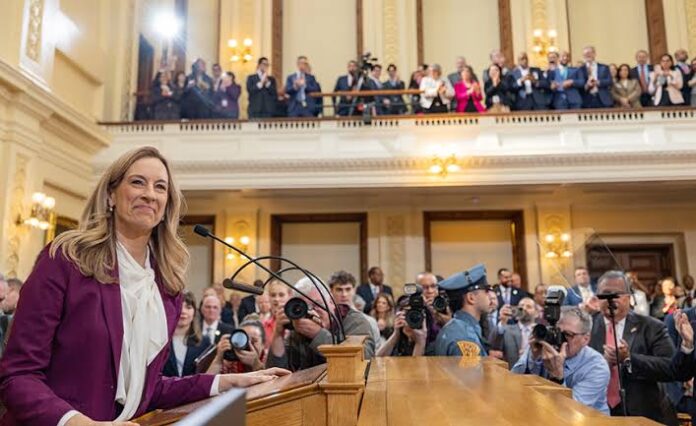
The FY2027 budget discussions have been shaped by several competing priorities. Governor Mikie Sherrill and Democratic legislative leaders have worked to finalize a spending plan that preserves major affordability initiatives while responding to changing fiscal realities and uncertainty surrounding federal funding. At the same time, lawmakers from both parties, business organizations, municipal leaders, education advocates, healthcare institutions, and taxpayer groups continue pressing their own priorities, illustrating just how many constituencies depend upon the annual budget process.
One of the most closely watched negotiations centered on the future of Stay NJ, the senior property tax relief initiative that has become one of New Jersey’s most significant affordability programs. Early budget proposals called for reducing the overall scope of the program while tightening eligibility standards. Following negotiations between the Governor and legislative leadership, the framework evolved into a compromise that lowered the qualifying income threshold while restoring additional funding and placing greater emphasis on directing relief toward seniors with more moderate incomes. The debate reflected one of the central challenges facing every modern state government: how to provide meaningful tax relief while maintaining fiscal sustainability in an environment of competing budget pressures.
The negotiations also highlighted another reality of governing in New Jersey. Every dollar restored to one priority often requires reductions somewhere else. Throughout the budget process, lawmakers, advocacy organizations, hospitals, colleges, municipalities, and nonprofit institutions have all sought funding restorations for programs they consider essential. Rutgers University, healthcare systems, and higher education institutions have all argued that continued investment remains critical to New Jersey’s long-term economic future. At the same time, legislators have worked to preserve funding flexibility for projects benefiting individual districts while balancing broader statewide priorities.
Healthcare has emerged as another defining issue throughout this year’s budget discussions. Concerns surrounding Medicaid funding, combined with uncertainty over federal policy changes, have placed additional pressure on state leaders attempting to maintain healthcare access while balancing overall spending. Supporters of maintaining robust healthcare funding argue that protecting vulnerable residents remains one of government’s core responsibilities, while others continue emphasizing the need for long-term structural reforms that place the state’s finances on a more sustainable path.
The debate has also exposed continuing tensions between executive leadership and the Legislature regarding budget authority and spending priorities. Restoration funding traditionally allocated for legislative initiatives has received increased scrutiny as policymakers determine how much flexibility should remain available for district-specific projects versus statewide investments. Those discussions are common during virtually every budget cycle, but this year’s negotiations have unfolded within a particularly challenging fiscal and political environment where every spending decision carries heightened visibility.
Beyond Trenton, New Jersey’s business community continues watching these negotiations with considerable interest.
Business leaders have increasingly argued that the state’s long-term economic success depends not only upon balanced budgets but also upon creating an environment that encourages investment, entrepreneurship, job creation, and corporate expansion. Many employers acknowledge New Jersey’s extraordinary strengths—its highly educated workforce, strategic location between major metropolitan markets, world-class research institutions, transportation infrastructure, healthcare sector, and innovation economy—but they also point to persistent concerns involving business costs, taxation, regulatory complexity, and regional competitiveness.
Those concerns have become a recurring theme throughout recent economic discussions.
Corporate tax collections have softened compared with previous years, while economic development organizations continue monitoring where businesses choose to expand, relocate, or make long-term capital investments. Small businesses, which collectively employ hundreds of thousands of New Jersey residents, continue navigating higher operating costs, workforce challenges, inflationary pressures, insurance expenses, and ongoing uncertainty regarding future economic conditions.
Business organizations have responded by encouraging lawmakers to pursue policies designed to strengthen New Jersey’s competitive position. Among the proposals frequently discussed are targeted tax incentives, expanded workforce development initiatives, infrastructure investment, streamlined regulatory processes, innovation partnerships, and legislation intended to encourage employers to grow within the state rather than expanding elsewhere.
Another issue attracting increasing attention involves scholarship tax credits and education funding. Supporters of scholarship tax credit proposals argue that encouraging private donations through tax incentives could expand educational opportunities for students while potentially easing enrollment pressures in some public school systems. Opponents raise questions regarding the broader implications for public education funding and the relationship between public resources and private educational institutions. As with many education policy debates, the discussion reflects broader questions about educational choice, affordability, and how best to serve students from diverse economic backgrounds.
Municipal finances have also become part of the broader conversation. Jersey City’s request for additional state financial assistance has sparked renewed discussion about the relationship between state government and local municipalities, particularly regarding long-term fiscal management, property taxes, infrastructure obligations, and the role of state aid in supporting local budgets. Supporters argue that large municipalities often face extraordinary financial responsibilities requiring additional partnership from Trenton, while critics emphasize the importance of long-term fiscal planning and local accountability.
Taken together, these debates illustrate that New Jersey’s budget is far more than an annual accounting exercise. It functions as one of the state’s most important economic policy documents, influencing business confidence, household affordability, healthcare access, educational investment, infrastructure planning, workforce development, municipal services, and the overall direction of the state’s economy.
For businesses considering future investment, predictability remains one of the most valuable commodities. Employers consistently seek clarity regarding taxation, workforce availability, infrastructure improvements, permitting processes, and the broader economic environment in which they operate. Likewise, families evaluating where to live and work weigh housing costs, educational opportunities, healthcare access, transportation, and tax policy when making long-term decisions.
New Jersey enters this period from a position that includes substantial advantages. Few states can match its concentration of pharmaceutical companies, financial institutions, logistics networks, advanced manufacturing, higher education, technology firms, healthcare systems, research organizations, and proximity to New York City and Philadelphia. The state’s diverse economy, highly skilled workforce, extensive transportation infrastructure, and entrepreneurial culture continue making it one of the country’s most important economic regions.
Yet those strengths also create heightened expectations. Businesses expect policies that encourage innovation and investment. Residents expect affordability alongside high-quality public services. Municipal leaders seek reliable partnerships with state government. Educational institutions advocate for sustained investment in research and workforce preparation. Healthcare providers continue emphasizing the importance of stable funding as patient needs evolve.
As lawmakers move toward final passage of the FY2027 budget, the immediate negotiations will eventually conclude. The broader conversation, however, will continue. Questions surrounding competitiveness, affordability, business growth, workforce development, tax policy, education, healthcare, and economic opportunity are not resolved through a single budget cycle. They represent ongoing challenges that will shape New Jersey’s future for years to come.
For Explore New Jersey, these developments extend beyond politics. They represent the economic framework that influences every downtown revitalization project, every new business opening, every corporate investment announcement, every entrepreneur launching a company, every infrastructure improvement, and every community working to strengthen its local economy. As the state moves into a new fiscal year, the decisions made today will help determine how New Jersey competes, grows, and invests in its future throughout the years ahead.
















