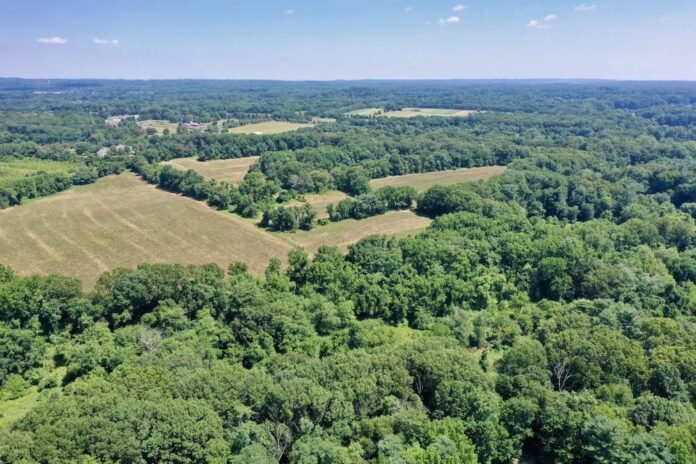

As development pressure continues reshaping large portions of New Jersey’s landscape, one Monmouth County decision is now being viewed as a defining statement about the future of land preservation, agricultural sustainability, open-space protection, and historical stewardship in the Garden State. In a major move blending environmental conservation, farmland protection, and Revolutionary War-era historical preservation, Monmouth County officials have taken final steps toward the acquisition of a 115-acre historic property tied directly to New Jersey’s colonial and early American history.
The county’s approval of a $27.75 million investment to preserve the site marks one of the most significant farmland and heritage preservation actions currently unfolding anywhere in the region. More than simply another land transaction, the purchase reflects a broader and increasingly urgent statewide effort to protect remaining agricultural corridors, historically significant landscapes, and open-space ecosystems from accelerating suburban development pressures that continue transforming large portions of New Jersey every year.
For Monmouth County specifically, the move reinforces its longstanding position as one of New Jersey’s most active and aggressive counties when it comes to farmland preservation and open-space acquisition. Yet the significance of this latest project extends beyond acreage totals or development restrictions alone. The 115-acre property carries direct historical connections to the Revolutionary War period, adding an additional layer of cultural and historical urgency to the preservation effort.
In many ways, the acquisition captures the essence of what makes New Jersey’s conservation battles uniquely important.
Unlike states where undeveloped land stretches endlessly beyond urban centers, New Jersey operates under constant spatial pressure. It remains one of the nation’s most densely populated states while simultaneously maintaining deep agricultural roots, nationally significant Revolutionary War history, extensive park systems, coastal ecosystems, and suburban expansion corridors all competing for limited remaining land. Every major preservation decision therefore becomes not only an environmental issue but also a cultural, economic, historical, and identity-driven one.
That tension has become especially visible throughout Monmouth County over the last two decades.
Positioned between New York City, the Jersey Shore, and rapidly growing suburban regions, Monmouth County has experienced relentless development activity ranging from residential expansion and warehouse construction to commercial redevelopment and transportation infrastructure growth. Yet despite those pressures, large sections of the county still retain agricultural landscapes, equestrian properties, preserved farmland, historic estates, wooded corridors, and open-space networks that continue defining the county’s character.
The latest acquisition represents an effort to ensure part of that identity survives permanently.
The preserved 115-acre property reportedly contains ties to Revolutionary War history, placing it among the many historically significant landscapes scattered throughout Monmouth County. New Jersey played a central role during the Revolutionary War, hosting hundreds of military engagements, encampments, supply movements, and strategic operations across the state. Monmouth County itself remains particularly historic because of its proximity to the Battle of Monmouth and the larger military campaigns that unfolded throughout central New Jersey during the war.
As development expands outward from urban and suburban centers, preservation advocates increasingly warn that historically important landscapes are at risk not only from neglect but from permanent physical transformation. Once agricultural fields, historic roads, open vistas, wooded corridors, and historically connected land patterns are replaced with dense development, much of the contextual historical value attached to those landscapes disappears forever.
That concern appears to have played a major role in Monmouth County’s decision-making process.
The $27.75 million commitment reflects not only the high modern value of developable land in New Jersey but also the growing willingness among county officials to spend aggressively on preservation before remaining historic and agricultural parcels become financially or physically impossible to protect.
Farmland preservation itself has become one of the most consequential public policy issues throughout New Jersey in recent years.
The state’s agricultural sector remains far more economically and culturally important than many outside observers realize. Despite intense development density, New Jersey continues producing billions of dollars in agricultural output annually across industries ranging from produce farming and nursery products to equine operations, wineries, seafood, dairy, and specialty crops. Monmouth County in particular remains home to active farming operations, horse farms, nurseries, and preserved agricultural districts that contribute significantly to both local economies and regional identity.
Yet farmers throughout the state increasingly confront enormous financial pressures tied to land values, taxation, labor costs, succession planning, and development demand. In many areas, selling farmland for residential or commercial development can generate dramatically greater financial return than maintaining agricultural operations long-term.
Preservation programs attempt to counterbalance those pressures by purchasing development rights or acquiring land directly to ensure agricultural use and open-space protection remain permanently intact.
The Monmouth County acquisition also reflects broader public demand for open space and environmental protection within rapidly suburbanizing regions.
Across New Jersey, voters consistently support open-space funding initiatives, farmland preservation programs, county park expansion, watershed protection efforts, and environmental conservation measures. Public attitudes toward land preservation have shifted significantly over the last several decades as residents increasingly recognize the environmental, recreational, economic, and psychological value of maintaining undeveloped landscapes within densely populated areas.
Preserved farmland and open space now serve multiple critical functions simultaneously.
They support local agriculture and food systems. They reduce overdevelopment pressure. They help manage stormwater and flooding. They protect wildlife corridors and biodiversity. They preserve historical landscapes and cultural identity. They create visual breathing room within suburban environments. And increasingly, they contribute directly to public quality of life and regional environmental resilience.
The Revolutionary War connection attached to the newly preserved Monmouth County property adds another powerful dimension to the story.
Historical preservation advocates have long argued that preserving battlefields, colonial-era farms, and Revolutionary landscapes requires protecting the land itself — not merely erecting historical markers after development has already transformed the surrounding environment. Landscape context matters deeply when interpreting history. Open fields, road alignments, topography, and undeveloped space often help explain how historical events unfolded and why specific locations carried strategic importance.
In New Jersey, that issue remains particularly sensitive because the state witnessed more Revolutionary War battles and military engagements than nearly any other colony during the conflict.
Monmouth County’s latest preservation effort therefore intersects directly with the broader movement to preserve New Jersey’s role within early American history. Historic farmland protection increasingly functions not just as environmental conservation but also as heritage conservation capable of maintaining physical connections to the state’s colonial and Revolutionary past.
The scale of the investment also underscores how competitive the modern land market has become throughout New Jersey.
At $27.75 million for 115 acres, the acquisition reflects the extraordinary development value attached to remaining large undeveloped parcels within commuter-accessible regions of the state. Preservation agencies and county governments increasingly find themselves racing against speculative development markets where land prices continue climbing rapidly due to housing demand, infrastructure expansion, logistics growth, and commercial investment.
That urgency has intensified dramatically in recent years as warehouse development, suburban sprawl, and large-scale residential projects continue reshaping portions of central and northern New Jersey.
For many preservation advocates, each major acquisition now carries the feeling of a narrowing window. Once strategically important farmland or historic open space disappears to development, opportunities for meaningful preservation rarely return.
Monmouth County’s action may therefore signal a broader willingness among county leaders to intervene more aggressively in protecting remaining priority landscapes before development momentum accelerates further.
The preservation decision also aligns with growing statewide conversations surrounding sustainable land use and balanced regional planning. New Jersey increasingly faces difficult questions about how to accommodate economic growth and housing demand while still protecting agricultural land, environmental resources, flood mitigation corridors, and historically significant sites.
There are no easy answers to those tensions.
Yet the Monmouth County acquisition demonstrates that many local governments continue viewing preservation not as opposition to growth itself, but as an effort to shape growth more intelligently while maintaining the landscapes and historical resources that define community identity.
The symbolic power of preserving Revolutionary War-connected farmland in New Jersey also resonates strongly within the larger American historical narrative. As the nation approaches the 250th anniversary period surrounding the American Revolution, preservation efforts tied to colonial history and early American landscapes are gaining renewed public attention. Historic sites connected to the Revolutionary era increasingly function not only as educational resources but also as reminders of how deeply New Jersey shaped the nation’s founding history.
For Monmouth County residents, however, the preservation effort carries more immediate and tangible meaning as well.
It protects visible open space. It preserves part of the county’s agricultural character. It prevents permanent overdevelopment. It maintains environmental resources. And it ensures that future generations will still be able to experience portions of the landscape in ways that remain connected to both New Jersey’s farming traditions and its Revolutionary history.
In an era where development often feels relentless and irreversible throughout much of the state, the county’s decision sends a powerful message that some landscapes remain too historically important, environmentally valuable, and culturally meaningful to lose.
The $27.75 million investment may ultimately be remembered not simply as a land purchase, but as a declaration about what kind of New Jersey future local leaders still believe is worth preserving.