
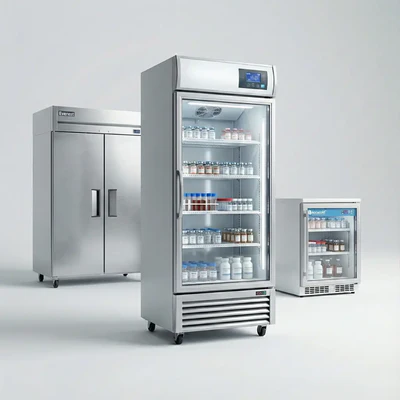

Modern healthcare depends on far more than doctors, hospitals, and breakthrough pharmaceuticals alone. Behind nearly every vaccine dose, laboratory sample, biologic therapy, blood product, research specimen, diagnostic reagent, and temperature-sensitive medication exists an invisible but absolutely critical infrastructure responsible for keeping modern medicine functioning safely and effectively: cold chain management.
As healthcare systems, laboratories, biotechnology companies, universities, pharmacies, and research institutions continue evolving throughout New Jersey and nationally, the role of medical-grade refrigeration has rapidly become one of the most important — and often overlooked — components of healthcare operations. Now, MediDepot is placing renewed focus on that essential infrastructure by highlighting the expanding importance of medical-grade refrigeration solutions designed specifically to support vaccine storage, laboratory environments, clinical operations, and healthcare cold-chain management across both medical and research settings.
The growing emphasis on specialized refrigeration technology reflects a larger transformation currently unfolding throughout the healthcare industry itself. Over the last decade, medicine has become dramatically more dependent on temperature-sensitive products requiring highly controlled environmental conditions. Vaccines, biologic therapies, genetic materials, laboratory reagents, blood products, tissue samples, fertility preservation materials, oncology medications, and pharmaceutical compounds now frequently rely on extremely precise storage temperatures to maintain stability, efficacy, safety, and regulatory compliance.
That reality has elevated refrigeration from a simple operational necessity into a mission-critical healthcare technology sector.
Unlike conventional consumer refrigerators or commercial food-service cooling systems, medical-grade refrigeration equipment is engineered specifically for healthcare environments where even minor temperature fluctuations can compromise product integrity, invalidate laboratory work, damage sensitive biologics, or create serious patient safety risks. Precision, consistency, monitoring capability, alarm systems, regulatory compliance, and reliability become far more important than general cooling capacity alone.
The importance of that distinction became especially visible during the global public-health challenges of recent years when vaccine distribution systems drew widespread attention to the complexities of cold-chain logistics and ultra-low-temperature medical storage infrastructure. While public awareness of vaccine refrigeration increased dramatically during that period, healthcare cold-chain systems have long formed one of the foundational pillars supporting modern medicine behind the scenes.
MediDepot’s renewed focus on medical-grade refrigeration arrives during a period of substantial growth across New Jersey’s healthcare and life sciences sectors.
New Jersey remains one of the most influential healthcare, pharmaceutical, biotechnology, and medical research hubs anywhere in the world. Often referred to as the “Medicine Chest of the World,” the state continues hosting a dense concentration of pharmaceutical companies, hospital systems, research institutions, clinical laboratories, biotechnology firms, and medical manufacturing operations that collectively rely heavily on advanced temperature-controlled environments.
From major hospital networks and university research facilities to outpatient clinics, diagnostic labs, pharmacies, and vaccine distribution centers, cold-chain integrity now touches nearly every segment of the healthcare ecosystem.
The rise of personalized medicine and biologic therapies has further intensified the importance of advanced refrigeration systems. Many next-generation treatments now involve highly sensitive compounds that can degrade rapidly if exposed to even brief temperature instability. Unlike traditional pharmaceuticals, biologics and advanced therapies often require tightly regulated environmental storage conditions throughout manufacturing, transportation, clinical administration, and laboratory handling.
That evolution is fundamentally reshaping healthcare infrastructure planning.
Hospitals and laboratories are increasingly investing in specialized refrigeration units equipped with digital temperature controls, automated monitoring systems, alarm notifications, backup power integration, remote management capabilities, and compliance tracking designed to satisfy strict healthcare regulations and accreditation standards.
Medical-grade refrigeration systems now frequently include advanced features such as continuous temperature logging, forced-air circulation for uniform cooling, antimicrobial interior materials, secure access controls, and redundant safety systems engineered specifically to protect critical medical inventory.
For laboratories in particular, refrigeration has become inseparable from research accuracy itself.
Clinical diagnostics, biomedical research, pharmaceutical development, and scientific testing frequently depend on stable preservation of reagents, tissue samples, cultures, and biological materials. Temperature inconsistencies can compromise experimental validity, damage irreplaceable specimens, delay testing processes, or undermine research outcomes entirely.
That makes refrigeration reliability not merely an operational concern but a scientific integrity issue.
Within healthcare environments, vaccine storage represents another especially critical area of focus. Vaccines often require narrow temperature ranges throughout storage and handling processes to maintain potency and effectiveness. Improper storage conditions can render vaccines ineffective even when visual inspection shows no obvious signs of degradation. Medical-grade refrigeration systems are therefore designed to maintain highly stable internal temperatures while minimizing environmental fluctuation caused by door openings, external heat exposure, or inconsistent compressor cycling.
The stakes surrounding that reliability are extraordinarily high.
Healthcare providers, pharmacies, clinics, and public health organizations all depend on confidence that vaccines and medical products remain fully viable throughout the supply chain. Medical-grade refrigeration helps protect not only product investment but also patient safety, treatment effectiveness, regulatory compliance, and public health trust itself.
MediDepot’s focus on these systems also reflects the broader growth of healthcare infrastructure modernization throughout New Jersey. Hospital systems across the state continue investing heavily in laboratory expansion, outpatient services, ambulatory care facilities, precision medicine programs, behavioral health integration, research partnerships, and advanced clinical technologies.
As those expansions continue, demand for specialized medical infrastructure equipment grows alongside them.
The increasing complexity of healthcare delivery has simultaneously elevated operational resilience as a major institutional priority. Hospitals and laboratories now place enormous emphasis on redundancy planning, backup systems, equipment monitoring, and risk mitigation strategies capable of protecting critical medical inventory during emergencies, power disruptions, or environmental failures.
Medical-grade refrigeration systems therefore increasingly function as part of larger institutional continuity planning rather than isolated appliance purchases.
The rise of decentralized healthcare delivery models has also contributed to growing demand for reliable refrigeration solutions outside traditional hospital campuses. Community clinics, urgent-care centers, mobile healthcare programs, vaccination outreach initiatives, research partnerships, and specialty treatment facilities now frequently require compact but highly reliable refrigeration infrastructure capable of maintaining healthcare-grade standards in diverse operational environments.
That flexibility has become especially important as healthcare systems continue pushing services further into communities rather than concentrating all care exclusively within large centralized hospitals.
At the same time, regulatory scrutiny surrounding healthcare cold-chain management continues intensifying nationally. Organizations involved in vaccine storage, pharmaceutical handling, laboratory operations, and biologic therapies increasingly face strict compliance requirements tied to temperature monitoring, documentation, storage protocols, calibration standards, and inventory integrity.
Medical-grade refrigeration equipment helps institutions satisfy those regulatory expectations while also reducing operational risk and liability exposure.
Environmental sustainability is also emerging as a major factor shaping the refrigeration industry itself.
Healthcare systems and laboratory operators increasingly seek energy-efficient refrigeration solutions capable of balancing operational reliability with lower energy consumption and environmentally conscious design. Newer systems often incorporate improved insulation technologies, energy-efficient compressors, eco-friendly refrigerants, and smarter digital controls aimed at reducing long-term environmental impact while maintaining stringent healthcare performance standards.
For New Jersey specifically, the continued growth of biotechnology, pharmaceutical research, university science programs, and healthcare innovation sectors ensures that demand for advanced medical refrigeration infrastructure will likely continue expanding for years to come.
The state’s unique concentration of life-sciences institutions creates ongoing demand for laboratory support systems, biologic storage solutions, pharmaceutical logistics infrastructure, and temperature-controlled healthcare technologies across both public and private sectors.
MediDepot’s emphasis on refrigeration solutions therefore arrives at a particularly relevant moment within the broader healthcare economy.
Beyond the technical specifications and operational details, however, medical-grade refrigeration ultimately represents something larger about modern healthcare itself. Many of the most important systems supporting medicine remain invisible to patients until something fails. Refrigeration infrastructure rarely receives public attention precisely because it is expected to function flawlessly in the background at all times.
Yet modern medicine increasingly depends on those hidden systems operating with absolute precision.
Behind every vaccine campaign, laboratory breakthrough, blood bank operation, fertility clinic, oncology treatment center, pharmaceutical trial, research institution, or diagnostic testing program lies a vast network of temperature-controlled environments quietly preserving the integrity of modern healthcare itself.
As medicine continues advancing toward increasingly specialized biologics, precision therapies, genetic treatments, and complex laboratory science, the importance of medical-grade refrigeration will only continue growing.
What once may have been viewed simply as storage equipment has now become a foundational component of healthcare delivery, biomedical innovation, scientific research, and patient safety across New Jersey and throughout the broader healthcare industry.
And as institutions continue modernizing their infrastructure for the next era of medicine, the technologies protecting those fragile and life-saving materials may prove just as essential as the treatments themselves.
















