
New Jersey’s performing arts landscape has long been defined by institutions capable of shaping national cultural conversations while simultaneously serving as deeply rooted community anchors. Few organizations embody that balance more completely than McCarter Theatre Center in Princeton, a venue that has spent decades building a reputation not simply as one of the state’s premier arts institutions, but as one of the most respected regional theaters anywhere in the United States.
Now, McCarter is preparing for one of the most significant celebratory evenings of its 2026 season as the theatre officially invites audiences, patrons, artists, philanthropists, and supporters to gather on Friday, June 12, at the Lewis Arts complex for what promises to become one of the defining cultural events of New Jersey’s summer arts calendar.
The 2026 McCarter Gala is being positioned as far more than a traditional fundraising event. Instead, organizers are crafting a sweeping celebration of artistic legacy, creative collaboration, community investment, and the enduring power of live performance during a period when regional theaters across the nation continue redefining their role within modern cultural life.
At the center of the evening will be the presentation of the inaugural Roger S. Berlind Award to legendary director, playwright, and longtime McCarter artistic leader Emily Mann, whose influence on American theater — and on New Jersey’s cultural identity specifically — remains nearly impossible to overstate.
The gala will also feature a special cabaret performance by 2024 Tony Award winner Kecia Lewis, one of Broadway’s most celebrated contemporary vocalists and performers, alongside a seated dinner, cocktail reception, VIP experiences, and an outdoor after-party designed to transform the evening into a fully immersive theatrical and social celebration.
Taken together, the event reflects McCarter Theatre Center’s continued evolution as both a nationally respected artistic institution and a central cultural force within New Jersey itself.
The setting alone carries enormous symbolic weight.
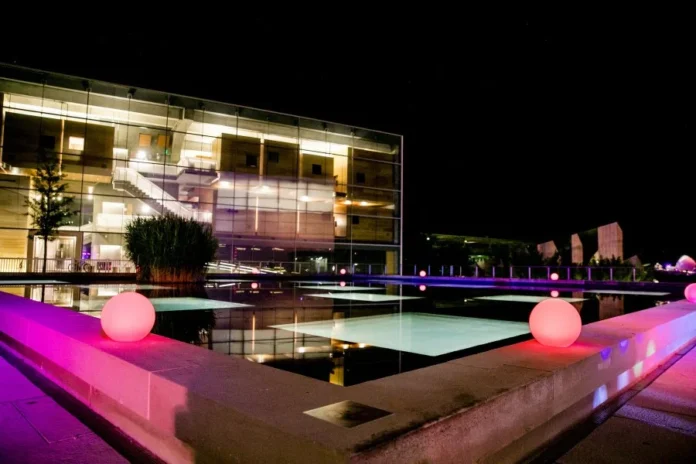
Located within the Lewis Arts complex in Princeton, the gala unfolds at the intersection of multiple artistic disciplines and educational traditions that have steadily transformed Princeton into one of the Northeast’s most influential cultural destinations. The evening’s structure intentionally mirrors McCarter’s broader artistic philosophy: blending elegance with accessibility, artistic excellence with emotional warmth, and institutional prestige with genuine community connection.
The gala schedule itself reinforces that atmosphere of layered celebration.
The evening will begin with an exclusive VIP toast at 5:30 PM before transitioning into a larger cocktail reception at 6:00 PM, allowing guests to gather, socialize, and reconnect within one of the state’s most sophisticated arts environments. At 7:00 PM, attendees will move into the formal dinner, program presentation, and live performance segment of the evening before concluding with an outdoor after-party extending the celebration well into the night.
Yet beneath the elegance and festivities lies a deeper significance tied directly to the future of regional theater and live performance culture in New Jersey.
At a time when performing arts institutions nationally continue confronting financial pressures, audience shifts, changing entertainment habits, and post-pandemic cultural transformation, McCarter Theatre Center has continued positioning itself not merely as a producing theater but as a broader creative ecosystem capable of supporting artists, fostering dialogue, and sustaining live performance as an essential civic and cultural experience.
The decision to honor Emily Mann as the inaugural recipient of the Roger S. Berlind Award underscores that mission perfectly.
Mann’s relationship with McCarter Theatre Center represents one of the most influential artistic partnerships in modern American regional theater history. During her decades-long tenure as artistic director, she transformed McCarter into a nationally recognized powerhouse for new work development, socially engaged theater, and artist-driven storytelling while dramatically elevating the institution’s national profile.
Under Mann’s leadership, McCarter became synonymous with bold, intellectually ambitious productions that consistently challenged audiences while remaining emotionally accessible and deeply human. Her work frequently explored political conflict, social justice, historical memory, identity, displacement, and personal resilience — themes that helped define not only McCarter’s artistic voice but also broader conversations within contemporary American theater itself.
Beyond directing and producing, Mann also became one of the country’s most important advocates for playwright-centered regional theater development. Countless artists, actors, writers, and directors passed through McCarter during her tenure, helping solidify Princeton as a nationally respected center for theatrical innovation.
The gala’s presentation of the inaugural Roger S. Berlind Award therefore functions not simply as recognition of a distinguished career, but as a statement about artistic legacy itself.
Roger S. Berlind’s name carries enormous importance within American theater philanthropy and production history. One of Broadway’s most influential producers and arts patrons, Berlind played a transformative role in supporting theatrical institutions, productions, and artists across multiple decades. Associating the new award with both Berlind and Mann creates a symbolic bridge between artistic leadership, philanthropic vision, and institutional sustainability.
For McCarter, honoring Mann also reconnects the institution directly to one of its defining eras while simultaneously looking toward the future.
The inclusion of Kecia Lewis further elevates the event into major national-caliber arts territory.
Fresh off her 2024 Tony Award victory, Lewis arrives at the gala as one of Broadway’s most acclaimed and emotionally dynamic performers. Her career has long been celebrated for its extraordinary vocal power, theatrical precision, emotional depth, and commanding stage presence. A cabaret performance from Lewis instantly transforms the gala from a ceremonial fundraising evening into a major live performance event in its own right.
Cabaret, as an art form, also aligns perfectly with McCarter’s identity.
Unlike large-scale theatrical productions built around spectacle and distance, cabaret creates intimacy. It places storytelling, voice, personality, and emotional communication directly at the center of the audience experience. Guests attending the gala will therefore not only witness an award presentation and formal celebration but also experience live performance in one of its most emotionally immediate forms.
That emphasis on intimacy and emotional connection remains central to why institutions like McCarter continue mattering so deeply within modern cultural life.
Theater at its best creates communal emotional experiences impossible to fully replicate through digital media or passive entertainment consumption. Live performance generates immediacy, vulnerability, unpredictability, and shared emotional energy between performers and audiences that remains uniquely powerful even in an era dominated by streaming platforms and algorithm-driven entertainment ecosystems.
McCarter’s gala appears intentionally designed around celebrating precisely that idea.
The evening’s structure repeatedly emphasizes togetherness: gathering with friends, celebrating artists, sharing meals, participating in live performance, and supporting creative community simultaneously. Even the outdoor after-party reinforces the larger theme that arts institutions increasingly function not only as venues for performance but as social and civic gathering spaces where relationships and cultural identity are actively formed.
That community dimension feels especially important within New Jersey’s broader arts ecosystem.
For decades, New Jersey’s cultural institutions sometimes existed in the shadow of nearby New York and Philadelphia despite housing extraordinary artistic talent and nationally respected organizations of their own. In recent years, however, institutions like McCarter Theatre Center have increasingly asserted themselves as major regional cultural leaders fully capable of shaping national conversations while maintaining strong local community roots.
The gala therefore becomes both celebration and declaration.
It celebrates McCarter’s artistic legacy, honors one of the most influential leaders in regional theater history, showcases a Tony Award-winning performer, and simultaneously reinforces the institution’s ongoing cultural relevance during a transformative moment for the performing arts nationwide.
The event also reflects the broader trend toward experiential philanthropy reshaping arts fundraising itself.
Modern gala audiences increasingly seek more than traditional banquet-style fundraising dinners. They want immersive artistic experiences, social atmosphere, emotional engagement, and meaningful cultural participation integrated directly into philanthropic events. McCarter’s combination of live performance, curated hospitality, artistic tribute, and outdoor celebration reflects that evolving expectation.
By blending theatrical artistry with social elegance, the institution creates a fundraising experience that feels deeply aligned with its creative mission rather than separate from it.
As RSVP deadlines approach and preparations continue, the June 12 gala is already emerging as one of the marquee cultural events of New Jersey’s 2026 summer season. Yet beyond the performances, speeches, awards, and festivities, the evening ultimately symbolizes something larger about the enduring importance of live arts institutions themselves.
At a moment when so much modern interaction has become fragmented, digital, or transactional, theaters like McCarter continue creating physical spaces where audiences gather together to experience emotion, storytelling, music, memory, conversation, and human creativity in real time.
On June 12, inside the Lewis Arts complex, McCarter Theatre Center will celebrate not only its own history and artistic community, but also the enduring idea that live performance still matters profoundly — perhaps now more than ever.