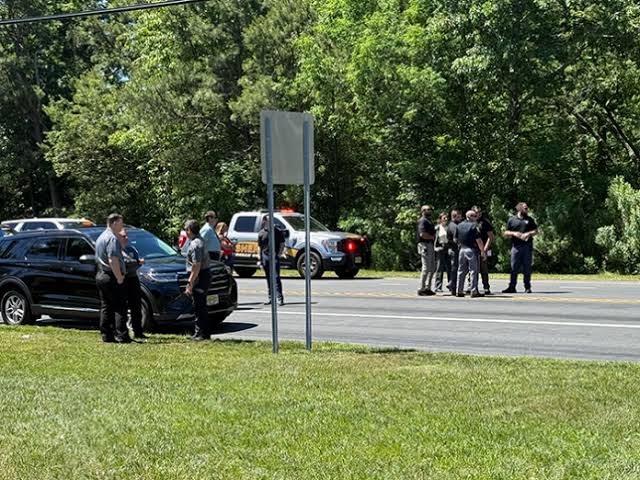

A violent confrontation during an immigration enforcement operation in Ocean County has become the focus of a federal investigation after a U.S. Immigration and Customs Enforcement agent was seriously injured during an attempted arrest in Stafford Township, underscoring growing concerns about the dangers faced by federal law enforcement officers and the increasingly complex landscape surrounding immigration enforcement in New Jersey.
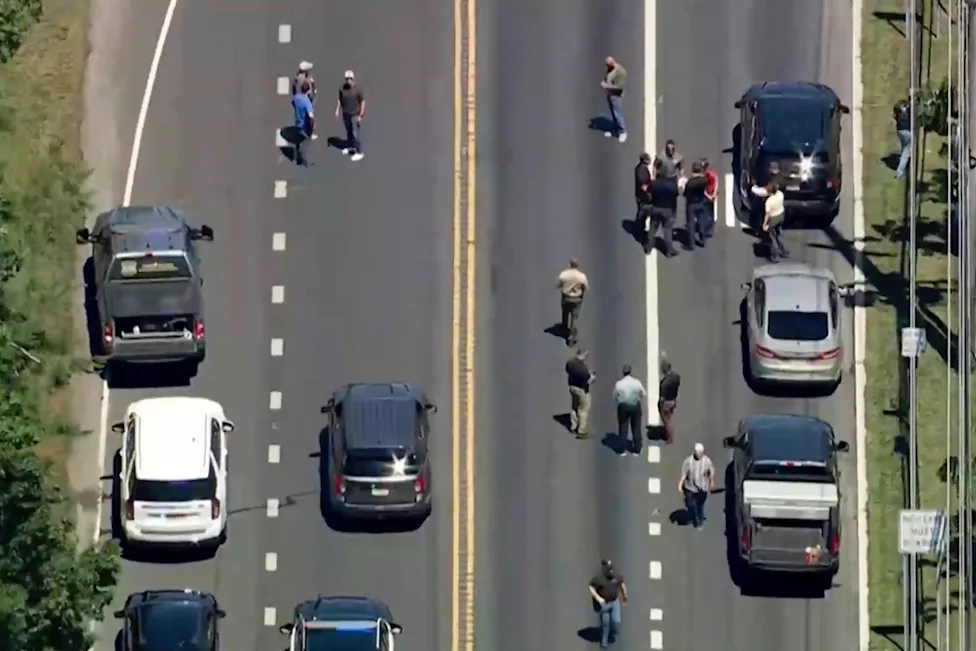
The incident unfolded during the morning hours in the Manahawkin section of Stafford Township, transforming what began as a targeted enforcement action into a rapidly escalating situation involving a fleeing suspect, an injured federal agent, gunfire, multiple responding agencies, and an ongoing search that continues to draw attention across the state.
According to federal authorities, the operation was focused on apprehending an individual identified as Friedrich Castillo-Ormeno, a Peruvian national who was reportedly subject to a prior removal order. During the attempted arrest, investigators say the encounter quickly became violent when the suspect allegedly accelerated a vehicle in an effort to flee the scene.
Authorities allege the vehicle struck an ICE agent, pinning part of the officer’s body against another vehicle during the confrontation.
The resulting injuries were significant enough to require immediate medical treatment and hospitalization.
As the suspect fled the area, the injured agent reportedly discharged a service weapon toward the departing vehicle. Investigators say multiple rounds struck the rear portion of the van, shattering glass before the suspect escaped the immediate area.
The incident triggered a coordinated emergency response involving federal and local law enforcement agencies.
Officers from the Stafford Township Police Department responded to the scene and provided emergency medical assistance to the injured federal agent before transportation to a nearby medical facility.
Local officials emphasized that municipal police were not participants in the federal immigration operation itself but responded in accordance with established emergency protocols once assistance was requested.
That distinction reflects New Jersey’s current law enforcement framework under the state’s Immigrant Trust Directive, which governs the relationship between local law enforcement agencies and federal immigration authorities.
The directive, which has been the subject of extensive legal and political debate in recent years, establishes guidelines intended to maintain trust between immigrant communities and local police departments while clarifying the circumstances under which state and local agencies may cooperate with federal immigration enforcement efforts.
As a result, local police departments throughout New Jersey often find themselves navigating complex situations in which public safety responsibilities intersect with federal immigration actions.
In Stafford Township, local officials stressed that their role centered on emergency response and public safety rather than participation in immigration enforcement activities.
Federal authorities have since transferred primary investigative responsibility to the Federal Bureau of Investigation, which is examining all aspects of the incident, including the assault on the federal officer, the use of force that followed, and the suspect’s continued flight from law enforcement.
The search for Castillo-Ormeno remains ongoing, with federal authorities continuing efforts to locate and apprehend him.
While officials have indicated there is currently no specific threat directed toward the broader public, the incident has nevertheless generated significant concern regarding the safety risks confronting law enforcement officers during arrest operations.
Federal agents routinely encounter unpredictable circumstances when attempting to take individuals into custody. While the vast majority of enforcement actions occur without violence, situations involving fleeing suspects can escalate within seconds, placing officers, suspects, and bystanders at considerable risk.
Vehicular assaults have become an increasingly discussed concern among law enforcement agencies nationwide.
Unlike conventional confrontations involving firearms or physical altercations, vehicles can become deadly weapons capable of causing catastrophic injuries in a matter of moments. Officers conducting arrests in parking lots, roadside locations, residential neighborhoods, and commercial areas often face heightened vulnerability when suspects attempt to flee using automobiles.
Federal officials have pointed to what they describe as an increase in incidents involving vehicles being used against immigration enforcement personnel, contributing to broader conversations regarding officer safety, training, operational procedures, and enforcement tactics.
For New Jersey, the Stafford Township incident arrives amid ongoing debates surrounding immigration policy, public safety, federal-state cooperation, and law enforcement accountability.
The Garden State has become a focal point in national discussions involving immigration enforcement due to its large immigrant population, extensive transportation infrastructure, and proximity to major metropolitan regions.
Those realities frequently place New Jersey communities at the center of policy conversations unfolding far beyond state borders.
At the same time, local residents often view such incidents through multiple lenses simultaneously.
For some, the primary concern involves protecting law enforcement personnel who face dangerous circumstances while carrying out official duties.
For others, broader questions arise regarding immigration policy, enforcement priorities, and the relationship between federal agencies and local communities.
What remains undisputed is the seriousness of the incident itself.
A federal law enforcement officer was injured during the course of official duties. Emergency responders were called into action. Gunfire was discharged in a public setting. A suspect remains at large. And multiple agencies continue working to determine exactly how the encounter unfolded.
As investigators continue gathering evidence, reviewing witness accounts, examining physical evidence, and reconstructing the sequence of events, additional details are expected to emerge regarding the confrontation.
The case also serves as a reminder of the challenges confronting modern law enforcement agencies operating within increasingly complex legal, social, and political environments.
Whether at the federal, state, county, or municipal level, officers are often required to make split-second decisions during rapidly evolving situations where outcomes can change in an instant.
For residents of Ocean County and communities across New Jersey, the Stafford Township incident highlights the intersection of public safety, immigration enforcement, law enforcement cooperation, and officer protection in a way that few events can.
As the FBI-led investigation continues and the search for the suspect remains active, attention will remain focused not only on the outcome of the case but also on the broader questions it raises regarding enforcement operations, interagency coordination, and the ongoing effort to balance public safety responsibilities within one of the nation’s most diverse states.
The coming weeks will likely bring additional information, but for now, the incident stands as a stark reminder that law enforcement operations—whether local, state, or federal—can quickly become dangerous and unpredictable, carrying consequences that extend well beyond the initial encounter itself.