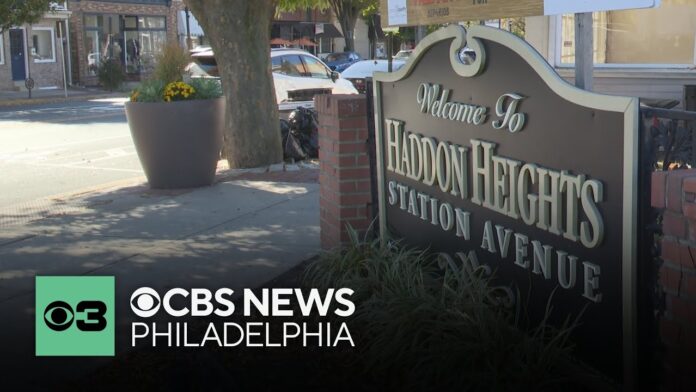

In communities across New Jersey, economic development conversations often revolve around major infrastructure projects, housing investments, transportation improvements, and downtown revitalization strategies. Yet sometimes one of the most influential tools available to a municipality comes in a much smaller package. In Haddon Heights, local officials believe a single liquor license could help unlock the next phase of commercial growth, attract new businesses, and strengthen the borough’s evolving downtown economy.
After receiving no bids during an initial auction that carried a reserve price of $400,000, Haddon Heights officials have taken a new approach. By reducing the reserve bid by half and pushing the auction to September, borough leaders are now reporting renewed interest from potential buyers and developers who see opportunities in one of South Jersey’s most desirable communities.
The move represents more than a simple adjustment to an auction process. It reflects a broader strategy aimed at positioning Haddon Heights for long-term commercial success while balancing the character and charm that have made the borough one of Camden County’s most attractive places to live and do business.
For years, municipalities throughout New Jersey have recognized that liquor licenses can play a significant role in economic development. Restaurants, craft beverage establishments, entertainment venues, and hospitality-focused businesses often rely on alcohol sales as a critical component of their operating model. In many cases, the availability of a liquor license can determine whether a project moves forward, expands, or never materializes at all.
That reality has become increasingly important as communities seek new ways to activate commercial corridors and attract destination-oriented businesses capable of drawing visitors from neighboring towns and counties.
In Haddon Heights, officials are looking beyond the immediate revenue generated by the sale of the license itself. The larger objective centers on creating an environment where entrepreneurs, restaurateurs, and investors view the borough as a place where innovative concepts can thrive.
Mayor Zach Houck has been among the most vocal advocates for leveraging the liquor license as a tool for future growth. His position reflects a growing understanding among local leaders that modern downtown districts increasingly depend on a mix of dining, entertainment, and lifestyle-oriented businesses that encourage residents and visitors to spend more time—and more money—in local commercial districts.
The decision to reduce the reserve price from $400,000 to $200,000 appears to have immediately changed the conversation.
The original reserve figure, while reflective of the significant value often associated with New Jersey liquor licenses, may have represented too high an entry point for prospective operators and investors navigating a challenging economic environment. Rising construction costs, higher borrowing rates, increased labor expenses, and ongoing inflationary pressures have forced many business owners to evaluate every aspect of project feasibility.
By lowering the reserve threshold, borough officials effectively widened the pool of potential bidders while creating new opportunities for businesses that may have previously viewed the license as financially unattainable.
The renewed interest suggests that the strategy may already be producing results.
For many municipalities, attracting quality dining establishments has become a cornerstone of redevelopment planning. Restaurants often serve as anchors for commercial districts, generating foot traffic that benefits neighboring retailers, service providers, and entertainment venues. A successful restaurant can transform an underutilized area into a vibrant gathering place that strengthens community identity while driving economic activity.
In South Jersey, where communities compete for both residents and visitors, unique dining destinations frequently become regional attractions capable of generating sustained economic benefits well beyond their own four walls.
That dynamic is particularly relevant in Haddon Heights, where leaders continue to explore opportunities for thoughtful redevelopment while preserving the borough’s distinct character. Rather than pursuing large-scale transformation, the focus has increasingly centered on strategic growth that complements existing neighborhoods and enhances quality of life.
The availability of a liquor license can significantly influence that equation.
Potential investors evaluating redevelopment opportunities often consider whether food-and-beverage operations can be incorporated into their plans. Whether the vision involves a chef-driven restaurant, an upscale neighborhood gathering spot, a modern gastropub, or a mixed-use commercial concept, alcohol service frequently plays an important role in long-term financial viability.
Without access to a license, otherwise promising projects can struggle to achieve the revenue projections necessary to secure financing or attract investors.
This reality has contributed to the extraordinary value of liquor licenses throughout New Jersey, where population-based restrictions limit the number available in each municipality. Unlike many other states, New Jersey’s regulatory framework creates scarcity that can dramatically increase the market value of available licenses.
As a result, when municipalities have opportunities to issue, auction, or transfer licenses, the process often attracts significant attention from the business community.
The timing of Haddon Heights’ revised auction strategy also aligns with broader trends shaping New Jersey’s food-and-beverage landscape.
Across the state, communities are witnessing increasing demand for walkable downtown experiences that combine dining, entertainment, shopping, and community engagement. Consumers increasingly seek destinations that offer more than transactional experiences. They want places where they can gather with friends, support local businesses, attend events, and participate in the life of a community.
These changing consumer preferences have elevated the importance of vibrant downtown districts and strengthened the role that restaurants and hospitality businesses play within local economies.
For Haddon Heights, the upcoming September auction now represents an opportunity to attract businesses capable of contributing to that vision.
The borough’s appeal extends beyond its commercial potential. Its location, strong residential neighborhoods, accessibility, and established community identity make it an attractive destination for entrepreneurs seeking to establish roots in a community-oriented environment.
That combination of factors may prove increasingly valuable as developers and business owners look for opportunities outside larger urban markets while still maintaining access to regional customer bases.
The renewed interest reported by borough officials suggests that potential buyers recognize those advantages.
More importantly, the conversation surrounding the liquor license highlights a larger truth about economic development in modern New Jersey. Success is often determined not by a single transformative project but by a series of strategic decisions that create conditions for sustainable growth.
Whether through housing initiatives, transportation investments, public-private partnerships, downtown revitalization efforts, or business recruitment strategies, municipalities are increasingly focused on building ecosystems that support long-term prosperity.
In Haddon Heights, the liquor license auction has become part of that broader story.
What initially appeared to be a disappointing outcome has evolved into an opportunity for recalibration and renewed momentum. By responding to market conditions and adjusting expectations, borough leaders have demonstrated a willingness to adapt their approach in pursuit of larger economic objectives.
As September approaches, attention will turn toward potential bidders and the possibilities that could emerge from the eventual sale. The successful buyer will acquire more than a license. They will gain an opportunity to participate in the next chapter of Haddon Heights’ commercial evolution.
For residents, business owners, and community stakeholders, the outcome could help shape the borough’s dining, entertainment, and redevelopment landscape for years to come.
The renewed interest already being reported is an encouraging sign. It suggests that while the original reserve price may have limited participation, the underlying demand remains very much alive. If that interest translates into successful bids and future investment, the borough’s decision to reset the process may ultimately be remembered as a pivotal step toward unlocking new opportunities for growth.
In an era when communities across New Jersey are searching for innovative ways to strengthen local economies, Haddon Heights is demonstrating that sometimes progress begins not with a groundbreaking ceremony, but with a strategic adjustment that opens the door to new possibilities.