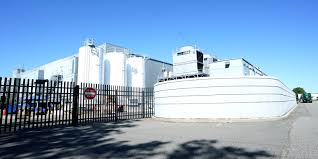

The artificial intelligence revolution is transforming nearly every aspect of modern life, from healthcare and financial services to transportation, manufacturing, education, and scientific research. Yet behind every AI breakthrough lies a physical infrastructure challenge that few outside the technology sector ever see. The explosive growth of artificial intelligence has triggered an unprecedented surge in data center development, forcing operators to rethink how facilities are designed, powered, maintained, and cooled. As the industry races to support increasingly powerful computing environments, Guardian’s launch of its new Shield division signals the emergence of a specialized service sector dedicated to one of the most critical components of next-generation data center operations: liquid cooling.
The announcement comes at a pivotal moment for the technology industry. Across the country, hyperscale operators, enterprise technology providers, cloud computing platforms, and AI infrastructure developers are investing billions of dollars into facilities capable of supporting increasingly dense computing workloads. Traditional cooling methods that served data centers for decades are rapidly approaching their operational limits as AI servers generate significantly more heat than previous generations of computing equipment.
The result is a fundamental shift in how modern data centers are engineered.
Guardian’s new Shield division enters this evolving landscape with a focus on liquid cooling fluid management, accredited testing, remediation services, and infrastructure support designed specifically for AI-powered computing environments. While the average consumer may never think about cooling systems inside a data center, industry experts increasingly recognize them as one of the most important factors determining whether next-generation AI facilities can operate efficiently, reliably, and sustainably.
For New Jersey, the timing of this development is particularly significant.
The Garden State continues to strengthen its position as one of the nation’s most important technology and infrastructure corridors. Its proximity to New York City, extensive fiber networks, robust power infrastructure, strategic transportation access, and growing investment in digital infrastructure have made New Jersey a prime destination for data center development.
From North Jersey’s established technology hubs to emerging infrastructure investments throughout the state, data centers are becoming an increasingly important component of New Jersey’s economic future.
Artificial intelligence is accelerating that trend.
Unlike traditional cloud computing applications, AI workloads demand extraordinary processing power. Advanced machine learning systems, large language models, predictive analytics platforms, and generative AI technologies rely on clusters containing thousands of specialized processors working simultaneously. These systems consume vast amounts of energy and generate enormous quantities of heat.
Managing that heat has become one of the industry’s defining challenges.
Historically, data centers relied primarily on air-based cooling systems. Massive HVAC systems circulated cooled air throughout server rooms, maintaining temperatures necessary for reliable equipment performance. While effective for traditional computing environments, air cooling becomes increasingly inefficient as computing density rises.
Modern AI systems often require far more aggressive thermal management strategies.
That reality has driven widespread adoption of liquid cooling technologies, which transfer heat more efficiently than air and allow operators to support significantly greater computing densities. By circulating specialized cooling fluids directly through or near computing components, liquid cooling systems can remove heat faster, reduce energy consumption, and support the performance requirements demanded by advanced AI workloads.
The technology has quickly evolved from a niche solution into a critical infrastructure component.
As adoption accelerates, however, new challenges emerge.
Liquid cooling systems require specialized monitoring, testing, maintenance, and remediation services to ensure reliable operation. Cooling fluids must be managed carefully. Contamination risks must be minimized. Equipment performance must be continuously evaluated. System integrity becomes essential because failures can impact mission-critical operations supporting everything from financial transactions to healthcare systems and AI research platforms.
This is where Guardian’s Shield division positions itself.
By focusing specifically on fluid management and cooling infrastructure support, the company is addressing an increasingly important segment of the data center ecosystem. Rather than simply maintaining hardware, organizations operating in this space help ensure that the environments supporting advanced computing remain stable, efficient, and capable of handling future growth.
The emergence of specialized service providers reflects the growing complexity of modern digital infrastructure.
Today’s data centers bear little resemblance to the facilities of even a decade ago. They have evolved into sophisticated engineering environments requiring expertise across multiple disciplines, including power systems, cybersecurity, networking, mechanical engineering, environmental management, and thermal performance optimization.
AI is accelerating that evolution at remarkable speed.
Industry forecasts continue to project substantial growth in data center construction as organizations expand their AI capabilities. Technology companies are investing billions into infrastructure designed to support future demand. Enterprise organizations are deploying private AI environments. Cloud providers continue expanding capacity. Government agencies and research institutions are increasing investments in advanced computing resources.
Each of these initiatives depends on reliable infrastructure.
For New Jersey’s economy, these developments create opportunities extending far beyond technology companies themselves.
Data center projects generate construction activity, engineering contracts, equipment purchases, utility investments, logistics requirements, and long-term operational employment. They also create demand for specialized service providers capable of supporting increasingly sophisticated infrastructure environments.
The launch of Shield highlights how secondary industries are emerging alongside AI infrastructure growth.
Just as the rise of cloud computing created new opportunities for cybersecurity firms, network providers, and software developers, the expansion of AI infrastructure is generating demand for businesses focused on cooling technologies, power management, sustainability solutions, environmental monitoring, and infrastructure optimization.
These supporting sectors are becoming increasingly important components of the broader technology economy.
Sustainability also remains a central consideration.
As AI facilities consume larger amounts of energy, operators face increasing pressure to improve efficiency and reduce environmental impact. Liquid cooling technologies can play a significant role in achieving those goals by reducing energy consumption associated with traditional cooling systems and improving overall facility performance.
Effective fluid management and system optimization become essential elements of that sustainability equation.
Organizations investing in advanced cooling infrastructure are increasingly seeking partners capable of ensuring long-term operational excellence. Accredited testing, monitoring, remediation, and performance evaluation help protect investments while supporting reliability objectives that are critical in high-availability environments.
Downtime in modern data centers is not simply an inconvenience.
For businesses relying on real-time applications, cloud platforms, AI systems, financial services, healthcare technologies, and communications infrastructure, interruptions can have significant operational and financial consequences. Preventative maintenance and specialized support services help reduce those risks while extending the lifespan of critical infrastructure components.
The introduction of Shield reflects growing recognition that data center cooling is no longer a background operational consideration. It has become a strategic priority.
As AI continues reshaping industries and driving unprecedented demand for computing power, the infrastructure supporting these technologies must evolve accordingly. Organizations capable of addressing specialized operational requirements will play increasingly important roles within the digital economy.
For New Jersey, where technology investment continues expanding and digital infrastructure remains a key economic driver, developments like these underscore the state’s growing relevance within the broader AI ecosystem.
The future of artificial intelligence will not be determined solely by software innovations or algorithmic breakthroughs. It will also depend on the physical systems that power and sustain those technologies every day. Cooling infrastructure, once considered a technical detail, is emerging as one of the defining challenges of the AI era.
Guardian’s launch of Shield represents a response to that reality. It reflects an industry recognizing that next-generation computing requires next-generation support systems, specialized expertise, and innovative approaches to infrastructure management.
As AI adoption accelerates and data center investment continues reaching historic levels, the organizations helping maintain, optimize, and protect these environments will become increasingly important contributors to technological progress. The launch of Shield is more than a business expansion. It is another sign of how rapidly the infrastructure landscape is evolving to support the future of artificial intelligence, advanced computing, and the digital economy that continues to transform New Jersey and the nation.