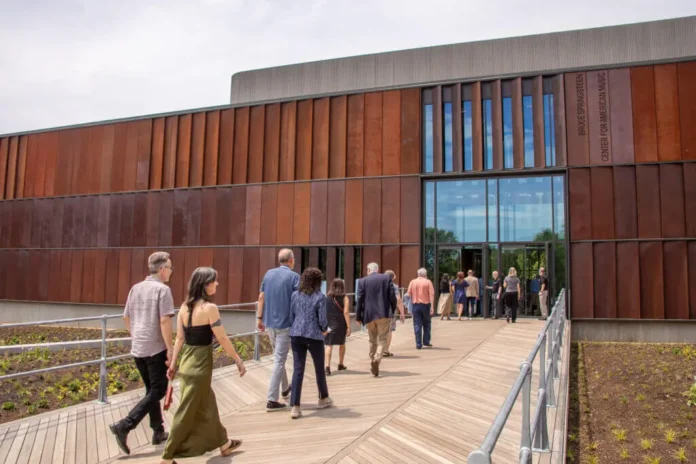

For decades, New Jersey has proudly claimed one of the most influential voices in American music history as its own. From the boardwalks of Asbury Park to sold-out stadiums across the globe, Bruce Springsteen’s songs have chronicled the hopes, struggles, victories, and contradictions of the American experience with a level of authenticity few artists have ever matched. Now, that legacy has found a permanent home in the Garden State with the opening of the Bruce Springsteen Center for American Music at Monmouth University in Long Branch.
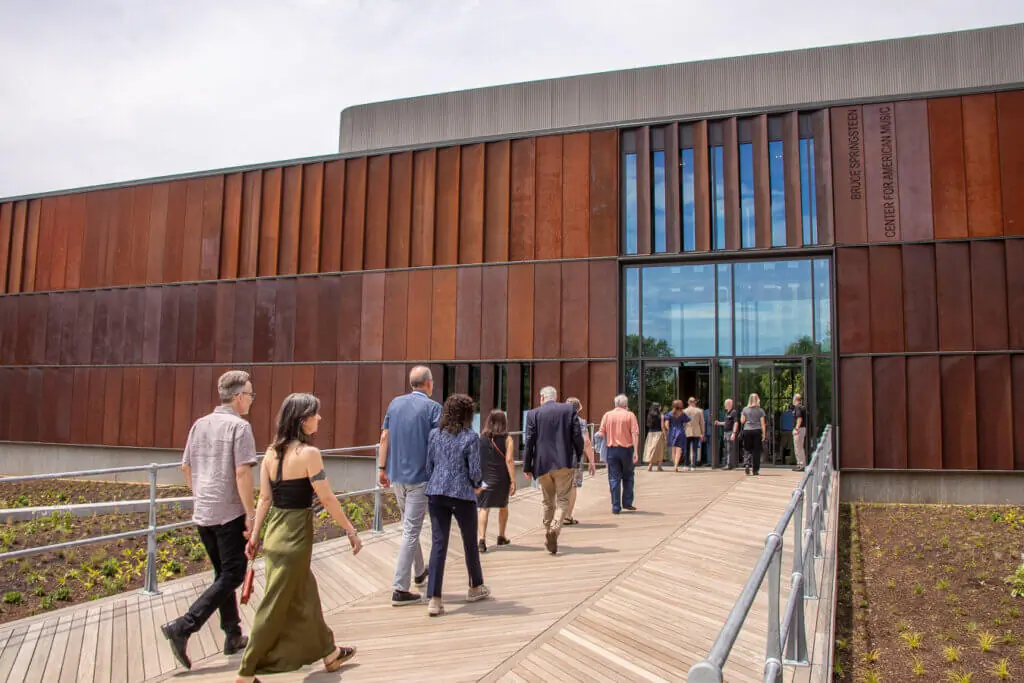
The official public opening on June 13 marks more than the debut of a museum. It represents the arrival of a major cultural institution dedicated not only to the life and career of Bruce Springsteen but to the broader story of American music itself. Ambitious in scope, impressive in scale, and deeply rooted in New Jersey’s artistic identity, the new center immediately establishes itself as one of the most significant music destinations anywhere in the United States.
Located on the campus of Monmouth University, just minutes from the Jersey Shore communities that helped shape Springsteen’s artistic vision, the 30,000-square-foot facility is the culmination of years of planning, fundraising, preservation efforts, and community support. Entirely donor-funded at a cost of approximately $50 million, the center serves as the official archival home for Bruce Springsteen and the E Street Band while simultaneously exploring the larger story of American music and its influence on culture, politics, social movements, and everyday life.
The timing could not be more fitting. As New Jersey continues to strengthen its reputation as a destination for arts, entertainment, music history, and cultural tourism, the Springsteen Center arrives as a landmark attraction capable of drawing visitors from around the world while reinforcing the state’s deep musical heritage.
For fans, the experience begins before a single artifact comes into view.
Visitors enter through a carefully designed orientation experience anchored by an exclusive documentary film titled “The Ties That Bind: Bruce Springsteen’s American Music Journey.” Directed by longtime Springsteen collaborator Thom Zimny, the film serves as both introduction and invitation. Rather than simply presenting a chronological biography, it places Springsteen’s work within the broader context of American musical traditions, demonstrating how influences ranging from folk and blues to soul, country, gospel, and rock and roll helped shape his artistic voice.
That larger perspective becomes the defining theme throughout the center.
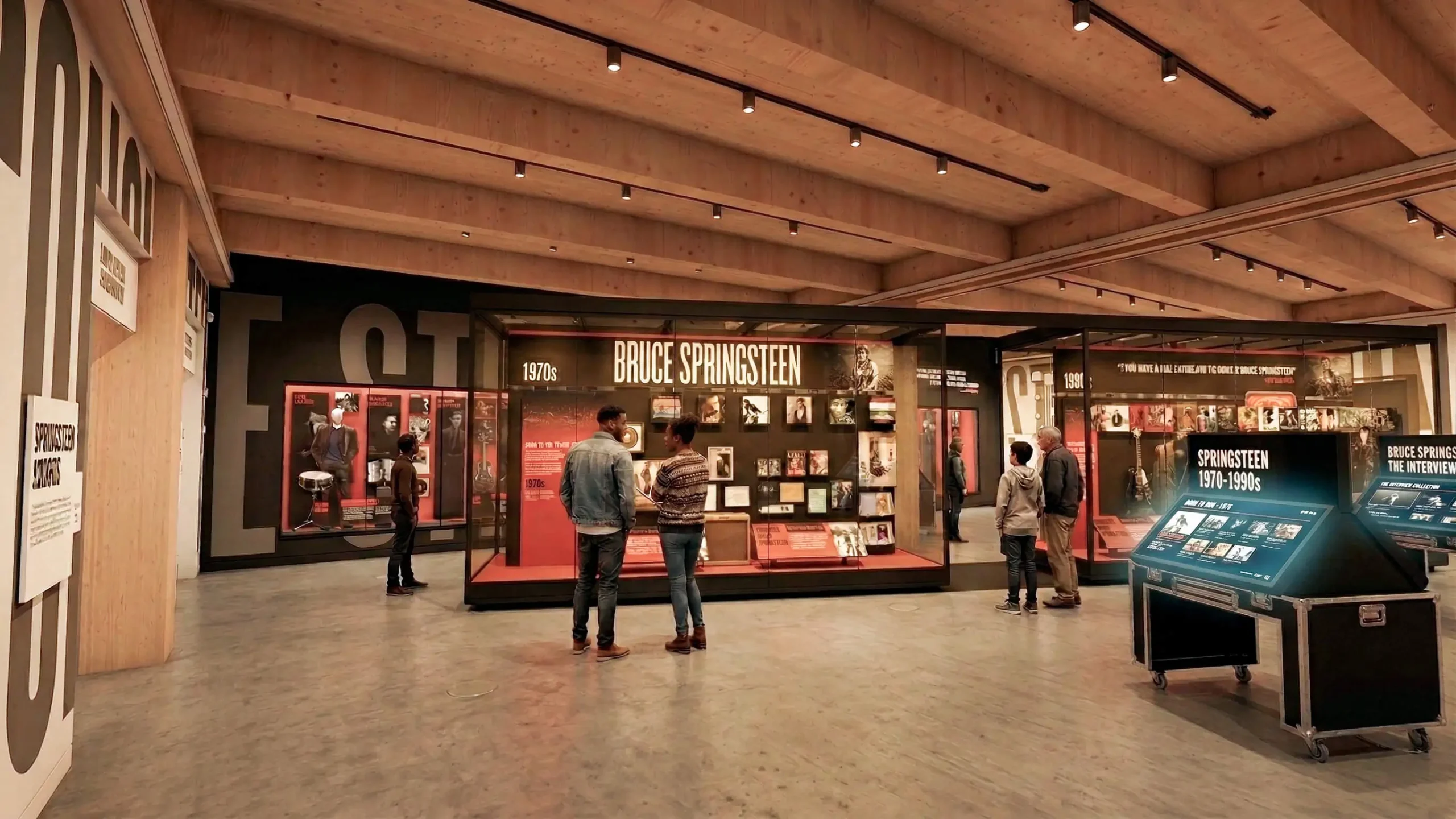
While many celebrity museums focus exclusively on the accomplishments of a single artist, the Springsteen Center deliberately broadens the conversation. The first floor celebrates the diverse and interconnected history of American music itself. Visitors encounter exhibits that span generations and genres, connecting legendary performers from different eras through the common threads of storytelling, innovation, cultural influence, and artistic expression.
Artifacts and exhibits explore the contributions of icons from across the musical spectrum. The journey moves through folk traditions, country roots, rhythm and blues, soul, rock, punk, hip-hop, and contemporary pop, illustrating how each generation builds upon the sounds that came before it.
Interactive experiences help transform the museum from a passive viewing experience into an active exploration of music’s role in American life. One of the most talked-about attractions is the American Music Song Bar, where visitors can engage with recordings, stories, and performances that demonstrate the remarkable diversity of the nation’s musical landscape.
It is a powerful reminder that while Bruce Springsteen may be the inspiration behind the center, the institution itself is ultimately dedicated to something larger: understanding how music helps define America.
The second floor shifts the spotlight directly onto Springsteen’s extraordinary career.
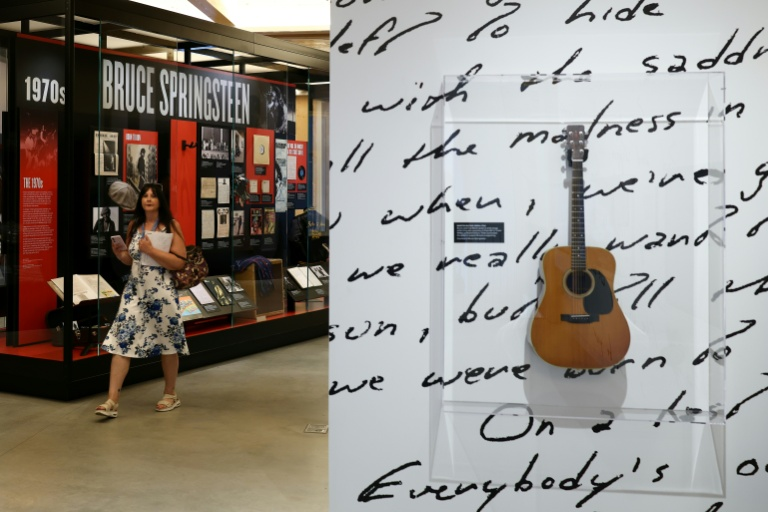
Here, visitors enter a deeply immersive exploration of more than five decades of songwriting, performing, recording, and cultural impact. The collection includes iconic memorabilia, personal artifacts, handwritten lyrics, rare photographs, stage costumes, instruments, and archival materials that offer an unprecedented look into the creative process behind one of the world’s most celebrated artists.
Among the most anticipated attractions is an exact recreation of Springsteen’s famous Born to Run-era guitar, allowing fans to connect with one of the most recognizable symbols in rock and roll history. Handwritten lyric sheets reveal the meticulous craftsmanship behind songs that have become part of the American cultural vocabulary. Stage attire and performance artifacts help document the evolution of an artist whose live shows remain legendary for their intensity, passion, and emotional connection.
Yet perhaps the most compelling aspect of the exhibit is its focus on storytelling.
Springsteen’s career has always been about more than record sales or chart positions. His songs have chronicled factory towns, highway dreams, working-class struggles, personal redemption, youthful ambition, and national identity. By placing these themes within historical and cultural context, the center demonstrates why his work continues to resonate with audiences across generations.
The museum’s inaugural special exhibition further reinforces this mission.
Titled “Chimes of Freedom: Protest, Patriotism, and the Power of Song,” the exhibit examines how musicians have used their voices to influence public discourse, challenge social norms, inspire change, and reflect the evolving American experience. The exhibition connects music to broader conversations about citizenship, democracy, activism, freedom, and identity.
It is an especially fitting theme for an institution devoted to an artist whose work has frequently explored the complex relationship between patriotism and social responsibility.
Beyond the exhibits themselves, the Springsteen Center positions New Jersey as a premier destination for music tourism.
For decades, music fans have traveled to Asbury Park to visit venues associated with Springsteen’s early career. The Stone Pony, Convention Hall, and the boardwalk have become pilgrimage sites for fans from around the globe. The new center expands that tourism ecosystem significantly, providing a world-class museum experience capable of attracting visitors year-round.
The economic impact could be substantial.
Cultural tourism remains one of the strongest drivers of visitor spending, and institutions that celebrate iconic artists frequently become major regional attractions. The center has the potential to bring visitors to Long Branch, Asbury Park, Red Bank, Ocean Grove, and other nearby communities while supporting local restaurants, hotels, retailers, arts organizations, and entertainment venues.
For Monmouth University, the center also creates educational opportunities that extend beyond traditional museum programming.
Researchers, students, historians, musicians, educators, and scholars will gain access to one of the most significant music archives in America. The facility is expected to host lectures, educational programs, public discussions, performances, academic initiatives, and special events designed to explore the continuing influence of American music on society.
In many ways, the opening of the Bruce Springsteen Center for American Music reflects the broader story of New Jersey itself.
This is a state that has produced extraordinary artistic talent across multiple generations. From Frank Sinatra and Count Basie to Whitney Houston, Lauryn Hill, Southside Johnny, Dionne Warwick, Sarah Vaughan, Jon Bon Jovi, and countless others, New Jersey has consistently served as a proving ground for artists who have shaped the American soundtrack.
The Springsteen Center recognizes that legacy while creating a new destination for future generations to discover it.
For longtime fans, the experience offers an intimate look at the career of an artist whose music has provided the soundtrack to countless lives. For newcomers, it serves as an introduction not only to Springsteen’s work but to the larger story of American music itself.
And for New Jersey, it stands as a landmark achievement that reinforces the state’s place at the center of the nation’s cultural history.
Visitors arriving at the Bruce Springsteen Center for American Music may come expecting a museum dedicated to one legendary performer. What they will find instead is something much larger: a celebration of music’s power to tell stories, unite communities, preserve history, and reflect the ever-changing American experience.
In a state where music is woven into the fabric of everyday life, the opening of this extraordinary institution feels less like the launch of a museum and more like the opening of a new chapter in New Jersey’s cultural story. It is a place where the past is preserved, the present is celebrated, and the future of American music remains an ongoing conversation.
For New Jersey residents and visitors alike, that journey has officially begun.