

Newark may be on the verge of making it meaningfully easier to protect its own history, thanks to a quiet but significant reform working its way through City Hall. For years, anyone hoping to secure local landmark status for a building in Newark faced a paperwork burden nearly identical to the one required by the National Register of Historic Places, a process so exhaustive that community groups often had no choice but to hire professional architectural historians just to complete the application. That barrier has kept the pace of local landmark designations remarkably slow in a city with no shortage of buildings worth preserving, and it is precisely the problem a newly approved resolution is designed to fix.
The push for change traces back to Anker West, a board member with the nonprofit Newark Landmarks, who ran directly into that bureaucratic wall while trying to secure landmark protection for the Dietze Building, a property he owns in the Ironbound neighborhood. At the time, the city was relying on the same demanding form used for National Register nominations, a document ill-suited to the needs of a local designation process meant to move more nimbly. Frustrated by the mismatch, Newark Landmarks set out roughly four years ago to draft a simplified alternative, one designed specifically to fast-track local landmark status and give more of the city’s historic buildings a real shot at protection from demolition.
That effort finally cleared a major hurdle when the city’s Planning Board approved a resolution adopting the simplified form, a milestone that had felt uncertain for much of the four years the proposal spent working its way through the process. The resolution still requires a final vote from the City Council before it becomes official policy, but its approval at the Planning Board level marks the clearest sign yet that the reform is likely to take effect. Tom Ankner, president of Newark Landmarks, has been candid about how long the wait has felt, having watched the proposal come up again and again at meetings without visible movement for years before finally advancing. With the simplified form now closer to reality, Ankner expects local landmark nominations to become a far more routine occurrence in Newark going forward, rather than the rare event they have historically been.
That rarity is easy to document. The most recent building to receive local landmark designation in Newark was Weequahic High School, which earned that status in 2023, and before that milestone, the honor belonged to West’s own Dietze Building. Two designations standing as the most recent notable examples says a great deal about how difficult the previous process had become. Ankner has pointed to the cost and complexity of architectural historian requirements as the central obstacle holding back additional nominations, a burden that pushed many potential local landmarks out of reach even when a building’s historical significance was not seriously in question. The Weequahic High School nomination only moved forward with outside help, supported by a grant of $13,580 from the National Trust for Historic Preservation, underscoring just how much outside financial support has often been necessary to clear what should, in theory, be a locally driven process.
Ankner has also drawn a direct contrast between the current difficulty of local designation and how comparatively simple the process used to be decades ago, both locally and at the national level. He has noted that Newark once succeeded in placing a substantial number of buildings on the National Register, back when the financial and procedural demands of that process were far lighter than they are today. Over time, National Register nominations became considerably more expensive and complicated to prepare, a shift that pushed preservation advocates like Ankner’s group toward pursuing local landmark status instead, precisely because it offered a more attainable path to protection even as the paperwork mirrored the national process far too closely for comfort.
Myles Zhang, a member of Newark’s Landmarks Commission, has framed the simplified form as a meaningful win not just for preservation policy but for civic engagement more broadly. Zhang has pointed out that a more accessible nomination process builds genuine community pride, giving residents the ability to nominate a building in their own neighborhood and see it formally recognized as a local landmark, a level of participation that a dense, expert-driven application process effectively locked out. Zhang has also offered useful historical context on why the National Register process became so burdensome in the first place, noting that nominations from the 1970s and 1980s often ran only three or four double-spaced pages, a stark contrast to what applicants face today. Much of that added complexity, in Zhang’s telling, stems from the significant tax incentives now tied to National Register status, incentives that raised the stakes enough to justify a far more rigorous and heavily scrutinized application process.
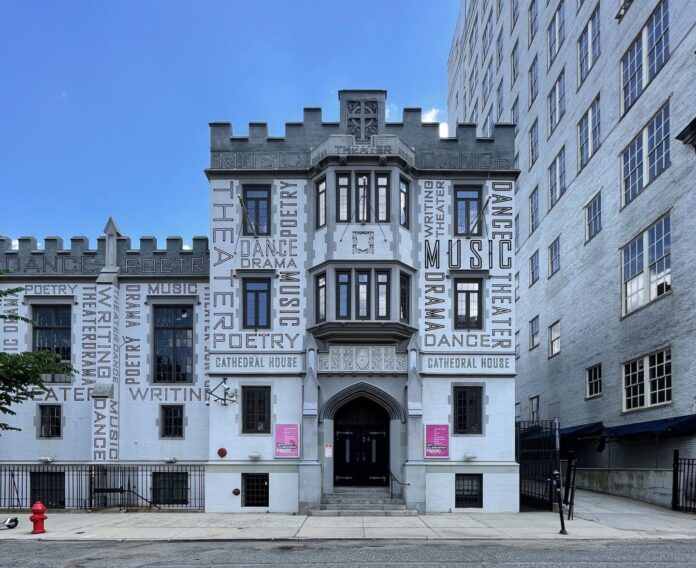
The timing of this reform carries extra weight given other recent developments in Newark’s preservation landscape. This same year, one of the city’s own buildings was named to a list of the state’s Most Endangered Historic Places, a designation tied to Cathedral House, a property connected to the New Jersey Performing Arts Center. A pending demolition application for that site required five separate votes from the Landmarks Commission, a body appointed by the mayor and one that has undergone real turbulence in recent memory. Several new members joined the commission following a contentious shakeup in which its previous chair was forced to resign after declining to issue a letter of support for a proposed pedestrian bridge connecting to Penn Station, an episode that left preservation advocates uneasy about how independent the reshaped commission would ultimately prove to be.
That unease has not disappeared just because the landmark application process is getting simpler. Making it easier to nominate a building is only half the equation, since the Landmarks Commission still holds the power to approve or reject demolition requests from developers, and Ankner’s organization has expressed real concern about whether the current commission is fully willing to stand in the way of controversial projects when the moment demands it. Advocates within the preservation community have argued that the commission’s core responsibility is safeguarding the city’s historic sites, not balancing that mission against development pressure, a distinction they feel has occasionally gotten blurred in practice.
Even with that lingering tension, the simplified nomination process represents a genuine structural shift in how Newark approaches its own historic fabric. By lowering the financial and technical barriers that have kept so many worthy buildings off the local register, the city is opening the door for neighborhood advocates, small property owners, and community groups to participate in preservation in a way that was effectively closed to them for years. Whether that translates into a meaningful wave of new landmark designations will depend both on the City Council’s upcoming vote and on how the Landmarks Commission chooses to exercise its authority once more buildings begin working their way through the newly streamlined pipeline. For a city with as much architectural history as Newark, though, the mere existence of an accessible path forward marks a notable turn after years of a process that too often kept preservation out of reach for the very communities it was meant to serve.
















