
A driving tour through Morris County, New Jersey, is, on its surface, a familiar kind of regional offering — the sort of self-guided itinerary that historical societies across the state have produced for decades, directing visitors toward old taverns, Revolutionary War encampments, and the homes of locally notable families. What the Morris County Historical Society has just released is something different in both scope and intent: a 19-site driving tour devoted entirely to African American history across the county, launched in recognition of Juneteenth and built from the early findings of the first countywide survey of Black history and historic sites that Morris County has ever undertaken.
The tour, announced on the Society’s website and developed as part of its ongoing “Revolution to Revolutionary” driving tour series, represents both a public history product and a research milestone. It is the visible, accessible front end of a multi-year survey effort that has been quietly assembling, for the first time in any systematic way, a documented record of where Black history actually happened across Morris County — not as a single commemorative site or a single notable figure, but as a network of homes, churches, cemeteries, and community institutions spread across the county’s 39 municipalities.
A Survey Born From an Absence
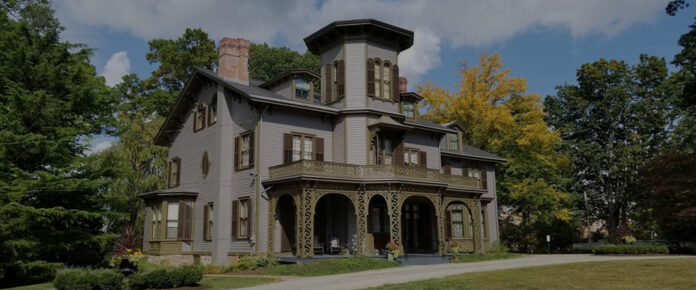
The origin of this project traces back to 2021, when the Morris County Historical Society undertook an honest internal assessment of its own holdings and identified a significant gap: within a collection of more than 27,000 objects documenting Morris County’s history, the material record of the county’s African American community was substantially underrepresented. For an organization that has operated continuously since 1946 and that has been headquartered at Acorn Hall — the 1853 Victorian Italianate mansion at 68 Morris Avenue in Morristown — since 1971, that gap was not a minor curatorial oversight. It was an indication that the institutional history of the county, as preserved and presented by its primary historical organization, had been incomplete for the better part of seven decades.
The response was the launch of a countywide African American history survey — a research initiative designed to systematically identify, document, and preserve the sites, stories, and material culture connected to Black communities across Morris County, going back to the period of enslavement in colonial and early statehood New Jersey through the twentieth century. This is not a small undertaking for a regional historical society to take on independently, and the survey’s growth over the subsequent five years reflects the scale of partnership required to do the work properly. The Morris County Historical Society has built the project in collaboration with the New Jersey Historical Commission, the New Jersey Council for the Humanities, the New Jersey Economic Development Authority, the Morris County Office of Planning and Preservation, the Morris County Park Commission, the Morris County Heritage Commission, the F.M. Kirby Foundation, and the Sankofa Heritage Collective of Morris County — a coalition spanning state cultural agencies, county government, private philanthropy, and community-based historical expertise.
The African American History Driving Tour, funded through a grant from the New Jersey Economic Development Authority, is the survey’s first major public-facing product. It will not be the last. MCHS Executive Director Amy Curry, who has led the organization since 2012 and has overseen a series of significant grant-funded preservation projects including the restoration of Acorn Hall’s six-acre cultural landscape and the complete exterior restoration of both the main house and its carriage house, has described the tour as the opening chapter of a longer initiative. Additional research findings, additional public programming, and additional creative engagement with what the survey continues to uncover are explicitly part of the plan going forward.
What the Tour Actually Documents
The driving tour connects 19 locations across Morris County, each selected because of a documented connection to African American history within the region — sites that the survey’s research team identified as carrying stories of what the Society’s published materials describe as Black joy, resilience, struggle, and achievement. That framing is worth taking seriously as a curatorial choice. A driving tour built solely around sites of struggle and oppression would tell an incomplete story; a tour built solely around achievement would risk flattening the complexity of what survival and community-building actually required. By organizing the tour around all four registers simultaneously, the Society is making a specific argument about how this history should be understood: not as a single narrative arc, but as a fuller record of a community that built institutions, raised families, worshipped, organized, and persisted across more than two centuries of documented presence in Morris County.
Dr. Denise Rompilla, the project historian leading the countywide survey, has been explicit about what distinguishes this project from a conventional historical marker initiative. The work, in her framing, is not simply about directing visitors to sites — it is about recognizing the specific people, places, and communities that shaped Morris County and ensuring their stories remain visible within the county’s broader historical narrative, rather than existing as a separate or supplementary history disconnected from the mainstream account of how the region developed. That distinction matters because it reframes the entire premise of the tour: this is not an addendum to Morris County history. It is an argument that Morris County history, properly told, has always included these sites and these communities, and that the previous absence of that material from the public record was the actual historical distortion requiring correction.
The survey’s research has already surfaced specific material evidence of how deeply rooted Black institutional life was in Morris County. Acorn Hall’s own collection includes a pastor’s chair that resided at the Bethel African Methodist Episcopal Church, built on Spring Street in Morristown in 1874 — a single artifact that testifies to the existence of an organized, established African American congregation in the county more than 150 years ago, with its own clergy, its own physical sanctuary, and presumably its own embedded role in the social and spiritual life of Morristown’s Black residents during the Reconstruction era and beyond. The driving tour’s purpose is to surface dozens of comparable threads — churches, homes, cemeteries, business sites, and community gathering places — and connect them into a single, navigable itinerary that makes this layered history accessible to anyone willing to get in a car and follow the map.
A Living Project, Not a Finished Product
One of the more significant aspects of how the Morris County Historical Society has structured this tour is its explicit characterization as a living project rather than a completed historical record. The 19 sites currently mapped represent the survey’s findings to date, not a final accounting of every location connected to African American history across the county. MCHS has stated plainly that the tour will continue to expand as additional research uncovers new stories, new historic sites, and new documentation of community contributions that have not yet been formally recorded.
That structure carries a specific invitation embedded within it: the Society and Dr. Rompilla have asked community members to actively participate in expanding the tour by sharing additional sites, family histories, and personal or community memories that deserve preservation. This crowdsourced dimension reflects an awareness, common among historians working on previously underdocumented communities, that the most significant primary sources for this kind of history frequently exist not in institutional archives but in family memory, oral tradition, and the personal records that individual families and congregations have maintained independently of any official historical institution. A county’s official archive, however well-intentioned its stewardship, cannot capture what it was never given access to in the first place. By building a mechanism for ongoing community contribution into the tour’s design, the Morris County Historical Society is acknowledging that the most complete version of this history will only emerge through sustained partnership with the descendant communities whose ancestors lived it.
The Revolution to Revolutionary Series and the Moment Behind It
The African American History Driving Tour is the third release in the Morris County Historical Society’s “Revolution to Revolutionary” driving tour series, a broader initiative developed in partnership with local historians and historical organizations across the county to encourage residents and visitors to explore Morris County’s history through self-guided exploration rather than solely through formal museum visits or guided tours. Additional tours in the series are planned, extending the same self-guided format to other dimensions of the county’s historical record.
The series’ name and its timing situate this work within a specific historical moment for Morris County: 2026 marks the 250th anniversary of the founding of the United States, and Morris County — which served as George Washington’s winter encampment headquarters during two critical periods of the Revolutionary War and which holds a documented place in the foundational narrative of American independence — has organized substantial commemorative programming around that anniversary through the Morris County 250th Anniversary initiative. The decision to release a driving tour centered on African American history as part of a series explicitly framed around the journey “from Revolution to Revolutionary” carries clear interpretive intent: the African American residents of Morris County, including those who lived through the Revolutionary War period itself, were not peripheral to that founding history. Their presence, their labor, their resistance, and their eventual paths toward freedom are part of the same Revolutionary-era story that the county’s 250th anniversary commemorations are built around, and the tour’s release timed to Juneteenth makes that connection explicit.
Juneteenth — the June 19th holiday commemorating the date in 1865 when enslaved people in Galveston, Texas, finally received word of their freedom more than two years after the Emancipation Proclamation had legally established it — has become, since its formal recognition as a federal holiday in 2021, one of the most significant occasions on the American civic calendar for exactly this kind of historical reckoning. Launching a tour of Black historical sites across Morris County in conjunction with that date is not incidental programming. It is a deliberate alignment of the Society’s research output with the holiday most directly oriented toward public engagement with the history of slavery, emancipation, and the long unfinished work of full freedom and recognition that followed.
Why This Matters for Morris County and for New Jersey
New Jersey’s relationship with slavery and its own history of gradual emancipation is more complicated, and considerably less examined in popular historical memory, than the state’s modern reputation suggests. New Jersey was the last northern state to abolish slavery, doing so only gradually beginning in 1804 and not fully eliminating the institution within its borders until the ratification of the Thirteenth Amendment in 1865 — meaning enslaved people remained legally held in New Jersey for decades after the more commonly cited image of northern abolition would suggest. Morris County, with its iron forges, its agricultural estates, and its position along significant transportation corridors of the colonial and early republic periods, was part of that history in ways that a comprehensive local historical record has not, until this survey, systematically documented.
The driving tour, and the broader survey project that produced it, represents an attempt to correct that gap with the rigor and resources that the subject deserves — multiple years of dedicated research, a project historian specifically tasked with the work, and a coalition of state and county agencies and private foundations willing to fund it. For Morris County residents, the tour offers something that few other public history products in the region currently provide: a structured, documented, drivable path through the specific places where this history actually happened, accompanied by the historical context necessary to understand why each site matters.
The downloadable tour map is available through the Morris County Historical Society’s website, where visitors can access the full route along with the historical background for each of the 19 stops. The tour requires no admission fee and no reservation — only the willingness to spend an afternoon following a map that the Society has spent five years and substantial institutional partnership building. For anyone with a genuine interest in the fuller, more accurate history of Morris County — not the history that has traditionally been told, but the history that actually happened — the tour represents one of the most substantive new historical resources released in the region this year.
The Morris County Historical Society is located at Acorn Hall, 68 Morris Avenue, Morristown, New Jersey, and operates as an independent, member-supported 501(c)(3) nonprofit organization dedicated to the preservation and promotion of Morris County history since 1946. Additional information about the Society, its collections, and its ongoing programming is available at MorrisCountyHistory.org, and information about Morris County’s broader 250th anniversary commemorations is available at MorrisCounty250.com.