
There is a moment in every pregnancy when the distance between a woman and her prenatal care becomes more than a matter of miles. For far too many families in Trenton and the surrounding communities of Mercer County, that distance is measured not in blocks but in barriers — no car, no reliable bus route, no one available to drive, no money for a rideshare app. The appointment gets missed. The visit gets pushed. And the consequences, too often, extend far beyond a rescheduled calendar entry.
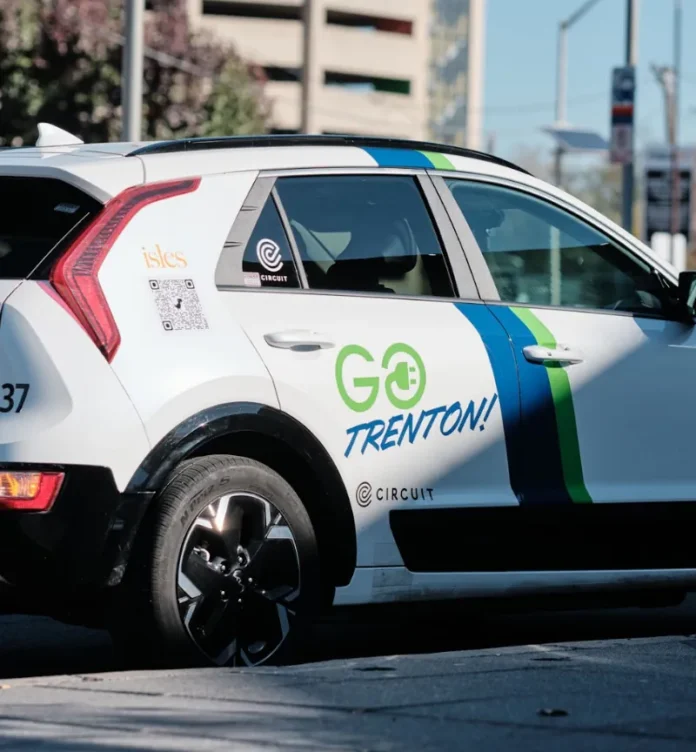
New Jersey is doing something about it. The New Jersey Maternal and Infant Health Innovation Authority, known as NJMIHIA, announced this week the early results and expanded reach of NJMIHIA Rides, a first-of-its-kind program powered by GOTrenton! that provides free, zero-emission transportation to pregnant and postpartum individuals and the perinatal workforce throughout the Trenton area. The numbers are already telling a compelling story, and the expansion announced this spring signals that the people running this program believe the best is still ahead.
The Problem This Program Was Built to Solve
Transportation is not simply a convenience. In the language of public health, it is what researchers call a social driver of health — one of the structural, non-medical factors that determine whether people actually receive the care they need. Across the country, missed prenatal appointments are one of the leading contributors to preventable complications during pregnancy and childbirth. In communities where vehicle ownership is low, where public transit is unreliable or inadequate, and where the geography of daily life makes getting from point A to point B an exercise in problem-solving rather than routine movement, the consequences of transportation gaps show up in outcomes data in ways that are stark and measurable.
Trenton is a city where more than eleven percent of residents have no access to a personal vehicle. In a region where healthcare facilities, social service offices, and workforce centers are not always within walking distance or on a reliable bus line, that number represents real people facing real choices every day — choices between keeping an appointment and managing every other logistical reality that a pregnancy in a low-resource environment demands. The result is not laziness or disengagement. It is the predictable outcome of a system that was not designed with these families in mind.
New Jersey’s maternal health crisis is not hypothetical. The state’s overall preterm birth rate sits at 9.4 percent, but in Mercer County it has climbed to 10.4 percent — a gap that represents hundreds of additional families confronting higher-risk pregnancies every single year. The racial dimensions of this crisis are even more sobering. Black women in New Jersey face a pregnancy-related mortality ratio more than seven times higher than white women. Black infants are born preterm at a rate of 13 percent compared to 8 percent for white infants. These are not just statistics — they are the accumulated weight of structural inequity, healthcare system bias, housing instability, and precisely the kind of transportation barriers that NJMIHIA Rides was created to remove.
The community that this program serves reflects Trenton’s full demographic reality. The city’s population includes more than 46 percent of residents who identify as Hispanic and more than 35 percent who speak a language other than English at home. These are communities that have historically been underserved by healthcare infrastructure and underserved by the systems designed to connect them to it. A program that removes one of the most concrete, actionable barriers — the inability to physically get to an appointment — is not a small gesture. It is a meaningful intervention into a cycle that has persisted far too long.
What NJMIHIA Rides Actually Does
Launched on December 1, 2025, NJMIHIA Rides is a special program operating within the larger GOTrenton! transportation network. GOTrenton! is a community-driven initiative led by Isles, Inc., a Trenton-based community development organization with decades of work embedded in this city’s neighborhoods. The program runs an all-electric fleet, meaning every ride provided through this initiative is a zero-emission trip — a detail that matters for environmental health in a community already bearing a disproportionate burden of air quality issues, and a signal that this program was designed with the whole picture of community wellbeing in mind.
The partnership behind NJMIHIA Rides brings together five organizations whose combined reach into the community is both broad and deep. NJMIHIA provides the strategic direction and the maternal and infant health expertise. The New Jersey Department of Labor and Workforce Development brings its connection to employment services and the workforce training pipeline that serves the perinatal workforce. The New Jersey Department of Transportation contributes its expertise in mobility infrastructure and its commitment to ensuring that transportation investments reach traditionally underserved communities. GOTrenton! and Isles provide the on-the-ground operational capacity and the community relationships that make a program like this actually function in the neighborhoods it serves.
The rides are entirely free. There is no means test, no application process to navigate, no bureaucratic hurdle to clear before a pregnant woman can request a ride to her next OB appointment. The program covers medical appointments, workforce services, government offices, and other essential destinations that support health and wellbeing during pregnancy and the postpartum period. Critically, it also serves the perinatal workforce — the doulas, midwives, community health workers, lactation consultants, and other birth workers whose ability to reach the families they serve is itself a function of reliable, affordable transportation. Under the current partnership structure, free rides will continue through December 30, 2026.
The Early Numbers Are Extraordinary
When NJMIHIA Rides launched in December 2025, the goals were clear even if the outcomes were still uncertain. Building community awareness of a new transportation service in a city where distrust of institutional programs is a reasonable response to lived experience takes time. Demonstrating reliability in a community that has experienced what it feels like when a program disappears or fails to deliver takes even longer. Which is why the utilization numbers that NJMIHIA announced this week are worth examining carefully.
Since launch, the program has provided more than 1,600 rides for over 2,100 passengers throughout Trenton. That gap between rides and passengers reflects a meaningful program design feature — multiple family members or support people can travel together, meaning that a single ride to a prenatal appointment might bring a mother and a partner, or a mother and a child, or a mother and a doula. The program is moving real people to real appointments in numbers that represent significant and growing community uptake.
The acceleration in utilization is particularly striking. In April and May of 2026 alone — just two months — the program provided more than 900 rides for over 1,200 passengers. That means that in two months, NJMIHIA Rides delivered more than half the total volume it had accumulated over the previous four months combined. That kind of growth curve does not happen by accident. It reflects word spreading through communities in exactly the way community-centered programs are supposed to spread: person to person, neighbor to neighbor, patient to patient, midwife to expectant mother.
The satisfaction data reinforces what the utilization numbers suggest. Among pregnant and postpartum riders, average satisfaction scores came in at 4.93 out of 5. Among perinatal workforce participants, the average was a perfect 5 out of 5. These are not the scores of a program that is simply providing transportation. These are the scores of a program that is treating people with dignity, showing up when it says it will, and delivering on a promise that matters.
The May Expansion: Reaching More of the Region
Growth in utilization alone would be a reason to celebrate. But NJMIHIA and its partners did not wait to see whether demand would materialize before responding to it. In May 2026, GOTrenton! expanded its service capacity and geographic coverage in ways that significantly extend the program’s reach across Mercer County.
The expansion added vehicles and drivers to the fleet, increasing the program’s ability to handle concurrent ride requests and reduce wait times. New service zones were added, including West Hamilton and Southern Ewing — areas that were previously underserved by the program but that contain families with exactly the transportation needs the initiative was designed to address. These additions mean that women in communities just beyond Trenton’s city limits can now access the same free, reliable transportation to prenatal appointments and essential services that Trenton residents have been using since December.
The geographic logic of this expansion matters. Mercer County is not a homogeneous community, and the barriers to prenatal care access are not contained within municipal boundaries. West Hamilton and Southern Ewing have their own concentrations of families navigating pregnancy without reliable vehicle access, their own residents who work in the perinatal workforce and need dependable transportation to reach the families they serve. Extending the program to these zones is an acknowledgment that equitable access cannot be defined by zip code.
The Vision Behind the Program
NJMIHIA President and CEO Lisa Asare has been clear about the organizing principle behind everything her organization does, and NJMIHIA Rides is no exception to it. Transportation, she has said, should never be the reason someone misses a prenatal appointment, cannot access essential services, or faces barriers to providing care. That is not a statement about transportation policy. It is a statement about what a just healthcare system looks like when it is actually functioning — one where the practical obstacles between a family and their care have been removed because someone with the authority and the resources to remove them decided that it was worth doing.
GOTrenton! Director Kep Short has made the same point from the operational side: reliable transportation is not just about moving people — it is a critical component of health. That framing reflects a broader understanding of what makes communities healthy that has been building in public health research for decades. The medical appointment is not the only thing that matters. Getting there, reliably and with dignity, is part of the care.
New Jersey Department of Transportation Commissioner Priya Jain echoed the theme in her own comments about the program, noting that ensuring the transportation system addresses service deserts and increases connections to healthcare, employment, education, and community resources for traditionally underserved communities is especially important. The participation of NJDOT in this partnership is itself significant — it signals that transportation investment decisions in New Jersey are being made with maternal and infant health outcomes explicitly in view, not as an afterthought but as a stated goal.
Part of Something Larger
NJMIHIA Rides does not exist in isolation. It is one piece of a broader, multi-year effort to transform maternal and infant health outcomes in Trenton and across New Jersey that has been building in scope and ambition since the early days of the Nurture NJ initiative, which launched in 2019 with the explicit goal of making New Jersey the safest and most equitable state in the nation in which to deliver and raise a baby.
The physical anchor of that broader effort is taking shape on Pennington Avenue and Warren Street in Trenton, across from the Battle Monument, where the Maternal and Infant Health Innovation Center is under construction with $86.7 million in state and federal funding. When it opens in 2027, the center will bring clinical care, social support, workforce education, and innovation infrastructure under one roof — a model designed to eliminate the fragmentation that forces families to navigate multiple systems to access the full range of services they need.
The center’s Innovation Incubator, developed in collaboration with Rowan University and Plug and Play Tech Center, will work to create digital health tools and doula support models that are specifically designed for equity-centered care. A higher education consortium anchored by the Rutgers School of Nursing, Mercer County Community College, Thomas Edison State University, and Stockton University will use the center to advance perinatal workforce education in ways that can eventually be replicated statewide. The New Jersey Economic Development Authority has committed more than $12.5 million to support maternal health startups operating within and alongside this ecosystem.
NJMIHIA Rides is the transportation infrastructure that makes all of that investment accessible. A state-of-the-art health innovation center is not worth its construction cost if the people it was built for cannot get to it. The community health worker doing vital work in a family’s home cannot do that work if she cannot reliably get across town. The pregnant woman who most needs coordinated, comprehensive care is the one least likely to have a car and most likely to be living in a neighborhood where every logistical challenge is amplified by economic precarity. NJMIHIA Rides is the answer to the question of how you actually reach the people you set out to serve.
What New Jersey Is Getting Right
There is a tendency in public policy discussions to frame transportation and healthcare as separate domains that occasionally intersect. What NJMIHIA Rides demonstrates is that they are the same domain when you look at it from the perspective of the family trying to navigate both. The woman who cannot make it to her thirty-two-week appointment because she has no way to get there does not experience that as a transportation failure or a healthcare failure. She experiences it as a failure of the systems that were supposed to be there for her.
New Jersey is correcting that failure in Trenton in a way that is data-driven, community-informed, and practically effective. The satisfaction scores are near-perfect. The ridership is growing faster than the program’s own growth curve would have predicted. The geographic footprint is expanding in response to demonstrated demand. And the partnership behind it — state government, a community development organization, a transportation authority, and a workforce development agency all aligned around a single purpose — is the kind of collaborative infrastructure that does not get built easily or quickly but, when it does get built, has a way of outlasting any single program cycle.
For New Jersey families in Trenton, West Hamilton, Southern Ewing, and the communities that surround them, NJMIHIA Rides represents something more straightforward than any policy framework can fully capture. It means that a woman who woke up this morning without a ride to her prenatal appointment can make that appointment. It means that the community health worker who needs to be across town in an hour can get there. It means that the system — imperfect, underfunded, and still very much a work in progress — saw a barrier and decided to remove it.
That is worth celebrating. And with rides continuing through December 30, 2026, the opportunity to reach more families, connect more members of the perinatal workforce, and demonstrate what a truly equitable approach to maternal healthcare access looks like in practice is still very much at hand.