
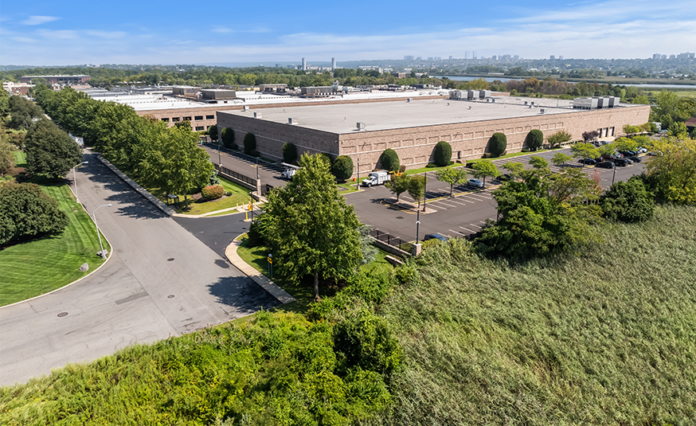

As artificial intelligence transforms industries, cloud computing reshapes business operations, and digital infrastructure becomes as essential as roads, bridges, and utilities, a new challenge is emerging across the United States: finding enough skilled workers to build the facilities powering the modern economy.
In response to that challenge, one of the nation’s largest construction industry organizations and one of the world’s most influential technology companies have launched a workforce initiative that could reshape the future of construction careers while creating new opportunities for workers across the country. The newly announced America’s Workforce Academy, backed by a $115 million investment from Associated Builders and Contractors (ABC) and Meta Platforms, represents one of the most ambitious workforce development programs introduced in recent years.
While the academy’s initial rollout targets training centers in Indiana, Louisiana, Ohio, and Texas, the implications extend far beyond those states. For New Jersey, where technology infrastructure, workforce development, construction innovation, and data center growth continue to intersect, the initiative highlights a rapidly expanding sector that is creating unprecedented demand for skilled labor.
The announcement arrives at a critical moment for both the construction industry and the broader American economy.
Artificial intelligence has become one of the defining technologies of the decade. Every AI platform, cloud service, streaming application, financial network, healthcare database, and digital communications system relies upon a massive physical infrastructure that most consumers never see. Behind every search query, financial transaction, and AI-generated response stands an enormous network of servers, fiber connections, cooling systems, and data centers operating around the clock.
As demand for digital services continues to accelerate, companies are investing billions of dollars into new data center construction projects nationwide.
That surge in development has created a significant workforce challenge.
Across the country, contractors are reporting shortages of electricians, pipefitters, HVAC technicians, equipment operators, concrete specialists, safety professionals, fiber installation crews, and other highly skilled tradespeople needed to construct increasingly sophisticated facilities.
The workforce gap is particularly pronounced in the data center sector, where projects often require specialized knowledge, advanced safety training, and the ability to operate within highly technical environments.
Recognizing both the challenge and the opportunity, Mount Laurel-based Associated Builders and Contractors partnered with Meta to create a comprehensive solution designed to build a long-term talent pipeline.
The resulting initiative goes well beyond traditional workforce training programs.
Participants accepted into America’s Workforce Academy will receive scholarships, career preparation resources, housing support, travel assistance, safety education, and hands-on technical training. The program combines classroom instruction with practical field experience, ensuring graduates enter the workforce prepared to contribute immediately on active construction projects.
Most notably, successful participants will receive employment opportunities with contractors working on Meta-related construction projects.
That direct connection between education and employment represents one of the most innovative aspects of the program.
Too often, workforce development initiatives focus exclusively on training without establishing clear pathways into long-term careers. America’s Workforce Academy seeks to bridge that gap by creating a seamless transition from instruction to employment, helping participants move directly into high-demand positions within one of the fastest-growing sectors of the construction industry.
For New Jersey, the announcement resonates particularly strongly.
The Garden State has increasingly positioned itself as a hub for technology infrastructure, logistics, telecommunications, and advanced business operations. Its strategic location within the Northeast Corridor, proximity to major population centers, extensive fiber networks, and strong transportation infrastructure make it an attractive destination for data center investment.
Over the past several years, data center development has become a growing component of New Jersey’s commercial real estate and technology landscape.
Facilities throughout North Jersey have demonstrated how digital infrastructure has evolved into a major economic development driver. Large-scale projects require substantial capital investment while generating long-term employment opportunities across multiple sectors, including construction, engineering, maintenance, security, information technology, and facility management.
The growth trajectory shows no signs of slowing.
As artificial intelligence platforms continue expanding, companies require additional computing power, storage capacity, and network infrastructure. Every new facility creates ripple effects throughout local economies, generating opportunities for contractors, suppliers, consultants, tradespeople, and support businesses.
This is precisely why workforce development has become such a critical component of future planning.
Associated Builders and Contractors has long emphasized the importance of creating accessible pathways into construction careers. Through its national network, the organization already supports hundreds of apprenticeship programs and educational initiatives designed to prepare individuals for careers in the skilled trades.
America’s Workforce Academy builds upon that foundation while addressing one of the industry’s most urgent workforce challenges.
The initiative’s structure reflects a recognition that the future of construction requires both technical expertise and adaptability.
Today’s construction professionals are increasingly working alongside advanced technologies, digital project management systems, automated equipment, sophisticated building controls, and complex infrastructure networks. Data center construction, in particular, represents one of the most technologically advanced segments of the industry.
Workers entering these environments must understand not only traditional construction practices but also the specialized requirements associated with mission-critical facilities.
That need has created an opportunity for a new generation of skilled professionals.
Recent high school graduates, military veterans, career changers, and individuals seeking stable, well-paying careers stand to benefit from programs that provide direct access to training and employment opportunities.
The construction industry has undergone a significant transformation over the past decade. Modern construction careers increasingly combine technical knowledge, digital tools, advanced equipment, and specialized expertise. The outdated perception of construction as merely physical labor has been replaced by a recognition that today’s trades professionals often operate within highly sophisticated environments requiring continuous learning and technical proficiency.
Data center construction exemplifies that evolution.
Facilities supporting cloud computing and artificial intelligence represent some of the most complex buildings ever constructed. Their successful completion depends upon workers capable of executing projects with extraordinary precision, safety, and efficiency.
For Meta, the investment also reflects a broader strategic objective.
The company’s continued expansion in artificial intelligence, virtual reality, augmented reality, and digital infrastructure requires substantial physical assets. Building those assets demands a reliable workforce capable of meeting increasingly ambitious construction schedules.
By investing directly in workforce development, the company is helping ensure that future projects have access to the skilled labor necessary for success.
The initiative also arrives as policymakers across the country increasingly focus on infrastructure modernization and economic competitiveness.
The next decade will likely witness unprecedented investment in data centers, energy systems, telecommunications infrastructure, advanced manufacturing facilities, and technology-driven development projects. Ensuring an adequate workforce exists to support those investments will be essential to maintaining economic growth and innovation.
For New Jersey businesses, educational institutions, workforce organizations, and policymakers, programs like America’s Workforce Academy offer valuable insights into how future workforce challenges can be addressed through collaboration.
Rather than treating workforce shortages as isolated problems, the initiative demonstrates the potential of coordinated partnerships between employers, educators, industry organizations, and workforce development providers.
The model emphasizes outcomes rather than simply participation.
Its goal is not merely to train workers but to connect them directly with meaningful careers that provide long-term growth opportunities.
That distinction matters.
Successful workforce development is ultimately measured not by the number of individuals completing programs but by the number who build sustainable careers, achieve economic mobility, and contribute to growing industries.
As New Jersey continues positioning itself at the intersection of technology, infrastructure, innovation, and workforce development, initiatives like America’s Workforce Academy offer a glimpse into what the future may look like.
The artificial intelligence revolution may be driven by software, algorithms, and computing power, but its foundation remains deeply physical. Data centers must be designed, built, maintained, and expanded. Fiber networks must be installed. Electrical systems must be constructed. Facilities must be operated and upgraded.
Behind every technological breakthrough stands a skilled workforce making it possible.
America’s Workforce Academy recognizes that reality while creating new pathways into some of the nation’s most promising careers. As the digital economy continues its rapid expansion, programs that connect people with opportunity will play an increasingly important role in shaping both the workforce and the future of American infrastructure.
For New Jersey, the message is clear: the next generation of economic growth will depend not only on technology itself, but on the skilled professionals who build the physical foundation that allows innovation to thrive.
















