
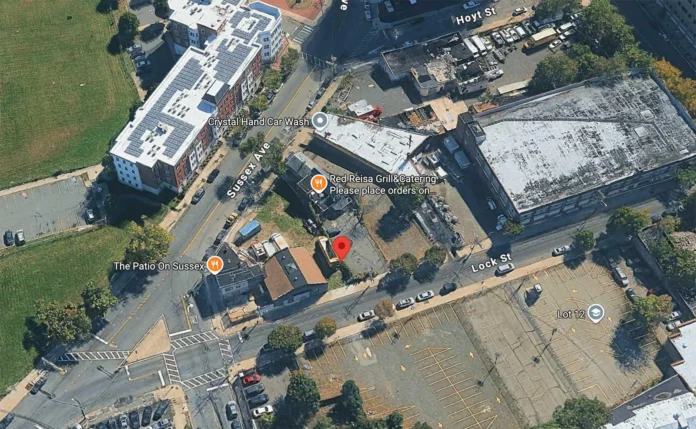

The continuing evolution of Newark’s residential landscape took another significant step forward this spring as plans for a new six-story apartment building near the New Jersey Institute of Technology secured approval from the city’s Central Planning Board. While the project itself may appear modest compared to some of the larger developments reshaping Newark’s skyline, its approval underscores a much broader story unfolding across the city—one centered on strategic infill development, increased housing density, affordable housing commitments, and growing demand for residential opportunities near major educational institutions and employment centers.
The proposal, submitted by Newark-based developer Pedro Gomes, focuses on a currently vacant parcel at 10 Lock Street, a site situated just two blocks from the NJIT campus and within one of the city’s most rapidly changing neighborhoods. During its May 18 meeting, the Central Planning Board voted to approve the project with several variances, allowing plans to move forward on a development that will transform an underutilized property into a modern residential building featuring 27 apartments.
For Newark, the approval represents another example of how smaller parcels throughout the city are being reimagined as housing opportunities in response to growing demand. As development activity continues throughout the University Heights district and surrounding neighborhoods, projects like 10 Lock Street are helping create the critical residential density needed to support local businesses, public transit, educational institutions, and long-term economic growth.
Located on a 6,176-square-foot lot near the intersection of Sussex Avenue and Lock Street, behind the popular Patio on Sussex property, the project has been designed to maximize residential use while incorporating modern building amenities expected by today’s renters. Plans call for a carefully organized ground floor featuring a residential lobby entrance, dedicated mail facilities, package management areas, building infrastructure, resident amenity space, storage areas, and waste management facilities including a trash compactor system.
The building’s first level will also include two two-bedroom residential units, elevator access, and dual stairwells designed to provide efficient circulation throughout the structure. Above the ground floor, the second through sixth stories will contain a mix of one-bedroom and two-bedroom apartments intended to appeal to a broad range of residents, from young professionals and graduate students to small families seeking access to Newark’s expanding urban core.
When completed, the project will contain 10 one-bedroom apartments ranging in size from approximately 651 to 760 square feet, along with 17 two-bedroom residences measuring between 717 and 1,034 square feet. The diversity of unit types reflects the changing demographics of Newark’s residential market, where demand increasingly comes from a variety of tenant groups attracted by the city’s growing employment opportunities, educational institutions, transportation access, and expanding lifestyle amenities.
Perhaps equally important is the project’s commitment to affordability. In accordance with local zoning requirements, six of the building’s 27 units will be designated as affordable housing. At a time when housing affordability remains one of New Jersey’s most pressing challenges, the inclusion of affordable units within new developments continues to play an important role in maintaining economic diversity and expanding housing access for residents across a range of income levels.
One aspect of the proposal that reflects broader urban planning trends is the decision not to include on-site parking. While once considered a necessity for virtually every residential development, many projects in Newark’s urban core are now moving forward with reduced or eliminated parking components. The site’s proximity to NJIT, Rutgers-Newark, Newark Penn Station, local bus routes, and a growing network of walkable amenities allows developers and planners to embrace a more transit-oriented approach to residential growth.
The Central Planning Board approved three variances associated with the project, addressing elevator setback requirements, ground-level transparency standards, and ground-floor height specifications. According to city records, no substantive changes were made to the application during the public hearing process, allowing the proposal to advance largely as originally presented.
The development also highlights the increasing value of land throughout Newark’s emerging residential districts. Property records indicate the parcel last sold in March 2021 for $425,000. While its assessed value stood at just $40,000 in 2025, current assessments place its value at more than $138,000, illustrating the rapid appreciation occurring in many areas experiencing renewed investment and development activity.
Yet the story of 10 Lock Street extends beyond a single building. The project sits within a broader development corridor that has become one of Newark’s most active areas for residential investment. Just one block south, the recently completed Hoyt Tower at 50 Sussex Street opened its doors in 2024, bringing additional residential capacity and helping redefine the neighborhood’s skyline.
Pedro Gomes himself has become an increasingly familiar name in Newark development circles. Earlier this year, he secured approvals for another significant residential project at 253 Orange Street, a high-rise apartment development located north of Interstate 280. That project joins a growing portfolio of developments contributing to Newark’s ongoing residential renaissance, including the Arbol project, which opened in 2021 and further established Gomes as an active participant in the city’s transformation.
The momentum surrounding the area extends well beyond new apartment construction. Nearby institutional properties are also undergoing dramatic reinvention. The historic St. Michael’s Hospital complex, located only a few blocks from the Lock Street site, is currently slated for conversion into a residential development featuring 42 housing units above commercial space. The adaptive reuse of the 155-year-old hospital building represents another example of how Newark is preserving elements of its architectural heritage while creating new residential opportunities for future generations.
The neighborhood’s growth is also being fueled by continued investment from one of New Jersey’s premier educational institutions. NJIT, whose 48-acre campus anchors much of the surrounding district, continues to expand its residential infrastructure to accommodate growing enrollment and student demand. The university is currently undertaking a major rehabilitation project involving one of its oldest residence halls on Summit Street. Scheduled for completion in 2027, the renovation will nearly double residential capacity within the facility, increasing available beds to 453 and expanding total unit counts to 154.
Together, these projects reveal a powerful trend reshaping Newark’s future. The city is no longer experiencing isolated pockets of development but rather interconnected waves of investment that reinforce one another. New housing supports local businesses. Educational expansion generates additional residential demand. Adaptive reuse projects preserve historic character while introducing new economic activity. Transit-oriented development strengthens connectivity while reducing dependency on automobiles.
For Newark residents, investors, students, and city leaders, the approval of the 10 Lock Street development serves as another marker in a larger transformation that continues to accelerate. What was once an empty lot now represents future housing, future residents, future economic activity, and another piece of a rapidly evolving urban environment.
As cranes, construction crews, and redevelopment projects continue to reshape neighborhoods across the city, developments like this demonstrate how Newark’s growth is increasingly being driven not only by major landmark projects but also by thoughtful, strategically placed residential investments that collectively create stronger, more vibrant communities. The six-story building proposed for Lock Street may occupy a relatively small footprint, but its significance reflects something much larger: a city continuing to invest in its future one project, one block, and one neighborhood at a time.
















