

New Jersey’s political landscape entered a new phase this week as voters finalized key federal election matchups, lawmakers accelerated budget negotiations in Trenton, and growing controversy surrounding the Delaney Hall detention facility in Newark continued to dominate headlines across the state.
The convergence of electoral politics, fiscal policy, environmental legislation, transportation reform, and immigration-related protests has created one of the most consequential political moments New Jersey has faced in recent years. From congressional races that could help determine control of Washington to budget decisions affecting millions of residents, the Garden State is rapidly becoming a focal point for some of the most important political debates unfolding in America.
The June 2 primary elections officially established the major candidates who will compete in November’s federal midterm elections, while simultaneously providing an early indication of the issues likely to dominate campaigns throughout the summer and fall.
Among the most closely watched contests was the Republican primary for the United States Senate. Attorney Justin Murphy emerged from a competitive field to secure the GOP nomination and advance to the general election, where he will challenge longtime Democratic incumbent Cory Booker. The victory positions Murphy as the Republican standard-bearer in a state that has not elected a Republican senator in more than five decades, while Booker begins another campaign with significant statewide name recognition and a deeply established political organization.
The Senate race is expected to attract national attention as Republicans seek opportunities in traditionally Democratic states while Democrats attempt to protect their Senate majority. Although New Jersey continues to lean Democratic at the federal level, political strategists from both parties recognize that shifting voter attitudes, economic concerns, and national political dynamics could influence turnout and engagement throughout the state.
Beyond the Senate contest, several congressional races have already emerged as critical battlegrounds.
In New Jersey’s Seventh Congressional District, former Navy helicopter pilot Rebecca Bennett secured the Democratic nomination and now turns her attention toward incumbent Republican Congressman Tom Kean Jr. The district has become one of the most closely watched swing seats in the country, attracting significant attention from national party organizations eager to either defend or flip a seat that could prove decisive in determining the balance of power in the U.S. House of Representatives.
The race reflects broader demographic and political shifts occurring throughout suburban New Jersey, where education, affordability, transportation, public safety, and quality-of-life issues continue to influence voters across party lines. With both parties expected to heavily invest in the district, the campaign is likely to become one of the most expensive and intensely contested congressional races in the nation.
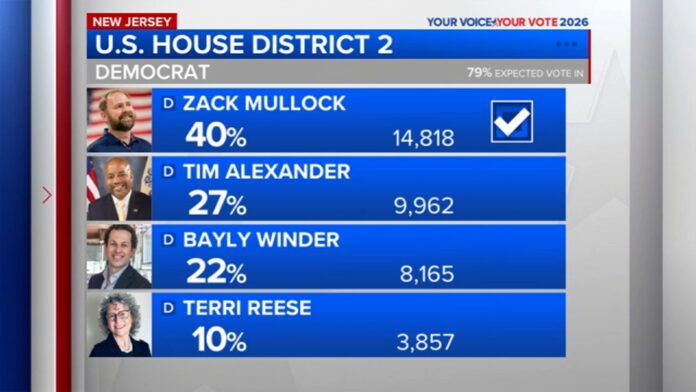
Further south, the political spotlight has turned toward New Jersey’s Second Congressional District. Cape May Mayor Zack Mullock emerged as the Democratic nominee and will challenge Republican Congressman Jeff Van Drew in what promises to be another high-profile race. Mullock’s campaign enters the general election with the goal of building support across a geographically diverse district that stretches across large portions of South Jersey and contains communities with varying political priorities.
As candidates transition from primary campaigns to general election strategies, attention in Trenton has increasingly shifted toward state government and a series of significant legislative battles unfolding at the State House.
At the center of those discussions is New Jersey’s budget process, where lawmakers and Governor Mikie Sherrill continue to navigate competing priorities involving affordability, fiscal responsibility, infrastructure investment, and taxpayer relief.
One of the most debated issues involves the future of the Stay NJ property tax relief program. The initiative was designed to provide substantial assistance to eligible seniors facing some of the highest property taxes in the nation. Governor Sherrill has proposed reducing the maximum benefit from $6,500 to $4,000 as part of broader efforts to maintain long-term fiscal stability and preserve budget flexibility.
The proposal immediately sparked debate among legislative leaders.
Assembly Speaker Craig Coughlin publicly voiced concerns that the proposed reduction could undermine the program’s effectiveness, arguing that many residents continue to struggle with rising housing costs, inflation, and increasing financial pressures. The disagreement highlights a larger conversation taking place throughout New Jersey regarding how state government should balance affordability initiatives with budget realities.
The debate comes at a particularly important moment, as property taxes remain among the most significant concerns consistently cited by New Jersey residents. Policymakers face the challenge of providing meaningful relief while also maintaining funding for education, transportation, healthcare, public safety, and other essential services.
At the same time, environmental policy has emerged as another major front in the legislative session.
The Assembly Environment Committee recently considered the Climate Superfund Act, commonly referred to by supporters as the “Polluters Pay” proposal. The legislation would require fossil fuel companies to contribute toward the costs associated with climate-related infrastructure damage and environmental resilience projects throughout New Jersey.
Supporters argue that communities increasingly face expensive challenges involving flooding, storm recovery, shoreline protection, infrastructure upgrades, and environmental mitigation efforts. They contend that corporations that profited from fossil fuel production should help shoulder some of those costs.
The proposal has attracted support from a broad coalition that includes environmental organizations, community advocates, and more than 230 faith leaders representing diverse religious traditions throughout the state.
Business organizations and industry groups, however, have mounted significant opposition. Critics argue that the legislation raises constitutional questions, could face lengthy legal challenges, and may ultimately create economic uncertainty for employers operating within New Jersey.
The debate reflects a broader national conversation about environmental responsibility, corporate accountability, climate adaptation, and the role state governments should play in addressing long-term environmental costs.
Transportation reform is also receiving renewed attention in Trenton.
Lawmakers recently advanced bipartisan legislation designed to improve transparency and accountability at NJ Transit. The measure would require the agency to publish comprehensive monthly reports detailing on-time performance, delays, service disruptions, cancellations, and other operational metrics.
The proposal follows years of rider frustration regarding reliability concerns, service interruptions, and communication challenges. Supporters believe increased transparency will provide commuters with better information while also creating stronger incentives for operational improvements.
For millions of New Jersey residents who depend on public transportation to reach workplaces, schools, medical appointments, and regional destinations, transit performance remains a critical quality-of-life issue. The legislation reflects growing bipartisan recognition that reliable transportation infrastructure is essential to the state’s economic competitiveness and overall quality of life.
Yet perhaps no issue has generated more intense emotions or public demonstrations than the ongoing controversy surrounding Delaney Hall in Newark.
The detention facility has become the epicenter of a rapidly escalating debate involving immigration policy, detention conditions, public accountability, and federal-state relations.
Recent demonstrations near the facility resulted in dozens of arrests as activists, community leaders, advocacy organizations, and elected officials demanded greater transparency regarding operations inside the center. Public pressure intensified after allegations emerged concerning medical care, sanitation, access to family visitation, and treatment of detainees.
The controversy gained additional national attention when Congresswoman Analilia Mejia publicly confronted Department of Homeland Security Secretary Mullin during a congressional hearing.
During the exchange, Mejia questioned federal officials about healthcare monitoring, medical treatment protocols, oversight procedures, chronic illness management, inspection practices, and protections for detainees who report concerns. The congresswoman cited conversations she had conducted with detainees and described allegations involving delayed medical care, inconsistent access to medication, sanitation concerns, and inadequate treatment for individuals with chronic health conditions.
Her questioning focused heavily on accountability mechanisms, including whether federal authorities track chronic illnesses among detainees, audit delays in medical treatment, monitor prescribed care plans, and permit independent inspections of facility conditions.
Throughout the hearing, Secretary Mullin repeatedly referenced staffing levels and healthcare resources while providing limited direct responses to several specific questions regarding audits, monitoring systems, and oversight procedures. The exchange quickly became one of the most discussed moments in New Jersey politics this week, highlighting the growing divide between federal officials and critics demanding increased transparency.
The Delaney Hall controversy has evolved far beyond a local issue. It now sits at the intersection of immigration policy, public health, civil rights, federal authority, and state oversight. As demonstrations continue and elected officials intensify their scrutiny, the facility has become a symbol of broader national debates playing out in communities across the country.
Taken together, the events unfolding across New Jersey illustrate a state entering a pivotal political season.
Federal campaigns are now fully underway. Budget negotiations are approaching critical deadlines. Environmental legislation continues to spark passionate debate. Transportation accountability efforts are advancing through the legislature. Immigration protests remain active. And voters are closely watching how elected officials respond to each of these challenges.
As summer begins, New Jersey finds itself navigating an extraordinary convergence of political developments that will influence not only the remainder of 2026 but potentially the state’s direction for years to come. The primary elections may be over, but the most consequential debates are only beginning, and the decisions made in the coming months will help shape the future of the Garden State at every level of government.
















