

Caldwell University has brought in a genuinely experienced hand to oversee its academic direction during a leadership transition, naming Michelle Curtain Stewart as interim vice president of academic affairs on July 26. Stewart arrives with more than three decades of experience across faculty roles and higher education administration, a background that spans university presidencies, vice presidencies, and direct classroom teaching, giving Caldwell a leader who understands academic affairs from nearly every vantage point an institution can offer.
Stewart’s academic credentials trace an unusually deliberate path through the social sciences and education leadership. She earned her bachelor’s degree in political science from Alcorn State University in Mississippi before heading to Indiana University Bloomington, where she completed both a master’s degree in sociology and a doctorate in educational leadership. That combination, political science undergraduate training paired with graduate work spanning sociology and the formal study of educational leadership, has given her a genuinely interdisciplinary lens for approaching the work of running a university’s academic operations, one she has clearly leaned into throughout her career.
Before joining Caldwell, Stewart spent time leading the Institute for Clinical Social Work in Chicago, where she served as the institution’s president beginning in 2019. That appointment followed a stint as vice president of academic affairs at Lane College in Jackson, Tennessee, giving her direct prior experience in precisely the role she now holds on an interim basis at Caldwell. Having already run academic affairs at one institution and served as the chief executive of another gives Stewart a rare vantage point for the interim role, since she has effectively already navigated both sides of the university leadership structure she now steps into at Caldwell.
Stewart has been candid about what draws her to this kind of leadership work in the first place, describing it as something closer to a calling than a career path she deliberately planned out. She has said she gravitated toward leadership because she genuinely enjoys solving problems and thinking strategically, and she has pointed specifically to the intellectual variety built into overseeing academic affairs as part of what continues to energize her in the role. Managing a university’s academic operations means working across departments that think in fundamentally different ways, and Stewart has noted that biologists, mathematicians, and sociologists all approach problems from distinct angles, a diversity of thought she says she finds genuinely stimulating rather than simply challenging to coordinate.
That interdisciplinary comfort matters directly for the priorities Stewart has laid out for her time at Caldwell. She has framed her core focus as supporting faculty to think innovatively and stay future oriented, framing that support explicitly as a mechanism for improving outcomes for Caldwell’s students rather than an end in itself. Stewart has been direct about where that priority ultimately points, repeating that her presence at the university comes down to student success, a phrase she has emphasized as a guiding principle rather than an administrative talking point.
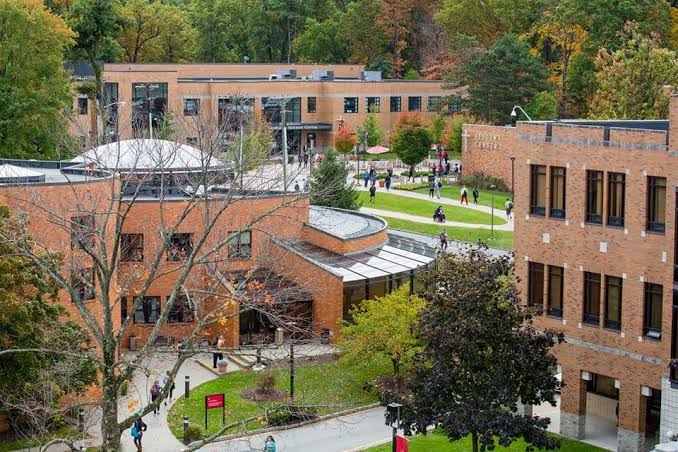
Stewart steps into her new role at an institution with its own distinct trajectory of growth and transformation. Caldwell University was founded in 1939 by the Sisters of Saint Dominic as a Catholic liberal arts college exclusively for women, a mission that defined the school for nearly half a century before it became coeducational in 1985. The institution continued expanding its academic scope from there, launching its first graduate program in 1993 and eventually earning full university status in 2014, a progression that reflects a steady broadening of Caldwell’s academic ambitions over multiple decades. Stewart’s arrival adds another chapter to that same pattern of institutional growth, bringing a leader with direct experience running academic affairs at another institution into a university that has spent nearly a century expanding its own identity from a small women’s college into a fully accredited university offering programs across multiple degree levels.
For Caldwell’s faculty and students, Stewart’s appointment signals a period of academic leadership grounded in genuine cross-disciplinary experience rather than a narrow specialization in a single field. Her stated emphasis on faculty innovation, paired with a professional history that includes running both academic affairs divisions and an entire institution in her own right, positions her to guide Caldwell’s academic direction with the kind of full-picture perspective that interim leadership roles rarely come with, even as the university continues its search for a permanent vice president of academic affairs to eventually take up the position on a lasting basis.
















