

Across New Jersey, health and wellness initiatives are increasingly moving beyond the walls of traditional hospitals, clinics, and community centers. A growing recognition that healthcare access, social support, and community advocacy must meet people where they are has sparked innovative programs designed to reach vulnerable populations in new and meaningful ways. From mobile medical teams providing direct care to individuals experiencing homelessness to longstanding volunteer organizations reinventing themselves for a new generation of civic engagement, a powerful transformation is underway throughout the Garden State.
Two recent developments illustrate this evolution particularly well. In Union County, healthcare professionals are taking medical services directly to the streets through the region’s first mobile medical unit dedicated to serving homeless and underserved populations. At the same time, one of New Jersey’s most respected Jewish women’s organizations has embarked on a new era of independence and community engagement, adopting a new identity while expanding its mission of service, advocacy, and volunteerism.
Although these initiatives operate in different sectors, they share a common purpose: breaking down barriers, expanding access, and strengthening communities through direct action.
The launch of Union County’s first mobile medical unit represents a significant milestone in New Jersey’s ongoing efforts to address healthcare disparities among vulnerable populations. For many individuals experiencing homelessness, obtaining consistent medical care can be extraordinarily difficult. Transportation challenges, lack of insurance, unstable living situations, mental health concerns, substance use disorders, and other systemic obstacles often prevent individuals from accessing traditional healthcare settings.
As a result, conditions that might be manageable with early intervention frequently worsen until emergency treatment becomes necessary.
Healthcare leaders across the country have increasingly recognized that waiting for patients to come to providers is often ineffective when serving individuals facing complex social and economic challenges. Instead, mobile healthcare programs are designed to bring medical services directly into communities where they are needed most.
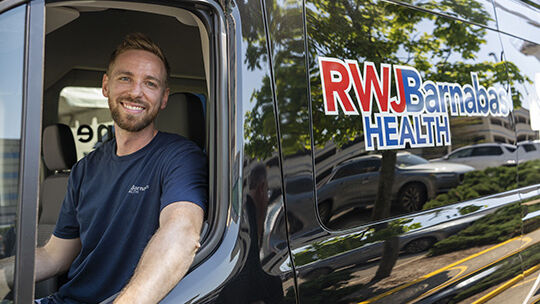
In Union County, medical teams affiliated with RWJBarnabas Health have embraced that philosophy through a mobile healthcare initiative inspired in part by growing public awareness of healthcare realities portrayed in contemporary medical dramas and real-world emergency medicine experiences. Rather than operating exclusively from hospitals or outpatient facilities, these healthcare professionals travel directly to shelters, outreach locations, community gathering areas, and other environments where individuals experiencing homelessness can receive immediate care and support.
The approach reflects a broader understanding that healthcare extends beyond diagnosis and treatment. Effective care often begins with trust, accessibility, and consistent engagement.
For individuals living without stable housing, a routine medical appointment can require overcoming numerous logistical barriers. A mobile medical unit removes many of those obstacles by bringing healthcare professionals directly into the community. Patients can receive evaluations, screenings, referrals, health education, and other essential services without navigating transportation challenges or complicated scheduling systems.
The potential impact extends well beyond individual patient encounters.
When healthcare professionals engage directly with underserved populations, they often identify issues before they escalate into emergencies. Chronic illnesses can be monitored more effectively. Preventive care becomes more accessible. Mental health concerns can be addressed earlier. Connections to housing assistance, social services, addiction treatment, and community resources can be established before crises deepen.
The model represents a proactive investment in community health rather than a reactive response to medical emergencies.
Throughout New Jersey, healthcare systems have increasingly recognized the importance of addressing social determinants of health. Factors such as housing stability, food security, employment opportunities, education, transportation, and social support frequently influence health outcomes as much as traditional medical interventions. Mobile healthcare initiatives acknowledge those realities by integrating medical services within broader community support networks.
The Union County program arrives at a particularly important moment. Communities across New Jersey continue confronting challenges related to housing affordability, mental health access, substance use disorders, and economic inequality. Mobile healthcare programs offer a practical and compassionate strategy for reaching individuals who might otherwise remain disconnected from essential services.
While healthcare providers expand access through innovative outreach models, community organizations are also reimagining how they serve residents throughout New Jersey.
One of the most significant examples of that evolution is the transformation of Tovah, formerly known as NCJW/Essex.
For generations, the organization has been recognized for its commitment to volunteerism, advocacy, social justice, philanthropy, and community engagement. Operating under the National Council of Jewish Women umbrella, the Essex County chapter built a reputation as one of the region’s most active and influential civic organizations, supporting programs that addressed education, women’s rights, family services, community welfare, and social responsibility.
Today, the organization is entering a new chapter.
Now operating independently under the name Tovah, the organization is positioning itself to build upon its longstanding legacy while creating new opportunities for engagement, leadership, and community impact. The name change represents far more than a rebranding effort. It reflects a strategic evolution designed to strengthen organizational independence, expand community partnerships, and enhance the group’s ability to respond to contemporary needs.
The decision comes at a time when volunteer-driven organizations throughout New Jersey are adapting to changing demographics, evolving community priorities, and new models of civic engagement. Traditional volunteer structures are increasingly being supplemented by flexible, mission-driven approaches that allow organizations to connect with diverse audiences while maintaining their core values.
Tovah’s transformation demonstrates how established institutions can evolve while remaining deeply rooted in their founding principles.
The organization continues to focus on connecting women through service, leadership, advocacy, education, and philanthropy. By fostering opportunities for meaningful involvement, Tovah seeks to strengthen both individual participants and the communities they serve.
Its mission aligns with a broader trend emerging throughout New Jersey’s nonprofit landscape. Organizations are increasingly recognizing that community wellness encompasses far more than physical health alone. Emotional wellbeing, social connection, civic engagement, educational opportunity, and community support all contribute to healthier and more resilient populations.
This holistic understanding of wellness is becoming increasingly important as communities navigate complex social and economic challenges.
The stories of Union County’s mobile medical unit and Tovah’s organizational evolution highlight a larger reality unfolding across New Jersey. Effective community support often requires innovation, adaptability, and a willingness to meet people where they are.
For healthcare providers, that may mean bringing medical services directly into neighborhoods, shelters, and community spaces. For nonprofit organizations, it may mean reimagining structures and programs to better engage new generations of volunteers and advocates. In both cases, the objective remains the same: creating stronger, healthier, and more connected communities.
New Jersey has long demonstrated a capacity for innovation in healthcare, education, social services, and civic engagement. The state’s diverse communities have consistently produced organizations and leaders willing to experiment with new approaches while remaining committed to serving residents in meaningful ways.
The expansion of mobile healthcare services and the emergence of newly independent organizations like Tovah reflect that tradition of innovation. They also underscore an important lesson: meaningful change often begins with a simple but powerful idea—that services should be accessible, communities should be inclusive, and support should be available where and when people need it most.
As these initiatives continue to grow and evolve, they offer a glimpse into the future of community wellness in New Jersey. It is a future built not solely around institutions, but around relationships. Not solely around facilities, but around access. Not solely around programs, but around people.
Whether through a mobile medical unit arriving at a shelter parking lot or a volunteer organization entering a new chapter of service, the message is the same. Communities become stronger when barriers are removed, opportunities are expanded, and individuals are empowered to participate fully in the life of the places they call home.
Across New Jersey, that work continues every day, often quietly, but with an impact that extends far beyond any single organization, program, or initiative. It is shaping a healthier, more connected, and more compassionate future for communities throughout the Garden State.
















