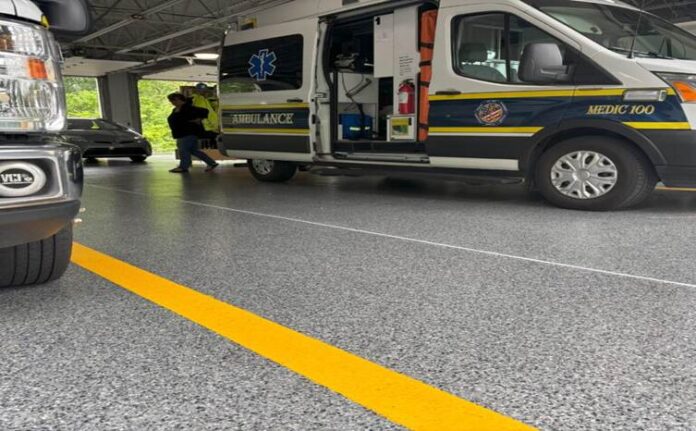

As New Jersey continues to strengthen its position as one of the most important logistics, warehousing, and distribution hubs in North America, a new generation of industrial infrastructure is emerging behind the scenes. While conversations about supply chains often focus on ports, highways, automation systems, robotics, and warehouse capacity, one of the most critical components of modern logistics operations is quite literally the foundation beneath every facility. High Performance Systems is helping redefine that foundation through advanced industrial warehouse flooring solutions designed to meet the increasingly demanding needs of modern distribution and fulfillment environments.
The rapid evolution of e-commerce, advanced manufacturing, cold storage, pharmaceutical distribution, and last-mile logistics has fundamentally changed what businesses expect from warehouse facilities. Buildings that once served as simple storage centers have become highly sophisticated operational ecosystems where efficiency, durability, safety, and uptime are directly tied to profitability. Every square foot matters. Every operational interruption matters. Every infrastructure investment must support long-term performance.
In this environment, industrial flooring has become far more than a construction consideration. It has evolved into a strategic operational asset.
High Performance Systems has established itself as a leader in industrial and commercial resinous flooring systems, delivering solutions engineered specifically for the challenges facing modern warehouse operators, logistics providers, manufacturers, and distribution networks. The company’s approach reflects a broader industry shift toward infrastructure designed not simply to withstand daily use but to actively support operational excellence.
Across New Jersey, where industrial development continues to expand from the Meadowlands and Port Newark corridor to Central Jersey’s warehouse belt and South Jersey’s growing logistics network, facility owners are investing heavily in technologies and infrastructure that improve performance while reducing maintenance costs. Flooring systems are increasingly becoming a central component of that strategy.
The reason is straightforward. Today’s warehouses operate under conditions that place extraordinary stress on facility surfaces. Heavy forklifts move continuously throughout the day. Automated guided vehicles navigate precise routes around the clock. Pallet jacks, loading equipment, robotics systems, and high-volume traffic create wear patterns that traditional flooring solutions often struggle to withstand over time.
At the same time, operational expectations have never been higher.
Distribution centers serving next-day and same-day delivery models cannot afford extended downtime. Manufacturing facilities depend on uninterrupted production schedules. Pharmaceutical and food-grade operations require environments that meet rigorous cleanliness and safety standards. Cold storage facilities demand specialized materials capable of performing under extreme temperature fluctuations.
These challenges have created demand for flooring systems engineered specifically for industrial performance.
Advanced resinous flooring technologies offer significant advantages over conventional concrete surfaces. Designed to create seamless, highly durable surfaces, these systems help resist abrasion, chemical exposure, moisture intrusion, impact damage, and long-term deterioration. Their performance characteristics can dramatically extend facility lifespan while reducing maintenance requirements and operational disruptions.
For warehouse operators, those benefits translate directly into measurable business outcomes.
A properly engineered flooring system can improve workplace safety by enhancing traction and visibility. It can reduce repair costs associated with cracking, surface degradation, and equipment wear. It can support sanitation requirements critical to industries ranging from healthcare and pharmaceuticals to food processing and distribution.
Most importantly, it can help facilities maintain continuous operations in environments where downtime can result in significant financial consequences.
The rise of automation has made these considerations even more important.
Modern logistics facilities increasingly rely on robotics, automated storage and retrieval systems, and sophisticated material handling technologies. These systems require highly consistent floor surfaces to operate effectively. Even minor imperfections can affect navigation accuracy, equipment performance, and long-term reliability.
As automation becomes more deeply integrated into warehouse operations, flooring quality becomes directly connected to technological performance.
New Jersey provides a compelling example of why this matters.
The state occupies a unique position within the national supply chain. Its proximity to major population centers, extensive transportation infrastructure, and access to ports, highways, rail networks, and airports have made it one of the nation’s premier logistics destinations. Millions of consumers can be reached within a single day’s drive from facilities located throughout the state.
That strategic advantage has fueled an unprecedented wave of industrial development.
Large-scale fulfillment centers, regional distribution hubs, pharmaceutical facilities, cold storage complexes, and advanced manufacturing operations continue to reshape New Jersey’s commercial landscape. These projects represent billions of dollars in investment and thousands of jobs, creating demand for infrastructure capable of supporting increasingly sophisticated operations.
Companies like High Performance Systems are helping meet that demand by focusing on one of the most overlooked but essential aspects of facility performance.
Their solutions are designed not only for durability but also for adaptability. Different industries face different challenges, and flooring systems must reflect those realities.
A food distribution center requires surfaces that can withstand rigorous cleaning and sanitation procedures. A pharmaceutical facility may need specialized coatings that support contamination control. Manufacturing operations often require resistance to chemicals, impacts, and thermal shock. Logistics centers prioritize durability, traffic resistance, and long-term operational reliability.
Rather than treating industrial flooring as a one-size-fits-all solution, modern systems are increasingly tailored to specific operational environments.
This customized approach reflects a broader trend throughout commercial construction and facility management. Businesses are moving away from generic infrastructure investments and toward solutions specifically engineered to support their operational objectives.
The result is a new generation of industrial facilities that function more efficiently, operate more safely, and maintain higher levels of performance over longer periods.
Sustainability is also playing an increasingly important role in these decisions.
Across New Jersey and throughout the country, developers, property owners, and tenants are pursuing construction practices that reduce environmental impact while improving long-term operational efficiency. Durable flooring systems contribute to these goals by extending service life, reducing material replacement cycles, minimizing waste, and lowering maintenance requirements.
As companies continue prioritizing environmental responsibility alongside operational performance, infrastructure choices that support both objectives are becoming increasingly valuable.
The importance of workforce experience should not be overlooked either.
Modern warehouses employ large numbers of workers who spend entire shifts navigating facility environments. Flooring systems can contribute to workplace safety, cleanliness, visibility, and overall operational comfort. In a labor market where attracting and retaining employees remains a priority, facility quality has become an increasingly important consideration.
Investments in infrastructure therefore benefit not only equipment and operations but also the people responsible for keeping those operations running.
Looking ahead, the future of logistics infrastructure will likely be defined by continued innovation, automation, and operational sophistication. Facilities will become smarter. Supply chains will become faster. Customer expectations will continue rising.
Meeting those demands will require infrastructure designed for the realities of modern commerce.
High Performance Systems’ focus on advanced industrial flooring solutions reflects a broader understanding of how logistics facilities function in today’s economy. Success is no longer determined solely by building size or location. It depends on how effectively every component of a facility supports operational performance.
From distribution centers serving major metropolitan markets to specialized manufacturing facilities driving economic growth, the next generation of industrial infrastructure is being built from the ground up.
In New Jersey, where logistics, manufacturing, and commercial development continue to play a vital role in the state’s economic future, investments in durable, high-performance infrastructure are helping shape that future one facility at a time. The warehouse floor may not always be the most visible part of a logistics operation, but as the industry continues to evolve, it is becoming increasingly clear that some of the most important innovations begin at ground level.