
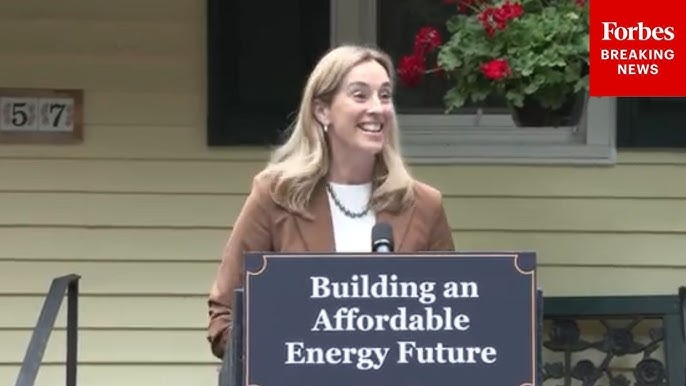

Governor Mikie Sherrill met directly with executives from the state’s major utility companies this week, continuing her administration’s sustained push to bring down energy costs for New Jersey households through a combination of new oversight tools, structural rate reforms, and expanded clean energy investment. The meeting reflects the governor’s ongoing effort to keep utility leadership directly accountable to the affordability priorities she has emphasized since taking office, particularly as New Jersey households continue navigating one of the more difficult stretches of rising electricity costs in recent memory.
That push has already produced real legislative results this year. Sherrill has signed a series of energy focused bills specifically targeting the structural drivers behind New Jersey’s rising rates, including measures closing a federal transmission incentive loophole that had allowed utilities to collect additional profit simply for participating in the regional power grid, establishing new rate structures requiring large AI data centers to shoulder more of their own grid infrastructure costs rather than passing those expenses onto ordinary ratepayers, and requiring state approval before utilities can move forward with certain categories of transmission projects. Taken together, those measures are projected to save New Jersey ratepayers tens of millions of dollars annually, giving the administration a concrete set of policy wins to point to as it continues pressing utility executives on further cost relief.
This week’s meeting with utility leadership builds directly on that legislative foundation, giving Sherrill a direct forum to press executives on how quickly and effectively they intend to implement the new laws, while also gathering input on additional steps utilities themselves believe could help stabilize rates going forward. That kind of direct engagement reflects a broader strategy the administration has leaned on throughout its energy policy push, pairing formal legislative reform with ongoing, direct pressure on the utility companies actually responsible for translating those new rules into real savings on customers’ monthly bills.
Beyond rate reform and oversight, New Jersey’s broader energy strategy continues leaning heavily on expanding the state’s own clean energy generation capacity. The state has pursued a substantial expansion of its Community Solar Energy Program, aiming to support up to 3,000 megawatts of new solar capacity statewide, a move designed to add genuine new generation capacity using distributed rooftop and community solar installations rather than relying entirely on large, centralized power plants. That solar expansion sits alongside continued state investment in clean energy more broadly, including tens of millions of dollars directed through the New Jersey Economic Development Authority toward large-scale clean energy projects across the state, reflecting a deliberate strategy of building out in-state generation capacity as one direct lever for easing the supply and demand pressures currently driving rates upward.
Individual utility companies have their own role to play in that broader push as well. PSE&G, the state’s largest utility, has continued advancing its own solar development projects as part of the broader statewide effort to add new generation capacity, work that complements rather than substitutes for the legislative and regulatory reforms Sherrill has pursued at the state level. That combination, utilities investing directly in new generation capacity while simultaneously operating under considerably tighter state oversight and revised rate structures, reflects the multi-pronged approach the administration has taken toward energy affordability throughout its first year in office.
Taken together, this week’s meeting with utility executives represents another step in a sustained, multi-front campaign Sherrill has waged around energy costs since taking office, one that combines legislative reform closing specific profit loopholes, new state oversight over utility infrastructure spending, direct rate relief measures for ratepayers, and continued expansion of the state’s own clean energy generation capacity. With New Jersey households continuing to feel the weight of elevated electricity costs, the administration’s ability to translate this combination of legislative wins and direct utility engagement into measurable savings on actual monthly bills is likely to remain one of the defining tests of Sherrill’s broader economic agenda heading into the remainder of her term.
















